
The best small towns you can reach by train in Campania
Campania away from the bay is a landscape of limestone ridges, chestnut woods and river valleys where the houses are built from local stone and the volcanic tufo that gives one Irpinian village its name. The wine is Fiano, Aglianico and Greco, poured young in cellars cut into the rock, and the cooking runs to sheep's cheese, dried figs, beans and thick handmade pasta rather than anything you would find on a seafront menu. Autumn is the season here, when the grape harvest and the chestnut fairs overlap and the mornings smell of woodsmoke. On the Cilento side the same interior hills drop straight into clear water, with anchovies salted the old way and terraces of olives running down to the shingle.
Almost everyone arriving in Campania by rail goes to Naples, then out along the Circumvesuviana to Pompeii and Sorrento, or onto the ferry to Capri and the Amalfi Coast. The reasons are sound: the ruins are extraordinary, the coast road is one of the great drives in Europe, and the trains are frequent and cheap. The consequence is a corridor of the region that absorbs the vast majority of visitors, where the queues at the Villa dei Misteri and the crush on the Sorrento platform are part of the day.
The hills and the coastline do not stop there. Rail lines continue east into Irpinia and south through the Vallo di Diano and along the Cilento shore, past station buildings serving villages of a few hundred people, Carthusian monasteries, hilltop castles and vineyards. The towns below are the smaller ones on those lines, and we have confirmed that each can be reached without a car.
Of the 66 communes we have mapped in Campania, 28 qualify as towns you can reach by train: we have confirmed each is reachable without a car. This list is the small ones, 8 in all, ordered smallest first. The smallest, Tufo, has 772 residents.
Elsewhere in the catalogue: The best towns you can reach by train in the province of Avellino and The best hidden hill towns you can reach by train in Campania.
Tufo
Why visit Tufo
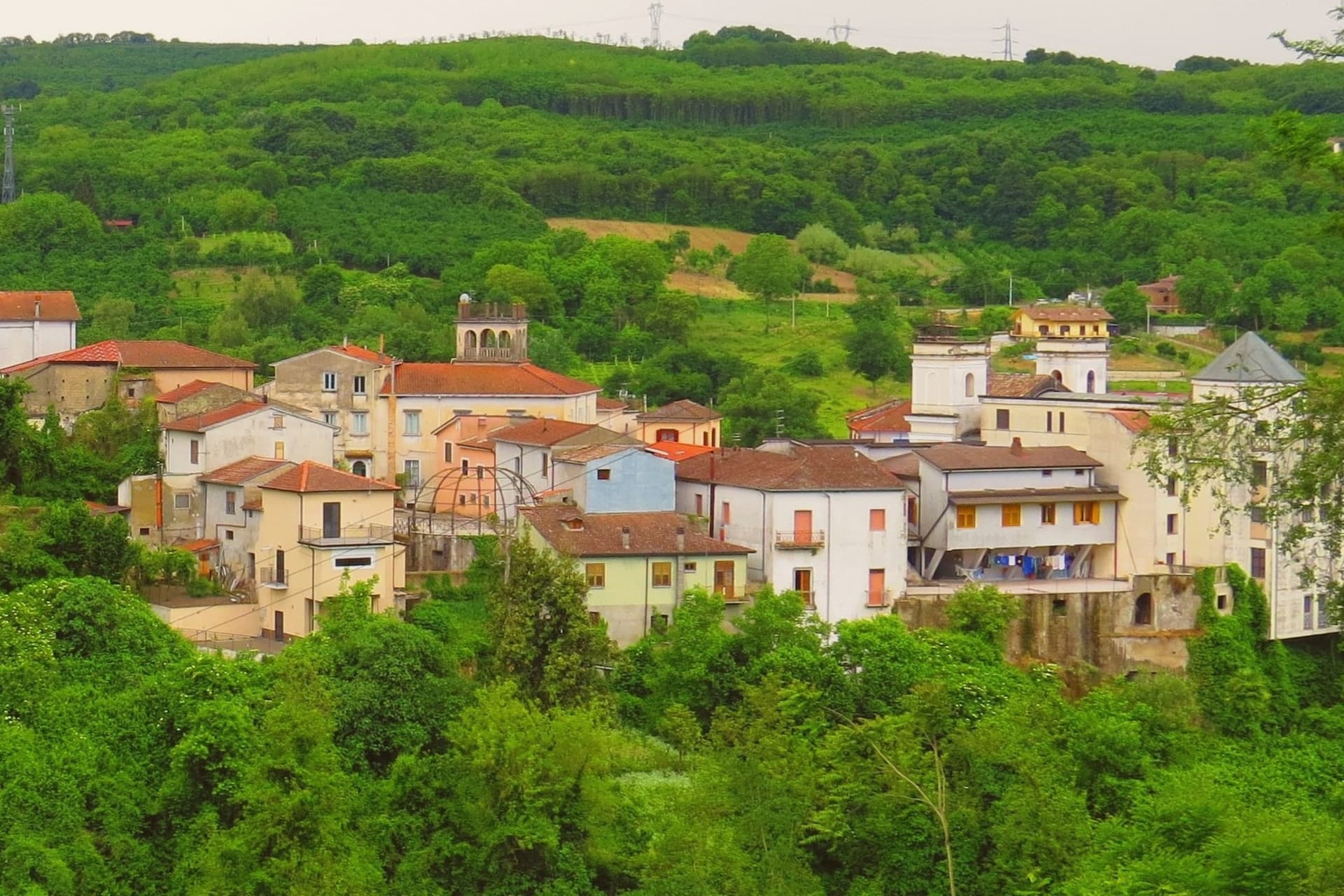
The name Tufo comes from the volcanic tuff stone the hill is built on, the same stone that runs through the slopes below and gives the local wine its mineral edge. The village sits on top of that stone at 250 meters, with the cellars at its foot and the vineyards spreading out around both.
Sulfur was mined in shafts cut into the cliffs beneath the village, work that shaped the local economy for over a century before it stopped. Most visitors are wine buyers, not tourists.
They drive in for a tasting, walk the steep main street to the medieval castle on top, and leave by dinner. The village stays quiet after they go.
What the stone gave the place economically it also gave it physically: a hill town built from the same rock that flavors what it grows, mined until the ground itself ran out of use.
We confirmed you can reach this one by train.
What to see in Tufo
- Castello di Tufo. Medieval fortress on the top of the hill, rebuilt after the 1732 and 1980 earthquakes that damaged the village below.
- Cantine di Marzo. The cellars sit at the foot of the village, where Greco di Tufo has been produced commercially since the family took up winemaking here.
- Ex Miniere di Zolfo. Abandoned mines in the cliffs below the village, their shafts left the rock marked with rust-colored scars after closure.
How to get to Tufo
There is a railway station in the town, so you can arrive without a car and never need one while you are here. Salerno is roughly 55 minutes away by road.
Our tip
April through June covers the green months in Irpinia: vine leaves unfurling on the slopes, mild evenings on the main street. September through early October is harvest, when the cellars open more often than usual and the village smells of crushed Greco. July and August get hot in the valley, though 250 meters keeps the worst of it off.
Savignano Irpino
Why visit Savignano Irpino
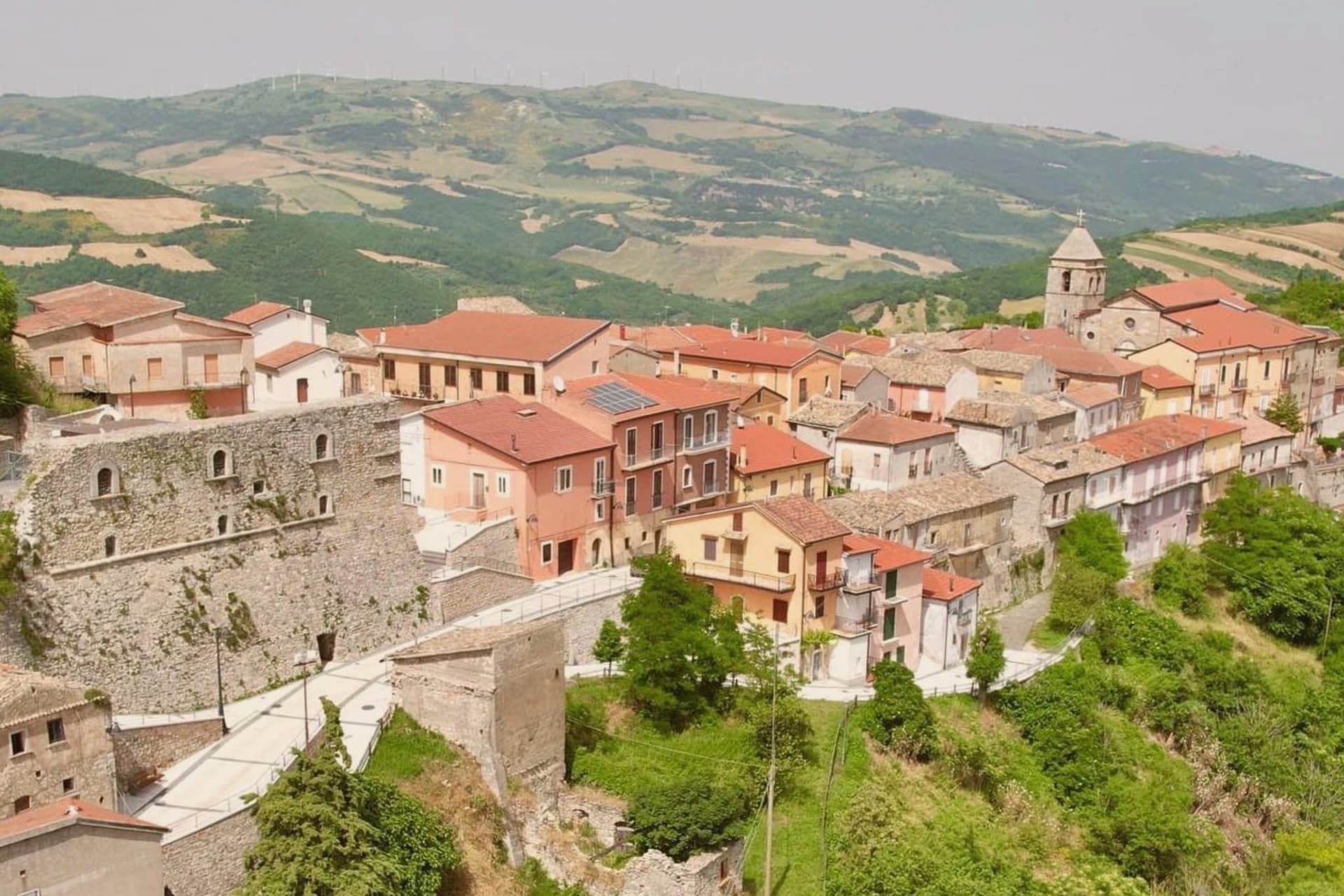
Savignano Irpino sits at 718 meters on the edge of Irpinia, where the province narrows toward Apulia. The Latin name Sabinius points to a Roman landowner, but the village as it stands now grew up between the seventh and eighth centuries around a defensive castle on the high ground.
Under the Normans it became part of a barony dependent on Ariano Irpino, with Ferrara and Greci. In 1193, during Tancredi d'Altavilla's reign, governor Sarolo Guarna was executed on the castle tower.
In 1445 the Guevara family, Spanish nobles, turned the medieval manor into a lordly residence; their name still attaches to the castle. The town was called Savignano di Puglia until 1963, when the border-of-region status pushed the rename.
The Mother Church of San Nicola and Sant'Anna and the Castello Guevara anchor the medieval core. It joined the Borghi più belli network in 2016.
We confirmed you can reach this one by train.
What to see in Savignano Irpino
- Castello Guevara. Norman fortress on the high point of the village, rebuilt in 1445 by the Guevara family who held the fief for generations.
- Chiesa Madre di San Nicola e Sant'Anna. Mother church on a medieval sacred site, its bell tower originally a watchtower over the Cervaro valley below.
- Centro storico. Compact stone-built medieval core between castle and church, Borghi più belli member since 2016.
How to get to Savignano Irpino
There is a railway station in the town, so you can arrive without a car and never need one while you are here. Foggia is roughly 58 minutes away by road.
Our tip
May through October is the open season at 718 meters: warm days, cool nights, and the Cervaro valley below in long green light. July and August are tolerable up here while the Foggia plain bakes; the village fills with returning families on the August feasts. April and November are shoulder months with shifting weather.
Lapio
Why visit Lapio
The name of the grape behind the local wine, 'Apianum', comes from the Roman word for bee, api, because the grape was said to be sweet enough to draw them. It has been grown across the Irpinia hills east of Avellino since at least the 1st century AD, though it only became a serious modern DOCG from the 1990s onward, thanks to producers here and in Montefredane, Summonte, and the neighbouring villages.
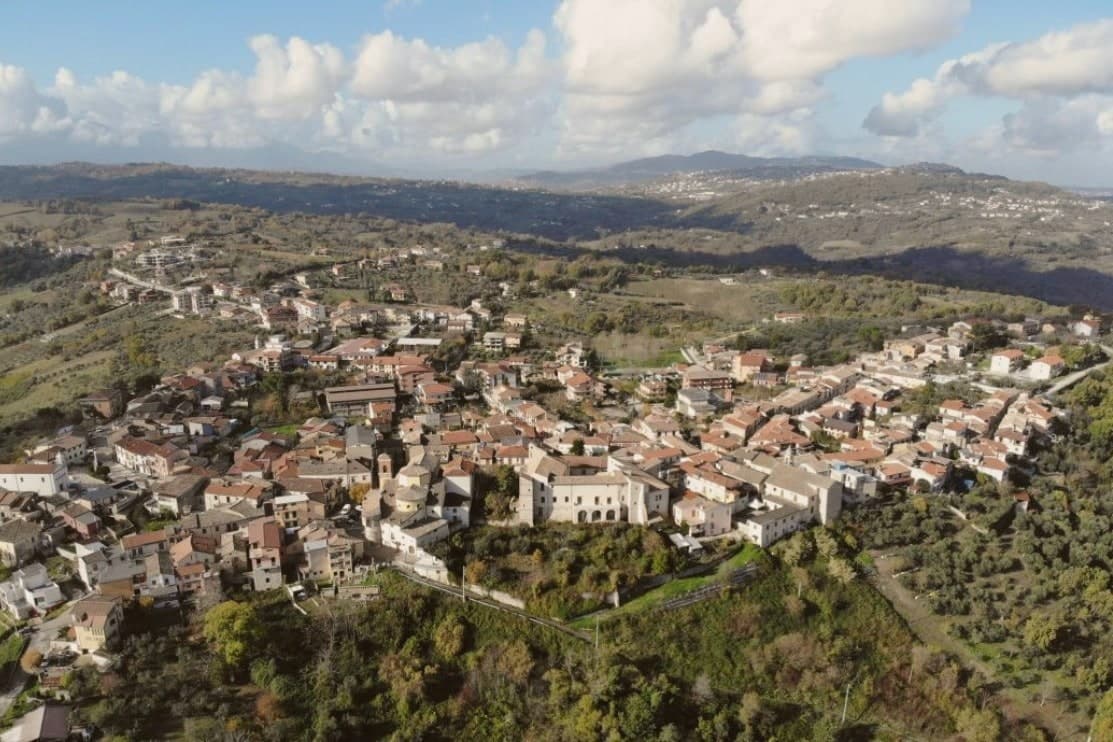
The comune itself sits at 590m on a hilltop, its narrow stone-paved vicoli climbing from the central piazza up to the castle at the high point, past the Chiesa Madre di San Pietro Apostolo and the Convento dei Cappuccini just outside the walls. The four Città designations held here, del Vino, dell'Olio, del Miele, della Nocciola, are not scattered honours but a single picture: Fiano and Aglianico from the vineyards, Irpinia DOP oil from the terraces, chestnut and multifloral honey from the Apennine forests above town, and the hazelnut trade that makes Avellino province the second-largest producer in Italy after Cuneo.
Beyond the comune: Avellino 24 km west, Mirabella Eclano with its Roman Forum and Carro di San Pellegrino procession 15 km north, and the Partenio and Sannio mountains immediately east, whose forests supply both the honey and the local game. The food follows the same logic: pasta al ragù di castrato, brodo di tagliolini con scarola, Caciocavallo Podolico matured 12 or more months on Apennine pastures, torrone tenero made with hazelnuts and honey, and the wine with all of it.
Depopulation has cut the town from 2,400 residents in 1951 to 1,428 today, but the surrounding land, vine, olive, forest, and hazelnut grove, still accounts for nearly everything the place is known for.
We confirmed you can reach this one by train.
What to see in Lapio
- Fiano di Avellino DOCG cellars. Lapio is one of the historic cru villages, 'Apianum' grape since Roman times, modern DOCG only since 1990s. 10+ cellars in the comune + immediate neighbours open for tastings.
- Castello Filangieri. 11th-c Norman castle rebuilt by the Filangieri family in the 16th c. Anchors the high point of the medieval centro with the panoramic view across the Sabato river valley + the Partenio massif.
- Centro storico + Chiesa Madre. Intact stone-paved vicoli climbing from the central piazza to the castle. The 15th-c Chiesa Madre di San Pietro Apostolo + the Convento dei Cappuccini just outside the walls.
How to get to Lapio
There is a railway station in the town, so you can arrive without a car and never need one while you are here. Salerno is roughly 59 minutes away by road.
Our tip
Lapio is best May–June and September–October. The Festa del Fiano in late September is the year's headline. October is harvest in both the Fiano vineyards and the surrounding hazelnut orchards.
Auletta
Why visit Auletta
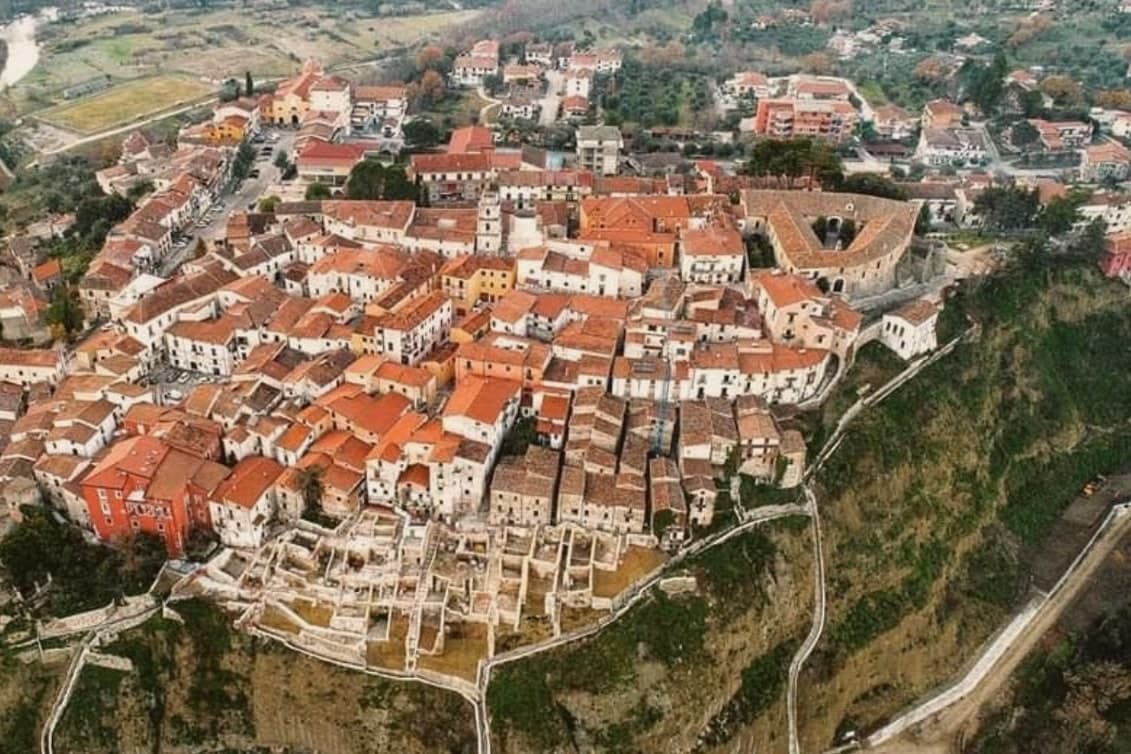
Auletta sits at 280 meters on a hill on the right bank of the Tanagro river, at the northern edge of the Vallo di Diano, inside the Cilento, Vallo di Diano and Alburni National Park. The town was fortified by the year 1000 and is mentioned as Olibola in 1095, possibly from olea, Latin for oil.
The medieval core is reached through three gates, Porta Castello, Porta del Fiume and Porta Rivellino. The Castello Marchesale, twelfth century in origin, took its current shape in the fifteenth, when defensive systems were added; it is privately owned by the Maioli Castriota Scanderbech family.
The 1857 Great Neapolitan earthquake destroyed much of the town and was documented by the Irish seismologist Robert Mallet, in the first systematic post-earthquake survey ever attempted. In 1861, immediately after Unification, locals rose against the Piedmontese army and 45 were killed in what is remembered as the Auletta Massacre.
The town is now a Città delle Grotte for its proximity to the Pertosa-Auletta caves.
We confirmed you can reach this one by train.
What to see in Auletta
- Castello Marchesale. Twelfth-century fortress in the highest part of the centro storico, reshaped in the fifteenth century with defensive walls and now privately held.
- Chiesa di San Nicola di Mira. Parish church inside the medieval walls, holds a relic of San Donato di Ripacandida, the town's patron saint.
- Borgo dei Mestieri. Restored part of the centro storico turned into a living museum of traditional Cilento crafts, with workshops on stone, iron and clay.
How to get to Auletta
There is a railway station in the town, so you can arrive without a car and never need one while you are here. Salerno is roughly 49 minutes away by road.
Our tip
April through October is the open season in the Tanagro valley: clear days, mild nights and the National Park trails dry enough to walk. July and August push past thirty-three degrees in the valley; the centro storico on the hill catches a slight breeze. April, May and early June are the right weeks for the Alburni hikes and the Pertosa-Auletta caves, which run at fifty degrees year-round and feel cold off a hot afternoon.
Pisciotta
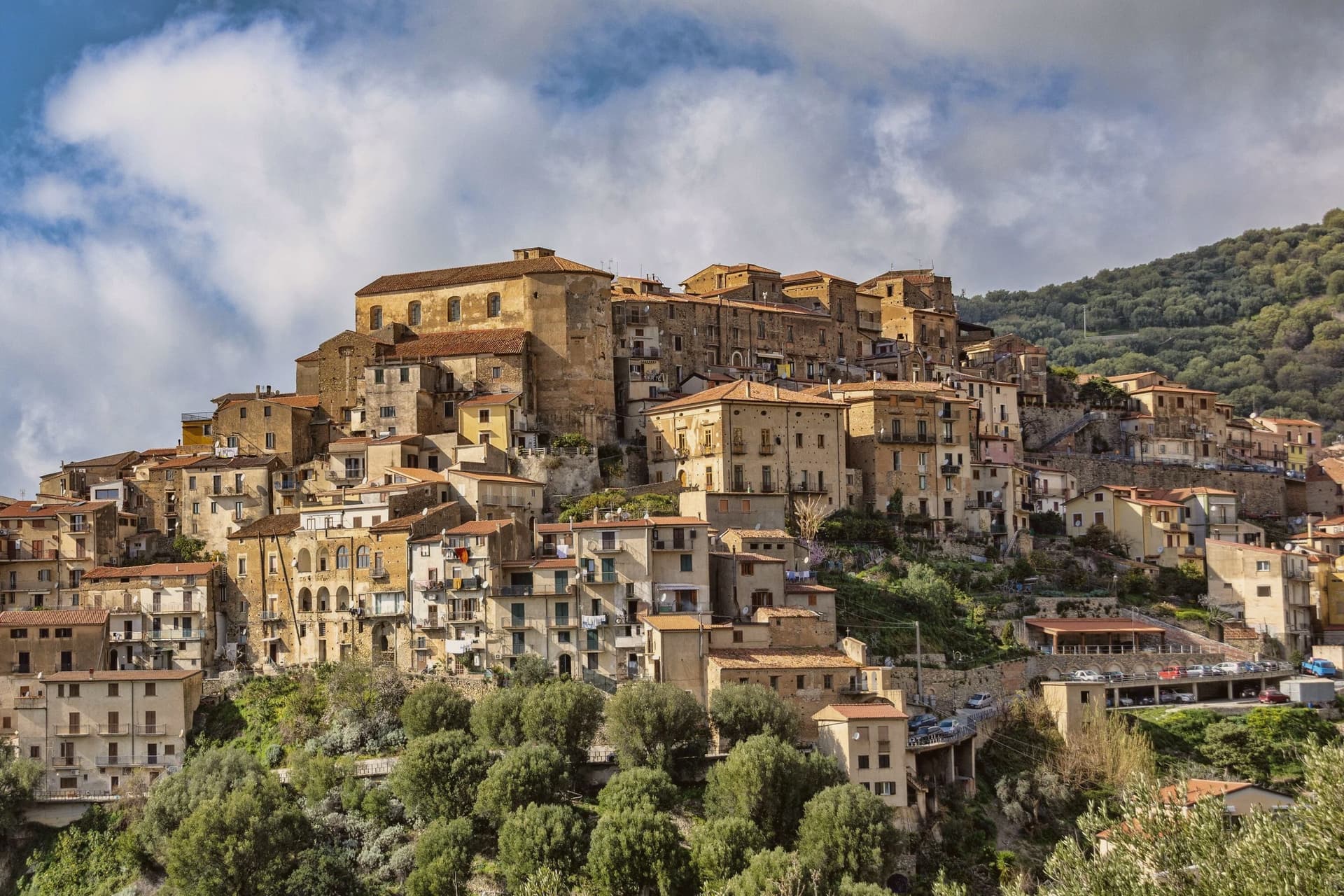
Why visit Pisciotta
The hill the town occupies rises between Ascea and Palinuro, part of the strictest zone of the Cilento and Vallo di Diano National Park, and the ridge gives the stone houses of the centro storico a clear line of sight to Capo Palinuro twelve kilometers south. The town's parts sit at different elevations doing different work: the historic core holds the ridge at 171 meters, the olive terraces cover the slopes below it, and Marina di Pisciotta occupies the shore at the foot of the hill, where the fishing boats go out.
The menaica net worked by the Marina's fishermen is a technique once widespread around the Mediterranean and now reduced to a few coves, of which this is one. Carlo Pisacane's failed 1857 revolutionary expedition landed at Sapri and was crushed nearby; the Cilento coast keeps the memory in plaques and processions rather than in any structure at Pisciotta itself.
What holds the town together is elevation: everything of note here, the anchovies, the olives, the beach, the ridge, is defined by how far it sits above or below that 171-meter line.
We confirmed you can reach this one by train.
What to see in Pisciotta
- Centro storico di Pisciotta. Hilltop medieval core of stone houses on a ridge 171 meters above the sea, with a clear sightline to Capo Palinuro.
- Marina di Pisciotta. Fishing port at the foot of the hill, departure point for the last menaica anchovy boats on the coast, its beach holding the Blue Flag.
- Uliveti di Pisciottana. Terraces holding trees of considerable age, the source groves of the Cilento DOP extra-virgin oil.
How to get to Pisciotta
There is a railway station in the town, so you can arrive without a car and never need one while you are here. Salerno is roughly 138 minutes away by road.
Our tip
May through September is the open season on the Cilento coast: clear water, warm evenings and the menaica boats out at night. July and August push past thirty-five degrees and the Marina rentals book; the centro storico on the hill above stays a few degrees cooler in the breeze. April and October are dry and mild, the right time for the olive harvest road and Parco Nazionale walks without heat.
Nusco
Why visit Nusco
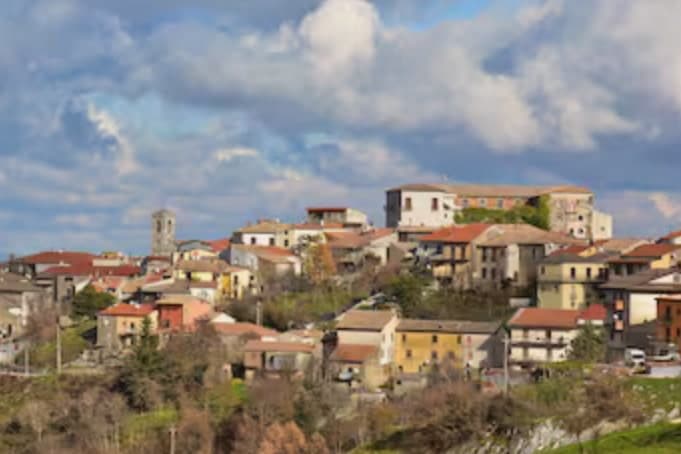
Nusco runs along a narrow ridge at 914 meters between the Ofanto and Calore Irpino river valleys, the watershed of inner Irpinia. The first written record is the 1093 will of bishop Amatus, who described his seat with the word civitas.
He was canonised after his death that year, and the Concattedrale di Sant'Amato in Piazza Vescovado holds his cult and treasury today, its composite stone façade and 33-meter bell tower set on a medieval church dedicated to Saint Stephen. In 1656 the plague killed up to a third of the population.
The streets of the centro storico are still paved in limestone slabs, which gives the town its nickname, the Balcony of Irpinia. Ciriaco De Mita, prime minister from April 1988 to July 1989, was born here and served as mayor until his death in 2022; the crowd applauded as his coffin reached the church.
We confirmed you can reach this one by train.
What to see in Nusco
- Concattedrale di Sant'Amato. Co-cathedral in Piazza Vescovado, composite stone façade and 33-meter bell tower added in 1891, houses the relics and Treasure Room of the patron saint.
- Ruderi del Castello Longobardo. Ruins of the Lombard fortress at the highest point of the ridge, the original strongpoint that anchored the medieval civitas.
- Centro storico. Limestone-paved medieval lanes along the narrow ridge, the source of the Balcony of Irpinia nickname.
How to get to Nusco
There is a railway station in the town, so you can arrive without a car and never need one while you are here. Salerno is roughly 71 minutes away by road.
Our tip
May through October is the open season at 914 meters. Days run warm and dry, nights stay cool, and the limestone ridge gives long views across the Ofanto basin. July and August are tolerable up here while the lower Irpinia valleys bake, and the town fills on the August feasts as the diaspora returns from Avellino, Naples and abroad.
Calitri
Why visit Calitri
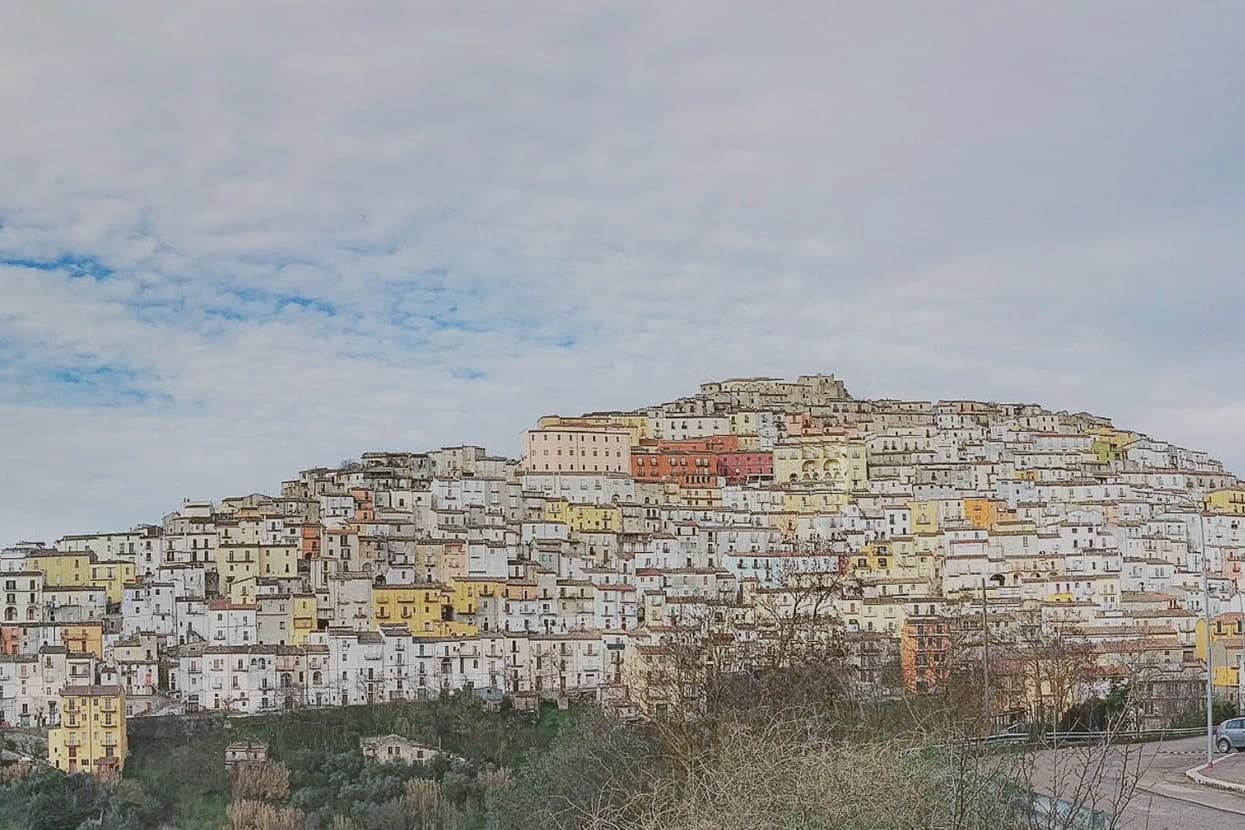
Calitri sits on a mountain above the upper Ofanto valley, sixty-five kilometers inland from Salerno. The town stacks down the slope in a sheet of pastel houses that has earned it the nickname positano dell'entroterra: an old settlement folded into a hillside rather than a coastline.
The clay underneath those houses gave the town its old craft. Streets are still named for the potter's wheel and for the Faenza artisans who arrived in the 1600s, a trade that runs from that century straight through to the workshops active today.
The 1980 earthquake cuts through that continuity. It killed two residents, triggered landslides, and left a large part of the centro storico uninhabitable for years; many houses were never reoccupied and stand today alongside the rebuilt blocks, upper village and lower streets sharing one slope but two different histories of repair.
What holds the place together now is deliberate: a festival built specifically to give these depopulated lands their footing back, run every August since 2013. A hillside town, in other words, that turned its own damage and its own craft into the same civic project.
We confirmed you can reach this one by train.
What to see in Calitri
- Borgo Castello. Medieval upper village built from the stones of the destroyed feudal castle, partly abandoned after the 1980 earthquake, now hosting the ceramics museum and the Sponz Fest.
- Museo della Ceramica. Ceramics museum inside the Borgo Castello, open since 2008, with Calitrian pieces from the fourth century BC to the modern revival workshops.
- Chiesa di Santa Lucia. Hilltop church above the centro storico, the high point of the town with views across the Ofanto valley and the Alta Irpinia ridges.
How to get to Calitri
There is a railway station in the town, so you can arrive without a car and never need one while you are here. Foggia is roughly 90 minutes away by road.
Our tip
April through June and September into October are the working months for Calitri. The 530-meter altitude keeps the summer breeze, and the upper alleys are walkable. July and August are hot, though Sponz Fest in late August pulls thousands of visitors for three days regardless.
Padula
Why visit Padula
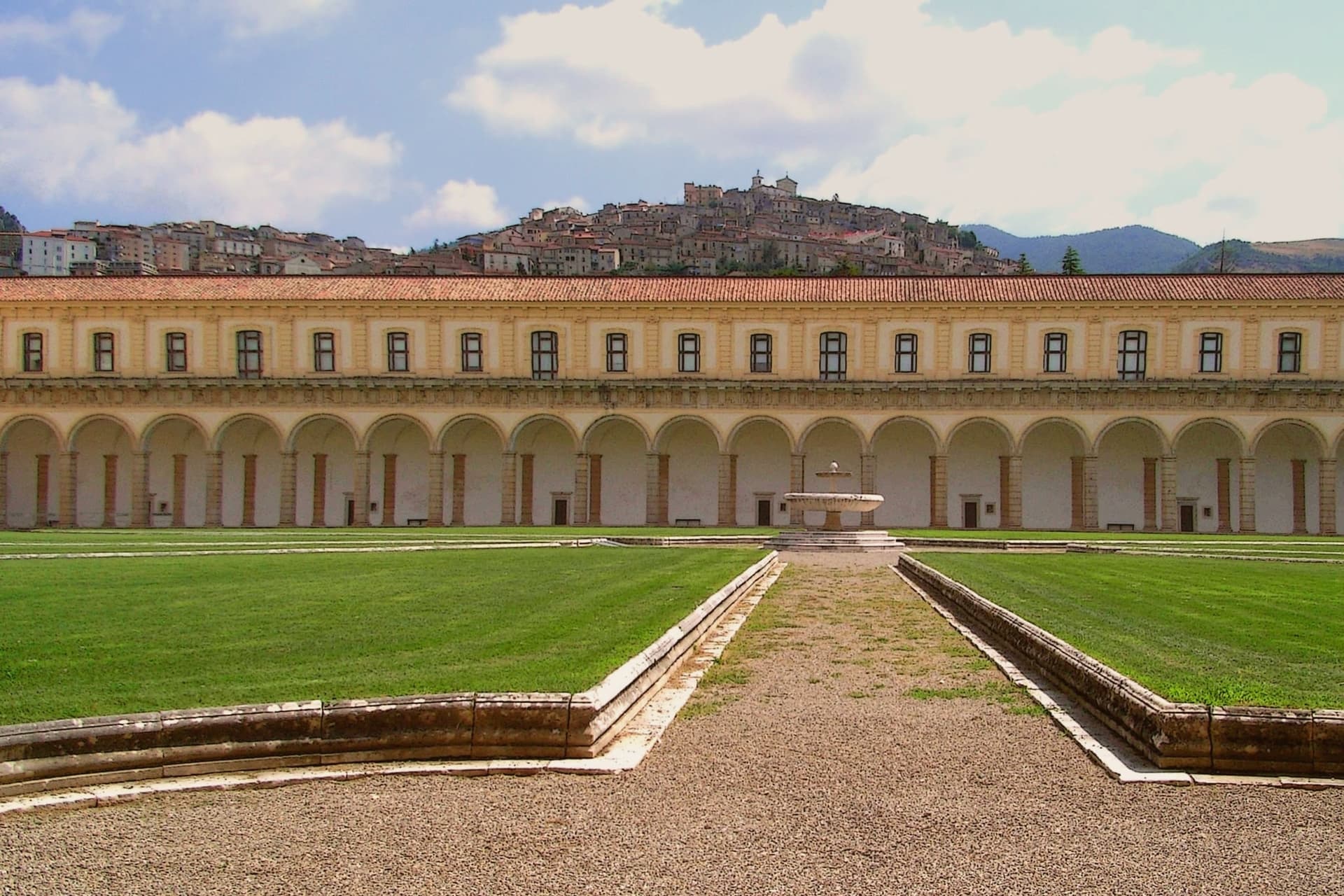
Padula sits on two hills above the Vallo di Diano, the long valley between the Cilento and the Lucanian Apennines. The monastery was founded on 27 April 1306 by Tommaso di Sanseverino, and UNESCO listed it in 1998 as part of the Cilento and Vallo di Diano serial site.
The medieval centro climbs the hill above it, stone houses and narrow lanes rising to the church of San Michele Arcangelo at the summit, from where the valley opens out below. It was in these streets that the 1857 volunteers were captured and killed, an event the town still marks with its monument.
The commune is also Città del Pane, for the round wheat loaves baked in local wood ovens. Padula reads as a town built around a single enormous fact below it and a smaller, older settlement above, the two connected by a hillside that has seen both monastic ambition and a violent end to a political expedition.
We confirmed you can reach this one by train.
What to see in Padula
- Certosa di San Lorenzo. 320 rooms and 51,500 m² of floor above the Vallo di Diano, its plan said to recall the griddle on which the dedicatee saint was burned alive. Built and rebuilt over four centuries by Carthusians suppressed in 1866.
- Centro storico di Padula. Medieval hill town above the monastery, with stone houses, narrow lanes, and the church of San Michele Arcangelo at the top.
- Battaglia di Padula. Monument to the fight in which the volunteers were captured and killed by Bourbon troops and local farmers in the streets of the centro.
How to get to Padula
There is a railway station in the town, so you can arrive without a car and never need one while you are here. Salerno is roughly 73 minutes away by road.
Our tip
May through September is the strongest window. The Vallo di Diano at 699 meters keeps cool nights even in August, and the Certosa di San Lorenzo opens longer hours through summer. July and August can climb past thirty degrees on the valley floor but the hill above keeps a usable breeze.
More from Anywhere Italy
- The best towns you can reach by train in the province of Avellino
- The best hidden hill towns you can reach by train in Campania
- The best hill towns you can reach by train in Campania
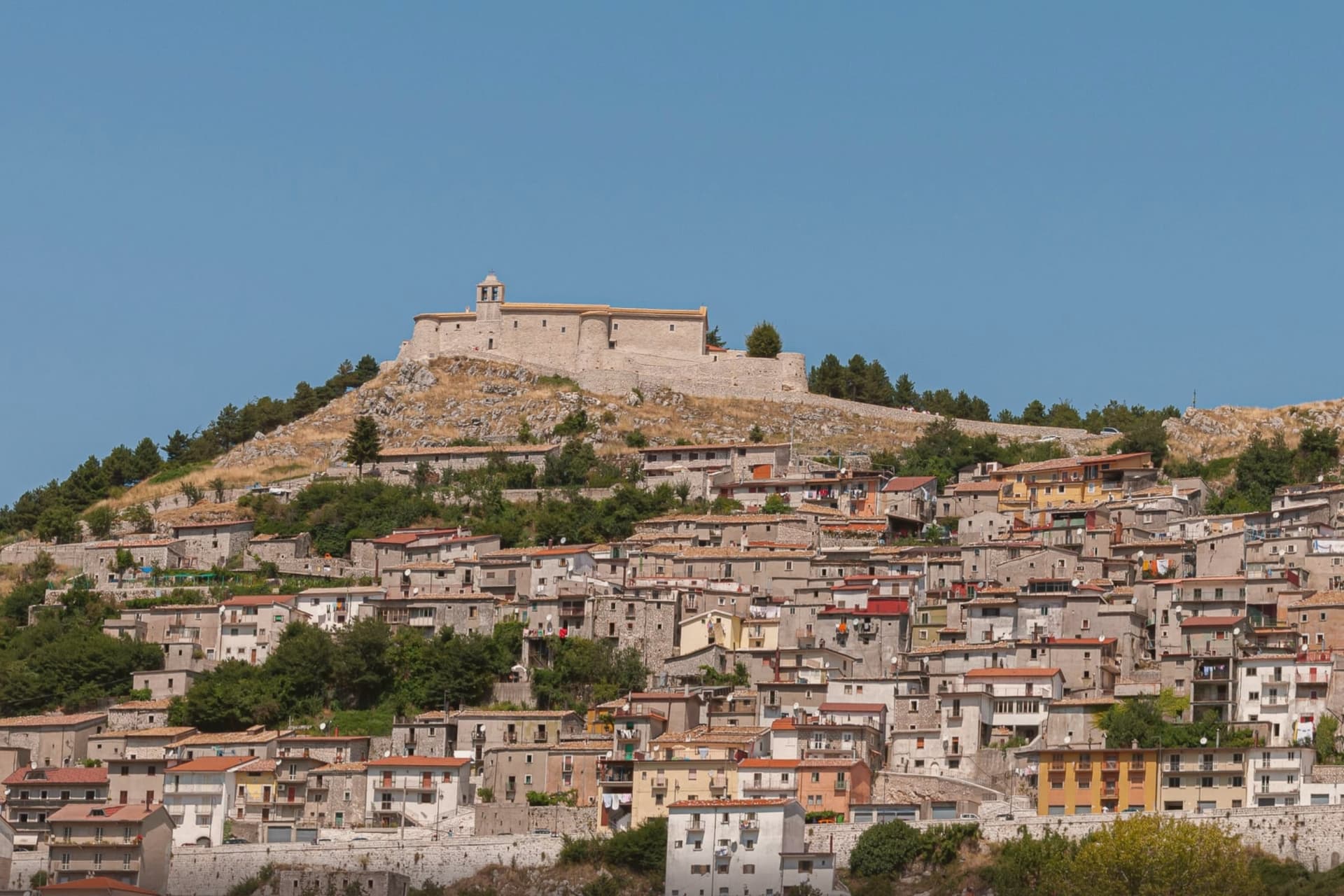 The best small mountain towns in Campania
- The best towns you can reach by train in the province of Salerno
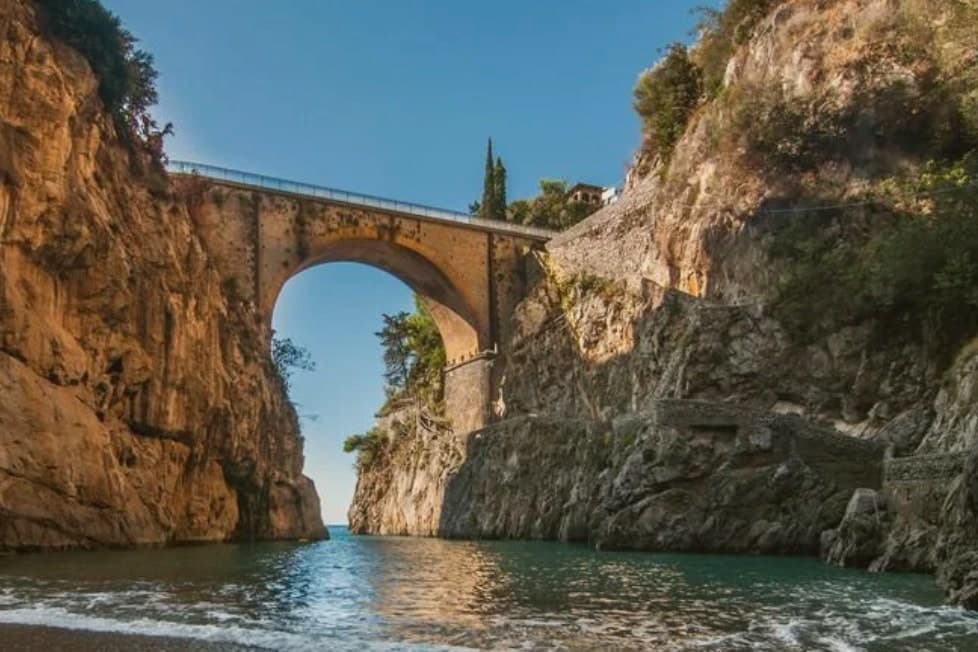 The best small wine towns in Campania