
The best small towns that eat well in Umbria
Umbria eats inland, and it tastes like it. The pork is cured in mountain air, the lentils come off high plains where the soil is thin, and black truffle turns up shaved over hand-rolled strangozzi from late autumn through winter. Towns here are built from the local limestone and river stone, walled, stacked on ridges above olive terraces and oak woods that go copper in November. The wine list is usually short and local, Sagrantino or Trebbiano Spoletino, poured without ceremony by whoever cooked.
Most people arrive for Assisi and Perugia, and there is a good reason for both, but the effect on the eating is predictable. Coach parties fill the terraces along the Assisi approach road, menus in several languages appear, and the kitchens learn to cook fast rather than well. Even Orvieto, further west, keeps the same rhythm through the summer. The food is not bad, it is simply built for volume.
The same hills, the same butchers and the same truffle grounds carry on well past those walls, up the Valnerina and along the Martani ridge, into towns where the dining room has a few tables and a guide has quietly taken note. These are the smaller places, walled villages and mountain hamlets, where the cooking answers to regulars first. Fewer people go, and the kitchens have not had to change.
Of the 47 communes we have mapped in Umbria, 27 qualify as towns that eat well: a national or international dining guide has named a table in each. This list is the small ones, 9 in all, ordered smallest first. The smallest, Preci, has 681 residents.
Elsewhere in the catalogue: The 6 best small towns that eat well in the province of Perugia and The prettiest villages that eat well within 90 minutes of Terni.
Preci
Why visit Preci
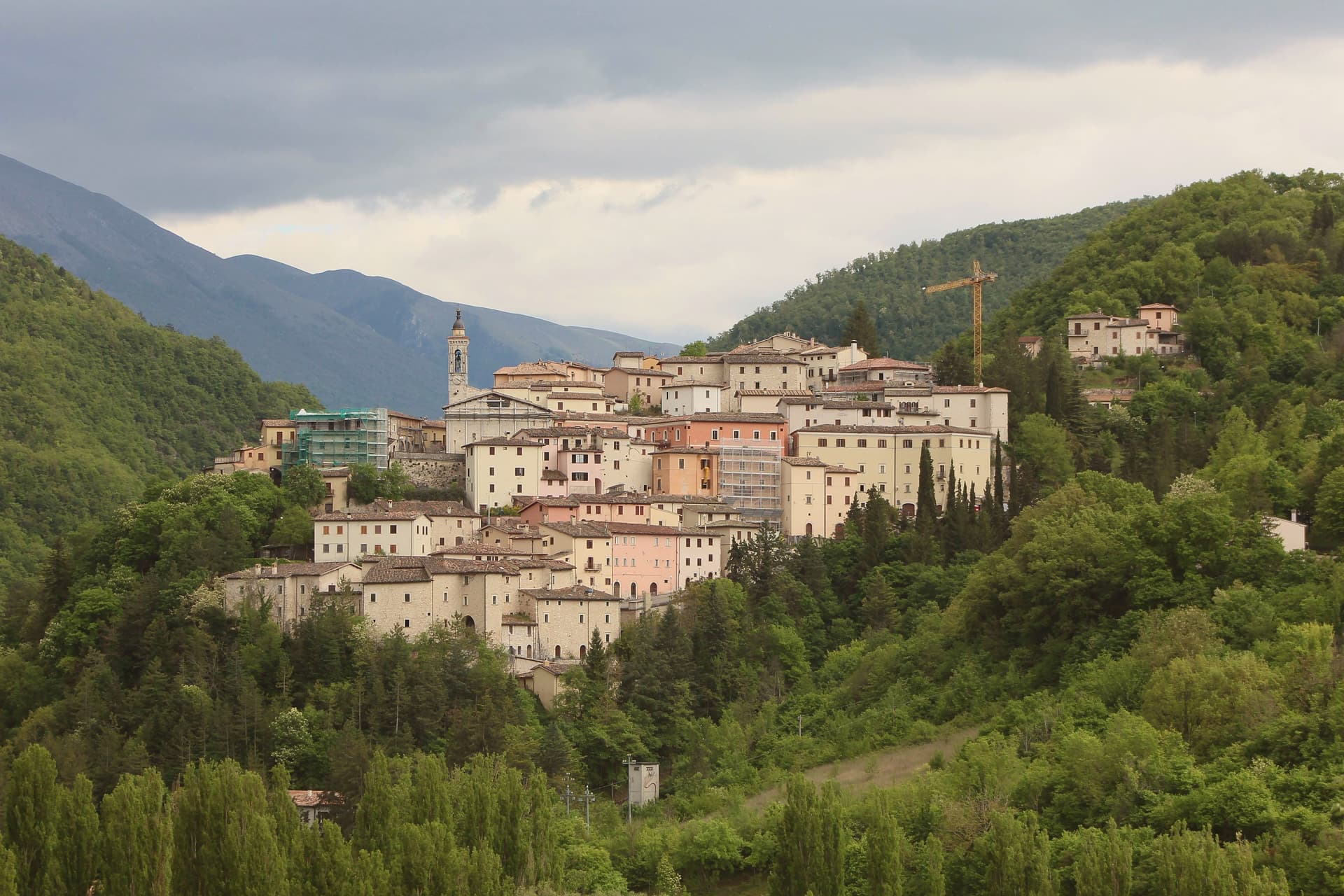
Preci sits at 596 meters in the Castoriana valley, inside the Monti Sibillini National Park and within driving distance of both Spoleto and Norcia. The walled borgo is crossed by the Campiano river and surrounded by mountain pasture.
The Abbazia di Sant'Eutizio, just outside the walls, is one of the oldest monasteries in Italy, founded by Syrian Benedictine monks in the fifth century. Their accumulated medical knowledge gave rise to the Preci school of surgery, which from the thirteenth to the eighteenth century supplied surgeons to royal courts across Europe; the local specialists worked in extraction of kidney stones, cataract surgery and hernia repair.
Noble palaces of the surgeon families still line the centro storico. The town was nearly destroyed by the 30 October 2016 earthquake, magnitude 6.5, which heavily damaged Sant'Eutizio; reconstruction is still in progress.
The Borghi più belli, Cittaslow and Parco Nazionale recognitions were retained through the rebuild.
Guaita Sant'Eutizio have been named by a guide.
What to see in Preci
- Abbazia di Sant'Eutizio. Benedictine monastery of 5th-century foundation, considered a place of origin for the Benedictine Order, heavily damaged in 2016 and under reconstruction.
- Centro storico fortificato. Walled medieval borgo on a hillside in the Castoriana valley, with noble palaces of the 16th-18th centuries built by the surgeon families.
- Museo della Scuola Chirurgica. Surgical school museum inside the Sant'Eutizio complex documenting the work of Preci surgeons from the 13th to 18th centuries.
How to get to Preci
Terni is roughly 90 minutes away by road.
Our tip
May through October is the working season at this elevation in the Valnerina. The Sibillini trails open in late spring and the Castoriana valley stays green through October. July and August are the months for the high trails to Piano Grande and Monte Vettore; the borgo itself stays cool in the upper twenties.
Sellano
Why visit Sellano
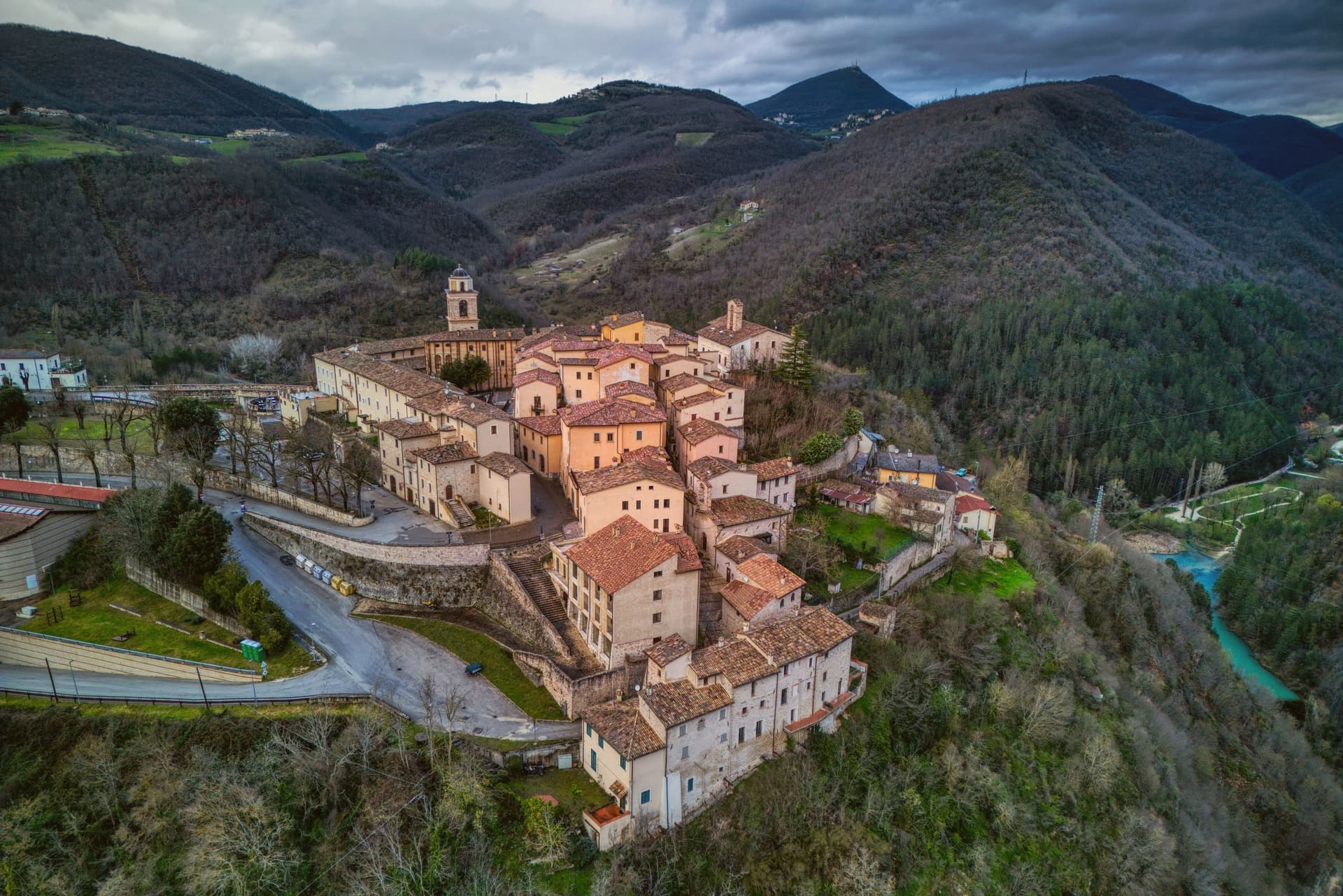
Sellano sits at 641 meters on the eastern edge of Umbria, looking over the Vigi stream toward the Marche border. The Vigi feeds the Nera; the valley is the upper Valnerina, one of the most isolated stretches of the Umbro-Marchigiano Apennines.
The 1979 and 1997 earthquakes hit the commune hard. The 1997 quake destroyed the sixteenth-century Palazzo dei Collicola at Montesanto and emptied most of the surrounding hamlets.
Reconstruction took two decades. In March 2024 a new structure opened: a 517-meter suspension footbridge across the Vigi gorge linking Sellano to the Castello di Montesanto, 175 meters above the valley floor, 1,023 steps, claimed as Europe's highest tibetan bridge alongside Portugal's Arouca 516.
Funded by NextAppennino, 1.6 million euros from PNRR earthquake-area development money. The bridge has become the visible decision of a small commune to bet its future on something other than waiting out emigration.
La Casa Rosa del Castello di Postignano have been named by a guide.
What to see in Sellano
- Ponte tibetano. 517-meter suspension footbridge opened March 2024, 175 meters above the Vigi gorge, 1,023 steps linking Sellano to Castello di Montesanto.
- Castello di Montesanto. Medieval fortress hamlet across the Vigi, depopulated after the 1997 earthquake, reachable on foot via the new bridge.
- Borgo medievale di Sellano. Compact walled centro storico looking east toward the Marche, partially rebuilt after the 1997 quake.
How to get to Sellano
Perugia is roughly 66 minutes away by road.
Our tip
May through October is the working season at 641 meters in the upper Valnerina. The new bridge runs full schedule, the trails along the Vigi gorge are open, and the temperature stays in the low twenties through summer afternoons. June and September are the best months for walking: long light, dry trail, late wildflowers. Sagra della Fojata e dell'Attorta falls in August.
Montone
Why visit Montone
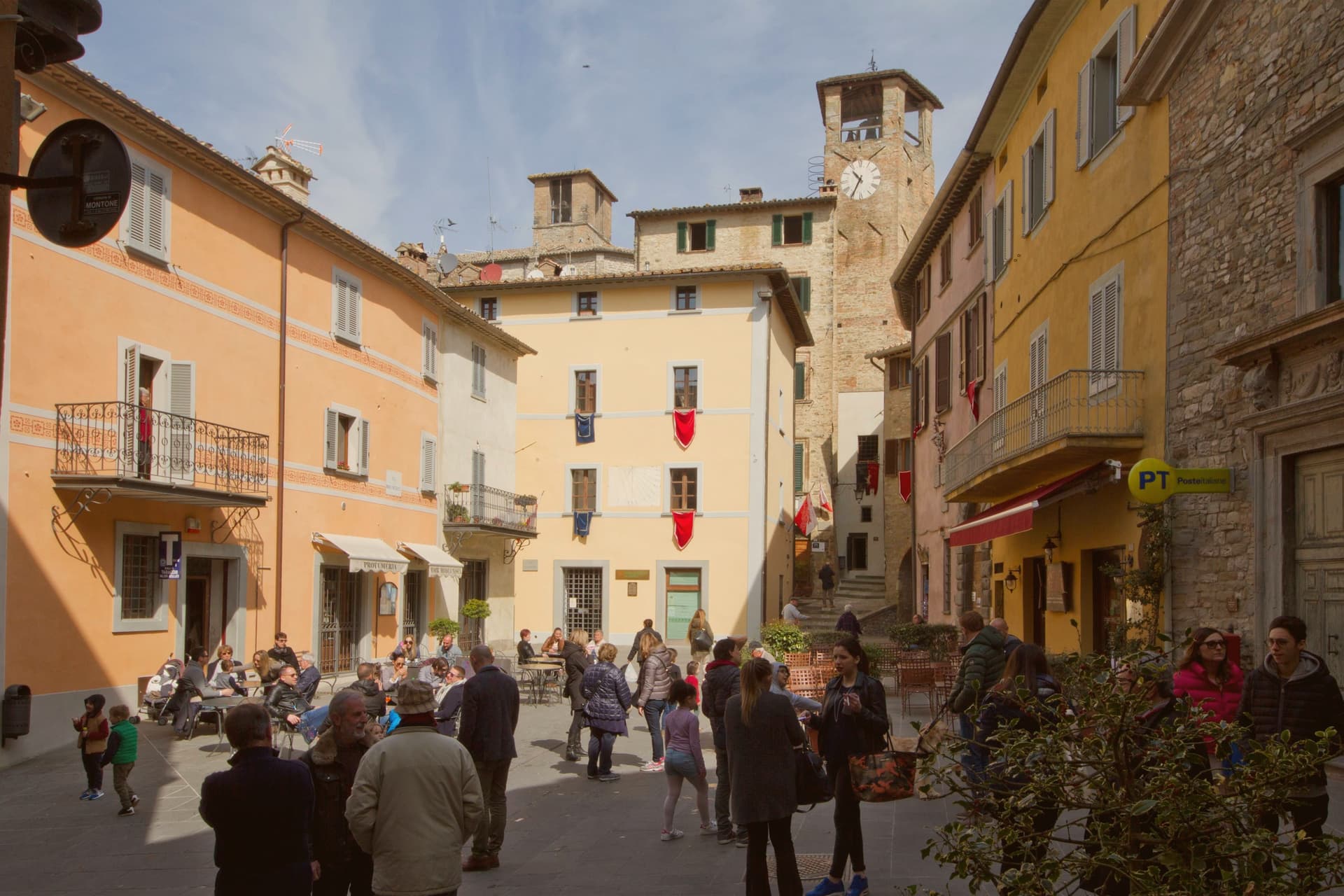
Montone sits at 482 meters on a ridge above the upper Tiber valley, thirty kilometers north of Perugia. The walled centro storico is small enough to circuit in fifteen minutes and steep enough that the route is the climb.
The town is the cradle of the Fortebracci, the condottieri family whose most famous member, Braccio da Montone, was made Count of Montone in 1414 by Antipope John XXIII. The Rocca di Braccio at the top of the hill and the Rocca d'Aries six kilometers out are both Fortebracci works.
The Gothic Chiesa di San Francesco, built around 1300 where the family had its houses, holds the Pinacoteca with a Bartolomeo Caporali altarpiece. The Donazione della Spina, a relic-thorn from Christ's crown given to the town by Carlo Fortebracci after the Venetians thanked him for naval service against the Turks, is processed twice a year, on Easter Monday and during the August week after Ferragosto.
Since 1997 the Umbria Film Festival has run here every July, founded with Terry Gilliam.
Tipico Osteria dei Sensi, Tipica Osteria dei Sensi, Locanda del Capitano & Tipico Osteria dei Sensi have been named by a guide.
What to see in Montone
- Chiesa di San Francesco. Gothic church of around 1300 with a fourteenth-century convent, picture gallery and cloister, on the hill where the Fortebracci had their houses.
- Rocca di Braccio. Fortress at the top of the borgo rebuilt under Oddo III Fortebracci in the late fourteenth century, now a panoramic ramparts walk.
- Rocca d'Aries. Castle six kilometers from the centro storico, the first Fortebracci stronghold according to tradition, restored and reopened to visit.
How to get to Montone
Perugia is roughly 47 minutes away by road.
Our tip
April through June and September into October are the steady months. The Umbria Film Festival runs in mid-July under Terry Gilliam's patronage, and the borgo doubles for that week with screenings in the piazze and the Rocca. The August Donazione della Spina pageant, the week after Ferragosto, fills the streets with medieval costumes and a Rocca di Braccio banquet.
Arrone
Why visit Arrone
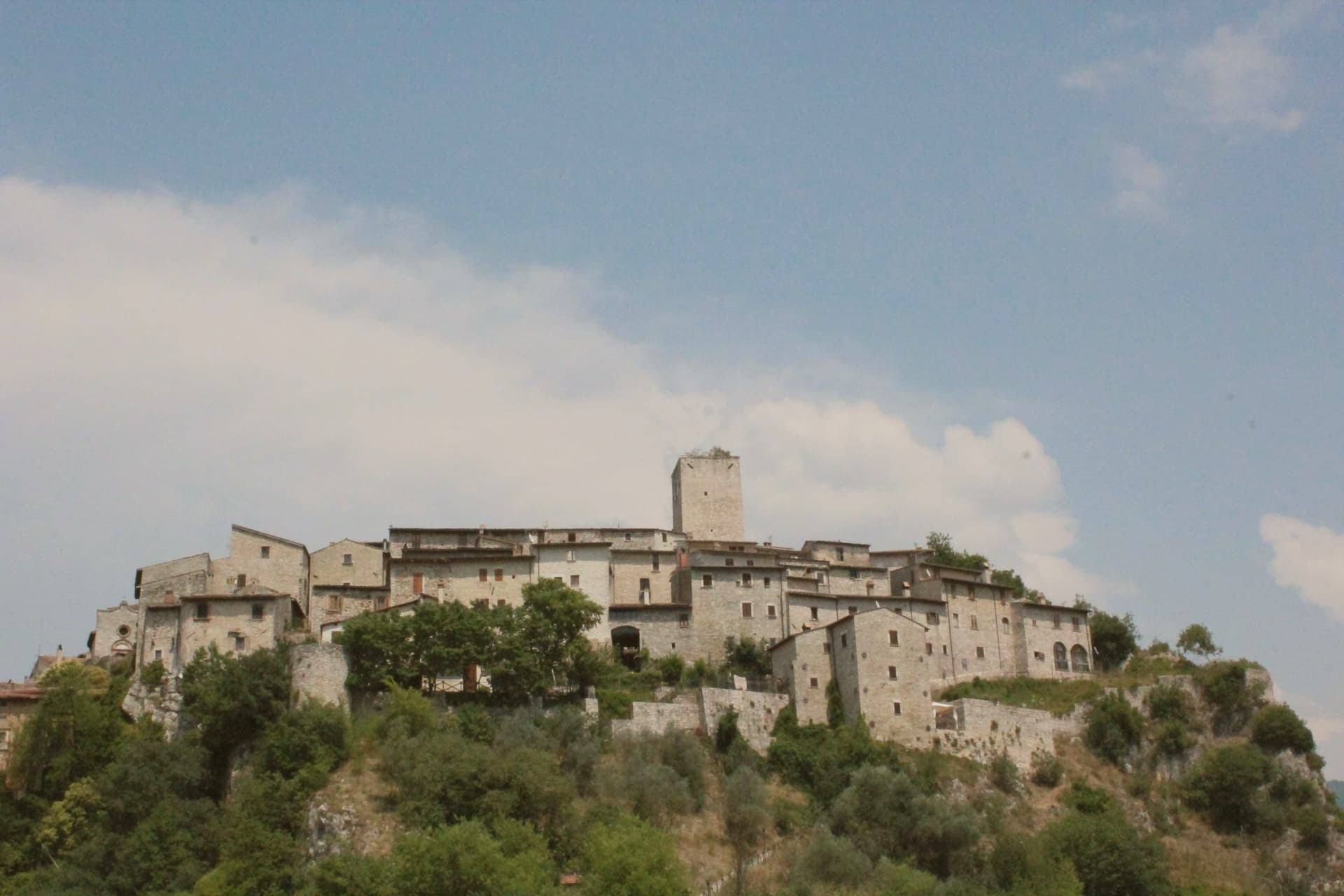
Arrone sits at 243 meters on the left bank of the Nera in the lower Valnerina, the upper part of the village a 9th- or 10th-century noble castle with its walls and alleys still in their medieval layout. The town grew up around the fortified hill and spread along the river as the danger faded.
The Cascata delle Marmore, the largest man-made waterfall in the world at 165 meters across three tiers, is five kilometers downstream; the Romans cut the original channel in 271 BC to drain the marshes around Rieti, and successive interventions through the 16th century gave the falls their present form. The Cammino di San Francesco passes through, and the village is the base for kayaking and rafting on the lower Nera.
The Chiesa di San Giovanni Battista in the upper castle holds 15th-century frescoes of the Umbrian school, and the collegiate Chiesa di Santa Maria in the lower village was rebuilt in the 16th century on Romanesque foundations.
Osteria dello Sportello have been named by a guide.
What to see in Arrone
- Castello di Arrone. Upper part of the village, the 9th-10th century castle, walls and steep medieval alleys preserved to the original layout.
- Chiesa di San Giovanni Battista. Fourteenth-century church inside the upper castle, with 15th-century frescoes of the Umbrian school, including a Madonna and saints.
- Chiesa Collegiata di Santa Maria. Sixteenth-century collegiate church in the lower village, rebuilt on Romanesque foundations, with frescoes by Vincenzo Tamagni.
How to get to Arrone
Terni is roughly 34 minutes away by road.
Our tip
April through June and September into October are the months for Arrone. The Nera runs full from snowmelt and spring rain, the rafting season opens, and the Cascata delle Marmore releases on a fixed schedule that suits the morning light. July and August touch the mid-thirties in the lower Valnerina; the falls cool the air around the basin, and the Cammino di San Francesco walkers pass through early.
Massa Martana
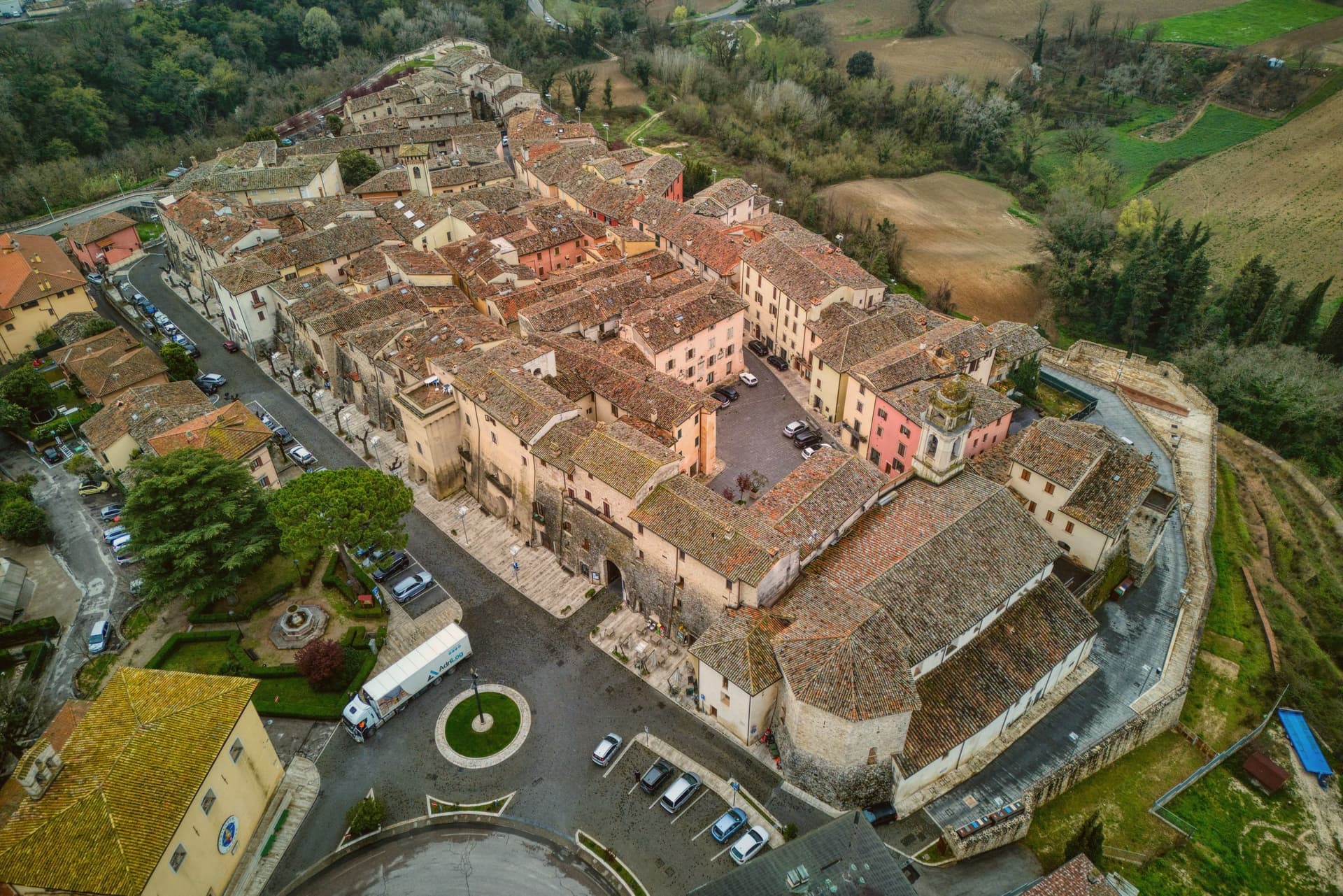
Why visit Massa Martana
Massa Martana is here for the Roman road. The Via Flaminia (the original 220 BC consular road from Rome north over the Apennines to Rimini, the spine of Roman Italian infrastructure for 500+ years) passes directly through the village — and Massa Martana sits at exactly the point where the road begins climbing into the Apennine pre-massif, with sections of the original Roman paving still visible in the surrounding countryside.
This made the area an important late-antique Christian community: the Catacombe di Villa San Faustino (3-4 km north of the centro) are the only Roman-era Christian catacombs in all of Umbria — discovered 1968, in continuous use from the 3rd to the 6th c AD, with 200+ tombs, original frescoes, and Latin inscriptions. The Abbazia dei Santi Fidenzio e Terenzio (9th-c Benedictine, on the hill above town, with surviving Carolingian elements + 12th-c restorations) is the other major monastic-era survivor.
The town itself is 3,613 residents at 351m altitude in central Umbria, 17 km southeast of Todi, with a medieval-Renaissance centro that was severely damaged by the 26 September 1997 Marche-Umbria earthquake (the same event that brought down the vault of the Basilica di San Francesco in Assisi). The reconstruction was completed in stages through 2010, and the town was re-inscribed on the Borghi più belli d'Italia list after restoration.
Today the centro reads as a meticulously restored small medieval ensemble — the Porta Santa Maria, the Chiesa Madre di San Felice (rebuilt), the Palazzo Comunale, the Torre Civica. Surroundings: the Monti Martani limestone massif (the prehistoric source of the Martana name) rises immediately east, with marked hiking trails, the Lago di Corbara just south, and the Todi UNESCO-fortified town 17 km away.
The food is Umbrian: strangozzi with truffle (Umbria's signature pasta), porchetta, salumi, Pecorino, the local Sagrantino di Montefalco 25 km west. The Festa di San Felice (25 January) and the Sagra del Tartufo (October) are the year's main events.
Fontana delle Pere have been named by a guide.
What to see in Massa Martana
- Via Flaminia Roman road. Original 220 BC consular road from Rome to Rimini passes directly through. Sections of Roman paving visible in the surrounding countryside — the spine of Roman Italian infrastructure for 500+ years.
- Catacombe di Villa San Faustino. The only Roman-era Christian catacombs in all of Umbria — 3-4 km north of the centro, in use 3rd-6th c AD, with 200+ tombs, original frescoes, Latin inscriptions. Guided tours.
- Abbazia dei Santi Fidenzio e Terenzio. 9th-c Benedictine abbey on the hill above town. Surviving Carolingian elements + 12th-c restorations. The most important monastic survivor in the comune.
How to get to Massa Martana
There is a railway station in the town, so you can arrive without a car and never need one while you are here. Terni is roughly 32 minutes away by road.
Our tip
Massa Martana is best April–June and September–October. The Sagra del Tartufo in October is the year's culinary highlight. Festa di San Felice (25 January) is the winter patronal event.
Norcia
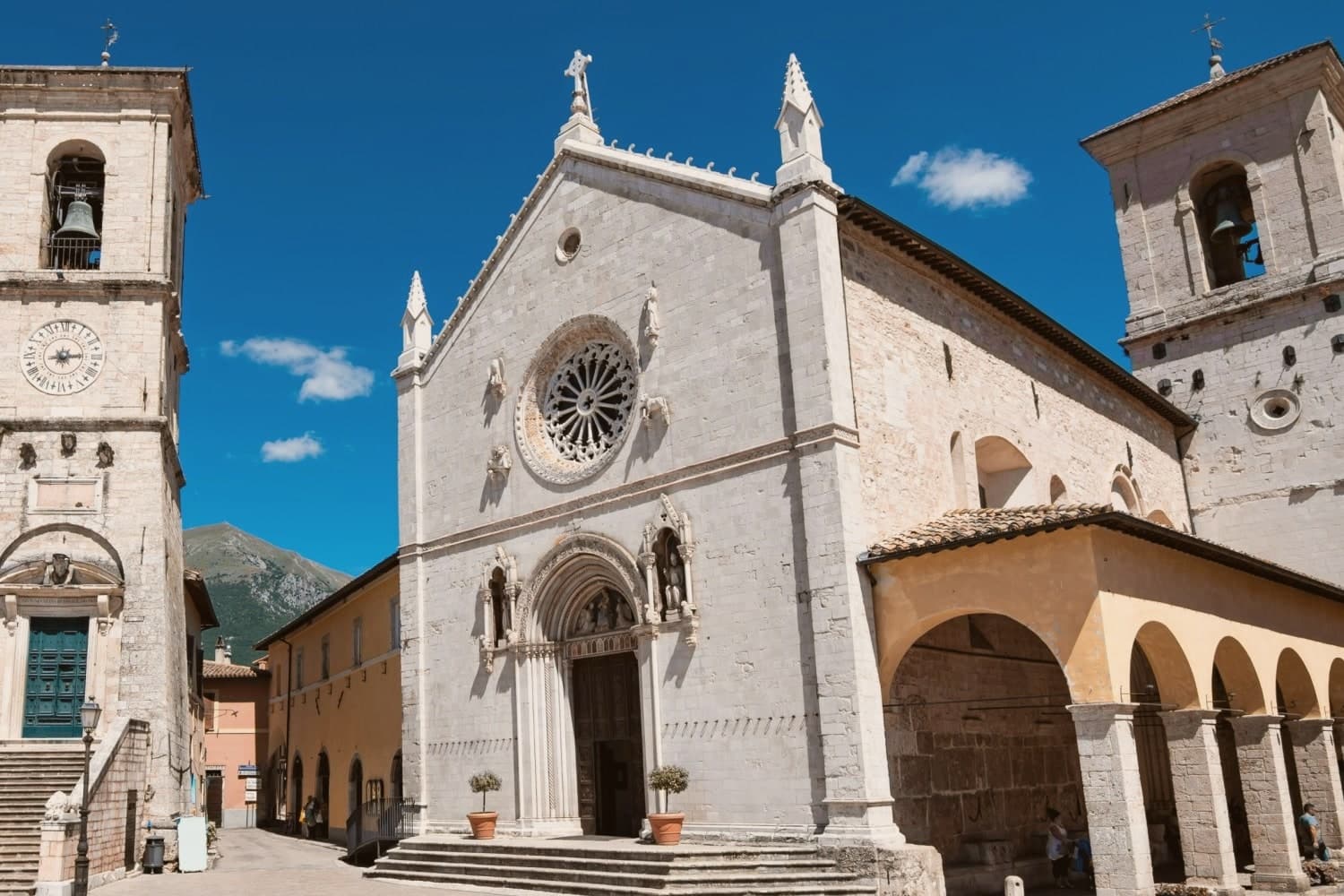
Why visit Norcia
Norcia sits at 604 meters on a high plateau on the Umbrian side of the Monti Sibillini, ancient Nursia of the Sabines, fortified in the 3rd century BC by Rome. Saints Benedict and his twin sister Scholastica were born here in 480; the Benedictine Order and the Ora et Labora motto that shaped Western monasticism began on this piazza.
The Basilica di San Benedetto rises on the traditional birthplace, built between 1290 and 1338 over a pre-existing crypt. On 30 October 2016 a magnitude 6.5 earthquake destroyed the nave; only the façade was left standing.
Reconstruction completed on 30 October 2025, nine years to the day, with the original stones and earthquake-resistant technology. The town gave its name to norcineria, the Italian word for quality pork delicatessen, after centuries of Norcia butchers specializing in wild boar and pork.
Black truffle from the Valnerina, lentils from Castelluccio, and ricotta from the high pastures complete the table.
Vespasia, Granaro del Monte, Casale nel Parco have been named by a guide.
What to see in Norcia
- Basilica di San Benedetto. Built 1290-1338 over the traditional birthplace of Saints Benedict and Scholastica, rebuilt with original stones after 2016, reopened 30 October 2025.
- Castellina. Fortified papal stronghold designed by Jacopo Barozzi da Vignola in 1554, on Piazza San Benedetto, now the Museo Civico e Diocesano.
- Piazza San Benedetto. Civic and religious heart of the centro storico, with the Palazzo Comunale, the basilica, the Castellina and the statue of Benedict at the center.
How to get to Norcia
Terni is roughly 93 minutes away by road.
Our tip
April through June and September into October are the months for Norcia. The plateau holds its color, the lentil fields of Castelluccio bloom from mid-June into July, and the high pastures are open for hiking. July and August stay cooler than the Umbrian valleys at 604 meters, but the town fills with festival crowds for the Mostra Mercato del Tartufo Nero on the last weekend of February and again for sagras through the summer.
Stroncone
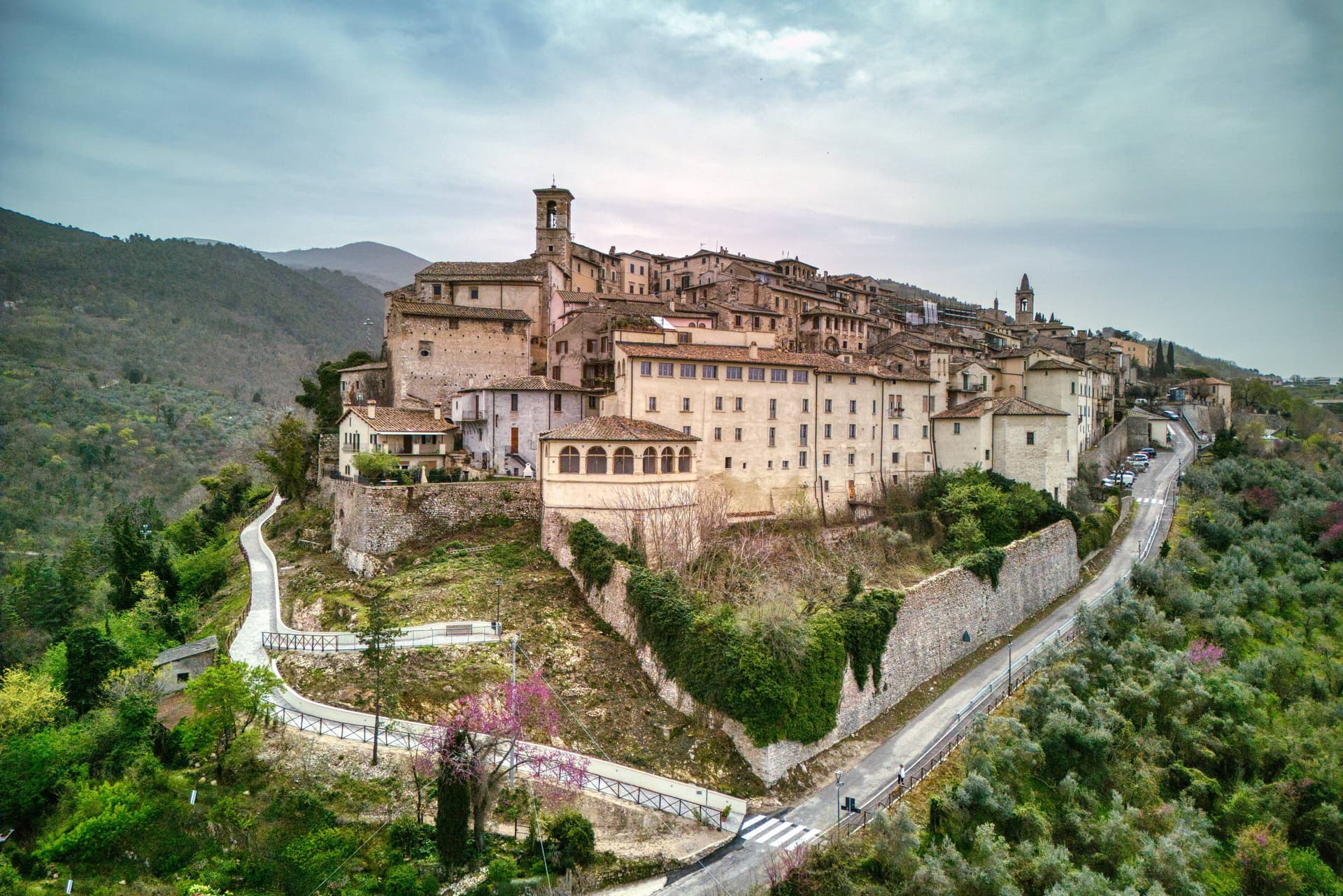
Why visit Stroncone
Stroncone sits at 451 meters on an olive-covered hill eight kilometers south of Terni, in the Conca Ternana on the western slope of the Apennine. The name traces to Duke Ugone of Spoleto, whose castrum Hugonis evolved through Castrugone and Strungone to the present form.
A group settled here around the tenth century and built a castle; Stroncone first appears in documents in 1012, when Giovanni di Pietro made a donation to the monastery of San Simeone. Pope Innocent III granted municipal self-rule in 1215.
The Convento di San Francesco, south of the walls, is one of the older Franciscan foundations in Umbria, founded by tradition by Francis himself in 1213, two years before papal recognition of the order. The medieval circuit walls remain almost complete, with the original gates framing a network of stepped lanes that climb to the small main square.
The Cammino di San Francesco passes through, picking up walkers between Rieti and Assisi.
Mammé have been named by a guide.
What to see in Stroncone
- Convento di San Francesco. Franciscan convent south of the walls, founded by tradition by Saint Francis in 1213, two years before papal recognition of the order.
- Centro storico. Walled medieval core with original gates intact, climbing through stepped lanes to the small main square at the top of the hill.
- Chiesa di San Giovanni Decollato. Main parish church at the heart of the borgo, with frescoed interior and a Renaissance baptismal font.
How to get to Stroncone
There is a railway station in the town, so you can arrive without a car and never need one while you are here. Terni is roughly 18 minutes away by road.
Our tip
April through June and September into October are the months for Stroncone. Olive harvest carries the autumn rhythm into late November, and the frantoi work into the evening through October and November. July and August are warm in the Conca Ternana but the hill is high enough that nights cool quickly. Sagra De u Cecu Maritu falls in July.
San Gemini
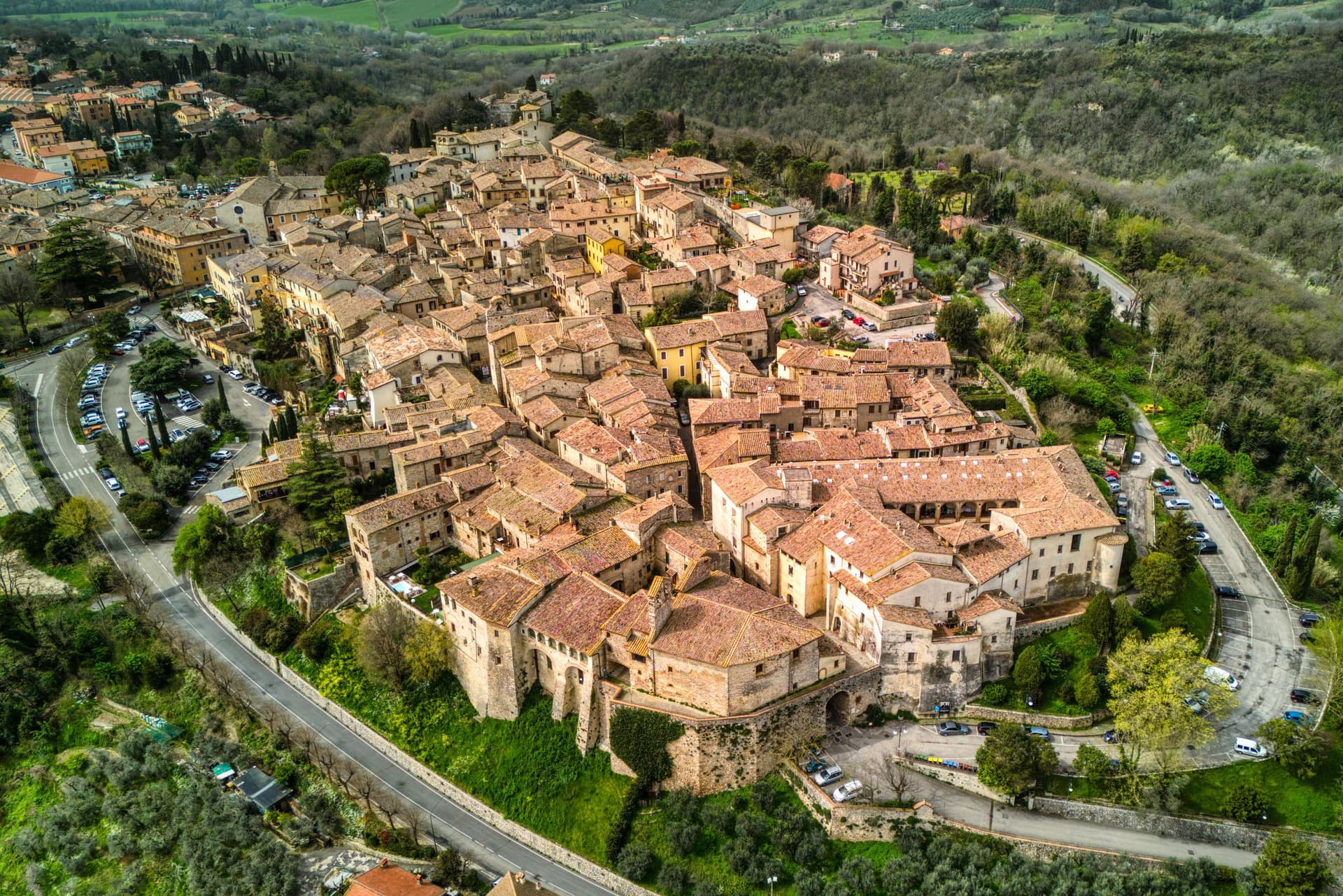
Why visit San Gemini
San Gemini sits at 337 meters on the southern slope of the Monti Martani, ten kilometers northwest of Terni. The archaeological park to the north preserves a stretch of polygonal Roman paving, a gate or honorary arch, an amphitheater, mosaic floors and the remains of an aqueduct, all part of a municipium abandoned probably after an earthquake.
The mineral springs rise just outside the populated centre, close enough that the town and the water source share the same ground without sharing a single street. The walled core steps down the slope in two halves that still define the town's rhythm: the district built around the old fortified height and the district gathered around the main square, each fielding its own team when the joust between them runs its course every year.
The cathedral, rebuilt in the nineteenth century but keeping a portal a great deal older, and the Gothic church on the square, each anchor their own end of the settlement. The Corpus Domini Infiorata blankets the procession route with petal mosaics nine weeks after Easter.
A hill town this size holding a Roman ruin, a bottled spring and a rivalry that still stages a joust suggests a place where the past was never cleared away to make room for the present, only built alongside it.
Origine al Grand Hotel San Gemini have been named by a guide.
What to see in San Gemini
- Parco Archeologico di Carsulae. Roman municipium four kilometers north of San Gemini, with the Via Flaminia paving, the Arco di San Damiano, amphitheater and aqueduct remains.
- Chiesa di San Francesco. Thirteenth-century Gothic church on the main square, single nave with pointed arches, alongside Palazzo Canova.
- Duomo di San Gemine. Originally twelfth-century late Gothic cathedral, rebuilt in the nineteenth century by Livoni with consultation from Antonio Canova, keeping a fifteenth-century portal.
How to get to San Gemini
There is a railway station in the town, so you can arrive without a car and never need one while you are here. Terni is roughly 16 minutes away by road.
Our tip
April through June and September into October are the dependable months. The Infiorata di Corpus Domini covers the procession route with petal mosaics nine weeks after Easter, usually early June. The Giostra dell'Arme runs over two weeks at the end of September into early October, the rioni in fifteenth-century costume, the joust in the main piazza. Giostra dell'Arme falls in September.
Bevagna
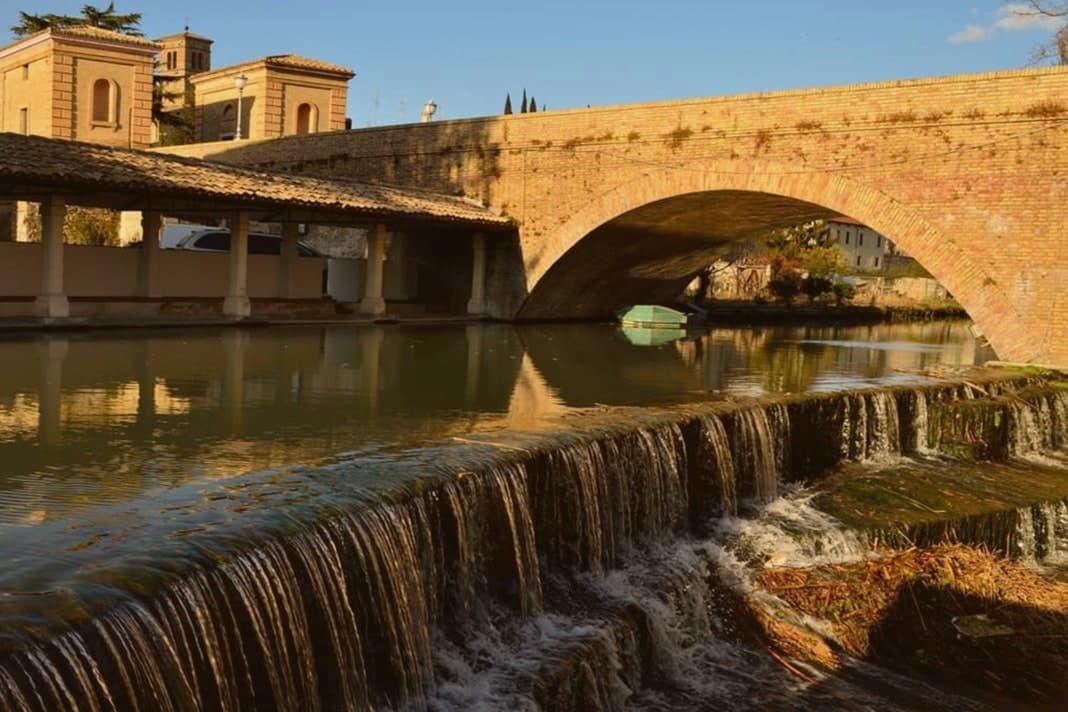
Why visit Bevagna
Bevagna sits on the floor of the Umbrian valley at 225 meters, where the Clitunno meets the Timia. Ancient Mevania, the name means she who stands in the middle, was a Roman mansio on the Via Flaminia, listed in the Antonine Itinerary.
A black-and-white mosaic of the 2nd century AD survives almost intact in the frigidarium of the Roman baths, twelve meters by seven, octopuses and dolphins in the center, tritons and sea-horses on the short sides. Piazza Silvestri at the heart of the centro storico holds two Romanesque churches that face each other at odd angles, San Michele Arcangelo and San Silvestro, built within years of each other in the late 12th century.
The Mercato delle Gaite each June turns the town into the year 1300 for ten days, four quarters competing on medieval trades and tavern menus, no anachronisms allowed. The Sagrantino slopes of Montefalco are nine kilometers up the road.
Serpillo, Ottavi Mare have been named by a guide.
What to see in Bevagna
- Piazza Silvestri. Twelfth-century civic square ringed by the Palazzo dei Consoli, the churches of San Silvestro and San Michele, and the fountain of 1896.
- Chiesa di San Michele Arcangelo. Romanesque collegiate church built by Binello and Rodolfo at the end of the 12th century, on the main square.
- Chiesa di San Silvestro. Romanesque parish church across the piazza, signed and dated 1195 by Binello, the same builder as San Michele.
How to get to Bevagna
Perugia is roughly 39 minutes away by road.
Our tip
April through June and September into October are the months for Bevagna. The valley fills with green, the Sagrantino vines run on the slopes above town, and the rose festival fills the gardens around the walls in May. The Mercato delle Gaite runs the second half of June and is the single most concentrated weekend on the Umbrian medieval calendar. Sagra della Lumaca falls in August.
More from Anywhere Italy
- The 6 best small towns that eat well in the province of Perugia
- The prettiest villages that eat well within 90 minutes of Terni
 The 9 best hidden hill towns that eat well within 90 minutes of Terni
 The 7 best small towns you can reach by train in Umbria
 The best towns you can reach by train that eat well within 90 minutes of Terni
- The best hidden olive oil towns that eat well in Umbria