
The best olive oil towns you can reach by train within 90 minutes of Pescara
Abruzzo presses some of the best oil in Italy, and it does it in small places: stone hill towns above rows of Dritta and Gentile di Chieti, mills that open when the fruit comes in and shut when it stops. Late autumn is the season, when the frantoi run at night and the first oil comes out cloudy and green and peppery enough to catch at the back of the throat. The landscape shifts fast here, from Adriatic pine and sand to clay hills to the limestone wall of the Gran Sasso and the Maiella behind. Village houses are built of local stone and brick, often with a loggia facing the sea, and the local table runs to arrosticini, pasta alla chitarra, sheep's cheese and vegetables cooked in oil that travelled a few kilometres to get there.
Most visitors to this coast head for Pescara itself, or push south to the beach resorts around Vasto and San Salvo in August, when the lungomare fills and every parking space near the sand is gone by mid-morning. The city has the airport, the long beach and the trains, and it works as a base, but the oil is not made there. Day trips out of it tend to go straight up to Rocca Calascio and Santo Stefano di Sessanio, which are worth the drive and are also where the coaches go.
The olive belt does not stop at the edge of the city. It follows the same railway lines that run north up the coast towards the Marche, south towards Molise, and inland along the Pescara valley towards Sulmona, and the towns along them press oil seriously enough to have joined the national association that certifies it. Fewer people get off at these stations. That is the list.
Of the 63 communes we have mapped within 90 minutes of Pescara, 8 qualify as olive oil towns you can reach by train: each belongs to the national association of olive-oil towns, and we have confirmed each is reachable without a car. The smallest, Archi, has 1,999 residents.
If you are still choosing, we have also written The best small olive oil towns within 90 minutes of Pescara and The 8 best wine towns you can reach by train within 90 minutes of Pescara.
Why visit Archi
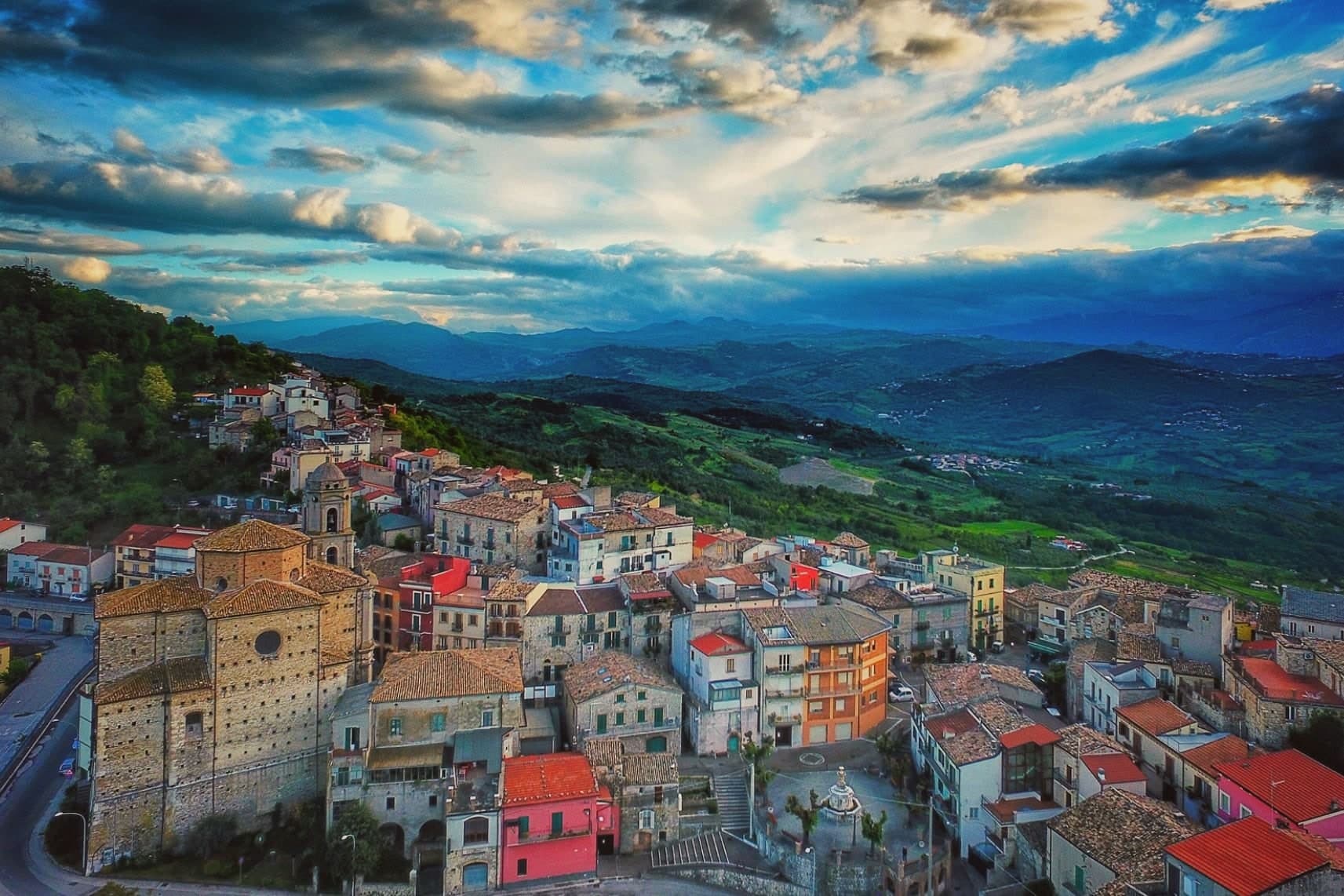
Archi sits at 492 meters on a rocky spur between the Val di Sangro and the Valle dell'Aventino, the geography that earned it the nickname Terrazza sul Sangro. The fortified borough is documented from the eleventh century, and the rocky position made it a stronghold of the Kingdom of Naples until the sixteenth century, held in turn by the del Balzo, Cantelmo, Colonna and Carafa families.
The medieval walls and ruins of the fifteenth-century castle, destroyed in the last war, are still visible at the spur's edge. Seventeenth and eighteenth-century palazzi line the streets between them.
The slopes below produce extra-virgin olive oil and summer truffles: Archi held its first Summer Truffle Trade Show in July 2013, and the network designation followed. Standing on the eastern edge of the centro storico, the view runs uninterrupted down both valleys to the Majella massif rising behind.
We confirmed you can reach this one by train.
What to see in Archi
- Ruderi del Castello. Castle ruins reconstructed in the fifteenth century and destroyed in the Second World War, at the eastern tip of the rocky spur.
- Mura medievali. Sections of medieval city walls preserved along the perimeter of the centro storico, marking the fortified borough's original line.
- Palazzi storici. Seventeenth and eighteenth-century civil architecture along the main streets, the residences of fief-holding families and notables.
How to get to Archi
There is a railway station in the town, so you can arrive without a car and never need one while you are here. Pescara is roughly 58 minutes away by road.
Our tip
April through October is the working calendar. The summer truffle festival lands in July, with degustations under the medieval walls. September and October bring olive harvest and the slopes turn silver-green.
Why visit Controguerra
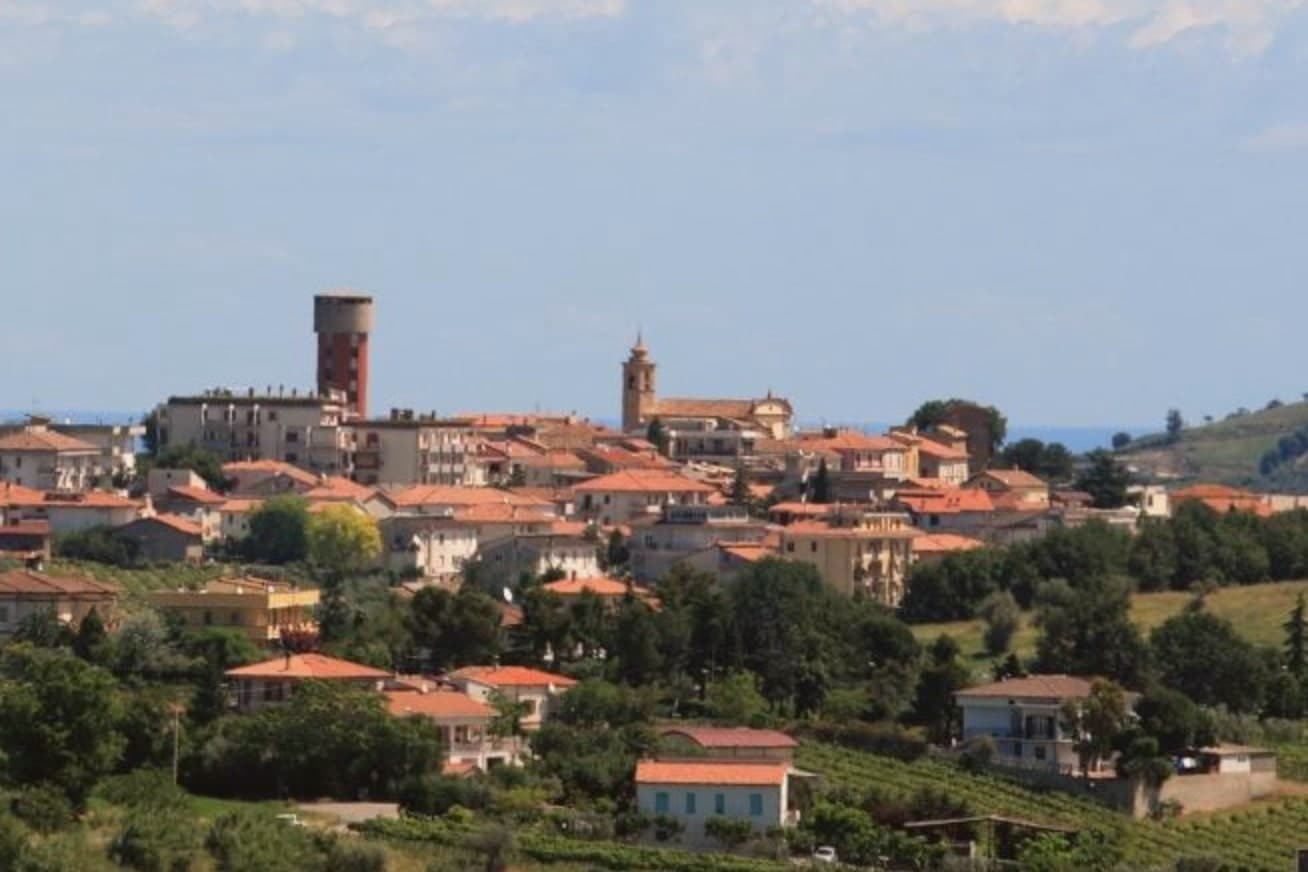
The village sits fifteen kilometers from the Adriatic, at the northern edge of Abruzzo, where the valley bends toward the river and the sea. The wine zone that carries the town's name reaches beyond it, spread across five communes sharing the same elbow of land between river and coast.
The reds run at least sixty percent Montepulciano, with Merlot, Cabernet Franc and Cabernet Sauvignon allowed up to fifteen percent; the whites are sixty percent Trebbiano with at least fifteen percent Passerina; the spumante sets Trebbiano against Chardonnay, Verdicchio and Pecorino. The old center holds to its ridge above the valley while the vines and olive groves that support both the wine and oil designations spread on the slopes below, the same ground doing double duty.
The place works because the name on the bottle and the name on the map are the same thing, a small hilltop settlement whose slow-food charter governs an area small enough that vineyard and piazza are never far apart.
We confirmed you can reach this one by train.
What to see in Controguerra
- Centro storico. Small hilltop medieval centre on a ridge above the valley, with brick palazzi and the parish church on the central piazza.
- Chiesa di San Salvatore. Parish church on the main piazza, the religious anchor of the medieval ridge village, with a rebuilt eighteenth-century interior.
- Cantine del Controguerra DOC. Family cellars open by appointment, pouring Montepulciano-based reds, Trebbiano-Passerina whites and Pecorino spumante from the same slopes the town gives its name to.
How to get to Controguerra
There is a railway station in the town, so you can arrive without a car and never need one while you are here. Pescara is roughly 56 minutes away by road.
Our tip
April through October is the working season for vineyards and oil. May and September are the best months for cellar visits, with mild light and the vineyards in full leaf. July and August can climb into the mid-thirties and the centro empties through the hot afternoon. Controguerra in festa falls in July.
Why visit Tocco da Casauria
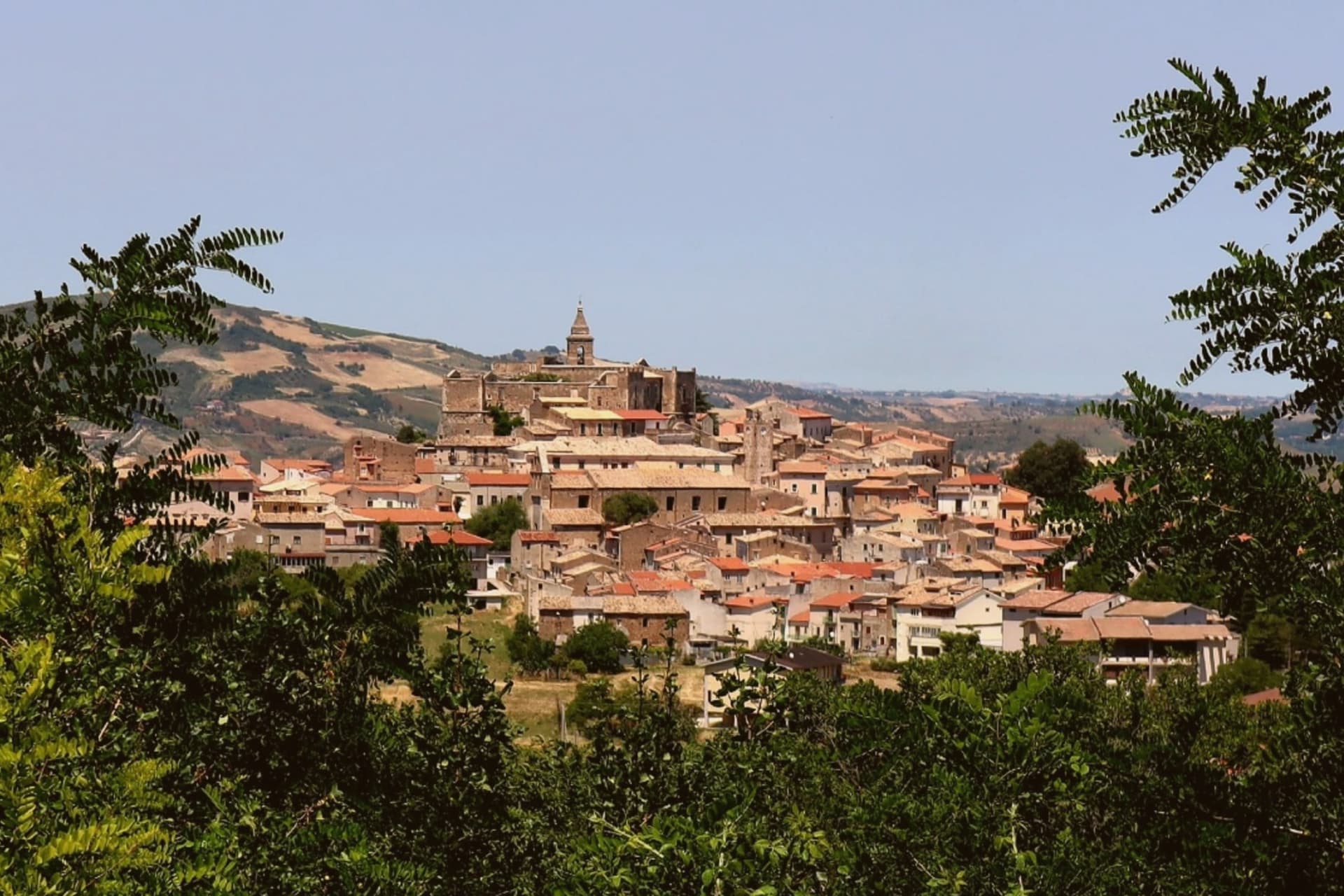
Tocco sits on a hill at 356 meters between the Pescara river and the Arolle stream, with the Maiella massif behind it. The town was founded around 872 under the authority of the abbey nearby, established in fulfilment of a vow made during an imprisonment in Benevento.
The abbey held the relics of Pope Clement I. The town was simply Tocco until 1861, when da Casauria was added to honour the abbey it grew up beside.
The centro storico is dominated by the Caracciolo Castle, rebuilt in Renaissance style after the 1456 earthquake, while the lower slopes toward the Pescara valley carry olive groves and Montepulciano vines, the produce that earned the town its place among the Città dell'Olio and Città del Vino. Centerba, the high-proof liqueur made from a hundred Maiella herbs, has been distilled here since the mid-19th century by the Toro family.
What holds the town together is the relationship between the abbey below and the settlement on the hill: a monastic foundation that gave the place its name, its early authority, and, centuries later, its liqueur trade and vineyards grew up in the valley it once governed.
We confirmed you can reach this one by train.
What to see in Tocco da Casauria
- Abbazia di San Clemente a Casauria. A national monument since 1894, standing just outside the commune in Castiglione. Founded by Louis II, its bronze doors and their 72 panels remain the reason to make the detour.
- Castello Caracciolo. Built between 1187 and 1220 under Frederick II, destroyed by the 1456 earthquake and rebuilt in Renaissance style, dominating the centro storico.
- Chiesa di Sant'Eustachio. Main church of Tocco, built in the 18th century and named for the town's patron, with the statue of the saint inside.
How to get to Tocco da Casauria
There is a railway station in the town, so you can arrive without a car and never need one while you are here. Pescara is roughly 47 minutes away by road.
Our tip
April through October works best in Tocco. The hill catches breeze off the Maiella even in July, and the olive harvest in October fills the lower terraces with activity. Spring opens the abbey grounds and the Pescara valley vineyards.
Why visit Petacciato
Petacciato stands at 225 meters on the last ridge before the Adriatic, with the Tremiti islands offshore and the Maiella visible to the north and the Gargano to the south on clear days. The centro storico keeps its medieval shape around the Chiesa di Santa Maria, built in tuff and sandstone between the eleventh and thirteenth centuries, originally dedicated to San Rocco and still holding three naves with three altars.
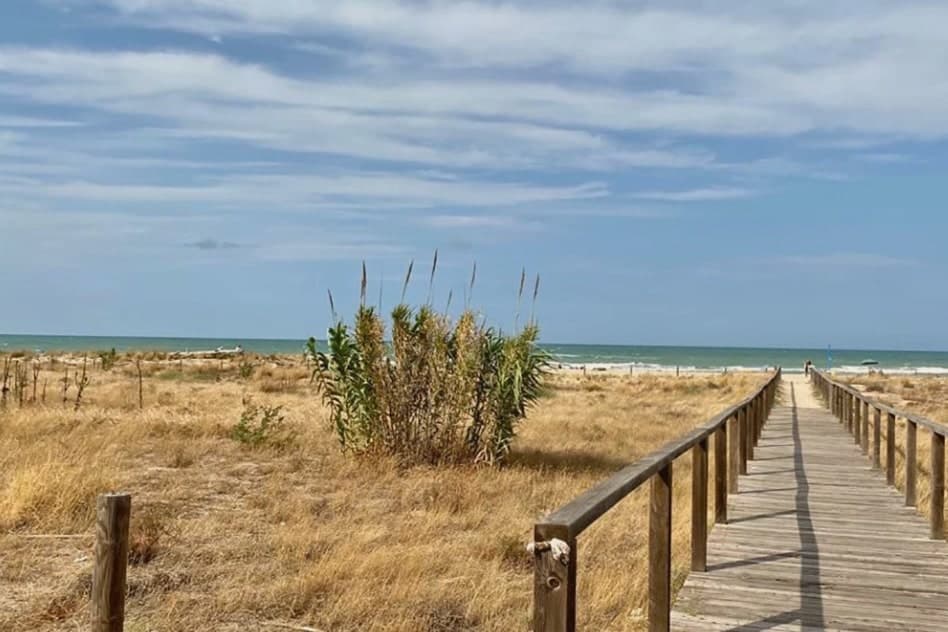
The Marina di Petacciato, a few kilometers below the village, runs a long sand beach lined with pine, with low dunes and shallow water that draws Italian families in July and August. The hills above produce the olive oil that earned the Città dell'Olio designation.
Petacciato was one of the lower-Molise villages Serafino Razzi listed in his sixteenth-century chronicle of Slav-founded communities, though the visible record today is Italian Romanesque and twentieth-century coastal.
We confirmed you can reach this one by train.
What to see in Petacciato
- Chiesa di Santa Maria (già San Rocco). Romanesque church in tuff and sandstone, built between the eleventh and thirteenth centuries, with three naves and three altars.
- Centro storico. Medieval ridge village around the old church, with stone houses and the long Adriatic view east.
- Marina di Petacciato. Long sand beach below the village, pine-backed and low-duned, the main summer draw.
How to get to Petacciato
There is a railway station in the town, so you can arrive without a car and never need one while you are here. Pescara is roughly 83 minutes away by road.
Our tip
May through September is the working coast. June gives the cleanest water before the families arrive; July and August fill the Marina di Petacciato with the lower Adriatic crowd. The ridge village above stays a few degrees cooler than the beach and is the night-time refuge in August.
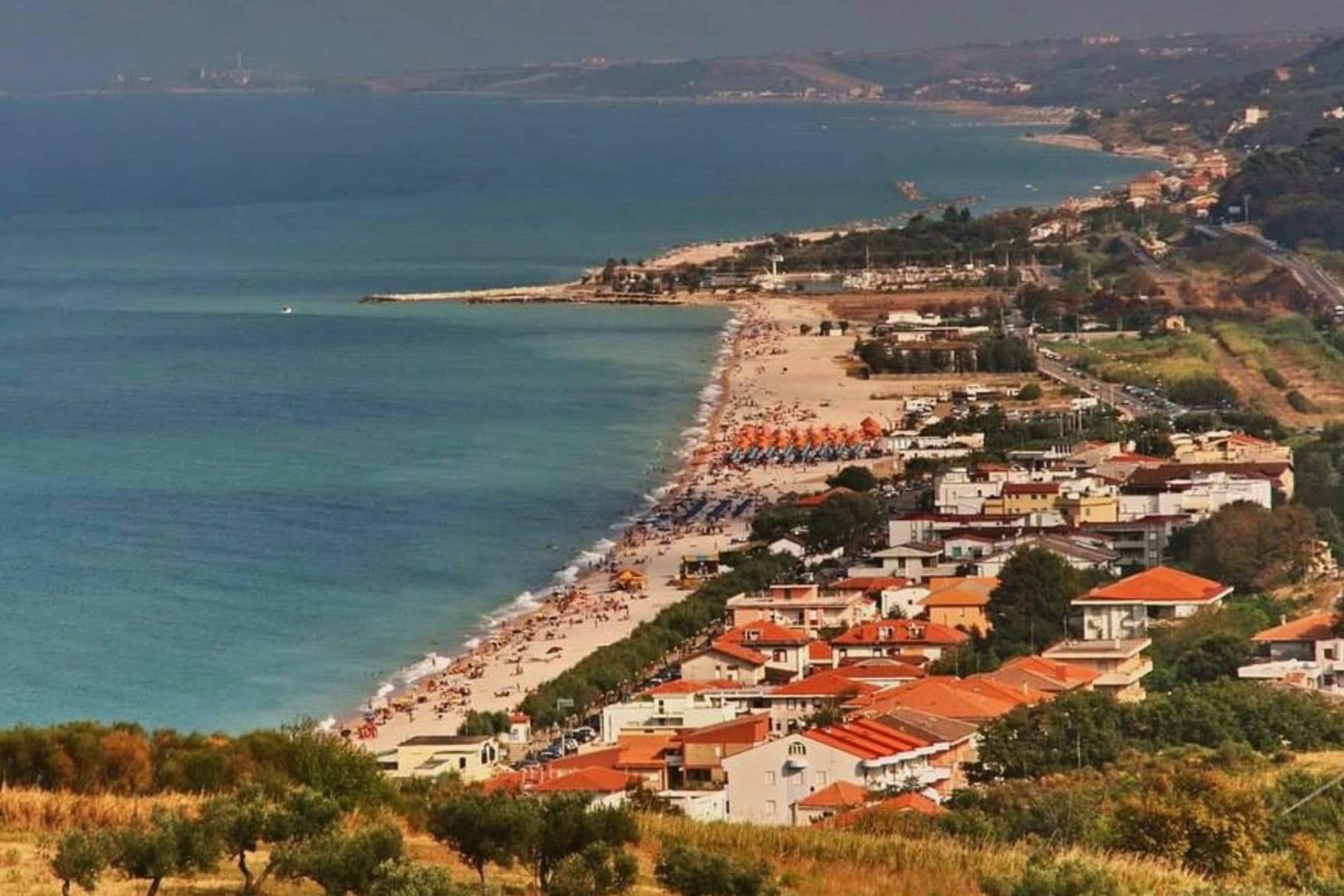
Why visit Fossacesia
Most people arrive at Fossacesia for the abbey and stay for the coast underneath it. San Giovanni in Venere was rebuilt in the twelfth century on ground that had held a temple to Venus, which is where the name comes from, and it sits on a shoulder of hill with the Adriatic laid out below and olive groves on every side.
Down at sea level, Fossacesia Marina is the northern end of the Via Verde, the cycle path laid along the route of the old coastal railway, and the trabocchi themselves stand out over the water on their wooden legs.
We confirmed you can reach this one by train.
What to see in Fossacesia
- Abbazia di San Giovanni in Venere. The Benedictine abbey above the coast, rebuilt in the twelfth century on the site of a Roman temple. The carved portal and the crypt are the reasons to climb up.
- Via Verde della Costa dei Trabocchi. The coastal cycle path on the old railway line. Fossacesia Marina is its northern trailhead.
- The trabocchi. The timber fishing platforms built out over the water along this stretch of coast. Several are still worked and a few serve dinner.
How to get to Fossacesia
There is a railway station in the town, so you can arrive without a car and never need one while you are here. Pescara is roughly 44 minutes away by road.
Our tip
May, June and September are the best of it. The abbey is worth the trip in any month, but the coast below only works when the sea is warm and the path is not baking. August is busy at the marina and quiet up at the abbey. Festa dell'Uva e del Vino a Fossacesia falls in September.
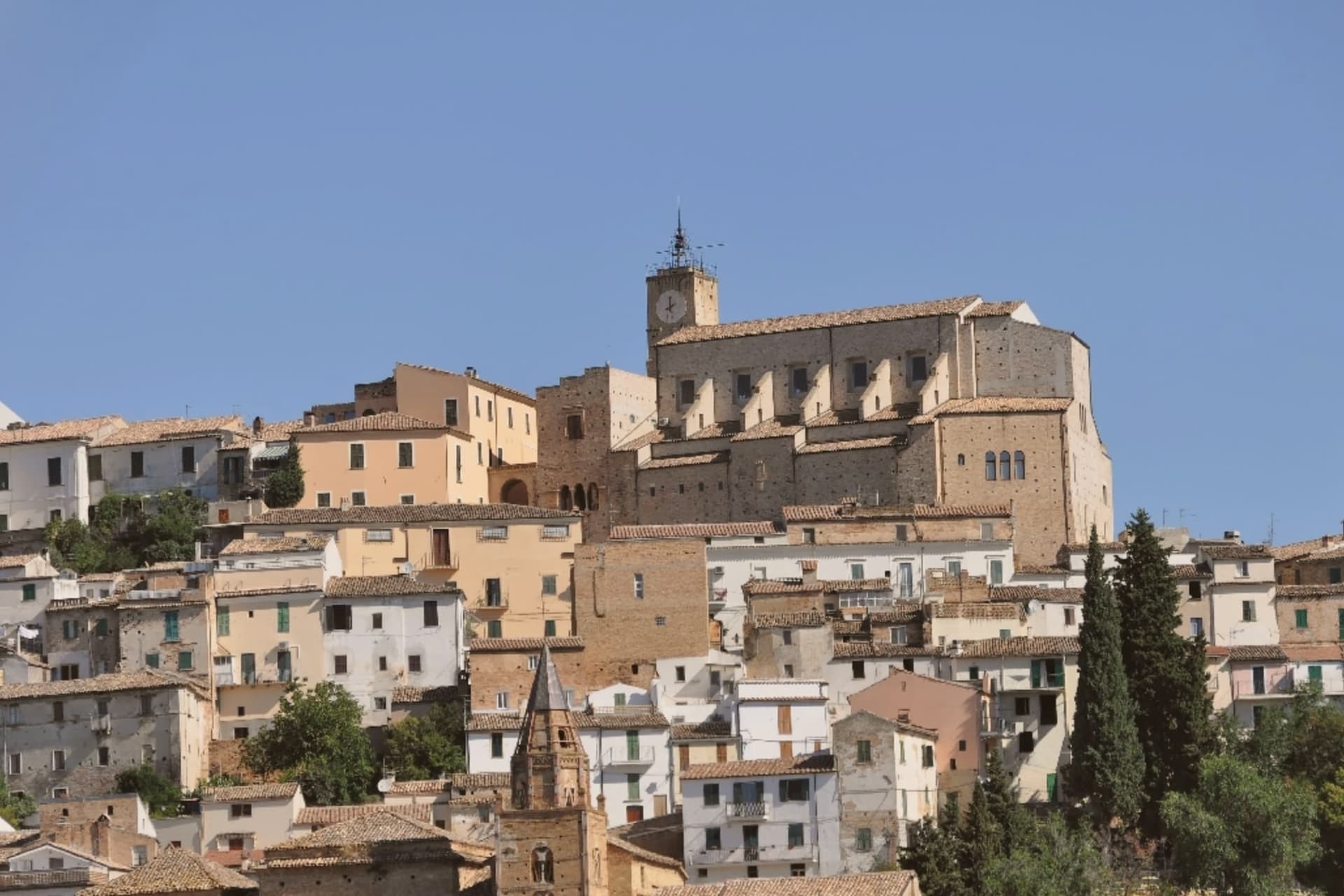
Why visit Loreto Aprutino
Loreto Aprutino sits at 290 meters on a hill twenty kilometers inland from Pescara, in the so-called Golden Triangle of Abruzzo olive oil that it shares with Pianella and Moscufo. Pre-Roman necropoleis at Colle-Fiorano and Farina-Cardito show a settlement long before the medieval town.
The Romanesque-Gothic church of Santa Maria in Piano, built around 1280, holds the Giudizio particolare delle anime, a wall fresco in encaustic technique that shows souls crossing a bridge thin as a human hair, falling into a river of boiling pitch if not saved; the Aquinas family commissioned the cycle. Castello Chiola dominates the ridge above the town, restored after Italian unification in 1863.
The olive-oil tradition runs to the fourth century BC; the local DOP is Aprutino Pescarese, and the town's Museo dell'Olio explains the chain from grove to bottle. The Acerbo Castelli ceramics collection covers majolica from the fifteenth to the nineteenth century.
We confirmed you can reach this one by train.
What to see in Loreto Aprutino
- Chiesa di Santa Maria in Piano. Church from 1280 with the encaustic fresco Giudizio particolare delle anime, the bridge-of-hair Judgment commissioned by the Aquinas family.
- Castello Chiola. Medieval castle on the highest point of the ridge, restored after 1863, now a hotel and still the dominant skyline feature.
- Museo Acerbo delle Ceramiche di Castelli. Collection of Castelli majolica from the fifteenth to nineteenth century, the most prestigious ceramic tradition of Abruzzo.
How to get to Loreto Aprutino
There is a railway station in the town, so you can arrive without a car and never need one while you are here. Pescara is roughly 38 minutes away by road.
Our tip
April through June is the green window in the Aprutino hills, with mild evenings and active olive groves. September and October bring the harvest and the new-oil season; tasting tours run through both months. July and August are hot at 290 meters, and visitors usually move between the cool nave of Santa Maria in Piano and the shaded courtyards of the centro.
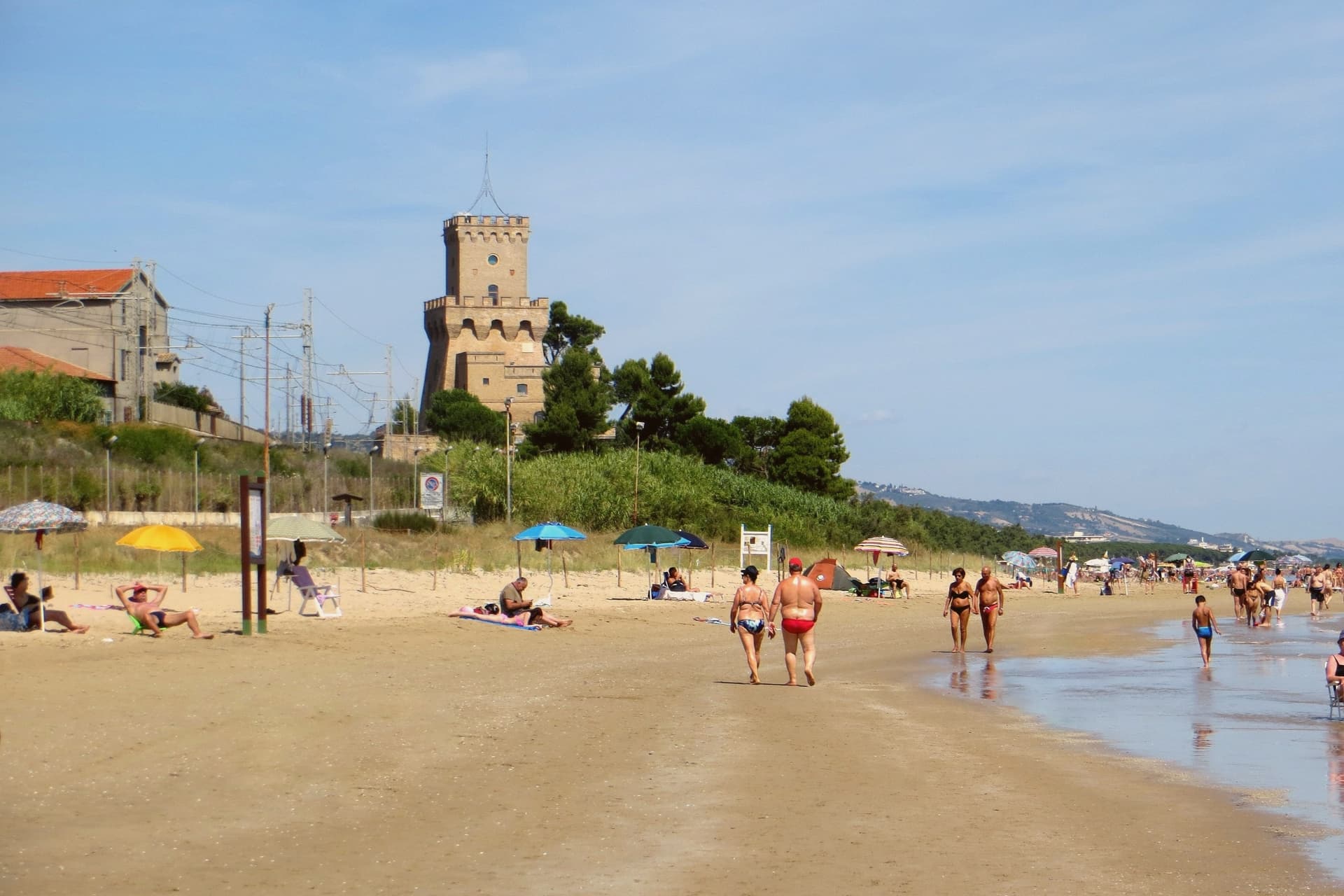
Why visit Pineto
Pineto sits at sea level, one of the Sette Sorelle, the seven Adriatic resorts of the Teramo coast. The town was planned in the 1920s by Luigi Filiani as a beach resort under pine forest, and renamed Pineto in 1925 after Gabriele D'Annunzio's poem La Pioggia nel Pineto.
In 1929 it replaced Mutignano, the older hill village above, as the capoluogo of the comune. Two kilometers south of the centre stands the Torre del Cerrano, built around 1568 by Charles V as a watchtower against Ottoman raiders.
In 2010 the tower and the stretch of sea in front of it became Abruzzo's first marine protected area, 3,431 hectares of coast and shallow water. The beach has held a Blue Flag in most years since 2007.
The pine canopy, planted to hold the dunes, still shades the seafront promenade as far north as the Vibrata river.
We confirmed you can reach this one by train.
What to see in Pineto
- Torre del Cerrano. Sixteenth-century watchtower built around 1568 under Charles V against Ottoman raids, now the gateway to Abruzzo's first marine reserve.
- Area Marina Protetta Torre del Cerrano. 3,431 hectares of protected coast and shallow Adriatic water established in 2010, the first marine reserve in the region.
- Pineta Catucci. Coastal pine forest planted in the early twentieth century to hold the dunes, shading the seafront promenade and the bike path.
How to get to Pineto
There is a railway station in the town, so you can arrive without a car and never need one while you are here. Pescara is roughly 26 minutes away by road.
Our tip
May through September is the season. June and September are the best beach months, warm but not hot, with the marine reserve open for guided snorkelling and the bike path along the pineta in full use. July and August bring Italian summer crowds, especially from Pescara, and the seafront fills.
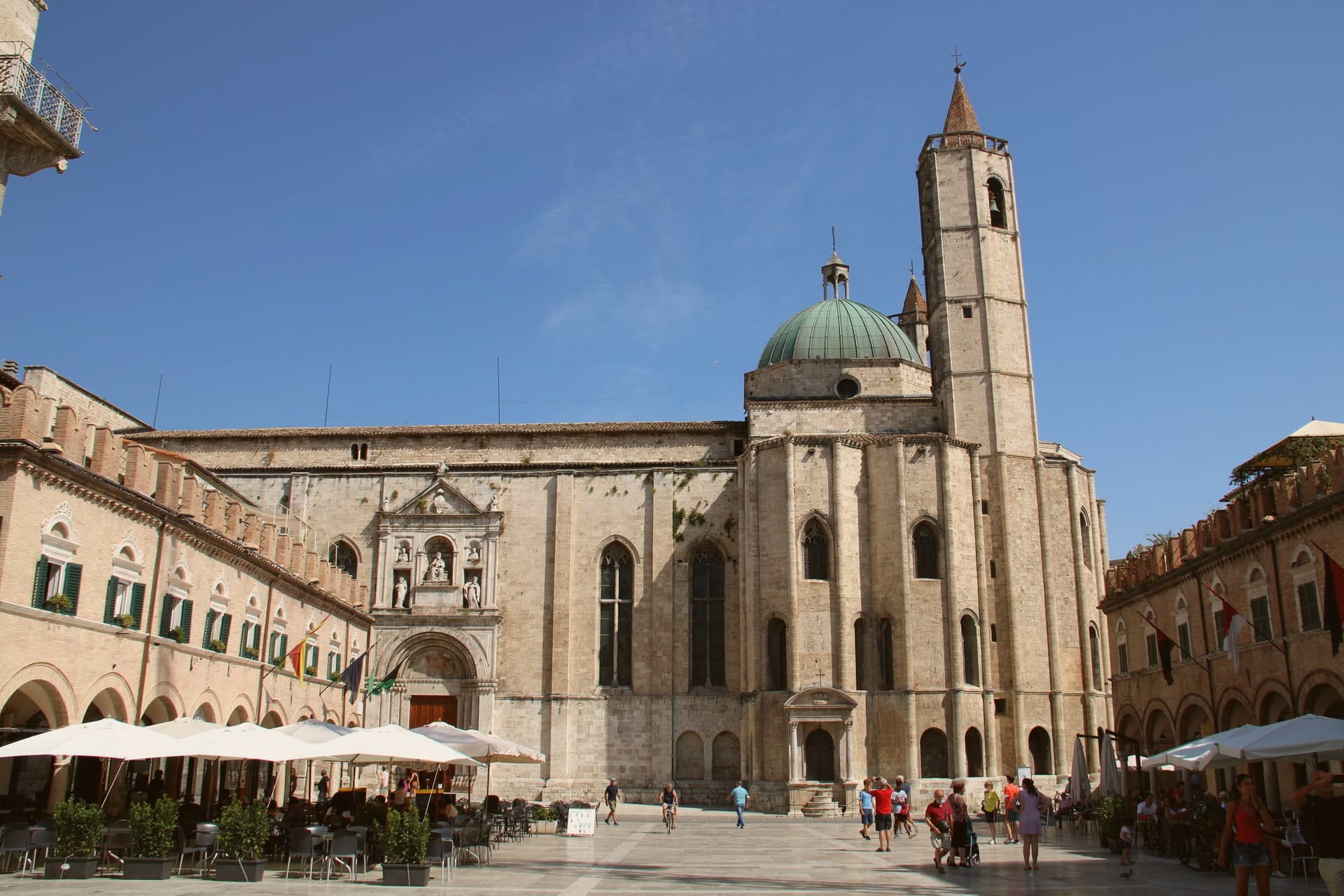
Why visit Ascoli Piceno
Ascoli Piceno sits at 154 meters at the confluence of the Tronto and the Castellano, the historic capital of the Piceni who held this part of the Marche before Rome. The town is built almost entirely from local travertine, which gives the centro storico its luminous pale surface and its mirror behavior under rain: Piazza del Popolo, paved in polished travertine slabs, is one of the most photographed squares in Italy.
In 91 BC the Ascolani killed the Roman delegation in their forum and triggered the Social War; the city was razed and rebuilt by Rome and the present grid still follows the Roman layout. The Quintana, run in costume in July and August, is a joust between the six sestieri, the city districts, the knight on horseback charging an effigy of an Arab warrior.
Anisetta Meletti, the local aniseed liqueur invented in 1907, is poured at the Caffè Meletti on the piazza.
We confirmed you can reach this one by train.
What to see in Ascoli Piceno
- Piazza del Popolo. Paved in polished travertine slabs and lined by Renaissance porticoes, the Palazzo dei Capitani and the Loggia dei Mercanti, one of the most photographed squares in Italy.
- Chiesa di San Francesco. Gothic basilica begun in the thirteenth century, three travertine portals, two bell-towers, the largest Marchigiana example of the Franciscan order's architecture.
- Cattedrale di Sant'Emidio. Cathedral on Piazza Arringo, with a fifth-century crypt holding the relics of Sant'Emidio, patron saint invoked against earthquakes.
How to get to Ascoli Piceno
There is a railway station in the town, so you can arrive without a car and never need one while you are here. Pescara is roughly 72 minutes away by road.
Our tip
April through June and September into October are the best months for Ascoli Piceno. The travertine is dry, the surrounding olive groves turn through the Ascolana tenera harvest from October, and the Tronto and Castellano walks along the city's south edge are open every day. July and August touch the mid-thirties; the centro storico empties between three and six in the afternoon but the Quintana weekends fill it again. Ascoliva Festival falls in August.
More from Anywhere Italy
 The best small olive oil towns within 90 minutes of Pescara
- The 8 best wine towns you can reach by train within 90 minutes of Pescara
 The best olive oil towns that eat well within 90 minutes of Pescara
 The best hill towns you can reach by train in Abruzzo
 The best hidden coastal towns within 90 minutes of Pescara
- The best wine towns in Abruzzo