
The best hidden coastal towns within 90 minutes of Pescara
The Adriatic shore either side of Pescara is a long, low, generous coast: fine grey-gold sand, shallow water, umbrella pines planted as windbreaks that now shade the beach roads, and hills of olives and Montepulciano vines rising a few kilometres inland. South of the Foro river the coastline turns rocky and the trabocchi appear, spider-legged fishing platforms of weathered timber, several of them now cooking what they land. Food follows the water. Brodetto thick with cuttlefish and scorpion fish, arrosticini from the mountains behind, ventricina from the Molise border, cheap bottles of Pecorino and Cerasuolo. May and September are the good months, when the sea is warm and the lidi have room.
Most people arriving in the region head straight for Pescara itself, with its long municipal beachfront, ferry terminal and airport, and in high summer the promenade there is one continuous line of parasols. The city works as a base and its beach is good, but it is the busiest strip of sand in Abruzzo, and its restaurants price accordingly. Nearby Vasto Marina and Giulianova absorb much of the overflow, which is why the middle of August on this coast can feel like a single town stretched out for a hundred kilometres.
The same beaches, pines and trabocchi carry on well past the crowded stretches, north towards the Marche and south into Molise, and that is where these towns are. Some sit on the sand with a nature reserve at one end, some look down from a ridge over a coastline they have watched for centuries, some are inland enough to keep their farmland and still count the sea as theirs. Fewer people go, the trains still stop, and the fish is landed the same morning.
Of the 63 communes we have mapped within 90 minutes of Pescara, 13 qualify as coastal towns: each sits directly on the sea. This list is the hidden ones, 7 in all, ordered smallest first. The smallest, Rocca San Giovanni, has 2,276 residents.
Elsewhere in the catalogue: The best coastal towns in Abruzzo and The best coastal towns that eat well within 90 minutes of Pescara.
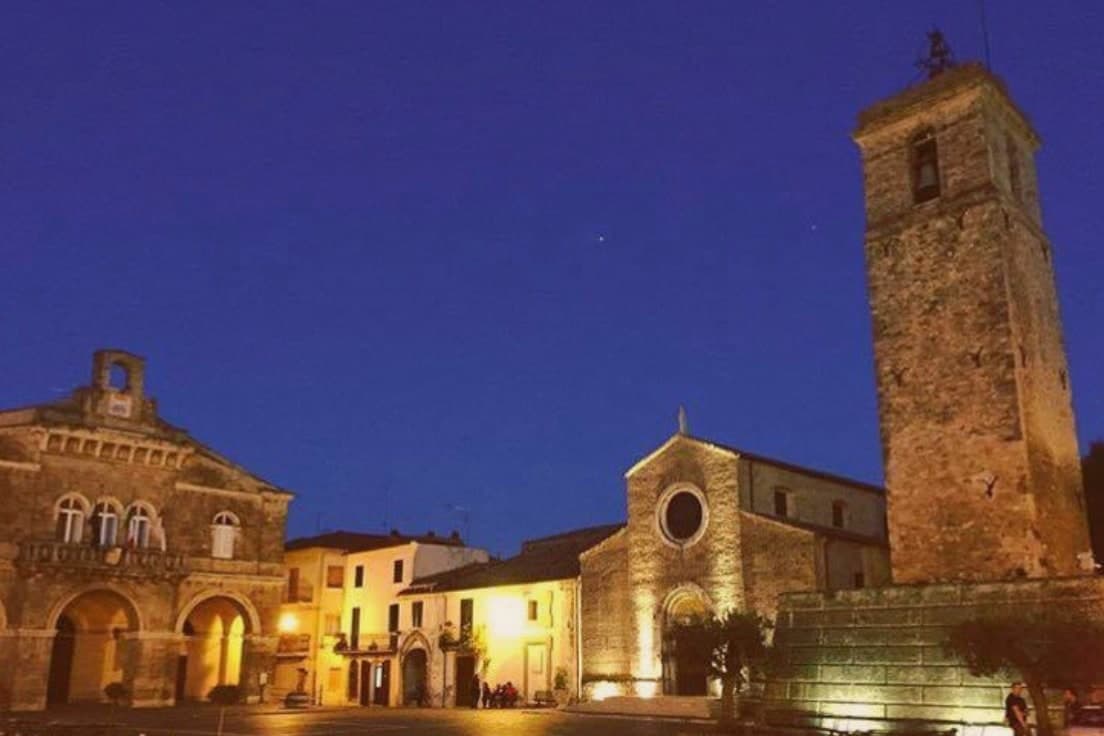
Rocca San Giovanni
Why visit Rocca San Giovanni
Rocca San Giovanni stands on a rocky hill above the Adriatic between the mouths of the Sangro and Feltrino rivers. The village was founded by Oderisius I, abbot of the nearby abbey, who feared Norman advances on Chieti and built a fortified settlement as a defensive outpost for his monastery.
The relationship between the two places is vertical: the abbey holds the lower slope toward the water, three kilometers down, while the fortified village occupies the high ground it was built to defend, the walls still tracing that original defensive purpose. The coast beneath both is fished from timber platforms that give the shoreline its name, and the old railway bed that once ran along that shore has become a path connecting the beach, the abbey, and the hill town in a single line of movement.
The vineyards run the other direction, down from the hill toward the sea, so the whole territory reads as a set of descending bands: castle, monastery, rail line, water, each built to serve or watch the one below it.
What to see in Rocca San Giovanni
- Abbazia di San Giovanni in Venere. The abbey sits on a panoramic terrace above the Adriatic, one of Abruzzo's major religious sites, its Romanesque stone visible from the slope above long before the village walls come into view.
- Centro storico. The walled medieval core is listed among the Borghi più belli d'Italia, its streets narrow and contained within the old fortified perimeter built to watch the coast below.
- Chiesa di San Matteo Apostolo. Three-nave Romanesque parish church inside the walls, restored multiple times, with a nineteenth-century classical town hall alongside.
How to get to Rocca San Giovanni
There is a railway station in the town, so you can arrive without a car and never need one while you are here. Pescara is roughly 44 minutes away by road.
Our tip
May through September is the coastal season. The beaches below the village fill in July and August, but the centro storico above stays quieter. June and September are the best balance, when sea temperatures are good but the crowds thinner.
Petacciato
Why visit Petacciato
Petacciato stands at 225 meters on the last ridge before the Adriatic, with the Tremiti islands offshore and the Maiella visible to the north and the Gargano to the south on clear days. The centro storico keeps its medieval shape around the Chiesa di Santa Maria, built in tuff and sandstone between the eleventh and thirteenth centuries, originally dedicated to San Rocco and still holding three naves with three altars.
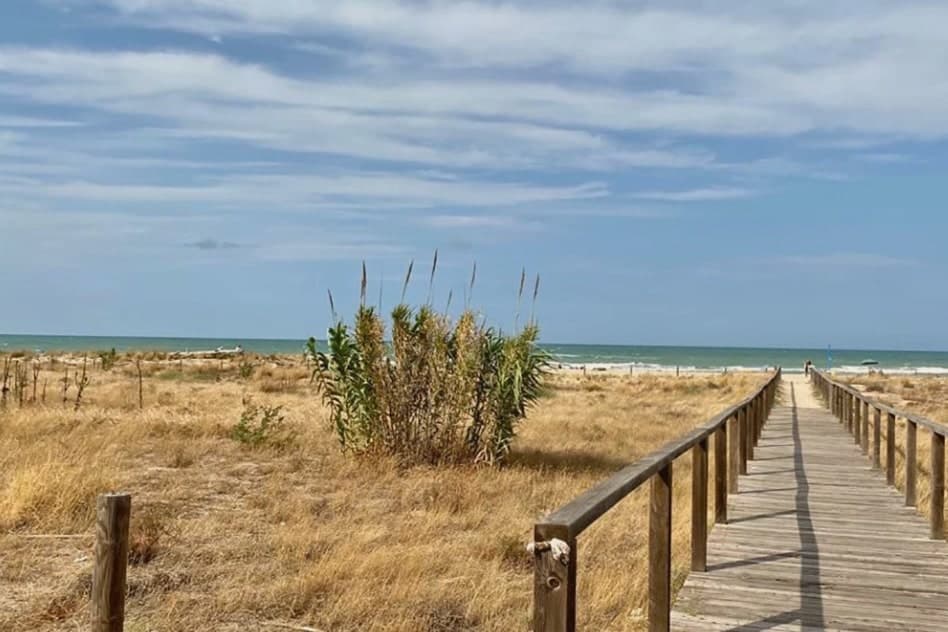
The Marina di Petacciato, a few kilometers below the village, runs a long sand beach lined with pine, with low dunes and shallow water that draws Italian families in July and August. The hills above produce the olive oil that earned the Città dell'Olio designation.
Petacciato was one of the lower-Molise villages Serafino Razzi listed in his sixteenth-century chronicle of Slav-founded communities, though the visible record today is Italian Romanesque and twentieth-century coastal.
What to see in Petacciato
- Chiesa di Santa Maria (già San Rocco). Romanesque church in tuff and sandstone, built between the eleventh and thirteenth centuries, with three naves and three altars.
- Centro storico. Medieval ridge village around the old church, with stone houses and the long Adriatic view east.
- Marina di Petacciato. Long sand beach below the village, pine-backed and low-duned, the main summer draw.
How to get to Petacciato
There is a railway station in the town, so you can arrive without a car and never need one while you are here. Pescara is roughly 83 minutes away by road.
Our tip
May through September is the working coast. June gives the cleanest water before the families arrive; July and August fill the Marina di Petacciato with the lower Adriatic crowd. The ridge village above stays a few degrees cooler than the beach and is the night-time refuge in August.
Miglianico
Why visit Miglianico
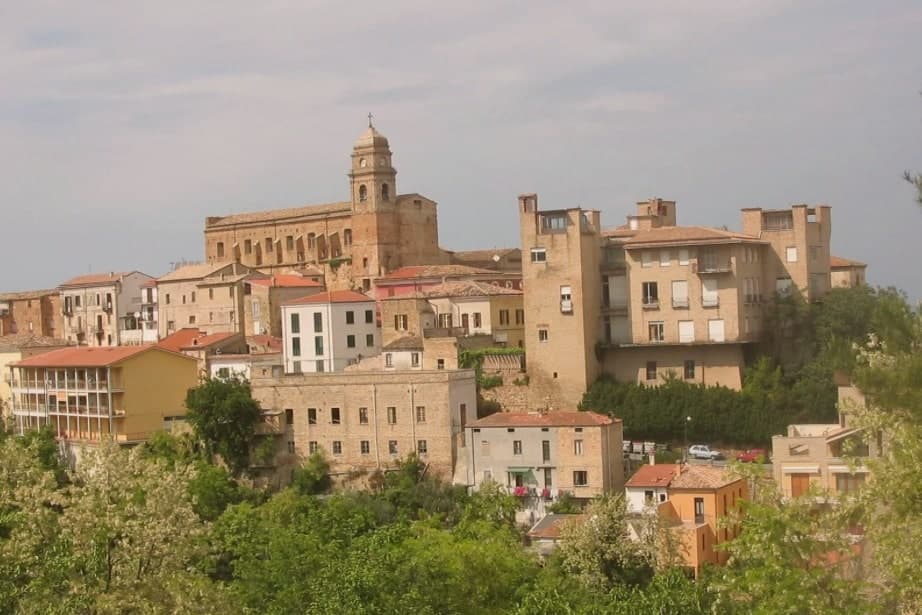
Miglianico sits at 125 meters in the foothills of the Apennines, fifteen kilometers from Pescara and from the Adriatic coast. The village grew up around a tenth-century rocca built to defend the locals from Saracen raids, and the Norman Baroni Valignani held it through the medieval period; their fortified family chapel later became the sanctuary on the hilltop, its current form shaped by an eighteenth-century interior and a twentieth-century extension.
The centro storico still carries that layered history: a fifteenth-century castle stands on the ruins of the old rocca, and a small votive church built against plague sits among the original parish structures, all within reach of the hill's edge where the vines take over. The wine designations grown on the surrounding slopes, Montepulciano d'Abruzzo DOC, Cerasuolo d'Abruzzo DOC, Trebbiano d'Abruzzo DOC and Terre di Chieti IGT, explain why the cooperative cellar sits at the center of the local economy and identity.
The patron feast on 27 July drew the painter Francesco Paolo Michetti to record its scenes, working here under Gabriele d'Annunzio's eye. What holds the village together, from the rocca's ruins to the sanctuary's extension to the vine rows below, is a place defended, rebuilt and cultivated on the same low hill for centuries, still oriented toward the horizon of vineyards it sits above.
What to see in Miglianico
- Santuario di San Pantaleone. Former Valignani family chapel raised to sanctuary status, with eighteenth-century decoration and a twentieth-century extension on the village hilltop.
- Castello Masci. Fifteenth-century castle in the centro storico, built on the ruins of the medieval Valignani rocca that defended the village from Saracen raids.
- Chiesa di San Rocco. Small votive church inside the old village, traditionally invoked against plague, one of the original parish structures.
How to get to Miglianico
Pescara is roughly 25 minutes away by road.
Our tip
May through September is the working season at 125 meters between the sea and the foothills. The vines run through bud, flower and veraison from May to August, and the patron feast of San Pantaleone on 27 July fills the streets around the sanctuary. June and September are the easiest months for the vineyard country, with mild evenings on the hill.
Montenero di Bisaccia
Why visit Montenero di Bisaccia
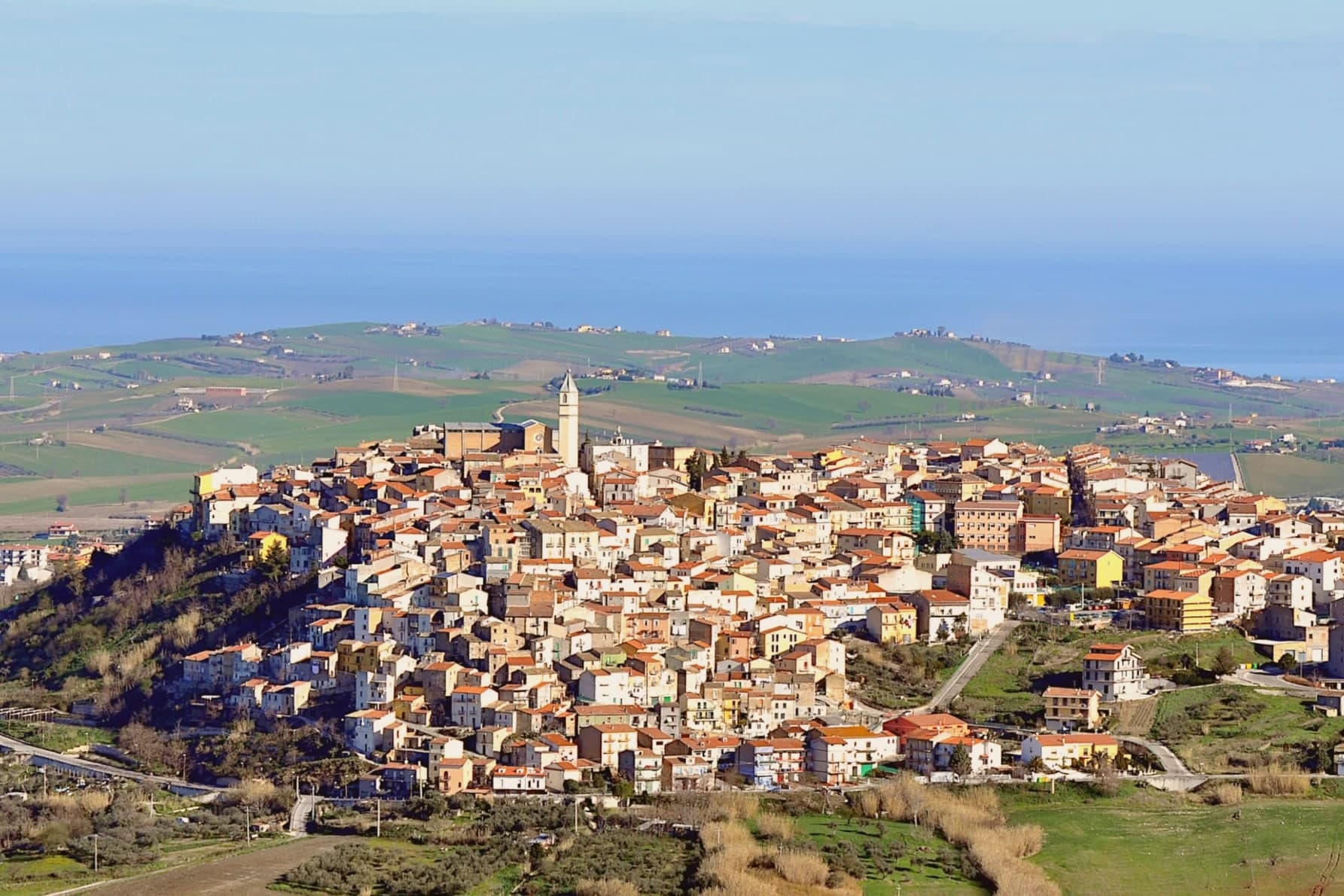
Montenero di Bisaccia sits on a tufa relief at 273 meters, on the northern edge of Molise where the region meets Abruzzo. The Chiesa di San Matteo Apostolo crowns the rock, its bell tower visible from the coast road below.
The Costa Verde beach, six kilometers down from the village, gives the commune its summer draw, with low dunes and pine groves backing the sand. Antonio Di Pietro, the magistrate who prosecuted the Mani Pulite cases of the 1990s and went on to lead Italia dei Valori, was born and farms here; after politics he returned to a 24-hectare family holding inherited from his father and now produces olive oil and wine with his son Cristiano.
The Città del Vino designation tracks that wine tradition. The hills around the village were also recorded by Serafino Razzi in 1576 as one of the Slav-influenced settlements of lower Molise.
What to see in Montenero di Bisaccia
- Chiesa di San Matteo Apostolo. Parish church on the tufa rock at the top of the village, its bell tower the visible marker from the coast.
- Centro storico. Stone old town spread along the tufa ridge, with narrow streets and views east to the Adriatic.
- Costa Verde. Long sand beach six kilometers below the village, backed by pine groves and low dunes.
How to get to Montenero di Bisaccia
There is a railway station in the town, so you can arrive without a car and never need one while you are here. Pescara is roughly 70 minutes away by road.
Our tip
May through September works on the coast. June and September give the cleanest sea and the longest evenings without the August crowd. July and August fill the Costa Verde with Italian families and the ridge village stays a few degrees cooler at 273 meters.
Fossacesia
Why visit Fossacesia
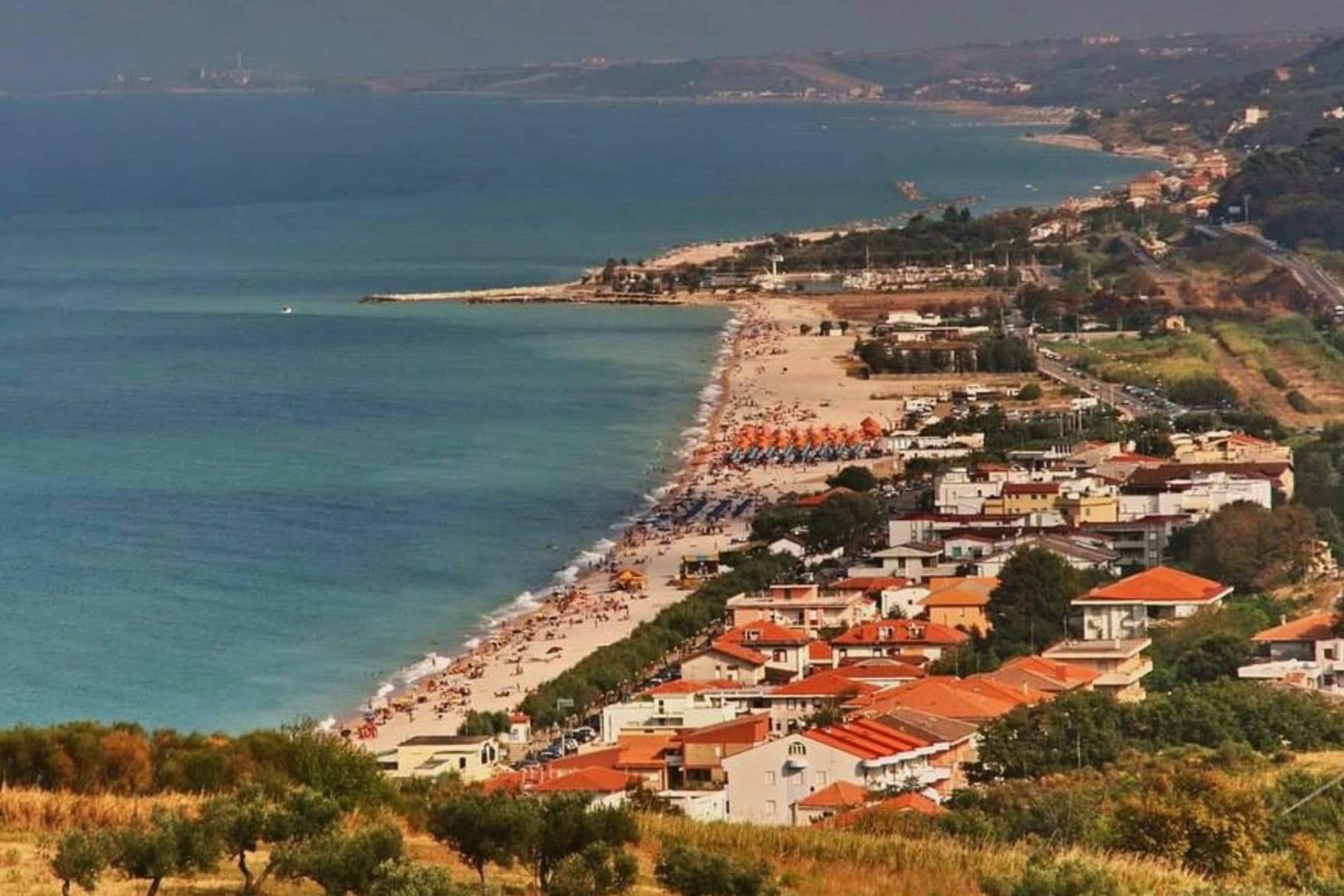
Most people arrive at Fossacesia for the abbey and stay for the coast underneath it. San Giovanni in Venere was rebuilt in the twelfth century on ground that had held a temple to Venus, which is where the name comes from, and it sits on a shoulder of hill with the Adriatic laid out below and olive groves on every side.
Down at sea level, Fossacesia Marina is the northern end of the Via Verde, the cycle path laid along the route of the old coastal railway, and the trabocchi themselves stand out over the water on their wooden legs.
The beach here holds the national bathing award, which a comune has to win back every year on water quality, beach management and safety.
What to see in Fossacesia
- Abbazia di San Giovanni in Venere. The Benedictine abbey above the coast, rebuilt in the twelfth century on the site of a Roman temple. The carved portal and the crypt are the reasons to climb up.
- Via Verde della Costa dei Trabocchi. The coastal cycle path on the old railway line. Fossacesia Marina is its northern trailhead.
- The trabocchi. The timber fishing platforms built out over the water along this stretch of coast. Several are still worked and a few serve dinner.
How to get to Fossacesia
There is a railway station in the town, so you can arrive without a car and never need one while you are here. Pescara is roughly 44 minutes away by road.
Our tip
May, June and September are the best of it. The abbey is worth the trip in any month, but the coast below only works when the sea is warm and the path is not baking. August is busy at the marina and quiet up at the abbey.
Alba Adriatica
Why visit Alba Adriatica
Alba Adriatica is the northernmost of the seven coastal communes of the province of Teramo, the chain of resort towns known collectively as the seven sisters. The commune did not exist before 1956: it was created by referendum that year when the coastal residents of Tortoreto voted for administrative autonomy.
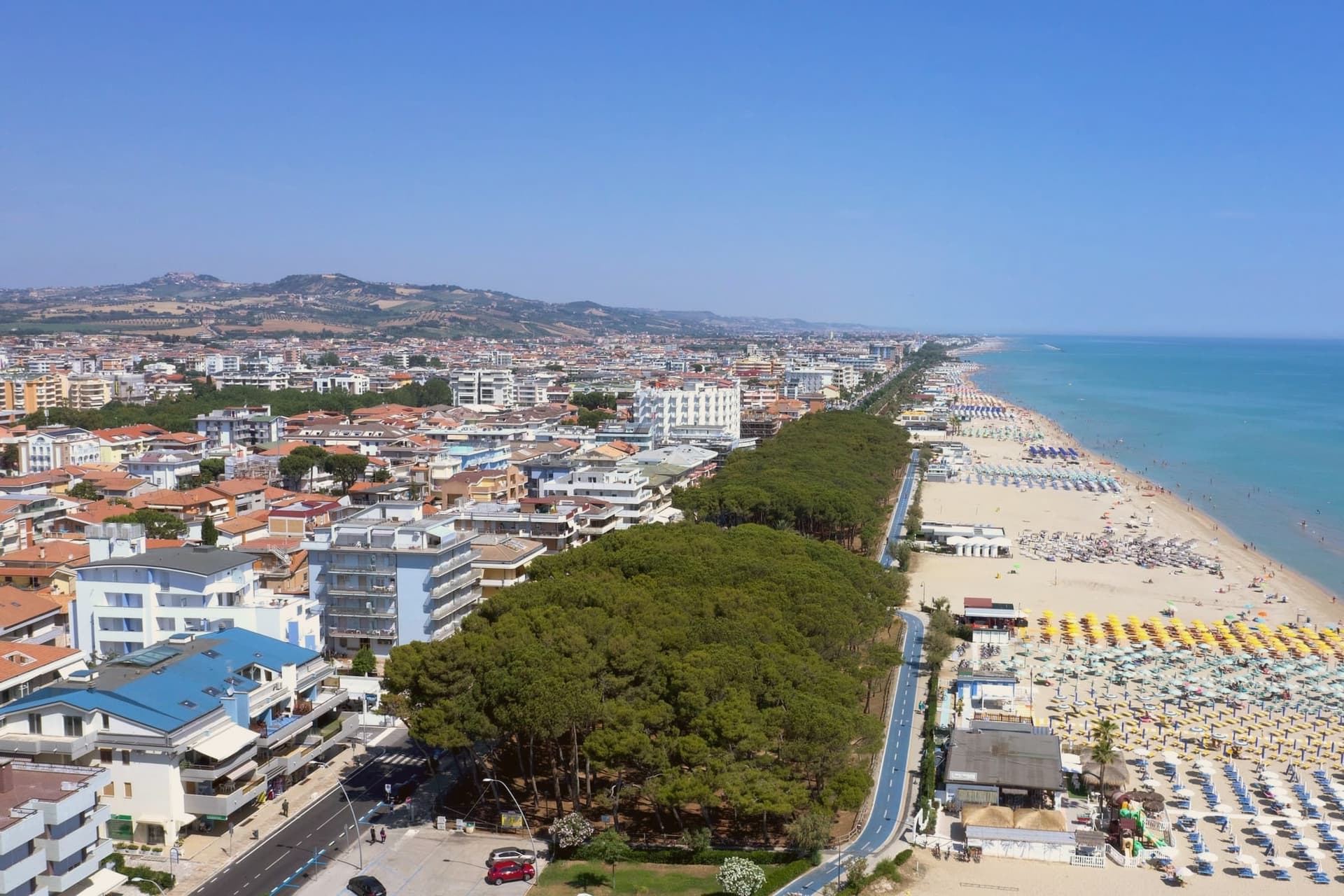
The town's identity is its sand. The three-kilometer beach is called the Spiaggia d'Argento, the silver beach, for the fineness of its grains.
The Blue Flag flew here continuously from 2000 to 2013 and again in recent years. The lungomare runs the whole length of the commune, palm-lined and largely flat, joining the towns on either side without a clear visual break.
Inland from the beach, the town is laid out on a 20th-century grid, with no centro storico to speak of: the historic centers belong to the older inland communes. Alba Adriatica was built to be a beach.
The beach here holds the national bathing award, which a comune has to win back every year on water quality, beach management and safety. It is also rated for accessibility, which most of this coast is not.
What to see in Alba Adriatica
- Spiaggia d'Argento. The three-kilometer fine-sand beach, gently sloped, Blue-Flag-rated for water quality continuously from 2000 to 2013 and after.
- Lungomare Marconi. Palm-lined promenade running the length of the commune, joining Tortoreto Lido to the north and Giulianova to the south.
- Chiesa Sant'Eufemia. Parish church set on the inland grid, a modest 20th-century construction reflecting the town's recent 1956 foundation date.
How to get to Alba Adriatica
There is a railway station in the town, so you can arrive without a car and never need one while you are here. Pescara is roughly 51 minutes away by road.
Our tip
May through September is the season. June and early September are the temperate weeks before and after the August crowds. July and August fill the beach and the boardwalks: temperatures sit in the low thirties, the water is warm by mid-July, and the lungomare runs late.
Pineto
Why visit Pineto
Pineto sits at sea level, one of the Sette Sorelle, the seven Adriatic resorts of the Teramo coast. The town was planned in the 1920s by Luigi Filiani as a beach resort under pine forest, and renamed Pineto in 1925 after Gabriele D'Annunzio's poem La Pioggia nel Pineto.
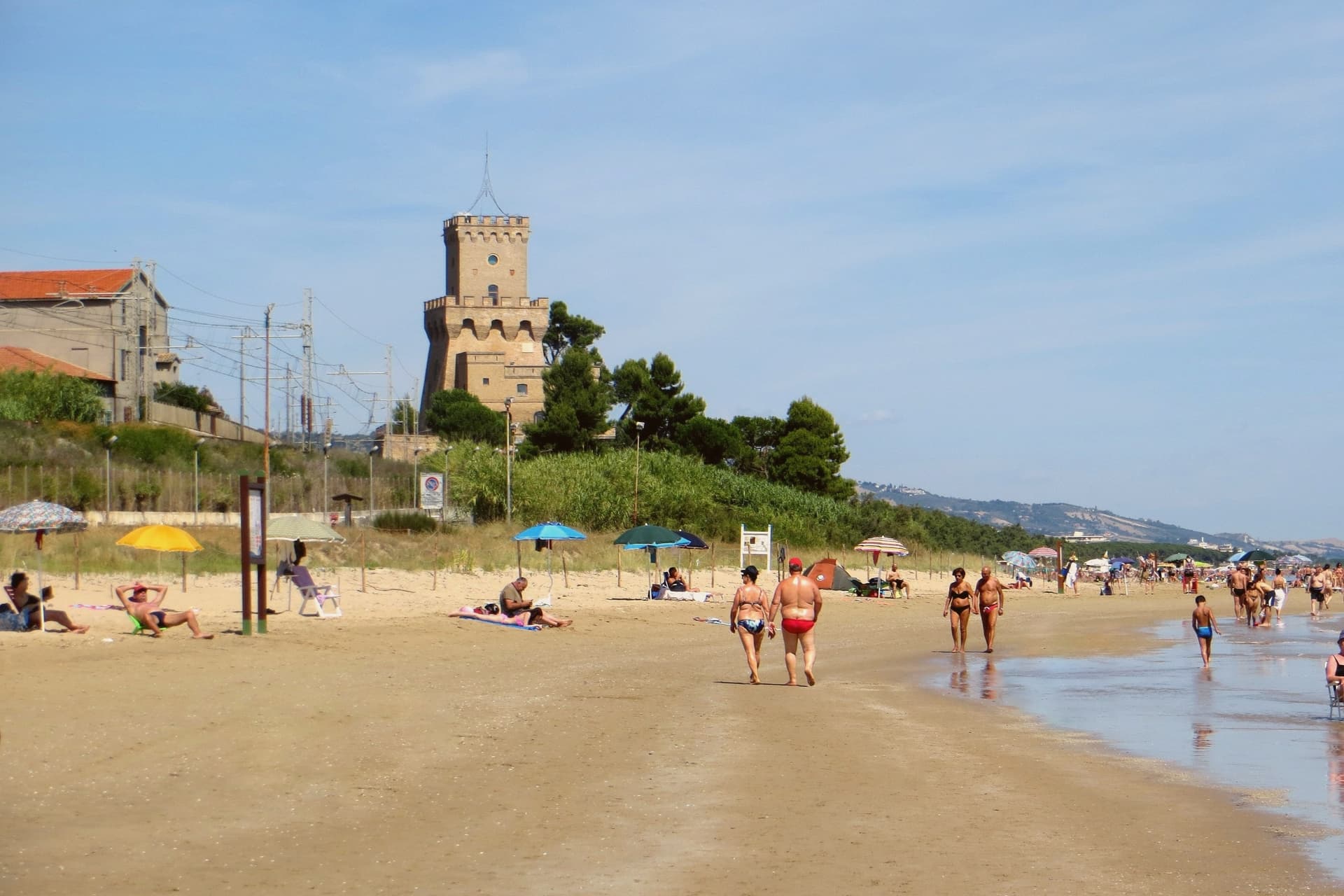
In 1929 it replaced Mutignano, the older hill village above, as the capoluogo of the comune. Two kilometers south of the centre stands the Torre del Cerrano, built around 1568 by Charles V as a watchtower against Ottoman raiders.
In 2010 the tower and the stretch of sea in front of it became Abruzzo's first marine protected area, 3,431 hectares of coast and shallow water. The beach has held a Blue Flag in most years since 2007.
The pine canopy, planted to hold the dunes, still shades the seafront promenade as far north as the Vibrata river.
The beach here holds the national bathing award, which a comune has to win back every year on water quality, beach management and safety.
What to see in Pineto
- Torre del Cerrano. Sixteenth-century watchtower built around 1568 under Charles V against Ottoman raids, now the gateway to Abruzzo's first marine reserve.
- Area Marina Protetta Torre del Cerrano. 3,431 hectares of protected coast and shallow Adriatic water established in 2010, the first marine reserve in the region.
- Pineta Catucci. Coastal pine forest planted in the early twentieth century to hold the dunes, shading the seafront promenade and the bike path.
How to get to Pineto
There is a railway station in the town, so you can arrive without a car and never need one while you are here. Pescara is roughly 26 minutes away by road.
Our tip
May through September is the season. June and September are the best beach months, warm but not hot, with the marine reserve open for guided snorkelling and the bike path along the pineta in full use. July and August bring Italian summer crowds, especially from Pescara, and the seafront fills.
More from Anywhere Italy
- The best coastal towns in Abruzzo
- The best coastal towns that eat well within 90 minutes of Pescara
 The 8 best wine towns you can reach by train within 90 minutes of Pescara
 The best hidden towns with a serious restaurant that eat well within 90 minutes of Pescara
 The best beach towns in Abruzzo
 The best wine towns in Abruzzo