The best mountain towns you can reach by train in Lombardia
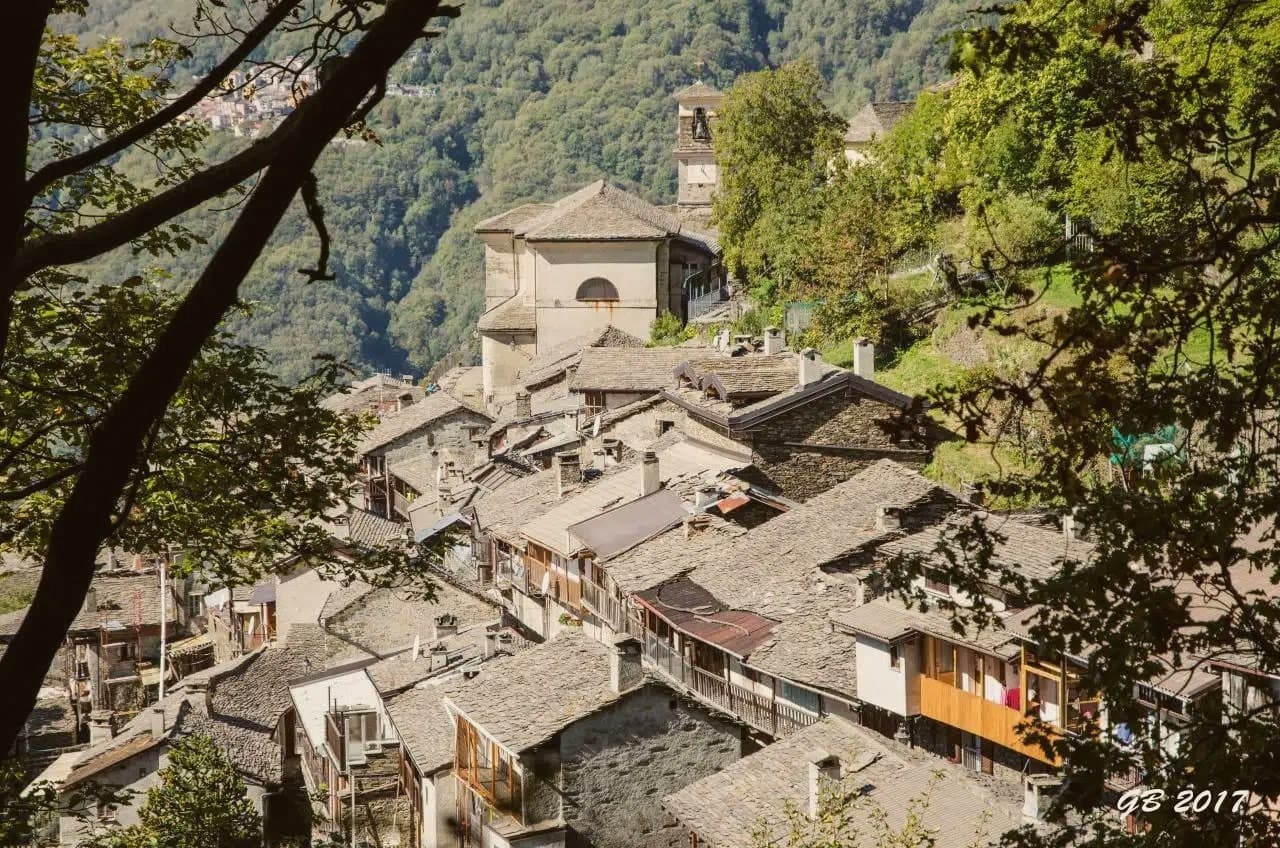
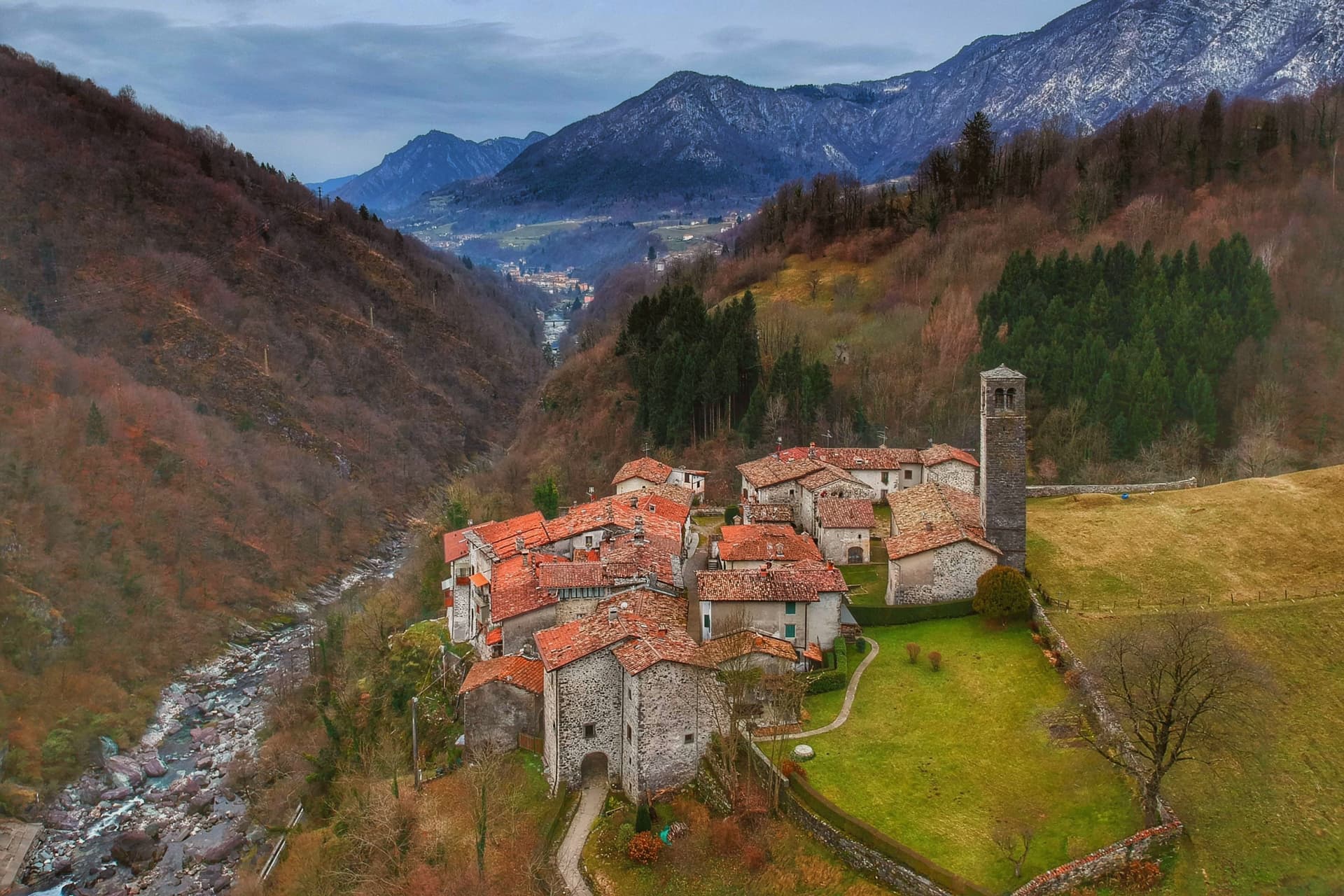
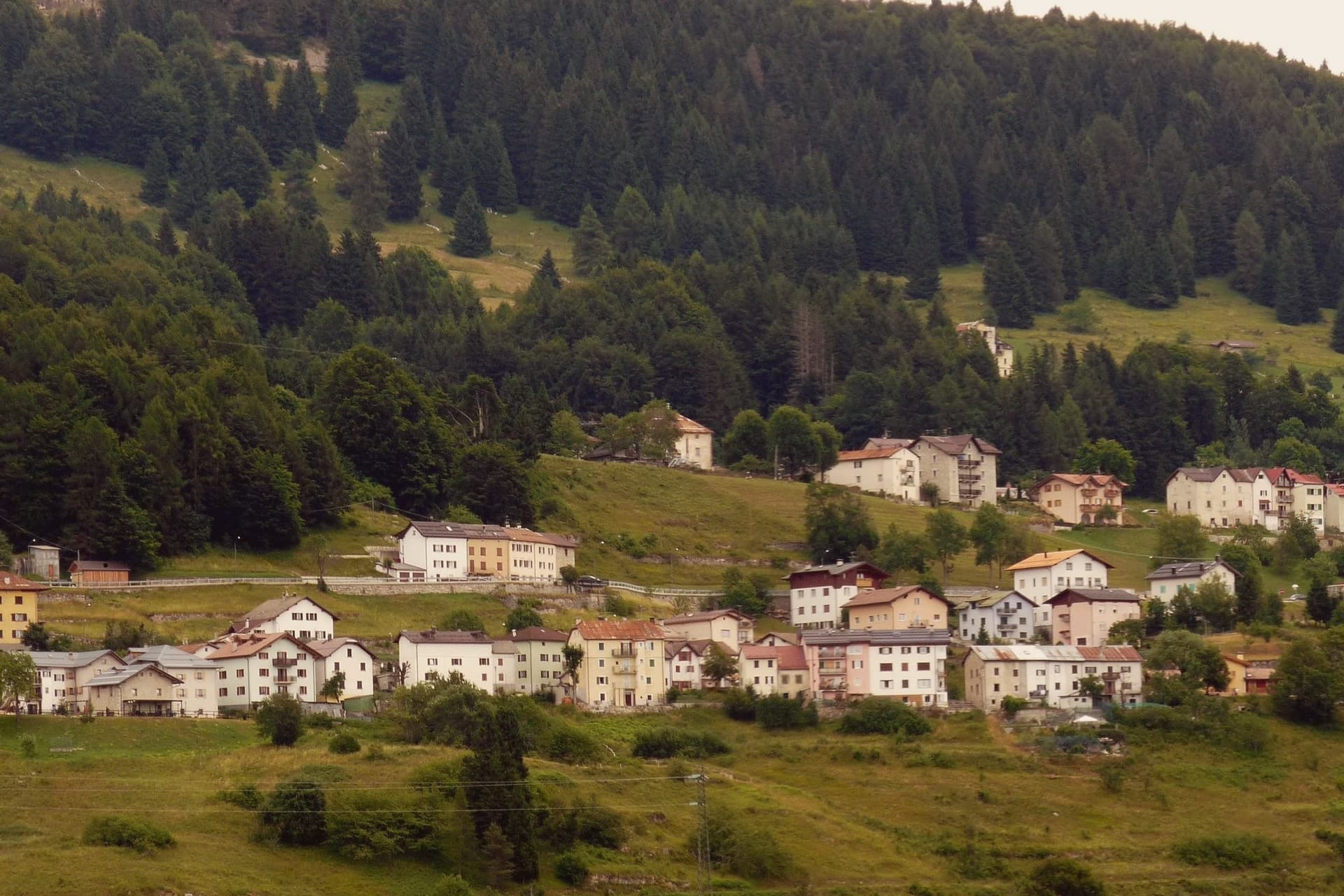
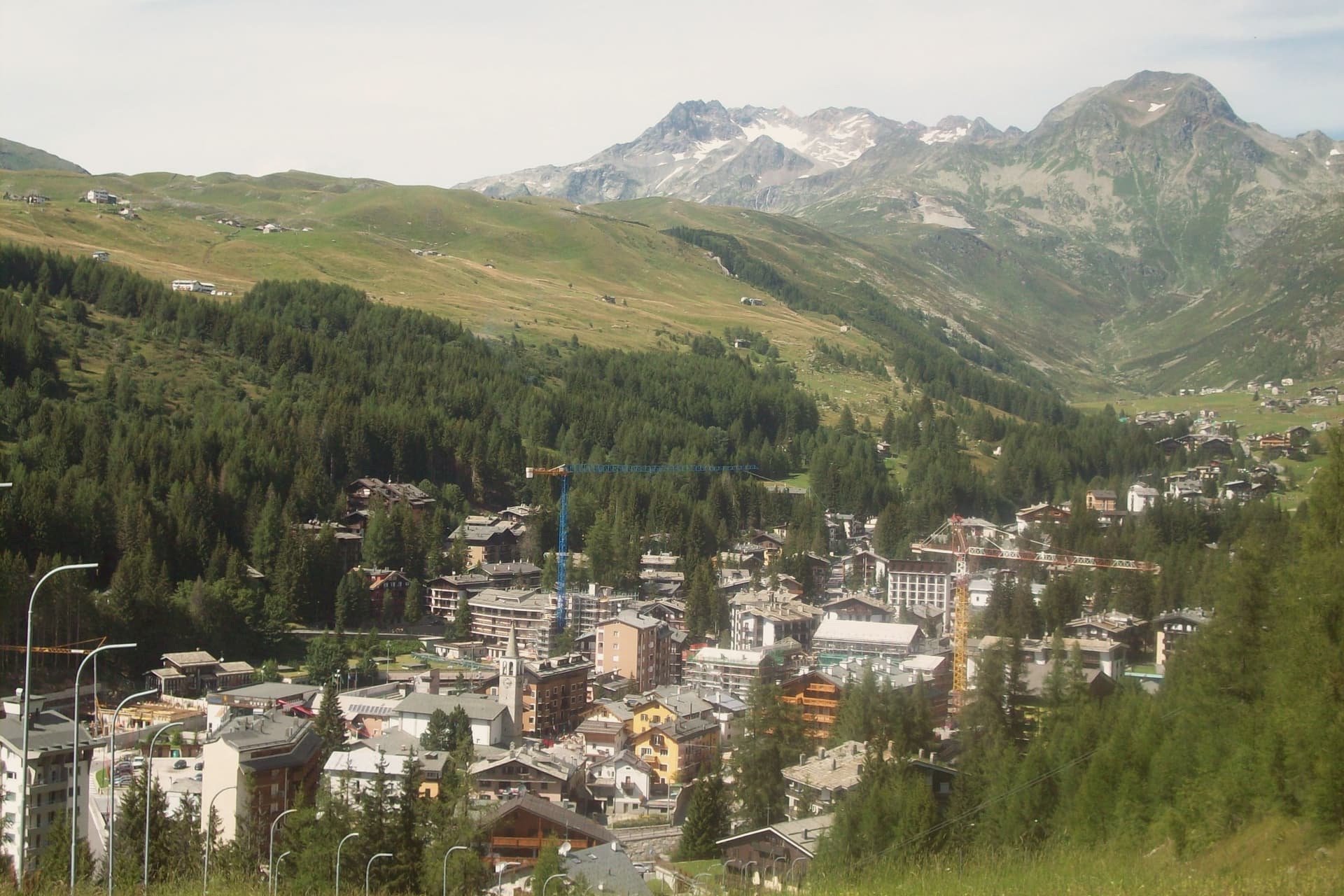
North of the Lombard plain the land folds upwards into the Valtellina, the Valcamonica and the Val Brembana, valleys of grey stone houses, slate roofs and terraced vineyards cut into the slope. The food changes with the altitude: buckwheat pizzoccheri heavy with butter and Valtellina Casera, bresaola sliced thin, polenta taragna, chestnuts in autumn and mineral water bottled at the source. Winter brings snow to the passes and woodsmoke to the streets; late spring brings meltwater loud under the bridges. Much of it is built from the mountain itself, in schist, granite and larch beams gone almost black with age.
Most visitors to the Lombard mountains go to Lake Como, and the reasons are obvious: Bellagio, the ferries, the villa gardens, the road along the eastern shore. The lake is beautiful and it is also full, particularly between late spring and September, when the ferry queues at Varenna are long and parking anywhere near the water is a project in itself. Bormio and Livigno take the winter overflow. The result is a region people think they know from a shoreline.
Yet the same mountains carry on north and east, up the valleys the trains still serve, past thermal towns built for nineteenth-century convalescents and market towns that have traded with Switzerland for centuries. The line to Tirano climbs the Valtellina and hands over to the Bernina railway; other branches run into the Brembana and Camonica valleys, and buses and a funicular reach further still. Fewer people go, and the walking, the wine and the cooking are as good.
Of the 65 communes we have mapped in Lombardia, 6 qualify as mountain towns you can reach by train: each sits in the mountains, and we have confirmed each is reachable without a car. The smallest, Monteviasco, has 12 residents.
Two more lists worth reading alongside this one: The 10 best small towns you can reach by train in Lombardia and The best high-altitude villages in Lombardia.
Monteviasco
Why visit Monteviasco
Monteviasco is the highest frazione of Curiglia con Monteviasco, sitting at 928 metres on a terrace above the Val Veddasca near the Swiss border. There is no road.
For half a century the village was reached by a small aerial cable-car (funivia di Monteviasco) installed in 1989; the cable-car has been suspended since a fatal accident in 2018 and the village is now reached only by the historic stone mule path of approximately 1,400 steps from the valley floor, a one-hour climb through chestnut woods. The permanent population is in the single digits — most of the houses are summer residences for descendants of former villagers — but the church of Sant'Antonio Abate, the wash-house at the village fountain, and the small alpine rifugio at the centre remain in use.
The view from the village balcony covers the entire Val Veddasca and, on clear days, Monte Rosa to the west. The 1,400-step climb is the attraction as much as the village itself: a documented historic mule path with stations of the cross along the ascent.
Pair with the Lago di Lugano cable-car at the Cima di Sasso above the valley and a meal at one of Curiglia's small osterie.
We confirmed you can reach this one by train.
What to see in Monteviasco
- Sentiero dei 1.400 gradini. Historic stone mule path of approximately 1,400 steps from the Val Veddasca floor to the village — the only current access. Climbs through chestnut woods past stations of the cross.
- Chiesa di Sant'Antonio Abate. Parish church at the village centre, dating to the 17th century, with a single nave and a stone-roofed bell tower.
- Panorama sulla Val Veddasca. Village balcony at 928 m looking down the entire Val Veddasca toward Lake Maggiore, with Monte Rosa visible on the western horizon in clear weather.
How to get to Monteviasco
There is a railway station in the town, so you can arrive without a car and never need one while you are here. Milano is roughly 131 minutes away by road.
Our tip
May through October is the practical season — the mule path is dry, the alpine rifugio is open weekends, and the chestnut woods stay green into late autumn. June and September are ideal: cool climbing temperatures, long light. July-August stay mild at this elevation but the 1,400 steps need an early start.
Teglio
Why visit Teglio
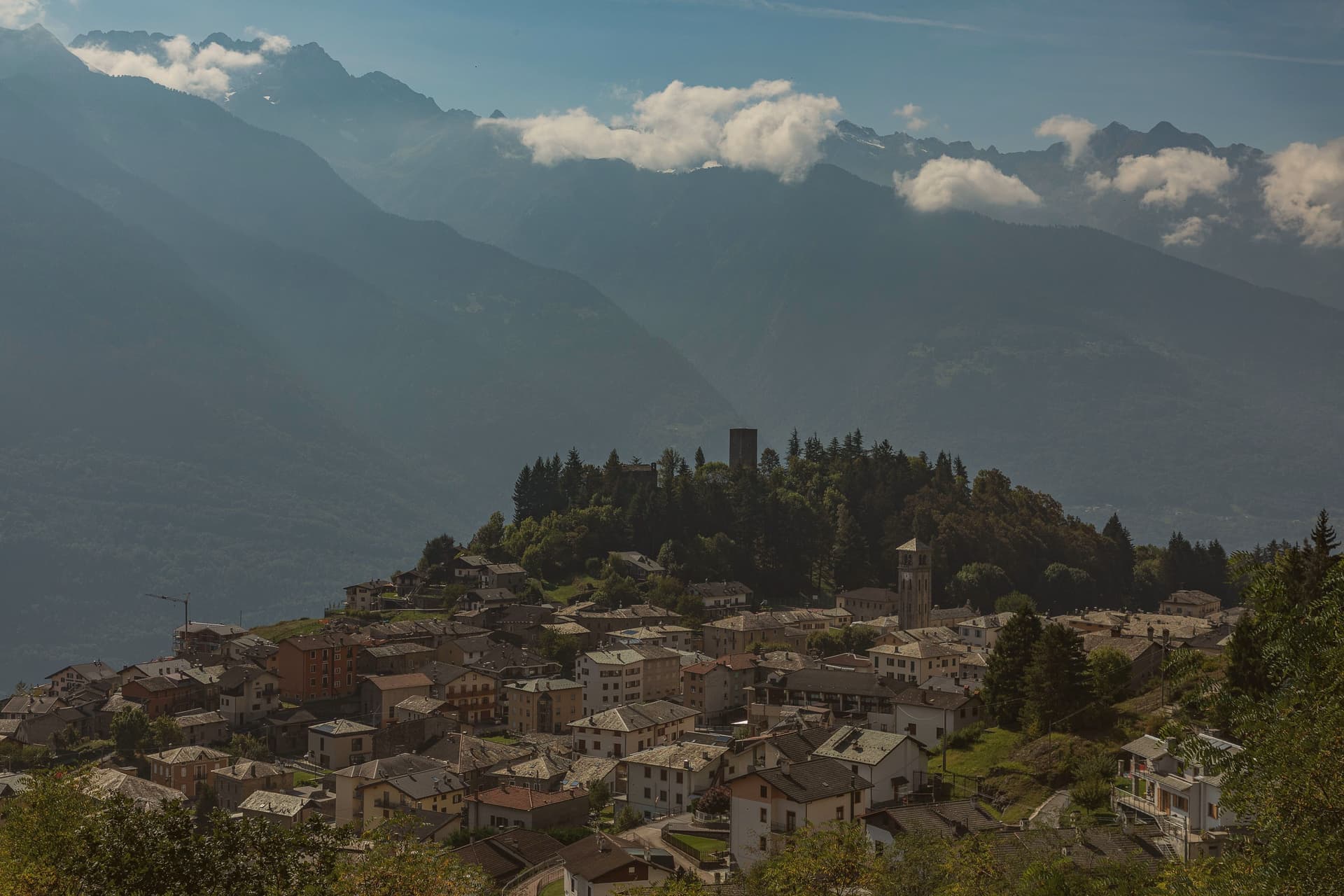
Teglio sits on the south-facing slope of the Valtellina, terraced vineyards dropping toward the Adda below the village and pine forest climbing behind it to the Orobie ridge. The Latin Tellina Vallis, valley of Teglio, gave the whole Valtellina its name, and the comune's own records reach back to the 9th century, when the village held the strategic centre of the valley.
The upper village keeps that older, defensive character; the vineyards and the valley floor below are where the food and wine culture of the place plays out, the two halves of the town facing different directions in what they do. Pizzoccheri, buckwheat tagliatelle with savoy cabbage, potato, garlic-and-butter sauce and casera cheese, has its official home here, and Teglio holds Cittaslow status on the strength of that food culture together with the terraced viticulture below the village.
A hill town that named a valley, still turned toward the river and the vines that keep its economy going, while its height and its records point back to why it was worth holding in the first place.
We confirmed you can reach this one by train.
What to see in Teglio
- Palazzo Besta. The courtyard cycle depicts Virgil's Aeneid; the upper salons hold further biblical and mythological scenes. The Antiquarium Tellinum inside holds Iron Age and Roman material from the valley.
- Accademia del Pizzocchero. The body that certifies trattorie and holds the recipe to its original form: buckwheat tagliatelle with savoy cabbage, potato, and a butter-garlic sauce alongside the cheese.
- Vigneti terrazzati della Valtellina. South-facing terraces stepping down toward the Adda, part of a viticultural landscape under UNESCO candidacy, producing Sforzato and Inferno Nebbiolo.
How to get to Teglio
There is a railway station in the town, so you can arrive without a car and never need one while you are here. Brescia is roughly 142 minutes away by road.
Our tip
May through October is the open season at 856 metres — Palazzo Besta open daily, terraced vineyards green, and the Valtellina wine route in full operation. June and September are the best months for both architecture and wine: long warm light, fewer tourists than peak summer, and the Sforzato and Inferno harvests just preparing in September. July-August stay temperate at this elevation and the trattorie are at full pizzocchero output.
San Pellegrino Terme
Why visit San Pellegrino Terme
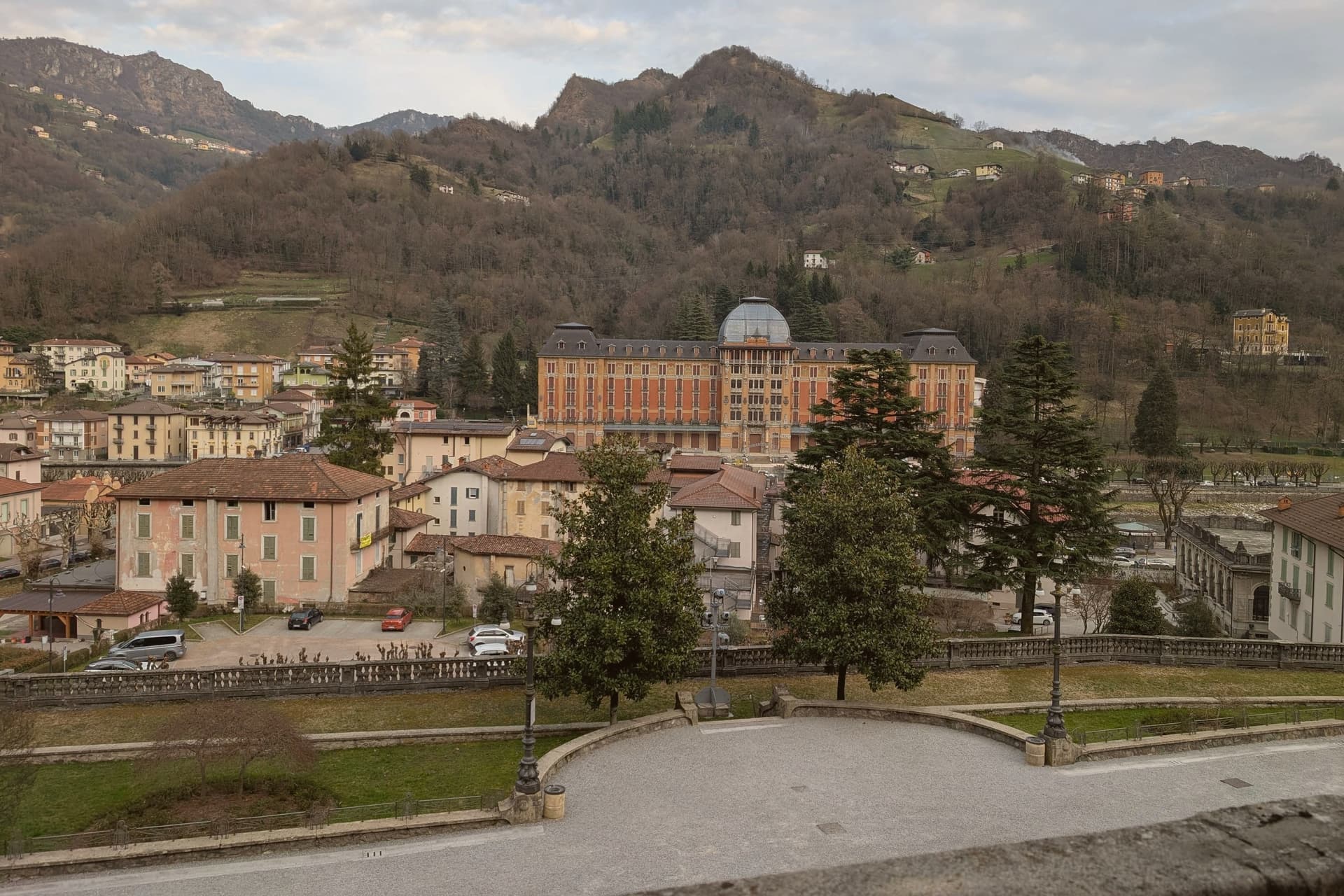
The town sits along a single bend of the Brembo river, where mineral and sulfur springs had been documented since the 13th century but were only commercialised after the railway from Bergamo reached the valley. That timing explains why the whole ensemble reads as one build: the hotel, the casino and the bath house went up within a few years of each other, facing each other across the water rather than scattered through the town.
The bottling plant sits a kilometre downstream from the springs, turning the source into the mineral water sold worldwide. Above the built-up centre, the funicular climbs to the Vetta panoramic point on the ridge, putting the whole valley below in view.
The Val Brembana around it is one of Lombardia's Cittaslow-style slow-tourism valleys, with the Borghi-più-belli of Cornello dei Tasso fifteen kilometres north and a chain of cycling routes along the river. What holds the town together, in the end, is the water itself: it drew the springs' early notice, funded the Liberty building spree once the railway arrived, and still leaves the valley in bottles long after the casino stopped taking bets.
We confirmed you can reach this one by train.
What to see in San Pellegrino Terme
- Grand Hotel San Pellegrino. Completed in 1904, the most elaborate facade of the ensemble: cast-iron balconies, stained glass, and a marble entrance hall by Romolo Squadrelli.
- Casinò Municipale (Casinò Liberty). Matching Liberty style across the Brembo from the hotel, closed to gaming since 1917 but open for events and as a visitable architectural set piece.
- Terme di San Pellegrino (QC Terme). Original 1900 building running on the historic sulfur springs, operated today by QC Terme as a full-day spa with indoor and outdoor pools at 36°C.
How to get to San Pellegrino Terme
There is a railway station in the town, so you can arrive without a car and never need one while you are here. Bergamo is roughly 30 minutes away by road.
Our tip
April through October is the prime spa-town season — outdoor pools open at the Terme, funicular running, and the riverfront promenade in full use. May and September are the architectural-photography months: warm Liberty facades, fewer guests at the Grand Hotel, long light. July-August is busiest — the QC Terme can be fully booked weekends.
Chiavenna
Why visit Chiavenna
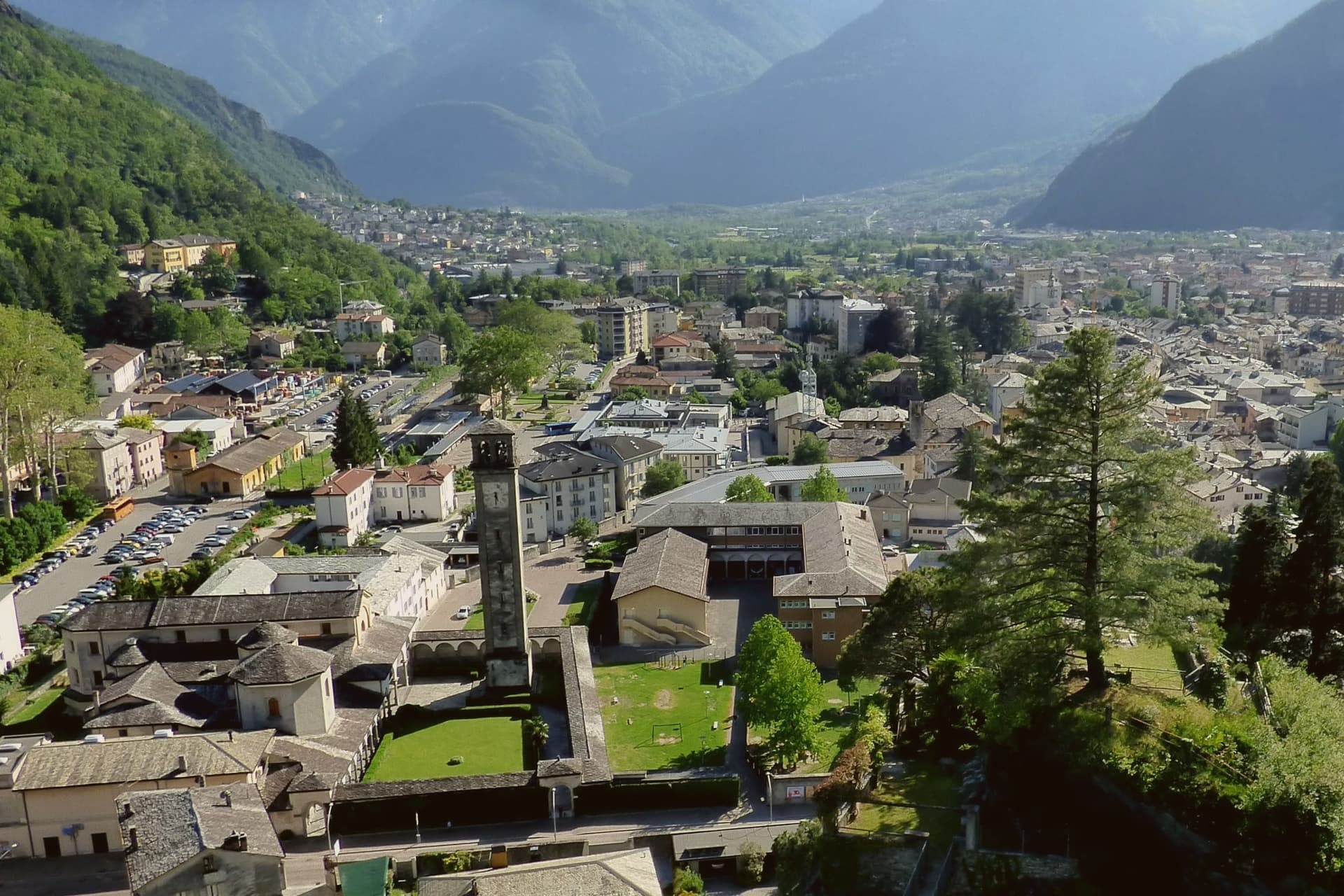
Chiavenna is the administrative and cultural centre of the Valchiavenna, at the foot of the Splügen Pass. The town arose on a large ancient landslide, and the boulders that fell across the slope left behind the air pockets and rock crevices that became its defining feature: a crotto is a domed cellar built over one of these cracks, called a sorèl, and Valchiavenna counts about eighty of them, mostly in private hands.
The old town sits along the Mera, its stone streets carrying palazzi from the era when the town lived off the trade crossing the Alps, with stretches of foundation going back to Roman work below them. The church and its font and treasury stand within this same fabric, one more layer laid over the Roman crossroads the town took its name from.
The result is a town built twice over by the same geology and the same geography: the rock that cracked open to store food and wine is the same rock the streets and trade route were cut through, so the town's food culture and its position on the pass turn out to be two expressions of one fact of the ground it sits on.
We confirmed you can reach this one by train.
What to see in Chiavenna
- Collegiata di San Lorenzo. Church on the Mera with preserved Romanesque walls and fragments of eleventh-century frescoes still visible on the interior surfaces.
- Fonte battesimale. Monolithic block carved with the rite of blessing the water on Holy Saturday, cut from a single piece of stone.
- Museo del Tesoro. Annexed to the Collegiata, holding the Pace di Chiavenna, a cover inlaid with enamels and pearls, kept apart from the church proper.
How to get to Chiavenna
There is a railway station in the town, so you can arrive without a car and never need one while you are here. Monza is roughly 105 minutes away by road.
Our tip
May through October is the Alpine season. The Mera trails are open, the Collegiata holds full hours, and the crotti host their summer service of salami, cheese, and Valchiavenna wine. June, July, August and September are the busiest months, with hikers heading up to the Splügen and the Bregaglia valleys.
Tirano
Why visit Tirano
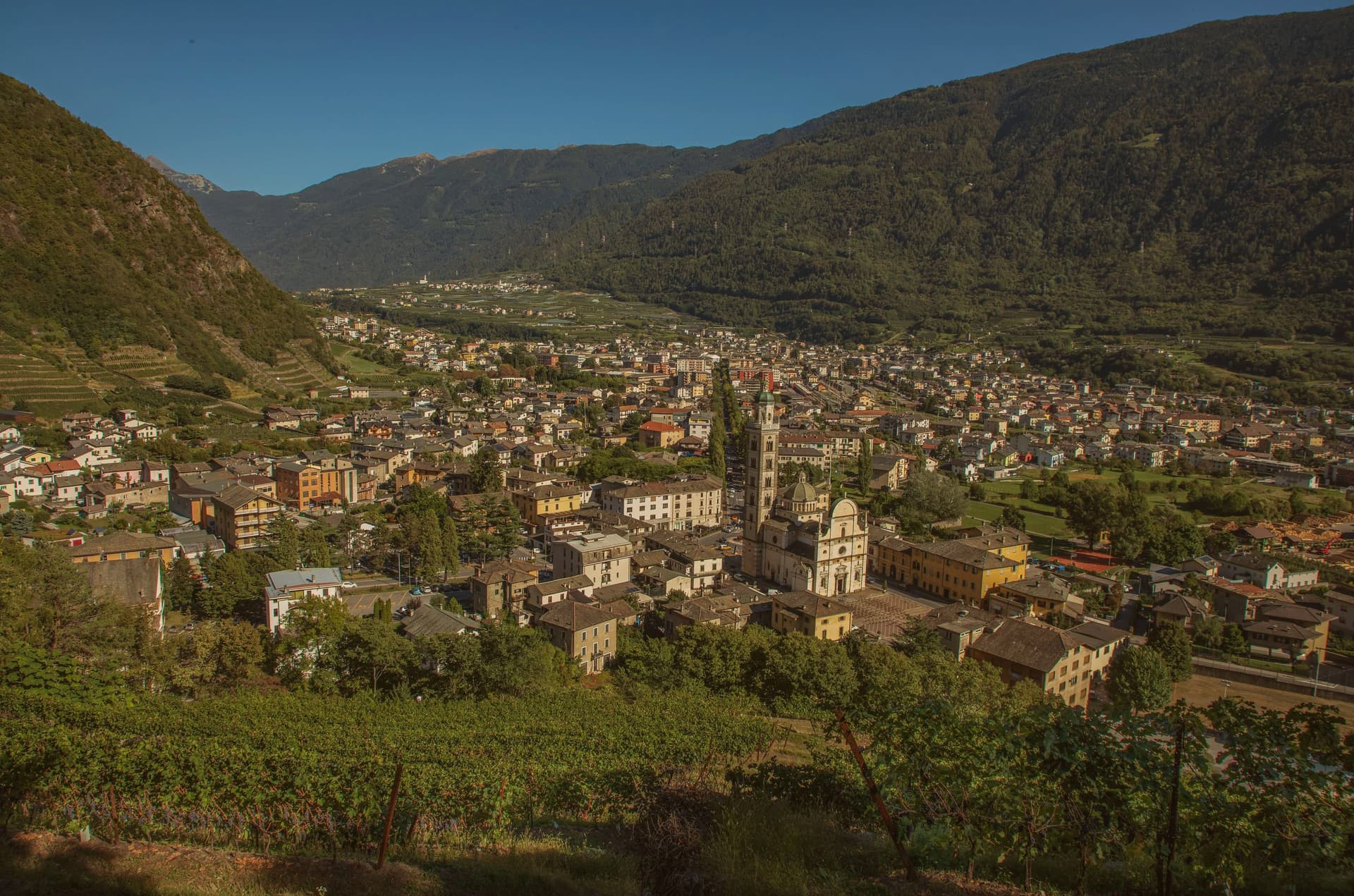
Tirano sits in the upper Valtellina, twenty-five kilometers east of Sondrio and a few kilometers south of the border at Campocologno. The Orobie chain rises behind it to the south, the Bernina massif to the north, and the Adda runs through the center, dividing the lower town from the upper town, which are linked by stone bridges.
On 29 September 1504 a local named Mario Omodei reported a Marian apparition; the plague that was killing the town stopped, and on 25 March 1505 the foundation stone was laid for the church built on the site. The railway behind the town, opened by the Rhaetian Railway and inscribed by UNESCO together with the Albula line, reaches the resort on the far side of the pass.
The town carries Cittaslow status and produces bresaola IGP alongside its wine on the surrounding terraces. Tirano's position, at the meeting point of a valley floor town, a mountain railway, and a pilgrimage site, makes it a junction as much as a destination: the place where the mountains behind it hand off to the Valtellina.
We confirmed you can reach this one by train.
What to see in Tirano
- Santuario della Madonna di Tirano. The carved organ case from 1608, by Giuseppe Bulgarini of Brescia, fills the west end of the basilica.
- Bernina railway terminal. Italian end of the Rhaetian Railway's Bernina line, the point where the track from St Moritz meets the town at valley floor level.
- Centro storico. Medieval Tirano along the Adda, with Palazzo Salis, Palazzo Pievani-Visconti Venosta and the stone bridges between the lower and upper town.
How to get to Tirano
There is a railway station in the town, so you can arrive without a car and never need one while you are here. Brescia is roughly 135 minutes away by road.
Our tip
May through September is the open season in Tirano. The terraces are walkable, the Bernina Express runs four daily services to St Moritz, and the basilica organ is in concert programme through July and August. October brings the Nebbiolo harvest on the upper slopes and the first snow on the Bernina ridges. Sforzato Wine Festival falls in October.
Darfo Boario Terme
Why visit Darfo Boario Terme
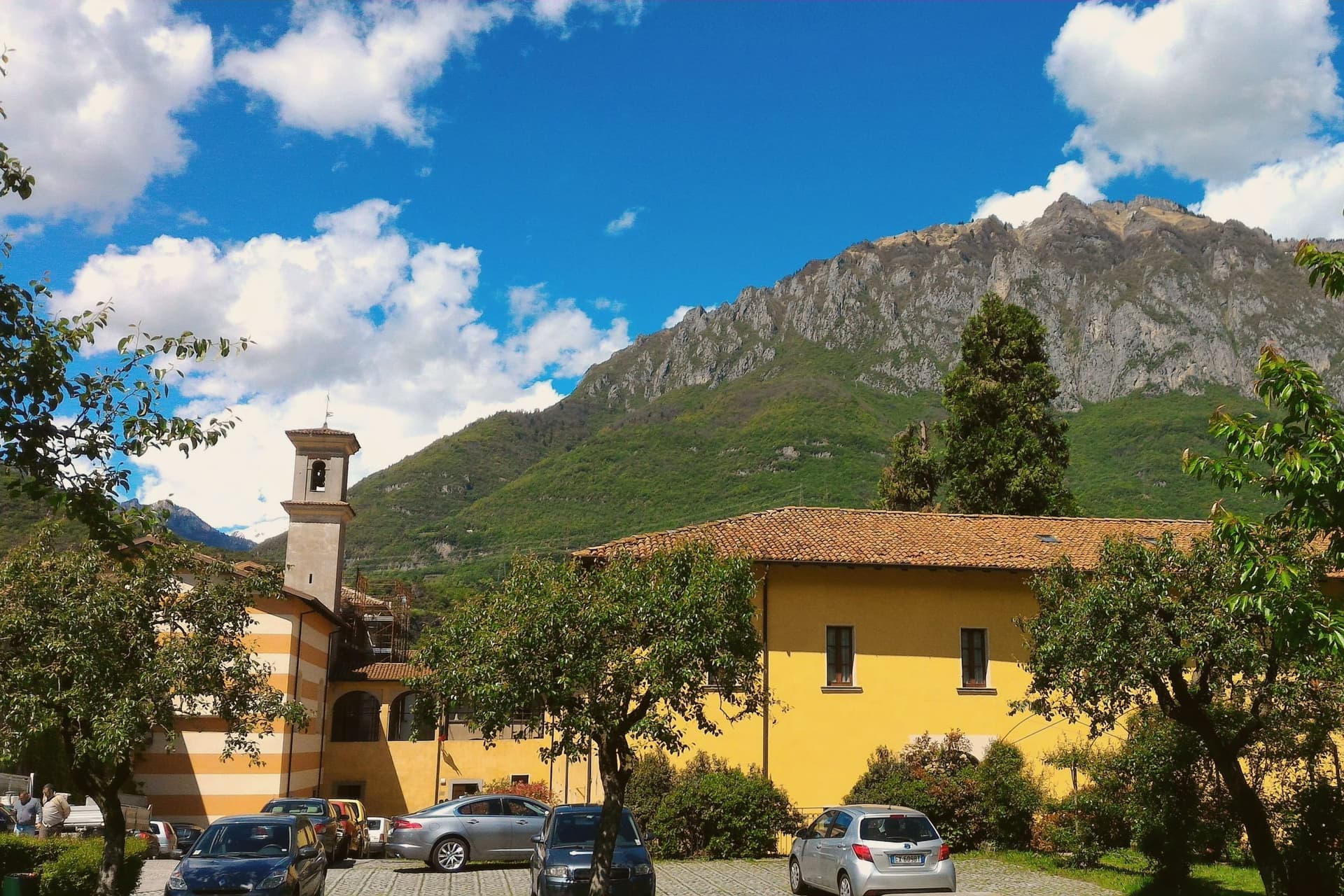
The commune sits at the lower end of the valley, a few kilometres north of Lake Iseo, where the Oglio leaves the mountains for the plain. Its name joins two places: Darfo, the capoluogo, and the spa hamlet of Boario Terme.
The thermal water was already in use in the 18th century, and Doctor Biffi called it the most active in Lombardy in 1857, well before the first spa building went up with its dome in 1906. The Comuni Virtuosi recognition the town holds today reflects later environmental commitments rather than this older history.
The rock-art park sits inside the commune boundary, its engraved surfaces part of a wider world heritage site spanning the valley, the first Italian entry on that list in 1979. The castle above the centre and the small church above the river belong to a different register of the town's past, one of fortification and parish life rather than prehistory or cure.
Between the thermal hamlet, the rock park, the castle spur and the river church, Darfo Boario Terme reads as a place where several distinct pasts, geological, medieval and modern, sit within walking distance of each other without overlapping.
We confirmed you can reach this one by train.
What to see in Darfo Boario Terme
- Terme di Boario. Thermal complex with an Art Nouveau dome, set inside an early 20th-century spa park.
- Parco delle Incisioni Rupestri di Luine. Open-air rock-art park with more than a hundred engraved surfaces, part of the Valle Camonica UNESCO world heritage site.
- Castello di Gorzone. 13th-century Federici castle on a rock spur above the centre, still partly inhabited.
How to get to Darfo Boario Terme
There is a railway station in the town, so you can arrive without a car and never need one while you are here. Brescia is roughly 54 minutes away by road.
Our tip
May through October is the main season. Spring opens the rock-art parks and dries the trails above the valley; summer brings spa guests up from Brescia and Milan for water cures, and the temperature in the valley stays cooler than in the Po plain below. September and October are the cleanest months for walking the Luine engravings and the Capo di Lago promontory.