
The best hidden towns you can reach by train that eat well in the province of Perugia
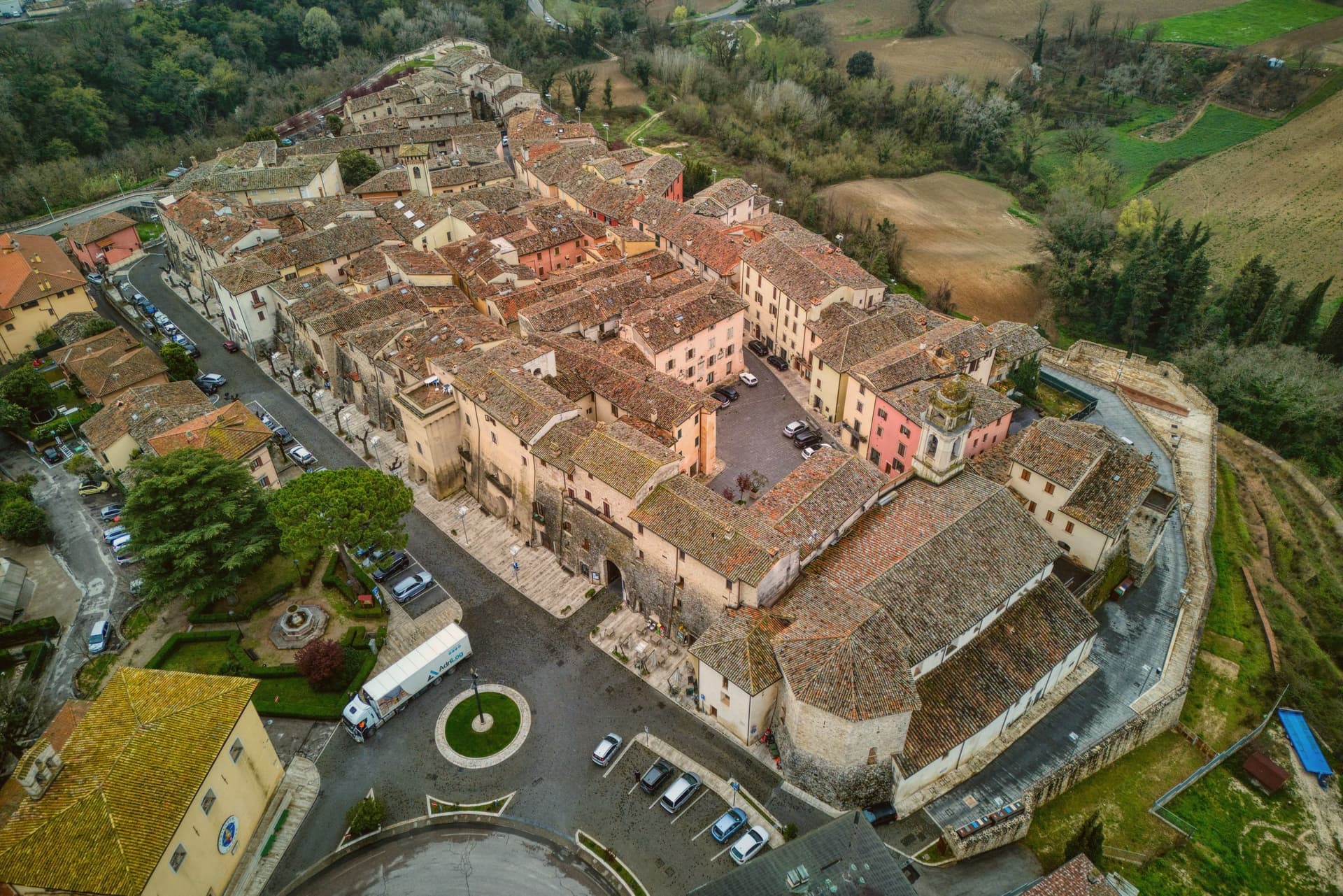
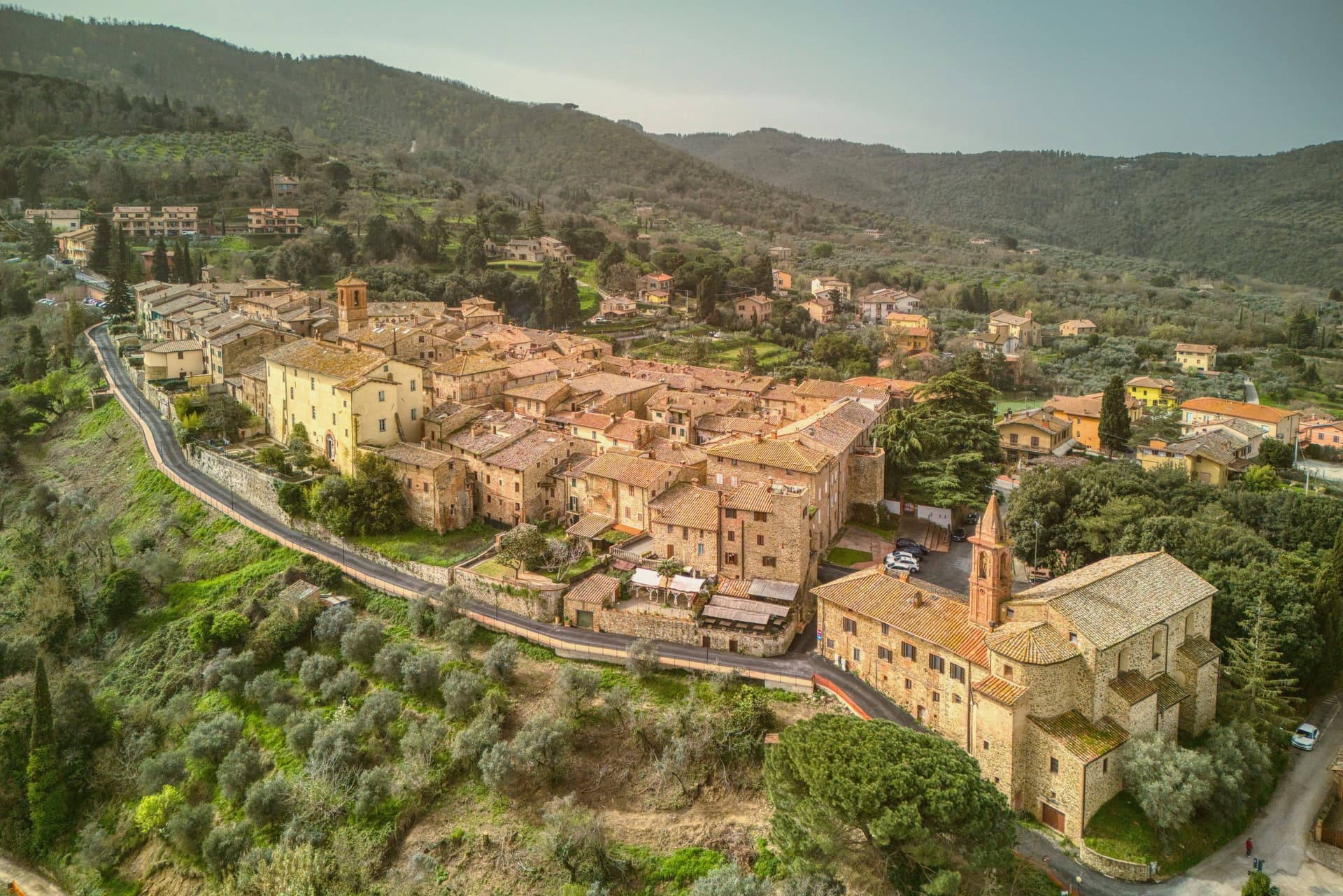
The province of Perugia is built out of pink and grey stone, laid up hillsides in tight terraces above olive groves that run down towards the valley floor. The food follows the land: torello and lake fish around Trasimeno, black truffle shaved over strangozzi in autumn, wood pigeon, chickpeas cooked slow, and new oil in late November that comes to the table green and peppery enough to catch the throat. Spring brings wild asparagus and the first broad beans eaten raw with pecorino. The regional railway threads much of it, running between Perugia, Foligno, Terontola and Spoleto through station buildings that have barely changed, which means a good lunch here does not require a hire car.
Most people arriving in Umbria go to Assisi, and there are sound reasons for it, but the basilica draws coach parties from March to October and the main street can feel like a queue with shops attached. Perugia itself absorbs a further share, particularly during Umbria Jazz, when the escalators up from the station run full and every table on Corso Vannucci is spoken for. Both are worth seeing. Neither is where you eat best, or most calmly.
The same hills, the same oil, the same railway carry on past those two names. The towns here sit along the lines that ordinary Umbrians use to get to work, and each has a kitchen a dining guide has thought worth naming, whether that is a fish trattoria on the lake shore, a place among the vineyards, or a dining room behind a Roman gate. Fewer people go, largely because the guidebooks stop where the coaches do.
Of the 37 communes we have mapped in the province of Perugia, 12 qualify as towns you can reach by train that eat well: we have confirmed each is reachable without a car, and a dining guide has named a table in each. This list is the hidden ones, 6 in all, ordered smallest first. The smallest, Massa Martana, has 3,613 residents.
Two more lists worth reading alongside this one: The best hidden towns you can reach by train that eat well within 90 minutes of Perugia and The best hidden hill towns you can reach by train in the province of Perugia.
Massa Martana
Why visit Massa Martana
Massa Martana is here for the Roman road. The Via Flaminia (the original 220 BC consular road from Rome north over the Apennines to Rimini, the spine of Roman Italian infrastructure for 500+ years) passes directly through the village — and Massa Martana sits at exactly the point where the road begins climbing into the Apennine pre-massif, with sections of the original Roman paving still visible in the surrounding countryside.
This made the area an important late-antique Christian community: the Catacombe di Villa San Faustino (3-4 km north of the centro) are the only Roman-era Christian catacombs in all of Umbria — discovered 1968, in continuous use from the 3rd to the 6th c AD, with 200+ tombs, original frescoes, and Latin inscriptions. The Abbazia dei Santi Fidenzio e Terenzio (9th-c Benedictine, on the hill above town, with surviving Carolingian elements + 12th-c restorations) is the other major monastic-era survivor.
The town itself is 3,613 residents at 351m altitude in central Umbria, 17 km southeast of Todi, with a medieval-Renaissance centro that was severely damaged by the 26 September 1997 Marche-Umbria earthquake (the same event that brought down the vault of the Basilica di San Francesco in Assisi). The reconstruction was completed in stages through 2010, and the town was re-inscribed on the Borghi più belli d'Italia list after restoration.
Today the centro reads as a meticulously restored small medieval ensemble — the Porta Santa Maria, the Chiesa Madre di San Felice (rebuilt), the Palazzo Comunale, the Torre Civica. Surroundings: the Monti Martani limestone massif (the prehistoric source of the Martana name) rises immediately east, with marked hiking trails, the Lago di Corbara just south, and the Todi UNESCO-fortified town 17 km away.
The food is Umbrian: strangozzi with truffle (Umbria's signature pasta), porchetta, salumi, Pecorino, the local Sagrantino di Montefalco 25 km west. The Festa di San Felice (25 January) and the Sagra del Tartufo (October) are the year's main events.
Fontana delle Pere have been named by a guide.
What to see in Massa Martana
- Via Flaminia Roman road. Original 220 BC consular road from Rome to Rimini passes directly through. Sections of Roman paving visible in the surrounding countryside — the spine of Roman Italian infrastructure for 500+ years.
- Catacombe di Villa San Faustino. The only Roman-era Christian catacombs in all of Umbria — 3-4 km north of the centro, in use 3rd-6th c AD, with 200+ tombs, original frescoes, Latin inscriptions. Guided tours.
- Abbazia dei Santi Fidenzio e Terenzio. 9th-c Benedictine abbey on the hill above town. Surviving Carolingian elements + 12th-c restorations. The most important monastic survivor in the comune.
How to get to Massa Martana
There is a railway station in the town, so you can arrive without a car and never need one while you are here. Terni is roughly 32 minutes away by road.
Our tip
Massa Martana is best April–June and September–October. The Sagra del Tartufo in October is the year's culinary highlight. Festa di San Felice (25 January) is the winter patronal event.
Trevi
Why visit Trevi
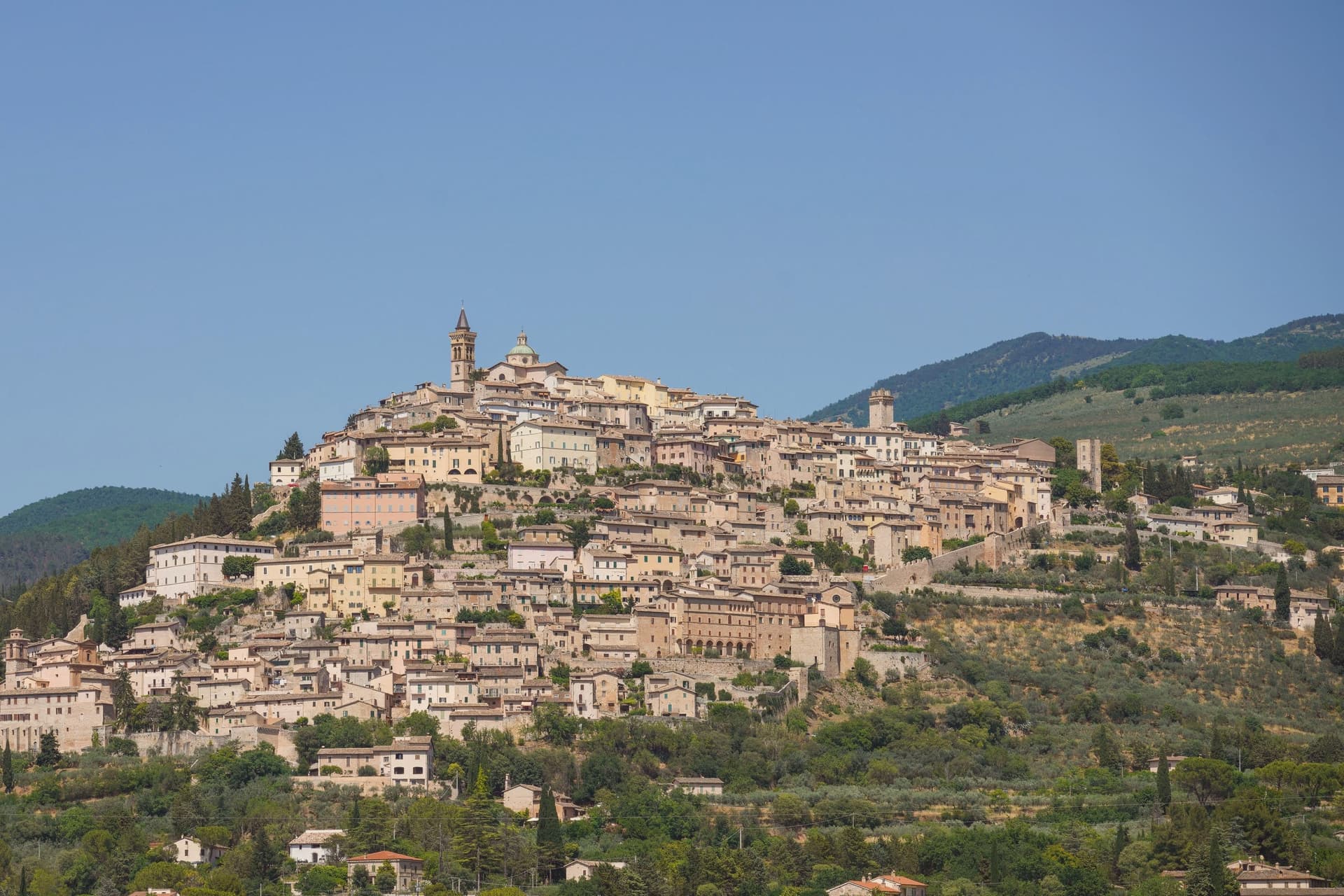
Trevi sits at 412 meters on a conical hill above the Spoleto valley, the centro storico still inside the Roman walls of the 1st century BC. The town stood on the Via Flaminia, the consular road from Rome to the Adriatic, and grew into a Guelph commune by the 12th century.
Olive oil is what people come for. Over 200,000 trees blanket the slopes below the walls on near-ideal calcareous, well-drained soils, and the Olivo di Sant'Emiliano near the abbey of the same name is about 1,700 years old, identified with the tree the bishop of Trevi was tied to in 304 before his martyrdom.
The Santuario della Madonna delle Lacrime, built in 1487 to mark a miracle, holds a fresco by Pietro Perugino. The centro storico runs in concentric rings up the hill, each ring older than the last, with the Palazzo Comunale and the Pinacoteca holding works by Lo Spagna at the top.
La Cucina di San Pietro a Pettine have been named by a guide.
What to see in Trevi
- Santuario della Madonna delle Lacrime. Built in 1487 after a Marian apparition wept tears of blood in 1485, with a fresco by Perugino in the Cappella dell'Adorazione.
- Chiesa di Sant'Emiliano. Romanesque parish church at the top of the centro storico, dedicated to the bishop martyred in 304, the patron saint of the town.
- Olivo di Sant'Emiliano. About 1,700-year-old olive tree near the eponymous church, nine meters tall, traditionally the tree to which the bishop was tied before martyrdom.
How to get to Trevi
There is a railway station in the town, so you can arrive without a car and never need one while you are here. Perugia is roughly 47 minutes away by road.
Our tip
April through June and September into October are the months for Trevi. The olive groves are in leaf or in harvest, the hill is green or silver-gold depending on the half, and the valley below holds the morning light. The Festa di Sant'Emiliano runs the last week of January with the Palio dei Terzieri, when the three quarters of the town compete.
Spello
Why visit Spello
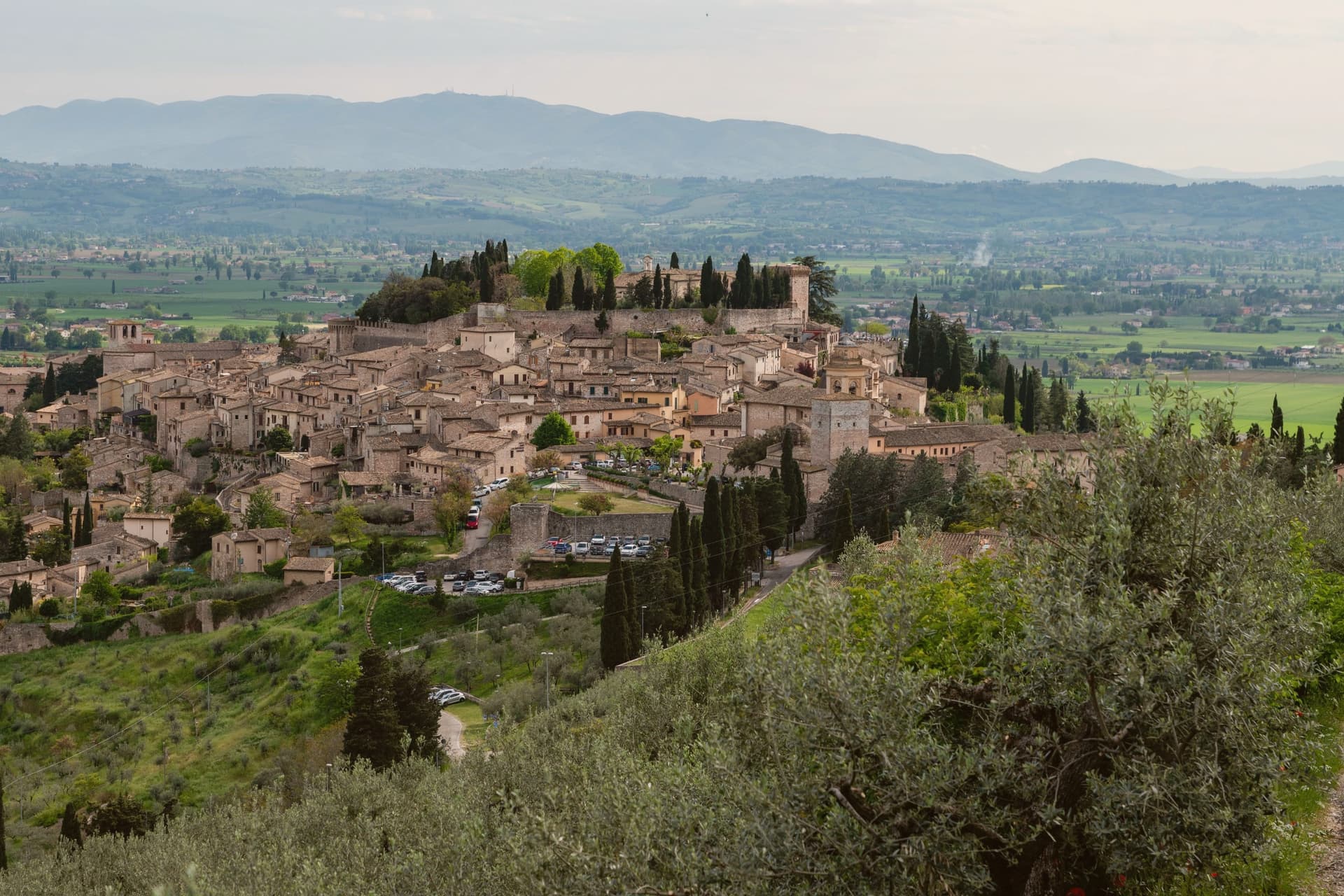
The centro storico climbs the lower southern flank of Monte Subasio, still contained within the circuit of walls raised when the town was renamed Splendidissima Colonia Julia by Augustus. Before that it was Hispellum under the Umbrians.
The Roman gates and stretches of wall from the Augustan period were not rebuilt over, so the line of the ancient town is still readable in the streets that climb from them today. The same streets carry the Infiorata each June and the fresco Pinturicchio completed for the chapel he painted in Santa Maria Maggiore, two things separated by roughly fifteen centuries but occupying the same short stretch of the old town: the chapel's Annunciation, Nativity and Christ Among the Doctors sit near the piazza the petal pictures are laid across.
A Roman villa with ten mosaic floors, found only in 2005 and left in place under cover, adds a third layer beneath the town that is still being uncovered rather than one that was always on view. The town's Roman skeleton, its painted chapel, and a floor uncovered within living memory all sit within the same small radius, which is unusual: most places show one era at a time, Spello keeps three in view at once.
La Cantina di Spello have been named by a guide.
What to see in Spello
- Cappella Baglioni. The Cappella Bella, commissioned by Troilo Baglioni, with four sibyls ranged across the vault above the painted scenes below.
- Santa Maria Maggiore. Twelfth-century church on Piazza Matteotti, its interior built around the fresco cycle and the later panel it houses.
- Porta Venere e Torri di Properzio. First-century BC gate flanked by two dodecagonal towers, still standing at close to full height with the stonework legible course by course.
How to get to Spello
There is a railway station in the town, so you can arrive without a car and never need one while you are here. Perugia is roughly 33 minutes away by road.
Our tip
April through June and September into October are the months for Spello. The slopes of Monte Subasio above town carry wildflowers, Cammino di San Francesco walkers pass through, and the Infiorata weekend on Corpus Domini in late May or June is the most concentrated day on the calendar. July and August touch the mid-thirties on the valley floor; the centro storico at 280 meters stays a few degrees cooler in the upper streets, but most visitors come early or wait until after seven. Borgo diVino tour falls in October.
Passignano sul Trasimeno
Why visit Passignano sul Trasimeno
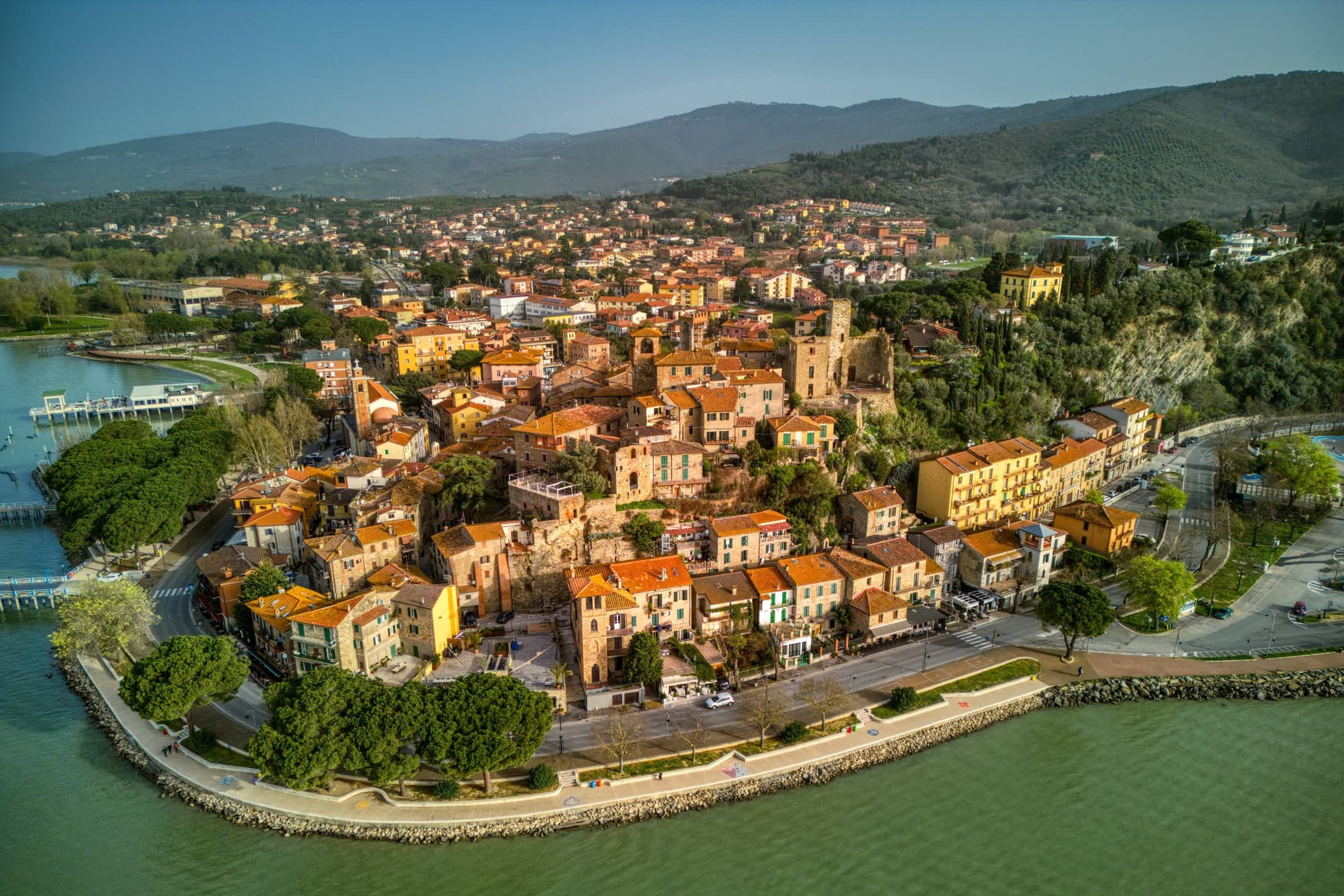
Passignano sul Trasimeno sits on a low promontory on the northern shore of Lake Trasimeno, twenty kilometers northwest of Perugia, separated from the lake only by the road that links Perugia to Tuscany. The Umbri held the ground first, then the Etruscans pushed them east of the Tiber; the Romans turned the spur into a watchtower controlling the pass between northern and central Italy.
In 217 BC Hannibal trapped Gaius Flaminius's army of 25,000 in the narrow road between Tuoro and Passignano, killing about 15,000 Romans in the morning fog of June 21, one of the worst defeats in Roman history. The Rocca, built around 850 by the marquises of Tuscany and conquered by Perugia in 1187, holds a quadrangular plan around a 32-meter keep that survived a 1778 partial demolition.
The Festa della Padella, held in late August, fries lake fish for the village in a four-and-a-half-meter pan on the shore. The Borgo dei Borghi finalist designation arrived in the 2010s.
Da Luciano, Il Molo have been named by a guide.
What to see in Passignano sul Trasimeno
- Rocca di Passignano. Quadrangular fortress built around 850 by the marquises of Tuscany with a 32-meter central keep, partly demolished in 1778.
- Chiesa di San Bernardino. Sixteenth-century church near the Rocca with a Renaissance interior and views down to the lake from its portico.
- Centro di Documentazione Annibale e Battaglia del Trasimeno. Small documentation centre on the Battle of Lake Trasimene of 217 BC and Hannibal's ambush of Gaius Flaminius.
How to get to Passignano sul Trasimeno
There is a railway station in the town, so you can arrive without a car and never need one while you are here. Perugia is roughly 28 minutes away by road.
✷ We have written about Passignano sul Trasimeno
“The lake is like a sanatorium compared to the sea. It’s relaxed. It’s calm. It’s silent. To find this level of almost disturbing quietness, you either go up into the mountains, or you really need to know your way around the sea to find that particular spot not overrun by vacationers and beach people. In Trasimeno, this is easy. Even the most popular towns like Castiglione or Passignano sit in quiet harmony with the stillness of the water.”
Read our piece on Passignano sul Trasimeno →Lago Trasimeno | Never Compete with the Sea
Our tip
April through June and September into October are the months the lake works. The water warms enough by late May for swimming off the Lido and the ferry to Isola Maggiore runs to a steady schedule. July and August are crowded; the Festa della Padella in late August is the loudest weekend of the year. Festa dei Barbari - Castel Rigone falls in July.
Magione
Why visit Magione
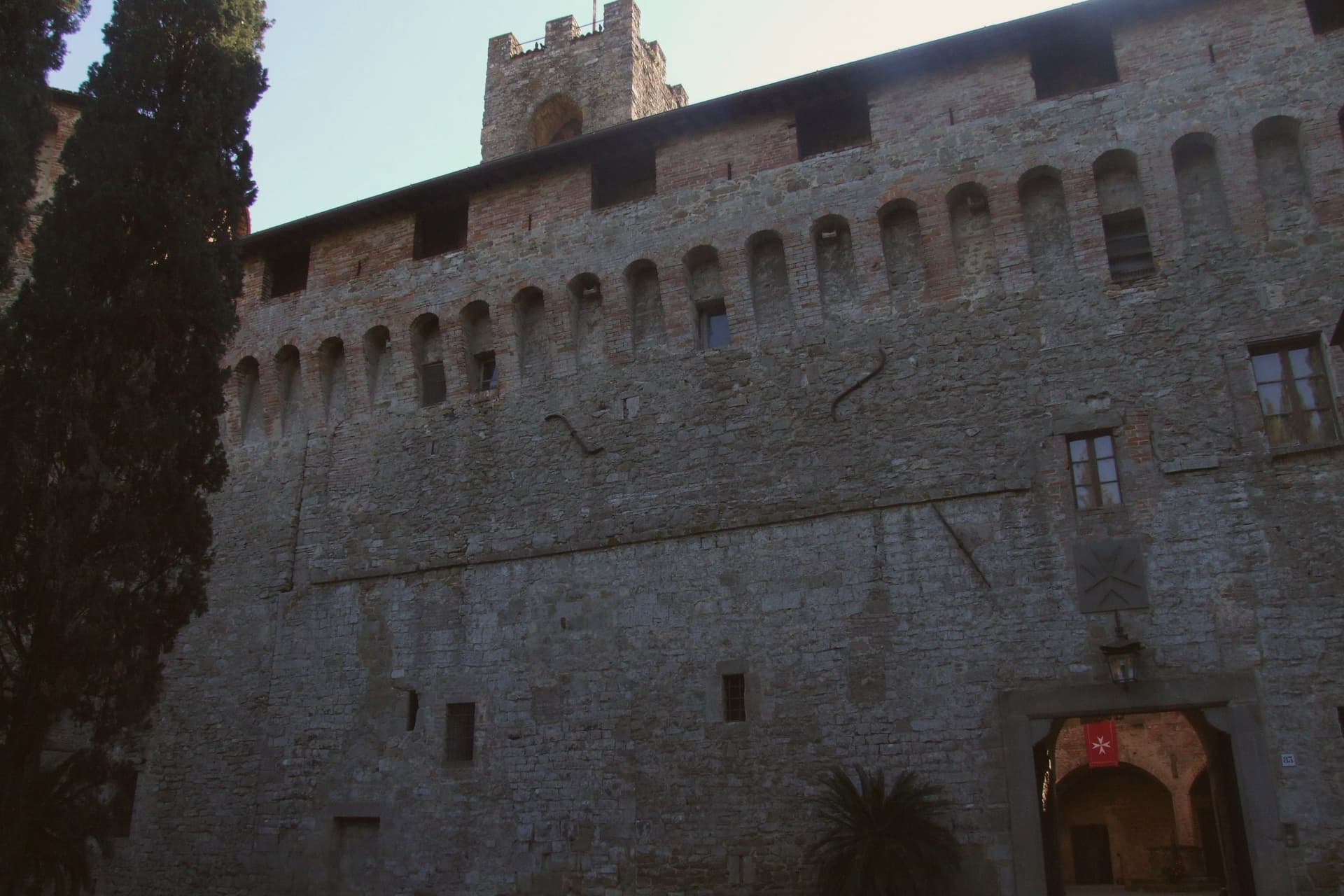
Magione sits at 299 meters on a hill east of Lake Trasimeno, fifteen kilometers from Perugia. The name comes from the Knights Hospitaller, who built a hospital here in the mid-twelfth century dedicated to Saint John the Baptist and called their convent Maison in their own language.
The original nucleus stood on the Perugia-Tuscany route and grew into the fortified base that still anchors the town today. The lower town is organized around two medieval poles: the castle complex near the old route, and the quadrangular tower rising thirty meters over the settlement, built in the same period by the same Order.
The vineyards on the surrounding hills lie between 250 and 350 meters above sea level, and the town's territory extends down to the lake's eastern shore. In October 1502, the castle hosted a plot against Cesare Borgia: his own captains and allies conspired against him inside its walls.
Niccolò Machiavelli, on diplomatic mission for Florence, learned the details and passed them to Borgia, who dismantled the conspirators within months. A hospital, a tower, and a plot against a Borgia: the town's history reads as a sequence of episodes gathered around the same fortified point on the road between Perugia and Tuscany.
Osteria Rosso di Sera have been named by a guide.
What to see in Magione
- Castello dei Cavalieri di Malta. The fortified complex built by the Knights Hospitaller stands as the town's anchor, its walls the setting where the Conspiracy of Magione was plotted against Cesare Borgia.
- Torre dei Lambardi. Thirty-meter quadrangular tower built between the twelfth and thirteenth centuries by the Gerosolimitani Knights, three floors and a summit terrace.
- Chiesa di San Giovanni Battista. Parish church inside the castle complex, dedicated to the saint of the original Hospitaller foundation.
How to get to Magione
There is a railway station in the town, so you can arrive without a car and never need one while you are here. Perugia is roughly 23 minutes away by road.
Our tip
April through June and September into October are the working months on the eastern Trasimeno: clear lake light, olive groves on the hills above, evenings cool enough to walk between the Castello and the Torre. July and August reach the low thirties in the basin; the lake helps but weekends fill with Perugia and Florence day-trippers and the lakefront frazione of San Feliciano runs heavy. The olive harvest in late October and November turns the territory busy with frantoi at full capacity. Festa del Giacchio - Sagra del Pesce del Lago Trasimeno falls in July.
Deruta
Why visit Deruta
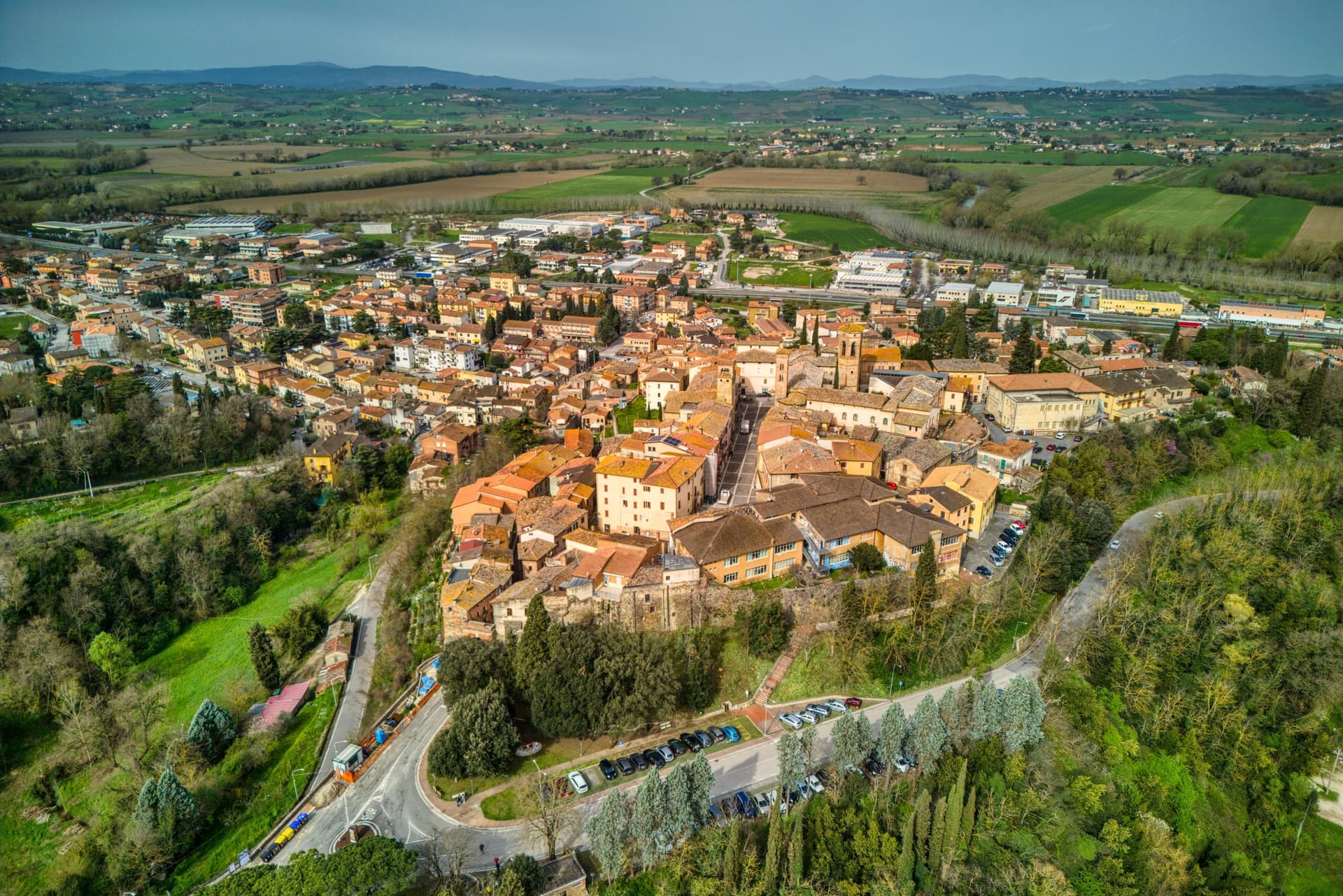
Deruta sits fifteen kilometers south of Perugia, its hill rising above the Tiber on the river's left bank. The walled medieval core, organized around Piazza dei Consoli, occupies the high ground, while the lower town spreads along the old road linking Perugia to Rome.
That road is where the workshops cluster, most of them family businesses running three or four generations deep, and it is also the route that carries traffic five kilometers south to the pilgrimage church, its walls built up over four centuries from votive tiles left by travelers on the same stretch of road. The first documented kilns appear in the archaeological record in the late thirteenth century, and by the early sixteenth the town's workshops had developed the lustro finish that gave Deruta wares their metallic shine, along with the Bella Donna plates that paired painted portraits with flattering banderoles naming the women depicted.
That convent complex, once a working monastery, now holds both the ceramics museum and, next door, the civic gallery with its Perugino and Alunno panels, so the town's religious architecture, its art collection, and its ceramics history sit under the same roof by accident of reuse rather than design. The upper town's churches and museums hold the record of what Deruta made and believed; the lower town's workshops are still making it.
I Rodella have been named by a guide.
What to see in Deruta
- Museo Regionale della Ceramica. Holds over 6,000 pieces from medieval to modern, arranged through the convent's old cloister and cells.
- Chiesa di San Francesco. Consecrated 1388 after earthquake reconstruction, Sienese 14th-century frescoes inside, Domenico Alfani Raphael-school panel above an altar.
- Pinacoteca Comunale. Civic gallery with Perugino's Eterno and Saints Romano e Rocco, plus two altarpieces by Niccolò Alunno from the surrounding churches.
How to get to Deruta
There is a railway station in the town, so you can arrive without a car and never need one while you are here. Perugia is roughly 19 minutes away by road.
Our tip
April through June and September into October are the months locals prefer. The Tiber valley stays mild and the workshops keep regular hours, with kilns running on weekdays and tastings open on weekends. The Festa della Ceramica in late August opens the cellars and the older workshops to the public. Palio della Brocca falls in August.
More from Anywhere Italy
 The best hidden towns you can reach by train that eat well within 90 minutes of Perugia
 The best hidden hill towns you can reach by train in the province of Perugia
- The 10 prettiest hidden villages you can reach by train in Umbria
- The 8 prettiest villages you can reach by train in the province of Perugia
 The best hidden towns inside a nature park in the province of Perugia
 The 7 prettiest villages you can reach by train within 90 minutes of Perugia