
The best hidden towns that eat well in Calabria
Calabrian cooking runs on things that grow in poor soil and swim in deep water. Red onion sweetened by sea air, nduja that stains the bread, swordfish cut into slabs and grilled with oregano and lemon, pecorino from the Sila plateau, chestnuts and porcini gathered under the pines above the treeline. The coastal towns are built in pale tufa and lime-washed stucco, the mountain ones in grey stone that holds the cold, and the eating changes with the altitude just as sharply. Late summer brings the tuna and the peppers, autumn brings the mushrooms and the new oil, and winter is when the pork is broken down and the chilli goes in.
There is one Calabrian coastline everybody has seen, and it is the stretch around Capo Vaticano and the Costa degli Dei, where the beach clubs fill in August and the car park queues stretch back to the main road. Reggio Calabria and the ferry traffic to Sicily absorb another share of the visitors, most of whom eat once and move on. The result is that a region with a serious, difficult, regionally distinct kitchen gets judged on a granita and a plate of pasta eaten in a hurry. The good tables exist there too, but they are booked, and they are not where the region is most itself.
The same coast keeps going, north past Paola towards the Cilento border and south into the Gulf of Squillace, and the same mountains rise behind it into the Pollino and the Sila. That is where these towns are: a cliff village above a river gorge, a fishing town where the swordfish boats still land, a hill town with a Gothic church and a kitchen working on Arbereshe recipes, a plateau town where the chairs are made by hand. Fewer people go, which mostly means the dining rooms are smaller and the bookings easier. Each of the towns here has a table that a national or international guide has thought worth naming.
Of the 45 communes we have mapped in Calabria, 12 qualify as towns that eat well: a national or international dining guide has named a table in each. This list is the hidden ones, 10 in all, ordered smallest first. The smallest, San Nicola Arcella, has 1,957 residents.
Elsewhere in the catalogue: The 8 best coastal towns that eat well in Calabria and The best towns you can reach by train that eat well in Calabria.
San Nicola Arcella
Why visit San Nicola Arcella
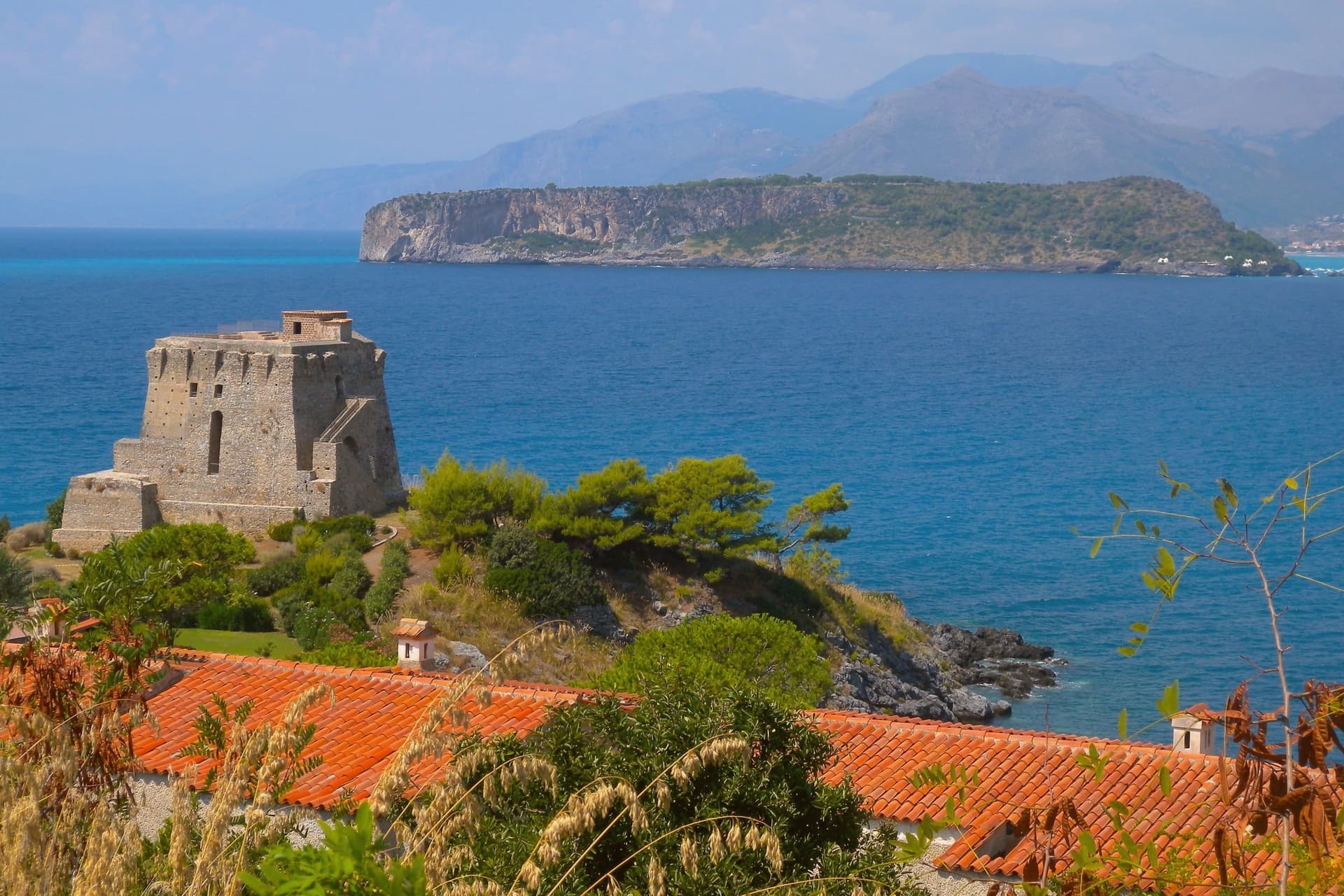
San Nicola Arcella sits at 110 meters on a cliff above the Tyrrhenian Sea in the northern Riviera dei Cedri, between Scalea and Praia a Mare. The settlement traces back to the Greek colony of Lao and its Roman successor Lavinium on the same stretch of coast.
The hilltop relocation followed the Saracen raids of the early Middle Ages, when villagers moved uphill behind a watch tower, and the Arcella part of the name comes from the rock the village sits on. Prince Pietro Lanza Branciforte, who married the last heir of the Spinelli di Scalea family in the nineteenth century, expanded the fishing economy and built out the urban core, which became an autonomous commune in 1811.
That core still sits on the rock the raids drove people to, while the watchtower built for the same defense on the southern headland later found a second use as a writer's study. The village today is the sum of that retreat uphill and that later reuse: a defensive settlement that outlasted the danger it was built for and let the coast below it, arch, cove and all, become the draw instead.
Trattoria La Quercia have been named by a guide.
What to see in San Nicola Arcella
- Spiaggia dell'Arco Magno. Inner cove reached only on foot or by boat, framed by a stone arch carved into the headland by the sea.
- Torre Crawford. Sixteenth-century anti-piracy watchtower on the southern headland, used as a study by American novelist Francis Marion Crawford in the 1890s.
- Centro storico. Hilltop core perched on the rock, rebuilt under the Lanza Branciforte princes in the nineteenth century around the parish church and the old casale.
How to get to San Nicola Arcella
Salerno is roughly 120 minutes away by road.
Our tip
May through September runs the whole village. Boats start the Arco Magno shuttle in late May, the Bandiera Blu beaches fill from mid-June, and July and August bring the heaviest crowds onto a small headland. Heat sits in the high twenties on the cliff; midday on the inner beach is reflected off the rock walls and harder than the open coast.
Serrastretta
Why visit Serrastretta
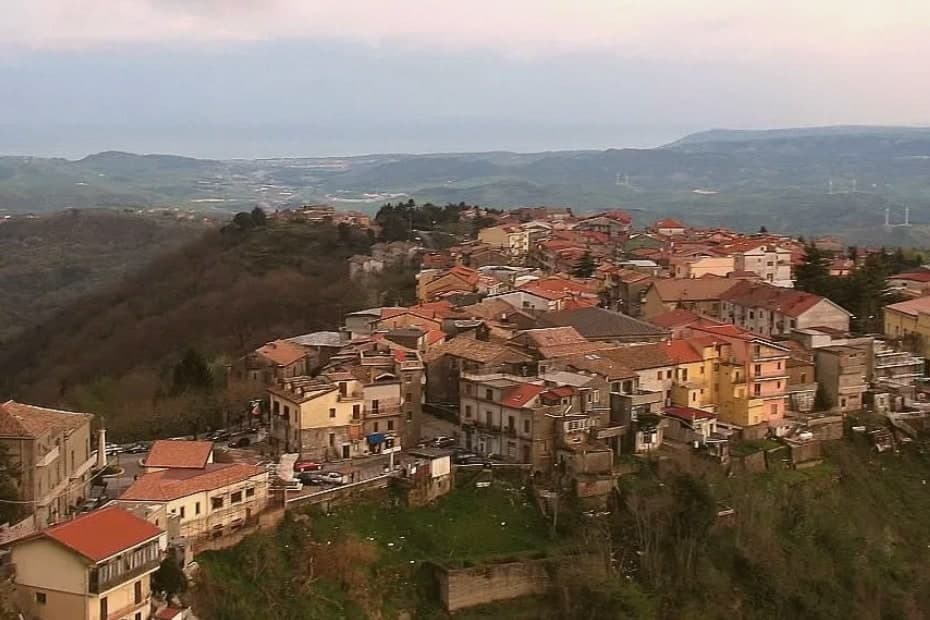
Serrastretta sits at 840 meters in the Reventino massif of the Sila Piccola foothills, forty kilometers south of Cosenza. The town's name comes from the original settlement, built in a narrow gorge between two ridges, the Serre.
Local tradition dates the founding to 1383 and links it to Sephardic Jewish families fleeing the Iberian persecutions of the period, a small community whose presence persisted for centuries in the surrounding frazioni. The economy was, and partly still is, the chair.
Frame in seasoned Reventino beech and oak, seat woven from vuda, a swamp reed worked by hand, the Serrastretta straight-backed chair is sold across Calabria and beyond. Workshops along the Via dei Sediari still produce them.
The town belongs to the Borghi Autentici d'Italia network. Mount Condrò's two-hundred-hectare beech forest, part of the Reventino, begins where the houses end.
Il Vecchio Castagno have been named by a guide.
What to see in Serrastretta
- Via dei Sediari. The street of chair-makers, where workshops still produce the hand-woven vuda-and-beech chairs that gave the town its trade name.
- Faggeta di Monte Condrò. Two-hundred-hectare beech forest on the Reventino massif, the wood source for the traditional chair frames.
- Centro storico. Hillside borgo arranged along the narrow gorge that gave Serrastretta its name, built from stone quarried locally.
How to get to Serrastretta
Reggio Calabria is roughly 120 minutes away by road.
Our tip
May through October is the window. At 840 meters, summers stay mild while the Calabrian coast bakes; the beech forests of the Reventino hold their cool well into August. Spring is late here, with snow possible into April and the woods slow to leaf out.
Altomonte
Why visit Altomonte
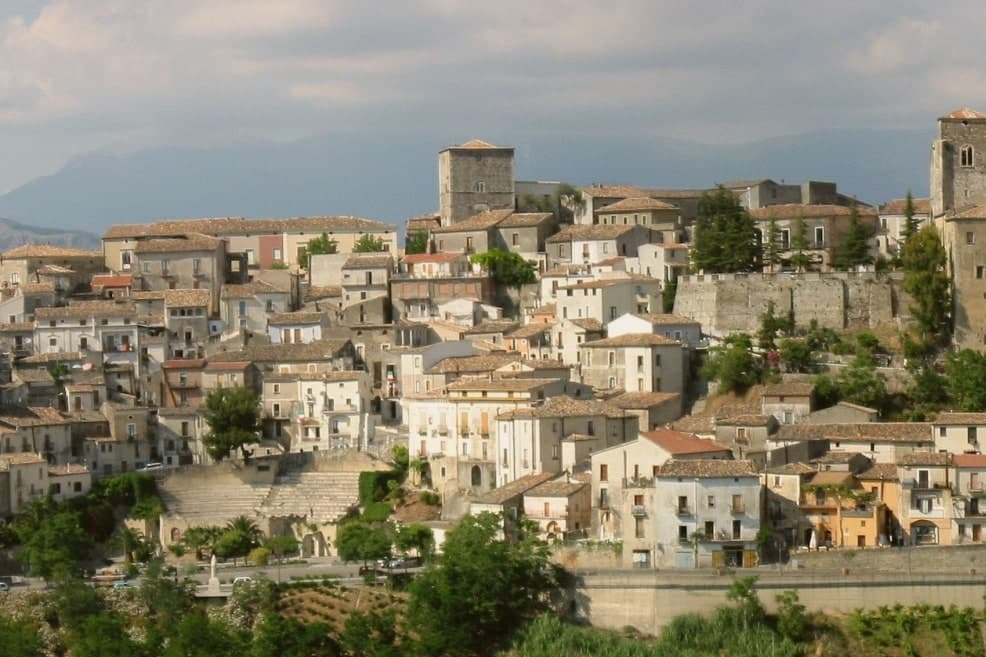
Altomonte sits at 455 meters in the Valle dell'Esaro, forty-five kilometers north of Cosenza, between the Pollino slopes and the Ionian plain. The village is built around the church, its stairways and alleys climbing the hillside toward the square in front of it, which gives the settlement its layout and its nickname as Calabria's wedding village.
The Dominicans took over the church in 1443 and founded the convent that now houses library and museum, joining under one roof the religious life of the town and the collection that grew out of it. Altomonte is one of I Borghi più belli d'Italia, a Cittaslow, and a Città dell'Olio and del Pane.
The recognitions and the produce sit alongside the medieval fabric rather than apart from it: a small hill town whose civic identity, from bread ovens to heritage listings, has grown around the same core the church and its square have held since the fourteenth century.
Barbieri have been named by a guide.
What to see in Altomonte
- Chiesa di Santa Maria della Consolazione. Built on a Norman foundation of 1070, raised over it by Filippo Sangineto. French stonework distinguishes the interior, the reason the church is ranked above any other Gothic-Angevin building in the region.
- Museo Civico di Altomonte. Housed in the former Dominican convent, with Simone Martini's panel of Saint Ladislaus commissioned by Filippo Sangineto in 1326 in Siena.
- Castello Normanno-Aragonese. Hilltop castle of Norman origin remodelled under the Aragonese, dominating the centro storico and the Esaro valley below.
How to get to Altomonte
Salerno is roughly 146 minutes away by road.
Our tip
April, May, June and September into October are the right months to walk Altomonte's stairways without sweating and to enter the Consolazione church when the afternoon light hits the rose window. July and August reach the mid-thirties on the Esaro plain, though the 455-meter perch holds an evening breeze the lowland towns do not get. November through March is quiet: many restaurants close midweek and the museum keeps shorter hours.
Spezzano della Sila
Why visit Spezzano della Sila
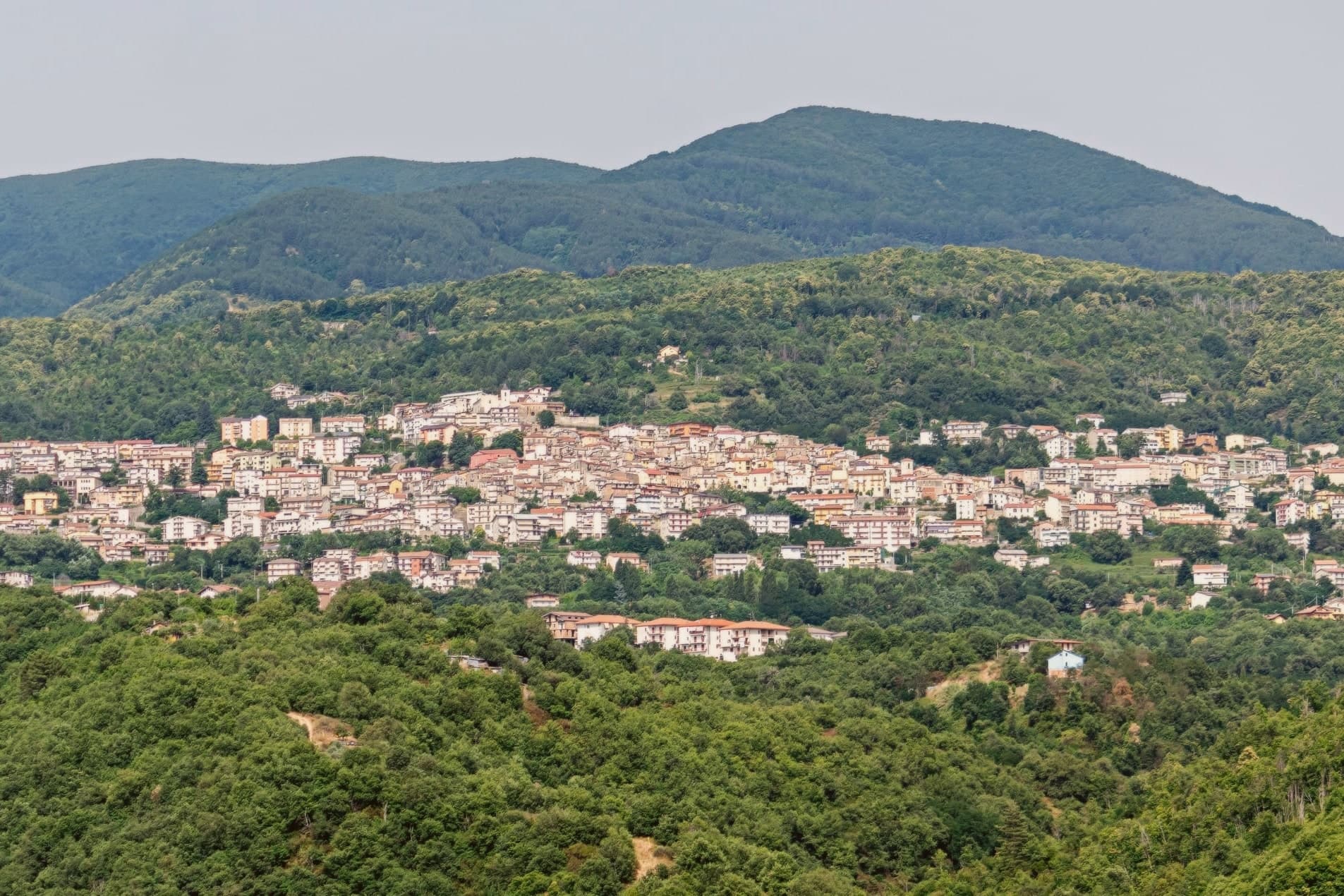
The town sits on the Presila Cosentina, twenty kilometers east of Cosenza and on the western edge of the Sila plateau. The borough likely formed at the end of the tenth century, after the Arab raids on Cosenza pushed settlement inland toward higher ground.
The commune's territory reaches well beyond the historic centre. The mountain hamlets of Croce di Magara and Moccone fall inside its boundary alongside the resort frazione, and with them a share of the national park itself: its visitor centre and wildlife enclosures, its stand of centuries-old pines, and part of the largest lake in Calabria.
Snow closes the high pastures in winter; in summer the same ground turns to hiking, mushroom-gathering and grazing country. The old village below and the high plateau above are administratively one place, even though little of daily life in one resembles the other.
La Tavernetta al San Lorenzo si Alberga have been named by a guide.
What to see in Spezzano della Sila
- Santuario di San Francesco da Paola. Convent with attached cloister at the head of the historic centre, the building around which the old town still gathers.
- Chiesa di San Pietro. Parish church in the old village, the main religious anchor of the Spezzano centro storico.
- Chiesa di San Biagio. Smaller historic church dedicated to the town's patron, part of the network of religious buildings inside the borgo.
How to get to Spezzano della Sila
There is a railway station in the town, so you can arrive without a car and never need one while you are here. Reggio Calabria is roughly 170 minutes away by road.
Our tip
May through October is the long Sila season: the lifts on Monte Curcio stop, the plateau opens up to hikers, and Lake Cecita fills with anglers and picnickers. July and August are the busiest months because the cool air pulls Cosenza and Catanzaro residents up the hill to escape the coast. September and October bring porcini and chestnuts. Sagra della Cucuzza falls in July.
Tropea
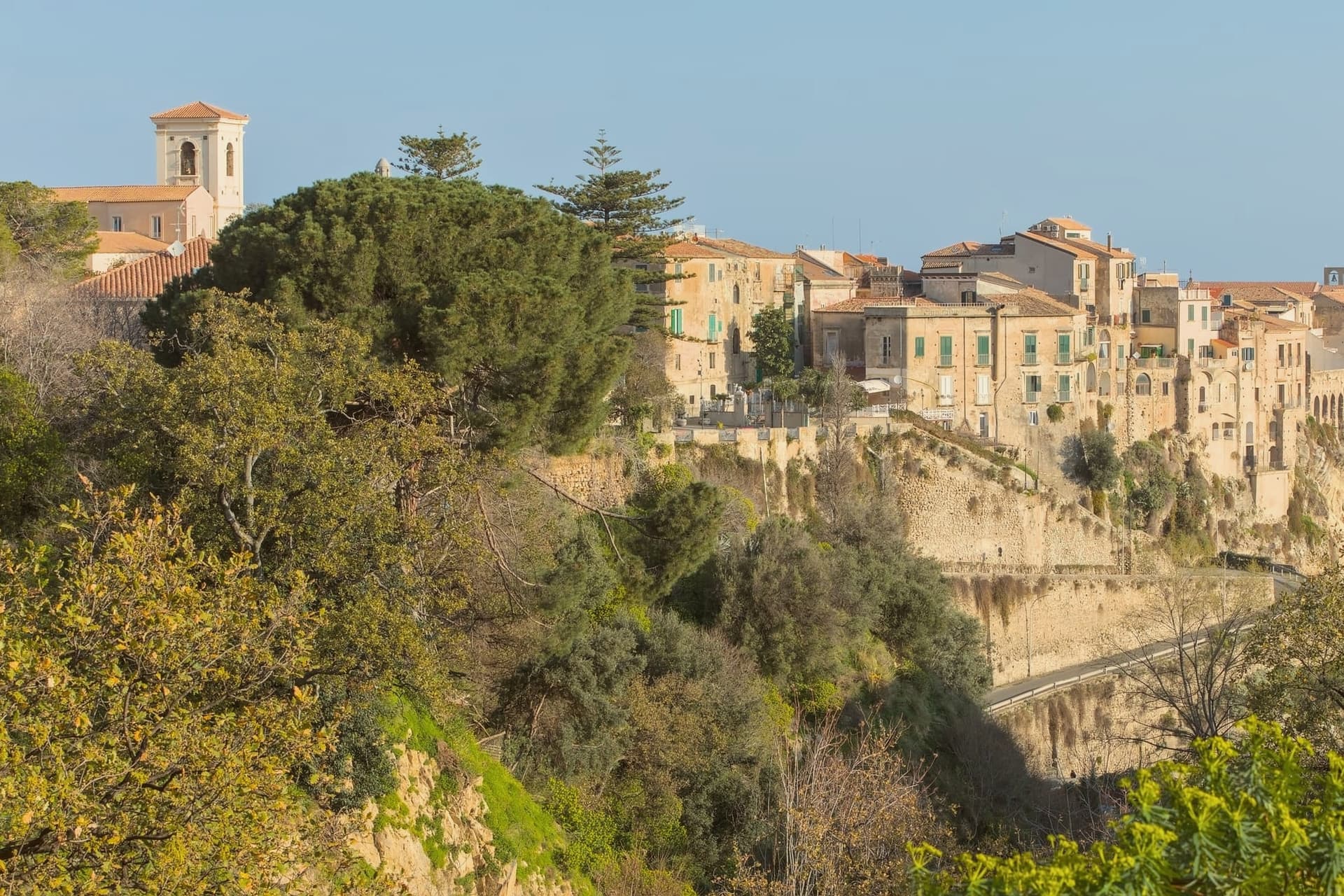
Why visit Tropea
Tropea stands on a tufa cliff fifty metres above the Tyrrhenian Sea, on the stretch of Calabria's west coast marketed as the Costa degli Dei. The town has been a port since Roman times and a bishopric since the eighth century, with Norman and Aragonese phases visible in its walls and palazzi.
The Cattedrale di Maria Santissima di Romania was built by the Normans and reworked in the Baroque period; it holds a fifteenth-century wooden crucifix and a Madonna panel attributed to the school of Giotto. The Santuario di Santa Maria dell'Isola, originally a fourth-century cell, sits on a rocky outcrop thirty-three metres above the sea, reached by a staircase cut into the cliff.
The cipolla rossa di Tropea PGI, said to have been introduced by the Phoenicians and noted by Aristotle and Strabo, grows on the volcanic soils just inland. Tropea was named Borgo dei Borghi 2021 by RAI.
De' Minimi have been named by a guide.
What to see in Tropea
- Santuario di Santa Maria dell'Isola. Norman-era monastery on a tufa sea rock thirty-three metres above the water, reached by a staircase cut into the cliff.
- Cattedrale di Maria Santissima di Romania. Norman cathedral reworked in the Baroque period, with a fifteenth-century wooden crucifix and a Madonna panel attributed to the school of Giotto.
- Centro storico sulla rupe. Tufa cliff town fifty metres above the sea, with noble palazzi from the Norman to Aragonese periods along Corso Vittorio Emanuele.
How to get to Tropea
There is a railway station in the town, so you can arrive without a car and never need one while you are here. Reggio Calabria is roughly 88 minutes away by road.
Our tip
Tropea's season runs from late May to mid-September. May and June bring warm sea and the lungomare back to life. July and August are heavy: the centro storico fills with day-trippers from the rest of Italy, parking spreads into the inland frazioni, and the Spiaggia della Rotonda is shoulder-to-shoulder. Ferragosto a Tropea - Processione a mare della Madonna dell'Isola falls in August.
Trebisacce
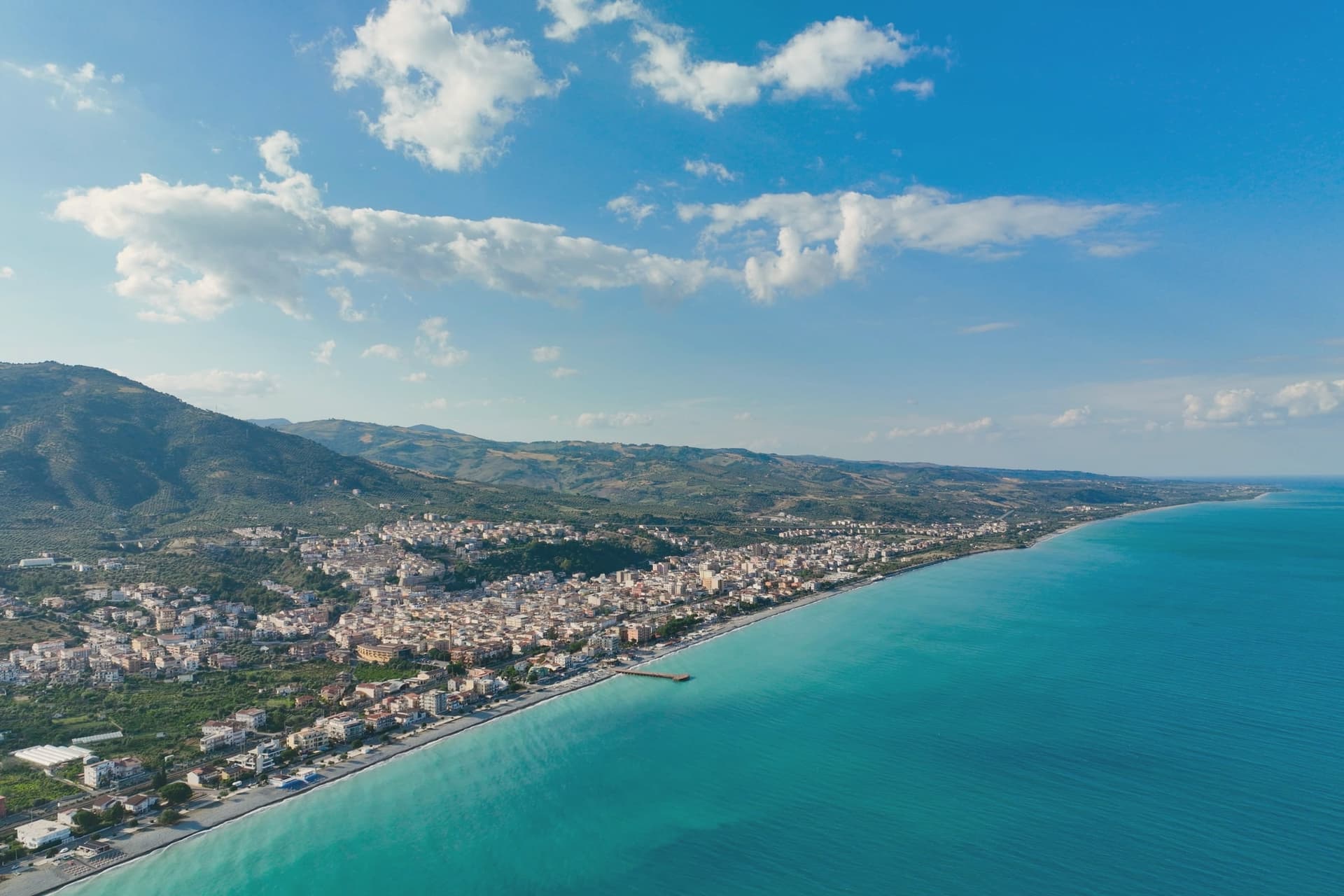
Why visit Trebisacce
Trebisacce sits at 73 meters in the upper-Cosenza arc, on a hill whose flat top gave the town its name: the Greek Trapezàkion, small table, a literal description of the tabular ground the old town stands on. In antiquity the settlement held the road between Metaponto and Sybaris, twenty kilometres south on the Sibari plain, a position that put it on the trade routes long before the medieval walls went up.
The lower modern town runs along the seafront below; the plateau above keeps the old streets, the mother church, and the walls raised in the sixteenth century against Saracen raids. Inland and uphill, past the modern town, a rock-cut chapel sits inside a pine forest on Monte Mostarico, a different register of building from the stone church and the archaeological trenches below.
Read together, the layers, coastal plain, tabular hill, and inland forest, describe a town that has always faced two ways: out to the sea route and up to the higher, quieter ground behind it.
La Rotonda have been named by a guide.
What to see in Trebisacce
- Chiesa di San Nicola di Mira. Trullo-shaped dome and a tall pyramidal bell tower stand over the centro storico, the church's mass still setting the skyline of the old town.
- Broglio di Trebisacce. Excavated since 1979, the site has also given up a Hellenic necropolis alongside the Mycenaean finds, layered evidence of the plateau's long occupation.
- Centro storico sul plateau. Old town on the tabular hill that gives Trebisacce its name, ringed by sixteenth-century walls built against Saracen raids.
How to get to Trebisacce
There is a railway station in the town, so you can arrive without a car and never need one while you are here. Taranto is roughly 104 minutes away by road.
Our tip
May and June bring warm sea and the lungomare opening, with the plateau still cool in the evenings. July and August are hot on the Ionian coast and the modern town fills with summer residents from the Sibari plain and Basilicata. September is the better month: water still in the mid-twenties, beach umbrellas thinned out, restaurants quieter.
Soverato
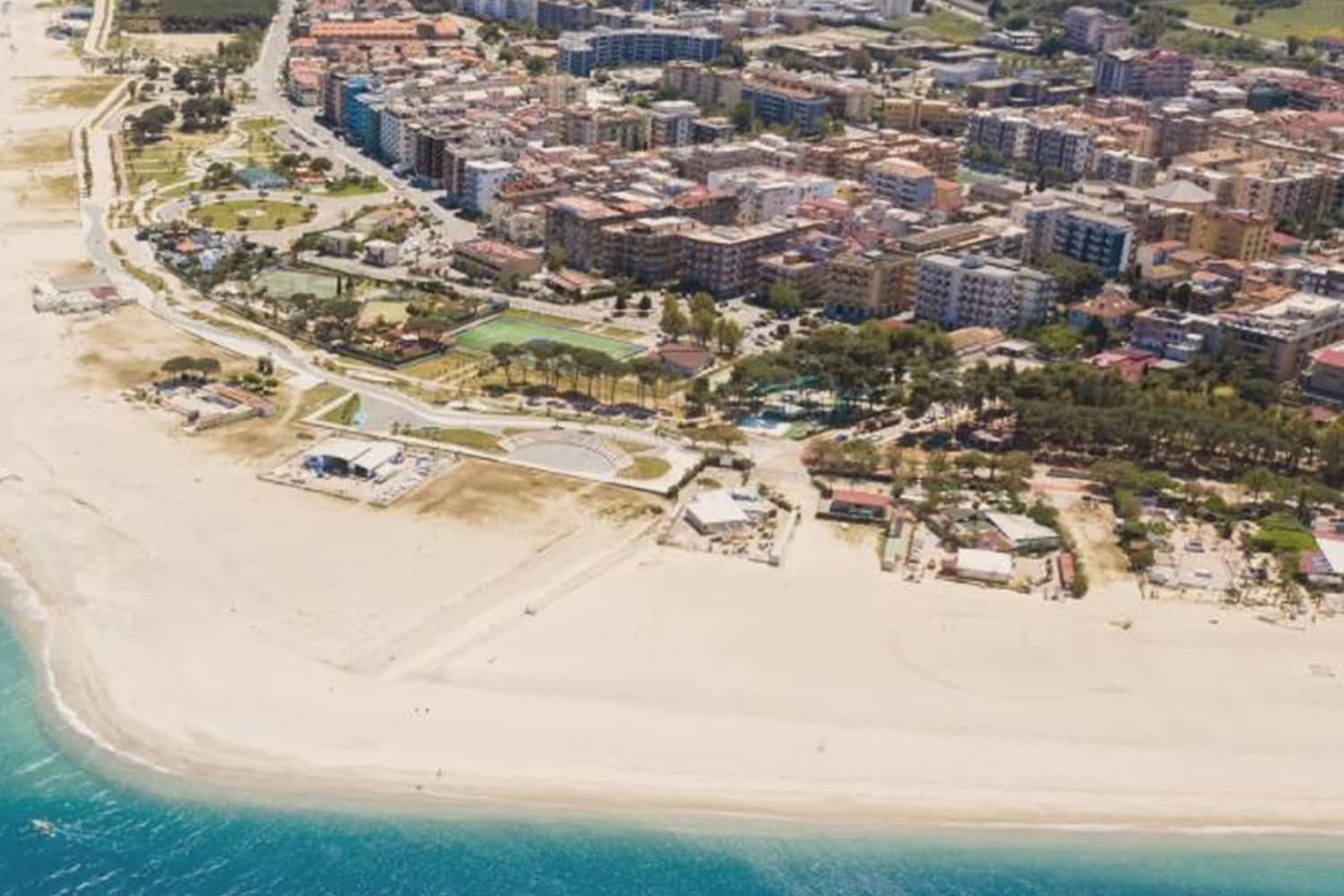
Why visit Soverato
Soverato sits in the province of Catanzaro, on the narrow waist where Calabria almost touches itself, its coast facing the Ionian. The modern town runs along the shore, while inland and uphill lies the older settlement, built before an earthquake in 1783 leveled what came before it; the church of Madonna Addolorata still marks that older core, separate from the seafront strip that draws the summer crowds.
Statistical surveys describe Soverato as the highest per-capita income commune in Calabria, and the town has drawn tourists since the mid-2010s, its medical services, schools and long bathing season making it the regional anchor for the coast between Catanzaro and Locri. The wealth and the tourism trace back to the same geography: a beach town that grew rich enough to become the service center for the stretch of coast around it, while its older self stayed on the hill above.
Brezza fish and chill have been named by a guide.
What to see in Soverato
- Spiaggia di Soverato. The beach carries both Bandiera Blu and Bandiera Verde status, the latter marking it as paediatric-friendly. The Gulf of Squillace here stays shallow well out from shore.
- Torre di Carlo V. The tower stands on the seafront as one link in a chain of coastal towers raised against Saracen raids, and remains the most visible historic structure in town.
- Giardino Botanico Santicelli. The garden was laid out in 1980 on ground once used for waste, an early instance of urban land reclamation in the south, now holding Mediterranean and tropical plant collections.
How to get to Soverato
There is a railway station in the town, so you can arrive without a car and never need one while you are here. Reggio Calabria is roughly 110 minutes away by road.
Our tip
May through September is the long Ionian season. Water warms early, the beach establishments are open from late spring, and by July and August the lungomare runs at full social tilt, with a nightlife reputation that pulls people from Catanzaro and Crotone. June and September are the calmer bathing months, with the same warm water and fewer crowds. Mercato Settimanale Di Soverato falls in May.
Pizzo
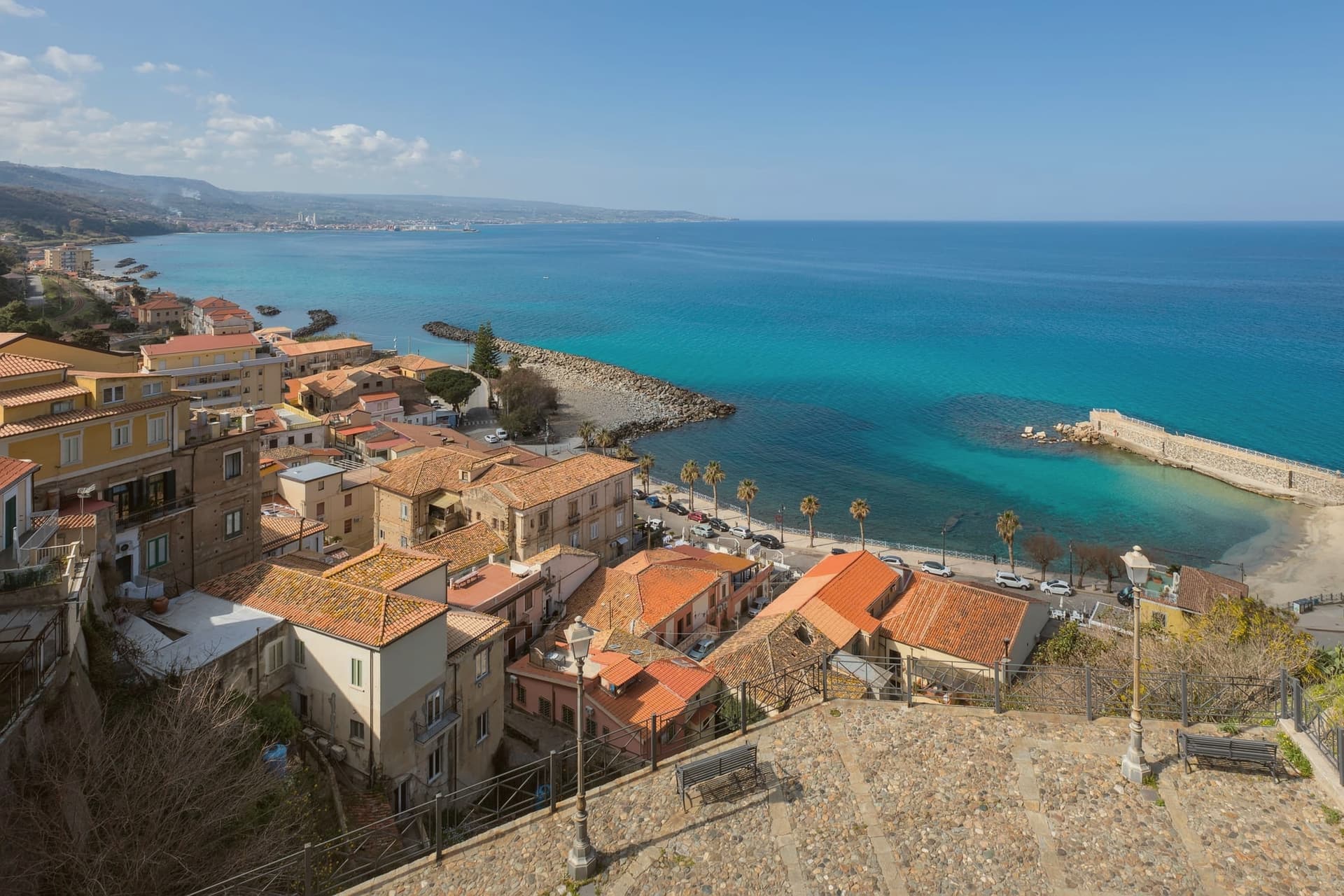
Why visit Pizzo
Pizzo sits on a tuff promontory rising about 70 meters above the Tyrrhenian, at the northern end of the Costa degli Dei. The town's name for its own fortress, Castello Aragonese, has largely given way to Castello Murat, after the brother-in-law of Napoleon who landed here in October 1815 hoping to retake the throne of Naples, was captured by townspeople, and was court-martialled in the building he is now remembered by.
The tartufo gelato has a separate history entirely: developed by local gelato-makers in the twentieth century, hand-moulded into a hemisphere with a molten chocolate centre and dusted with cocoa, it earned IGP status in 2007, the first gelato in Europe to do so. Two unrelated claims to fame, a captured king and a dessert, meet on summer evenings in the cliff-edge piazza where the town still gathers.
Pizzo's identity rests on that pairing: a fortress town that turned a moment of political violence and a piece of confectionery into the same civic memory.
Locanda Toscano, San Domenico Ristorante have been named by a guide.
What to see in Pizzo
- Castello Aragonese (Murat). Fifteenth-century fortress on the headland, its main hall preserved as the room where Joachim Murat's court-martial and execution took place, now a museum to the Napoleonic king.
- Chiesa di Piedigrotta. Set into the cliff north of town, reached through low tufa passages that open into chambers where the carved figures stand at full height, worn smooth in places by damp and time.
- Piazza della Repubblica. Cliff-edge piazza with cafés and gelaterie, the social centre of the town and the place to eat tartufo in summer.
How to get to Pizzo
There is a railway station in the town, so you can arrive without a car and never need one while you are here. Reggio Calabria is roughly 75 minutes away by road.
Our tip
May through September is the working season. Water warms by late May, the gelaterie around Piazza della Repubblica run from morning to past midnight in July and August, and the town fills with weekenders from Vibo Valentia and Cosenza. June and September are the calmer bathing months. Sagra del Tonno falls in September.
Belvedere Marittimo
Why visit Belvedere Marittimo
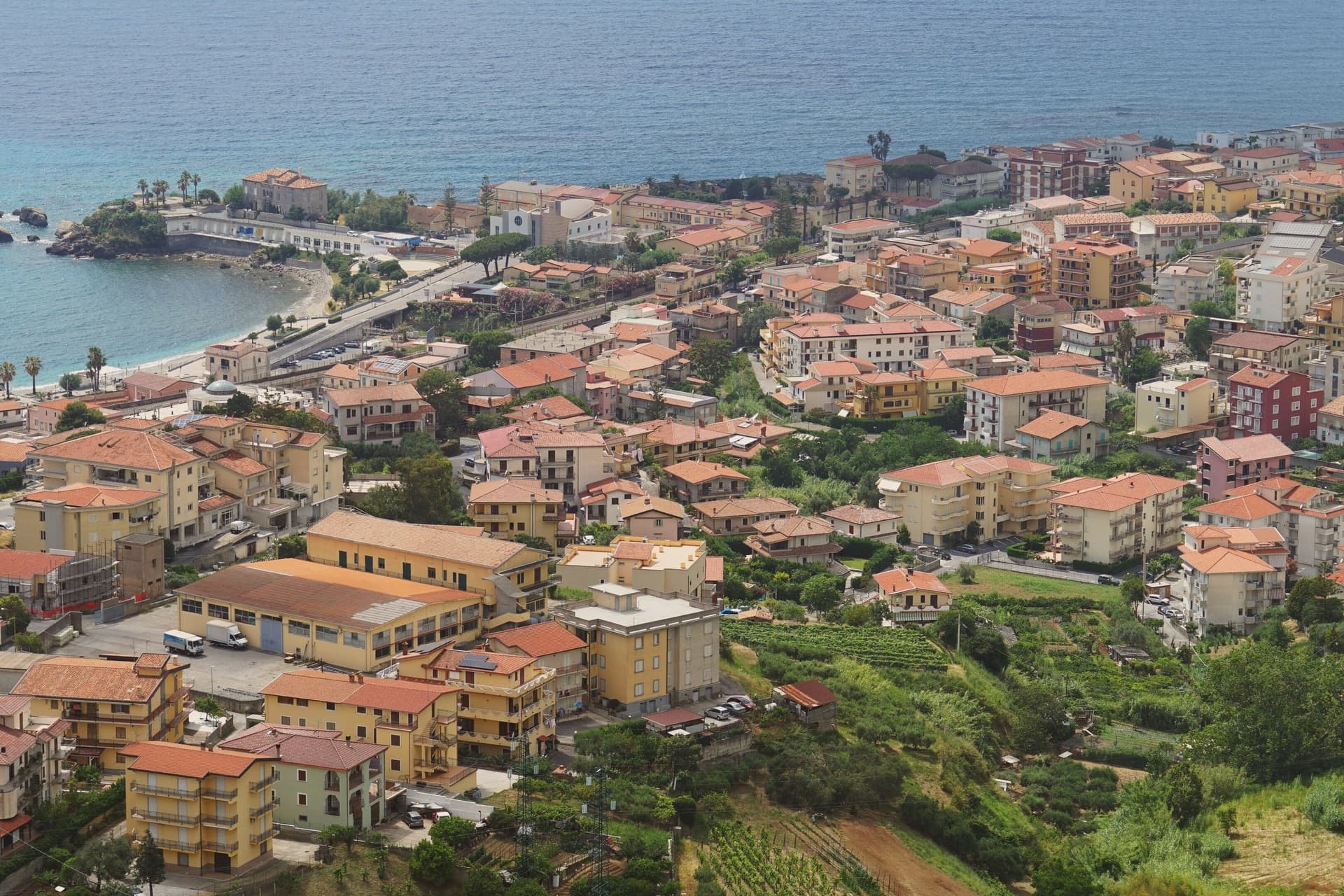
Belvedere Marittimo sits at 150 meters on the Tyrrhenian, fifty kilometers west of Cosenza. The municipal territory runs from Santa Litterata to Calabaja along the coast and climbs behind into the Pollino foothills, where the national park covers part of the commune: a town split between shoreline and mountain, with the built-up center held on the high ground between the two.
The Normans raised the original fortress around the year 1000 under Roger I, choosing the highest hill above the sea for it. Belvedere men sailed in the fleet at the Battle of Lepanto in 1571.
The relics kept in the Capuchin convent for more than three centuries gave the town its local title, Città dell'Amore, and the Riviera dei Cedri, the forty-kilometer run of coast from Tortora south to here, takes its name from the citron still grown on the hillsides above the houses. What holds the town together is the vertical arrangement: castle on the hilltop, convent below it, citron groves on the slopes, and the sea at the bottom, each layer named for what it has kept longest.
Sapori & Saperi have been named by a guide.
What to see in Belvedere Marittimo
- Castello Aragonese. Built by the Normans around 1000, the fortress was reworked under Ferdinand of Aragon with ceremonial gates added alongside the crenellated walls. It commands the hill above the town and the sea below.
- Convento dei Cappuccini. The convent holding the relics of San Valentino sits away from the shoreline crowds, its quiet a contrast to the title the town has taken from it.
- Riviera dei Cedri. The stretch running from Tortora south to Belvedere passes beneath hillsides still planted with cedro, the citron visible above the rooftops.
How to get to Belvedere Marittimo
Salerno is roughly 163 minutes away by road.
Our tip
May through September is the working season on the Riviera dei Cedri. The Lido fills in July and August with Italian families, June and September are the gentler months for warm sea and an open table at the lungomare. The Castello Aragonese is best in the cooler hours, the spring before the heat and the late afternoons of summer.
Bagnara Calabra
Why visit Bagnara Calabra
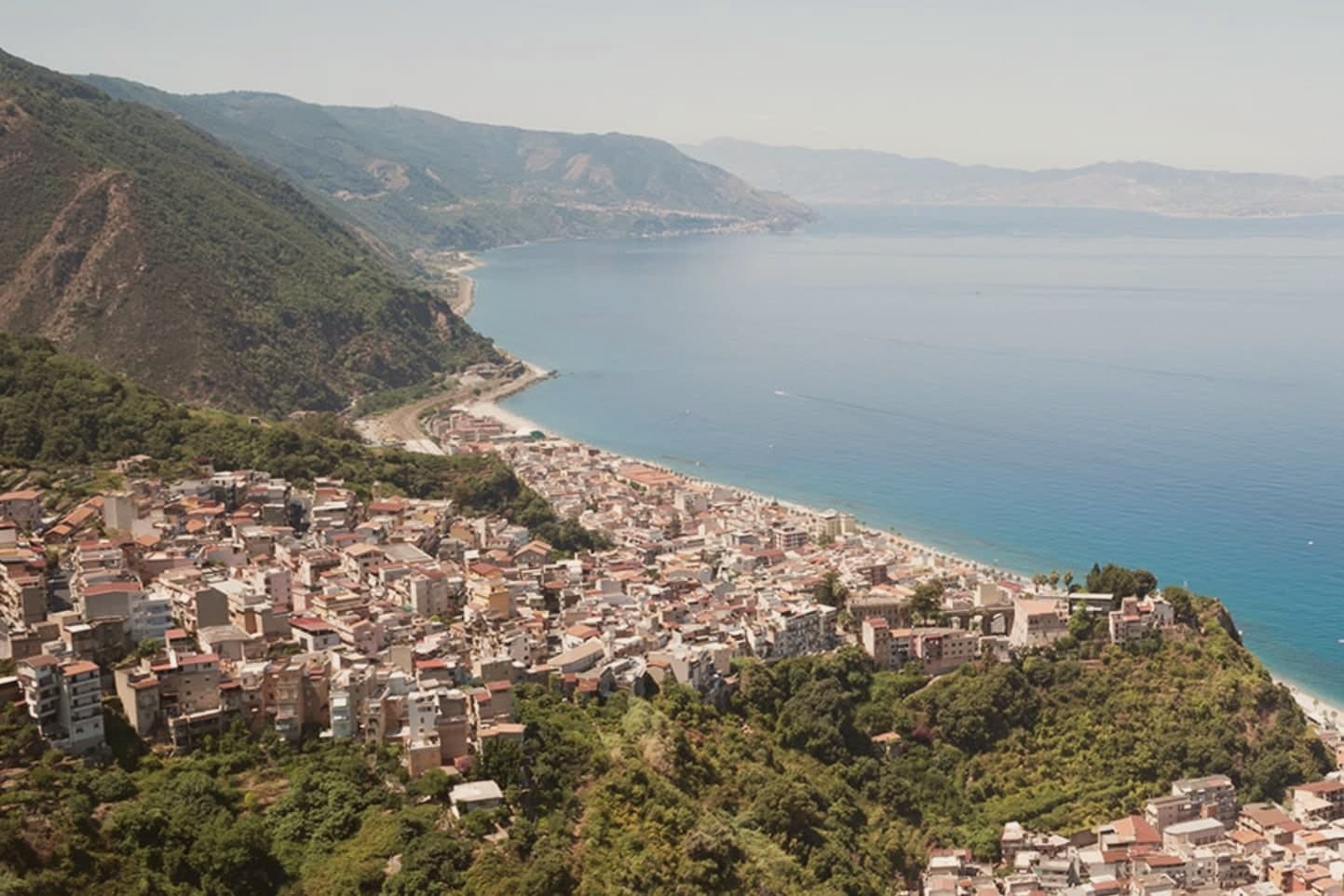
Bagnara Calabra is built into the hills above the Tyrrhenian on the Costa Viola, twenty-five kilometers north of Reggio Calabria, with the Strait of Messina opening to the south. The first organized settlement on record was the Abbey of Santa Maria and the Twelve Apostles, founded around 1085 by Roger I of Sicily.
Two things still define the town. Swordfish: Bagnara is the small capital of Calabrian swordfish, and the local fleet still uses the felucca or passerella, a tall-masted boat with a lookout high above the deck and a long bowsprit walkway from which the harpooner strikes; the practice goes back centuries and is shared with Scilla, six kilometers south.
Torrone: Bagnara torrone, a nougat of honey, sugar and almonds, has been made in the town since the eighteenth century and carries IGP status. The Bagnarote women, who carried the catch on their heads up the hills, are a fixture in Calabrian folklore.
Taverna Kerkira have been named by a guide.
What to see in Bagnara Calabra
- Basilica di Maria SS. del Rosario. Eighteenth-century basilica rebuilt after the 1908 earthquake, the main religious anchor of the town.
- Castello Emmarita. Ruins of a medieval fortress on the hill above town, with views down to the Tyrrhenian and across to Sicily.
- Spiagge della Costa Viola. Pebble and dark-sand beaches under steep cliffs, named for the violet light the coast takes at sunset.
How to get to Bagnara Calabra
There is a railway station in the town, so you can arrive without a car and never need one while you are here. Reggio Calabria is roughly 23 minutes away by road.
Our tip
May through September is the bathing and swordfish season. Water warms by late May, the felucche head out in early summer, and the beaches under the Costa Viola fill in July and August. The Festa di Maria SS. del Rosario in early September is the main event of the religious calendar. Gran Galà del Pesce Spada falls in July.
More from Anywhere Italy
- The 8 best coastal towns that eat well in Calabria
- The best towns you can reach by train that eat well in Calabria
- The best towns that eat well in the province of Cosenza
- The 7 best towns with a serious restaurant in Calabria
 The best hidden beach towns in Calabria
 The 10 best hidden mountain towns in Calabria