The 7 best towns with a serious restaurant in Calabria
Calabria cooks with a short list and a long memory. Swordfish caught in the strait, red onions from the Tyrrhenian sand, pork cured in the cold air of the Sila plateau, bergamot and chilli and stale bread turned into something worth sitting down for. The towns themselves are built of tufo and rendered brick, stacked on ridges above the sea or spread along a beach that goes quiet by October, which is exactly when the kitchens get interesting. Autumn brings mushrooms and new oil, and the tables that matter start taking bookings again.
Most visitors to the region arrive for the beaches and stay on the coast road, and in August the stretch around Capo Vaticano and the resorts of the Costa degli Dei fills with cars from Naples and Milan. It is a reasonable choice, since the water there is as clear as anywhere in the Mediterranean. The eating, though, follows the crowd: fried fish, granita, a menu translated into four languages and cooked for people who will not return. Prices climb and the reservation book stops mattering.
The same coast keeps going, north into the Pollino foothills and south into the Ionian, and the same mountains keep producing the pork and the caciocavallo. The towns in this list are smaller than the resorts, and fewer people go, but each one holds a restaurant that the strictest of the Italian dining guides has bothered to list. Some are on the water, some are up on the plateau where the winters are real. All of them are worth a detour and a table booked in advance.
Of the 45 communes we have mapped in Calabria, 7 qualify as towns with a serious restaurant: each holds a restaurant listed by the most demanding of the dining guides. The smallest, Altomonte, has 4,019 residents.
Two more lists worth reading alongside this one: The 8 best coastal towns that eat well in Calabria and The best hidden towns that eat well in Calabria.
Altomonte
Why visit Altomonte
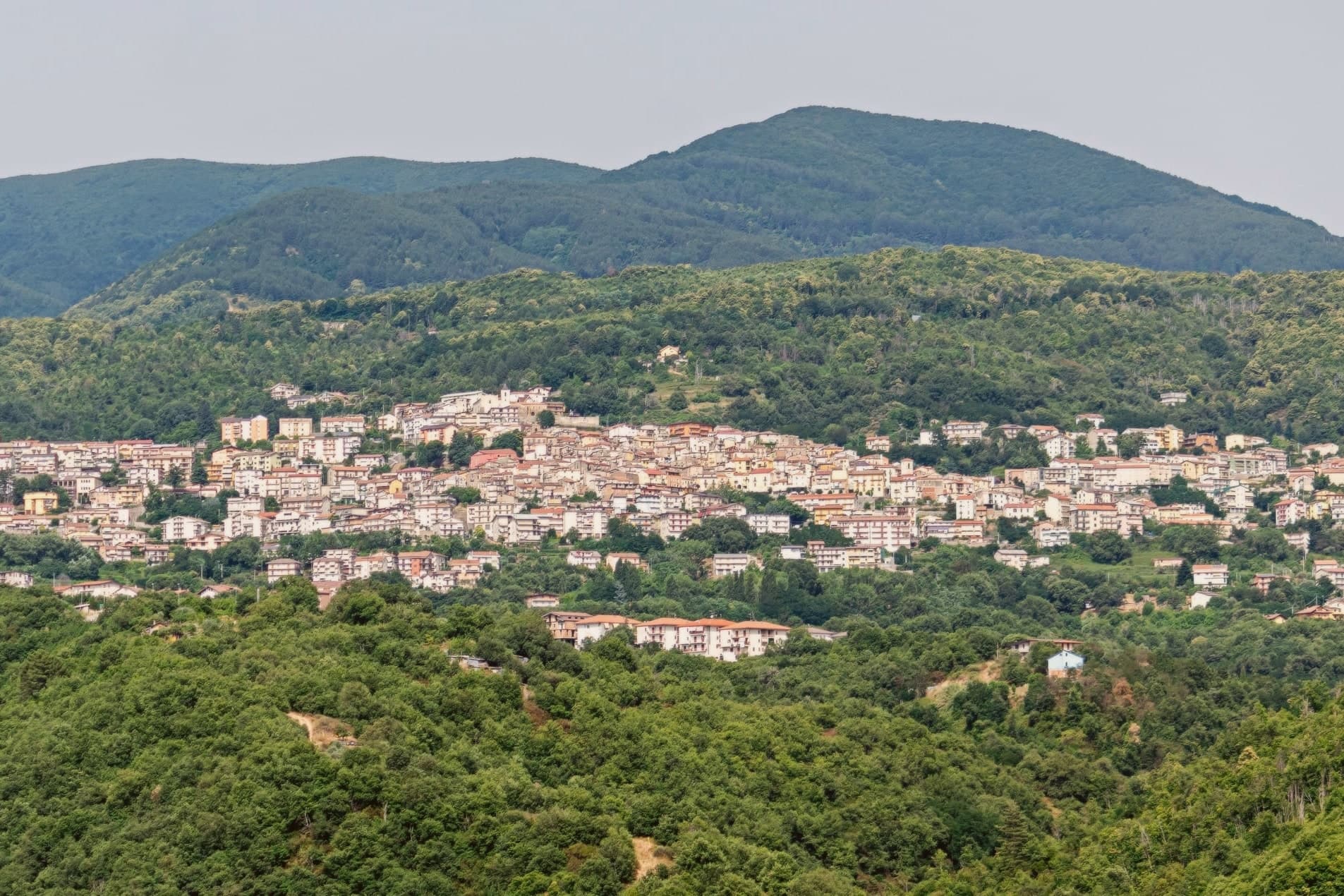
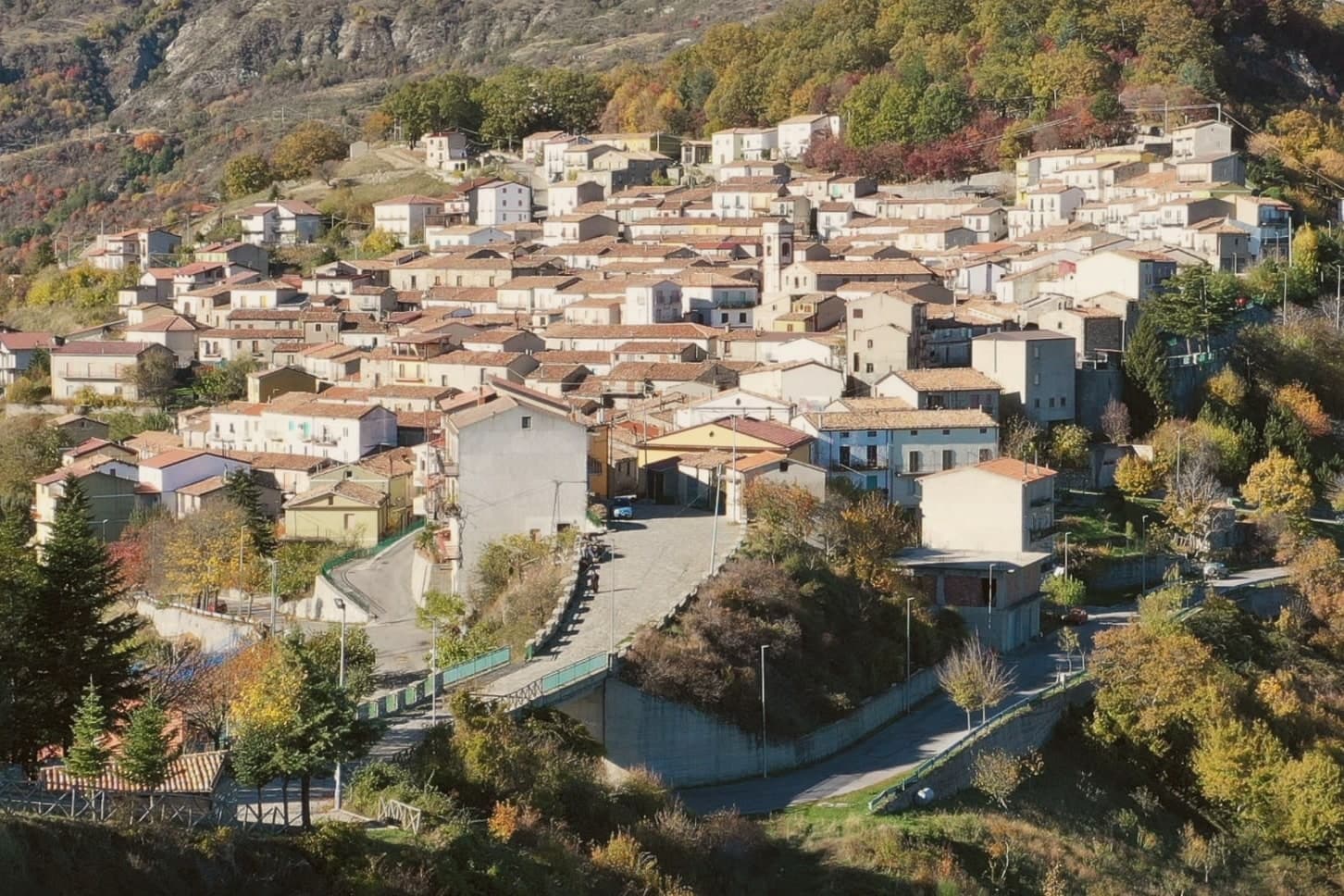
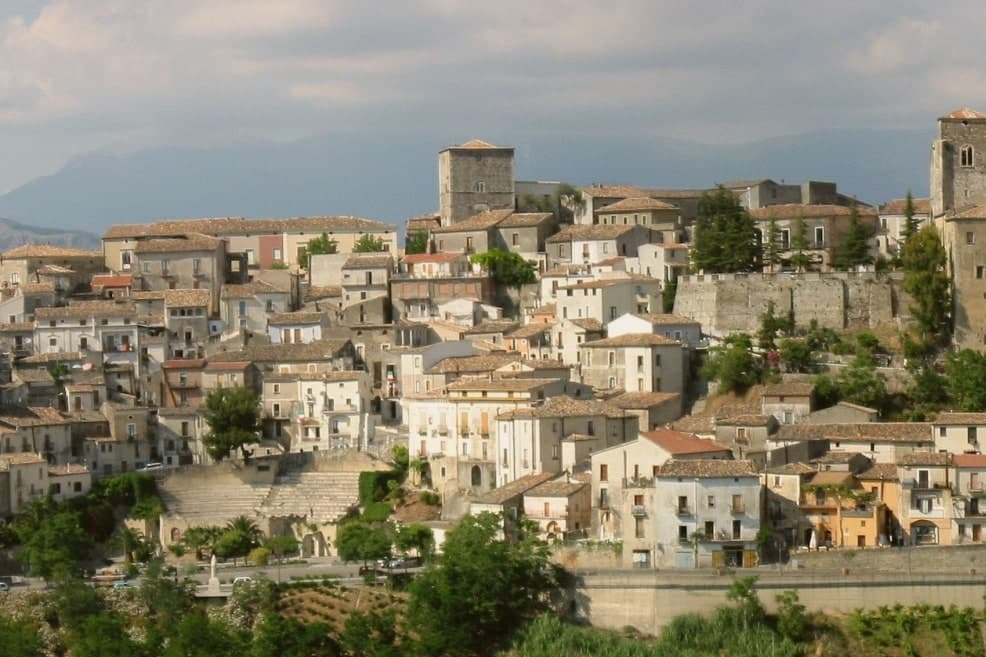
Altomonte sits at 455 meters in the Valle dell'Esaro, forty-five kilometers north of Cosenza, between the Pollino slopes and the Ionian plain. The village is built around the church, its stairways and alleys climbing the hillside toward the square in front of it, which gives the settlement its layout and its nickname as Calabria's wedding village.
The Dominicans took over the church in 1443 and founded the convent that now houses library and museum, joining under one roof the religious life of the town and the collection that grew out of it. Altomonte is one of I Borghi più belli d'Italia, a Cittaslow, and a Città dell'Olio and del Pane.
The recognitions and the produce sit alongside the medieval fabric rather than apart from it: a small hill town whose civic identity, from bread ovens to heritage listings, has grown around the same core the church and its square have held since the fourteenth century.
Barbieri have been named by a guide.
What to see in Altomonte
- Chiesa di Santa Maria della Consolazione. Built on a Norman foundation of 1070, raised over it by Filippo Sangineto. French stonework distinguishes the interior, the reason the church is ranked above any other Gothic-Angevin building in the region.
- Museo Civico di Altomonte. Housed in the former Dominican convent, with Simone Martini's panel of Saint Ladislaus commissioned by Filippo Sangineto in 1326 in Siena.
- Castello Normanno-Aragonese. Hilltop castle of Norman origin remodelled under the Aragonese, dominating the centro storico and the Esaro valley below.
How to get to Altomonte
Salerno is roughly 146 minutes away by road.
Our tip
April, May, June and September into October are the right months to walk Altomonte's stairways without sweating and to enter the Consolazione church when the afternoon light hits the rose window. July and August reach the mid-thirties on the Esaro plain, though the 455-meter perch holds an evening breeze the lowland towns do not get. November through March is quiet: many restaurants close midweek and the museum keeps shorter hours.
Tropea
Why visit Tropea
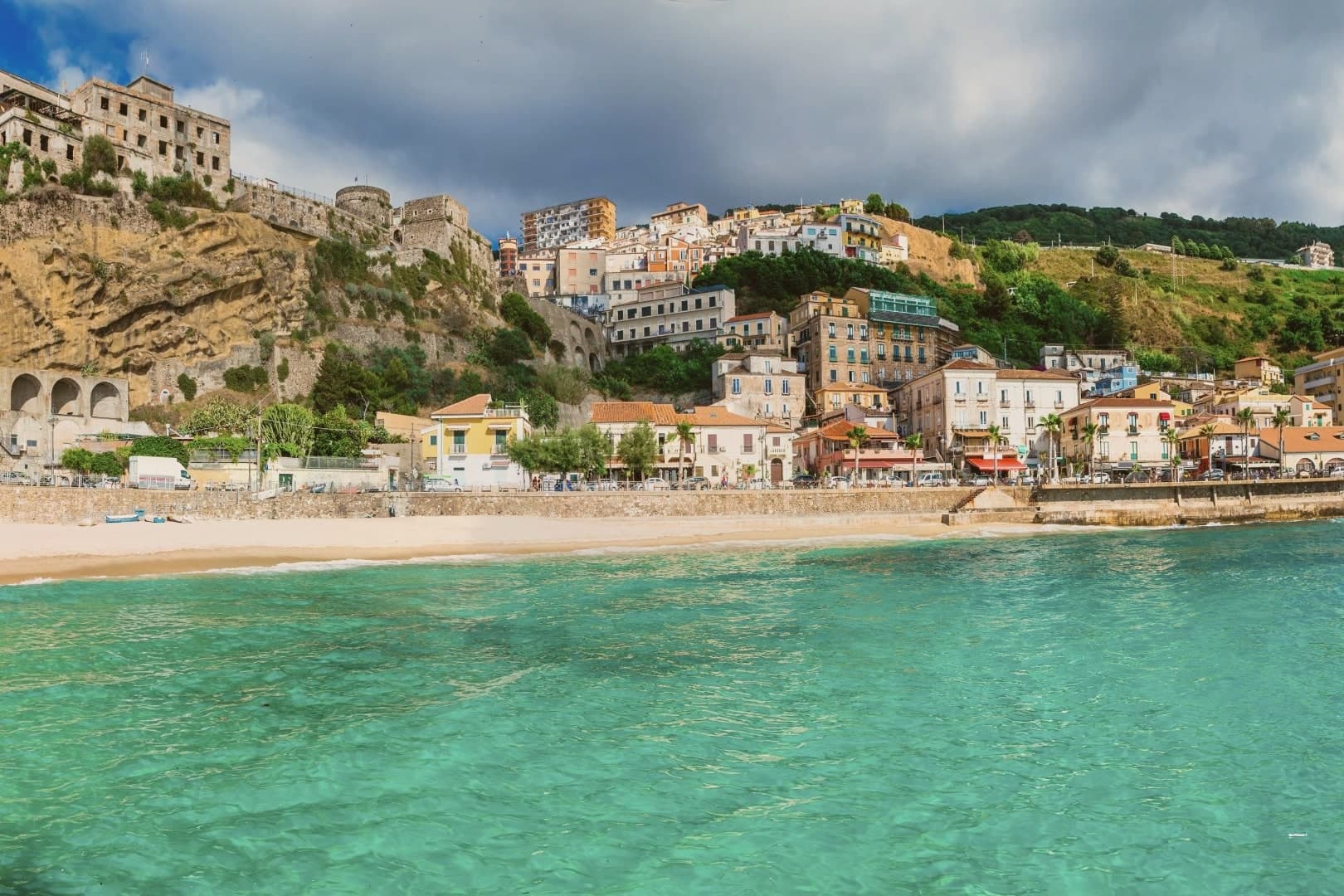
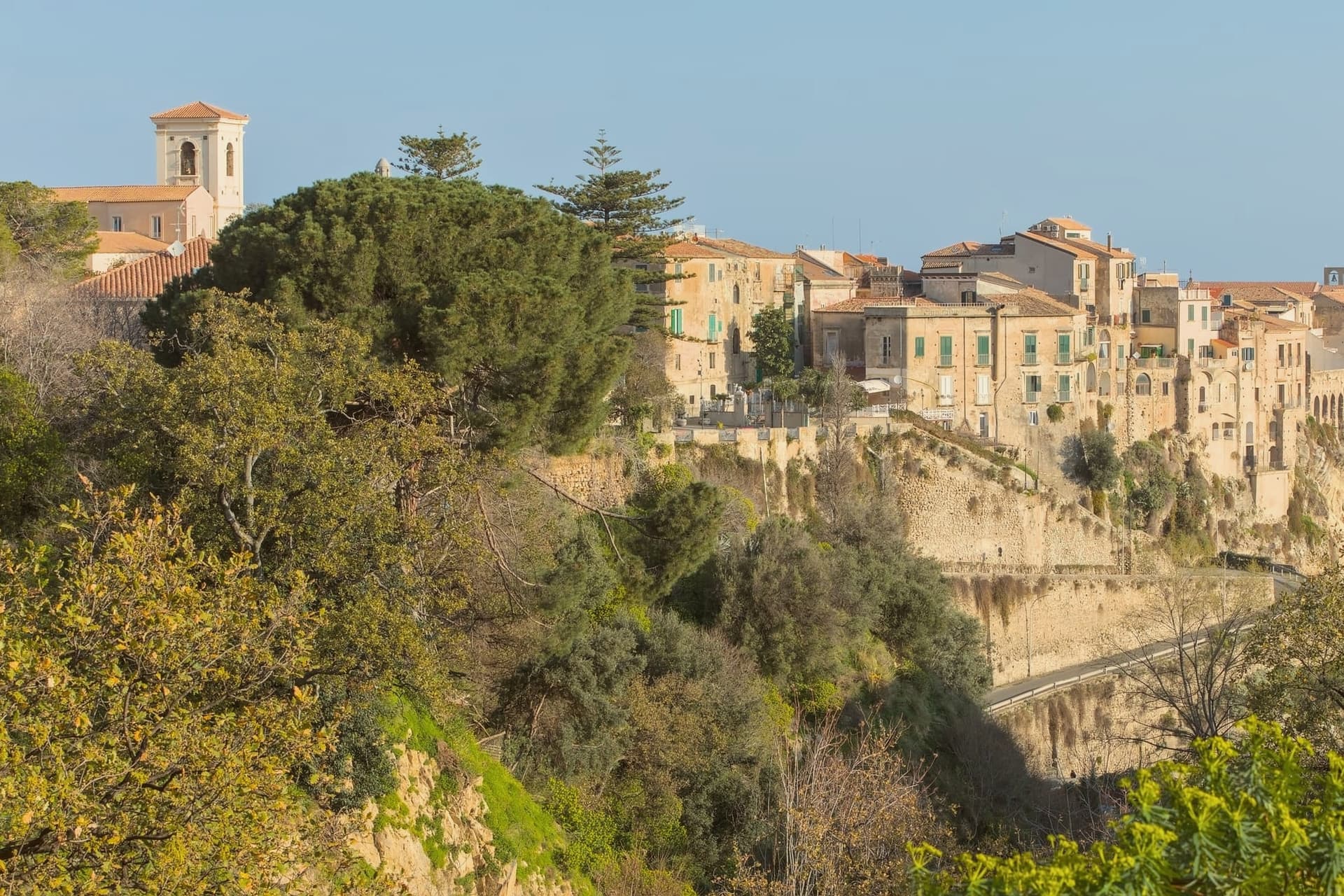
Tropea stands on a tufa cliff fifty metres above the Tyrrhenian Sea, on the stretch of Calabria's west coast marketed as the Costa degli Dei. The town has been a port since Roman times and a bishopric since the eighth century, with Norman and Aragonese phases visible in its walls and palazzi.
The Cattedrale di Maria Santissima di Romania was built by the Normans and reworked in the Baroque period; it holds a fifteenth-century wooden crucifix and a Madonna panel attributed to the school of Giotto. The Santuario di Santa Maria dell'Isola, originally a fourth-century cell, sits on a rocky outcrop thirty-three metres above the sea, reached by a staircase cut into the cliff.
The cipolla rossa di Tropea PGI, said to have been introduced by the Phoenicians and noted by Aristotle and Strabo, grows on the volcanic soils just inland. Tropea was named Borgo dei Borghi 2021 by RAI.
De' Minimi have been named by a guide.
What to see in Tropea
- Santuario di Santa Maria dell'Isola. Norman-era monastery on a tufa sea rock thirty-three metres above the water, reached by a staircase cut into the cliff.
- Cattedrale di Maria Santissima di Romania. Norman cathedral reworked in the Baroque period, with a fifteenth-century wooden crucifix and a Madonna panel attributed to the school of Giotto.
- Centro storico sulla rupe. Tufa cliff town fifty metres above the sea, with noble palazzi from the Norman to Aragonese periods along Corso Vittorio Emanuele.
How to get to Tropea
There is a railway station in the town, so you can arrive without a car and never need one while you are here. Reggio Calabria is roughly 88 minutes away by road.
Our tip
Tropea's season runs from late May to mid-September. May and June bring warm sea and the lungomare back to life. July and August are heavy: the centro storico fills with day-trippers from the rest of Italy, parking spreads into the inland frazioni, and the Spiaggia della Rotonda is shoulder-to-shoulder. Ferragosto a Tropea - Processione a mare della Madonna dell'Isola falls in August.
Soverato
Why visit Soverato
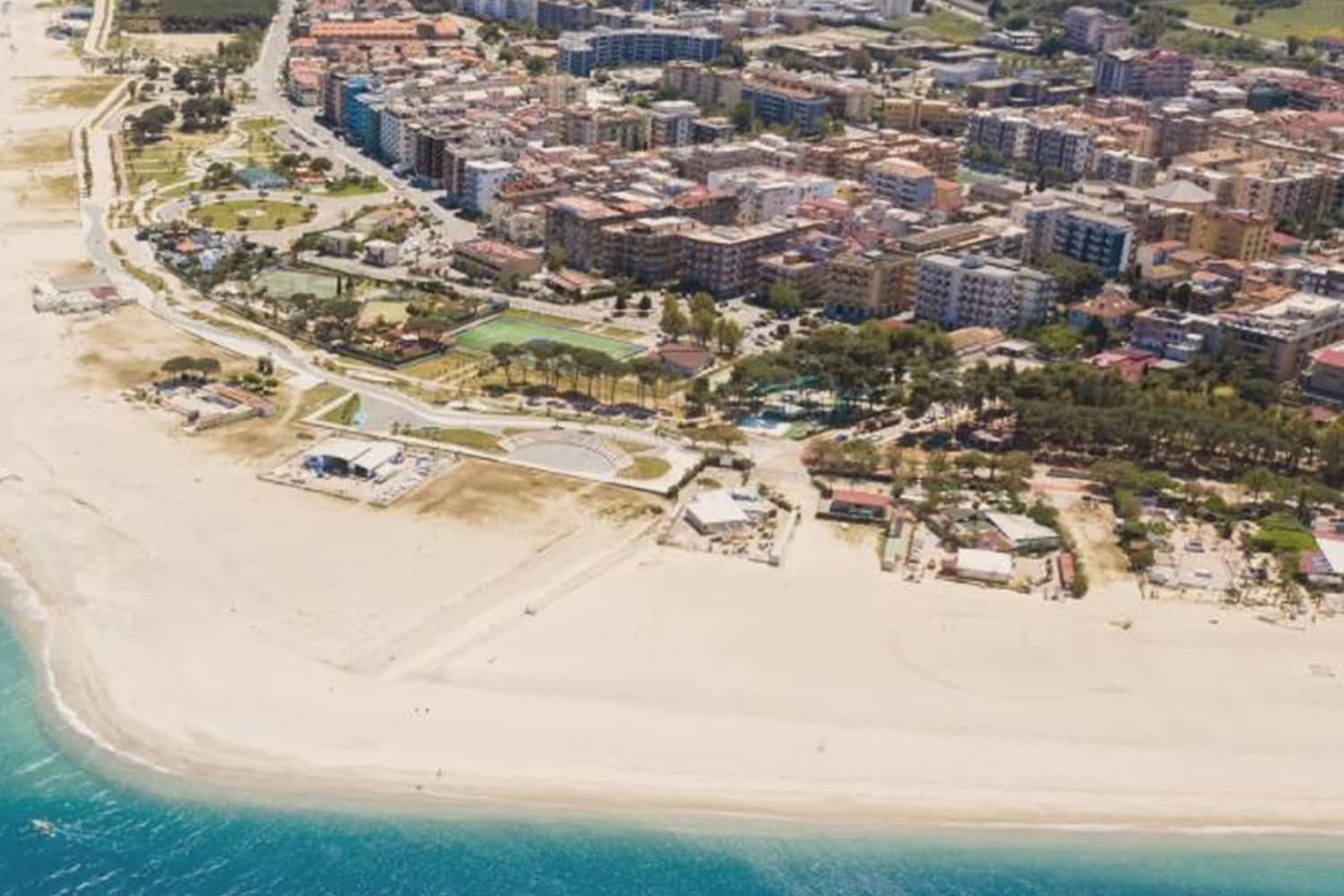
Soverato sits in the province of Catanzaro, on the narrow waist where Calabria almost touches itself, its coast facing the Ionian. The modern town runs along the shore, while inland and uphill lies the older settlement, built before an earthquake in 1783 leveled what came before it; the church of Madonna Addolorata still marks that older core, separate from the seafront strip that draws the summer crowds.
Statistical surveys describe Soverato as the highest per-capita income commune in Calabria, and the town has drawn tourists since the mid-2010s, its medical services, schools and long bathing season making it the regional anchor for the coast between Catanzaro and Locri. The wealth and the tourism trace back to the same geography: a beach town that grew rich enough to become the service center for the stretch of coast around it, while its older self stayed on the hill above.
Brezza fish and chill have been named by a guide.
What to see in Soverato
- Spiaggia di Soverato. The beach carries both Bandiera Blu and Bandiera Verde status, the latter marking it as paediatric-friendly. The Gulf of Squillace here stays shallow well out from shore.
- Torre di Carlo V. The tower stands on the seafront as one link in a chain of coastal towers raised against Saracen raids, and remains the most visible historic structure in town.
- Giardino Botanico Santicelli. The garden was laid out in 1980 on ground once used for waste, an early instance of urban land reclamation in the south, now holding Mediterranean and tropical plant collections.
How to get to Soverato
There is a railway station in the town, so you can arrive without a car and never need one while you are here. Reggio Calabria is roughly 110 minutes away by road.
Our tip
May through September is the long Ionian season. Water warms early, the beach establishments are open from late spring, and by July and August the lungomare runs at full social tilt, with a nightlife reputation that pulls people from Catanzaro and Crotone. June and September are the calmer bathing months, with the same warm water and fewer crowds. Mercato Settimanale Di Soverato falls in May.
Pizzo
Why visit Pizzo
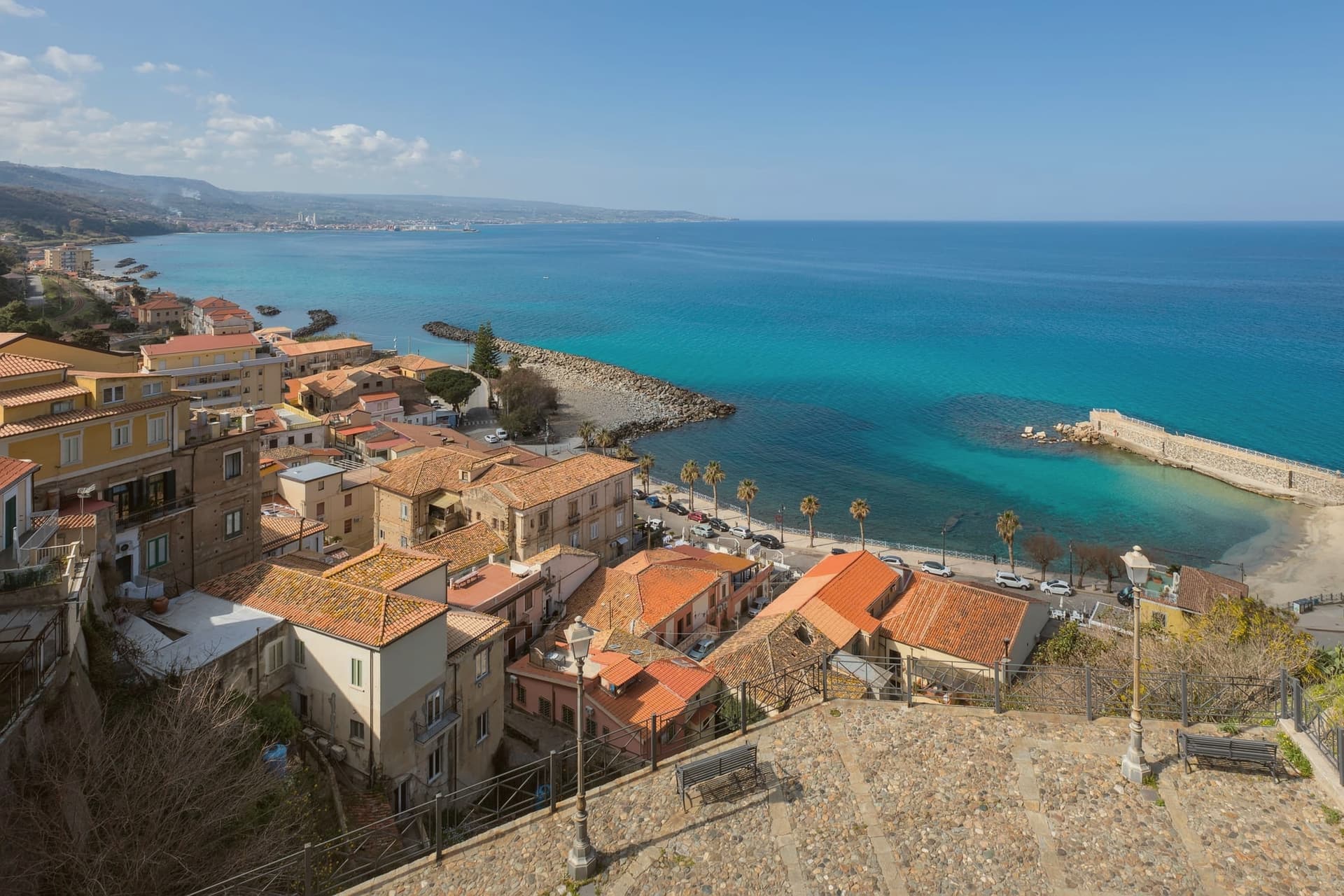
Pizzo sits on a tuff promontory rising about 70 meters above the Tyrrhenian, at the northern end of the Costa degli Dei. The town's name for its own fortress, Castello Aragonese, has largely given way to Castello Murat, after the brother-in-law of Napoleon who landed here in October 1815 hoping to retake the throne of Naples, was captured by townspeople, and was court-martialled in the building he is now remembered by.
The tartufo gelato has a separate history entirely: developed by local gelato-makers in the twentieth century, hand-moulded into a hemisphere with a molten chocolate centre and dusted with cocoa, it earned IGP status in 2007, the first gelato in Europe to do so. Two unrelated claims to fame, a captured king and a dessert, meet on summer evenings in the cliff-edge piazza where the town still gathers.
Pizzo's identity rests on that pairing: a fortress town that turned a moment of political violence and a piece of confectionery into the same civic memory.
Locanda Toscano, San Domenico Ristorante have been named by a guide.
What to see in Pizzo
- Castello Aragonese (Murat). Fifteenth-century fortress on the headland, its main hall preserved as the room where Joachim Murat's court-martial and execution took place, now a museum to the Napoleonic king.
- Chiesa di Piedigrotta. Set into the cliff north of town, reached through low tufa passages that open into chambers where the carved figures stand at full height, worn smooth in places by damp and time.
- Piazza della Repubblica. Cliff-edge piazza with cafés and gelaterie, the social centre of the town and the place to eat tartufo in summer.
How to get to Pizzo
There is a railway station in the town, so you can arrive without a car and never need one while you are here. Reggio Calabria is roughly 75 minutes away by road.
Our tip
May through September is the working season. Water warms by late May, the gelaterie around Piazza della Repubblica run from morning to past midnight in July and August, and the town fills with weekenders from Vibo Valentia and Cosenza. June and September are the calmer bathing months. Sagra del Tonno falls in September.
Bagnara Calabra
Why visit Bagnara Calabra
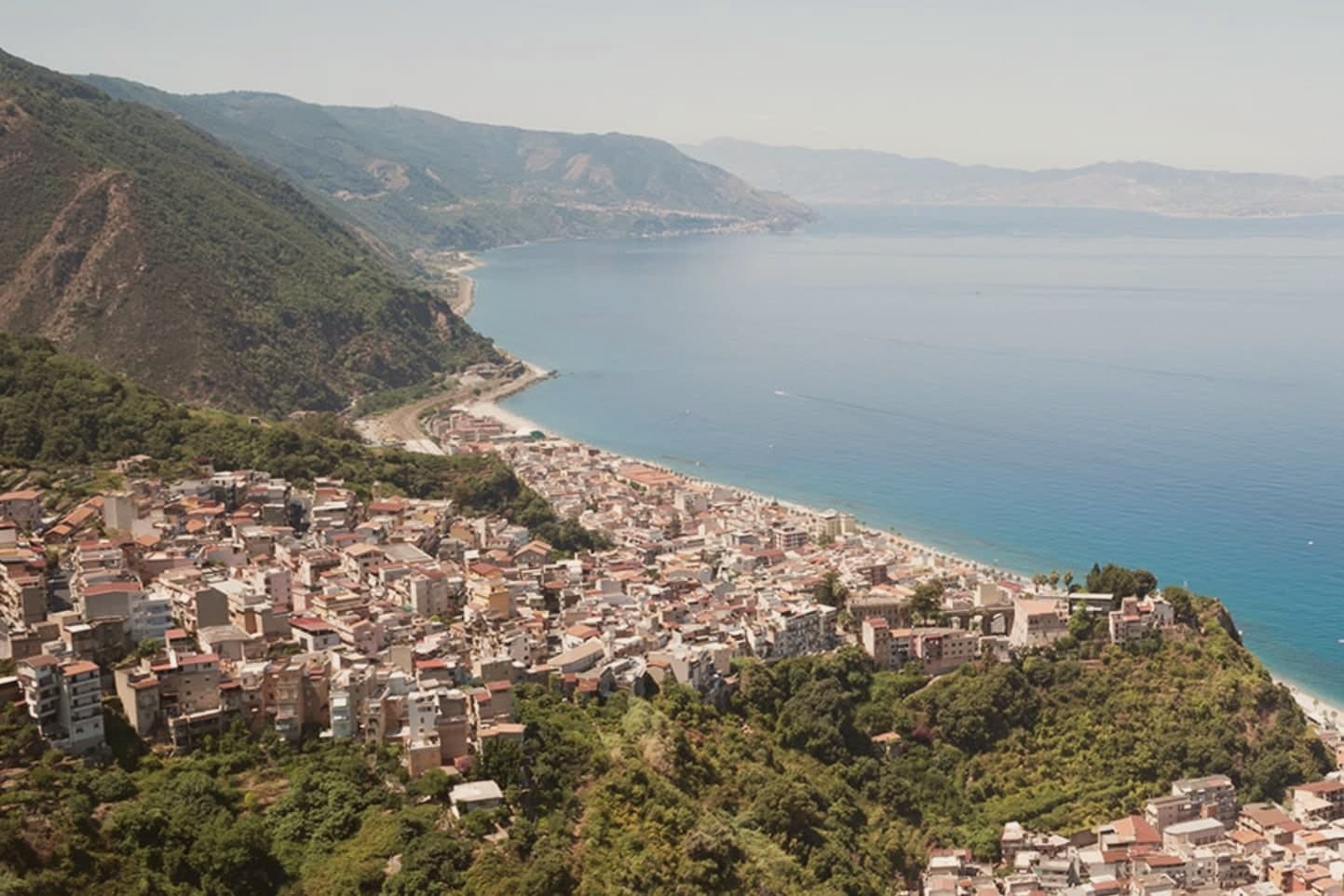
Bagnara Calabra is built into the hills above the Tyrrhenian on the Costa Viola, twenty-five kilometers north of Reggio Calabria, with the Strait of Messina opening to the south. The first organized settlement on record was the Abbey of Santa Maria and the Twelve Apostles, founded around 1085 by Roger I of Sicily.
Two things still define the town. Swordfish: Bagnara is the small capital of Calabrian swordfish, and the local fleet still uses the felucca or passerella, a tall-masted boat with a lookout high above the deck and a long bowsprit walkway from which the harpooner strikes; the practice goes back centuries and is shared with Scilla, six kilometers south.
Torrone: Bagnara torrone, a nougat of honey, sugar and almonds, has been made in the town since the eighteenth century and carries IGP status. The Bagnarote women, who carried the catch on their heads up the hills, are a fixture in Calabrian folklore.
Taverna Kerkira have been named by a guide.
What to see in Bagnara Calabra
- Basilica di Maria SS. del Rosario. Eighteenth-century basilica rebuilt after the 1908 earthquake, the main religious anchor of the town.
- Castello Emmarita. Ruins of a medieval fortress on the hill above town, with views down to the Tyrrhenian and across to Sicily.
- Spiagge della Costa Viola. Pebble and dark-sand beaches under steep cliffs, named for the violet light the coast takes at sunset.
How to get to Bagnara Calabra
There is a railway station in the town, so you can arrive without a car and never need one while you are here. Reggio Calabria is roughly 23 minutes away by road.
Our tip
May through September is the bathing and swordfish season. Water warms by late May, the felucche head out in early summer, and the beaches under the Costa Viola fill in July and August. The Festa di Maria SS. del Rosario in early September is the main event of the religious calendar. Gran Galà del Pesce Spada falls in July.
San Giovanni in Fiore
Why visit San Giovanni in Fiore
San Giovanni in Fiore sits at 1,049 meters at the center of Sila Grande, inside Sila National Park, the largest mountain commune in Italy by population above 1,000 meters altitude. The town grew from the abbey founded here in 1188 by the Calabrian monk and medieval theologian whom many historians consider the most influential apocalyptic thinker of the Middle Ages.
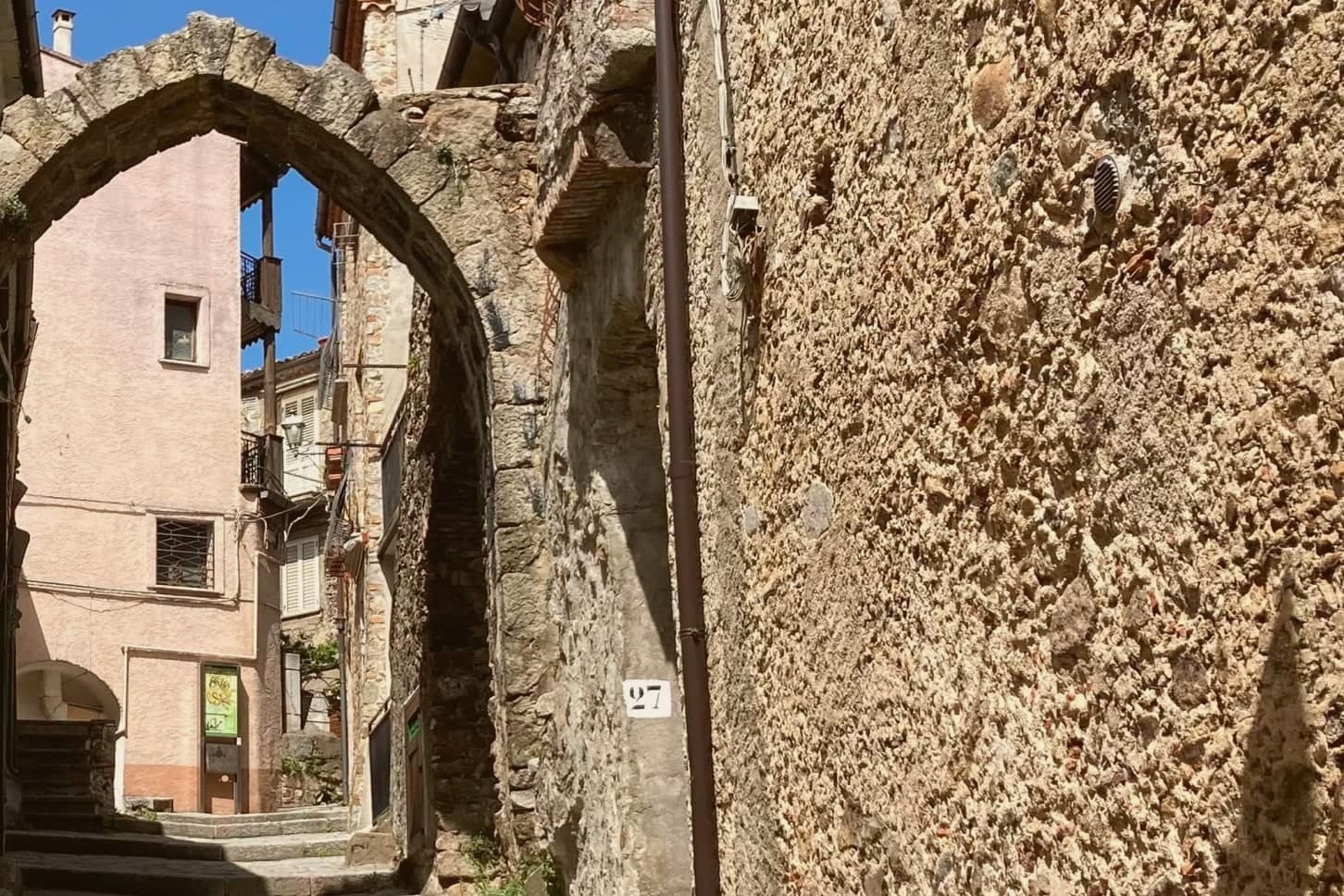
The abbey gave the settlement its shape: the old town climbs Monte Difesa around the complex, and the built-up core still reads as a place that grew outward from a religious house rather than a market or a port. The municipal territory reaches well beyond that core, stretching across the Sila plateau to take in Lorica, the lake village at 1,314 meters, so that a single commune holds both a mountain town built around a medieval abbey and a lake station given over to hiking and skiing.
The town is in the Città del Vino network. Calabrian emigration history has its capital here, the population of half a century ago halved by departures to Argentina, North America and northern Italy.
A place, then, that reached its greatest size as a religious and demographic center and has spent the decades since sending its people elsewhere while its territory grew to include a second, quite different kind of settlement at altitude.
Hyle, Brillo Parlante have been named by a guide.
What to see in San Giovanni in Fiore
- Abbazia Florense. Founded by Gioacchino da Fiore in 1188, the abbey burned in 1214 and was rebuilt by 1230. The Latin-plan complex survives with a large central cloister ringed by ogival arches.
- Centro Internazionale di Studi Gioachimiti. Housed in the abbey complex, the center for Joachimist Studies holds a medieval library and the working archive on Gioacchino's writings.
- Lorica. Sila lake village at 1,314 meters within the municipality, a year-round mountain station on Lago Arvo with summer hiking and winter skiing.
How to get to San Giovanni in Fiore
There is a railway station in the town, so you can arrive without a car and never need one while you are here. Reggio Calabria is roughly 176 minutes away by road.
Our tip
June through September is the green season in Sila Grande. The lakes around Lorica fill with Calabrian families escaping the coastal heat, the high pastures bloom, and the abbey is at its quietest in the early mornings. December through March is the second season: snow on the plateau, skiing at Lorica and Camigliatello, the town transformed from a mountain capital into a winter destination.
Isola di Capo Rizzuto
Why visit Isola di Capo Rizzuto
Isola di Capo Rizzuto is a promontory in the province of Crotone; despite the name, it has been joined to the mainland for centuries. The commune's population, around 17,000, spreads across more than fifteen frazioni, most set back from the cliffs on a flat agricultural plateau planted with olives and grain.
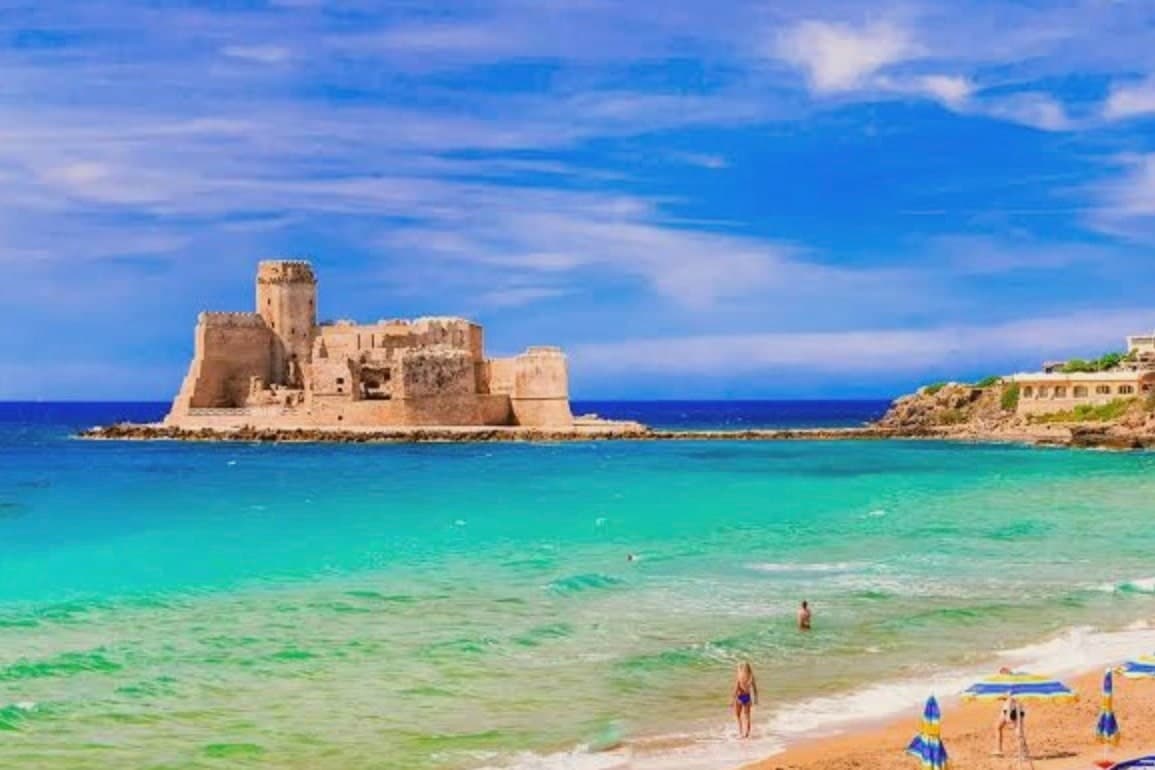
Le Castella is one of these frazioni, the one built around the castle on its islet, and it draws the eye that the inland villages do not. The sea is administered as the Area Marina Protetta Capo Rizzuto, stretching across both Isola and neighboring Crotone, its zones running along the Costa dei Saraceni from the cliffs at Capo Cimiti down to Praialonga.
The Saracen towers built along this same stretch, Torre Vecchia, Torre Scifo, Torre Marinella, mark the headlands where the coast was once watched for raids, a line of defense that runs parallel to the modern line of protected water. Inland farming, a fortified shoreline, and a marine reserve now share the same short stretch of coast: the plateau feeds the towns, the towers still stand as their old lookout, and the sea in front of them is protected rather than patrolled.
Ruris have been named by a guide.
What to see in Isola di Capo Rizzuto
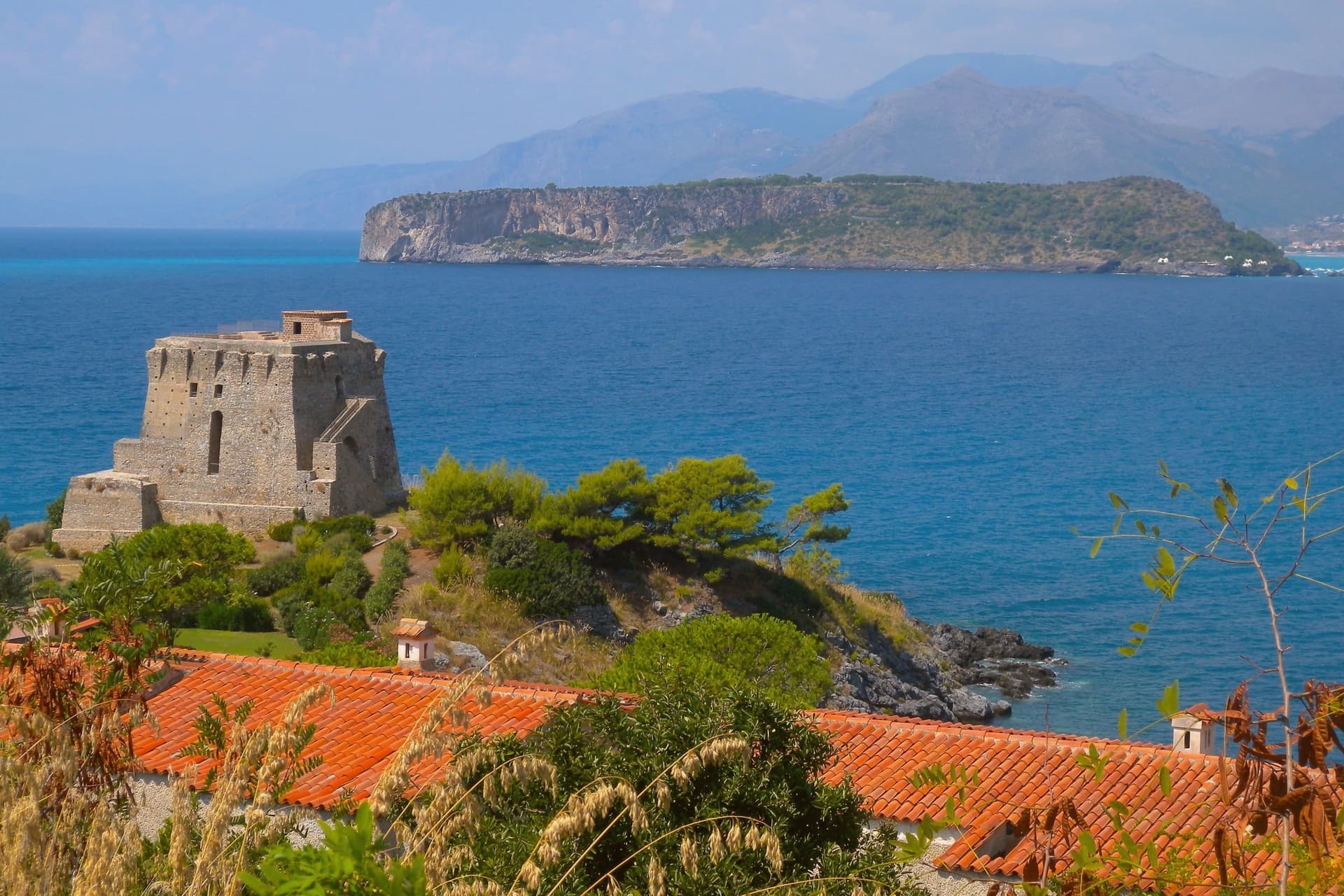
- Castello Aragonese di Le Castella. The fortress sits apart from the coast on its own islet, reached by the sandbar underfoot; the walls close around a small courtyard, and the sea shows on every side.
- Area Marina Protetta Capo Rizzuto. Divers enter the integral zones under licence, where the water is clearest and the rules strictest; the fishermen who work the general zones nearby operate under the same protected status.
- Spiagge della Costa dei Saraceni. Fine sand alternates with red cliffs along Capo Cimiti, Capo Bianco and Praialonga, the color of the rock changing the water's tone from one cove to the next.
How to get to Isola di Capo Rizzuto
Reggio Calabria is roughly 156 minutes away by road.
Our tip
May through September is the season the marine reserve was made for. Water clarity peaks in late May and June, before the high-summer crowds arrive in late July and August, when temperatures push past thirty-three degrees and the small coast road jams between Capo Rizzuto and Le Castella. September and early October are the better diving months, with warm water and emptier beaches.