
The best towns with a serious restaurant that eat well within 90 minutes of Ancona
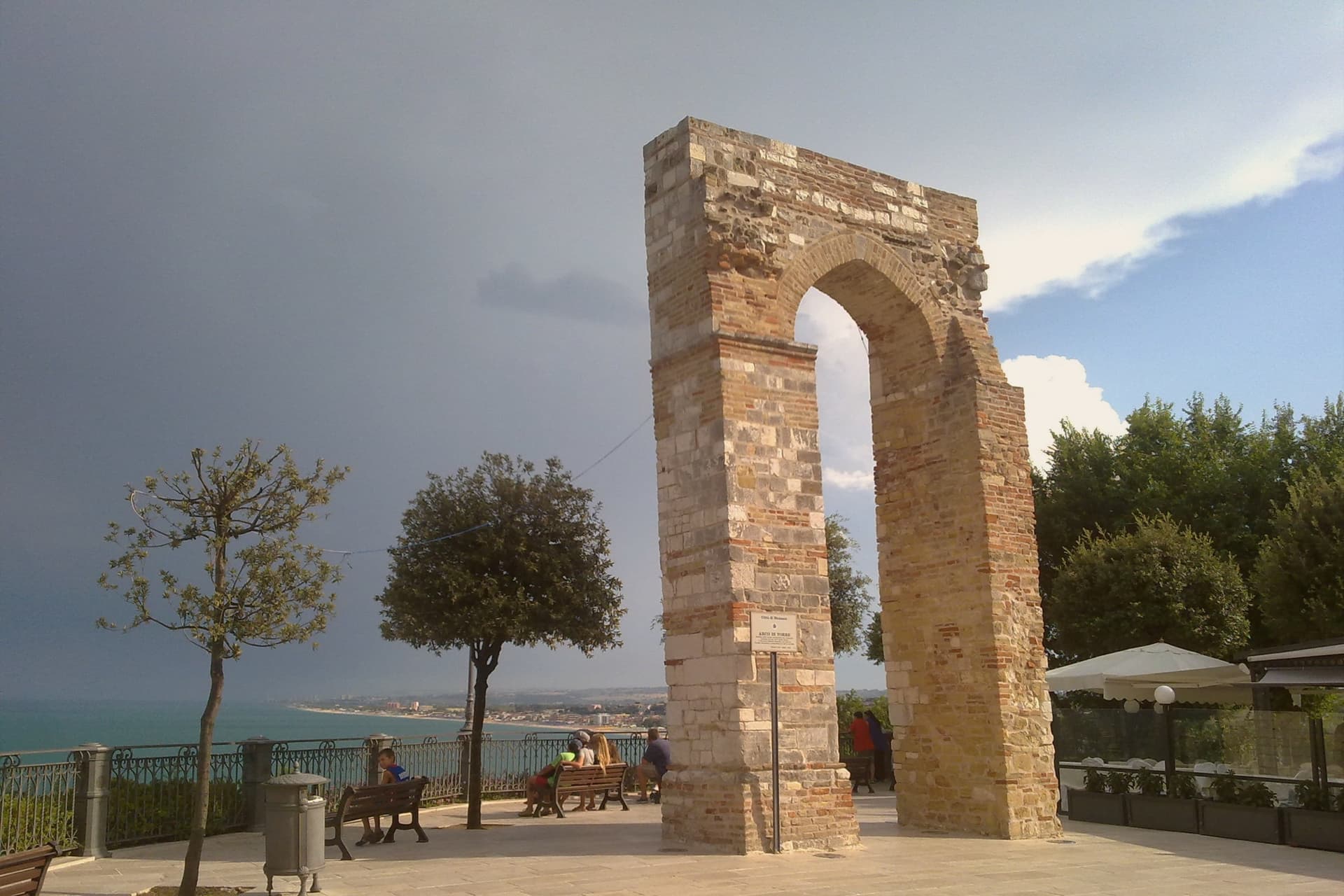
The Marche eats along two lines that rarely meet. On the coast there is brodetto, the fisherman's stew stiffened with vinegar and saffron, the small fry of the Adriatic, raw mantis shrimp in early spring and mussels off the limestone of the Conero. Inland, up where the houses are built of pale brick and river stone and the hills fold towards the Sibillini, it is maccheroncini di Campofilone, ciauscolo soft enough to spread, roast pigeon, Verdicchio from Matelica in the glass rather than the more famous version from further north. Autumn is the season the two lines briefly agree, when the truffle comes down from Acqualagna and the vendemmia is in.
People come to Ancona for the ferry and eat near the port, or they drive straight to Urbino for the Palazzo Ducale and take lunch in the streets below it, which in high summer means queueing behind coach parties for a plate that is fine and no more than fine. The Marche's culinary reputation has been compressed into a handful of names, and those names absorb the demand. It is a familiar pattern: one town gets the write-up, the region gets the traffic, and the kitchens with ambition elsewhere stay half empty on a Tuesday.
The same fish, the same pasta hands and the same hill vineyards carry on well past the places that get booked out. Within an easy drive of Ancona, in coastal towns and in the brick hill towns behind them, there are kitchens the most demanding of the guides has thought worth listing, and dining guides have named a specific table in each. Fewer people go, the bookings are easier, and the cooking does not soften for the tourist trade.
Of the 35 communes we have mapped within 90 minutes of Ancona, 10 qualify as towns with a serious restaurant that eat well: each holds a restaurant listed by the most demanding of the guides, and a dining guide has named a table in each. The smallest, Numana, has 3,741 residents.
Two more lists worth reading alongside this one: The 10 best hill towns that eat well within 90 minutes of Ancona and The 8 best towns you can reach by train that eat well within 90 minutes of Ancona.
Numana
Why visit Numana
Numana sits fifteen kilometers south of Ancona, on a cliff overlooking the Adriatic at the foot of the promontory that shapes this stretch of coast. The old town, Numana alta, runs along the ridge in continuity with Sirolo, while Numana bassa wraps around the port below, so the visitor moves between two settlements joined by a single slope rather than one town with two names.
The place was a Picene harbour that traded with Greek and Etruscan ships from the sixth century BC, and a major centre of pre-Roman Italy before the rise of Ancona pushed it into decline around 500 BC. That decline is what left the burial grounds undisturbed long enough to be excavated centuries later, and it is also why the town's oldest identity is archaeological rather than architectural: a harbour that mattered, stopped mattering, and was rediscovered through what it buried.
In Riva a Numana, Casa Rapisarda, Riva Restaurant del View Place Hotel and 1 more have been named by a guide.
What to see in Numana
- Antiquarium Statale di Numana. Opened 1974, holding more than five hundred Picene burials from the Conero necropolises, plus a sixth-century BC limestone warrior's head found on a Numana beach in 1892.
- Santuario del Crocifisso. Rebuilt in 1969 on a 1566 foundation, the current structure standing on a sanctuary site with roots three centuries older than the rebuild itself.
- Porto di Numana. Working fishing and pleasure port at the foot of the cliff, with daily boat services along the Conero cliffs to the otherwise inaccessible Due Sorelle beach.
How to get to Numana
Ancona is roughly 30 minutes away by road.
Our tip
May through September are the months for Numana. The Conero water clears from late May and stays warm through September, with the port's daily boats running to Due Sorelle and the other Conero cliff beaches. July and August are the busiest weeks of the Marche coast: parking is metered into the late evening and the Numana bassa restaurants book ahead.
Sirolo
Why visit Sirolo
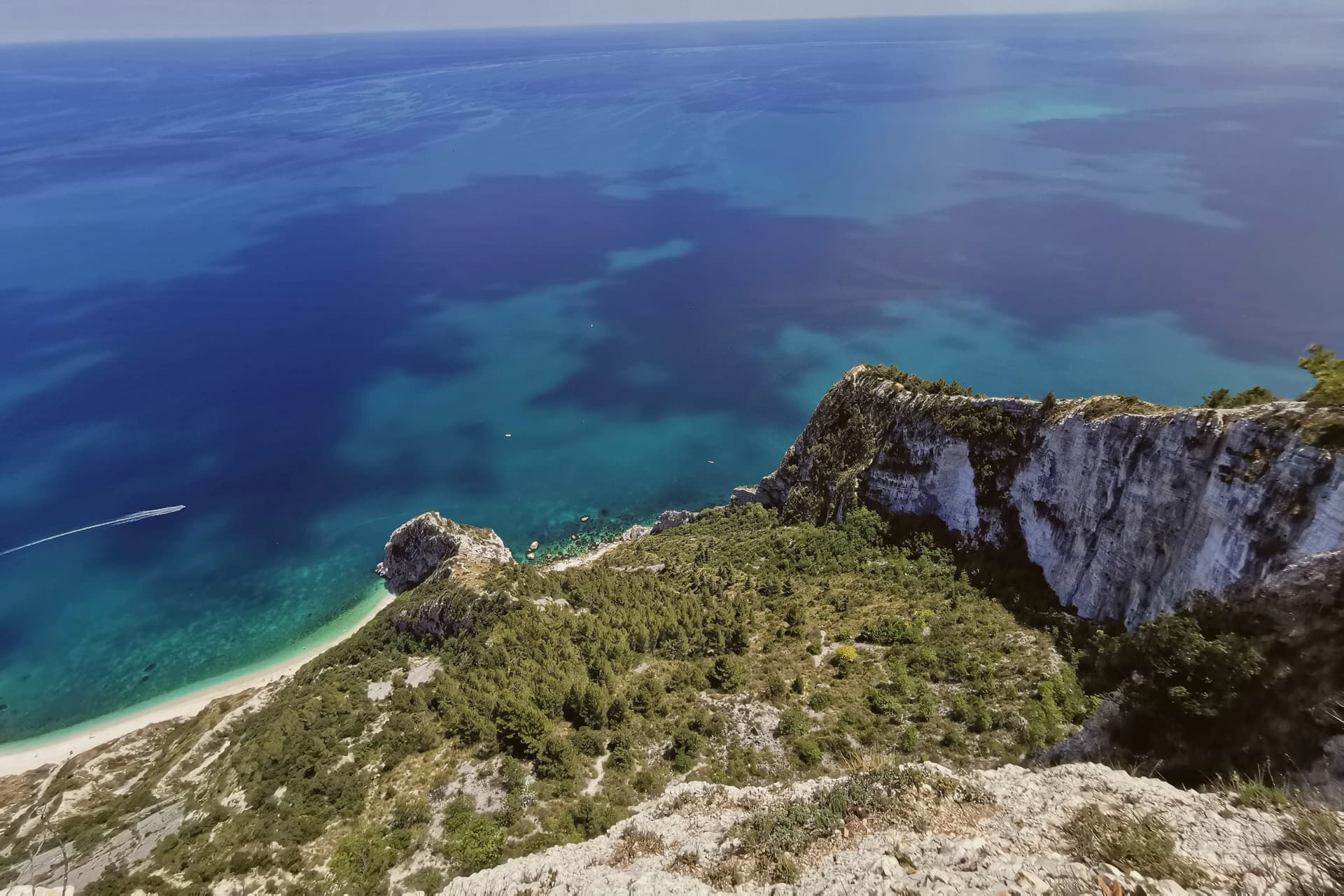
Sirolo sits at 125 meters, twenty kilometers from Ancona, on ground that belonged to the Conti Cortesi family. The medieval village kept one of the two original castle towers, folded now into the parish church, and the belvedere above Piazza Vittorio Veneto looks out across the bay.
Below town, the ridge drops toward the Picene necropolis of I Pini, and further down still toward the water. The mountain above the village and the water below it are the same geology: limestone that falls straight into the sea rather than tapering through a coastal plain, which is why the village sits on a clifftop rather than a shoreline.
Upper Sirolo is the castle, the church and the theatre, all cut from the same pale stone. Lower Sirolo is reached by boat or by trail, down through the park to the cove where the sea stacks stand.
The grave goods from the necropolis have left town entirely, kept at the Antiquarium in neighbouring Numana, so what remains above ground here is the tomb site itself rather than its contents. The town doubles in summer and empties again in October: a place shaped less by what happens in it than by the drop between its two levels, the built one and the wild one.
Lofficina, Convivio have been named by a guide.
What to see in Sirolo
- Centro storico. Medieval village on the clifftop with the Arco Gotico from around the year 1000, the Piazzetta and a belvedere looking out across the Adriatic.
- Chiesa di San Nicolò di Bari. Eighteenth-century parish church built over a thirteenth-century structure, incorporating one of the two surviving towers of the medieval Sirolo castle.
- Teatro Cortesi. Municipal theatre inaugurated in 1875, built in white Conero stone, restored and reopened in 1989.
How to get to Sirolo
Ancona is roughly 31 minutes away by road.
Our tip
May through September is the window for Sirolo. The water warms enough for the Conero beaches from late May, the boat shuttle to the Due Sorelle runs daily through summer, and the belvedere stays cool when the Adriatic plain below is hot. July and August are the busiest weeks: parking limits in the centro storico, queues for Spiaggia Urbani and Sassi Neri, evening passeggiate spilling out of every trattoria.
Treia
Why visit Treia
Treia stands at 342 meters in the hills between the Potenza and Chienti valleys, thirty-five kilometers from Ancona. The Roman town of Trea lay on the plateau below, a municipium founded shortly after 49 BC that flourished between Augustus and Antoninus Pius.
Around the year 1000 the population moved up to the more defensible hilltop of Montecchio, and the older site emptied. The new town stayed under the name Montecchio until 1790, when Pope Pius VI raised it to the rank of città and restored its Roman name.
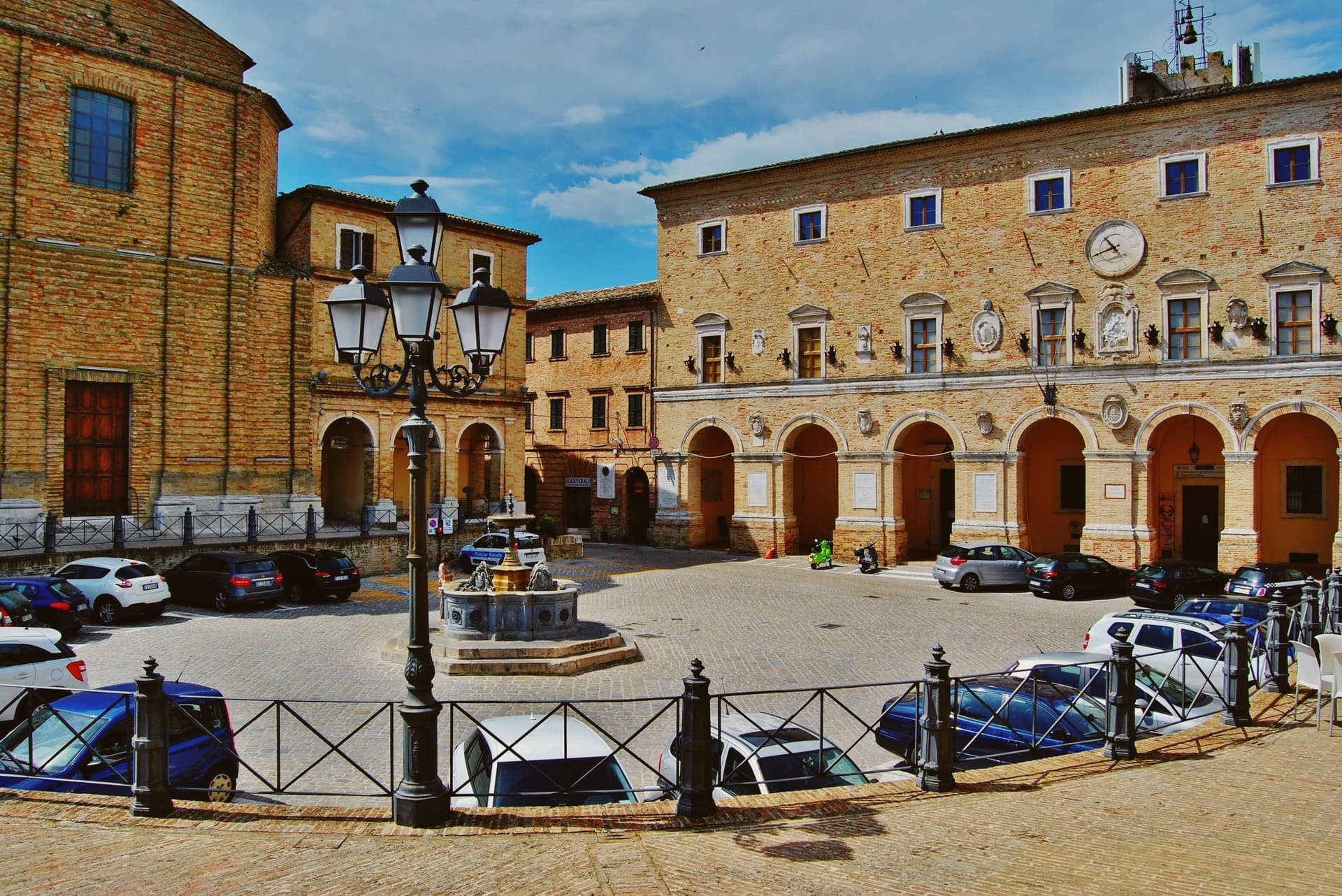
The Piazza della Repubblica, on the highest point of the ridge, is closed at one end by the Cattedrale della Santissima Annunziata and at the other by Giuseppe Valadier's small Accademia Georgica, the eighteenth-century home of an agronomic academy founded in the fifteenth as the Accademia dei Sollevati. The Disfida del Bracciale, an Ottocento street-game in which four contrade compete, has filled the centro storico every first Sunday of August since 1978.
Il Casolare dei Segreti have been named by a guide.
What to see in Treia
- Piazza della Repubblica. Belvedere piazza on the highest point of the ridge, closed by the Cattedrale della Santissima Annunziata at one end and the Accademia Georgica at the other.
- Accademia Georgica. Eighteenth-century Giuseppe Valadier building housing an academy founded in the 1400s, with 1,196 parchments of the municipal archive and over 15,000 volumes.
- Santuario del Santissimo Crocifisso. Cesare Bazzani sanctuary completed in the early twentieth century on the site of an older parish church, holding a sixteenth-century Umbrian fresco and a thirteenth-century crucifix.
How to get to Treia
Ancona is roughly 58 minutes away by road.
Our tip
April through June and September into October are the best months for Treia. The hills between the Potenza and Chienti turn green in spring, the wheat ripens through June, and the autumn light on the long ridge runs gold through October. July and August touch the low thirties; the high point of the centro storico catches a breeze most afternoons, and the Disfida del Bracciale on the first Sunday of August is the busiest weekend of the year. Disfida del Bracciale falls in July.
San Severino Marche
Why visit San Severino Marche
San Severino Marche sits at 235 meters in the Potenza valley, fifty kilometers southwest of Ancona, and the town is built in two distinct pieces rather than one continuous fabric. The medieval Castello occupies the hill above the town, still ringed by surviving city walls, while the Borgo below grew up around its own civic center on the valley floor.
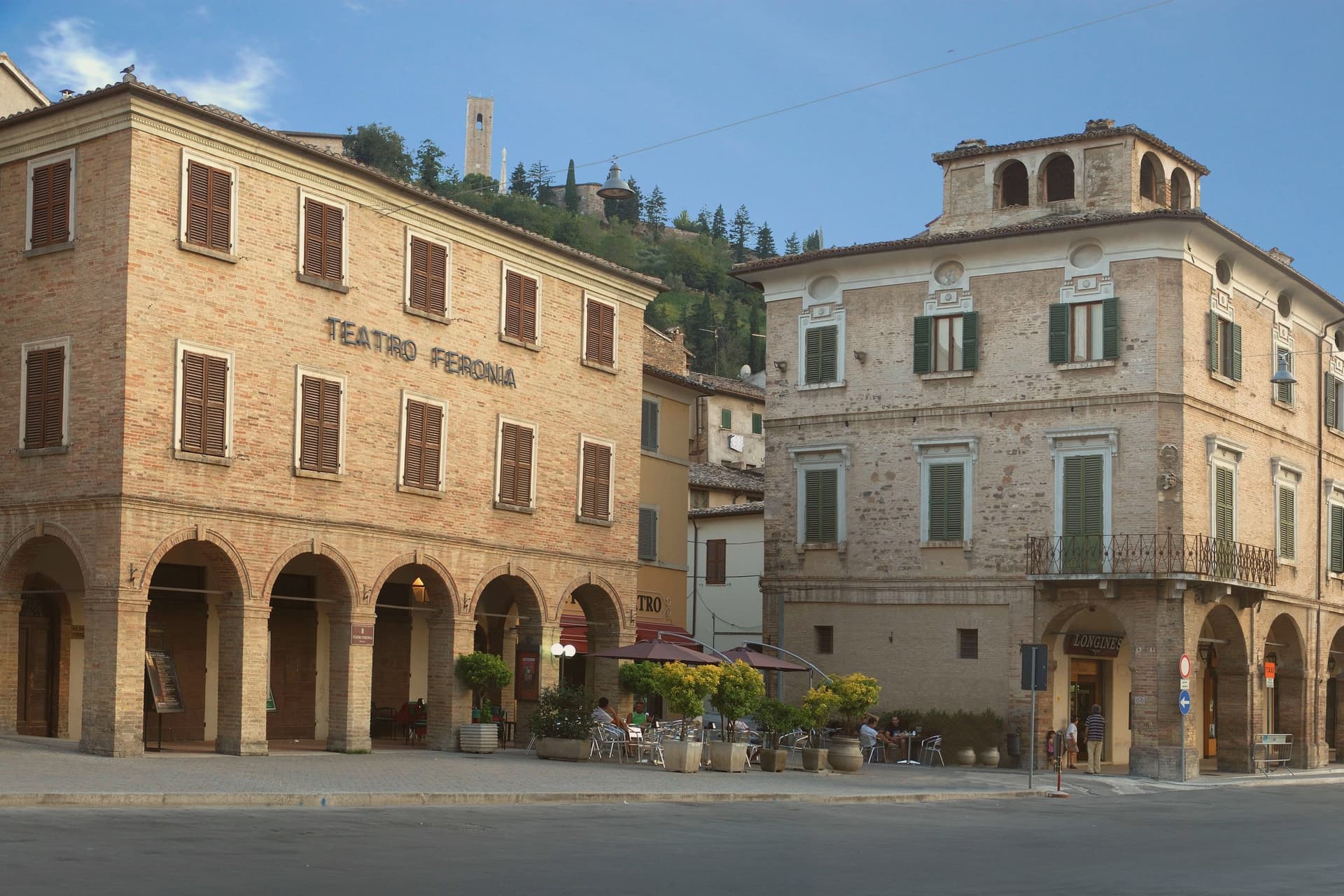
The two parts do different jobs: the hill was governed and defended, walled and towered under the Smeducci dynasty through the fourteenth century, while the valley floor was built for markets and public life, organized around the wide colonnaded ellipse that still serves as the town's gathering space. The Salimbeni brothers, Lorenzo and Jacopo, were born in the town and worked across both halves of it, painting in a hilltop church and in a crypt-church alike, and their frescoes, along with a Vittore Crivelli polyptych, have since been gathered into a civic gallery in the lower town.
That movement of paintings from hill to valley mirrors the town's own shift in weight over time, from a fortified seat of government above to a civic and commercial center below, with the art now sitting closer to the square than to the walls that first sheltered it.
Cavallini have been named by a guide.
What to see in San Severino Marche
- Piazza del Popolo. The elliptical square anchors the lower town, its porticoes running unbroken around the full curve, giving the Borgo a single continuous gathering space rather than a scattering of smaller squares.
- Duomo Vecchio. The bell tower and the raised setting on Monte Nero are what register first, the cathedral standing above the walls rather than among them. Inside, the chapel that once held the Salimbeni Saint John cycle is now empty, the frescoes moved elsewhere in town.
- Torre degli Smeducci. The tower is the only structure on the hill that reads as purely defensive, plain where the church nearby is decorated, and it still dominates the skyline of the upper town.
How to get to San Severino Marche
There is a railway station in the town, so you can arrive without a car and never need one while you are here. Ancona is roughly 71 minutes away by road.
Our tip
April through June and September into October are the working months for San Severino Marche. The Potenza valley turns green from April, the climb to the Duomo Vecchio holds its best light through the autumn afternoons, and the Palio dei Castelli on the second Sunday of June fills both city centers with neighborhood processions. July and August touch the low thirties; the elliptical Piazza del Popolo offers shaded porticoes through the hottest hours and the lower city empties between four and seven.
Mondolfo
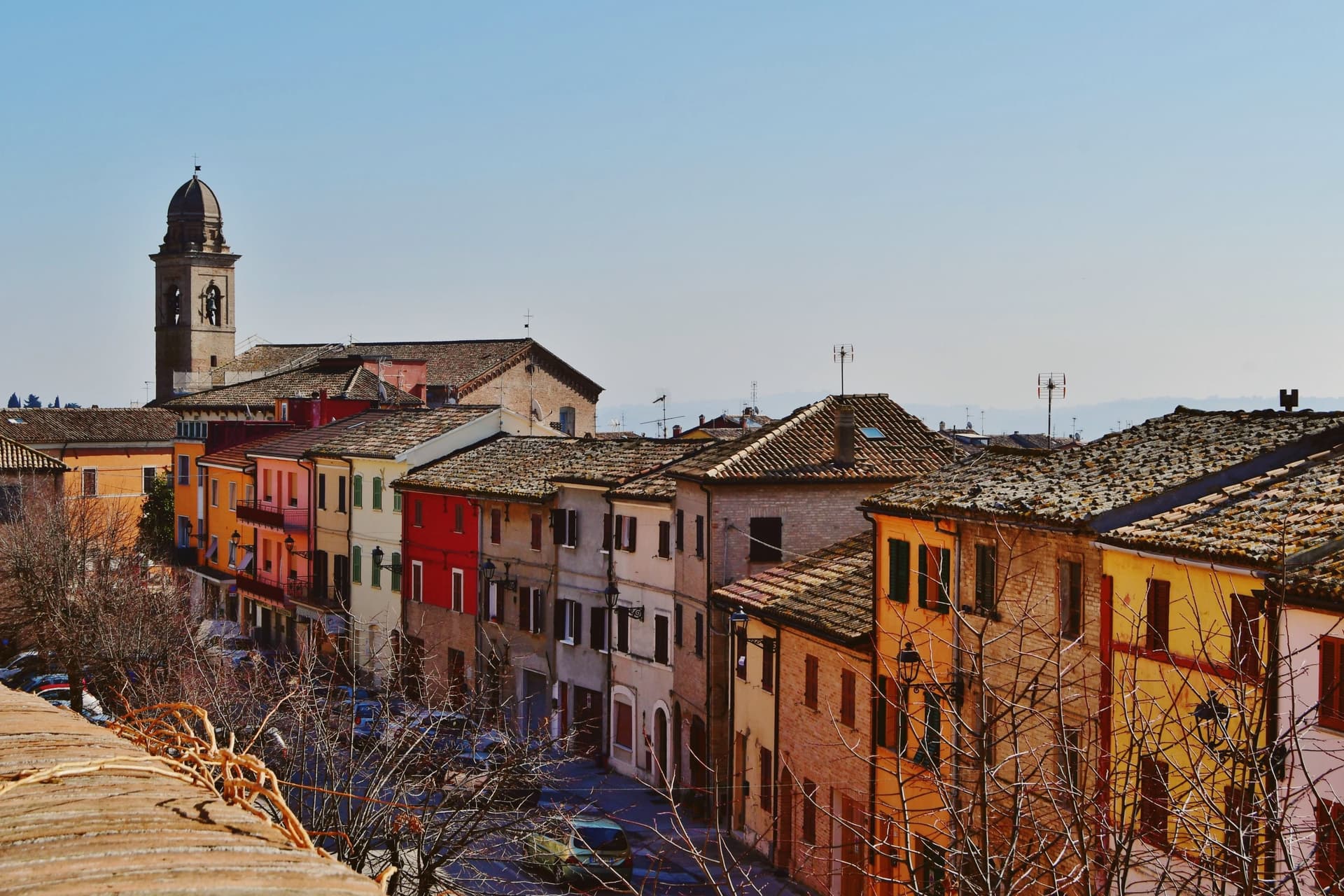
Why visit Mondolfo
Mondolfo sits at 144 meters on a ridge above the Adriatic between Pesaro and Senigallia, with the coastal frazione on the beach four kilometers below. A Byzantine castle stood here in the sixth and seventh centuries, and the present settlement formed around it in the early eleventh, when the Montoffo feudal family gave the town its name.
The Malatesta took the castle in the fourteenth century, then Sigismondo Pandolfo Malatesta lost it to Pope Pius II in 1463, at which point the walls and bastion that still anchor the southwest corner were rebuilt. The friary and church at the heart of the old town were rebuilt twice, first by Antonio di Pietro da Vercelli in 1466 and again under Domenico da Como in 1593.
Mondolfo joined the Borghi più belli d'Italia and holds recognitions for both its coast and its farmland. The town is a single history in two elevations: the ridge held the castle and later the fortified center, while the shore below, reached across the four kilometers of farmland now recognized for its management, grew into the seafront community that carries the coastal recognitions today.
What began as a Byzantine strongpoint and passed through Malatesta and papal hands still reads as a hill town looking down at its own beach.
Burro & Alici have been named by a guide.
What to see in Mondolfo
- Mura Roveresche. Roughly 600 meters of fifteenth-century walls and the south-west bastion, redesigned by the Della Rovere for early artillery defense after 1463.
- Complesso Monumentale di Sant'Agostino. Augustinian friary and church from the late thirteenth century, rebuilt in 1466 and again in 1593, now home to the civic museum and the Sant'Agostino complex.
- Centro storico. Walled hill borgo with narrow streets, the Palazzo del Comune and the Chiesa di Santa Giustina at the heart of the perimeter.
How to get to Mondolfo
There is a railway station in the town, so you can arrive without a car and never need one while you are here. Ancona is roughly 44 minutes away by road.
Our tip
May through September is the main window for Mondolfo. The Marotta seafront opens from late spring, the Bandiera Blu lido water clears from June, and the hill borgo above stays a few degrees cooler than the beach. July and August fill the lungomare with the worst of the coast traffic; the walled borgo above keeps quieter. Festa del Mare falls in August.
Porto San Giorgio
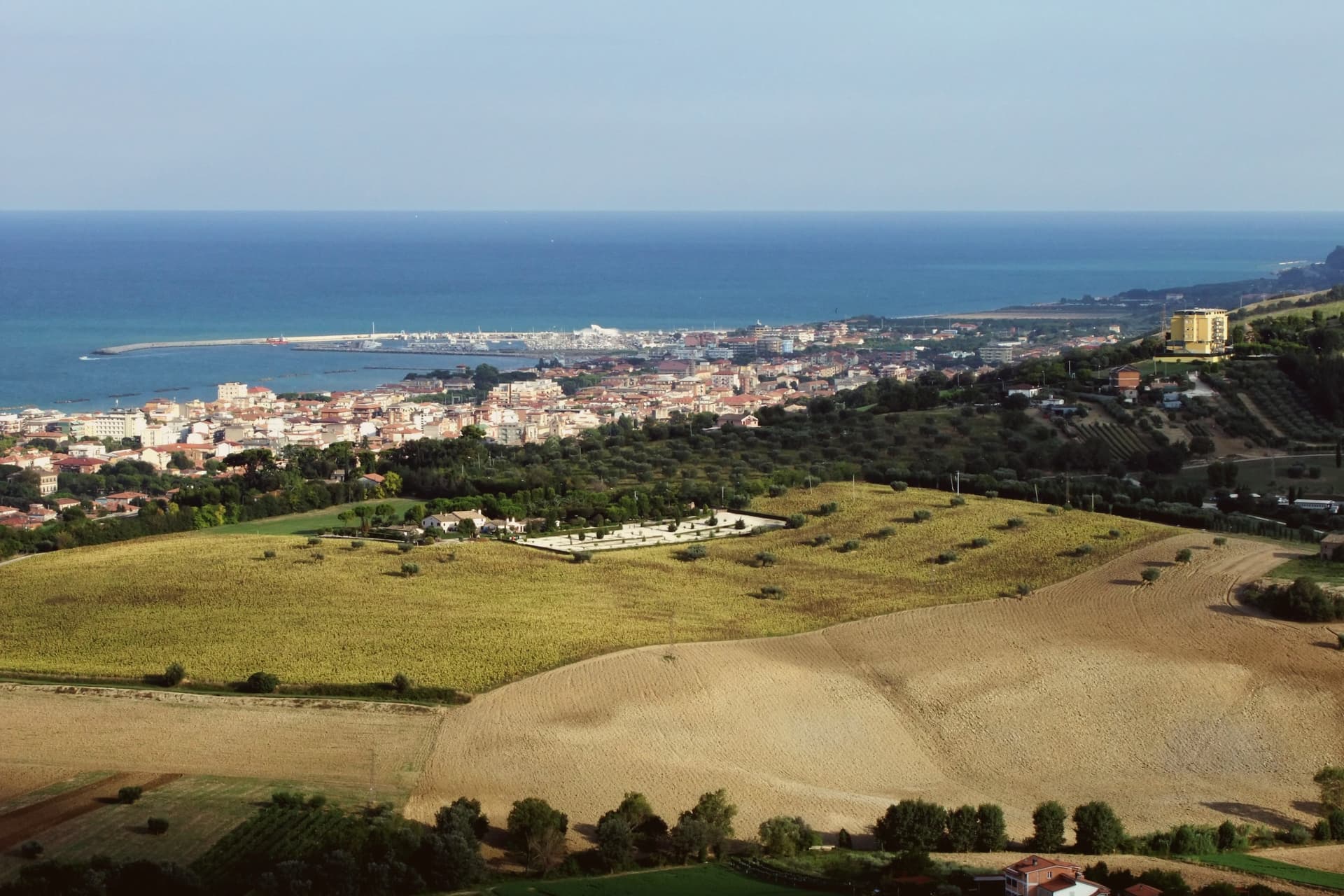
Why visit Porto San Giorgio
The town sits on the central Adriatic between Ancona and Pescara, the working port and the holiday beach of the Fermo valley. The lower town by the water was settled as the harbour of the older inland Fermo, taken over by Venetian merchants in the 13th century, and the castle that still stands above the harbour dates from that takeover.
The historic centre sits slightly back from the sea, holding the 1818 civic theatre and a small but lively summer calendar of seafood festivals, while the seafront itself runs a different register: marina, beach, and the Liberty-era promenade under date palms and umbrella pines, laid out parallel to the sand behind the row of bathing stations. What the layout adds up to is a town divided cleanly by function rather than by age: an inland-facing historic core that keeps the theatre and the festival calendar, and a shoreline built in layers from the 13th-century defensive castle down through the Liberty-era promenade to the modern marina and beach, each addition sitting seaward of the last.
Retroscena, Trattoria Marmetta, Opera Bao Ramen Bar and 1 more have been named by a guide.
What to see in Porto San Giorgio
- Rocca Tiepolo. Brick castle with a squat profile and surviving towers, built by Lorenzo Tiepolo to defend the port. It stands as the historic anchor of the seafront, the oldest fixed point on a shoreline otherwise given over to modern bathing establishments.
- Spiaggia (Bandiera Blu). The Bandiera Blu beach runs two kilometres of fine sand on a gentle shelf, lined with classic Adriatic stabilimenti balneari. One of the central Adriatic's reliable family beaches.
- Porto turistico. The marina holds moorings alongside a working fishing fleet that still lands its catch at dawn, so pleasure craft and working boats share the same water.
How to get to Porto San Giorgio
There is a railway station in the town, so you can arrive without a car and never need one while you are here. Ancona is roughly 48 minutes away by road.
Our tip
April through October is the season on the central Adriatic. May and September are the best months: warm sea, the beach stabilimenti running but not at capacity, and the seafront promenade comfortable in the afternoon light. July and August are full — Porto San Giorgio is a popular regional beach destination, the marina at capacity, the fishing-festival calendar at full output.
Recanati
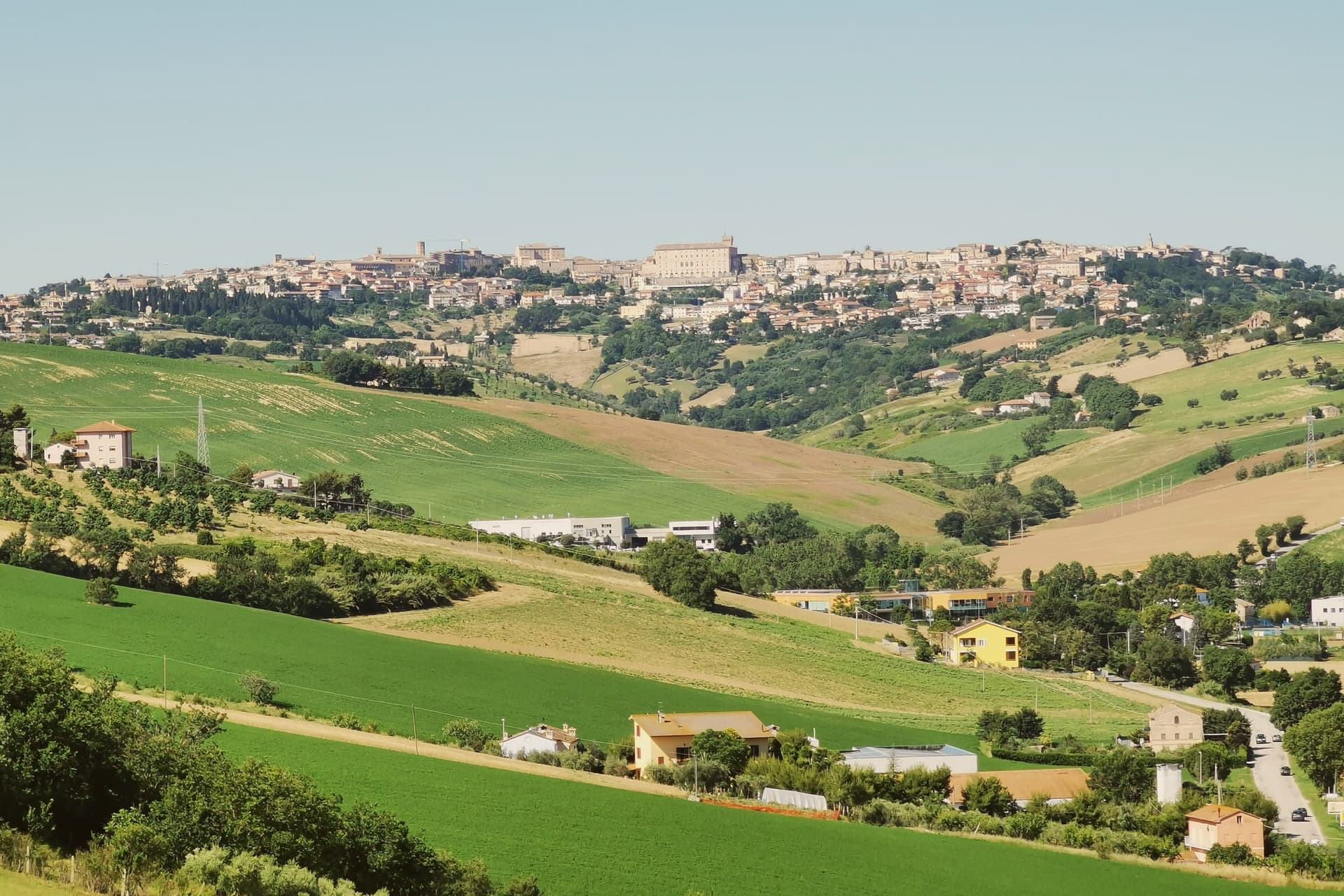
Why visit Recanati
Recanati sits at 296 meters on a hill between the Potenza and Musone valleys, twenty-five kilometers south of Ancona and ten from the Adriatic. The town was founded around 1150 from the union of three earlier castles, Monte Morello, Monte San Vito and Monte Volpino, declared itself a free republic in 1290 and ran an international fair through the fifteenth century.
The poet lived above Piazza Sabato del Villaggio in the family library until 1822, and the hill behind the palace, hedge-bordered and looking toward the Sibillini and the sea, is the ground the writing came from; the medieval tower nearby, part of the Sant'Agostino complex, gave a later poem its perch. A tenor born in the same town more than half a century afterward is remembered a short distance away, his costumes and scores kept where the theater still stands.
What the hill town adds up to is a place small enough that a library, a hedge, and a tower could hold a life's landscape, and specific enough that the view from each still matches what was written about it.
Casa Bertini have been named by a guide.
What to see in Recanati
- Palazzo Leopardi. Eighteenth-century family palace where Giacomo Leopardi lived until 1822, with the preserved library of more than 20,000 volumes he read as a boy.
- Colle dell'Infinito. Hedge-bordered hill behind the palace, its panorama across the Musone valley toward the Sibillini and the Adriatic is what the hedge in the poem blocks from view.
- Torre del Passero Solitario. Thirteenth-century tower at the Sant'Agostino complex, the highest point of the centro storico, its silence is what gave Leopardi's solitary sparrow its perch.
How to get to Recanati
Ancona is roughly 43 minutes away by road.
Our tip
April through June and September into October are the months for Recanati. The Musone valley turns green from April, the hedges of the Colle dell'Infinito catch their best afternoon light through autumn, and the Leopardiana literary festival fills the centro storico in late June. July and August touch the high twenties; the Adriatic ten kilometers east keeps the evenings cooler than the inland Macerata plain. Le Grazie in Festa falls in September.
Fermo
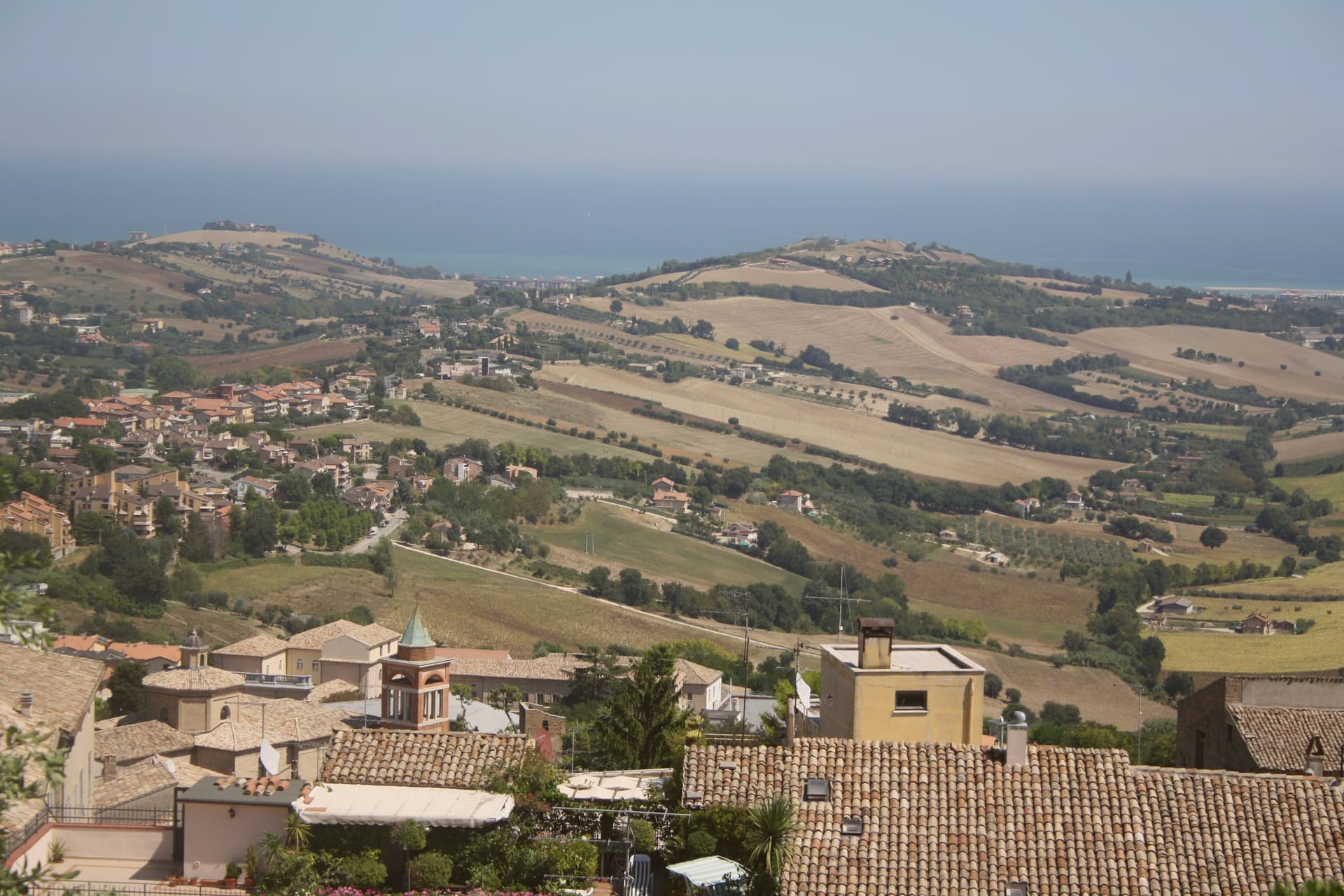
Why visit Fermo
Fermo sits eight kilometers inland from the Adriatic and from the seaside frazione of Lido di Fermo, which holds the commune's Bandiera Blu: a hill town with its own beach attached at a distance, the two connected by the same municipal boundary but separated in character and elevation. The Roman colony of Firmum Picenum was founded on the hilltop in 264 BC after the conquest of the Picentes, with six thousand Latin colonists settled there.
In the tenth century the town became the capital of the Marchia Firmana, the territorial label that eventually gave the region its name. The historic center still reads as a hilltop capital looking down toward a coast it administers rather than touches.
What began as a Latin colony on high ground, gained a name that outgrew it and spread to the whole region, and kept its port at arm's length: the distance between the hill and the shore is not incidental but the shape of how Fermo has always held its territory.
Emilio, L'Enoteca Bar a Vino have been named by a guide.
What to see in Fermo
- Cisterne Romane. Thirty barrel-vaulted rooms in three parallel rows under the historic center, opus signinum waterproofing still in place, built to hold 15,000 cubic meters of water.
- Piazza del Popolo. The porticoes meet at the head of the square where the Palazzo dei Priori stands, the arrangement that has organized the civic center since the medieval period.
- Palazzo dei Priori. Built in 1296 by joining a thirteenth-century palace and a church, housing the Pinacoteca Civica, the Sala del Mappamondo and the Sixtus V bronze statue.
How to get to Fermo
Ancona is roughly 60 minutes away by road.
Our tip
April through June and September into October are the months for Fermo. The hilltop catches Adriatic light without coastal humidity, the Sabulo's wide views across the Aso and Tenna valleys run clear, and Lido di Fermo's beach eight kilometers below holds its Bandiera Blu status from May. July and August touch the low thirties in the valley but the centro storico stays cooler at 319 meters; the Cavalcata dell'Assunta on August 15 fills the streets with the historic medieval procession dating to 1182. Cavalcata dell'Assunta falls in August.
Macerata
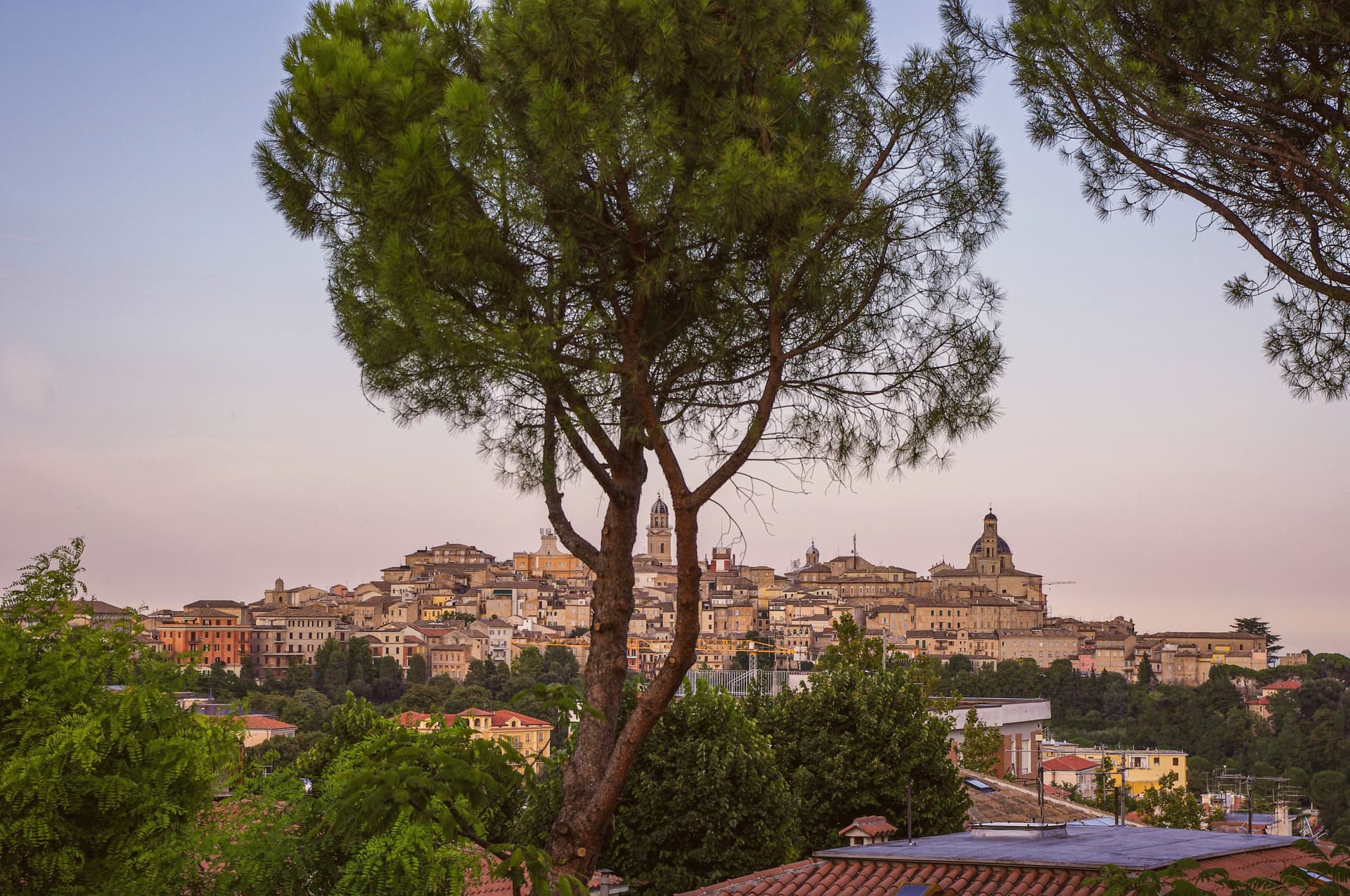
Why visit Macerata
Macerata sits at 315 meters on a hilltop between the Chienti and Potenza valleys, thirty-five kilometers south of Ancona. The Roman Helvia Recina stood on the plain below; after the city was destroyed by the Goths the survivors moved up to the present site, where the town grew into the provincial capital.
The University, founded in 1290, is one of the oldest in continuous operation in Europe. The Sferisterio, the city's signature monument, is a 100-meter neoclassical arena designed by Ireneo Aleandri in 1823, originally built for pallone col bracciale, the bracelet-ball game once played across central Italy.
From 1921, when Verdi's Aida was first staged there, it became one of Italy's principal open-air opera venues. The Macerata Opera Festival runs through July and August.
The provincial museum holds works by Carlo Crivelli, Lorenzo Lotto and Antonio Canova. The 2016 earthquakes damaged outlying frazioni but the centro storico held.
Signore te ne ringrazi have been named by a guide.
What to see in Macerata
- Sferisterio. Neoclassical 100-meter open-air arena designed by Ireneo Aleandri in 1823, originally built for pallone col bracciale, now seat of the Macerata Opera Festival since 1921.
- Università di Macerata. Founded in 1290, one of the oldest continuously operating universities in Europe, with its main rectorate on Piazza della Libertà.
- Piazza della Libertà. Main square of the centro storico, holds the Loggia dei Mercanti, the Palazzo del Comune and the Torre dei Tempi with its astronomical clock.
How to get to Macerata
There is a railway station in the town, so you can arrive without a car and never need one while you are here. Ancona is roughly 58 minutes away by road.
Our tip
April through June and September into October are the best months for Macerata. The Chienti and Potenza valleys hold green from April, the centro storico runs cool in the morning and the surrounding hills toward Montelupone and Treia are open for walking. July and August anchor the Macerata Opera Festival at the Sferisterio, with three major productions across roughly six weeks; nights stay warm but the open arena keeps moving air. Rievocazione storica della Trebbiatura - Degustazione dell'oca falls in June.
Senigallia
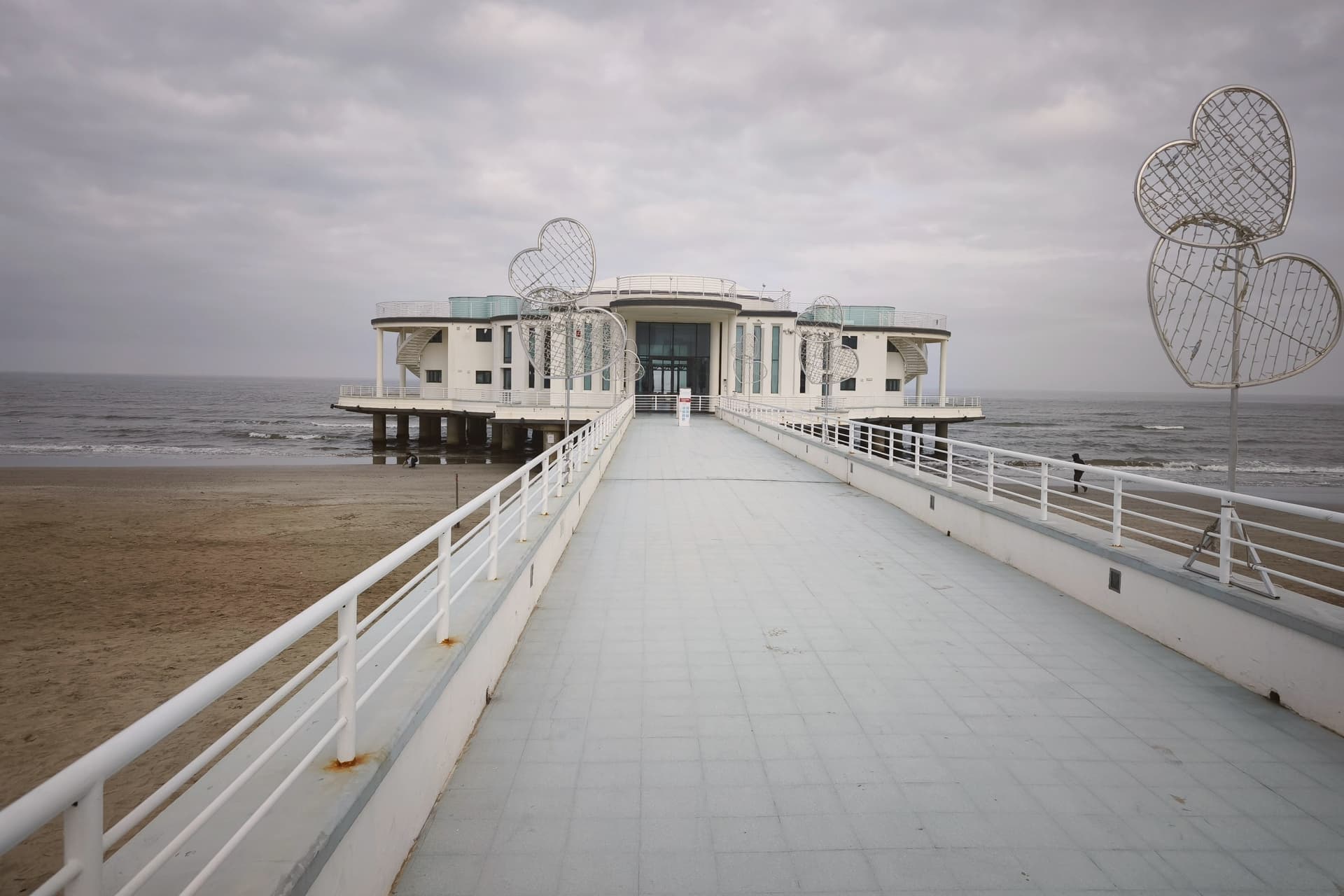
Why visit Senigallia
Senigallia sits at the mouth of the Misa river on the Adriatic, twenty-five kilometers north of Ancona. The centro storico gathers along the river's right bank, where the arcades face the water, while the fortress stands apart as the town's layered military record, built up over two centuries by successive rulers rather than in one campaign.
The beach runs south from this old core as a separate register of the town entirely, thirteen kilometers of it, with the pier pavilion marking the center of that beachfront and the restaurant anchoring its southern end. The photographer worked in the town all his life, and the permanent section of his prints sits inland in the Palazzo del Duca rather than anywhere near the coast he might have photographed.
The market arcade, built in the nineteenth century, still does the ordinary work of feeding the town between the historic river frontage and the modern beach economy. Senigallia reads, then, as three towns joined at the river mouth: a fortified old center, a nineteenth-century civic one, and a twentieth-century coastline, each still doing the job it was built for.
Uliassi, Madonnina del Pescatore, Cuoco di Bordo and 4 more have been named by a guide.
What to see in Senigallia
- Spiaggia di Velluto. The Bandiera Blu beach, working spine of the town's summer, its sand fine enough underfoot to explain the name.
- Rocca Roveresca. Layered fortress combining Albornoz's fourteenth-century Rocchetta, the 1450 Malatesta keep and the Della Rovere completion by Laurana and Pontelli.
- Rotonda a Mare. Art-deco pier pavilion completed 1933, set on iron piles above the water at the center of the beachfront, restored and used for exhibitions and weddings.
How to get to Senigallia
There is a railway station in the town, so you can arrive without a car and never need one while you are here. Ancona is roughly 41 minutes away by road.
Our tip
May through September is the Senigallia window: the beach bagni open from late May, the Caterraduno radio festival fills late June, the Summer Jamboree rockabilly week runs through early August, and the September sea stays warm through the start of school. July and August touch the high twenties with humid Adriatic evenings; the Velvet Beach and the Rotonda a Mare passeggiata pull the largest crowds of the year. April, May and October are quieter, cooler months for the Rocca Roveresca tours and the Giacomelli rooms at Palazzo del Duca. Festa Castellana falls in August.
More from Anywhere Italy
 The 10 best hill towns that eat well within 90 minutes of Ancona
 The 8 best towns you can reach by train that eat well within 90 minutes of Ancona
- The 10 best hidden towns with a serious restaurant in Marche
 The best hill towns with a serious restaurant in Marche
- The best coastal towns within 90 minutes of Ancona
 The best wine towns within two hours of Ancona