
The best coastal towns with a serious restaurant in Puglia
The Puglian coast is built from tufa and white limestone, cut sharp against water that goes from milky green in the shallows to hard blue past the rocks. The eating is coastal and unsentimental: raw red prawns from Gallipoli, sea urchins scraped straight into bread, orecchiette with cime di rapa in the colder months, burrata that came from a dairy a few kilometres inland that morning. Fishing boats still unload into the old harbours at first light, and the better kitchens buy from those boats rather than from a wholesaler. Late spring and early autumn are the seasons for it, when the sea is warm enough to swim and the dining rooms are not turning tables twice.
Most visitors to the region make for Lecce, and with reason. The baroque churches in that soft golden stone are among the best in southern Italy, the city eats well, and the summer crowds fill every restaurant in the historic centre from June through August. Salento's beach resorts absorb the overflow, which is how a stretch of Ionian sand ends up with more parasols than water. The result is that a great deal of Puglia's food reputation is being tested by volume in a small number of places.
The coast keeps going, though, north and south of the famous stretch, past the trulli country and up the Adriatic towards the Gargano promontory. The same fish, the same tufa harbours, the same dairies, and in these towns a kitchen that has been noticed by the guides without the town itself becoming a summer destination. Fewer people book them. They are worth the drive along the coast road to reach.
Of the 59 communes we have mapped in Puglia, 8 qualify as coastal towns with a serious restaurant: each sits directly on the sea, and each holds a restaurant listed by the most demanding of the guides. The smallest, Peschici, has 4,283 residents.
Elsewhere in the catalogue: The best olive oil towns with a serious restaurant in Puglia and The best hidden towns with a serious restaurant in Puglia.
Peschici
Why visit Peschici
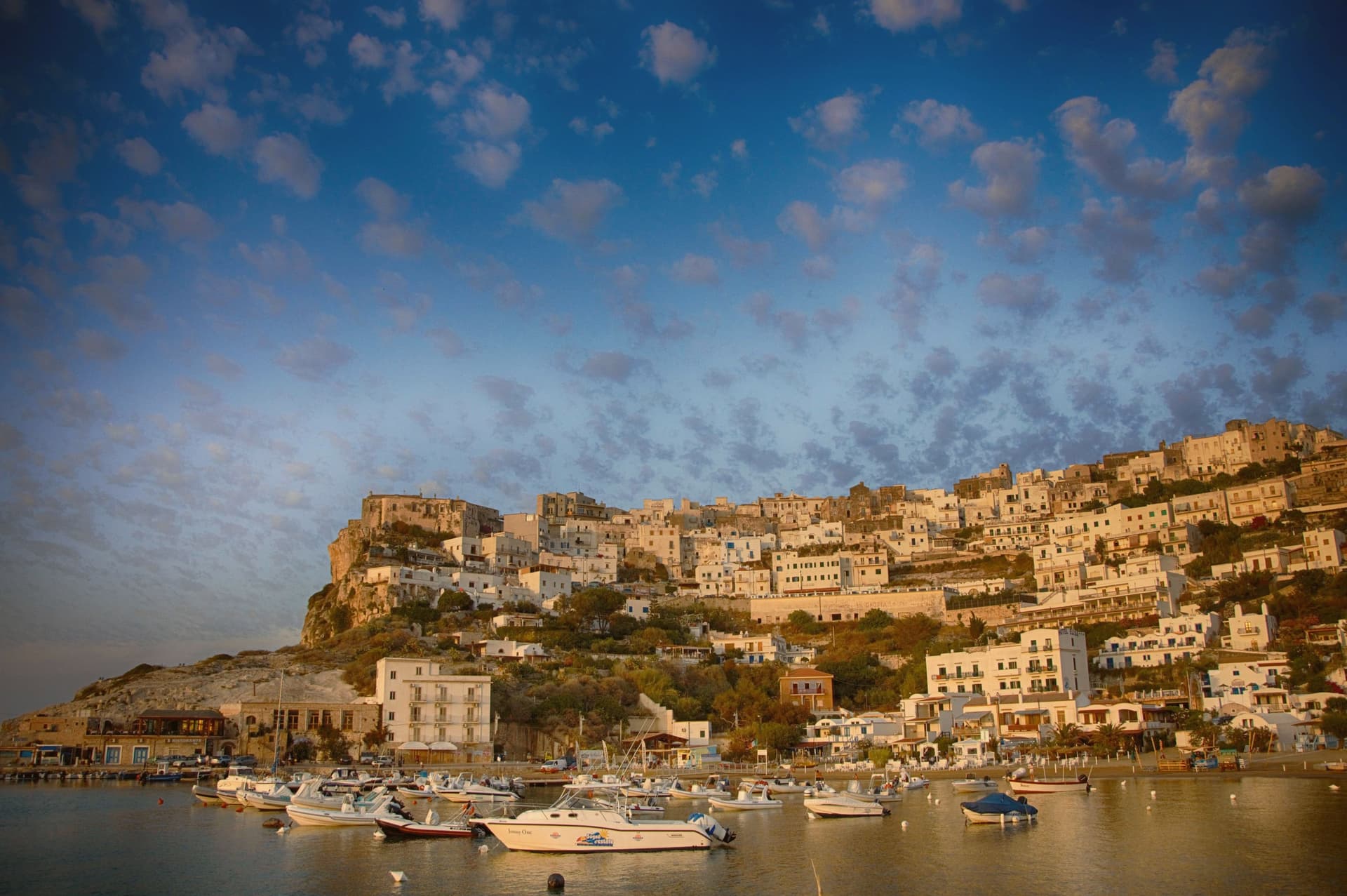
Peschici sits on a karst spur on the northeastern Gargano, 91 meters above the Adriatic, nine kilometers east of San Menaio and nineteen kilometers west of Vieste. The town was founded by the Daunians and later taken by the Romans, and the present village grew up around its cliff-top castle overlooking the small port below.
The municipal territory splits between the built village on its spur and the inland half, which falls within Gargano National Park: karst pine forest and limestone gorges running back from the coast. The coastline itself alternates sandy bays between limestone headlands with cliff sections reachable only from the sea, and the fishing platforms that work this stretch of Adriatic sit on the headlands at both ends of town, timber and rope structures fixed into the rock rather than built up from a harbor.
What holds the place together is the contrast between the white crown of the village, unusual on this coast for its flat and shallow-domed roofs, and the working coast beneath it: a fixed settlement on high ground looking down over a shoreline still worked by hand.
Porta di Basso, Eden, Al Trabucco da Mimì have been named by a guide.
What to see in Peschici
- Castello Normanno-Svevo. Expanded by the Swabians after its Norman origin, the castle stands over the port and is visible from the sea and from inland well before the village itself comes into view.
- Centro storico. White cliff-top village of small whitewashed houses with flat or shallow-domed roofs, unusual on the Gargano, terraced down the karst spur toward the sea.
- Baia di San Nicola. Sandy bay west of the village beneath limestone cliffs, with the small medieval monastery of San Nicola on the headland above the beach.
How to get to Peschici
Foggia is roughly 115 minutes away by road.
Our tip
May through September is the working season, Adriatic water warm enough to swim by late May and the cliff village operational until late. July and August fill the small headland with families from Foggia, Naples and Rome; the town's population multiplies several times and the karst spur runs out of parking by mid-morning. June and September are the sane choices, mild evenings and the same beaches without the crush.
Otranto
Why visit Otranto
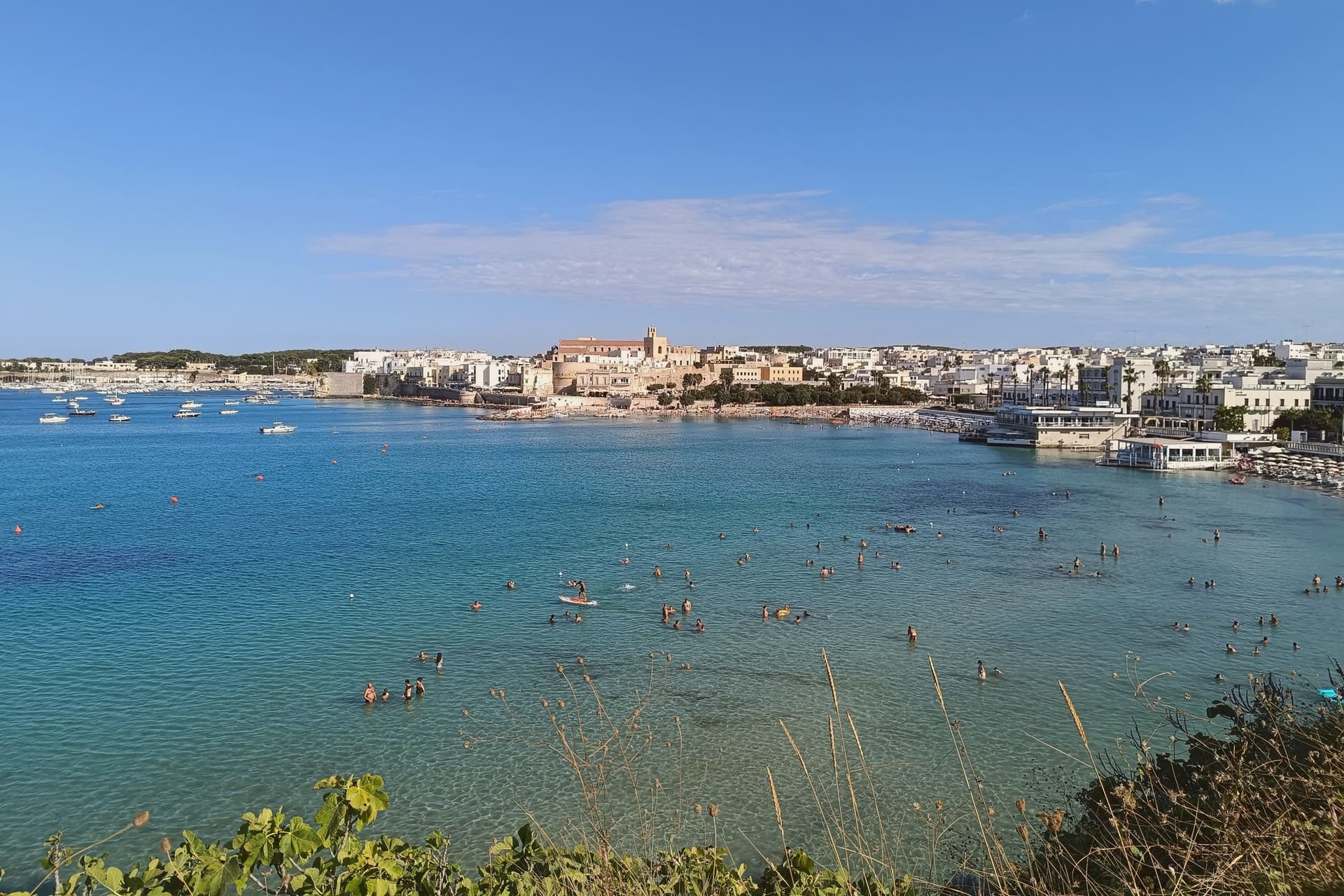
Otranto sits at sea level on a small promontory thirty kilometers southeast of Lecce, the easternmost city of Italy and the closest mainland point to Albania across the eighty-kilometer Strait of Otranto. The Cattedrale di Santa Maria Annunziata, consecrated in 1088, holds a mosaic floor laid between 1163 and 1165 by the monk Pantaleone for Archbishop Gionata.
About 800,000 tesserae across the three naves depict Adam and Eve, Noah, the Tower of Babel and a Tree of Life with biblical, classical and chivalric figures: Alexander the Great, Arthur, the months of the year. On 14 August 1480 an Ottoman force under Gedik Ahmed Pasha took the city; 813 inhabitants who refused to convert were beheaded on the Colle della Minerva and their bones are now in the cathedral, in seven glass-fronted recesses.
Pope Francis canonized them in 2013. The Castello Aragonese, raised by Ferdinand I of Aragon between 1485 and 1498, is the response: a five-sided fortress with a moat, built specifically to prevent a second sack.
Retrogusto, L' Altro Baffo, Umberto 1972 have been named by a guide.
What to see in Otranto
- Cattedrale di Santa Maria Annunziata. Norman cathedral consecrated in 1088, with Pantaleone's mosaic floor of 1163-1165 and the relics of the 813 martyrs of 1480 in seven glass recesses.
- Castello Aragonese. Five-sided Aragonese fortress raised 1485-1498 by Ferdinand I after the Ottoman sack, irregular plan with moat running the full perimeter.
- Chiesa di San Pietro. Byzantine cross-plan church in the centro storico, ninth-tenth century, with three apses and frescoes from the tenth through fifteenth centuries.
How to get to Otranto
There is a railway station in the town, so you can arrive without a car and never need one while you are here. Taranto is roughly 137 minutes away by road.
Our tip
May through September is the working coastal season, Adriatic water warm enough to swim by mid-May and the centro storico operational into the evening. July and August fill the small headland with day-trippers from across Salento and beyond; weekends in August are shoulder to shoulder along the Lungomare and the cathedral fills with queues. June and September are the sane choices, mild evenings and the same water without the crush.
Vieste
Why visit Vieste
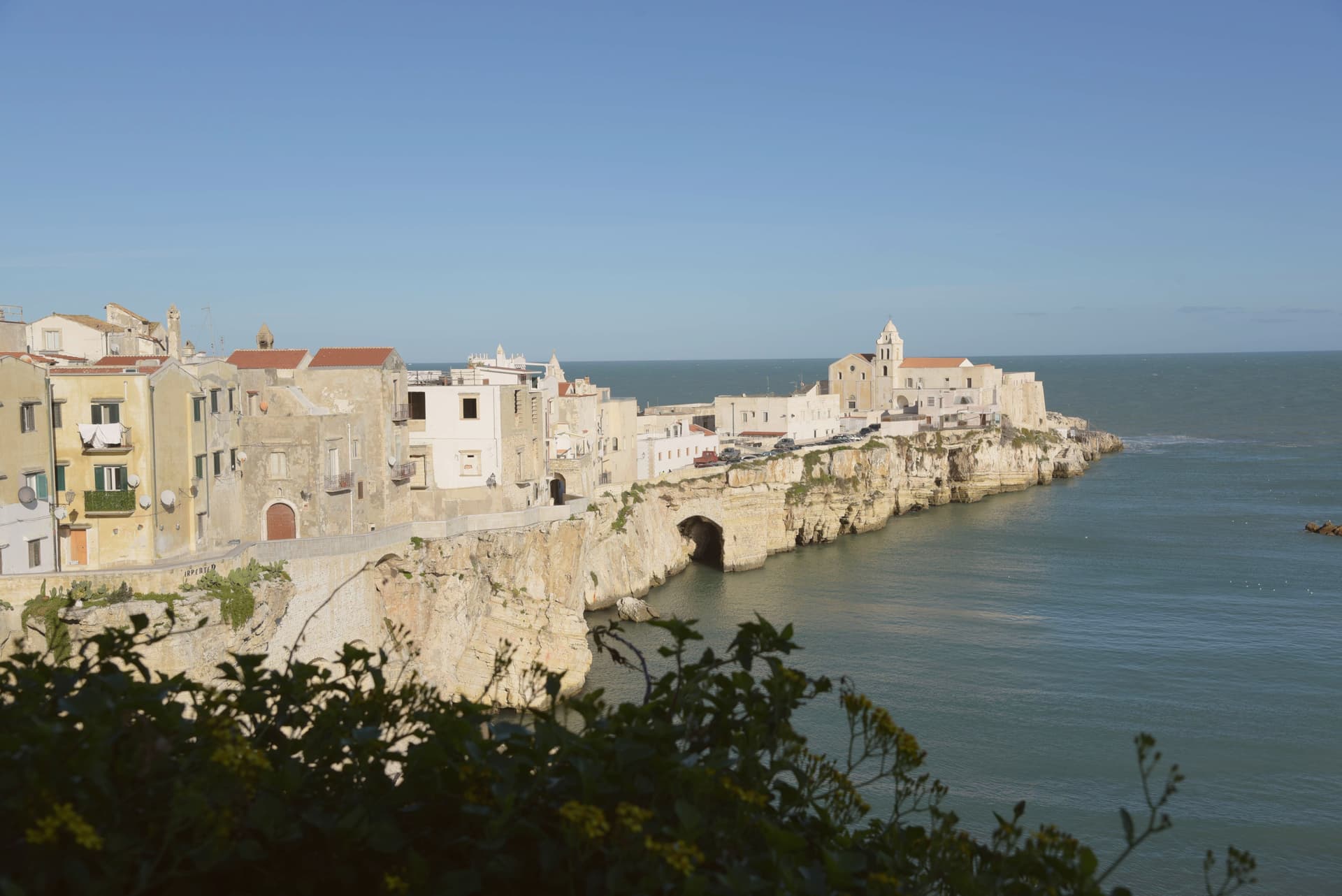
Vieste sits at the eastern tip of the Gargano promontory inside Gargano National Park, a medieval town on a white limestone cliff dropping straight into the Adriatic. The Cathedral was begun in the second half of the eleventh century in Apulian Romanesque, with three naves on two rows of six columns and capitals carved in oriental floral and animal motifs.
The Norman castle of the eleventh century was rebuilt by Frederick II in 1242 as part of a coastal fortification line; the trapezoidal block of 1242 still anchors the headland. On July 18-21, 1554, the Ottoman corsair Dragut sacked the town and executed roughly 5,000 inhabitants on the slab of stone now known as the Chianca Amara, the bitter stone, set into the lane that carries the memory.
Pizzomunno, the 26.6-meter limestone sea stack on Spiaggia del Castello, is the symbol of the Gargano and the centerpiece of a local legend about a fisherman whose lover was taken by sirens. The Bandiera Blu marks the water at Pizzomunno, Scialmarino and Lungomare Mattei.
Al Dragone, Donlù, La Ripa and 1 more have been named by a guide.
What to see in Vieste
- Cattedrale di Santa Maria Assunta. Eleventh-century Apulian Romanesque cathedral, three naves on two rows of six columns, with Corinthian and cubic capitals carved in zoomorphic and floral motifs.
- Castello Svevo. Norman fortress rebuilt by Frederick II in 1242 on the headland above the sea, part of the Hohenstaufen Adriatic defensive line, still anchoring the old town.
- Pizzomunno. Limestone sea stack 26.6 meters high on Spiaggia del Castello, the symbol of Vieste and the Gargano, attached to the legend of the fisherman and his stolen lover.
How to get to Vieste
Foggia is roughly 109 minutes away by road.
Our tip
May, June, September and the first half of October are the windows when Vieste works without the heat or the August crowd: warm Adriatic, breezy headland, the centro storico walkable in afternoon as well as evening. July and August are very hot and crowded, with the Bandiera Blu beaches at capacity and rates at peak; the centro storico empties between two and five and refills after sunset for the passeggiata. October still holds for swimming on the south-facing beaches.
Carovigno
Why visit Carovigno
Carovigno sits at 161 meters in upper Salento, seven kilometers from the Adriatic and thirty kilometers from Brindisi. The distance between hill and sea shapes the commune: a walled town on high ground looking inland toward Ostuni, and a strip of protected coast running north along the water, eight kilometers of it, separate enough from the centro storico that they read almost as two different places joined by one municipal boundary.
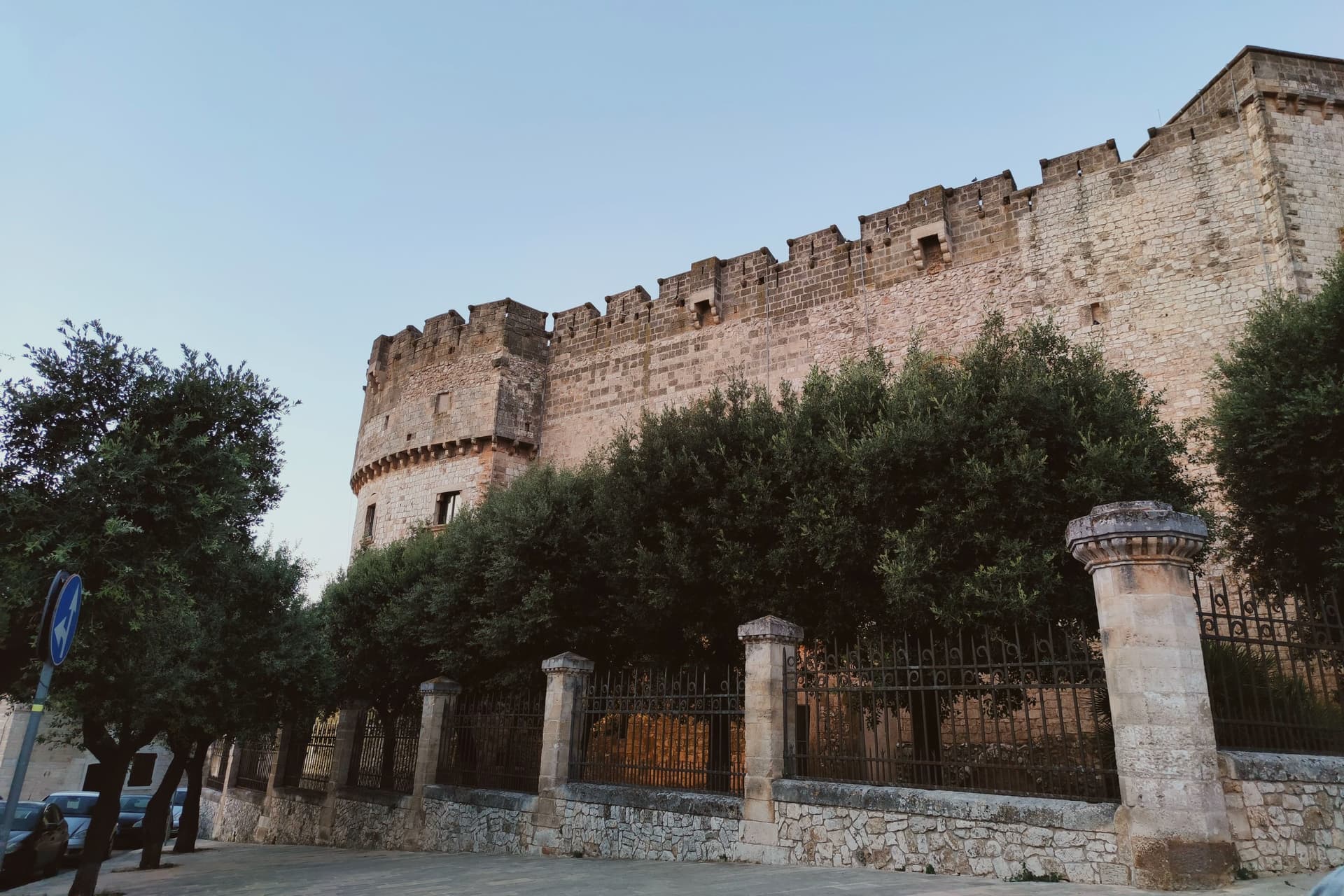
The old town itself is compact, arranged around its mother church with the castle at the summit and the medieval walls, patched with older stone, closing the circuit. Outside the walls, three kilometers off, stands the sanctuary that draws the town out of itself once a year for the Easter procession.
The coast belongs to no season and no rite in particular. It is simply there, kept clear of building, running along the edge of the commune while the life of the town carries on up on the hill.
What holds Carovigno together is this separation of functions: defense and worship concentrated on the high ground, the shoreline left open and undeveloped, and the two connected only by the road and by the yearly walk to the sanctuary.
Dissapore di Andrea Catalano, Già Sotto l'Arco, Casale Ferrovia and 1 more have been named by a guide.
What to see in Carovigno
- Castello Dentice di Frasso. Fortress at the highest point of the centro storico, built for defense and later remade into an aristocratic residence, its rooms and outlook telling a different story from its military origins.
- Cinta muraria e torri medievali. Four towers, Torre del Civile, Torre Giranda, Torre delli Brandi and Torre del Prete, still standing on foundations laid before the medieval walls that now bear their names.
- Riserva Naturale di Torre Guaceto. The shoreline itself: shallow clear water, dune systems underfoot and a watchtower standing alone against the coast, reachable north of the town.
How to get to Carovigno
There is a railway station in the town, so you can arrive without a car and never need one while you are here. Taranto is roughly 69 minutes away by road.
Our tip
May through September are the months the Adriatic warms enough to swim at Torre Guaceto and the upper-Salento groves are walkable without sweat. July and August push past thirty-three degrees and the centro storico fills with day-trippers from the Brindisi-Ostuni stretch. June and September are the steadier months, water still warm and the trattorie open without the August crowds.
Polignano a Mare
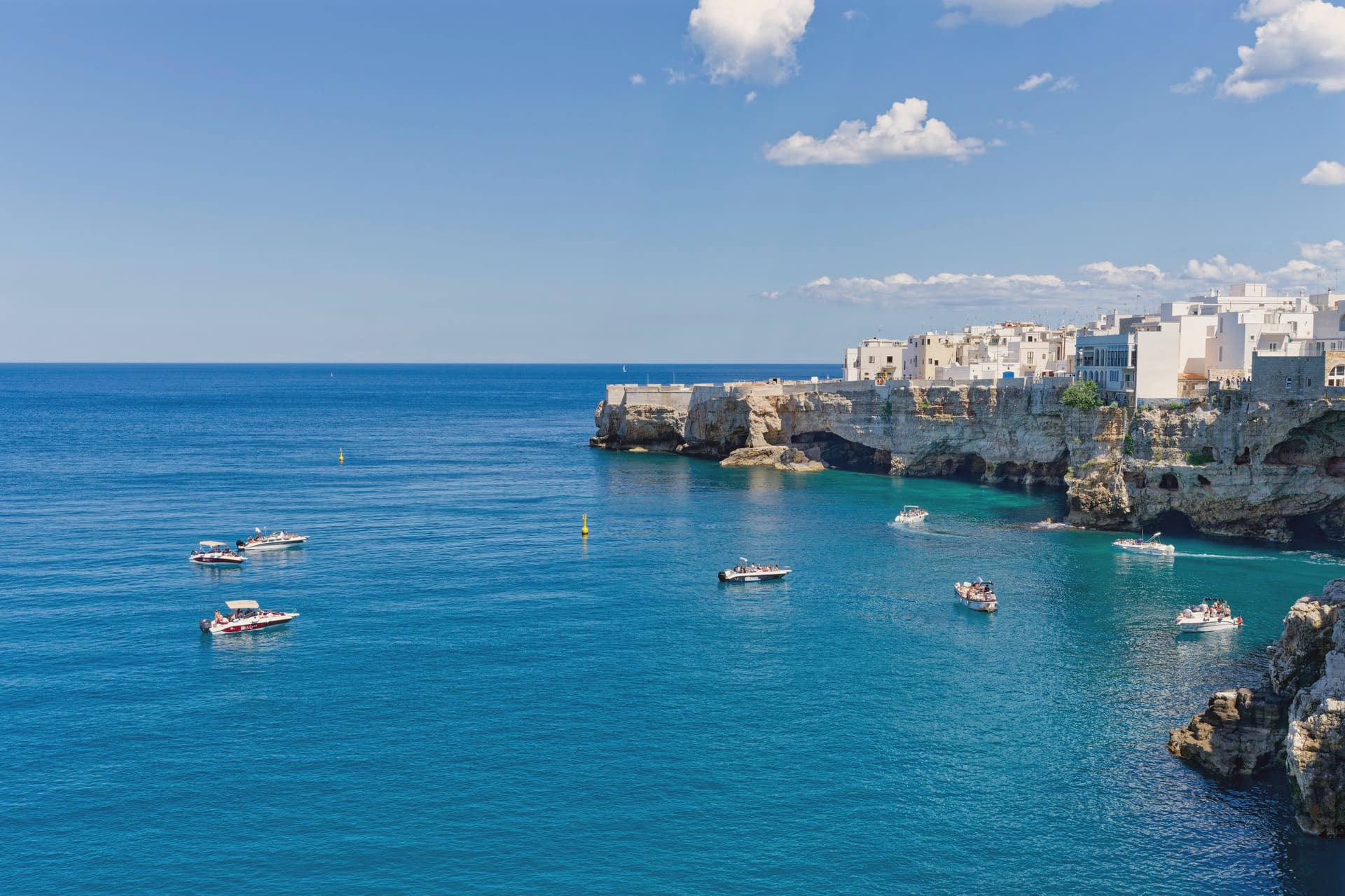
Why visit Polignano a Mare
Polignano a Mare sits on a limestone cliff twenty to twenty-seven meters above the Adriatic, thirty kilometers south of Bari. The historic centre is a maze of whitewashed lanes cut into the rock, dropping down to the Lama Monachile cove, the narrow beach between two rock walls and under the arches of the Roman bridge of the Via Traiana.
Archaeology in the Santa Barbara district shows continuous settlement since prehistory, and the site has been identified with the ancient Greek Neapolis of Apulia, possibly founded by Dionysius II of Syracuse in the fourth century BC. Julius Caesar features in another origin claim along the Via Traiana.
Domenico Modugno, who wrote and sang "Nel blu dipinto di blu" and won the 1958 Grammy with it, was born here in 1928; his statue stands on the lungomare that bears his name. The Grotta Palazzese, a sea cave under the old town, has held a restaurant since the eighteenth century when the Leto princes used it for banquets.
Pashà, Meraviglioso, Jamantè and 2 more have been named by a guide.
What to see in Polignano a Mare
- Lama Monachile. Narrow cove between two cliff walls in the centre of town, under the arches of the Roman bridge of the Via Traiana, the town's signature postcard.
- Centro storico. Whitewashed old town on the limestone cliff, narrow lanes, balconies hanging over the sea, and three surviving medieval gates.
- Grotta Palazzese. Sea cave under the cliff used by the Leto princes for banquets in the eighteenth century, now a restaurant carved into the rock.
How to get to Polignano a Mare
There is a railway station in the town, so you can arrive without a car and never need one while you are here. Bari is roughly 36 minutes away by road.
Our tip
May through September is the season the cliffs and the cove work: warm sea, long evenings, the Lama Monachile crowded by ten in the morning in July and August and impossible to swim from after noon. June and September are the better months, the water already warm and the day-tripper buses thinner. October keeps the light and empties the centro storico.
Fasano
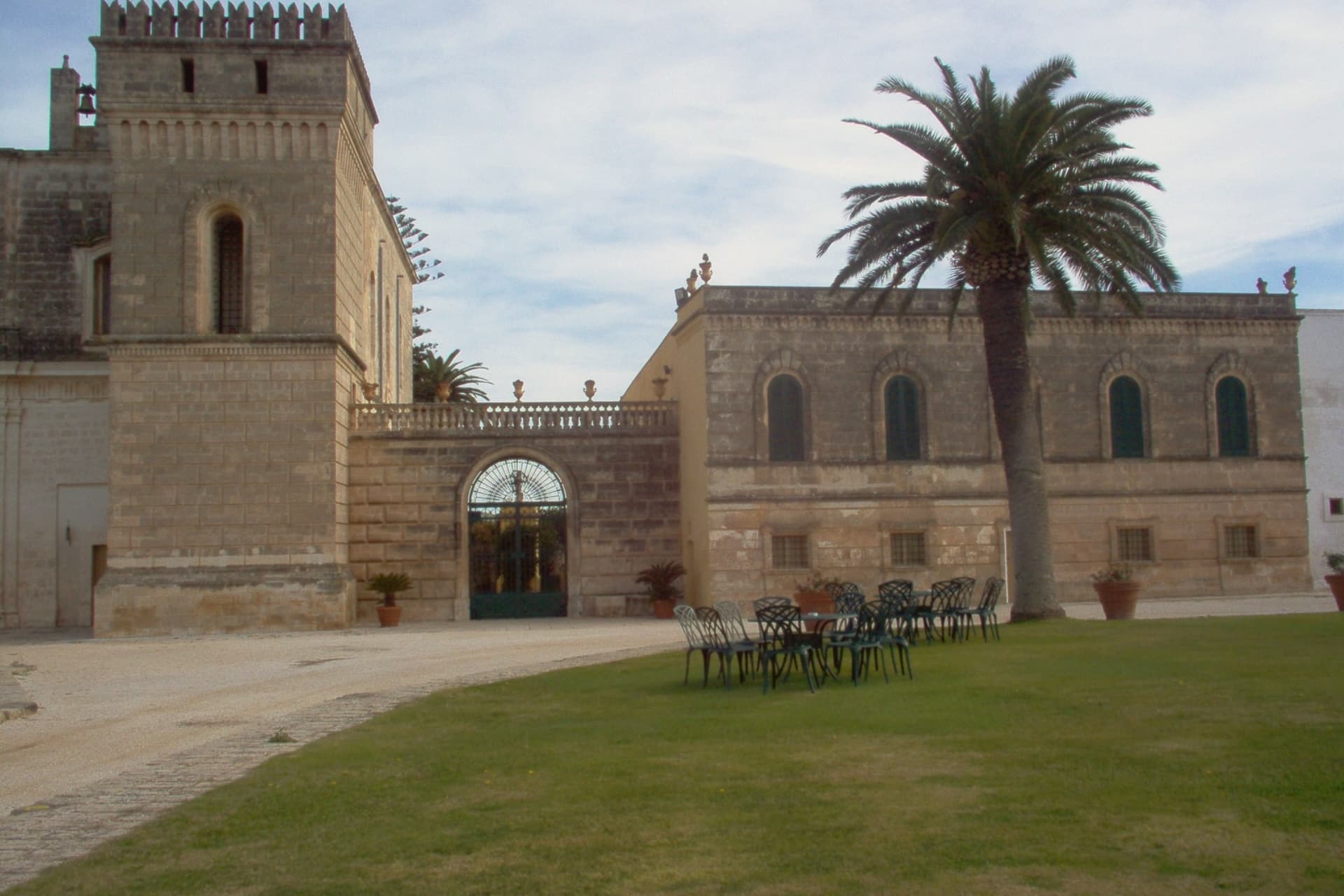
Why visit Fasano
The main centre sits at 118 meters, a hinge point in a wide municipal territory that runs from the Adriatic shore up to the Itria escarpment, home to thirty-eight thousand residents spread across three distinct landscapes rather than one compact town. The coast holds the abandoned city, inhabited from the fifteenth century BC and left empty by the Middle Ages, its excavated stone now sitting a short distance from the museum built to house what came out of the ground there.
Inland and uphill, the wooded escarpment climbs to become the highest ground in the province, the same slopes that carry the wildlife park across its carob and olive scrubland. Further along the shore, the fishing port turned resort gives the territory its beach frontage.
The pattern is coastal city, wooded highland, coastal resort, three pieces of a single municipality that never behaves like a single place. What the town offers is that range within one boundary: Roman ruins at sea level, a panorama at the province's highest point, and a working beachfront, none of them a detour from the others.
Pentole e Provette, Due Camini a Borgo Egnazia, Raparossa have been named by a guide.
What to see in Fasano
- Parco Archeologico di Egnazia. Ruins spread across eighty hectares along the coast, with the Via Traiana running through the site alongside the basilica and a cryptoporticus still traceable underfoot.
- Museo Nazionale Archeologico Giuseppe Andreassi. Museum standing next to the archaeological park, holding the objects pulled from the excavations: Messapian inscriptions, Roman finds, and material spanning the long abandonment of the city.
- Selva di Fasano. Wooded escarpment reaching between 411 and 414 meters, the ground rising from carob and olive scrub to open views that give the terrace its nickname.
How to get to Fasano
There is a railway station in the town, so you can arrive without a car and never need one while you are here. Bari is roughly 52 minutes away by road.
Our tip
May through September is the working season on this stretch of the Adriatic: warm sea, the Bandiera Blu beaches at Savelletri operating, the Selva ten degrees cooler than the coast for an evening break. July and August fill the coast with Italian holidaymakers; Egnazia exposed on the seafront is brutal between noon and three. April and October are quieter alternatives with the sea still mild, the archaeological park at its photographic best, and the olive harvest opening across the surrounding masserie. Festa Della Mietitura E Trebbiatura Del Grano falls in August.
Monopoli
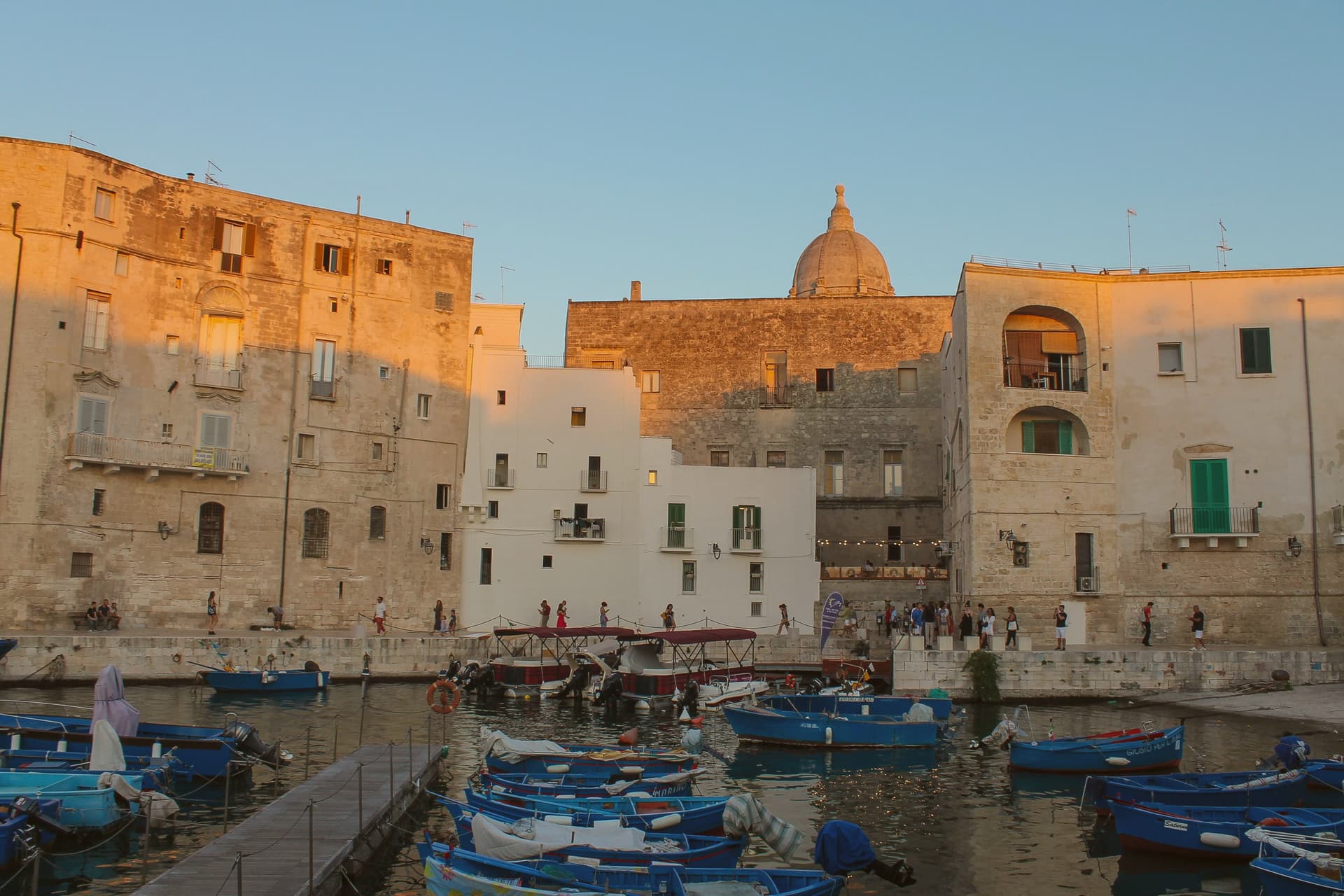
Why visit Monopoli
Monopoli sits on the Adriatic forty kilometers southeast of Bari, a walled town extending from the sea fifteen kilometers inland to the first Murge hills. The territory covers 156 square kilometers with sandy coves, cliff sections and the old port at the centro storico.
The site has been inhabited since the Epigravettian, around fifteen thousand years ago; a fortified Messapian settlement existed by 500 BC. The name comes from the Greek for 'only city,' which Monopoli inherited when refugees from nearby Gnatia arrived after the Ostrogoth king Totila destroyed it in 545.
Byzantines, Normans and Hohenstaufen followed. In 1484 Venice took the town and ran it as a trading port between Bari and Brindisi for sixty years.
The Castello Carlo V on the headland and the resistance to the imperial Armada in 1529, which forced the Spaniards to abandon a three-month siege, both belong to that century of fortification.
Radimare, Orto, My Wine il piacere del palato and 1 more have been named by a guide.
What to see in Monopoli
- Castello Carlo V. Sixteenth-century pentagonal fortress on the headland above the old port, built by the Spanish to defend against Ottoman raids and Venetian return.
- Basilica Cattedrale Maria Santissima della Madia. Eighteenth-century baroque cathedral on the old town's central square, raised over earlier medieval foundations, the city's principal monument.
- Centro storico. Walled old town on the small headland, white limestone alleys, the cathedral and the castle facing each other across narrow lanes above the port.
How to get to Monopoli
There is a railway station in the town, so you can arrive without a car and never need one while you are here. Bari is roughly 42 minutes away by road.
Our tip
May through September is the working coastal season, water warm enough for swimming and the old port quay populated until late. July and August push past thirty-three degrees and the centro storico fills with day-trippers from Bari and Polignano; weekends in August are shoulder to shoulder along the quay. June and September are the sane choices, mild evenings and the same water without the crush.
Trani
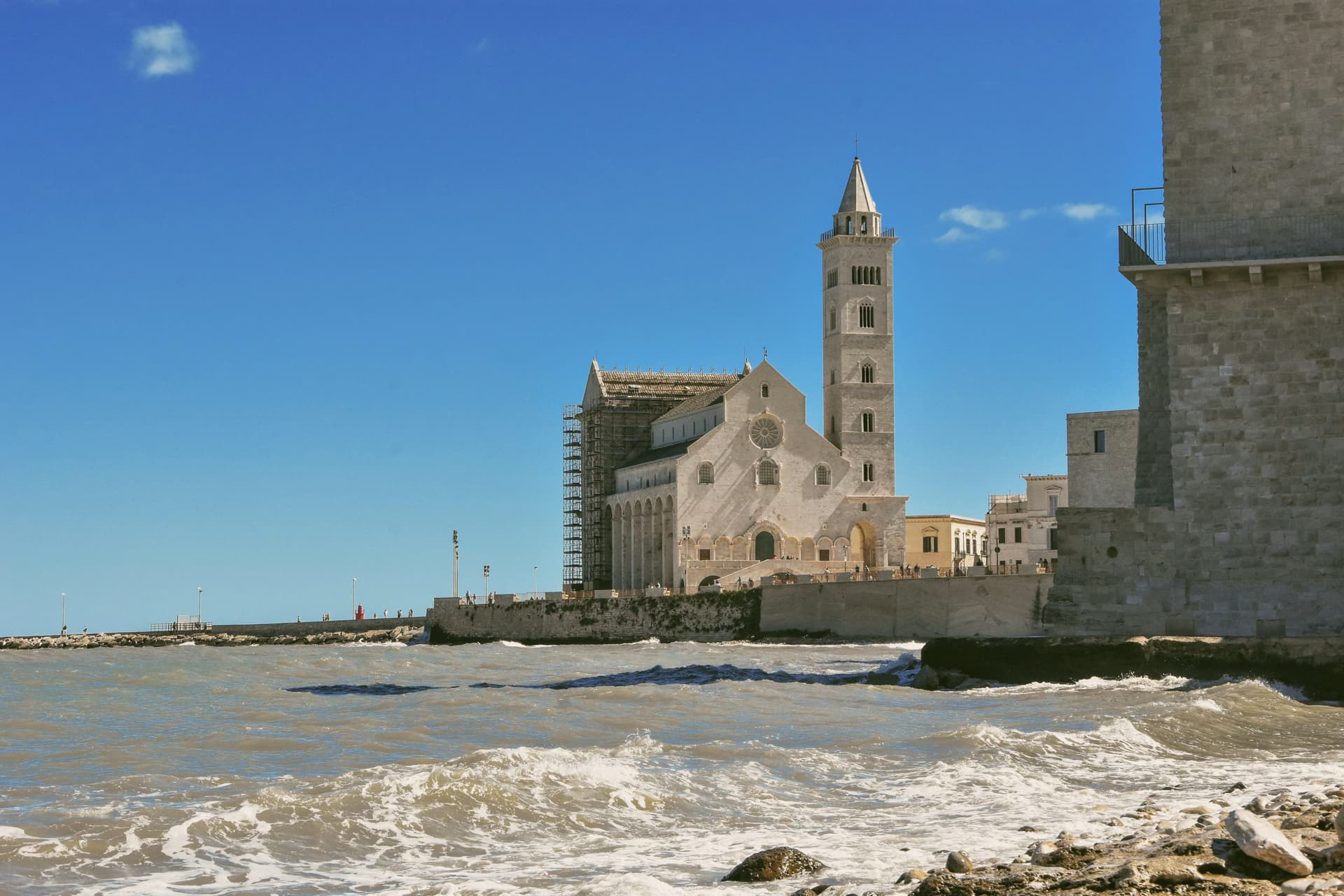
Why visit Trani
Trani sits on the Adriatic forty-five kilometers west-northwest of Bari, one of the three capitals of the Barletta-Andria-Trani province. The cathedral is the reason most travelers come.
Dedicated to Saint Nicholas the Pilgrim, a Greek who died in Trani in 1094, the church was begun in 1159 and built from the local calcareous tuff that quarries pink-white almost to the point of looking bleached. The fifty-nine-meter bell tower was finished in the fourteenth century; the central bronze door is a 1175 work by Barisano da Trani.
The Castello Svevo on the same harbor was built by Frederick II between 1233 and 1249 to guard the roadstead. Trani's eleventh- and twelfth-century maritime republic linked the Crusader Adriatic to the East and produced the Ordinamenta maris, one of the earliest western sea codes.
The cathedral square at dusk, sea on one side and Castello Svevo on the other, is the photograph.
Quintessenza, Casa Sgarra, Il Melograno and 4 more have been named by a guide.
What to see in Trani
- Cattedrale di San Nicola Pellegrino. Romanesque cathedral begun in 1159 on a sea-edge platform, built of local pink-white tuff, with a fifty-nine-meter bell tower and the 1175 bronze door by Barisano da Trani.
- Castello Svevo. Frederick II fortress of 1233-1249 on a rock at the center of the harbor, designed by Filippo Cinardo, later a royal court seat and provincial prison until 1974.
- Porto e lungomare. Working fishing harbor lined with palazzi and trattorie, with the cathedral at one end and the Castello Svevo at the other.
How to get to Trani
There is a railway station in the town, so you can arrive without a car and never need one while you are here. Bari is roughly 38 minutes away by road.
Our tip
May, June, September and October are the easiest months on the harbor: warm without humidity, the cathedral square workable from morning into the evening, the Adriatic still swimmable. July and August are hot and busy, with cruise day-trippers and weekend Bari traffic taking the port. The fish auction at the molo continues through the summer; the local moscato bottling runs from August into September. Festa di San Nicola Pellegrino falls in August.
More from Anywhere Italy
 The best olive oil towns with a serious restaurant in Puglia
- The best hidden towns with a serious restaurant in Puglia
- The best coastal towns you can reach by train within 90 minutes of Bari
- The best towns on a walking route in Puglia
- The best hidden coastal towns that eat well in Puglia
 The best towns with a food festival in Puglia