
Aosta Valley · Aosta Valley
Saint-Vincent
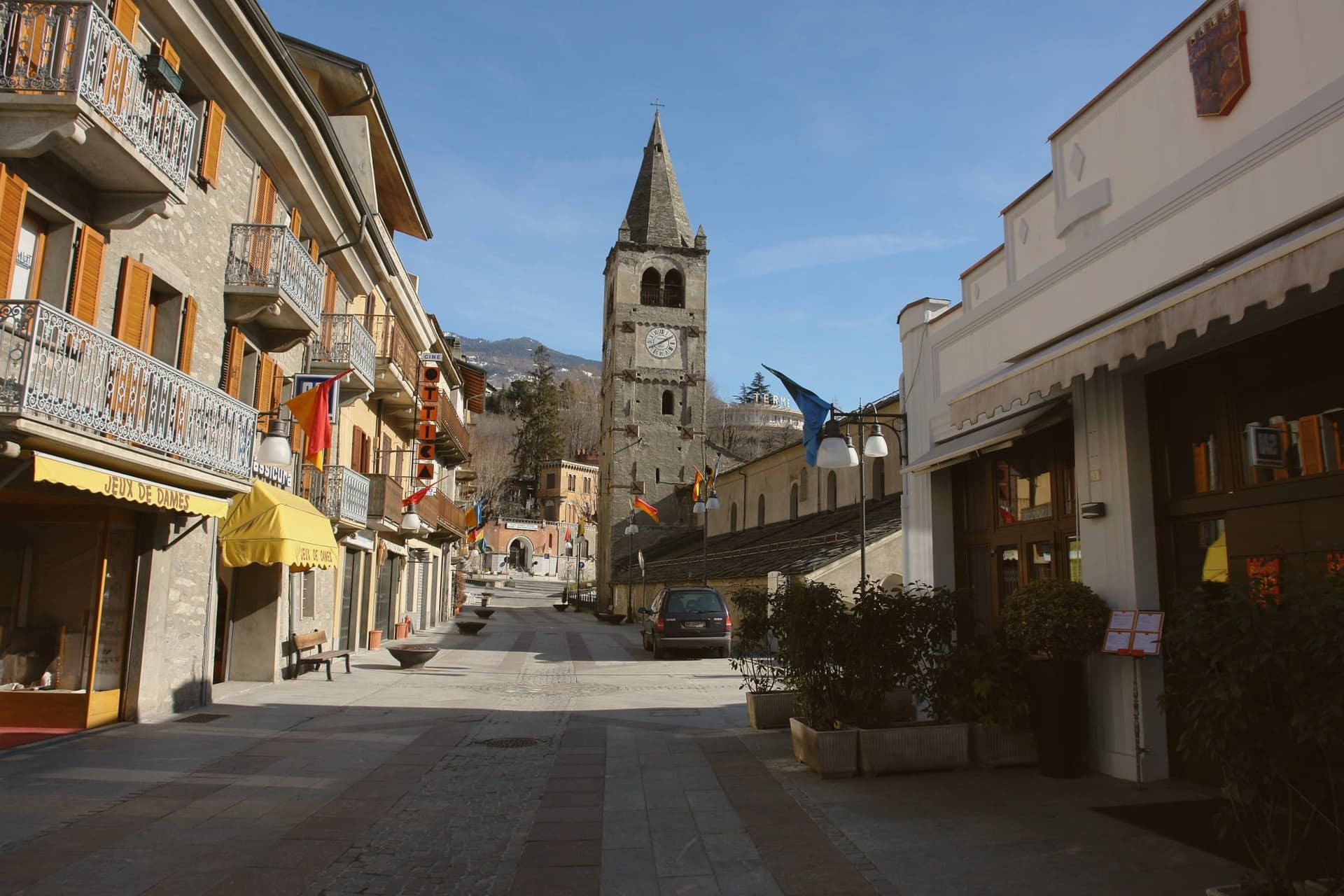
A belle-époque thermal town on a sunny south-facing terrace at 575m, where a mineral spring, a landmark casino, and a Matterhorn view north of town define a resort built for the 19th-century cure.
- Best time
- Apr–Jun, Sep–Oct
- By car
- 1 h 23 min from Turin
- Population
- 4,448
Known for
ALPINE RIVIERA SPA
Fonte Salée mineral spring since 1770, full 1928 Stile Liberty spa building. The 'Riviera delle Alpi' nickname dates to the 19th-c elite cure-takers.
CASINÒ DE LA VALLÉE
Italy's first legal casino outside Sanremo (1947), now the country's second-largest. Underwrites the Aosta Valley regional budget.
ROMAN BATH UNDER THE CHURCH
Collegiata di San Vincenzo built over a 1st-c AD Roman bath complex, the mosaic floors are visible in the crypt.
PETITE ARVINE WINE
South-facing vineyards just below town produce the Aosta Valley's two distinctive whites, Petite Arvine and Müller Thurgau.
When to visit
Best · Apr–Jun, Sep–Oct
- J8°
- F11°
- M12°
- A15°
- M20°
- J24°
- J28°
- A28°
- S22°
- O19°
- N13°
- D9°
- Best
- Hot or crowded
- Quiet
- Mostly closed
Daytime averages, 2020–2024. Weather data by Open-Meteo.com.
The festa: Vincenzo di Saragozza, 19 January
Why come
The commune sits 28 km east of Aosta along the main Aosta–Turin road, on a south-facing terrace whose sunny microclimate earned it the local nickname 'Riviera delle Alpi', a name coined for the 19th-century elite who traveled here for the thermal cure. The spring itself was found by the local parish priest Jean-Baptiste Perret, who had it declared therapeutic for digestive and urinary disorders, and the spa grew up around that spring over the following century, reaching the form it still has today.
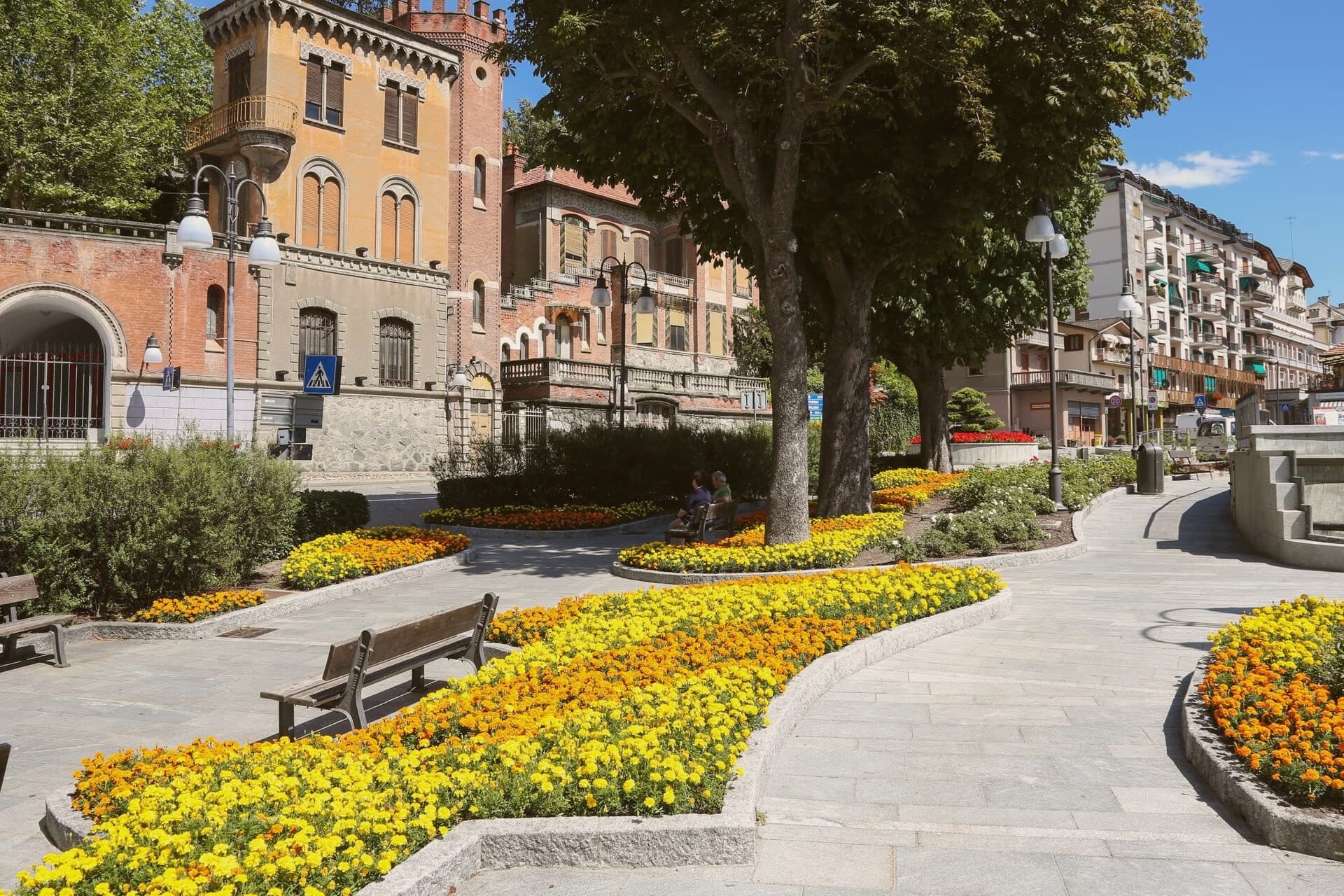
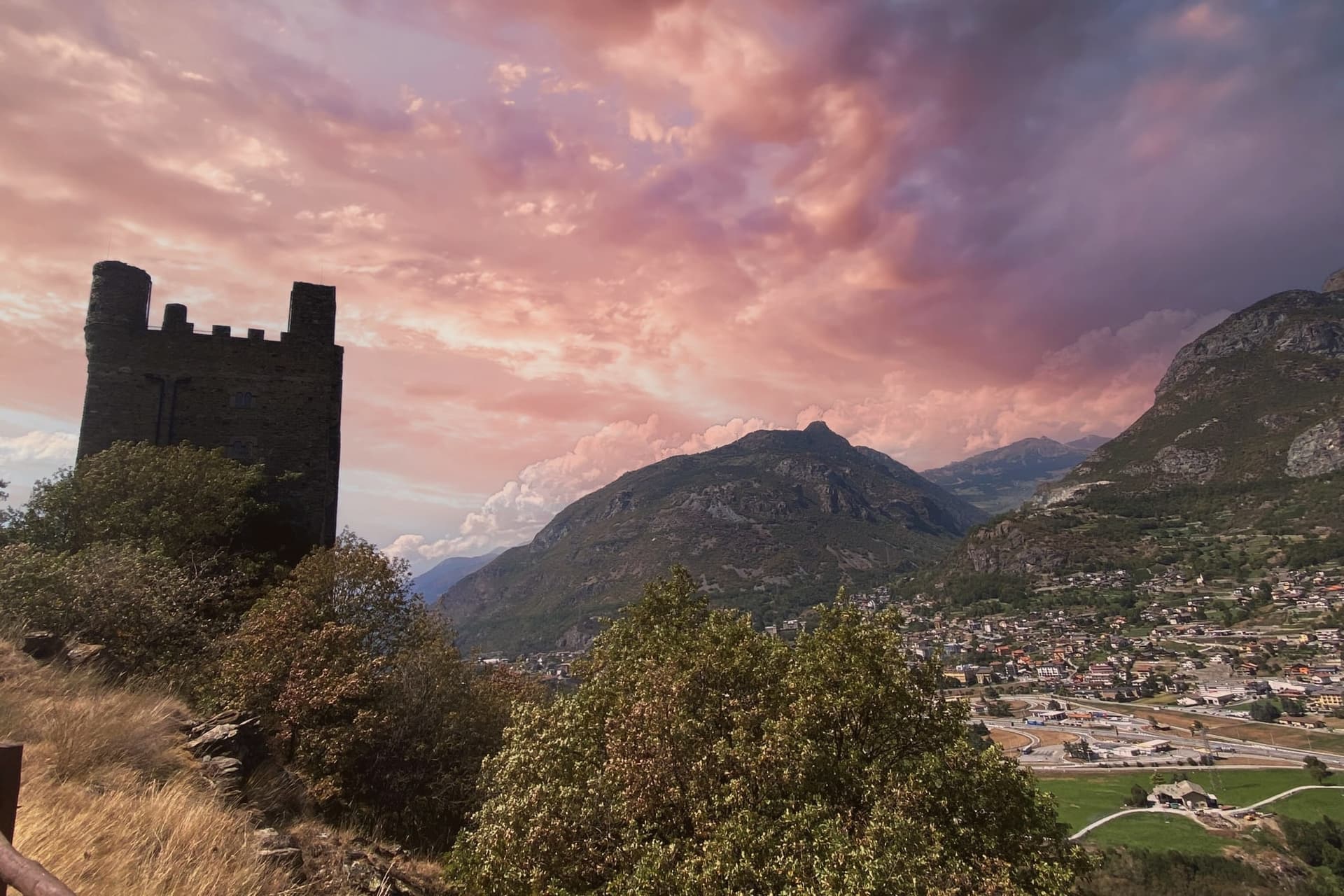
The town reads in layers built on top of each other rather than side by side: a Roman bath complex underlies the medieval church, and its mosaic floors survive below the nave where the crypt now sits. A 19th-century resort streetscape, the centro storico, the Casa Lo Presti, the Liberty-era seafront-style promenade, sits over that older settlement. Above the centro again, a glass-and-steel rotunda from the 1960s houses the gaming halls, a distinct, later addition sitting physically over the older resort quarter. A funicular climbs the hillside behind the town for the view. North of town the Matterhorn appears on clear days; south, the Mont Avic Regional Park lies 15 km off.
Food follows the same French-leaning Valdostan pattern as the town's layered history: fontina, Mocetta, polenta concia, and French-style patisseries on the corso, alongside the local white wines from the vineyards just below town. The year turns on the Carnevale Storico in February, with its medieval costumed processions, and the Saint Vincent Tourisme jazz festival in late June.
What holds the town together is that sequence of eras stacked on one terrace: Roman, medieval, belle-époque, and postwar, each still visible rather than replacing the one before it.
The Sunday letter
Saint-Vincent is on our list. Its letter is still to come.
We are writing about all 1,000 of these towns, one at a time, in a free letter every Sunday: the photo, the food, the festa. That is our mission. Sign up and you will be there when Saint-Vincent comes up. By Peter & Sophia, from Pietrasanta.
Read on
Saint-Vincent in our articles
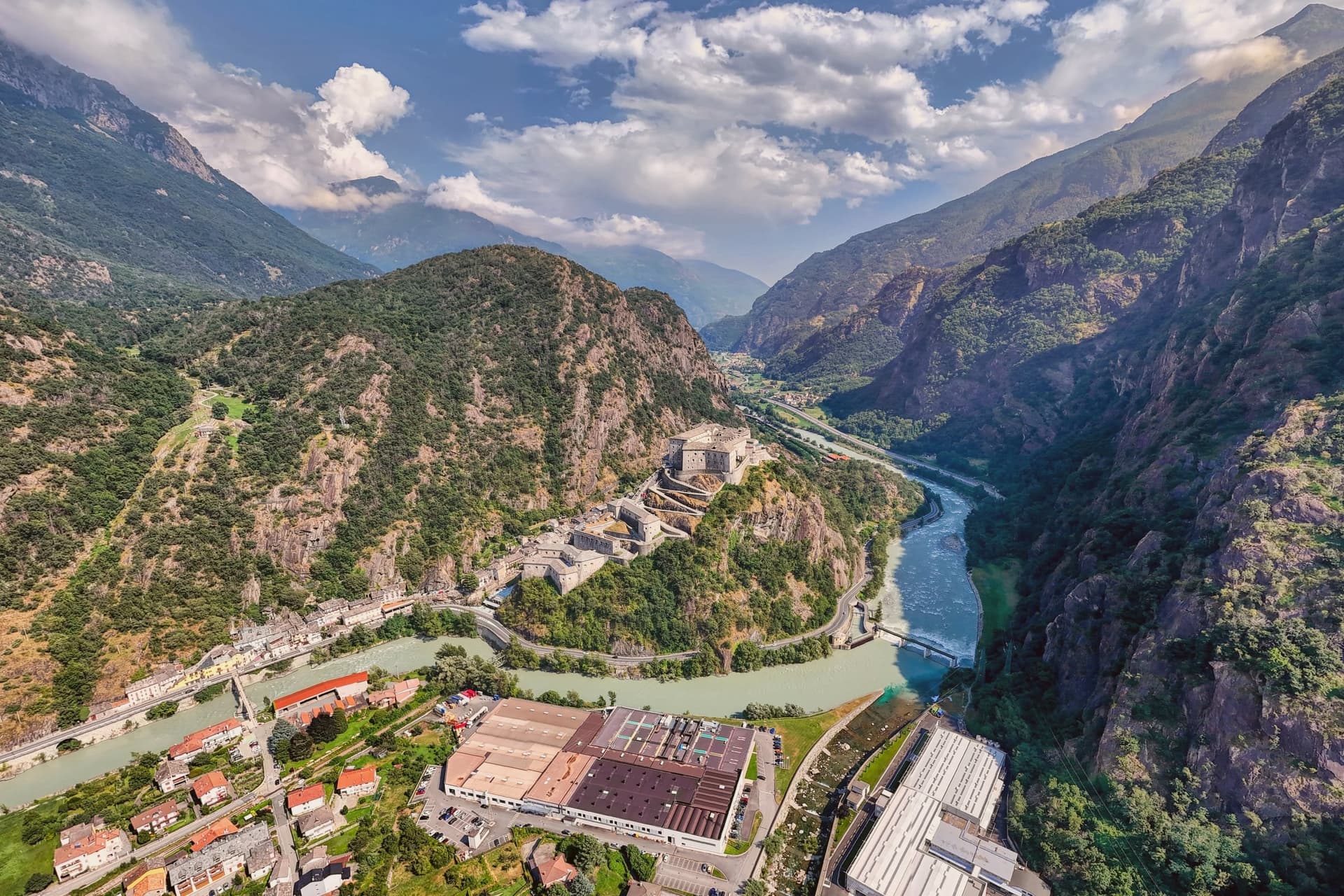
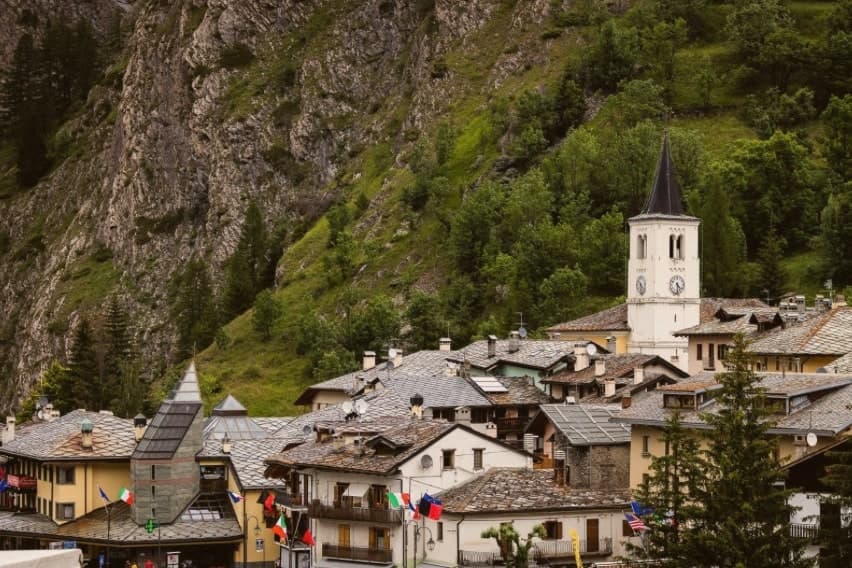 The best ski towns in the province of Valle d'Aosta/Vallée d'Aoste8 towns, Saint-Vincent among them.
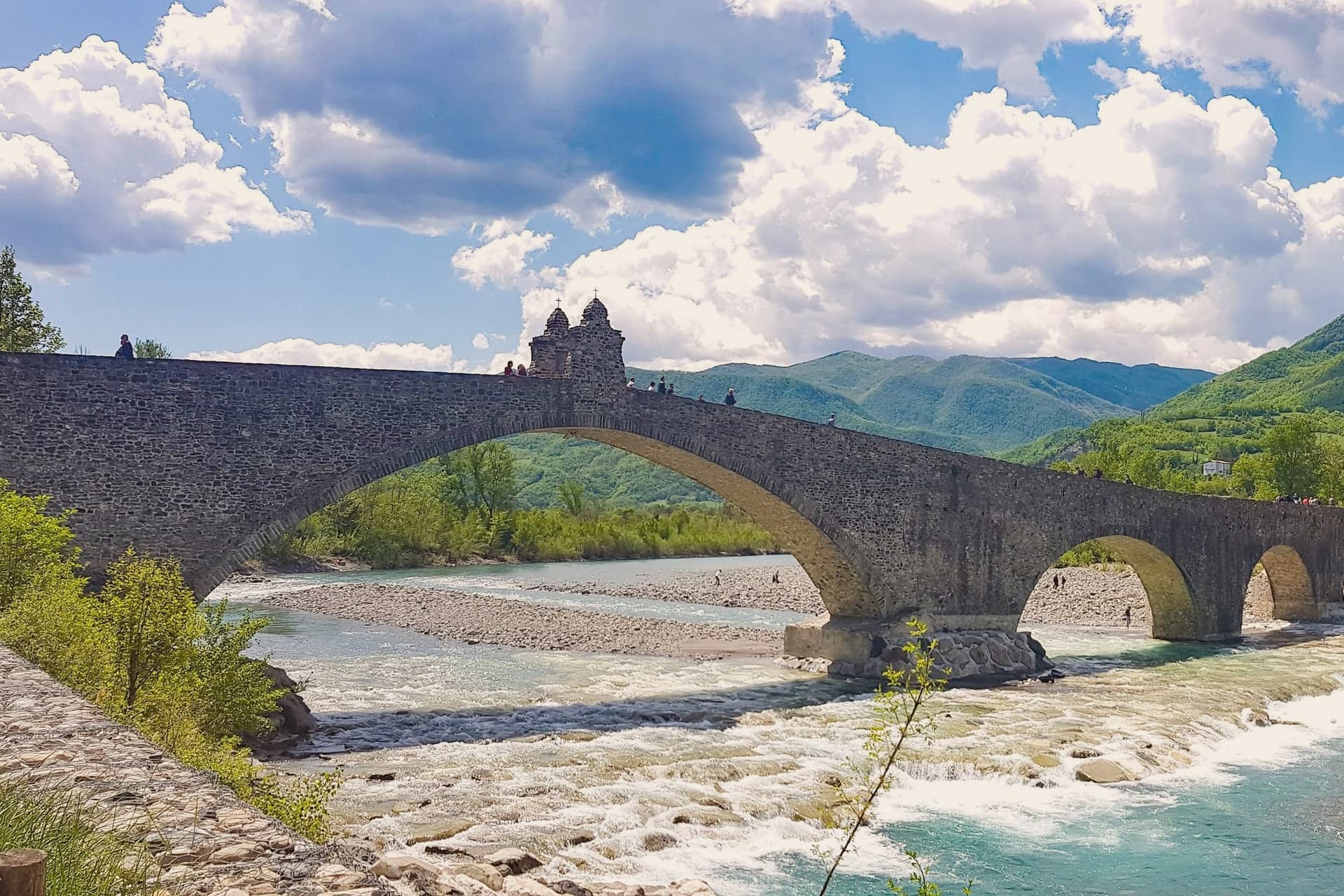
 The best towns that eat well in the province of Valle d'Aosta/Vallée d'Aoste8 towns, Saint-Vincent among them.
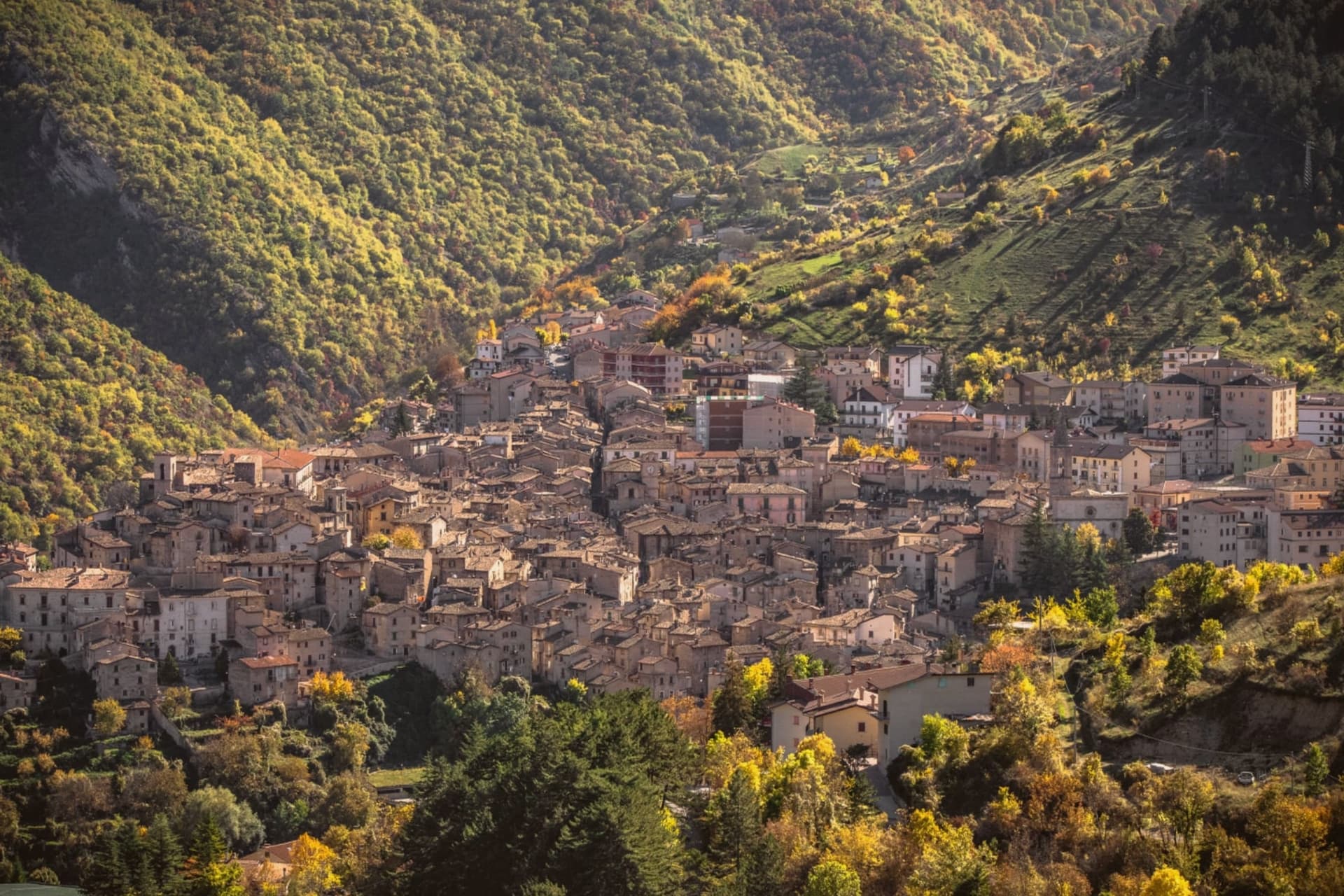
 Every ski town in our catalogue, all of them97 towns, Saint-Vincent among them.
 The best small mountain towns in Italy above 500 metres, all of them213 towns, Saint-Vincent among them.
How to get there
From Turin (TRN), about 1h 20m by car.
Milan (BGY) is about 2h 35m away.
By car from the centre of Genoa 2h 44m.
Coming by train into Torino Porta Susa? Saint-Vincent is about 1h 20m away by road.
What to see
Terme di Saint-Vincent + Fonte Salée
The drinking-cure and balneotherapy still run on the same 11°C water as 250 years ago, inside the Liberty-era building that has housed the baths since 1928.
Casinò de la Vallée
23 gaming tables and 600 slots fill a 1960s glass rotunda set above the centro, drawing a different crowd from the spa quarter below it.
Collegiata di San Vincenzo + Roman crypt
The 15th-century nave sits directly over the older structure, and the crypt below it is where the Roman-era mosaic floors are actually seen.
Cremagliera + Matterhorn views
The funicular climbs the hillside behind town to a panoramic point where the peak shows itself on clear days.
Petite Arvine vineyards
The vineyards sit on a south-facing slope just below town, with cellar visits available in town itself.
The slow-trip planner
Building a trip? Find where Saint-Vincent fits in a slow Italy circuit.
Answer five questions. We will shape a geographically coherent slow trip from the 1,000 Italian towns most travelers skip. Yours to save and share.
We recommend
Where to eat
Not our picks, but places the guides put their name to: a Michelin star, a Gambero Rosso fork, a Slow Food snail, a Michelin Key for the hotels. Worth a table, a counter, or a night when you pass through.
Le GrenierRistorante
Le Grenier holds a spot in the Michelin Guide.
Through the year
What happens here
Feasts and festivals that come back year after year. We give the month rather than the date, because the date moves and the month rarely does. Check with the source before you plan a journey around one.
A Saint-Vincent la 46a Mostra Mercato dei Mineralimarket
usually held in August. Aostaoggi.it - Eventi in Valle d'Aosta
Living here
- Population 4,448
- Commuter belti
- Pharmacy in town
- Nearest airport Turin, 1 h 20 min drive
- Regional capital Aosta, 34 min drive
Thermal baths in town: Terme di Saint Vincent.
Common questions
- What is Saint-Vincent known for?
- Saint-Vincent is a belle-époque thermal town on a sunny south-facing terrace at 575m, where a mineral spring, a landmark casino, and a Matterhorn view north of town define a resort built for the 19th-century cure.
- Where is Saint-Vincent?
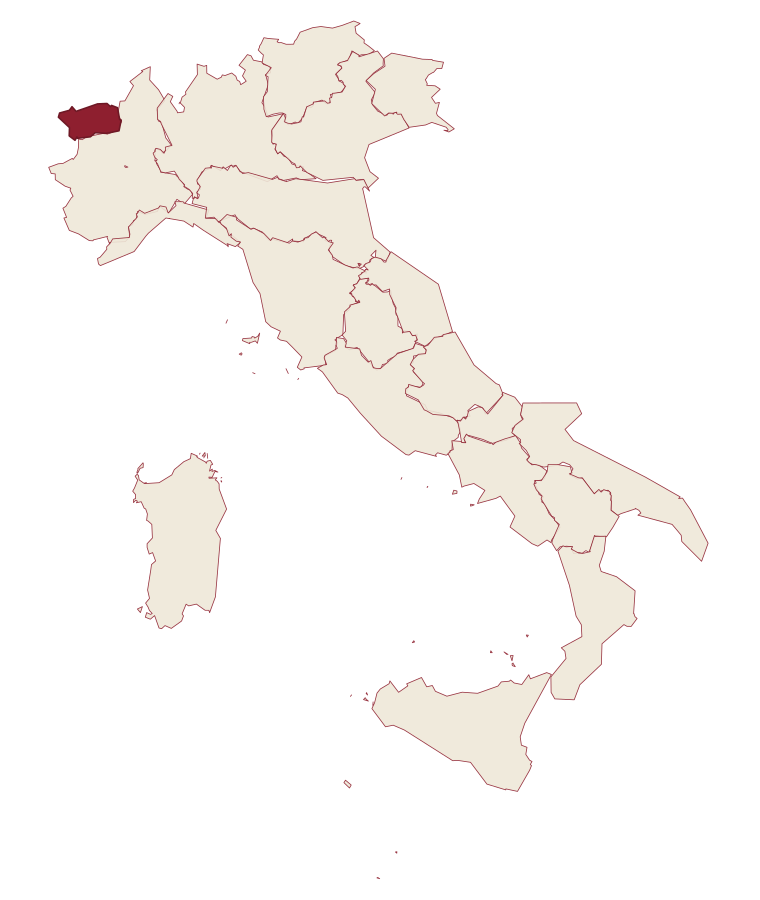
- Saint-Vincent is a comune in the province of Aosta Valley, in Aosta Valley.
- What is the nearest airport to Saint-Vincent?
- Turin (TRN), about 1h 20m by car.
- How long is the drive from Genoa to Saint-Vincent?
- About 2h 44m by car.
- When is the best time to visit Saint-Vincent?
- Best in Apr–Jun, Sep–Oct. August is the warmest month, averaging 28 degrees, and May the wettest, with about 19 rain days.
- Is there a sagra or a festival in Saint-Vincent?
- Yes. A Saint-Vincent la 46a Mostra Mercato dei Minerali. August is when the first of them falls.
- Which other towns are like Saint-Vincent?
- Châtillon, Fénis and Chiusa di Pesio.
- How many people live in Saint-Vincent?
- 4,448 at the 2023 count.
Tags & datadesignations · numbers · sources
The numbers
- Elevation: 575 m
- Population: 4,448
- Surface area: 20.57 km²
These figures were compiled from public directories: ISTAT, OpenStreetMap and Wikidata, and from the official listings of the guides named on this page. Town details change; verify with official sources before you travel.
Similar
Towns like Saint-Vincent
Châtillon
Province: Aosta Valley
both in the Aosta valley · both between 3,000 and 10,000 people
Fénis
Province: Aosta Valley
both in the Aosta valley · both hill towns
Chiusa di Pesio
Province: Cuneo
both between 3,000 and 10,000 people · both hill towns
Dogliani
Province: Cuneo
both between 3,000 and 10,000 people · both hill towns
Guarene
Province: Cuneo
both between 3,000 and 10,000 people · both hill towns
Castagnole delle Lanze
Province: Asti
both between 3,000 and 10,000 people · both hill towns
⛷️ Ski Area
More Ski Area towns in Aosta Valley
Ayas
Province: Aosta Valley
A scattered upper-valley commune of three villages, where Walser settlers and Romance-speaking herders share the slopes below Castor and Pollux.
Aymavilles
Province: Aosta Valley
A village at 646 metres above a river gorge, where the road up the valley begins and a Roman aqueduct still crosses the Grand'Eyvia on a single arch.
Cogne
Province: Aosta Valley
The mining town turned capital of the Gran Paradiso, the Aosta Valley's largest commune with 95 percent of its land inside Italy's oldest park.
Courmayeur
Province: Aosta Valley
The Italian base of the 4,810-meter peak, a Roman waystation on the Via delle Gallie that became the country's highest commune and its best-known ski address.
Gressoney-Saint-Jean
Province: Aosta Valley
A Walser village in the Lys valley where Titsch is still spoken and the Lyskamm glacier closes the view.