
Aosta Valley · Aosta Valley
Fénis
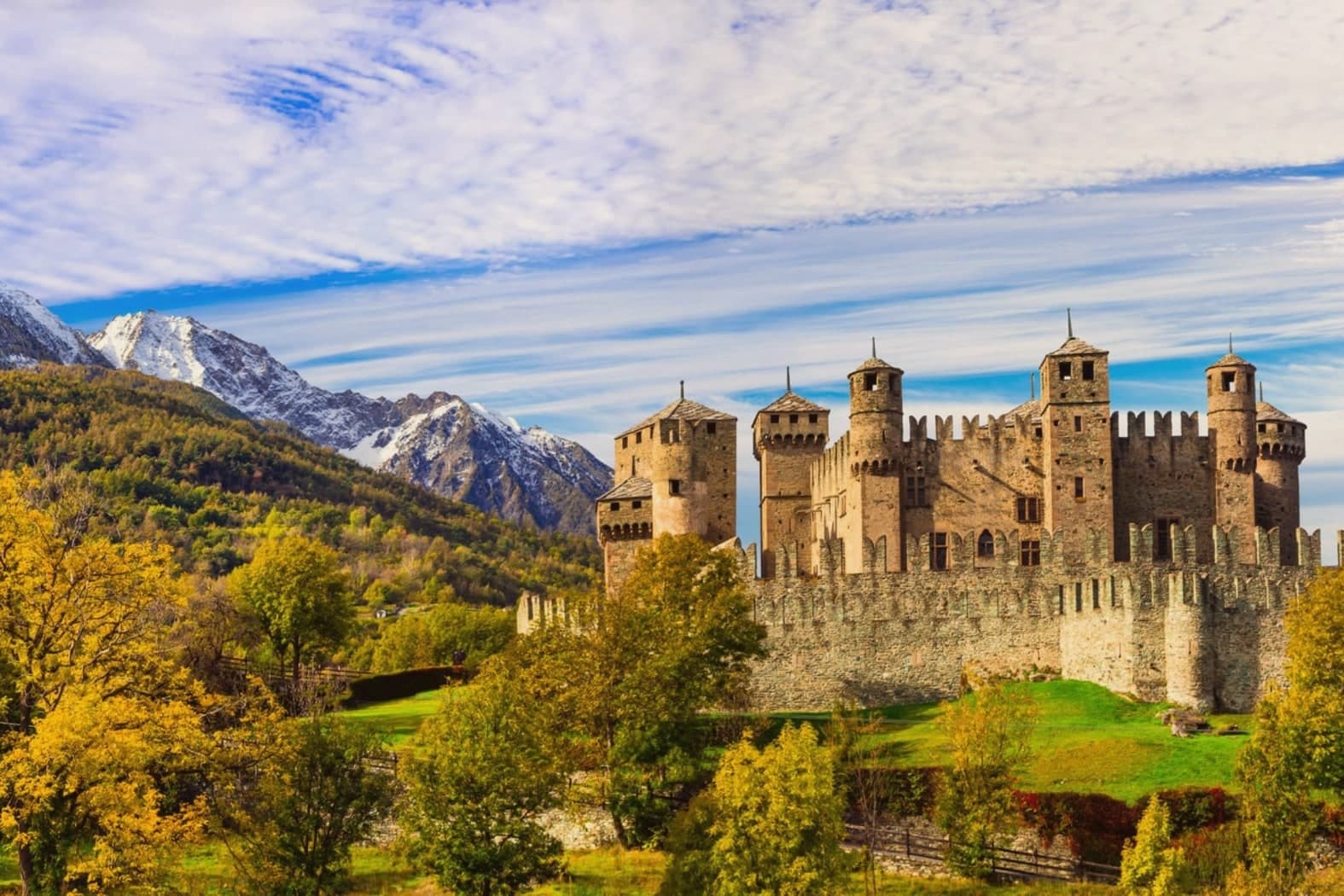
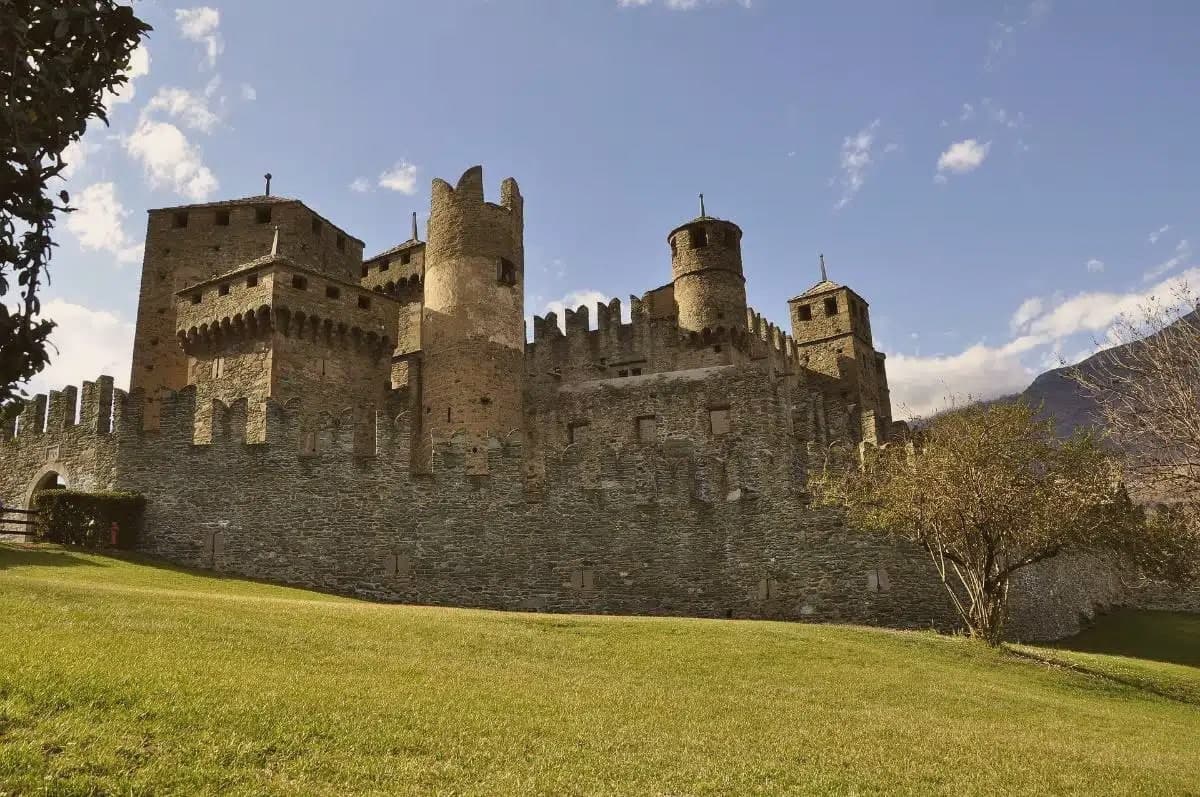
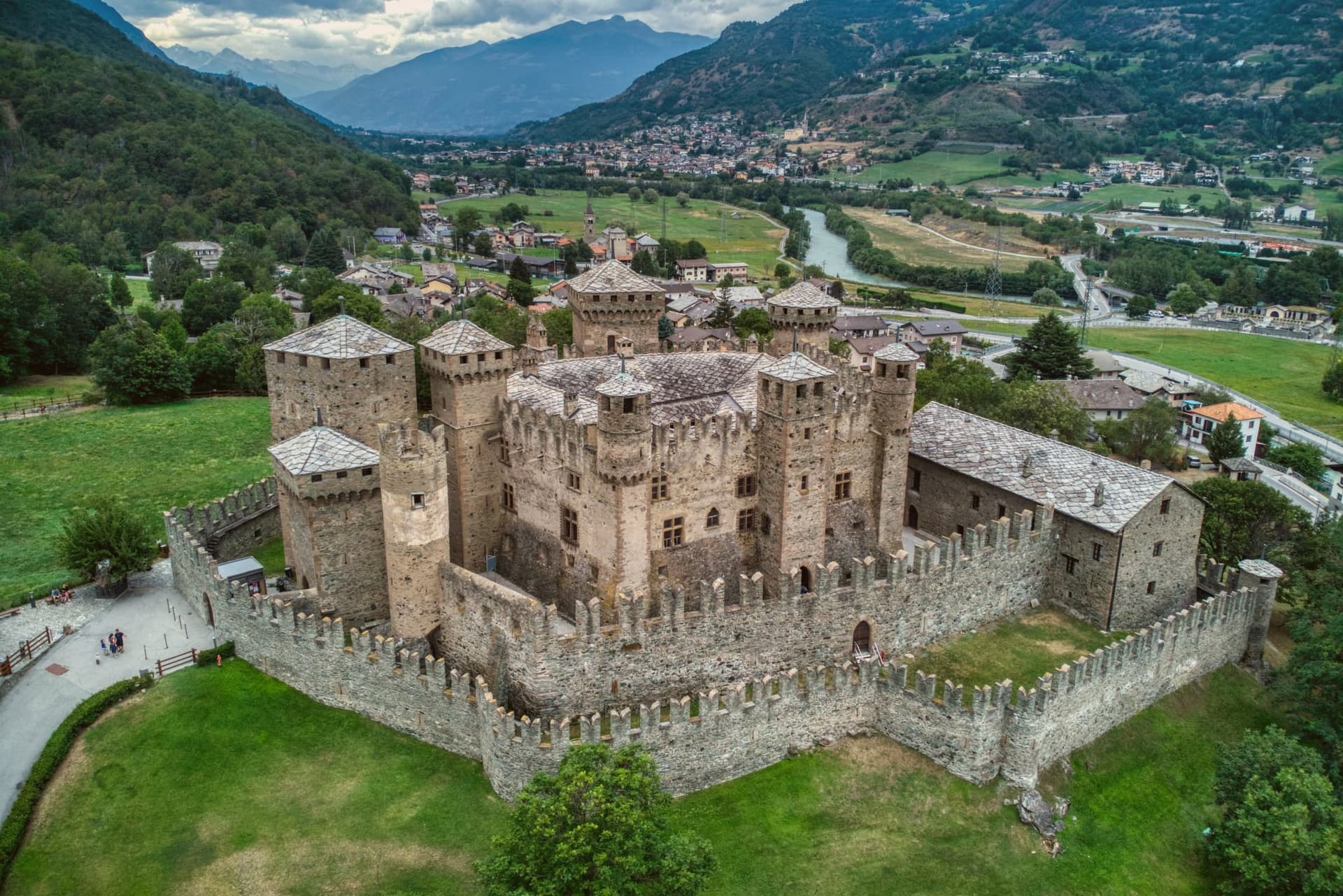
The Castello di Fénis, with its double ring of crenellated walls, eight cylindrical towers, and frescoed inner courtyard, sits at the centre of a small Aostan commune east of Aosta, with an Apennine reserve climbing south to 3,000m.
- Best time
- May–Sep
- By car
- 1 h 47 min from Turin
- Population
- 1,771
Known for
CASTELLO DI FÉNIS
The most-photographed medieval castle in northern Italy. Challant family build, 14th c. Double crenellated walls + 8 cylindrical towers + Jaquerio frescoes in the courtyard.
JAQUERIO FRESCOES
The courtyard fresco cycle (early 15th c) by Giacomo Jaquerio, the leading Valle d'Aosta painter of his generation, same hand as the Aosta cathedral cycles.
MONT AVIC PARK ACCESS
Valle di Clavalité climbs from the village into the Mont Avic Regional Park, 3,000m peaks, larch + stone-pine forests, marmot territory.
VALDOSTAN KITCHEN
Fontina country. Seuppa à la valpellinentse, Mocetta, lard d'Arnad nearby, Petit Rouge red. Sagra del Castello mid-August.
When to visit
Best · May–Sep
- J8°
- F11°
- M12°
- A15°
- M20°
- J25°
- J29°
- A29°
- S23°
- O19°
- N13°
- D9°
- Best
- Hot or crowded
- Quiet
- Mostly closed
Daytime averages, 2020–2024. Weather data by Open-Meteo.com.
The festa: San Maurizio, 22 September
Why come
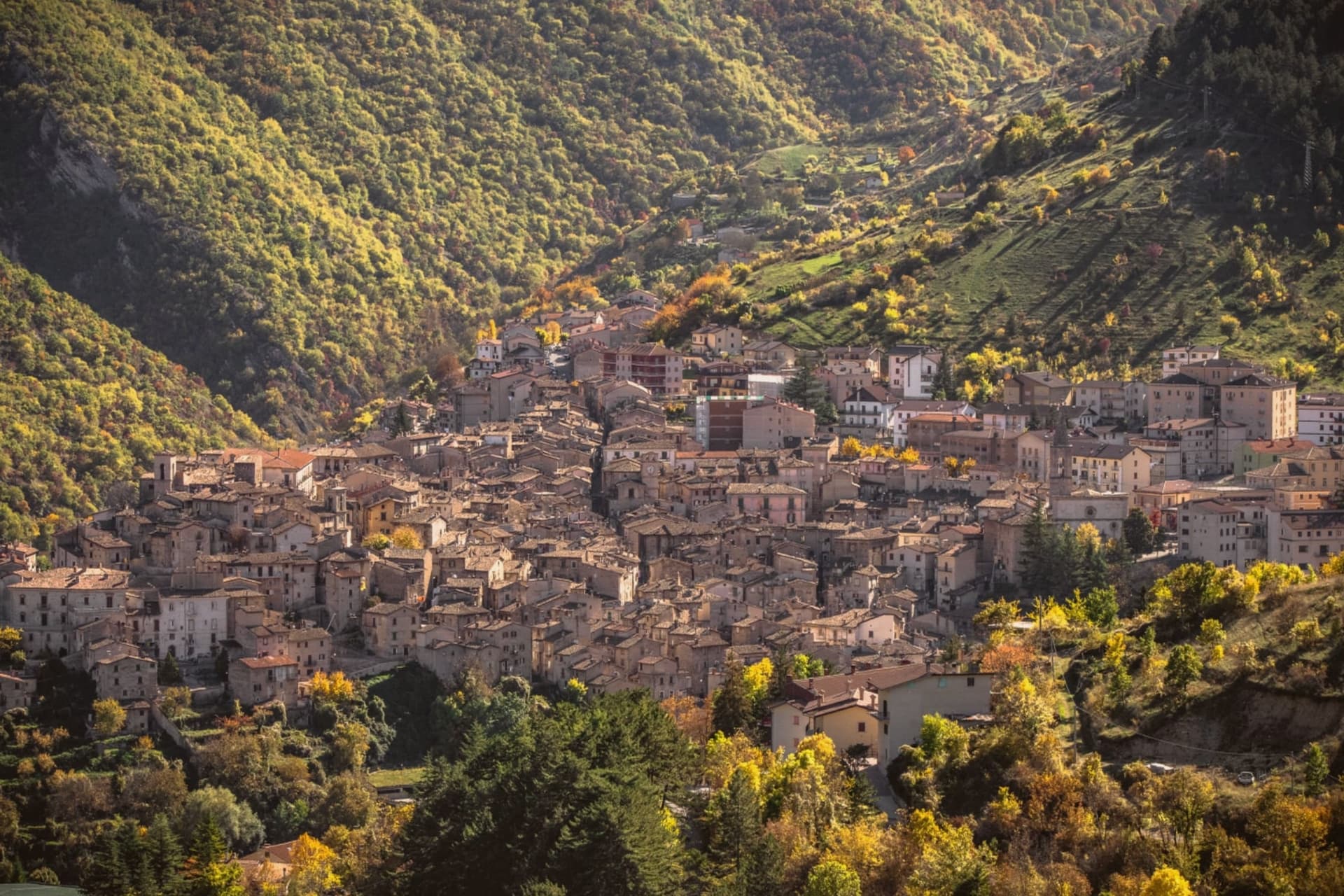
The village is small: 1,770 residents spread across the main settlement and several upland frazioni, with a quietly handsome stone-house centro at 537m. The castle stands at its centre while the Valle di Clavalité opens south behind it, a wild Apennine side-valley rising toward the Mont Avic Regional Park and the Tersiva massif, with larch and stone-pine forest and marmot and chamois territory above the tree line. Down at village level the two halves of Fénis meet: fortress above, farmland and forest climbing away from it, and the parish church with its detached Romanesque bell tower sits quietly between them, a survivor of an 11th-century building that predates the castle itself.
The Challant viscounts of Aosta held the castle until 1716, the Savoy royals owned it from 1716 to 1895, and the Italian state restored it between 1895 and 1939 under the architect Alfredo D'Andrade, before running it as a museum from 1942. That long chain of ownership, aristocratic, royal, then public, explains why the building reads as complete rather than ruined: each owner maintained it rather than let it fall or rebuild it to fashion, and it now draws roughly 100,000 visitors a year. The food culture on the valley floor, fontina produced in the next valleys, seuppa à la valpellinentse, mocetta, lard d'Arnad from the next village, polenta concia, and the local red, is mountain food built around what the surrounding slopes and villages produce. The commune's main festival in mid-August, with its medieval pageant and costumed procession, ties the two halves of the commune together for one week: the fortress becomes the stage and the village supplies the crowd. Aosta, the regional capital with its Roman walls and arch, lies 18 km west along the same valley, and the road from there continues up toward Mont Blanc. Fénis works because the fortress and the wilderness behind it are the same commune seen from two directions, one built to last and one left wild.
The Sunday letter
Fénis is on our list. Its letter is still to come.
We are writing about all 1,000 of these towns, one at a time, in a free letter every Sunday: the photo, the food, the festa. That is our mission. Sign up and you will be there when Fénis comes up. By Peter & Sophia, from Pietrasanta.
How to get there
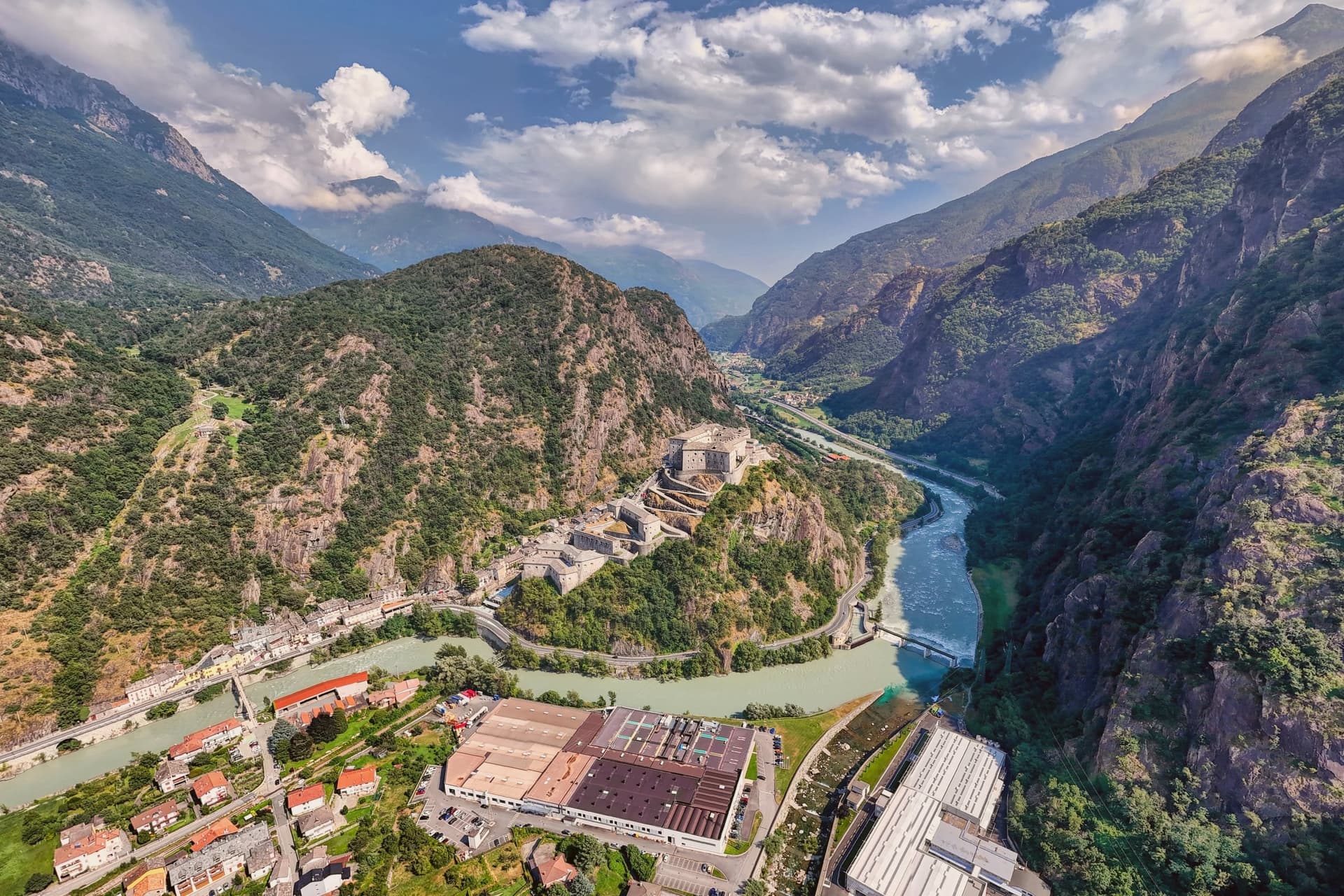
From Turin (TRN), about 1h 44m by car.
Milan (BGY) is about 3 hours away.
By car from the centre of Genoa 3 hours.
What to see
Castello di Fénis
Square donjon at the centre, semicircular staircase in the courtyard beneath the fresco cycle. State museum since 1942, restored 1895-1939 under the architect Alfredo D'Andrade, roughly 100,000 visitors a year.
Chiesa parrocchiale di San Maurizio + bell tower
15th-c parish church in the village centro, with a detached Romanesque campanile that survives from the earlier 11th-c church. Quiet, well-preserved, often empty.
Valle di Clavalité + Mont Avic Regional Park
Wild Apennine side-valley climbing south behind the village into the Mont Avic park: marked trails up to 3,000m peaks, larch + stone-pine, marmot and chamois territory.
Fontina + Valdostan kitchen
Fontina DOP cheese produced in the next valleys, seuppa à la valpellinentse (bread-cheese-cabbage soup), Mocetta cured beef, Petit Rouge red. Sagra del Castello mid-August.
Aosta + Roman Valle d'Aosta
Aosta, the regional capital with its Augustan Roman walls and the Arch of Augustus, sits west along the valley; the road up to Courmayeur continues from there toward Mont Blanc.
The slow-trip planner
Building a trip? Find where Fénis fits in a slow Italy circuit.
Answer five questions. We will shape a geographically coherent slow trip from the 1,000 Italian towns most travelers skip. Yours to save and share.
We recommend
Where to eat
Not our picks, but places the guides put their name to: a Michelin star, a Gambero Rosso fork, a Slow Food snail, a Michelin Key for the hotels. Worth a table, a counter, or a night when you pass through.
Le BourgTrattoria
One Gambero Rosso prawn, at Le Bourg.
Living here
- Population 1,771
- Commuter belti
- Pharmacy: none mapped
- Nearest airport Turin, 1 h 44 min drive
- Regional capital Aosta, 45 min drive
Common questions
- What is Fénis known for?
- Fénis is the Castello di Fénis, with its double ring of crenellated walls, eight cylindrical towers, and frescoed inner courtyard, sits at the centre of a small Aostan commune east of Aosta, with an Apennine reserve climbing south to 3,000m.
- Where is Fénis?
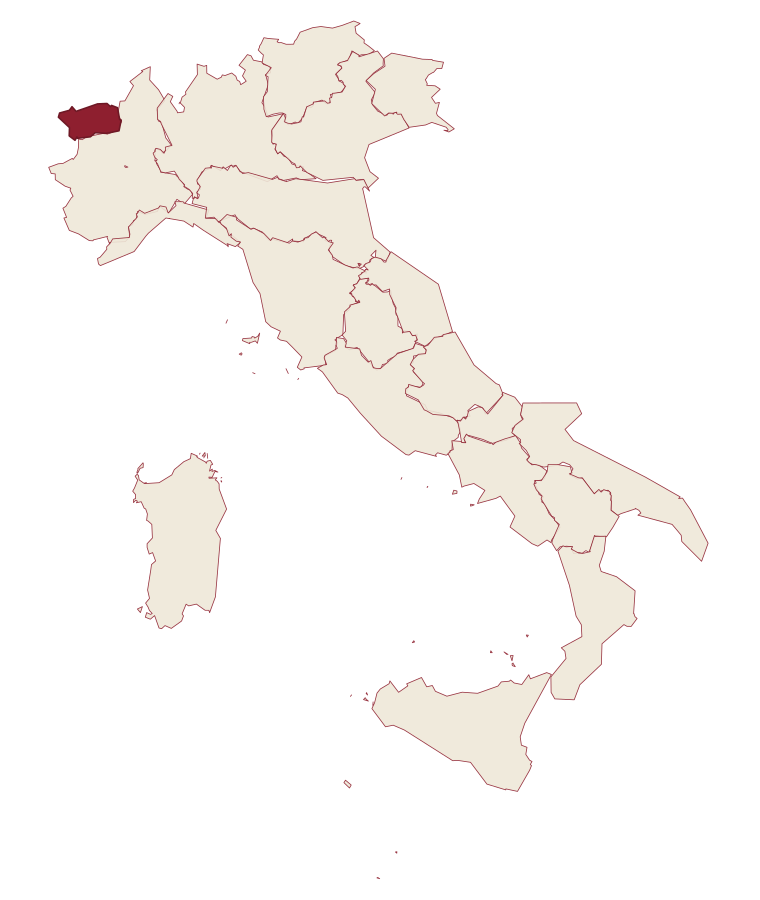
- Fénis is a comune in the province of Aosta Valley, in Aosta Valley, at 537 meters above sea level.
- What is the nearest airport to Fénis?
- Turin (TRN), about 1h 44m by car.
- How long is the drive from Genoa to Fénis?
- About 3 hours by car.
- When is the best time to visit Fénis?
- Best in May–Sep. July is the warmest month, averaging 29 degrees, and June the wettest, with about 17 rain days.
- Is there a sagra or a festival in Fénis?
- The town keeps its patron saint's day: San Maurizio, 22 September.
- Which other towns are like Fénis?
- Châtillon, Saint-Vincent and Donnas.
- How many people live in Fénis?
- 1,771 at the 2023 count.
Tags & datadesignations · numbers · sources
The numbers
- Elevation: 537 m
- Population: 1,771
- Surface area: 68.12 km²
These figures were compiled from public directories: ISTAT, OpenStreetMap and Wikidata, and from the official listings of the guides named on this page. Town details change; verify with official sources before you travel.
Similar
Towns like Fénis
Châtillon
Province: Aosta Valley
both in the Aosta valley · both hill towns
Saint-Vincent
Province: Aosta Valley
both in the Aosta valley · both hill towns
Donnas
Province: Aosta Valley
both under 3,000 people · both hill towns
Monforte d'Alba
Province: Cuneo
both under 3,000 people · both hill towns
La Morra
Province: Cuneo
both under 3,000 people · both hill towns
Govone
Province: Cuneo
both under 3,000 people · both hill towns