
Sardinia · Oristano
Masullas
A Marmilla village where a 17th-century Capuchin convent houses fossils, minerals, and volcanic history.
- Best time
- Apr–Jun, Sep–Nov
- By car
- 1 h 7 min from Cagliari
- Population
- 1,005
Known for
MONTE ARCI
The volcanic massif behind town, source of obsidian traded across the western Mediterranean in the Neolithic.
GEOMUSEO
Capuchin convent converted into the regional museum of the Parco Geominerario della Sardegna, a UNESCO geopark.
TWO CHURCHES
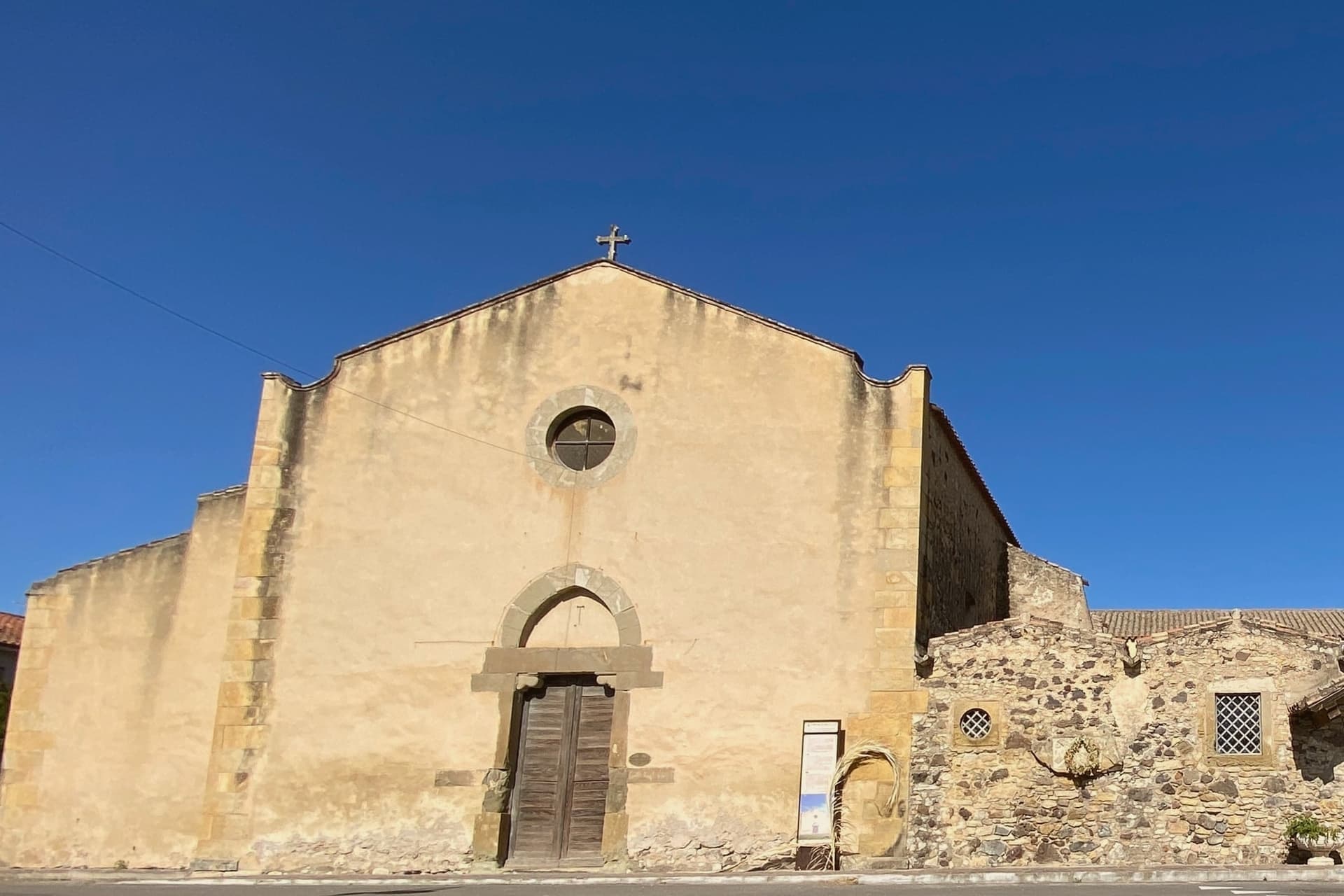
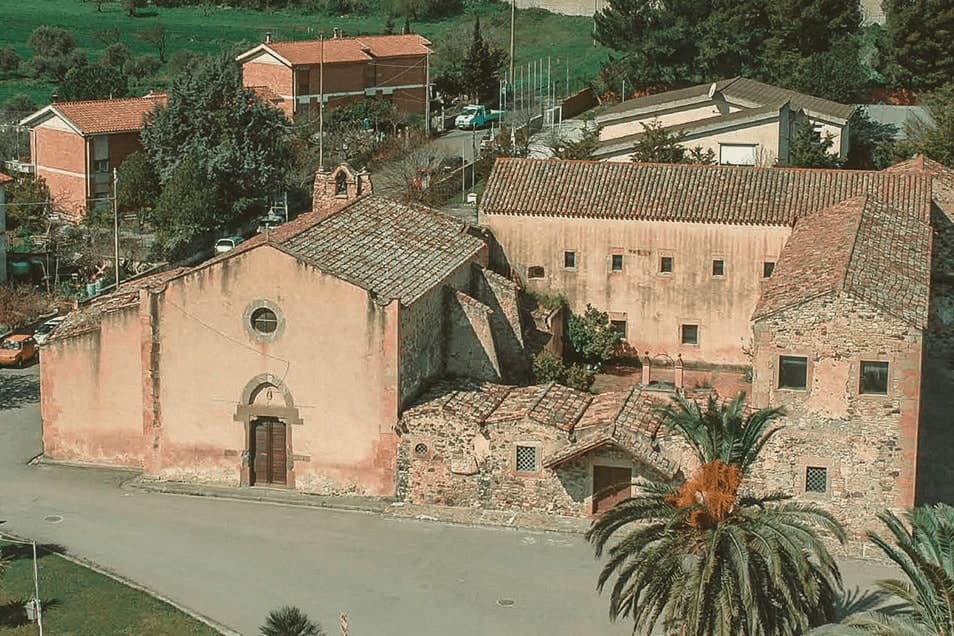
San Leonardo and Santa Lucia, the late-Romanesque churches around which two medieval villages fused into one.
When to visit
Best · Apr–Jun, Sep–Nov
- J14°
- F15°
- M17°
- A20°
- M24°
- J30°
- J34°
- A33°
- S29°
- O24°
- N19°
- D15°
- Best
- Hot or crowded
- Quiet
- Mostly closed
Daytime averages, 2020–2024. Weather data by Open-Meteo.com.
The festa: Madonna delle Grazie, 2 July
Why come
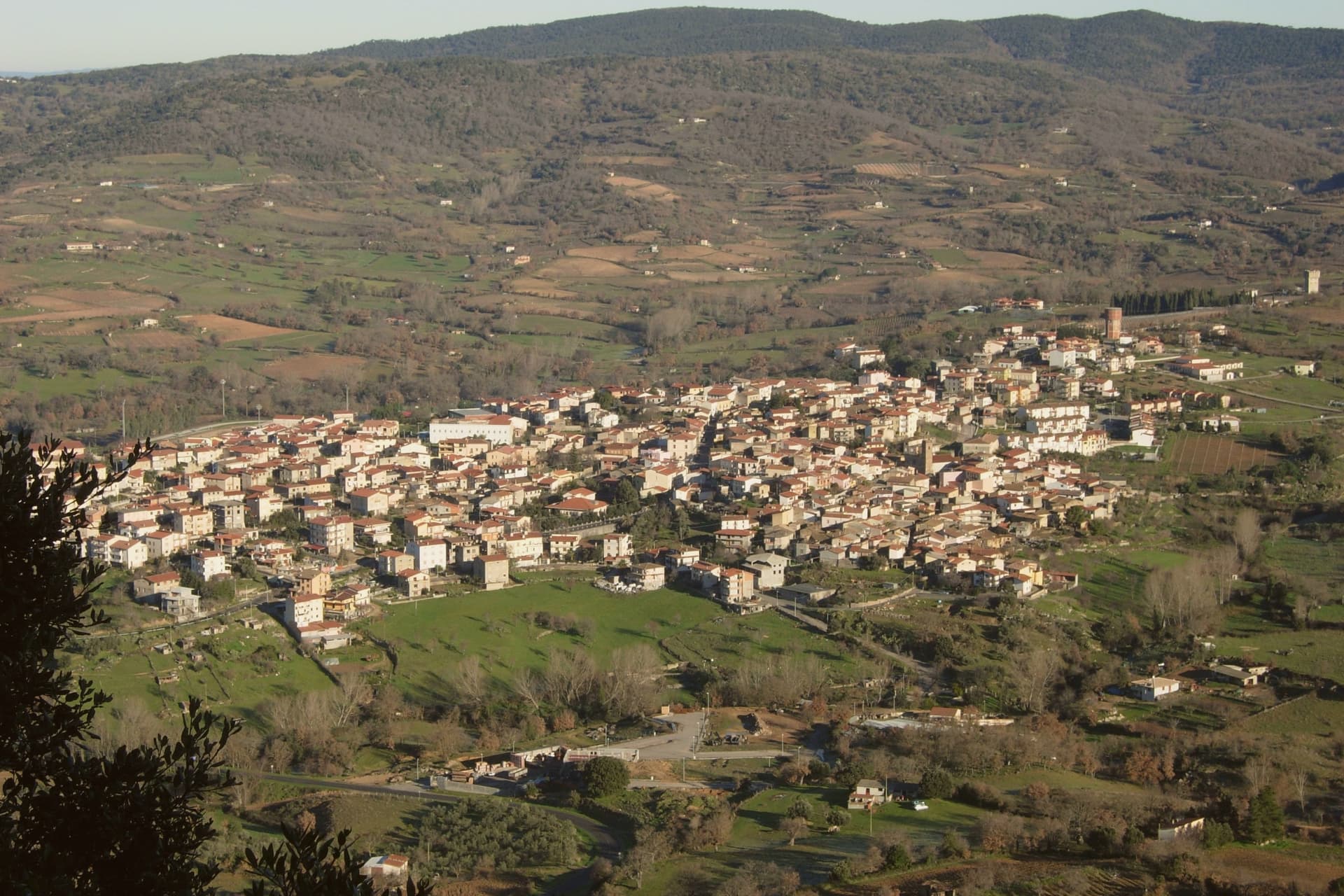
Masullas lies in the Marmilla, 60 kilometers northwest of Cagliari, on the southern slopes of Monte Arci. The town itself is a fusion: two medieval villages, each built around its own late-Romanesque church, grew together into the single settlement that stands today, the older of the pair raised in the 13th century. The Roman necropolises of Mitza Salida and Roia de sa Lua show that people were on this ground well before that medieval merger, evidence of settlement reaching back to antiquity.
What sets Masullas apart from neighboring Marmilla villages is the museum installed in the former convent of the Capuchin friars, dedicated to the geologist Stefano Incani. It holds thousands of minerals and fossils documenting a region shaped first by a tropical sea twenty million years ago and then by the volcano that followed. The territory belongs to the Parco Geominerario della Sardegna, the first geological park recognized by UNESCO, and Masullas is one of its main interpretive centers. What this adds up to is a small village whose layered history, volcanic, Roman, medieval, converges in a single former convent building at its center, a place that reads as regional archive as much as parish town.
The Sunday letter
Masullas is on our list. Its letter is still to come.
We are writing about all 1,000 of these towns, one at a time, in a free letter every Sunday: the photo, the food, the festa. That is our mission. Sign up and you will be there when Masullas comes up. By Peter & Sophia, from Pietrasanta.
Read on
Masullas in our articles
How to get there
From Cagliari (CAG), about 1h 21m by car.
Coming by train into Cagliari? Masullas is about 1 hour away by road.
What to see
GeoMuseo MonteArci Stefano Incani
Minerals and fossils fill the former convent's halls, including a room devoted to the volcano's history: a record of a tropical sea some twenty million years ago followed by the eruptions of Monte Arci.
Chiesa di San Leonardo
The older of the two churches, standing at the center of what was once its own village before the settlements grew together.
Chiesa di Santa Lucia
The second church, anchor of the parallel village that stood alongside the other until the two merged.
Museo I Cavalieri delle Colline
Opened in 2013, covering the aristocracy of Masullas and Parte Montis with weapons, documents, and local archives.
Necropoli di Mitza Salida
Roman-era burial ground on the edge of town, one of two such sites confirming settlement here in antiquity.
The slow-trip planner
Building a trip? Find where Masullas fits in a slow Italy circuit.
Answer five questions. We will shape a geographically coherent slow trip from the 1,000 Italian towns most travelers skip. Yours to save and share.
Living here
- Population 1,005
- In-betweeni
- Pharmacy in town
- High school within a 30-minute drive
- Nearest airport Cagliari, 1 h 21 min drive
- Regional capital Cagliari, 1 h 9 min drive
Common questions
- What is Masullas known for?
- Masullas is a Marmilla village at 129 meters where a 17th-century Capuchin convent houses fossils, minerals, and volcanic history.
- Where is Masullas?
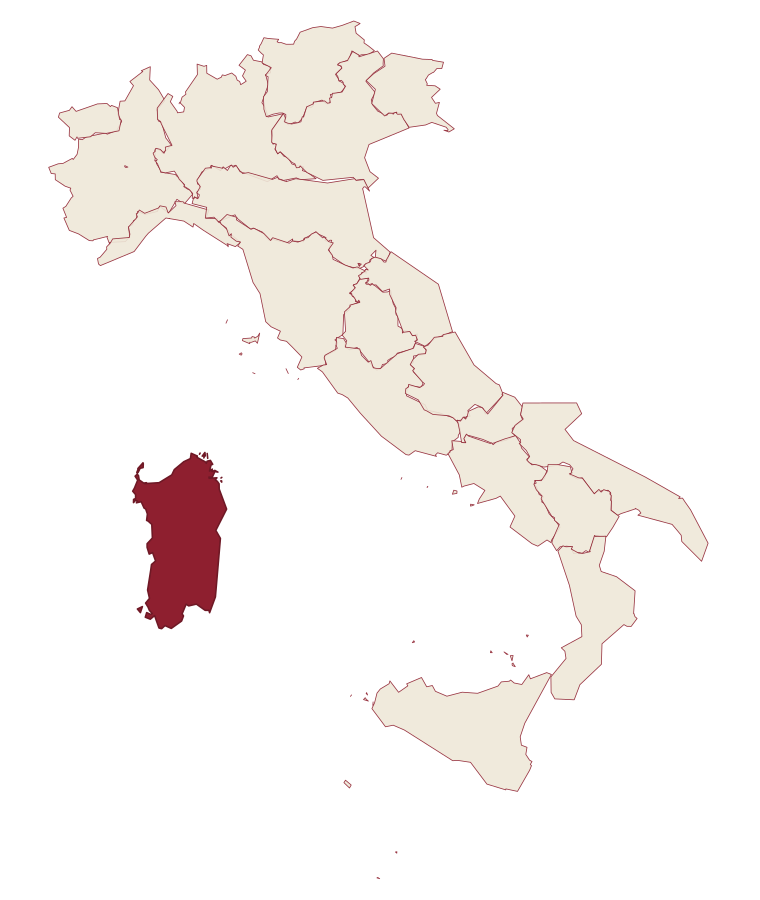
- Masullas is a comune in the province of Oristano, in Sardinia.
- What is the nearest airport to Masullas?
- Cagliari (CAG), about 1h 21m by car.
- When is the best time to visit Masullas?
- Best in Apr–Jun, Sep–Nov. July is the warmest month, averaging 34 degrees, and November the wettest, with about 12 rain days.
- Is there a sagra or a festival in Masullas?
- The town keeps its patron saint's day: Madonna delle Grazie, 2 July.
- Which other towns are like Masullas?
- Barumini, Santu Lussurgiu and Stintino.
- How many people live in Masullas?
- 1,005 at the 2023 count.
Tags & datadesignations · numbers · sources
Recognised as
The numbers
- Elevation: 129 m
- Population: 1,005
- Surface area: 18.68 km²
These figures were compiled from public directories: ISTAT, OpenStreetMap and Wikidata, and from the official listings of the guides named on this page. Town details change; verify with official sources before you travel.
Similar
Towns like Masullas
Barumini
Province: Sud Sardegna
both inland in Sardinia · both under 3,000 people
Santu Lussurgiu
Province: Oristano
both inland in Sardinia · both under 3,000 people
Stintino
Province: Sassari
both under 3,000 people · both near sea level
Seneghe
Province: Oristano
both inland in Sardinia · both under 3,000 people
Parghelia
Province: Vibo Valentia
both under 3,000 people · both near sea level
Giurdignano
Province: Lecce
both under 3,000 people · both near sea level
💎 Borghi Autentici
More Borghi Autentici towns in Sardinia
Aggius
Province: Sassari
A Gallura granite village at 514 meters under the Monti di Aggius, with the largest ethnographic museum in Sardegna and three centuries of bandit history.
Aritzo
Province: Nuoro
A Mandrolisai mountain village at 800 meters in chestnut and hazelnut forest, where snow once travelled out in straw and came back as lemon sorbet.
Cuglieri
Province: Oristano
A Montiferru town at 428 meters, with the first minor basilica in Sardegna above it and the ruins of Punic Cornus below.
Galtellì
Province: Nuoro
Grazia Deledda's 'Canne al vento' set: a 2,354-resident Baronia borgo in Sardinia's northeast, with the entire centro recognised as the Parco Letterario Grazia Deledda for being the literal setting of her 1913 Nobel-trajectory novel.
Montresta
Province: Oristano
A Planargia hill village of 438 people founded in 1746 by Maniot Greek families who left Corsica for new land in Sardinia.