
Sardinia · Sassari
Stintino
The northernmost tip of north-west Sardinia and the gateway to Asinara National Park, fronted by a shallow-shelf beach under an Aragonese watchtower.
- Best time
- Apr–Oct
- By car
- 3 h 28 min from Cagliari
- Population
- 1,549
Known for
LA PELOSA
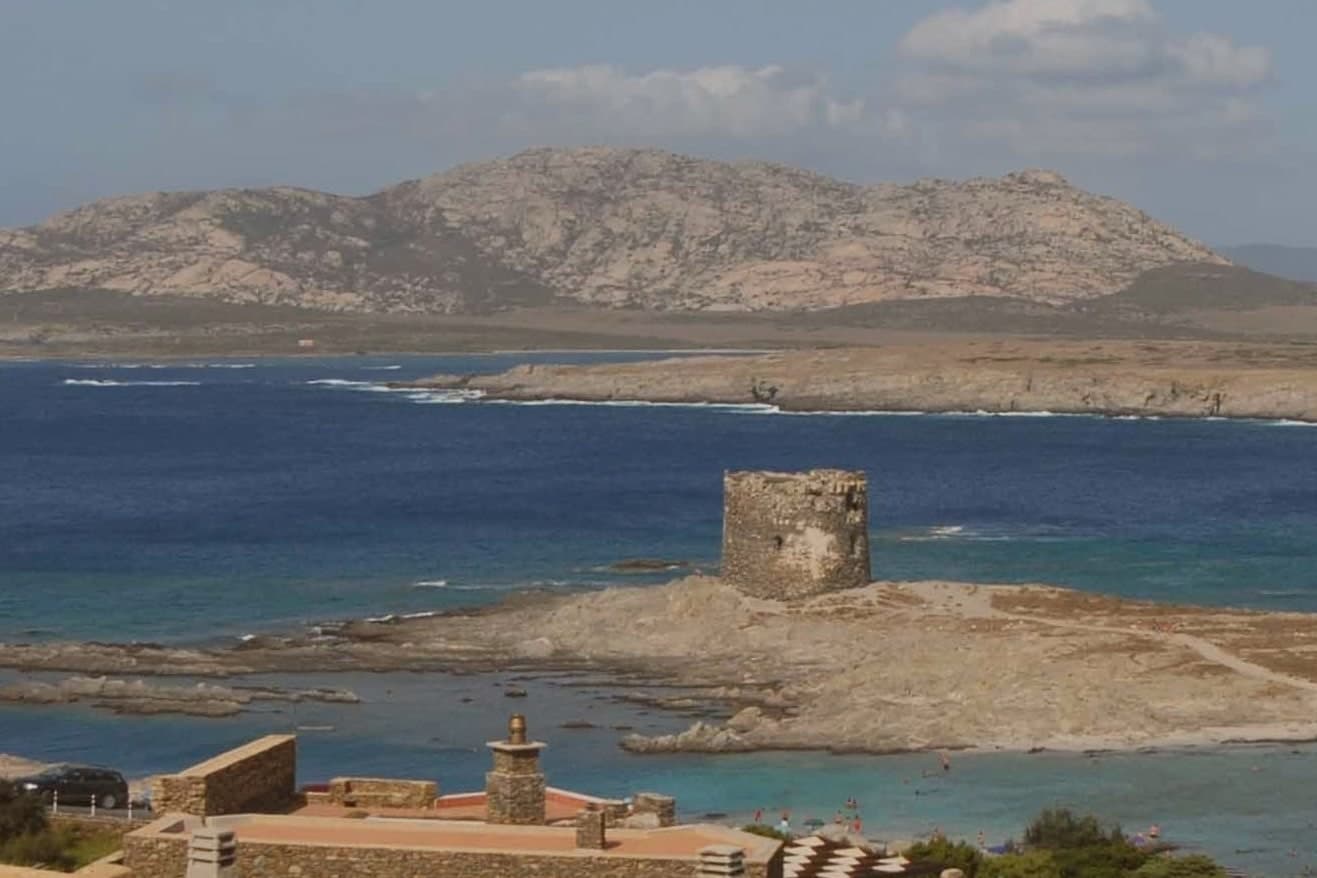
Caribbean-turquoise shallow-shelf beach under a 1578 watchtower, Sardegna's most-photographed coastline. Ticketed access since 2020.
ASINARA GATEWAY
The only embarkation point for Asinara National Park, a former prison colony turned strict nature reserve.
ALBINO DONKEY
The endemic Asino bianco dell'Asinara, found only on this island and a symbol of the national park.
When to visit
Best · Apr–Oct
- J14°
- F15°
- M16°
- A18°
- M21°
- J26°
- J29°
- A29°
- S26°
- O22°
- N19°
- D15°
- Best
- Hot or crowded
- Quiet
- Mostly closed
Daytime averages, 2020–2024. The sea is warmest in August at 26° and coldest in February at 15°. Weather data by Open-Meteo.com.
Why come
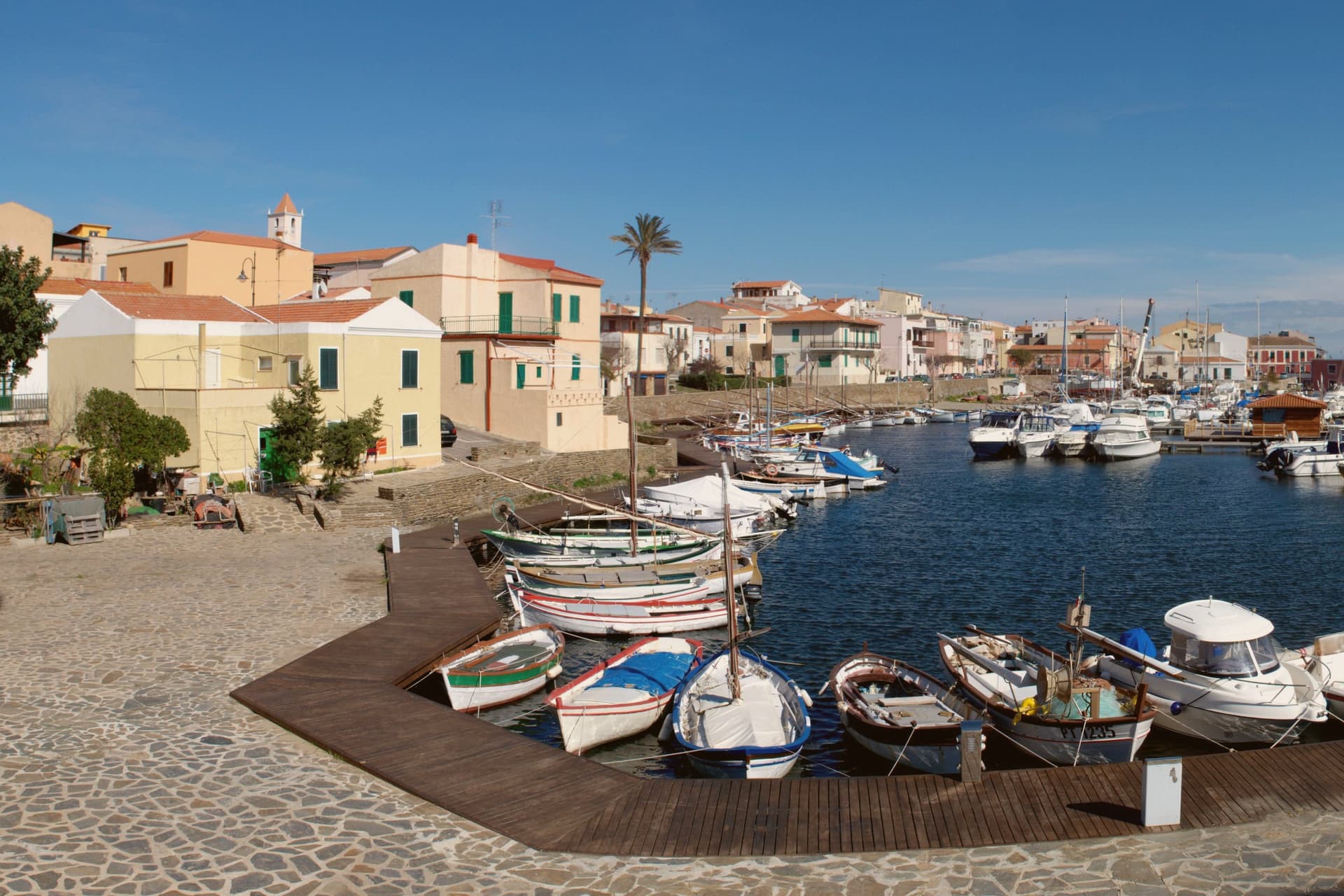
Stintino occupies a thin headland at the north-western edge of Sardinia, facing the narrow Fornelli strait and the island beyond it. The village itself did not exist before 1885, when the Italian state expropriated the population living on that island to build a prison and agricultural penal colony there. The displaced families resettled on this side of the strait, and the fishing community they founded kept the name of their old home in altered form: Stintino, from the Sardinian for 'small intestine', a reference to the long narrow port-canal that still splits the village in two.
The island prison closed in 1997 and the land became a national park the year after, now counted among the more strictly protected coastlines in the Mediterranean. Stintino remains its only point of embarkation. The village on this side stays small and largely seasonal: a working harbour, one main street, little more.
What draws people is two kilometres north, where the coast opens into the shallow-shelf beach and its watchtower. The arrangement is telling: a settlement built entirely by displacement, whose only industry now is ferrying visitors to the very island its founders were forced to leave.
The Sunday letter
Stintino is on our list. Its letter is still to come.
We are writing about all 1,000 of these towns, one at a time, in a free letter every Sunday: the photo, the food, the festa. That is our mission. Sign up and you will be there when Stintino comes up. By Peter & Sophia, from Pietrasanta.
How to get there
From Cagliari (CAG), about 3h 46m by car.
Coming by train into Sassari? Stintino is about 41 minutes away by road.
What to see
Spiaggia della Pelosa
The dune-backed sweep of shallow water fronting the watchtower islet. Capped at 1,500 visitors a day, booking required online, the shelf stays shallow far out from shore.
Parco Nazionale dell'Asinara
The island lies across the Fornelli strait, reachable only from this harbour. Former prison colony from 1885 to 1997, now left to run wild as a reserve.
Torre della Pelosa
The watchtower on the islet at the end of La Pelosa beach, built to watch for Barbary corsairs and now standing as the beach's silhouette.
Porto di Stintino
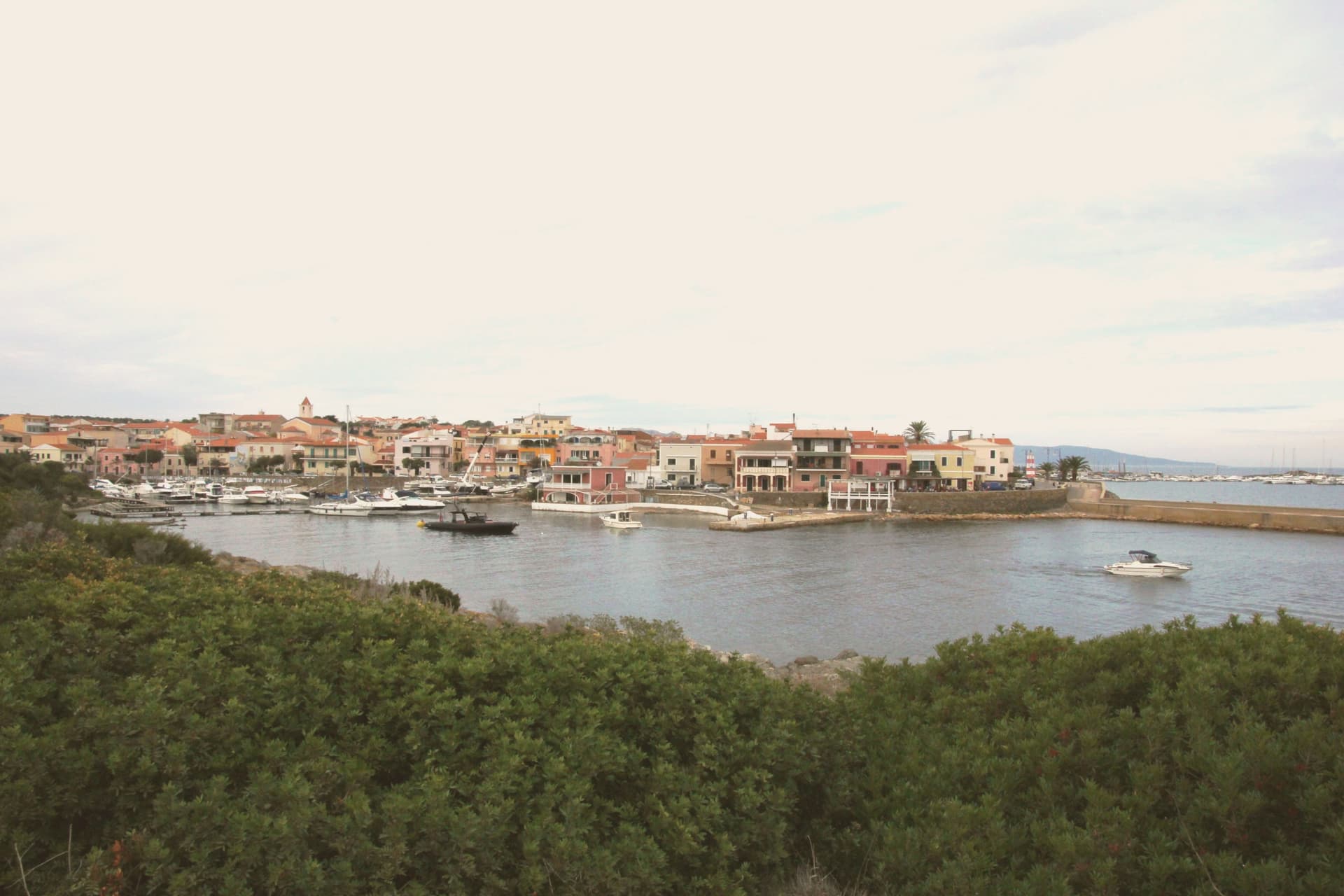
The long narrow port-canal that gave the village its name, Sardinian for 'small intestine'. Working fishing fleet plus ferries and excursions to the island.
Asino bianco dell'Asinara
Wild only within the park's boundaries, spotted on guided tours out of the harbour.
The slow-trip planner
Building a trip? Find where Stintino fits in a slow Italy circuit.
Answer five questions. We will shape a geographically coherent slow trip from the 1,000 Italian towns most travelers skip. Yours to save and share.
Living here
- Population 1,549
- In-betweeni
- Pharmacy in town
- High school within a 30-minute drive
- Nearest airport Cagliari, 3 h 46 min drive
- Regional capital Cagliari, 3 h 33 min drive
Common questions
- What is Stintino known for?
- Stintino is the northernmost tip of north-west Sardinia and the gateway to Asinara National Park, fronted by a shallow-shelf beach under an Aragonese watchtower.
- Where is Stintino?
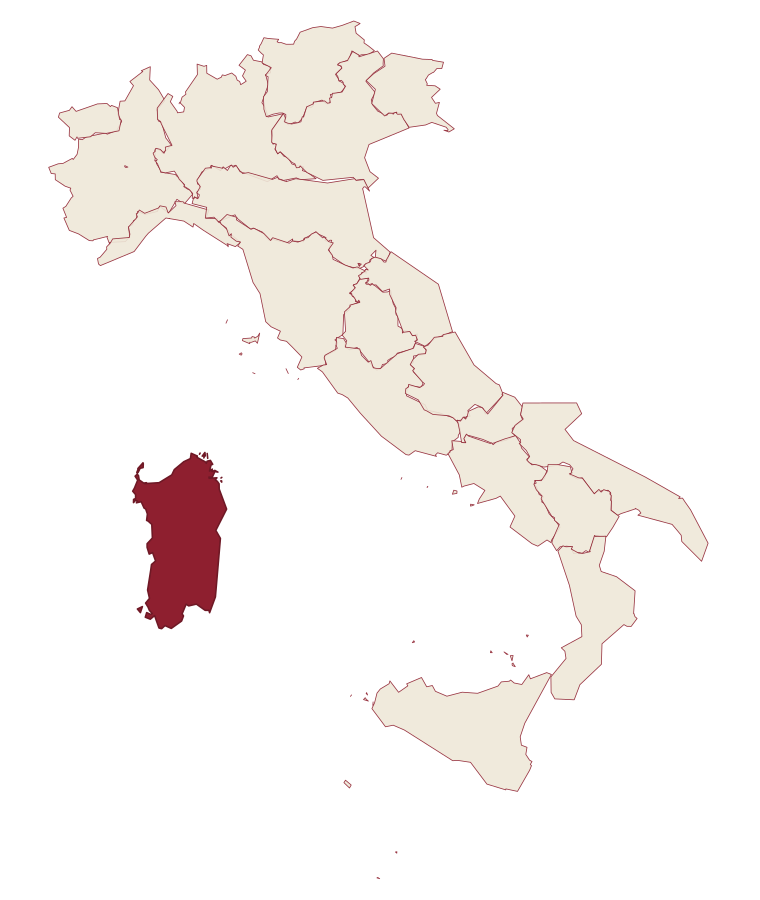
- Stintino is a comune in the province of Sassari, in Sardinia, at 3 meters above sea level.
- What is the nearest airport to Stintino?
- Cagliari (CAG), about 3h 46m by car.
- When is the best time to visit Stintino?
- Best in Apr–Oct. August is the warmest month, averaging 29 degrees, and December the wettest, with about 13 rain days.
- Which other towns are like Stintino?
- Parghelia, Dolceacqua and Calasetta.
- How many people live in Stintino?
- 1,549 at the 2023 count.
Tags & datadesignations · numbers · sources
The numbers
- Elevation: 3 m
- Population: 1,549
- Surface area: 59.04 km²
These figures were compiled from public directories: ISTAT, OpenStreetMap and Wikidata, and from the official listings of the guides named on this page. Town details change; verify with official sources before you travel.
Similar
Towns like Stintino
Parghelia
Province: Vibo Valentia
both under 3,000 people · both near sea level
Dolceacqua
Province: Imperia
both under 3,000 people · both near sea level
Calasetta
Province: Sud Sardegna
both under 3,000 people · both near sea level
Masullas
Province: Oristano
both under 3,000 people · both near sea level
Pomponesco
Province: Mantova
both under 3,000 people · both near sea level
Giurdignano
Province: Lecce
both under 3,000 people · both near sea level