
Emilia-Romagna · Modena
Fanano
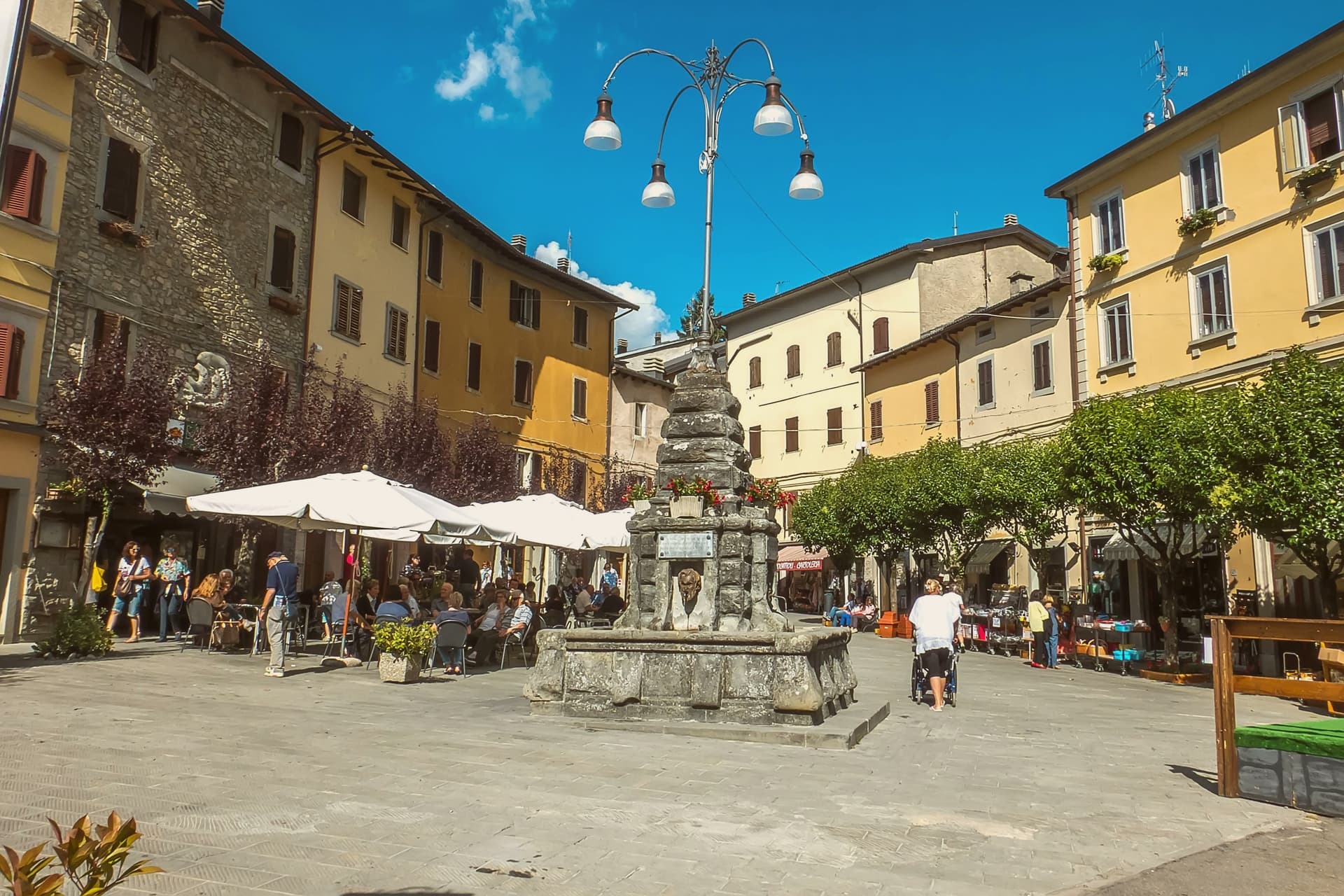
A 640-meter stone-working town set among Monte Cimone, Libro Aperto and the upper Frignano peaks.
- Best time
- May–Oct
- By car
- 1 h 46 min from Bologna
- Population
- 2,943
Known for
STONE WORKING
Long-running tradition of sandstone carving, with workshops still active and an open-air museum of more than 200 contemporary sculptures.
MONTE CIMONE
The 2,165-meter peak of the northern Apennines rises inside the municipal territory, shared with three neighbouring Modenese communes.
BAROQUE INTERIORS
The Chiesa di San Giuseppe, started in 1619, holds one of the most elaborate baroque interiors in the Modenese mountains.
PROSCIUTTO DI MODENA
The commune lies inside the Prosciutto di Modena DOP production zone.
When to visit
Best · May–Oct
- J8°
- F11°
- M11°
- A14°
- M19°
- J24°
- J28°
- A27°
- S22°
- O18°
- N12°
- D8°
- Best
- Hot or crowded
- Quiet
- Mostly closed
Daytime averages, 2020–2024. Weather data by Open-Meteo.com.
The festa: papa Silvestro I, 31 December
Why come
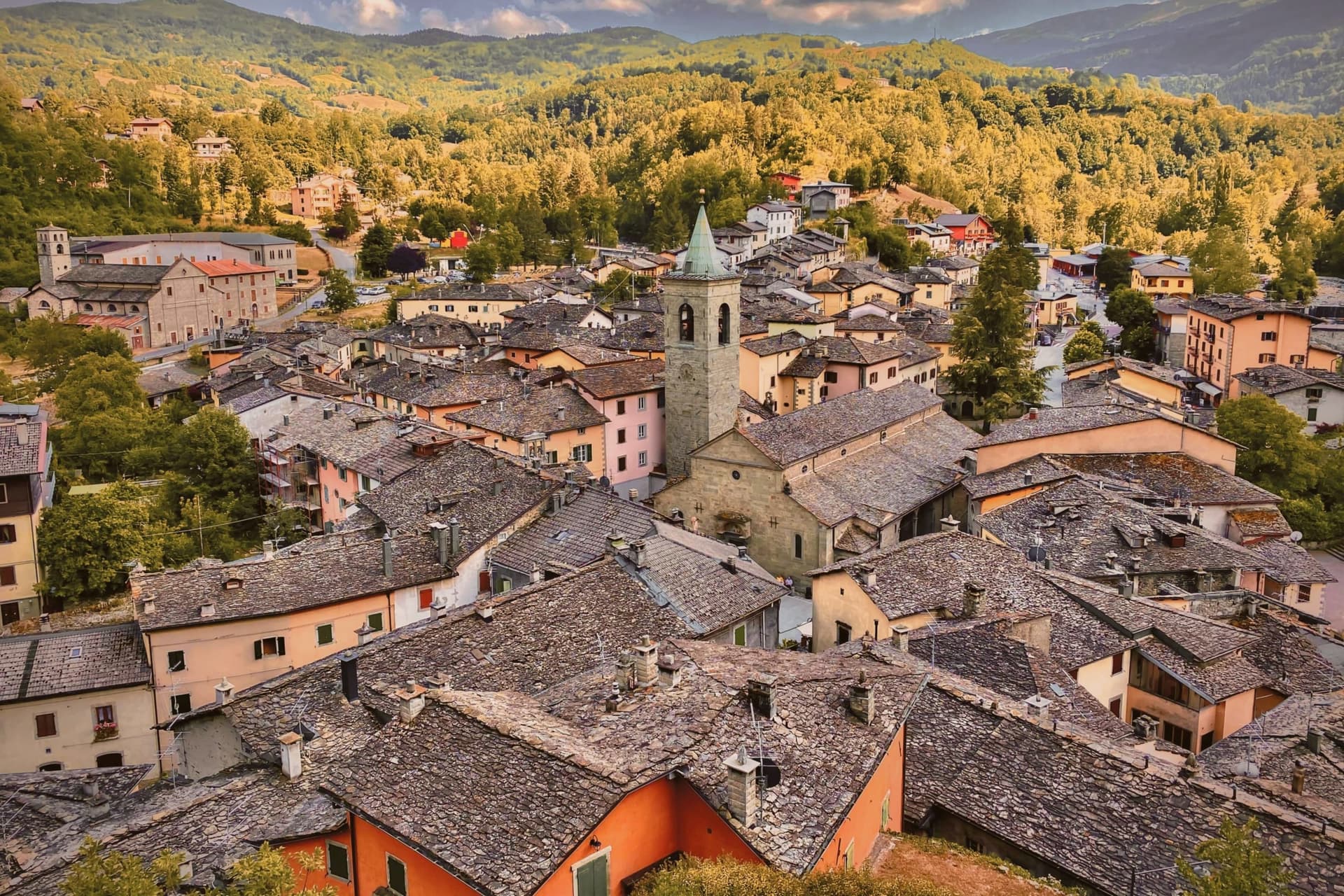
The town sits in the upper Frignano district, fifty-five kilometers southwest of Bologna and inside the Parco del Frignano. It was founded in the eighth century by Anselmo, brother-in-law of the Lombard king Aistulf, who built the Monastero del Santissimo Salvatore and a Benedictine hospice on the trade route linking Modena and Tuscany. The Este family ruled from the eleventh century and expanded the cross-Apennine commerce that had shaped the settlement from its founding.
That commerce is bound up with the stone: Fanano is known as the città della pietra, and its sandstone workshops, still active today, grew out of a place that existed to move goods and people across the mountains rather than to sit apart from them. The centro storico, the churches, and the clock tower cluster together at 640 meters, while the territory climbs to Monte Cimone and the ridges shared with the neighbouring communes of the Modenese Apennines. A monastic foundation on a trade route became, over centuries, a stone-carving town ringed by the highest peaks of the northern Apennines.
The Sunday letter
Fanano is on our list. Its letter is still to come.
We are writing about all 1,000 of these towns, one at a time, in a free letter every Sunday: the photo, the food, the festa. That is our mission. Sign up and you will be there when Fanano comes up. By Peter & Sophia, from Pietrasanta.
Read on
Fanano in our articles
 The best hidden towns inside a nature park in Emilia-Romagna10 towns, Fanano among them.
 The best towns that cure their own meat within two hours of Bologna10 towns, Fanano among them.
 Every ski town in our catalogue, all of them97 towns, Fanano among them.
 The best small mountain towns in Italy above 500 metres, all of them213 towns, Fanano among them.
How to get there
From Bologna (BLQ), about 1h 43m by car.
Florence / Pisa (PSA) is about 2h 39m away.
By car from the centre of Florence 2h 10m or Parma 2h 14m.
What to see
Chiesa di San Giuseppe
The interior, worked on from the early seventeenth century, carries the ornament in wood and stucco through the nave and side altars.
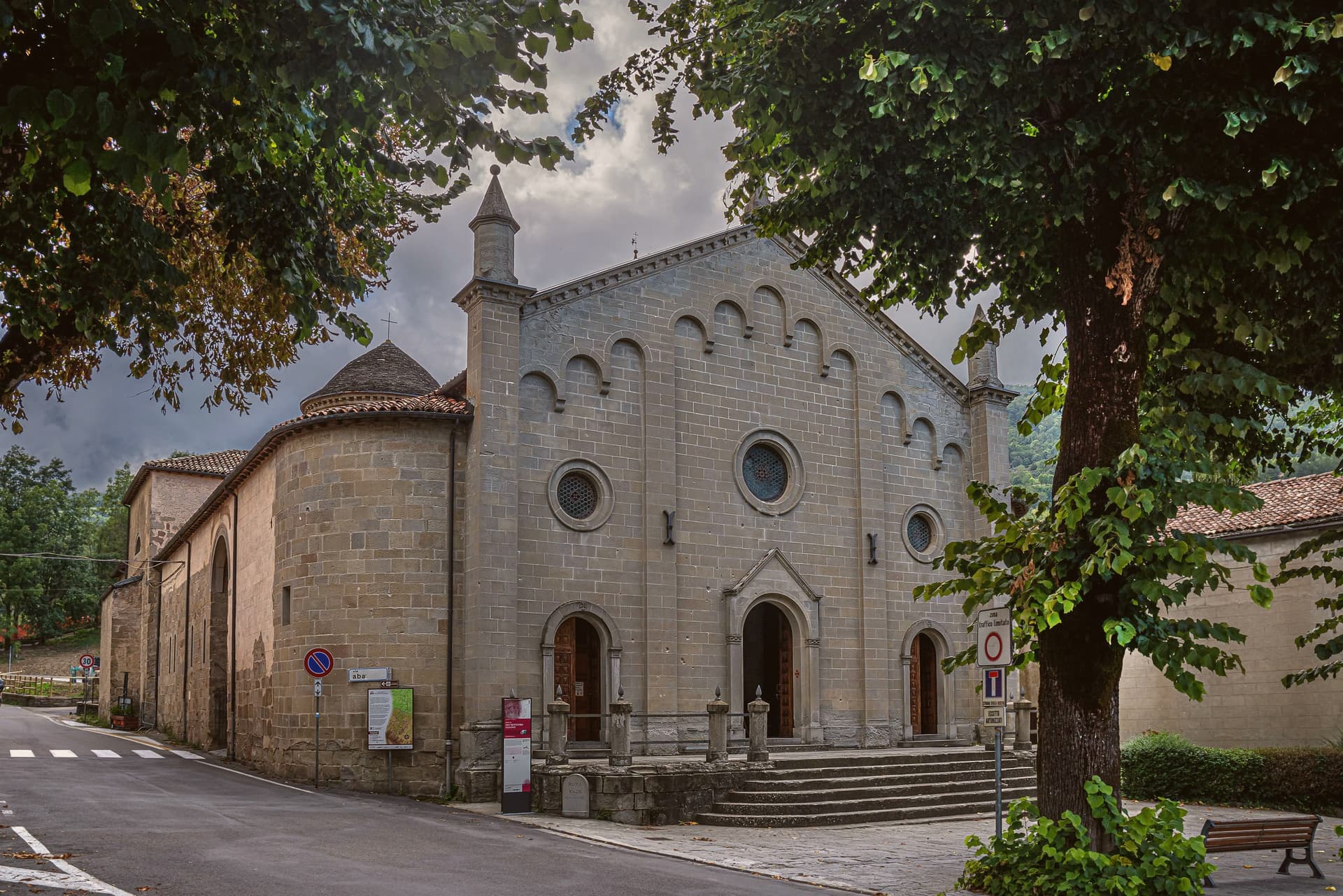
Chiesa di San Silvestro Papa
Romanesque parish church with a stone façade and fourteenth-century frescoes in the interior.
Museo della Pietra Scolpita
The sculptures sit directly in the streets and squares of the centro storico rather than behind walls, the result of decades of the stone symposium adding to the collection piece by piece.
Monte Cimone
The summit of the Modenese Apennines, shared with Fiumalbo, Sestola and Riolunato, with Lake Ninfa sitting at 1,500 meters on its eastern slope.
Torre dell'Orologio
Medieval clock tower next to Palazzo Lardi at the heart of the centro storico.
The slow-trip planner
Building a trip? Find where Fanano fits in a slow Italy circuit.
Answer five questions. We will shape a geographically coherent slow trip from the 1,000 Italian towns most travelers skip. Yours to save and share.
Living here
- Population 2,943
- Very remotei
- Pharmacy in town
- Nearest high school over ~30 minutes away
- Nearest airport Bologna, 1 h 43 min drive
- Regional capital Bologna, 1 h 46 min drive
Common questions
- What is Fanano known for?
- Fanano is a 640-meter stone-working town set among Monte Cimone, Libro Aperto and the upper Frignano peaks.
- Where is Fanano?
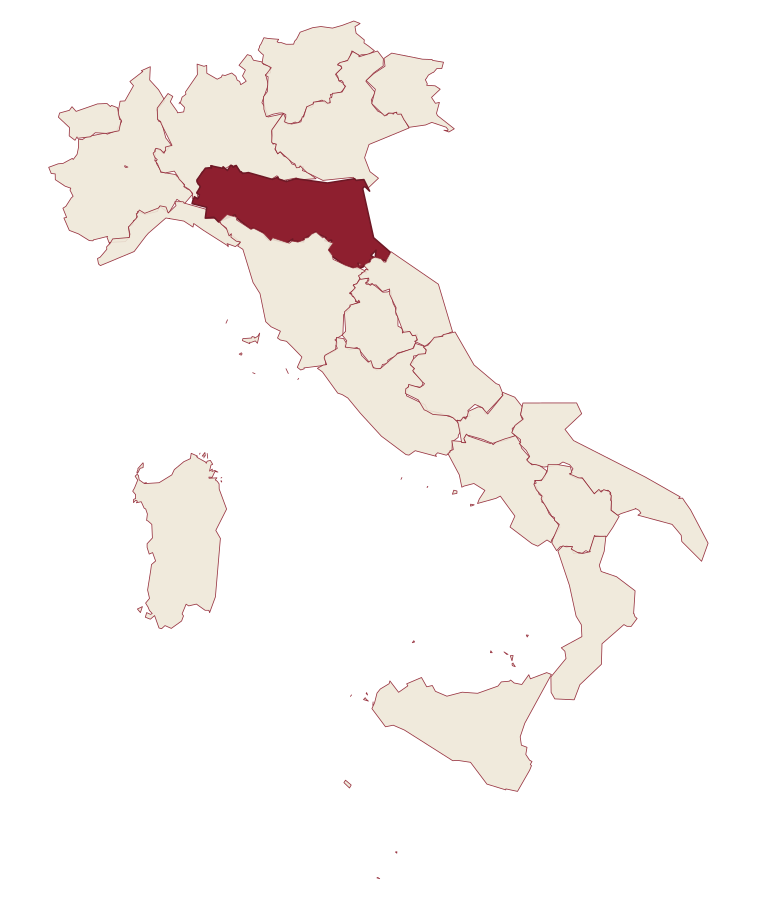
- Fanano is a comune in the province of Modena, in Emilia-Romagna, at 640 meters above sea level.
- What is the nearest airport to Fanano?
- Bologna (BLQ), about 1h 43m by car.
- How long is the drive from Florence to Fanano?
- About 2h 10m by car.
- When is the best time to visit Fanano?
- Best in May–Oct. July is the warmest month, averaging 28 degrees, and May the wettest, with about 16 rain days.
- Is there a sagra or a festival in Fanano?
- The town keeps its patron saint's day: papa Silvestro I, 31 December.
- Which other towns are like Fanano?
- Fiumalbo, Castiglione di Sicilia and Aritzo.
- How many people live in Fanano?
- 2,943 at the 2023 count.
Tags & datadesignations · numbers · sources
Recognised as
The numbers
- Elevation: 640 m
- Population: 2,943
- Surface area: 89.91 km²
These figures were compiled from public directories: ISTAT, OpenStreetMap and Wikidata, and from the official listings of the guides named on this page. Town details change; verify with official sources before you travel.
Similar
Towns like Fanano
Fiumalbo
Province: Modena
both mountain-valley towns · both under 3,000 people
Castiglione di Sicilia
Province: Catania
both mountain-valley towns · both under 3,000 people
Aritzo
Province: Nuoro
both mountain-valley towns · both under 3,000 people
Terranova di Pollino
Province: Potenza
both mountain-valley towns · both under 3,000 people
Corniglio
Province: Parma
both mountain-valley towns · both under 3,000 people
Pennabilli
Province: Rimini
both mountain-valley towns · both under 3,000 people
🟠 Bandiera Arancione
More Bandiera Arancione towns in Emilia-Romagna
Bagno di Romagna
Province: Forlì-Cesena
A 491-meter thermal town at the head of the Savio valley, drawing on springs that have run at 47 degrees since Roman times.
Bobbio
Province: Piacenza
A 272-meter Trebbia-valley town built around an abbey founded in 614, named Borgo dei Borghi by RAI in 2019.
Brisighella
Province: Ravenna
A Lamone-valley borgo at 115 meters under three selenite hills crowned by a fortress, a clock tower, and a sanctuary.
Busseto
Province: Parma
A 40-meter town where Giuseppe Verdi grew up, with a 300-seat opera house in the Rocca he refused to enter.
Castell'Arquato
Province: Piacenza
A 224-meter hilltop borgo in the Val d'Arda, kept intact since the tenth century and crowned by Luchino Visconti's 1342 fortress.