
Emilia-Romagna · Forlì-Cesena
Bagno di Romagna
A 491-meter thermal town at the head of the Savio valley, drawing on springs that have run at 47 degrees since Roman times.
Picked by Peter Benei
Letter to come
Why Bagno di Romagna is on our list
It holds Borghi più belli d'Italia and Bandiera Arancione.
Subscribe and you get Bagno di Romagna's letter the day it comes out.
Visiting
- Best time
- All year
- By car
- 1 h 30 min from Rimini
- Population
- 5,580
When to visit
Best · All year
- J8°
- F11°
- M12°
- A15°
- M19°
- J25°
- J29°
- A28°
- S23°
- O19°
- N13°
- D9°
- Best
- Hot or crowded
- Quiet
- Mostly closed
Daytime air temperature, averages for 2020–2024. Weather data by Open-Meteo.com.
Why come
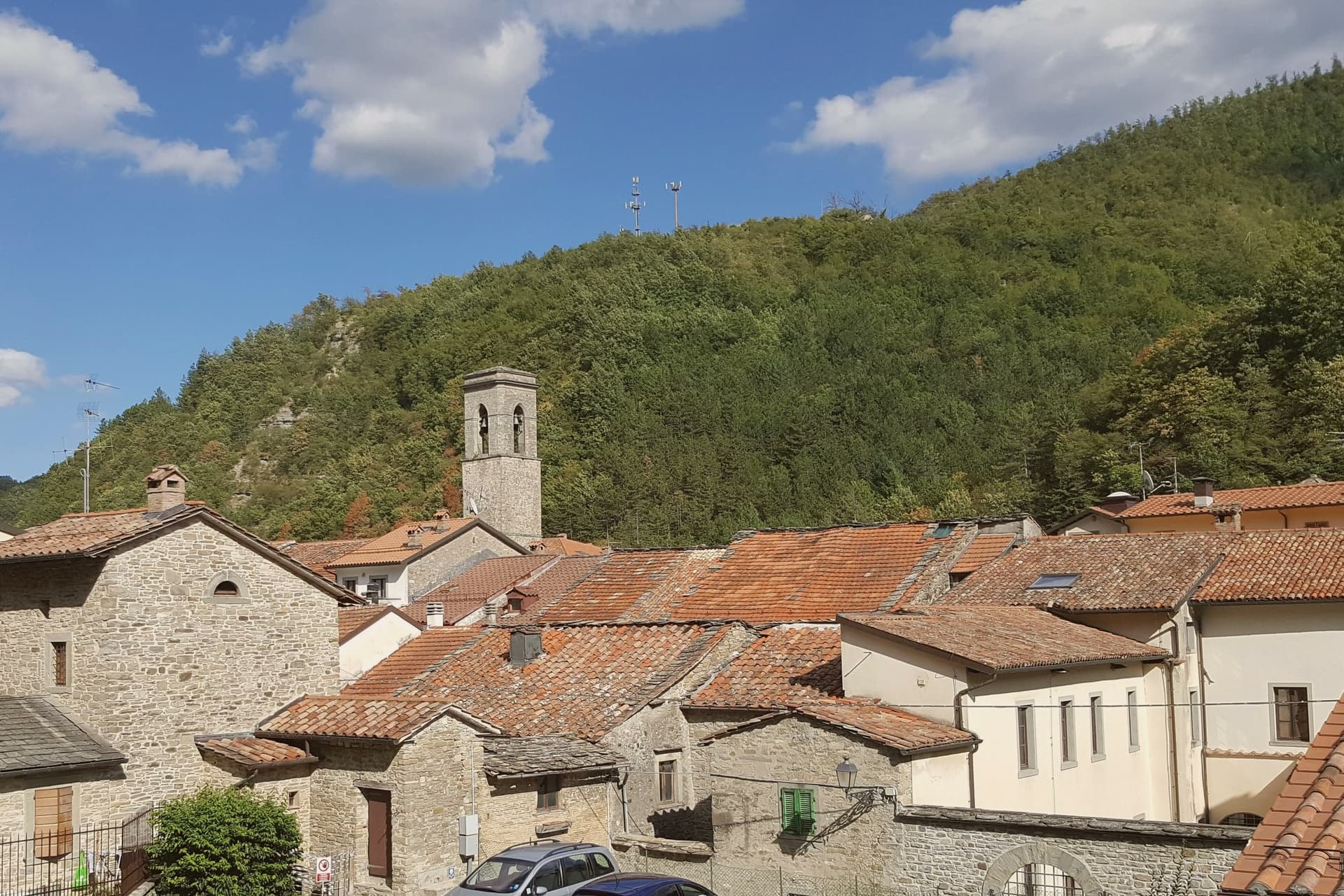
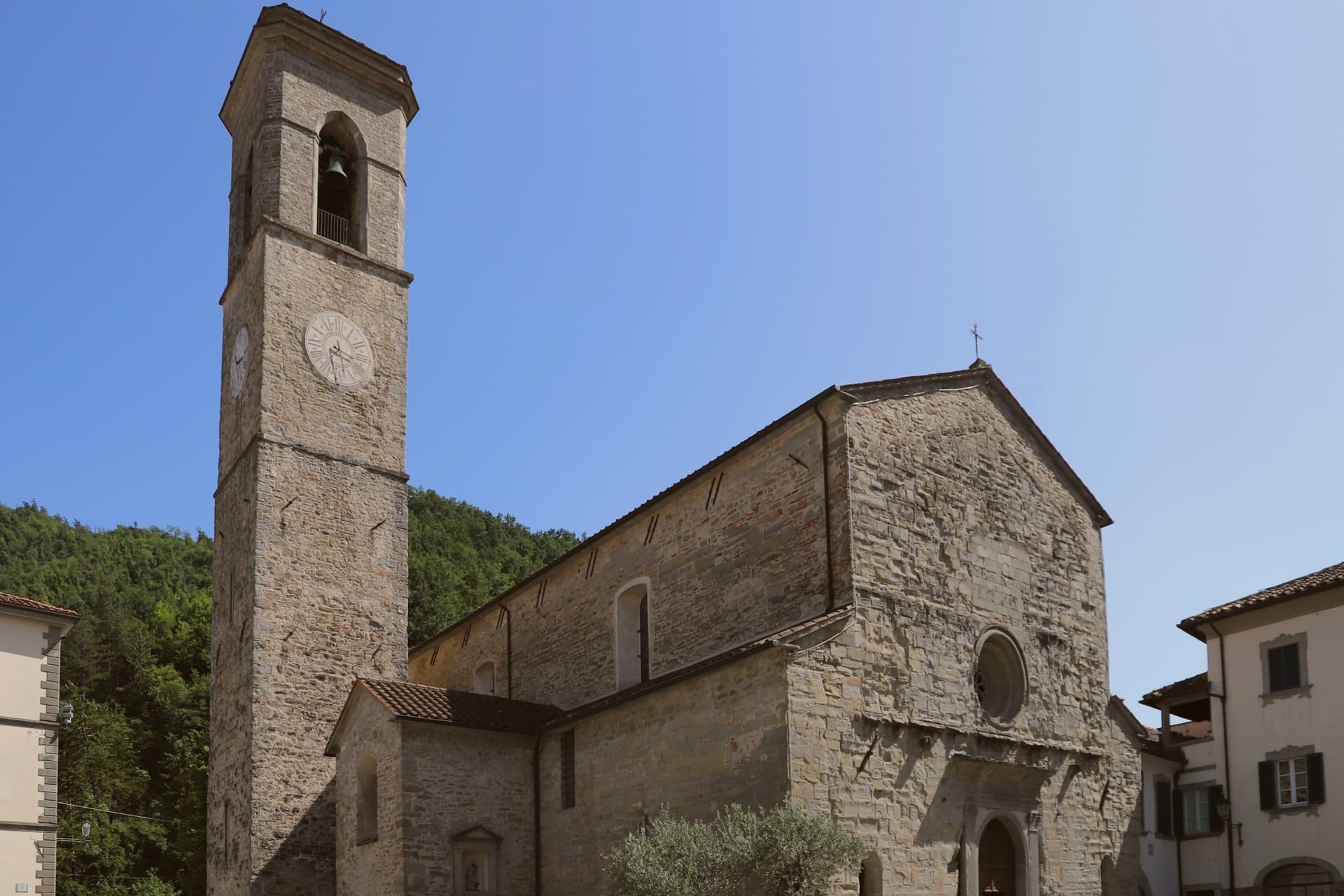
Bagno di Romagna sits at the head of the Savio valley, on the Apennine ridge that separates Romagna from Tuscany. The town belonged to Tuscany until 1923, when Mussolini moved the provincial border so the source of the Tiber would fall inside his native Forlì. Its name comes from the thermal springs that surface at 47 degrees, rich in sodium-carbonate-sulphur, used by the Romans and continuously since.
Two thermal complexes still operate in the centro storico. The municipality reaches into the Parco Nazionale delle Foreste Casentinesi, the largest old-growth beech and silver-fir forest in central Europe, where the Ridracoli reservoir holds the drinking water for most of Romagna. San Piero in Bagno, the larger frazione four kilometers down the road, was made the administrative seat by royal decree in 1865 while the older Bagno kept the name and the springs. The town carries Borghi più belli, Bandiera Arancione, and Parco Nazionale recognition.
How to get there
From Rimini (RMI), about 1 h 48 min by car.
Bologna (BLQ) is about 1 h 59 min away.
By car from the center of Perugia 1 h 33 min or Florence 1 h 34 min.
Coming by train into Forlì? Bagno di Romagna is about 1 h 17 min away by road.
Every town within reach of Rimini airport.
First time driving in Italy? Read our complete manual.
What to see
Terme di Sant'Agnese
Sulphurous thermal complex in the centro storico, drawing on springs that surface at 47 degrees and have been in continuous use since Roman times.
Basilica di Santa Maria Assunta
Twelfth-century church with a fifteenth-century Della Robbia terracotta and a wooden crucifix attributed to the school of Brunelleschi.
Parco Nazionale delle Foreste Casentinesi
Old-growth beech and silver-fir forest spanning the Apennine ridge, the largest continuous protected forest in central Europe.
Diga di Ridracoli
Reservoir within the national park, completed in 1982, providing drinking water to most of Romagna and accessible by trail and boat.
Palazzo del Capitano
Fifteenth-century civic palace built when the town was a Florentine outpost, with the Medici coat of arms still on the façade.
From the guides
Where to eat
Not our picks, but places the guides put their name to: a Michelin star, a Gambero Rosso fork, a Slow Food snail, a Michelin Key for the hotels. Worth a table, a counter, or a night when you pass through.
Da GoriniRistorante
One Michelin star for Da Gorini, along with three Gambero Rosso forks (90/100) and a place in L'Espresso's Top 300.
Ristorante del LagoRistorante
One Michelin star for Ristorante del Lago, along with two Gambero Rosso forks (83/100) and a place in L'Espresso's Top 300.
Paolo TeveriniRistorante
A Gambero Rosso listing for Paolo Teverini, and a spot in the Michelin Guide.
Before you sit down: how to order at a restaurant, how to spot a tourist trap, what aperitivo is and how the Italian bar works.
Living here
Could you live here?
Bagno di Romagna meets both of our rules for a small town.
- 5,580 people, inside our sweet spot of 5,000 to 20,000: a real town, still one community.
- Cesena, a city of 95,730, is 58 min by car. Inside our 30 to 60 minutes: close for the services, far enough to keep its own life.
The rules come from our series Where to Move in Italy, written from the places we have lived: Part 1, The End of the Road · Part 2, The Small Town · Part 3, The City · Part 4, The Postcard · Part 5, The Other Half. The towns we would pick are in Part 6, The Best Towns.
- Population 5,580, down 8.8% since 2015
- Nearest city Cesena, 58 min drive
- A national health service hospital in the comune · how healthcare works in Italy
- Homes in the center: €1,200 to €1,600 per m² to buy, €4.00 to €5.30 per m² a month to rent
Weighing a move here? See the moving year.
All the numbers Common questions, designations, lists and sources.
More about living here
- In-between
- Pharmacy in town
- High school within a 30-minute drive
- Full fibre reaches 97% of homes
- Primary school in the comune
- Earthquake zone 2, medium hazard
- Forlì airport (FRL), 1 h 3 min drive, the nearest with scheduled flights
- Regional capital Bologna, 2 h 1 min drive
If you are moving here
Who lives here
7% of residents are foreign citizens, most often from Romania, Morocco and Ukraine, against 9% across Italy. There are 301 people over 65 for every 100 children under 15, against 216 across Italy. 36% of homes have no resident, holiday homes and empty ones counted together, against 27% across Italy. Forlì-Cesena province ranks 11th of 107 in Il Sole 24 Ore's quality of life ranking for 2025.
Health and schools
The nearest emergency room is in Bibbiena, 15 km as the crow flies. The nearest major one is in Cesena, 40 km away. The nearest IB school is International School of Rimini, 55 km as the crow flies. The nearest school listed as international is Bilingual International School Borgo San Lorenzo, 48 km away.
Information, not medical advice. Confirm with a professional.
Taxes
A home that is not your main one pays 1.06% a year in property tax at the 2025 rate, charged on the cadastral value rather than the price. A main home pays none unless it is in a luxury category. The town adds between 0.63% and 0.8% to your income tax, depending on your income, with nothing due on income under €12,000. 7% pensioner tax: this town is not in a qualifying area.
Information, not tax advice. Confirm with a professional.
What it costs
The average household in Emilia-Romagna spends about €2,500 a month, €560 of it on food, against about €2,170 across Italy. A family of three pays about €604 a year for water, on the Emilia-Romagna average. In Forlì, the provincial capital, in September 2026, a meal in a pizzeria €12.18 and a man's haircut €22.59.
Climate and risk
It is in climate zone E, on a scale from A, the warmest, to F, the coldest, and heating may run from October 15 to April 15, up to 14 hours a day, unless the mayor changes it. 5% of residents live in a zone the national maps rate high for floods, 12% in a high or medium one. 46% live in a zone rated high or very high for landslides.
These shares cover the whole comune, not any one street. Check an address on IdroGEO.
Moving from abroad? Which visa you need. Sources: ISTAT, the Ministry of Health, ISPRA, the Finance Ministry, the Ministry of Enterprise, Poste Italiane, the comuni, the IB, International Schools Database, Il Sole 24 Ore, Cittadinanzattiva.
Known for
THERMAL SPRINGS
Sulphurous waters surfacing at 47 degrees, used continuously since the Roman period and still feeding two operating complexes in the centro storico.
FORESTE CASENTINESI
Half the municipality falls inside the national park, the largest old-growth beech and silver-fir forest in central Europe.
TUSCAN BORDER
The town was Tuscan until 1923, when Mussolini redrew the provincial line to put the source of the Tiber inside his native Forlì.
Common questions
- What is Bagno di Romagna known for?
- Bagno di Romagna is a 491-meter thermal town at the head of the Savio valley, drawing on springs that have run at 47 degrees since Roman times.
- Where is Bagno di Romagna?
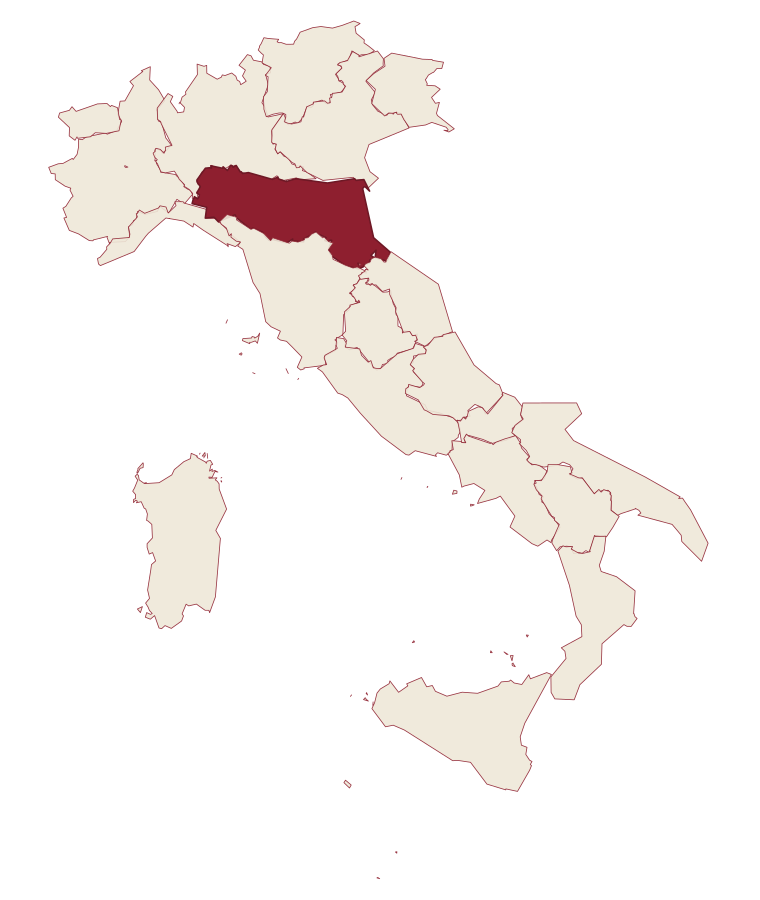
- Bagno di Romagna is a comune in the province of Forlì-Cesena, in Emilia-Romagna, at 491 meters above sea level.
- What is the nearest airport to Bagno di Romagna?
- The nearest airport with scheduled flights is Forlì (FRL), about 1 h 3 min by car.
- How long is the drive from Perugia to Bagno di Romagna?
- About 1 h 33 min by car.
- When is the best time to visit Bagno di Romagna?
- Any month of the year works. July is the warmest month, averaging 29 degrees, and May the wettest, with about 16 rain days.
- Which other towns are like Bagno di Romagna?
- Levico Terme, Rapolano Terme and Anghiari.
- How many people live in Bagno di Romagna?
- 5,580 residents, by ISTAT's count on 1 January 2025.
- Is Bagno di Romagna a good place to live?
- By the rules in our Where to Move in Italy series, Bagno di Romagna is a small town that meets both of our rules. The nearest city, Cesena, is 58 min away by car. There is a national health service hospital in the comune. Full fibre reaches 97% of homes.
Tags & data designations · numbers · sources
Landscape
The numbers
- Elevation: 491 m
- Population: 5,580
- Surface area: 233.52 km²
These figures were compiled from public directories: ISTAT, OpenStreetMap and Wikidata, and from the official listings of the guides named on this page. Town details change; verify with official sources before you travel.
The ranked lists
Lists Bagno di Romagna appears in
- The prettiest villages that eat well in Emilia-RomagnaEmilia-Romagnaeats wellprettiest villages6 towns · smallest 996 residents
- The best hidden towns with a serious restaurant in Emilia-RomagnaEmilia-Romagnaserious restauranthidden7 towns · smallest 996 residents
- The best hot-spring towns within two hours of RiminiNear Riminihot springswithin 2 hours7 towns · smallest 1,648 residents · closest 34 min away
- The best hot spring towns in Emilia-RomagnaEmilia-Romagnahot springs8 towns · smallest 3,322 residents
Similar
Towns like Bagno di Romagna
What all six share with Bagno di Romagna: between 3,000 and 10,000 people
Levico Terme
Province: Trento
both spa towns · both hill towns
Rapolano Terme
Province: Siena
both spa towns · both hill towns
Anghiari
Province: Arezzo
both hill towns
Citerna
Province: Perugia
both hill towns
Canossa
Province: Reggio nell'Emilia
both hill towns
Castrocaro Terme e Terra del Sole
Province: Forlì-Cesena
both spa towns
Our guide
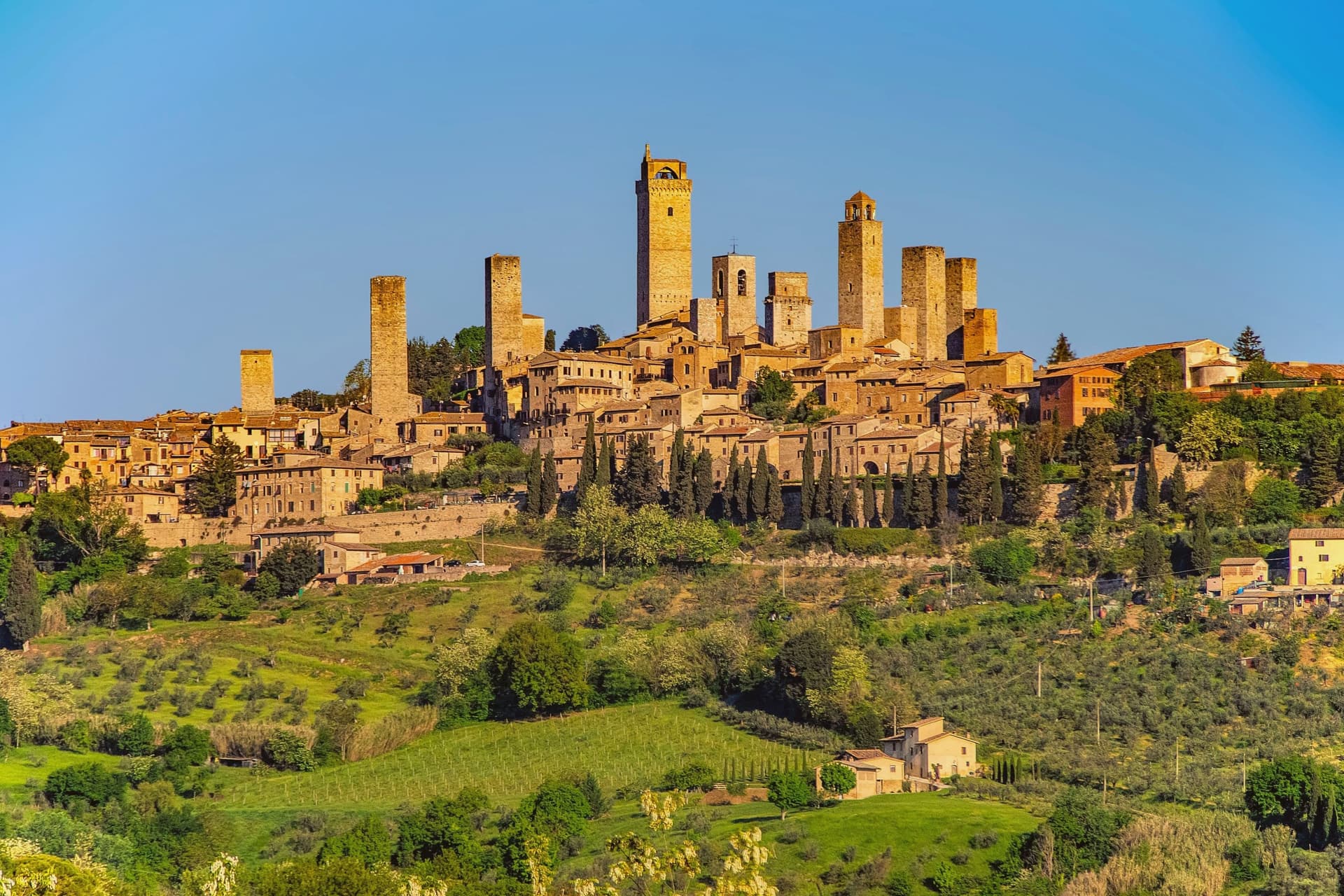
Our nearest guide, 77 km away
Tuscan Mainland: the towns, when to go, how to get there
The Tuscan Mainland guide came out of the letter. Letters from the towns we visit. Free.
Read the guide: The postcard country, and what is under it. 15 towns, the drive and train times, the months, where to eat and sleep.
Paid plans, the moving year and the books are on the membership page.