
Veneto · Vicenza
Asiago
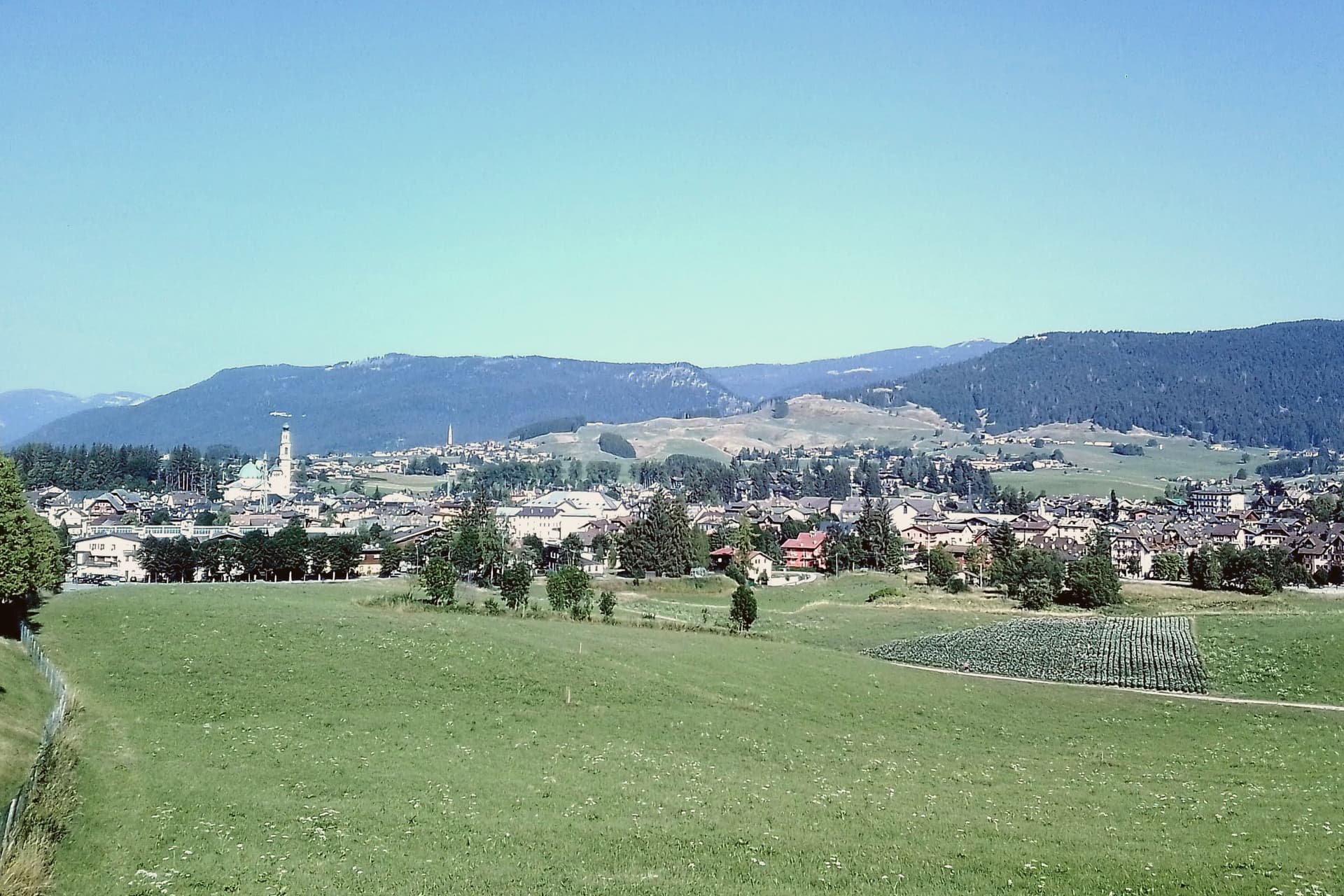
The Sette Comuni plateau capital: a 6,285-resident high-altitude town at 1,001m in the Alpine prealps north of Vicenza, holding the largest WWI ossuary in northern Italy (Sacrario del Leiten, 54,286 fallen soldiers) and Italy's most important professional astronomical observatory.
- Best time
- Jan–Mar, Jul–Sep
- By car
- 1 h 57 min from Trento
- Population
- 6,285
Known for
ASIAGO DOP CHEESE
320 producers across the Sette Comuni plateau and Veneto/Trentino prealps. Fresh 'Pressato' cures 4 months; aged 'Stagionato' 12 or more.
WWI FRONT LINE
Town completely destroyed by Austrian artillery in 1916. Sacrario del Leiten holds 54,286 fallen, the largest WWI memorial in northern Italy.
ITALY'S TOP OBSERVATORY
Osservatorio Astrofisico, built 1942 and run by the University of Padua. Its Galileo telescope was Europe's largest at construction.
CIMBRIAN HERITAGE
Medieval Bavarian-German dialect spoken on the plateau until the 19th century, still known to a handful of elderly speakers, and to a documentation museum.
When to visit
Best · Jan–Mar, Jul–Sep
- J5°
- F7°
- M8°
- A11°
- M15°
- J20°
- J22°
- A22°
- S18°
- O14°
- N9°
- D5°
- Best
- Hot or crowded
- Quiet
- Mostly closed
Daytime averages, 2020–2024. Weather data by Open-Meteo.com.
The festa: Matteo, 21 September
Why come
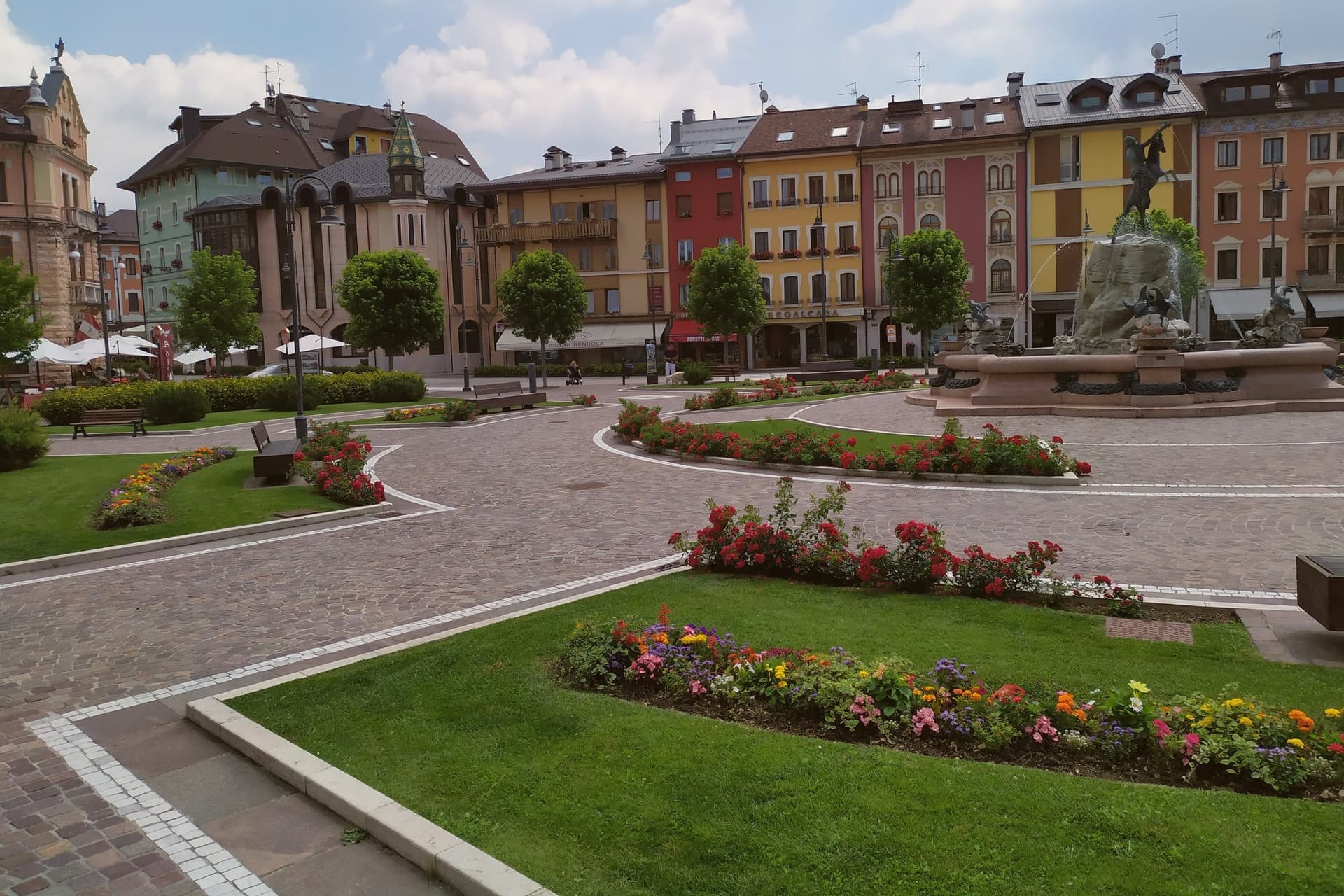
Asiago is the capital of the Altopiano dei Sette Comuni, a 467 km² Alpine plateau at 1,000-2,300m altitude north of Vicenza, historically the territory of seven small communities that spoke Cimbrian, a medieval Bavarian-German dialect, until the 19th century, still spoken by a handful of elderly speakers in the upland frazioni today. The plateau geography defines everything about the town: the cool summer climate, a year-round average of 8°C, the alpine pastures that support the dairy economy behind the cheese, the 200+ km of cross-country ski tracks in winter that let the plateau host FIS Nordic World Cup events, and the trail network that takes over the same ground in summer.
The heaviest historical layer is World War I. The Altopiano was the front line of the May 1916 Strafexpedition Austrian offensive and the May 1918 Battle of the Three Mountains, and the town itself was completely destroyed by Austrian artillery: every standing building today was rebuilt afterward. The ossuary on the hill above town holds 54,286 fallen soldiers, mostly Italian with some Austro-Hungarian, and stands as the largest WWI war memorial in northern Italy. The observatory built in 1942 is Italy's most important professional optical-astronomy facility, its 122cm Galileo telescope the largest in Europe when built.
Beyond cheese, war, and stars: the museum documents the historic Bavarian-German dialect culture, the Sentiero degli Asini, the Donkey Trail, walks a network of Cimbrian-era footpaths, and the plateau's altipiani, uplands like Marcesina, the highest at 1,400m, are some of the most striking alpine meadow landscapes in the Veneto. The food is plateau-Cimbrian-Veneto: Asiago DOP itself, polenta with sopressa or pastin sausage, gnocchi di malga, the Cimbrian klemen, a sweet-savoury filled pasta, and the local Vespaiolo dell'Altopiano white.
A single plateau, one geography of altitude and pasture, produced the dialect, the dairy economy, the battlefield, and the observatory alike, and rebuilt itself once from artillery before any of the rest could continue.
The Sunday letter
Asiago is on our list. Its letter is still to come.
We are writing about all 1,000 of these towns, one at a time, in a free letter every Sunday: the photo, the food, the festa. That is our mission. Sign up and you will be there when Asiago comes up. By Peter & Sophia, from Pietrasanta.
Read on
Asiago in our articles
 The best ski towns in Veneto9 towns, Asiago among them.
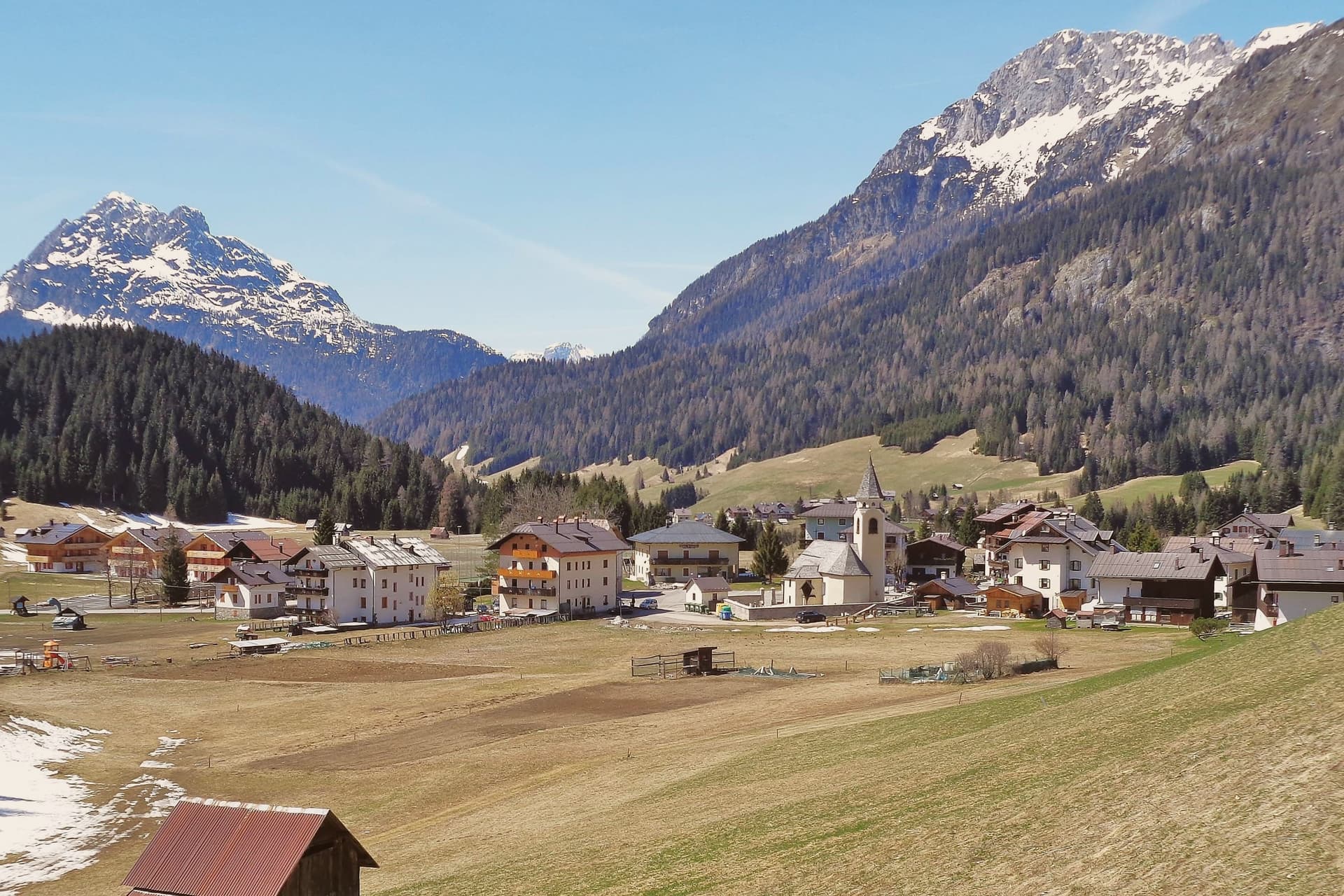 Alternatives to Cortina d'Ampezzo: every alpine town in the north above a thousand metres35 towns, Asiago among them.
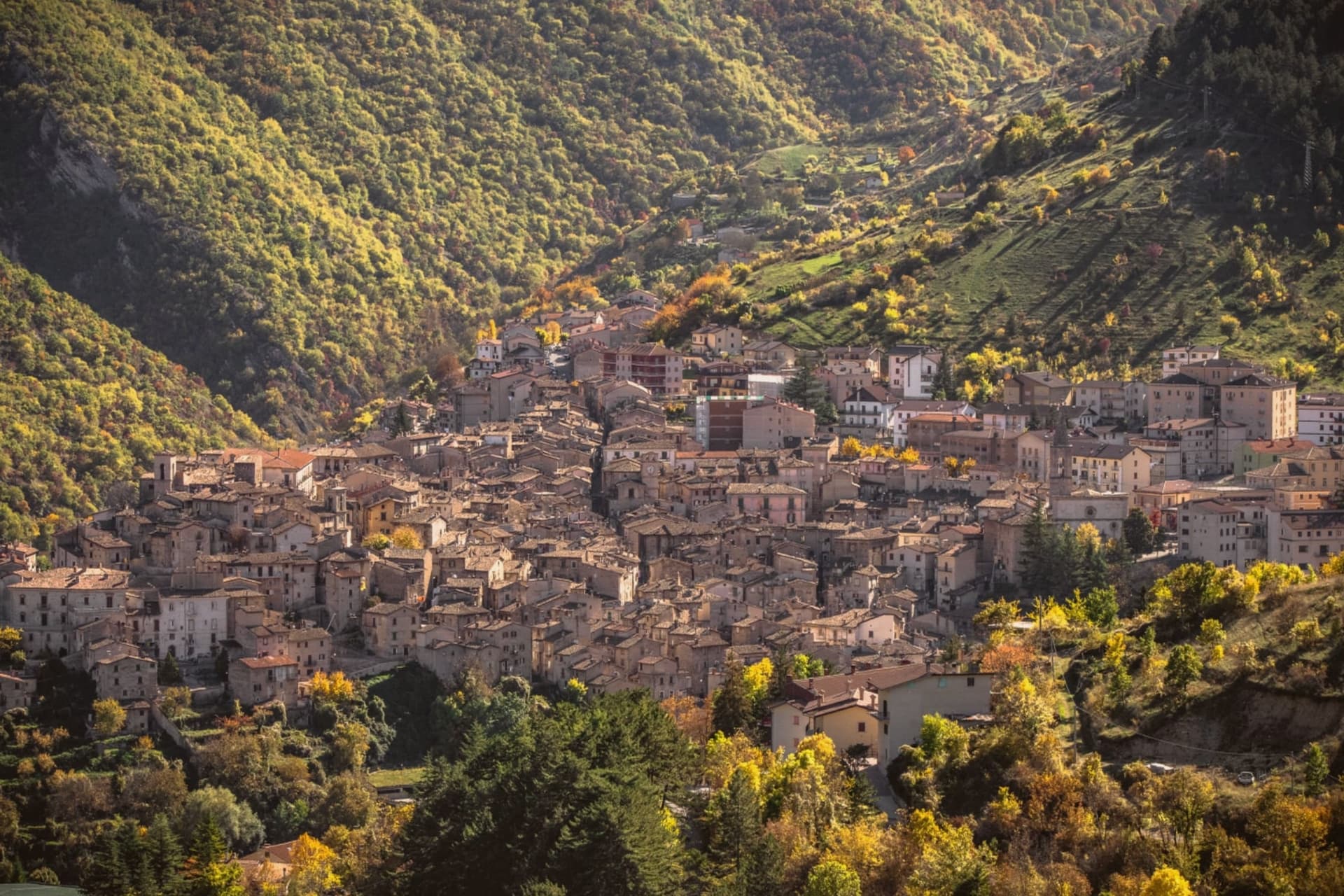 Every town in our catalogue above 1,000 metres65 towns, Asiago among them.
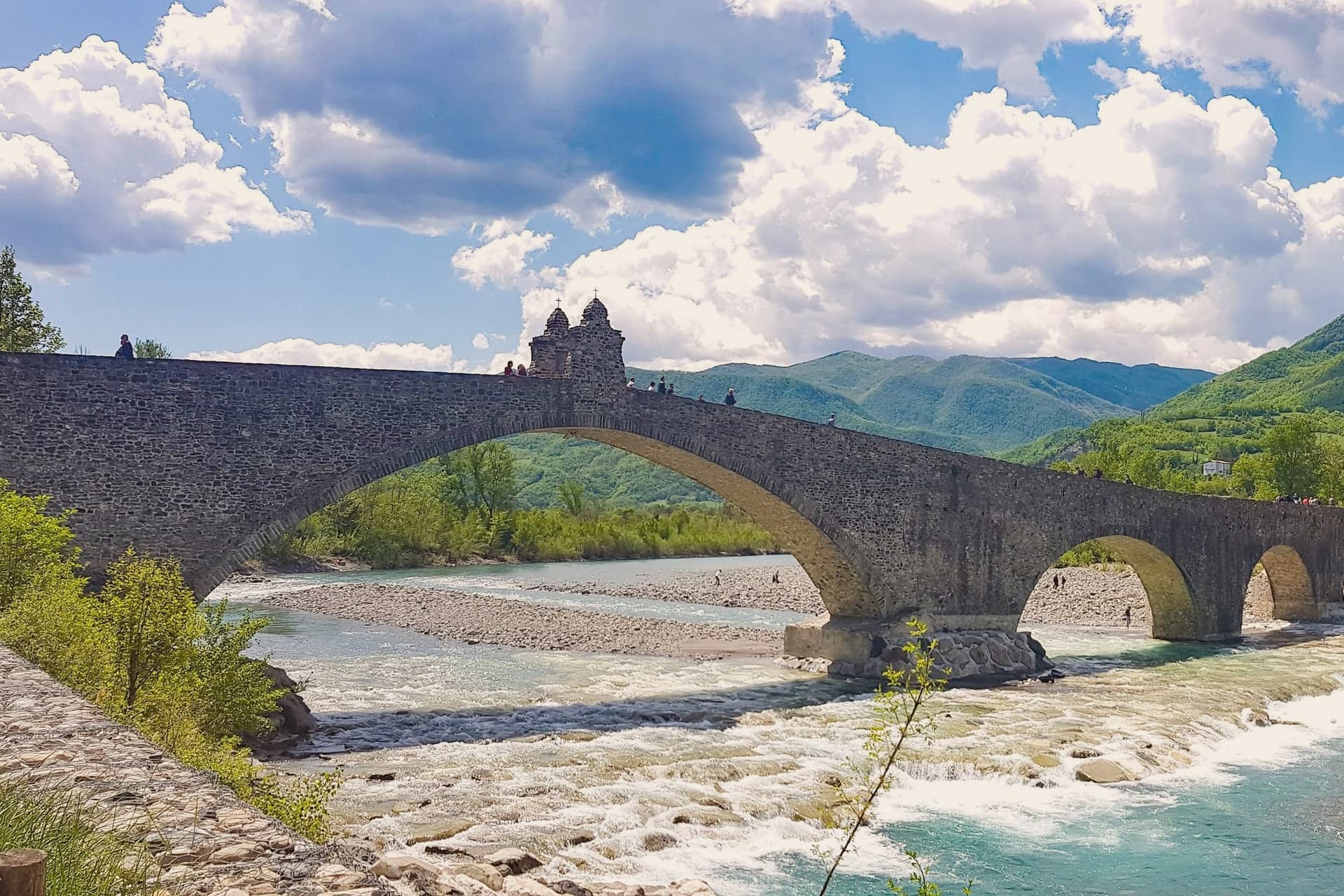 Every ski town in our catalogue, all of them97 towns, Asiago among them.
How to get there
From Venice (TSF), about 2h 34m by car.
Verona (VRN) is about 2h 48m away.
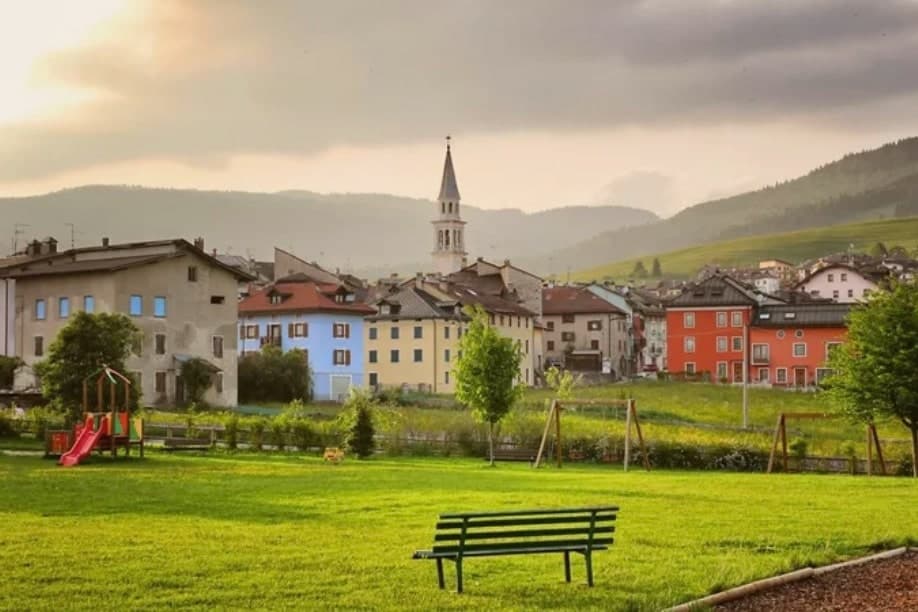
By car from the centre of Trento 2 hours or Padua 2h 15m.
What to see
Sacrario Militare del Leiten
A 1936 neoclassical ossuary on the hill above town, with a view over the plateau. The building is the physical marker of the destruction the WWI front line brought to Asiago itself.
Asiago DOP cheese + casere
Casere, the alpine dairy huts, sit at Bocchetta Portule and Marcesina and open for summer visits and tastings, a working look at how the cheese is actually made on the plateau.
Osservatorio Astrofisico di Asiago
The 122cm Galileo telescope, run by the University of Padua, is open for guided summer visits, a rare chance to stand next to the instrument itself.
Cross-country ski + summer trails
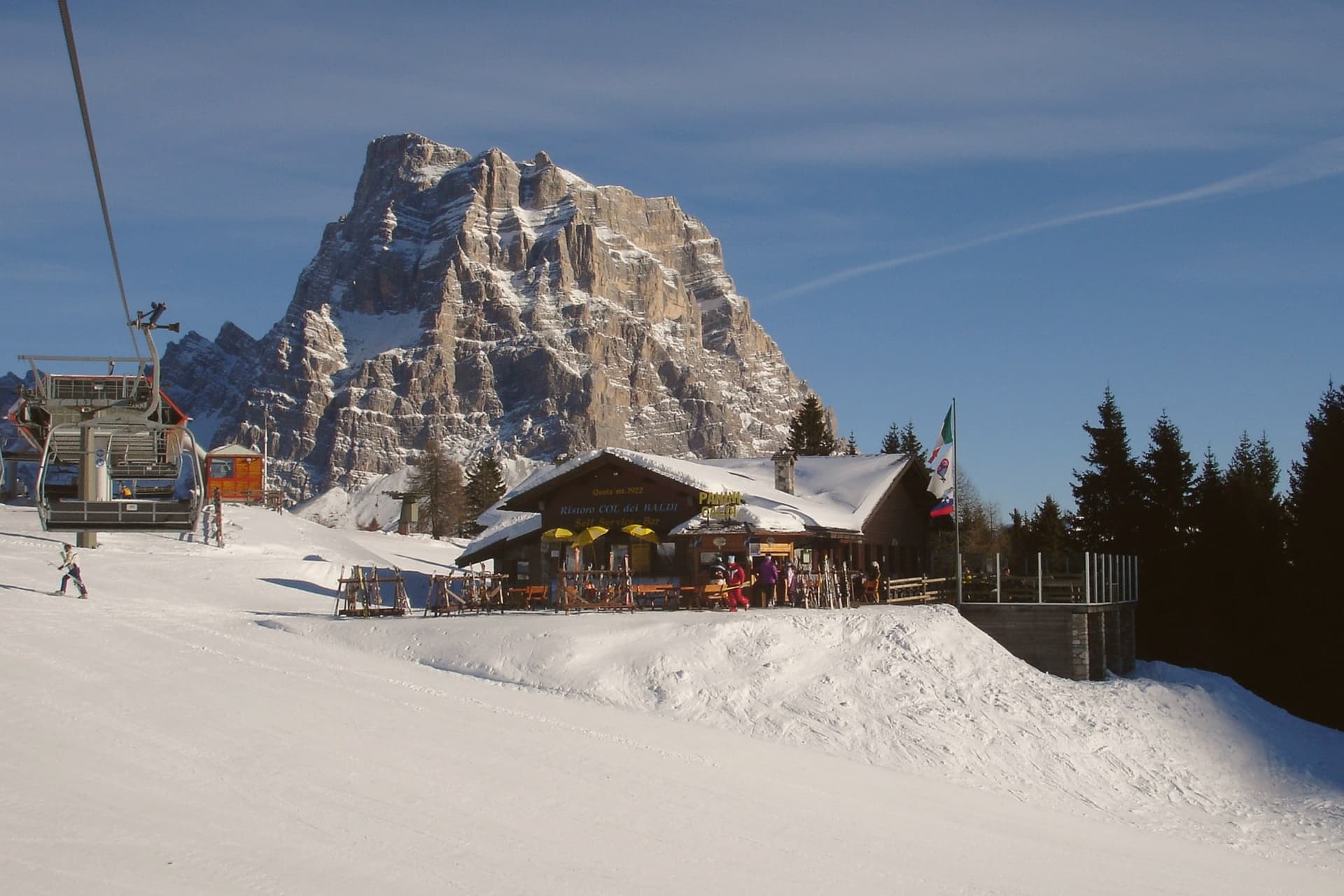
200+ km of cross-country pistes in winter, host to FIS Nordic World Cup events. The same network becomes hiking and mountain-bike trails in summer; the Sentiero degli Asini follows Cimbrian-era footpaths.
Museo della Tradizione Cimbra
Documents the dialect and the daily life built around it. A handful of elderly speakers in the upland frazioni still use the language the museum records.
The slow-trip planner
Building a trip? Find where Asiago fits in a slow Italy circuit.
Answer five questions. We will shape a geographically coherent slow trip from the 1,000 Italian towns most travelers skip. Yours to save and share.
We recommend
Where to eat
Not our picks, but places the guides put their name to: a Michelin star, a Gambero Rosso fork, a Slow Food snail, a Michelin Key for the hotels. Worth a table, a counter, or a night when you pass through.
La Tana GourmetRistorante
La Tana Gourmet has one Michelin star, two Gambero Rosso forks (89/100) and a place in L'Espresso's Top 300, among other nods.
Osteria della TanaRistorante
Osteria della Tana carries a spot in the Michelin Guide.
Osteria EuropaRistorante
A spot in the Michelin Guide, at Osteria Europa.
Signature product
Asiago DOPDOP
Cow's-milk cheese in pressato (fresh) and d'allevo (aged) styles; the Asiago plateau gives the appellation its name.
See the towns we cover in the zone of Asiago DOP.
Through the year
What happens here
Feasts and festivals that come back year after year. We give the month rather than the date, because the date moves and the month rarely does. Check with the source before you plan a journey around one.
Made in Malgafood festival
usually held in September. eventiesagre.it
Living here
- Population 6,285
- Remotei
- Pharmacy in town
- High school within a 30-minute drive
- Nearest airport Venice, 2 h 34 min drive
- Regional capital Venezia, 2 h 33 min drive
Common questions
- What is Asiago known for?
- Asiago is the Sette Comuni plateau capital: a 6,285-resident high-altitude town at 1,001m in the Alpine prealps north of Vicenza, holding the largest WWI ossuary in northern Italy (Sacrario del Leiten, 54,286 fallen soldiers) and Italy's most important professional astronomical observatory.
- Where is Asiago?
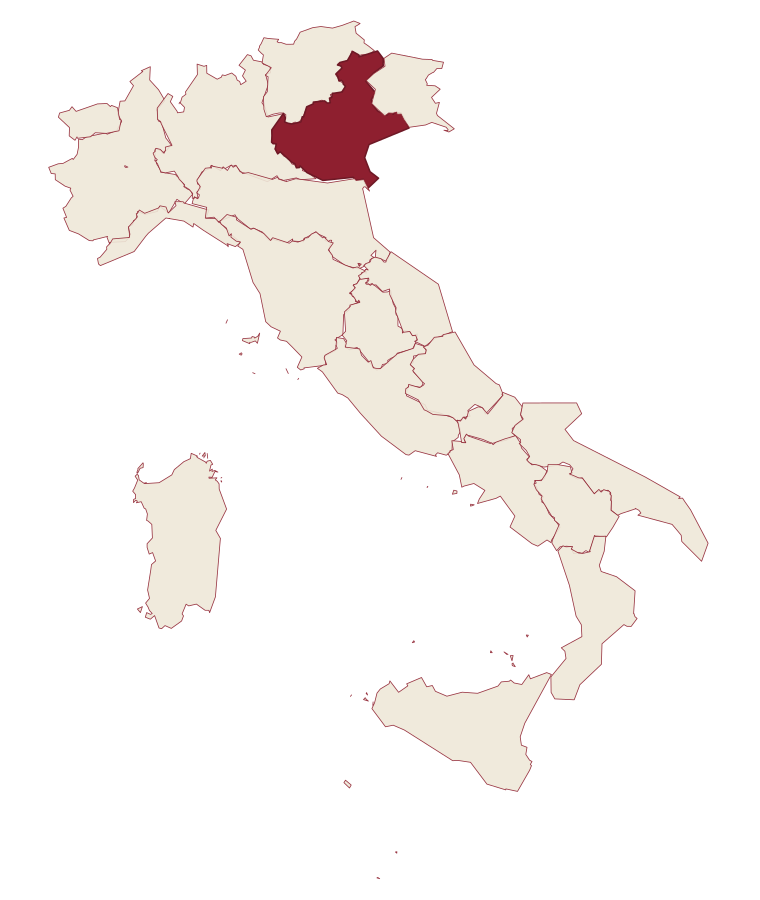
- Asiago is a comune in the province of Vicenza, in Veneto, at 1001 meters above sea level.
- What is the nearest airport to Asiago?
- Venice (TSF), about 2h 34m by car.
- How long is the drive from Trento to Asiago?
- About 2 hours by car.
- When is the best time to visit Asiago?
- Best in Jan–Mar, Jul–Sep. July is the warmest month, averaging 22 degrees, and May the wettest, with about 26 rain days.
- Is there a sagra or a festival in Asiago?
- Yes. Made in Malga. September is when the first of them falls.
- Which other towns are like Asiago?
- Gangi, Cavalese and Cortina d'Ampezzo.
- How many people live in Asiago?
- 6,285 at the 2023 count.
Tags & datadesignations · numbers · sources
Recognised as
The numbers
- Elevation: 1001 m
- Population: 6,285
- Surface area: 162.95 km²
These figures were compiled from public directories: ISTAT, OpenStreetMap and Wikidata, and from the official listings of the guides named on this page. Town details change; verify with official sources before you travel.
Similar
Towns like Asiago
Gangi
Province: Palermo
both between 3,000 and 10,000 people · both mountain towns above 1,000 metres
Cavalese
Province: Trento
both between 3,000 and 10,000 people · both mountain towns above 1,000 metres
Cortina d'Ampezzo
Province: Belluno
both between 3,000 and 10,000 people · both mountain towns above 1,000 metres
Innichen
Province: Bolzano
both between 3,000 and 10,000 people · both mountain towns above 1,000 metres
Toblach
Province: Bolzano
both between 3,000 and 10,000 people · both mountain towns above 1,000 metres
Auronzo di Cadore
Province: Belluno
both between 3,000 and 10,000 people
⛷️ Ski Area
More Ski Area towns in Veneto
Alleghe
Province: Belluno
A lakeside village at 979 meters, formed in 1771 when ten million cubic meters of rock crashed into the Cordevole.
Auronzo di Cadore
Province: Belluno
A five-kilometer ribbon town along an artificial lake at 864 meters, the gateway to the Tre Cime di Lavaredo and Lake Misurina.
Cortina d'Ampezzo
Province: Belluno
The Queen of the Dolomites at 1,224 meters, host of the 1956 Winter Olympics and co-host of Milano-Cortina 2026.
Falcade
Province: Belluno
An Agordino ski village at 1,148 meters under the Focobon spires, with the San Pellegrino pass leading toward Trentino.
Malcesine
Province: Verona
The northernmost Veneto town on Lake Garda, where Goethe was nearly arrested for sketching the Castello Scaligero in September 1786.