
The best olive oil towns within two hours of Naples
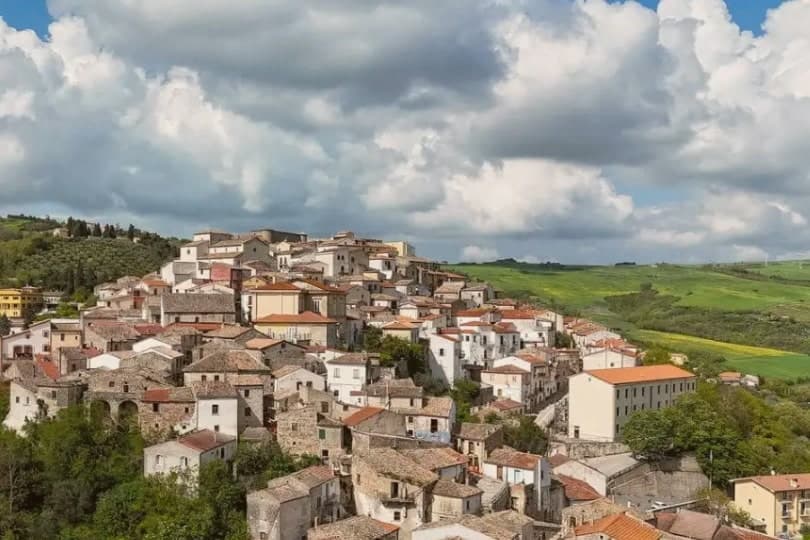
The olive harvest inland from Naples starts when the mornings turn cold and the hills above the Calore and the Garigliano go grey-green with nets spread under the trees. This is Ravece country in Irpinia, a bitter, tomato-scented oil pressed from a cultivar that grows almost nowhere else, and further north the Molise mills work Gentile di Larino and Aurina. The towns are built from local limestone and tufo, stacked up ridges for defence rather than views, with a mill at the bottom of the hill and a castle at the top. Eat the new oil the way it is eaten here, poured over bread grilled on vine cuttings, or over broccoli and beans, and drink Aglianico with it.
Almost everyone who lands at Capodichino turns west and south, to Pompeii, Sorrento and the Amalfi Coast, and the coastal road bottlenecks from spring to October. It is a reasonable choice, since the ruins and the lemon terraces earn their reputation, but the ratio of visitors to road is punishing and the food gets priced accordingly. Most of the olive oil poured on those tables is not from that coast at all.
The same volcanic and limestone soils continue east and north, over the Partenio and into the Ufita and Volturno valleys, and that is where the protected production zones actually sit. The towns here are small, agricultural and quiet in the way that working places are quiet, with mills that will sell you oil straight from the press and wine towns whose cellars sit under the houses. Fewer people go, and the drive from Naples is shorter than the coastal traffic makes you expect.
Of the 72 communes we have mapped in a 120-minute drive of Naples, 11 qualify as olive oil towns: each sits inside the production zone of a protected olive oil. This list is 10 of them. The smallest, Zungoli, has 942 residents.
If you are still choosing, we have also written The best olive oil towns within two hours of Salerno and The 9 best olive oil towns in Campania.
Zungoli
Why visit Zungoli
Zungoli sits on the eastern edge of the province of Avellino, one of the higher villages in Irpinia, with the Ufita valley on one side and the Daunian Mountains on the other. The settlement dates to around 900 AD.
Frederick II made it a universitas in 1232, by which point a Norman captain had already built the first fortification and left the place his name. The houses of the centro storico climb the ridge around that castle, and the ground beneath them is hollow: the whole old quarter sits over a network of caves cut by hand in the Byzantine period, long before the cheese and oil that now fill them.
Above ground the stone and the towers date the village; below it, the caves keep it at a constant temperature, which is why what was dug for one purpose is still put to use for another.
What to see in Zungoli
- Castello dei Susanna. The castle's three surviving towers rise over the roofline of the village, the fourth lost to the 1456 earthquake; the walls are the highest point on the ridge.
- Grotte Bizantine. The cave network runs beneath the streets, low and cool, still stacked with wheels of Caciocavallo Podolico and jars of oil the way it has been used for centuries.
- Centro storico medievale. Stone alleys and stairways around the castle on a 657-meter ridge, a Borgo più Bello d'Italia and Bandiera Arancione with views toward the Daunian Mountains.
How to get to Zungoli
Foggia is roughly 81 minutes away by road.
Our tip
April through June and September into October are the dry months on the Irpinia ridge, when the Ufita valley is green and the cave temperature stays even for cheese tasting. July and August touch the low thirties, lighter than the coastal heat but still drying the surrounding pasture; the tuff caves below the houses become the cool refuge. November through March is cold, with rain and occasional snow above six hundred meters, the castle silhouette appearing through low fog.
Savignano Irpino
Why visit Savignano Irpino
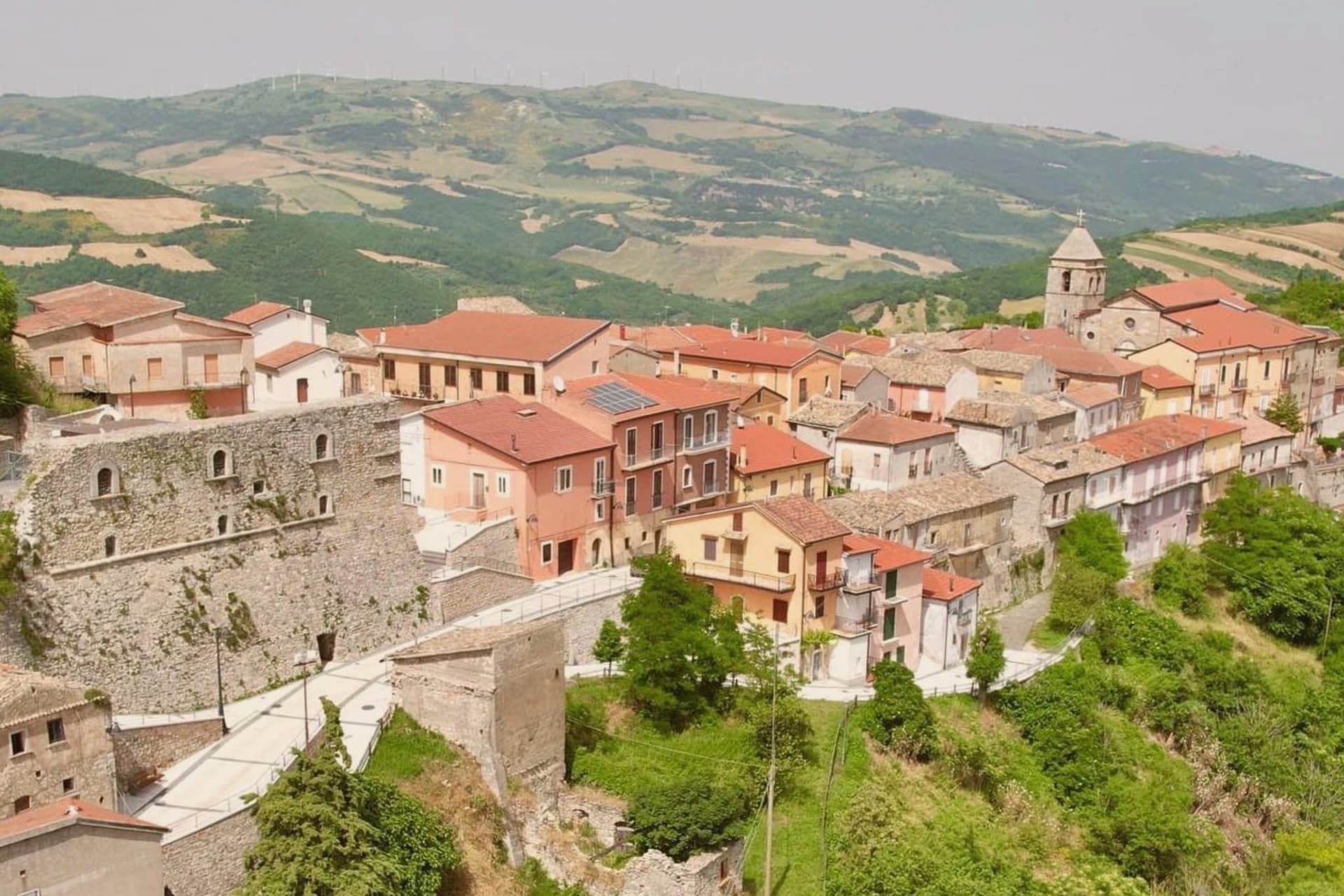
Savignano Irpino sits at 718 meters on the edge of Irpinia, where the province narrows toward Apulia. The Latin name Sabinius points to a Roman landowner, but the village as it stands now grew up between the seventh and eighth centuries around a defensive castle on the high ground.
Under the Normans it became part of a barony dependent on Ariano Irpino, with Ferrara and Greci. In 1193, during Tancredi d'Altavilla's reign, governor Sarolo Guarna was executed on the castle tower.
In 1445 the Guevara family, Spanish nobles, turned the medieval manor into a lordly residence; their name still attaches to the castle. The town was called Savignano di Puglia until 1963, when the border-of-region status pushed the rename.
The Mother Church of San Nicola and Sant'Anna and the Castello Guevara anchor the medieval core. It joined the Borghi più belli network in 2016.
What to see in Savignano Irpino
- Castello Guevara. Norman fortress on the high point of the village, rebuilt in 1445 by the Guevara family who held the fief for generations.
- Chiesa Madre di San Nicola e Sant'Anna. Mother church on a medieval sacred site, its bell tower originally a watchtower over the Cervaro valley below.
- Centro storico. Compact stone-built medieval core between castle and church, Borghi più belli member since 2016.
How to get to Savignano Irpino
There is a railway station in the town, so you can arrive without a car and never need one while you are here. Foggia is roughly 58 minutes away by road.
Our tip
May through October is the open season at 718 meters: warm days, cool nights, and the Cervaro valley below in long green light. July and August are tolerable up here while the Foggia plain bakes; the village fills with returning families on the August feasts. April and November are shoulder months with shifting weather.
Lapio
Why visit Lapio
The name of the grape behind the local wine, 'Apianum', comes from the Roman word for bee, api, because the grape was said to be sweet enough to draw them. It has been grown across the Irpinia hills east of Avellino since at least the 1st century AD, though it only became a serious modern DOCG from the 1990s onward, thanks to producers here and in Montefredane, Summonte, and the neighbouring villages.
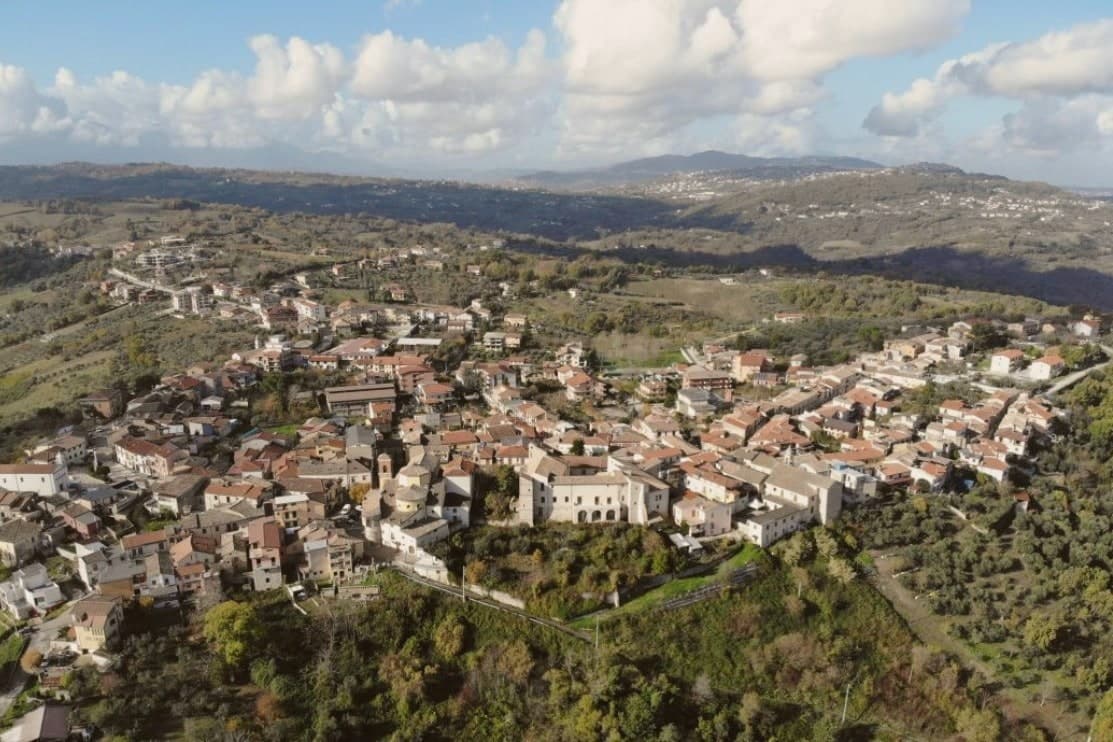
The comune itself sits at 590m on a hilltop, its narrow stone-paved vicoli climbing from the central piazza up to the castle at the high point, past the Chiesa Madre di San Pietro Apostolo and the Convento dei Cappuccini just outside the walls. The four Città designations held here, del Vino, dell'Olio, del Miele, della Nocciola, are not scattered honours but a single picture: Fiano and Aglianico from the vineyards, Irpinia DOP oil from the terraces, chestnut and multifloral honey from the Apennine forests above town, and the hazelnut trade that makes Avellino province the second-largest producer in Italy after Cuneo.
Beyond the comune: Avellino 24 km west, Mirabella Eclano with its Roman Forum and Carro di San Pellegrino procession 15 km north, and the Partenio and Sannio mountains immediately east, whose forests supply both the honey and the local game. The food follows the same logic: pasta al ragù di castrato, brodo di tagliolini con scarola, Caciocavallo Podolico matured 12 or more months on Apennine pastures, torrone tenero made with hazelnuts and honey, and the wine with all of it.
Depopulation has cut the town from 2,400 residents in 1951 to 1,428 today, but the surrounding land, vine, olive, forest, and hazelnut grove, still accounts for nearly everything the place is known for.
What to see in Lapio
- Fiano di Avellino DOCG cellars. Lapio is one of the historic cru villages, 'Apianum' grape since Roman times, modern DOCG only since 1990s. 10+ cellars in the comune + immediate neighbours open for tastings.
- Castello Filangieri. 11th-c Norman castle rebuilt by the Filangieri family in the 16th c. Anchors the high point of the medieval centro with the panoramic view across the Sabato river valley + the Partenio massif.
- Centro storico + Chiesa Madre. Intact stone-paved vicoli climbing from the central piazza to the castle. The 15th-c Chiesa Madre di San Pietro Apostolo + the Convento dei Cappuccini just outside the walls.
How to get to Lapio
There is a railway station in the town, so you can arrive without a car and never need one while you are here. Salerno is roughly 59 minutes away by road.
Our tip
Lapio is best May–June and September–October. The Festa del Fiano in late September is the year's headline. October is harvest in both the Fiano vineyards and the surrounding hazelnut orchards.
Fornelli
Why visit Fornelli
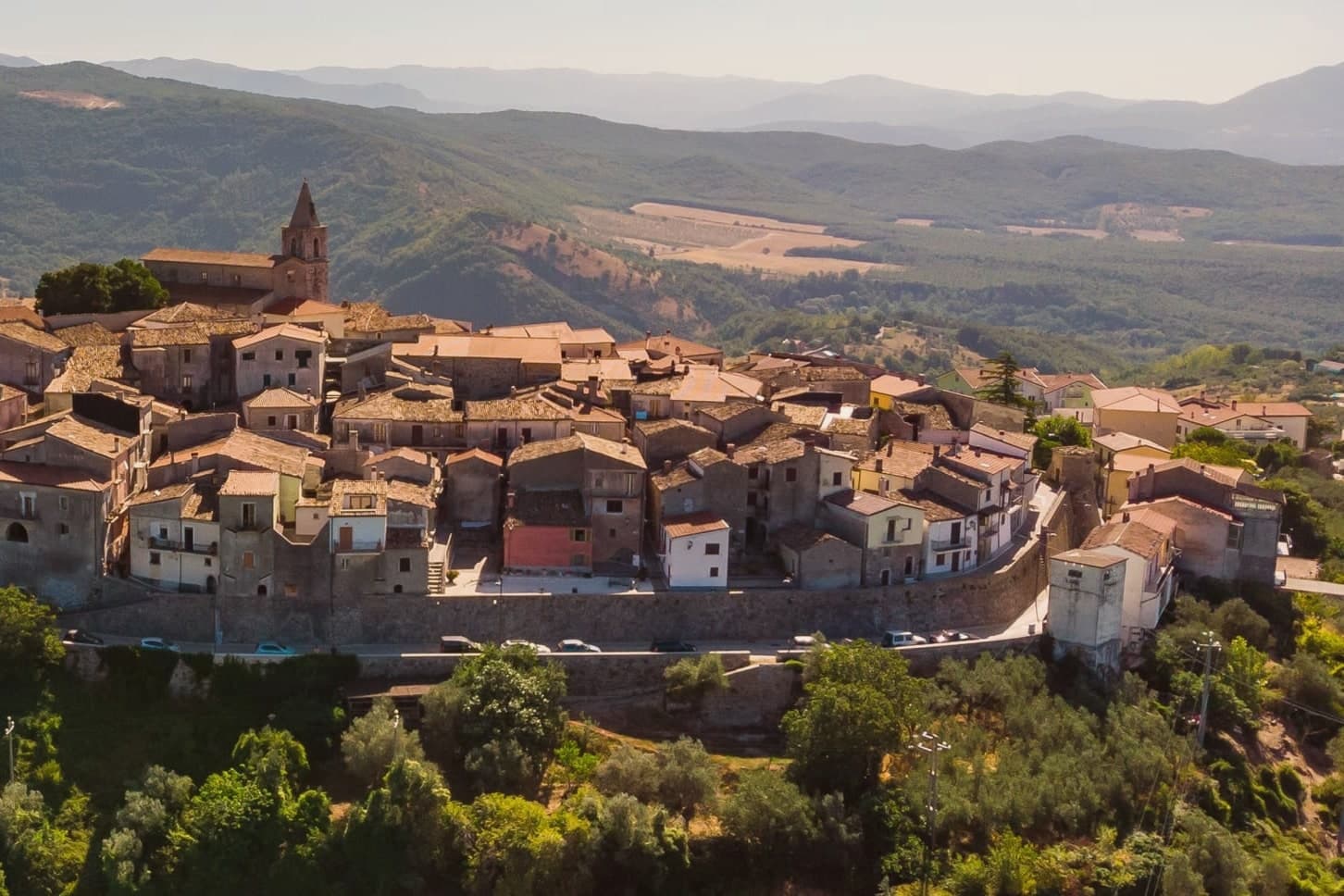
Fornelli sits at 530 meters on a hill west of Isernia, surrounded by olive groves and oak woods on the southern edge of the Parco Nazionale d'Abruzzo, Lazio e Molise. The village is documented from the tenth century as one of the castles defending the abbey of San Vincenzo al Volturno, and its name probably comes from the furnaces that once worked iron and brick on the slope.
What stands today is one of the best-preserved medieval wall circuits in Molise, accessed through a single gate that once had a drawbridge and moat. Seven towers ring the perimeter; the Palazzo Baronale anchors the centro storico with its circular corner towers and Baroque facing.
Annunziata Lombardi, mother of US Speaker Nancy Pelosi, was born here in 1909 and left for Baltimore as a toddler. The town carries three institutional badges at once: Borghi più belli, Parco Nazionale, Città dell'Olio.
What to see in Fornelli
- Cinta muraria medievale. One of the best-preserved medieval wall circuits in Molise, with seven towers and a single gate that once carried a drawbridge and moat.
- Palazzo Baronale. Feudal palace at the heart of the borgo, with two circular corner towers and a Baroque-trimmed façade softening the fortified shell.
- Chiesa di San Michele Arcangelo. Parish church inside the walls, dedicated to the archangel and holding the village's principal religious artworks.
How to get to Fornelli
Napoli is roughly 102 minutes away by road.
Our tip
April through June and September into October are the months for Fornelli. The olive harvest begins in late October and runs through November, and the slopes below the walls fill with families and crates. Summer afternoons cross thirty degrees and the centro storico empties between three and six.
Taurasi
Why visit Taurasi
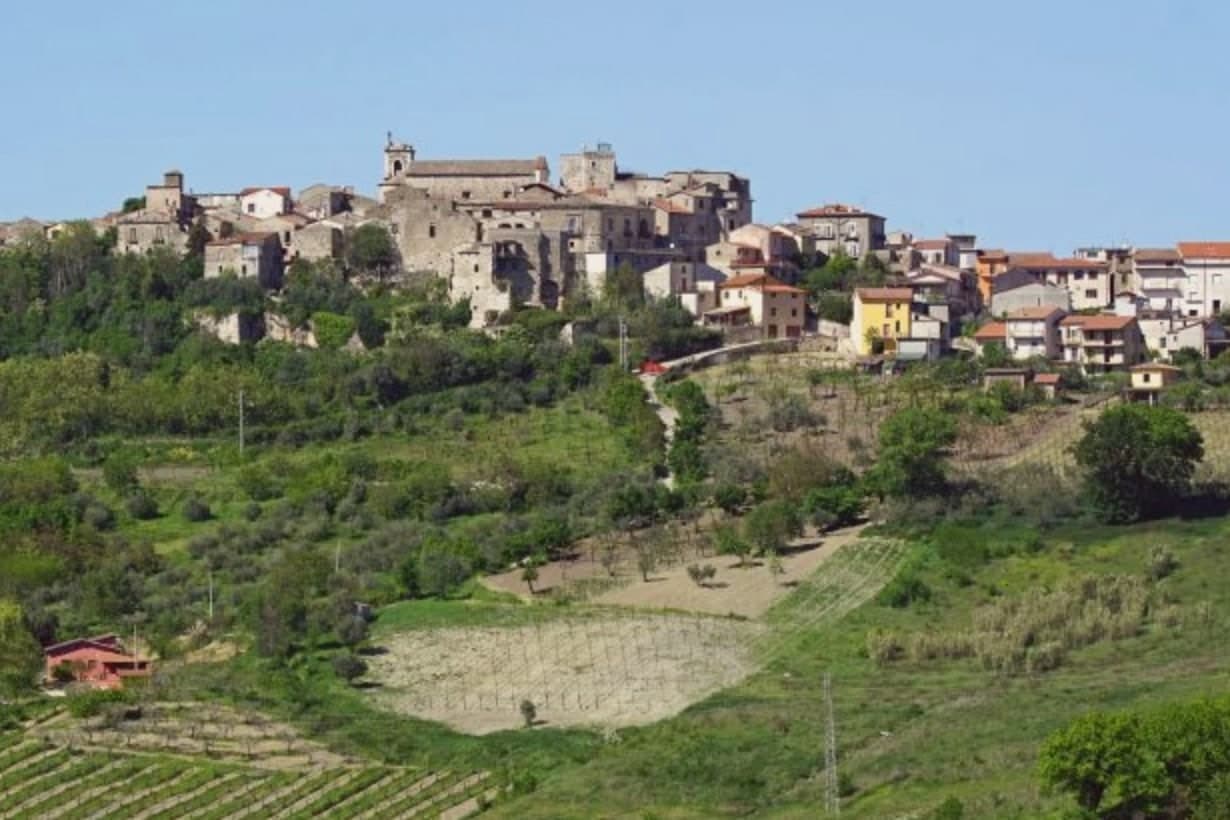
Taurasi sits at four hundred meters on a hill in the Media Valle del Calore, in the Irpinia of the Avellino province, forty kilometers inland from Salerno. The castle above the town was built in the seventh century by the Lombards, destroyed by Saracen raids between 900 and 910, rebuilt and extended by the Normans in the twelfth century with a square keep, and partly destroyed again by Alfonso d'Aragona's troops in 1461.
The Gesualdo, Filangieri, Ludovisi and Carafa families took it in turn through the early modern period, each leaving their mark on a structure that was never allowed to settle into a single style. The upper ridge holds the castle and its history of damage and repair.
The lower town holds the parish church and its patronal feast, the daily religious life set apart from the fortress above. Between them, the medieval center keeps three gates and the noble palaces that once answered to whichever family held the keep.
Around all of it, the vineyards run down the slopes, the same ground that has outlasted every family that held the castle above it. What the place adds up to is a hill town where the fortress changed hands over and over while the vines below kept producing, so the wine, not the castle, became the more durable claim to distinction.
What to see in Taurasi
- Castello Marchionale. The keep stands on the upper ridge, its stone showing the patchwork of repeated rebuilding across centuries of raids and sieges. The square Norman keep is the most legible surviving structure.
- Enoteca Regionale. Regional wine cellar inside the castle, with a Percorso Tau sensory route through the Taurasi, Fiano di Avellino and Greco di Tufo appellations.
- Centro storico. Medieval village with three surviving gates, Porta Sant'Angelo, Porta Piccola and Porta Maggiore, and noble palaces with corner towers.
How to get to Taurasi
Salerno is roughly 74 minutes away by road.
Our tip
April through June and September into October are the working months for Taurasi. The Aglianico vines bud in late spring, the slopes turn through copper into November after harvest. The vendemmia falls in late October, the latest in southern Italy because Aglianico ripens slowly.
Gesualdo
Why visit Gesualdo
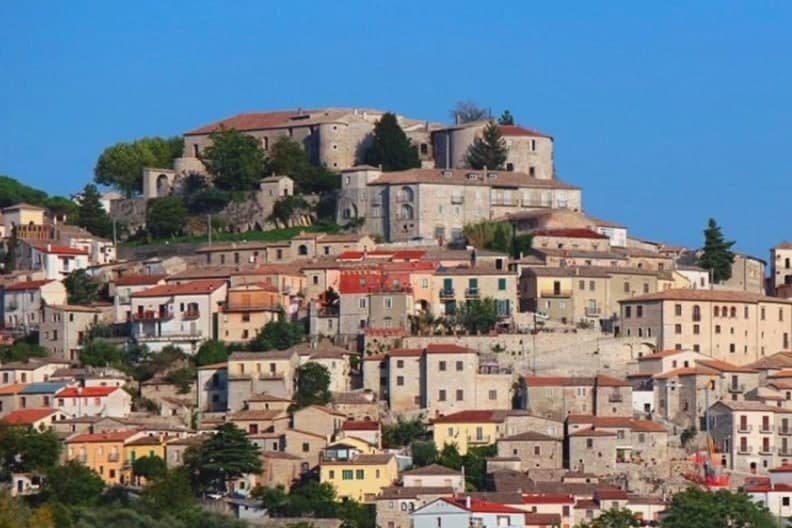
Gesualdo sits at 676 meters in central Irpinia, between the Fredane and Ufita valleys, 35 kilometers from Avellino. The castle on the hill is the reason the town exists in its present form: a Norman fortress raised in the 12th century, later rebuilt as a Renaissance court with frescoed apartments and an interior chapel.
The medieval village wraps around that hill, its stone houses set on the slopes above the two river basins, so the town reads as a single unit with the fortress at its head and the lower parish, home to the Chiesa del Santissimo Rosario, gathered below. The 1980 Irpinia earthquake damaged the castle severely, and reconstruction has been partial since the 2010s.
What stands today is a village still organized around a court that Carlo Gesualdo built for music and is remembered for a killing: the layout of Gesualdo, upper castle and lower village, mirrors the split in his own reputation, prince and composer above, the scandal that never left him below.
What to see in Gesualdo
- Castello di Gesualdo. Norman fortress of the 12th century, damaged in the 1980 earthquake and partly reopened in 2015 with restricted access. Carlo Gesualdo's frescoed apartments survive within, the rooms where the madrigals were composed and where Tasso and Marenzio were once received.
- Cappella di Santa Maria delle Grazie. Sixteenth-century chapel inside the castle complex, its frescoes commissioned by Carlo Gesualdo after his second marriage to Eleonora d'Este, a private space attached to the court rather than the parish.
- Centro storico di Gesualdo. Medieval village wrapped around the castle hill, stone houses on the slopes of the Fredane and Ufita basins, partly rebuilt after the 1980 earthquake.
How to get to Gesualdo
Salerno is roughly 80 minutes away by road.
Our tip
May through October is the comfortable window at 676 meters. June and September are the prime months: the temperature sits in the low twenties, the castle and the centro storico are walkable without summer heat, and the Gesualdo Festival of early music plays inside the castle complex on summer weekends. July and August run warmer at midday but the ridge cools after sundown.
Frigento
Why visit Frigento
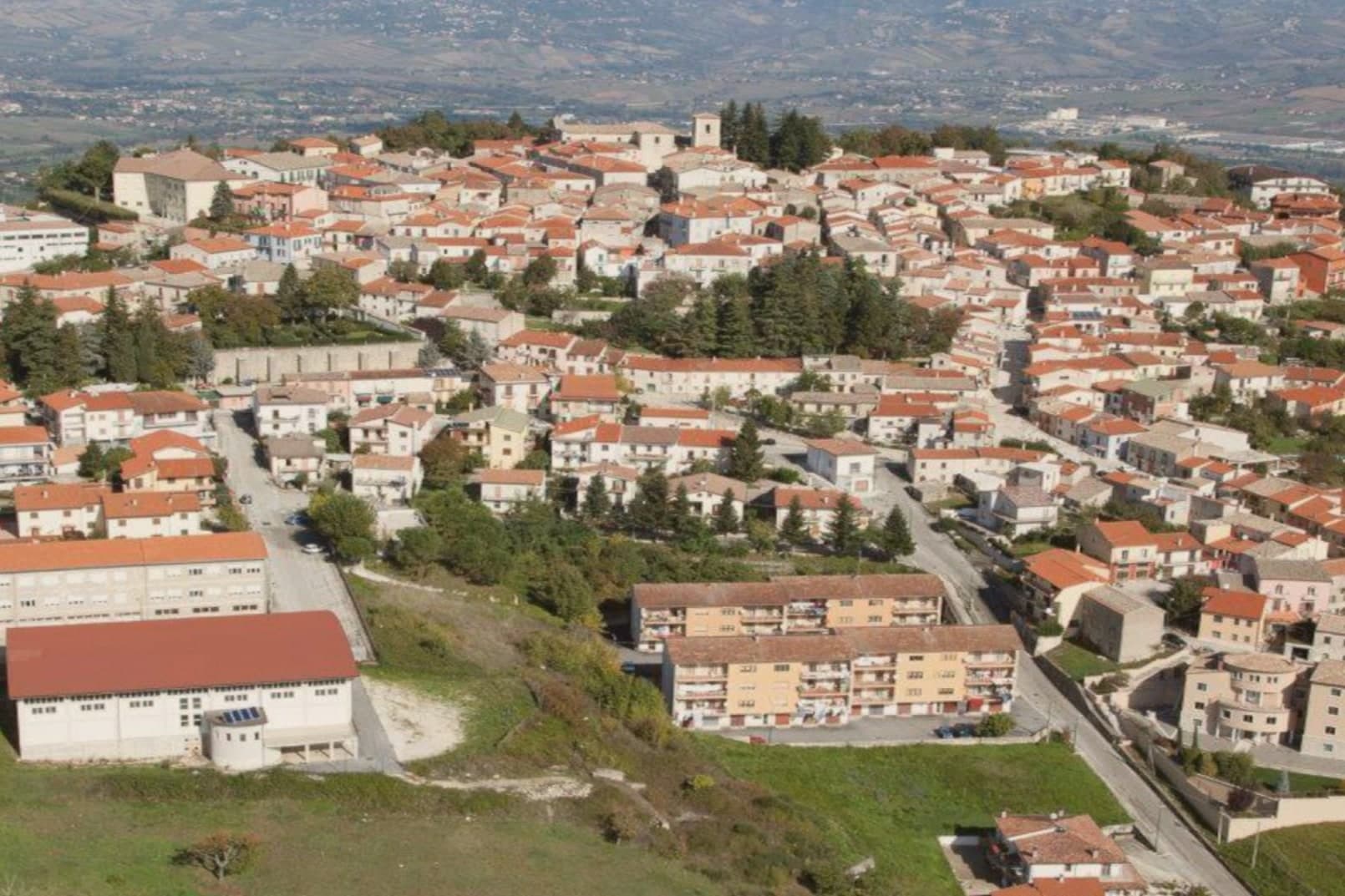
Frigento sits at 911 meters on a ridge in central Irpinia, 40 kilometers from Avellino, on a hill that overlooks the Ufita valley to the north, the Fredane to the south, the Ansanto to the east and the Calore to the west. The summit holds an opus incertum water complex from the 1st century BC, the Cisterne Romane, a vaulted chamber system probably built to serve a cluster of rustic villas linked to nearby Aeclanum on the Via Traiana.
The medieval village grew on top of the same ridge in the late Lombard period as a defensive site between the bishoprics of Benevento and Conza. The 1980 Irpinia earthquake hit the centro storico hard; reconstruction has been slow but most of the old village still stands in stone above the cisterns.
From the summit the view runs from the Apennines to the Daunia hills on a clear day. The commune is a Borgo più Bello d'Italia and a hazelnut and grain area, with cheese from the surrounding pastures.
What to see in Frigento
- Cisterne Romane. Opus incertum water complex from the 1st century BC at the highest point of the village, the largest preserved Republican cistern in Irpinia.
- Centro storico di Frigento. Medieval stone village on the summit ridge, partly rebuilt after the 1980 Irpinia earthquake, with the four-valley panorama from the upper streets.
- Chiesa di Santa Maria Assunta. Former cathedral of the Diocese of Frequentum, reconstructed after the 1980 earthquake, with a Renaissance baptismal font and a crypt.
How to get to Frigento
Salerno is roughly 84 minutes away by road.
Our tip
May through October is the comfortable window at 911 meters. June and September are the prime months: the temperature sits in the low twenties when Avellino below pushes the upper twenties, the four-valley views are clear, and the cistern site stays accessible. July and August can run warm at midday but the ridge cools off after sundown. Cicerchiamo falls in the season.
Minturno
Why visit Minturno
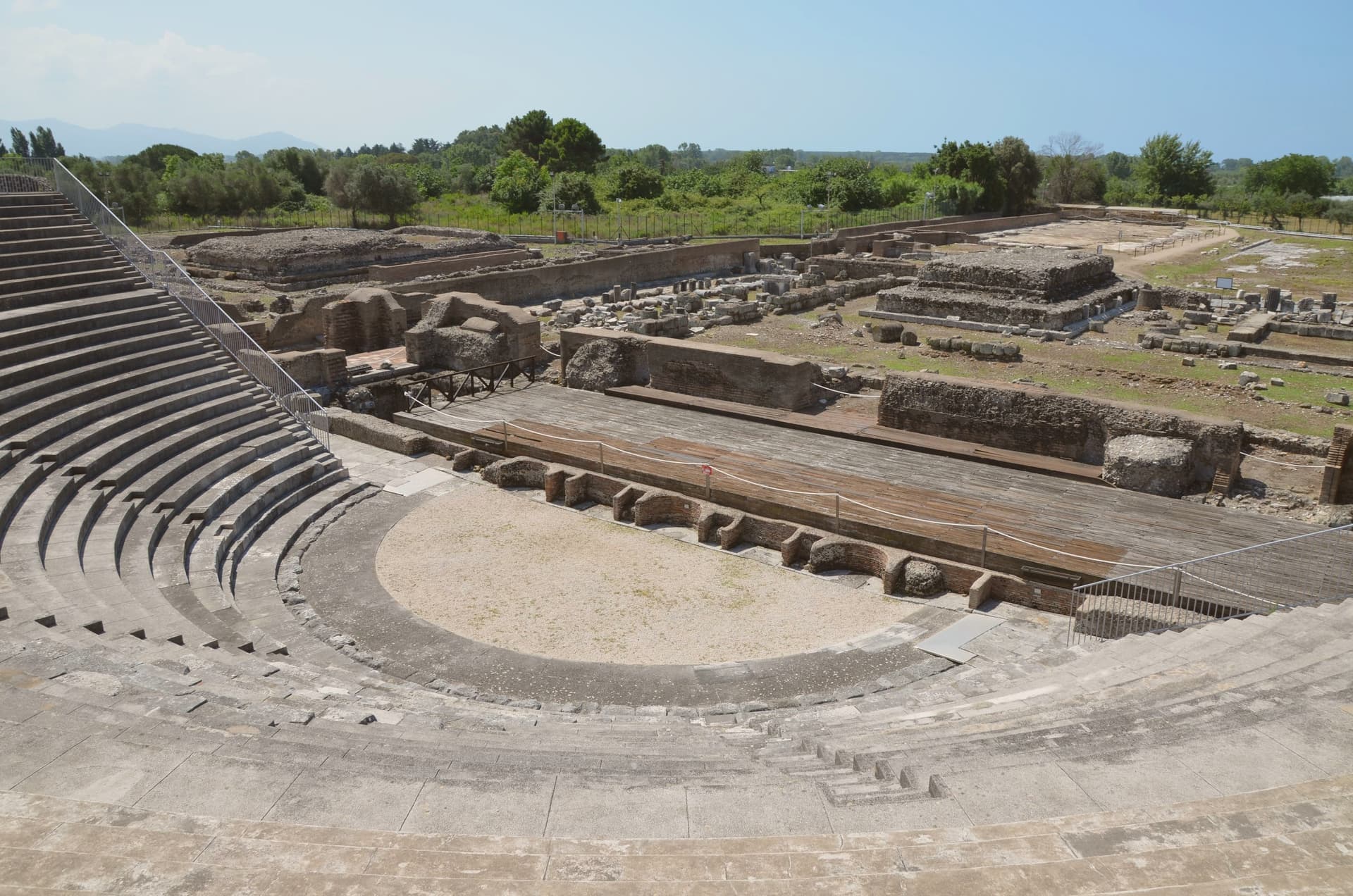
Minturno sits on a hill at 140 meters above the right bank of the Garigliano, with the Scauri and Marina coast running down from it to the Tyrrhenian. The two halves of the comune answer different needs and different centuries: the river mouth held the Roman colony and its flat, engineered plain, while the hill above took over as the medieval settlement once malaria and Saracen raids made the lowland unsafe to live on.
The castle at the center of the upper town carries that shift in its own fabric, with a ninth-century core built up over time by later lords. The coast has its own separate history again, flattened in 1943-44 as a battlefield on the German defensive line and rebuilt afterward around the bathing village of Scauri.
Olive country runs inland behind all of this, and the comune belongs to the Città dell'Olio network. What the town amounts to, then, is three settlements stacked in time rather than one: a Roman river port, a medieval hill town built in retreat from it, and a rebuilt postwar coast, each still legible in its own part of the comune.
What to see in Minturno
- Parco Archeologico di Minturnae. Theater, forum, aqueduct and amphitheater standing together at the river mouth, on the stretch of the Via Appia that once ran through the colony.
- Castello Baronale. Hilltop castle in the centro storico, its core built in the ninth century and expanded in stages by the Caetani and the Carafa through the medieval period.
- Basilica di San Pietro Apostolo. Basilica in the upper town holding a cosmatesque pulpit and Easter candlestick, both worked in the twelfth and thirteenth centuries.
How to get to Minturno
There is a railway station in the town, so you can arrive without a car and never need one while you are here. Napoli is roughly 79 minutes away by road.
Our tip
May through September is the season on the Garigliano coast. June and September give the best balance of warm sea and emptier beaches; July and August fill with Roman and Neapolitan weekenders and the seaside road slows. October is still warm enough to swim on calm days, and the inland olive harvest in late October and November is the busiest moment in the upper town.
Isernia
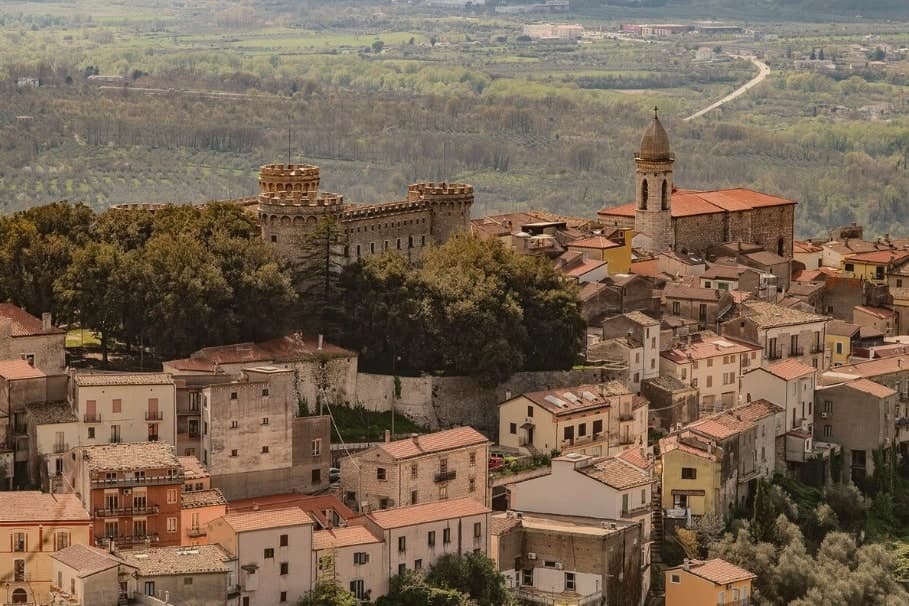
Why visit Isernia
Isernia stands on a narrow rock spine between two rivers, 423 meters above sea level, in the upper Volturno valley. The hill is one of the oldest inhabited places in Europe.
The archaeological site of Isernia La Pineta has yielded tools and animal bones dated to about 700,000 years ago and the milk tooth of a child who lived 583,000 years ago. The Pentri Samnites built Aesernia here in the seventh century BC; Rome took it in 295 BC and founded a Latin colony in 264 BC.
The medieval city replaced the Roman streets with its own grid, and in 1240 the public Fontana Fraterna went up in the centro storico, six water jets behind a stone arcade made of repurposed Roman blocks. The Cattedrale di San Pietro Apostolo, built from 1349 on the foundations of a Samnite-era temple, sits a short walk away.
Isernia carries the Città del Tartufo mark for the white truffle harvested in the surrounding woods.
What to see in Isernia
- Museo Nazionale del Paleolitico (Isernia La Pineta). Archaeological site and museum showing tools and bones dated to 700,000 years ago, one of the oldest human sites in Europe.
- Fontana Fraterna. Thirteenth-century public fountain with six water jets behind a stone arcade, made of repurposed Roman blocks.
- Cattedrale di San Pietro Apostolo. Cathedral begun in 1349 on the foundations of a third-century-BC Italic temple, seat of the Bishop of Isernia-Venafro.
How to get to Isernia
There is a railway station in the town, so you can arrive without a car and never need one while you are here. Napoli is roughly 103 minutes away by road.
Our tip
April through October is the open season. Spring brings the Volturno valley green and the truffle hills back into walkable shape. June and September are the cleanest months for the centro storico.
Ariano Irpino
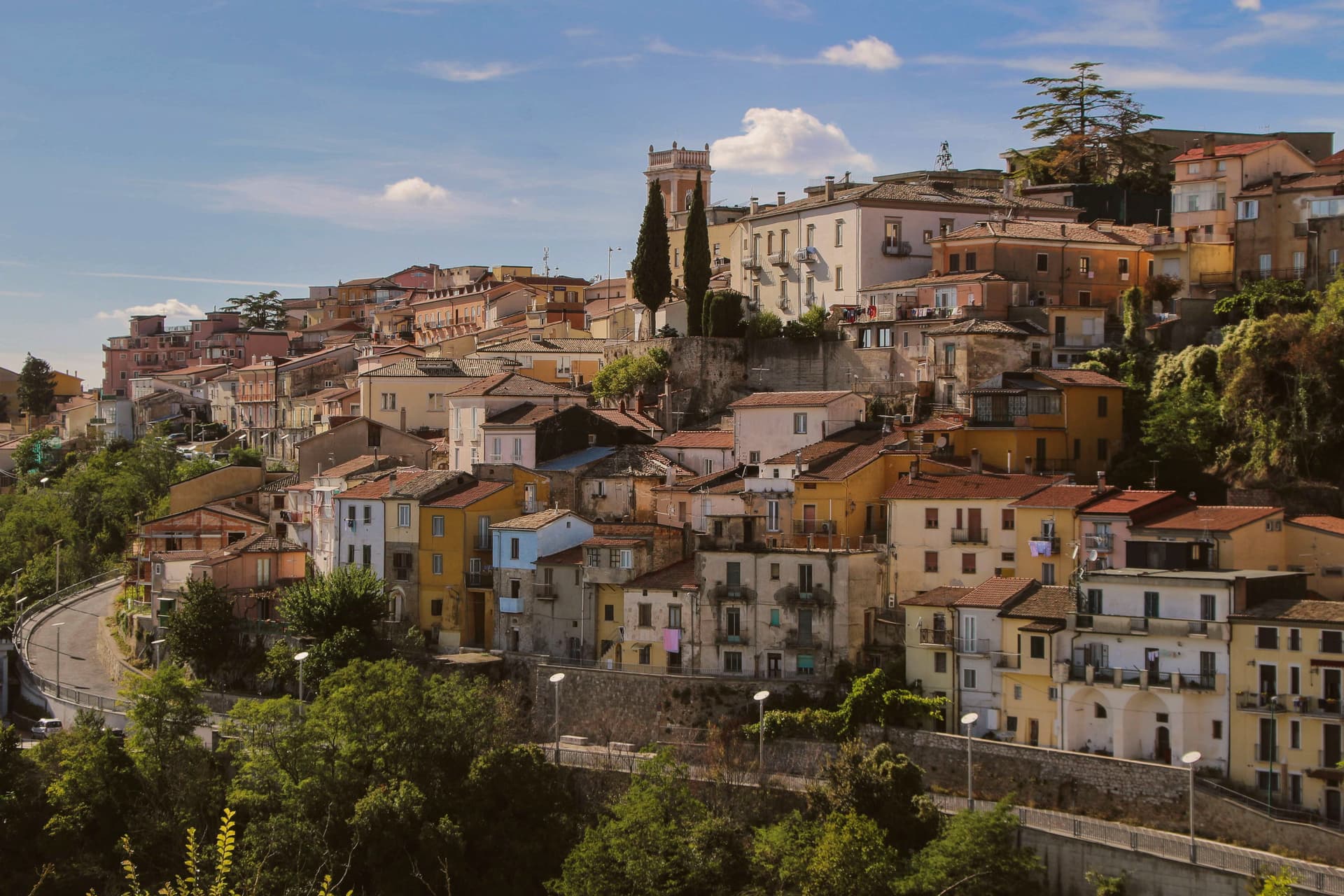
Why visit Ariano Irpino
Ariano Irpino rises on three hills, Castello, Calvario and San Bartolomeo, at 788 meters above sea level, where the Apennines narrow into the pass between Campania and Apulia. The Lombards held it, the Normans rebuilt the castle, and in the summer of 1140 Roger II convened the Assizes of Ariano, the forty-clause legal code that unified Norman, Lombard, Byzantine, Latin canon, Muslim and Jewish law for the Kingdom of Sicily.
The cathedral, dedicated to the Assumption, was completed in its current form in 1736. Ariano's majolica, glazed ceramic made here in waves of style since the medieval period, hit its peak in the eighteenth century with eleven kilns and twenty-nine craftsmen; the Museo Civico e della Ceramica in Palazzo Forte holds more than 250 pieces from the fourteenth century forward.
Known as Ariano di Puglia until 1930, the town carries both the Città dell'Olio and Città della Ceramica designations.
What to see in Ariano Irpino
- Castello Normanno. Norman fortress on the highest of the three hills, anchor of the Assizes of Ariano in 1140 and the strategic pass between Campania and Apulia.
- Cattedrale di Santa Maria Assunta. Cathedral of the Ariano-Lacedonia diocese, completed in its current form in 1736 by bishop Filippo Tipaldi.
- Museo Civico e della Ceramica. Civic and Ceramics Museum in Palazzo Forte, over 250 majolica pieces from the fourteenth century onward, the record of Ariano's kiln tradition.
How to get to Ariano Irpino
There is a railway station in the town, so you can arrive without a car and never need one while you are here. Foggia is roughly 64 minutes away by road.
Our tip
May through October is the open season at 788 meters: warm days, cool nights, and clear air across the Ufita valley. July and August are tolerable up here while the Foggia plain bakes; the August Festa della Madonna fills the Tricolle. April and November are shoulder months with shifting weather.
More from Anywhere Italy
- The best olive oil towns within two hours of Salerno
- The 9 best olive oil towns in Campania
 The prettiest villages in the province of Avellino
 The best towns known for their meat within two hours of Naples
 The best olive oil towns within 90 minutes of Napoli
 The best towns you can reach by train in the province of Avellino