
Marche · Ancona
Morro d'Alba
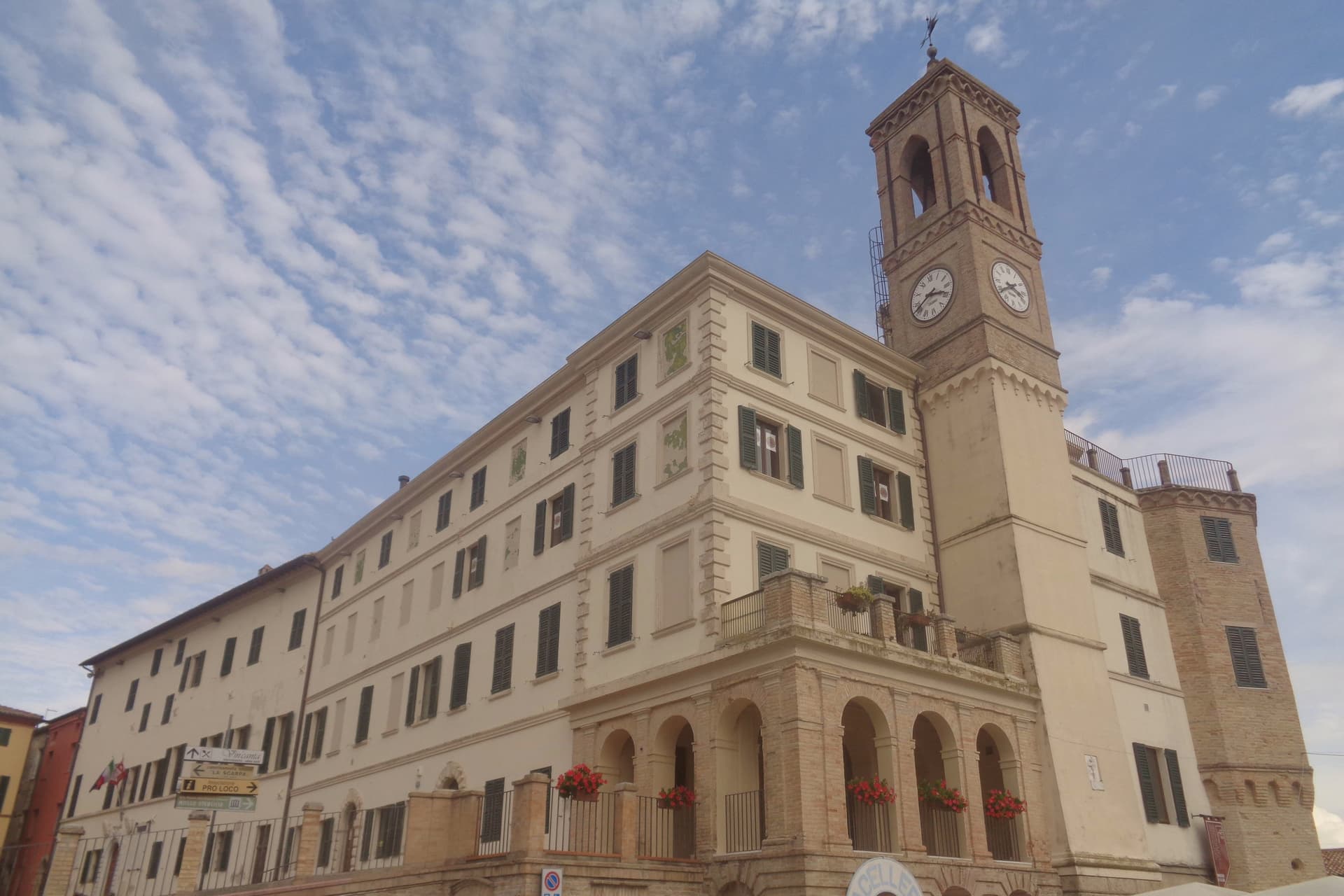
A walled Castello di Jesi above the Esino valley, ringed by a covered walkway found nowhere else in Italy.
- Best time
- Apr–Oct
- By car
- 42 min from Ancona
- Population
- 1,798
Known for
LACRIMA
Thin-skinned black grape recovered in recent decades and granted DOC in 1985, weeping juice from ripe berries through cracked skin, first chronicled in 1167.
LA SCARPA
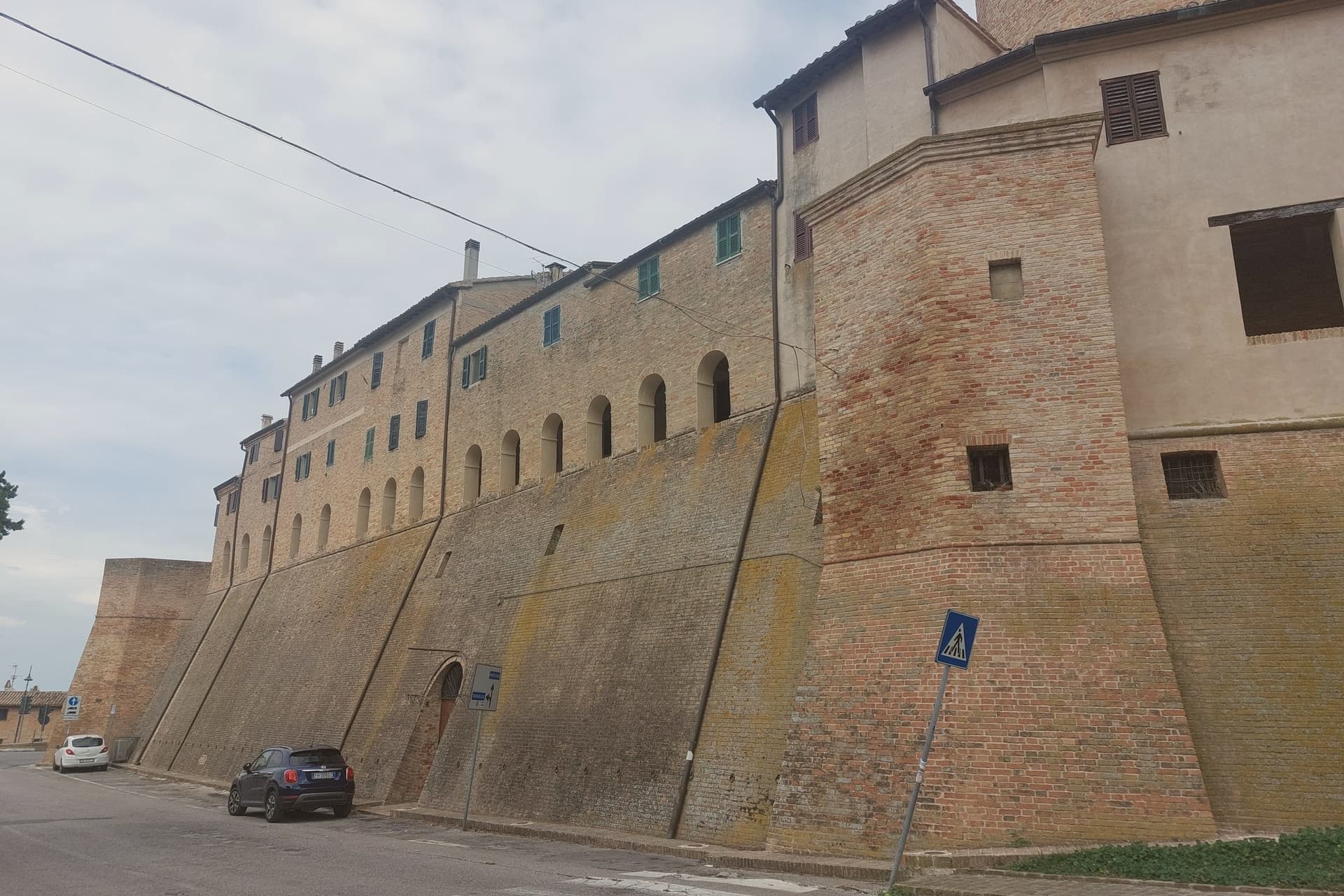
300-meter covered ring walkway around the walls, opened to private dwellings by 1654 municipal decision, the only one of its kind in Italy.
CASTELLI DI JESI
One of the historic Castelli that ring the lower Esino valley, with Frederick Barbarossa choosing its walls as residence during the 1167 siege of Ancona.
When to visit
Best · Apr–Oct
- J10°
- F12°
- M13°
- A16°
- M21°
- J27°
- J30°
- A29°
- S25°
- O20°
- N15°
- D11°
- Best
- Hot or crowded
- Quiet
- Mostly closed
Daytime averages, 2020–2024. Weather data by Open-Meteo.com.
Why come
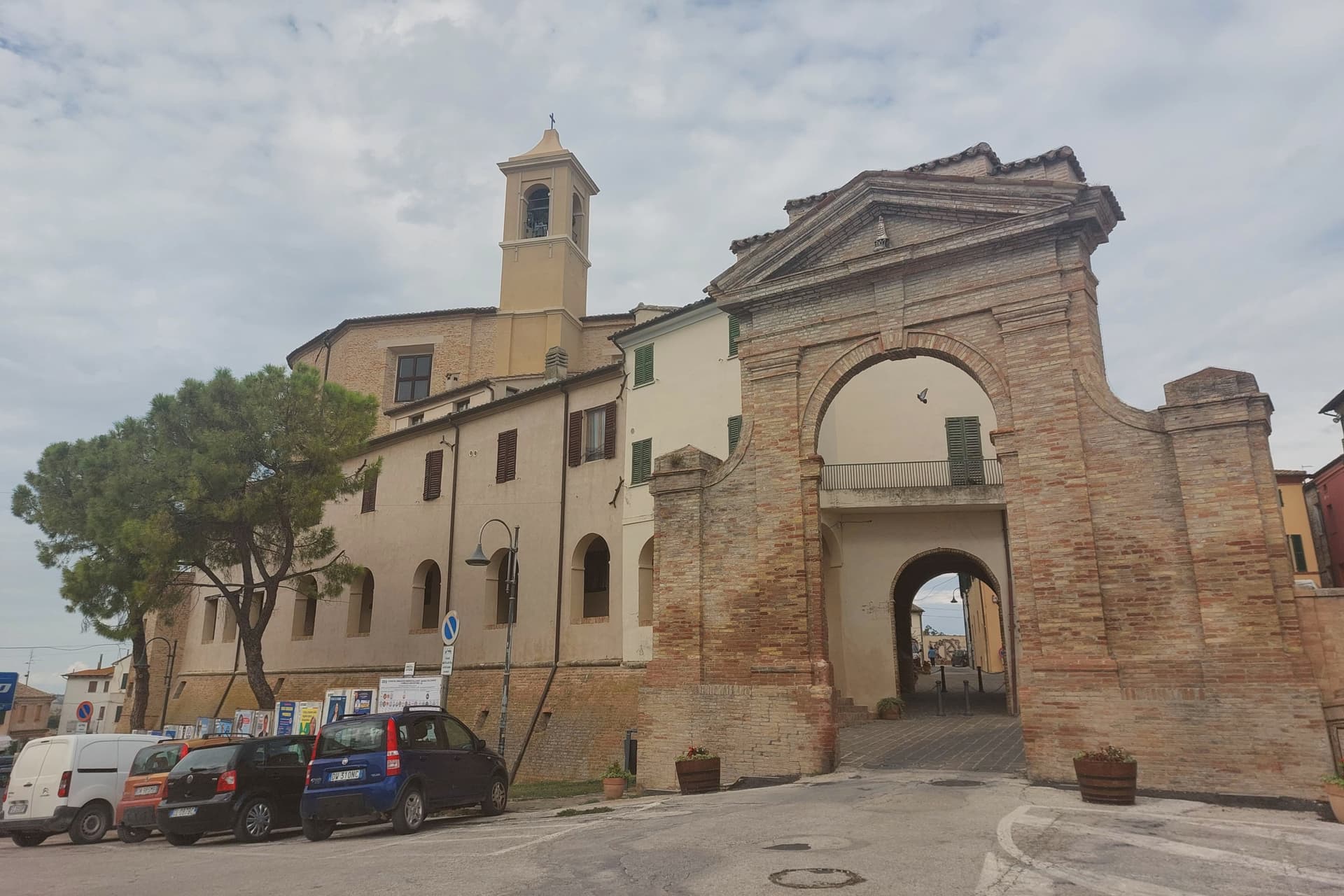
Morro d'Alba sits on a hill twelve kilometers northwest of Jesi, one of the Castelli that ring the lower Esino valley. The walled village is built around La Scarpa, the covered ring walkway that runs the full perimeter of the medieval walls; a 1654 municipal decision authorized residents to build dwellings directly onto the fortifications, and those houses still open onto the walkway today, which is why it is covered rather than open like a typical wall-walk. The piazza at the center of the borgo, flanked by the parish church and the town hall, gives onto the stairs that climb to La Scarpa, so the civic life of the village and its defensive ring are joined at a single point of access.
The grape that carries the town's name beyond the valley, Lacrima, was first mentioned in a chronicle the same year Frederick Barbarossa took the castle as his residence during the siege of Ancona, though the vine itself was only recovered as a distinct variety in recent decades. A small hill village, then, whose walls turned into houses and whose grape turned into a wine, both taking centuries to be reclaimed as what they are now known for.
The Sunday letter
Morro d'Alba is on our list. Its letter is still to come.
We are writing about all 1,000 of these towns, one at a time, in a free letter every Sunday: the photo, the food, the festa. That is our mission. Sign up and you will be there when Morro d'Alba comes up. By Peter & Sophia, from Pietrasanta.
How to get there
From Ancona / Pescara (AOI), about 28 minutes by car.
Rimini (RMI) is about 1h 25m away.
By car from the centre of Ancona 42 minutes or Perugia 1h 45m.
Coming by train into Rimini? Morro d'Alba is about 1h 9m away by road.
What to see
La Scarpa
Flanked by arcades along its full length, the walkway offers views across the surrounding hills to the Sibillini and to the Conero on clear days, the houses built into the fortifications visible from below.
Piazza Romagnoli
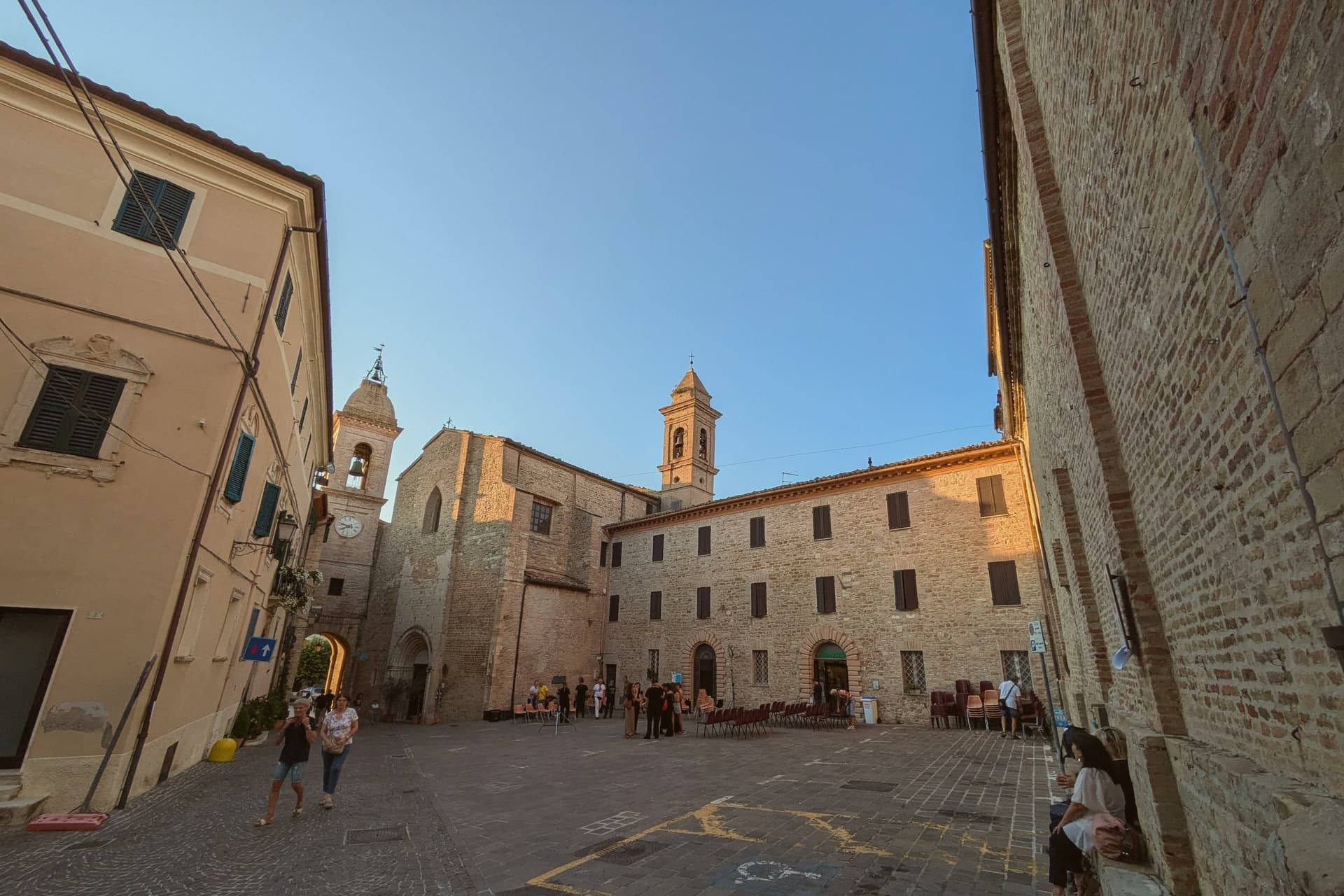
Central piazza of the walled borgo, flanked by the parish church and the municipal palace, opening onto the access stairs to the walkway above.
Chiesa di San Gaudenzio
Parish church on the main piazza, of medieval origin, rebuilt across the centuries inside the walled circuit of the Castello di Jesi.
Museo Utensilia
Civic museum of rural objects and trades from the Castelli di Jesi territory, in a vaulted space inside the medieval walls.
The slow-trip planner
Building a trip? Find where Morro d'Alba fits in a slow Italy circuit.
Answer five questions. We will shape a geographically coherent slow trip from the 1,000 Italian towns most travelers skip. Yours to save and share.
Living here
- Population 1,798
- Commuter belti
- Pharmacy in town
- High school within a 30-minute drive
- Nearest airport Ancona / Pescara, 28 min drive
- Regional capital Ancona, 42 min drive
Common questions
- What is Morro d'Alba known for?
- Morro d'Alba is a walled Castello di Jesi at 199 meters above the Esino valley, ringed by a covered walkway found nowhere else in Italy.
- Where is Morro d'Alba?
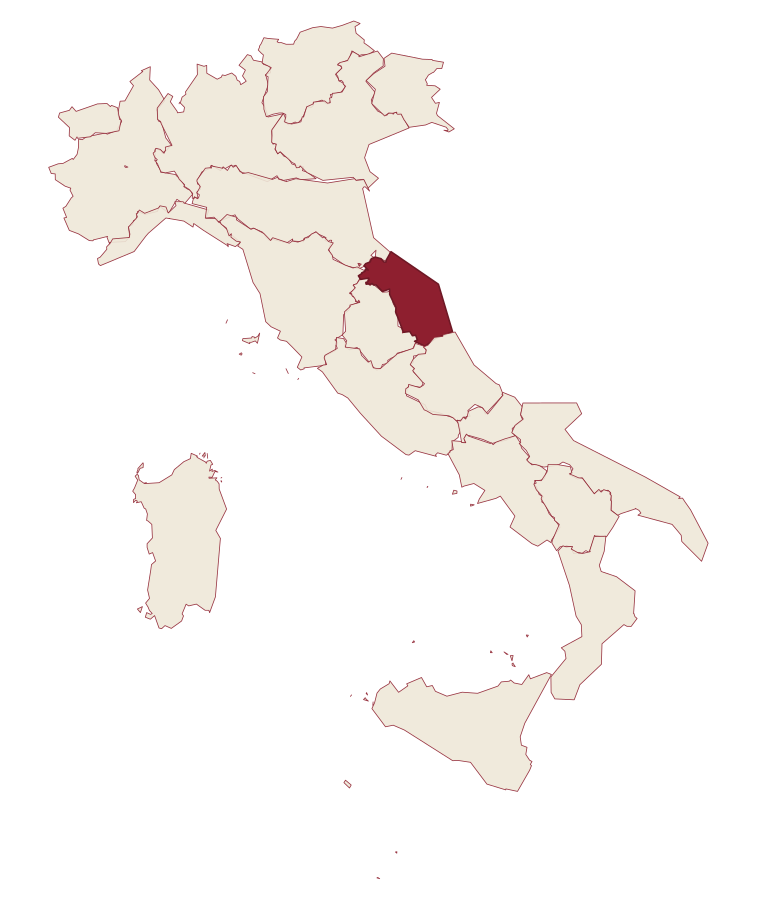
- Morro d'Alba is a comune in the province of Ancona, in Marche.
- What is the nearest airport to Morro d'Alba?
- Ancona / Pescara (AOI), about 28 minutes by car.
- How long is the drive from Ancona to Morro d'Alba?
- About 42 minutes by car.
- When is the best time to visit Morro d'Alba?
- Best in Apr–Oct. July is the warmest month, averaging 30 degrees, and March the wettest, with about 10 rain days.
- Which other towns are like Morro d'Alba?
- Grinzane Cavour, Arquà Petrarca and Volpedo.
- How many people live in Morro d'Alba?
- 1,798 at the 2023 count.
Tags & datadesignations · numbers · sources
Recognised as
The numbers
- Elevation: 199 m
- Population: 1,798
- Surface area: 19.46 km²
These figures were compiled from public directories: ISTAT, OpenStreetMap and Wikidata, and from the official listings of the guides named on this page. Town details change; verify with official sources before you travel.
Similar
Towns like Morro d'Alba
Grinzane Cavour
Province: Cuneo
both inland, away from the coast · both under 3,000 people
Arquà Petrarca
Province: Padova
both inland, away from the coast · both under 3,000 people
Volpedo
Province: Alessandria
both inland, away from the coast · both under 3,000 people
Badalucco
Province: Imperia
both inland, away from the coast · both under 3,000 people
Brugnato
Province: La Spezia
both inland, away from the coast · both under 3,000 people
Offagna
Province: Ancona
both inland, away from the coast · both under 3,000 people
🎨 Borghi più belli d'Italia
More Borghi più belli d'Italia towns in Marche
Arcevia
Province: Ancona
A hilltop borgo at 535 meters above the Misa and Nevola valleys, defended in the Middle Ages by a ring of nine satellite castles.
Cingoli
Province: Macerata
The Balcone delle Marche at 631 meters, a hilltop borgo where on clear days the view runs from the Sibillini to the Croatian coast.
Corinaldo
Province: Ancona
A walled hill borgo at 203 meters, ringed by 912 meters of intact medieval walls, and the birthplace of Saint Maria Goretti.
Esanatoglia
Province: Macerata
A medieval village of seven bell towers at 358 meters on the Marche-Umbria border, sitting at the source of the Esino river.
Fermo
Province: Fermo
The provincial capital on the Sabulo hill at 319 meters, with 2,200 square meters of Augustan Roman cisterns running under the centro storico.