
The prettiest villages that eat well in Abruzzo
Abruzzo builds in pale limestone, and the villages hold to the contour lines of the Maiella and the Gran Sasso like something grown rather than placed. The cooking is mountain cooking: maccheroni alla chitarra cut on a wire frame, arrosticini of castrato turned over a long narrow brazier, lamb with wild herbs, pecorino from flocks that still move up to the high pasture in summer. Autumn brings saffron from the Navelli plain, chestnuts, and the first of the heavy red Montepulciano. Winter shuts the passes and concentrates everything indoors, around wood ovens and long tables. Spring opens the meadows above the treeline, which is when the region looks least like the rest of Italy and most like itself.
Most visitors to Abruzzo go to the Parco Nazionale d'Abruzzo, Lazio e Molise for the bears and the beech forest, or else stop in L'Aquila to see what the reconstruction has managed. Both are worth the time. Both also concentrate almost everyone into a small number of car parks and a smaller number of restaurants, particularly in August and over the ski weekends. The park in high season has queues at trailheads that would surprise anyone who came expecting emptiness.
The mountains do not stop at the park boundary, and neither does the cooking. The same limestone ridges run north through the Maiella and east towards the Adriatic, and the villages strung along them keep their butchers, their pasta makers and their guide-named kitchens, with fewer people at the tables. These are the smaller places: hill towns above the Aterno, a village on the coastal cliffs near the trabocchi, a stone town on the high plain where the winters are serious. Worth a detour, and worth arriving hungry.
Of the 73 communes we have mapped in Abruzzo, 7 qualify as prettiest villages that eat well: each has passed the national assessment of Italy's most beautiful villages, and a dining guide has named a table in each. The smallest, Pescocostanzo, has 1,081 residents.
Two more lists worth reading alongside this one: The prettiest small villages that eat well within 90 minutes of Pescara and The prettiest villages inside a national park within 90 minutes of Pescara.
Pescocostanzo
Why visit Pescocostanzo
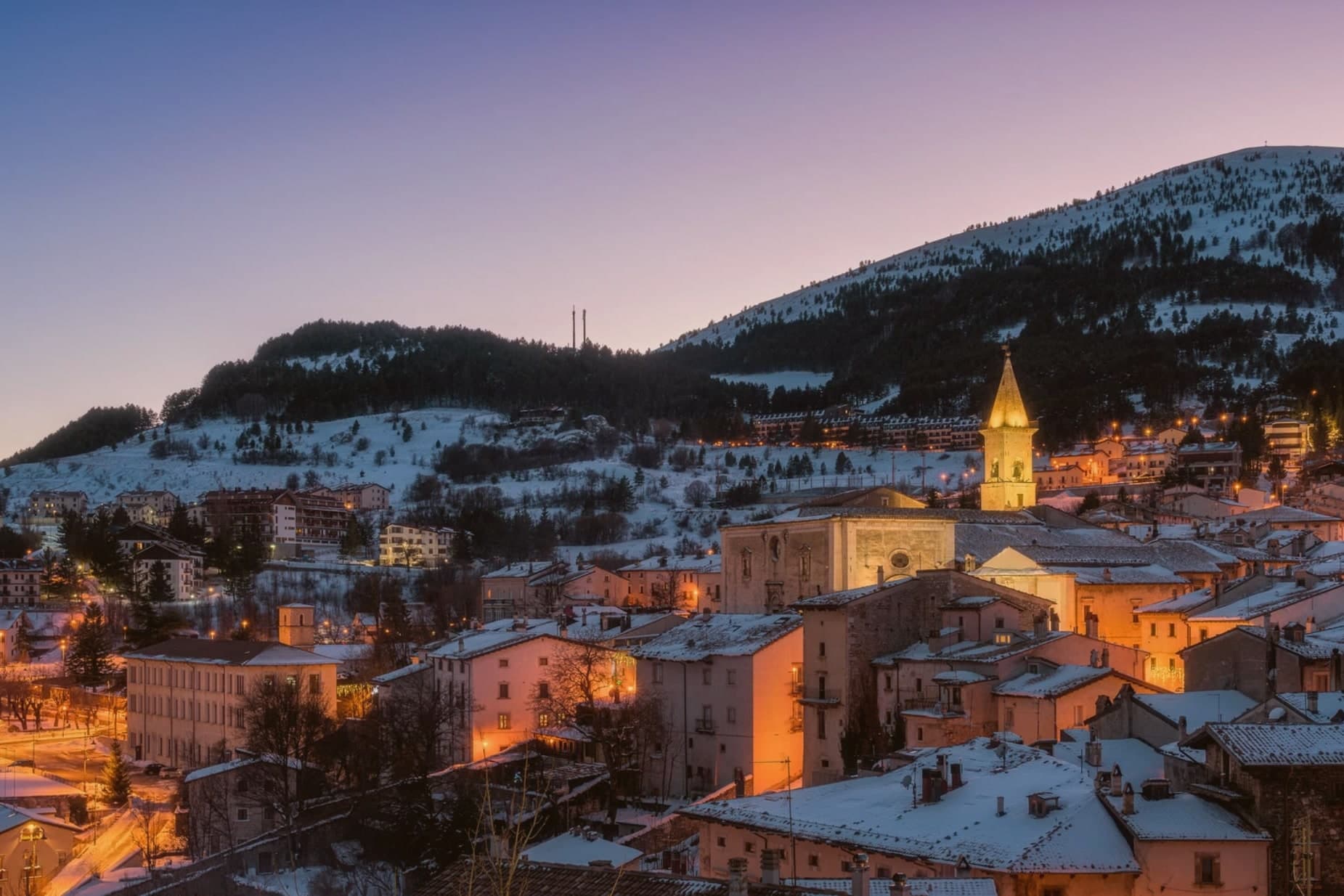
Pescocostanzo sits at 1,395 meters at the southern edge of the Quarto Grande plateau, the high karst basin above the Sangro valley. The town was reshaped between 1456 and the eighteenth century under the Capua family and a generation of Lombard masons who arrived to build for them.
The plan is unusually regular for a mountain commune: a grid of stone houses oriented to the wind, surrounded by woods and pasture. The Collegiata di Santa Maria del Colle, restructured by Cosimo Fanzago in the seventeenth century, is one of the rare five-nave churches in Abruzzo.
Its wrought iron Chapel of the Sacrament gate, made by Sante di Rocco between 1699 and 1707, is the masterpiece of local ironwork. Bobbin lace, merletto al tombolo, is still made here.
The Museo del Merletto a Tombolo inside Palazzo Fanzago shows the technique and the patterns. Filigree gold, carved wood, and lace are still sold on the Corso Roma.
La Corniola, Essentia have been named by a guide.
What to see in Pescocostanzo
- Collegiata di Santa Maria del Colle. Five-nave church begun in the late Middle Ages and remodeled by Cosimo Fanzago in the seventeenth century.
- Museo del Merletto a Tombolo. Inside Palazzo Fanzago, displays the local bobbin lace tradition with patterns, tools, and live demonstrations.
- Palazzo Fanzago. Designed by the baroque architect Cosimo Fanzago in 1624, the seat of the lace museum and civic offices.
How to get to Pescocostanzo
Pescara is roughly 84 minutes away by road.
Our tip
December through March brings snow and the ski season, with the Monte Calvario lifts linking to the Alto Sangro system at Roccaraso and Rivisondoli twenty minutes away. June through September is the second season. At 1,395 meters Pescocostanzo rarely crosses twenty-two degrees even in August, and the Bosco di Sant'Antonio offers beech-shaded walks.
Pacentro
Why visit Pacentro
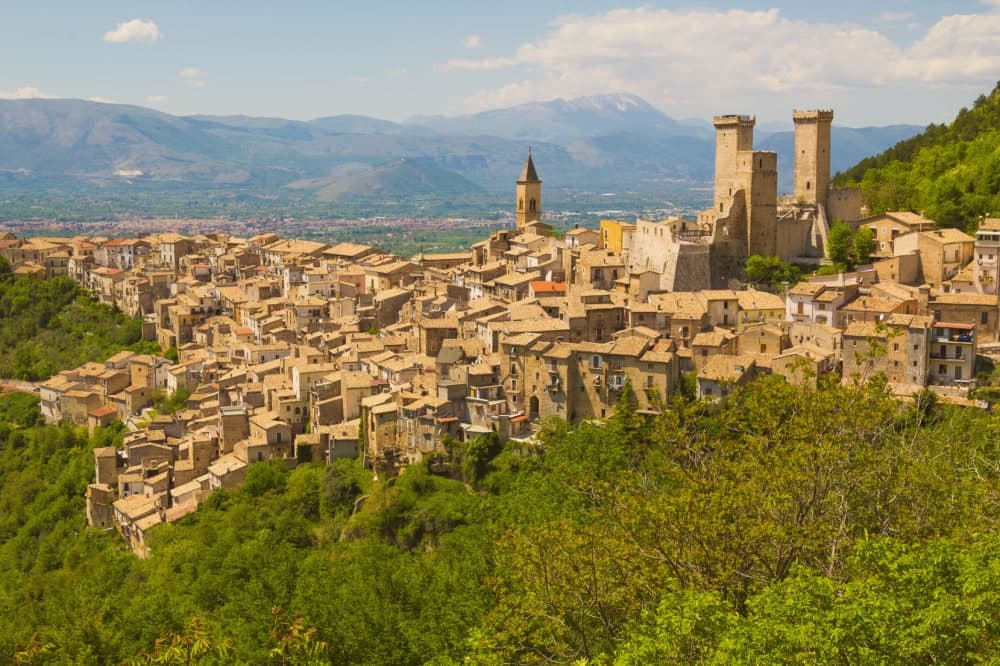
Pacentro sits at 650 meters on a hill spur in the Peligna valley, eight kilometers from Sulmona and inside the Maiella National Park. The Castello Caldora, with its three surviving square towers, dominates the village from the Colle Castello above.
The site has held a castle since the eleventh century; the structure visible today was begun by the Caldora-Cantelmo family in the late fourteenth century and bought by the comune in 1957 and restored. On the first Sunday of September, the Corsa degli Zingari sends barefoot runners down a rocky slope from Monte Ardinghi into the village in honor of the Madonna di Loreto.
The race is documented since the fifteenth century. The other thing people come for is the Ciccone house.
Madonna's paternal grandparents, Gaetano Ciccone and Michelina Di Iulio, emigrated from Pacentro in 1919. The pop singer visited in 2013.
Taverna dei Caldora have been named by a guide.
What to see in Pacentro
- Castello Caldora-Cantelmo. Late fourteenth-century fortress on the Colle Castello, three of its four corner towers still standing, restored after 1957.
- Borgo medievale. Stone houses arranged on terraces below the castle, listed among the Borghi più belli d'Italia, preserved in its medieval plan.
- Chiesa di Santa Maria Maggiore. Sixteenth-century parish church with a baroque interior, holding the Madonna di Loreto honored in the September race.
How to get to Pacentro
Pescara is roughly 69 minutes away by road.
Our tip
May through October is when Pacentro opens. The first Sunday of September brings the Corsa degli Zingari and the biggest crowd of the year, with runners descending barefoot from Monte Ardinghi and the village in procession by evening. July and August can be warm in the valley but the elevation keeps Pacentro itself cooler than Sulmona below.
Scanno
Why visit Scanno
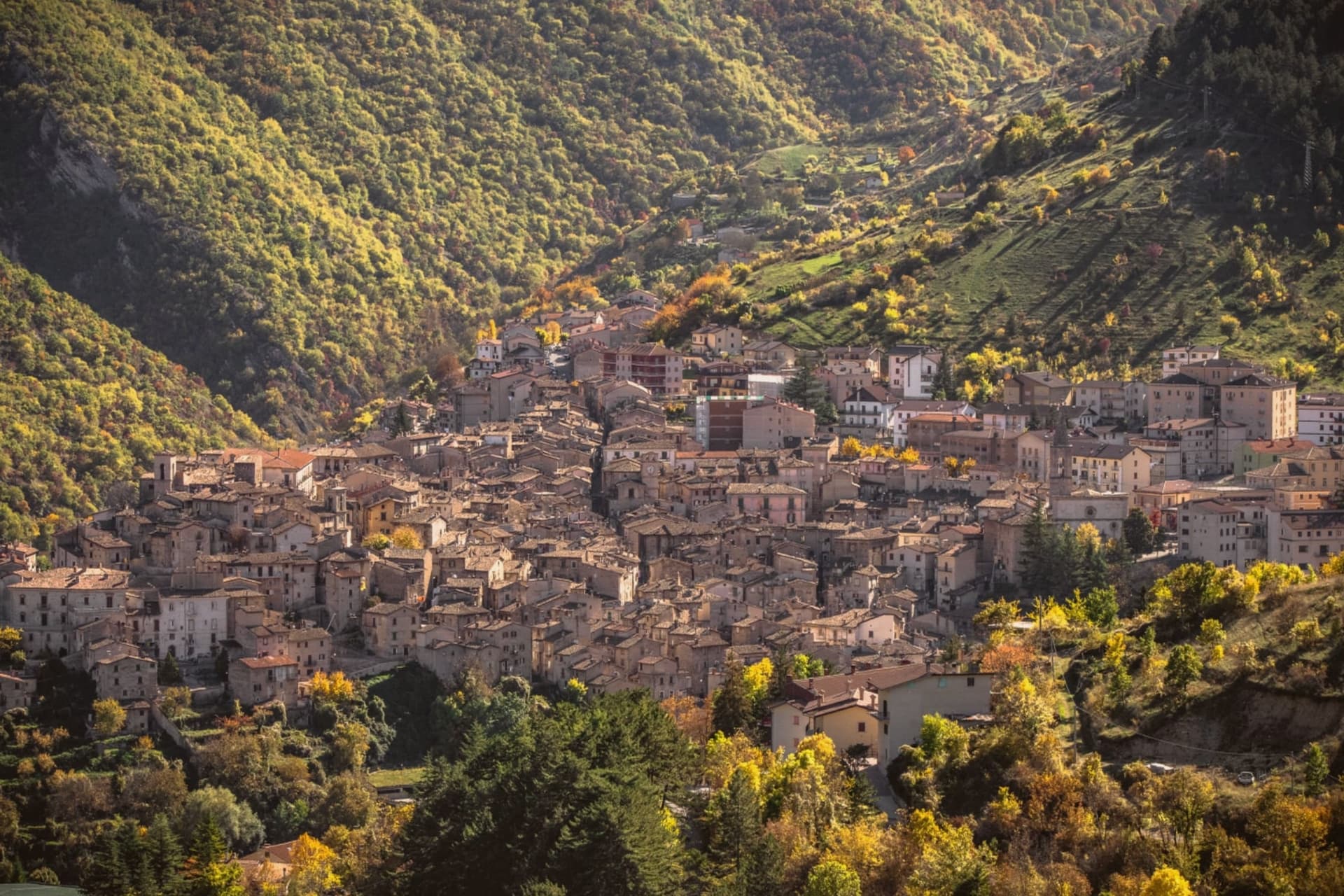
Scanno sits in the Sagittario valley, ringed by the Majella foothills and the Marsicano massif. The lake lies three kilometers down the valley from the town, at a lower elevation, so the walk between them moves from stone alleys to open water framed by the same slopes that produced it: a landslide off the mountain dammed the Tasso river and left the basin behind.
The town's isolation, closed in by the surrounding massifs, is what let the older costume and its headdress survive into the era of the camera, and it is what drew photographers to record it rather than something they invented. The goldsmiths' filigree, made in the same stone streets the women walked, belongs to the same thread: a village shaped by its enclosure in the mountains, still making by hand what it has always made.
Terra dell'Albergo Centrale Scanno have been named by a guide.
What to see in Scanno
- Lago di Scanno. Seen from above, the water reads as a clean heart shape against the valley walls.
- Centro storico. Stone-alley medieval centre where the black costume, with its folded headdress some historians trace to Balkan or Eastern origins, is still worn by older women against limewashed walls.
- Chiesa di Santa Maria della Valle. Parish church first documented in the eleventh century, rebuilt in the seventeenth, with a Renaissance portal and Baroque interior.
How to get to Scanno
Pescara is roughly 80 minutes away by road.
Our tip
June through September is the summer window: trails open in the national park, the lake holds a Blue Flag for swimming, and the centro fills with photographers chasing the Giacomelli setups. December through March is the second season for snow, with skiing on Monte Rotondo and Passo Godi nearby. April, May, October and November are quiet, with many family-run hotels closed and the lake side restaurants shuttered.
Caramanico Terme
Why visit Caramanico Terme
The name carries the Lombard arimannia, a settled clan of the late Middle Ages, and the town grew under the D'Aquino family in the fourteenth and fifteenth centuries, when the main religious buildings went up. Terme was added to the name in 1960, recognising what had been known and used since at least 1576, when the first chemical analyses of the local waters were recorded.
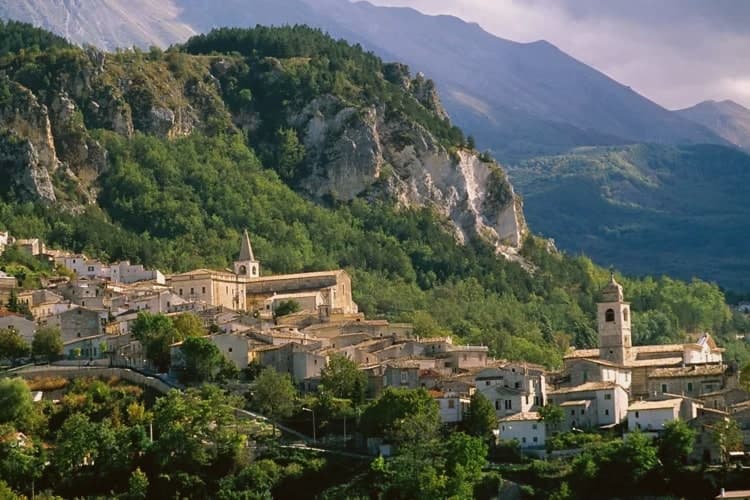
The village sits between Monte Morrone and the Majella, with the historic core on the hilltop above and the spa lower down, closer to the meeting of the two rivers. The abbey stands apart from both, five kilometers out, a separate outpost from the town it belongs to.
What holds the place together is the water: a medieval settlement, a fourteenth-century noble family's building program, and a twentieth-century name change all trace back to the same springs that first drew analysis in 1576.
Locanda del Barone have been named by a guide.
What to see in Caramanico Terme
- Abbazia di San Tommaso Becket. Romanesque, standing unfinished since work stopped, the walls left mid-build over the older pieve beneath. The distance from the centre keeps it apart from the rest of the town's sights, reached on its own.
- Chiesa di Santa Maria Maggiore. Fifteenth-century church with a Gothic exterior and an ogival portal showing the Coronation of the Virgin dated 1476.
- Terme di Caramanico. The spa complex built around the two springs, with treatment programs for respiratory, ENT, skin and joint conditions organized across the site today.
How to get to Caramanico Terme
Pescara is roughly 61 minutes away by road.
Our tip
The thermal baths run all year and pull a steady winter cure clientele. April through June and September into November are the best hiking months in the Orfento, with cool morning air through the beech wood and the river running fast. July and August are warm in the village but cool in the gorge; the spa's indoor pools are the summer escape. Mercato Settimanale Di Caramanico Terme falls in October.
Rocca San Giovanni
Why visit Rocca San Giovanni
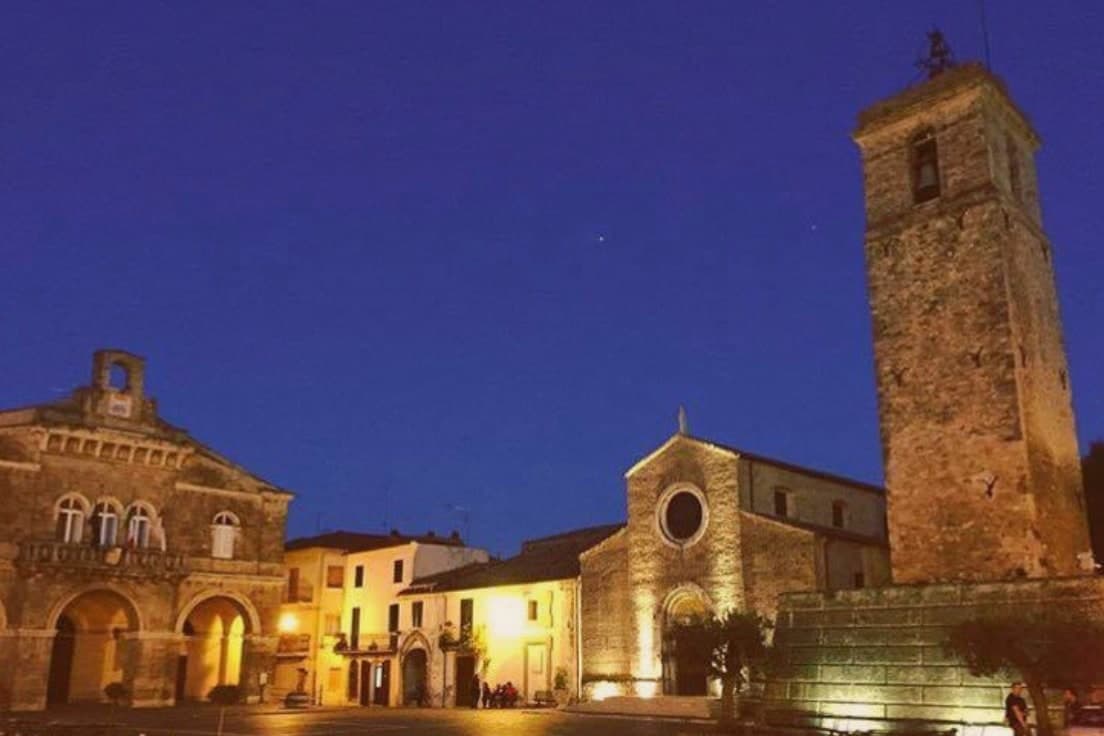
Rocca San Giovanni stands on a rocky hill above the Adriatic between the mouths of the Sangro and Feltrino rivers. The village was founded by Oderisius I, abbot of the nearby abbey, who feared Norman advances on Chieti and built a fortified settlement as a defensive outpost for his monastery.
The relationship between the two places is vertical: the abbey holds the lower slope toward the water, three kilometers down, while the fortified village occupies the high ground it was built to defend, the walls still tracing that original defensive purpose. The coast beneath both is fished from timber platforms that give the shoreline its name, and the old railway bed that once ran along that shore has become a path connecting the beach, the abbey, and the hill town in a single line of movement.
The vineyards run the other direction, down from the hill toward the sea, so the whole territory reads as a set of descending bands: castle, monastery, rail line, water, each built to serve or watch the one below it.
Caldora Punta Vallevò have been named by a guide.
What to see in Rocca San Giovanni
- Abbazia di San Giovanni in Venere. The abbey sits on a panoramic terrace above the Adriatic, one of Abruzzo's major religious sites, its Romanesque stone visible from the slope above long before the village walls come into view.
- Centro storico. The walled medieval core is listed among the Borghi più belli d'Italia, its streets narrow and contained within the old fortified perimeter built to watch the coast below.
- Chiesa di San Matteo Apostolo. Three-nave Romanesque parish church inside the walls, restored multiple times, with a nineteenth-century classical town hall alongside.
How to get to Rocca San Giovanni
There is a railway station in the town, so you can arrive without a car and never need one while you are here. Pescara is roughly 44 minutes away by road.
Our tip
May through September is the coastal season. The beaches below the village fill in July and August, but the centro storico above stays quieter. June and September are the best balance, when sea temperatures are good but the crowds thinner.
Guardiagrele
Why visit Guardiagrele
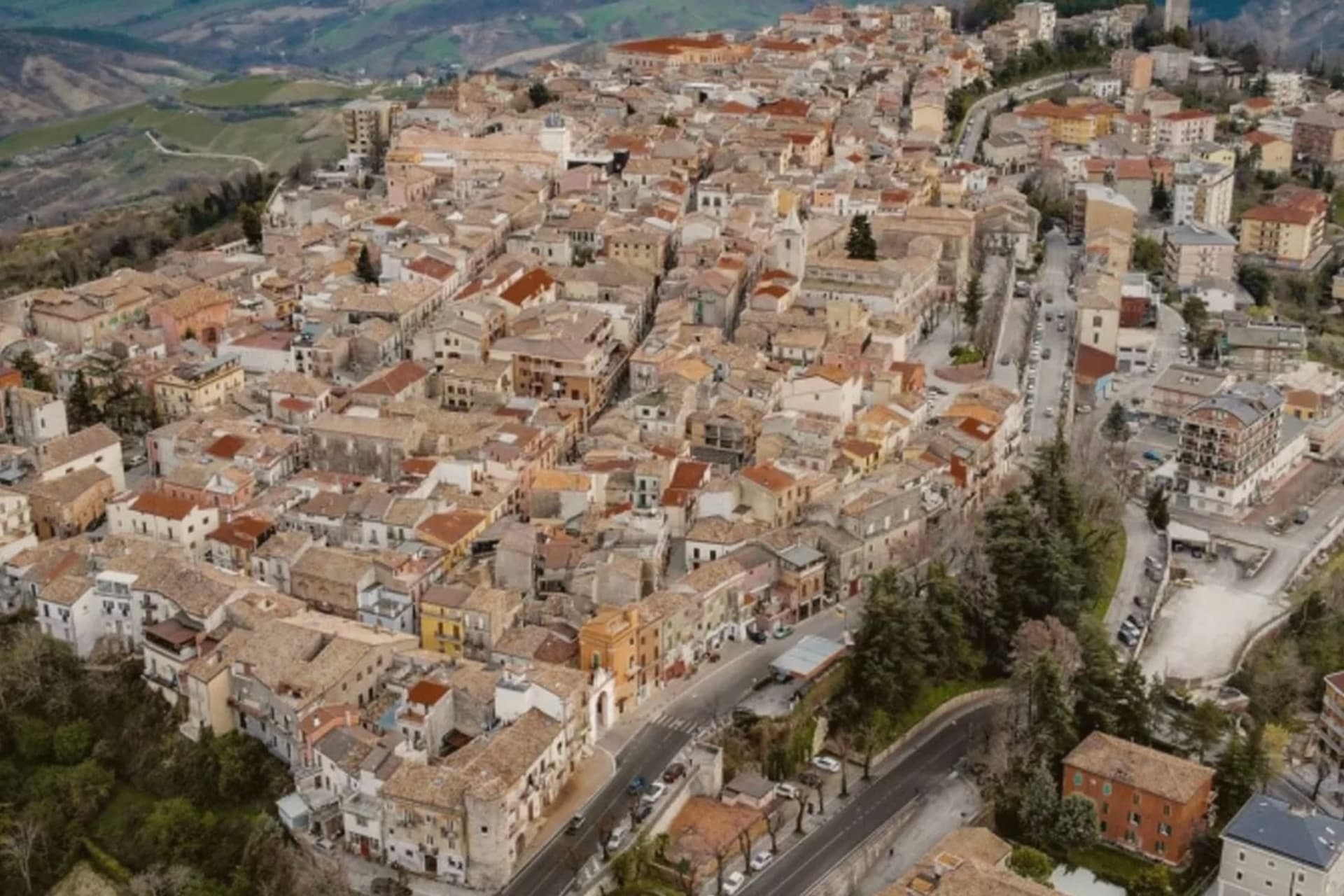
Guardiagrele sits at 576 meters on the eastern Majella foothills, thirty kilometers from Pescara. Gabriele D'Annunzio called it the terrazza d'Abruzzo for the views over the mountains and valleys from its piazzas.
Documented in an eleventh-century papal bull as a villa named Grele, the town grew through the fourteenth and fifteenth centuries as a stronghold of the Kingdom of Naples, with permission from the king to mint coins. It produced the late medieval goldsmith Nicola Gallucci, known as Nicola da Guardiagrele (c.1385-c.1462), trained on Gothic and Tuscan models including Lorenzo Ghiberti, who left work in cathedrals across Abruzzo.
The collegiate church of Santa Maria Maggiore, built at the start of the thirteenth century outside the walls and absorbed into the town in the centuries after, carries a fifteenth-century portal with a Coronation of the Virgin lunette by Nicola, now in the Duomo museum. Wrought-iron, copper and gold work still operate from workshops in the centro storico.
Villa Maiella, La Grotta dei Raselli have been named by a guide.
What to see in Guardiagrele
- Collegiata di Santa Maria Maggiore. Thirteenth-century collegiate church with a massive bell tower, fifteenth-century portal, and the Nicola da Guardiagrele Coronation lunette in its museum.
- Museo del Duomo. Cathedral museum holding Nicola da Guardiagrele's marble lunette, his goldwork, and liturgical objects from the surrounding Majella churches.
- Botteghe del rame e del ferro battuto. Active copper and wrought-iron workshops in the centro storico, the surviving craft tradition that produced Nicola Gallucci in the late fourteenth century.
How to get to Guardiagrele
There is a railway station in the town, so you can arrive without a car and never need one while you are here. Pescara is roughly 48 minutes away by road.
Our tip
April through October is the open season. May and September are the best months on the terrazza, with the Majella valleys in clear light and the copper workshops at full pace. July and August are warm but the elevation keeps the centro storico cooler than the coast.
Città Sant'Angelo
Why visit Città Sant'Angelo
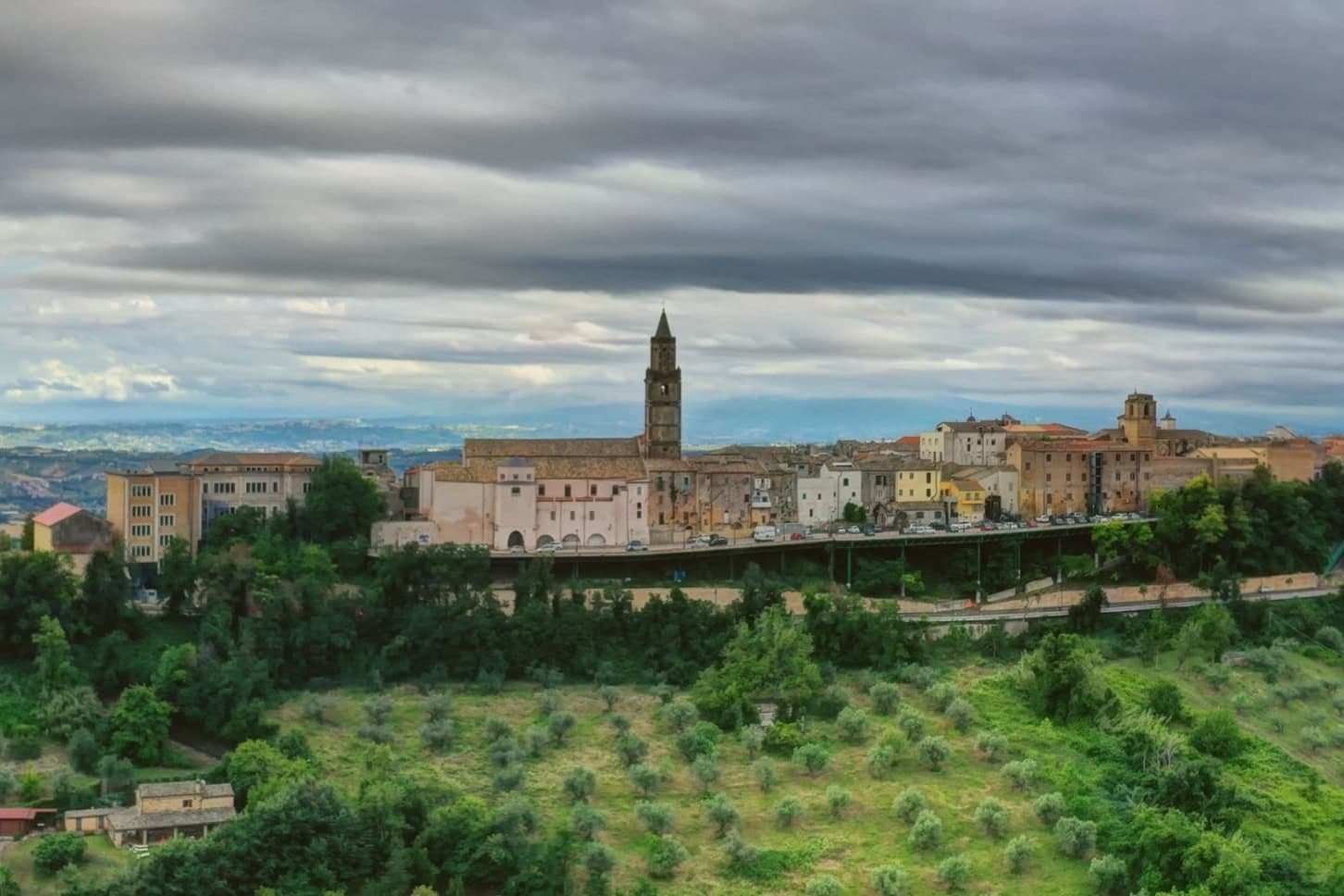
Città Sant'Angelo sits on a ridge at 320 meters, fifteen kilometers from Pescara and a clear day's walk from the Adriatic. The Vestini, an Italic Sabine tribe, held this ground before Rome; the medieval town that grew up here was called Castrum Sancti Angeli in the twelfth century and given its current name in 1528.
By then it was one of the three major seats of the Penne-Atri diocese. The Collegiata di San Michele Arcangelo, rebuilt in the thirteenth century, runs forty-seven meters along its portico, the same length as the bell tower is tall.
Its double organ holds 1,218 pipes and was restored in 2023 after nearly sixty years of silence. The Corso Vittorio Emanuele still threads the ridge between olive groves and vineyards, and the town carries four institutional signals at once: Borghi più belli, Cittaslow, Città del Vino, Città dell'Olio.
Few inland communes this close to the coast hold all four.
Rosarubra Zen have been named by a guide.
What to see in Città Sant'Angelo
- Collegiata di San Michele Arcangelo. Thirteenth-century church with a forty-seven meter portico, a 1326 portal, and a double organ of 1,218 pipes restored in 2023.
- Campanile della Collegiata. Bell tower designed by Antonio da Lodi, finished in 1425, the same height as the portico is long.
- Centro storico. Linear medieval ridge town stretched along the Corso Vittorio Emanuele, with palazzi and small churches from the fourteenth to eighteenth centuries.
How to get to Città Sant'Angelo
Pescara is roughly 25 minutes away by road.
Our tip
April through June and September into October are the months when the ridge feels right. Olive harvest runs late October and the corso fills with mills. July and August push past thirty degrees and the centro storico empties between two and six in the afternoon, though the sea breeze fifteen kilometers east keeps evenings tolerable. Borgo diVino in tour a Città Sant'Angelo falls in June.
More from Anywhere Italy
- The prettiest small villages that eat well within 90 minutes of Pescara
 The prettiest villages inside a national park within 90 minutes of Pescara
 The best hidden towns with a serious restaurant that eat well within 90 minutes of Pescara
 The prettiest small villages inside a national park in Abruzzo
- The best hidden towns with a serious restaurant in Abruzzo
- The 6 prettiest villages with a serious restaurant within 90 minutes of Pescara