
The 10 smallest villages in Liguria
Liguria is the second smallest region in mainland Italy and it is almost entirely vertical. The coast is a thin shelf of pastel houses, and behind it the ground goes straight up into the Ligurian Alps and Apennines, which means the villages had nowhere to spread. They were built on the rock they could reach, in the shape the rock allowed, and they have stayed that size ever since.
Some of them are very small indeed. Not small in the way a market town is small, but small enough that the entire resident population would fit into one carriage of the train that runs along the coast below.
Two of the villages on this list are famous, which is the interesting part. The most photographed harbour in the Mediterranean has fewer than four hundred residents, and one of the Cinque Terre has fewer than eight hundred. The fame arrived, the population never did. The other eight on the list got the same geography and none of the attention, which is the reason to go.
Of the 54 Ligurian communes in our catalogue, these are the ones with under a thousand residents, ordered smallest first. The smallest, Castelvecchio di Rocca Barbena, has 130 people and sits at 420 metres.
Elsewhere in the catalogue: The prettiest small villages in the province of Imperia and The best small towns inside a nature park in Liguria.
Castelvecchio di Rocca Barbena
Why visit Castelvecchio di Rocca Barbena
The village takes its second name from the outcrop at whose southern foot it sits, above the valley that gives the area its own name. It dates to the eleventh century and was a fief of the Marquis of Clavesana through the twelfth and thirteenth, before losing importance to neighboring Zuccarello.
It was sold to the House of Savoy in 1623, besieged in 1672, and ceded to the Republic of Genoa. The commune is the second-smallest in Savona province by population.
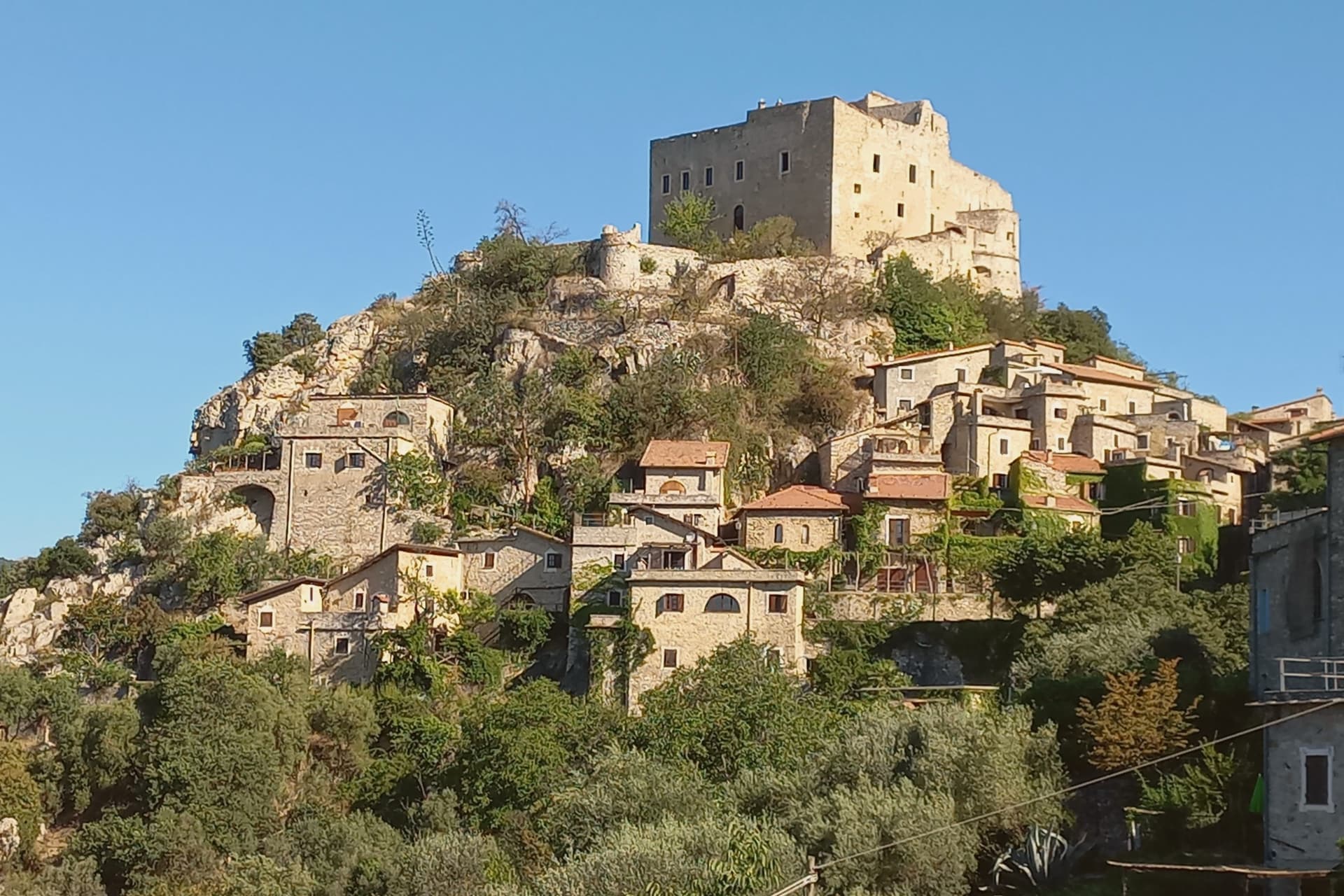
The fortress stands above the rooftops, reached by its own footpath, while the old core occupies the ground below it, houses and passages knit together by the vaulting that has kept them standing through the region's earthquakes. The parish church sits within that same fabric, its bell tower the one part of the settlement visible from the road below.
What the sequence of ownership and siege did not undo, the building method did: a settlement still standing because its stone was braced to move with the ground rather than break against it.
What to see in Castelvecchio di Rocca Barbena
- Castello dei Clavesana. Quadrangular fortress later held by the Del Carretto after the Clavesana line, square-walled and partly collapsed from old sieges, reachable only on foot and still in private ownership.
- Chiesa dell'Assunta. Parish church rebuilt on a medieval core, with an arcaded bell tower visible from the valley road.
- Centro storico. A sequence of arched passages where stone houses lean on each other, the streets passing under the load-bearing vaults below the castle.
How to get to Castelvecchio di Rocca Barbena
Genova is roughly 93 minutes away by road.
Our tip
April through June and September through October are the dry months in the Val Neva, with mild temperatures at 420 meters and the rock face of Rocca Barbena clear of haze. July and August warm up but the village sits high enough above the coastal corridor to stay tolerable; locals leave the shutters closed in the afternoon. November through March is quiet.
Seborga
Why visit Seborga
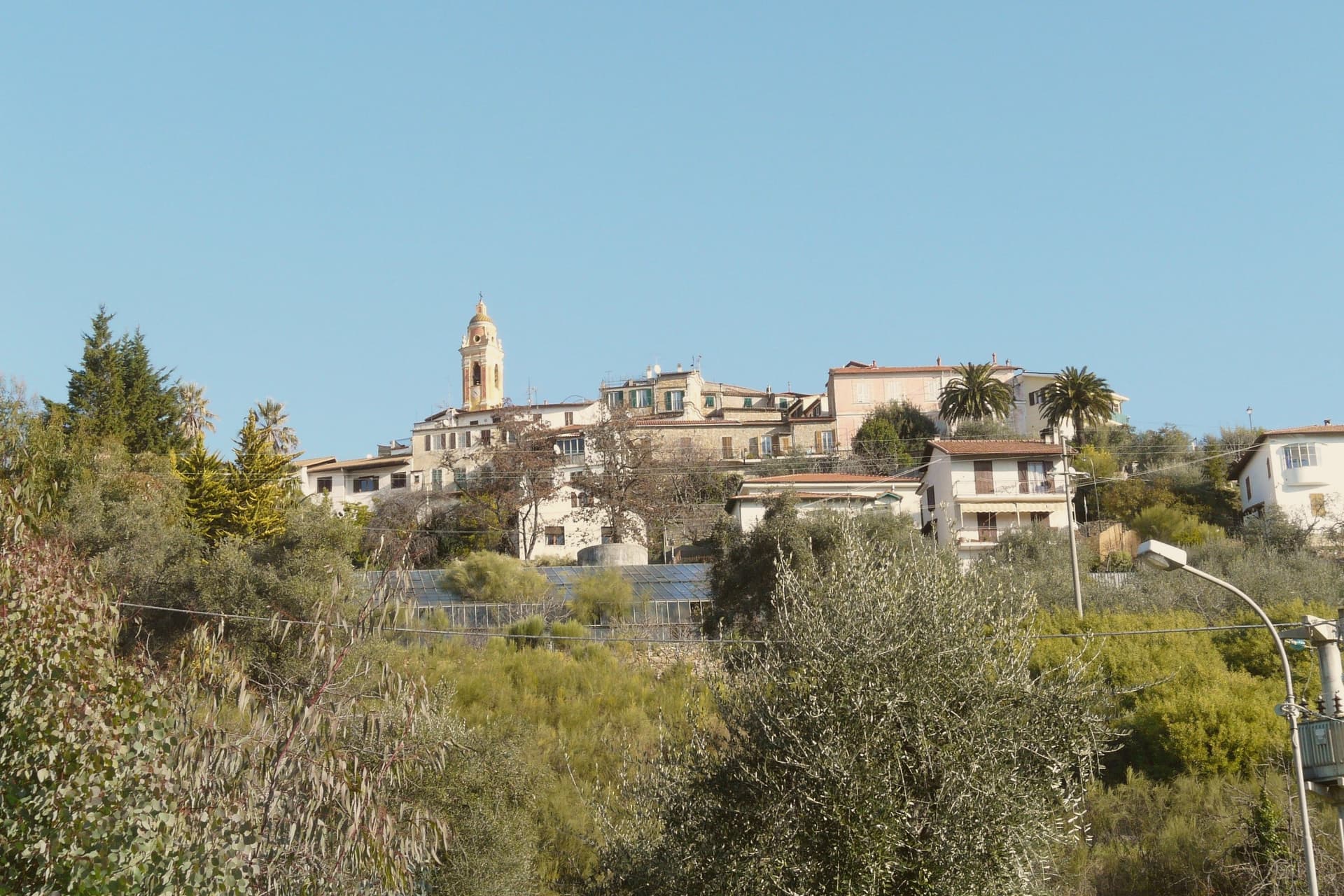
Seborga sits at 517 meters in the hills above Bordighera, 35 kilometers from Monaco. In 954 the counts of Ventimiglia ceded the territory to the Cistercian abbey of Lérins; in 1079 Gregory VII granted the abbots prince-abbot status and the right to mint coins.
The Principality of Seborga ran as a Cistercian state until 1729, when it was sold to Vittorio Amedeo II of Savoy. In 1963 Giorgio Carbone, head of the local flower-growers' cooperative, argued the sale had never been properly registered, declared the commune independent, and was elected prince.
The 200 registered voters now elect a sovereign every seven years. Princess Nina Menegatto took the title in 2019.
Seborga prints its own stamps and mints a currency called the luigino. Italy does not recognise any of it, but the town does carry a Bandiera Arancione and a Borghi più belli badge, and on a clear day the view stretches from the Esterel coast to Cap Ferrat.
What to see in Seborga
- Chiesa di San Martino. Seventeenth-century parish church, single nave, the seat of the former Cistercian abbey transformed after the principality lost ecclesiastical status.
- Palazzo dei Monaci. Former Cistercian abbots' residence on the main piazza, now used as the principality's symbolic government building.
- Zecca di Seborga. Old mint that produced the principality's coins from the eleventh century, restored as a small museum on Via Verdi.
How to get to Seborga
Genova is roughly 120 minutes away by road.
Our tip
April through June and September to October are the working months: clear afternoons, evenings cool enough for a jacket at 517 meters, the road up from Bordighera passable in any car. The principality holds its main festa in mid-August around Ferragosto, when the population doubles for a weekend and the prince makes a public appearance. July and August can hit 32 degrees on the coast below, but the hilltop stays five degrees cooler.
Zuccarello
Why visit Zuccarello
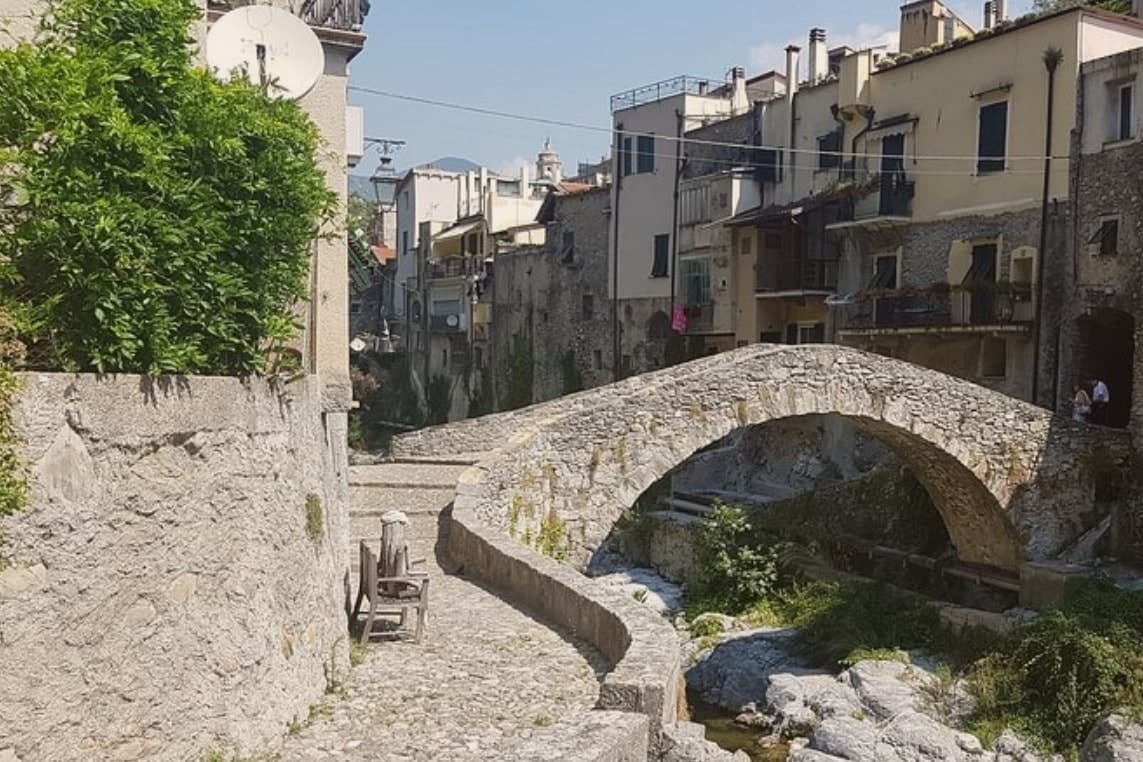
Zuccarello sits at 130 meters in the lower Neva valley, seven kilometers north of Albenga and the coast. The borgo was founded in 1248 by the inhabitants of the surrounding valley together with the Marquises of Clavesana, laid out as a single porticoed street that still runs the length of the town, with the bridge closing it off to the south and the church marking its far end to the north.
The castle stands above both, on the hill, the seat from which the marquises held the place. The Marquisate of Zuccarello passed to the Del Carretto branch and ruled the upper valley as an independent fief until the seventeenth century.
It was into this family that the woman born in the town in 1379 belonged, and it was this family's alliance with Lucca that took her away from it: she married to seal the connection between the two houses and died at twenty-six giving birth to her second daughter. The valley that produced her is a minor tributary above a coastal town, and the marble sarcophagus that made her name lasting was carved and placed far from here.
What remains in Zuccarello is the setting rather than the monument: the street, the bridge, the ruined seat of the family, and a house pointed to as the one where she was born.
What to see in Zuccarello
- Ponte Medievale sul Neva. Late medieval, restored in the nineteenth century. The single arch clears the riverbed in one span, and the hump in the deck is steep enough to hide the far bank until the crown of the arch.
- Via Centrale. The length of it reads as one built gesture rather than a row of separate houses: the arcades never break stride from one end of the borgo to the other.
- Castello dei Del Carretto. Ruined fortress on the hill above the village, residence of the Del Carretto marquises, four cylindrical towers and a central keep.
How to get to Zuccarello
Genova is roughly 82 minutes away by road.
Our tip
April through June and September to October are the windows when the Neva valley walks open and the borgo's porticoes hold their shade. The Festa Medievale in the second half of July fills the main street with costumed crafts and music for two weekends. July and August can hit 30 degrees on the valley floor, though the porticoes and the river keep the borgo cooler than the coast. Fiera Della Zucca falls in October.
Portofino
Why visit Portofino
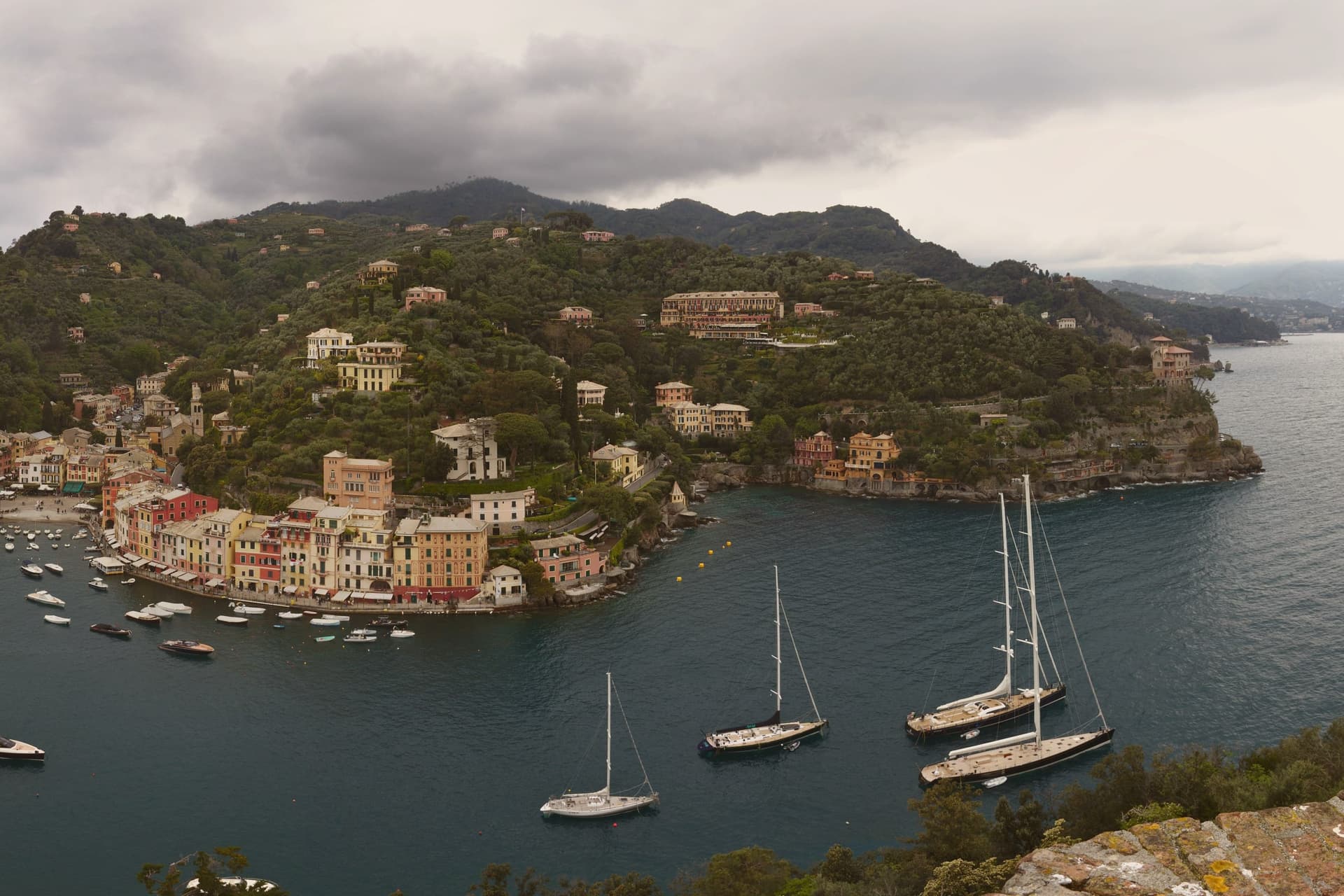
Portofino occupies the smallest municipal territory in the Metropolitan City of Genova, 355 residents on a horseshoe harbor on the southern tip of the Portofino headland. The whole commune sits inside the Portofino Regional Natural Park and the Portofino Protected Marine Area.
Roman fortification stood on the hill above the harbor; the medieval Genoese fort took the name Castello di San Giorgio, was later renamed Castello Brown after the British consul who bought it in 1867. British and then northern European aristocrats discovered the village in the late nineteenth century.
Aubrey Herbert and Elizabeth von Arnim were among the early regulars. By 1950 tourism had replaced fishing as the main industry.
The Chiesa di San Giorgio, first built in 1154 and destroyed by a wartime bomb, was rebuilt in 1950 on the 1760 plans. The painted facades around the harbor are the photograph everyone takes.
The footpaths into the park behind the village are the reason to stay longer than the cruise day-trippers.
What to see in Portofino
- Castello Brown. Genoese coastal fort raised over a Roman site, renamed in 1867 after British consul Montague Yeats Brown, now a historic house museum above the harbor.
- Chiesa di San Giorgio. Church first built in 1154, destroyed in Second World War bombing, rebuilt in 1950 on 1760 plans, on the path up to Castello Brown.
- Faro di Portofino. Lighthouse at the tip of the Portofino headland, walking distance from the harbor along the Punta del Capo coastal path.
How to get to Portofino
Genova is roughly 78 minutes away by road.
✷ We have written about Portofino
“A steep hill falls into the sea. The houses are crammed on the slope and painted in bright colors because they are old, packed tight, and need help. There is a small port if the cove allows it and a bigger port if the cove is generous. There is a small piazza around a small church, with maybe four restaurants, three bars, and a gelato place. There is no space for a grand square, because there is no space for grand anything in Liguria.”
Read our piece on Portofino →Tigullio Roadtrip | Four Versions of the Same Liguria
Our tip
May through June and September into October are the best months. The harbor is open, the park trails are dry, and the day-tripper rush from cruise ships is less intense than in midsummer. July and August fill the piazzetta from late morning to dusk, the ferry queues from Santa Margherita stretch to the seafront, and parking is closed to outside cars.
Vernazza
Why visit Vernazza
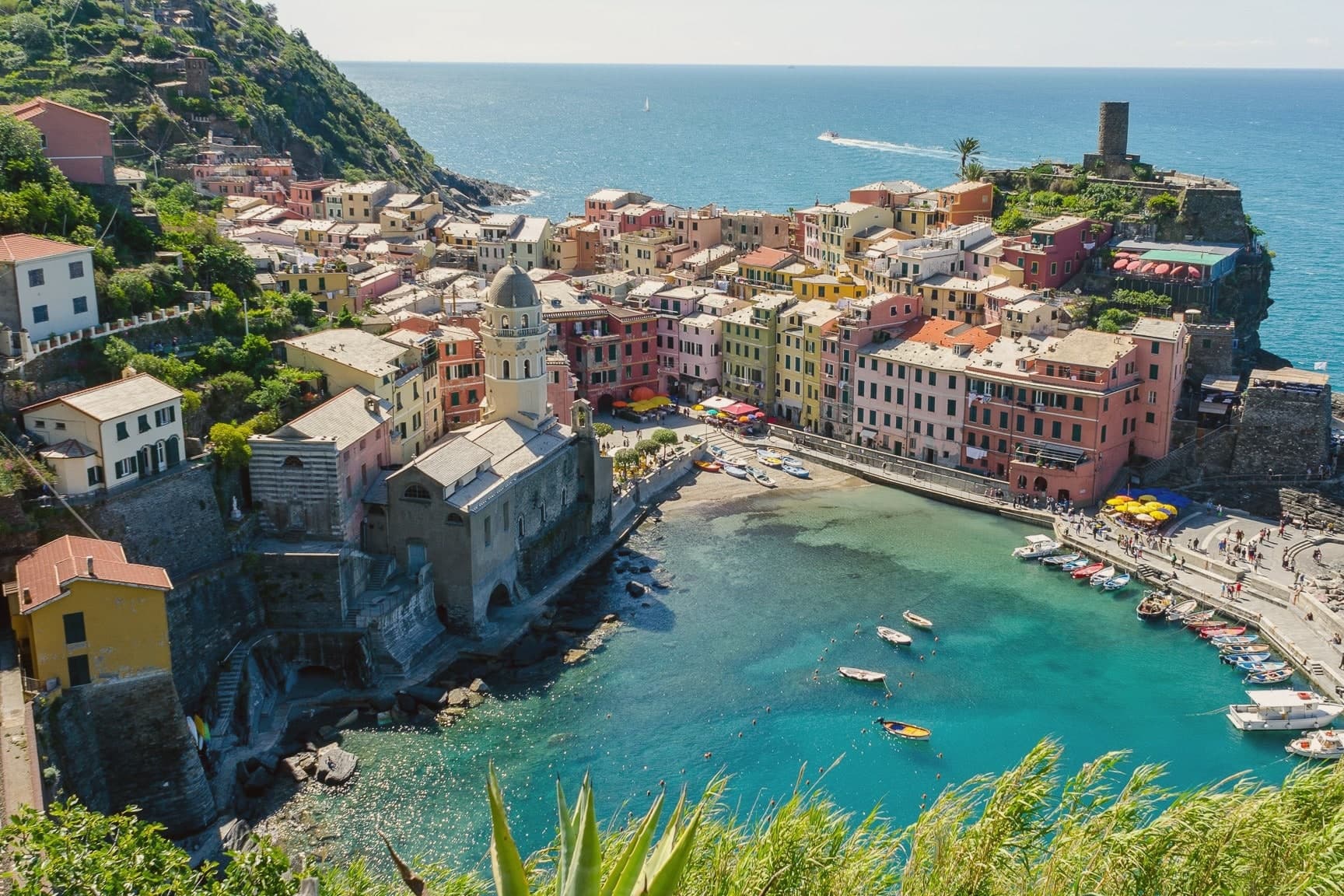
Vernazza sits at sea level, the middle of the five villages along this stretch of coast and the only one with a natural harbor. The houses stack vertically up the gorge of the Vernazzola torrent, painted in faded ochres and pinks, with the square at the harbor marking the seaward end of Via Roma and the social center of the village.
On 25 October 2011, a freak rainstorm dropped 22 inches of water in four hours. The torrent burst its culvert and buried the main street under four meters of mud and debris.
Three people died. The village was closed for months, and most of the houses on Via Roma had to be excavated to the second story before it reopened.
The harbor, the fortified height above it, and the terraced slopes behind form a single working shape: a landing place guarded from above and fed from the terraces, all of it packed into a gorge narrow enough that a few hours of rain could bury the street from end to end.
What to see in Vernazza
- Castello Doria. The keep and the Belforte tower stand over the harbor, built by the Doria as a defense against Saracen raids.
- Chiesa di Santa Margherita d'Antiochia. Fourteenth-century church on a rock platform at the edge of the harbor, documented from 1318, the gothic anchor of the village.
- Porto di Vernazza. The only natural harbor in the Cinque Terre, with a small pebble beach and a ferry pier serving the four other villages and Portovenere.
How to get to Vernazza
There is a railway station in the town, so you can arrive without a car and never need one while you are here. Genova is roughly 101 minutes away by road.
✷ We have written about Vernazza
“The Cinque Terre are five towns with a national park around them and a marketing name that adds up to five. The copies without the name are a few miles away in either direction, and the experience they sell is the same experience, with the crowd divided by a hundred.”
Read our piece on Vernazza →Cinque Terre | How To Do It Right
Our tip
April through June and September into October are the right months in the Cinque Terre. The terraces green in spring, the Sciacchetrà and Vermentino harvest runs from August into early September, and the autumn light on the painted houses is what most photographers come for. July and August are full beyond capacity: ferries, trains and trails all hit limits, the harbor square loses any quiet, and the village rationed entry on the worst weekends of 2023 and 2024. Giochi Di Santa Margherita falls in July.
Triora
Why visit Triora
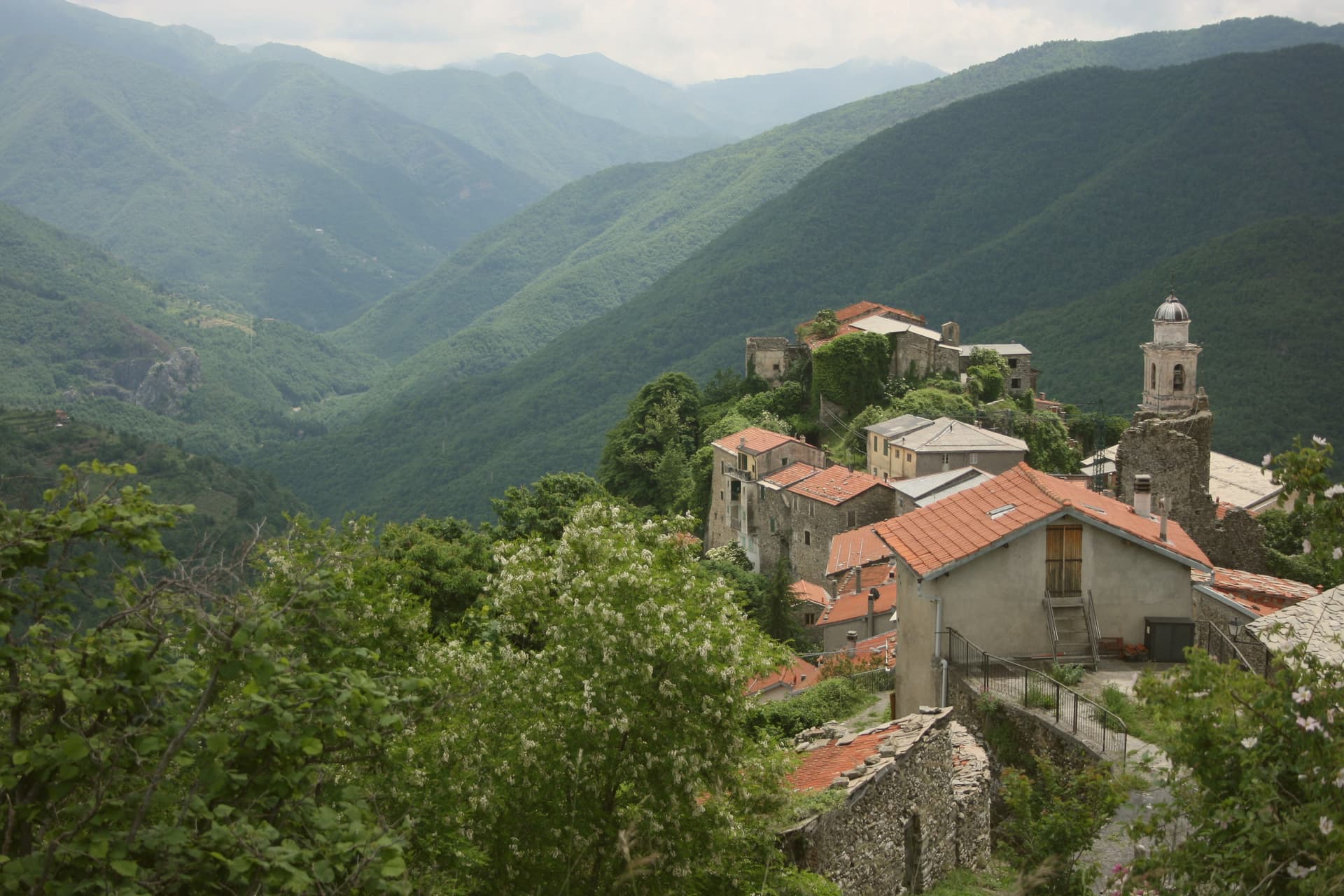
Triora sits at 776 meters in the upper Valle Argentina, the last comune before the Alpi Liguri turn into French territory. The site was a Genovese stronghold from the thirteenth century, fortified with five castles, three of which still leave traces.
Between 1587 and 1589, after two years of failed harvests and famine, the council of elders blamed a group of women living in seclusion in La Cabotina, the poorest quarter, and called in the Inquisition. Around 200 women were accused, many tortured, some died in custody.
Genova intervened to slow the trials; the survivors were eventually freed. The Museo Etnografico e della Stregoneria, in the former prison, holds the documents and reconstructs the herbalism, the famine, and the trial process.
The Pane di Triora is a slow-rising rustic bread baked in wood ovens that keeps for two weeks. Wolves and chamois return to the surrounding ridges.
What to see in Triora
- Museo Etnografico e della Stregoneria. Witchcraft and ethnography museum in the former village prison, with trial documents, herbal knowledge, and a reconstruction of La Cabotina.
- La Cabotina. The poorest quarter at the edge of the village, where the women accused of witchcraft in 1587-1589 lived, now a marked walking circuit.
- Collegiata di Nostra Signora Assunta. Parish church with a fourteenth-century Baptism of Christ by Taddeo di Bartolo, the oldest dated work in Liguria.
How to get to Triora
Genova is roughly 148 minutes away by road.
Our tip
May through October are the months Triora is fully open. The Argentina valley greens in spring and holds color into autumn. The witchcraft museum, the Cabotina circuit, and the Saccarello trails are accessible from late spring through early autumn. Processione Del Monte falls in April.
Framura
Why visit Framura
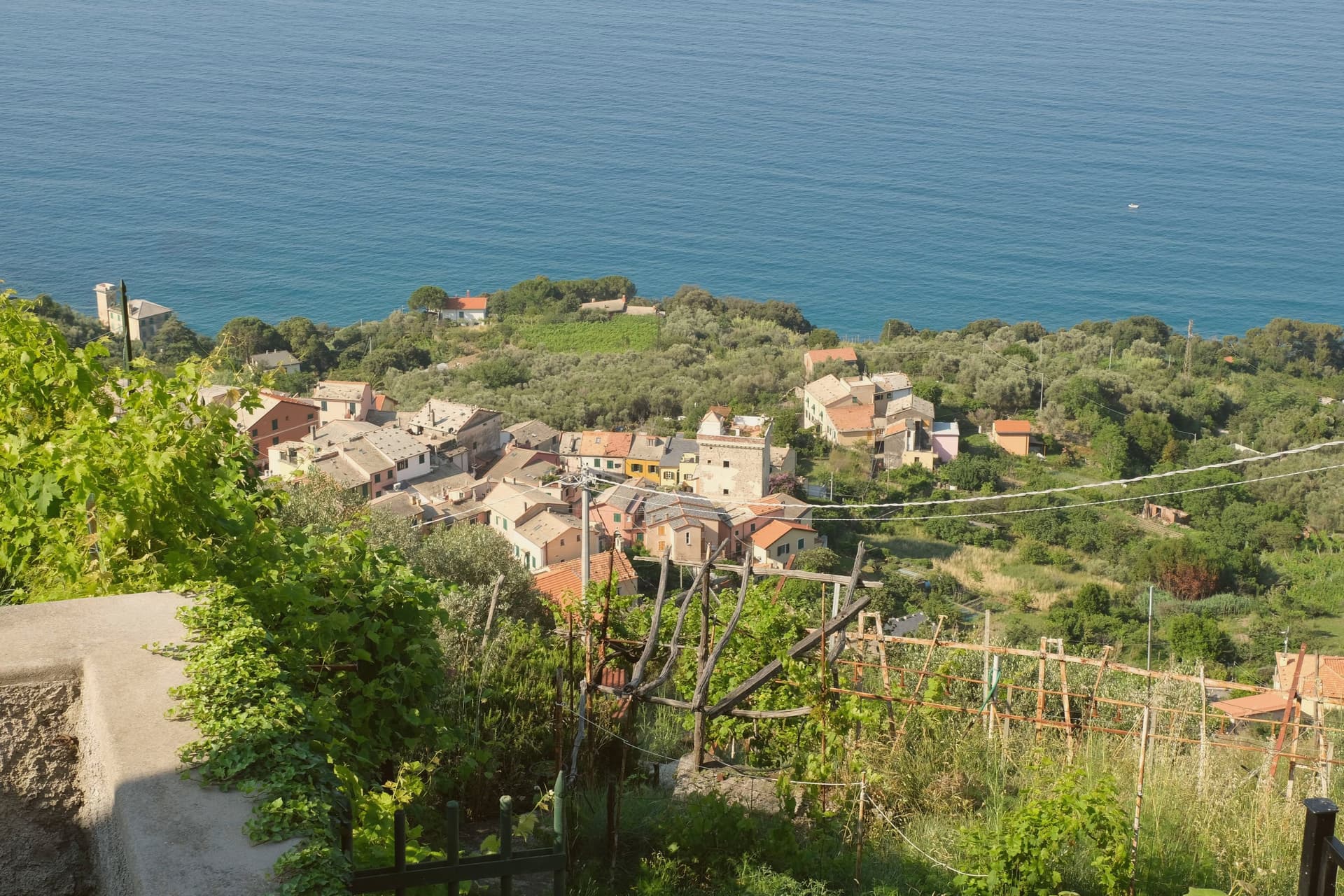
Framura is not one village but five: Anzo on the water, Setta and Ravecca on the slope, Costa above them, and Castagnola at roughly 300 meters with views back down to the coast. The commune spans from the rocky shoreline to 845 meters inland on the ridge that separates the Cinque Terre coast from the Vara valley.
Byzantine settlers built the original circular watchtowers here against Saracen raids, three of them still standing on the coast and inland. The hamlets remained agricultural until the Genova-La Spezia railway tunneled through in the late nineteenth century, opening the commune to summer visitors.
The seafront below Anzo, reached by a converted railway tunnel turned cycle path, carries the Bandiera Blu, and the same path runs north toward Bonassola and Levanto. Framura is the quiet outlier on this coast: the closest Borghi più belli village to Monterosso al Mare without being in the Cinque Terre national park.
What to see in Framura
- Torri bizantine. Three surviving Byzantine watchtowers on the coast and ridge, built to defend the village from Saracen incursions.
- Castagnola. Highest of the five hamlets at around 300 meters, with views over the lower frazioni and the Riviera di Levante.
- Anzo waterfront. Coastal hamlet at sea level with the Bandiera Blu beach access, the lowest of Framura's five settlements.
How to get to Framura
There is a railway station in the town, so you can arrive without a car and never need one while you are here. Genova is roughly 59 minutes away by road.
Our tip
April through October fits Framura, with the cycle path open and the coast walkable in any direction. May, June and September are the best for combining sea and hiking; mid-summer brings the strongest beach traffic but the upper hamlets stay calm. The Bandiera Blu beachfront below Anzo is small and fills early on August weekends.
Apricale
Why visit Apricale
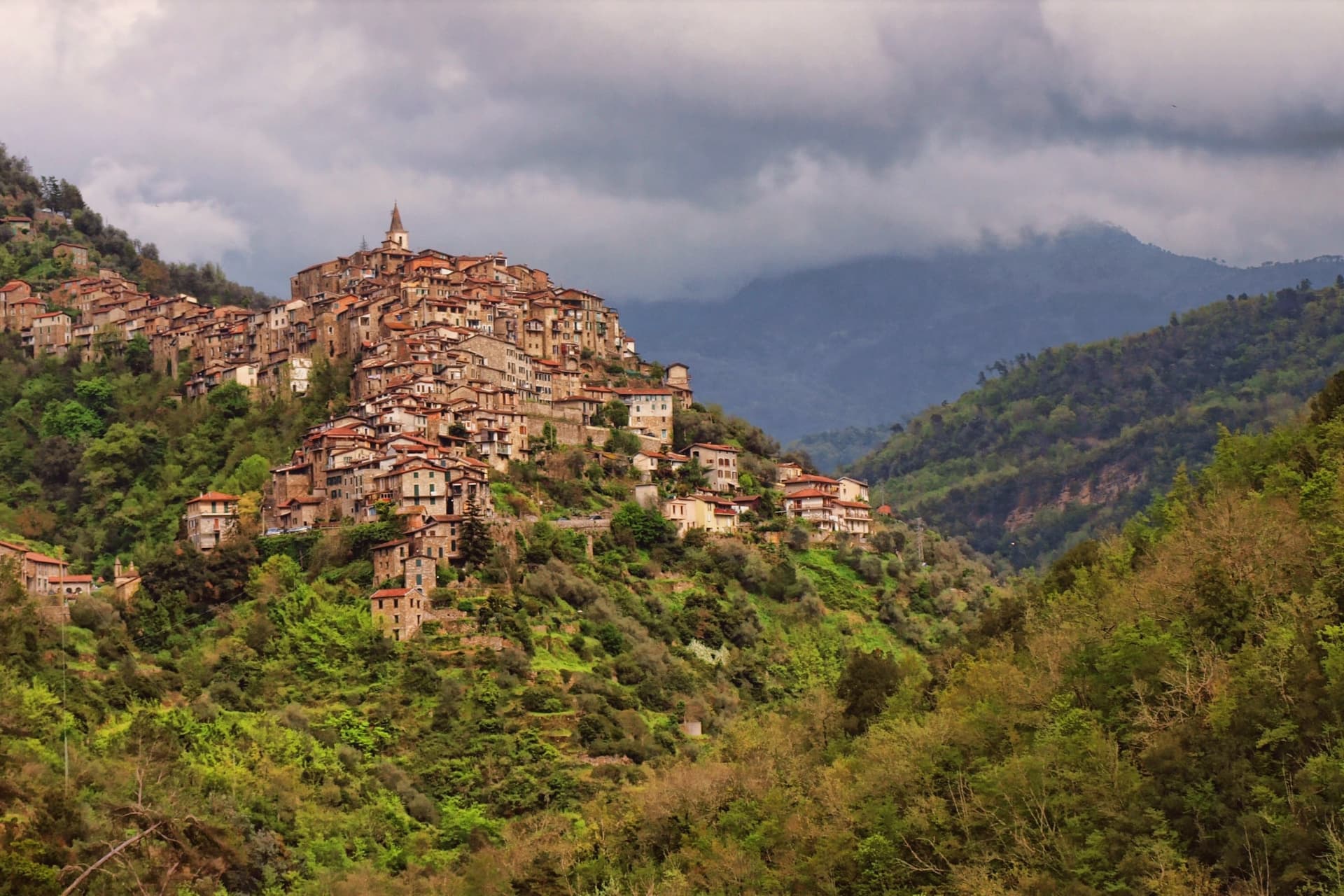
Apricale sits at 273 meters on a rocky spur in the Val Nervia, thirty kilometers west of Imperia and a few kilometers inland from the French border. The name comes from apricus, the Latin word for sunny: the village faces south on a ridge that catches light most of the day.
The Counts of Ventimiglia built the Castello della Lucertola here in the tenth century, called the Lizard Castle because its outline matches the silhouette of the village along the rock. From 1270 the borgo passed to the Doria of Dolceacqua.
The houses cascade down the slope in stone tiers, connected by alleys and stairs rather than streets. The village holds Borghi più belli, Bandiera Arancione, and Città dell'Olio.
Below the centro storico, the Chiesa di Santa Maria degli Angeli dates to the thirteenth century. The Sagra della Pansarola each September celebrates the local sweet fritter eaten with zabaglione.
What to see in Apricale
- Castello della Lucertola. Tenth-century castle of the Counts of Ventimiglia, named for its lizard-shaped outline on the rock, now housing the village museum.
- Chiesa di Santa Maria degli Angeli. Thirteenth-century church at the foot of the village, the oldest religious building in Apricale.
- Chiesa della Purificazione di Maria. Parish church on Piazza Torracca, with a neo-Romanesque façade rebuilt in the nineteenth century.
How to get to Apricale
Genova is roughly 144 minutes away by road.
Our tip
April through June and September into October are the right months. The terraces are green, the olive harvest runs from October into December, and the light on the south-facing rock matches the Latin name. July and August push into the low thirties; the stone holds heat and the village empties between two and five.
Perinaldo
Why visit Perinaldo
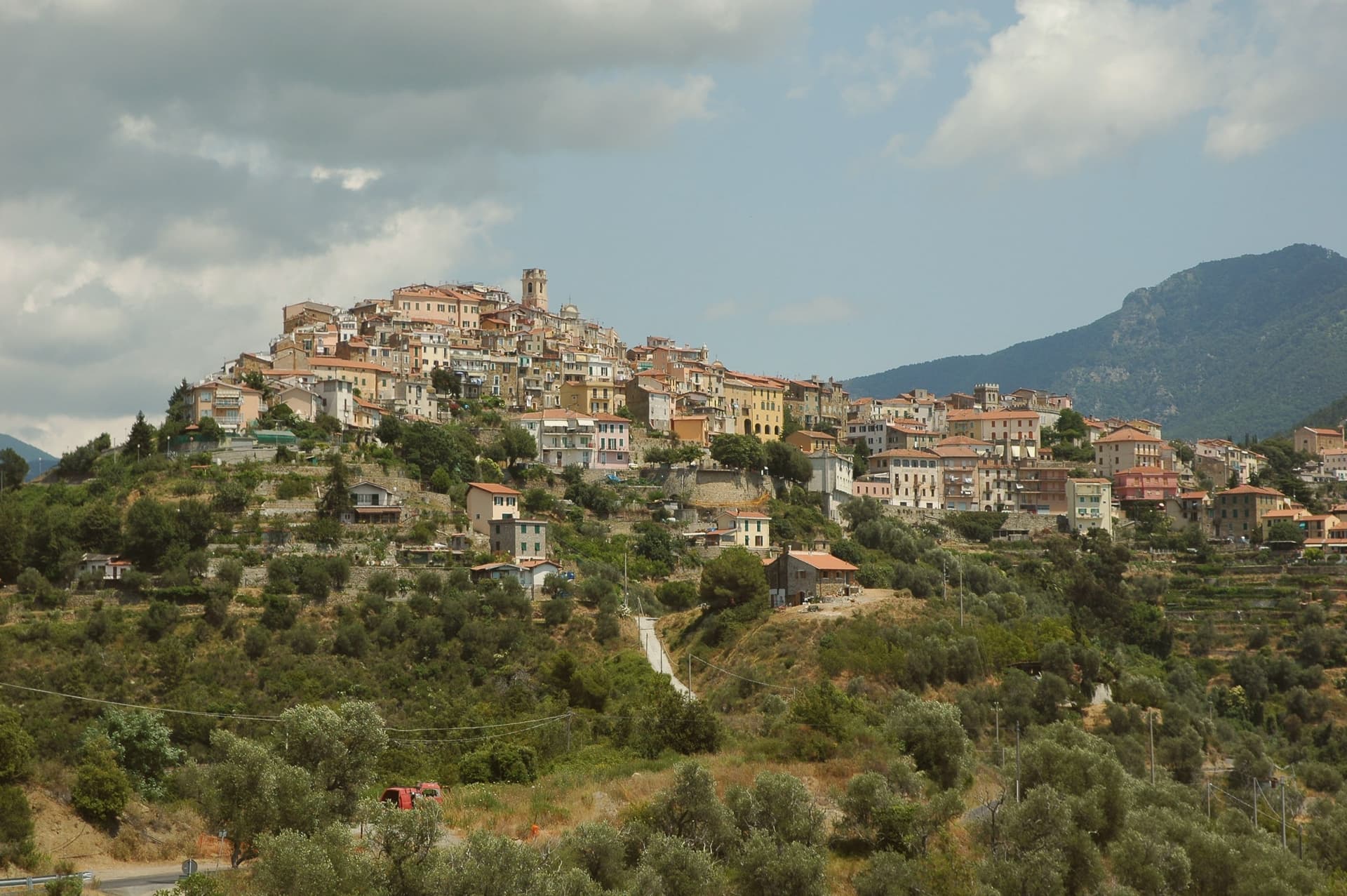
Perinaldo sits seven kilometers inland from Bordighera and the French border, on a ridge above the Val Nervia. The medieval centro storico is built in concentric rings around the old castle, a compact plan that ties church, castle, and town hall together within a short walk of each other.
The astronomer left for Bologna and then for the court of Louis XIV in Paris, where he directed the new Royal Observatory. He did not return, but he sent a canvas back to the Suffragio altar of the parish church in 1672, and the meridian his calculations helped fix is still marked on the sundial of the smaller church on the ridge.
The terraces below the village grow Taggiasca olives, the basis of its Città dell'Olio standing. Perinaldo also holds Borghi più belli and Bandiera Arancione recognition.
The village's shape, ring upon ring around a single high point, mirrors the way its history keeps circling back to one native mind that left for Paris and never stopped sending word home.
What to see in Perinaldo
- Osservatorio Astronomico G. D. Cassini. A dome rises from the inner courtyard of the town hall. On observation evenings the working instrument inside is put to the same sky Cassini once charted from far greater distance, in Paris.
- Chiesa di San Nicola da Bari. Parish church built in 1489, holding a fifteenth-century wooden crucifix and, on the Suffragio altar, a canvas sent back from Paris by its most famous native son.
- Chiesa della Visitazione. Smaller church on the ridge, fitted with a meridian sundial calibrated using the astronomical methods developed by the town's native astronomer.
How to get to Perinaldo
Genova is roughly 132 minutes away by road.
Our tip
April through June and September into October are the right months on this ridge above the Val Nervia. The terraces green in spring, the olive harvest runs from October into December, and the sky at 572 meters clears most evenings. The observatory schedules its public sessions through spring, summer and early autumn.
Santo Stefano d'Aveto
Why visit Santo Stefano d'Aveto
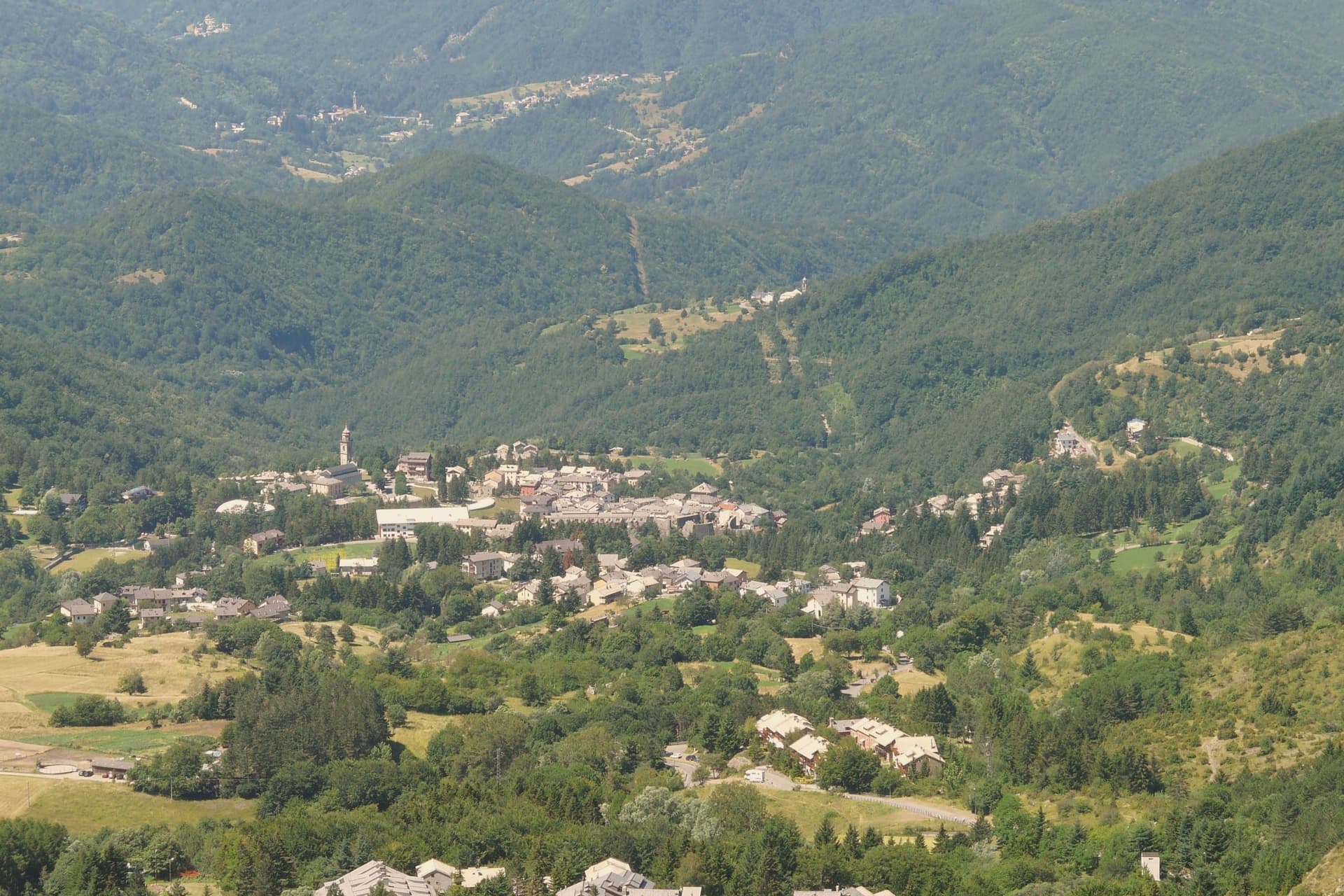
The Upper Val d'Aveto sits forty-five kilometers from Genova, on the border with the provinces of Parma, Piacenza and La Spezia, a position that puts the commune closer to Emilian territory than to the Ligurian coast. Frederick Barbarossa granted the fief to the Malaspina in the twelfth century.
It later passed to the Fieschi and then to the Doria, a succession that left its mark in the layered stonework of the castle rising off the central piazza and in the church furnishings donated generations later by a member of the same Doria line. The town's two halves work on different clocks: the historic center, built around the castle and the piazza, and the higher ground toward the peaks above the valley, given over to the ski area in winter and to the reservoir at Giacopiane in the warmer months.
A commune this high, on a border this far inland, ends up organized less around a single center than around the alternation of the seasons that use its slopes and its lake in turn.
What to see in Santo Stefano d'Aveto
- Castello Malaspina-Doria. Fortress on an irregular polygonal base off the central piazza. The walls still show the outline of successive rebuildings by the families who held the fief.
- Santuario della Madonna di Guadalupe. Parish church built around the donated painting and the door medallion, a small pilgrimage point folded into the ordinary fabric of the town center.
- Monte Bue ski area. Two new chairlifts carry skiers up the slope, the only lift-served skiing in the region and a rare winter draw at this elevation.
How to get to Santo Stefano d'Aveto
Genova is roughly 81 minutes away by road.
Our tip
December through March is the season of the Monte Bue lifts and the only Ligurian ski runs, with snow held above 1,200 meters when conditions are right. June through September is the warm counterpart, with hikes to Lago di Giacopiane and Monte Maggiorasca and temperatures around 22 to 25 degrees, ten cooler than the coast. April and May, October and November are the shoulder months, when the lifts close, the snow melts, and the village rests; many hotels close. Arte e Gusto Mercatini a Santo Stefano d'Aveto falls in July.
More from Anywhere Italy
- The prettiest small villages in the province of Imperia
- The best small towns inside a nature park in Liguria
- The best hill towns in the province of Imperia
- The best small coastal towns with a serious restaurant in Liguria
- The best small coastal towns you can reach by train in Liguria
- The best small towns with a food festival in Liguria