
The best small coastal towns you can reach by train in Liguria
Liguria is a thin strip of coast pressed between mountain and water, and its towns are built accordingly: tall narrow houses in ochre, pink and faded green, stacked above pebble beaches and slipways where boats are still winched up by hand. The food follows the same logic of small space and good ingredients, focaccia pulled warm from the oven in the morning, basil pesto with trofie, anchovies from the Ligurian Sea salted or fried, sciacchetrà and vermentino to drink. Late spring and September are the good months, when the water is warm enough to swim and the coastal paths through olive terraces and holm oak are walkable without suffering. The railway threads the whole coast, in and out of tunnels, and often the station is a short walk from the sand.
The famous version of this coast is Portofino and the promontory around it, where the harbour is photographed from the same angle by everyone who steps off the boat, parking is effectively impossible in August and a coffee costs what a meal costs elsewhere. Genoa sends day trippers down in a steady stream, the ferries add more, and the single road in becomes a queue. It is a beautiful place and it knows it.
The same coast keeps going in both directions, past the promontory and along the Riviera di Ponente, and the railway keeps stopping. Small towns sit directly on the water with their own beaches, their own anchovy boats and their own bakeries, and fewer people get off the train at them. These are the ones we have confirmed you can reach without a car.
Of the 54 communes we have mapped in Liguria, 29 qualify as coastal towns you can reach by train: each sits directly on the sea, and we have confirmed each is reachable without a car. This list is the small ones, 10 in all, ordered smallest first. The smallest, Framura, has 577 residents.
If you are still choosing, we have also written The 9 best small towns you can reach by train that eat well within 90 minutes of Genova and The best small coastal towns with a serious restaurant in Liguria.
Framura
Why visit Framura
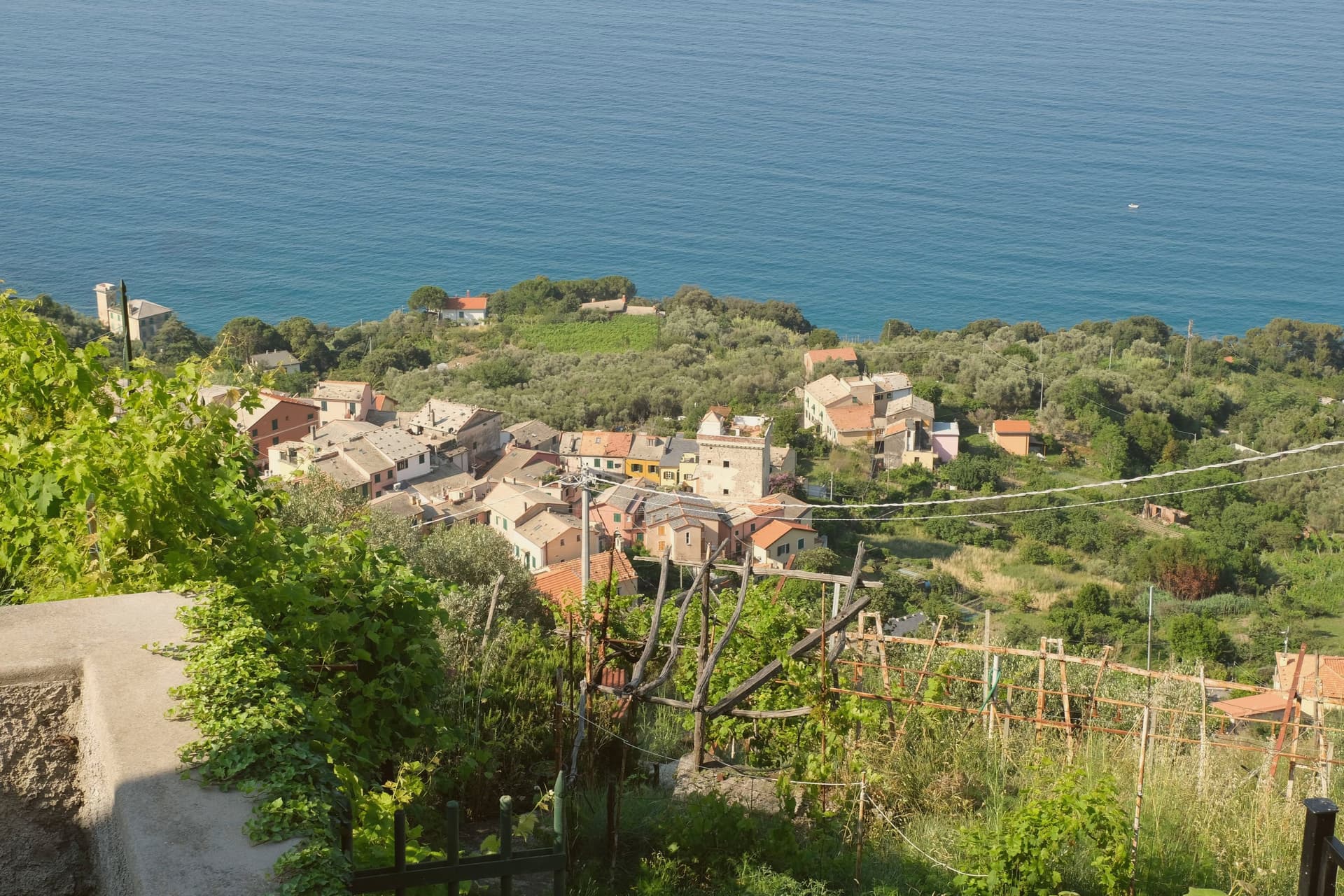
Framura is not one village but five: Anzo on the water, Setta and Ravecca on the slope, Costa above them, and Castagnola at roughly 300 meters with views back down to the coast. The commune spans from the rocky shoreline to 845 meters inland on the ridge that separates the Cinque Terre coast from the Vara valley.
Byzantine settlers built the original circular watchtowers here against Saracen raids, three of them still standing on the coast and inland. The hamlets remained agricultural until the Genova-La Spezia railway tunneled through in the late nineteenth century, opening the commune to summer visitors.
The seafront below Anzo, reached by a converted railway tunnel turned cycle path, carries the Bandiera Blu, and the same path runs north toward Bonassola and Levanto. Framura is the quiet outlier on this coast: the closest Borghi più belli village to Monterosso al Mare without being in the Cinque Terre national park.
We confirmed you can reach this one by train.
What to see in Framura
- Torri bizantine. Three surviving Byzantine watchtowers on the coast and ridge, built to defend the village from Saracen incursions.
- Castagnola. Highest of the five hamlets at around 300 meters, with views over the lower frazioni and the Riviera di Levante.
- Anzo waterfront. Coastal hamlet at sea level with the Bandiera Blu beach access, the lowest of Framura's five settlements.
How to get to Framura
There is a railway station in the town, so you can arrive without a car and never need one while you are here. Genova is roughly 59 minutes away by road.
Our tip
April through October fits Framura, with the cycle path open and the coast walkable in any direction. May, June and September are the best for combining sea and hiking; mid-summer brings the strongest beach traffic but the upper hamlets stay calm. The Bandiera Blu beachfront below Anzo is small and fills early on August weekends.
Deiva Marina
Why visit Deiva Marina
The commune sits at the bottom of a valley running from Monte San Nicolao, eight hundred meters up, down to the Ligurian Sea, fifty kilometers east of Genoa. The territory is first documented in a Carolingian imperial diploma of 774, but for most of its history the settlement stayed inland: the coastal plain flooded, and Barbary raids made the shore too exposed to live on.
The villages up the slope were the town. The seafront had no fixed population until the railway reached it, and the seafront that grew up afterward, around the station and a hotel called Albergo Savoia, is a nineteenth-century addition to a place whose real age lies up the hill.
The round watchtower near the sea was partly demolished by a flash flood in 1852, a reminder that the coast it guarded was never entirely tame even after settlement arrived. What the geography adds up to is a town in two pieces on two timelines: an old, defended, inland Deiva that predates the sea by centuries, and a young shoreline that only exists because a railway made the coast safe to build on.
We confirmed you can reach this one by train.
What to see in Deiva Marina
- Torre Saracena. The square tower stands beside the church, its stone weathered, a lookout post scaled to a coastline once undefended by anything larger.
- Chiesa di Sant'Antonio Abate. Still the parish church, standing in what was the original inland centro storico before the seafront existed, dedicated to the Egyptian hermit.
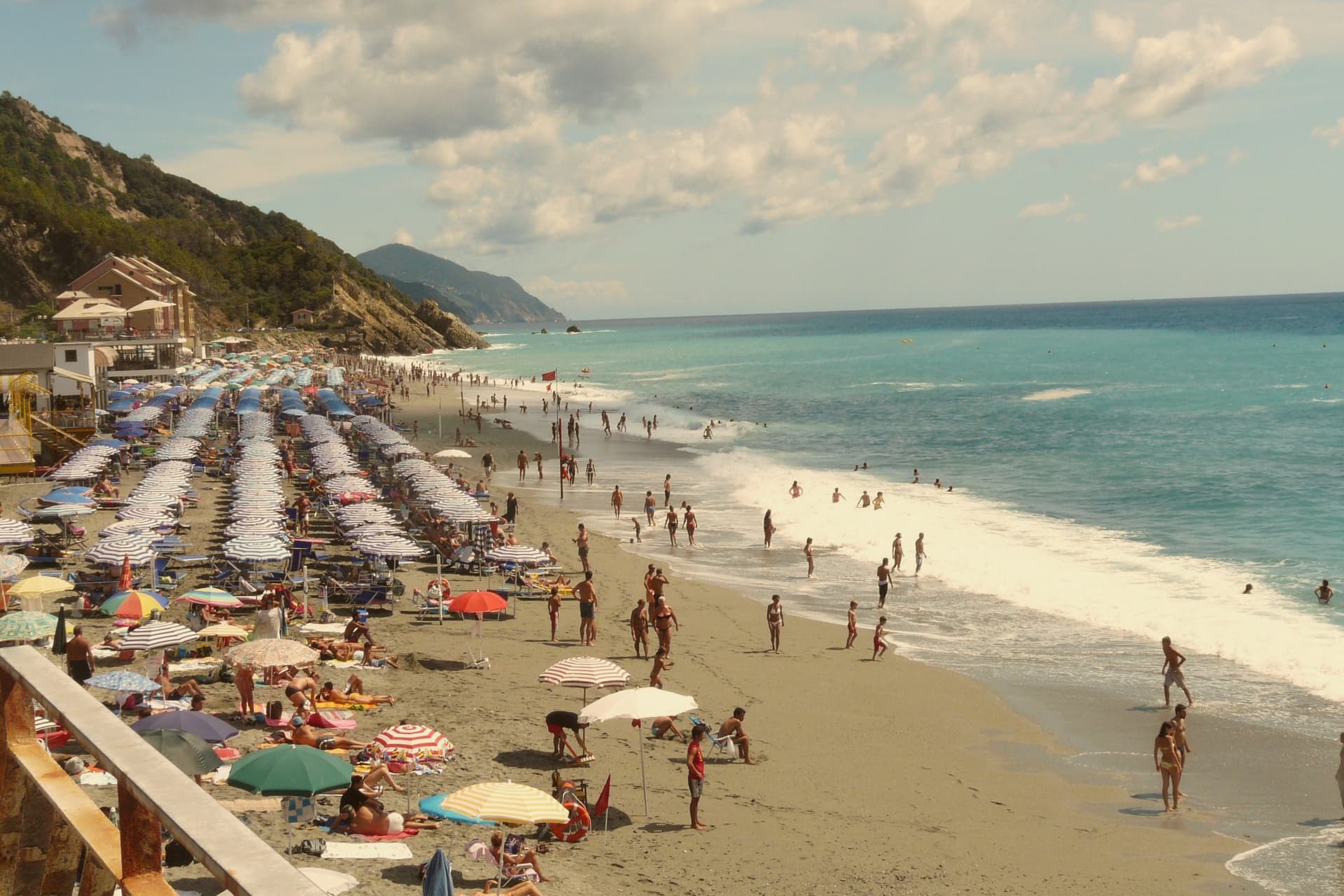
- Spiaggia di Deiva Marina. Shallow sand and shingle running below the railway station, wide enough that the crowds it draws spread rather than crush.
How to get to Deiva Marina
There is a railway station in the town, so you can arrive without a car and never need one while you are here. Genova is roughly 50 minutes away by road.
Our tip
May through September is the beach season: the bay opens around mid-May, water temperatures climb through June, and by August the seafront fills with Genovese and Milanese families. The Cinque Terre next door pulls day-trippers off the train through the summer. April and October are the shoulder months when the inland frazioni walks are pleasant and the beach is still warm enough for swimming on a calm day.
Laigueglia
Why visit Laigueglia
Laigueglia sits at six meters on the Riviera di Ponente, sheltered between the two headlands that frame the bay. The name comes from Aquilia, a reference to the Roman eagle standards, and the village grew from a settlement of fishermen who came over from neighboring Andora.
Genoa bought the borough in 1609. Through the seventeenth century the economy ran on shipbuilding and the coral trade, which drew Catalan fishermen to settle in numbers and left behind the Baroque churches that anchor the centro storico today: the parish church with its curved front, and the confraternity oratory with its carved choir and Piola altarpiece.
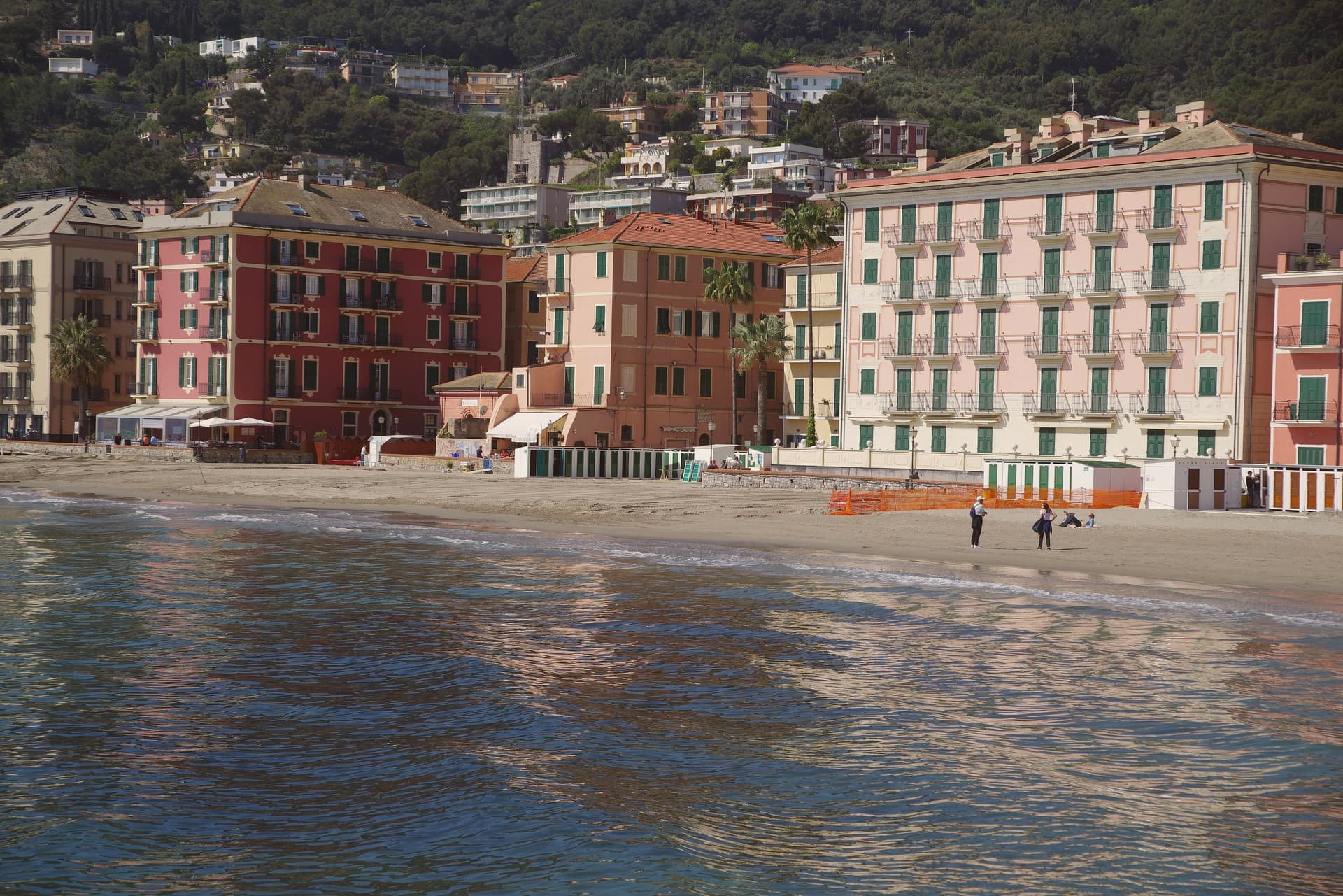
Behind the beach, the fishermen's grid still reads as caruggi, small squares opening to the sea, houses in pale violet and ochre, the seafront watchtowers standing at the edge where the town once kept watch for raiders by sea. What the coral money built, the town has simply gone on living inside.
We confirmed you can reach this one by train.
What to see in Laigueglia
- Chiesa di San Matteo. The curved façade fronts a Baroque interior where the three altarpieces hang alongside furnishings paid for in the coral years, when the parish stood as the visible return on the fishery's money.
- Oratorio di Santa Maria Maddalena. 1616 oratory of the Confraternita dei Disciplinanti, with a carved wooden choir and an altarpiece by Domenico Piola.
- Centro storico. Fishermen's grid of caruggi behind the beachfront, with houses painted in the pale lilac and ochre traditional to the Ponente coast.
How to get to Laigueglia
There is a railway station in the town, so you can arrive without a car and never need one while you are here. Genova is roughly 85 minutes away by road.
Our tip
May through June and September through October are the calmer summer-edge months on this coast. The Bandiera Blu beach is open, the sea is warm enough from June onward, and the centro storico is not yet packed. July and August bring crowds, especially from Piedmont and Lombardy, and the litoraneo fills shoulder-to-shoulder. Il Salto Dell'Acciuga falls in October.
Vernazza
Why visit Vernazza
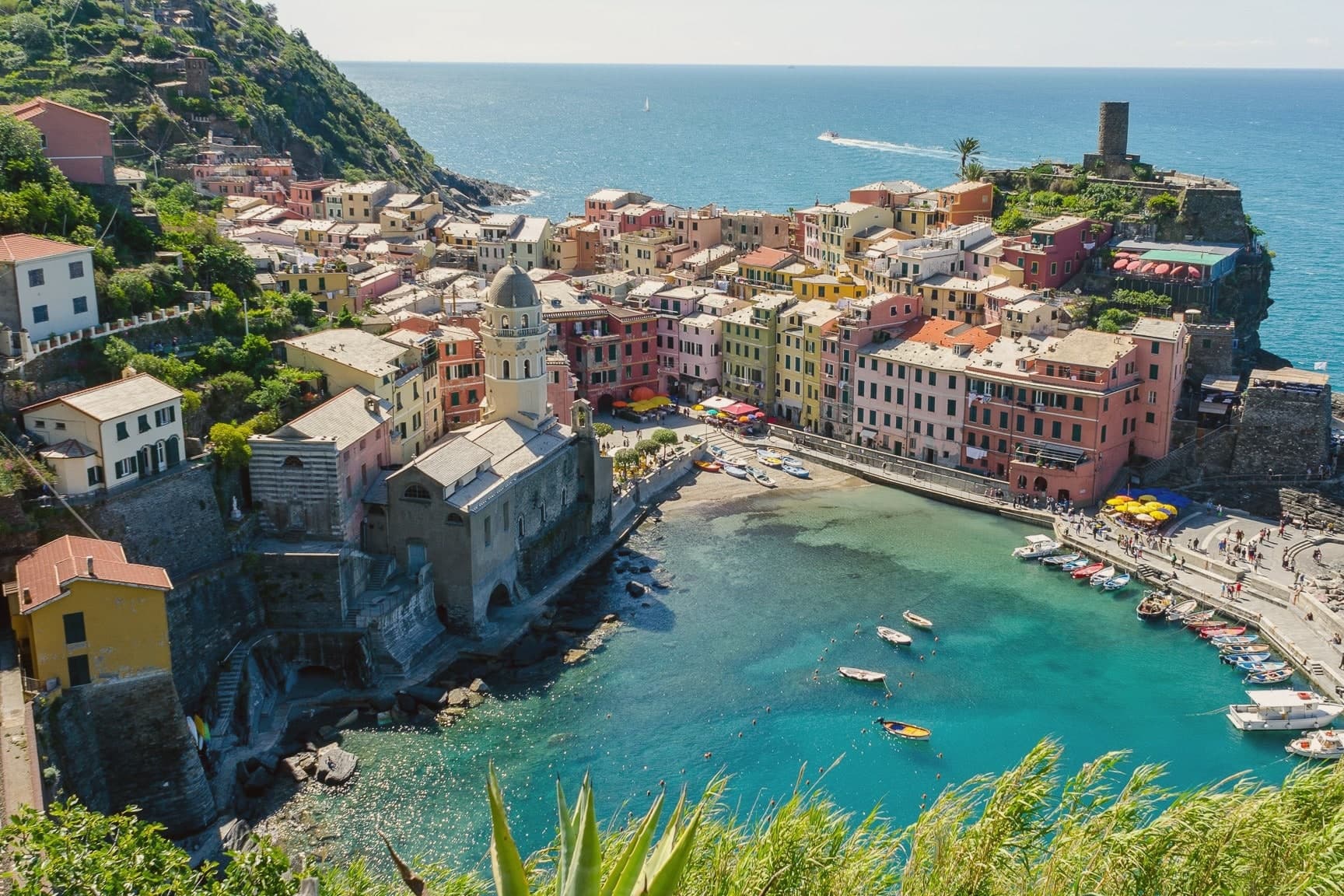
Vernazza sits at sea level, the middle of the five villages along this stretch of coast and the only one with a natural harbor. The houses stack vertically up the gorge of the Vernazzola torrent, painted in faded ochres and pinks, with the square at the harbor marking the seaward end of Via Roma and the social center of the village.
On 25 October 2011, a freak rainstorm dropped 22 inches of water in four hours. The torrent burst its culvert and buried the main street under four meters of mud and debris.
Three people died. The village was closed for months, and most of the houses on Via Roma had to be excavated to the second story before it reopened.
The harbor, the fortified height above it, and the terraced slopes behind form a single working shape: a landing place guarded from above and fed from the terraces, all of it packed into a gorge narrow enough that a few hours of rain could bury the street from end to end.
We confirmed you can reach this one by train.
What to see in Vernazza
- Castello Doria. The keep and the Belforte tower stand over the harbor, built by the Doria as a defense against Saracen raids.
- Chiesa di Santa Margherita d'Antiochia. Fourteenth-century church on a rock platform at the edge of the harbor, documented from 1318, the gothic anchor of the village.
- Porto di Vernazza. The only natural harbor in the Cinque Terre, with a small pebble beach and a ferry pier serving the four other villages and Portovenere.
How to get to Vernazza
There is a railway station in the town, so you can arrive without a car and never need one while you are here. Genova is roughly 101 minutes away by road.
✷ We have written about Vernazza
“The Cinque Terre are five towns with a national park around them and a marketing name that adds up to five. The copies without the name are a few miles away in either direction, and the experience they sell is the same experience, with the crowd divided by a hundred.”
Read our piece on Vernazza →Cinque Terre | How To Do It Right
Our tip
April through June and September into October are the right months in the Cinque Terre. The terraces green in spring, the Sciacchetrà and Vermentino harvest runs from August into early September, and the autumn light on the painted houses is what most photographers come for. July and August are full beyond capacity: ferries, trains and trails all hit limits, the harbor square loses any quiet, and the village rationed entry on the worst weekends of 2023 and 2024. Giochi Di Santa Margherita falls in July.
Monterosso al Mare
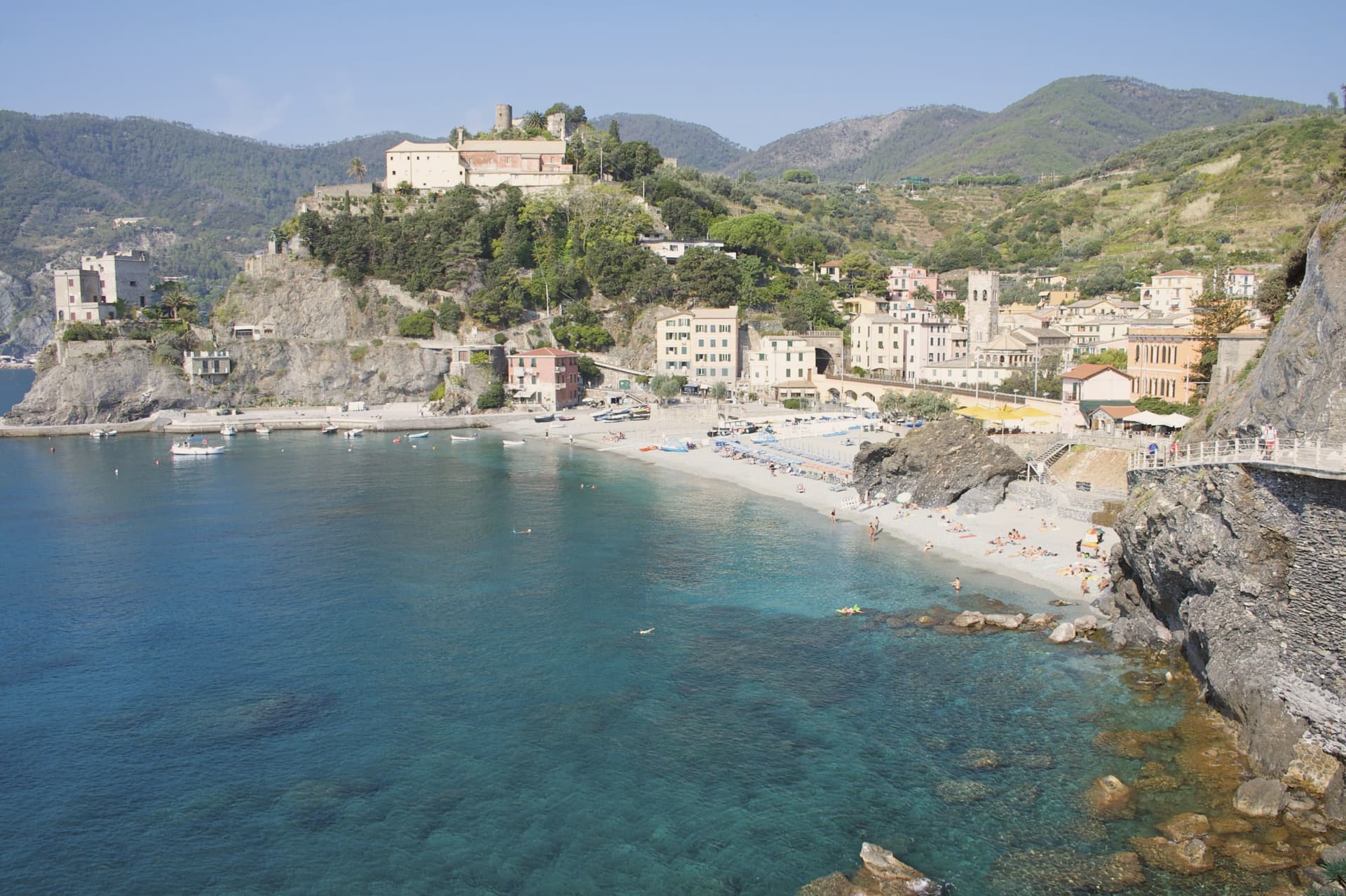
Why visit Monterosso al Mare
The village splits into two halves on either side of a headland: the older centro storico and, on the other side, the Fegina seafront where the railway runs behind the sand. The Capuchin convent looks out over both sides from that same headland, the hinge on which the whole layout turns.
Above the rooftops, at 464 meters, a hilltop sanctuary has stood on the same ground since 740, older than the village below it and the oldest Marian site in Liguria. The parish church down in the old town, banded in black and white marble, was built centuries later, so the two put a long stretch of the coast's religious history on display within sight of each other.
Montale's villa stood in Fegina, and the rocks and cliffs he carried into Ossi di seppia are the same ones visible from either half of the village. The geography here is the story: a headland dividing old from new, and a hillside holding the older of the two by several centuries.
We confirmed you can reach this one by train.
What to see in Monterosso al Mare
- Chiesa di San Giovanni Battista. Parish church built 1282-1307 with a black-and-white-banded marble façade and a fresco of the baptism of Christ over the main portal.
- Santuario di Nostra Signora di Soviore. Hilltop sanctuary at 464 meters above the village, occupied by a church since 740, the oldest Marian site in Liguria.
- Convento dei Cappuccini. Seventeenth-century Capuchin convent on the San Cristoforo headland, separating the centro storico from Fegina.
How to get to Monterosso al Mare
There is a railway station in the town, so you can arrive without a car and never need one while you are here. Genova is roughly 78 minutes away by road.
Our tip
April through June and September through October are the workable months. The Sentiero Azzurro is open, the sea warms from late May, and the village still moves at a manageable pace. July and August are difficult: the Cinque Terre regional system caps walking-path tickets but the centro storico still saturates, and trains arrive standing-room from La Spezia. Festa del Limone falls in May.
Camogli
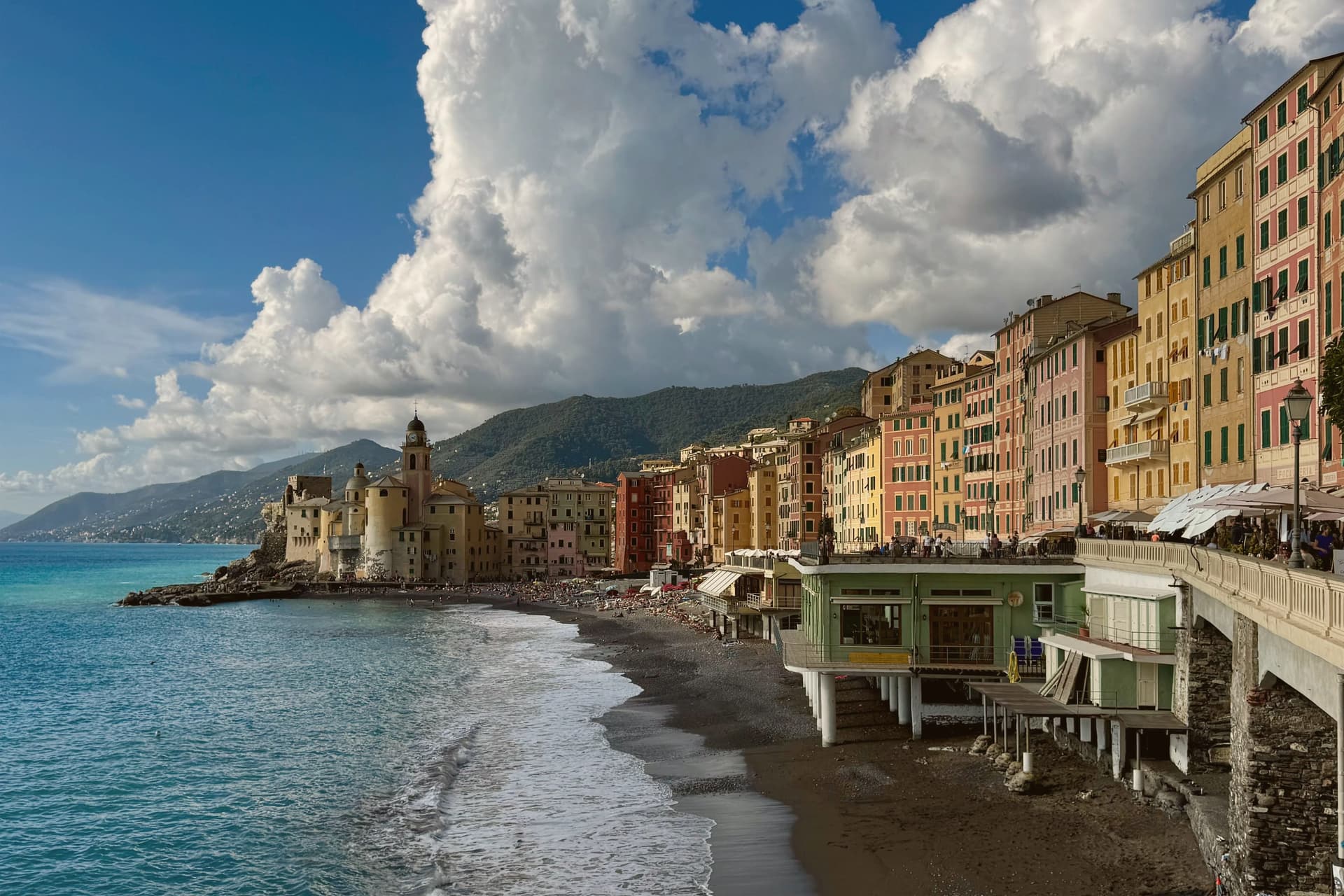
Why visit Camogli
Camogli sits on the west side of the Portofino peninsula, twenty kilometers from Genova on the Golfo Paradiso. The earliest record dates to the tenth century, when it was already a tuna and shrimp fishing port.
By the nineteenth century, the town's fleet of merchant sailing ships ran to several hundred vessels and Camogli was called the city of a thousand white sails. After the naval defeat at Abukir against the British, the camogliesi shipowners reinvested in building merchant sailers under contract to the major European states.
The painted façades of the seafront houses, with their false windows and trompe-l'oeil cornices, served the returning sailors as recognition marks from sea. The Castello della Dragonara, built in the thirteenth century, still guards the harbor.
Every second Sunday of May, the Sagra del Pesce fries thirty thousand portions of fish in a single giant pan on the wharf, in honor of San Fortunato. San Fruttuoso, the eleventh-century abbey reachable by boat or trail, sits in the next cove.
We confirmed you can reach this one by train.
What to see in Camogli
- Castello della Dragonara. Thirteenth-century fortress guarding the harbor, used as municipal seat and now a venue for exhibitions and cultural events.
- Basilica di Santa Maria Assunta. Parish basilica next to the castle on the harbor, baroque interior with marble inlays and seventeenth-century paintings.
- Abbazia di San Fruttuoso. Eleventh-century Benedictine abbey in the next cove, reachable by boat or by the coastal trail across the Portofino peninsula.
How to get to Camogli
There is a railway station in the town, so you can arrive without a car and never need one while you are here. Genova is roughly 33 minutes away by road.
✷ We have written about Camogli
“A steep hill falls into the sea. The houses are crammed on the slope and painted in bright colors because they are old, packed tight, and need help. There is a small port if the cove allows it and a bigger port if the cove is generous. There is a small piazza around a small church, with maybe four restaurants, three bars, and a gelato place. There is no space for a grand square, because there is no space for grand anything in Liguria.”
Read our piece on Camogli →Tigullio Roadtrip | Four Versions of the Same Liguria
Our tip
April through June and September into October are the strongest months for the Camogli seafront, with mild evenings and clean water before the Genova weekend traffic peaks. The Sagra del Pesce on the second Sunday of May is the date that fills the wharf. July and August are warm, often 28 to 30 degrees, and the painted-façade harbor fills with day-trippers off the Genova trains. Sagra Del Pesce falls in May.
Borgio Verezzi
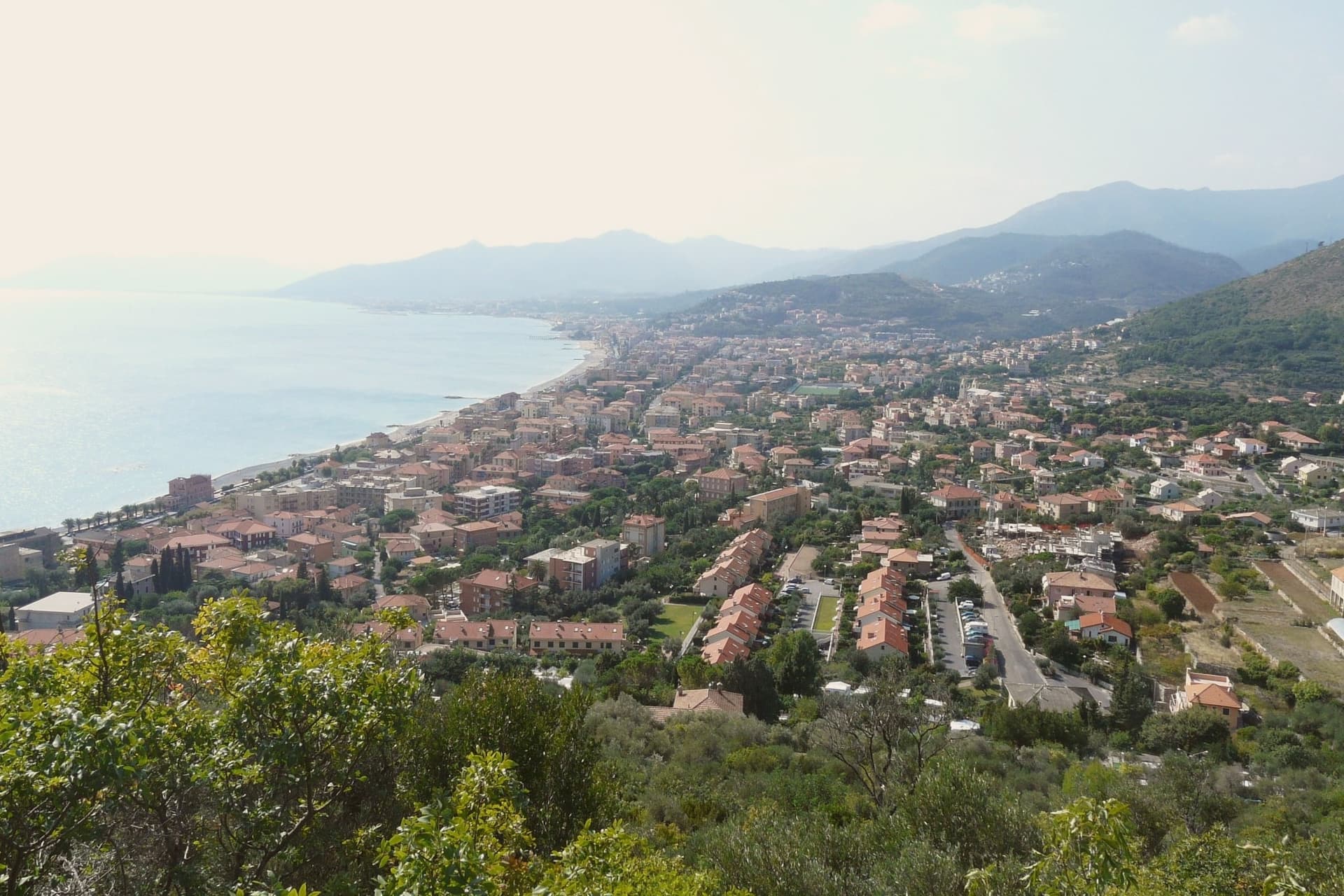
Why visit Borgio Verezzi
Borgio Verezzi is two settlements stitched together in 1933 under a single comune in the province of Savona. Borgio sits on the coast at the mouth of the Bottassano stream.
Verezzi rises 200 meters up the Orera hill above it, four old boroughs of stone houses in the warm-pink local rock: Piazza, Roccaro, Crosa, and Poggio, each a cluster rather than a single center. The beach below has held the Bandiera Blu without interruption since 1989.
The two halves of the town read as coast and height rather than old and new: the lower village handles the shoreline and the flag it has kept for decades, the upper village keeps its stone streets and its square turned toward the sea view. What the pairing adds up to is a comune built from two working parts, a beach town below and a hill village above, joined by administration in 1933 but still legible as separate places.
We confirmed you can reach this one by train.
What to see in Borgio Verezzi
- Grotte di Valdemino. Dated to 1933, the caves run through chambers where small underground lakes sit beneath the karst rock, the route winding through passages carved out over time.
- Piazza Sant'Agostino. Main square of Verezzi, framed by pink-stone houses with a view down to the sea. The village skyline serves as backdrop for the festival's summer stage.
- Chiesa di San Pietro Apostolo. Neoclassical parish church built in 1789 on the foundations of the medieval Burgum Albinganeum castle, with a white façade and two bell towers.
How to get to Borgio Verezzi
There is a railway station in the town, so you can arrive without a car and never need one while you are here. Genova is roughly 69 minutes away by road.
Our tip
April through June and September into October are the dry months on this stretch of the Riviera di Ponente. The beach at Borgio holds Bandiera Blu and the water warms into May. July and August are full: the coast road slows, the spiaggia fills with weekenders from Genova and Torino, and the theater festival runs in Piazza Sant'Agostino from early July to mid-August. Sagra della Lumaca falls in August.
Noli
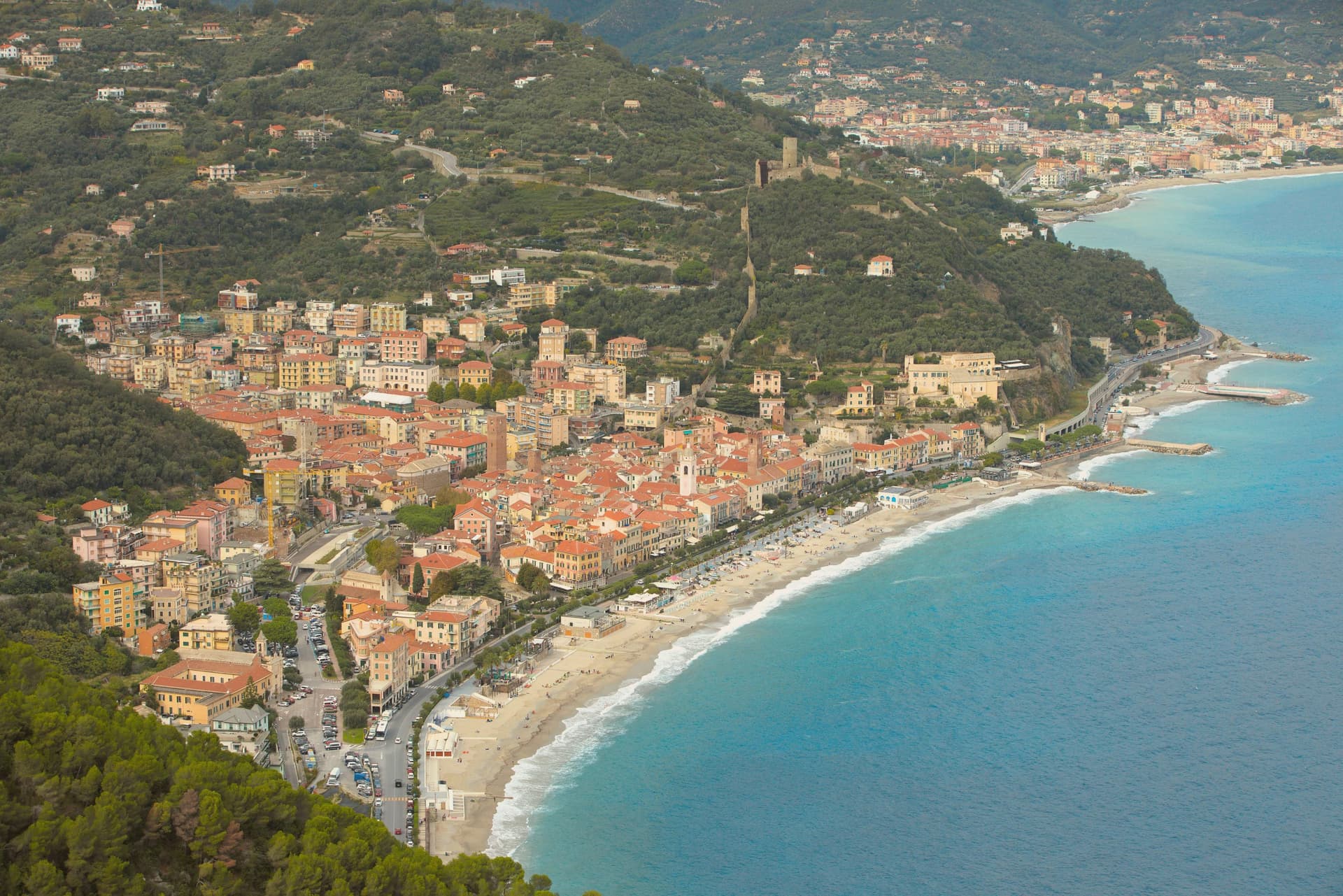
Why visit Noli
Noli sits at four meters on the Riviera di Ponente, fifty kilometers southwest of Genoa. From 1192 to 1797 it was an independent maritime republic, the fifth alongside Genova, Pisa, Venezia and Amalfi, holding the Capo Noli headland and a stretch of coast under its own flag and protected by alliance with Genoa.
The medieval walls still ring the centro storico, and the survivors of an original eight defensive towers still rise above the rooftops, including the Torre dei Quattro Canti and the Torre Papone. Outside the walls stands the Basilica di San Paragorio, an eleventh-century Romanesque church and one of the most important early medieval buildings in Liguria, with a wooden crucifix from the twelfth century and a bishop's throne carved into a single block of stone.
The Capo Noli cliffs end the bay to the south, with footpaths leading to grottos and a hermitage in the rock. The litoraneo carries the Bandiera Blu.
We confirmed you can reach this one by train.
What to see in Noli
- Basilica di San Paragorio. Eleventh-century Romanesque church outside the walls, with a twelfth-century wooden crucifix and a bishop's throne carved from a single block.
- Torre dei Quattro Canti. Surviving medieval defensive tower inside the walled centro storico, one of eight that originally ringed the maritime republic.
- Torre Papone. Second medieval tower of the original defensive ring, still standing above the rooftops of the centro storico.
How to get to Noli
There is a railway station in the town, so you can arrive without a car and never need one while you are here. Genova is roughly 58 minutes away by road.
Our tip
May through June and September through October are the right months for Noli. The sea is warm enough from late May, the walls of the centro storico keep the streets shaded, and the coastal path to Capo Noli is walkable without midday heat. July and August fill the beach and the limited parking on the coastal road; the rest of the village stays calmer than the Bandiera Blu litoraneo. La Repubblica del Gusto falls in June.
Moneglia
Why visit Moneglia
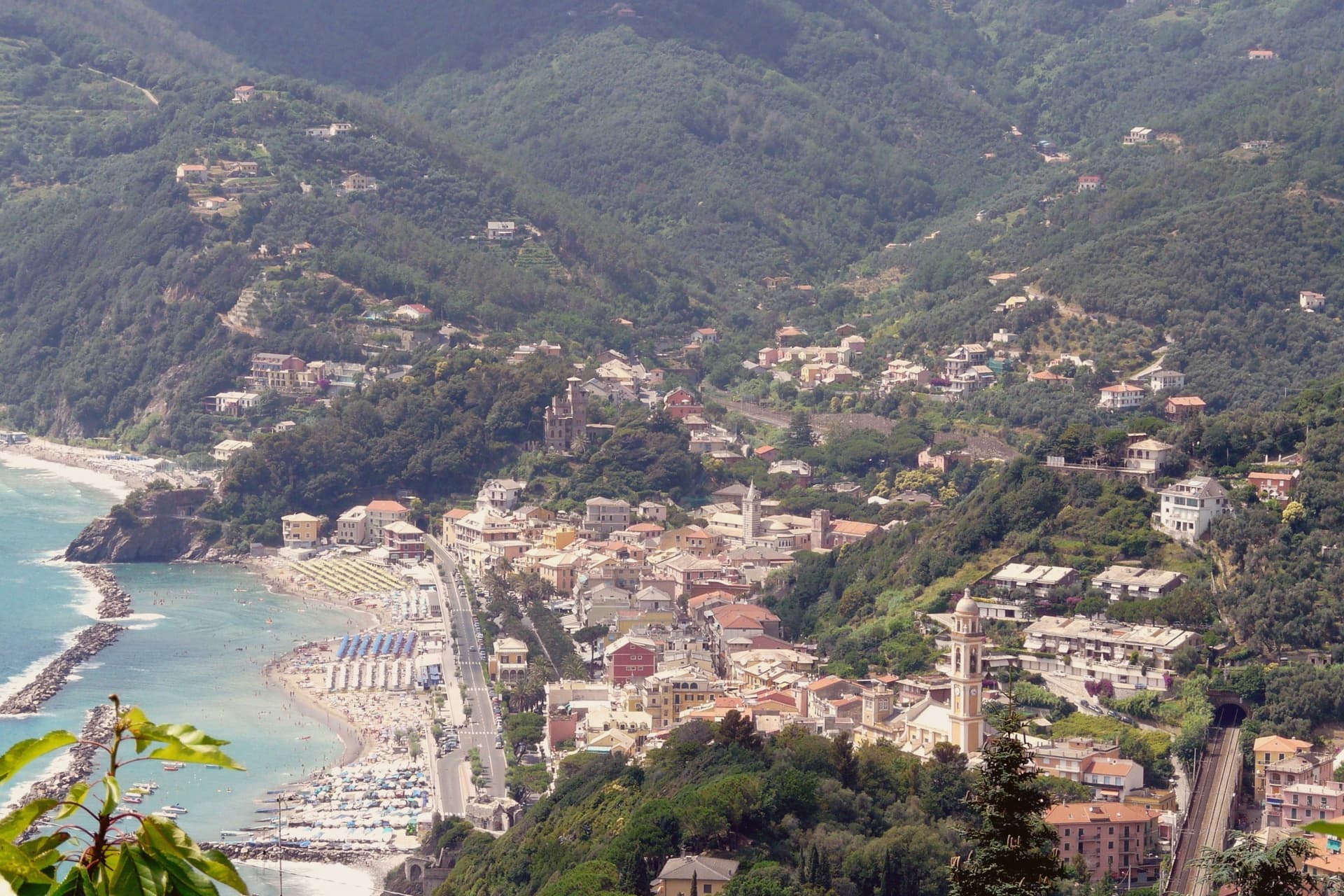
Moneglia sits at four meters in a bay on the Riviera di Levante, bracketed by two wooded headlands, one to the west and one to the east. The Romans used the bay as a stop on the Via Aurelia, and the village was a fief of the Fieschi family from Lavagna until 1153, when it passed to the Republic of Genoa, which raised fortifications on both headlands to hold the bay and the coast road below them.
The painter Luca Cambiaso, the town's defining figure, was born here in 1527, one of the most important Genoese painters of the sixteenth century. The single railway tunnel under the eastern headland, alternating one-way traffic, still controls car access to the village in summer, a modern detail that keeps the old geography of a bay closed by two points of land in working order today.
We confirmed you can reach this one by train.
What to see in Moneglia
- Chiesa di San Giorgio. Reached through a parvis at the edge of the centro storico, in use by the Franciscans since 1396. The Adoration of the Magi by Luca Cambiaso hangs inside, a work by the town's own painter still in the building he would have known.
- Bay of Moneglia. The sand gives way at either end to smaller rocky coves reachable only from the sea, a rougher edge to the beachfront that the Bandiera Blu award does not describe.
- Castello di Monleone. Medieval fortification on the western headland, raised by the Genoese to control the bay and the Via Aurelia.
How to get to Moneglia
There is a railway station in the town, so you can arrive without a car and never need one while you are here. Genova is roughly 57 minutes away by road.
Our tip
May through October is the run for Moneglia. May, June and September are the calm months, with the bay open, the sea warm enough from late June, and the alternating-traffic railway tunnel on the eastern access road still manageable. July and August are the difficult months: the beachfront fills, and the single-lane tunnels under both headlands become a daily bottleneck. Carnevale Della Zucca falls in February.
Bogliasco
Why visit Bogliasco
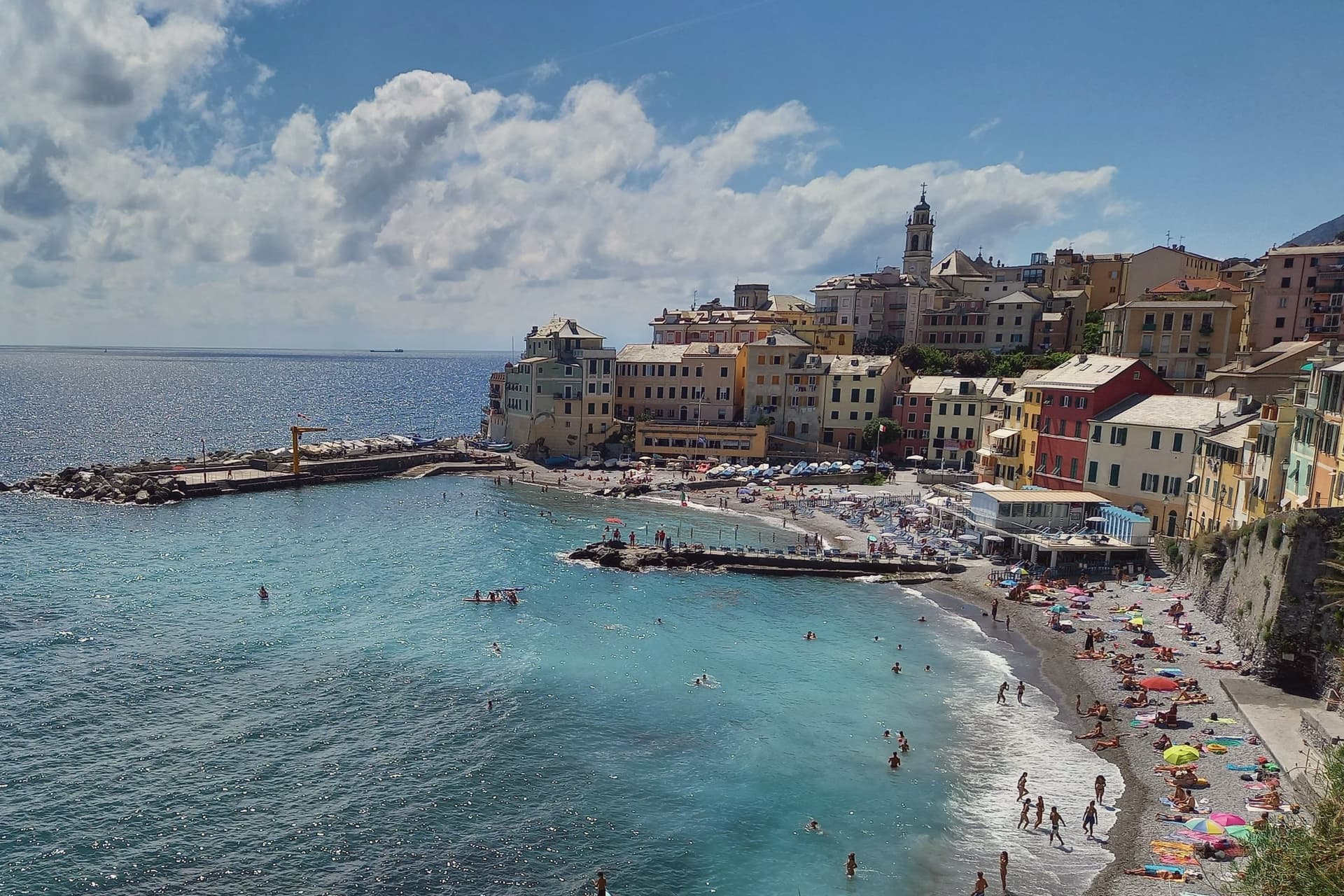
Bogliasco sits 15 kilometers east of Genoa on the Riviera di Levante, where the Bogliasco torrent meets the sea between two rocky headlands. Archaeological surveys on the slopes of Mount Cordona found stone tools from the Middle Paleolithic and Mesolithic, and Roman-era artefacts confirm that the corridor down from the Val Fontanabuona to the coast was a transit route for imperial troops.
The village's signature monument is the medieval bridge near the mouth of the torrent, traditionally called il ponte romano although the surviving structure is Romanesque, built in the 13th century and remodelled in the 17th. The historic centre tightens around the parish church of Natività di Maria Santissima — a baroque rebuild of an earlier Romanesque oratory — and a network of stepped alleys (creuze) climbing into the olive terraces above.
The cove below is small, pebbled, and clear enough that the village's ASD Bogliasco club has produced multiple Italian national water polo and synchronised swimming champions. The Genoa metropolitan train brings Bogliasco into Liguria's commuter belt — twenty minutes from Brignole — which is why the pastel houses are kept lived-in rather than picture-postcard.
We confirmed you can reach this one by train.
What to see in Bogliasco
- Ponte medievale (il "ponte romano"). 13th-century Romanesque stone bridge near the mouth of the Bogliasco torrent, remodelled in the 17th century. Named romano colloquially but architecturally Romanesque.
- Chiesa della Natività di Maria Santissima. Baroque parish church rebuilt on the footprint of an earlier Romanesque oratory, with a 17th-century facade overlooking the seafront.
- Spiaggia di Bogliasco. Small pebbled cove tucked between two rocky points, the home beach of the ASD Bogliasco water polo and synchronised swimming clubs.
How to get to Bogliasco
There is a railway station in the town, so you can arrive without a car and never need one while you are here. Genova is roughly 16 minutes away by road.
Our tip
April through October is the open season: warm coastal days, calm sea by late spring, and the cove gets busy from June through August. The water-polo club's home season runs October through April for those who plan a fixture around the visit. November through March is quiet — the seafront stays open and the train still runs every fifteen minutes — but most of the small terraces and ice-cream shops close until Easter.
More from Anywhere Italy
- The 9 best small towns you can reach by train that eat well within 90 minutes of Genova
- The best small coastal towns with a serious restaurant in Liguria
- The best hidden beach towns in Liguria
 The 10 prettiest villages you can reach by train within 90 minutes of Genova
- The best small beach towns that eat well in Liguria
- The best small towns with a food festival that eat well within 90 minutes of Genova