
The best small mountain towns in Sicilia
Inland Sicilia gets cold. Above the coastal belt the island climbs into limestone ridges and beech woods where snow settles in winter and the air smells of woodsmoke and wet stone, and the houses are built from the grey rock they stand on. The cooking changes with the altitude: lamb and kid, wild fennel, sheep's ricotta still warm, provola smoked over straw, mushrooms gathered in the Madonie in autumn, manna tapped from ash trees. Spring brings orchids and broom to the high pastures, and late summer is when the mountain festivals fill the piazzas. It is a different island from the one on the posters, and it is reachable in under two hours from either coast.
paragraphs are fine but Etna is the mountain everyone means. The cable car at Rifugio Sapienza, the jeep tracks up to the craters, the wine tasting rooms strung along the eastern slopes: this is where the coaches from Catania and Taormina go, and in high season the car parks fill by mid-morning. It is worth going, because a live volcano deserves the attention. But the pull of Etna is so strong that most visitors treat the rest of Sicilia's mountains as scenery glimpsed from the motorway.
The ranges keep going west and north. The Madonie and the Nebrodi carry beech forest, upland pasture and stone towns on ridges with long views to the Tyrrhenian, and the Iblei in the southeast are a plateau of dry-stone walls, cork oak and cold spring water. The towns in this list sit in those mountains, smaller than the coastal resorts and quieter for it, with pastry shops, sheep cheese, castles and Norman churches, and enough beds to make a base for a few days of walking. Fewer people go, which is the reason the food is still local and the piazza is still the town's.
Of the 61 communes we have mapped in Sicilia, 13 qualify as mountain towns: each sits in the mountains. This list is the small ones, 7 in all, ordered smallest first. The smallest, Geraci Siculo, has 1,702 residents.
If you are still choosing, we have also written The 8 best high-altitude villages in Sicilia and The best mountain towns inside a nature park in Sicilia.
Geraci Siculo
Why visit Geraci Siculo
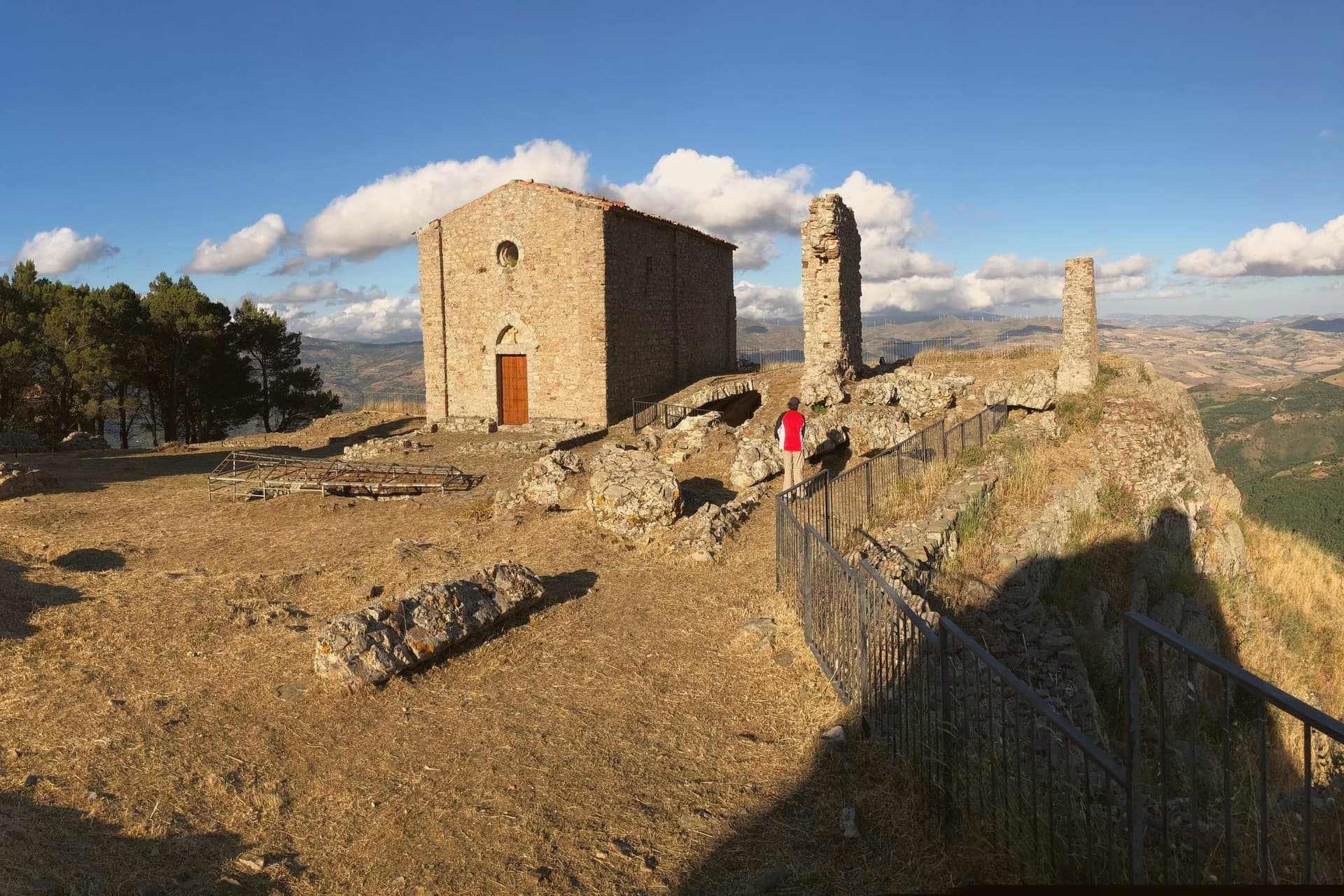
Geraci Siculo sits at 1,077 meters on a sandstone ridge in the Madonie, the highest borgo of the Parco delle Madonie and one of the highest in Sicily. The first fortified nucleus dates to the mid-eighth century, when Byzantines retreated inland to escape Arab raids.
After the Norman conquest Roger I of Hauteville created the County of Geraci in 1072 and gave it to the Ventimiglia family; in 1258 the county was elevated to the first marquisate granted in Sicily. The Castello dei Ventimiglia, on the massive sandstone rock above the village, reached its definitive form in the early fourteenth century and still dominates the skyline.
From the ridge the view runs from Etna in the southeast to the Aeolian Islands in the north. The Madonie pasture economy underwrites the local cheese, particularly provola dei Nebrodi and ricotta from sheep flocks on the surrounding peaks.
The village placed third in the national Borgo dei Borghi competition.
The village sits at 1077 metres.
What to see in Geraci Siculo
- Castello dei Ventimiglia. Fourteenth-century castle on a sandstone outcrop above the village, the high point of the marquisate of Geraci from 1258.
- Chiesa Madre di Santa Maria Maggiore. Mother church at the centre of the village, with Renaissance and Baroque elements and works recovered from the Ventimiglia chapel.
- Centro storico. Medieval Madonie layout of stone houses on the ridge, with stepped lanes and narrow piazzas oriented to the castle rock.
How to get to Geraci Siculo
Palermo is roughly 106 minutes away by road.
Our tip
Geraci Siculo runs on alpine seasons: June through September is the summer window, when the ridge stays cool, the wildflowers cover the high pasture, and Etna is visible from the castle. December through March is the winter window, when snow falls on the Madonie peaks and the village turns to its cheese and slow-cooked food. April, May, October and November are quiet shoulder months, with fog rolling in off Pizzo Carbonara and many trattorie shut. Giostra dei Ventimiglia a Geraci Siculo falls in August.
Buccheri
Why visit Buccheri
Buccheri sits on the northern slopes above 820 meters, one of the highest villages in the Iblei. Sicels, Greeks, Romans and Byzantines all left traces on the ridge above the village, a long sequence of settlement on ground that offered height and a view over the watershed below.
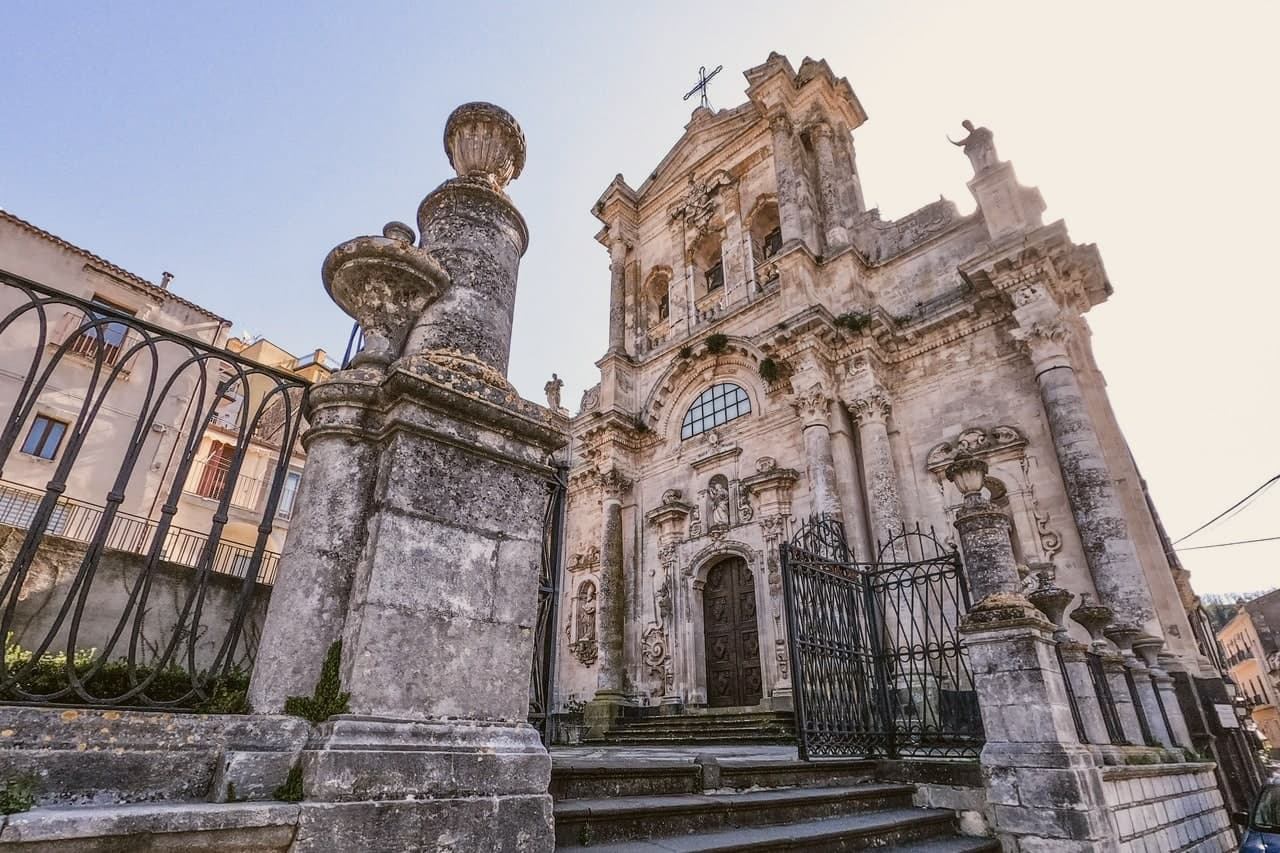
The 1693 Val di Noto earthquake leveled most of what stood. The rebuild produced the upper village's high baroque staircase church and, separately, the parish church housing a Gagini marble that survived the quake itself, an object older than the building now around it.
The neviere in the surrounding hills supplied granita ice to Syracuse and Catania into the early twentieth century, a trade that tied this upland village to the coastal cities below it long before the road did. The olive groves on the slopes around the peak now carry the same name into a different economy: the Olio e non solo festival each October fills the village with producers and tastings.
What the ridge, the ice caves and the groves add up to is a village whose whole history has run on its altitude, first as vantage and refuge, then as a source of cold, now as a source of oil.
The village sits at 820 metres.
What to see in Buccheri
- Chiesa di Sant'Antonio Abate. Eighteenth-century baroque church at the top of a long staircase in the upper village, rebuilt after the 1693 earthquake destroyed the medieval original.
- Chiesa di Santa Maria Maddalena. Baroque parish church with a façade by local architect Michelangelo Di Giacomo; holds a 1508 marble Magdalene by Antonello Gagini that survived the 1693 quake.
- Monte Lauro. Rises directly above the village; trails climb from the town to the summit, the highest point in the Iblei and the region's central watershed.
How to get to Buccheri
Catania is roughly 80 minutes away by road.
Our tip
May through October is the window for Buccheri. The Iblei stay cooler than the Sicilian coast at 820 meters, and the trails up Monte Lauro and into the Anapo valley toward Pantalica are walkable through summer afternoons. July and August touch thirty in the village but evenings drop into the teens.
Montalbano Elicona
Why visit Montalbano Elicona
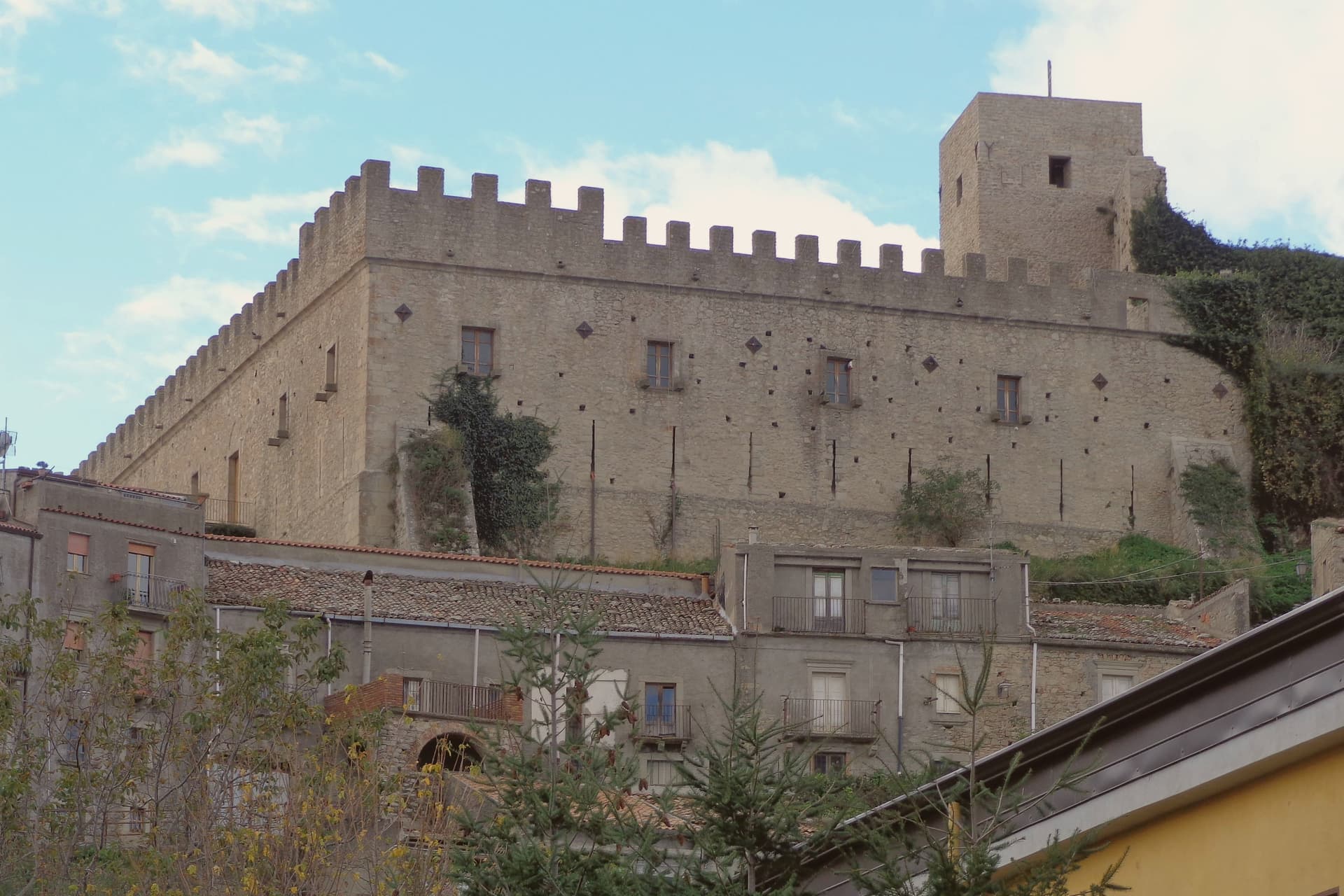
Montalbano Elicona stands at 907 meters in the Nebrodi mountains, north of Etna and inland from the Tyrrhenian coast above Patti. The Castello di Montalbano was raised in 1233 under Frederick II of Swabia, then rebuilt and adopted as a summer royal residence by Frederick III of Aragon between 1302 and 1308, who brought his physician Arnaldo da Villanova with him to treat his gout.
The castle still combines a Norman rectangular nucleus with crenellated towers and an Aragonese addition with arrow slits and large windows. The town won the RAI Borgo dei Borghi competition in 2015.
A short drive from the village, the Argimusco plateau holds a set of large eroded sandstone formations that some scholars read as a fourteenth-to-eighteenth-century hermetic site and others as wind-and-water sculpture. The surrounding hills are Città della Nocciola territory; hazelnut groves run from 700 to 1,000 meters.
The village sits at 907 metres.
What to see in Montalbano Elicona
- Castello di Montalbano. Frederick II castle of 1233 rebuilt as the summer residence of Frederick III of Aragon between 1302 and 1308, two towers and a Norman-Aragonese hybrid plan.
- Megaliti dell'Argimusco. Eroded sandstone plateau twelve kilometers from the village, large free-standing formations read variously as natural sculpture and a medieval hermetic site.
- Chiesa Madre di Santa Maria Assunta. Norman-era mother church near the castle, fourteenth-century reworking and a Renaissance baptismal font, restored after twentieth-century seismic damage.
How to get to Montalbano Elicona
Messina is roughly 70 minutes away by road.
Our tip
May through October are the working months at 907 meters. The Nebrodi air stays cooler than the coast through July and August, often a ten-degree drop from Patti, and the Bosco di Malabotta gives shade for walking. Late July brings the Festa del Corteo Storico, with reenactments of Frederick III's court and a procession from the castle through the medieval quarter. Feste Aragonesi di Montalbano Elicona falls in August.
Petralia Sottana
Why visit Petralia Sottana
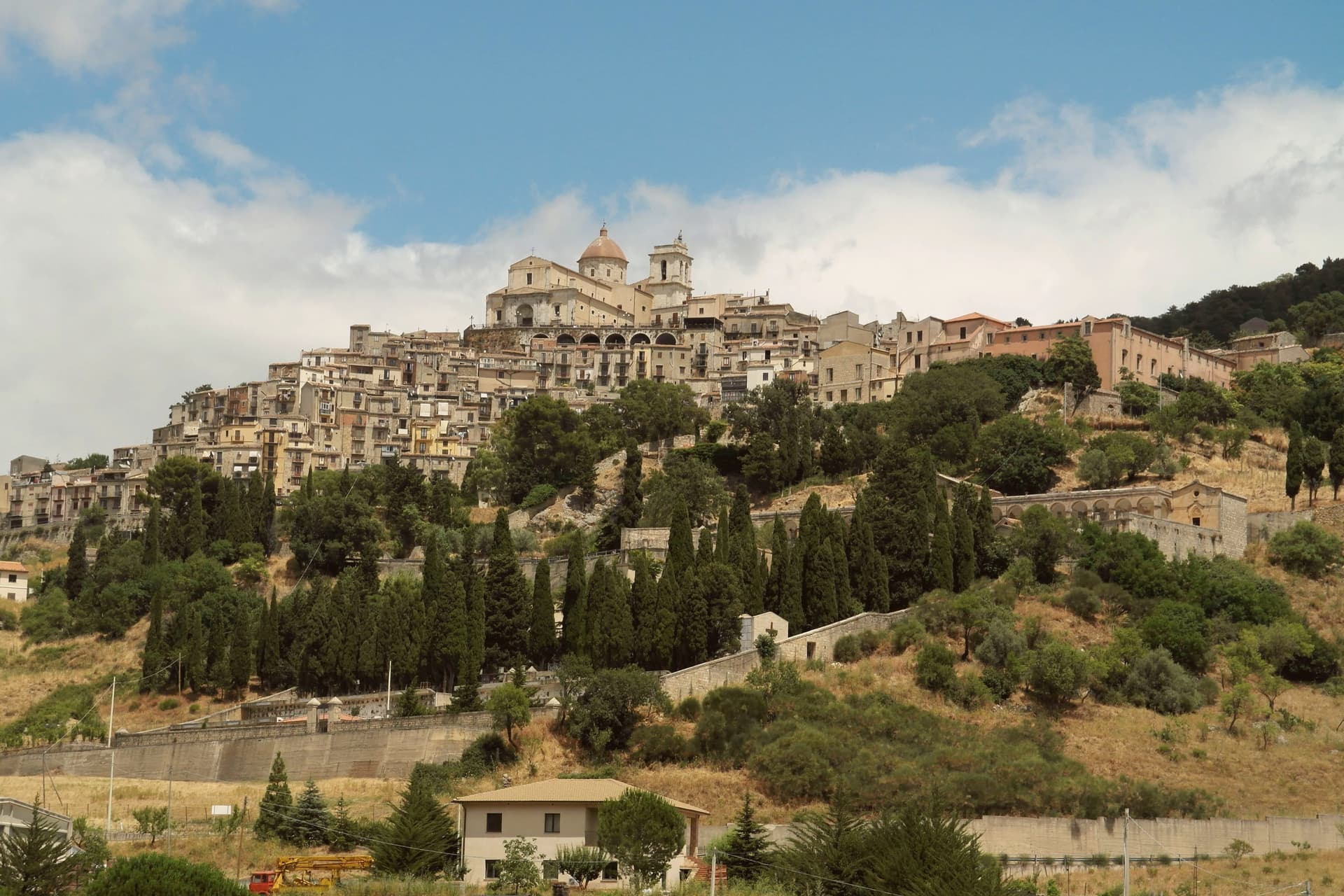
Petralia Sottana sits at 1,000 meters in the heart of the Madonie, the second-highest range in Sicily after Etna. The town is the only commune in Sicily to hold a Bandiera Arancione from the Italian Touring Club, and the headquarters of the Parco delle Madonie are inside its territory.
The two Petralie, Sottana and Soprana, share a Roman and Byzantine origin and were rebuilt under the Normans on opposite slopes of the same ridge; Sottana, the lower of the two, became the administrative centre of the surrounding mountain villages. The Chiesa Madre, also known as the Chiesa Maria Santissima Assunta, is the largest place of worship in the Madonie, seventeenth-century and rebuilt around an earlier core in the Pusterna district.
The Chiesa di Santa Maria di Loreto, founded in 1484 and remade in the seventeenth century, has majolica spires that mark the south end of the centro. Piazza del Popolo holds the Neo-Gothic Palazzo Pottino, the marble Quattro Cannoli fountain of Billiemi stone, and the Oratorio delle Anime Purganti.
The village sits at 1000 metres.
What to see in Petralia Sottana
- Chiesa Madre (Maria Santissima Assunta). Seventeenth-century mother church on Piazza Umberto, the largest place of worship in the Madonie, in the ancient Pusterna district.
- Chiesa di Santa Maria di Loreto. Church founded in 1484 and rebuilt in the seventeenth century, with majolica spires and a marble altarpiece attributed to Giandomenico Gagini.
- Piazza del Popolo. Central square with the Neo-Gothic Palazzo Pottino of the Marquises of Eschifaldo, the Oratorio delle Anime Purganti and the Quattro Cannoli fountain.
How to get to Petralia Sottana
There is a railway station in the town, so you can arrive without a car and never need one while you are here. Palermo is roughly 104 minutes away by road.
Our tip
June through September are the Madonie hiking months. Pizzo Carbonara stays cool above 1,500 meters even in August, and the trails radiate from Petralia Sottana into the beech and holm-oak woods of the park. December through March is the second season: at 1,000 meters the town gets reliable snow, and the Piano Battaglia ski station above the village runs the only working lifts in western Sicily. Ballo Pantomima della Cordella a Petralia Sottana falls in August.
Castiglione di Sicilia
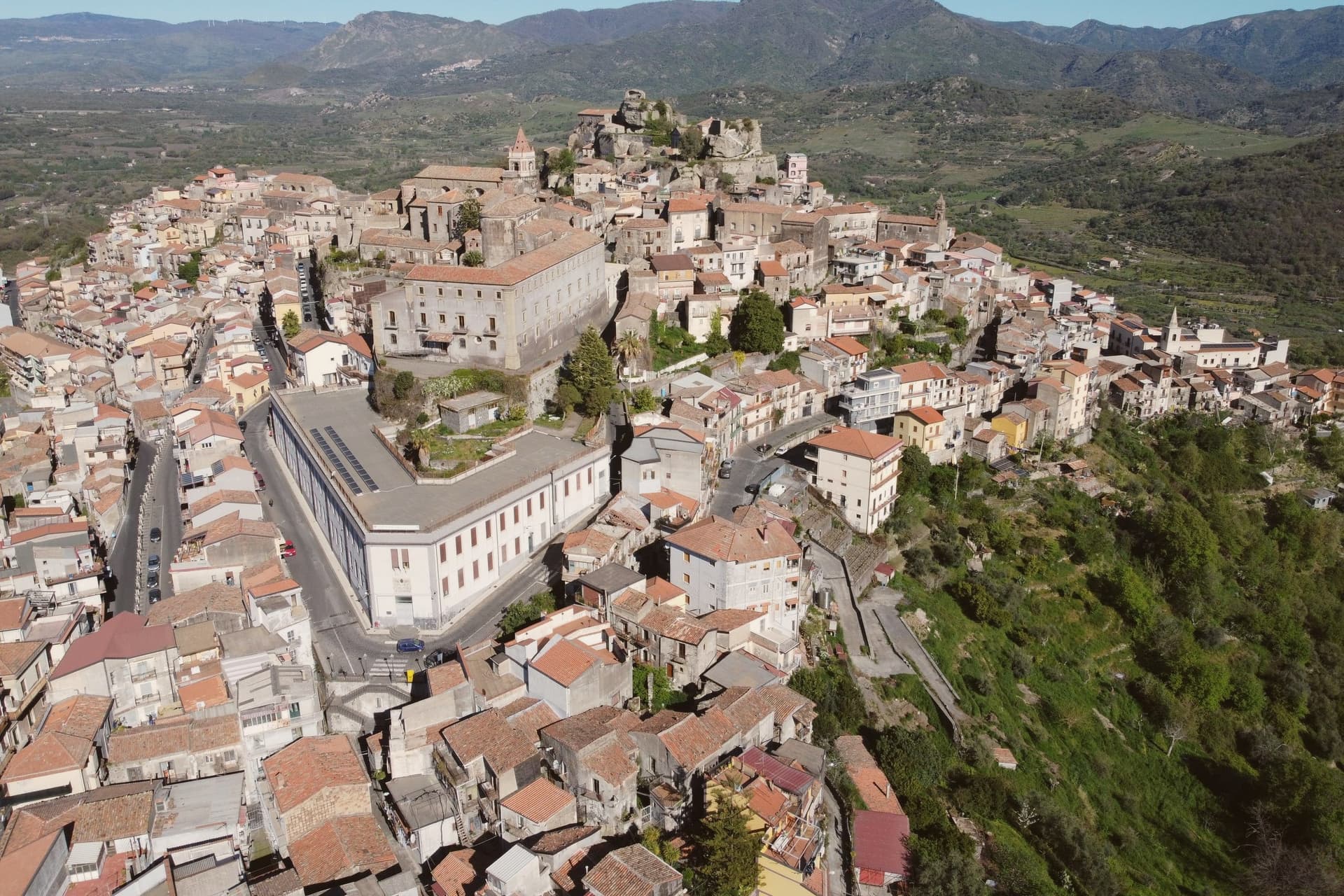
Why visit Castiglione di Sicilia
The town looks down the Alcantara river valley between Randazzo and Taormina, its position fixed by Norman count Roger I, who documented it in 1092 as Castrileonis, the great castle. That name still fits the territory more than the town itself: the commune's boundary runs uphill from the historic centre all the way to the summit of Etna, taking in the north-east crater, so the same municipality holds a huddle of streets at 621 meters and a stretch of active volcano above it.
The hills below the centre are the heart of the Etna DOC. Nerello Mascalese and Nerello Cappuccio grow on the volcanic soils around the village, with Carricante carrying the whites, and bottles from Cottanera, Passopisciaro, Tenuta delle Terre Nere and the Alcantara producers all ship from here.
Twenty minutes downhill the Alcantara has cut its gorges through the same lava that feeds those vineyards, basalt walls shaped by water where the fields above are shaped by the grape. Town, castle, vineyard and gorge read as one continuous volcanic system, worked over centuries into a fortress, a wine region and a river cut.
The village sits at 621 metres.
What to see in Castiglione di Sicilia
- Castello di Lauria. The fortress stands on its basalt outcrop above the town, its walls carrying the weight of two rebuildings by Ruggero di Lauria's crews. The rooms now hold the Enoteca Regionale for eastern Sicily, so the same stone that once watched for approach up the valley now stores the bottles made from the vines below it.
- Cuba Bizantina di Santa Domenica. Small Byzantine cube-shaped church, seventh to ninth century, in the rural outskirts of the commune, one of the oldest surviving structures in the Etna area.
- Gole dell'Alcantara. Basalt gorges carved by the Alcantara river through prismatic lava columns, around twenty minutes downhill from the centro storico.
How to get to Castiglione di Sicilia
There is a railway station in the town, so you can arrive without a car and never need one while you are here. Catania is roughly 49 minutes away by road.
Our tip
May through October are the working months on Etna nord. Vineyard tours start in June, harvest runs late September through mid-October on the higher contrade, and the slopes turn red and gold into early November. July and August on Etna are bearable at 621 meters: nights drop to seventeen degrees, far cooler than Catania.
Polizzi Generosa
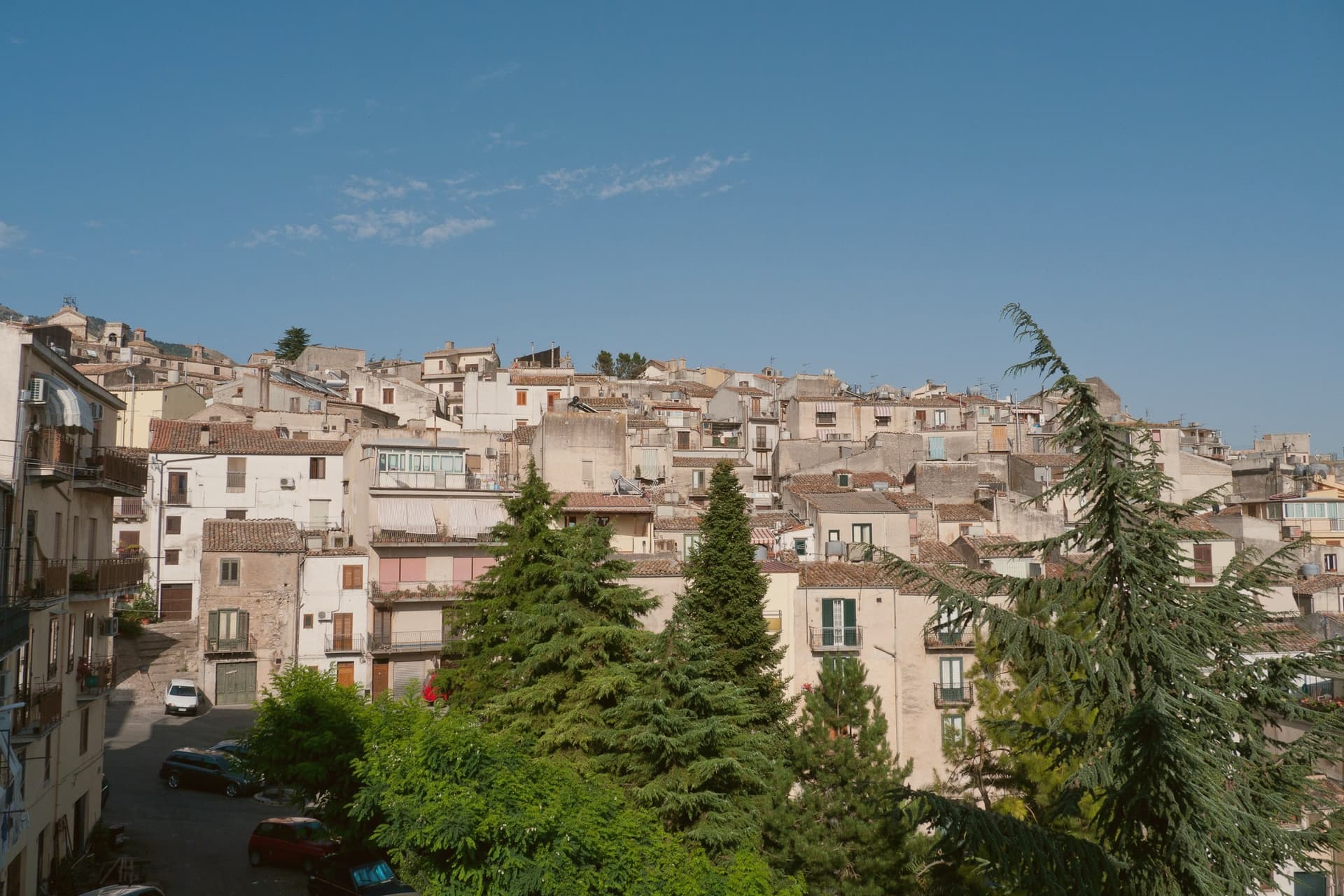
Why visit Polizzi Generosa
The name Polizzi is thought to derive from the Greek Polis Isis, City of Isis, and archaeological finds attest continuous settlement since at least the sixth century BC, including coins from the nearby Greek colony of Himera. The Normans rebuilt the hilltop settlement, and Frederick II later added the epithet generosa.
The old town climbs the ridge in stone houses, convents and churches, with the church and its twin bell towers at the summit, while the surrounding limestone massif, now protected as part of a UNESCO Global Geopark, supplies the slopes where hazelnuts are grown and where the town's convents once produced the sfoglio still made today. Domenico Dolce of Dolce & Gabbana was born here in 1958.
Giuseppe Antonio Borgese, the novelist who refused the Fascist loyalty oath in 1931 and emigrated to the United States, came from the same town. A settlement old enough to trace its name to Greek colonists, remade by Normans and by an emperor, still produces the same hazelnuts and the same pastry its convents made centuries ago, and still sends its people beyond the mountain.
The village sits at 917 metres.
What to see in Polizzi Generosa
- Chiesa Madre di Polizzi Generosa. Norman foundation rebuilt in Baroque style in the seventeenth century, with twin bell towers, a clock and a grand staircase at the top of the town.
- Museo Archeologico di Himera. Civic museum with finds from the area's continuous settlement, including coins and amphorae linked to the Greek colony of Himera on the coast.
- Parco delle Madonie. Regional natural park and UNESCO Global Geopark since 2015, covering the limestone massif that rises around the town.
How to get to Polizzi Generosa
Palermo is roughly 72 minutes away by road.
Our tip
May through October is the open season. At 917 meters the summer stays well below the coastal heat, the Madonie holds its forests through August, and the hazelnut harvest comes in late August and September. October fills the woods with mushrooms and turning beech.
Petralia Soprana
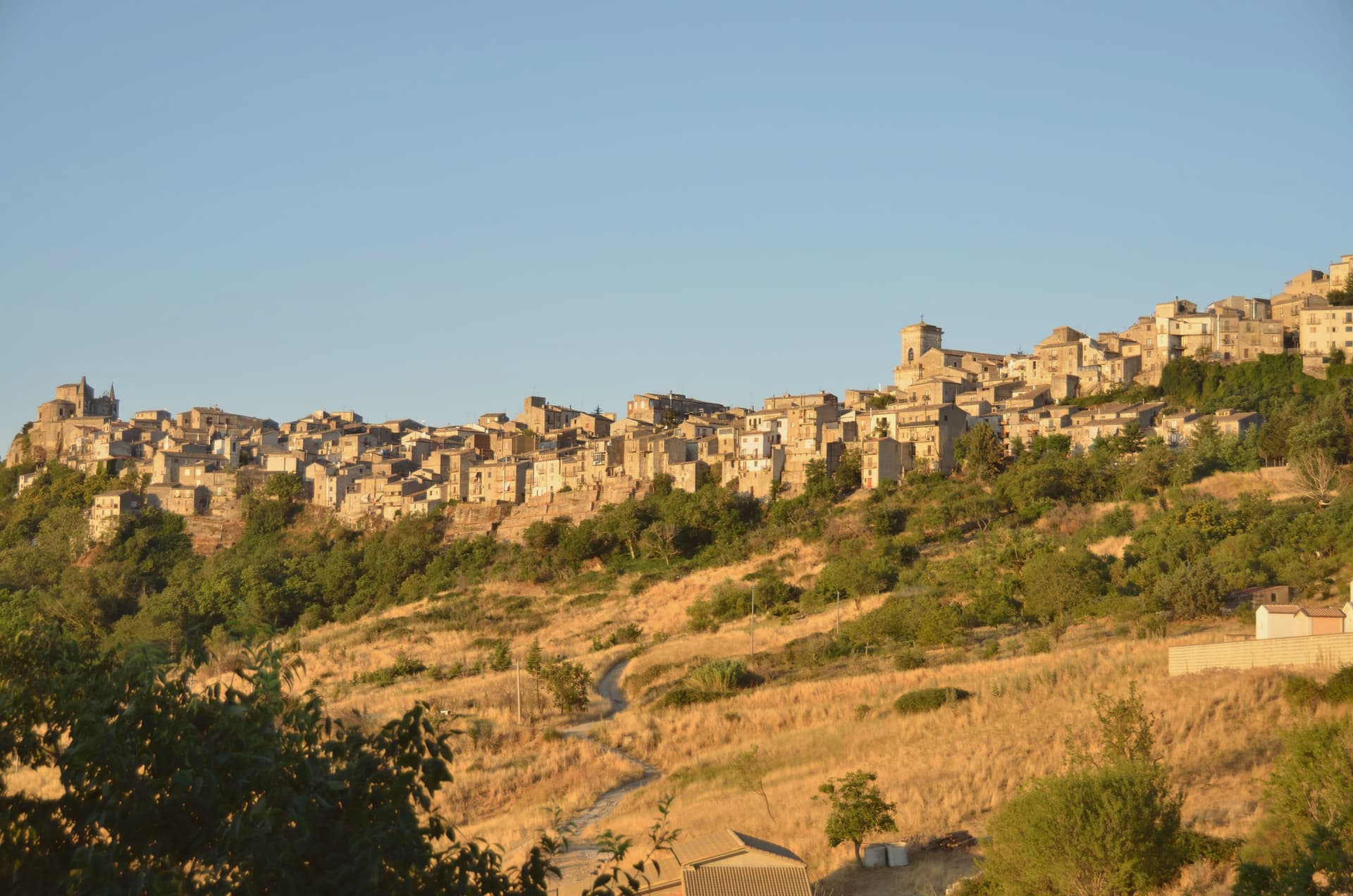
Why visit Petralia Soprana
Petralia Soprana sits at 1,147 meters at the heart of the Madonie Natural Park, the highest commune in the range. The town and its lower twin Petralia Sottana grew from the Roman Petra, then took its current form under the Normans, who fortified the ridge.
The Chiesa Madre, dedicated to Saints Peter and Paul, dates to the fifteenth century and faces Piazza Duomo with a clear view across the Madonie. Below the village, the Raffo salt mine runs 80 kilometers of tunnels through one of the largest salt deposits in Europe, mined since at least the fourteenth century; the active mine now hosts MACSS, a contemporary art museum carved into the salt, one of a kind worldwide.
RAI named Petralia Soprana Borgo dei Borghi in 2018, the year of the salt mine's wider opening to the public. The stone streets, the mountain air at 1,147 meters, and the salt below the floor are the three things the village trades on.
The village sits at 1147 metres.
What to see in Petralia Soprana
- Chiesa Madre (Santi Pietro e Paolo). Fifteenth-century mother church on Piazza Duomo, central monument of the village, with a baroque interior added after the 1693 earthquake.
- Miniera di Sale di Raffo. Active salt mine below the village with 80 km of tunnels in one of Europe's largest salt deposits, worked since the fourteenth century.
- MACSS — Museo Arte Contemporanea Sotto Sale. Contemporary art museum inside the active Raffo salt mine, sculptures cut directly into rock salt walls, the only museum of its kind worldwide.
How to get to Petralia Soprana
Palermo is roughly 88 minutes away by road.
Our tip
June through September brings dry mountain weather, ridge trails open across the Madonie, and temperatures stay below twenty-five even when Palermo touches forty. The salt mine and MACSS run all year, lit and warm inside. December through March catches snow at 1,147 meters and the village fills briefly with day-trippers from Cefalù coming up to see white roofs. Sagra del Grano a Pianello - Petralia Soprana falls in August.
More from Anywhere Italy
- The 8 best high-altitude villages in Sicilia
- The best mountain towns inside a nature park in Sicilia
 The best small towns inside a nature park in Sicilia
- The best mountain towns within two hours of Catania
- The 6 best mountain towns in the province of Palermo
- The best towns inside a nature park in the province of Palermo