
The best hot-spring towns within two hours of Verona
The water comes up warm across a surprisingly wide arc of northern Italy, and each place has arranged itself around the source. In the Euganean Hills south of Padua it arrives filtered through volcanic rock and cooled into thick grey mud; in the Trentino valleys it is drunk as much as bathed in, poured from taps in liberty-era pump rooms with palms in pots. Autumn and winter are the seasons that make sense of it all, when the pools breathe steam into cold air and the surrounding hills go to vines and chestnut woods. The building material shifts with the geology, trachyte from the Euganei, pale river stone and stucco in the north, brick along the Emilian plain, but the shape of the town is the same: baths at the centre, promenade, park, a bar that opens early for people taking the cure.
Most visitors to this part of Italy spend their time in Verona and on the Lake Garda shoreline, and both are busy for good reasons. The Arena in summer, Juliet's courtyard, the ferries between Bardolino, Lazise and Malcesine, the olive terraces and the windsurfers: it is one of the most heavily walked corners of the country, and in July the lakefront towns can feel like a single continuous queue for gelato. Thermal bathing gets folded into that trip as a spa afternoon at a large hotel, booked online, done in a couple of hours.
The thermal geology, though, runs well past the lake and well past the famous resorts. Volcanic springs, alkaline waters and salt-bromine-iodine sources continue south into the Euganean Hills, north up the Adige and the Brenta, west into the Val Camonica and east onto the Emilian plain, and along that arc are towns where the baths are the reason the place exists rather than an amenity attached to it. Fewer people go, the pools are cheaper, and the cure culture is still visible in the pump rooms and the parks. All of them sit within a couple of hours of Verona, most of them on a train line.
Of the 88 communes we have mapped in a 120-minute drive of Verona, 12 qualify as hot-spring towns: each has thermal water a town has been built around. This list is 10 of them. The smallest, Arquà Petrarca, has 1,810 residents.
Two more lists worth reading alongside this one: The best hot-spring towns within two hours of Brescia and The best hot-spring towns within two hours of Padua.
Arquà Petrarca
Why visit Arquà Petrarca
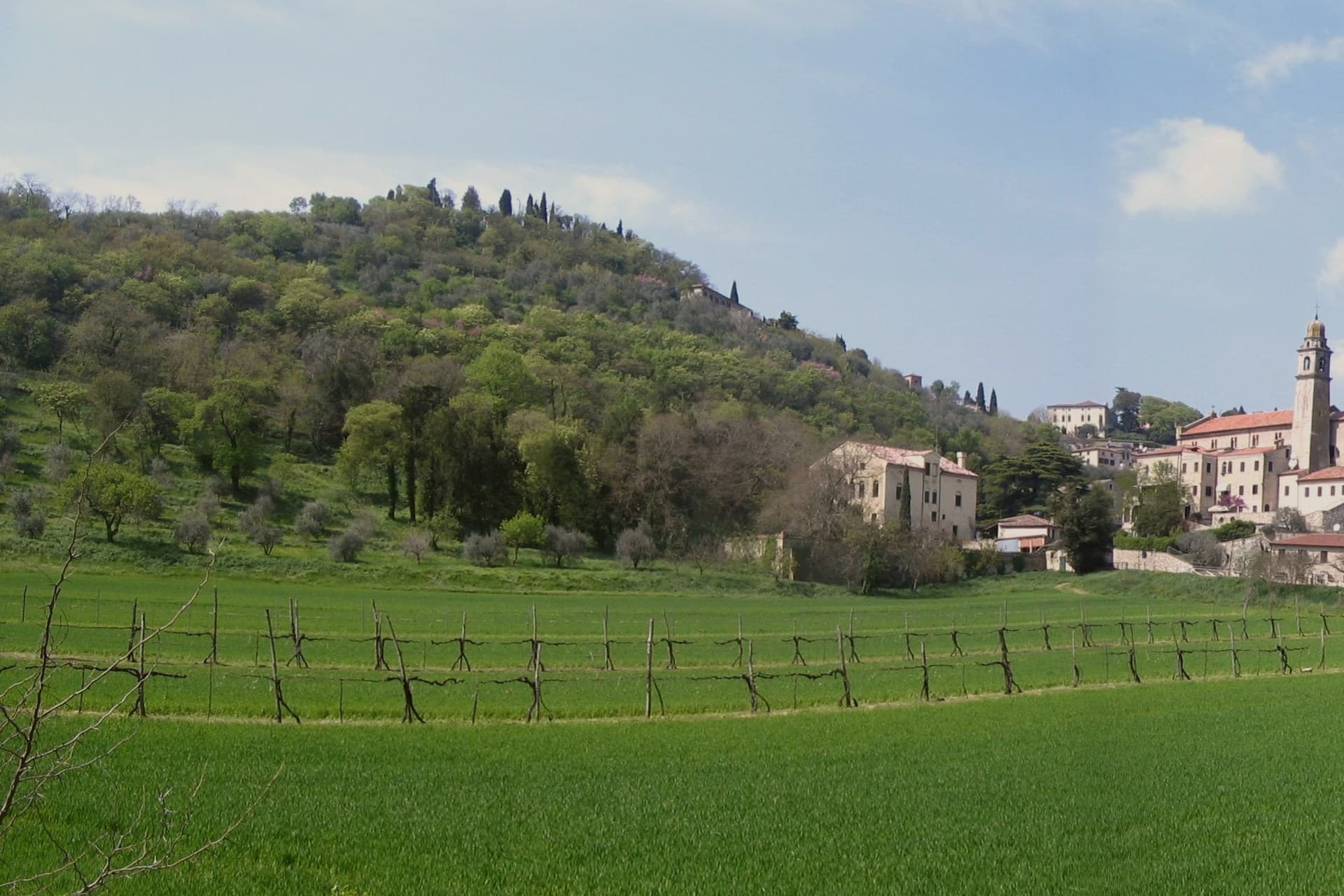
Arquà sits between Monte Ventolone and Monte Castello, in the Euganean Hills south of Padova. The name dates to medieval records; the suffix Petrarca was added in 1868, after the Veneto's annexation to the Kingdom of Italy, as a public homage to the poet who chose to die here.
Francesco Petrarca arrived in 1370 and lived in a thirteenth-century house he renovated himself across two stories, the Casa del Petrarca, now a museum with frescoes from the fifteenth and sixteenth centuries. He died at his desk on the night of 18-19 July 1374.
His tomb, an ark in red Verona marble inspired by Roman sarcophagi, was placed in the churchyard of Santa Maria Assunta in 1380 and reset in 1965. The village kept its medieval layout: two piazzas linked by a stepped path, the Casa above and the church and tomb below.
The hills around it grow Colli Euganei DOC wine, olives, and the giuggiole that go into the local liqueur Brodo di Giuggiole.
What to see in Arquà Petrarca
- Casa di Francesco Petrarca. The poet's thirteenth-century house, renovated by him on two floors and now a museum with frescoes added by later owners in the fifteenth and sixteenth centuries.
- Tomba di Petrarca. Sarcophagus in red Verona marble in the churchyard of Santa Maria Assunta, placed in 1380, six years after the poet's death.
- Chiesa di Santa Maria Assunta. Parish church first documented in 1026, enlarged through the centuries, with frescoes of the Venetian-Byzantine school up to the fifteenth century.
How to get to Arquà Petrarca
There is a railway station in the town, so you can arrive without a car and never need one while you are here. Padova is roughly 28 minutes away by road.
Our tip
April through June and September through October are the months Arquà is built for. The hills are green in spring and gold in autumn; the slope from Piazza Roma down to the church is comfortable walking weather. July and August push past thirty degrees and the village empties between two and six, though Padova day-trippers still arrive in the late afternoon.
Battaglia Terme
Why visit Battaglia Terme
Battaglia Terme sits at 9 meters on the eastern edge of the Euganean Hills, fifteen kilometers south of Padova. The Paduans dug the Battaglia Canal between 1189 and 1201 to link Padova to Monselice, Este and ultimately the Adige and the lagoon; the town grew up at the confluence with the older Bisato Canal from Monselice, completed in 1139.
For seven centuries Battaglia lived from the barge traffic that hauled wheat, marble and wine north and south through the navigable network. The Museo della Navigazione Fluviale, the only river navigation museum in Italy, holds more than four thousand objects from boats and tools to navigation charts and boatmen's diaries.
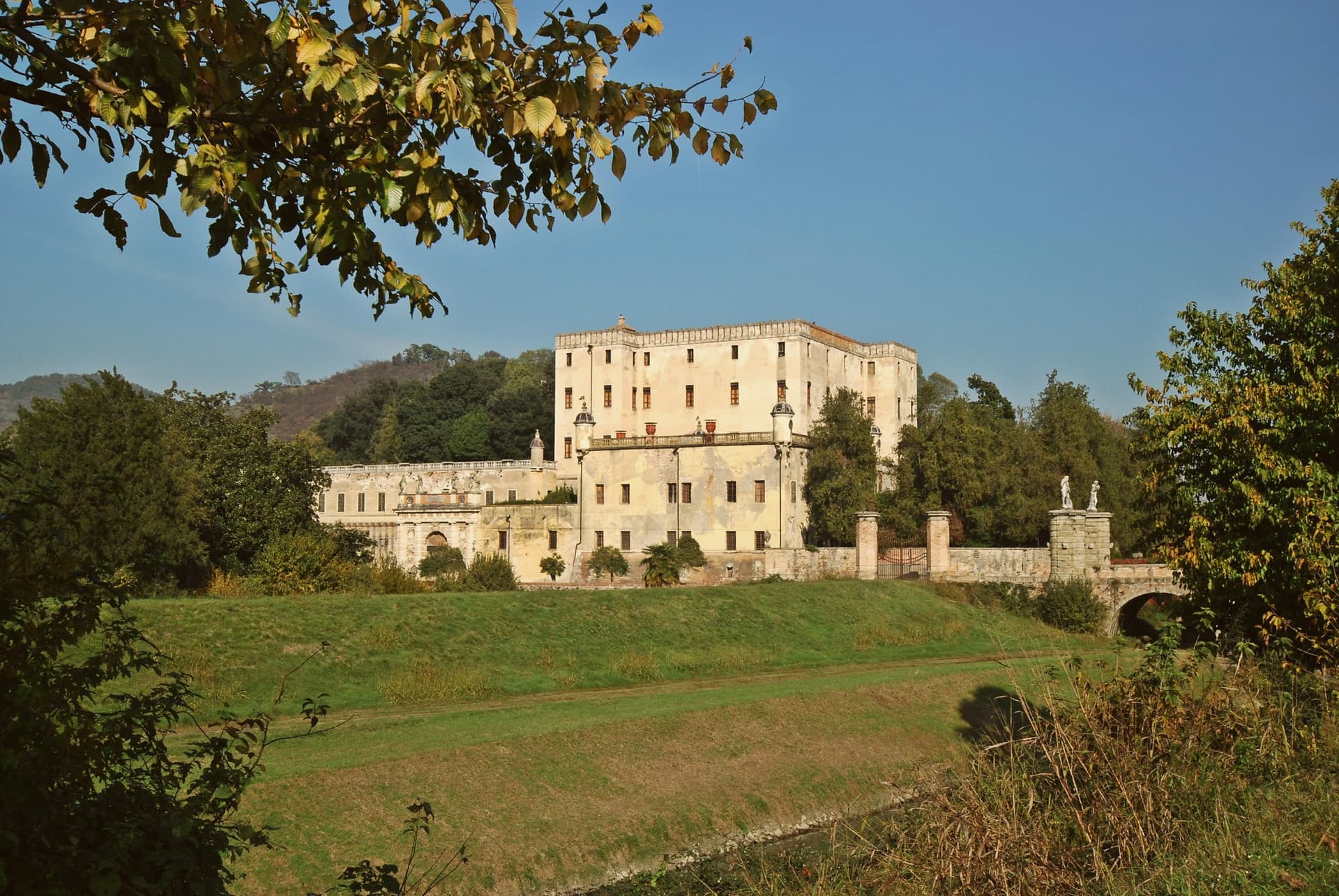
The thermal springs surface here too: warm saline water and a natural vapour grotto known since the Middle Ages, exploited from the eighteenth century at the Terme di Battaglia. Above town stands the Castello del Catajo, built 1570-73 by Pio Aeneas I degli Obizzi to control the canal, with frescoes and Renaissance esoteric symbols across forty rooms.
What to see in Battaglia Terme
- Castello del Catajo. Hilltop castle built 1570-73 by Pio Aeneas I degli Obizzi, with frescoes and esoteric Renaissance symbols across more than forty rooms.
- Museo della Navigazione Fluviale. Italy's only river navigation museum, with over four thousand objects from boats and tools to boatmen's diaries and navigation charts.
- Canale di Battaglia. Canal dug 1189-1201 by the Paduans, still navigable, running through the center of town and crossed by historic bridges.
How to get to Battaglia Terme
There is a railway station in the town, so you can arrive without a car and never need one while you are here. Padova is roughly 21 minutes away by road.
Our tip
Battaglia works year-round through the springs, but the canal-and-castle season runs April through October. Spring and autumn are best for walking the towpaths between Battaglia, Monselice and Este, when the Euganean hills above are green and the canal water is clear. July and August are warm and mosquito-thick along the canal; the spa hotels keep the visitors but the towpaths empty.
Levico Terme
Why visit Levico Terme
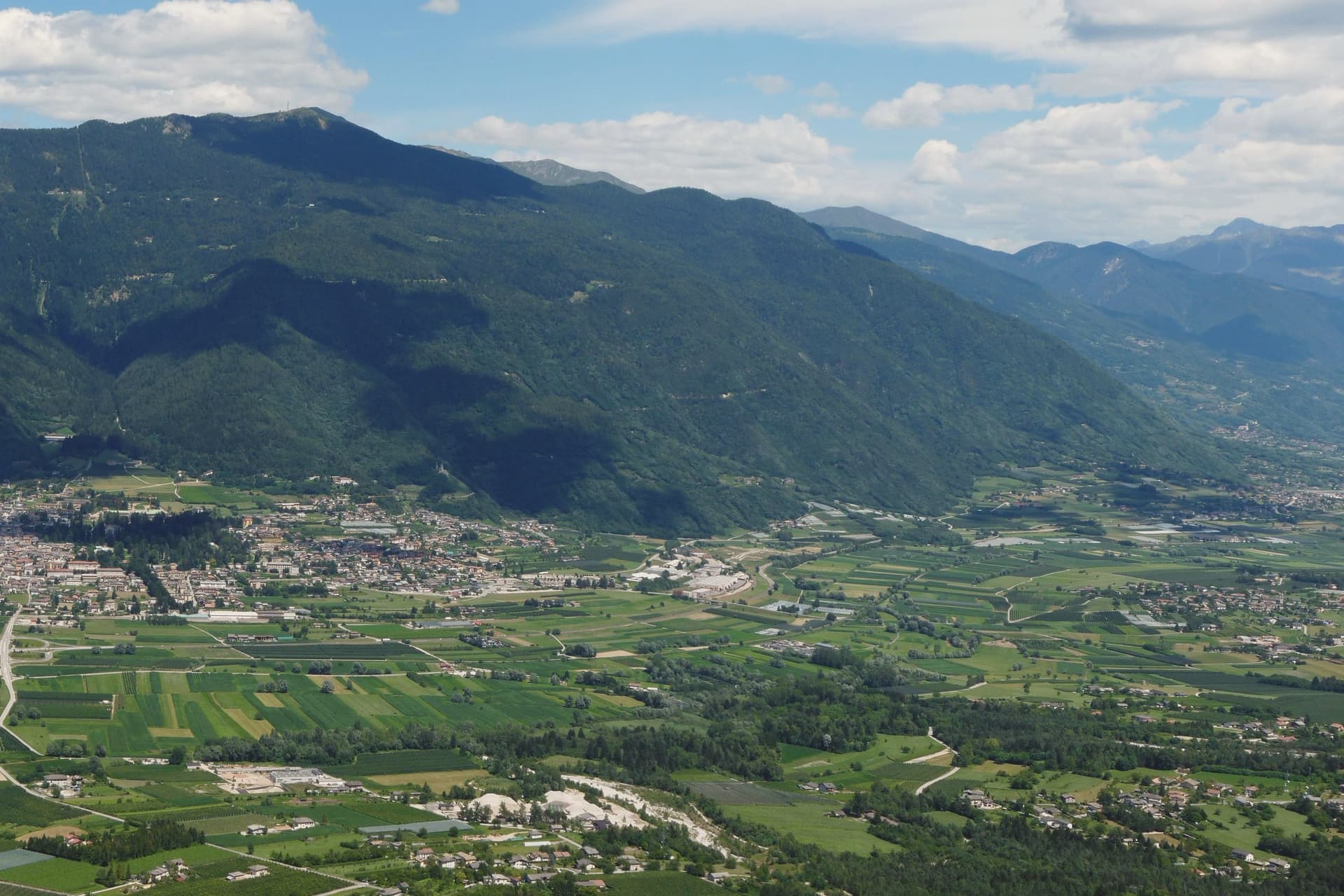
Levico Terme sits at 520 metres in the Valsugana, twenty kilometres east of Trento, between the Lagorai chain and the high plateaus of Folgaria and Lavarone. The settlement passed under Habsburg jurisdiction in 1779 and was elevated to city rank in 1894 by decree of Franz Joseph I.
The spa quarter, the park and the lake sit close together at the edge of the old centre, with the fort watching all three from the hill above. The historic centre, with its imperial-era villas and the parish church of Santissimo Redentore, grew up around the spa rather than the other way round: the streets follow the shape of a resort built in the space of a few decades under Austro-Hungarian rule, rather than a town that predates it.
What survives is a place whose entire layout, from park gate to lakeshore to the fort on the ridge, still reads as the imperial spa it was built to be.
What to see in Levico Terme
- Parco delle Terme. Grounds laid out by Georg Ziehl around the spa buildings and the hotel, with paths shaded by mature planting where the Christmas market sets up each winter.
- Grand Hotel Imperial. Art Nouveau facade facing the park it anchors, the rooms where Empress Elisabeth stayed still forming the core of the working hotel.
- Terme di Levico. The spa buildings that gave the town its purpose, drawing on water piped down from the mountain springs and still run as a treatment centre today.
How to get to Levico Terme
There is a railway station in the town, so you can arrive without a car and never need one while you are here. Trento is roughly 30 minutes away by road.
Our tip
Levico runs year-round: the thermal cures operate from spring through autumn, the Christmas market fills the Habsburg park through December, and the spa hotels stay open through the cold months. May through October is the lake season, with the Bandiera Blu waters warm enough for swimming from mid-June and the sailing and windsurfing clubs open. June through August can hit thirty degrees in the valley floor; the park and the lakeside hold the heat better than the centro storico in the afternoon.
Sirmione
Why visit Sirmione
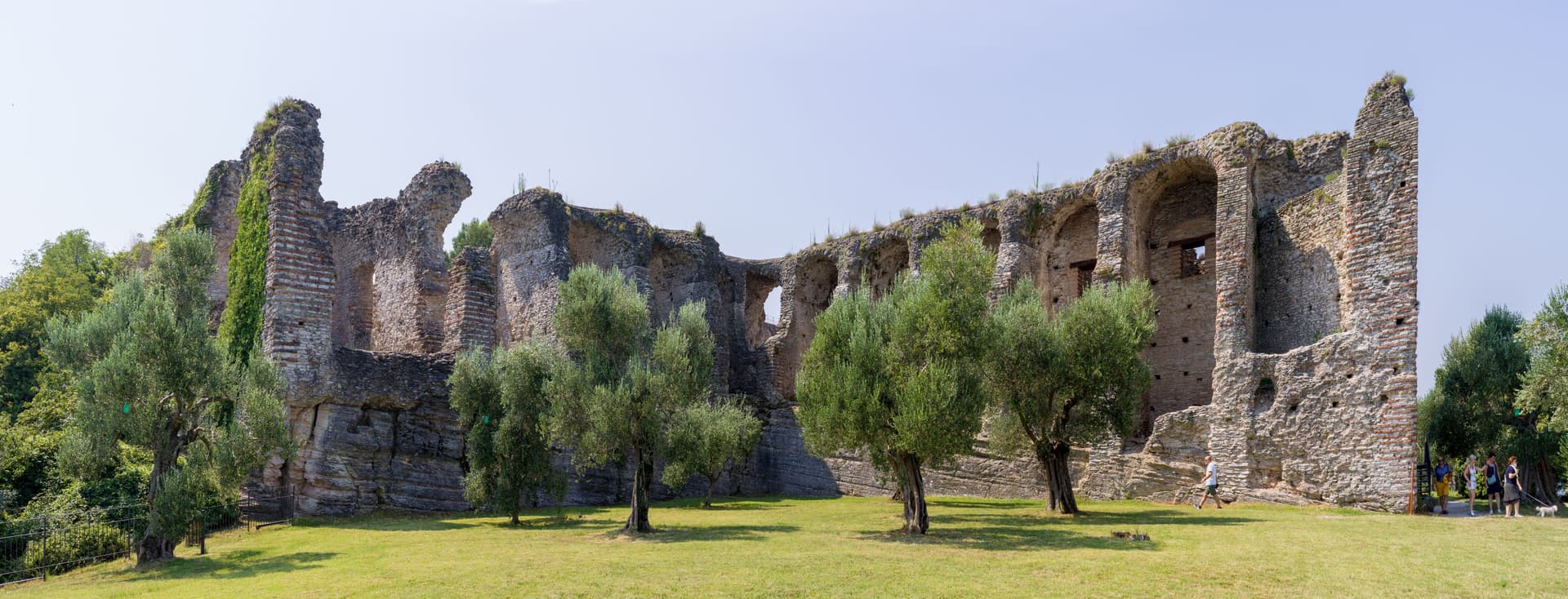
The peninsula runs four kilometers into the southern end of the lake, narrow enough that the old town occupies a triangle of land just over a mile long. Three low hills organize it: Cortine, San Pietro, and the rise at the tip where the Roman villa stands.
The fortress sits at the single entrance to the walled town, so the only way in by land passes through its gate, and the water it once enclosed as a fortified port is still shut in behind it. Past that gate the medieval streets are packed between the hills, and the ground rises toward the church at the highest point before falling away again toward the villa ruins at the peninsula's end.
The name attached to the villa is literary rather than archaeological: the poet's return in his thirty-first poem was to a family property on this tip of land, and nothing dug from the ground proves the two are the same place, but the name has held for a thousand years regardless. Maria Callas kept a villa here through the 1950s and 60s.
Between the enclosed water at one end and the hot spring at the other, the peninsula reads as a strip of land defined entirely by what edges it: lake on three sides, a gated approach on the fourth, and a history that settled into the name of a poem long before anyone could confirm it belonged there.
What to see in Sirmione
- Castello Scaligero. Fortress at the entrance to the old town, with a 37-meter keep and a fortified port still enclosing a piece of the lake.
- Grotte di Catullo. Villa complex built late first century BC to early first century AD, its ruins scattered across olive terraces at the tip of the peninsula.
- Terme di Catullo. Thermal spa drawing on the same mineral spring that surfaces offshore in Lake Garda.
How to get to Sirmione
Verona is roughly 36 minutes away by road.
Our tip
April through October is the lake season. The Grotte di Catullo open with the spring archaeological calendar, the Scaligero is open year-round, and the peninsula promenade fills with day-trippers from Verona and the German A22 corridor. July and August are the heaviest months, with the old town packed between ten and seven; April, May, September and October are the easier months.
Montechiarugolo
Why visit Montechiarugolo
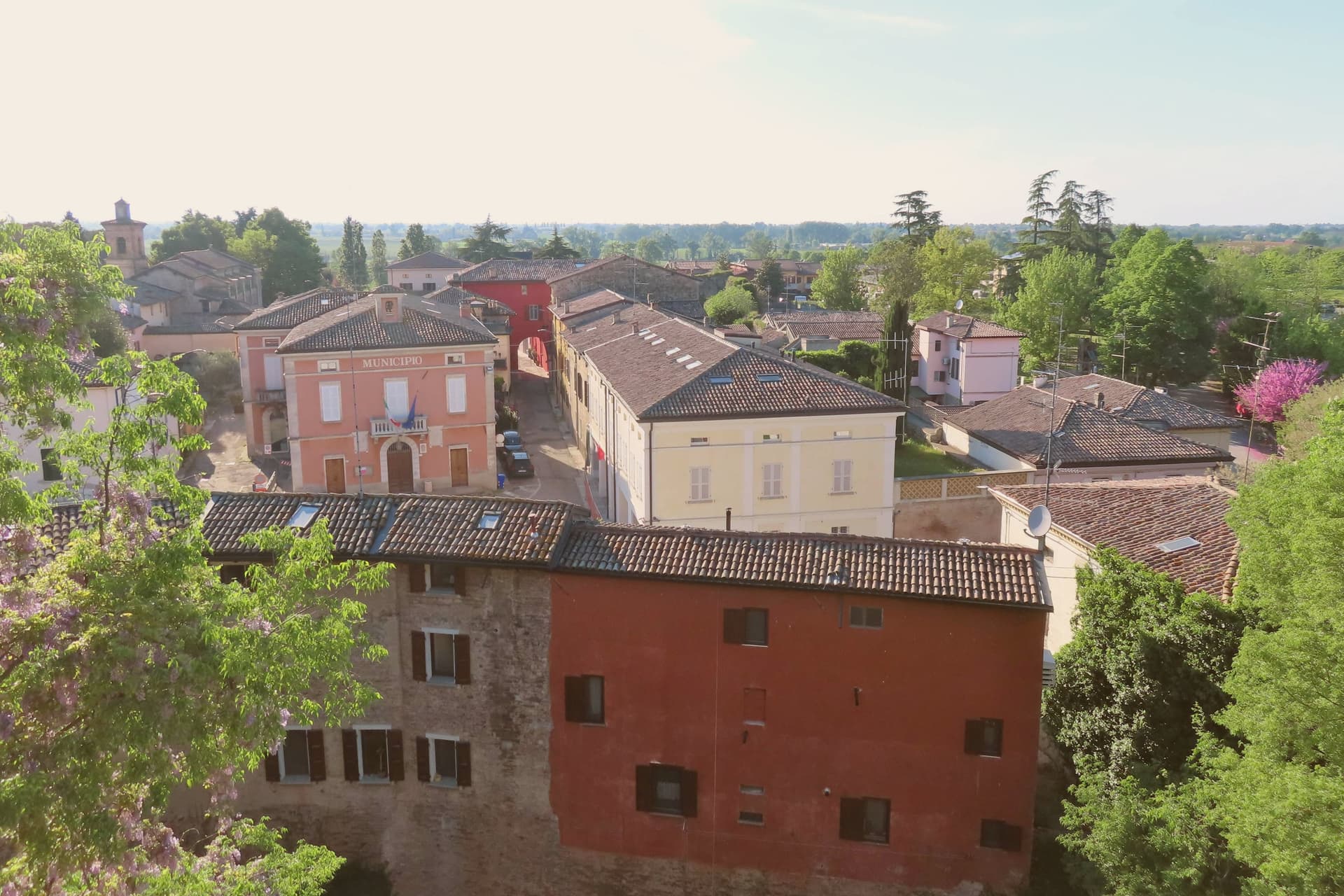
Montechiarugolo sits ten kilometers southeast of Parma at the edge of the Enza valley, on the historical border between the Duchy of Parma and the Reggio territory. The Sanvitale family raised a first military outpost here in 1121; the current castle, polygonal in plan with walls five meters thick and a thirty-meter ditch, was rebuilt by the Torelli after 1406 and hosted Pope Paul III and Francis I of France during the sixteenth century.
The Kingdom of Italy sold the manor to Antonio Marchi in 1864, and his descendants still own and open it. The surrounding fields run with the middle Enza dairies that produce Parmigiano-Reggiano under the Parma consortium.
The commune extends to the Monticelli spa frazione, the only thermal complex in the province. Beyond Parmigiano and the castle, Montechiarugolo holds two institutional signals: Borghi più belli d'Italia and Comuni Virtuosi for its environmental policy.
What to see in Montechiarugolo
- Castello di Montechiarugolo. Polygonal fourteenth-century fortress on a promontory above the Enza, with five-meter walls, a wide ditch, and frescoed halls; still privately owned by the Marchi family.
- Chiesa di San Quintino. Eighteenth-century parish church on the edge of the centro storico, rebuilt after the older medieval pieve was incorporated into the castle complex.
- Terme di Monticelli. Thermal spa in the Monticelli frazione, drawing on iodine-bromine-salt waters discovered in 1924 during oil exploration in the Enza plain.
How to get to Montechiarugolo
Parma is roughly 24 minutes away by road.
Our tip
April through June and September through October are the working months. The Enza fields turn green in spring and stay that way until the cheese-making cycle quiets in summer. July and August touch thirty-five degrees on the plain and the castle terrace becomes the coolest spot in the borgo.
Darfo Boario Terme
Why visit Darfo Boario Terme
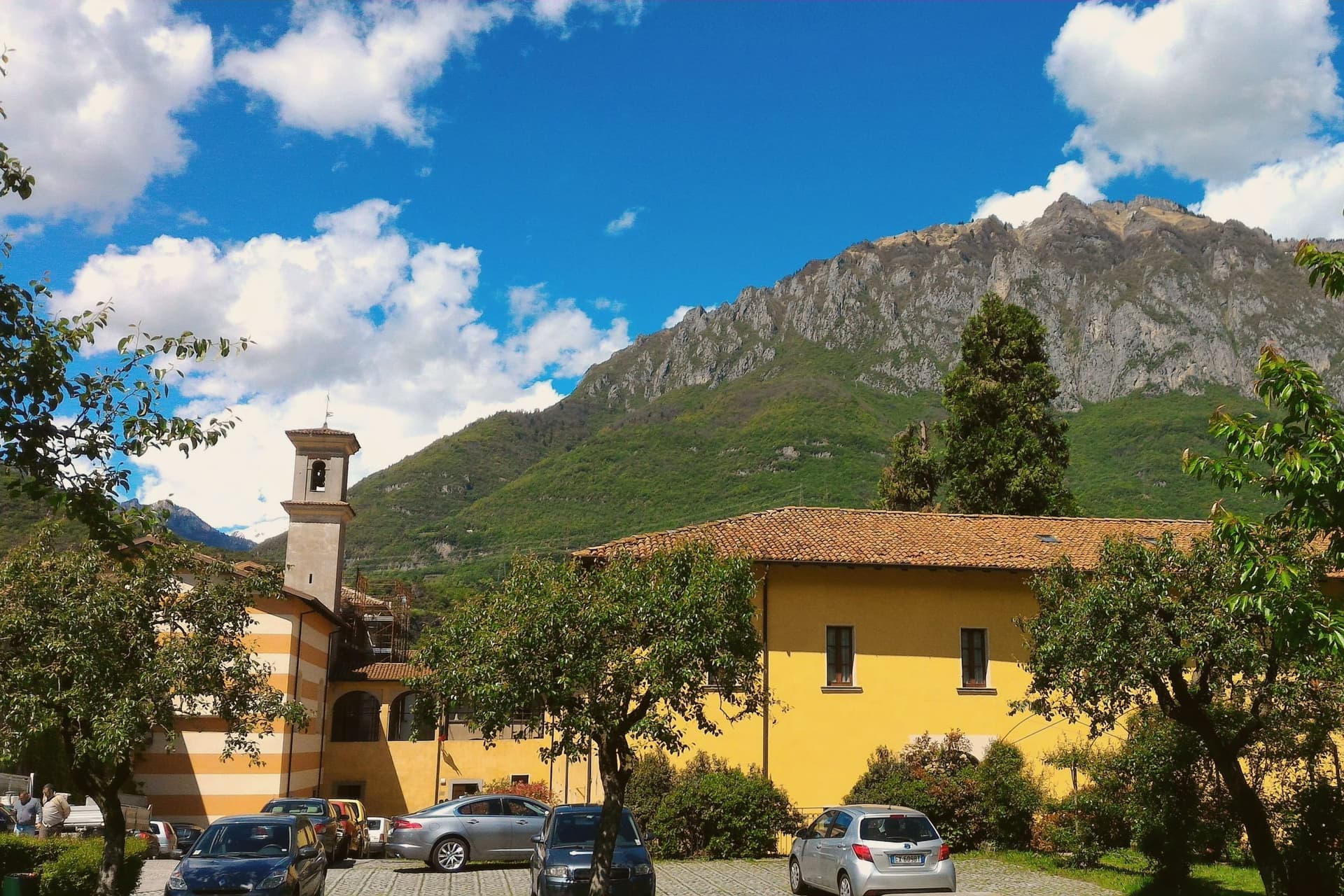
The commune sits at the lower end of the valley, a few kilometres north of Lake Iseo, where the Oglio leaves the mountains for the plain. Its name joins two places: Darfo, the capoluogo, and the spa hamlet of Boario Terme.
The thermal water was already in use in the 18th century, and Doctor Biffi called it the most active in Lombardy in 1857, well before the first spa building went up with its dome in 1906. The Comuni Virtuosi recognition the town holds today reflects later environmental commitments rather than this older history.
The rock-art park sits inside the commune boundary, its engraved surfaces part of a wider world heritage site spanning the valley, the first Italian entry on that list in 1979. The castle above the centre and the small church above the river belong to a different register of the town's past, one of fortification and parish life rather than prehistory or cure.
Between the thermal hamlet, the rock park, the castle spur and the river church, Darfo Boario Terme reads as a place where several distinct pasts, geological, medieval and modern, sit within walking distance of each other without overlapping.
What to see in Darfo Boario Terme
- Terme di Boario. Thermal complex with an Art Nouveau dome, set inside an early 20th-century spa park.
- Parco delle Incisioni Rupestri di Luine. Open-air rock-art park with more than a hundred engraved surfaces, part of the Valle Camonica UNESCO world heritage site.
- Castello di Gorzone. 13th-century Federici castle on a rock spur above the centre, still partly inhabited.
How to get to Darfo Boario Terme
There is a railway station in the town, so you can arrive without a car and never need one while you are here. Brescia is roughly 54 minutes away by road.
Our tip
May through October is the main season. Spring opens the rock-art parks and dries the trails above the valley; summer brings spa guests up from Brescia and Milan for water cures, and the temperature in the valley stays cooler than in the Po plain below. September and October are the cleanest months for walking the Luine engravings and the Capo di Lago promontory.
Abano Terme
Why visit Abano Terme
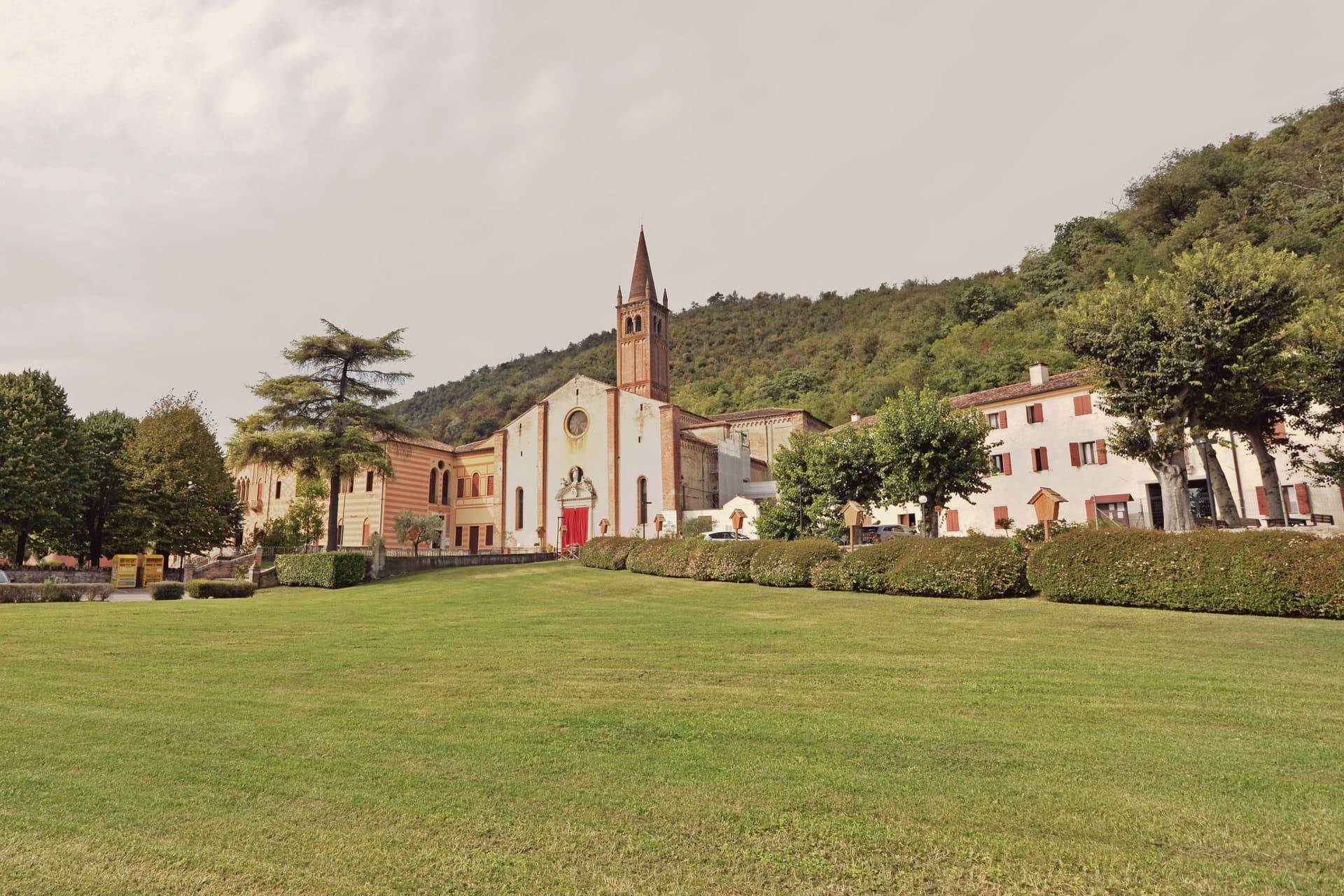
Abano Terme sits at 14 meters on the eastern slope of the Euganean Hills, ten kilometers southwest of Padova. The springs surface at 80°C, classified as hyperthermal bromo-iodine-salt water, and the Veneti were already worshipping them in the eighth century BC.
The Romans built a temple to Aponus here and called the place Aquae Patavinae. The Lombards destroyed the baths in the sixth century.
They were rebuilt when Abano became an autonomous comune in the twelfth, enlarged again in the late fourteenth, and absorbed into the Republic of Venice from 1405 to 1797. The Colle Montirone archaeological site still holds traces of the Roman thermal complex, and the Duomo di San Lorenzo, rebuilt in 1780 over an older church, anchors the historic center.
The contemporary draw is fango-balneotherapy: mineral mud aged for sixty days in the source basins, then applied at body temperature. Most of the 250 hotels in Abano-Montegrotto are spa hotels.
What to see in Abano Terme
- Duomo di San Lorenzo. Cathedral rebuilt in 1780 over a pre-existing church, with a campanile dating to the fourteenth century and a Baroque interior.
- Colle Montirone. Archaeological site on a small thermal hill, with traces of the Roman baths of Aponus and an obelisk erected in the eighteenth century.
- Parco Termale Urbano. Public thermal park threading the centro storico, with footpaths between hotels, gardens and the source pools.
How to get to Abano Terme
There is a railway station in the town, so you can arrive without a car and never need one while you are here. Padova is roughly 15 minutes away by road.
Our tip
Abano works year-round because the heat comes from underground. January through March is peak spa season for residents of northern Italy: the contrast between cold air and hot pools is part of the appeal, and hotel cure programs run twelve days at this time. April through June and September through October bring the hills into play, with walking weather and lighter spa traffic.
Meran
Why visit Meran
Merano sits at 324 metres in the basin where the Passer river meets the Adige, at the entrance to the Passeier and Vinschgau valleys, with mountains rising to 3,335 metres around it. The town was the capital of the County of Tyrol from the thirteenth century until 1420, when the Habsburgs moved the residence to Innsbruck.
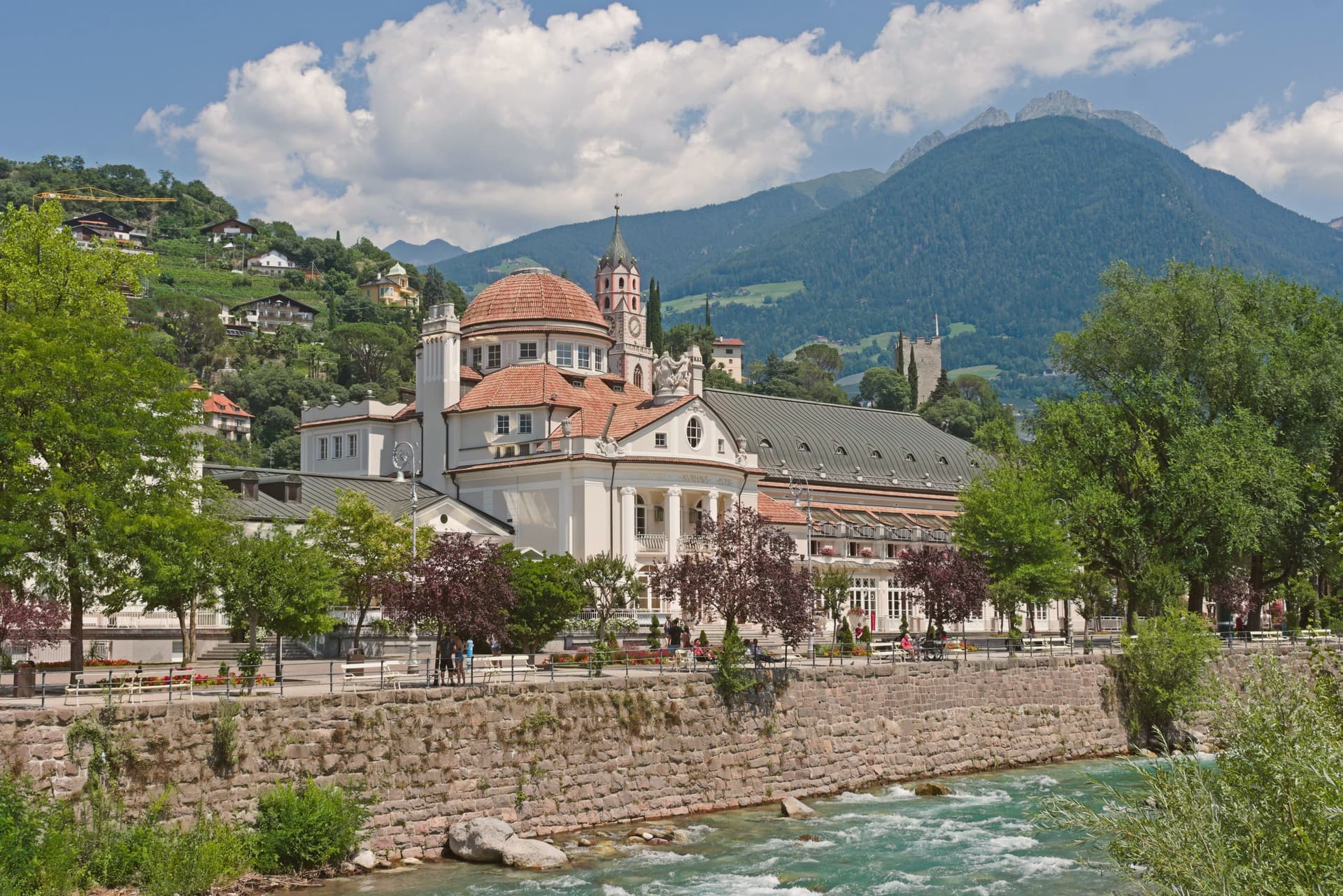
Empress Elisabeth of Austria began wintering here in 1870 for the climate and the mild basin air; her stays turned Merano into a late-Habsburg spa destination, drawing Kafka, Rilke and Richard Strauss. The Kurhaus, an Art Nouveau pavilion on the Passer promenade, and Castel Trauttmansdorff, where Sissi stayed and which now holds twelve hectares of botanical gardens and the Touriseum, anchor the imperial layer of the city.
Merano was annexed to Italy in 1919 under the Treaty of Saint-Germain. The bilingual city today is the centre of South Tyrolean wine and apple farming, host of the Merano WineFestival each November at the Kurhaus.
What to see in Meran
- Giardini di Castel Trauttmansdorff. Twelve hectares of botanical gardens around the castle where Empress Elisabeth wintered, with eighty landscapes over a hundred-metre slope and the Touriseum tourism museum.
- Kurhaus. Art Nouveau pavilion on the Passer promenade, the spa-town centrepiece of nineteenth-century Merano and venue of the Merano WineFestival each November.
- Passeggiata Lungo Passirio. Spa promenade along the Passer river through the centre of the city, lined with palms, flowers and the Wandelhalle, the covered Art Nouveau walking gallery.
How to get to Meran
There is a railway station in the town, so you can arrive without a car and never need one while you are here. Bolzano is roughly 29 minutes away by road.
Our tip
April through October is the long season in the Merano basin: the Trauttmansdorff gardens open from March to November with the spring bloom and the autumn colours, the Passer promenades fill with walkers, and the apple orchards above the city move from blossom to harvest. June through August can hit thirty degrees on the valley floor; the covered Wandelhalle and the shaded lungo Passirio keep the city walkable in the afternoon. November brings the Merano WineFestival at the Kurhaus and the Christmas markets that follow. Festa dell'Uva a Merano falls in August.
Imola
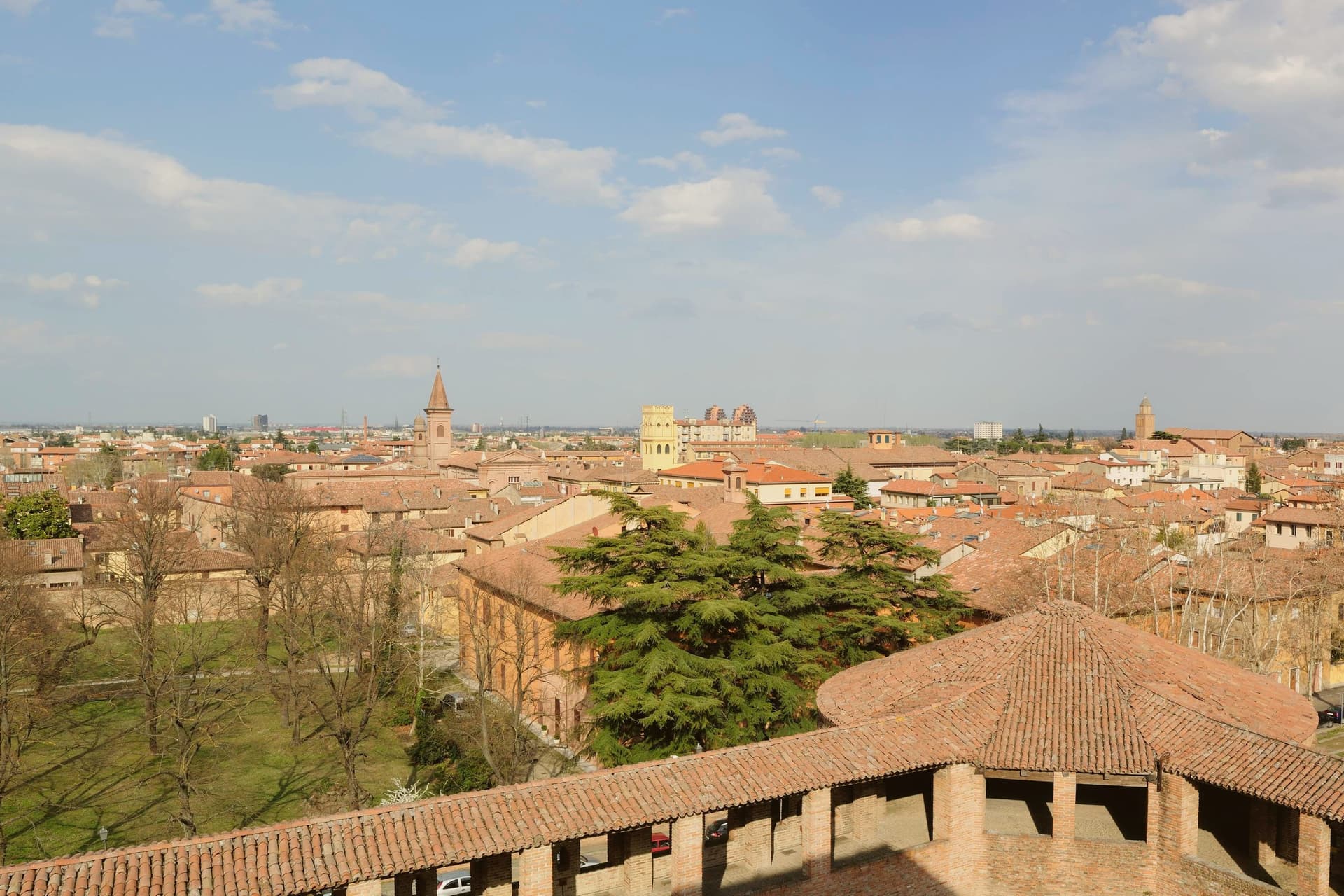
Why visit Imola
Imola is two cities sharing a name. The medieval one is a quietly handsome Romagna brick town 35 km southeast of Bologna along the Via Emilia, with the Rocca Sforzesca (rebuilt by Caterina Sforza in 1473–1499 — the Tigress of Forlì, who held this fortress through the Borgia siege of 1500) anchoring the centro.
The Palazzo Tozzoni museum, the 11th-century Cattedrale di San Cassiano with its crypt of the city's patron, the Palazzo Sersanti on the central piazza, and the medieval grid of porticoed brick streets all read as a smaller-scale Bologna. The OTHER Imola is the Autodromo Enzo e Dino Ferrari — the 4.9-km F1 circuit on the south bank of the Santerno, built 1953 and named for Enzo Ferrari and his son Dino after Dino's death.
It hosted the San Marino Grand Prix every May from 1981 to 2006 (and again 2020–present), and is the circuit where Ayrton Senna died in 1994 at the Tamburello corner — a memorial still stands there. The Emilia Romagna Grand Prix in April–May is the city's biggest tourist event of the year.
Outside race weekends the circuit is a public park; locals jog the track. The food is Romagna: piadina romagnola (the city is Città dell'Olio, and the local Brisighella Nostrana di Brisighella DOP olive oil is what dresses it), passatelli in brodo, cappelletti, Sangiovese di Romagna from the surrounding hills, and the local nocino walnut liqueur made by every grandmother in the foothills.
What to see in Imola
- Rocca Sforzesca. Caterina Sforza's 1499 four-towered brick fortress at the centro's edge — the Tigress of Forlì held it against Cesare Borgia in 1500. Museum of arms and ceramics inside.
- Autodromo Enzo e Dino Ferrari. The 4.9-km F1 circuit on the Santerno. Senna memorial at Tamburello. Open as a public park outside race weekends — locals jog the track.
- Cattedrale di San Cassiano + crypt. 11th-c cathedral with the city patron's crypt; the Madonna del Piratello pilgrimage church just outside the walls is a major regional sanctuary.
How to get to Imola
There is a railway station in the town, so you can arrive without a car and never need one while you are here. Forlì is roughly 34 minutes away by road.
Our tip
Imola is best April–June and September–October. The Emilia Romagna Grand Prix (last weekend April / first weekend May) fills every hotel for 80 km — wonderful if you're going, brutal if you're not. Summer is hot and sticky. Baccanale Imola falls in October.
Trento
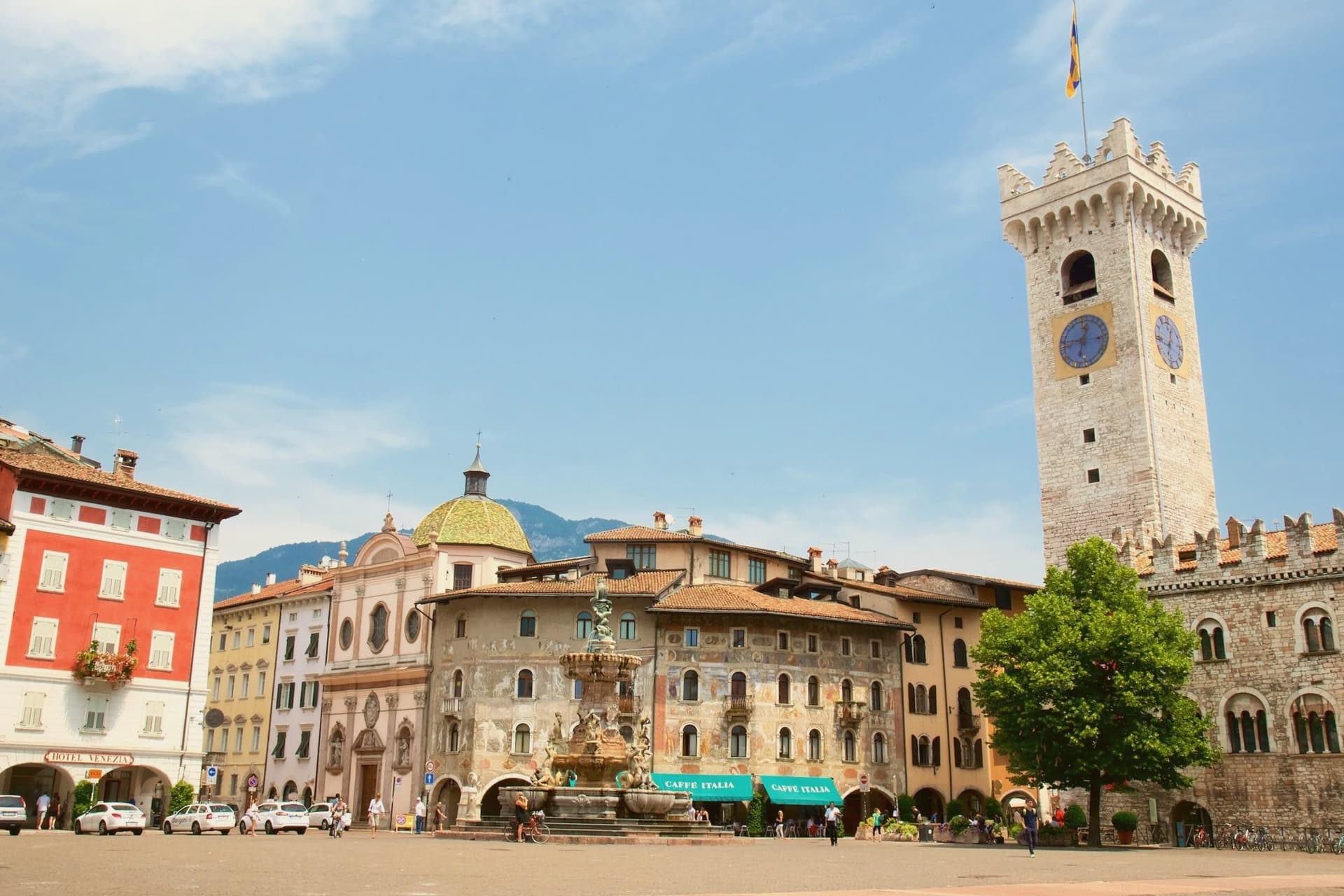
Why visit Trento
Trento sits at 194 metres on the Adige, the city Italy chose as the seat of one of its two northern autonomous provinces and the regional capital of Trentino-Alto Adige. Monte Bondone rises to two thousand metres directly above the western edge; the Brenta Dolomites are an hour west.
Between 1545 and 1563, the Council of Trent met here in twenty-five sessions across the Duomo di San Vigilio and the Castello del Buonconsiglio, formulating the Catholic response to the Protestant Reformation and shaping the next four centuries of European Christianity. The Duomo, begun in 1212 on the foundations of a late-Roman basilica, still stands at the centre of Piazza Duomo.
The Buonconsiglio, built 1239 to 1255 as the residence of the prince-bishops, is now the city's main museum. In 2013 Renzo Piano completed MUSE, the natural science museum on the south edge of town, with a six-storey jagged roofline that imitates the Dolomites.
What to see in Trento
- Castello del Buonconsiglio. Thirteenth-century residence of the prince-bishops of Trento, host to sessions of the Council of Trent and now the city's main museum, with Gothic frescoes in the Torre Aquila.
- Duomo di San Vigilio. Romanesque-Gothic cathedral begun in 1212 on the remains of a late-Roman basilica, where most public sessions of the Council of Trent were held between 1545 and 1563.
- MUSE. Museum of natural science by Renzo Piano, opened 2013, with a 130-metre roofline that rises and falls in imitation of the Dolomites visible to the east.
How to get to Trento
There is a railway station in the town, so you can arrive without a car and never need one while you are here. Trento is roughly 4 minutes away by road.
Our tip
April through June brings green slopes on Monte Bondone, mild evenings in Piazza Duomo and the start of the open-air concert season. September and October are dry and clear, with the Trento Film Festival of mountain cinema and the start of the autumn wine sagre in the Vallagarina to the south. July and August can hit thirty-three degrees in the city centre at 194 metres; the air cools sharply if you climb Monte Bondone, and locals spend afternoons on the mountain or at the lake. Trento Busker Food falls in September.
More from Anywhere Italy
- The best hot-spring towns within two hours of Brescia
- The best hot-spring towns within two hours of Padua
- The best hot-spring towns within 90 minutes of Bologna
- The best hot-spring towns within two hours of Venice
 The best hot-spring towns within two hours of Milan
- The best hot-spring towns within two hours of Parma