
The best towns with a World Heritage site within 75 minutes of Turin
The land around Turin changes character every half hour of driving. North and west there are brick and stone royal residences with avenues of limes, formal parterres and hunting parks that run out into farmland. South, the ground lifts into the Roero and the Langhe, where hazelnut groves and Nebbiolo vines meet villages built in warm ochre plaster, and autumn brings raw meat dressed with oil, tajarin, and the smell of white truffle in the market halls. Between them lie the rice plains and the Monferrato ridges, where chapels climb a wooded hill in stations. The best months are September through November, when the fog sits low in the mornings and burns off by lunch.
Most visitors give Piedmont a long weekend in Turin itself, and the queue forms at the Museo Egizio and the Mole Antonelliana before it forms anywhere else. The porticoed centre, the vermouth bars and the Sunday Balon market absorb almost everyone who comes, and the day trip that gets booked is usually a wine tasting in Barolo or Alba. Those places earn the attention. They also mean coach parking, timed entries and cellar tours running back to back through harvest.
The listed sites, though, are scattered across the plain and the hills rather than concentrated in the city. Savoy residences stand in small towns that keep their own market day and their own bakery. Sacred mountains rise above villages with a single road up. Ivrea's modernist factory quarter is a working town on the Dora Baltea, not a museum campus. These are the places where the World Heritage plaque is on a building people still walk past on the way to the bar, and where fewer people go.
Of the 27 communes we have mapped in a 75-minute drive of Turin, 7 qualify as towns with a World Heritage site: each holds a site UNESCO has listed. The smallest, Serralunga di Crea, has 503 residents.
Elsewhere in the catalogue: The 9 best hill towns with a World Heritage site in Piemonte and The best hidden towns with a World Heritage site in Piemonte.
Serralunga di Crea
Why visit Serralunga di Crea
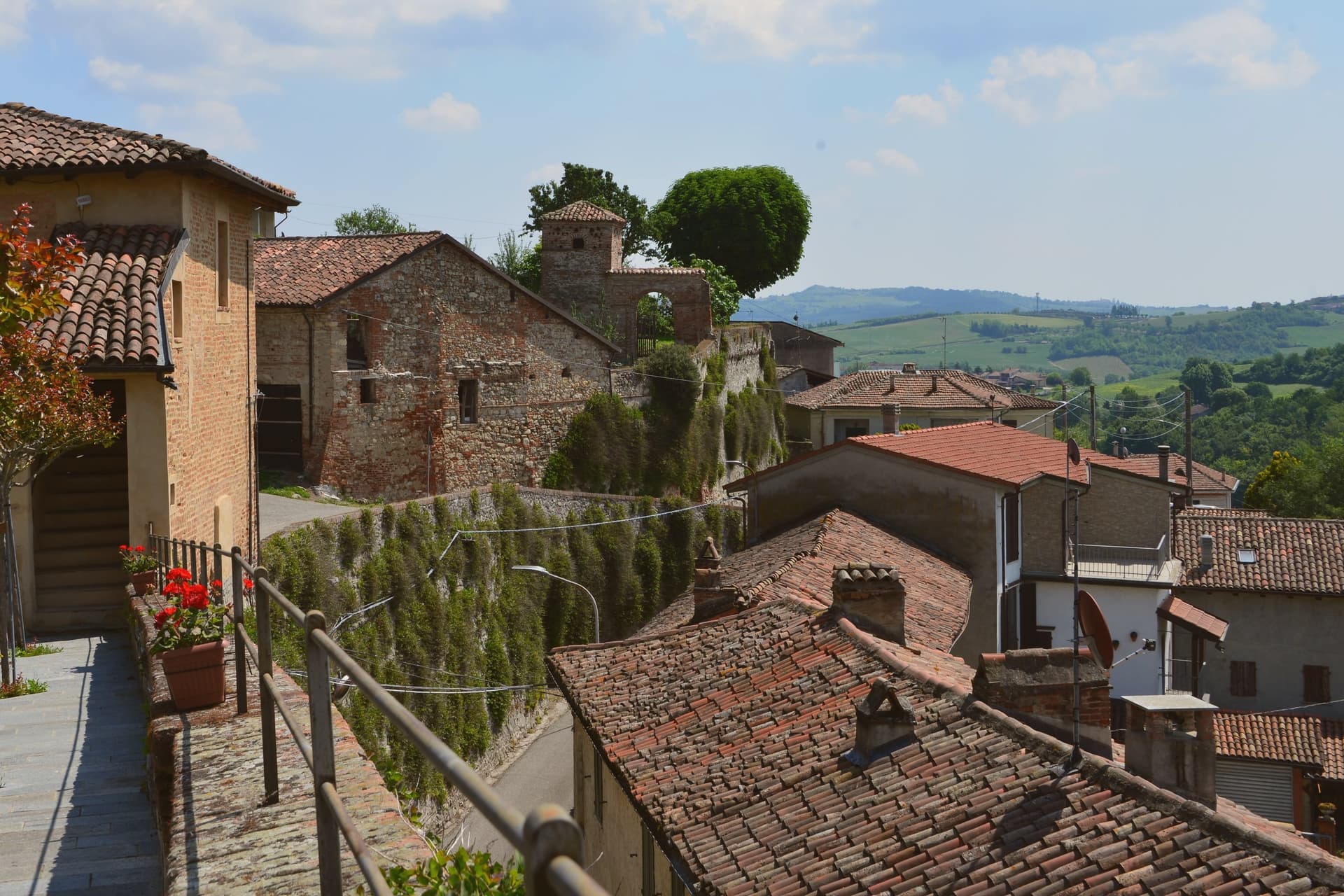
Serralunga di Crea sits in the Basso Monferrato hills forty-five kilometers east of Torino, on the highest of a series of ridges that look across the Po plain. The hill behind the village rises to 443 meters, and it is on this wooded height, rather than in the village itself, that the commune's main structures stand: the sanctuary at the centre, the ring of chapels around it, and the vineyards on the lower slopes beyond the reserve boundary.
The chapels were begun in 1589 by Costantino Massino on a plan of fifteen Rosary stations, expanded over the following two centuries to twenty-three chapels and five hermitages, so what stands today is the accumulation of a long building period rather than a single campaign. The vineyards that surround the hill carry a separate and later UNESCO recognition, from 2014, so the commune holds two world heritage lines on the same stretch of ground: one on the summit, one on the slopes around it.
The village below is small; the hill above is where its two distinctions both sit, layered rather than separate.
What to see in Serralunga di Crea
- Sacro Monte di Crea. Chapels and hermitages climb the wooded hill above the village along a Rosary-plan pilgrim route, each station set among trees with views opening intermittently over the ridge.
- Santuario di Nostra Signora di Crea. Marian sanctuary at the centre of the Sacro Monte, the building the whole climb of chapels was arranged around, traditionally founded by Saint Eusebius of Vercelli.
- Cappella del Paradiso. Final chapel of the Sacro Monte, summit of the climb, with over 300 statues in a polychrome celestial composition.
How to get to Serralunga di Crea
Novara is roughly 58 minutes away by road.
Our tip
April through June is the green window in the Basso Monferrato: hills coming into leaf, the climb up the Sacro Monte cool in the morning, and the panorama across the Po plain at its clearest. July and August touch the mid-thirties on the open ridges; the woods around the chapels stay cooler, but the late afternoon climb is hard work. September and October are the wine months, with Monferrato harvest in the surrounding cantine and pilgrim groups returning for the Rosary festivals.
Govone
Why visit Govone
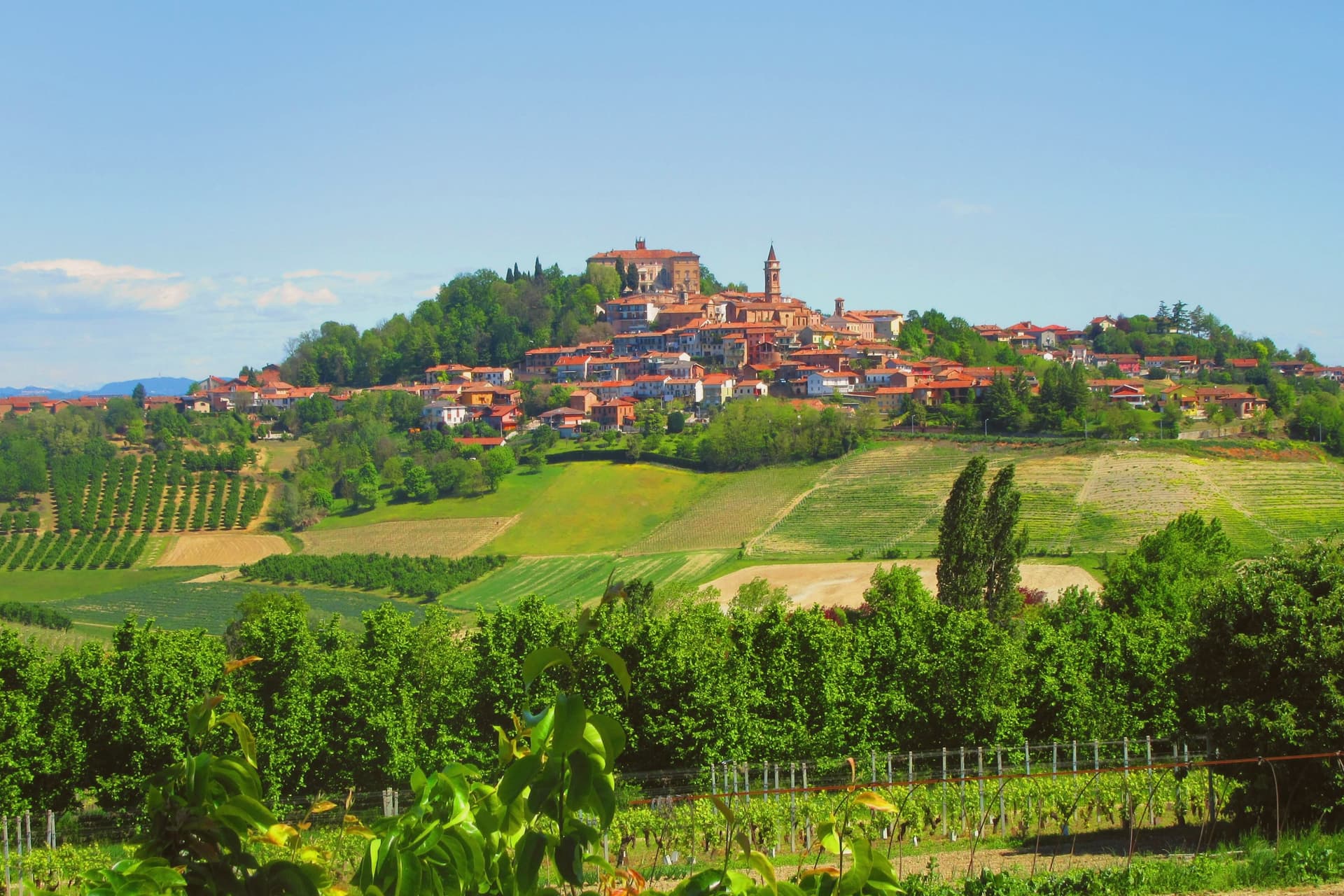
Govone sits at 301 meters on the eastern edge of the Roero, where the hills give way to the Tanaro plain that separates Roero from Langhe. The site began as a Solaro family palace before the Savoy bought it in 1792, holding it as a summer residence for the royal house until 1870.
In 1997 UNESCO added it to the Residences of the Royal House of Savoy list, alongside thirteen other Savoy palaces. Rousseau's time here as a household tutor for Count Ottavio Solaro predates the castle's Savoy ownership by decades, a reminder that the building's Solaro-era life ran long before it became a royal fixture.
The bell tower of the parish church sits on the ridge below the castle, so the village reads as a single climb: houses and church on the slope, the residence and its terraced garden at the top, looking across the Tanaro to the Langhe hills. The castle now works as the town hall, its noble floor open for tours the rest of the year and its rooms given over to the Christmas market for six weeks each winter.
A Solaro country house, absorbed into Savoy state ceremony, now runs as civic offices for most of the year and a holiday market for the rest, which is a fair summary of how a minor royal residence keeps itself in use once the monarchy that built it is gone.
What to see in Govone
- Castello Reale di Govone. The two-flight grand staircase carries the eye up past the telamones brought from Venaria Reale, and the noble floor is open for guided tours now that the building serves as the town hall.
- Giardino all'italiana. Formal terraced garden behind the castle, with views across the Tanaro to the Langhe hills.
- Chiesa di Santa Maria Annunziata. Parish church in the village, with eighteenth-century altarpieces and a bell tower on the ridge below the castle.
How to get to Govone
Torino is roughly 65 minutes away by road.
Our tip
April through October is the season. May and June bring the Roero into full color and the castle gardens open for guided tours. September and October are dry and the harvest fills the surrounding hills.
Agliè
Why visit Agliè
Agliè sits at 330 meters in the Canavese, thirty-five kilometers north of Torino on the foothills above the Po plain. The d'Agliè family held the fortified core from 1259, and the conversion to a Sabauda residence began in the mid-1600s under Count Filippo San Martino d'Agliè, favourite of the Regent Christine of France.
The castle later entered the UNESCO list of Savoy Residences, one of fourteen royal sites recognised together as a single serial property, and its gardens grew alongside it, enlarged in the nineteenth century with terraced Italian and English layouts. The town's other center of gravity lies apart from the castle, at a country house on the edge of the commune where a Crepuscolar poet kept his own quiet ground.
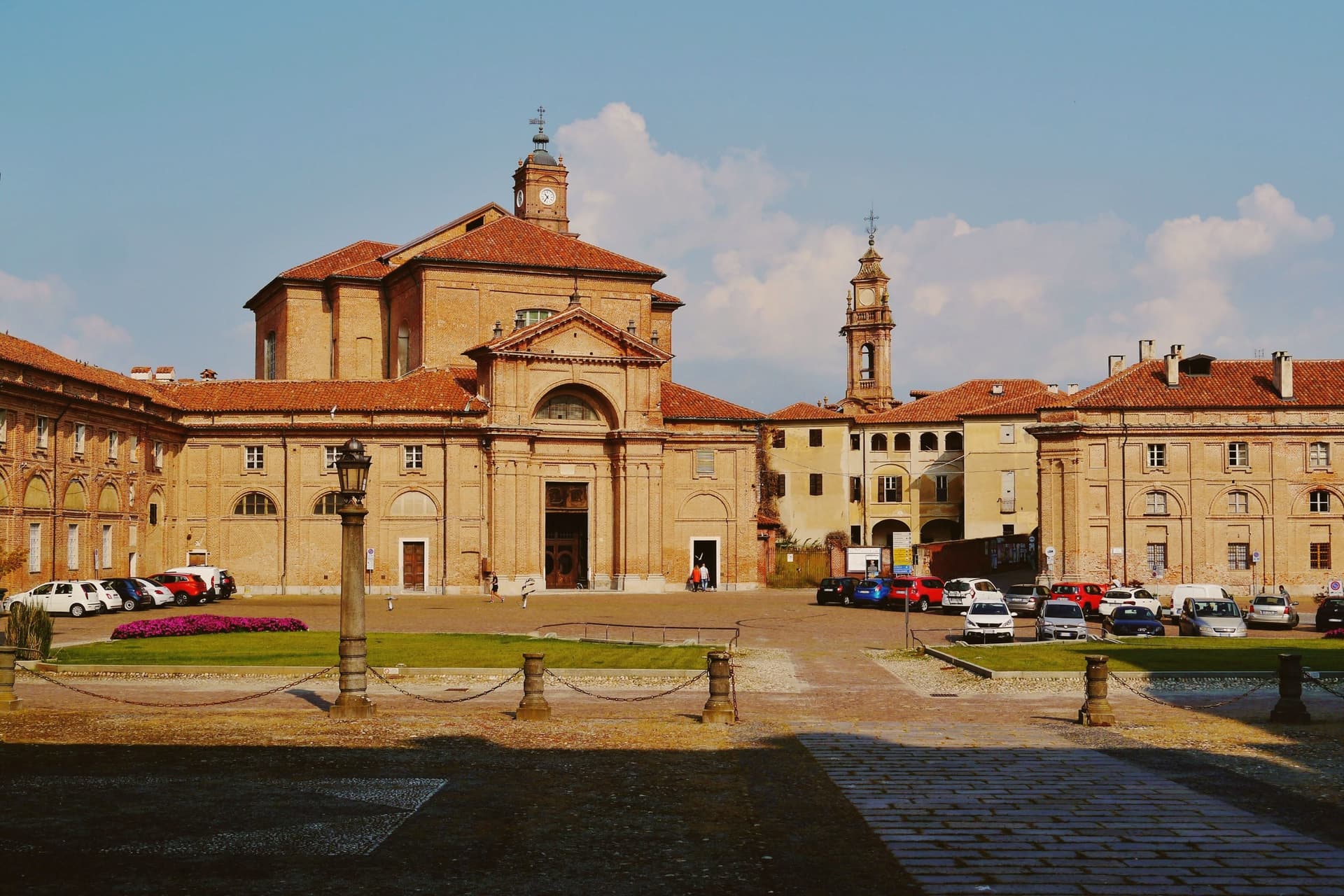
The centro storico adds a third note, a confraternity church faced in glazed terracotta from nearby Castellamonte. The town carries the Bandiera Arancione of the Touring Club, a place where a Savoy court seat, a poet's retreat, and a working parish church occupy the same small radius without competing for it.
What to see in Agliè
- Castello Ducale. The two parallel galleries framing the courtyard and the internal Chapel of San Massimo are the work Amedeo di Castellamonte added for Count Filippo San Martino, the piece that turned a fortified seat into a residence fit for the Savoy court.
- Giardini e Parco del Castello. The eighteenth-century basin stages an allegory in stone: the Dora Baltea meeting the Po, set among the terraced beds where Italian and English styles sit side by side.
- Chiesa di Santa Marta. Confraternity church in the centro storico, decorated with polychrome glazed terracottas from nearby Castellamonte.
How to get to Agliè
Torino is roughly 45 minutes away by road.
Our tip
April through June is the green window for the Canavese hills, when the castle gardens are in full leaf and the morning light works well on the long west façade. July and August are hot in the valley below and the gardens carry the heat; Agliè empties between two and five in the afternoon. September and October are the second peak, with vineyards in the surrounding frazioni turning over for harvest.
Racconigi
Why visit Racconigi
Racconigi sits at 262 metres on the Po plain, 35 kilometres south of Torino. The town passed in turn through the hands of the marquises of Saluzzo, the princes of Acaia and the Savoia-Carignano, and it was this last line that shaped what stands today.
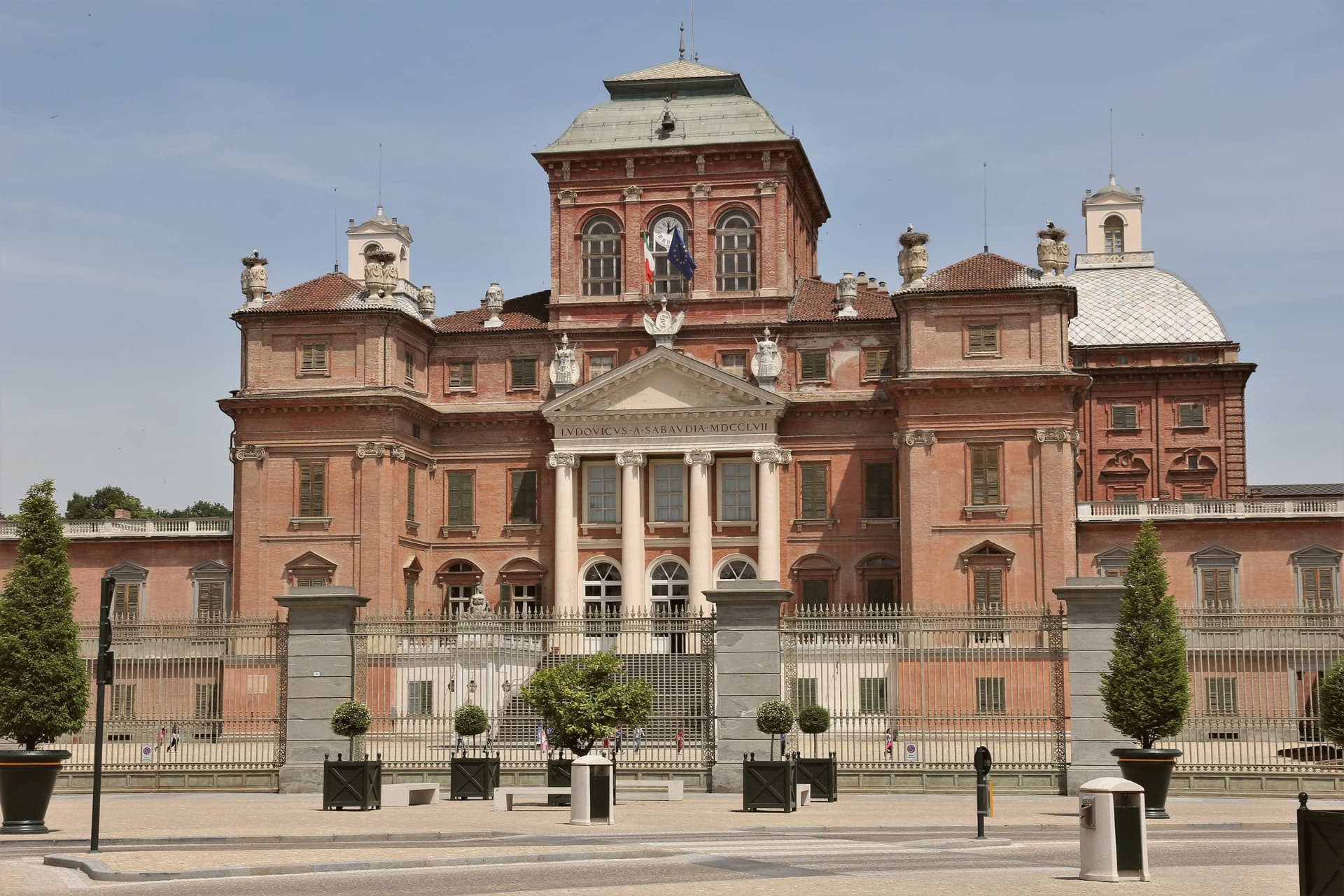
Duke Carlo Emanuele I granted the estate in 1630 to his nephew Tommaso Francesco, founder of the Carignano branch, and the fortress that resulted was later opened out into a country residence set within its own designed landscape rather than confined behind walls. The park was remade twice, first on French lines in 1755, then reworked eighty years later by a German landscaper into the lakes, canals and follies that surround the building now.
The centre for stork reintroduction occupies a farmhouse next to this park, so the estate and the breeding site share ground rather than sitting apart in different parts of town. The old centre, between the castle and the station, is where the smaller scale of daily Racconigi meets the scale of the estate that gives the town its name recognition.
What holds these pieces together is that Racconigi's identity was built from the outside in: a noble residence and its grounds first, a town organised around servicing and adjoining it second.
What to see in Racconigi
- Castello Reale di Racconigi. Eleventh-century fortified core remodelled by Guarino Guarini in the late seventeenth century, its pagoda-roofed central pavilion the mark of that conversion, restored continuously since 1980.
- Parco Reale. 170-hectare romantic park laid out in 1755 by the French gardener Molard on Le Nôtre's designs, redrawn in 1835 by Xavier Kurten with lakes, canals and follies.
- Centro Anatidi e Cicogne LIPU. Farmhouse site beside the park where the reintroduction programme was run, now the country's largest stork colony descending from the birds released there.
How to get to Racconigi
There is a railway station in the town, so you can arrive without a car and never need one while you are here. Torino is roughly 49 minutes away by road.
Our tip
April through June is the best window: castle and Parco Reale on long opening hours, the storks on the nests in the LIPU centre, mild temperatures on the plain south of Torino. July and August touch the mid-thirties and afternoons in the park are hard work; the castle stays cool. September and October are the second strong window, vendemmia on the surrounding plain, fewer visitors than spring.
Ivrea
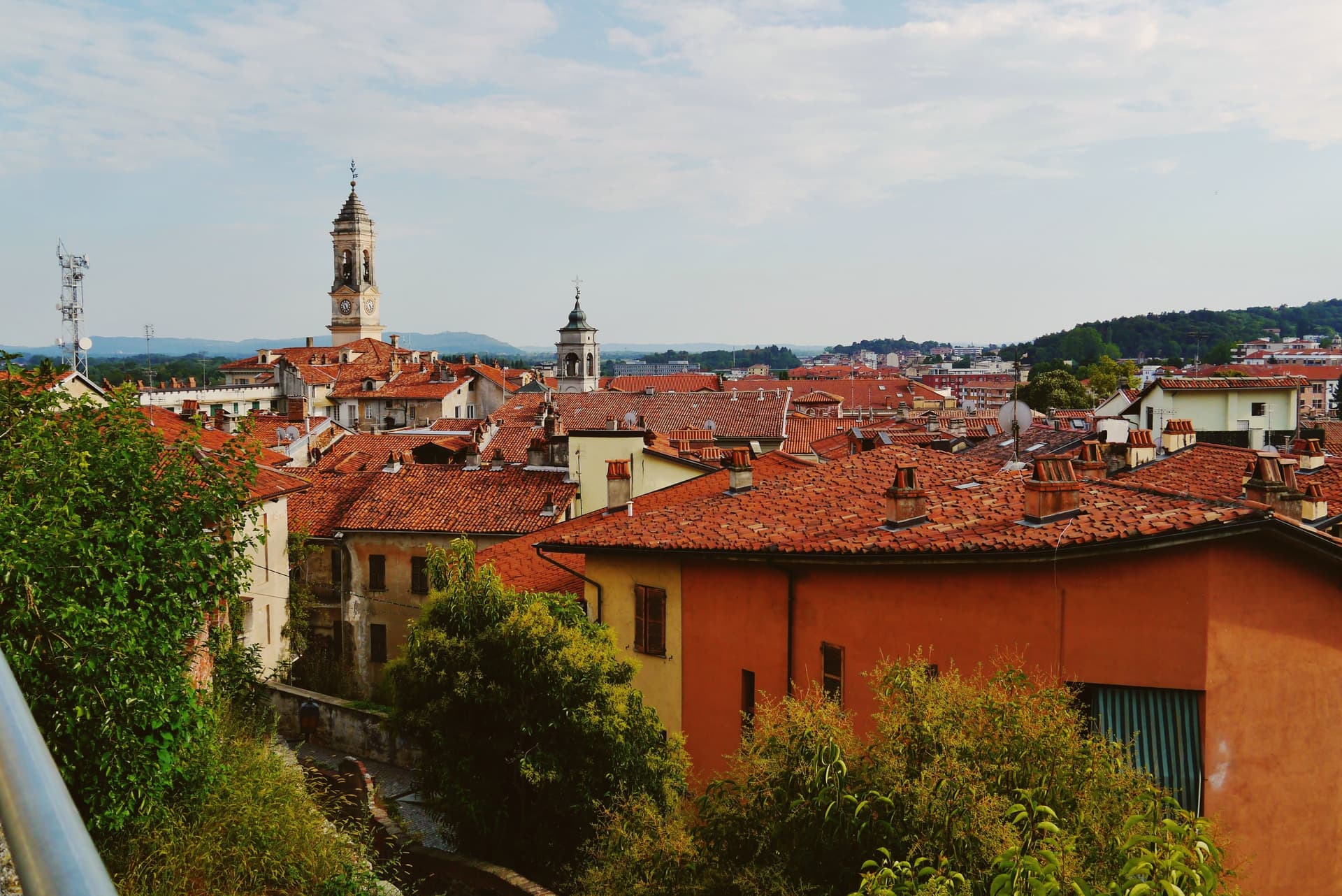
Why visit Ivrea
Ivrea sits at 267 meters where the town meets the river that drains the Aosta valley before it reaches the Po, the Dora Baltea, guarding the Alpine routes into Gaul that made the site worth fortifying in the first place. The medieval town grew upward from that Roman garrison into a seat of regional power, and centuries later the same streets became the frame for an industrial experiment: Camillo Olivetti opened a typewriter factory here in 1908, and his son Adriano rebuilt the town around its workers, threading glass-walled plants, housing, schools, libraries, and cultural centers into the landscape rather than beside it.
The Cinque Laghi lie north of the center, five small lakes left by the Balteo glacier, a different register of water from the Dora Baltea that carried the Roman and industrial town below. The layers do not so much replace each other as sit stacked: a Roman garrison town, a medieval capital, and a twentieth-century factory city occupy the same ground on the same river, and the carnival each February, with its reenacted revolt, is the one moment the town stages its own long memory in public.
What to see in Ivrea
- Castello di Ivrea. Fourteenth-century red-brick castle of the Savoy on the hill above the centro storico, with four towers and views over the Dora Baltea.
- Duomo di Santa Maria Assunta. Ninth-century cathedral on the site of a Roman temple, with Romanesque crypt and bell tower, the religious anchor of medieval Ivrea.
- MAAM - Museo a Cielo Aperto dell'Architettura Moderna. Open-air museum of the ICO factories and the Talponia underground housing, walkable ground for tracing how the glass-walled plants and worker facilities sit against the town.
How to get to Ivrea
There is a railway station in the town, so you can arrive without a car and never need one while you are here. Torino is roughly 56 minutes away by road.
Our tip
April through October is the open season. May and June green the morainic hills around the Cinque Laghi and the Olivetti factory tours run on full schedule. September and October are dry and quiet, the time to walk the UNESCO industrial route without summer heat.
Bra
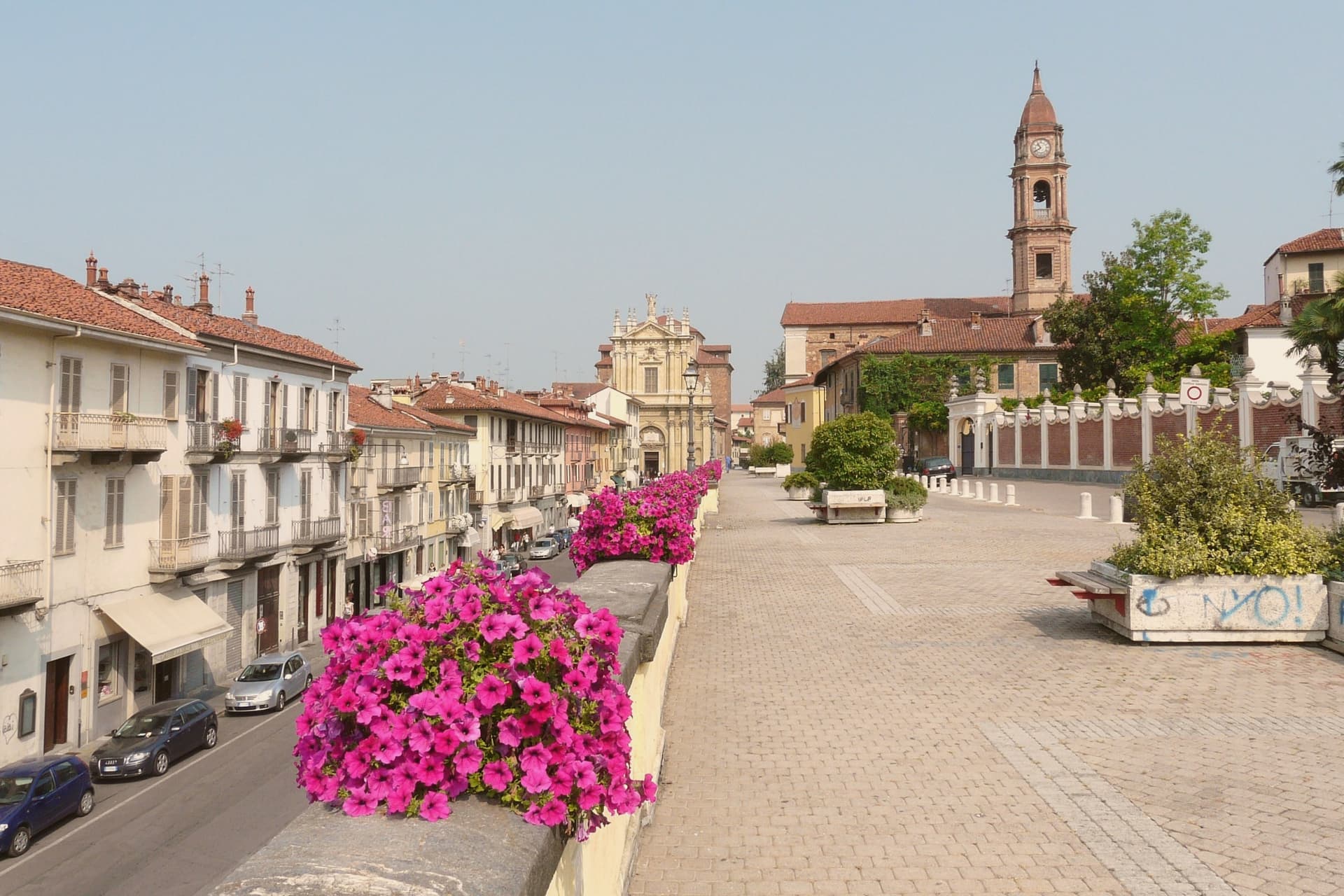
Why visit Bra
Bra sits at 290 meters in the Roero hills, fifty kilometers southeast of Torino, on the north edge of the Langhe-Roero-Monferrato UNESCO wine landscape. The old center, with its porticoed Corso Garibaldi and Via Cavour, is the working core of town; above it a nineteenth-century pavilion looks out over the surrounding hills, and below, on the Tanaro, a frazione occupies the site of a Roman colony inside a former Savoy royal estate.
Carlo Petrini founded Slow Food here in 1986 in response to a McDonald's planned next to the Spanish Steps in Rome, and the movement's headquarters has stayed in town since. In 1999 Bra was one of the four founding cities of Cittaslow, the small-town quality-of-life network.
The biennial Cheese fair, the largest event in the world for raw-milk cheeses, fills the old center in odd-numbered Septembers, alongside the town's own DOP cheese and its ground veal sausage, eaten raw by local custom. A town this size holding a global food movement, a gastronomic university, and a Roman site within its own borders is not an accident of promotion: it reflects a place that has treated eating and its history as civic matters worth building institutions around.
What to see in Bra
- La Zizzola. Octagonal pavilion on the hill above town, reached as the best panoramic point over the Langhe and Roero.
- Palazzo Mathis. Fourteenth-century palazzo on the central piazza with frescoed main floor and eighteenth-century oil-painted door covers, now used for exhibitions.
- Palazzo Traversa. Fifteenth-century building housing the Museo di Archeologia, Storia e Arte, with finds from the Roman colony of Pollentia.
How to get to Bra
There is a railway station in the town, so you can arrive without a car and never need one while you are here. Torino is roughly 54 minutes away by road.
Our tip
April through June and September into October are the months Bra runs cleanest. The Roero hills colour up around the town, the cellars hold tastings, and the Cheese fair takes the centro storico in September of odd years. July and August get hot in the Tanaro plain below, and the porticoes on Corso Garibaldi become the cool part of town between four and seven in the afternoon. Bra's - Bra falls in September.
Venaria Reale
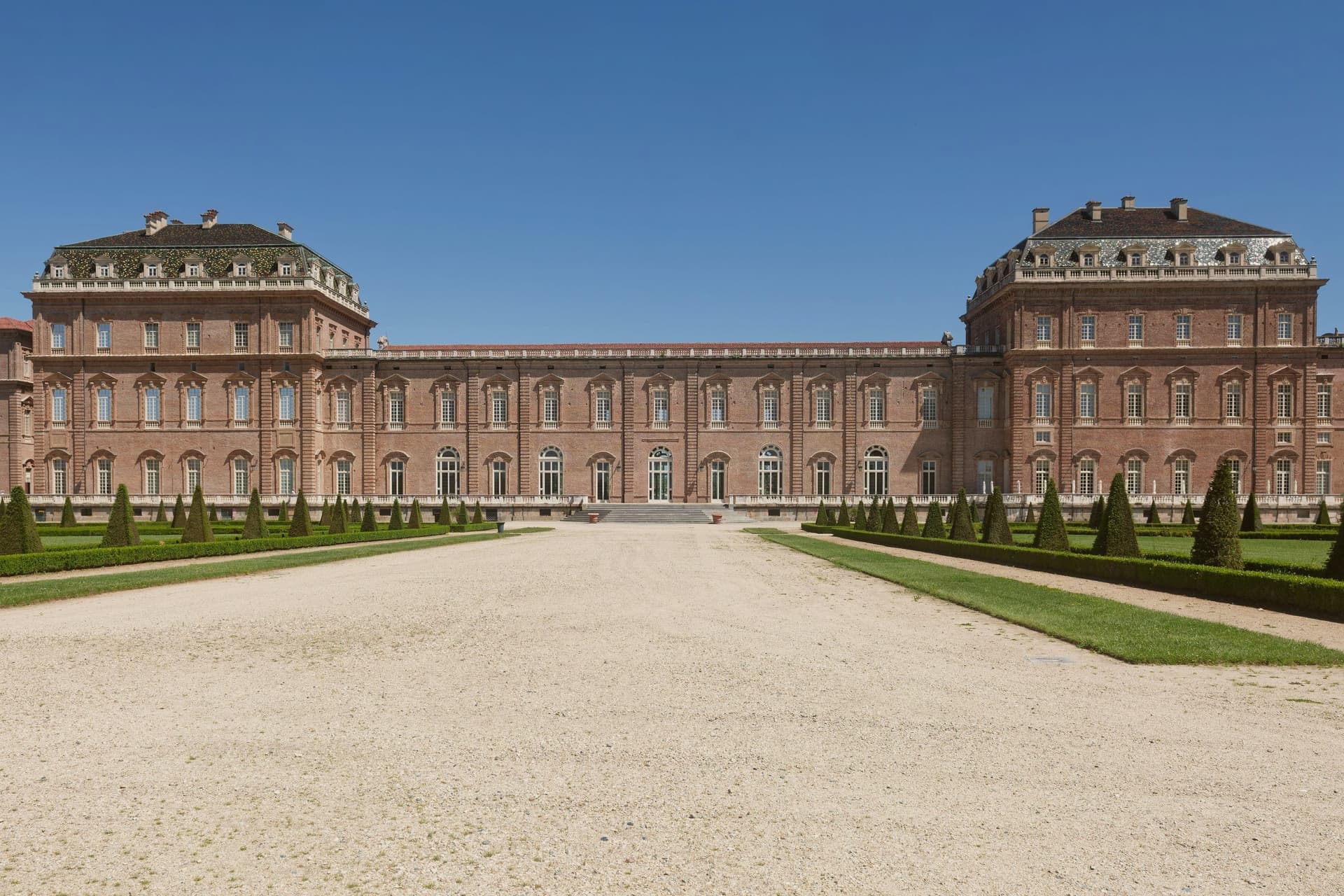
Why visit Venaria Reale
Venaria Reale sits at 269 meters fifteen kilometers northwest of Torino, on the lowland that ran into the Savoy hunting forests of the Mandria. The modern name comes from the Latin ars venatoria, hunting.
In 1658 Duke Carlo Emanuele II commissioned court architect Amedeo di Castellamonte to build a residence for hunting parties and court leisure, with a coordinated plan for palace, park, hunting wood and adjoining village. In 1716 Filippo Juvarra enlarged the complex with the Galleria Grande, the Cappella di Sant'Uberto, the Citroniera and the Scuderia, lifting the Reggia to one of the major baroque set pieces of Europe.
The Savoy Residences entered the UNESCO list in 1997. After two centuries as a military barracks the palace was restored across eight years from 1999 to 2007, in the largest cultural restoration project in European Union history, with 1,800 operators on site.
The Reggia now opens eighty thousand square meters of floor surface and sixty hectares of gardens, with the three thousand fenced hectares of the Parco della Mandria beyond.
What to see in Venaria Reale
- Reggia di Venaria. UNESCO baroque palace begun in 1658 by Amedeo di Castellamonte for Duke Carlo Emanuele II, with 80,000 m² of floors and 60 hectares of gardens.
- Galleria Grande. Filippo Juvarra's barrel-vaulted gallery of 1716, one of the longest enfilades of baroque court architecture in Europe.
- Cappella di Sant'Uberto. Royal chapel designed by Juvarra inside the palace, completed in the second decade of the eighteenth century for the hunting court.
How to get to Venaria Reale
There is a railway station in the town, so you can arrive without a car and never need one while you are here. Torino is roughly 28 minutes away by road.
Our tip
April through June is the best window for the gardens of the Reggia and the long walks through the Parco della Mandria, with parterres in full bloom and the hunting park green. September and October bring cooler air over the gardens and the start of the autumn exhibition season inside the Galleria Grande. July and August touch the mid-thirties on the Torino plain; the palace interiors stay cool, the Citroniera and the chapel hold the heat at bay, but the gardens flatten in midday glare.
More from Anywhere Italy
- The 9 best hill towns with a World Heritage site in Piemonte
- The best hidden towns with a World Heritage site in Piemonte
 The best towns with a World Heritage site that eat well in Piemonte
 The best hill towns within an hour of Turin
- The best towns you can reach by train within an hour of Turin
- The best towns that eat well within an hour of Turin