The 6 best small towns to live in Piemonte, by our own rules
Six towns: what each is best for, what a home costs, and the catch. A square meter runs from €460 in Ovada to €2,550 in Cannobio.
From the 1,000 towns picked by Peter Benei.
92 towns written about, 908 to go. Follow along, free: Subscribe on Substack
Where would you live in Piemonte, if you wanted a town rather than a postcard? In our Where to Move in Italy series we wrote down our own rules: a town of 5,000 to 20,000 people, big enough to keep a life of its own and small enough to stay one community; a real city 30 minutes to an hour away by car, near enough for the hospital and the airport, far enough that the town is not its suburb; and, where we can, a station.
Of our 65 towns in Piemonte, 6 pass every rule and have at least 7 of ten everyday services, from the grocer and the pharmacy to the doctor and the bar, within 500 meters of the center.
Every number comes from the town's own page. The drive is routed, not guessed. The services are OpenStreetMap's, read in November 2026, and the map misses things, so a shop it lacks is not proof there is none. None of it measures whether you will like the place: for that, go out of season, on a weekday.
If you are still choosing, we have also written The 10 best small towns to live in Italy, by our own rules and The best towns inside a nature park in Piemonte.
1. Arona
Best for a long lunch. Food guides list four tables here.
49 min from Novara · homes €1,650 to €2,450 a m² in the center · 13,655 people
Why visit Arona
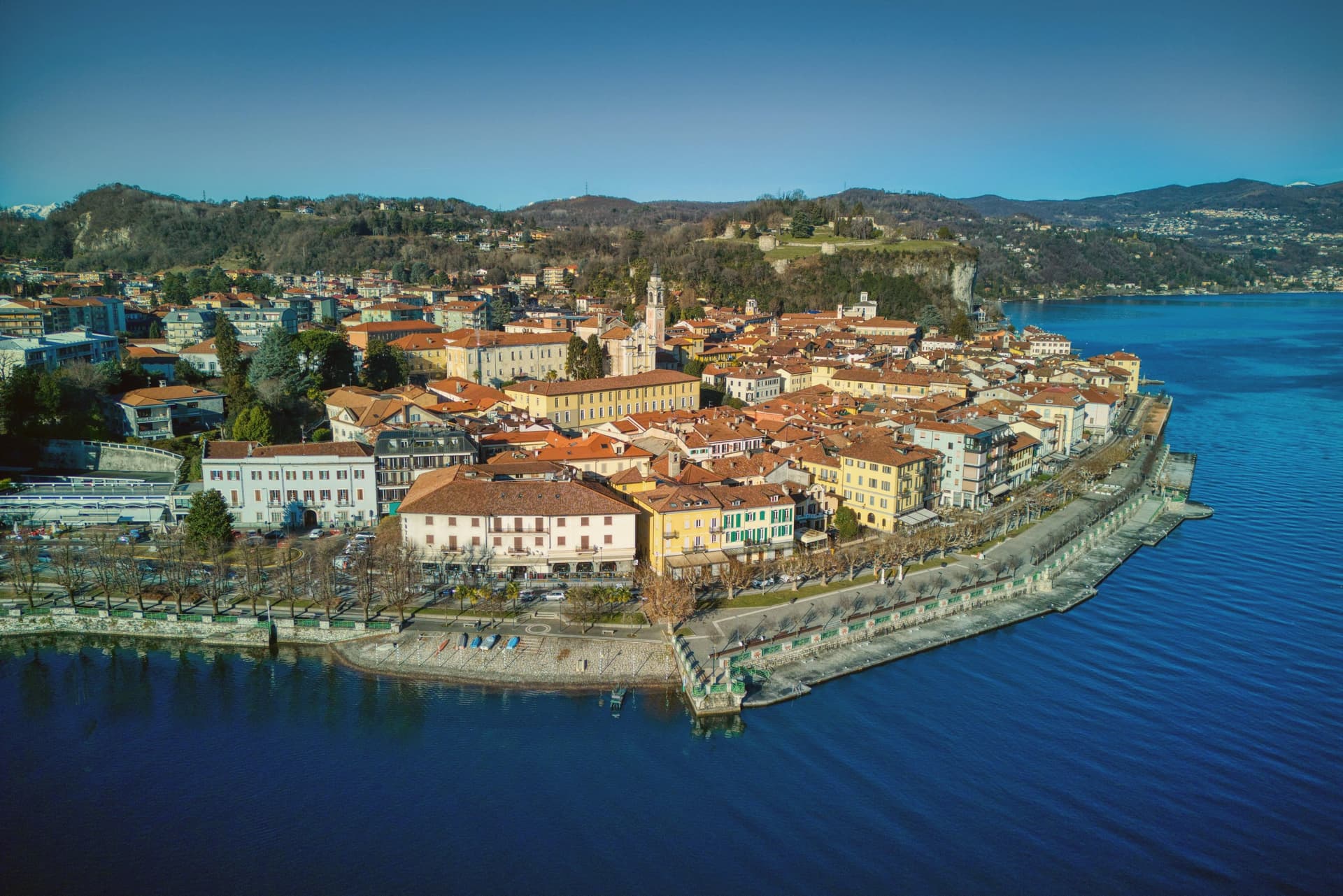
Arona sits ninety kilometers north of Milano, the first stop most travelers reach when they leave the city for the lakes. The town came under the Borromeo family in 1439 and stayed there for centuries: the castle on the hill above town was their stronghold, and the next hill over holds the statue raised in the family's honor, so the two high points of Arona both belong to the same lineage looking down on the water and on each other.
The lakefront below connects the two hills to the church on the shore and to the promenade that runs north with Angera visible across the water on the Lombard side. The natural park on the southern edge of the commune sits apart from this Borromeo core, its pile-dwelling remains far older than anything else in town and unconnected to the family's centuries of rule.
What the place adds up to is a town organized around one family's presence in stone and copper, with a much older, unrelated settlement preserved at its edge.
13,655 people, and Gallarate is 32 min away by car, with a station in town. Nine of the ten everyday services we look for, from a grocer to a pharmacy, are on the map within 500 meters of the center.
What to see in Arona
- Sancarlone. Copper colossus of San Carlo Borromeo, designed by Il Cerano and built between 1624 and 1698, standing above the Sacro Monte.
- Rocca di Arona. Ruined fortress on the hill above town, the walls broken into towers since the demolition, with views over the water below.
- Collegiata di Santa Maria Nascente. Late medieval church on the lakefront, holding a polyptych by Gaudenzio Ferrari completed in 1511.
How to get to Arona
It has its own railway station. Novara is about 49 min away by road. The full route from Milan.
Our tip
April through June and September into October are the best months on the south shore of Lake Maggiore. The lake stays cool, the lungolago carries traffic without congestion, and the ferries run a full timetable to Angera and the Borromeo islands further north. July and August are warm and busy: ferry queues, full hotels, and the southern lake basin gathering most of the day-trip volume from Milano.
2. Susa
Best for a stage of a long walk. The Via Francigena passes through.
53 min from Turin · homes €660 to €1,100 a m² · 5,840 people
Why visit Susa
Susa sits fifty kilometers west of Torino, on the road that climbs toward the Moncenisio and Montgenèvre passes into France. Ligurians and Celts settled the site around 500 BC.
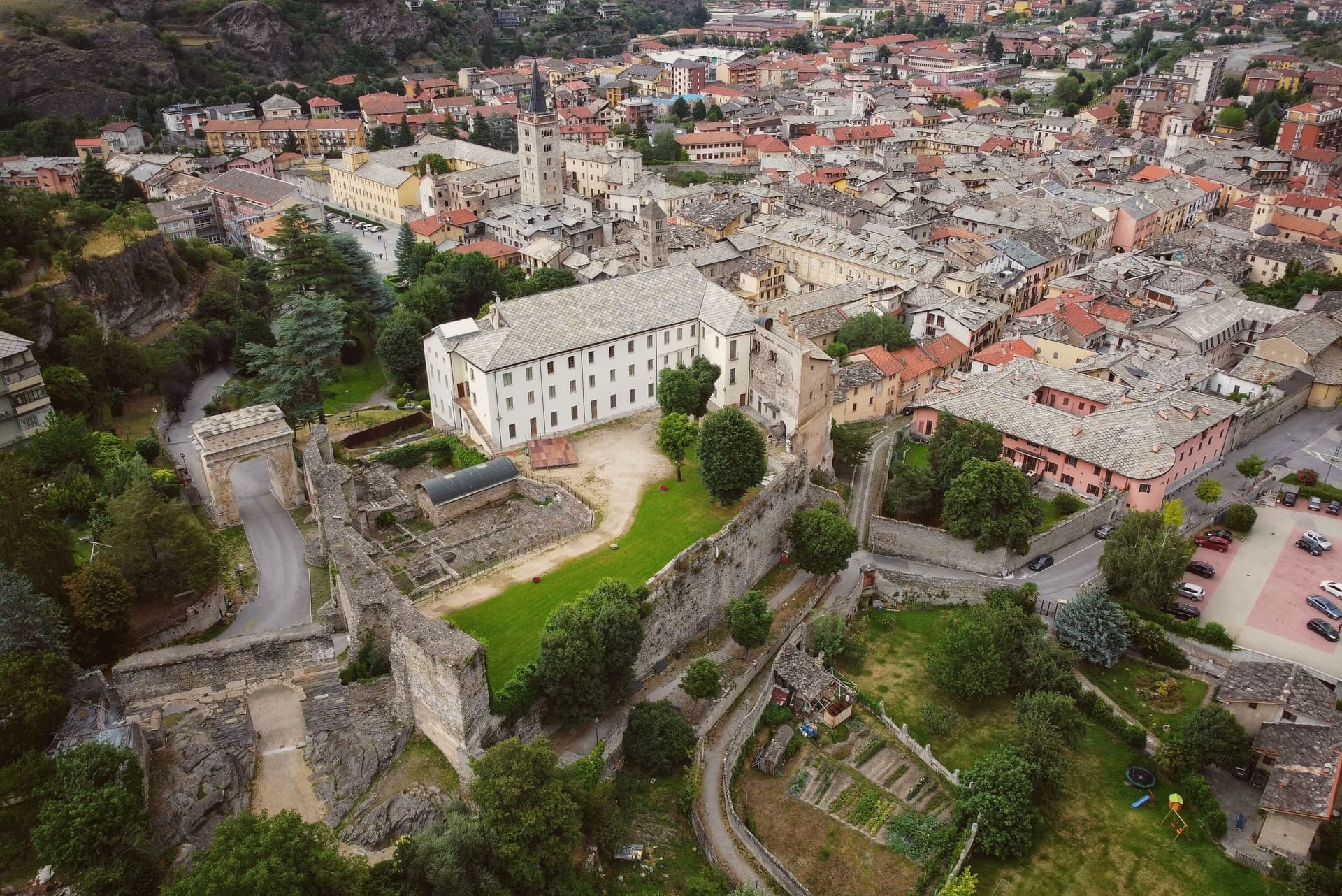
It later emerged as the capital of the kingdom of the Cozii under Marcus Julius Cottius, son of King Donnus, who allied with Rome and was confirmed as prefect of the new province of Alpes Cottiae, with Segusio, modern Susa, as its capital: the arch in the town center and the town's name in the Cottian Alps both descend from that alliance. The old core, arch, cathedral and castle, sits compact around the Roman gate that the castle absorbed into its later walls, with the amphitheatre just outside that line.
The pilgrim route threads through this core on its way down from the pass, meaning the town has functioned as a waypoint on the same north-south line, Roman road, medieval pilgrimage route, alpine crossing, since Ligurians and Celts first settled it. What the Cozii capital, the pilgrim stop and the mountain gateway add up to is a single fact repeated across the centuries the arch and the campanile have stood: Susa exists because of the road, not beside it.
5,840 people, and Turin is 53 min away by car, with a station in town. Nine of the ten everyday services we look for, from a grocer to a pharmacy, are on the map within 500 meters of the center.
What to see in Susa
- Arco di Augusto. White marble arch over 13 meters tall, standing in the center of town and counted among the best preserved of its kind in north Italy.
- Cattedrale di San Giusto. Founded by Olderico Manfredi, with the terracotta spires added in the 1480s. The campanile remains the tallest feature of the skyline.
- Castello della Contessa Adelaide. Built into a Roman gate on the line of the old walls, later reworked into a noble residence with medieval towers and Renaissance windows. It stands beside the cathedral.
How to get to Susa
It has its own railway station. Turin is about 53 min away by road. The full route from Turin.
Our tip
April through June is the green window in the Susa valley: the Cottian Alps with snow still on the upper slopes, mild evenings at 503 meters, and the Roman monuments lit clearly in the long light. July and August are warm but cooler than the Po plain; the Arch and the Cattedrale draw most of the year's visitors and the festival program runs through summer. September and October are the second peak, with crisp air and the chestnut woods turning above the town.
3. Cannobio
Best for a swim. The comune's beach holds a Blue Flag.
1 h 40 min from Novara · homes €1,750 to €2,550 a m² in the center · 5,017 people
Why visit Cannobio
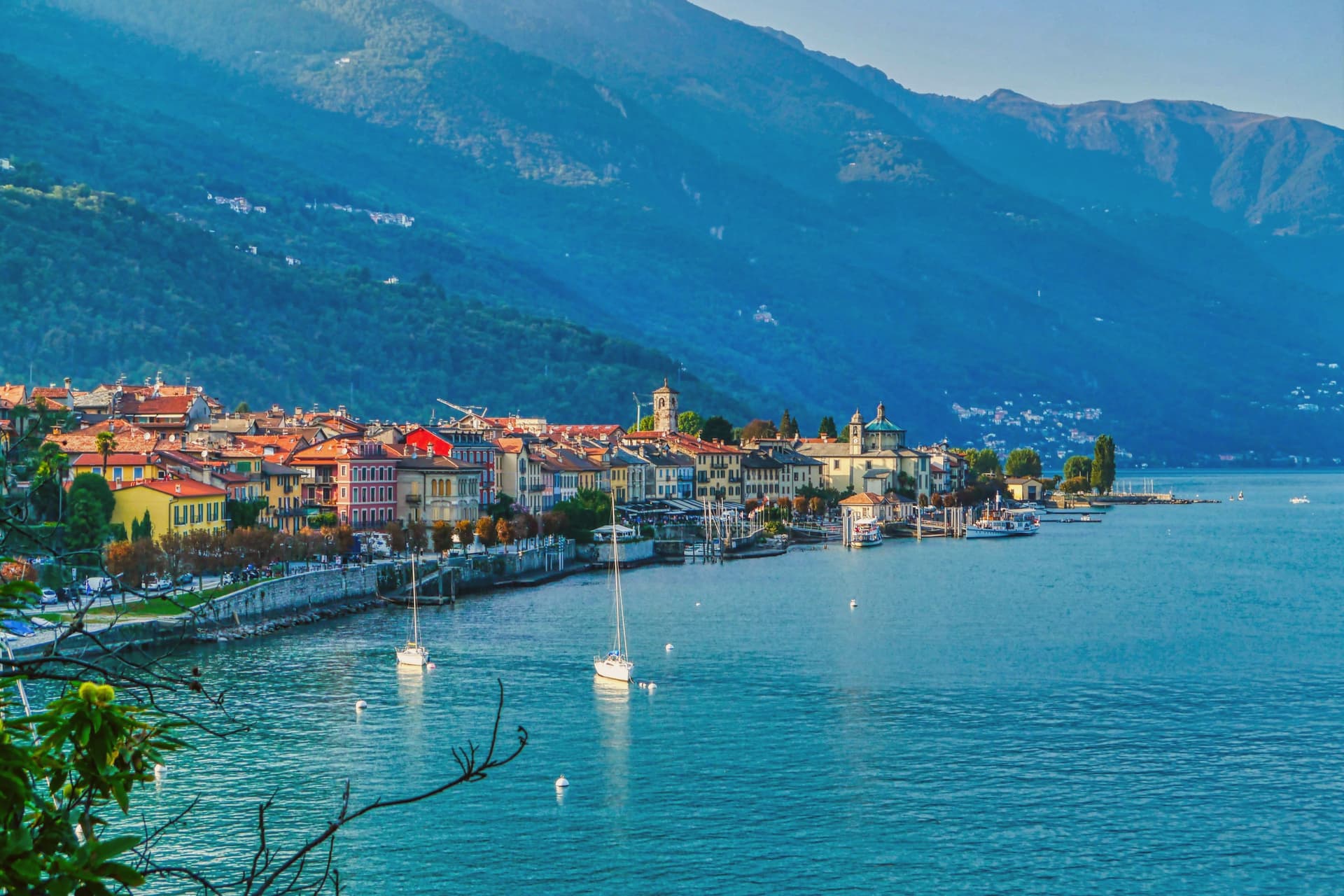
Cannobio sits at 214 meters on the western shore of Lago Maggiore where the Cannobino river meets the lake, five kilometers from the Swiss border. Roman sarcophagi from the second and third centuries have been found in town; the first written record dates to 909.
In the Middle Ages, Cannobio ran a wool and tanning industry and a lumber trade, and the Mazzarditi pirates briefly held it in 1403 from their islet base off Cannero. The Santuario della Santissima Pietà rises on the lakefront, built in the sixteenth century on the spot where in 1522 an image of the Virgin was said to have bled and where the town claimed to have been spared from the plague that followed.
Every Sunday around 300 stalls line the entire lungolago from the piazza to the Santuario, drawing visitors by boat from Locarno and Ascona on the Swiss side. The Orrido di Sant'Anna, four kilometers inland, is a narrow gorge with a Romanesque church above it.
5,017 people, and Verbania is 37 min away by car. Eight of the ten everyday services we look for, from a grocer to a pharmacy, are on the map within 500 meters of the center.
What to see in Cannobio
- Santuario della Santissima Pietà. Sixteenth-century pilgrimage church on the lakefront, built on the site of a 1522 Marian apparition and plague-survival miracle.
- Sunday market. Around 300 stalls along the entire lakefront promenade every Sunday from 08:00 to 15:00; one of the largest markets on Lago Maggiore.
- Piazza Vittorio Emanuele III. Main lakefront piazza, lined with pastel arcaded houses dating to the medieval and early-modern town.
How to get to Cannobio
Novara is about 1 h 40 min away by road.
Our tip
April through June brings the lake gardens into bloom and the Sunday market back to full size. September and October hold warm water and a long shoulder of clear light over the Swiss shore. July and August fill the lungolago with Swiss day-trippers from Locarno and Ascona; the medieval lanes behind the lakefront stay cool through midday.
4. Acqui Terme
Best for a soak. The comune has thermal baths.
1 h 8 min from Genoa · homes €560 to €840 a m² in the center · 19,005 people
Why visit Acqui Terme
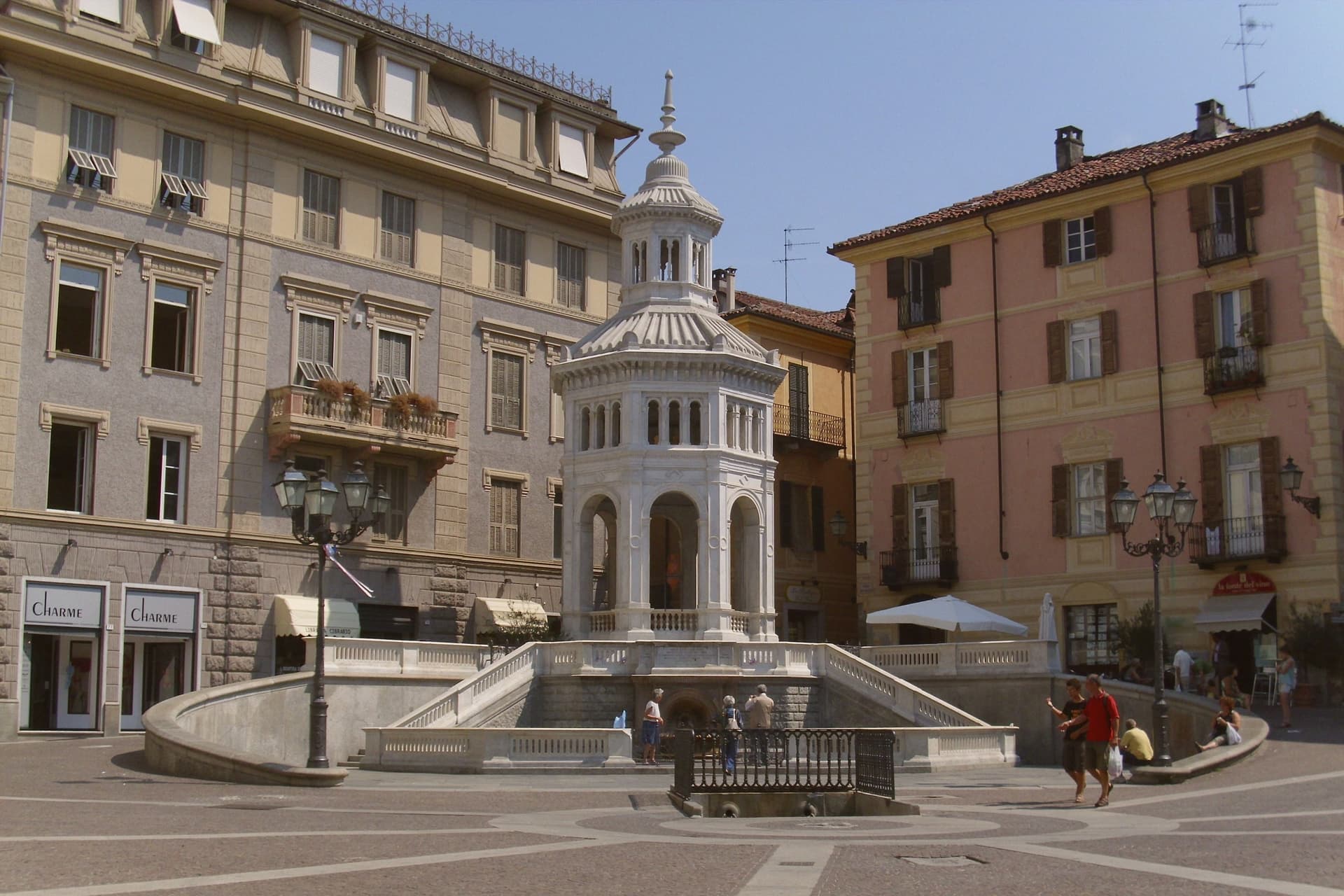
Acqui Terme sits fifty kilometers north of Genova, in the southern Monferrato hills, on the Bormida river. The Romans built their settlement here around hot sulphur springs that Pliny the Elder rated among the best in the empire, and the town's shape still follows that founding logic: baths and spring at the center, the aqueduct running out to the valley, the castle set above on higher ground where the Marquises of Monferrato later took the high point for defense.
The old town gathers close around the piazza where the water surfaces; the castle and its museum sit apart and above, holding what was dug up from the baths, theater and amphitheatre below. The surrounding hills, meanwhile, grow the grapes for Brachetto d'Acqui DOCG, a low-alcohol sparkling red, and the town holds three separate designations at once: Spighe Verdi, Comuni Termali, Città del Vino.
The thermal trade runs year-round while the wine and the hills set the pace for everything else, so the town reads as two economies sharing one square: water pulled from the ground below, and wine brought down from the slopes above.
19,005 people, and Alessandria is 40 min away by car, with a station in town. Seven of the ten everyday services we look for, from a grocer to a pharmacy, are on the map within 500 meters of the center.
What to see in Acqui Terme
- Acquedotto Romano. The structure originally carried water 13 km from the Erro stream to feed the baths of Aquae Statiellae; fifteen pillars and four arches still stand across the valley floor.
- La Bollente. Octagonal marble pavilion designed by Giovanni Ceruti, its columns framing the steam that rises off the water even in the middle of the piazza.
- Duomo di Santa Maria Assunta. Romanesque cathedral on the Latin cross plan, begun in the 10th century and consecrated in 1067 by Bishop Guido, the city's patron saint.
How to get to Acqui Terme
It has its own railway station. Genoa is about 1 h 8 min away by road. The full route from Genoa.
Our tip
Acqui Terme runs on a thermal calendar, which means almost no closed season. The spa hotels operate through the cold months and the baths fill more reliably in November than in August. April through June is the gentle window: green Monferrato hills, mild evenings, the Bollente piazza busy without the August press.
5. Ovada
Best for a wine weekend. It belongs to the national association of wine towns.
47 min from Genoa · homes €460 to €690 a m² in the center · 10,816 people
Why visit Ovada
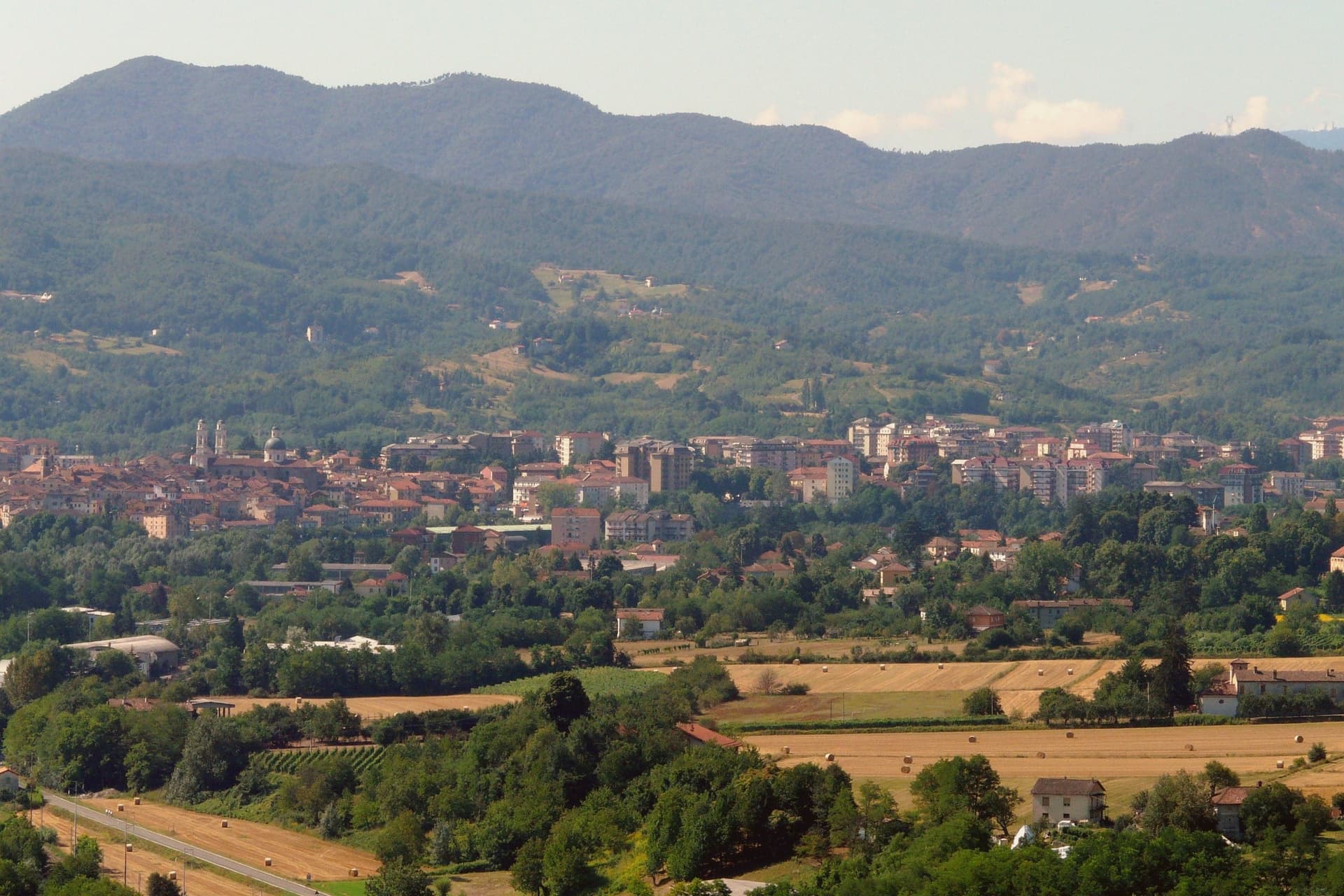
Ovada sits at 186 meters at the confluence of the Orba and the Stura, in the southern Monferrato hills, 35 kilometers north of Genova on the old salt road between the port and the Po plain. The painted façades and the tall narrow houses still show the imprint of the Republic of Genoa, which first held the town in the thirteenth century and took it for good in 1528.
Dolcetto di Ovada won DOC status in 1972, on the same day as Dolcetto d'Acqui, among the first Dolcetto DOCs in Piemonte; the DOCG for Ovada Superiore came in 2008. The Chiesa Parrocchiale di Nostra Signora Assunta, with its two twin bell towers, was designed by Gio Antonio Delfrate after the Genoese Basilica di Santa Maria delle Vigne, built from 1772 to 1781 and consecrated in 1801.
The Capuchin church was built from 1640 after a plague vow of 1631 and suppressed under Napoleon in 1810. Ovada carries Città del Vino.
10,816 people, and Alessandria is 34 min away by car, with a station in town. Seven of the ten everyday services we look for, from a grocer to a pharmacy, are on the map within 500 meters of the center.
What to see in Ovada
- Chiesa Parrocchiale di Nostra Signora Assunta. Twin-bell-tower parish church built 1772–1781 by Gio Antonio Delfrate, modelled on Santa Maria delle Vigne in Genova, consecrated 1801.
- Loggia di San Sebastiano. Medieval loggia, the original parish church of Ovada dedicated to Santa Maria, now used as a venue for cultural events.
- Chiesa dell'Immacolata Concezione (Cappuccini). Capuchin church begun in 1640 after a 1631 plague vow, single nave with two side chapels, suppressed in 1810 under Napoleon's ecclesiastical decree.
How to get to Ovada
It has its own railway station. Genoa is about 47 min away by road. The full route from Genoa.
Our tip
April through June is the green window in the Ovadese hills, vines breaking bud and the rivers running off the Ligurian Apennines. July and August touch the mid-thirties; the centro storico thins after lunch and the Orba pools become bathing spots for residents. September and October are the harvest months, the entire Ovada DOCG zone working through vendemmia, and the cantine open for tasting.
6. Racconigi
Best for a World Heritage site. UNESCO lists a site in the comune.
49 min from Turin · homes €800 to €1,200 a m² in the center · 9,628 people
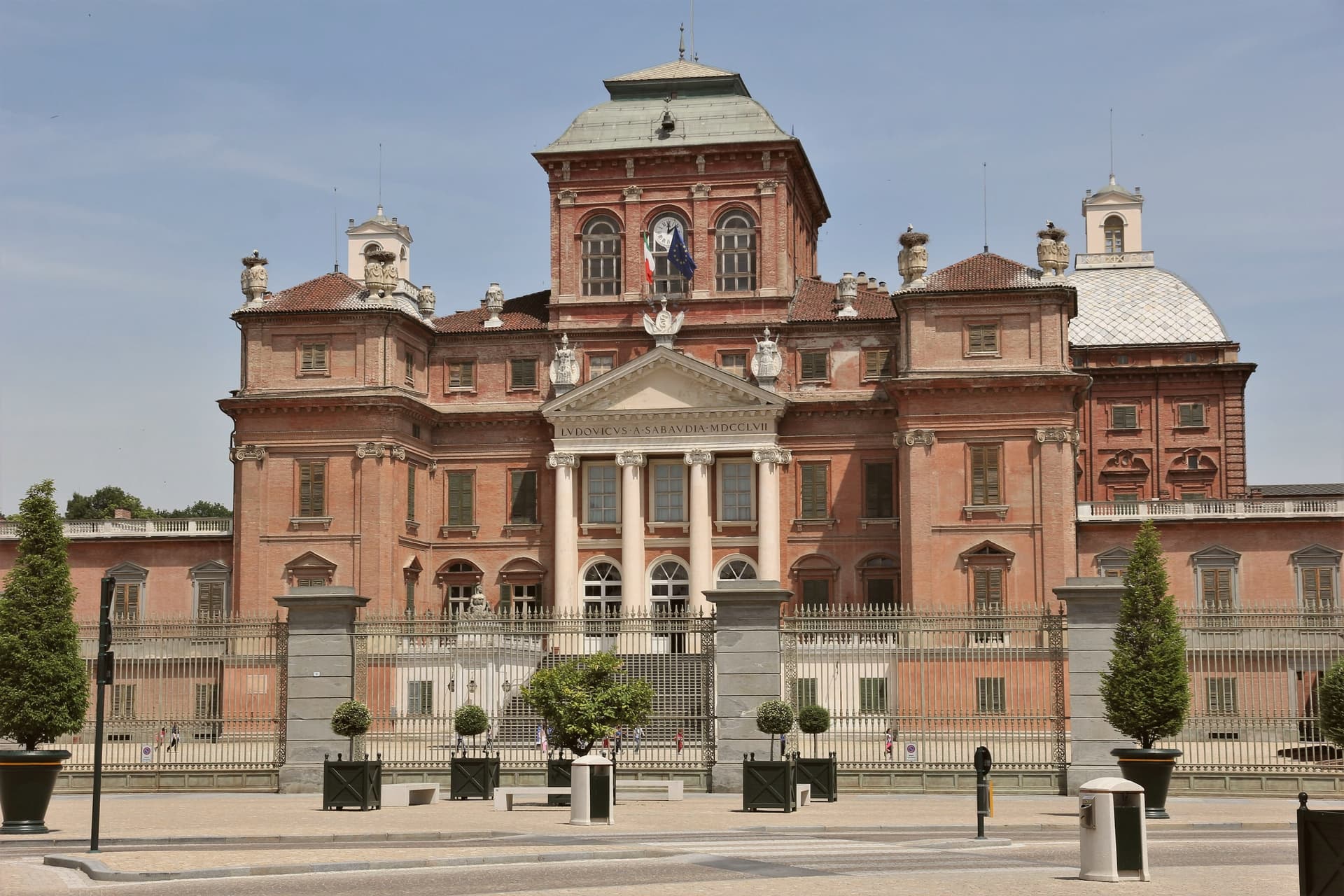
Why visit Racconigi
Racconigi sits at 262 meters on the Po plain, 35 kilometers south of Torino. The town passed in turn through the hands of the marquises of Saluzzo, the princes of Acaia and the Savoia-Carignano, and it was this last line that shaped what stands today.
Duke Carlo Emanuele I granted the estate in 1620 to his son Tommaso Francesco, founder of the Carignano branch, and the fortress that resulted was later opened out into a country residence set within its own designed landscape rather than confined behind walls. The park was remade twice, first on French lines in 1755, then reworked eighty years later by a German landscaper into the lakes, canals and follies that surround the building now.
The center for stork reintroduction occupies a farmhouse next to this park, so the estate and the breeding site share ground rather than sitting apart in different parts of town. The old center, between the castle and the station, is where the smaller scale of daily Racconigi meets the scale of the estate that gives the town its name recognition.
What holds these pieces together is that Racconigi's identity was built from the outside in: a noble residence and its grounds first, a town organized around servicing and adjoining it second.
9,628 people, and Moncalieri is 34 min away by car, with a station in town. Seven of the ten everyday services we look for, from a grocer to a pharmacy, are on the map within 500 meters of the center.
What to see in Racconigi
- Castello Reale di Racconigi. Eleventh-century fortified core remodelled by Guarino Guarini in the late seventeenth century, its pagoda-roofed central pavilion the mark of that conversion, restored continuously since 1980.
- Parco Reale. 170-hectare romantic park laid out in 1755 by the French gardener Molard on Le Nôtre's designs, redrawn in 1835 by Xavier Kurten with lakes, canals and follies.
- Centro Anatidi e Cicogne LIPU. Farmhouse site beside the park where the reintroduction program was run, now the country's largest stork colony descending from the birds released there.
How to get to Racconigi
It has its own railway station. Turin is about 49 min away by road. The full route from Turin.
Our tip
April through June is the best window: castle and Parco Reale on long opening hours, the storks on the nests in the LIPU center, mild temperatures on the plain south of Torino. July and August touch the mid-thirties and afternoons in the park are hard work; the castle stays cool. September and October are the second strong window, vendemmia on the surrounding plain, fewer visitors than spring.
If you only pick one
Which town is yours
One town for each kind of trip, and the reason in a line.
Without a car
Acqui Terme
The train stops in the commune, so you can arrive and leave without a car.
For everyday life on foot
Arona
Nine of the ten everyday services we look for, from a grocer to a pharmacy, are on the map within 500 meters of the center.
For a short trip
Ovada
47 min by car from Genoa, the shortest drive from a city on this list.
For a small town
Cannobio
5,017 people, the smallest town on this list.
More from Anywhere Italy
- The best towns inside a nature park in PiemontePiemonteinside a park10 towns · smallest 174 residents
- The best hot-spring towns within two hours of MilanNear Milanhot springswithin 2 hours7 towns · smallest 3,322 residents · closest 75 min away
- The best towns you can reach by train within an hour of TurinNear Turinby trainwithin 60 min7 towns · smallest 5,840 residents · closest 28 min away