
The best hot-spring towns within two hours of Milan
Warm mineral water comes up through the ground in a wide arc around Milan, in the limestone valleys of the Bergamasco, along the Oglio and the Trebbia, on the shore of Garda and out into the Piedmontese hills where the vines start. The towns built on it look the part: arcaded streets, bathhouses in painted stucco and wrought iron, drinking fountains where the water arrives sulphurous and faintly warm. Autumn is the best season for it, when the plain sits under fog and the valleys stay clear, and the kitchens turn to casoncelli, salt cod, chestnuts, boiled meats with mostarda. Spring works too, before the lake towns fill.
Most people who want a thermal weekend out of Milan point the car at Bormio, high in the Valtellina, where the Roman baths look out over the valley and the pools steam against the snow. It is a long drive up, the parking is a problem in season, and the booking windows for the terraced baths go early on any weekend between December and March. The town is good and it is also full, which is the trade.
The same geology continues well short of the mountain passes, and much closer to the city. Water comes up in Bobbio's stretch of the Trebbia valley, under the funicular slopes at San Pellegrino Terme, at the head of the Val Camonica in Darfo Boario Terme, on the Garda peninsula and in the Monferrato hills at Acqui Terme, where the hot spring runs in the middle of the old town. These are the towns in this list, all reachable from Milan in a morning, most of them with fewer visitors than the famous names and better food than the price suggests.
Of the 104 communes we have mapped in a 120-minute drive of Milan, 7 qualify as hot-spring towns: each has thermal water a town has been built around. The smallest, Bobbio, has 3,408 residents.
If you are still choosing, we have also written The best hot-spring towns within two hours of Brescia and The best hot-spring towns within two hours of Parma.
Bobbio
Why visit Bobbio
Bobbio sits on the left bank of the Trebbia at 272 meters, at the foot of Monte Penice in the Piacentine Apennines. The land was granted to Saint Columbanus by the Lombard king Agilulf in 614, and the monastery he raised on it grew, by the eighth century, into one of the principal libraries north of Rome, copying Greek, Latin, and Irish manuscripts that survived nowhere else.
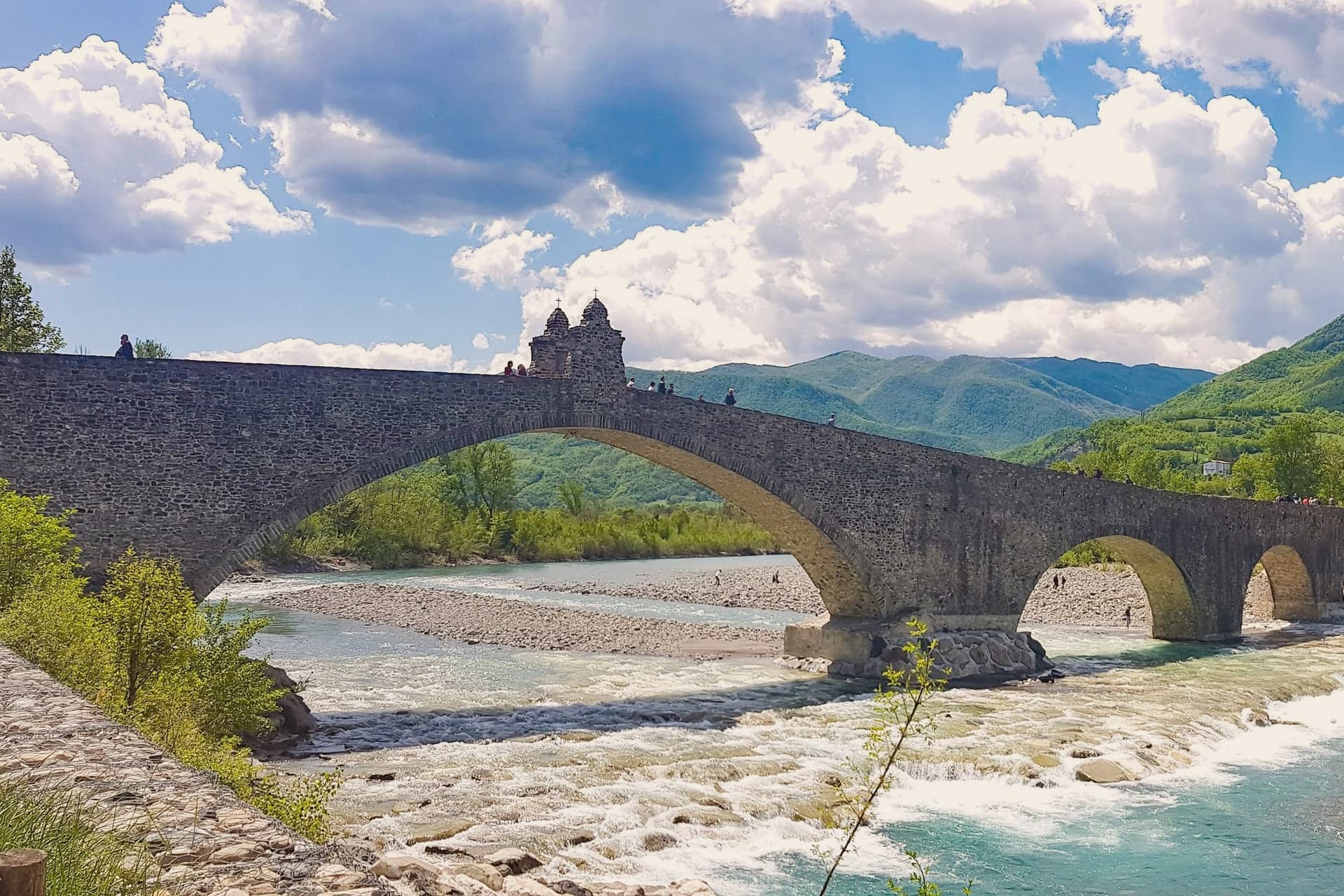
The French suppressed the monastery in 1803; what the scriptorium and library once held now lives in fragments, kept in the basilica and its museum. The town below the abbey is crossed by the Trebbia on the Ponte Gobbo, its eleven irregular arches stretching 273 meters, a shape that gave rise to the story of the Devil and the saint dividing the bridge between them.
Bobbio still carries the Borghi più belli and Bandiera Arancione designations alongside the 2019 RAI title. A river crossing, a hill fortress, and a monastery ruin sit within reach of one another here, each holding a different piece of the same long settlement, one built by faith, one by feudal power, and one by the river itself.
What to see in Bobbio
- Abbazia di San Colombano. The basilica and grounds where Saint Columbanus settled still stand; the scriptorium he founded is gone but its output is documented in surviving manuscripts held elsewhere.
- Ponte Gobbo. The eleven arches sit unevenly across the riverbed, the irregularity of their spacing the source of both the Devil's Bridge name and the Columbanus legend attached to it.
- Duomo di Bobbio. Romanesque cathedral begun in 1075, dedicated to Santa Maria Assunta, with a fifteenth-century fresco cycle in the apse.
How to get to Bobbio
Piacenza is roughly 63 minutes away by road.
Our tip
April through June brings the green Val Trebbia season, when the river runs clear enough for swimming holes downstream. September and October are the working months for chestnuts, mushrooms, and the maccheroni alla bobbiese the town fills its trattorie with. July and August can hit thirty-three degrees in the valley, and the 2019 Borgo dei Borghi win still draws weekend crowds that fill the Ponte Gobbo. La Festa del Pinolo falls in August.
San Pellegrino Terme
Why visit San Pellegrino Terme
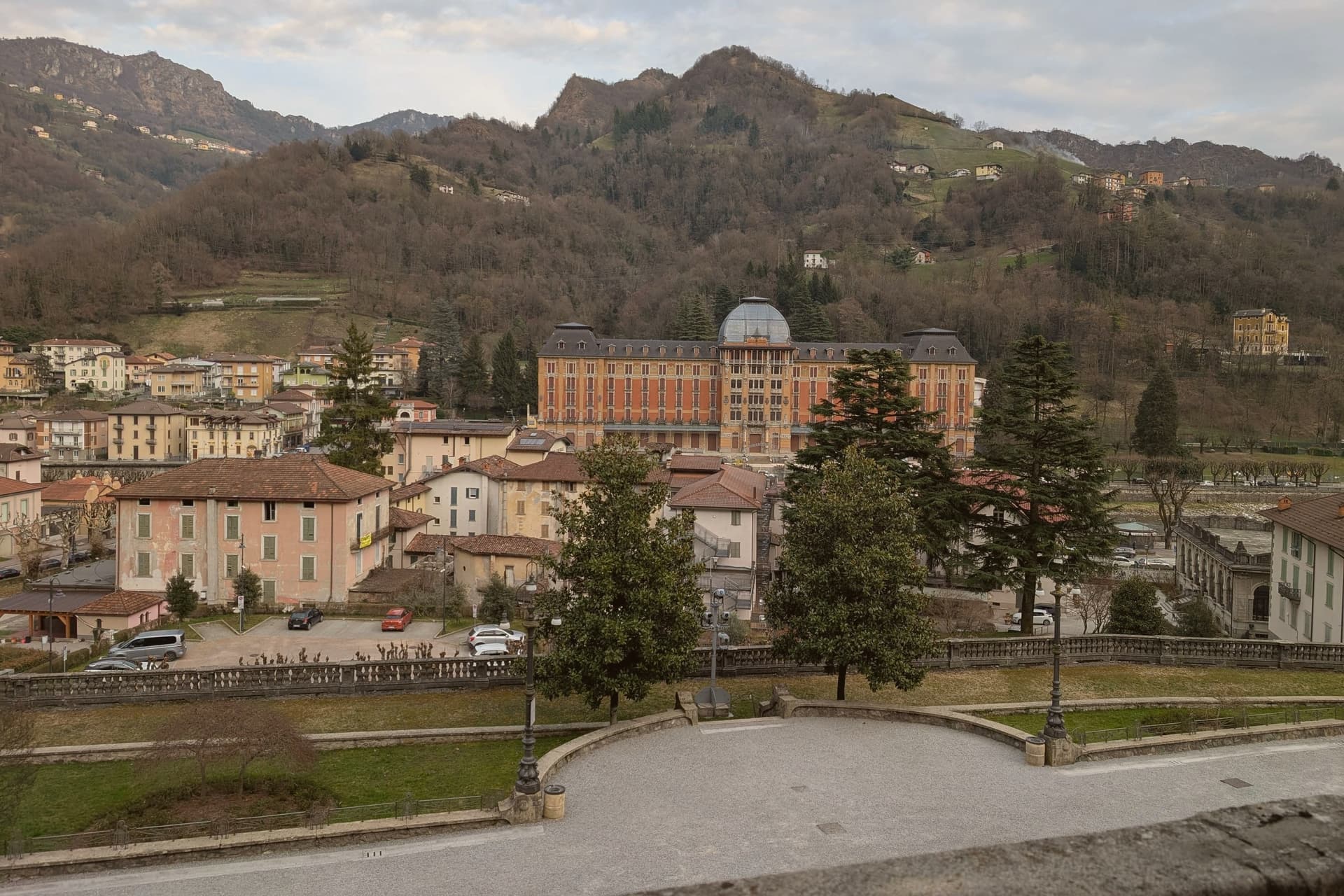
The town sits along a single bend of the Brembo river, where mineral and sulfur springs had been documented since the 13th century but were only commercialised after the railway from Bergamo reached the valley. That timing explains why the whole ensemble reads as one build: the hotel, the casino and the bath house went up within a few years of each other, facing each other across the water rather than scattered through the town.
The bottling plant sits a kilometre downstream from the springs, turning the source into the mineral water sold worldwide. Above the built-up centre, the funicular climbs to the Vetta panoramic point on the ridge, putting the whole valley below in view.
The Val Brembana around it is one of Lombardia's Cittaslow-style slow-tourism valleys, with the Borghi-più-belli of Cornello dei Tasso fifteen kilometres north and a chain of cycling routes along the river. What holds the town together, in the end, is the water itself: it drew the springs' early notice, funded the Liberty building spree once the railway arrived, and still leaves the valley in bottles long after the casino stopped taking bets.
What to see in San Pellegrino Terme
- Grand Hotel San Pellegrino. Completed in 1904, the most elaborate facade of the ensemble: cast-iron balconies, stained glass, and a marble entrance hall by Romolo Squadrelli.
- Casinò Municipale (Casinò Liberty). Matching Liberty style across the Brembo from the hotel, closed to gaming since 1917 but open for events and as a visitable architectural set piece.
- Terme di San Pellegrino (QC Terme). Original 1900 building running on the historic sulfur springs, operated today by QC Terme as a full-day spa with indoor and outdoor pools at 36°C.
How to get to San Pellegrino Terme
There is a railway station in the town, so you can arrive without a car and never need one while you are here. Bergamo is roughly 30 minutes away by road.
Our tip
April through October is the prime spa-town season — outdoor pools open at the Terme, funicular running, and the riverfront promenade in full use. May and September are the architectural-photography months: warm Liberty facades, fewer guests at the Grand Hotel, long light. July-August is busiest — the QC Terme can be fully booked weekends.
Cannobio
Why visit Cannobio
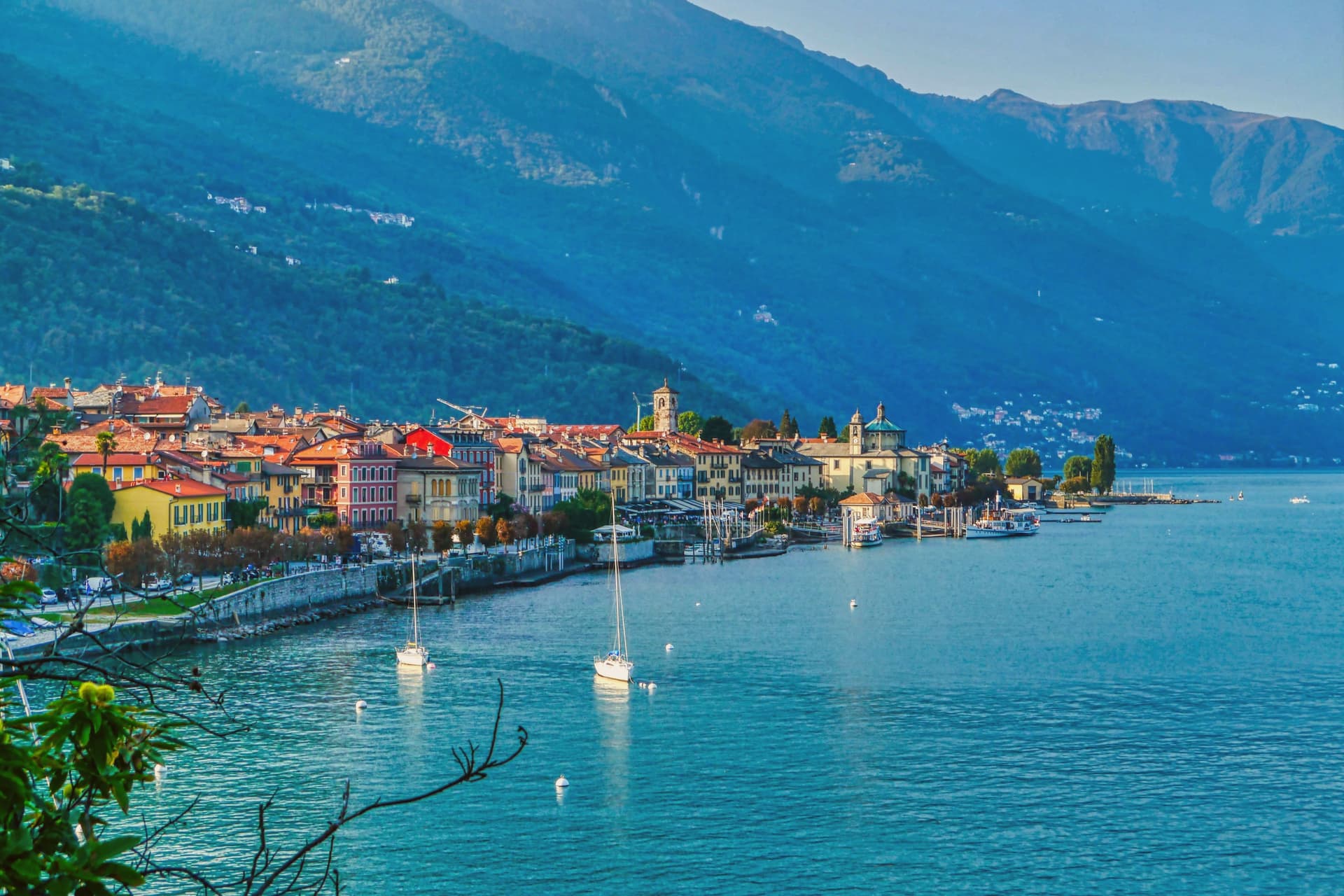
Cannobio sits at 214 meters on the western shore of Lago Maggiore where the Cannobino river meets the lake, five kilometers from the Swiss border. Roman sarcophagi from the second and third centuries have been found in town; the first written record dates to 909.
In the Middle Ages, Cannobio ran a wool and tanning industry and a lumber trade, and the Mazzarditi pirates briefly held it in 1403 from their islet base off Cannero. The Santuario della Santissima Pietà rises on the lakefront, built in the sixteenth century on the spot where in 1522 an image of the Virgin was said to have bled and where the town claimed to have been spared from the plague that followed.
Every Sunday around 300 stalls line the entire lungolago from the piazza to the Santuario, drawing visitors by boat from Locarno and Ascona on the Swiss side. The Orrido di Sant'Anna, four kilometers inland, is a narrow gorge with a Romanesque church above it.
What to see in Cannobio
- Santuario della Santissima Pietà. Sixteenth-century pilgrimage church on the lakefront, built on the site of a 1522 Marian apparition and plague-survival miracle.
- Sunday market. Around 300 stalls along the entire lakefront promenade every Sunday from 08:00 to 15:00; one of the largest markets on Lago Maggiore.
- Piazza Vittorio Emanuele III. Main lakefront piazza, lined with pastel arcaded houses dating to the medieval and early-modern town.
How to get to Cannobio
Novara is roughly 100 minutes away by road.
Our tip
April through June brings the lake gardens into bloom and the Sunday market back to full size. September and October hold warm water and a long shoulder of clear light over the Swiss shore. July and August fill the lungolago with Swiss day-trippers from Locarno and Ascona; the medieval lanes behind the lakefront stay cool through midday.
Sirmione
Why visit Sirmione
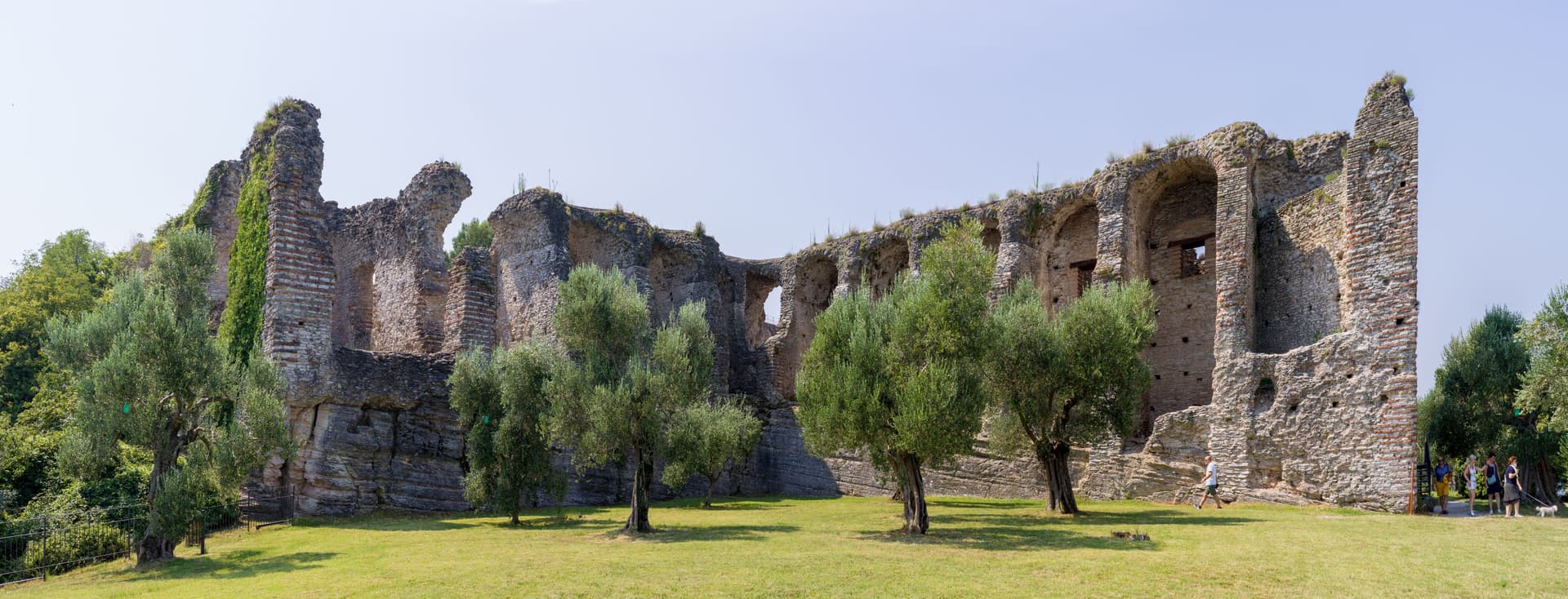
The peninsula runs four kilometers into the southern end of the lake, narrow enough that the old town occupies a triangle of land just over a mile long. Three low hills organize it: Cortine, San Pietro, and the rise at the tip where the Roman villa stands.
The fortress sits at the single entrance to the walled town, so the only way in by land passes through its gate, and the water it once enclosed as a fortified port is still shut in behind it. Past that gate the medieval streets are packed between the hills, and the ground rises toward the church at the highest point before falling away again toward the villa ruins at the peninsula's end.
The name attached to the villa is literary rather than archaeological: the poet's return in his thirty-first poem was to a family property on this tip of land, and nothing dug from the ground proves the two are the same place, but the name has held for a thousand years regardless. Maria Callas kept a villa here through the 1950s and 60s.
Between the enclosed water at one end and the hot spring at the other, the peninsula reads as a strip of land defined entirely by what edges it: lake on three sides, a gated approach on the fourth, and a history that settled into the name of a poem long before anyone could confirm it belonged there.
What to see in Sirmione
- Castello Scaligero. Fortress at the entrance to the old town, with a 37-meter keep and a fortified port still enclosing a piece of the lake.
- Grotte di Catullo. Villa complex built late first century BC to early first century AD, its ruins scattered across olive terraces at the tip of the peninsula.
- Terme di Catullo. Thermal spa drawing on the same mineral spring that surfaces offshore in Lake Garda.
How to get to Sirmione
Verona is roughly 36 minutes away by road.
Our tip
April through October is the lake season. The Grotte di Catullo open with the spring archaeological calendar, the Scaligero is open year-round, and the peninsula promenade fills with day-trippers from Verona and the German A22 corridor. July and August are the heaviest months, with the old town packed between ten and seven; April, May, September and October are the easier months.
Montechiarugolo
Why visit Montechiarugolo
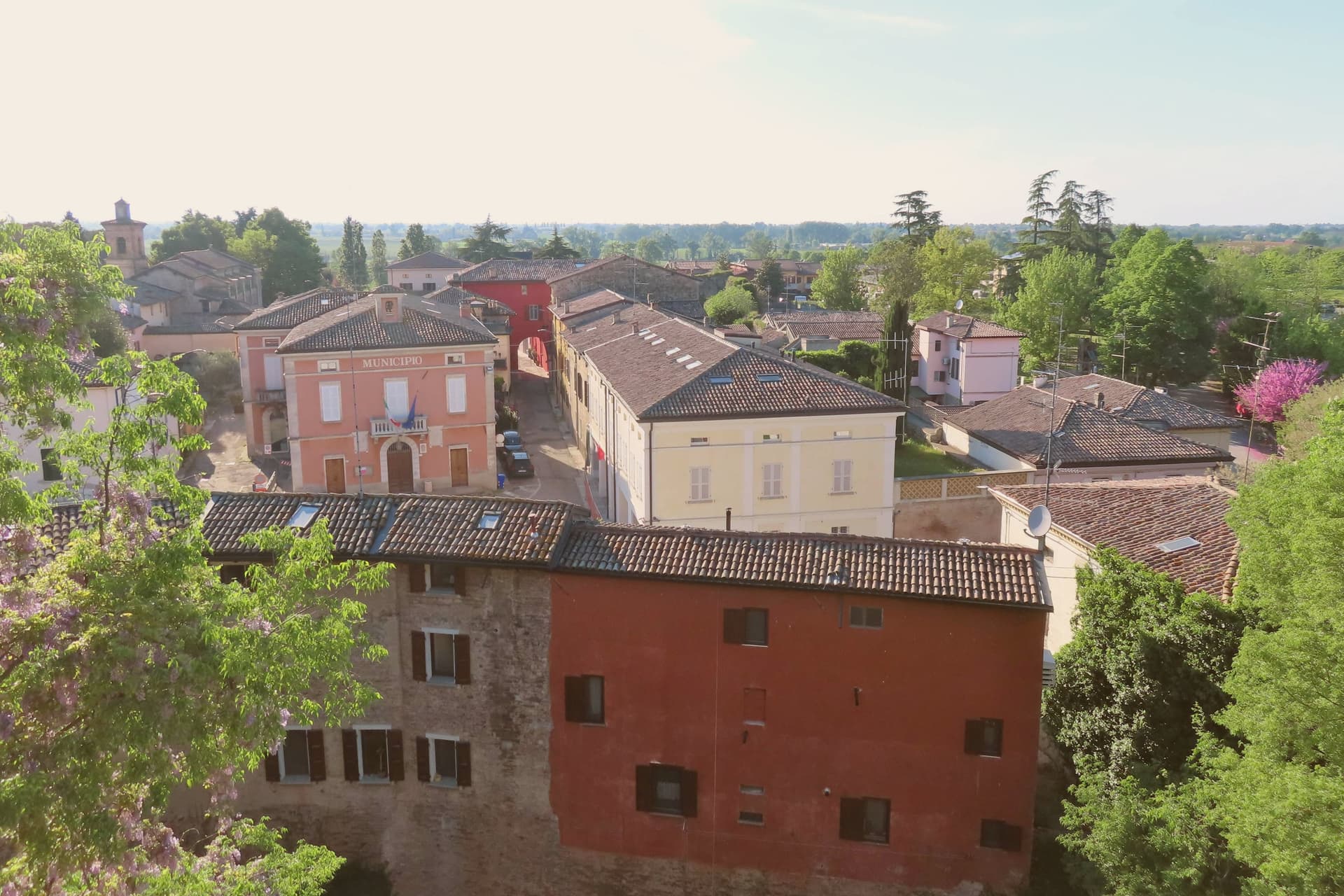
Montechiarugolo sits ten kilometers southeast of Parma at the edge of the Enza valley, on the historical border between the Duchy of Parma and the Reggio territory. The Sanvitale family raised a first military outpost here in 1121; the current castle, polygonal in plan with walls five meters thick and a thirty-meter ditch, was rebuilt by the Torelli after 1406 and hosted Pope Paul III and Francis I of France during the sixteenth century.
The Kingdom of Italy sold the manor to Antonio Marchi in 1864, and his descendants still own and open it. The surrounding fields run with the middle Enza dairies that produce Parmigiano-Reggiano under the Parma consortium.
The commune extends to the Monticelli spa frazione, the only thermal complex in the province. Beyond Parmigiano and the castle, Montechiarugolo holds two institutional signals: Borghi più belli d'Italia and Comuni Virtuosi for its environmental policy.
What to see in Montechiarugolo
- Castello di Montechiarugolo. Polygonal fourteenth-century fortress on a promontory above the Enza, with five-meter walls, a wide ditch, and frescoed halls; still privately owned by the Marchi family.
- Chiesa di San Quintino. Eighteenth-century parish church on the edge of the centro storico, rebuilt after the older medieval pieve was incorporated into the castle complex.
- Terme di Monticelli. Thermal spa in the Monticelli frazione, drawing on iodine-bromine-salt waters discovered in 1924 during oil exploration in the Enza plain.
How to get to Montechiarugolo
Parma is roughly 24 minutes away by road.
Our tip
April through June and September through October are the working months. The Enza fields turn green in spring and stay that way until the cheese-making cycle quiets in summer. July and August touch thirty-five degrees on the plain and the castle terrace becomes the coolest spot in the borgo.
Darfo Boario Terme
Why visit Darfo Boario Terme
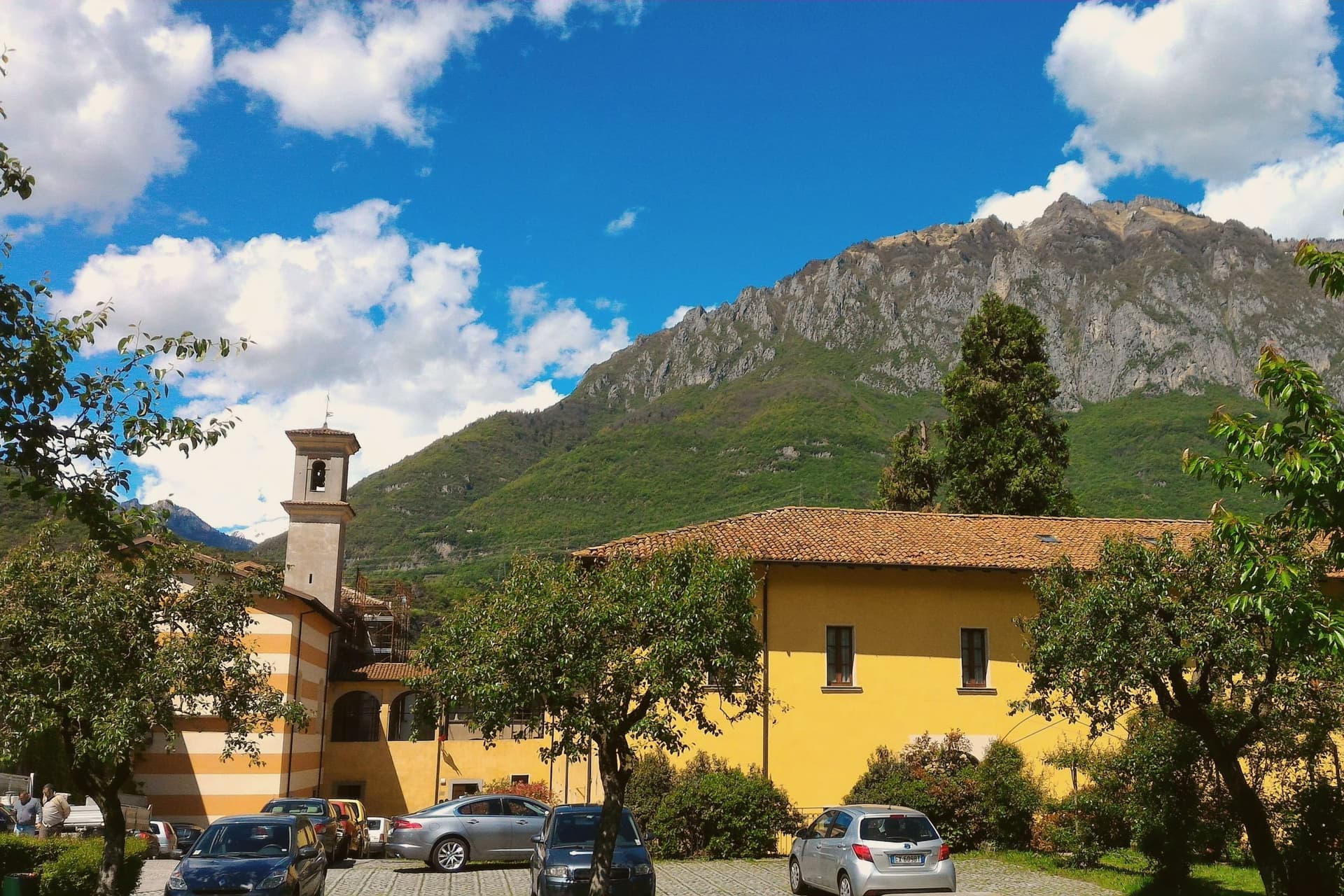
The commune sits at the lower end of the valley, a few kilometres north of Lake Iseo, where the Oglio leaves the mountains for the plain. Its name joins two places: Darfo, the capoluogo, and the spa hamlet of Boario Terme.
The thermal water was already in use in the 18th century, and Doctor Biffi called it the most active in Lombardy in 1857, well before the first spa building went up with its dome in 1906. The Comuni Virtuosi recognition the town holds today reflects later environmental commitments rather than this older history.
The rock-art park sits inside the commune boundary, its engraved surfaces part of a wider world heritage site spanning the valley, the first Italian entry on that list in 1979. The castle above the centre and the small church above the river belong to a different register of the town's past, one of fortification and parish life rather than prehistory or cure.
Between the thermal hamlet, the rock park, the castle spur and the river church, Darfo Boario Terme reads as a place where several distinct pasts, geological, medieval and modern, sit within walking distance of each other without overlapping.
What to see in Darfo Boario Terme
- Terme di Boario. Thermal complex with an Art Nouveau dome, set inside an early 20th-century spa park.
- Parco delle Incisioni Rupestri di Luine. Open-air rock-art park with more than a hundred engraved surfaces, part of the Valle Camonica UNESCO world heritage site.
- Castello di Gorzone. 13th-century Federici castle on a rock spur above the centre, still partly inhabited.
How to get to Darfo Boario Terme
There is a railway station in the town, so you can arrive without a car and never need one while you are here. Brescia is roughly 54 minutes away by road.
Our tip
May through October is the main season. Spring opens the rock-art parks and dries the trails above the valley; summer brings spa guests up from Brescia and Milan for water cures, and the temperature in the valley stays cooler than in the Po plain below. September and October are the cleanest months for walking the Luine engravings and the Capo di Lago promontory.
Acqui Terme
Why visit Acqui Terme
Acqui Terme sits fifty kilometers north of Genova, in the southern Monferrato hills, on the Bormida river. The Romans built their settlement here around hot sulphur springs that Pliny the Elder rated among the best in the empire, and the town's shape still follows that founding logic: baths and spring at the center, the aqueduct running out to the valley, the castle set above on higher ground where the Marquises of Monferrato later took the high point for defense.
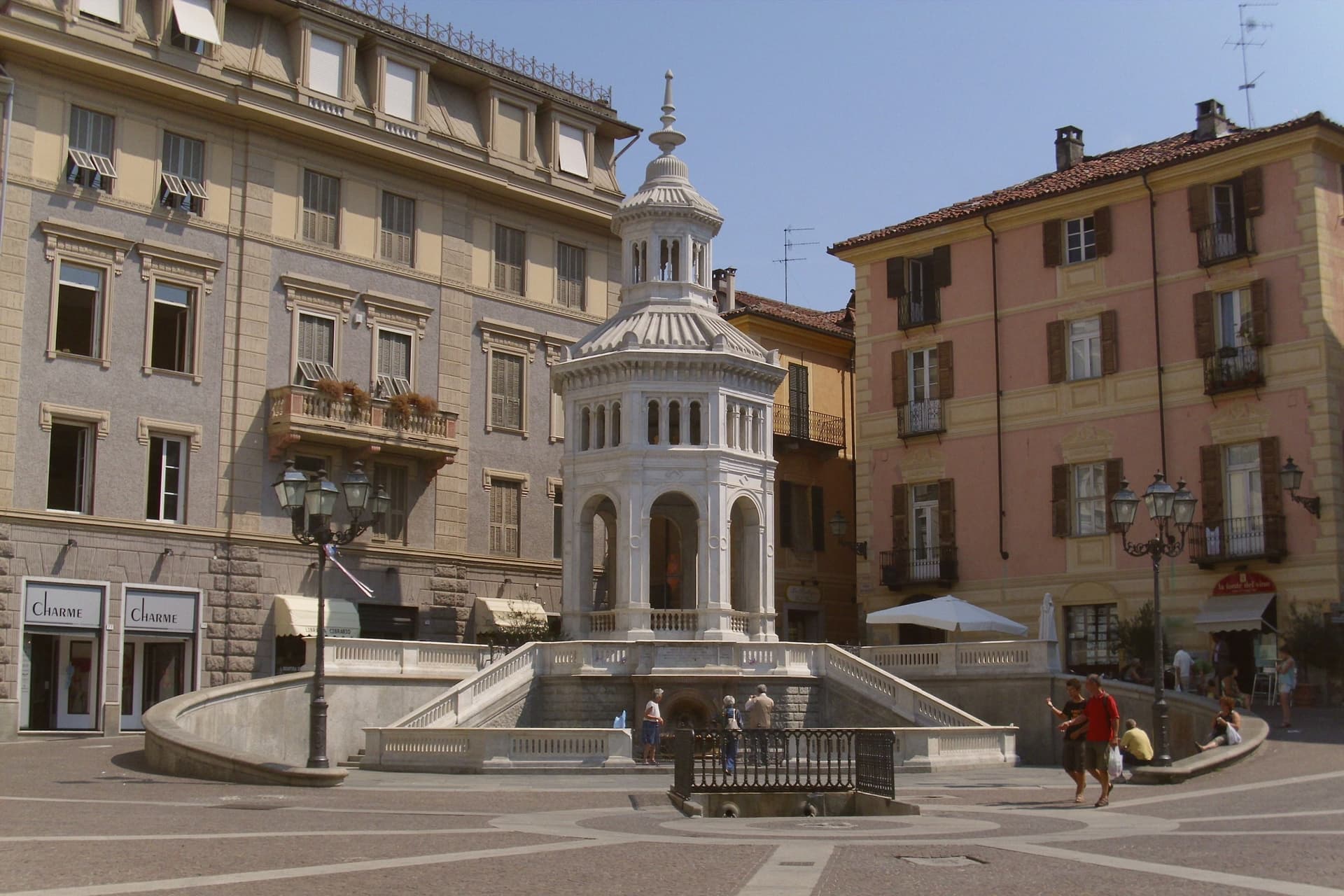
The old town gathers close around the piazza where the water surfaces; the castle and its museum sit apart and above, holding what was dug up from the baths, theatre and amphitheatre below. The surrounding hills, meanwhile, grow the grapes for Brachetto d'Acqui DOCG, a low-alcohol sparkling red, and the town holds three separate designations at once: Spighe Verdi, Comuni Termali, Città del Vino.
The thermal trade runs year-round while the wine and the hills set the pace for everything else, so the town reads as two economies sharing one square: water pulled from the ground below, and wine brought down from the slopes above.
What to see in Acqui Terme
- Acquedotto Romano. The structure originally carried water 13 km from the Erro stream to feed the baths of Aquae Statiellae, and still spans the valley floor intact.
- La Bollente. Octagonal marble pavilion designed by Giovanni Ceruti, its columns framing the steam that rises off the water even in the middle of the piazza.
- Duomo di Santa Maria Assunta. Romanesque cathedral built on the Latin cross plan over an earlier 10th-century church, consecrated by Bishop Guido.
How to get to Acqui Terme
There is a railway station in the town, so you can arrive without a car and never need one while you are here. Genova is roughly 68 minutes away by road.
Our tip
Acqui Terme runs on a thermal calendar, which means almost no closed season. The spa hotels operate through the cold months and the baths fill more reliably in November than in August. April through June is the gentle window: green Monferrato hills, mild evenings, the Bollente piazza busy without the August press. Mercatino degli Sgaientò falls in August.
More from Anywhere Italy
 The best hot-spring towns within two hours of Brescia
- The best hot-spring towns within two hours of Parma
- The best hot-spring towns within two hours of Verona
- The best hot spring towns in Emilia-Romagna
- The best hot-spring towns within two hours of Padua
- The best hot-spring towns within two hours of Venice