Themed picks · Bologna · Wine
10 wine villages near Bologna, Italy, within two hours
By Peter Benei
10 comuni · within 120 minutes of Bologna · drive times by road from the city center
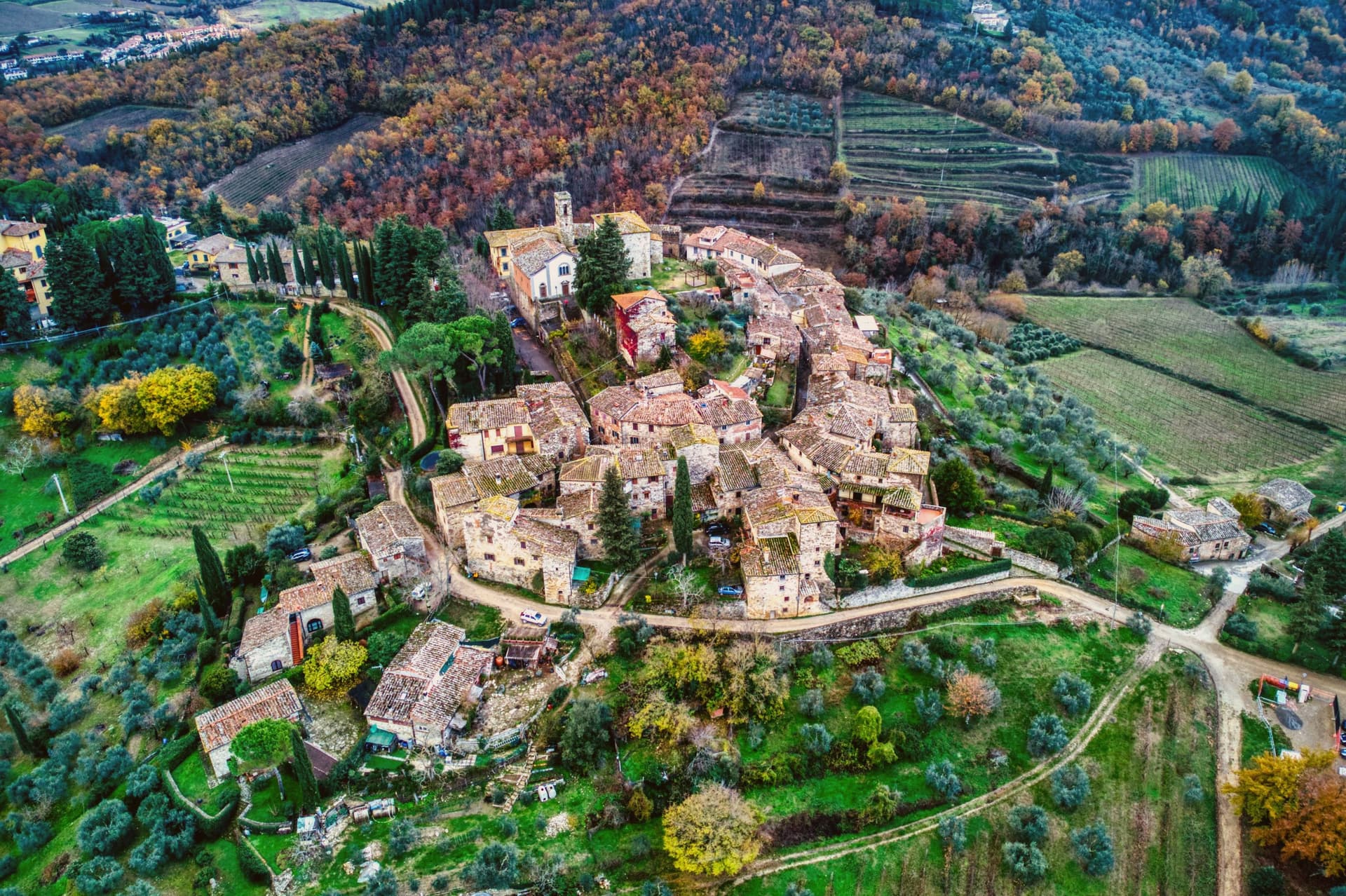
The wine closest to Bologna is in the hills right behind it: Sasso Marconi is 26 minutes away, and Castelvetro di Modena, home of Lambrusco Grasparossa, is 45. Bertinoro, for Albana, is 72 minutes, and the rest need a longer day or a night.
More in Emilia-Romagna, or every way into the towns.
The towns
 1
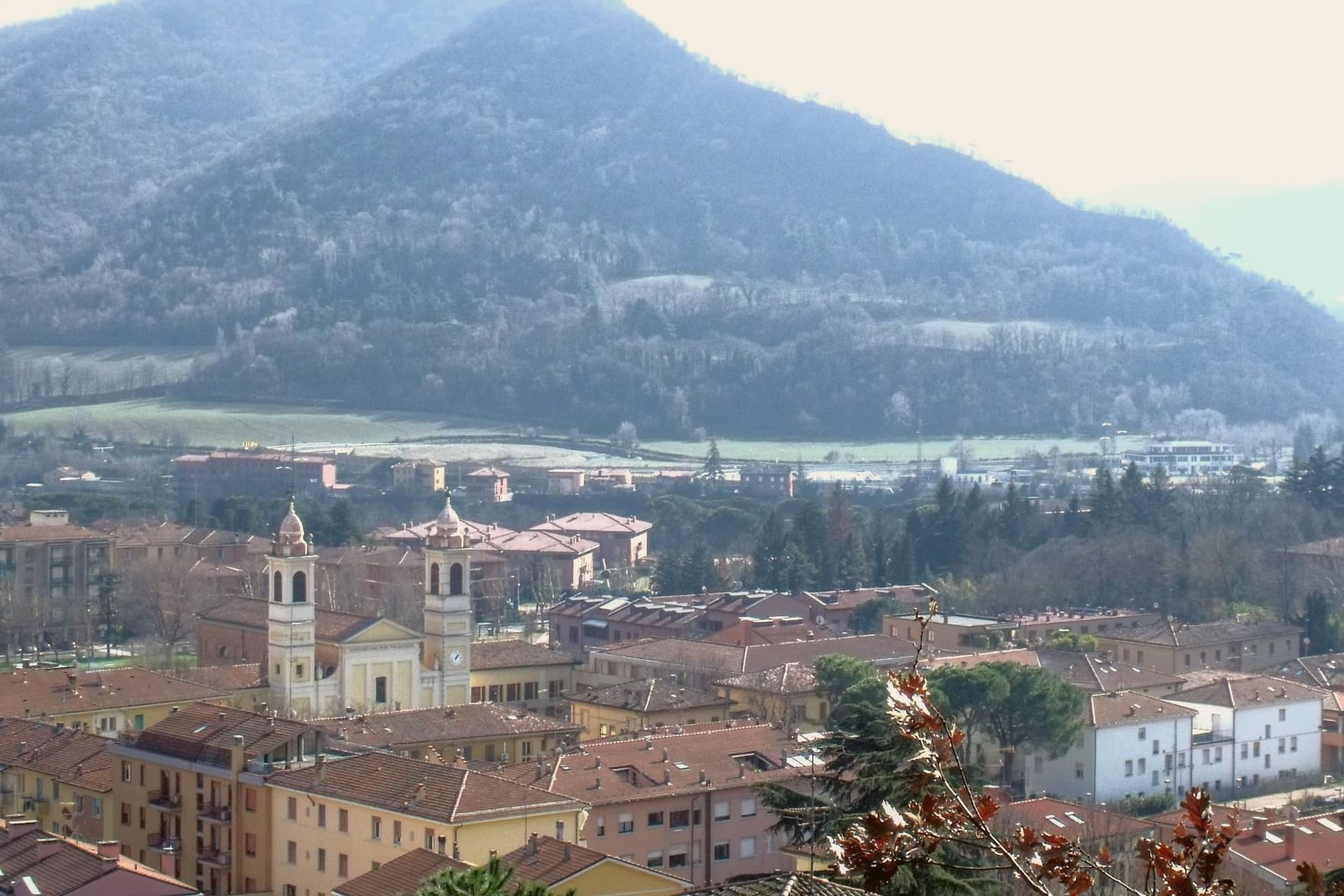
Bologna · Emilia-Romagna · 26 min from Bologna
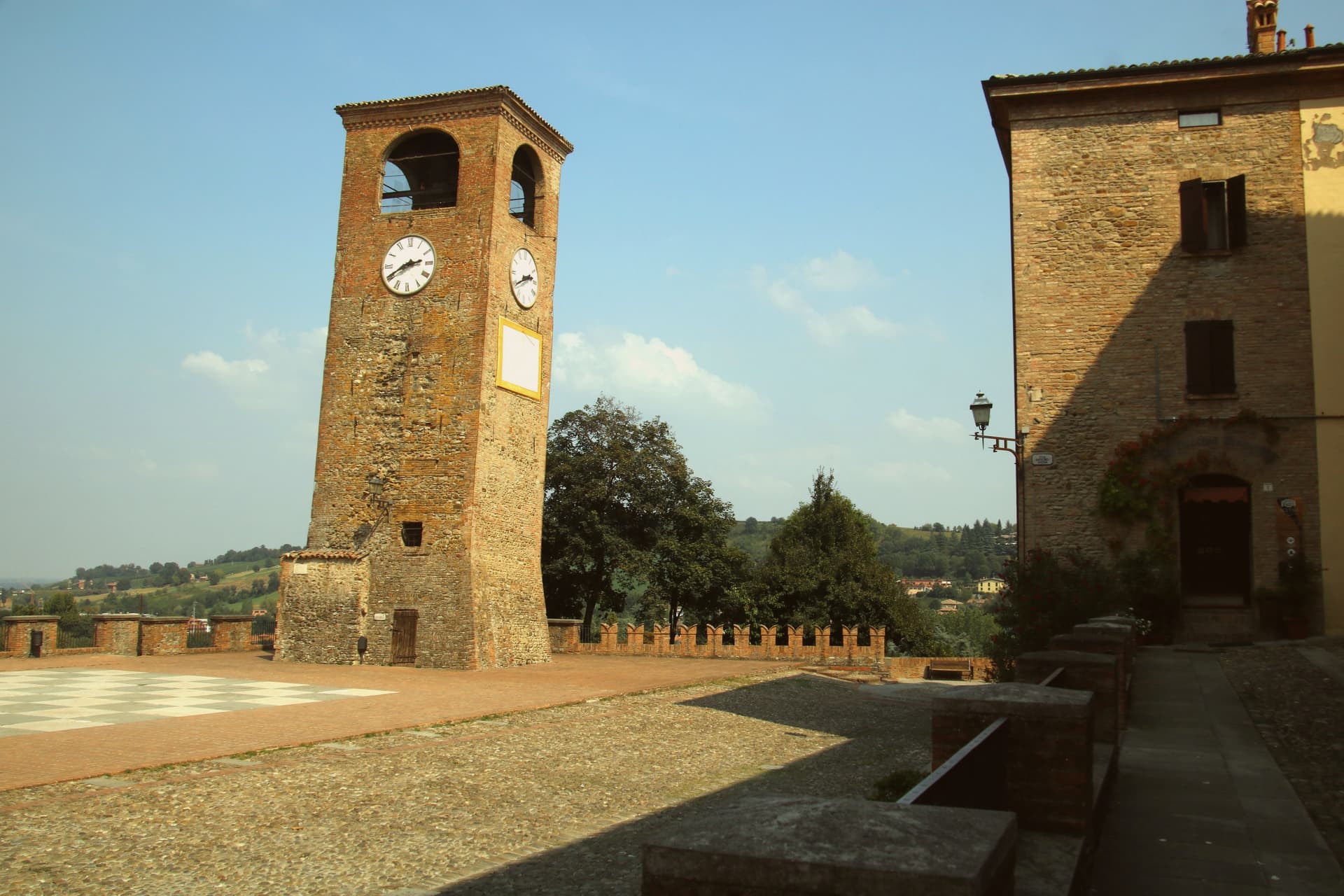
Sasso Marconi
The closest, in the first hills south of Bologna, on the Città del Vino trail. It has a station.
 2
Modena · Emilia-Romagna · 45 min from Bologna
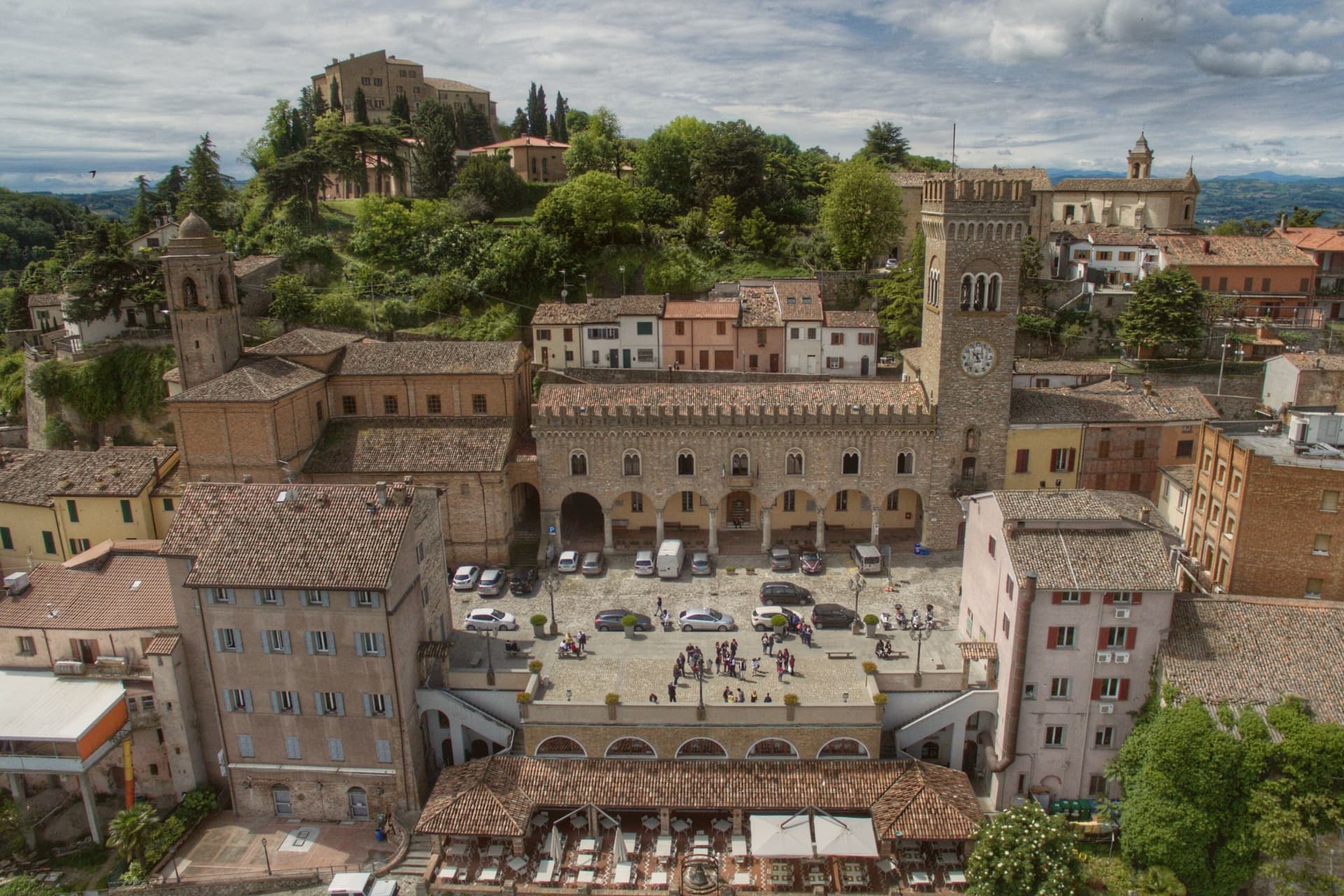
Castelvetro di Modena
Lambrusco Grasparossa grows on the slopes below its checkerboard piazza.
 3
Forlì-Cesena · Emilia-Romagna · 1 h 12 min from Bologna
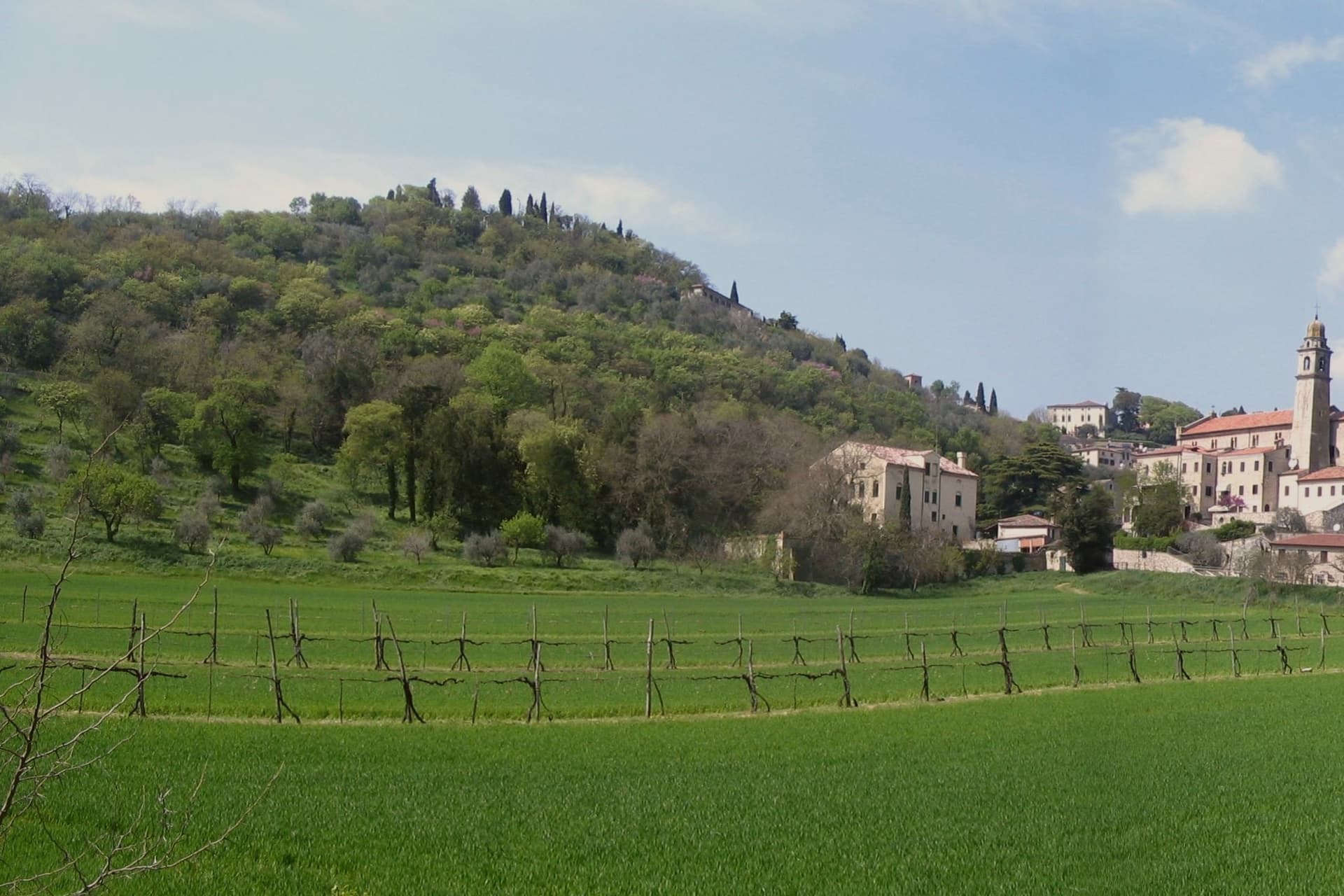
Bertinoro
The Romagna hill town of Albana DOCG, above the Via Emilia.
 4
Padova · Veneto · 1 h 13 min from Bologna
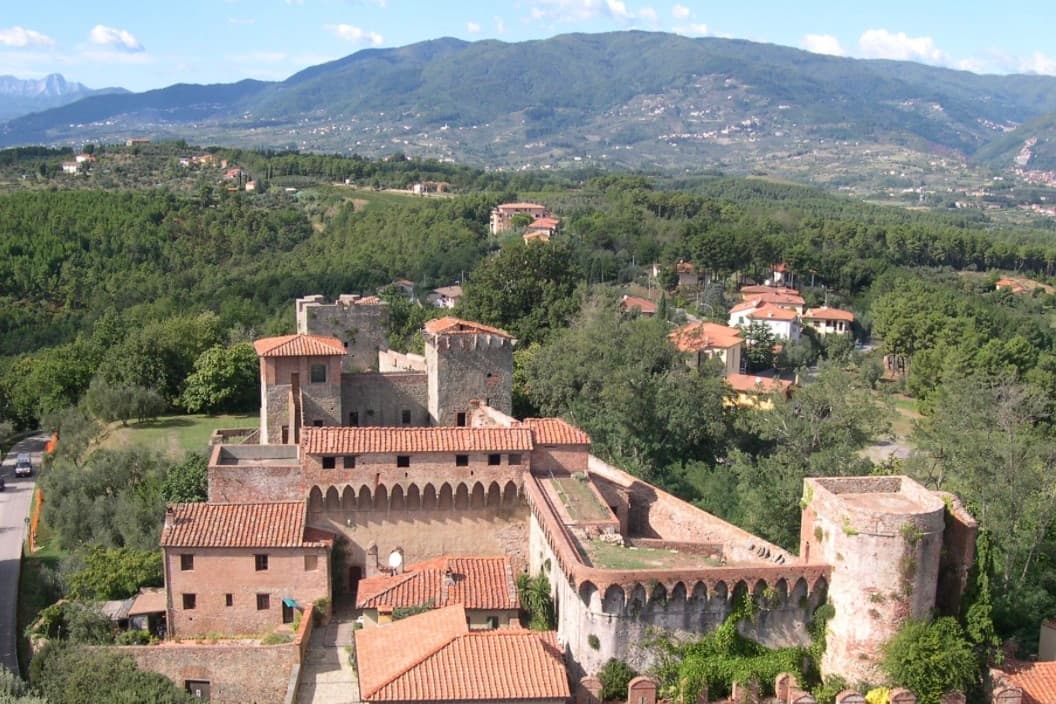
Arquà Petrarca
In the Euganean Hills, where Petrarch spent his last four years.
 5
Lucca · Tuscany · 1 h 38 min from Bologna
Montecarlo
A walled village above the Lucca plain, surrounded by twenty wineries. It has a station.
 6
Piacenza · Emilia-Romagna · 1 h 40 min from Bologna
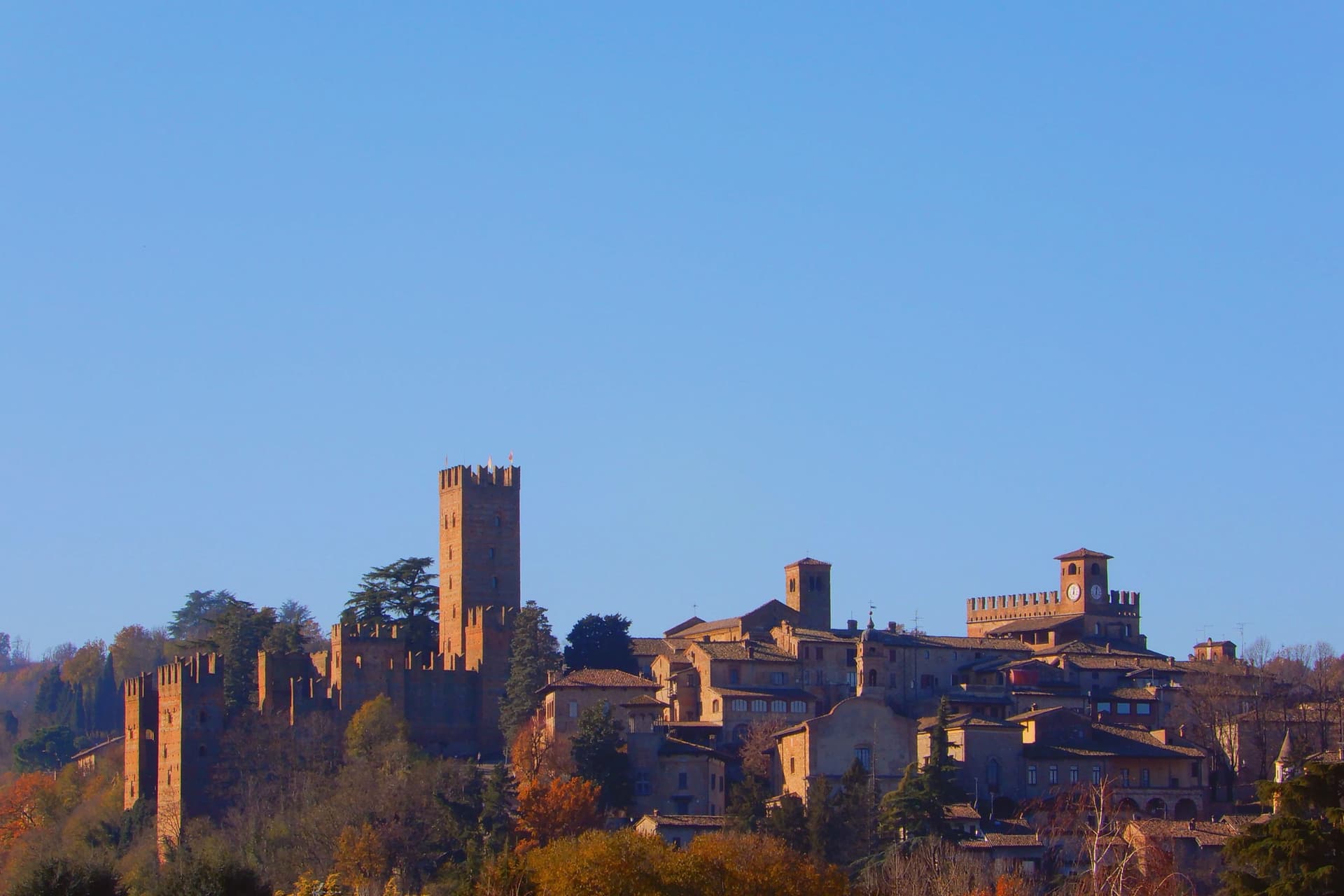
Castell'Arquato
A hilltop town in the Val d'Arda, on the Città del Vino trail.
- 7
Firenze · Tuscany · 1 h 49 min from Bologna
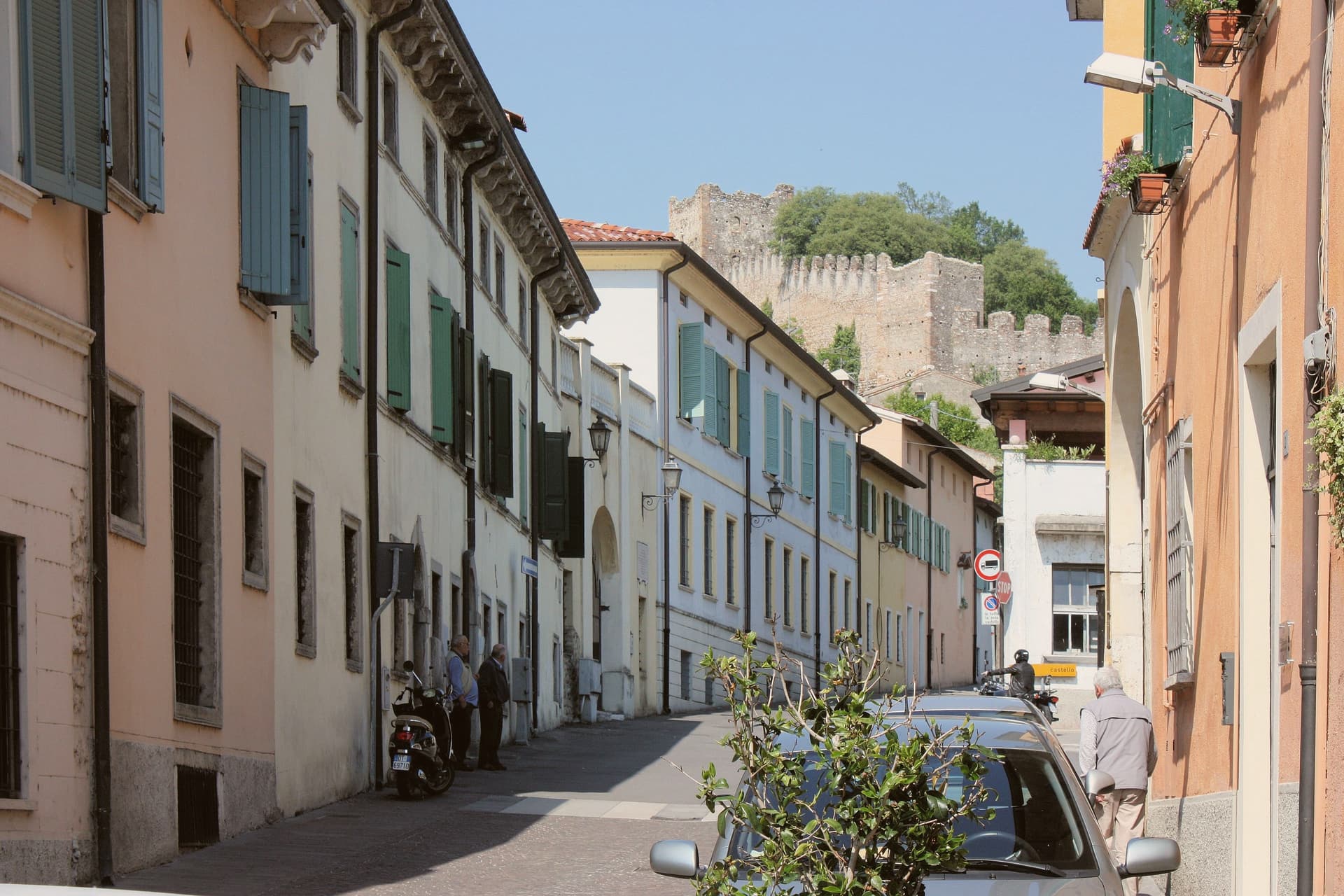
Greve in Chianti
The market town of Chianti Classico, which we wrote about on the road to Siena.
We write letters from the Italian towns we visit: the town, what is worth eating there, and when to turn up. It is free, and you can leave whenever you like.
 8
Mantova · Lombardia · 1 h 56 min from Bologna
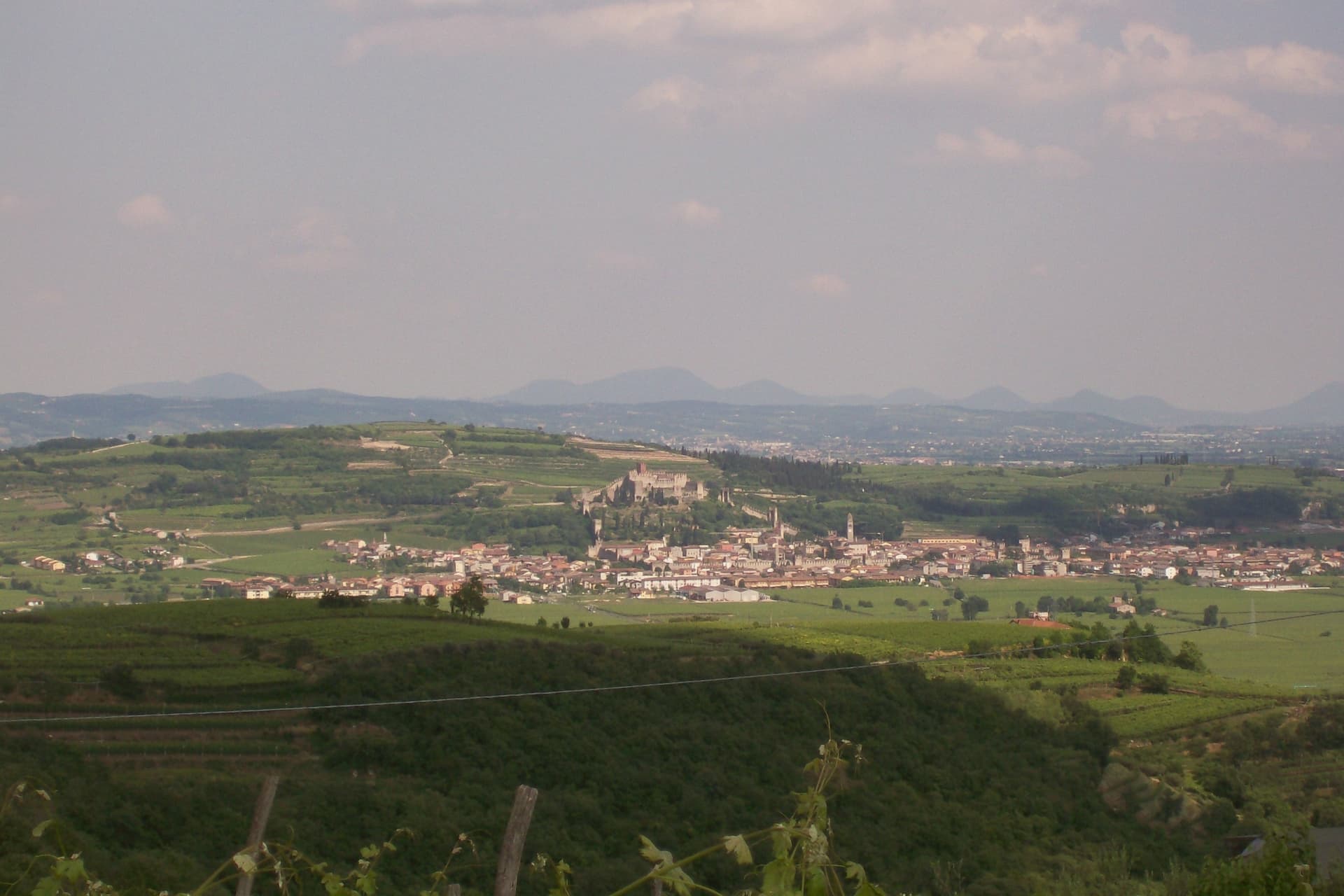
Monzambano
In the moraine hills west of Mantova, with a walled hamlet on a heart-shaped lake.
 9
Verona · Veneto · 1 h 57 min from Bologna
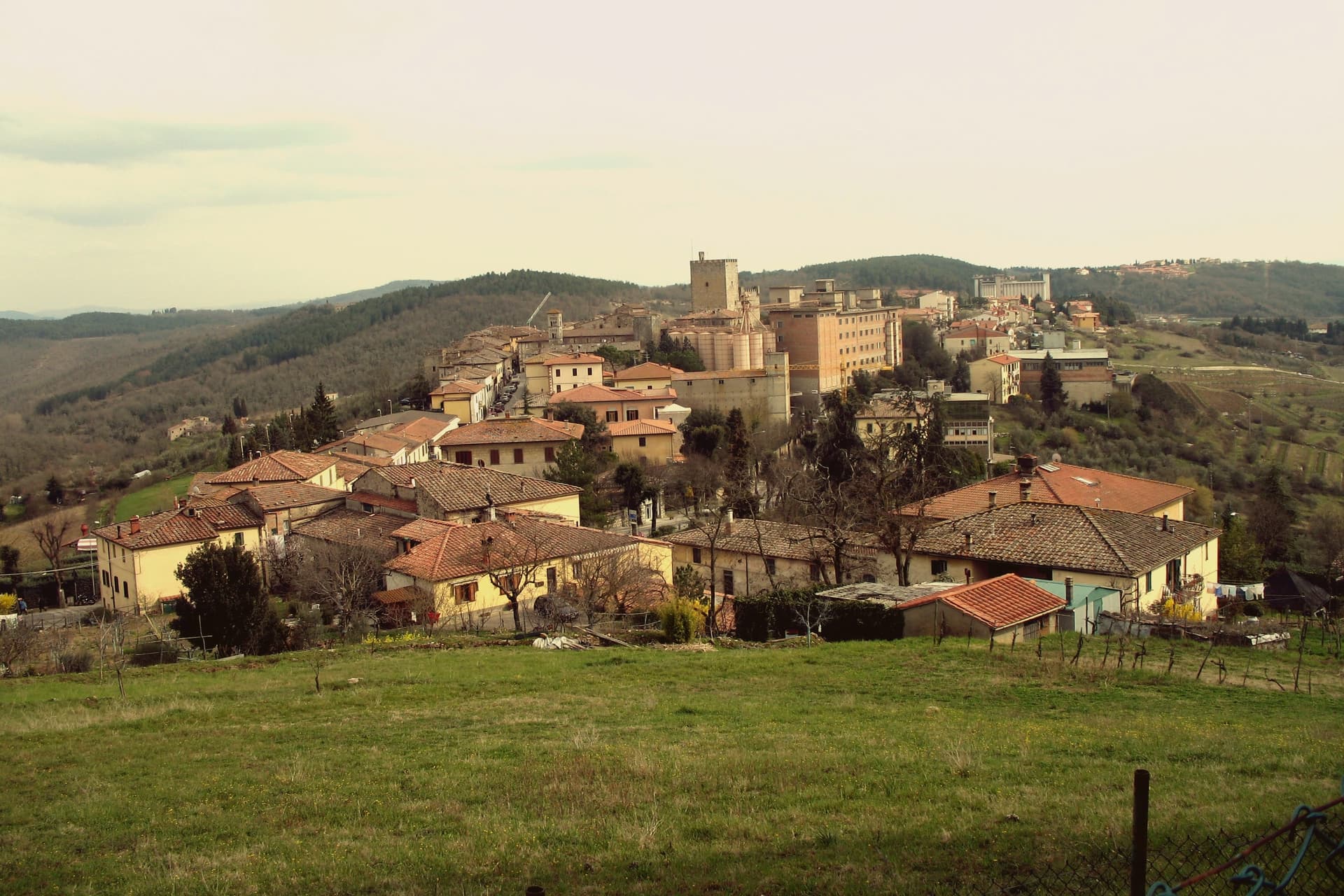
Soave
A walled town under a Scaliger castle, where Soave Classico DOCG grows.
 10
Siena · Tuscany · 2 h from Bologna
Castellina in Chianti
Chianti Classico on the ridge between the Arno and the Ombrone, also on our road to Siena.
About this stretch
Emilia-Romagna is Italy's other wine region, the one Tuscany's reputation tends to silence. The grapes are different (Lambrusco, Sangiovese di Romagna, Albana, Pignoletto, Trebbiano Romagnolo) and the wines drink differently too: cooler, more acid-driven, often fizzy or frizzante. Most of the work happens on the low hills that rise between the via Emilia and the Apennines, in towns that the food guides skip in favor of Bologna and Modena.
Bologna is the right base for this kind of trip. The city itself is dense, walkable, and has the rail and motorway access to put you in any of the surrounding wine zones inside two hours. Forty kilometers south you are in the Colli Bolognesi, the home of Pignoletto. Sixty kilometers west, the Lambrusco country opens up around Modena and Reggio. A hundred kilometers east, the Sangiovese di Romagna hills run from Imola down to Forlì, and the small Albana DOCG zone (Italy's first white DOCG, granted in 1987) sits inside that arc.
Our catalogue holds four Emilia-Romagna wine towns inside two hours of the city (Castelvetro di Modena, Sasso Marconi, Bertinoro and Castell'Arquato), and all four are here. The other six are across the borders, because two hours from Bologna also reaches Soave and the Colli Euganei in the Veneto, the hills south of Lake Garda, the Chianti and the hills outside Lucca. Drive times below are by road from the center of Bologna.
Why Bologna is the base
Bologna is the only city in this list that doubles as a working logistical center and a serious dinner town. The Centrale station puts Modena, Imola, Forlì and the lower Apennines on the regional rail map. The motorway ring (A1, A13, A14) handles the rest. And the city itself, after a day in the vines, gives you tortellini in brodo at Trattoria Anna Maria, a Negroni at Camera a Sud, and a 1am walk under the porticoes that the wine towns cannot match.
When to go
September through early November is the working season: harvest starts in the Colli Bolognesi in early September, Lambrusco a week later, and Sangiovese di Romagna lasts well into October. The cellars are at their busiest and the new wines pour by mid-November. April through June is the second window: warmer days, vine flowering, and the spring fairs in towns like Dozza (Enoteca Regionale dell'Emilia-Romagna) and Bertinoro (Albana sagra in late May).
Questions people ask
- What wines should I taste near Bologna?
- Pignoletto in the Colli Bolognesi south of the city; Lambrusco di Sorbara and Grasparossa in the Modena and Reggio plain; Sangiovese di Romagna and the Albana DOCG in the hills east of Imola.
- Are there day-trip wine tours from Bologna?
- Several operators run half-day tours into the Colli Bolognesi and full-day tours into Romagna, but the towns are also self-drivable. If you do not drive, the regional rail to Imola or Forlì plus a taxi to one cellar works for a single estate visit.
- Where is Italy's first white DOCG?
- Albana di Romagna, granted DOCG status in 1987, is produced across a small group of comuni in the hills between Imola and Forlì. Bertinoro is the unofficial capital.
- Is Lambrusco still worth taking seriously?
- Yes. The serious Lambrusco producers in Sorbara, Castelvetro di Modena and Bomporto have been quietly rebuilding the wine's reputation for two decades. The frizzante reds drink cleanly with the local salumi and stand up to longer aging than they are given credit for.
How we picked these · We took every town in our catalogue within two hours of Bologna by car (90 of them), kept the 18 on the Città del Vino trail or with a signature DOC, DOCG or IGP wine, and ranked them by those designations, plus Borghi più belli and Bandiera Arancione, and by how close they are. The wider radius is deliberate: the Sangiovese di Romagna and Albana zones sit further east than a one-hour drive can reach.