
Veneto · Treviso
Portobuffolè
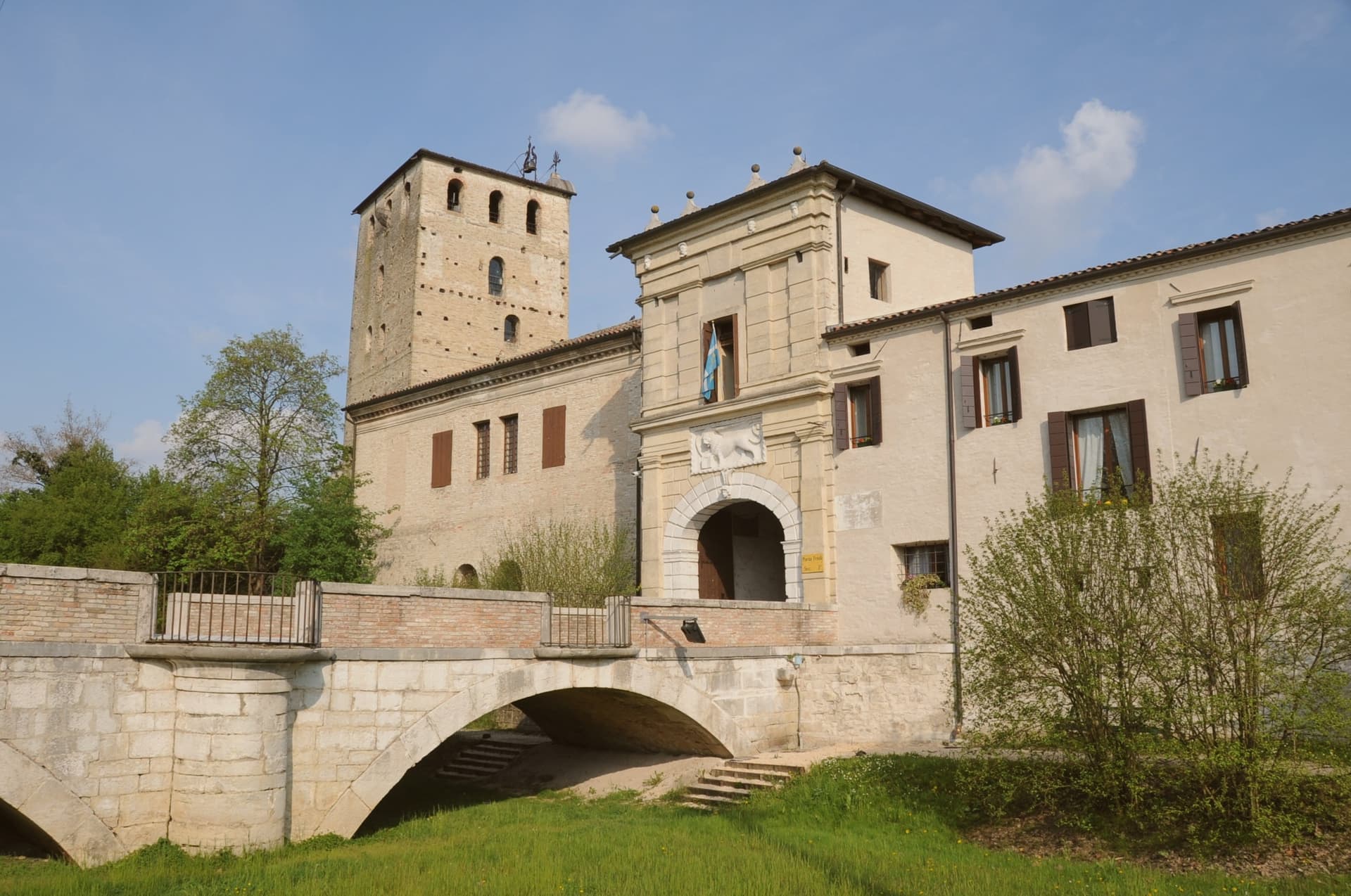
The smallest commune in the Treviso province, a Livenza river port centered on the fourteenth-century home of the poet Gaia da Camino.
- Best time
- Apr–Jun, Sep–Oct
- By car
- 1 h from Venice
- Population
- 742
Known for
GAIA DA CAMINO
Late-thirteenth-century poet cited by Dante in Purgatorio XVI; her family home survives as the centerpiece of the centro storico.
SMALLEST IN TREVISO
742 inhabitants on five square kilometers, the smallest commune of the Treviso province by both population and area.
THE DUOMO SYNAGOGUE
Former synagogue of the local Jewish community, reconsecrated as a Catholic church in 1559 and rebuilt around the original walls.
When to visit
Best · Apr–Jun, Sep–Oct
- J8°
- F12°
- M15°
- A18°
- M23°
- J28°
- J30°
- A31°
- S26°
- O20°
- N14°
- D9°
- Best
- Hot or crowded
- Quiet
- Mostly closed
Daytime averages, 2020–2024. Weather data by Open-Meteo.com.
The festa: Marco, 25 April
Why come
Portobuffolè sits on both banks of the Livenza, fifty kilometers northeast of Venice, the river dividing the commune in two and giving it its medieval port function. The Roman trading post Septimum de Liquentia stood on the same ground. The medieval port grew under the da Camino lords in the late thirteenth century and passed through the Carrara, the patriarchs of Aquileia and the bishops of Ceneda before Venice took it in 1339, governing through rectors who held court in the town's arcaded loggia until 1797.
The centro storico keeps this layered history in built form: a single main square, brick house facades from the thirteenth century, a former synagogue rebuilt around its original walls into the town's church, and the fourteenth-century home of a poet remembered by Dante now serving as museum and library. A Roman crossing, a river port under successive overlords, a Jewish community whose synagogue became a Catholic duomo, and a noblewoman's house that outlasted them all: the smallest commune in its province holds a larger history than its size would suggest.
The Sunday letter
Portobuffolè is on our list. Its letter is still to come.
We are writing about all 1,000 of these towns, one at a time, in a free letter every Sunday: the photo, the food, the festa. That is our mission. Sign up and you will be there when Portobuffolè comes up. By Peter & Sophia, from Pietrasanta.
How to get there
From Venice (TSF), about 52 minutes by car.
Verona (VRN) is about 2h 17m away.
By car from the centre of Udine 1h 14m or Padua 1h 20m.
Coming by train into Venezia Santa Lucia? Portobuffolè is about 1 hour away by road.
What to see
Casa Gaia da Camino
Fourteenth-century residence of the poet Gaia da Camino cited by Dante in Purgatorio XVI, now a small museum with frescoes and the civic library.
Duomo dei Santi Pietro e Paolo
Former synagogue reconsecrated as a Catholic church in 1559, with a Madonna altarpiece by Francesco da Milano and an organ with over four hundred tin pipes.
Centro storico
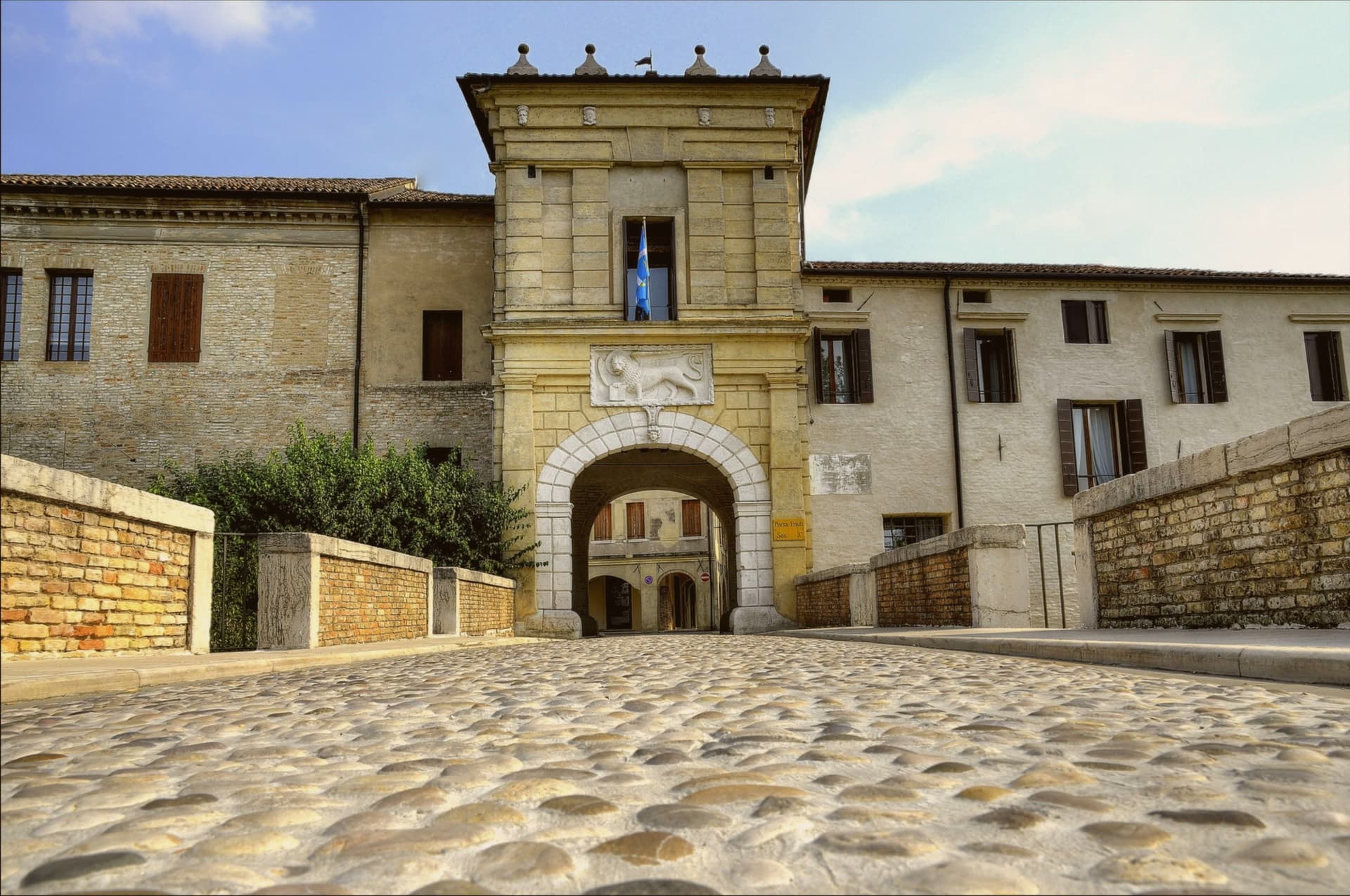
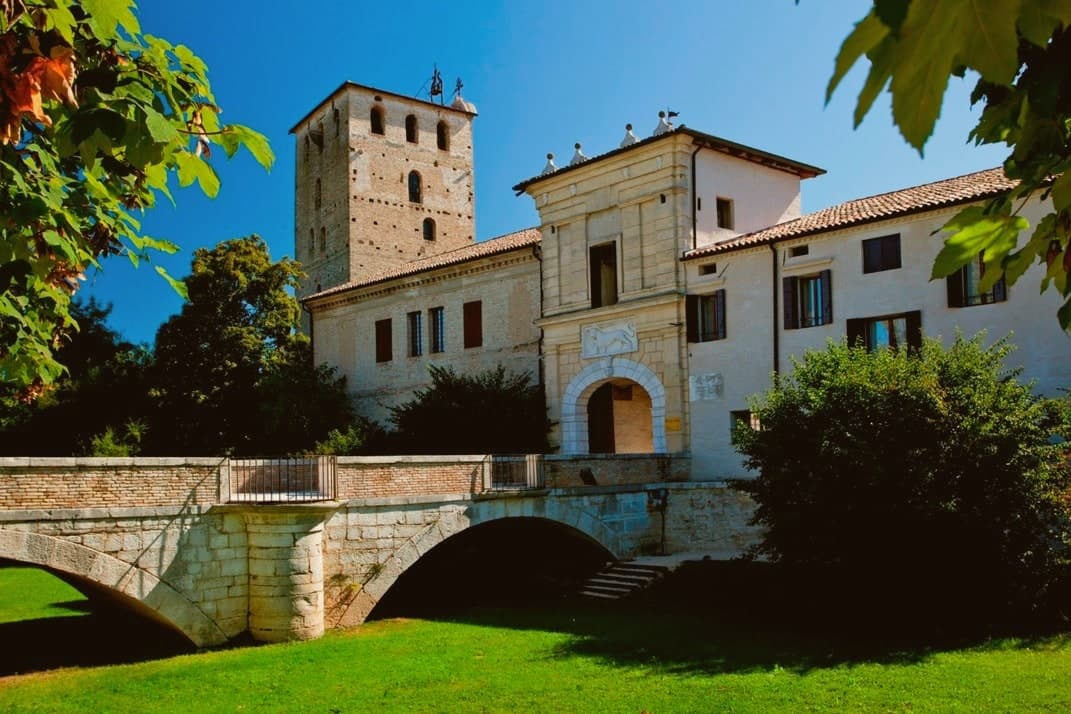
Medieval river-port plan with a single main square, the Loggia Comunale, the Monte di Pietà and houses with thirteenth-century brick facades.
Lungolivenza
Walking path along both banks of the Livenza, the river that gave Portobuffolè its medieval port function and divides the commune in two.
Loggia Comunale
Sixteenth-century arcaded loggia on the main square, used as the open-air court of the Venetian rectors who governed the town until 1797.
The slow-trip planner
Building a trip? Find where Portobuffolè fits in a slow Italy circuit.
Answer five questions. We will shape a geographically coherent slow trip from the 1,000 Italian towns most travelers skip. Yours to save and share.
Living here
- Population 742
- Commuter belti
- Pharmacy in town
- High school within a 30-minute drive
- Nearest airport Venice, 52 min drive
- Regional capital Venezia, 1 h 3 min drive
Common questions
- What is Portobuffolè known for?
- Portobuffolè is the smallest commune in the Treviso province, a Livenza river port centered on the fourteenth-century home of the poet Gaia da Camino.
- Where is Portobuffolè?
- Portobuffolè is a comune in the province of Treviso, in Veneto, at 10 meters above sea level.
- What is the nearest airport to Portobuffolè?
- Venice (TSF), about 52 minutes by car.
- How long is the drive from Udine to Portobuffolè?
- About 1h 14m by car.
- When is the best time to visit Portobuffolè?
- Best in Apr–Jun, Sep–Oct. August is the warmest month, averaging 31 degrees, and May the wettest, with about 14 rain days.
- Is there a sagra or a festival in Portobuffolè?
- The town keeps its patron saint's day: Marco, 25 April.
- Which other towns are like Portobuffolè?
- Susegana, Montagnana and Soave.
- How many people live in Portobuffolè?
- 742 at the 2023 count.
Tags & datadesignations · numbers · sources
Recognised as
The numbers
- Elevation: 10 m
- Population: 742
- Surface area: 5.08 km²
These figures were compiled from public directories: ISTAT, OpenStreetMap and Wikidata, and from the official listings of the guides named on this page. Town details change; verify with official sources before you travel.
Similar
Towns like Portobuffolè
Susegana
Province: Treviso
both in the Po valley · both near sea level
Montagnana
Province: Padova
both in the Po valley · both near sea level
Soave
Province: Verona
both in the Po valley · both near sea level
Valeggio sul Mincio
Province: Verona
both in the Po valley · both near sea level
Morimondo
Province: Milano
both in the Po valley · both near sea level
Bagnara di Romagna
Province: Ravenna
both in the Po valley · both near sea level
🎨 Borghi più belli d'Italia
More Borghi più belli d'Italia towns in Veneto
Arquà Petrarca
Province: Padova
The Euganean Hills village where Francesco Petrarca spent his last four years and died in 1374, renamed in his honor in 1868.
Asolo
Province: Treviso
A walled hill town at 205 meters that Caterina Cornaro ran as her court after trading Cyprus to Venice in 1489.
Borgo Valbelluna
Province: Belluno
Veneto's youngest comune, a 13,410-resident fusion of three lower-Belluno towns formed in 2019, wrapped around an old borgo in the pre-Dolomite Piave valley.
Cison di Valmarino
Province: Treviso
A Prosecco hills borgo at 261 meters under the dolomite rock of CastelBrando, the largest inhabited castle complex in Europe.
Follina
Province: Treviso
A Prosecco-hills borgo at 191 meters around the Cistercian Abbey of Santa Maria, with a cloister finished in 1268.