

Lazio · Frosinone
Pico
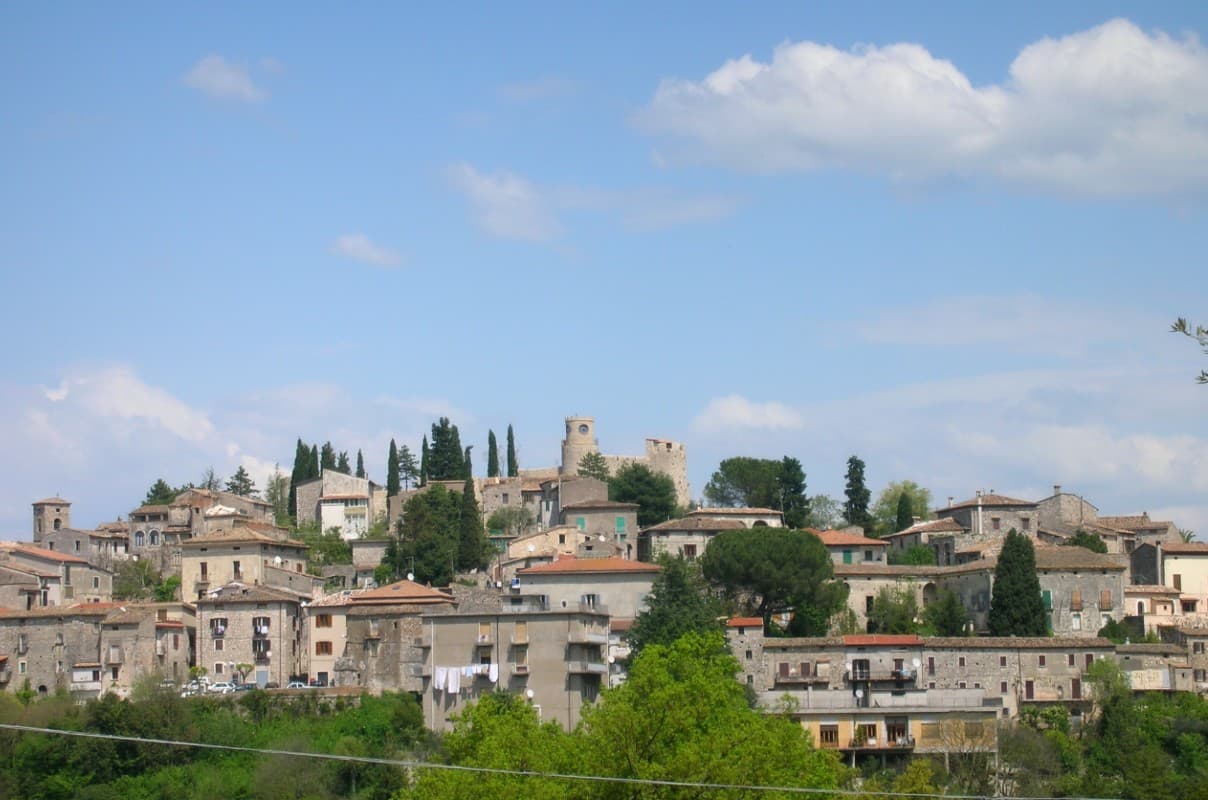
Tommaso Landolfi's home town, a 2,634-resident Ciociaria borgo between Rome and Naples, with a BPB-inscribed medieval centro and a castle turned literary museum.
- Best time
- Apr–Jun, Sep–Oct
- By car
- 1 h 34 min from Naples
- Population
- 2,634
Known for
LANDOLFI'S CASTLE-MUSEUM
Tommaso Landolfi (1908-1979), Italy's most idiosyncratic 20th-c writer, the Borges/Kafka of Italian fantastic realism, born here. His castle is now the literary museum.
BORGHI PIÙ BELLI
Officially inscribed Ciociaria borgo on the Monti Ausoni between Rome and Naples. Intact medieval streetscape climbing to the castle.
AUSONI-AURUNCI HIKING
Direct access to Monti Ausoni and Monti Aurunci National Parks. Karst hiking, wild boar country, the Liri valley historic route.
WILD BOAR + CESANESE DEL PIGLIO
Sagra del Cinghiale mid-October celebrates the local hunt. The only red DOCG in Lazio (Cesanese del Piglio) pairs with it.
When to visit
Best · Apr–Jun, Sep–Oct
- J11°
- F14°
- M15°
- A18°
- M23°
- J29°
- J34°
- A33°
- S27°
- O22°
- N17°
- D13°
- Best
- Hot or crowded
- Quiet
- Mostly closed
Daytime averages, 2020–2024. Weather data by Open-Meteo.com.
The festa: Antonino di Apamea, 2 September
Why come
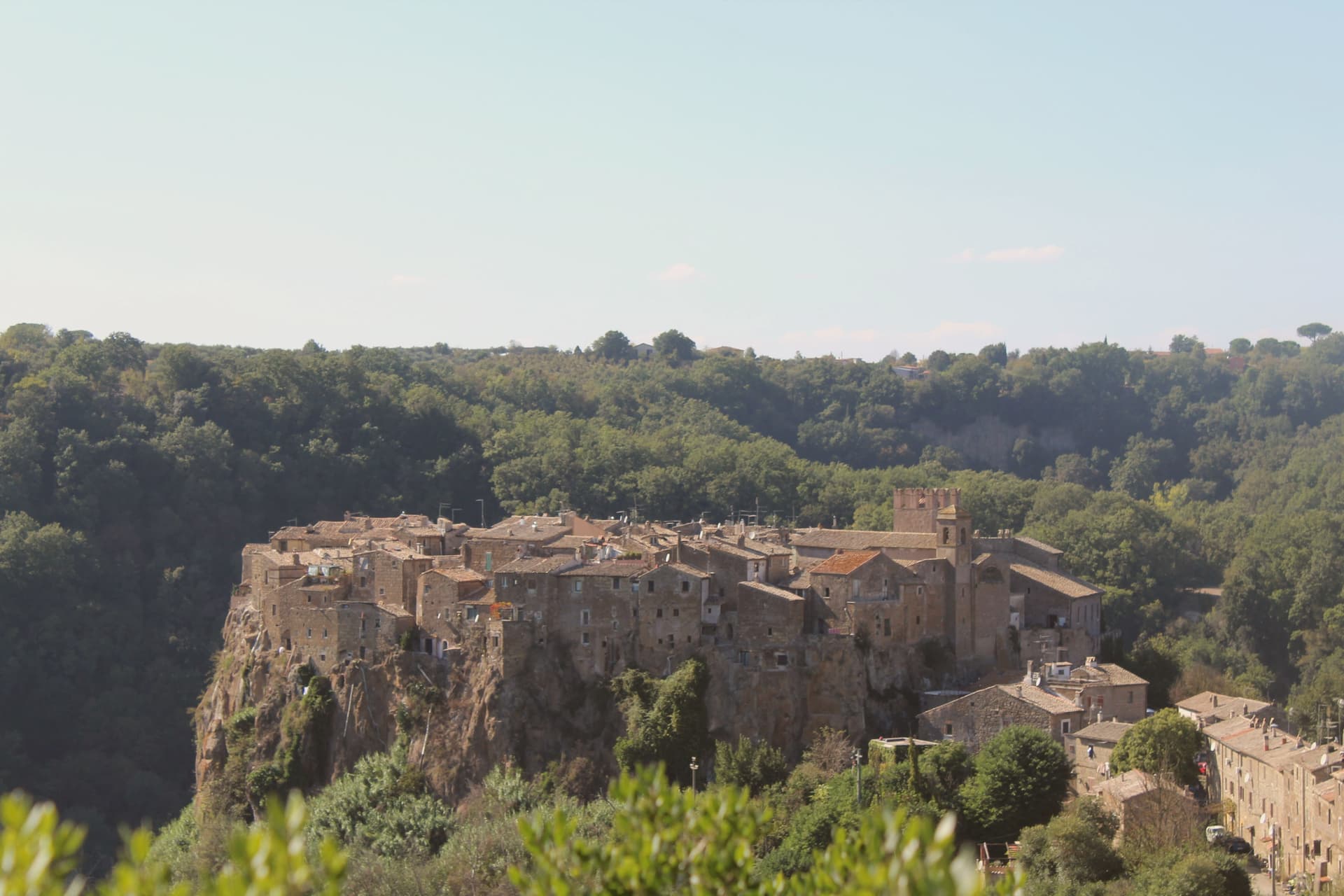
The town sits on a limestone spur, between Rome (115 km north) and Naples (140 km south), in the Ciociaria mountain landscape that runs into the national parks to the south and the Liri valley route toward Fondi. The Monastero di Montecassino lies 40 km east. The castle at the high point of the town, built in the 16th century on 11th-century Norman foundations, belonged to the Boncompagni family, into which the writer Tommaso Landolfi was born; his fantastic-realism stories (Mar delle blatte, La pietra lunare, Il dialogo dei massimi sistemi) place him alongside Borges or Kafka in Italian letters, and the museum now inside the castle also covers the broader school he belonged to, including Buzzati, Calvino, and Bontempelli.
Below the castle, the streets of the old town descend to the central piazza, and the Palazzo Boncompagni, the baronial family's residence, sits at that lower point between the two. The mountains that border the town on the south side are the same range the medieval centro was built to look out over, and they carry the karst hiking, the wild boar territory, and the historic route through the Liri valley that give the area its hunting economy. The food follows that same pattern found across the surrounding villages: pasta alla ciociara, abbacchio, Pecorino, salame ciociaro, and boar from those forests, with the Cesanese del Piglio DOCG red, from the Piglio hills 30 km north, as the local wine.
Population has fallen from 5,200 in 1951 to 2,634 today, the same depopulation that has thinned most Ciociaria mountain villages. What the town amounts to is a single hill settlement where a family castle, a writer's inheritance, and a mountain economy of hunting and wine all occupy the same small footprint, with little distance between the literary museum at the top and the working village below it.
The Sunday letter
Pico is on our list. Its letter is still to come.
We are writing about all 1,000 of these towns, one at a time, in a free letter every Sunday: the photo, the food, the festa. That is our mission. Sign up and you will be there when Pico comes up. By Peter & Sophia, from Pietrasanta.
How to get there
From Naples / Salerno (NAP), about 1h 29m by car.
Rome (FCO) is about 2h 14m away.
By car from the centre of Naples 1h 34m or Salerno 2 hours.
Coming by train into Latina? Pico is about 1h 28m away by road.
What to see
Casa Museo Tommaso Landolfi (Castello Baronale)
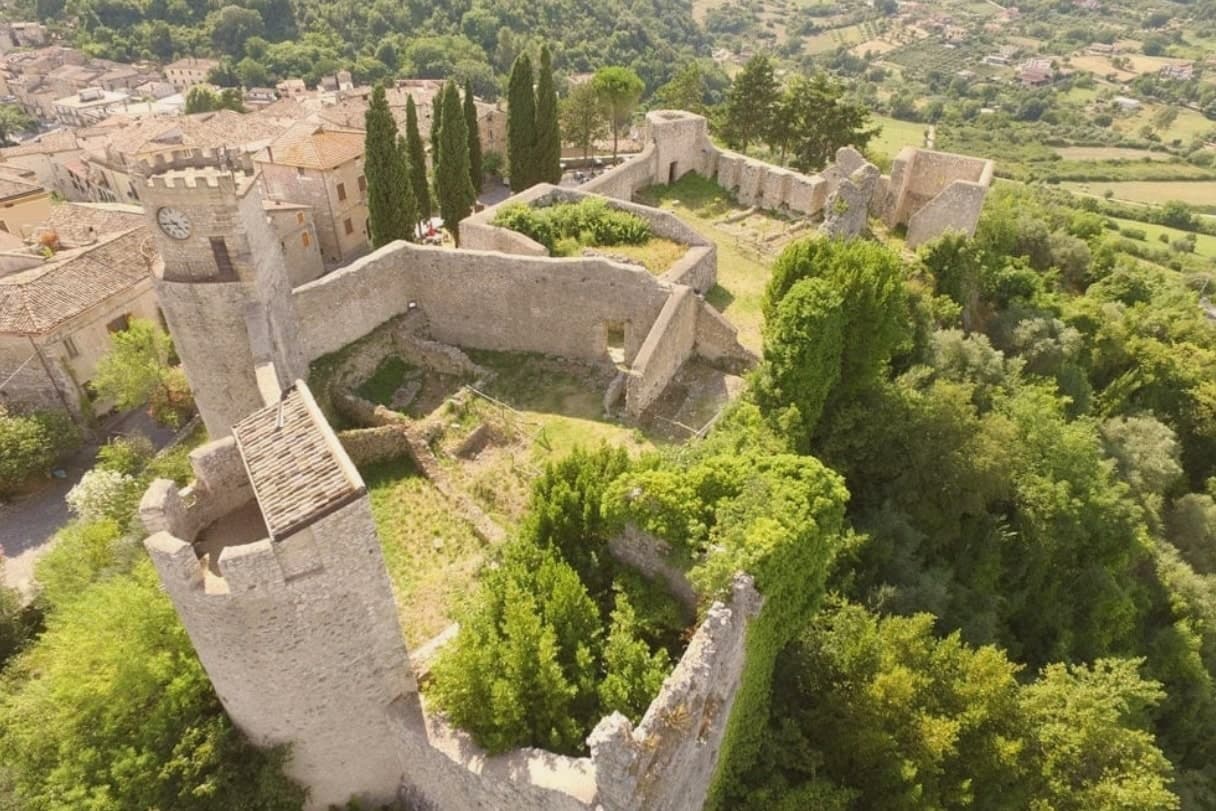
The 16th-c Boncompagni baronial castle holds the writer's library, manuscripts, and the rooms where he wrote, preserved as he left them, alongside exhibits on the wider Italian fantastic-realism school.
BPB medieval centro
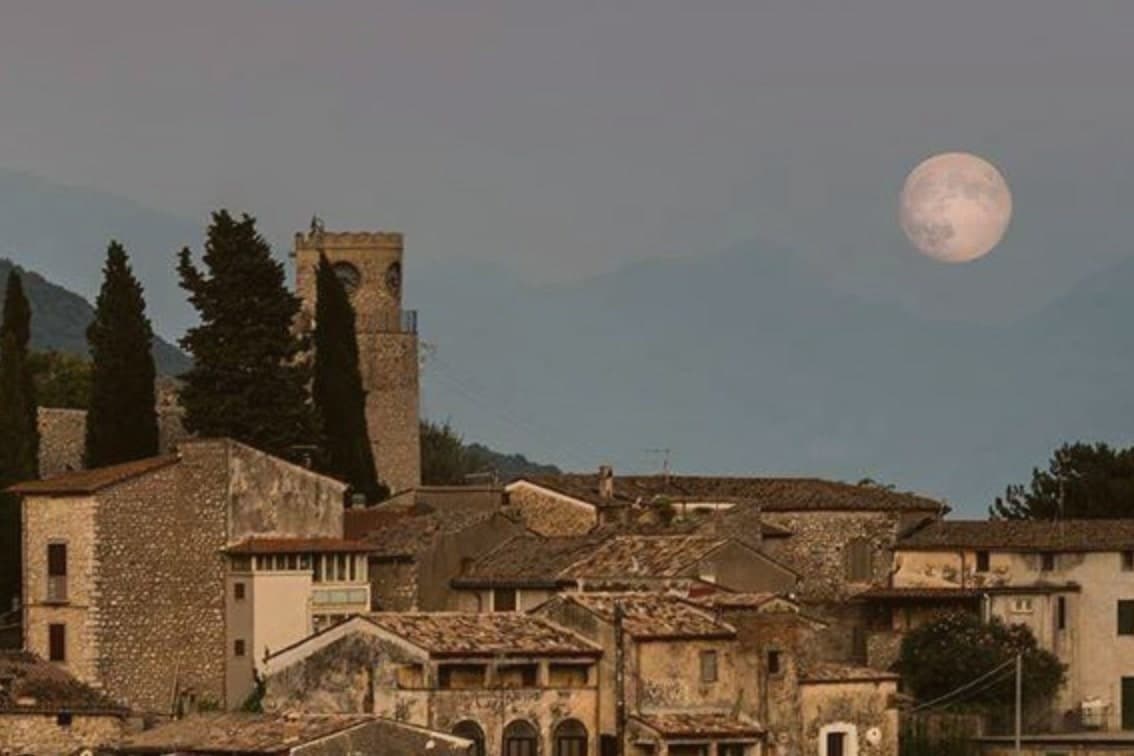
Narrow stone-paved vicoli climb from the central piazza to the castle, past the Chiesa di Sant'Antonino (15th-c), the Chiesa di San Rocco, and the Palazzo Boncompagni.
Monti Ausoni + Aurunci parks
The Monti Ausoni and Monti Aurunci National Parks sit immediately south, with karst hiking, wild boar territory, and the Liri valley historic route.
Chiesa di Sant'Antonino + Sagra del Cinghiale
The 15th-c parish church anchors the Festa di Sant'Antonino (10 May), the patronal feast. Sagra del Cinghiale (mid-October) is the year's wild-boar food festival.
Cesanese del Piglio + Ciociaria kitchen
The only red DOCG in Lazio (Cesanese del Piglio, from the hills 30 km north), served alongside pasta alla ciociara, abbacchio, salame ciociaro, and wild boar.
The slow-trip planner
Building a trip? Find where Pico fits in a slow Italy circuit.
Answer five questions. We will shape a geographically coherent slow trip from the 1,000 Italian towns most travelers skip. Yours to save and share.
Living here
- Population 2,634
- In-betweeni
- Pharmacy: none mapped
- High school within a 30-minute drive
- Nearest airport Naples / Salerno, 1 h 29 min drive
- Regional capital Roma, 1 h 44 min drive
Common questions
- What is Pico known for?
- Tommaso Landolfi's home town, a 2,634-resident Ciociaria borgo at 220m between Rome and Naples, with a BPB-inscribed medieval centro and a castle turned literary museum.
- Where is Pico?
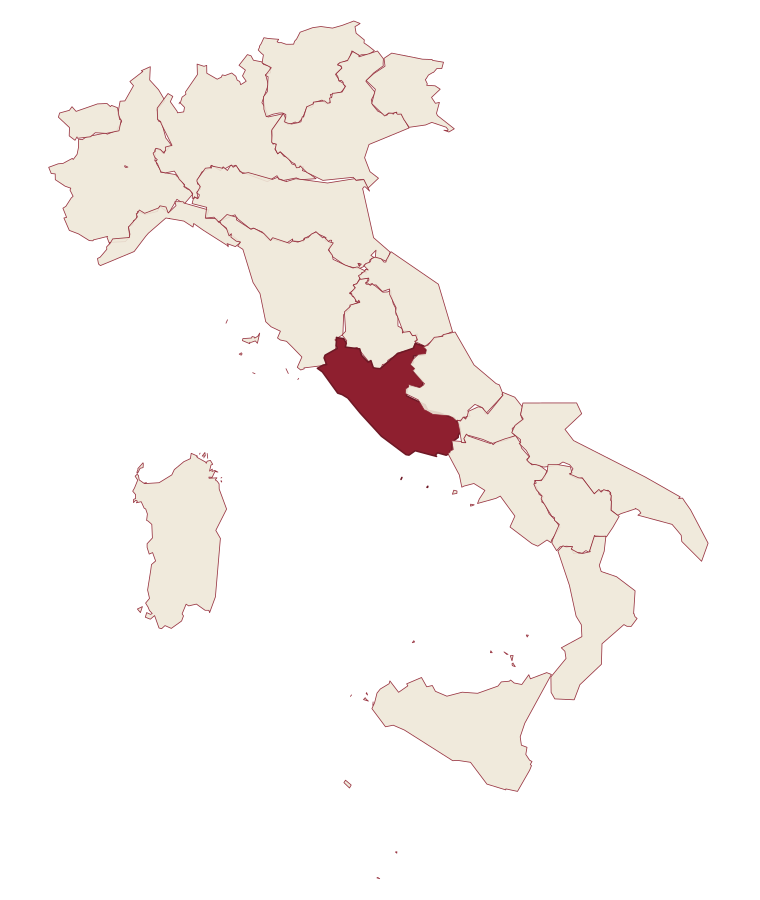
- Pico is a comune in the province of Frosinone, in Lazio.
- What is the nearest airport to Pico?
- Naples / Salerno (NAP), about 1h 29m by car.
- How long is the drive from Naples to Pico?
- About 1h 34m by car.
- When is the best time to visit Pico?
- Best in Apr–Jun, Sep–Oct. July is the warmest month, averaging 34 degrees, and November the wettest, with about 13 rain days.
- Is there a sagra or a festival in Pico?
- The town keeps its patron saint's day: Antonino di Apamea, 2 September.
- Which other towns are like Pico?
- Auletta, Taurasi and Bassiano.
- How many people live in Pico?
- 2,634 at the 2023 count.
Tags & datadesignations · numbers · sources
Recognised as
The numbers
- Elevation: 220 m
- Population: 2,634
- Surface area: 32.93 km²
These figures were compiled from public directories: ISTAT, OpenStreetMap and Wikidata, and from the official listings of the guides named on this page. Town details change; verify with official sources before you travel.
Similar
Towns like Pico
Auletta
Province: Salerno
both under 3,000 people · both hill towns
Taurasi
Province: Avellino
both under 3,000 people · both hill towns
Bassiano
Province: Latina
both under 3,000 people · both hill towns
Crecchio
Province: Chieti
both under 3,000 people · both hill towns
Servigliano
Province: Fermo
both under 3,000 people · both hill towns
Cortemilia
Province: Cuneo
both under 3,000 people · both hill towns
🎨 Borghi più belli d'Italia
More Borghi più belli d'Italia towns in Lazio
Acquapendente
Province: Viterbo
The northernmost town in Lazio, at 420 meters above the Paglia, named in 964 for its waterfalls.
Atina
Province: Frosinone
A polygonal-walled town at the foot of the Mainarde, and the DOC that makes Cabernet in central Italy.
Bassano in Teverina
Province: Viterbo
A tufa-spur borgo of 1,260 above the Tiber valley between Lazio and Umbria, with a clock tower that hides an eleventh-century animated bell tower.
Boville Ernica
Province: Frosinone
A Ciociaria hilltop town with eighteen intact medieval towers, ringed by a walled circuit that has stood since the tenth century.
Capranica Prenestina
Province: Roma
A 915-meter ridge village east of Rome, with a sanctuary above the Giovenzano valley at 1,018 meters.