
Calabria · Cosenza
Corigliano-Rossano
The Sibari plain city merged in 2018 from two older towns, one built around a Norman castle and the other around a Byzantine manuscript tradition.
- Best time
- May–Sep
- By car
- 2 h 52 min from Salerno
- By train
- Station in the comune
- Population
- 74,066
Known for
CODEX PURPUREUS
Sixth-century Greek gospel on purple parchment, illuminated in gold, brought from Palestine in the ninth century and UNESCO-listed since 2015.
LIQUIRIZIA AMARELLI
Family liquorice business running since 1731 on the Sibari plain, where the root is recognised in scientific texts as the finest in the world.
CASTELLO DUCALE
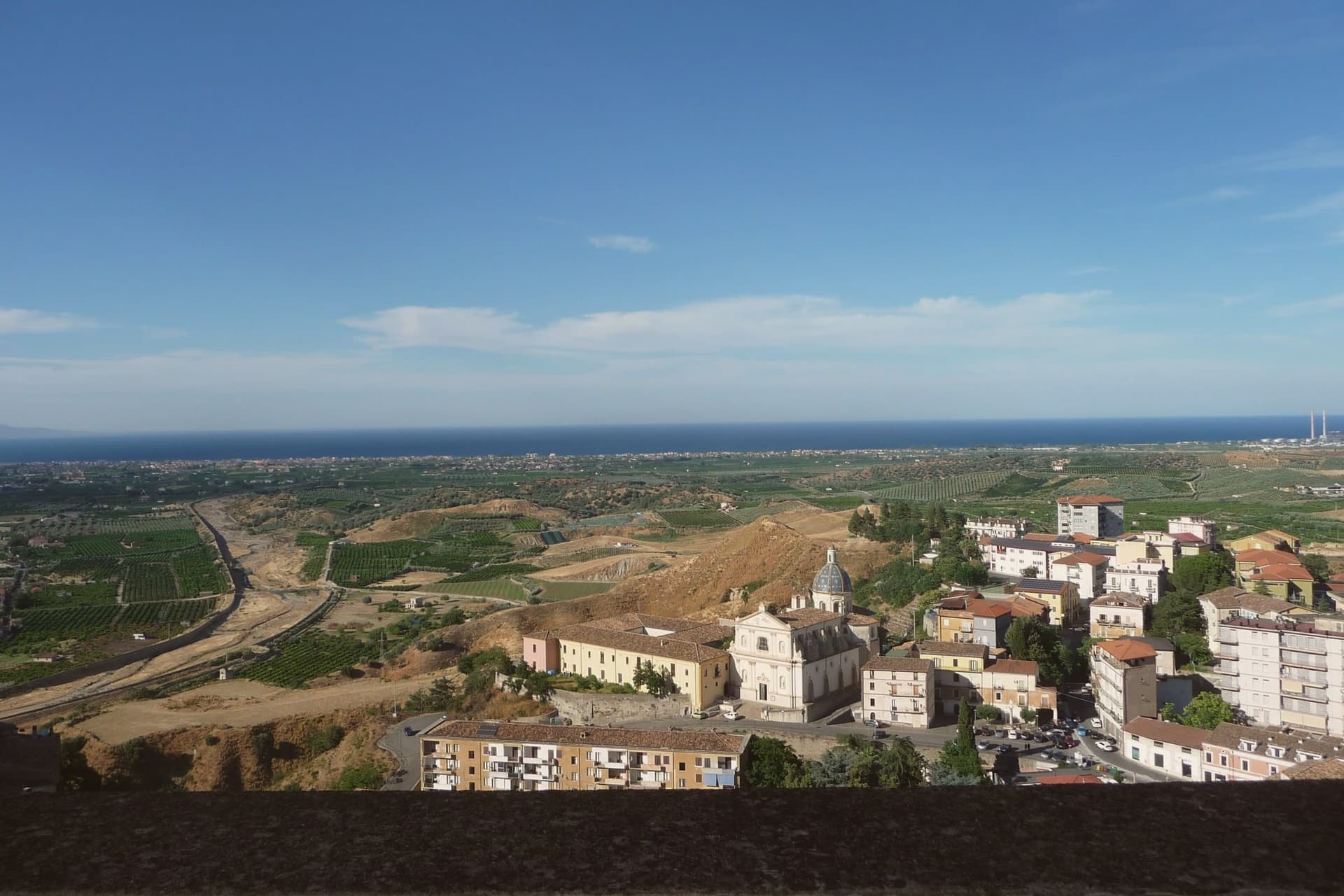
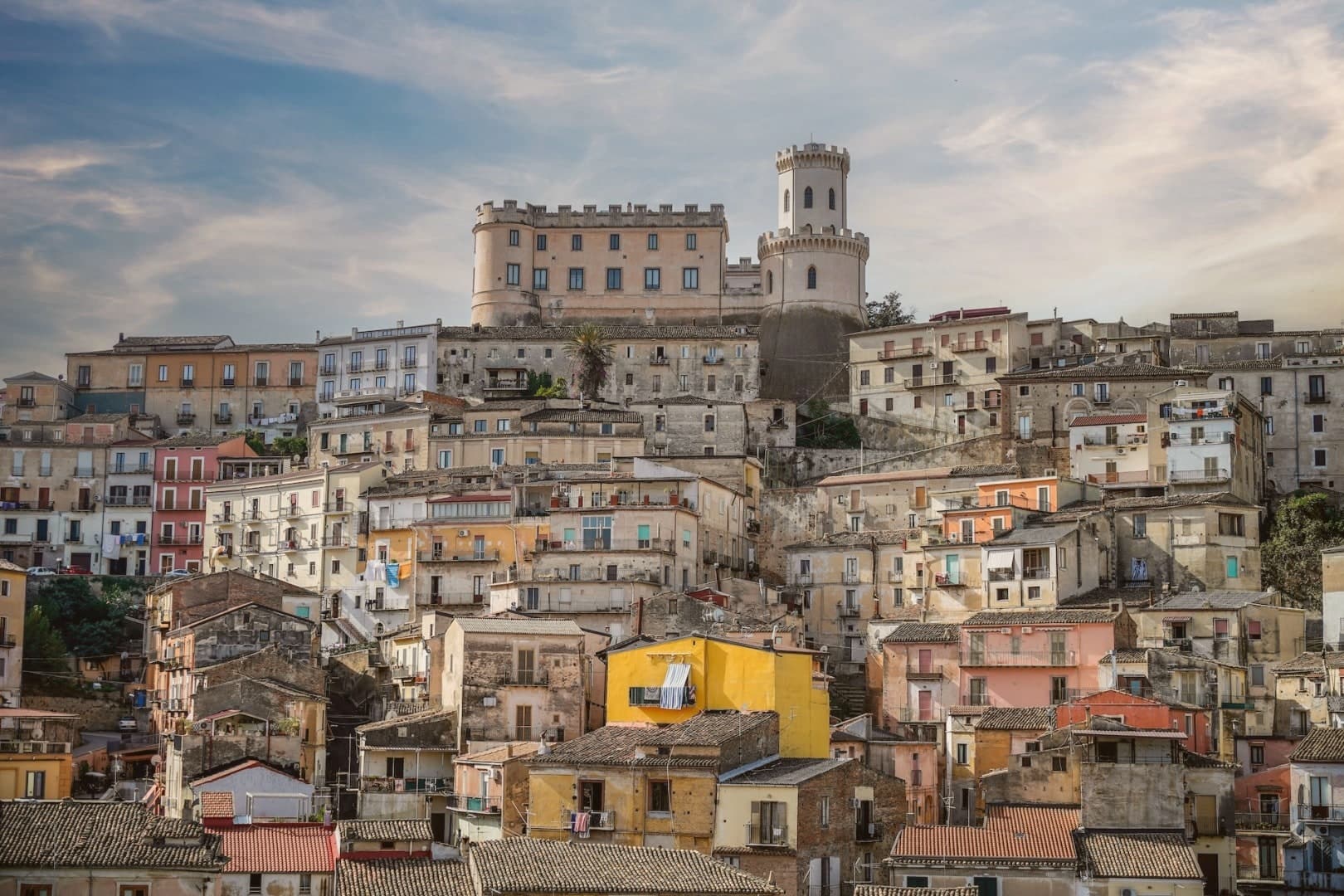
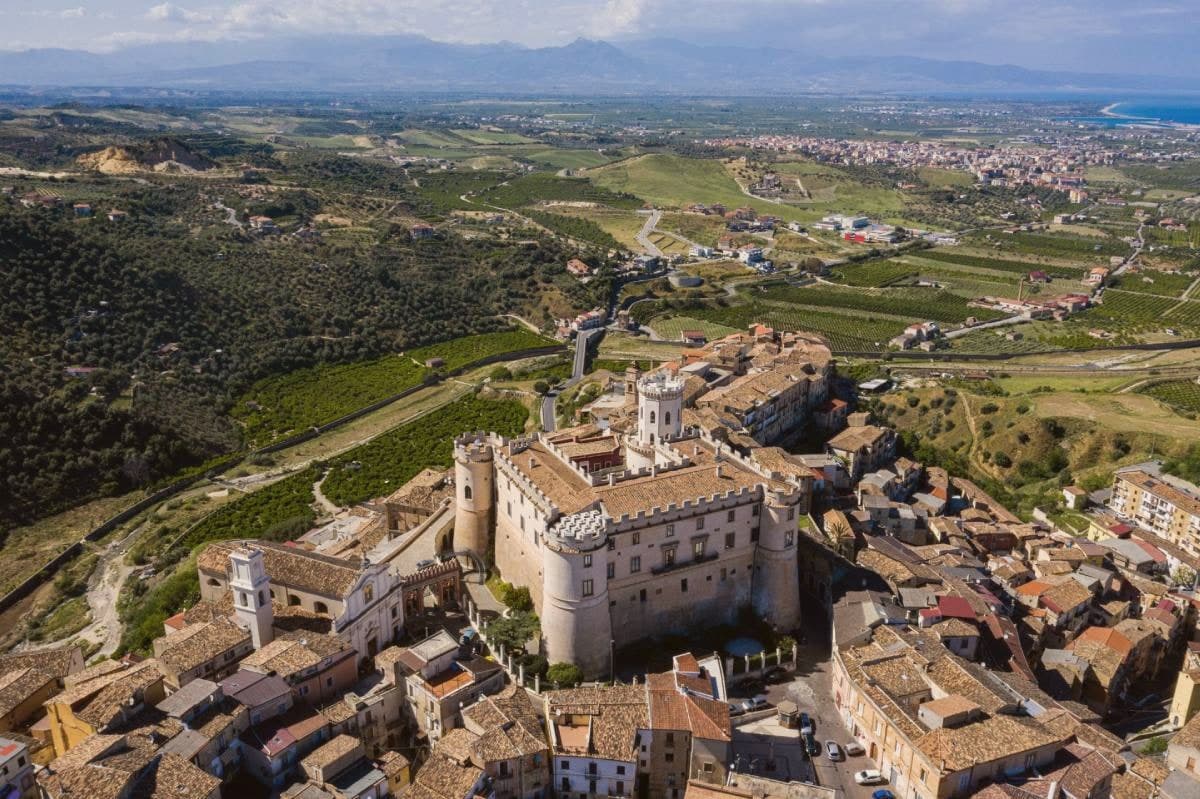
Norman castle built 1073 by Robert Guiscard, remodelled into a ducal palace, overlooking the Sibari citrus plain and the Ionian beyond.
CLEMENTINE DI CALABRIA
The commune lies inside the Clementine di Calabria IGP production zone.
When to visit
Best · May–Sep
- J13°
- F15°
- M15°
- A18°
- M24°
- J30°
- J34°
- A33°
- S28°
- O23°
- N18°
- D15°
- Best
- Hot or crowded
- Quiet
- Mostly closed
Daytime averages, 2020–2024. The sea is warmest in August at 28° and coldest in February at 15°. Weather data by Open-Meteo.com.
Why come
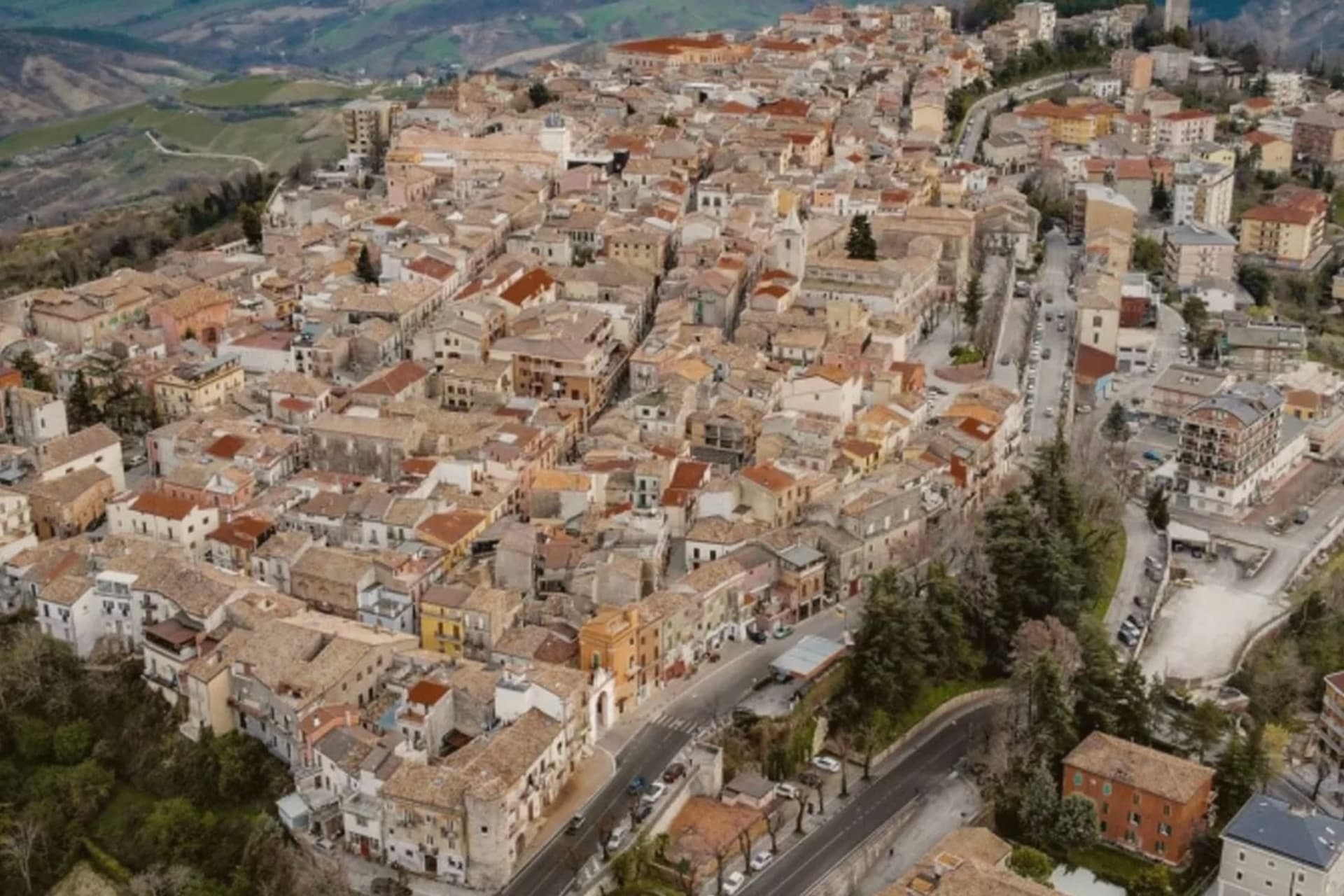
Corigliano-Rossano is the largest commune on Calabria's Ionian side, seventy-four thousand people spread across the Sibari plain between the Sila slopes and the sea. It did not exist as a single place until 31 March 2018, when Corigliano Calabro and Rossano were merged by law. The two halves keep their separate characters rather than blending into one: Corigliano sits inland on its ridge, built up around the castle and its citrus groves, while Rossano lies twenty kilometers east and older in feel, its identity tied to the Byzantine church tradition and the manuscript culture that produced the Codex.
Between and around both, the coastline runs its beaches north toward the Pollino headland, and the abbey sits above town on its own ridge, a separate Italo-Greek foundation from the monastic world that also shaped Rossano. The liquorice business belongs to neither historic center exactly. It works its own estate on the plain, a commercial thread running underneath the two civic and religious identities that the merger joined on paper. What the 2018 union really did was formalize a geography that had long placed a castle town, a manuscript town, and a plain of root and citrus and coastline within a few kilometers of each other, without ever requiring them to be the same place.
The Sunday letter
Corigliano-Rossano is on our list. Its letter is still to come.
We are writing about all 1,000 of these towns, one at a time, in a free letter every Sunday: the photo, the food, the festa. That is our mission. Sign up and you will be there when Corigliano-Rossano comes up. By Peter & Sophia, from Pietrasanta.
How to get there
From Lamezia / Reggio (SUF), about 2 hours by car.
Bari / Brindisi (BRI) is about 3 hours away.
By car from the centre of Salerno 2h 52m, Bari 3 hours or Naples 3h 36m.
There is a railway station in the comune, so you can arrive without a car.
What to see
Castello Ducale di Corigliano
The fortress Robert Guiscard commissioned took six centuries to become the ducal residence standing today, its rooms and terraces layered over that long remodelling rather than fixed to one moment.
Museo Diocesano e Codex Purpureus Rossanensis
The gospel is kept in a diocesan museum built around it, the parchment's purple dye and gold lettering still legible under glass as one of the oldest surviving illuminated New Testament manuscripts.
Museo della Liquirizia Amarelli
The museum sits inside the working estate itself, walking visitors through the processing of the root rather than just displaying it, family ledgers and old machinery included.
Abbazia di Santa Maria del Patire
Eleventh-century Italo-Greek monastery on a Sila ridge above Rossano, with a Cosmatesque mosaic floor and Byzantine wall remains.
Lungomare di Schiavonea
Bandiera Blu coastline along the Sibari plain, sand and pebble beaches stretching toward the Pollino headland in the north.
Centri storici di Corigliano e Rossano
Two distinct old towns, twenty kilometers apart, Corigliano around its castle and Rossano around its Byzantine cathedral and manuscript museum.
The slow-trip planner
Building a trip? Find where Corigliano-Rossano fits in a slow Italy circuit.
Answer five questions. We will shape a geographically coherent slow trip from the 1,000 Italian towns most travelers skip. Yours to save and share.
Through the year
What happens here
Feasts and festivals that come back year after year. We give the month rather than the date, because the date moves and the month rarely does. Check with the source before you plan a journey around one.
Popcorn Villagefood festival
usually held in September. sagritaly.com
Living here
- Population 74,066
- A local hubi
- Pharmacy in town
- High school within a 30-minute drive
- Train station in the comune
- Nearest airport Lamezia / Reggio, 2 h 6 min drive
- Regional capital Catanzaro, 2 h 21 min drive
Common questions
- What is Corigliano-Rossano known for?
- Corigliano-Rossano is the Sibari plain city merged in 2018 from two older towns, one built around a Norman castle and the other around a Byzantine manuscript tradition.
- Where is Corigliano-Rossano?
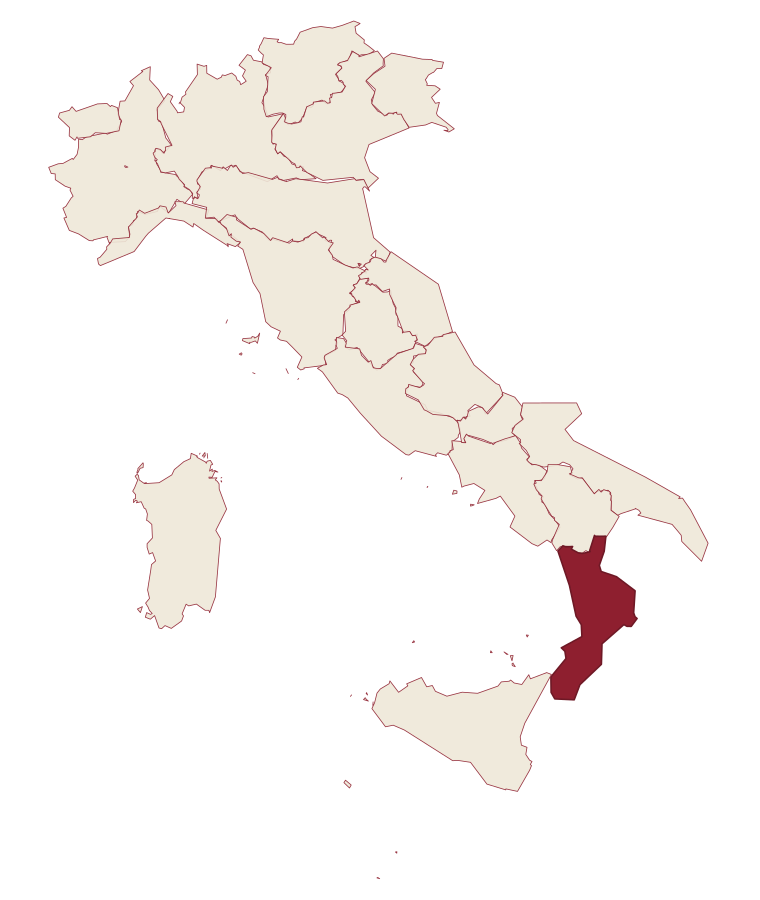
- Corigliano-Rossano is a comune in the province of Cosenza, in Calabria, at 219 meters above sea level.
- What is the nearest airport to Corigliano-Rossano?
- Lamezia / Reggio (SUF), about 2 hours by car.
- Can you get to Corigliano-Rossano without a car?
- Yes. There is a railway station in the comune, so you can arrive by train.
- How long is the drive from Salerno to Corigliano-Rossano?
- About 2h 52m by car.
- When is the best time to visit Corigliano-Rossano?
- Best in May–Sep. July is the warmest month, averaging 34 degrees, and November the wettest, with about 14 rain days.
- Is there a sagra or a festival in Corigliano-Rossano?
- Yes. Popcorn Village. September is when the first of them falls.
- Which other towns are like Corigliano-Rossano?
- Villapiana, Biella and Acquaviva delle Fonti.
- How many people live in Corigliano-Rossano?
- 74,066 at the 2023 count.
Tags & datadesignations · numbers · sources
The numbers
- Elevation: 219 m
- Population: 74,066
- Surface area: 355.56 km²
These figures were compiled from public directories: ISTAT, OpenStreetMap and Wikidata, and from the official listings of the guides named on this page. Town details change; verify with official sources before you travel.
Similar
Towns like Corigliano-Rossano
Villapiana
Province: Cosenza
both on the Ionian coast · both hill towns
Biella
Province: Biella
both over 10,000 people · both hill towns
Acquaviva delle Fonti
Province: Bari
both over 10,000 people · both hill towns
Castellaneta
Province: Taranto
both over 10,000 people · both hill towns
Policoro
Province: Matera
both on the Ionian coast · both over 10,000 people
Bernalda
Province: Matera
both on the Ionian coast · both over 10,000 people
🟦 Bandiera Blu
More Bandiera Blu towns in Calabria
Cariati
Province: Cosenza
A walled Ionian fishing town on the Saracen Coast, its ramparts among the most intact in southern Italy.
Isola di Capo Rizzuto
Province: Crotone
A promontory on the Ionian coast wrapped by Italy's largest marine reserve, with an Aragonese castle standing on a rock offshore.
Parghelia
Province: Vibo Valentia
A 1,300-person village on the Costa degli Dei at 70 meters, four kilometers from Tropea and quieter than its famous neighbour.
Praia a Mare
Province: Cosenza
A Tyrrhenian beach town in the Gulf of Policastro, backed by mountains and facing an offshore island.
Rocca Imperiale
Province: Cosenza
Frederick II's Hohenstaufen fortress at the Calabria–Basilicata border, a Borgo più Bello d'Italia perched on a hill above the Ionian coast, with the castello at the summit and the locally-grown limone di Rocca Imperiale IGP scenting the orchards.