
Calabria · Reggio di Calabria
Bova
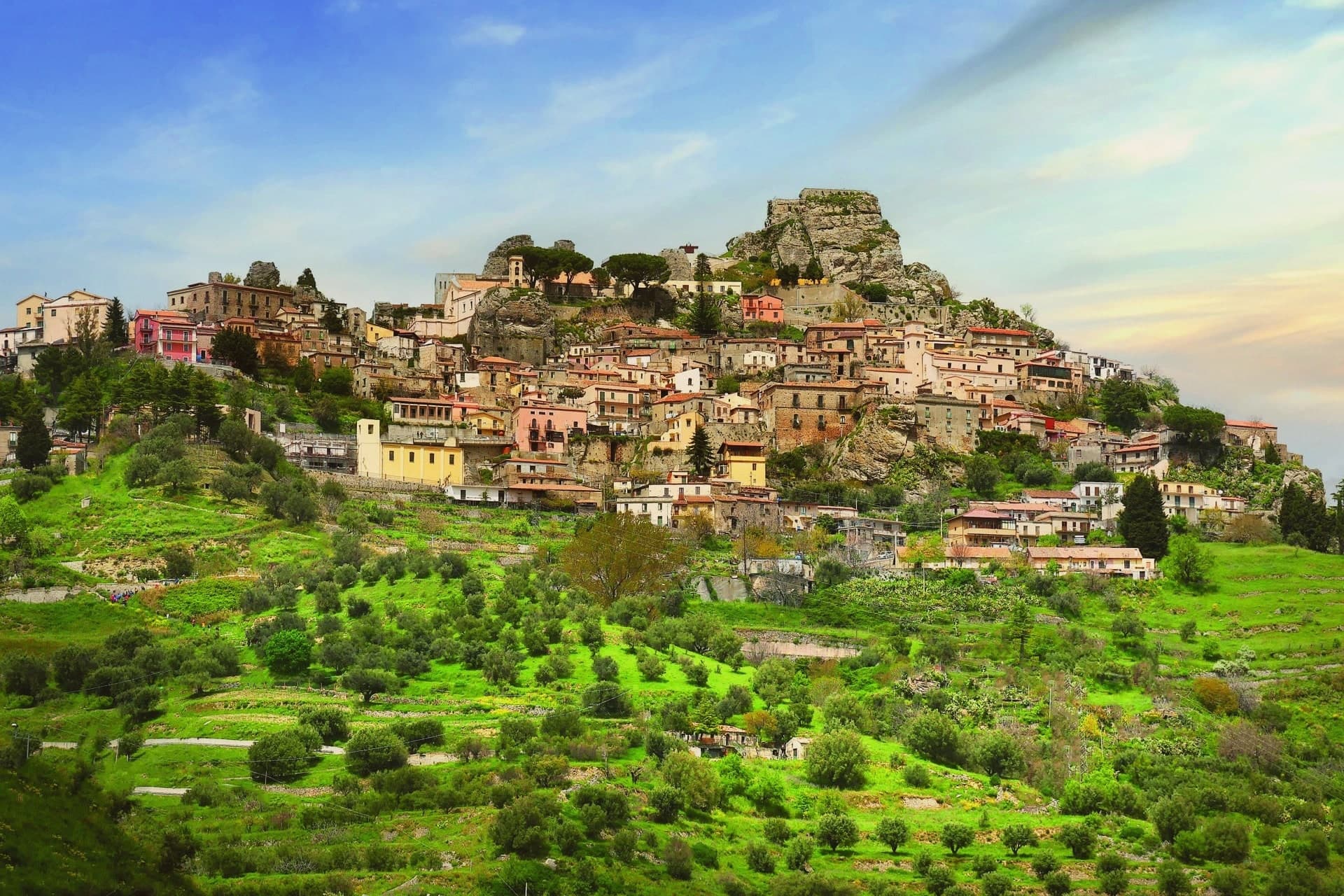
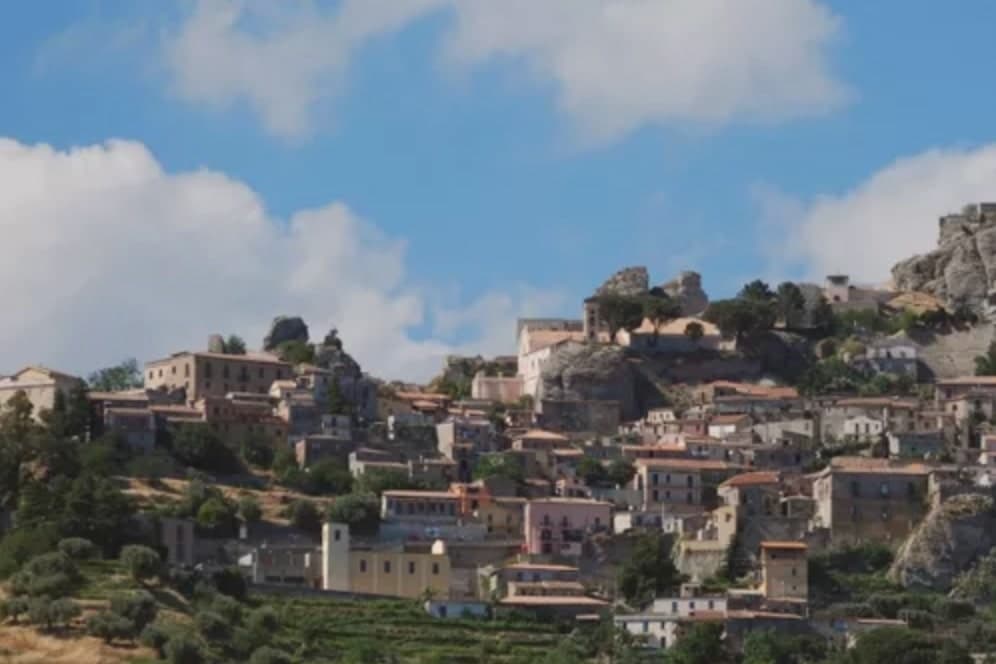
The capital of the Bovesìa, a 416-resident Aspromonte hilltop borgo at 820m and the cultural centre of the Grecanic minority, where the Calabrian-Greek dialect descended from Byzantine-era Greek is still spoken by elders.
- Best time
- May–Sep
- By car
- 6 h from Salerno
- Population
- 416
Known for
GRECANIC LINGUISTIC ISLAND
Capital of the Bovesìa, where Calabrian Greek (Grecanico, a direct descendant of Byzantine-era Greek) has been continuously spoken for roughly 1,500 years.
BPB + BANDIERA ARANCIONE
Holds both major Italian small-village quality marks, the Borghi più belli d'Italia inscription and the Bandiera Arancione, on the southernmost wild Aspromonte hilltop.
ASPROMONTE NATIONAL PARK
Sits inside Italy's southernmost wild mountain park, with wolves reintroduced since the 1990s ranging its pine forests.
BERGAMOT COAST GATEWAY
The Earl Grey and perfume bergamot grows only on the 100km Reggio coastal strip below. Bova is the inland Grecanic gateway to it.
When to visit
Best · May–Sep
- J10°
- F11°
- M11°
- A15°
- M20°
- J25°
- J29°
- A28°
- S24°
- O19°
- N15°
- D11°
- Best
- Hot or crowded
- Quiet
- Mostly closed
Daytime averages, 2020–2024. Weather data by Open-Meteo.com.
Why come
The Bovesìa is a cluster of nine villages, and Bova sits at its centre both geographically and culturally. The Grecanic dialect spoken here traces to one of two origins that scholars still debate: colonisation under Magna Graecia in the 8th century BC, or the Byzantine reconquest under Justinian in the 6th century AD. Place names across the cluster, Galliciánò, Roccaforte del Greco, Roghudi, preserve the same Greek substrate, which makes the town less an isolated relic than the administrative and symbolic capital of a linguistic zone that once extended across several communities. The museum in the centre documents that language and its speakers, and the August festival that stages Grecanic-language plays and music draws on the same substrate for its material.
The town itself occupies a hilltop at 820m, inland from the coastal strip where the bergamot groves run for 100km along the Reggio shore below. That separation, upper village and lower coast, mirrors the region's older Greek-rite and Latin-rite division, a division visible in the cathedral on the hilltop, built directly over an earlier Byzantine basilica, and in the castle ruins and stone-paved streets around it. The park that surrounds the village, the southernmost wild mountain area on the Italian mainland, extends that inland orientation upward into pine forest and the range of wolves reintroduced since the 1990s, while the coast below turns toward citrus and the sea.
Depopulation has been steep: 1,500 residents in 1951 against 416 today, a decline typical of Aspromonte villages generally. The food carries the same inland character as the language, pasta with bergamot zest, goat slow-cooked in terracotta, wild boar, the local Cirò DOC red, and bergamot itself turned into oil, liqueurs and jams. What remains is a place where language, altitude and isolation have worked together to keep something alive that the coast below, oriented toward citrus and the sea rather than the mountain, could not have preserved on its own.
The Sunday letter
Bova is on our list. Its letter is still to come.
We are writing about all 1,000 of these towns, one at a time, in a free letter every Sunday: the photo, the food, the festa. That is our mission. Sign up and you will be there when Bova comes up. By Peter & Sophia, from Pietrasanta.
How to get there
From Lamezia / Reggio (SUF), about 2h 47m by car.
Naples / Salerno (NAP) is about 6h 45m away.
By car from the centre of Salerno 6 hours, Bari 6h 43m or Naples 6h 45m.
Coming by train into Reggio Calabria Centrale? Bova is about 1h 16m away by road.
What to see
Museo della Lingua Greco-Calabra
Documents the dialect and its living use. 2,000-3,000 elderly speakers remain active across the 9-village Bovesìa cluster today.
Castello Normanno + centro storico
Norman castle ruins on the hilltop summit above an intact medieval centre of stone-paved vicoli. Views reach across the Aspromonte to the Ionian and Tyrrhenian, and to Sicily on clear days.
Cattedrale di Santa Maria Isodia
A 12th-century Norman cathedral raised directly over an earlier Byzantine basilica, the physical marker of the shift from Greek-rite to Latin-rite Christianity in Calabria.
Parco Nazionale dell'Aspromonte
A trail network runs from the village into the upper massif, through pine forest and the range of the reintroduced wolf packs.
Bergamotto + Grecanic festivals
The Festival di Paleariza in August stages Grecanic-language plays and music. Local tables run to Cirò DOC red and goat slow-cooked in terracotta.
The slow-trip planner
Building a trip? Find where Bova fits in a slow Italy circuit.
Answer five questions. We will shape a geographically coherent slow trip from the 1,000 Italian towns most travelers skip. Yours to save and share.
Living here
- Population 416
- Remotei
- Pharmacy in town
- Nearest high school over ~30 minutes away
- Nearest airport Lamezia / Reggio, 2 h 47 min drive
- Regional capital Catanzaro, 3 h 2 min drive
Common questions
- What is Bova known for?
- Bova is the capital of the Bovesìa, a 416-resident Aspromonte hilltop borgo at 820m and the cultural centre of the Grecanic minority, where the Calabrian-Greek dialect descended from Byzantine-era Greek is still spoken by elders.
- Where is Bova?
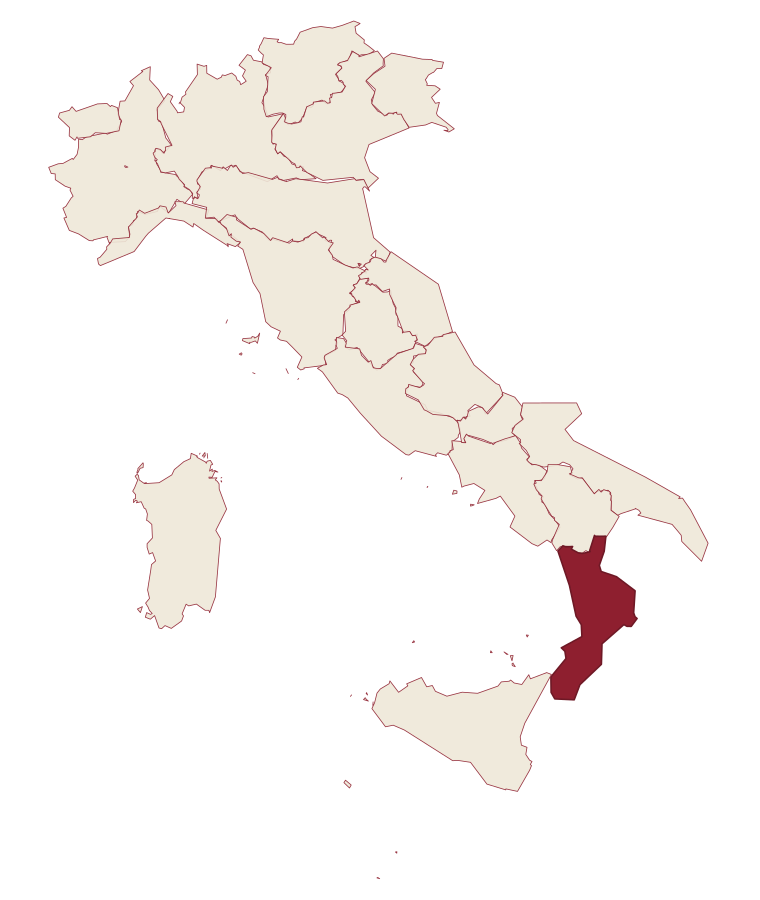
- Bova is a comune in the province of Reggio di Calabria, in Calabria.
- What is the nearest airport to Bova?
- Lamezia / Reggio (SUF), about 2h 47m by car.
- How long is the drive from Salerno to Bova?
- About 6 hours by car.
- When is the best time to visit Bova?
- Best in May–Sep. July is the warmest month, averaging 29 degrees, and September the wettest, with about 14 rain days.
- Which other towns are like Bova?
- Cicala, Orvinio and Triora.
- How many people live in Bova?
- 416 at the 2023 count.
Tags & datadesignations · numbers · sources
The numbers
- Elevation: 820 m
- Population: 416
- Surface area: 46.94 km²
These figures were compiled from public directories: ISTAT, OpenStreetMap and Wikidata, and from the official listings of the guides named on this page. Town details change; verify with official sources before you travel.
Similar
Towns like Bova
Cicala
Province: Catanzaro
both under 1,000 people · both high up, between 600 and 1,000 metres
Orvinio
Province: Rieti
both under 1,000 people · both high up, between 600 and 1,000 metres
Triora
Province: Imperia
both under 1,000 people · both high up, between 600 and 1,000 metres
Castel San Vincenzo
Province: Isernia
both under 1,000 people · both high up, between 600 and 1,000 metres
Faeto
Province: Foggia
both under 1,000 people · both high up, between 600 and 1,000 metres
Goriano Sicoli
Province: L'Aquila
both under 1,000 people · both high up, between 600 and 1,000 metres
🎨 Borghi più belli d'Italia
More Borghi più belli d'Italia towns in Calabria
Aiello Calabro
Province: Cosenza
A hilltop borgo at 502 meters in the Tyrrhenian hinterland of Cosenza, ruled for two centuries by the Cybo-Malaspina from Massa Carrara.
Aieta
Province: Cosenza
An eagle's-nest village in the western Pollino, with one of the few sixteenth-century Renaissance palazzi standing in Calabria.
Altomonte
Province: Cosenza
A hill town in the Esaro valley built around the highest Gothic-Angevin church in Calabria.
Badolato
Province: Catanzaro
A medieval borgo of thirteen churches at 240 meters above the Ionian, which took in 350 Kurdish refugees in 1997 and started its own slow rebirth.
Caccuri
Province: Crotone
A 646-meter Presila borgo dominated by a sixth-century Byzantine castle with a cylindrical tower built in 1882, birthplace of Renaissance statesman Cicco Simonetta.