
Sardinia · Sassari
Alghero
The Catalan city of northwest Sardinia, repopulated by Peter IV of Aragon in 1354.
- Best time
- May–Oct
- Airport
- In the comune (AHO)
- By train
- Station in the comune
- Population
- 42,380
Known for
ALGHERESE CATALAN
Variety of Catalan introduced in 1372, still mother tongue for roughly 24 percent of residents, taught in some schools and protected by regional law.
ARAGONESE WALLS
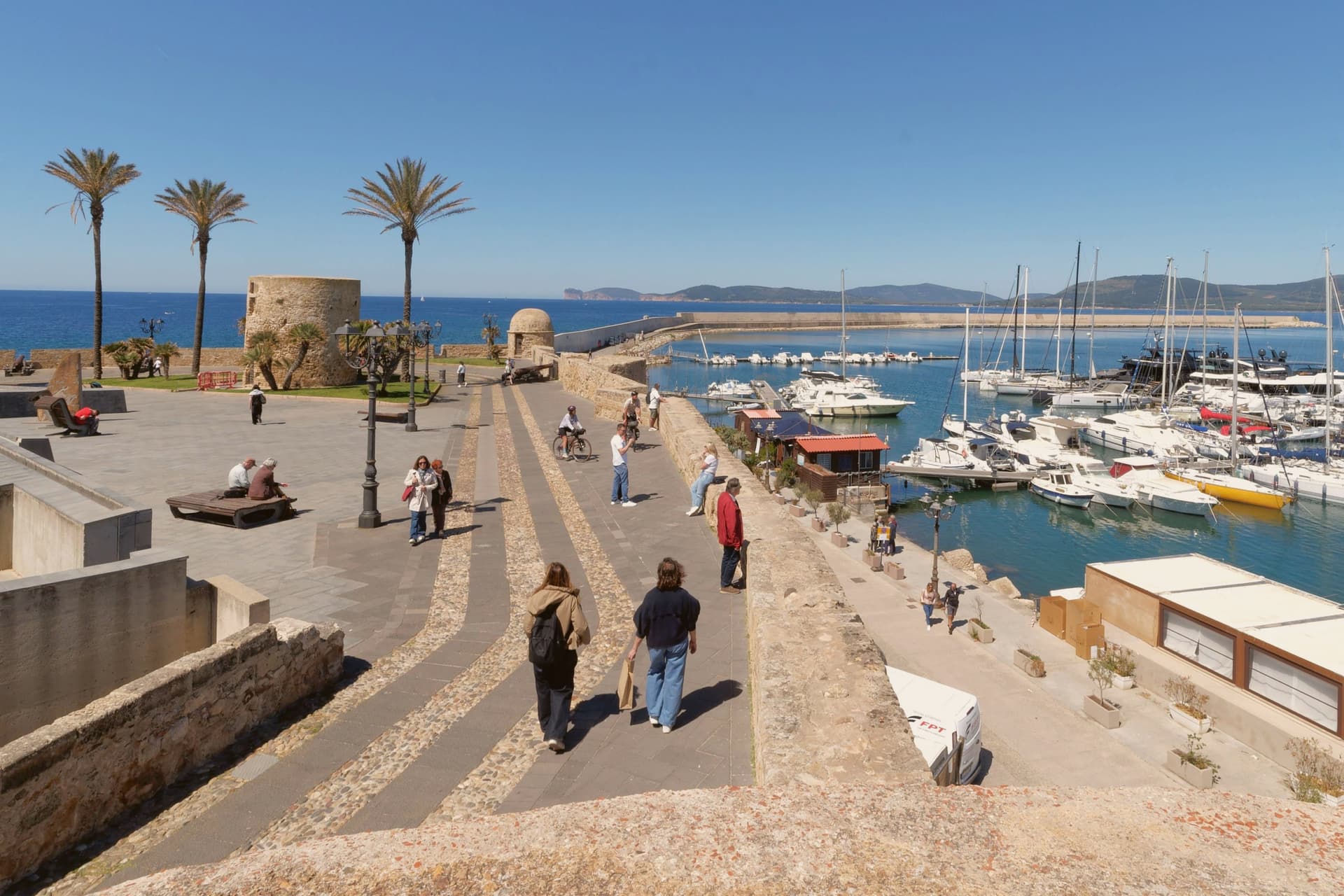
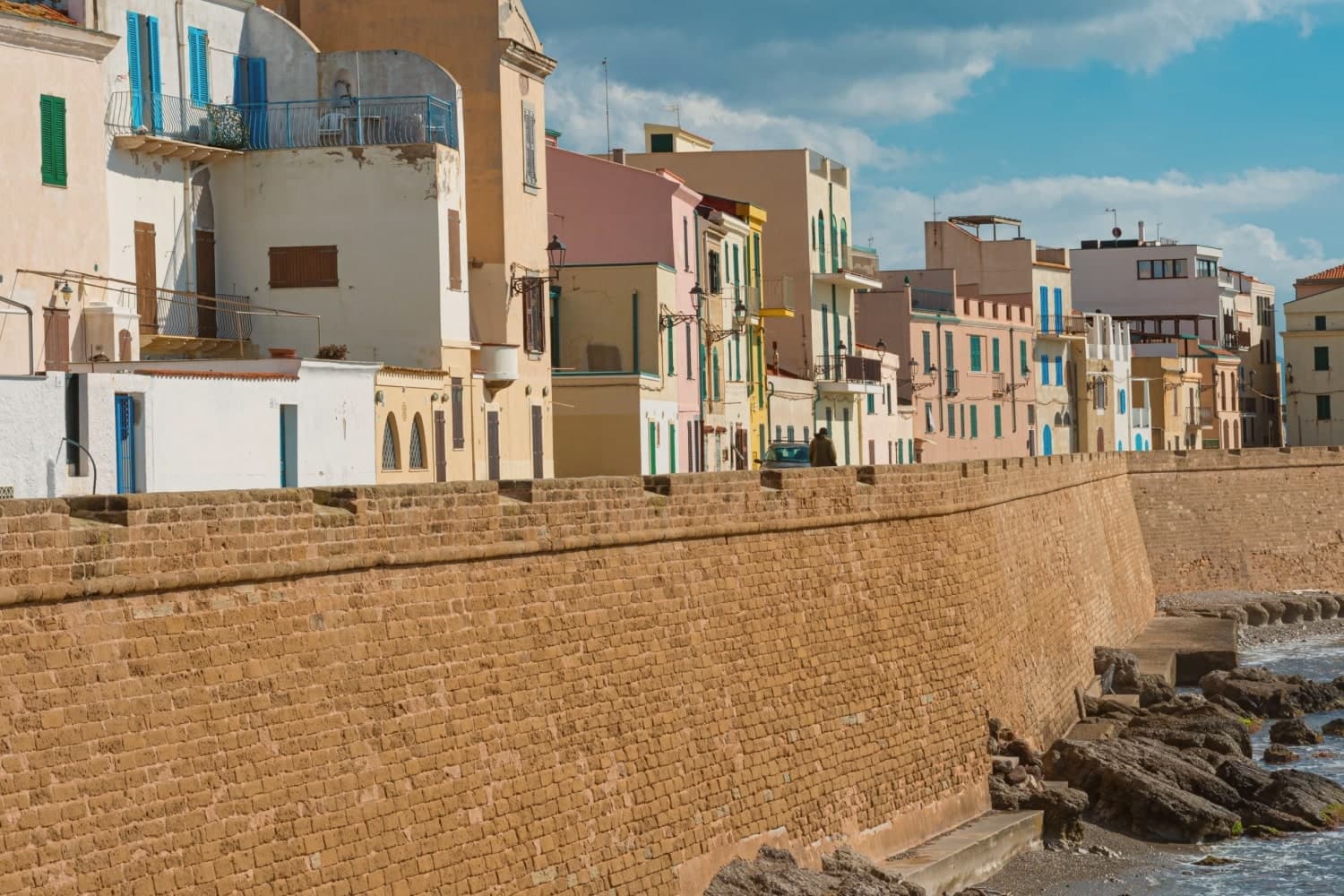
Sixteenth-century sea bastions ringing the centro storico, defensive towers contemporary with the cathedral, the postcard frame of the old town.
GROTTA DI NETTUNO
Four-kilometer cave system under Capo Caccia, reached by 656 steps down the cliff or by boat from the Alghero marina.
When to visit
Best · May–Oct
- J14°
- F15°
- M16°
- A19°
- M22°
- J27°
- J31°
- A30°
- S27°
- O23°
- N19°
- D15°
- Best
- Hot or crowded
- Quiet
- Mostly closed
Daytime averages, 2020–2024. Weather data by Open-Meteo.com.
Why come
Alghero sits on the northwestern coast of Sardinia at the head of its own bay. The Doria of Genoa founded it in 1102. The Catalan-Aragonese took it in 1353, expelled the Sardinians and Ligurians, and in 1354 Peter IV of Aragon repopulated the town with Catalan settlers.
Four centuries of Catalan, then Spanish, rule left a language behind: about 24 percent of the population still has Algherese Catalan as a mother tongue, and 88 percent understand it, a fact that keeps the walled old town legible as something other than a museum piece. Eleven kilometers west, the coast rises into a limestone promontory and the natural park around it, the point where the city's own bay gives way to open cliff. North of the city, Vermentino and Cannonau vineyards carry both Città del Vino and Città dell'Olio designations, a rural counterpart to the walled maritime center. The town reads, then, as a layered thing: a Doria foundation overwritten by an Aragonese one, held between a fortified seafront and a wine country, with the language of the fourteenth-century settlers still spoken in the streets it was resettled to serve.
The Sunday letter
Alghero is on our list. Its letter is still to come.
We are writing about all 1,000 of these towns, one at a time, in a free letter every Sunday: the photo, the food, the festa. That is our mission. Sign up and you will be there when Alghero comes up. By Peter & Sophia, from Pietrasanta.
Read on
Alghero in our articles
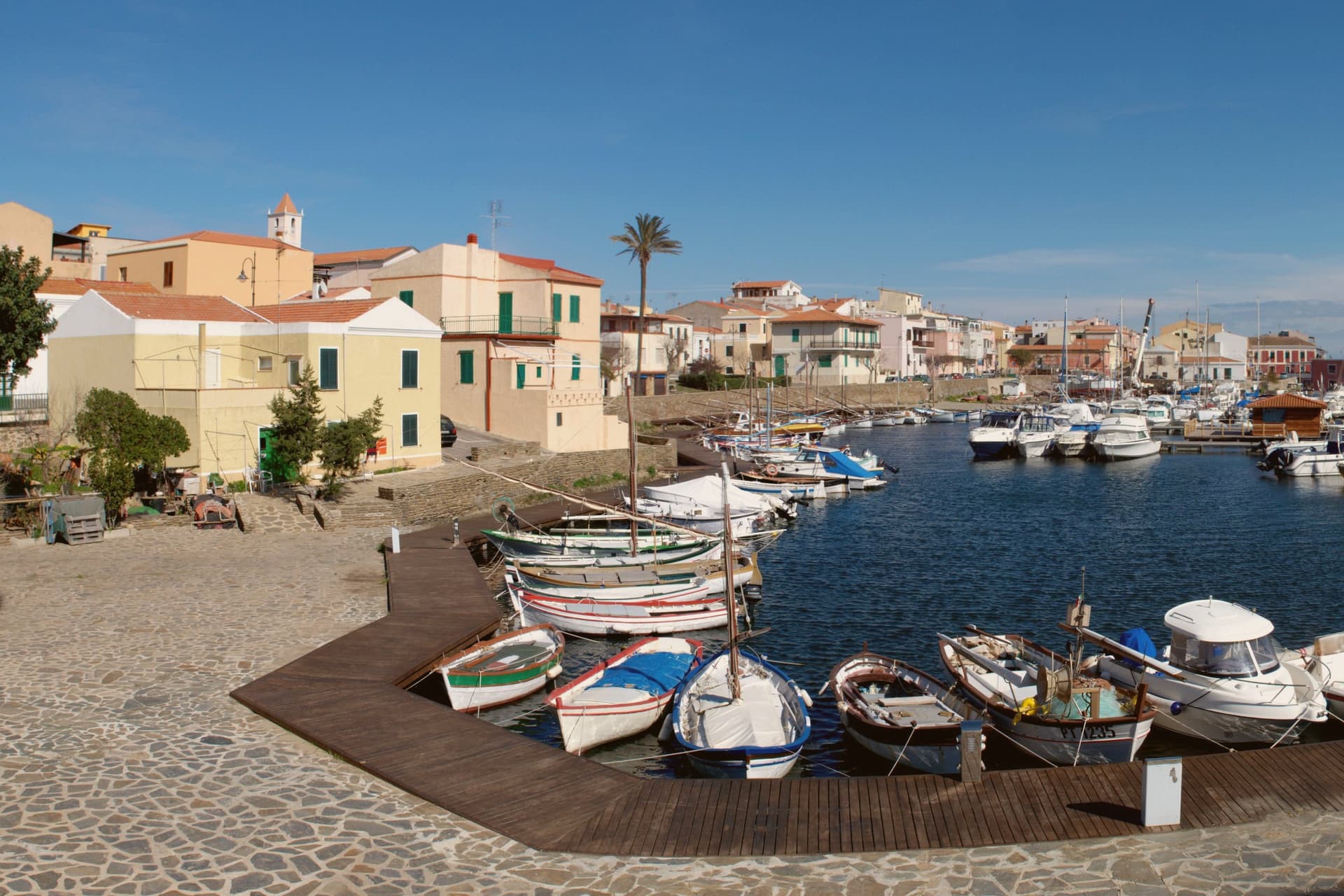
 The best coastal towns that eat well in Sardegna6 towns, Alghero among them.
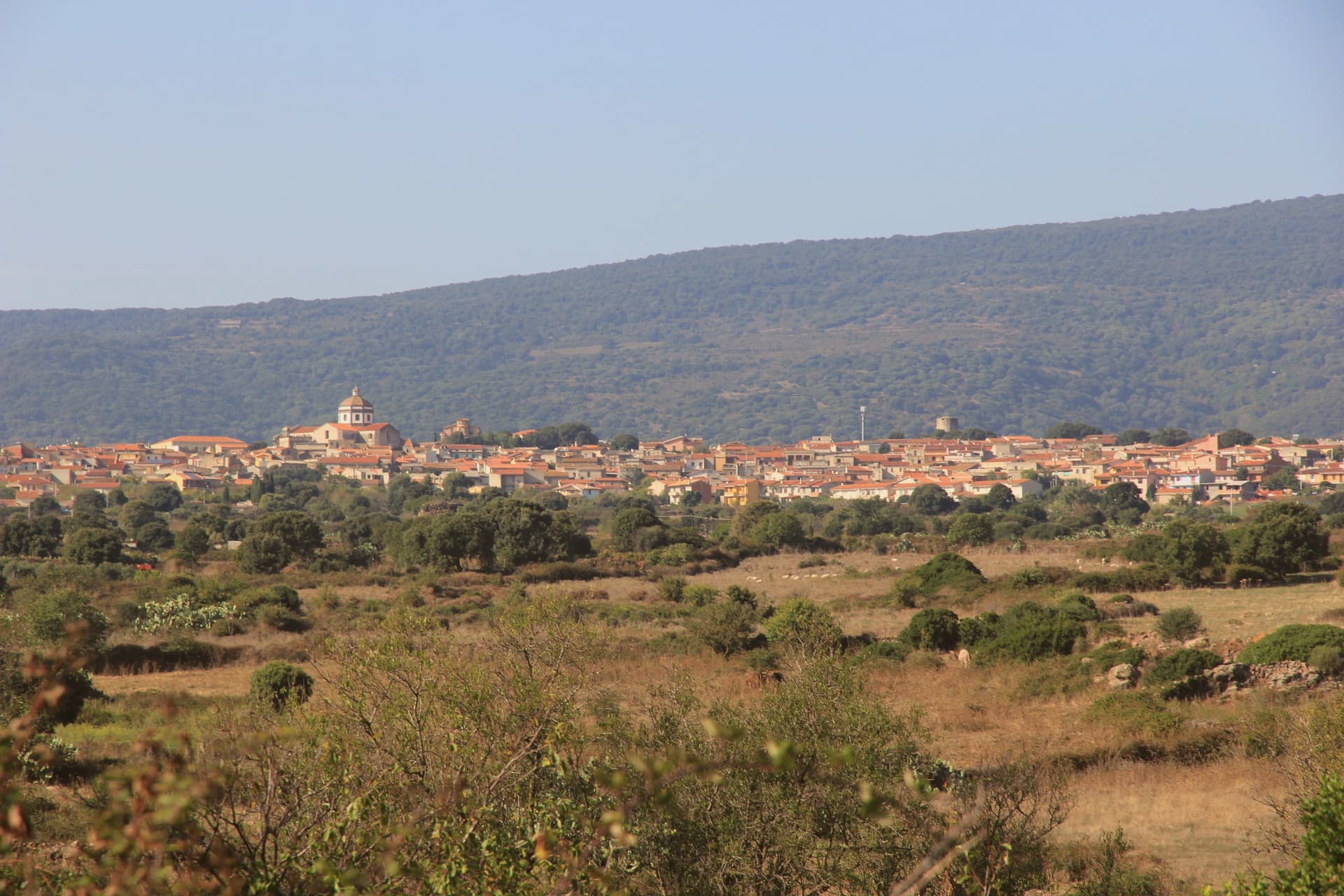
 The best coastal towns in the province of Sassari7 towns, Alghero among them.
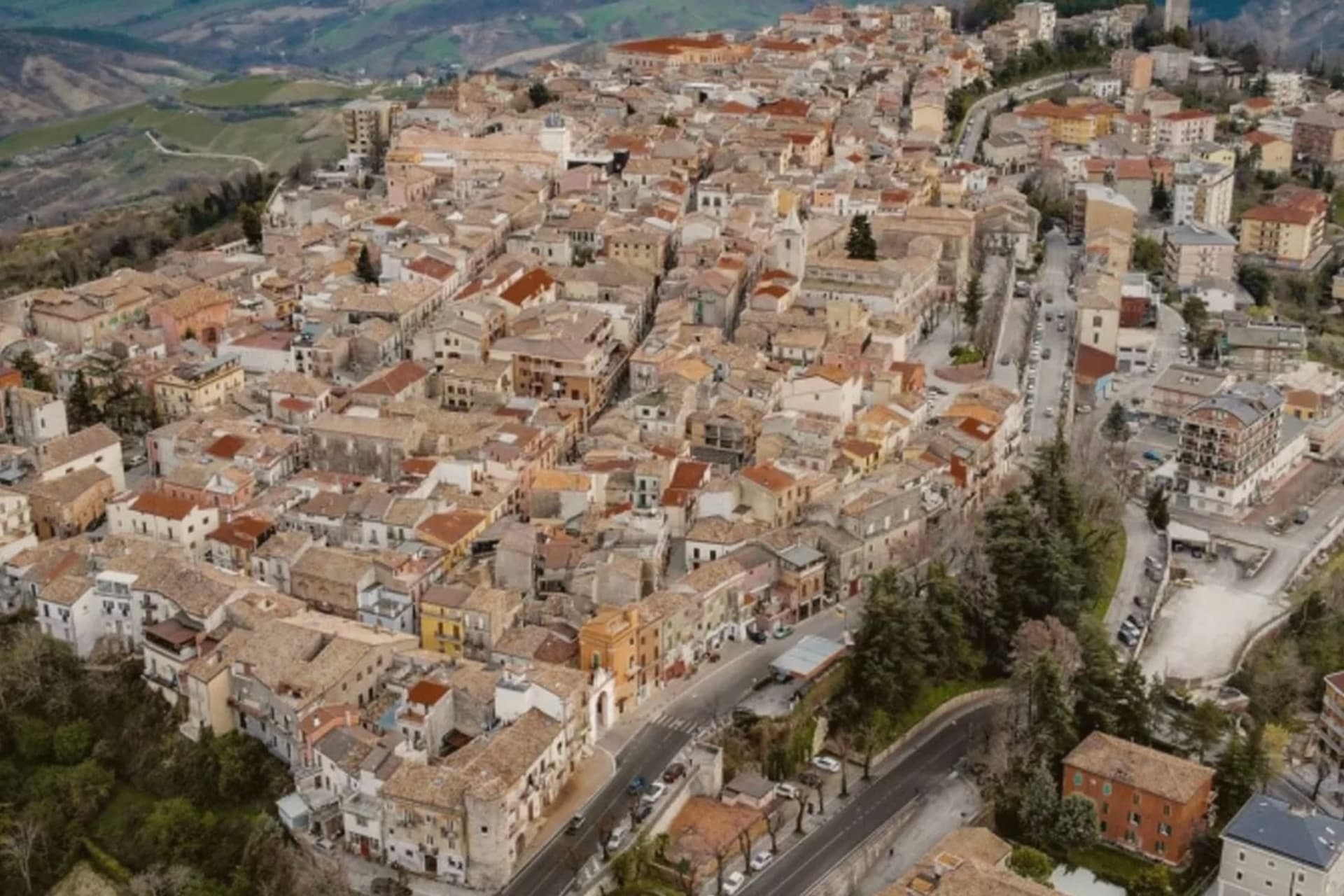
 The best olive oil towns in Sardegna7 towns, Alghero among them.
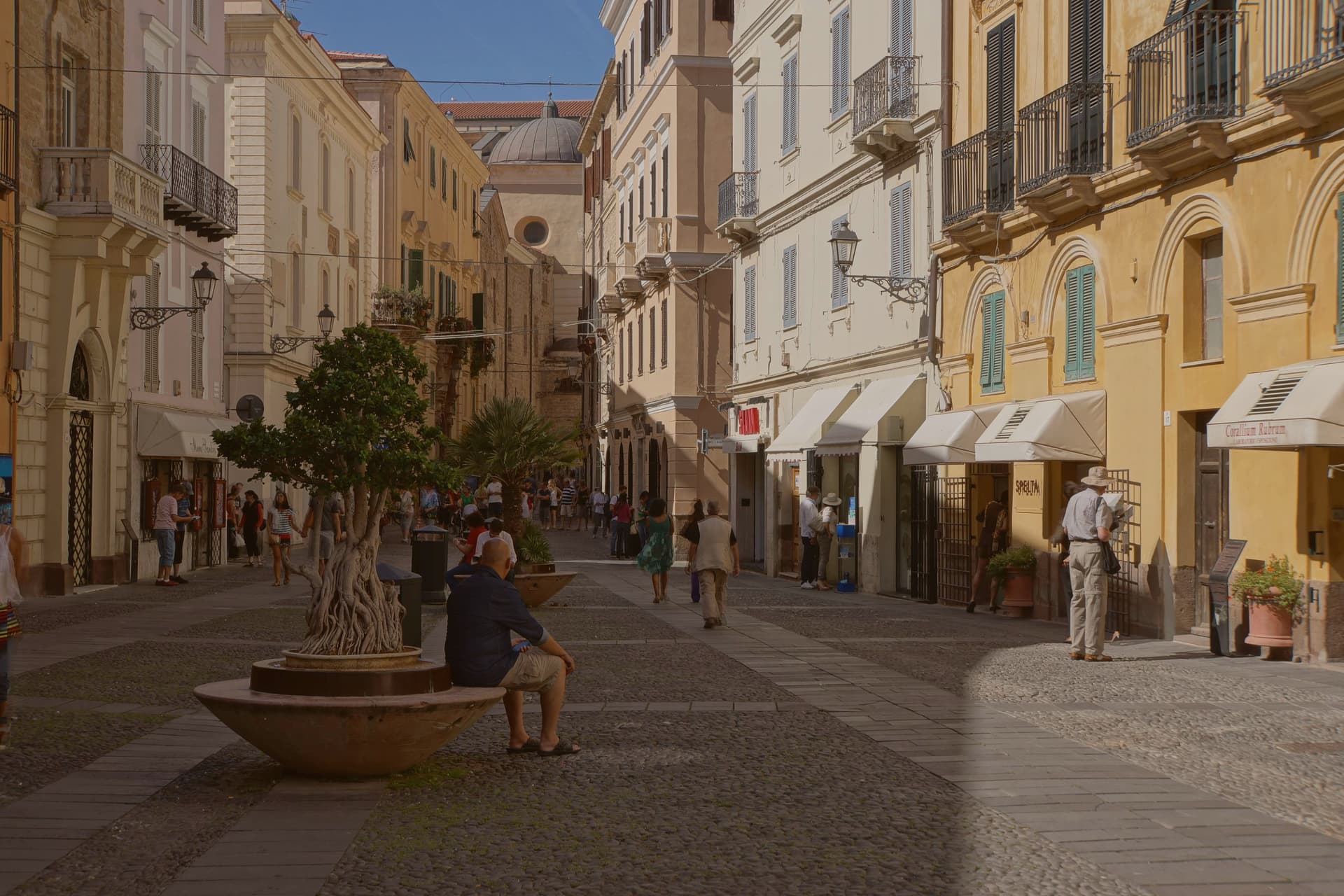
 Every town in our catalogue you can reach by train, all of them, by region452 towns, Alghero among them.
How to get there
Alghero has its own airport (AHO).
From Cagliari (CAG), about 3h 39m by car.
There is a railway station in the comune, so you can arrive without a car.
Coming by train into Sassari? Alghero is about 36 minutes away by road.
What to see
Cattedrale di Santa Maria
Catalan Gothic building with a late Renaissance and Baroque interior, three naves inside, the bell tower a signature of the old town skyline.
Bastioni Marco Polo
Golden sandstone walls with a string of defensive towers, forming the seaward edge of the centro storico.
Grotta di Nettuno
Karst cave at Capo Caccia with stalactites and underground pools, reached by the 656-step Escala del Cabirol or by boat from the marina.
Capo Caccia
Limestone promontory dropping to the sea, part of the Porto Conte Natural Park, the western anchor of the Alghero coast.
Centro storico catalano
Walled old town of narrow streets, churches, and palazzi, where Algherese Catalan is still spoken alongside Italian and Sardinian.
Necropoli di Anghelu Ruju
Pre-Nuragic hypogeum complex nine kilometers north of the city, 38 rock-cut tombs from the Ozieri culture, third and fourth millennia BC.
The slow-trip planner
Building a trip? Find where Alghero fits in a slow Italy circuit.
Answer five questions. We will shape a geographically coherent slow trip from the 1,000 Italian towns most travelers skip. Yours to save and share.
We recommend
Where to eat
Not our picks, but places the guides put their name to: a Michelin star, a Gambero Rosso fork, a Slow Food snail, a Michelin Key for the hotels. Worth a table, a counter, or a night when you pass through.
La SalettaRistorante
La Saletta has two Gambero Rosso forks (83/100) and a spot in the Michelin Guide.
MuscioraRistorante
Musciora carries one Gambero Rosso fork (79/100), plus a spot in the Michelin Guide.
Sa MandraAgriturismo
Sa Mandra has a Gambero Rosso listing and a spot in the Michelin Guide.
Al RefettorioRistorante
Al Refettorio has one Gambero Rosso fork (77/100) to its name.
Il PavoneRistorante
Il Pavone holds a spot in the Michelin Guide.
RafelRistorante
Rafel holds two Gambero Rosso forks (81/100).
Through the year
What happens here
Feasts and festivals that come back year after year. We give the month rather than the date, because the date moves and the month rarely does. Check with the source before you plan a journey around one.
Oktoberfest Algheropatron saint's feast
usually held across September and October. sagritaly.com
Living here
- Population 42,380
- In-betweeni
- Pharmacy in town
- High school within a 30-minute drive
- Train station in the comune
- Nearest airport Cagliari, 3 h 39 min drive
- Regional capital Cagliari, 3 h 26 min drive
Common questions
- What is Alghero known for?
- Alghero is the Catalan city of northwest Sardinia, repopulated by Peter IV of Aragon in 1354.
- Where is Alghero?
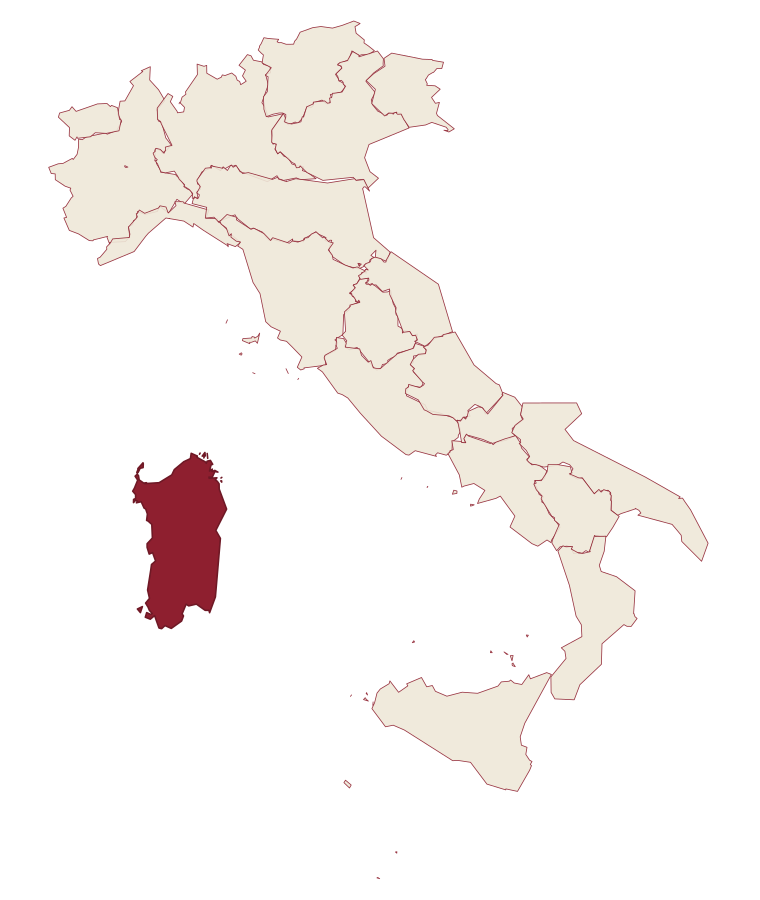
- Alghero is a comune in the province of Sassari, in Sardinia, at 7 meters above sea level.
- What is the nearest airport to Alghero?
- There is an airport in the comune (AHO).
- Can you get to Alghero without a car?
- Yes. There is a railway station in the comune, so you can arrive by train.
- When is the best time to visit Alghero?
- Best in May–Oct. July is the warmest month, averaging 31 degrees, and December the wettest, with about 12 rain days.
- Is there a sagra or a festival in Alghero?
- Yes. Oktoberfest Alghero. September is when the first of them falls.
- Which other towns are like Alghero?
- Oristano, Tortolì and La Maddalena.
- How many people live in Alghero?
- 42,380 at the 2023 count.
Tags & datadesignations · numbers · sources
Recognised as
The numbers
- Elevation: 7 m
- Population: 42,380
- Surface area: 225.4 km²
These figures were compiled from public directories: ISTAT, OpenStreetMap and Wikidata, and from the official listings of the guides named on this page. Town details change; verify with official sources before you travel.
Similar
Towns like Alghero
Oristano
Province: Oristano
both on the Sardinian coast · both over 10,000 people
Tortolì
Province: Nuoro
both on the Sardinian coast · both over 10,000 people
La Maddalena
Province: Sassari
both on the Sardinian coast · both over 10,000 people
Palau
Province: Sassari
both on the Sardinian coast · both near sea level
Monopoli
Province: Bari
both over 10,000 people · both near sea level
Chioggia
Province: Venezia
both over 10,000 people · both near sea level
🌳 Parco Regionale
More Parco Regionale towns
Castelvecchio Subequo
Province: L'Aquila
At 409 meters in the Subequana valley, the Roman Superaequum and Franciscan station where the saint himself was given land for a convent built between 1221 and 1261.
Goriano Sicoli
Province: L'Aquila
At 720 meters in the Subequana valley, a medieval village drawn by M.C. Escher in 1929 keeps a May ritual folklorists trace to Demeter.
Ovindoli
Province: L'Aquila
At 1,375 meters on the Altopiano delle Rocche, the closest serious ski station to Rome, working since 1959 on the slopes of Monte Magnola.
Pescina
Province: L'Aquila
A Marsica town at 735 meters, on the rim of the drained Fucino basin, that lost five thousand of six thousand people in a single morning in 1915.
Accettura
Province: Matera
A 770-meter village in the Gallipoli Cognato park where, each Pentecost, a Turkey oak is married to a holly tree.