
Molise · Campobasso
Civitacampomarano
The Molisan ghost-borgo of 302 residents that turned its abandoned centro storico into an open-air street-art village.
- Best time
- May–Sep
- By car
- 1 h 47 min from Pescara
- Population
- 302
Known for
CVTÀ STREET FEST
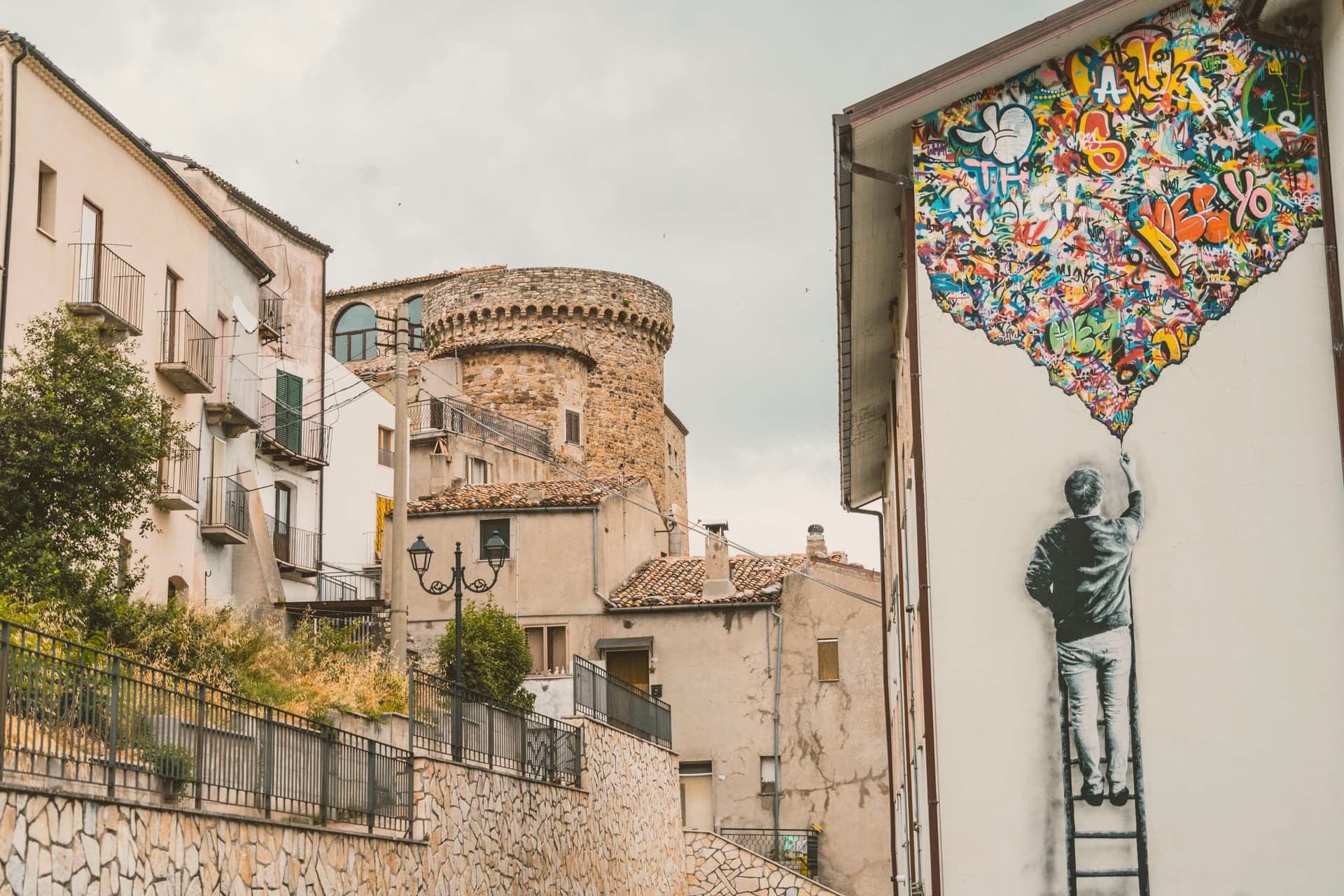
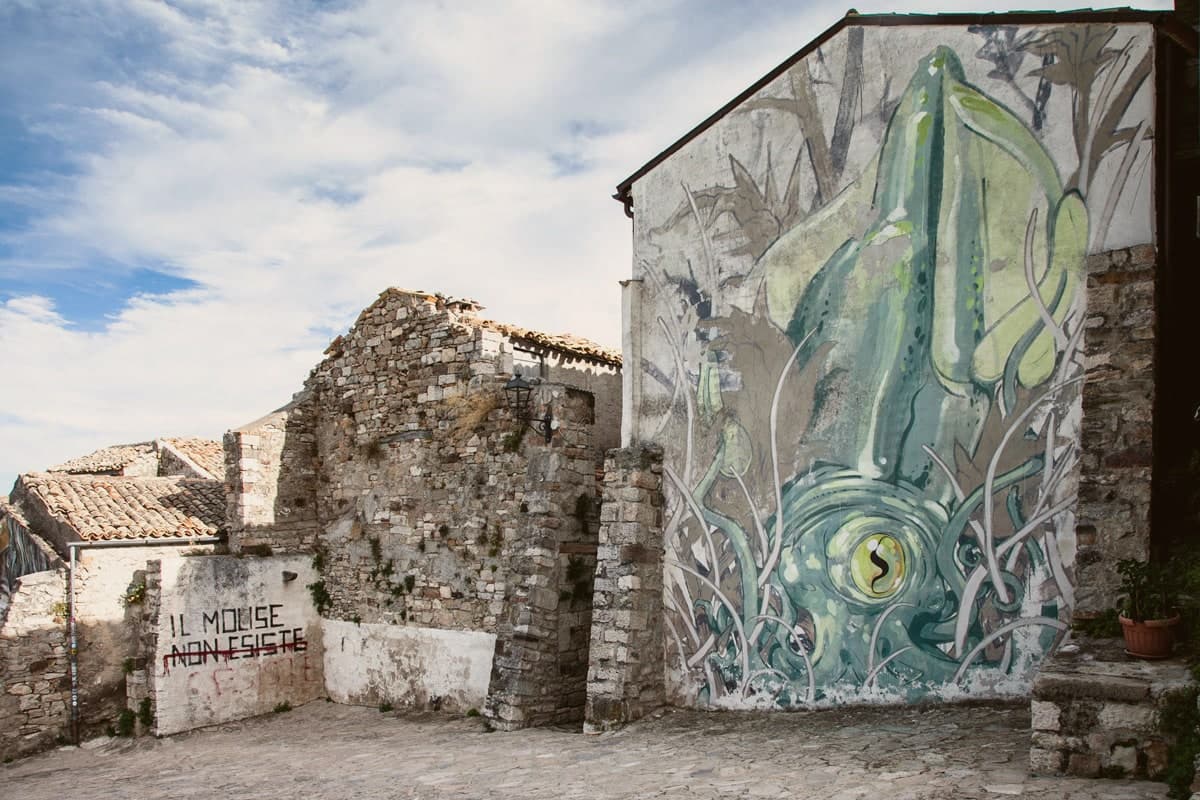
Italy's most ambitious small-town street-art festival since 2016, over 30 international murals integrated into the abandoned centro walls. July annually.
CASTELLO ANGIOINO
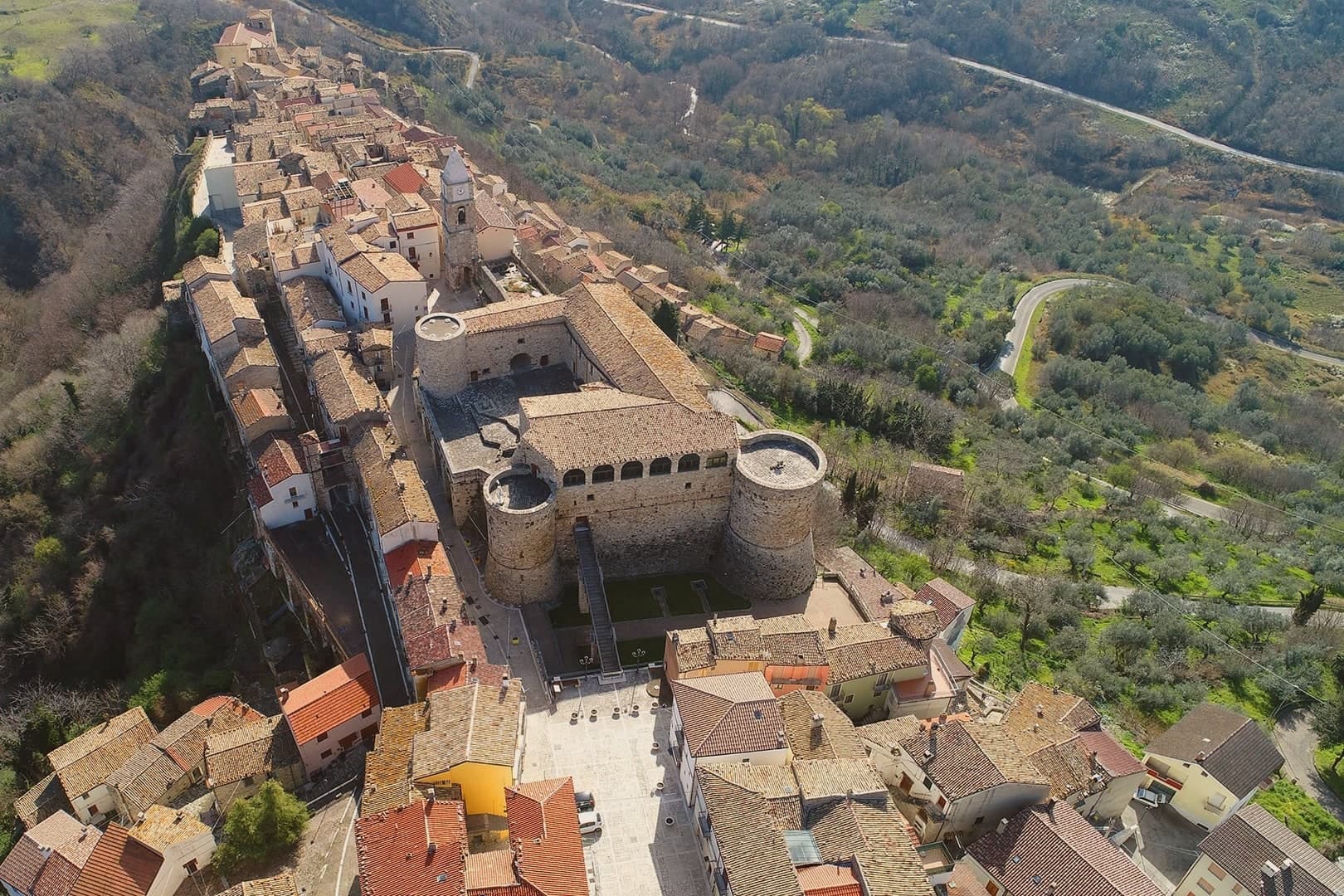
11th-c castle on a tufa spur, expanded 14th-c by the Angevins. Anchor of the centro with panoramic Trigno valley views.
REINVENTED GHOST-BORGO
From 1,900 residents in 1951 to 302 today, the street-art festival turned the depopulation story into a destination.
CUOCO'S BIRTHPLACE
Vincenzo Cuoco (1770-1823), the jurist and historian of the 1799 Neapolitan revolution. House-museum in the centro.
When to visit
Best · May–Sep
- J10°
- F12°
- M13°
- A16°
- M21°
- J27°
- J31°
- A30°
- S25°
- O21°
- N15°
- D11°
- Best
- Hot or crowded
- Quiet
- Mostly closed
Daytime averages, 2020–2024. Weather data by Open-Meteo.com.
The festa: San Liberatore, 13 May
Why come
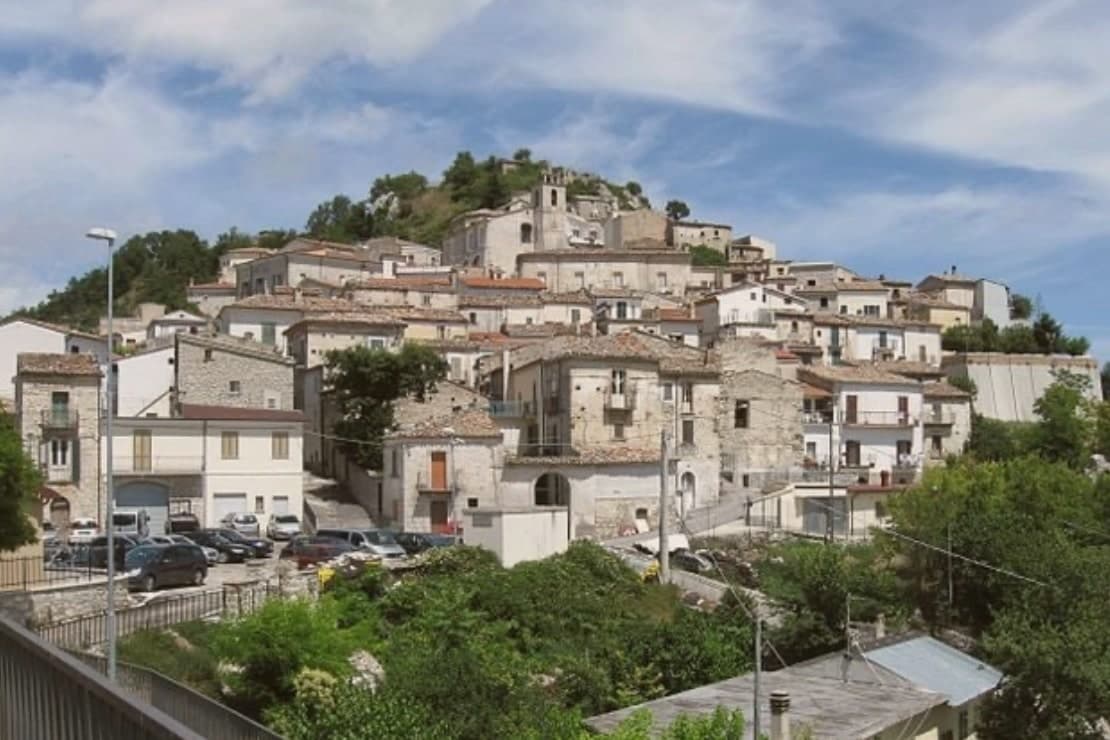
Civitacampomarano sits inland in Molise on a tufa spur above the upper Trigno valley, one of the region's smallest and most depopulated borghi. The numbers set the scene: 1,900 residents in 1951, 302 today, half the houses in the centro storico left empty or roofless. In 2015 a local activist, Ylenia Carelli, invited the Neapolitan street artist Biancoshock to paint a wall. That single invitation became, in 2016, a curated annual festival inviting international street artists to work across the abandoned walls of the centro, and it has continued every July since.
The historical layer of the town sits alongside this newer one rather than beneath it. The castle anchors the upper part of the settlement on its spur, the restored Romanesque church and the birthplace-museum of the 18th-century jurist sit within the same short walk, and the murals are painted directly onto the houses between them, so the medieval fabric and the contemporary paint occupy the same narrow streets rather than separate zones. Outside festival season the murals remain visible year-round, and the whole centro is walkable in under an hour.
Molisan mountain food fills the gaps between sights: pampanella di San Martino in Pensilis, slow-roasted pork with peperoncino, caciocavallo, pasta alla chitarra, the local Tintilia red. Services are minimal, as in most small Molise borghi, with the nearest petrol station 20 km away. What the numbers and the geography add up to is a village that did not fight its own emptying out so much as repurpose it, turning bare walls left by departure into the surface the town is now known for.
The Sunday letter
Civitacampomarano is on our list. Its letter is still to come.
We are writing about all 1,000 of these towns, one at a time, in a free letter every Sunday: the photo, the food, the festa. That is our mission. Sign up and you will be there when Civitacampomarano comes up. By Peter & Sophia, from Pietrasanta.
Read on
Civitacampomarano in our articles
How to get there
From Naples / Salerno (NAP), about 2h 38m by car.
Bari / Brindisi (BRI) is about 2h 52m away.
By car from the centre of Pescara 1h 47m, Naples 2h 43m or Salerno 3 hours.
What to see
CVTà Street Fest murals (30+)
The murals climb fading stone facades and wrap around windows, framed by the medieval vicoli. Artists include Bifido, Hitnes, Alice Pasquini, Borondo, Vesod and Millo. The effect is a curated open-air gallery rather than a graffiti-pile, and it has been photographed and discussed across European street-art press.
Castello Angioino
A 16th-c circular tower marks the later addition to the Angevin expansion. Views reach across the wooded valleys of the Trigno tributaries below the spur.
Chiesa di Santa Maria Maggiore + Casa Cuoco
The restored Romanesque church sits near the house where Cuoco was born, now a museum holding the memory of his account of the revolution.
Trigno valley + centro walk
Narrow medieval vicoli and stone houses lead to the Belvedere, a lookout over the upper Trigno valleys, all within an hour's walk of the centro storico.
The slow-trip planner
Building a trip? Find where Civitacampomarano fits in a slow Italy circuit.
Answer five questions. We will shape a geographically coherent slow trip from the 1,000 Italian towns most travelers skip. Yours to save and share.
Living here
- Population 302
- In-betweeni
- Pharmacy in town
- High school within a 30-minute drive
- Nearest airport Naples / Salerno, 2 h 38 min drive
- Regional capital Campobasso, 43 min drive
Common questions
- What is Civitacampomarano known for?
- Civitacampomarano is the Molisan ghost-borgo of 302 residents that turned its abandoned centro storico into an open-air street-art village.
- Where is Civitacampomarano?
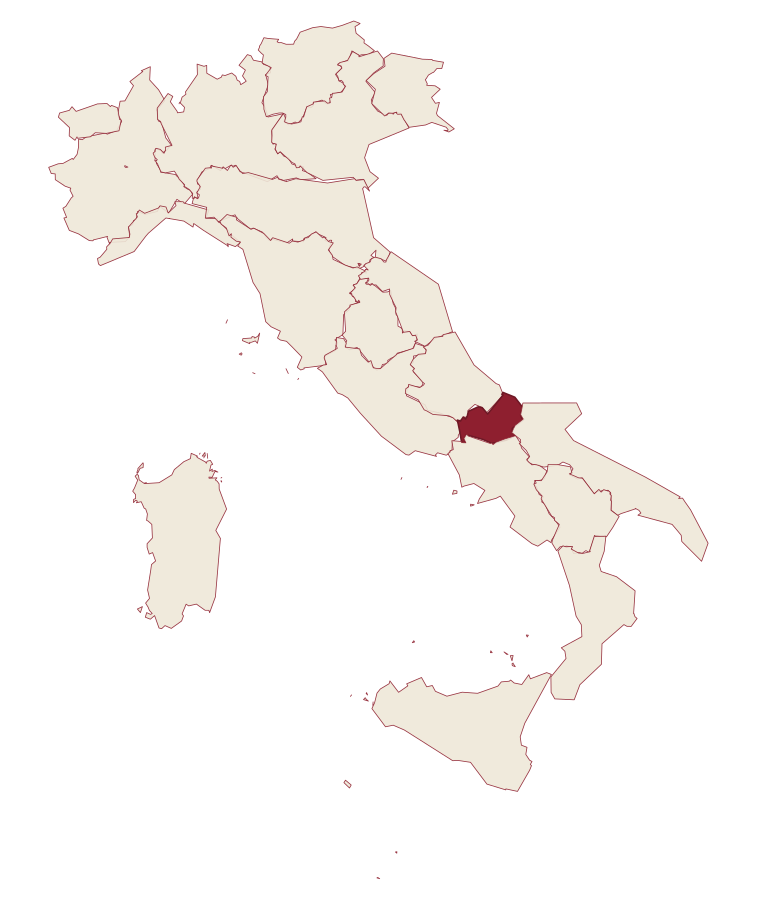
- Civitacampomarano is a comune in the province of Campobasso, in Molise, at 520 meters above sea level.
- What is the nearest airport to Civitacampomarano?
- Naples / Salerno (NAP), about 2h 38m by car.
- How long is the drive from Pescara to Civitacampomarano?
- About 1h 47m by car.
- When is the best time to visit Civitacampomarano?
- Best in May–Sep. July is the warmest month, averaging 31 degrees, and November the wettest, with about 14 rain days.
- Is there a sagra or a festival in Civitacampomarano?
- The town keeps its patron saint's day: San Liberatore, 13 May.
- Which other towns are like Civitacampomarano?
- Bagnoli del Trigno, Scapoli and Furore.
- How many people live in Civitacampomarano?
- 302 at the 2023 count.
Tags & datadesignations · numbers · sources
The numbers
- Elevation: 520 m
- Population: 302
- Surface area: 38.89 km²
These figures were compiled from public directories: ISTAT, OpenStreetMap and Wikidata, and from the official listings of the guides named on this page. Town details change; verify with official sources before you travel.
Similar
Towns like Civitacampomarano
Bagnoli del Trigno
Province: Isernia
both inland in Molise · both under 1,000 people
Scapoli
Province: Isernia
both inland in Molise · both under 1,000 people
Furore
Province: Salerno
both under 1,000 people · both hill towns
Guardialfiera
Province: Campobasso
both under 1,000 people · both hill towns
Seborga
Province: Imperia
both under 1,000 people · both hill towns
Monte Rinaldo
Province: Fermo
both under 1,000 people · both hill towns