
The best towns known for their meat within two hours of Genoa
Liguria is known for basil and anchovies, but climb the valleys behind the coast and the food turns to meat. Up where the chestnut woods start and the houses are built of grey local stone, the trattorie serve slow-cooked beef with potatoes, wild boar in red wine, salame sliced thick onto a board with a glass of Ormeasco. These are protected production zones, which means the animals are raised and the pork cured inside a defined area with rules about how it is done. Autumn is the season, when the fires are lit and the markets fill with cheese, mushrooms and cured sausage.
Most visitors to this part of Italy stay on the water, and the queue of day-trippers heading for the Cinque Terre or the beaches around Alassio means the coast road is solid from June onwards. It is understandable: the sea is right there, the focaccia is good, the trains are frequent. But the coastal towns cook for holidaymakers, and the menus repeat themselves from one to the next. The inland kitchens have a different clientele, largely local, and the meat is the reason.
The same valleys carry on past the last beach umbrella. Follow the Neva, the Arroscia, the Bormida or the Erro inland and the road climbs through terraces into pasture and woodland, and the villages that sit along it are the ones with the butchers and the family-run osterie. Several are reachable from Genoa in well under two hours by car, which makes them a plausible lunch rather than a project. Fewer people go, and the tables are easier to get.
Of the 96 communes we have mapped in a 120-minute drive of Genoa, 7 qualify as towns known for their meat: each sits inside the production zone of a protected meat. The smallest, Castelvecchio di Rocca Barbena, has 130 residents.
If you are still choosing, we have also written The best towns known for their meat within two hours of Turin and The 10 best hill towns within 90 minutes of Genova.
Castelvecchio di Rocca Barbena
Why visit Castelvecchio di Rocca Barbena
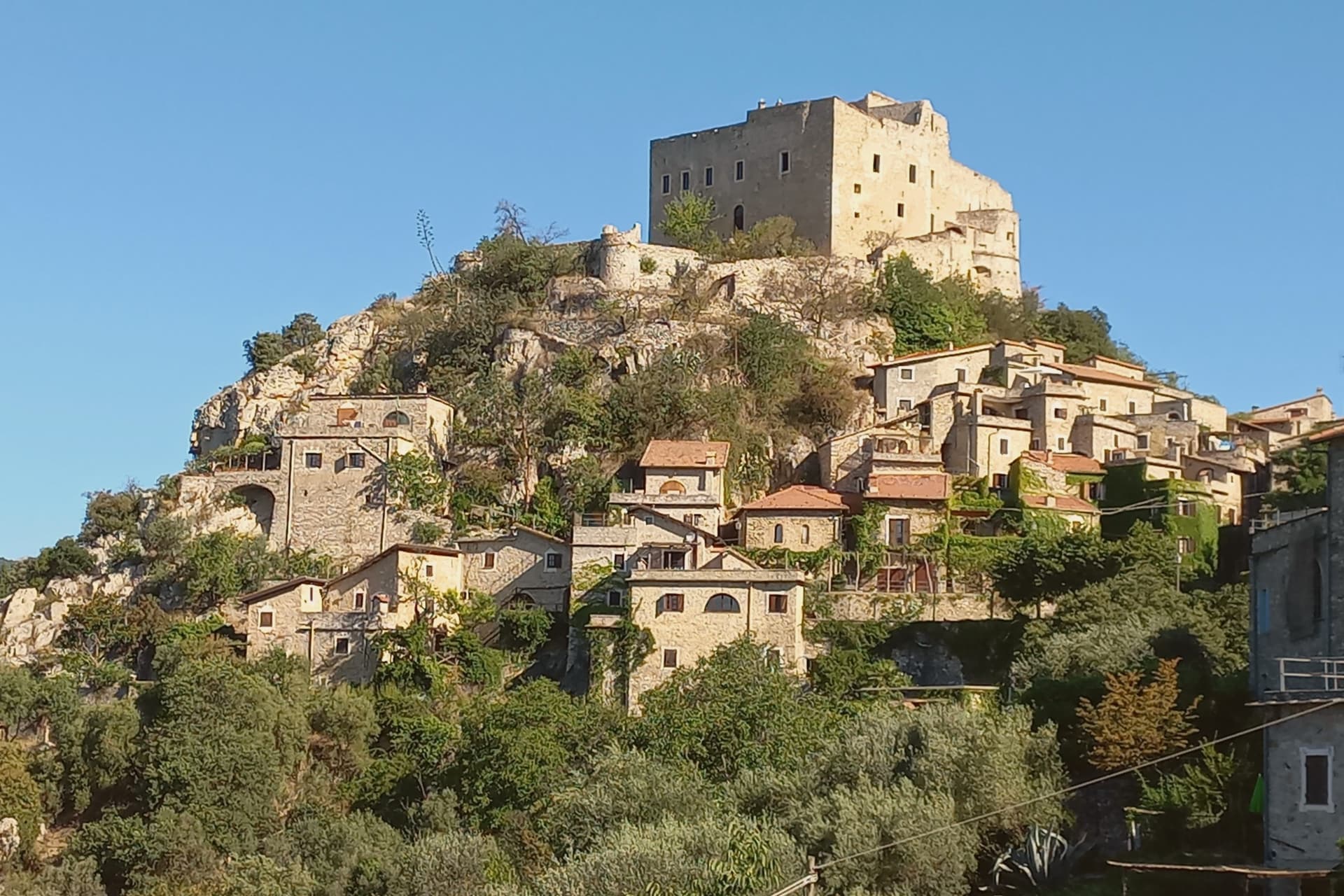
The village takes its second name from the outcrop at whose southern foot it sits, above the valley that gives the area its own name. It dates to the eleventh century and was a fief of the Marquis of Clavesana through the twelfth and thirteenth, before losing importance to neighboring Zuccarello.
It was sold to the House of Savoy in 1623, besieged in 1672, and ceded to the Republic of Genoa. The commune is the second-smallest in Savona province by population.
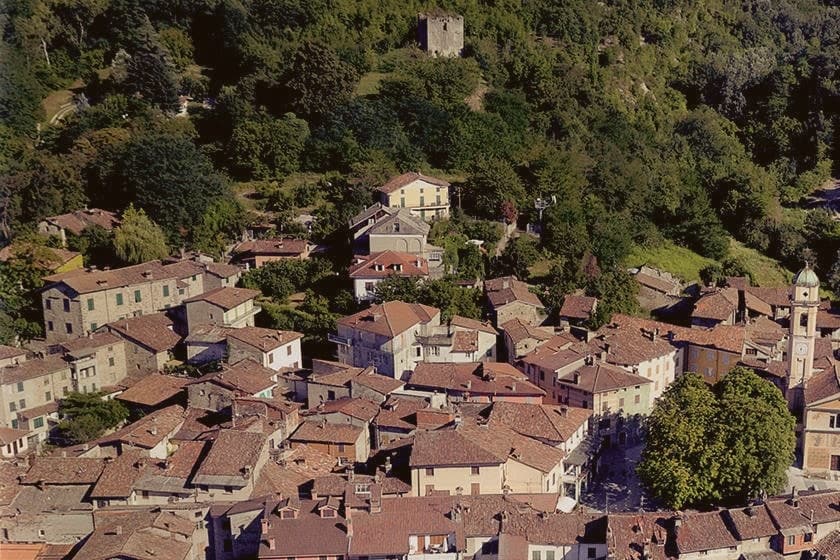
The fortress stands above the rooftops, reached by its own footpath, while the old core occupies the ground below it, houses and passages knit together by the vaulting that has kept them standing through the region's earthquakes. The parish church sits within that same fabric, its bell tower the one part of the settlement visible from the road below.
What the sequence of ownership and siege did not undo, the building method did: a settlement still standing because its stone was braced to move with the ground rather than break against it.
What to see in Castelvecchio di Rocca Barbena
- Castello dei Clavesana. Quadrangular fortress later held by the Del Carretto after the Clavesana line, square-walled and partly collapsed from old sieges, reachable only on foot and still in private ownership.
- Chiesa dell'Assunta. Parish church rebuilt on a medieval core, with an arcaded bell tower visible from the valley road.
- Centro storico. A sequence of arched passages where stone houses lean on each other, the streets passing under the load-bearing vaults below the castle.
How to get to Castelvecchio di Rocca Barbena
Genova is roughly 93 minutes away by road.
Our tip
April through June and September through October are the dry months in the Val Neva, with mild temperatures at 420 meters and the rock face of Rocca Barbena clear of haze. July and August warm up but the village sits high enough above the coastal corridor to stay tolerable; locals leave the shutters closed in the afternoon. November through March is quiet.
Zuccarello
Why visit Zuccarello
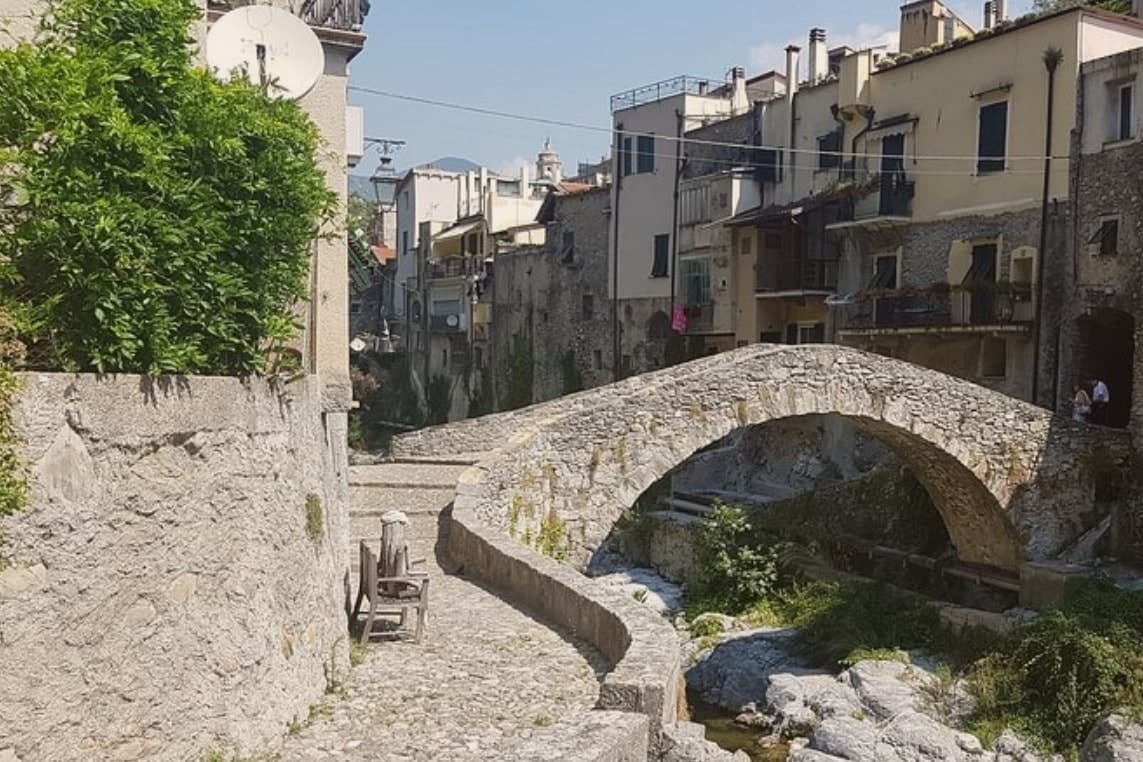
Zuccarello sits at 130 meters in the lower Neva valley, seven kilometers north of Albenga and the coast. The borgo was founded in 1248 by the inhabitants of the surrounding valley together with the Marquises of Clavesana, laid out as a single porticoed street that still runs the length of the town, with the bridge closing it off to the south and the church marking its far end to the north.
The castle stands above both, on the hill, the seat from which the marquises held the place. The Marquisate of Zuccarello passed to the Del Carretto branch and ruled the upper valley as an independent fief until the seventeenth century.
It was into this family that the woman born in the town in 1379 belonged, and it was this family's alliance with Lucca that took her away from it: she married to seal the connection between the two houses and died at twenty-six giving birth to her second daughter. The valley that produced her is a minor tributary above a coastal town, and the marble sarcophagus that made her name lasting was carved and placed far from here.
What remains in Zuccarello is the setting rather than the monument: the street, the bridge, the ruined seat of the family, and a house pointed to as the one where she was born.
What to see in Zuccarello
- Ponte Medievale sul Neva. Late medieval, restored in the nineteenth century. The single arch clears the riverbed in one span, and the hump in the deck is steep enough to hide the far bank until the crown of the arch.
- Via Centrale. The length of it reads as one built gesture rather than a row of separate houses: the arcades never break stride from one end of the borgo to the other.
- Castello dei Del Carretto. Ruined fortress on the hill above the village, residence of the Del Carretto marquises, four cylindrical towers and a central keep.
How to get to Zuccarello
Genova is roughly 82 minutes away by road.
Our tip
April through June and September to October are the windows when the Neva valley walks open and the borgo's porticoes hold their shade. The Festa Medievale in the second half of July fills the main street with costumed crafts and music for two weekends. July and August can hit 30 degrees on the valley floor, though the porticoes and the river keep the borgo cooler than the coast. Fiera Della Zucca falls in October.
Pieve di Teco
Why visit Pieve di Teco
Pieve di Teco sits at 240 meters in the middle Arroscia valley, twenty kilometers northwest of Imperia. The town was not a slow medieval accretion: it was deliberately founded in 1233 around a parish church, a mill and a well, on a flat stretch where the main roads of the upper valley converged, with the explicit purpose of running a market.
Manufactures followed of paper, leather, soap, ropes, cloth and footwear. The Clavesana family held it until 1386, when it passed to Genoa, and it changed hands repeatedly through the wars that crossed the Ligurian Apennines.
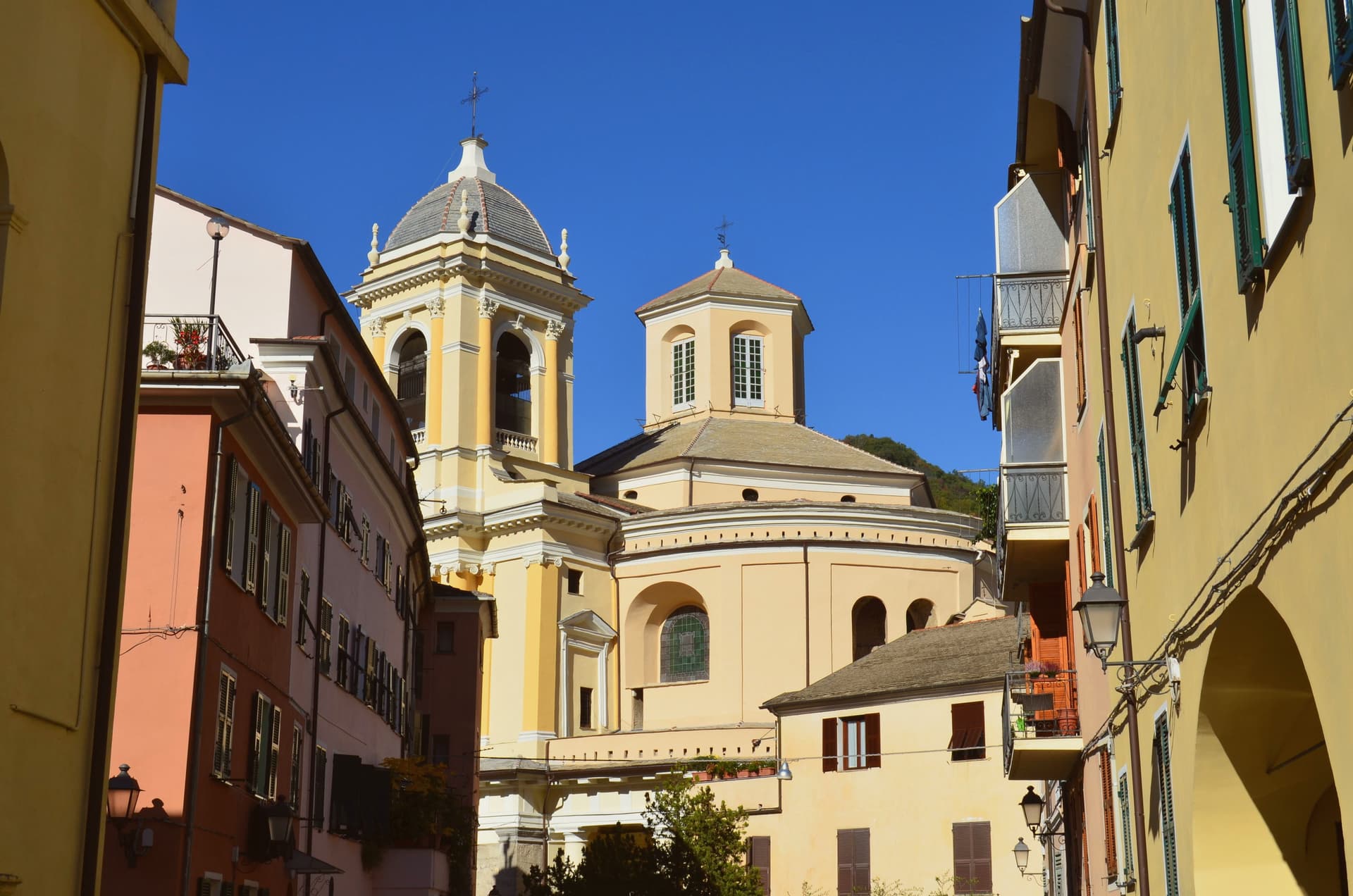
The Corso Mario Ponzoni, porticoed since the sixteenth century, runs the length of the original market layout, and the eighteenth-century Collegiata di San Giovanni Battista anchors one of its squares. The Teatro Salvini, with around a hundred seats, is the second-smallest functioning theater in Italy.
The commune is the seat of the Unione dei Comuni della Valle Arroscia.
What to see in Pieve di Teco
- Corso Mario Ponzoni. Porticoed market street running the length of the original 1233 town plan, with two-storey houses above the sixteenth-century arcades.
- Collegiata di San Giovanni Battista. Eighteenth-century collegiate church overlooking one of the squares on the Corso, the religious anchor of the upper Arroscia valley.
- Teatro Salvini. Roughly one hundred seats, the second-smallest functioning theater in Italy, still in regular use for chamber-scale productions.
How to get to Pieve di Teco
Genova is roughly 94 minutes away by road.
Our tip
April through June and September through October work well for Pieve di Teco. The Arroscia valley at 240 meters runs cooler than the coast through summer; July and August are warm but tolerable, with the porticoed Corso providing continuous shade. The autumn harvest brings the Taggiasca olive picking and the first pressings. Expo Valle Arroscia falls in September.
Pisa
Why visit Pisa
The Arno reaches the Ligurian Sea twelve kilometers past the city, and the river is what built it: an Arsenal on its banks built galleys for the Crusades, and Mediterranean trade paid for the walled compound northwest of the centro. That compound, inscribed by UNESCO as one of the first Italian sites in 1987, gathers four buildings of the same Pisan Romanesque school in one field, the cathedral, the baptistery, the cemetery cloister and the bell tower, close enough to read as a single composition rather than a set of monuments visited separately.
The city has a second center away from that field. Piazza dei Cavalieri became the Medici political seat after the republic fell, and the university founded in 1343 keeps both squares populated with people who live and work there rather than pass through.
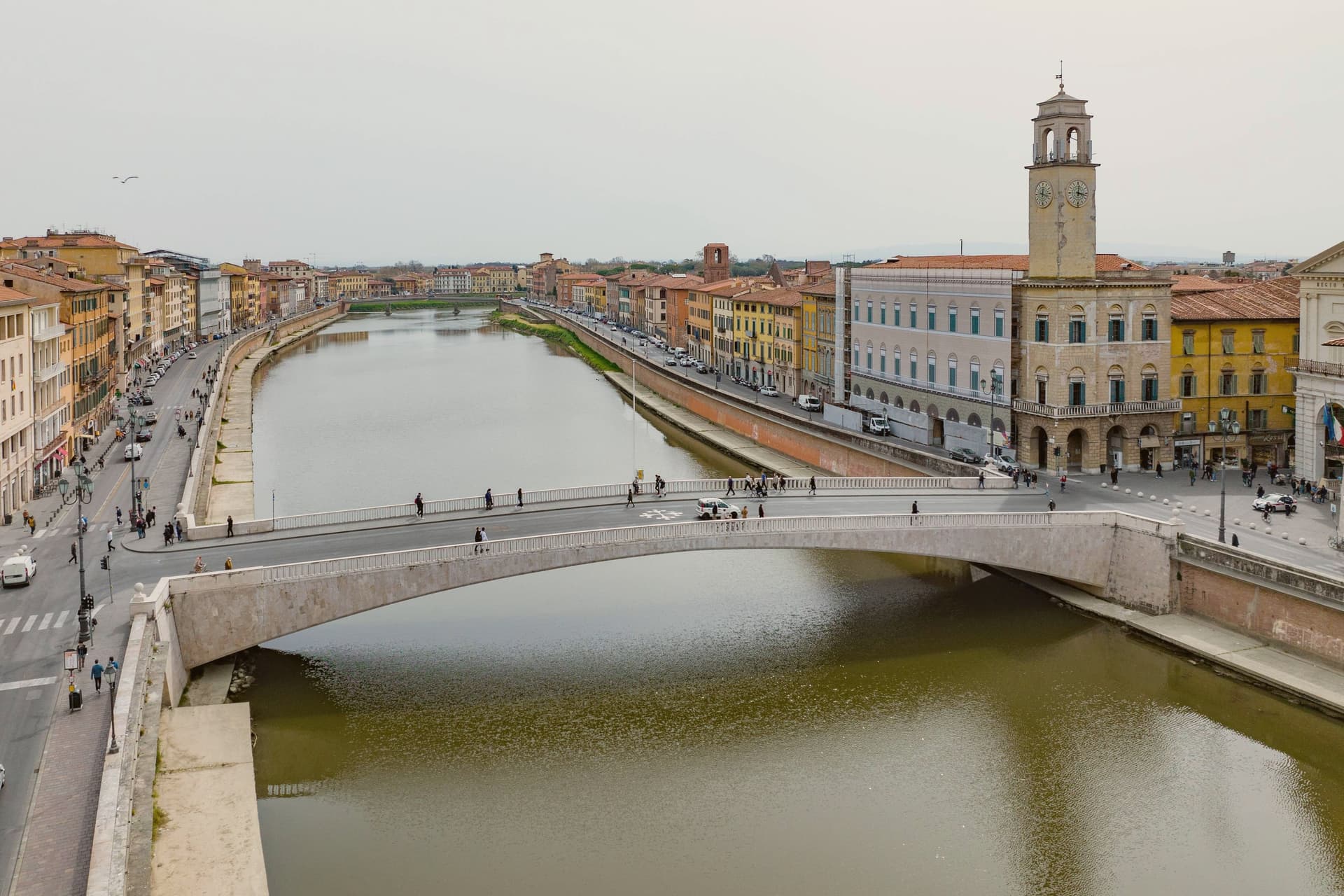
The Lungarni tie the two halves together physically, two quays following the river on both banks, lined with palazzi spanning the twelfth to the nineteenth century. What this adds up to is a town built in two unequal pieces: a religious and civic compound frozen at its medieval peak, and a working river city around it that never stopped adding centuries to its banks.
Ristorante Poldino, Caffè dell'Ussero, Erbaluigia and 1 more have been named by a guide.
What to see in Pisa
- Torre Pendente. Finished 1372, two centuries after it began, the lean is visible from ground level without needing to climb it, south of vertical against the other three white buildings of the square.
- Duomo di Pisa. Pisan Romanesque cathedral begun 1064 by Buscheto, financed from the Mediterranean trade, with bronze doors by Bonanno Pisano and a pulpit by Giovanni Pisano.
- Battistero di San Giovanni. Largest baptistery in Italy at 54.86 meters tall, begun 1152, Romanesque base and Gothic upper level, with a pulpit by Nicola Pisano.
How to get to Pisa
There is a railway station in the town, so you can arrive without a car and never need one while you are here. Pisa is roughly 16 minutes away by road.
✷ We have written about Pisa
“It was a Tuesday in January, ten degrees, the kind of soft grey Tuscan winter rain that does not quite commit to being rain, and what we wanted, in a way that surprised both of us, was a bowl of Japanese noodle soup. The nearest place to get one was Pisa.”
Read our piece on Pisa →Pisa | Beyond the Tower
Our tip
May, June, September and October are the months when the Lungarni are at their best, the temperature stays in the twenties, and the lines at Piazza dei Miracoli compress by mid-afternoon. The Luminara di San Ranieri, on 16 June, lights the riverbank with eighty thousand candles and is the night the city sees most. July and August are hot and humid, with the day-tripper waves from cruise ships at Livorno filling the compound from morning. Gioco del Ponte falls in June.
Sassello
Why visit Sassello
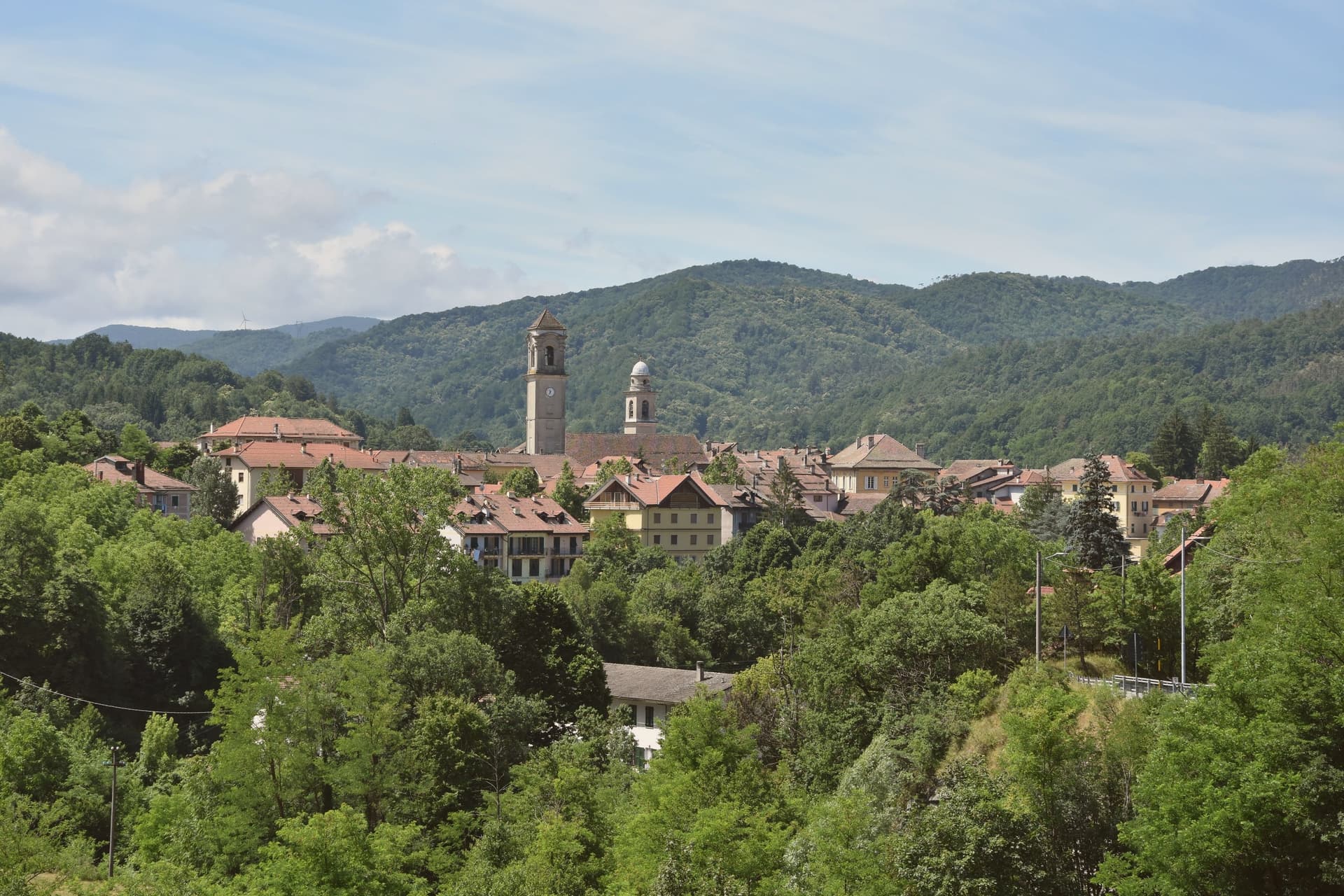
Sassello sits at 381 meters on the northern flank of the Ligurian Apennines, inside a UNESCO Global Geopark that stretches between Genova and Savona. The old village divides into two bastie: the Bastia Soprana, dating to the twelfth century, and the Bastia Sottana, founded by the Doria in the fifteenth, the two halves joined by stone bridges over the Sansobbia stream and threaded with frescoed palaces and baroque churches.
Most visitors arrive from Savona, thirty kilometers south, or from Genova, thirty-five east. The biscuit that carries the town's name past its own borders began in an ordinary kitchen: Geltrude Rossi ran an inn with a kitchen in the centro, and in 1860 started baking small almond biscuits she eventually named amaretti.
By 1892 they had a bronze medal at the Columbian celebrations; by 1911, gold in Paris. The Rossi and Virginia families still make them, and the town holds the trademark on amaretti morbidi di Sassello.
A hill town shaped by a river split and a fifteenth-century feudal addition has, almost as an aside, given its name to something baked in a kitchen and sent to Paris. The geography explains the two halves of the village; the biscuit explains why the name travels.
What to see in Sassello
- Centro storico. Two-bastia village of the twelfth and fifteenth centuries split by the Sansobbia, with frescoed palaces and baroque churches.
- Chiesa della Santissima Trinità. Parish church in the Bastia Sottana, baroque interior with stuccoed vaults and seventeenth-century altarpieces.
- Parco naturale regionale del Beigua. Geopark land stretching between Genova and Savona, reaching up to the peak that anchors it and gives the long sightline to the sea.
How to get to Sassello
Genova is roughly 72 minutes away by road.
Our tip
April through June and September into October are the strongest months for walking the Beigua and pairing the trails with the bakeries on Via Badano. July and August are warm but the elevation keeps the heat below the coastal numbers; the village fills with families from Savona and Genova on summer weekends. November through March is quiet, with the amaretti workshops in steady production for the holiday markets and the Beigua sometimes under snow above 1,000 meters. Festa dell'Amaretto falls in September.
Toirano
Why visit Toirano
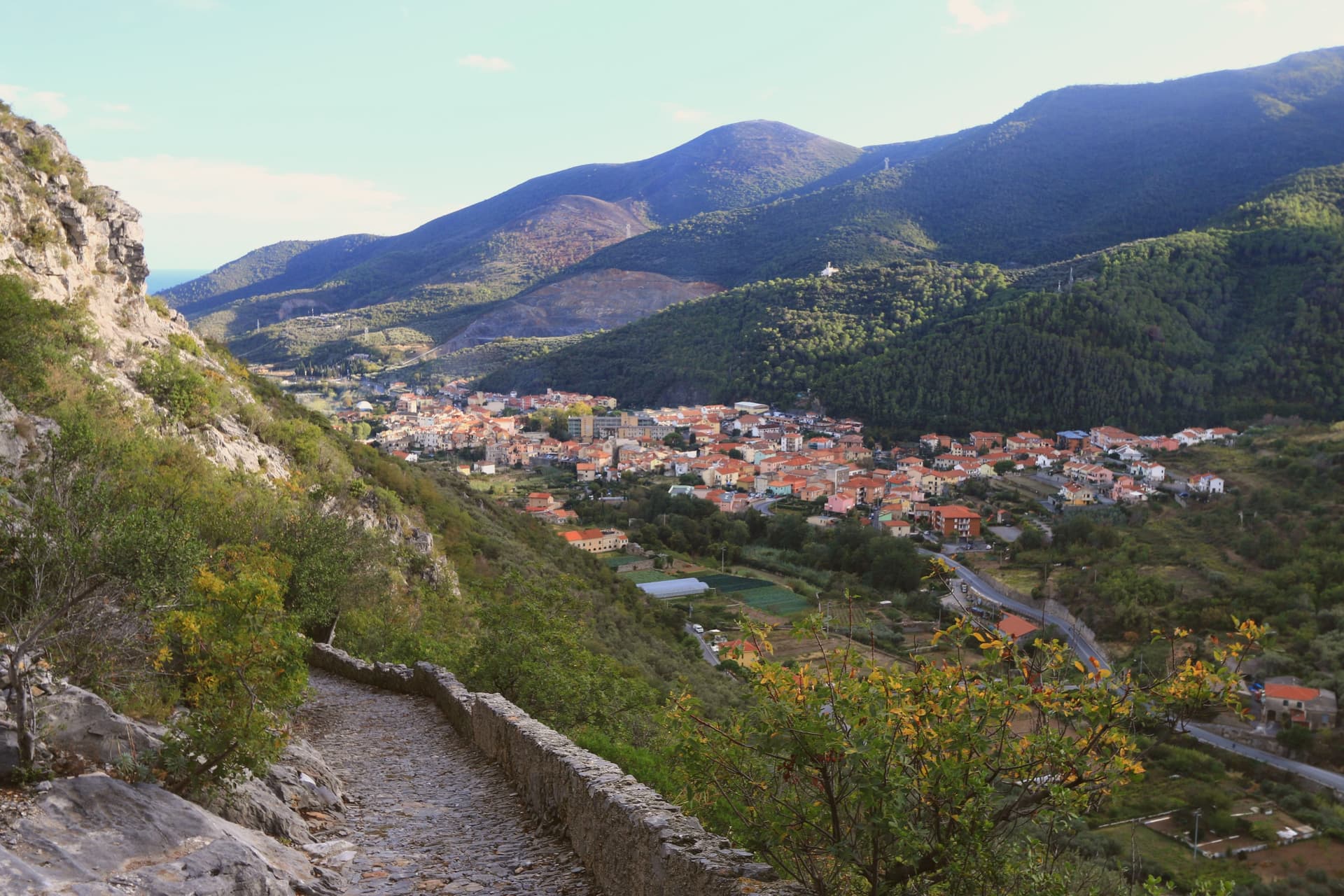
Toirano sits at the mouth of the Val Varatella, four kilometers inland from Loano on the Riviera di Ponente. The town's defining asset is underground: the Grotte di Toirano, a karst complex of four cavities discovered in 1950, two of them open to visitors.
The Grotta della Bàsura preserves the bones of cave bears piled in a chamber called the Cimitero degli Orsi and a set of human footprints dated to roughly 14,000 years ago, made by five Homo sapiens and a dog walking together through the cave. The village above the caves has the layout of a fortified borgo of the Genoese hinterland, with narrow streets, a thirteenth-century parish church, and a Museo Etnografico documenting the agriculture of the Varatella valley.
The combination of cave science and coastal proximity sends roughly 70,000 paying visitors underground each year.
What to see in Toirano
- Grotte di Toirano. Karst cave complex of four cavities, two open to visitors, with concretions of stalactites and the cave-bear deposits of the Bàsura.
- Grotta della Bàsura. Cave discovered in 1950, holding human and animal footprints dated to about 14,000 years ago and the Cimitero degli Orsi bear-bone deposit.
- Museo Etnografico della Val Varatella. Civic museum on rural life in the Varatella valley, with tools, looms and reconstructions of farmhouse interiors.
How to get to Toirano
Genova is roughly 74 minutes away by road.
Our tip
April through June and September into October are the best months for combining cave visits with hiking the Val Varatella, when the temperature inside the Bàsura, a steady 16 degrees, feels right against the outside air. July and August are crowded with day-trippers from the coastal resorts; book the cave tour in advance. Inside the caves the temperature does not change, so a winter visit is also viable.
Millesimo
Why visit Millesimo
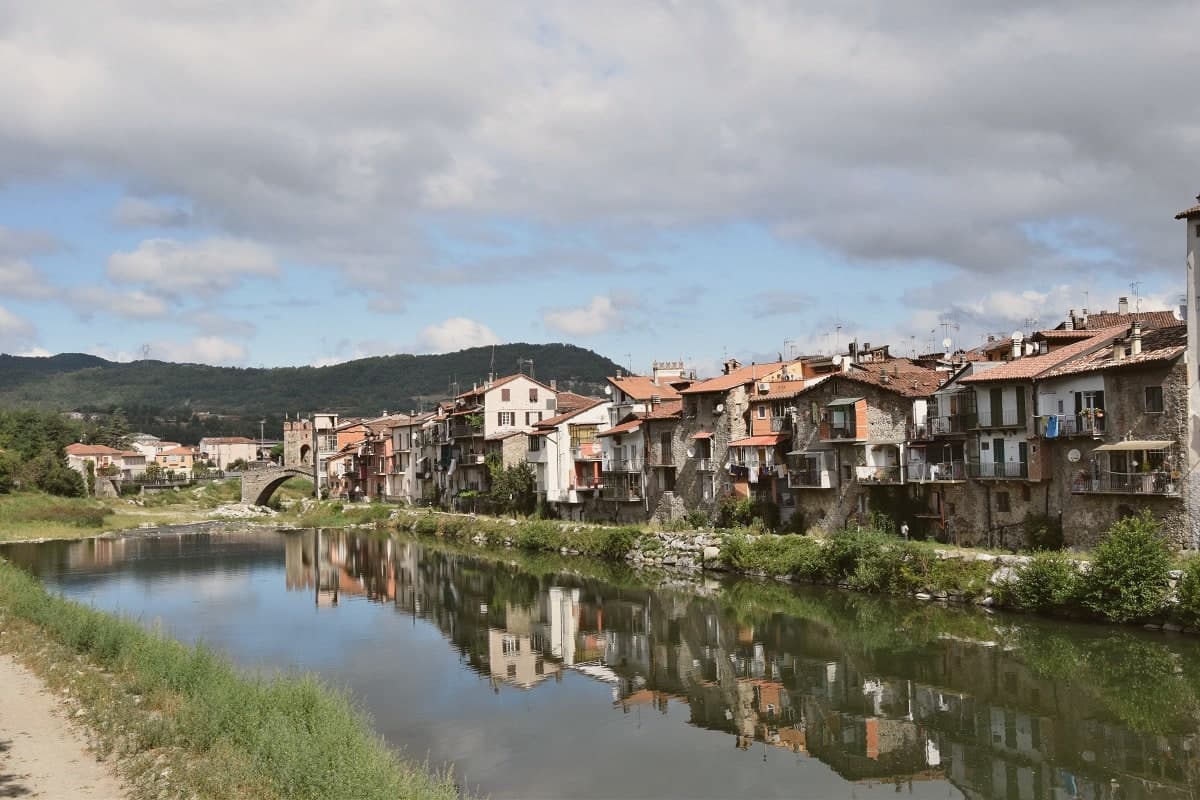
Millesimo sits sixty kilometers inland from Genoa, over the Apennine watershed, in the upper reaches of the valley that gives the wider area its name. Enrico II Del Carretto turned the village into a fortified borgo in 1206, and his successors raised the castle later in the same century on the high ground above the settlement.
The town itself grew on the right bank of the river below that castle, its stone houses laid out in a triangle around the central piazza, with the fortified bridge carrying the crossing at the valley floor and the pilgrimage sanctuary set apart on the outskirts as the valley's separate religious focus. More than three thousand casualties fell on each side when Napoleon Bonaparte defeated the combined Austro-Sardinian forces here on 13-14 April 1796, directing the campaign from the Del Carretto palazzo on the piazza that now serves as the town hall.
The pattern is one of a small defensive settlement whose river crossing, castle and family seat all sit within sight of each other, later put to use for a battle whose scale had nothing to do with the size of the place that hosted it.
Locanda dell'Angelo have been named by a guide.
What to see in Millesimo
- Ponte della Gaietta. The old fortified body still spans the river below the village, narrow enough that its defensive purpose is obvious from either bank.
- Castello Del Carretto. Tower, keep and east wall stand above the village on the high ground, the stronghold that gave the marquis line command of the valley approach.
- Palazzo Del Carretto. The family palazzo faces the central piazza and now serves as the town hall, its rooms the setting for the 1796 headquarters rather than a battlefield relic.
How to get to Millesimo
Genova is roughly 73 minutes away by road.
Our tip
April through June and September through October are the dry months in the upper Val Bormida. The interior of Liguria runs cooler than the coast at this elevation, with mild days and chilly evenings; the rivers run higher in spring after the watershed melt. July and August warm up but Millesimo's 429 meters stay tolerable. XXXIV Festa nazionale del tartufo della Val Bormida a Millesimo falls in October.
More from Anywhere Italy
- The best towns known for their meat within two hours of Turin
 The 10 best hill towns within 90 minutes of Genova
- The prettiest villages in the province of Savona
 The best hill towns within 75 minutes of Genoa
- The 9 best towns with a food festival in the province of Savona
- The best olive oil towns within two hours of Turin