
The best olive oil towns within two hours of Turin
The olive here is small, dark and slow to ripen, and the terraces that hold it are built of stacked slate and limestone, walls raised by hand and kept up ever since. Oil from these hills is mild rather than peppery, green-gold, good on boiled chard, on trofie with pesto, on a slab of focaccia still warm from the oven. Harvest runs through late autumn into winter, when the nets go down under the trees and the frantoi open their doors and the air in the valleys smells of crushed fruit. Behind the coast the villages are stone and stucco, ochre and dried-blood red, stacked up ravines that run inland towards the Piedmontese border.
People from Turin drive to the Cinque Terre, and in summer the trains between Levanto and La Spezia run full, the paths above the vineyards move at walking-queue pace and the harbours fill from mid-morning. It is a fine stretch of coast and it earned its reputation. It is also the wrong place to look for the olive, since the terraces there were built for grapes and the crowd arrives in the months when nothing is being pressed.
The same coast keeps going west, and so do the groves, thicker and older the further you get from the famous bit. Behind Savona and Albenga the valleys climb into olive country proper, mills working through the winter, castles above the villages, beaches that empty out once the school year starts. These are the towns in that stretch, all inside a protected oil zone, all reachable from Turin in the time it takes to have a long lunch.
Of the 84 communes we have mapped in a 120-minute drive of Turin, 7 qualify as olive oil towns: each sits inside the production zone of a protected olive oil. The smallest, Castelvecchio di Rocca Barbena, has 130 residents.
If you are still choosing, we have also written The best beach towns in the province of Savona and The prettiest villages in the province of Savona.
Castelvecchio di Rocca Barbena
Why visit Castelvecchio di Rocca Barbena
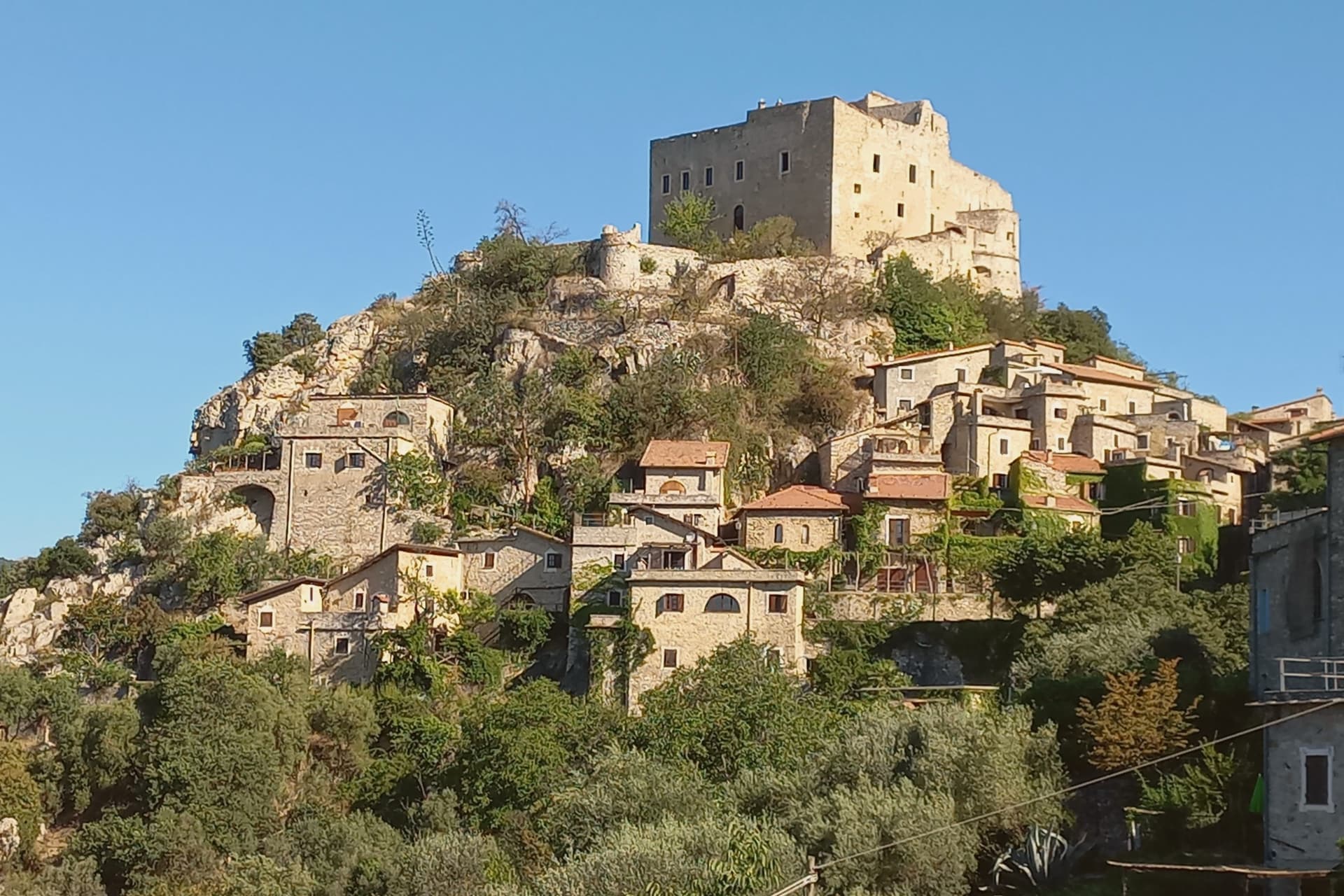
The village takes its second name from the outcrop at whose southern foot it sits, above the valley that gives the area its own name. It dates to the eleventh century and was a fief of the Marquis of Clavesana through the twelfth and thirteenth, before losing importance to neighboring Zuccarello.
It was sold to the House of Savoy in 1623, besieged in 1672, and ceded to the Republic of Genoa. The commune is the second-smallest in Savona province by population.
The fortress stands above the rooftops, reached by its own footpath, while the old core occupies the ground below it, houses and passages knit together by the vaulting that has kept them standing through the region's earthquakes. The parish church sits within that same fabric, its bell tower the one part of the settlement visible from the road below.
What the sequence of ownership and siege did not undo, the building method did: a settlement still standing because its stone was braced to move with the ground rather than break against it.
What to see in Castelvecchio di Rocca Barbena
- Castello dei Clavesana. Quadrangular fortress later held by the Del Carretto after the Clavesana line, square-walled and partly collapsed from old sieges, reachable only on foot and still in private ownership.
- Chiesa dell'Assunta. Parish church rebuilt on a medieval core, with an arcaded bell tower visible from the valley road.
- Centro storico. A sequence of arched passages where stone houses lean on each other, the streets passing under the load-bearing vaults below the castle.
How to get to Castelvecchio di Rocca Barbena
Genova is roughly 93 minutes away by road.
Our tip
April through June and September through October are the dry months in the Val Neva, with mild temperatures at 420 meters and the rock face of Rocca Barbena clear of haze. July and August warm up but the village sits high enough above the coastal corridor to stay tolerable; locals leave the shutters closed in the afternoon. November through March is quiet.
Zuccarello
Why visit Zuccarello
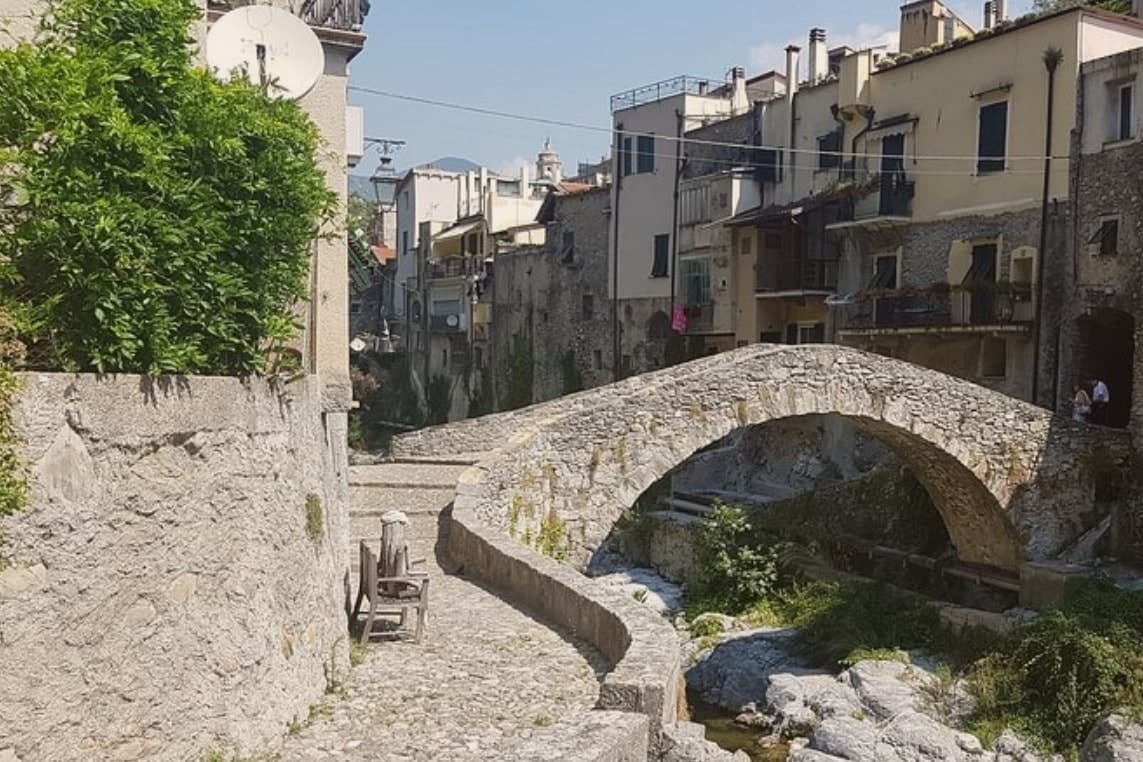
Zuccarello sits at 130 meters in the lower Neva valley, seven kilometers north of Albenga and the coast. The borgo was founded in 1248 by the inhabitants of the surrounding valley together with the Marquises of Clavesana, laid out as a single porticoed street that still runs the length of the town, with the bridge closing it off to the south and the church marking its far end to the north.
The castle stands above both, on the hill, the seat from which the marquises held the place. The Marquisate of Zuccarello passed to the Del Carretto branch and ruled the upper valley as an independent fief until the seventeenth century.
It was into this family that the woman born in the town in 1379 belonged, and it was this family's alliance with Lucca that took her away from it: she married to seal the connection between the two houses and died at twenty-six giving birth to her second daughter. The valley that produced her is a minor tributary above a coastal town, and the marble sarcophagus that made her name lasting was carved and placed far from here.
What remains in Zuccarello is the setting rather than the monument: the street, the bridge, the ruined seat of the family, and a house pointed to as the one where she was born.
What to see in Zuccarello
- Ponte Medievale sul Neva. Late medieval, restored in the nineteenth century. The single arch clears the riverbed in one span, and the hump in the deck is steep enough to hide the far bank until the crown of the arch.
- Via Centrale. The length of it reads as one built gesture rather than a row of separate houses: the arcades never break stride from one end of the borgo to the other.
- Castello dei Del Carretto. Ruined fortress on the hill above the village, residence of the Del Carretto marquises, four cylindrical towers and a central keep.
How to get to Zuccarello
Genova is roughly 82 minutes away by road.
Our tip
April through June and September to October are the windows when the Neva valley walks open and the borgo's porticoes hold their shade. The Festa Medievale in the second half of July fills the main street with costumed crafts and music for two weekends. July and August can hit 30 degrees on the valley floor, though the porticoes and the river keep the borgo cooler than the coast. Fiera Della Zucca falls in October.
Noli
Why visit Noli
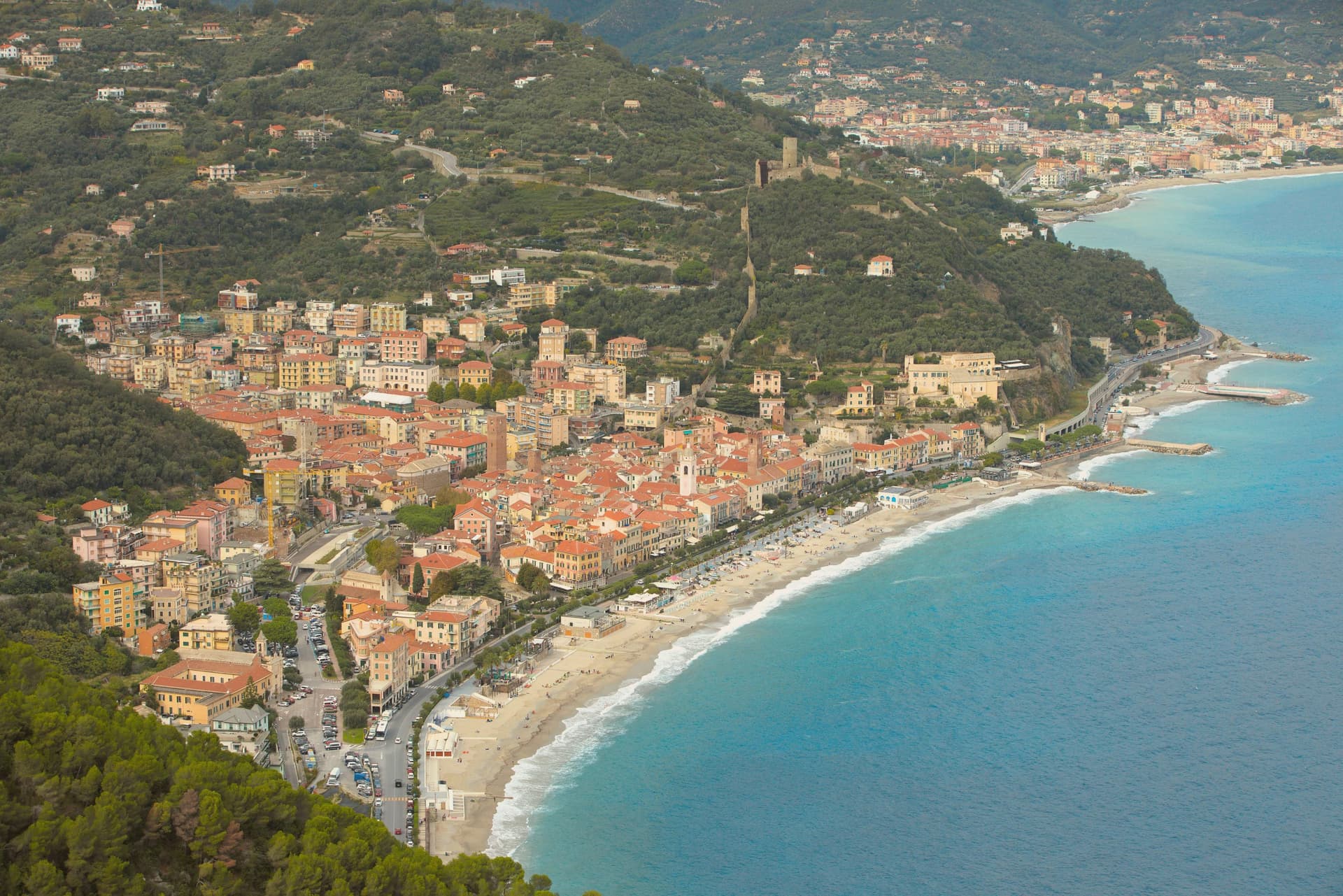
Noli sits at four meters on the Riviera di Ponente, fifty kilometers southwest of Genoa. From 1192 to 1797 it was an independent maritime republic, the fifth alongside Genova, Pisa, Venezia and Amalfi, holding the Capo Noli headland and a stretch of coast under its own flag and protected by alliance with Genoa.
The medieval walls still ring the centro storico, and the survivors of an original eight defensive towers still rise above the rooftops, including the Torre dei Quattro Canti and the Torre Papone. Outside the walls stands the Basilica di San Paragorio, an eleventh-century Romanesque church and one of the most important early medieval buildings in Liguria, with a wooden crucifix from the twelfth century and a bishop's throne carved into a single block of stone.
The Capo Noli cliffs end the bay to the south, with footpaths leading to grottos and a hermitage in the rock. The litoraneo carries the Bandiera Blu.
What to see in Noli
- Basilica di San Paragorio. Eleventh-century Romanesque church outside the walls, with a twelfth-century wooden crucifix and a bishop's throne carved from a single block.
- Torre dei Quattro Canti. Surviving medieval defensive tower inside the walled centro storico, one of eight that originally ringed the maritime republic.
- Torre Papone. Second medieval tower of the original defensive ring, still standing above the rooftops of the centro storico.
How to get to Noli
There is a railway station in the town, so you can arrive without a car and never need one while you are here. Genova is roughly 58 minutes away by road.
Our tip
May through June and September through October are the right months for Noli. The sea is warm enough from late May, the walls of the centro storico keep the streets shaded, and the coastal path to Capo Noli is walkable without midday heat. July and August fill the beach and the limited parking on the coastal road; the rest of the village stays calmer than the Bandiera Blu litoraneo. La Repubblica del Gusto falls in June.
Celle Ligure
Why visit Celle Ligure
Celle Ligure sits at sea level on the Riviera di Ponente, ten kilometers west of Savona. The Aleramici marquises gave the lands to a Piedmontese monastery in 1014; the Genovese families took them over within a generation.
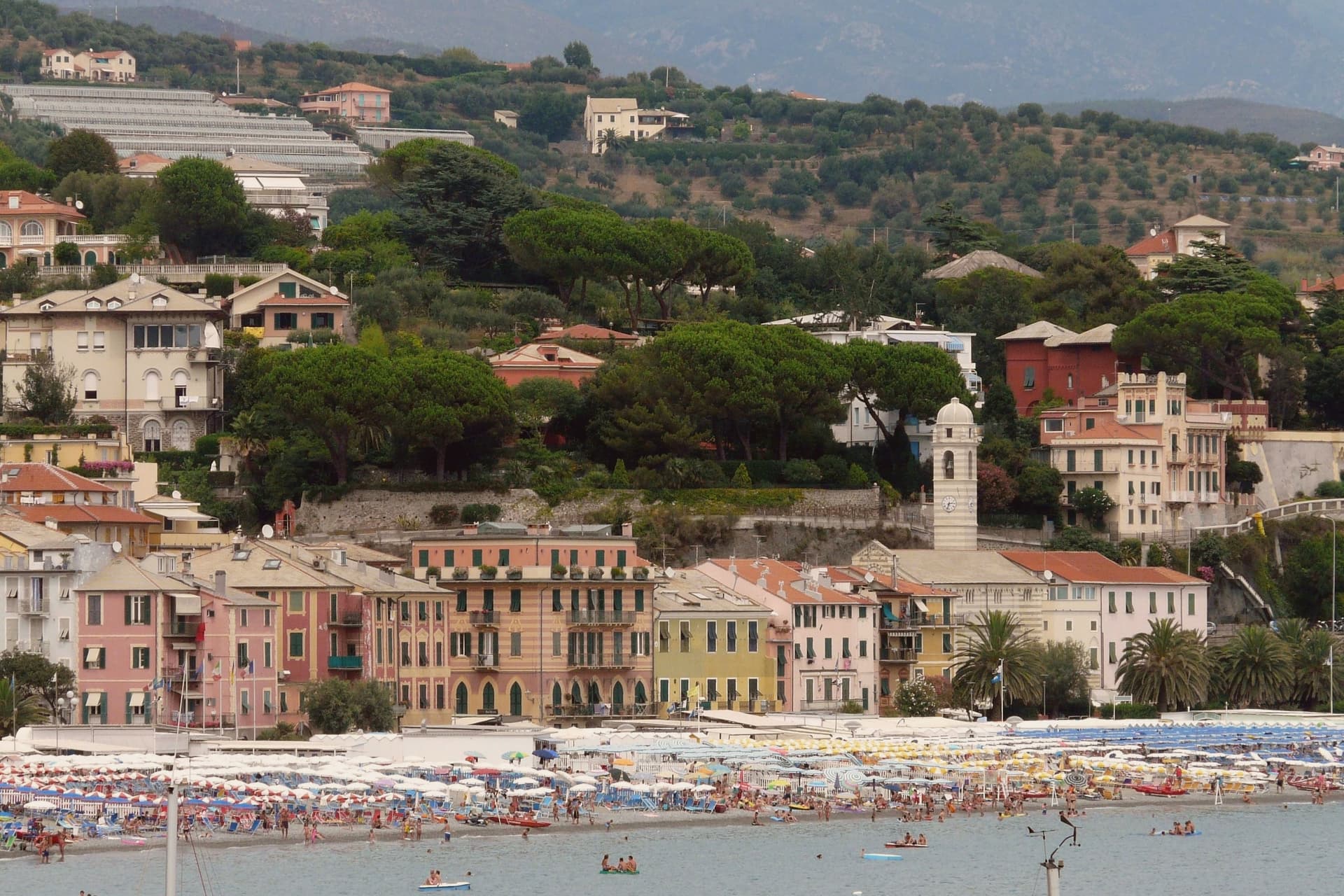
Pope Sixtus IV's family came from here. The lower town runs along the lungomare, with Piazza dei Mille at its center, while the centro storico sits behind it as a borgo of narrow caruggi, one of the Borghi più belli d'Italia.
A handful of artisan kilns still work these streets, ceramic shop signs marking the buildings where the trade continues. The parish church stands within this old town, its façade carrying the ceramic Assumption by Lucio Fontana, San Michele defeating the dragon rendered in the same medium the town has fired since the seventeenth century.
The pieces read as one place rather than several: a fishing and beach economy along the shore, a ceramic trade worked into the old quarter behind it, and a native artist's public commission set into the church that anchors both.
What to see in Celle Ligure
- Chiesa di San Michele Arcangelo. Inside, a Via Crucis by Caminati hangs alongside ceramic stations by Emanuele Luzzati, a pairing of local ceramic craft with the Fontana work on the façade outside.
- Centro storico. Borgo of narrow caruggi behind the lungomare, with active artisan ceramic workshops and ceramic shop signs on the buildings themselves.
- Spiaggia di Celle Ligure. Sand and gravel beach that forms the basis of the town's summer economy, backed by the lungomare and the old town behind it.
How to get to Celle Ligure
There is a railway station in the town, so you can arrive without a car and never need one while you are here. Genova is roughly 40 minutes away by road.
Our tip
April through June and September into October are the dry months on this stretch of the Ponente. The sea warms enough for swimming by late May. July and August are full: the lungomare slows, the beach establishments fill with weekenders from Torino, and the Aurelia stays clogged from Albisola to Varazze on Friday afternoons. Acciugalonga falls in September.
Pietra Ligure
Why visit Pietra Ligure
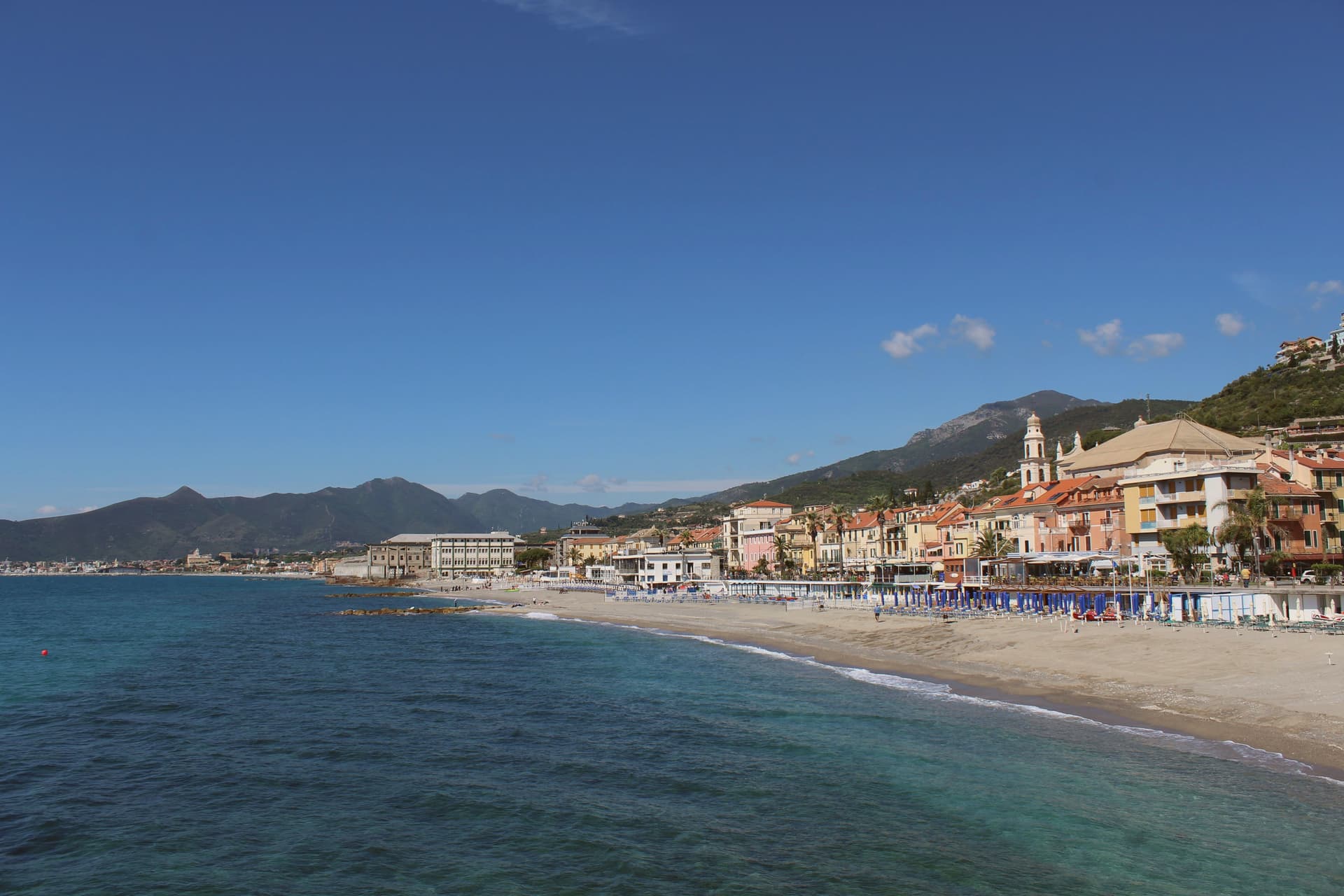
Pietra Ligure sits between Loano and Borgio Verezzi on the Riviera di Ponente, twenty kilometers southwest of Savona. Neolithic finds on Monte Trabocchetto and Roman artifacts in the centro storico place settlement here back across millennia, long before the town took its present name and shape.
That name comes from the Castrum et Oppidum Petrae, the fortress on the rock above the modern center, which became a summer residence from 1100 and was held until 1385, when it passed to the Republic of Genova. The old town has grown up around two poles: the rock with its castle at one end, and the Baroque basilica at the other, with the palazzi of the civic and religious elite filling the ground between.
The promenade now traces that same line at sea level, joining the historic center to a sandy beach that runs south toward Loano. Every three years the space between these poles, the central squares of the old town, fills with the floral carpets of the Infiorata, while a smaller annual version continues in the frazione of Ranzi.
What the town shows a visitor, in effect, is a small stretch of coast where a medieval fortress, a plague-vow church and a modern floral tradition all sit within walking distance of one another.
What to see in Pietra Ligure
- Basilica di San Nicolò. Mid-eighteenth-century Baroque parish basilica standing at one end of the historic center, its facade the anchor of the town's central squares during the flower festival.
- Castello di Pietra Ligure. Defensive castle on the rock behind the centro storico, long held by the Bishops of Albenga, its walls visible above the rooftops of the old town.
- Palazzo Golli. Historic palace on Piazza Martiri della Libertà, now the municipal building, the civic anchor of the centro storico.
How to get to Pietra Ligure
There is a railway station in the town, so you can arrive without a car and never need one while you are here. Genova is roughly 67 minutes away by road.
Our tip
April through June and September into October are the strongest months on this stretch of Riviera. The Infiorata del Corpus Domini falls every three years in late May or early June, drawing 44 delegations of flower artists into the centro storico for a Saturday-into-Sunday display. July and August fill the lungomare and the centro storico empties in the early afternoon.
Varazze
Why visit Varazze
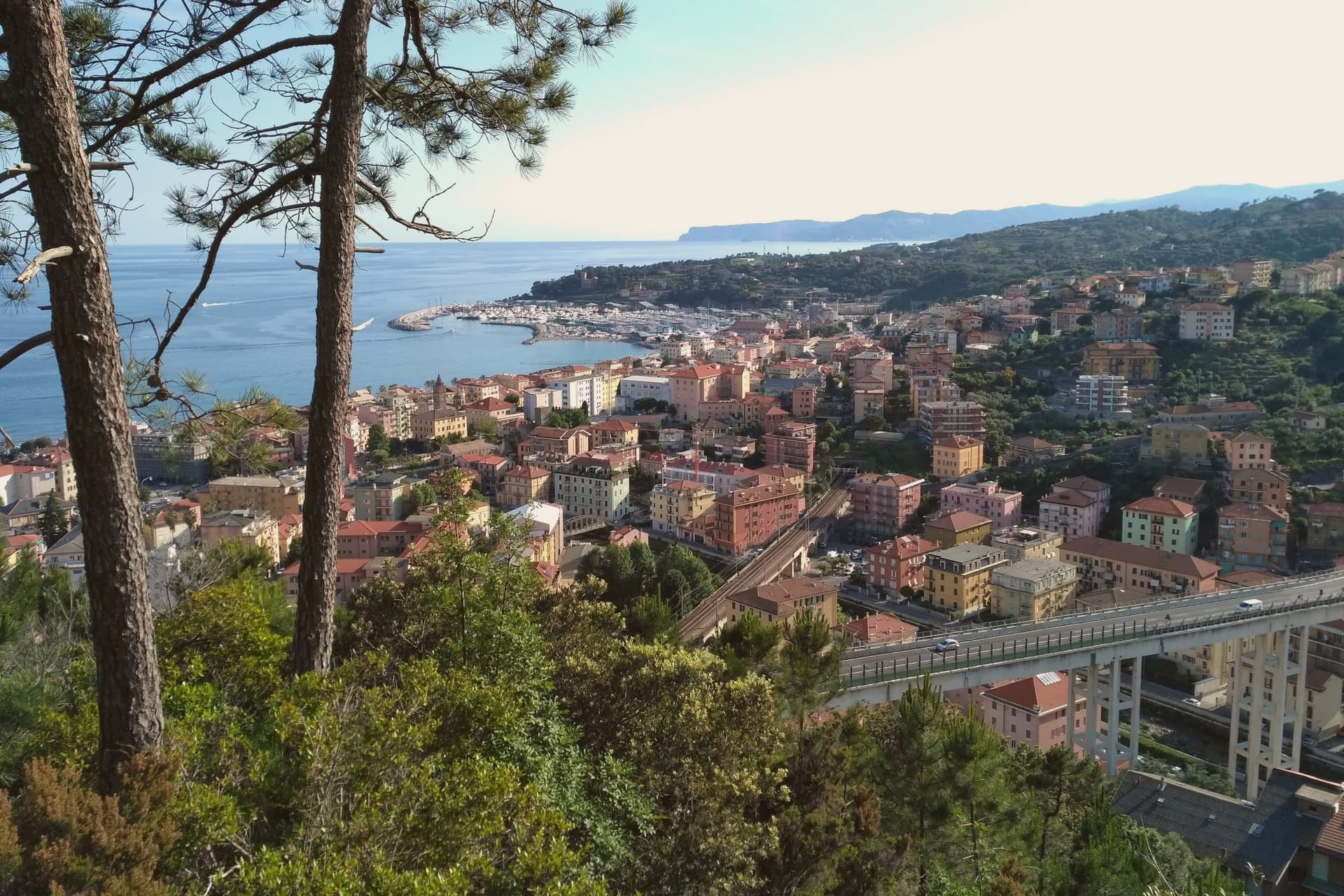
Varazze sits between Mount Beigua and the sea, 30 kilometers west of Genova in the Riviera di Ponente. The town grew around the Roman station of Ad Navalia and became the main port of the marquisate of Bosco, disputed for centuries between Savona and Genova because of its shipyards.
Jacopo da Varagine was born here around 1228 in the Casanova district. As a Dominican friar and later archbishop of Genova, he compiled the Legenda Aurea, a Latin collection of saint biographies that survived in roughly 1,400 manuscript codices through the Middle Ages, second only to the Bible in circulation.
The parish Collegiate Church of Sant'Ambrogio holds a panel by Luca Cambiaso, one of the greatest Ligurian painters of the sixteenth century. Mount Beigua rises to 1,287 meters at the town's back.
The economy still works shipyards, yachting and tourism in roughly that order.
What to see in Varazze
- Chiesa Collegiata di Sant'Ambrogio. Parish collegiate church with Romanesque-Gothic three-mullioned bell tower, Baroque façade, polyptych by Giovanni Barbagelata and a panel by Luca Cambiaso.
- Parco Naturale del Beigua. UNESCO Geopark covering Mount Beigua at 1,287 meters, the highest peak in the range, with trails connecting the coast to the entroterra.
- Centro storico. Medieval grid behind the shipyards with surviving sections of the old town walls and the Casanova district where Jacopo da Varagine was born.
How to get to Varazze
There is a railway station in the town, so you can arrive without a car and never need one while you are here. Genova is roughly 45 minutes away by road.
Our tip
April through June and September into October are the best months on the Varazze coast. Mount Beigua shelters the town from north winds, so the climate stays mild well into autumn. July and August are warm and crowded, with the beaches filling and the Beigua trails busy.
Savona
Why visit Savona
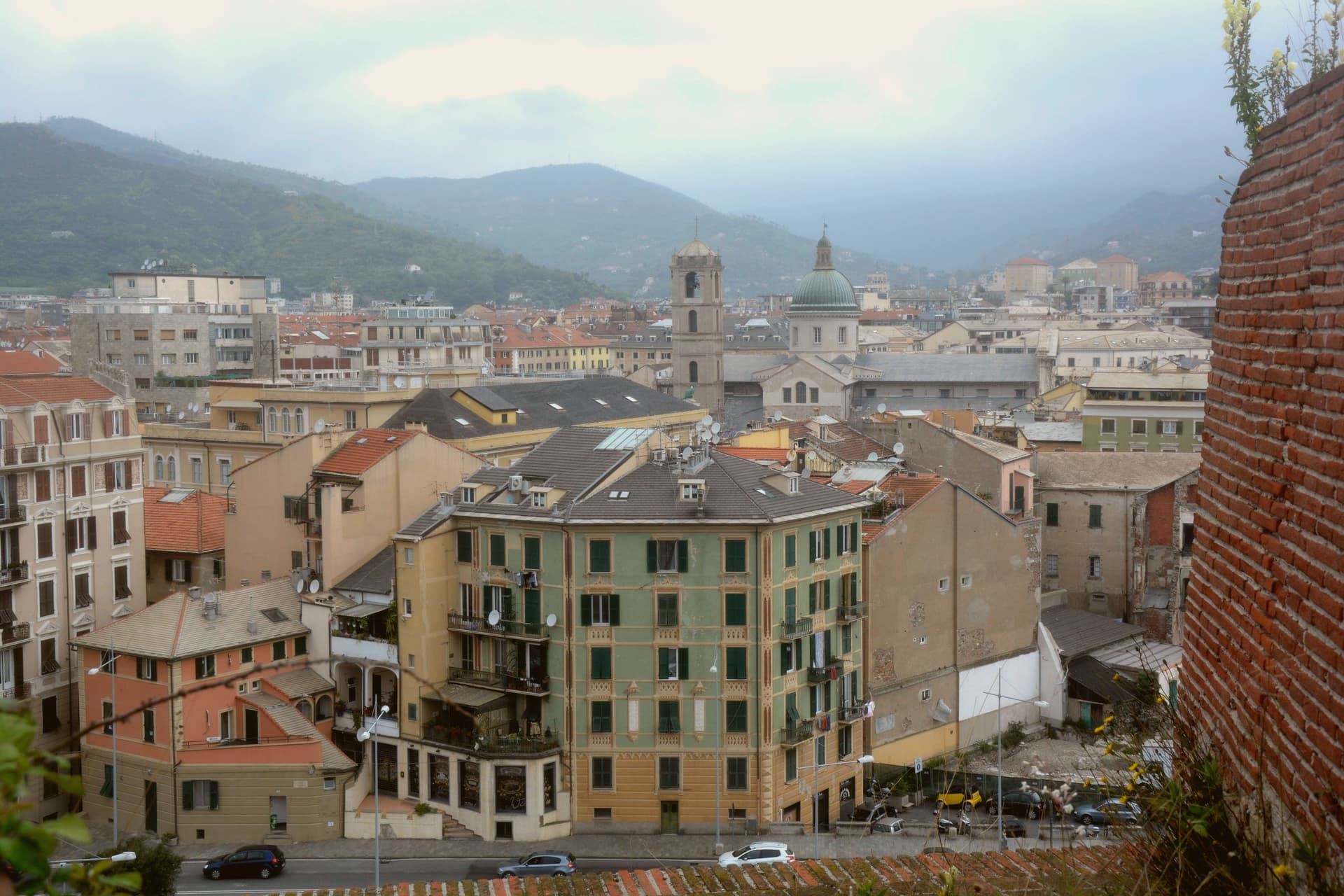
Savona is the seat of its province, 40 kilometers west of Genova, the largest port on the Riviera di Ponente. Ligurian tribes held the site before Rome took it around 180 BC after the Punic Wars, during which Savona had sided with Carthage.
The Lombards sacked it in 641. The Della Rovere family produced two popes from Savona: Sixtus IV, who ordered the Roman Sistine Chapel, and his nephew Julius II.
Sixtus IV also commissioned the smaller Sistine Chapel here in 1481 as a funeral chapel for his parents at the Franciscan convent. In 1542 the Republic of Genoa built the Priamar fortress on the medieval town center, destroying the old cathedral, bishop's palace and Dominican convent to clear ground for the bastions.
Pope Pius VII, kidnapped by Napoleon, was held in the fortress from 1809 to 1812. Giuseppe Mazzini was imprisoned there in 1830-31 while drafting the manifesto of Giovine Italia.
The Museo della Ceramica preserves six centuries of Savona and Albisola pottery.
What to see in Savona
- Fortezza del Priamar. Sixteenth-century fortress built by the Republic of Genoa in 1542 on the medieval city core, prison of Pius VII and Mazzini in the nineteenth century.
- Cappella Sistina. Funeral chapel commissioned by Pope Sixtus IV in 1481 for his parents, predating the Roman Sistine Chapel he ordered three years later.
- Cattedrale di Nostra Signora Assunta. Sixteenth-century cathedral with the Della Rovere polyptych remnants, beside the Cappella Sistina and the Bishop's Palace.
How to get to Savona
There is a railway station in the town, so you can arrive without a car and never need one while you are here. Genova is roughly 59 minutes away by road.
Our tip
April through June and September into October are the best months in Savona. The Priamar's outdoor spaces fill with concerts and the Cappella Sistina stays cool. July and August are warm and crowded, with cruise traffic peaking and the centro storico emptying in the early afternoon.
More from Anywhere Italy
 The best beach towns in the province of Savona
- The prettiest villages in the province of Savona
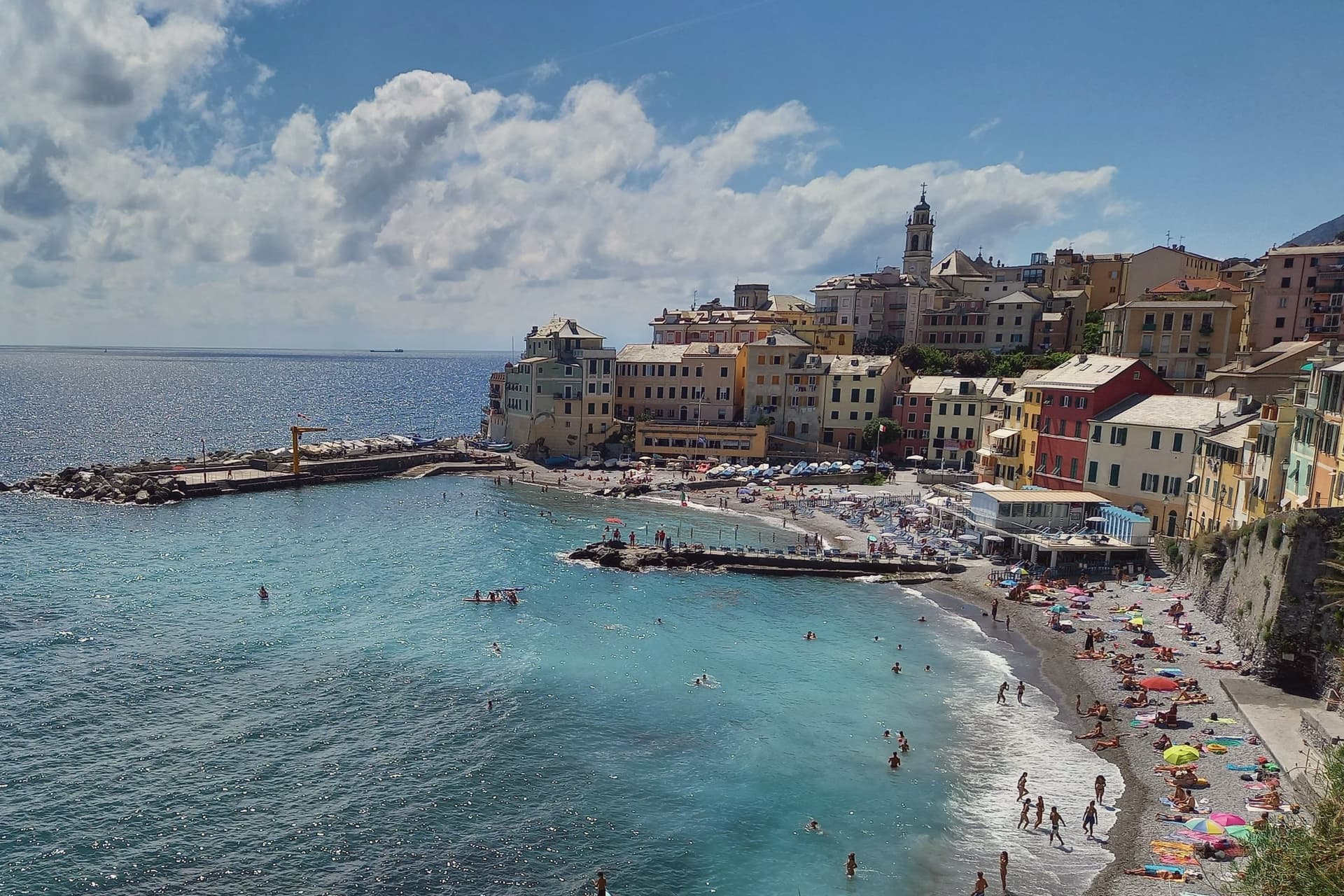 The best olive oil towns within 45 minutes of Genoa
- The best hidden towns that eat well in the province of Savona
- The best towns known for their meat within two hours of Turin
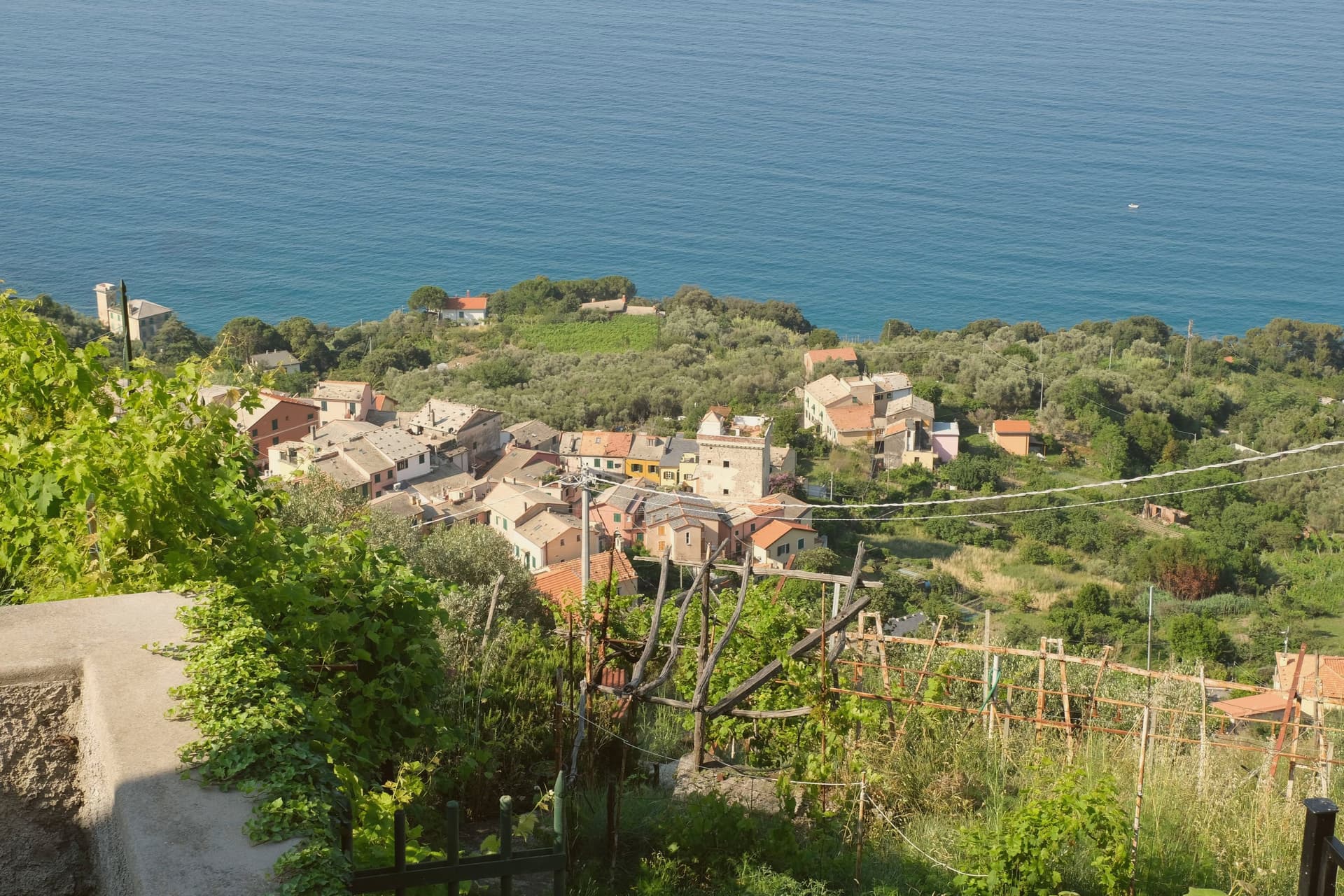 The best hidden beach towns in Liguria