
The prettiest villages that eat well in Piemonte
Piemonte eats slowly and in season. Autumn brings white truffle from the Roero hills, plin pasta pinched by hand and sealed in butter, veal in tuna sauce served cold, hazelnut cake with a glass of Moscato. The villages here are built of warm brick in the Langhe and Monferrato, grey stone as you climb towards the lakes and the Biellese foothills, with arcaded squares and towers that look over rows of Nebbiolo. Winter fog sits in the valleys and the dining rooms fill early.
Most people arrive through Alba during the truffle fair, or through Turin, and both are worth the time they take. Alba in October is shoulder to shoulder in the market halls, restaurant tables booked weeks ahead, prices set by the crowd rather than the harvest. The wine roads immediately around it carry coaches all through the vendemmia.
The same hills, the same cellars and the same cooking carry on well past the fair grounds. These are the smaller places where the village itself is the reason to stop and the kitchen is the reason to stay the night, spread from the Barolo vineyards to Monferrato's hilltop balconies and the water at Lake Orta.
Of the 65 communes we have mapped in Piemonte, 6 qualify as prettiest villages that eat well: each has passed the national assessment of Italy's most beautiful villages, and a dining guide has named a table in each. The smallest, Barolo, has 638 residents.
Two more lists worth reading alongside this one: The prettiest villages within 90 minutes of Torino and The 10 best hidden wine towns that eat well within 90 minutes of Torino.
Barolo
Why visit Barolo
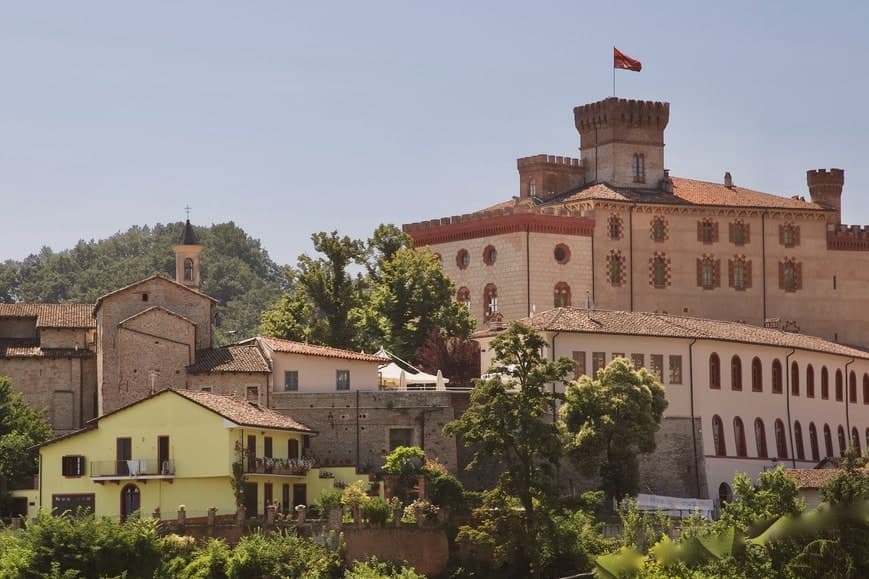
Barolo sits at 301 meters on a Langhe hilltop fifty-five kilometers south of Torino, in the heart of the DOCG appellation that takes its name. The Castello Falletti rises from the centre of the village; its oldest walls date to the eleventh century, when Berengar I of Italy granted local lords permission to fortify against Hungarian and Saracen raids.
The Falletti family took the castle in 1325 and held it for five centuries. In the 1830s the Marchesi Tancredi and Giulia Falletti, working with Camillo Benso di Cavour and the French enologist Louis Oudart, pushed the Nebbiolo of these hills toward dry, age-worthy production for the first time.
The village bought the castle by public subscription in 1970. Since 2010 it has housed the WiMu, a wine museum laid out by François Confino.
The Cannubi cru, on the next hill, is the oldest officially named vineyard parcel in the appellation, recognised on a 1752 wine label. Barolo is one of eleven communes inside the DOCG zone and part of the UNESCO Langhe-Roero and Monferrato landscape inscribed in 2014.
Barolo Friends, Locanda in Cannubi, Marchesi di Barolo have been named by a guide.
What to see in Barolo
- Castello Falletti. 11th-century castle expanded by the Falletti from 1325, bought by the comune in 1970, now home to the WiMu wine museum since 2010.
- WiMu - Museo del Vino. Wine museum inside the castle, designed by François Confino, with the Regional Wine Library of Barolo in the cellars.
- Vigneto Cannubi. Historic cru on the hill east of the village, recognised on a 1752 wine label as the oldest officially named parcel in the Barolo appellation.
How to get to Barolo
Torino is roughly 63 minutes away by road.
Our tip
April through June and September into October are the best months in the Langhe. The hills are green or gold depending on the season, the cantine run a full visiting calendar, and the Castello Falletti stays cool enough for the long museum walk. July and August are hot on the south-facing slopes and the village empties between two and five.
Orta San Giulio
Why visit Orta San Giulio
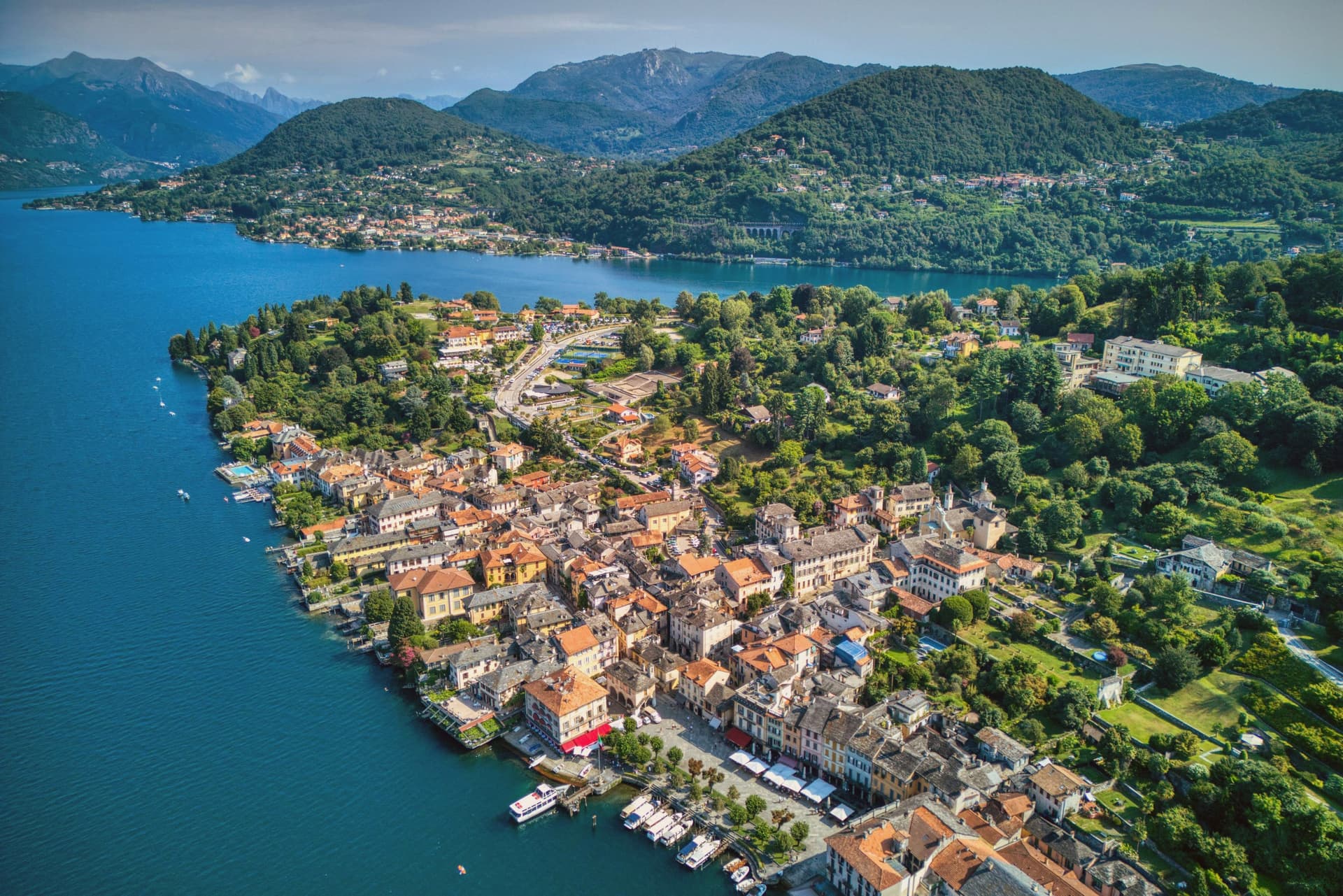
The town occupies a promontory pushed into the eastern shore of the lake, facing the small island 275 meters long and 140 meters wide. The two are close enough that the island reads as an extension of the town rather than a separate place, and a five-minute motorboat from the piazza is the only way across.
The old town holds three Tier-A signals at once: Borghi più belli, Bandiera Arancione, and the UNESCO inscription of 2003. The relationship between the three parts of the town explains how it works: the waterfront square and its lanes sit at lake level, facing the island directly across the water, while the hill above holds the devotional complex, reached by climbing away from the shore rather than along it.
Piazza Motta was also the seat of the Comunità della Riviera di San Giulio, an autonomous federation of lake towns that survived from the Middle Ages to the mid-eighteenth century, which is why the square, not the hill or the island, was built as a civic center. What results is a town in three registers at once: civic life at the water's edge, monastic life offshore, and devotional life on the hill above, each occupying its own ground and visible from the others.
Villa Crespi, Andrea Monesi - Locanda di Orta have been named by a guide.
What to see in Orta San Giulio
- Basilica di San Giulio. Serpentine ambo inside and a silver shrine dated 1697. Reached by boat, the basilica stands close to the water's edge, the focal point of the view from every point on the promontory.
- Piazza Motta and Palazzo della Comunità. The broletto's arcades face the water directly, and the square narrows toward the boat landing where the crossing to the island begins.
- Sacro Monte di Orta. The chapels climb the wooded hillside in sequence, each framing a scene, with the town and the lake opening up in views between them as the path gains height.
How to get to Orta San Giulio
There is a railway station in the town, so you can arrive without a car and never need one while you are here. Novara is roughly 46 minutes away by road.
Our tip
April through June brings the Sacro Monte chapels into the chestnut shade and the lake water warm enough for the open-air bars on Piazza Motta. July and August fill the ferry to the island and the piazza turns over by the hour; the centro pedestrian zone slows to a queue at lunch. September and October are the clearest window: low light on the basilica across the water, fewer day-trippers from Milano, and the Sacro Monte path almost empty after eleven.
Cocconato
Why visit Cocconato
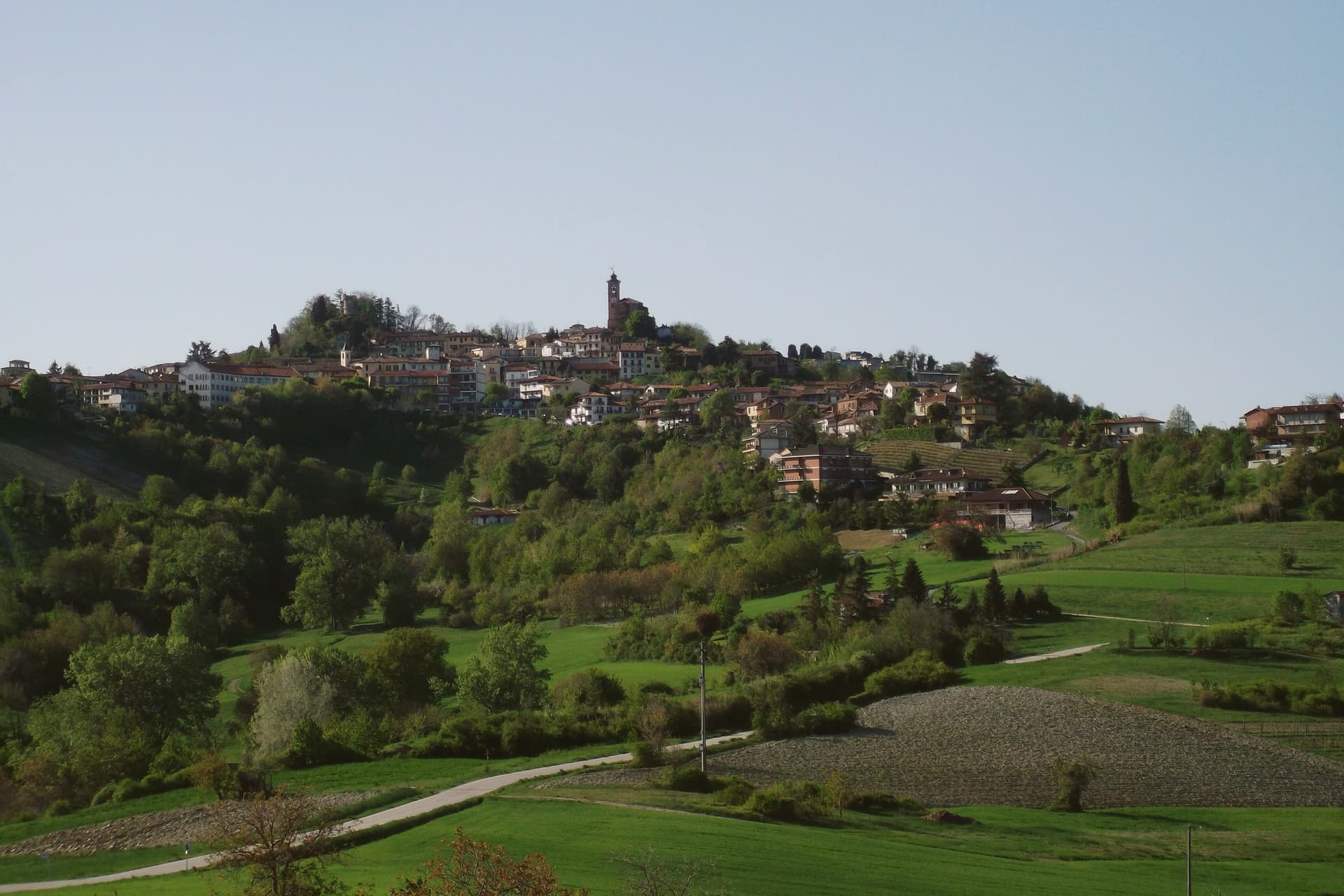
Cocconato sits thirty kilometers east of Torino, on a ridge whose south-facing slope catches enough sun to keep olives, palms and mimosas alive this far north, the reason locals call the area the Riviera del Monferrato. From the tenth century the ridge was held by the Radicati counts, a Manfredian family, as an imperial fief for four hundred years, until 1586: the centro storico that survives is their seat, not a later reconstruction.
The town's two anchors sit close together but answer to different authorities. The civic palace, built in the fifteenth century, faces the seventeenth-century parish church of Santa Maria della Consolazione across the upper piazza, government and religion holding opposite ends of the same small square.
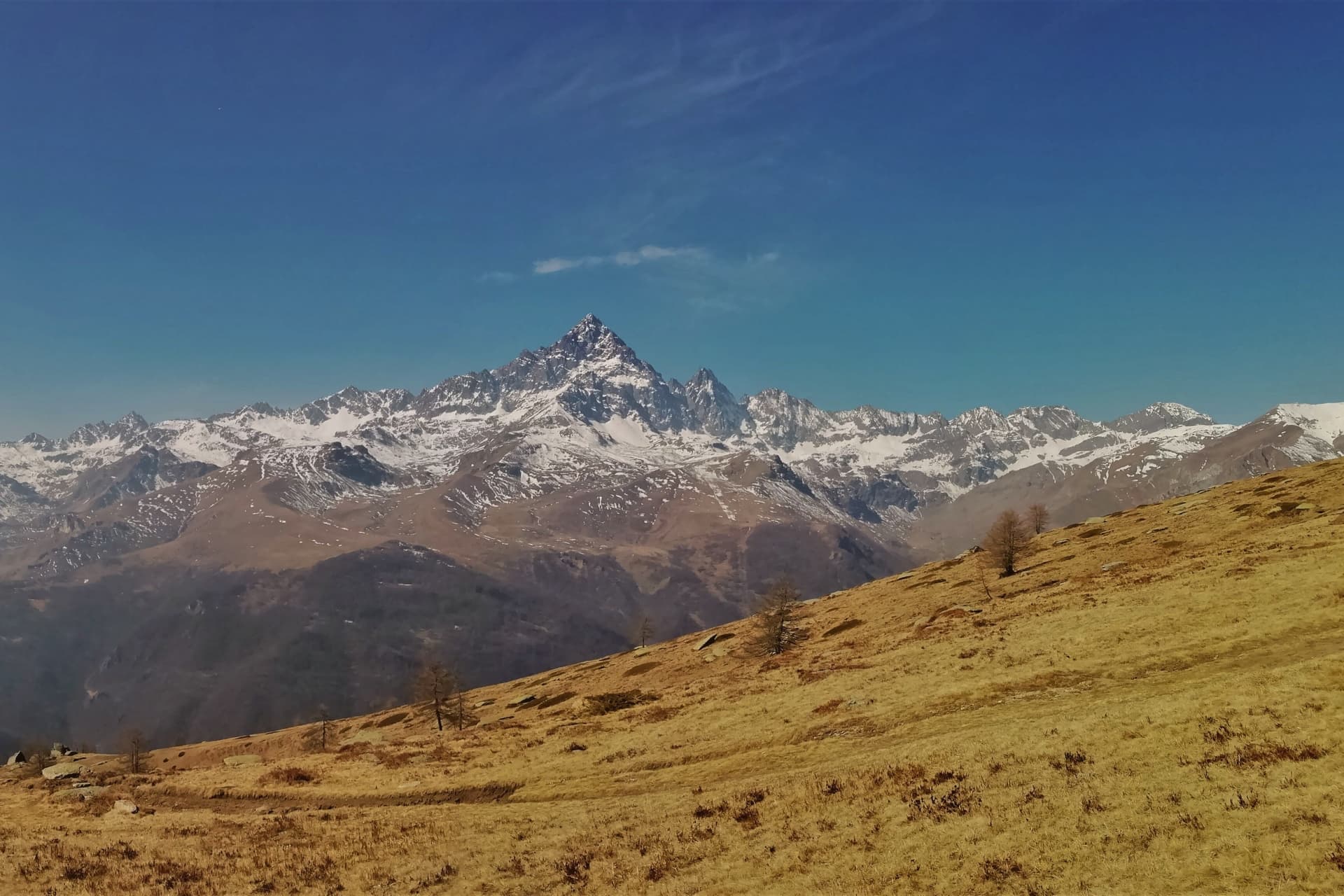
Beyond the built center, the ridge opens onto a belvedere looking south across vineyards toward the Alta Langa and, on clear days, the Monviso massif. Since 1970 the six frazioni of Airali, Brina, Colline Magre, San Carlo, Torre and Tuffo have raced their donkeys in the Palio degli Asini, a modern rivalry laid over an old administrative one.
Cocconato is the only commune in the province of Asti to hold the Bandiera Arancione, a fitting distinction for a ridge that has been organizing the same handful of parts, fief, palace, church, frazioni, for centuries.
Cantina Nicola have been named by a guide.
What to see in Cocconato
- Palazzo Comunale. Pointed-arch porticoes and terracotta-framed windows on the Late Gothic facade, still the building the ridge town organizes itself around.
- Chiesa di Santa Maria della Consolazione. Seventeenth-century parish church anchoring the upper piazza, the religious counterweight to the medieval civic palace below it.
- Centro storico. Medieval ridge town that was the seat of the Radicati counts from the tenth century until 1586, well preserved on the south-facing slope.
How to get to Cocconato
There is a railway station in the town, so you can arrive without a car and never need one while you are here. Torino is roughly 57 minutes away by road.
Our tip
April through June and September through October are the months that earn Cocconato its Riviera nickname: dry warm days on the ridge, vineyards in green or gold, and the palms in the lower gardens visibly out of season. July and August are warm and busy, with Cocco Wine at the end of summer drawing crowds into the centro storico. November through March is the quiet half of the year.
Monforte d'Alba
Why visit Monforte d'Alba
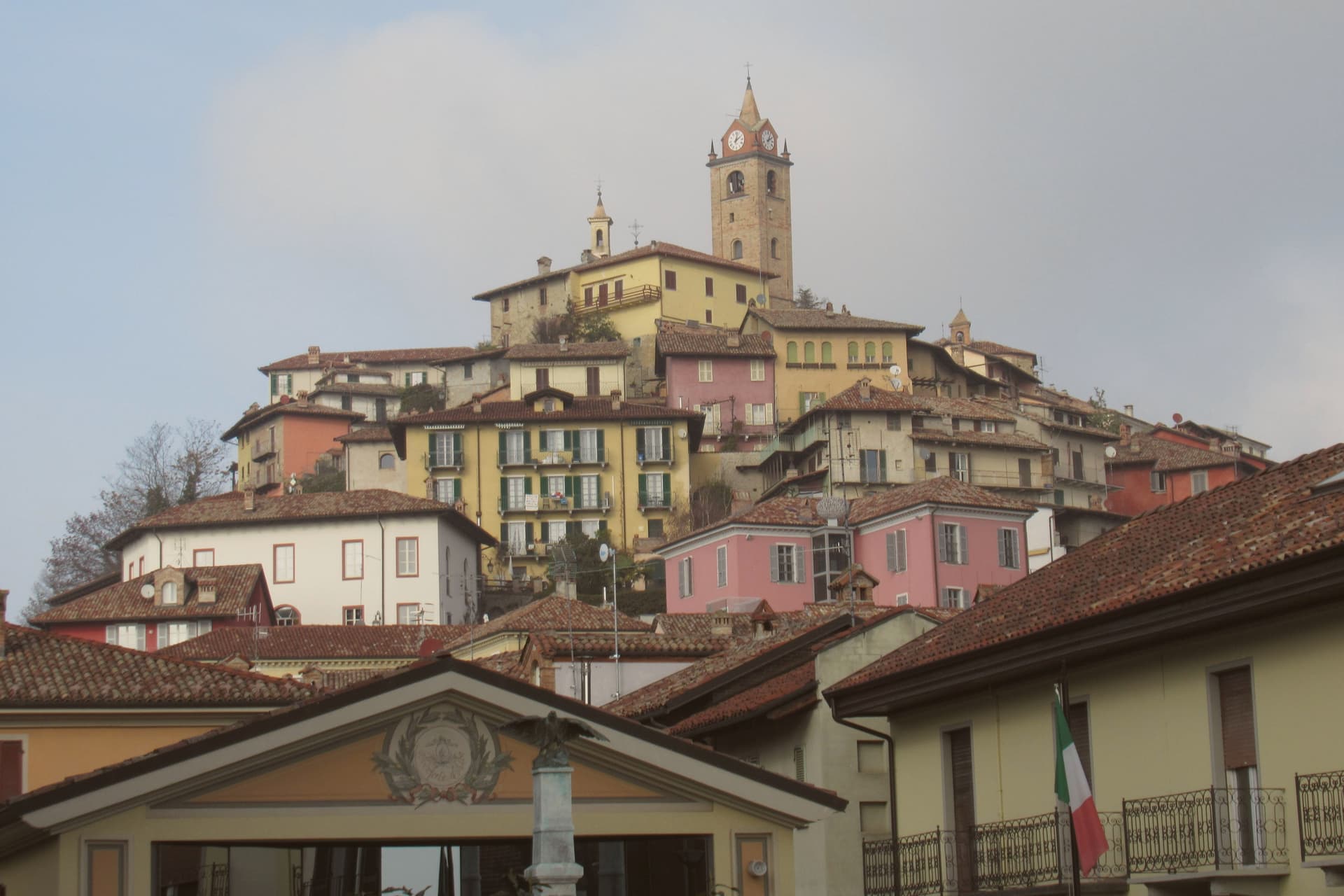
Monforte d'Alba sits at 480 meters in the southeastern corner of the Barolo zone, sixty kilometers from Torino. The name is from Latin mons fortis, fortified hill, and the medieval village climbed steep enough to make it nearly impregnable.
In 1028, Archbishop Ariberto d'Intimiano of Milan had the inhabitants of a heretical community here, later identified as Cathars, captured and burned in Milan to halt the spread of their teaching. Monforte is one of the eleven Barolo communes and accounts for some of the most structured, tannic wines in the zone, particularly from the Bussia and Ginestra crus.
At the top of the village, the Auditorium Horszowski occupies what was once the main square: an open-air natural amphitheater of 800 seats named for the pianist Mieczysław Horszowski, who opened it with a concert in 1986. The Monfortinjazz festival has run here every summer since 1976.
Borgo Sant'Anna, FRE, Trattoria della Posta and 8 more have been named by a guide.
What to see in Monforte d'Alba
- Auditorium Horszowski. Open-air amphitheater for 800 carved into the old village square in 1986, named for the pianist who opened it that year.
- Centro storico. Steep medieval village climbing to the old piazza, with Renaissance palazzi and the surviving bell tower of Sant'Agostino.
- Chiesa di Santa Elisabetta. Baroque oratory beside the Palazzo Scarampi at the top of the village, framing the back wall of the Horszowski stage.
How to get to Monforte d'Alba
Torino is roughly 68 minutes away by road.
Our tip
April through June bring green vines and mild evenings, with the Horszowski programming a few early concerts before the main season. July and August are Monfortinjazz, when the amphitheater fills and the centro stays busy past midnight; daytime heat pushes past thirty degrees but the elevation cools the nights. September and October are harvest and truffle weeks, with Alba twenty kilometers north pulling buyers across the zone.
Guarene
Why visit Guarene
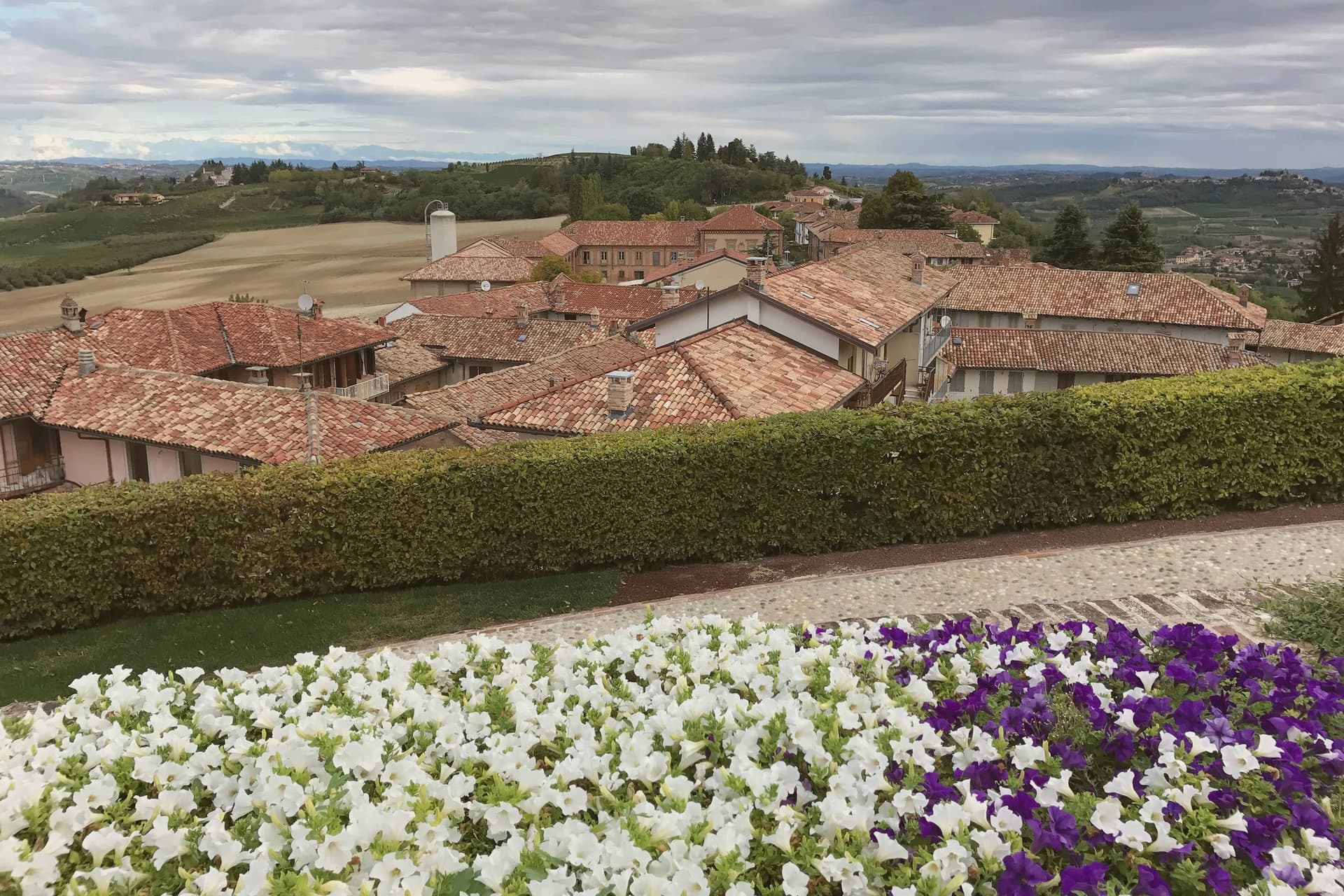
Guarene sits at 360 meters on the left bank of the Tanaro, the last hill of the Roero before the river crosses to Alba and the Langhe. The Roero family, powerful Asti bankers, took the village in 1379 and held it until the line ended with Count Alessandro in 1899.
Count Carlo Giacinto Roero rebuilt the medieval fortress between 1726 and his death, turning it into a baroque summer residence; his sons completed the work and hosted the king and queen of Sardinia here in 1773. The castle is now a Relais & Châteaux hotel with a small museum.
On the slope below the village, the Fondazione Sandretto Re Rebaudengo opened Palazzo Re Rebaudengo in 1997 as its first contemporary art space; the foundation added an open-air sculpture park in 2019 with works by Carsten Höller, Marguerite Humeau, and Paul Kneale set among pear orchards and Nebbiolo rows. The hill carries four institutional signals at once, the highest density of any Roero commune.
Io e Luna, Limonaia del Castello di Guarene, Pico Bistrot in Madernassa have been named by a guide.
What to see in Guarene
- Castello di Guarene. Eighteenth-century baroque castle rebuilt 1726 by Count Carlo Giacinto Roero from a medieval fortress, now a Relais & Châteaux hotel.
- Palazzo Re Rebaudengo. Fondazione Sandretto Re Rebaudengo's first contemporary art space, opened 1997 in an eighteenth-century palazzo in the village.
- Parco d'arte Sandretto Re Rebaudengo. Open-air sculpture park opened 2019 with works by Carsten Höller, Marguerite Humeau, and Paul Kneale among Nebbiolo rows and pear orchards.
How to get to Guarene
Torino is roughly 62 minutes away by road.
Our tip
April through October is the season. May and June green the Roero hills and the castle gardens open. September and October bring the harvest and Arneis bottling; the Tartufo Bianco d'Alba fair in October fills the surrounding villages.
Biella
Why visit Biella
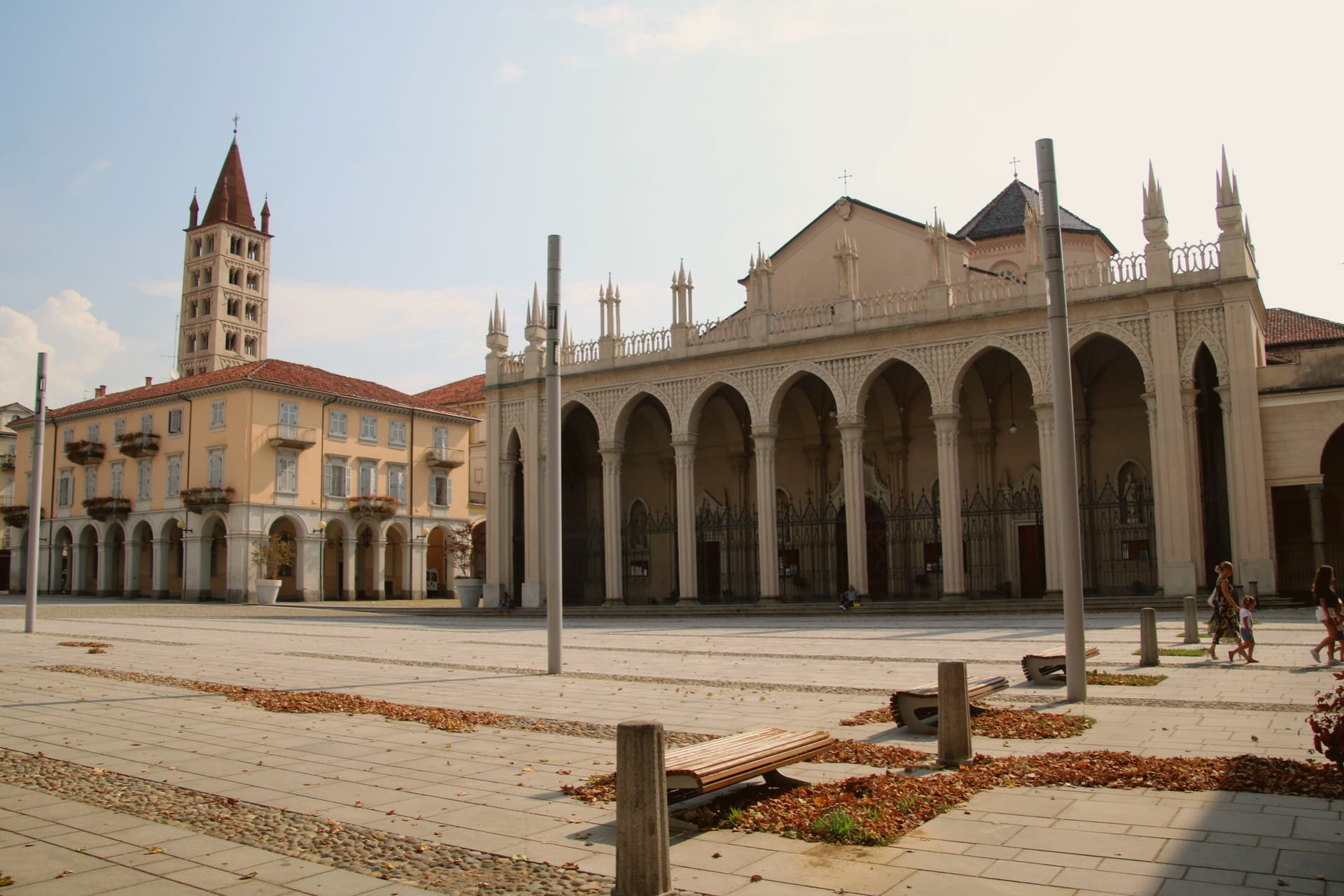
Biella sits at 417 meters at the foot of the Biellese Alps, in a basin where fast Alpine streams cut down from Mont Mars and the Oropa range. The statutes of 1245 already named the woolworkers' and weavers' guilds, and the city built itself around them: by the nineteenth century, vertical mills along the streams had turned Biella into the Manchester of Italy.
The names still on the labels, Zegna, Cerruti, Loro Piana, Piacenza, Fila, were founded here. The upper town, Biella Piazzo, sits above the modern Piano on a small hill, reached since 1885 by a water-counterbalance funicular that still runs the same 60-meter climb.
The Romanesque Baptistery on Piazza Duomo is the city's oldest stone, ninth or tenth century, set next to the cathedral. Above the city, the Sacro Monte di Oropa belongs to the UNESCO Sacri Monti site, and Biella was named a UNESCO Creative City for Crafts and Folk Art in 2019.
Il Patio, Matteo Ristorante, Regallo and 2 more have been named by a guide.
What to see in Biella
- Biella Piazzo. Medieval upper town on a small hill above the modern Piano, with arcaded palazzi and narrow stone streets, reached by funicular since 1885.
- Funicolare del Piazzo. Historic funicular opened in December 1885, covering a 60-meter altitude gradient in 177 meters between Via Curiel and Via Avogadro.
- Battistero di Biella. Romanesque baptistery on Piazza Duomo, ninth to tenth century, the oldest standing monument in the city.
How to get to Biella
There is a railway station in the town, so you can arrive without a car and never need one while you are here. Novara is roughly 63 minutes away by road.
Our tip
April through June brings green pastures on the Biellese Alps and clean light off the streams that built the mills. September and October are the dry, gold months, when the chestnut woods around Oropa turn and the textile fairs run in town. July and August stay cooler than the Po Valley but can sit humid; the upper Piazzo holds breeze that the Piano does not. Bolle di Malto - Salone Italiano della Birra falls in August.
More from Anywhere Italy
 The prettiest villages within 90 minutes of Torino
 The 10 best hidden wine towns that eat well within 90 minutes of Torino
- The best towns with a World Heritage site that eat well in Piemonte
 The prettiest villages in the province of Cuneo
- The best towns with a serious restaurant that eat well within 90 minutes of Novara
 The prettiest villages within 90 minutes of Novara