
The prettiest small villages within 90 minutes of Perugia
The country between Perugia, the Tiber valley and the Tuscan border is built of stone the colour of weak tea and old rose, quarried locally, laid in walls that still carry gates and towers. Olive terraces run up to the village edge, oak and chestnut woods take over above, and the fields between hold farro, lentils and the black truffle that comes into its own from late autumn. The food follows the geology: flatbread cooked on a hot disc, wild boar cooked long, pecorino from flocks that never left the hill. Spring brings broom and wild asparagus, September brings the grape harvest and the first cold evenings when a wood fire is lit in every restaurant back room.
The obvious route through Umbria runs Assisi to Spoleto by way of Orvieto, and Assisi in particular absorbs an extraordinary number of people. Coaches stack up below the basilica from Easter onward, the main street works as a queue rather than a street, and the frescoes are seen at walking pace over a shoulder. It is worth going, once, early, out of season. But it is not where the region keeps its ordinary daily life.
The same hills, the same stone, the same kitchens carry on for miles past the famous names, and the smaller villages are where they show best. Each of the places here has passed the national assessment of Italy's most beautiful villages, which is a slow, unglamorous inspection of streets, walls, upkeep and setting rather than a marketing badge. Most sit within an hour and a half of Perugia by car, close enough to be a morning's detour and quiet enough to be worth a night. Fewer people go, which mostly means the bar at the top of the village is still serving locals at eight in the morning.
Of the 41 communes we have mapped within 90 minutes of Perugia, 22 qualify as prettiest villages: each has passed the national assessment of Italy's most beautiful villages. This list is the small ones, 10 in all, ordered smallest first. The smallest, Paciano, has 957 residents.
If you are still choosing, we have also written The prettiest villages with a food festival within 90 minutes of Perugia and The best hidden hill towns with a food festival within 90 minutes of Perugia.
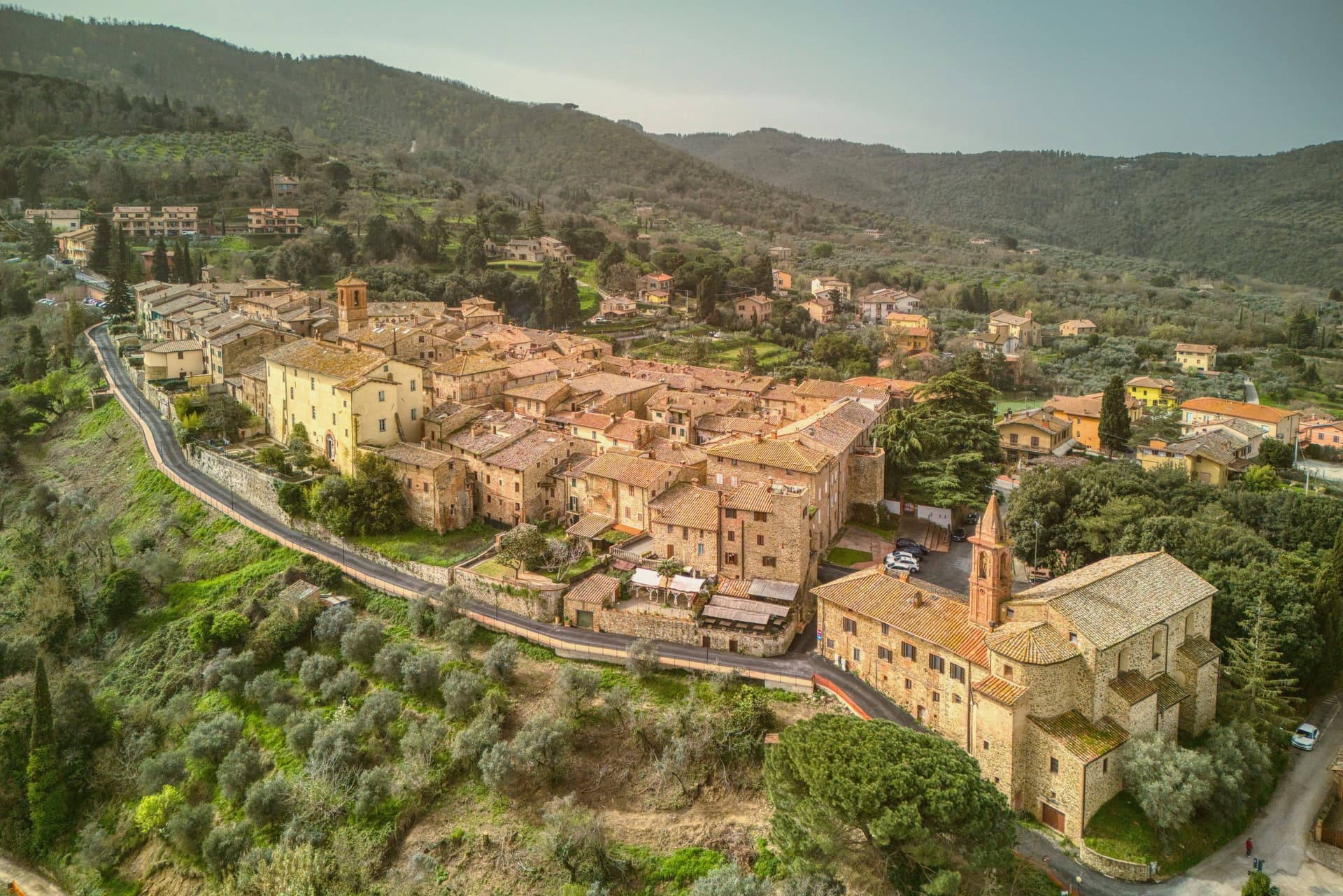
Paciano
Why visit Paciano
The town is first documented in 917, in an imperial charter of Berengar I, and appears again in 1260 as a castrum, a fortified site. Perugia rebuilt the walls and main tower between 1461 and 1473, using the site as a watch-post over the western approach to the lake below.
Inside the circuit, three parallel streets are linked by orthogonal alleys, a layout that carries the Renaissance palace with the Vignola staircase, the oldest noble residence in the town, and the 17th-century Palazzo Cennini, once the summer residence of a cardinal. The gates and towers sit at the edge of this grid, facing outward toward the water.
Olive oil from the slopes that drop toward the shore is the present-day specialty. What remains is a small fortified grid, built to watch a lake, that turned its military purpose into a domestic one once the watching was no longer needed.
What to see in Paciano
- Medieval walls. About 600 meters of circuit, with the three original gates named Fiorentina, Perugina and Rastrella still standing among the eight towers.
- Palazzo Baldeschi. Assembled from earlier tower houses, with a staircase attributed to Jacopo Barozzi da Vignola. Now used as an exhibition and cultural space.
- Rocca Buitoni. The oldest surviving palace in the town, built as a noble residence inside the walls, with a small private chapel.
How to get to Paciano
Perugia is roughly 44 minutes away by road.
Our tip
April through June and September into October are the months for Paciano. The slopes of Monte Petrarvella hold the wildflowers, Trasimeno is warm enough to swim from late May, and the olive groves run from green to silver-gold across the half-year. The Infiorata fills the three parallel streets each Corpus Domini in late May or June. Sagra dello Strozzaprete falls in August.
Sellano
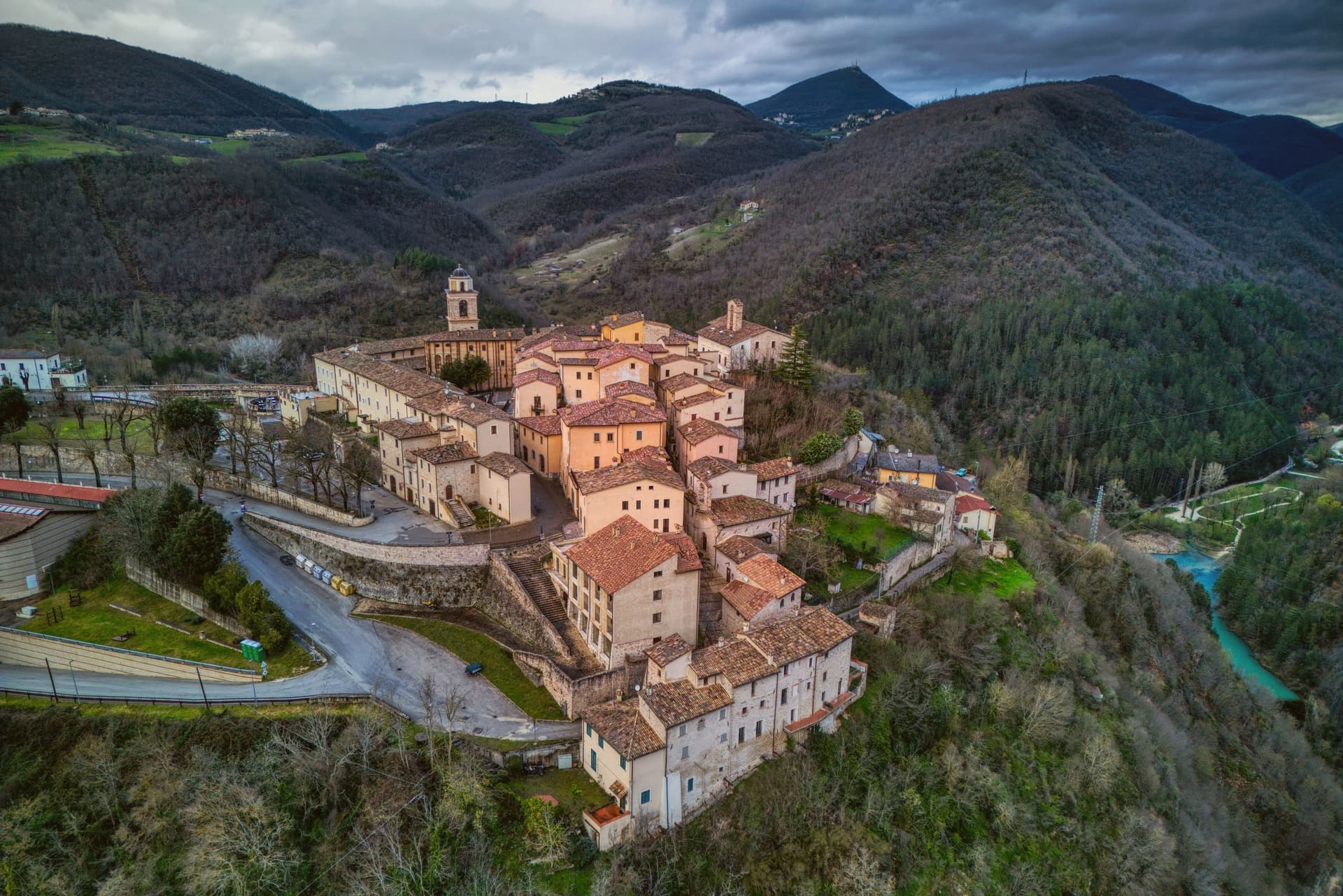
Why visit Sellano
Sellano sits at 641 meters on the eastern edge of Umbria, looking over the Vigi stream toward the Marche border. The Vigi feeds the Nera; the valley is the upper Valnerina, one of the most isolated stretches of the Umbro-Marchigiano Apennines.
The 1979 and 1997 earthquakes hit the commune hard. The 1997 quake destroyed the sixteenth-century Palazzo dei Collicola at Montesanto and emptied most of the surrounding hamlets.
Reconstruction took two decades. In March 2024 a new structure opened: a 517-meter suspension footbridge across the Vigi gorge linking Sellano to the Castello di Montesanto, 175 meters above the valley floor, 1,023 steps, claimed as Europe's highest tibetan bridge alongside Portugal's Arouca 516.
Funded by NextAppennino, 1.6 million euros from PNRR earthquake-area development money. The bridge has become the visible decision of a small commune to bet its future on something other than waiting out emigration.
What to see in Sellano
- Ponte tibetano. 517-meter suspension footbridge opened March 2024, 175 meters above the Vigi gorge, 1,023 steps linking Sellano to Castello di Montesanto.
- Castello di Montesanto. Medieval fortress hamlet across the Vigi, depopulated after the 1997 earthquake, reachable on foot via the new bridge.
- Borgo medievale di Sellano. Compact walled centro storico looking east toward the Marche, partially rebuilt after the 1997 quake.
How to get to Sellano
Perugia is roughly 66 minutes away by road.
Our tip
May through October is the working season at 641 meters in the upper Valnerina. The new bridge runs full schedule, the trails along the Vigi gorge are open, and the temperature stays in the low twenties through summer afternoons. June and September are the best months for walking: long light, dry trail, late wildflowers. Sagra della Fojata e dell'Attorta falls in August.
Monte Castello di Vibio
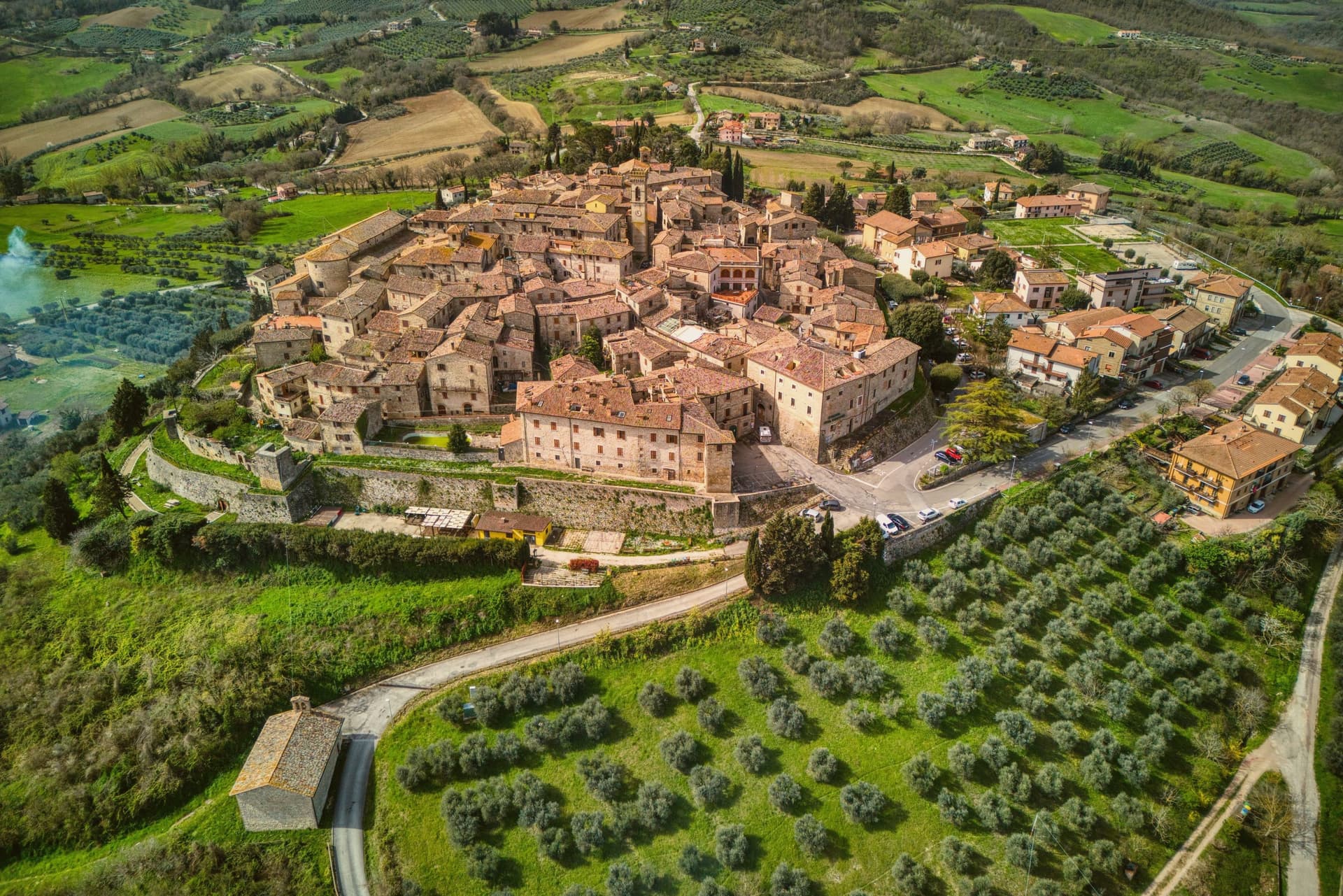
Why visit Monte Castello di Vibio
Monte Castello di Vibio sits at 422 meters on a ridge above the Tiber valley, eight kilometers north of Todi and thirty south of Perugia. The town is a walled fifteenth-century borgo on a slope of cultivated Umbrian hills, and its later name carries the trace of an old Perugian Roman family, the Vibii, attached to it in 1863 to distinguish the place from other Monte Castello communes.
The Teatro della Concordia, built in 1808 by nine wealthy families in the spirit of the French Revolution's ideals of liberty, equality and fraternity, is the smallest theatre all'italiana in the world: 99 seats, 62 in four tiers of boxes and 37 in the stalls, an auditorium of 68 square meters in a bell-shaped plan, a stage of 50. The theatre closed in 1951 after wartime damage and reopened in 1993 after restoration.
The Chiesa dei Santi Filippo e Giacomo, built in 1851 on the main square, replaced an older parish on the same footprint. The Madonna delle Grazie, an older stone church from 1505, holds frescoed walls.
What to see in Monte Castello di Vibio
- Teatro della Concordia. The smallest all'italiana theatre in the world: 99 seats, built in 1808 in a bell-shaped plan, closed in 1951 and reopened in 1993.
- Chiesa dei Santi Filippo e Giacomo. Main parish church on the central square, built in 1851 on the footprint of an earlier and smaller church.
- Madonna delle Grazie. Stone church of 1505 on the edge of the borgo, with frescoed interior walls dating to the early sixteenth century.
How to get to Monte Castello di Vibio
Perugia is roughly 50 minutes away by road.
Our tip
April through June and September into October are the months the borgo opens. The Teatro della Concordia runs a season of opera, concerts and theatre from spring through autumn, with extra performances around the August holidays. July and August are warm, and visitors thin in midafternoon; the centro storico is small enough that the heat passes quickly with a glass of water in the main square.
San Casciano dei Bagni
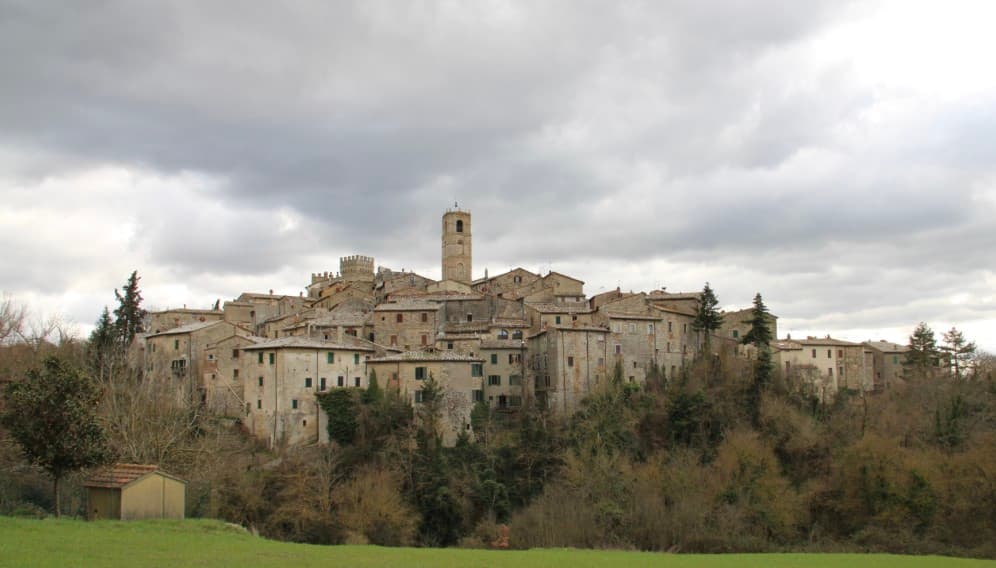
Why visit San Casciano dei Bagni
San Casciano dei Bagni sits at 582 meters at the southern edge of the province of Siena, above 42 hot springs that average 42 degrees Celsius. The baths were used continuously from Etruscan through Roman times and again from the Renaissance, when visitors came from across Europe.
In 2022, an excavation that began in 2019 at the ancient sanctuary turned up 24 bronze votive statues protected by mud, with around 6,000 coins in gold, silver and bronze. The find was the largest of its kind in fifty years; most surviving Etruscan votive material is terracotta.
The 1,500 residents live on a basalt outcrop above the Roman thermal complex, in a centro storico of stone houses and three small churches. The borgo joined the Borghi più belli network in 2014 and remains one of the smallest communes in Toscana to carry both that label and Bandiera Arancione.
What to see in San Casciano dei Bagni
- Santuario Ritrovato. Etruscan-Roman thermal sanctuary excavated since 2019, where 24 bronze votives and around 6,000 coins were recovered in 2022.
- Bagno Grande. The principal natural pool of the 42 hot springs, used from the second century BC through the Renaissance and reopened to the public.
- Collegiata di San Leonardo. Romanesque parish church in the centro storico, restored in the seventeenth century, with a baptismal font carved from local travertine.
How to get to San Casciano dei Bagni
Perugia is roughly 68 minutes away by road.
Our tip
The thermal pools make the calendar different here. Winter is the season many visitors prefer, when the 42-degree water steams against cold air and snow occasionally dusts the basalt outcrop. April through June and September into October are the most balanced months: warm hill light, the dry-stone walls of the borgo at their best, the sanctuary excavations open to guided tours. Sagra del Ciaffagnone di San Casciano dei Bagni falls in June.
Montone
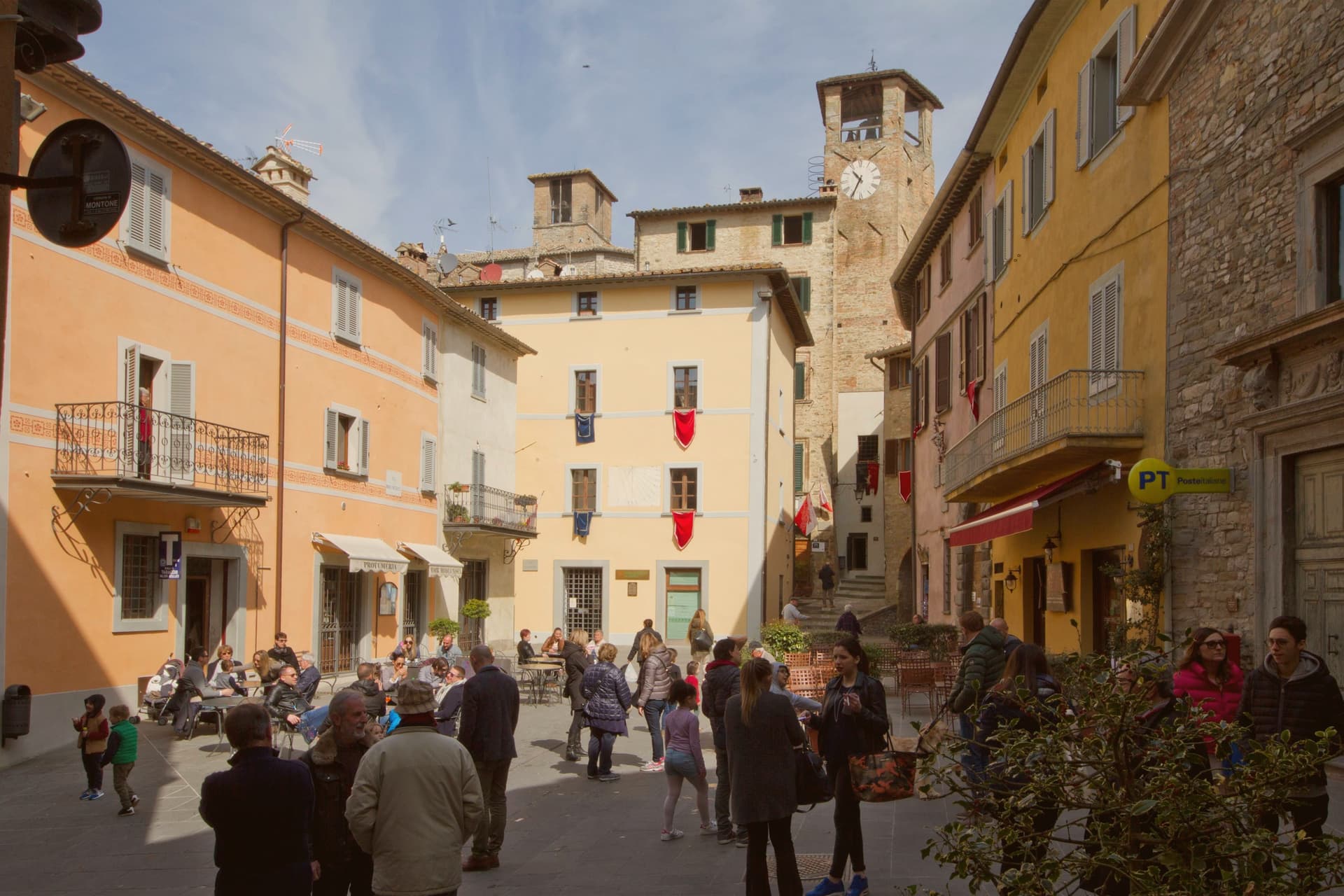
Why visit Montone
Montone sits at 482 meters on a ridge above the upper Tiber valley, thirty kilometers north of Perugia. The walled centro storico is small enough to circuit in fifteen minutes and steep enough that the route is the climb.
The town is the cradle of the Fortebracci, the condottieri family whose most famous member, Braccio da Montone, was made Count of Montone in 1414 by Antipope John XXIII. The Rocca di Braccio at the top of the hill and the Rocca d'Aries six kilometers out are both Fortebracci works.
The Gothic Chiesa di San Francesco, built around 1300 where the family had its houses, holds the Pinacoteca with a Bartolomeo Caporali altarpiece. The Donazione della Spina, a relic-thorn from Christ's crown given to the town by Carlo Fortebracci after the Venetians thanked him for naval service against the Turks, is processed twice a year, on Easter Monday and during the August week after Ferragosto.
Since 1997 the Umbria Film Festival has run here every July, founded with Terry Gilliam.
What to see in Montone
- Chiesa di San Francesco. Gothic church of around 1300 with a fourteenth-century convent, picture gallery and cloister, on the hill where the Fortebracci had their houses.
- Rocca di Braccio. Fortress at the top of the borgo rebuilt under Oddo III Fortebracci in the late fourteenth century, now a panoramic ramparts walk.
- Rocca d'Aries. Castle six kilometers from the centro storico, the first Fortebracci stronghold according to tradition, restored and reopened to visit.
How to get to Montone
Perugia is roughly 47 minutes away by road.
Our tip
April through June and September into October are the steady months. The Umbria Film Festival runs in mid-July under Terry Gilliam's patronage, and the borgo doubles for that week with screenings in the piazze and the Rocca. The August Donazione della Spina pageant, the week after Ferragosto, fills the streets with medieval costumes and a Rocca di Braccio banquet.
Cetona
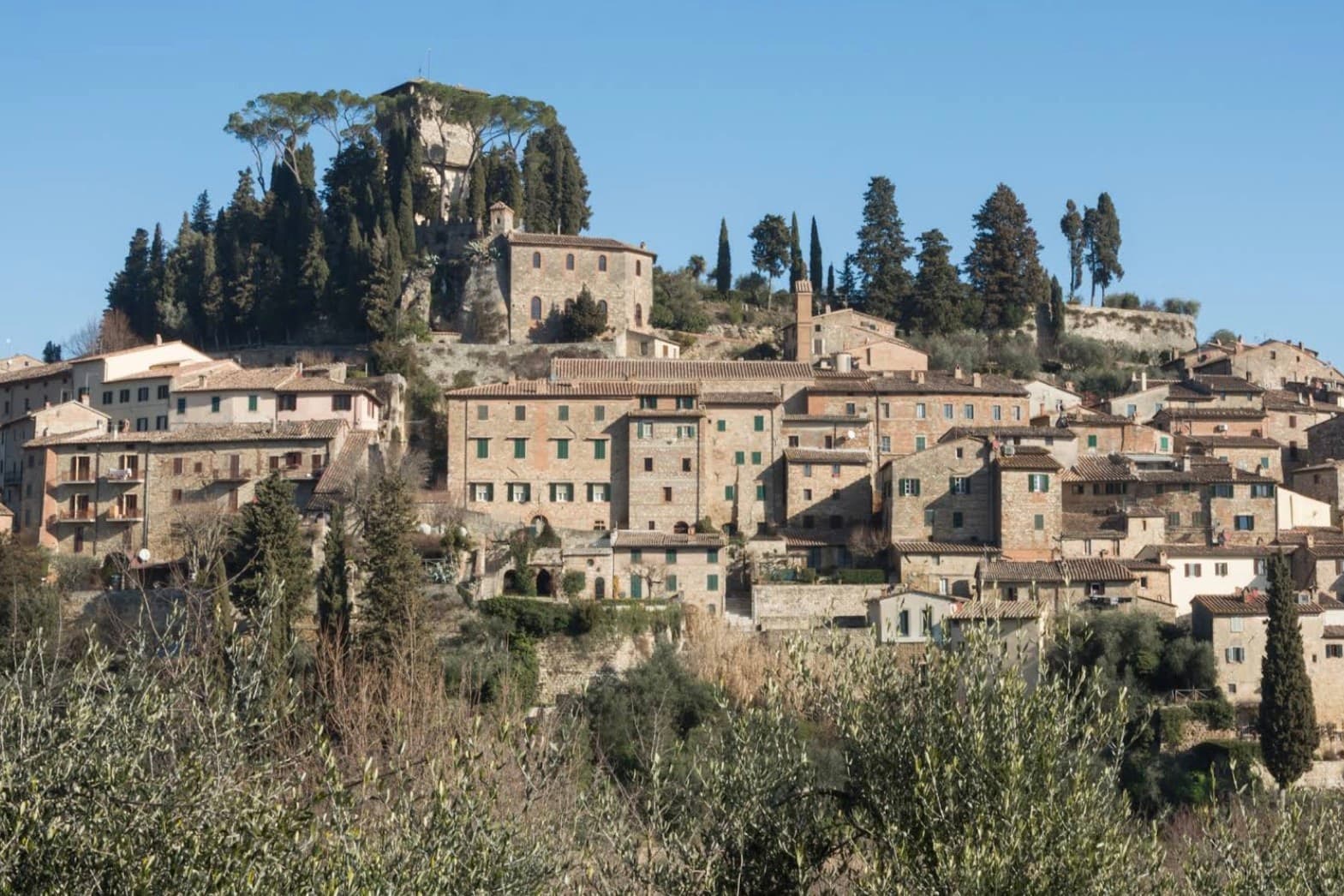
Why visit Cetona
The town sits on the western flank of a ridge at the meeting point of Toscana, Umbria and Lazio, where the mountain divides the Val d'Orcia from the Val di Chiana. The medieval comune passed between Siena, Orvieto and Perugia before falling to Siena in the late fourteenth century, and it was Cosimo I who later sold it whole to a marchese.
The fortress at the top of the grid and the square laid out below it are two halves of the same Renaissance move: a private residence replacing a garrison at the summit, a flat civic stage opened up at the base. Above the town, in the woods, the hermitage and the caves belong to a much older layer, human use of the mountain reaching back to the Mesolithic, long before any comune or marchese laid claim to it.
What the town adds up to is a settlement built in tiers: a prehistoric mountain, a contested medieval center, and a Renaissance overlay that reorganized the base of the hill without touching what stood above it.
What to see in Cetona
- Piazza Garibaldi. Elliptical square at the foot of the medieval grid, flat and open where the streets above it climb steeply. The civic stage of the borgo, still the first thing that orients a visitor.
- Rocca di Cetona. Fortress at the top of the centro storico, its walls and keep still standing though the interior became a private residence rather than a garrison.
- Convento di San Francesco. Franciscan convent below the borgo, founded in 1212, with a single-nave church and a small cloister still in religious use.
How to get to Cetona
Perugia is roughly 78 minutes away by road.
Our tip
April through June and September into October are the months Cetona keeps its calmest pace, the wooded slopes of Monte Cetona green or rust depending on the half. July and August are hot in the centro storico but the mountain trails above 800 meters stay cool. The Mostra del Tartufo, dedicated to the local white truffles, runs the second weekend of November in Piazza Garibaldi. Sagra del Bico di Cetona falls in June.
Citerna
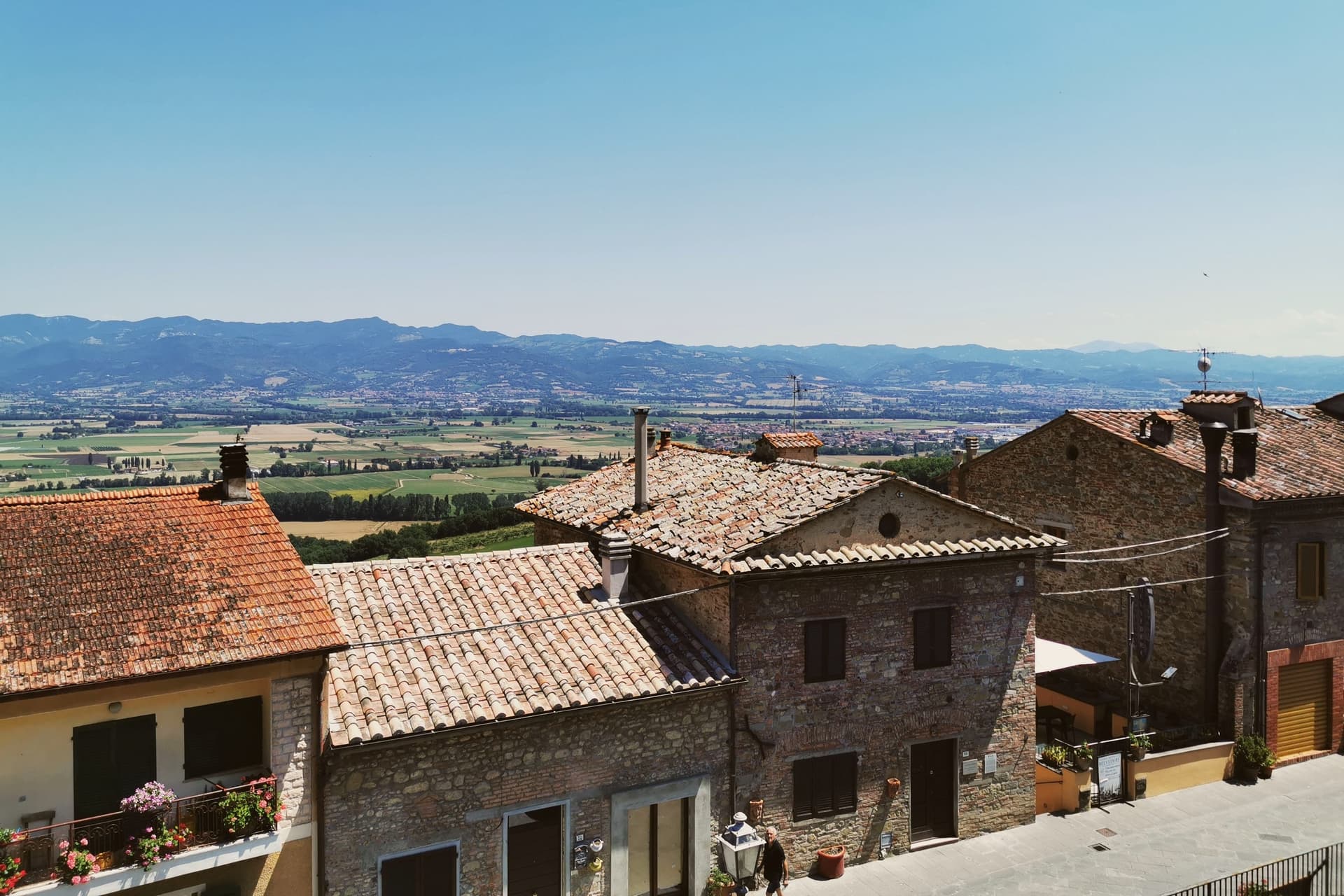
Why visit Citerna
Citerna sits at 480 meters on a ridge at the confluence of the Cerfone and Sovara streams, fifty kilometers north of Perugia in the upper Tiber valley. The name comes from the rainwater cisterns hollowed under the town, still walkable through the underground camminamenti that run beneath the medieval streets.
Umbrian and Etruscan settlement preceded the Roman finds at San Fista and Pistrino. In 1221 Citerna swore loyalty to Città di Castello in exchange for protection, then passed to the Vitelli of Città di Castello as a vicariate in the early sixteenth century, and joined the Kingdom of Italy in 1860 as the first Umbrian town to do so.
The Chiesa di San Francesco on Corso Garibaldi holds a polychrome terracotta Madonna by Donatello, dated around 1415, the only work by the sculptor in Umbria, alongside paintings by Pomarancio, Luca Signorelli and Raffaellino del Colle. The view from the ramparts reaches the mountains of La Verna and Gubbio on a clear day.
What to see in Citerna
- Madonna di Donatello. Polychrome terracotta Madonna and Child of around 1415 in the Chiesa di San Francesco, the only sculpture by Donatello in Umbria.
- Chiesa di San Francesco. Convent church on Corso Garibaldi with works by Pomarancio, Luca Signorelli, Raffaellino del Colle and a Della Robbia school Madonna.
- Camminamenti medievali. Underground walkways and rainwater cisterns hollowed below the streets, the source of the town's name and now open to visit.
How to get to Citerna
Perugia is roughly 68 minutes away by road.
Our tip
April through June and September into October are the months that suit the ridge. Spring and early autumn give clear views from the ramparts as far as La Verna; the air at 480 meters stays mild even in midsummer afternoons. July and August warm the upper Tiber valley but Citerna is small and the underground camminamenti stay cool.
Lucignano
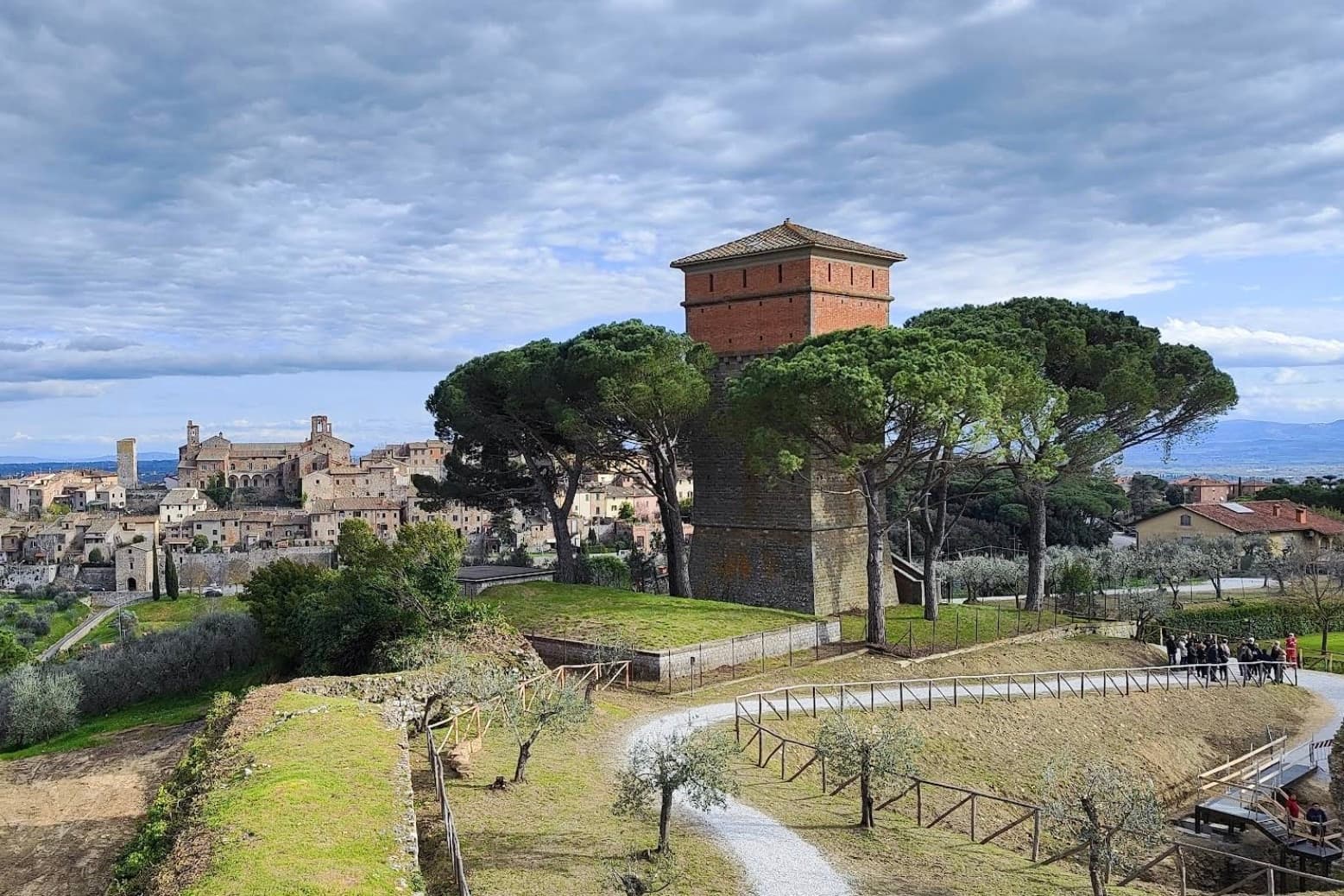
Why visit Lucignano
Lucignano sits at 400 meters on a hill in the Valdichiana, halfway between Siena and Arezzo, built on a tight elliptical plan of four concentric rings of streets. Its position made it one of the most contested settlements of medieval Toscana: Siena, Arezzo, Florence and Perugia all fought over it between 1200 and 1500.
The current walls and three gates date to a Sienese reconstruction of 1371. In the Museo Civico inside the Palazzo Comunale stands the Albero d'Oro, a 260-centimeter Gothic gold-and-coral reliquary in the shape of a tree, begun by Ugolino di Vieri in 1350 and finished by Gabriello d'Antonio in 1471.
Local tradition turned it into the Albero dell'Amore, a marriage charm. The Collegiata di San Michele Arcangelo dominates the highest ring of the borgo, and the elliptical plan is best read from the air, which is why drone footage of Lucignano keeps appearing in articles about medieval Tuscan urbanism.
What to see in Lucignano
- Albero d'Oro. 260-cm Gothic reliquary in the shape of a tree, gold, coral and enamel, begun by Ugolino di Vieri in 1350 and completed by Gabriello d'Antonio in 1471.
- Centro storico ellittico. Four concentric rings of streets inside elliptical walls, the most complete example of medieval Tuscan elliptical town planning.
- Collegiata di San Michele Arcangelo. Eighteenth-century church on the highest ring of the borgo, with a Vasari façade adjustment and a baroque organ inside the medieval shell.
How to get to Lucignano
There is a railway station in the town, so you can arrive without a car and never need one while you are here. Perugia is roughly 65 minutes away by road.
Our tip
April through June and September into October are the months Lucignano keeps its balance, the Valdichiana green or gold depending on the half and the centro storico cool inside its elliptical walls. The Maggiolata, a flower festival between the four quarters of the borgo, runs across the last two Sundays of May. July and August push the valley past thirty and the centro storico thins after lunch. Sagra della Filiera del Tartufo Marzuolo falls in March.
Bettona
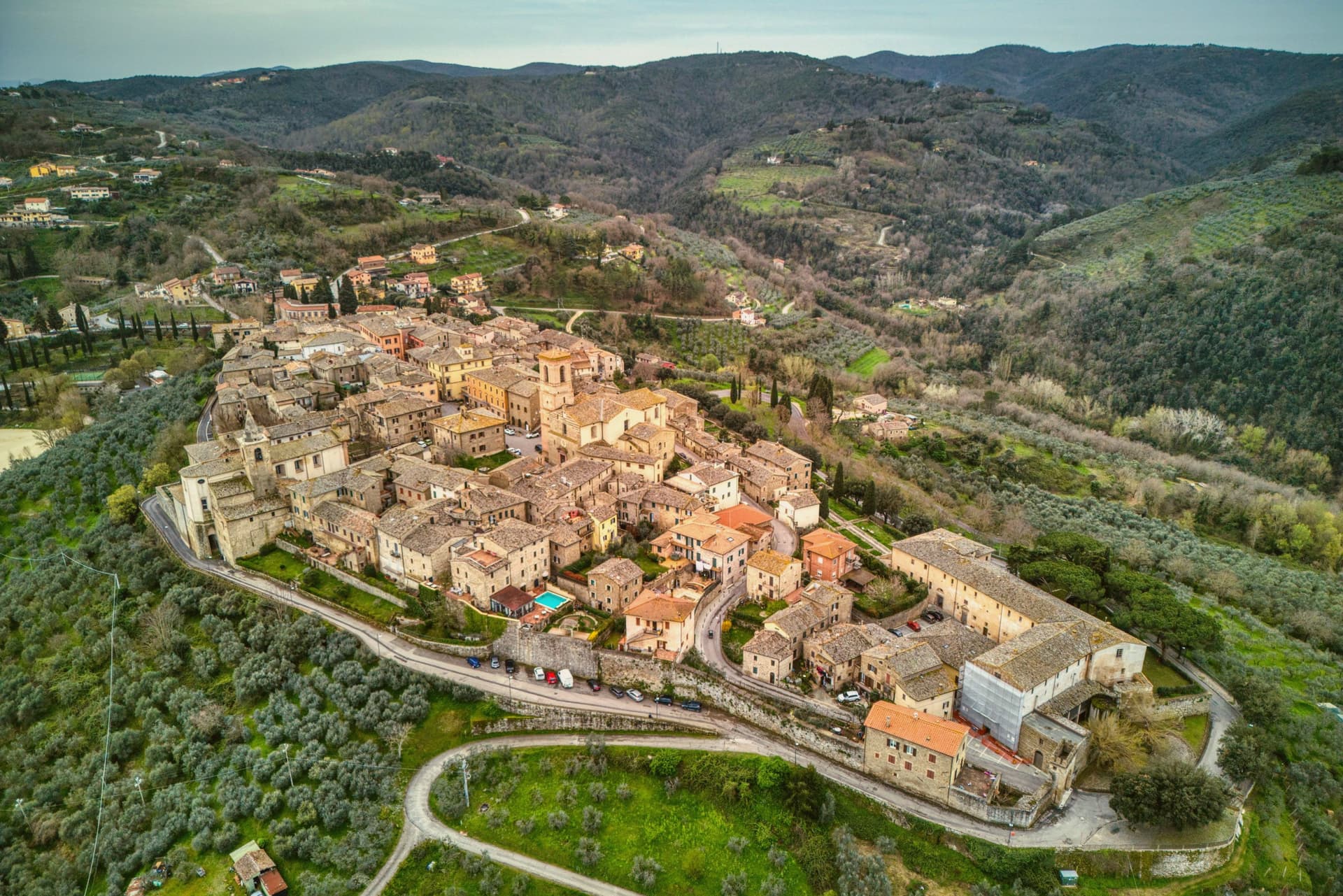
Why visit Bettona
Bettona sits at 353 meters on a hill north of the Colli Martani, looking across the cultivated plain toward Perugia. The Etruscans built here in the seventh century BC, and Bettona remains the only known Etruscan settlement east of the Tiber.
Stretches of polygonal walls from that period are still visible at the base of the medieval circuit, mixed with later Roman blocks. The town became a municipium under Augustus, declined during the barbarian invasions, was sacked by Totila in 548, and rebuilt as a self-governing commune by the late twelfth century.
Papal rule held from 1648 to unification. The Pinacoteca Civica, housed in the Palazzetto del Podestà on Piazza Cavour, keeps two paintings by Pietro Perugino (Sant'Antonio da Padova and Madonna della Misericordia), tabernacle panels attributed to El Greco, and Etruscan funerary stones and architectural terracottas from the territory.
The olive groves below town carry the Città dell'Olio designation.
What to see in Bettona
- Mura etrusche. Stretches of polygonal Etruscan walls visible at the base of the medieval circuit, from the seventh and sixth centuries BC.
- Pinacoteca Civica. Civic art gallery in the Palazzetto del Podestà holding two Perugino paintings, tablets attributed to El Greco and Etruscan finds.
- Chiesa di Santa Maria Maggiore. Main parish church on Piazza Cavour, with a reordered interior holding altarpieces and a Crocifissione fresco.
How to get to Bettona
Perugia is roughly 27 minutes away by road.
Our tip
April through June and September into October are the windows that work. The olive harvest runs from late October through November and gives the town its working rhythm, with the frantoi pressing into the evening. July and August are dry and hot; the centro storico is small enough that midday empties it. Sagra dell'Oca falls in July.
Bevagna
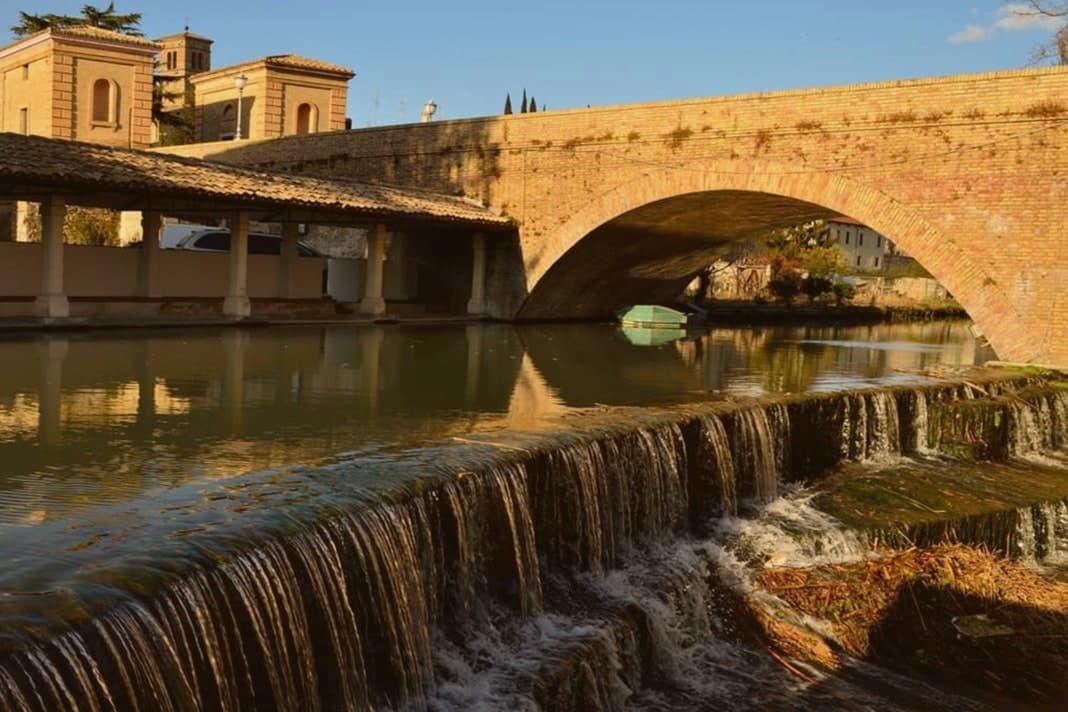
Why visit Bevagna
Bevagna sits on the floor of the Umbrian valley at 225 meters, where the Clitunno meets the Timia. Ancient Mevania, the name means she who stands in the middle, was a Roman mansio on the Via Flaminia, listed in the Antonine Itinerary.
A black-and-white mosaic of the 2nd century AD survives almost intact in the frigidarium of the Roman baths, twelve meters by seven, octopuses and dolphins in the center, tritons and sea-horses on the short sides. Piazza Silvestri at the heart of the centro storico holds two Romanesque churches that face each other at odd angles, San Michele Arcangelo and San Silvestro, built within years of each other in the late 12th century.
The Mercato delle Gaite each June turns the town into the year 1300 for ten days, four quarters competing on medieval trades and tavern menus, no anachronisms allowed. The Sagrantino slopes of Montefalco are nine kilometers up the road.
What to see in Bevagna
- Piazza Silvestri. Twelfth-century civic square ringed by the Palazzo dei Consoli, the churches of San Silvestro and San Michele, and the fountain of 1896.
- Chiesa di San Michele Arcangelo. Romanesque collegiate church built by Binello and Rodolfo at the end of the 12th century, on the main square.
- Chiesa di San Silvestro. Romanesque parish church across the piazza, signed and dated 1195 by Binello, the same builder as San Michele.
How to get to Bevagna
Perugia is roughly 39 minutes away by road.
Our tip
April through June and September into October are the months for Bevagna. The valley fills with green, the Sagrantino vines run on the slopes above town, and the rose festival fills the gardens around the walls in May. The Mercato delle Gaite runs the second half of June and is the single most concentrated weekend on the Umbrian medieval calendar. Sagra della Lumaca falls in August.
More from Anywhere Italy
- The prettiest villages with a food festival within 90 minutes of Perugia
- The best hidden hill towns with a food festival within 90 minutes of Perugia
- The prettiest hidden villages with a serious restaurant within 90 minutes of Perugia
- The prettiest villages with a medieval festival within 90 minutes of Perugia
- The best hidden towns with a food festival in the province of Perugia
 The 6 best small towns that eat well in the province of Perugia