
The best hidden towns that eat well in the province of Savona
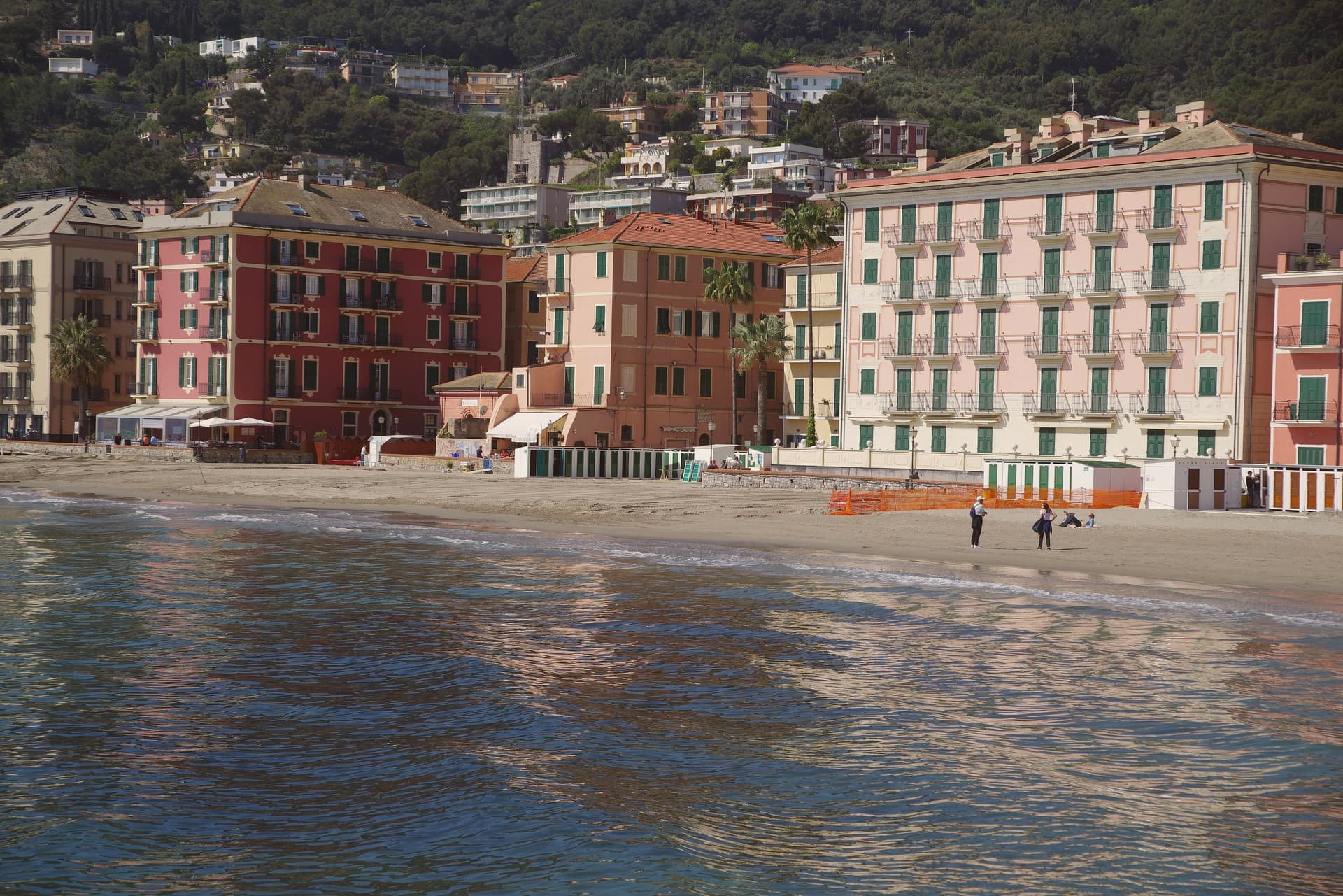
The province of Savona cooks with what grows on its own slope. Taggiasca olives pressed into oil thin enough to drink, basil for pesto from the terraces above the coast road, chickpeas ground for panissa and fried in squares, anchovies salted in jars, stockfish stewed with pine nuts. Inland, where the Ligurian hills climb towards the Piedmontese border, the register shifts to chestnut flour, mushrooms and beef braised slowly in red. The houses are stacked in painted stucco over stone, ochre and rose and faded green, with slate lintels and vaulted alleys that stay cool through August. Autumn is the good season for the inland kitchens, late spring for the fish.
Most people arriving on this stretch of coast keep going, either west to Alassio and the long sand, or east to Genoa and then the Cinque Terre, which absorbs the summer crowd almost entirely. The Cinque Terre earns the attention, and it pays for it in queues at the station, timed footpaths and dining rooms turning tables at speed. The result is a familiar Ligurian problem: an enormous quantity of pesto served to people who will not be there tomorrow. Prices climb, kitchens simplify, and the local catch competes with what the volume requires.
The coast and the terraces do not stop at the famous names. The same olive groves, the same seafront kitchens and the same slate-and-stucco villages run right along the Riviera di Ponente and up the valleys behind it, where a guide inspector has sat down and taken notes without the crowd following. These are the smaller places in the province of Savona, some on the water, some well inland towards the Bormida valley, all with a table worth booking. Fewer people go, and the kitchens are the better for it.
Of the 15 communes we have mapped in the province of Savona, 10 qualify as towns that eat well: a national or international dining guide has named a table in each. This list is the hidden ones, 9 in all, ordered smallest first. The smallest, Laigueglia, has 1,705 residents.
If you are still choosing, we have also written The 9 best towns with a food festival in the province of Savona and The best beach towns in the province of Savona.
Laigueglia
Why visit Laigueglia
Laigueglia sits at six meters on the Riviera di Ponente, sheltered between the two headlands that frame the bay. The name comes from Aquilia, a reference to the Roman eagle standards, and the village grew from a settlement of fishermen who came over from neighboring Andora.
Genoa bought the borough in 1609. Through the seventeenth century the economy ran on shipbuilding and the coral trade, which drew Catalan fishermen to settle in numbers and left behind the Baroque churches that anchor the centro storico today: the parish church with its curved front, and the confraternity oratory with its carved choir and Piola altarpiece.
Behind the beach, the fishermen's grid still reads as caruggi, small squares opening to the sea, houses in pale violet and ochre, the seafront watchtowers standing at the edge where the town once kept watch for raiders by sea. What the coral money built, the town has simply gone on living inside.
Savô have been named by a guide.
What to see in Laigueglia
- Chiesa di San Matteo. The curved façade fronts a Baroque interior where the three altarpieces hang alongside furnishings paid for in the coral years, when the parish stood as the visible return on the fishery's money.
- Oratorio di Santa Maria Maddalena. 1616 oratory of the Confraternita dei Disciplinanti, with a carved wooden choir and an altarpiece by Domenico Piola.
- Centro storico. Fishermen's grid of caruggi behind the beachfront, with houses painted in the pale lilac and ochre traditional to the Ponente coast.
How to get to Laigueglia
There is a railway station in the town, so you can arrive without a car and never need one while you are here. Genova is roughly 85 minutes away by road.
Our tip
May through June and September through October are the calmer summer-edge months on this coast. The Bandiera Blu beach is open, the sea is warm enough from June onward, and the centro storico is not yet packed. July and August bring crowds, especially from Piedmont and Lombardy, and the litoraneo fills shoulder-to-shoulder. Il Salto Dell'Acciuga falls in October.
Borgio Verezzi
Why visit Borgio Verezzi
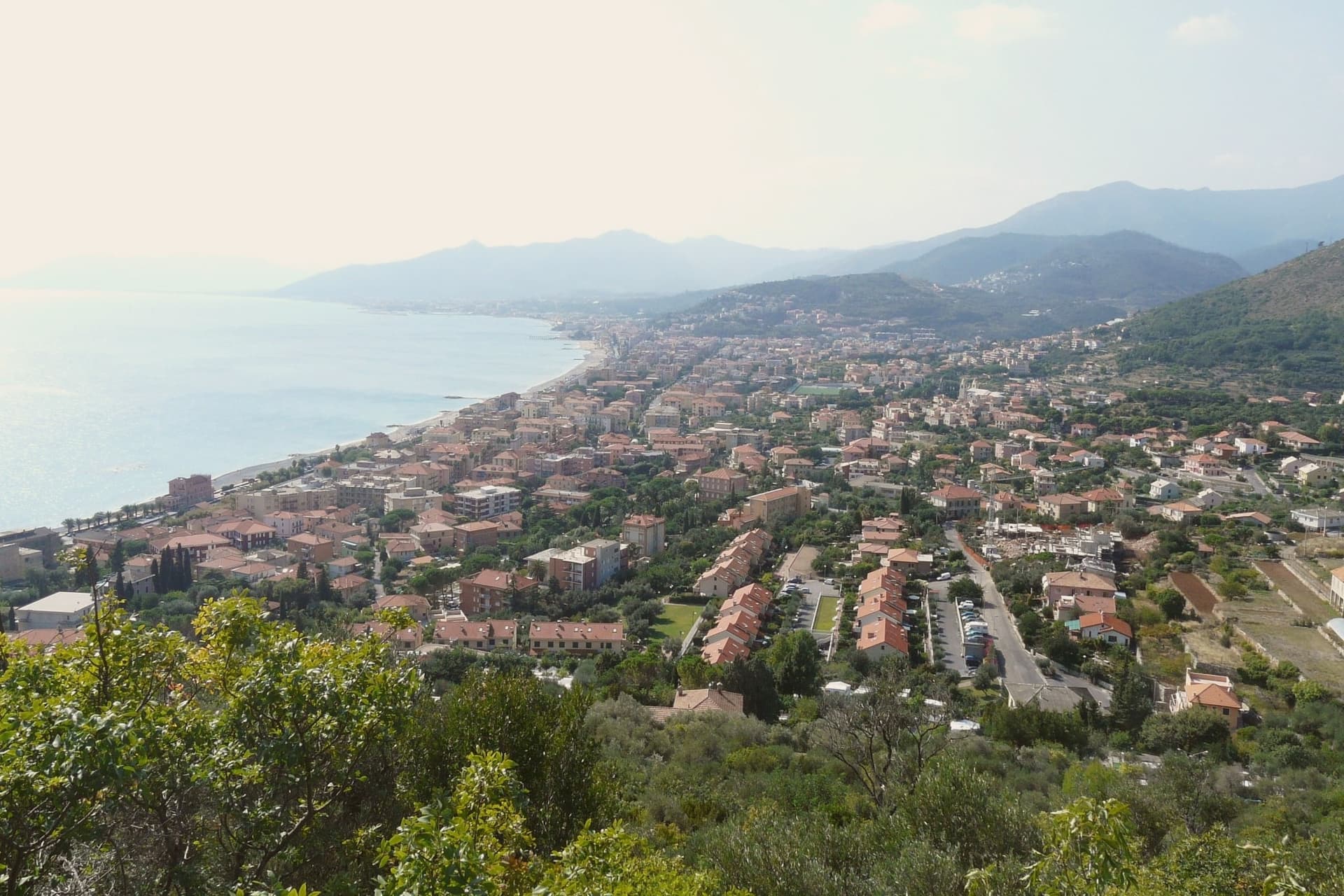
Borgio Verezzi is two settlements stitched together in 1933 under a single comune in the province of Savona. Borgio sits on the coast at the mouth of the Bottassano stream.
Verezzi rises 200 meters up the Orera hill above it, four old boroughs of stone houses in the warm-pink local rock: Piazza, Roccaro, Crosa, and Poggio, each a cluster rather than a single center. The beach below has held the Bandiera Blu without interruption since 1989.
The two halves of the town read as coast and height rather than old and new: the lower village handles the shoreline and the flag it has kept for decades, the upper village keeps its stone streets and its square turned toward the sea view. What the pairing adds up to is a comune built from two working parts, a beach town below and a hill village above, joined by administration in 1933 but still legible as separate places.
Doc have been named by a guide.
What to see in Borgio Verezzi
- Grotte di Valdemino. Dated to 1933, the caves run through chambers where small underground lakes sit beneath the karst rock, the route winding through passages carved out over time.
- Piazza Sant'Agostino. Main square of Verezzi, framed by pink-stone houses with a view down to the sea. The village skyline serves as backdrop for the festival's summer stage.
- Chiesa di San Pietro Apostolo. Neoclassical parish church built in 1789 on the foundations of the medieval Burgum Albinganeum castle, with a white façade and two bell towers.
How to get to Borgio Verezzi
There is a railway station in the town, so you can arrive without a car and never need one while you are here. Genova is roughly 69 minutes away by road.
Our tip
April through June and September into October are the dry months on this stretch of the Riviera di Ponente. The beach at Borgio holds Bandiera Blu and the water warms into May. July and August are full: the coast road slows, the spiaggia fills with weekenders from Genova and Torino, and the theater festival runs in Piazza Sant'Agostino from early July to mid-August. Sagra della Lumaca falls in August.
Noli
Why visit Noli
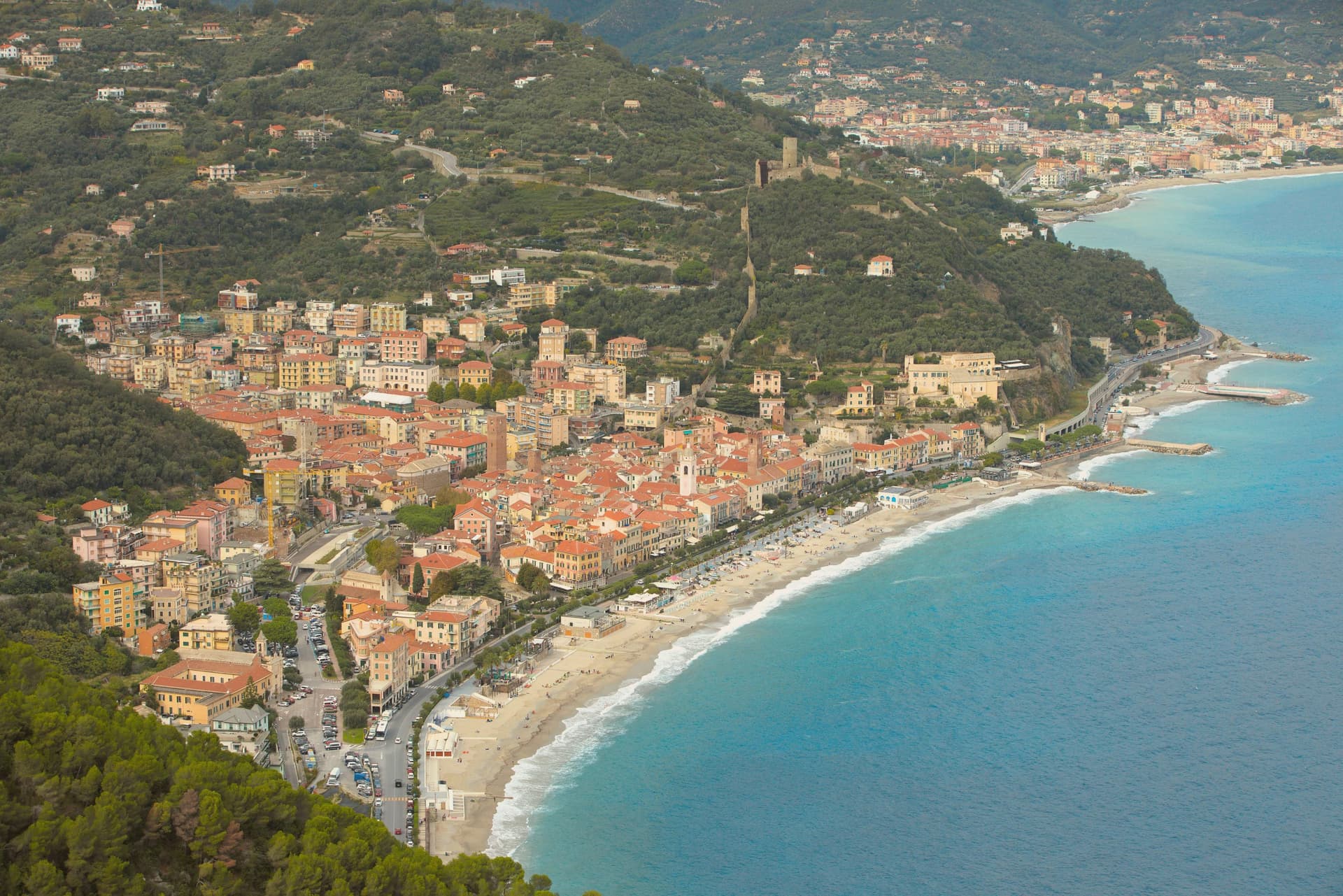
Noli sits at four meters on the Riviera di Ponente, fifty kilometers southwest of Genoa. From 1192 to 1797 it was an independent maritime republic, the fifth alongside Genova, Pisa, Venezia and Amalfi, holding the Capo Noli headland and a stretch of coast under its own flag and protected by alliance with Genoa.
The medieval walls still ring the centro storico, and the survivors of an original eight defensive towers still rise above the rooftops, including the Torre dei Quattro Canti and the Torre Papone. Outside the walls stands the Basilica di San Paragorio, an eleventh-century Romanesque church and one of the most important early medieval buildings in Liguria, with a wooden crucifix from the twelfth century and a bishop's throne carved into a single block of stone.
The Capo Noli cliffs end the bay to the south, with footpaths leading to grottos and a hermitage in the rock. The litoraneo carries the Bandiera Blu.
Vescovado, Il Vescovado have been named by a guide.
What to see in Noli
- Basilica di San Paragorio. Eleventh-century Romanesque church outside the walls, with a twelfth-century wooden crucifix and a bishop's throne carved from a single block.
- Torre dei Quattro Canti. Surviving medieval defensive tower inside the walled centro storico, one of eight that originally ringed the maritime republic.
- Torre Papone. Second medieval tower of the original defensive ring, still standing above the rooftops of the centro storico.
How to get to Noli
There is a railway station in the town, so you can arrive without a car and never need one while you are here. Genova is roughly 58 minutes away by road.
Our tip
May through June and September through October are the right months for Noli. The sea is warm enough from late May, the walls of the centro storico keep the streets shaded, and the coastal path to Capo Noli is walkable without midday heat. July and August fill the beach and the limited parking on the coastal road; the rest of the village stays calmer than the Bandiera Blu litoraneo. La Repubblica del Gusto falls in June.
Millesimo
Why visit Millesimo
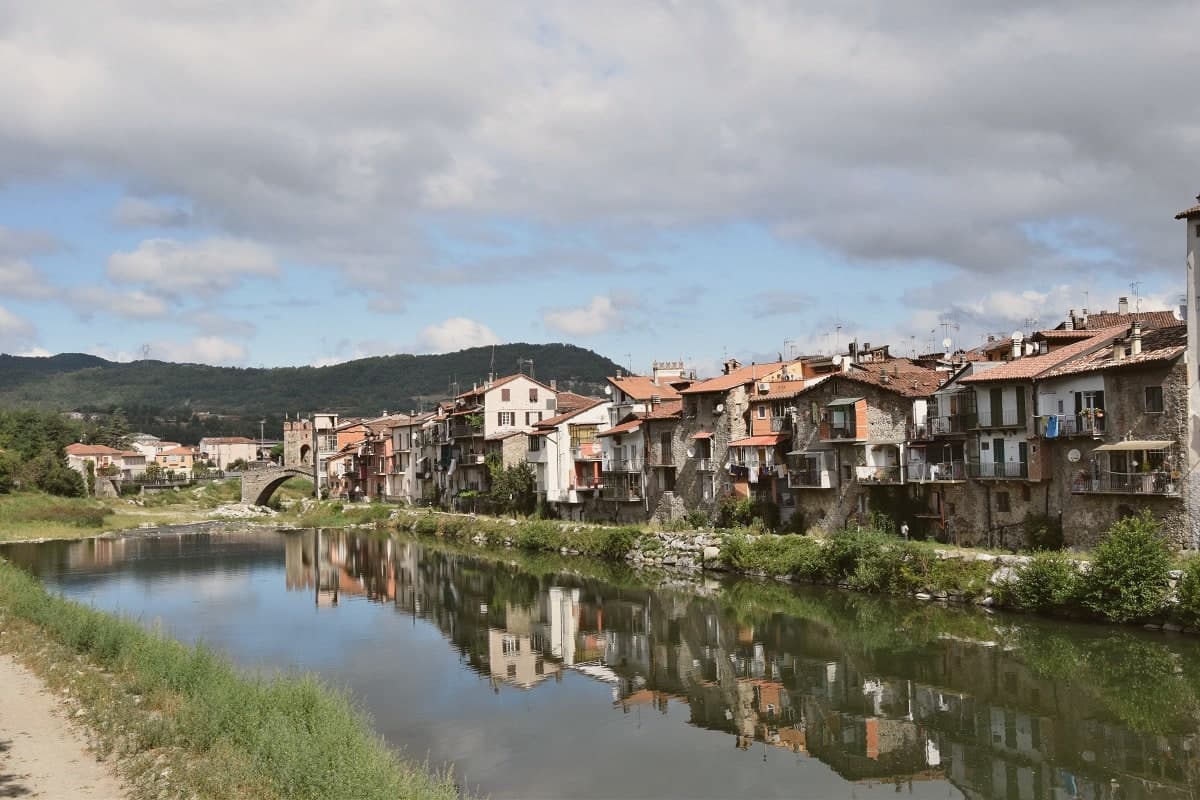
Millesimo sits sixty kilometers inland from Genoa, over the Apennine watershed, in the upper reaches of the valley that gives the wider area its name. Enrico II Del Carretto turned the village into a fortified borgo in 1206, and his successors raised the castle later in the same century on the high ground above the settlement.
The town itself grew on the right bank of the river below that castle, its stone houses laid out in a triangle around the central piazza, with the fortified bridge carrying the crossing at the valley floor and the pilgrimage sanctuary set apart on the outskirts as the valley's separate religious focus. More than three thousand casualties fell on each side when Napoleon Bonaparte defeated the combined Austro-Sardinian forces here on 13-14 April 1796, directing the campaign from the Del Carretto palazzo on the piazza that now serves as the town hall.
The pattern is one of a small defensive settlement whose river crossing, castle and family seat all sit within sight of each other, later put to use for a battle whose scale had nothing to do with the size of the place that hosted it.
Locanda dell'Angelo have been named by a guide.
What to see in Millesimo
- Ponte della Gaietta. The old fortified body still spans the river below the village, narrow enough that its defensive purpose is obvious from either bank.
- Castello Del Carretto. Tower, keep and east wall stand above the village on the high ground, the stronghold that gave the marquis line command of the valley approach.
- Palazzo Del Carretto. The family palazzo faces the central piazza and now serves as the town hall, its rooms the setting for the 1796 headquarters rather than a battlefield relic.
How to get to Millesimo
Genova is roughly 73 minutes away by road.
Our tip
April through June and September through October are the dry months in the upper Val Bormida. The interior of Liguria runs cooler than the coast at this elevation, with mild days and chilly evenings; the rivers run higher in spring after the watershed melt. July and August warm up but Millesimo's 429 meters stay tolerable. XXXIV Festa nazionale del tartufo della Val Bormida a Millesimo falls in October.
Celle Ligure
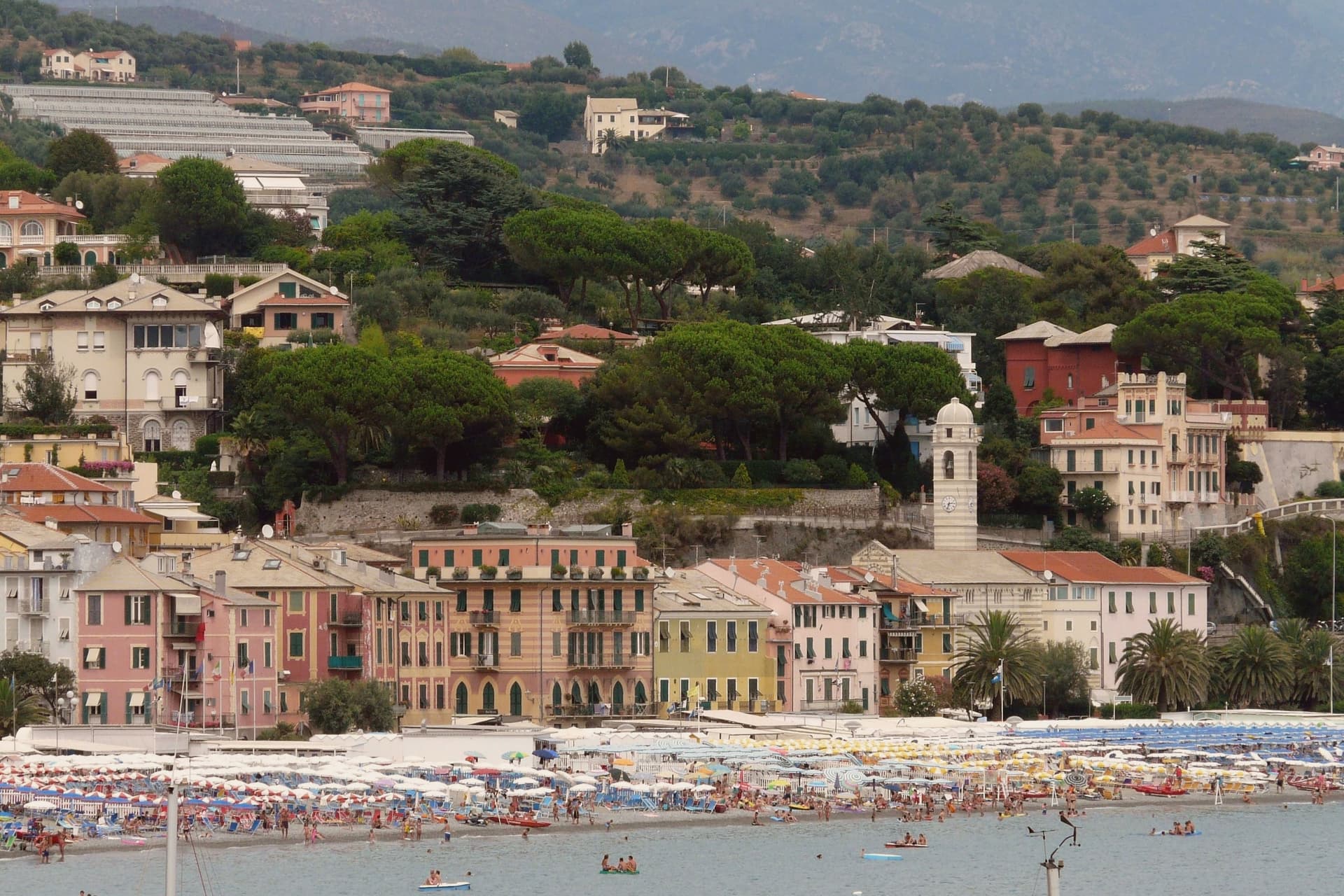
Why visit Celle Ligure
Celle Ligure sits at sea level on the Riviera di Ponente, ten kilometers west of Savona. The Aleramici marquises gave the lands to a Piedmontese monastery in 1014; the Genovese families took them over within a generation.
Pope Sixtus IV's family came from here. The lower town runs along the lungomare, with Piazza dei Mille at its center, while the centro storico sits behind it as a borgo of narrow caruggi, one of the Borghi più belli d'Italia.
A handful of artisan kilns still work these streets, ceramic shop signs marking the buildings where the trade continues. The parish church stands within this old town, its façade carrying the ceramic Assumption by Lucio Fontana, San Michele defeating the dragon rendered in the same medium the town has fired since the seventeenth century.
The pieces read as one place rather than several: a fishing and beach economy along the shore, a ceramic trade worked into the old quarter behind it, and a native artist's public commission set into the church that anchors both.
Meta Ristorante have been named by a guide.
What to see in Celle Ligure
- Chiesa di San Michele Arcangelo. Inside, a Via Crucis by Caminati hangs alongside ceramic stations by Emanuele Luzzati, a pairing of local ceramic craft with the Fontana work on the façade outside.
- Centro storico. Borgo of narrow caruggi behind the lungomare, with active artisan ceramic workshops and ceramic shop signs on the buildings themselves.
- Spiaggia di Celle Ligure. Sand and gravel beach that forms the basis of the town's summer economy, backed by the lungomare and the old town behind it.
How to get to Celle Ligure
There is a railway station in the town, so you can arrive without a car and never need one while you are here. Genova is roughly 40 minutes away by road.
Our tip
April through June and September into October are the dry months on this stretch of the Ponente. The sea warms enough for swimming by late May. July and August are full: the lungomare slows, the beach establishments fill with weekenders from Torino, and the Aurelia stays clogged from Albisola to Varazze on Friday afternoons. Acciugalonga falls in September.
Andora
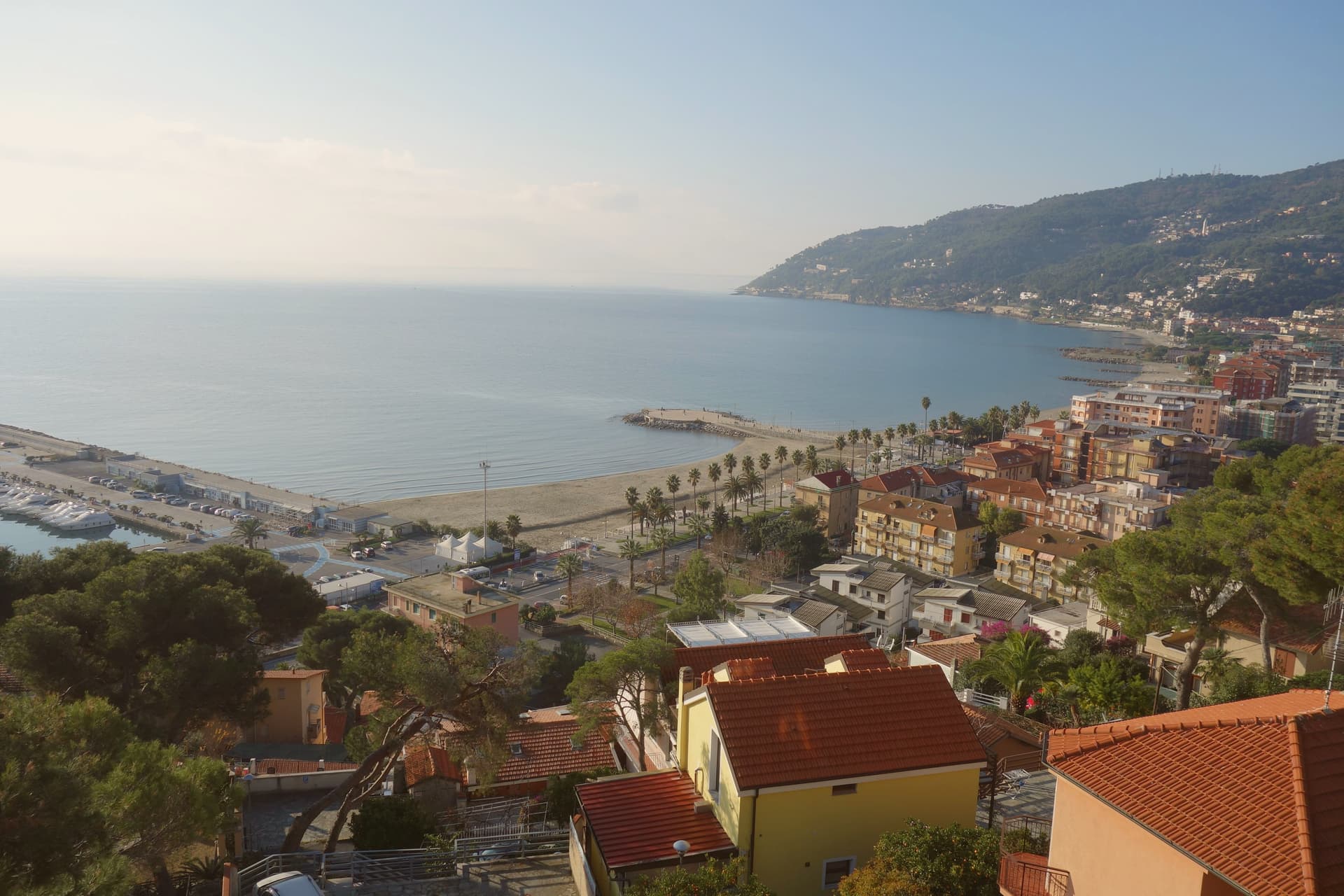
Why visit Andora
Andora sits on the Val Merula in the Riviera di Ponente, the westernmost commune of the Province of Savona before crossing into Imperia. The original settlement was Borgata Castello, perched on a hill called Paraxu set back from the coast because Saracen raids made the shore unsafe.
The Clavesana counts raised the castle on Paraxu around 1170, and beside it the late-thirteenth-century Romanesque-Gothic church of Saints Giacomo and Filippo, built in Capo Mele stone with a deep central polyphore and a rose window. Together they are considered the most significant medieval ensemble on the western Ligurian coast.
The modern town moved to the Aurelia coast road after the raids stopped. Colla Micheri, the hilltop hamlet bought and restored by Thor Heyerdahl of Kon-Tiki fame in the 1960s, sits above the modern beachfront.
The Spighe Verdi recognition flags the green network running through the commune; the olive grove network covers the Val Merula slopes.
Vignamare have been named by a guide.
What to see in Andora
- Castello dei Clavesana. Ruined castle raised by the Clavesana counts around 1170 on the Paraxu hill, the first nucleus of medieval Andora, in Capo Mele stone.
- Chiesa dei Santi Giacomo e Filippo. Late thirteenth-century Romanesque-Gothic church beside the castle in Borgata Castello, central polyphore and rose window in Capo Mele stone.
- Colla Micheri. Hilltop hamlet of Saracen-era stone houses around the church of San Sebastiano, bought and restored by Thor Heyerdahl in the 1960s.
How to get to Andora
There is a railway station in the town, so you can arrive without a car and never need one while you are here. Genova is roughly 83 minutes away by road.
Our tip
April through June and September into October are the strongest months on Andora's coast. The olive groves come into harvest from late October into November. July and August fill the Aurelia beachfront and the Riviera dei Fiori traffic doubles. Street Food Time falls in August.
Pietra Ligure
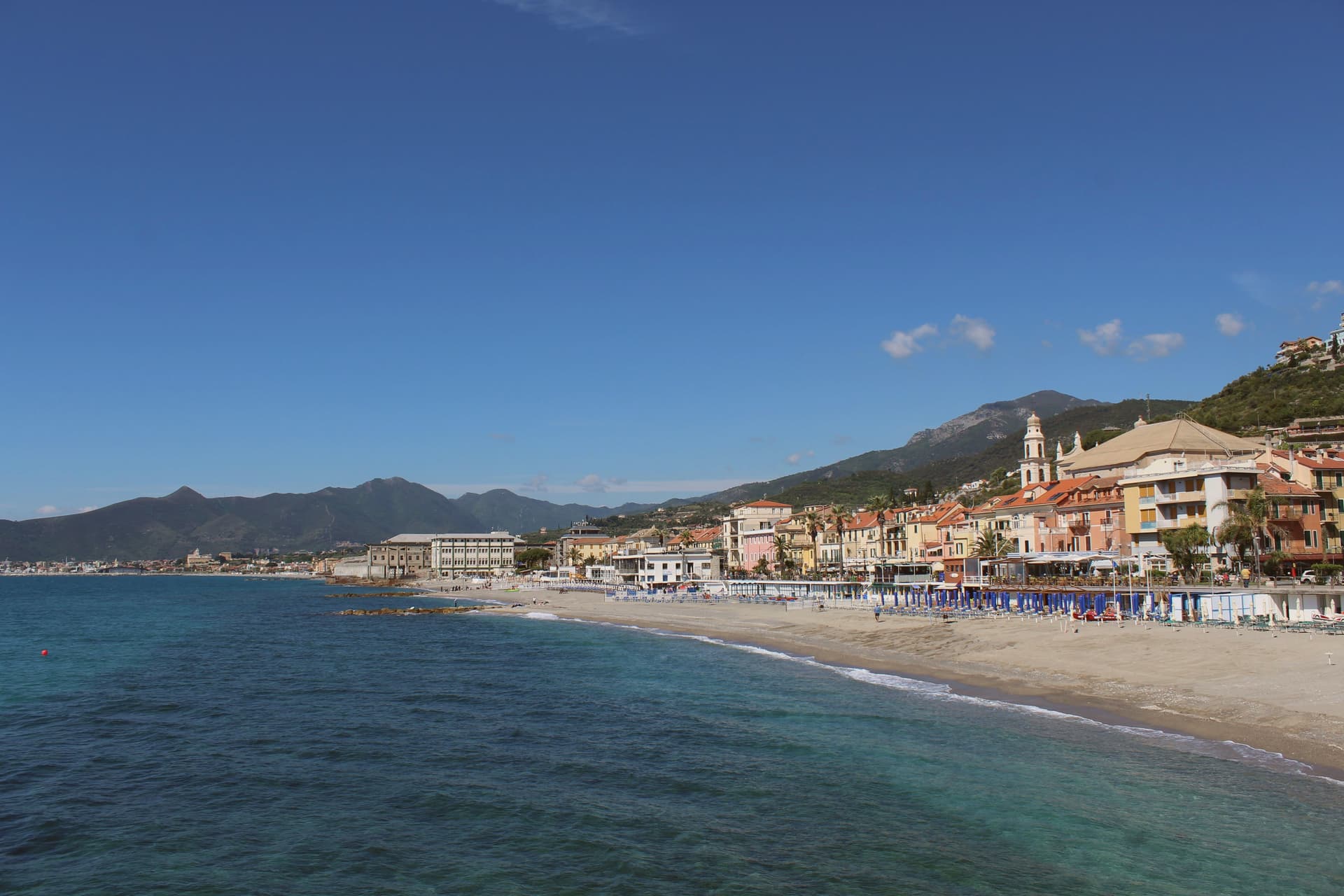
Why visit Pietra Ligure
Pietra Ligure sits between Loano and Borgio Verezzi on the Riviera di Ponente, twenty kilometers southwest of Savona. Neolithic finds on Monte Trabocchetto and Roman artifacts in the centro storico place settlement here back across millennia, long before the town took its present name and shape.
That name comes from the Castrum et Oppidum Petrae, the fortress on the rock above the modern center, which became a summer residence from 1100 and was held until 1385, when it passed to the Republic of Genova. The old town has grown up around two poles: the rock with its castle at one end, and the Baroque basilica at the other, with the palazzi of the civic and religious elite filling the ground between.
The promenade now traces that same line at sea level, joining the historic center to a sandy beach that runs south toward Loano. Every three years the space between these poles, the central squares of the old town, fills with the floral carpets of the Infiorata, while a smaller annual version continues in the frazione of Ranzi.
What the town shows a visitor, in effect, is a small stretch of coast where a medieval fortress, a plague-vow church and a modern floral tradition all sit within walking distance of one another.
Locanda Nelli, Machettö have been named by a guide.
What to see in Pietra Ligure
- Basilica di San Nicolò. Mid-eighteenth-century Baroque parish basilica standing at one end of the historic center, its facade the anchor of the town's central squares during the flower festival.
- Castello di Pietra Ligure. Defensive castle on the rock behind the centro storico, long held by the Bishops of Albenga, its walls visible above the rooftops of the old town.
- Palazzo Golli. Historic palace on Piazza Martiri della Libertà, now the municipal building, the civic anchor of the centro storico.
How to get to Pietra Ligure
There is a railway station in the town, so you can arrive without a car and never need one while you are here. Genova is roughly 67 minutes away by road.
Our tip
April through June and September into October are the strongest months on this stretch of Riviera. The Infiorata del Corpus Domini falls every three years in late May or early June, drawing 44 delegations of flower artists into the centro storico for a Saturday-into-Sunday display. July and August fill the lungomare and the centro storico empties in the early afternoon.
Loano
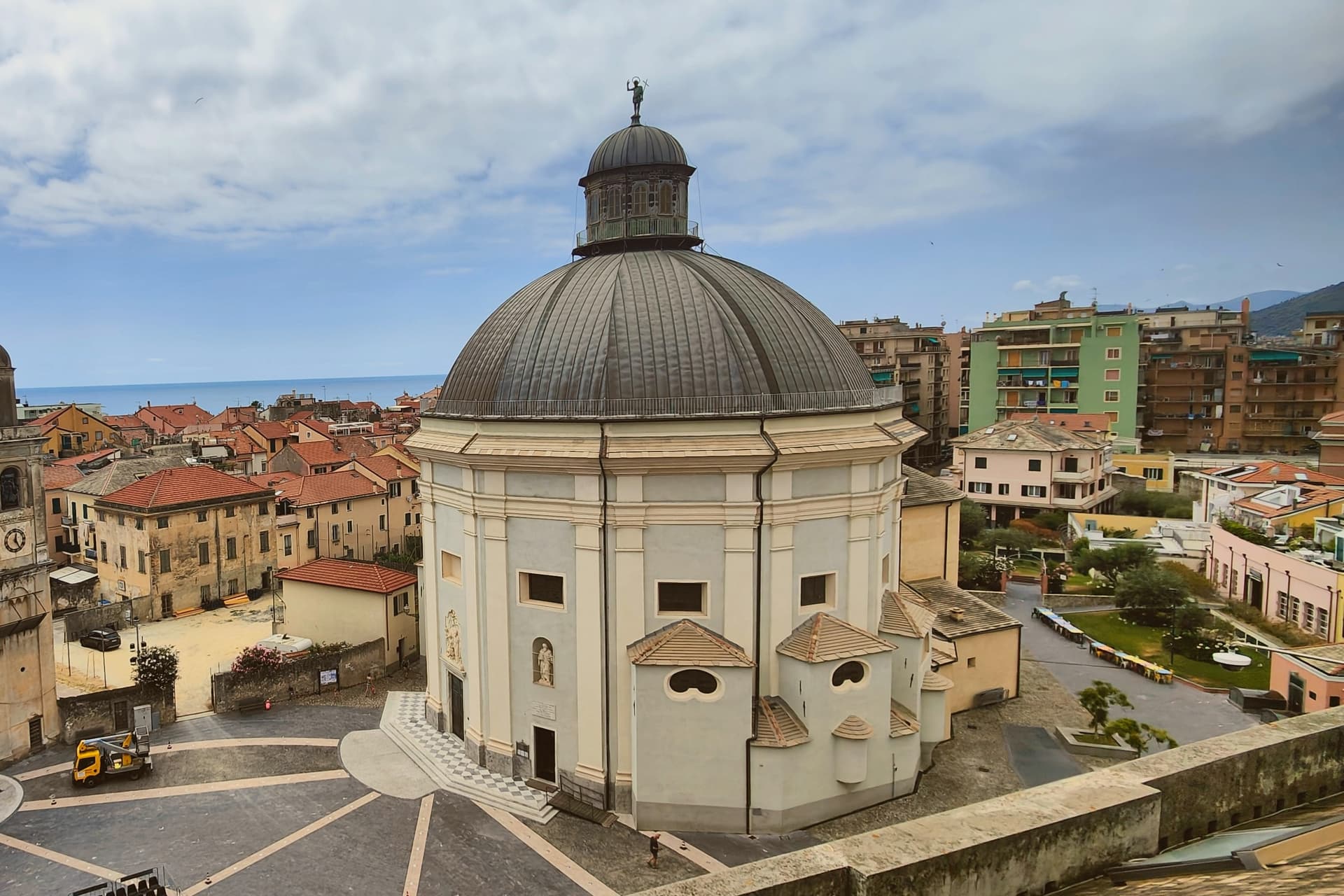
Why visit Loano
Loano lies sixty kilometers southwest of Genova, at the foot of the arc of mountains that shelters it from inland weather. The town was an imperial fief of the Doria family from the thirteenth century, and the family financed the major public buildings still in use today: the palace at the centro's heart, the loggia beside it where civic business was once conducted, and, indirectly, the church that stands nearer the harbor, built for the town's seafarers and still holding their votive offerings of brigantines and barques.
The old centro, with its palace, loggia and church, sits inland of the modern marina and the two kilometers of beach that run east from it. The mountain at Loano's back and the harbor at its front mark the two poles the town has always worked between: the Doria who governed from the hill and the sailors who prayed by the water.
Bagatto have been named by a guide.
What to see in Loano
- Palazzo Doria. Considered one of the most representative civil Renaissance palaces in Liguria, its rooms now house the town's administrative offices, and the mosaic floor remains open to view on the main level.
- Chiesa di Sant'Agostino. Founded 1582 by Zenobia Del Carretto, rebuilt 1588-98; called the Madonnetta, the seafarers' church, with votive ship models inside.
- Marina di Loano. The Yachting Pages ranking sits alongside a working harbor east of the centro, with the beach running two kilometers of sand and gravel toward it.
How to get to Loano
There is a railway station in the town, so you can arrive without a car and never need one while you are here. Genova is roughly 76 minutes away by road.
Our tip
April through June and September into October are the strongest months on the Loano front, with the marina full of boats and the beach manageable. July and August are warm, often 28 to 31 degrees, and the population doubles with families on long stays from Milano and Torino. November through March is the calmest stretch but the town stays open because 10,700 residents keep daily services running; the Madonnetta opens for the seafarers' mass on 8 December. Sagra di San Pio X e IX Run San Pio falls in August.
Finale Ligure
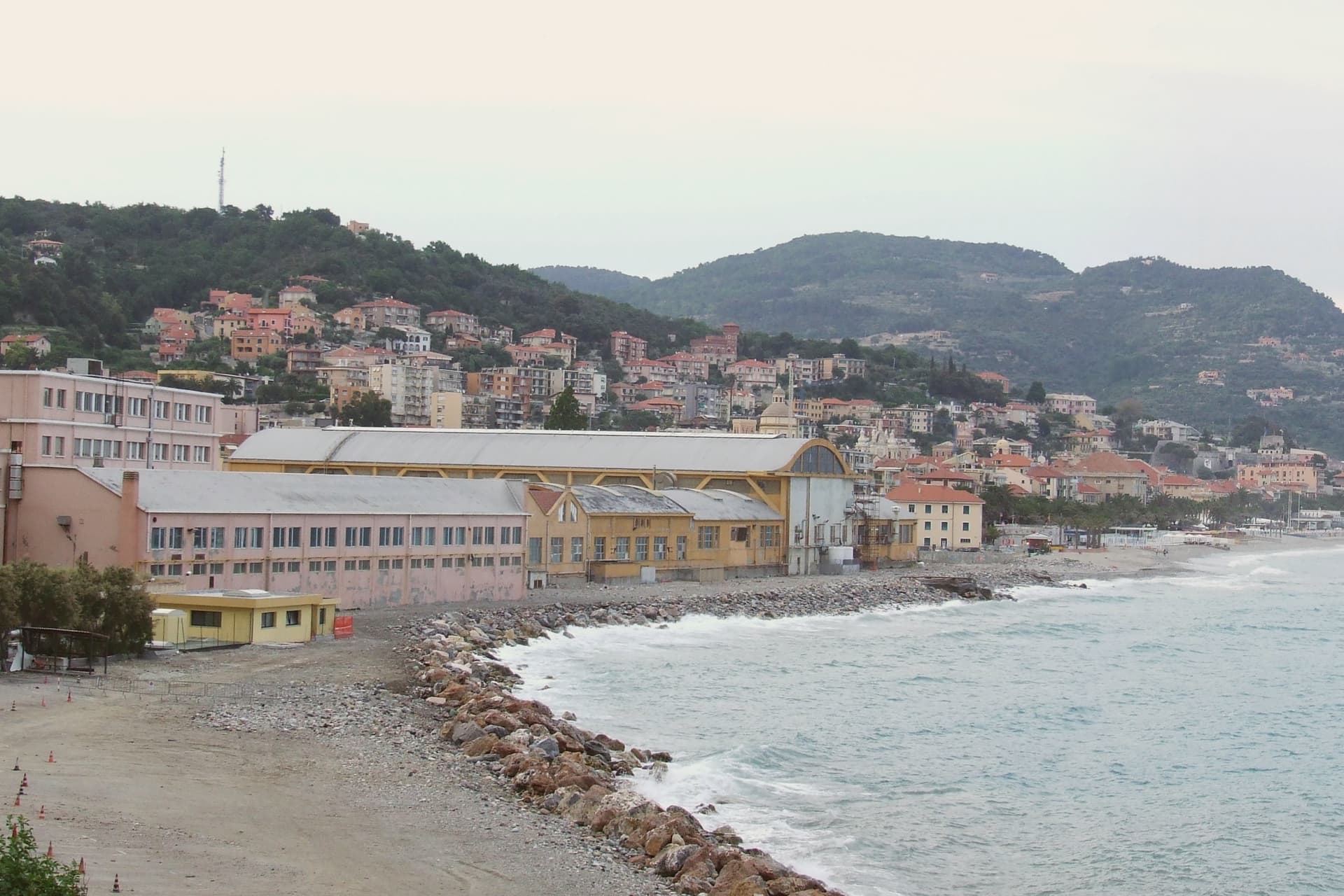
Why visit Finale Ligure
Finale Ligure spans three boroughs and the slope above them: Finalmarina and Finalpia on the coast, the walled inland borough set back at the junction of the Aquila and Pora streams. The two coastal quarters face the water and carry the beachfront trade; the inland borough, built as the seat of the marquisate under the Del Carretto from the late twelfth century onward, kept the family's fortifications and its street plan intact behind the walls rather than along the shore.
The stronghold above the borgo passed through building, wartime destruction, and rebuilding before the Genoese conquest left it largely dismantled in 1715, and the Spanish fort on the ridge above continued to ring the town after that conquest was complete. The coastal stretch below carries the Bandiera Blu and now serves as the starting point for the karst climbing and mountain-biking circuit that has drawn outdoor sport to Finale since the 1990s.
The arrangement is a working division rather than a coincidence: the fortified marquisate seat set inland and upslope, the modern leisure economy running along the water below it.
Ai Torchi, Muraglia - Conchiglia d'Oro, Rosita and 2 more have been named by a guide.
What to see in Finale Ligure
- Castel Gavone. Del Carretto stronghold built by Enrico II in 1181, destroyed in the wars with Genoa, rebuilt in 1451-52 and dismantled by the Genoese in 1715, leaving the diamond-faceted Torre dei Diamanti standing.
- Castel San Giovanni. Seventeenth-century Spanish fort on a higher ridge above Finalborgo, still ringing the walled town.
- Finalborgo. Walled medieval borough at the junction of the Aquila and Pora streams, listed among the Borghi più belli d'Italia.
How to get to Finale Ligure
There is a railway station in the town, so you can arrive without a car and never need one while you are here. Genova is roughly 71 minutes away by road.
Our tip
May through June and September through October are the easy months: warm sea, dry rock for climbing on the karst above the town, mild evenings in Finalborgo. July and August bring summer beach traffic; the coastal road clogs and Finalmarina fills, while Finalborgo two kilometers inland stays calmer. Winter is mild on this exposure and the climbing and mountain-biking seasons continue through it; many international visitors come specifically between November and March for the limestone routes. Ecosagra Delle Melanzane Ripiene falls in August.
More from Anywhere Italy
 The 9 best towns with a food festival in the province of Savona
- The best beach towns in the province of Savona
 The prettiest villages that eat well within 90 minutes of Genova
- The 10 best hidden beach towns with a food festival in Liguria
 The prettiest villages in the province of Savona
- The best small towns with a food festival that eat well within 90 minutes of Genova