
The best olive oil towns that eat well within 90 minutes of Bari
The olive country behind Bari is one of the great agricultural landscapes of Europe, gnarled trunks the width of a car, dry stone walls, red soil, and the low white masserie that once processed everything by mule and stone wheel. Harvest runs from late autumn into winter, and the new oil is peppery enough to catch at the back of the throat, poured over broad bean puree, over grilled lamb, over bread that is baked without salt in the Puglian way. The towns here are built of tufa and limestone, pale to the point of glare in summer, and the cooking follows the land: orecchiette with turnip tops, raw sea urchin on the coast, burrata from the dairies around the Murgia. Spring and autumn are the sensible seasons, when the heat lifts and the kitchens turn to artichokes or to mushrooms and game. Every one of these towns belongs to the national olive-oil association, and a dining guide has named a table in each.
Most visitors to this part of Puglia set a course for Alberobello, park below the trulli and walk the same two streets of conical roofs before moving on to Ostuni or Polignano a Mare. The trulli are remarkable and the crowds reflect it, particularly between June and September when the coach parks fill by mid-morning. The problem is not the place, it is the concentration: a few square kilometres absorbing most of the region's summer traffic, with menus adjusted accordingly.
The olive groves do not stop at the edge of the famous valley. They run north towards Andria and the Castel del Monte plateau, east to the sea cliffs at Monopoli and Giovinazzo, and inland to Conversano and Fasano, and they cross the boundary into Basilicata where Matera sits above its ravine. Fewer people eat in these towns than in the honeypot villages, which tends to mean better prices, longer lunches and oil poured from an unlabelled bottle belonging to somebody's cousin. That is where this list goes.
Of the 18 communes we have mapped within 90 minutes of Bari, 6 qualify as olive oil towns that eat well: each belongs to the national association of olive-oil towns, and a dining guide has named a table in each. The smallest, Giovinazzo, has 19,366 residents.
If you are still choosing, we have also written The best olive oil towns with a serious restaurant in Puglia and The best olive oil towns in the province of Bari.
Giovinazzo
Why visit Giovinazzo
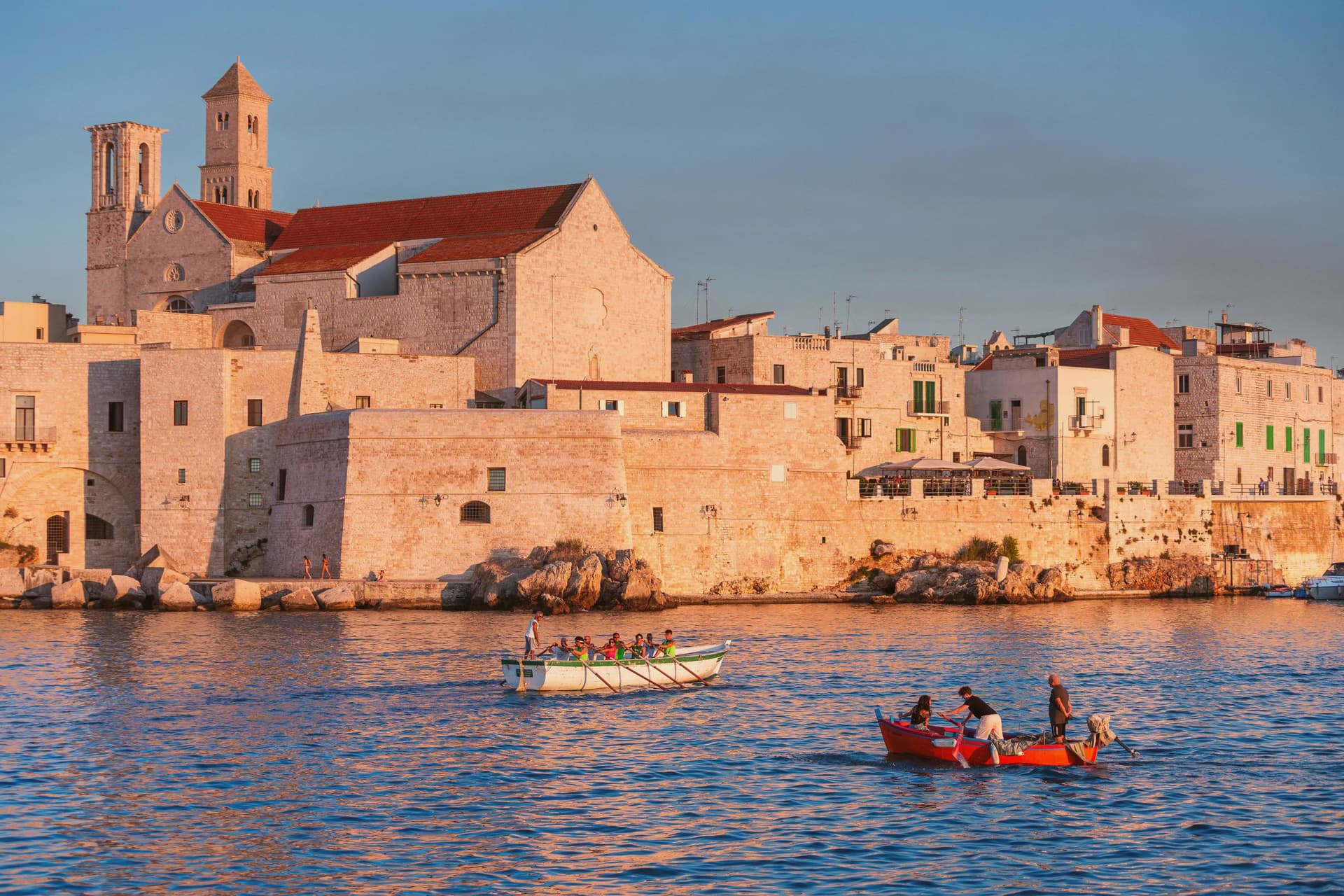
Giovinazzo sits on the Adriatic twenty kilometers northwest of Bari, between Molfetta and the Bari coastal belt, at 7 meters. The Romans called it Natolium, fortifying the site under Trajan in 102 AD on what may be the older Peucetian settlement of Netium.
The Norman cathedral of Santa Maria Assunta was built between 1125 and 1180 in the Puglian Romanesque style and consecrated in 1283; it still holds the Byzantine icon of the Madonna of Corsignano, the patron, celebrated through August. The medieval centro storico runs in narrow stone lanes around the harbor, where the small fishing fleet still ties up below the sea wall.
Five kilometers inland, the Dolmen di San Silvestro is a Bronze Age funerary chamber from around 1500 BC, set in a grove of olive and carob, the agro that makes Giovinazzo a Città dell'Olio. The town hosts one of the few elite roller hockey clubs in Italy.
Ragno d'Oro Caffè dal 1856, Toruccio Terrazza Adriatica have been named by a guide.
What to see in Giovinazzo
- Concattedrale di Santa Maria Assunta. Norman cathedral of 1125-1180 in Puglian Romanesque, consecrated in 1283, with the Byzantine icon of the Madonna of Corsignano above the main altar.
- Centro storico. Medieval old town in narrow stone lanes wrapping the small port, walled on the seaward side and rebuilt after Norman reconquest in the eleventh century.
- Dolmen di San Silvestro. Bronze Age funerary dolmen from around 1500 BC, set on a Murgia terrace among olive and carob trees five kilometers inland from town.
How to get to Giovinazzo
There is a railway station in the town, so you can arrive without a car and never need one while you are here. Bari is roughly 31 minutes away by road.
Our tip
May through June and September are the best months on this stretch of Adriatic coast, with warm sea and mild evenings. July and August touch thirty-five degrees and the small harbor fills with weekenders from Bari; the centro storico stays cooler in the lanes than out on the wall. The festa for the Madonna of Corsignano runs through August. Sagra del Panino della Nonna falls in August.
Conversano
Why visit Conversano
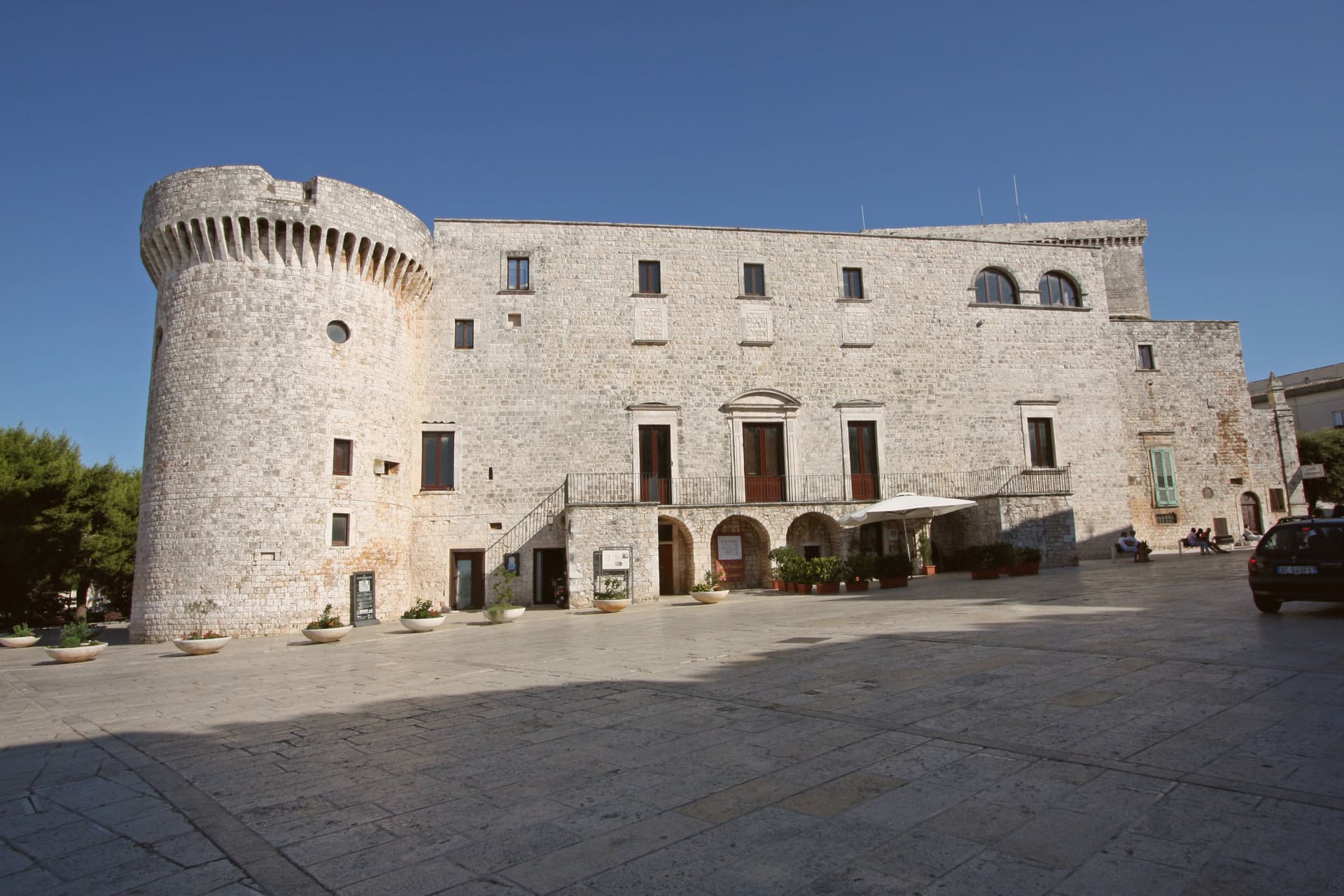
Conversano sits on the first hills of the Murge plateau at 219 meters, twenty-five kilometers southeast of Bari and seven from the Adriatic. The Castello di Conversano was raised around 1054 by the Normans for defence and turned into a seigneurial residence by the Acquaviva d'Aragona counts, who ruled from 1455 until the early nineteenth century.
Inside the castle the Pinacoteca holds the ten-canvas cycle of episodes from Tasso's Gerusalemme Liberata painted by Paolo Domenico Finoglio in the 1640s, commissioned by Count Giangirolamo II d'Acquaviva. Opposite the castle stands the Cattedrale di Santa Maria Assunta, eleventh- and twelfth-century Apulian Romanesque with a sculpted portal, a rose window, and an interior Crucifix that anchors the patronal procession.
The former Monastero di San Benedetto, with a Romanesque cloister, was entrusted in 1266 by Pope Clement IV to Cistercian nuns exiled from Methoni in Greece, an arrangement so unusual it earned the monastery the medieval nickname Monstrum Apuliae, the Wonder of Puglia.
Vita Pugliese have been named by a guide.
What to see in Conversano
- Castello di Conversano. Norman castle of 1054 turned seigneurial residence by the Acquaviva d'Aragona counts, with the Pinacoteca holding Finoglio's ten Gerusalemme Liberata canvases.
- Cattedrale di Santa Maria Assunta. Apulian Romanesque cathedral of the eleventh and twelfth centuries, sculpted portal, rose window, wooden Crucifix venerated as the city's protector.
- Monastero di San Benedetto. Former Benedictine then Cistercian monastery with Romanesque cloister, called Monstrum Apuliae for the abbess-power of the Greek nuns entrusted to it from 1266.
How to get to Conversano
There is a railway station in the town, so you can arrive without a car and never need one while you are here. Bari is roughly 36 minutes away by road.
Our tip
April through June and September through October are the Murge months at this altitude: clear light, mild evenings, the cherry orchards in flower or fruit. Conversano is the centre of the IGP cherry zone and the late-May ciliegia harvest is the year's commercial peak. July and August hit thirty-five degrees and the centro storico empties in the afternoon.
Fasano
Why visit Fasano
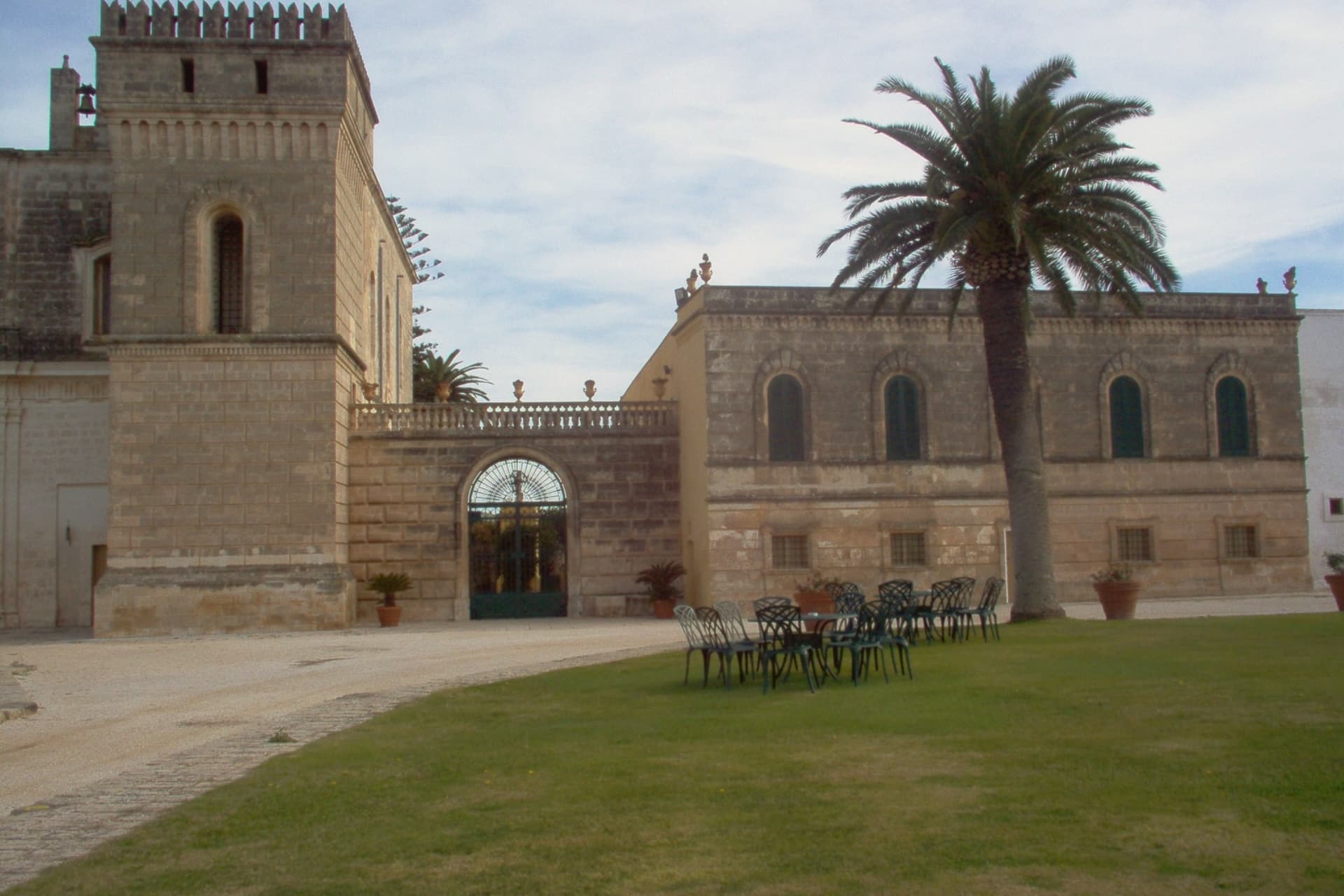
The main centre sits at 118 meters, a hinge point in a wide municipal territory that runs from the Adriatic shore up to the Itria escarpment, home to thirty-eight thousand residents spread across three distinct landscapes rather than one compact town. The coast holds the abandoned city, inhabited from the fifteenth century BC and left empty by the Middle Ages, its excavated stone now sitting a short distance from the museum built to house what came out of the ground there.
Inland and uphill, the wooded escarpment climbs to become the highest ground in the province, the same slopes that carry the wildlife park across its carob and olive scrubland. Further along the shore, the fishing port turned resort gives the territory its beach frontage.
The pattern is coastal city, wooded highland, coastal resort, three pieces of a single municipality that never behaves like a single place. What the town offers is that range within one boundary: Roman ruins at sea level, a panorama at the province's highest point, and a working beachfront, none of them a detour from the others.
Pentole e Provette, Due Camini a Borgo Egnazia, Raparossa have been named by a guide.
What to see in Fasano
- Parco Archeologico di Egnazia. Ruins spread across eighty hectares along the coast, with the Via Traiana running through the site alongside the basilica and a cryptoporticus still traceable underfoot.
- Museo Nazionale Archeologico Giuseppe Andreassi. Museum standing next to the archaeological park, holding the objects pulled from the excavations: Messapian inscriptions, Roman finds, and material spanning the long abandonment of the city.
- Selva di Fasano. Wooded escarpment reaching between 411 and 414 meters, the ground rising from carob and olive scrub to open views that give the terrace its nickname.
How to get to Fasano
There is a railway station in the town, so you can arrive without a car and never need one while you are here. Bari is roughly 52 minutes away by road.
Our tip
May through September is the working season on this stretch of the Adriatic: warm sea, the Bandiera Blu beaches at Savelletri operating, the Selva ten degrees cooler than the coast for an evening break. July and August fill the coast with Italian holidaymakers; Egnazia exposed on the seafront is brutal between noon and three. April and October are quieter alternatives with the sea still mild, the archaeological park at its photographic best, and the olive harvest opening across the surrounding masserie. Festa Della Mietitura E Trebbiatura Del Grano falls in August.
Monopoli
Why visit Monopoli
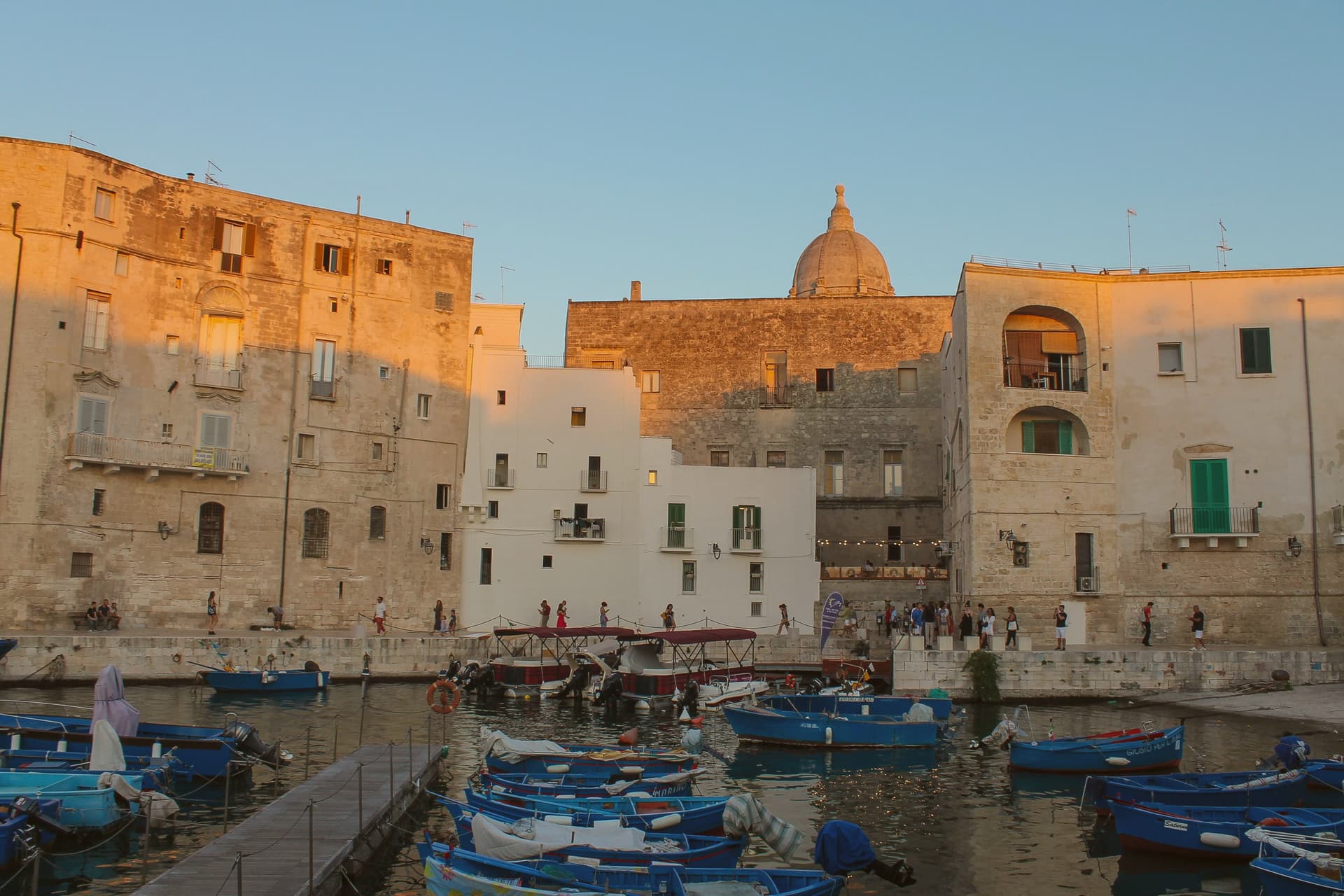
Monopoli sits on the Adriatic forty kilometers southeast of Bari, a walled town extending from the sea fifteen kilometers inland to the first Murge hills. The territory covers 156 square kilometers with sandy coves, cliff sections and the old port at the centro storico.
The site has been inhabited since the Epigravettian, around fifteen thousand years ago; a fortified Messapian settlement existed by 500 BC. The name comes from the Greek for 'only city,' which Monopoli inherited when refugees from nearby Gnatia arrived after the Ostrogoth king Totila destroyed it in 545.
Byzantines, Normans and Hohenstaufen followed. In 1484 Venice took the town and ran it as a trading port between Bari and Brindisi for sixty years.
The Castello Carlo V on the headland and the resistance to the imperial Armada in 1529, which forced the Spaniards to abandon a three-month siege, both belong to that century of fortification.
Radimare, Orto, My Wine il piacere del palato and 1 more have been named by a guide.
What to see in Monopoli
- Castello Carlo V. Sixteenth-century pentagonal fortress on the headland above the old port, built by the Spanish to defend against Ottoman raids and Venetian return.
- Basilica Cattedrale Maria Santissima della Madia. Eighteenth-century baroque cathedral on the old town's central square, raised over earlier medieval foundations, the city's principal monument.
- Centro storico. Walled old town on the small headland, white limestone alleys, the cathedral and the castle facing each other across narrow lanes above the port.
How to get to Monopoli
There is a railway station in the town, so you can arrive without a car and never need one while you are here. Bari is roughly 42 minutes away by road.
Our tip
May through September is the working coastal season, water warm enough for swimming and the old port quay populated until late. July and August push past thirty-three degrees and the centro storico fills with day-trippers from Bari and Polignano; weekends in August are shoulder to shoulder along the quay. June and September are the sane choices, mild evenings and the same water without the crush.
Matera
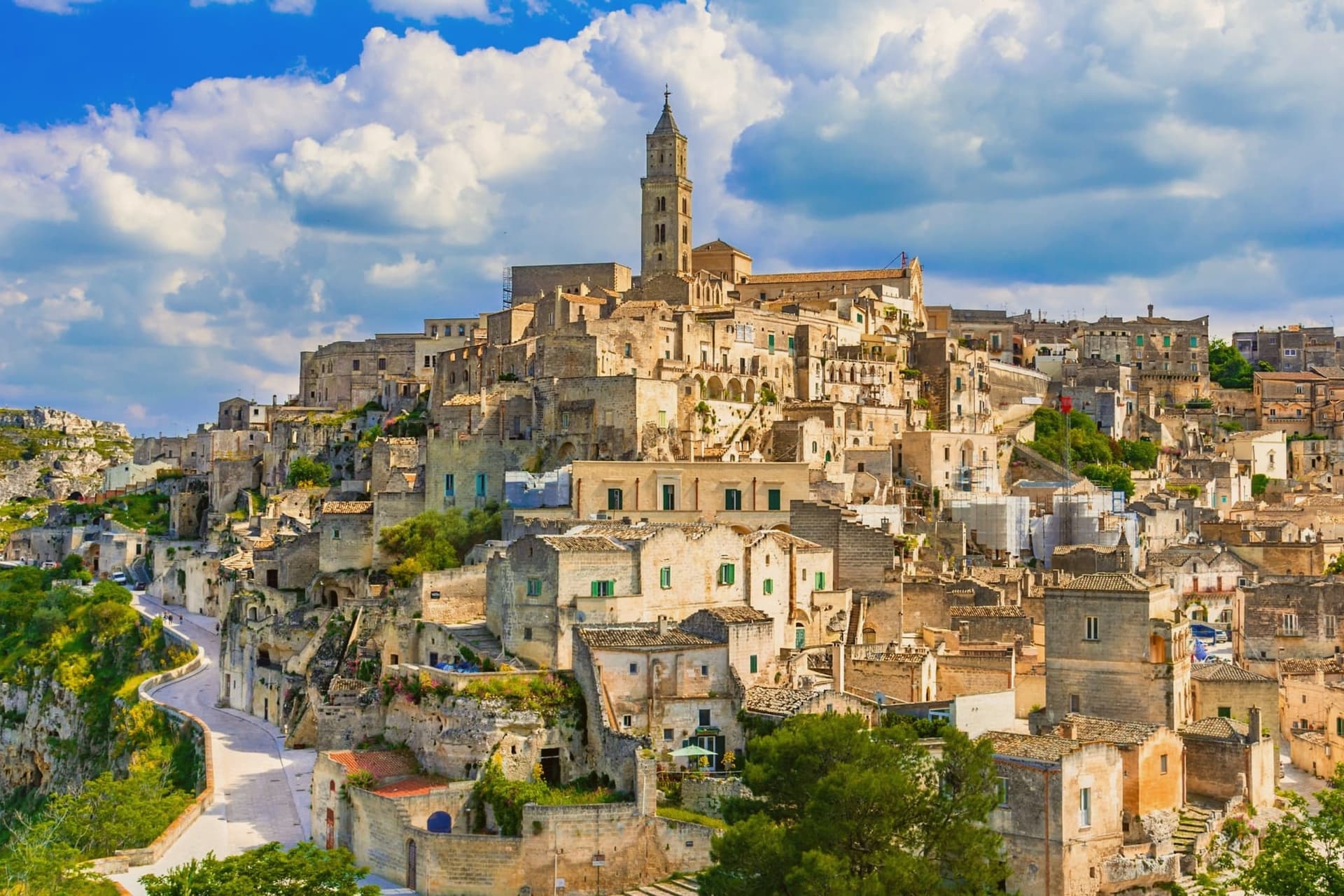
Why visit Matera
Matera sits at 401 meters on the edge of the Gravina ravine in eastern Basilicata, fifty-five kilometers inland from Bari. The Sassi, two districts of houses, churches and cisterns hollowed from tufa limestone, are among the oldest continuously inhabited settlements on earth, with traces of human presence from the Paleolithic.
Sasso Caveoso and Sasso Barisano dropped down the canyon walls; people lived there with their animals into the 1950s. Carlo Levi's 1945 book and the 1948 photographs that followed turned the Sassi into a national scandal, and a 1952 law moved twenty thousand residents to new housing on the plateau above.
The caves stayed empty for thirty years. UNESCO listed them in 1993.
Mel Gibson shot The Passion of the Christ here in 2004 and the city was European Capital of Culture in 2019; No Time to Die filmed in the Sassi in 2019, bringing twelve million euros into the local economy. Bread, ceramics, and rock churches across the Gravina anchor what is now Basilicata's only mass-tourism destination.
Vitantonio Lombardo, Baccanti, Dimora Ulmo and 9 more have been named by a guide.
What to see in Matera
- Sassi di Matera. Two districts of cave dwellings, Sasso Caveoso and Sasso Barisano, carved from tufa limestone and inhabited continuously from the Paleolithic until the 1950s evictions.
- Cattedrale della Madonna della Bruna e di Sant'Eustachio. Thirteenth-century Apulian Romanesque cathedral on the highest point of the Civita, between the two Sassi, with rose window and bell tower.
- Chiese rupestri del Parco della Murgia. More than 150 rock-cut churches scattered across the Gravina canyon, frescoed between the eighth and thirteenth centuries by Italo-Greek monks.
How to get to Matera
There is a railway station in the town, so you can arrive without a car and never need one while you are here. Bari is roughly 60 minutes away by road.
Our tip
April through June and September into October are the months Matera was built for. The light slants across the tufa façades in the late afternoon and turns the Sassi gold. July and August are punishing: temperatures cross thirty-five degrees and the canyon walls hold the heat past midnight, though hotels stay full because the Bond and Gibson tourism waves have not subsided. Festa della Bruna falls in July.
Andria
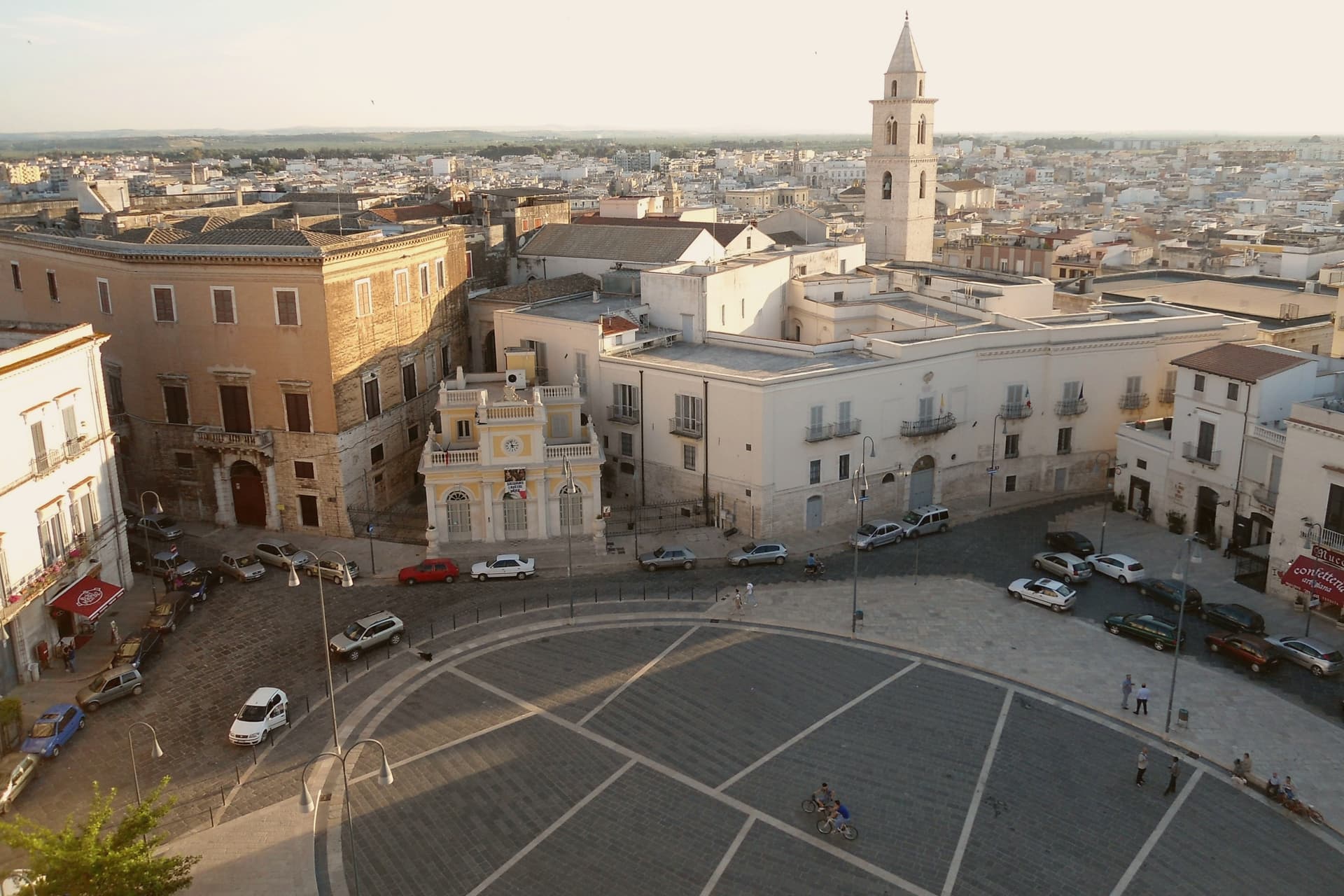
Why visit Andria
Andria sits on the Murge plateau at 151 meters, ten kilometers from the Adriatic, the third-largest city in Puglia after Bari and Taranto. It was made a fortified civitas in 1046 under Peter the Norman, with twelve towers, three gates and a citadel; Frederick II raised it again in the thirteenth century and built his most famous castle on a hilltop eighteen kilometers south of the city walls.
The city and Castel del Monte read as two expressions of the same Frederician ambition, one a working civitas of towers and gates, the other a solitary geometric exercise on an open plateau with no town around it at all. The other claim Andria makes is burrata, invented around the early twentieth century by the Bianchino family as a way to use leftover mozzarella scraps.
A fortified city, an unfinished castle, and a cheese born from kitchen thrift: the Murge produced a walled seat of power and, separately, an object meant to be looked at rather than defended, and a food born of nothing more than not wanting to waste the scraps.
Confetteria Mucci Giovanni con annesso Museo del Confetto, Antichi Sapori, Il Turacciolo have been named by a guide.
What to see in Andria
- Castel del Monte. An octagonal prism with eight octagonal towers, standing alone on a Murge hilltop and visible for fifty kilometers in any direction. Never finished, never used for war.
- Cattedrale di Santa Maria Assunta. Romanesque cathedral founded in the twelfth century, rebuilt over the centuries, holds the crypt and the relics of San Riccardo, the city's patron.
- Chiesa di Sant'Agostino. Gothic-Romanesque church built by the Teutonic Knights in the late thirteenth century, with a sculpted portal that is one of the finest in Puglia.
How to get to Andria
There is a railway station in the town, so you can arrive without a car and never need one while you are here. Bari is roughly 63 minutes away by road.
Our tip
April through June and September through October are the Murge months: clear light, mild evenings, the Castel del Monte plateau walkable without sweat. July and August hit thirty-six in the city and the castle exposed at 540 meters is brutal between noon and four. October is the olive harvest.
More from Anywhere Italy
 The best olive oil towns with a serious restaurant in Puglia
 The best olive oil towns in the province of Bari
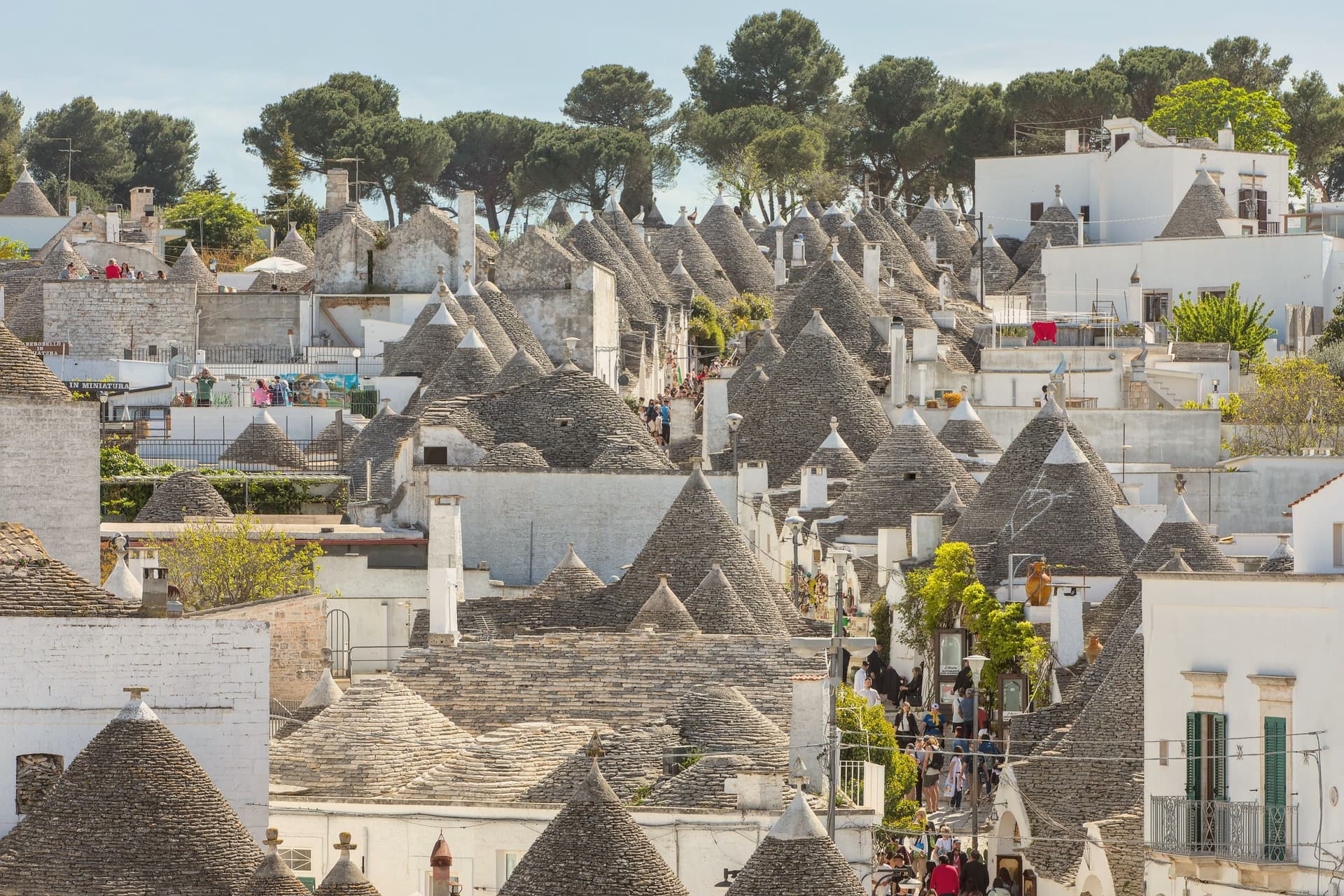 The best towns that eat well in the province of Bari
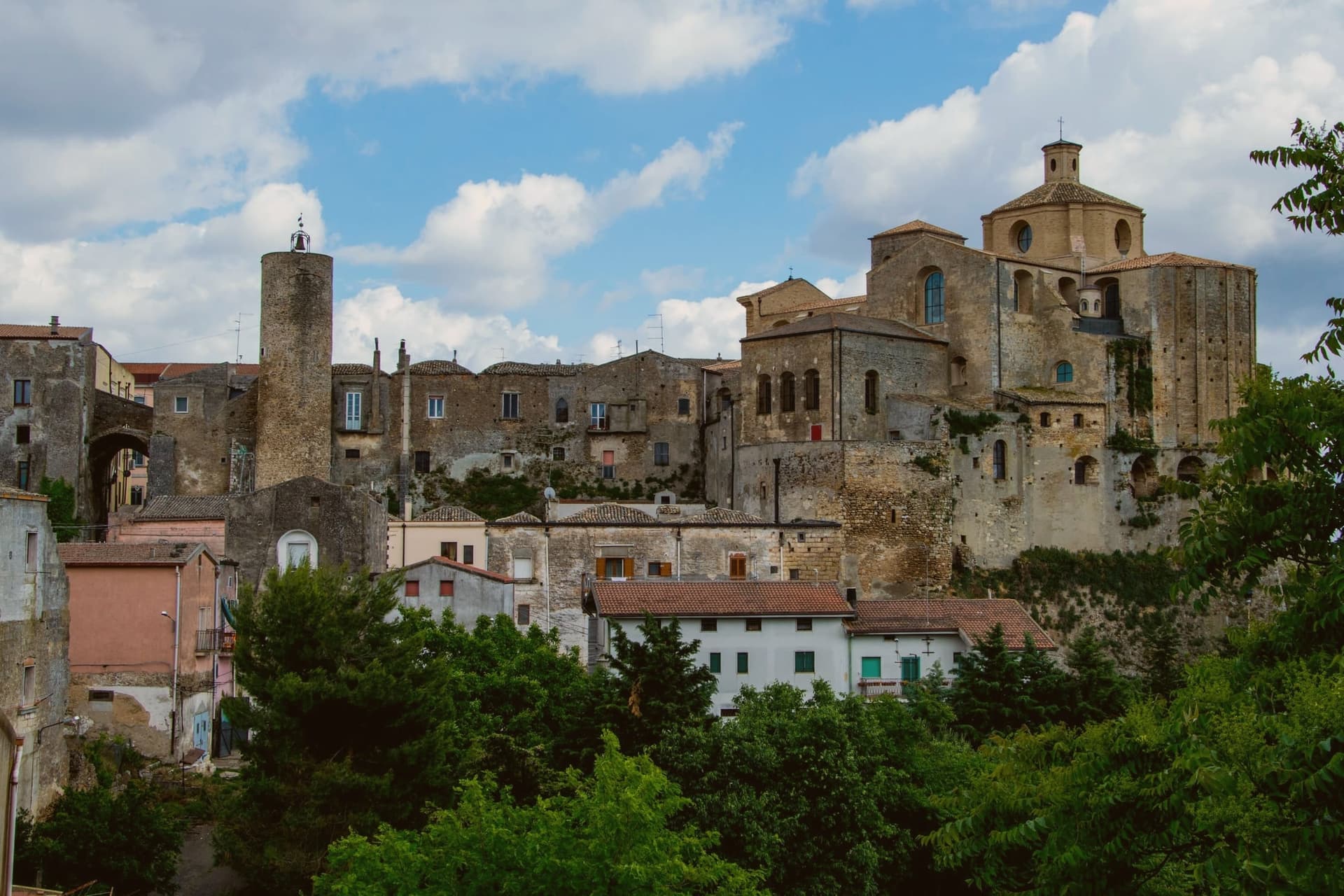 The best hill towns you can reach by train within 90 minutes of Bari
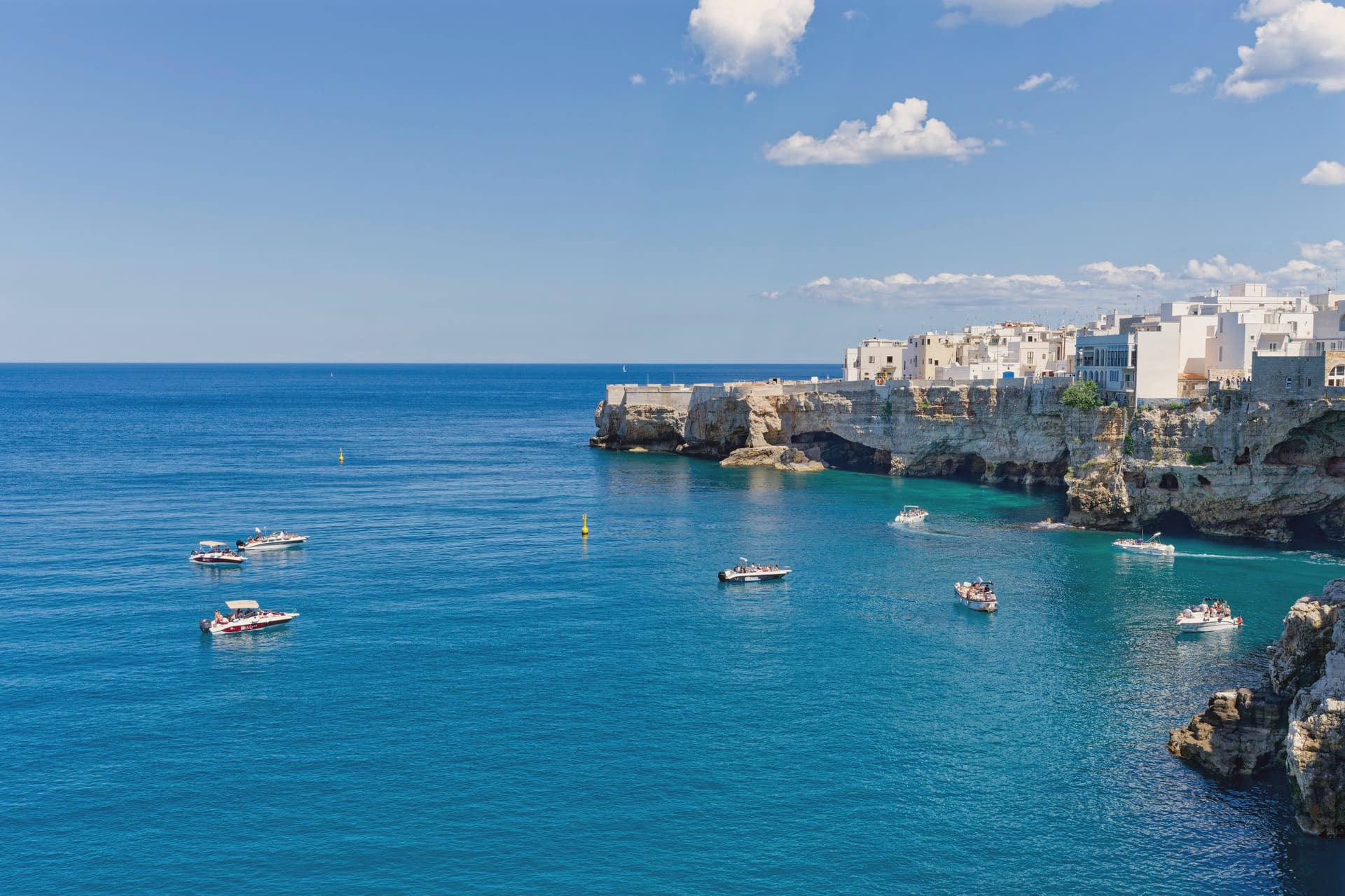 The best coastal towns you can reach by train within 90 minutes of Bari
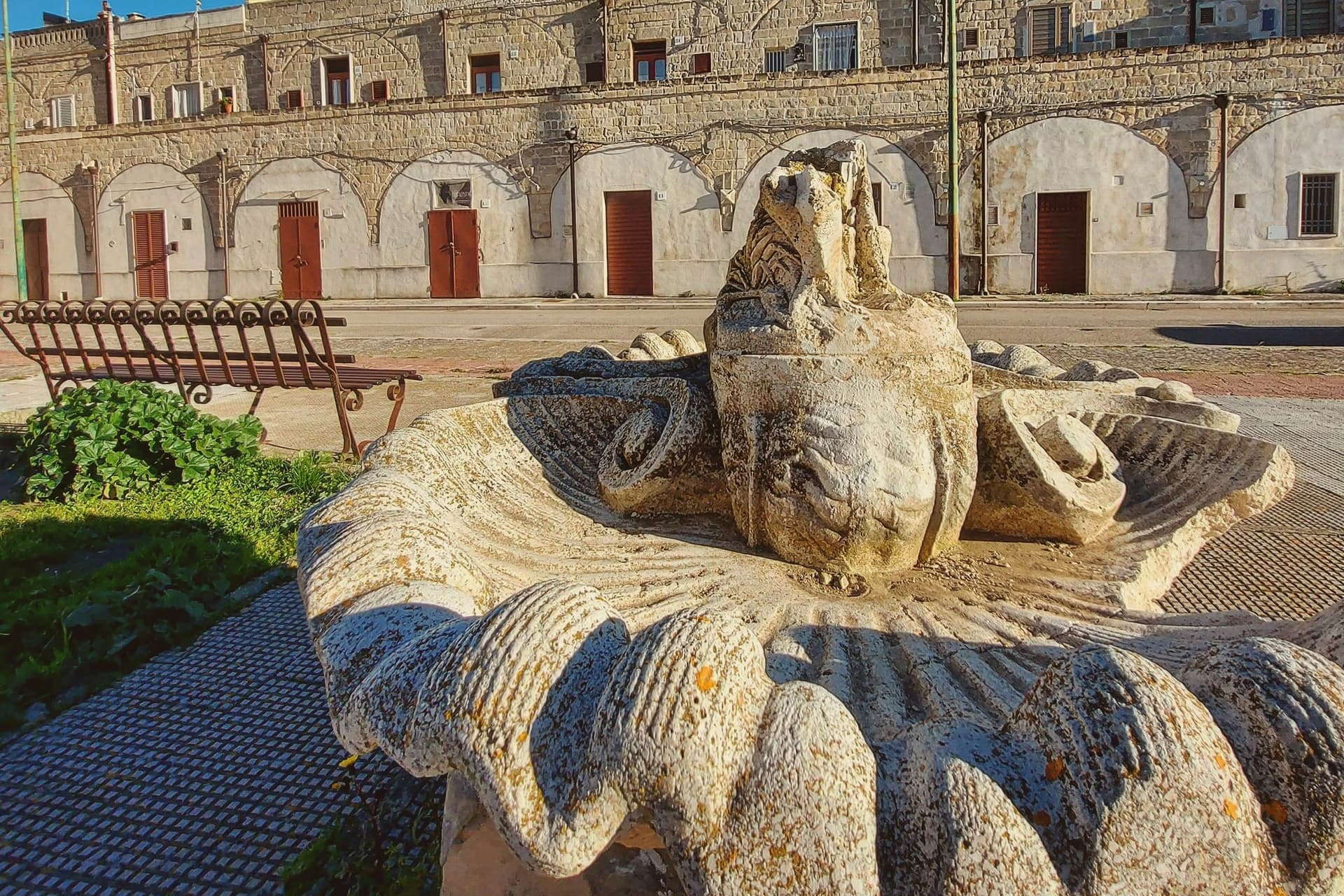 The best towns known for what they grow within 75 minutes of Bari