
The best olive oil towns in the province of Bari
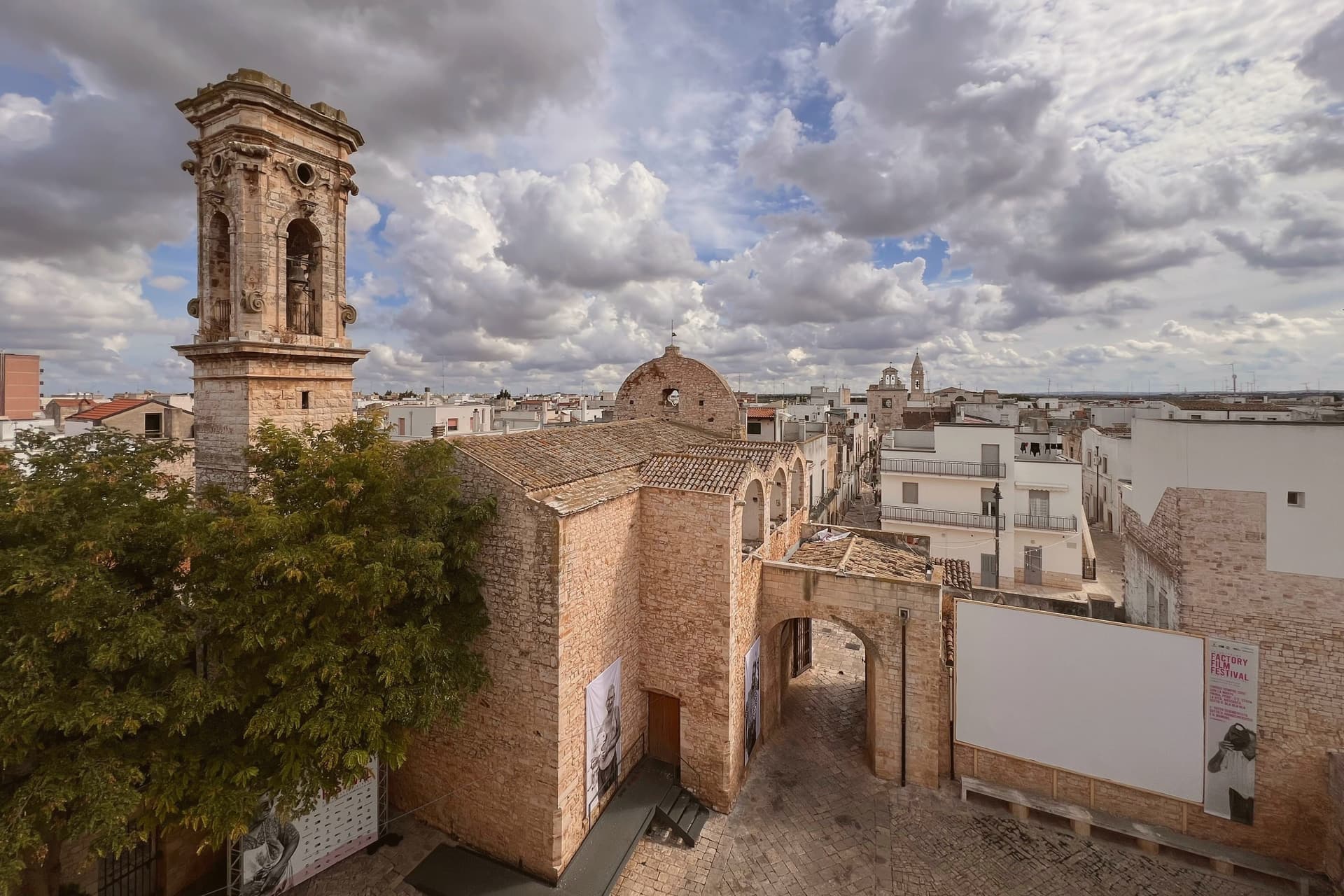
Olive country in the province of Bari is built from the same pale limestone as the trees grow in: dry-stone walls, trulli cones, farmhouse masserie bleached almost white by the sun. The groves here are old, Coratina and Ogliarola and Cima di Bitonto, and the oil they press is green and bitter at the back of the throat, the kind that tastes of cut grass and pepper rather than butter. Harvest runs from late October into December, when the frantoi work through the night and the smell of crushed fruit sits over the roads. Eat it the local way, poured over fava bean puree, over burnt wheat orecchiette, over warm bread from a wood oven, or on the raw broad beans sold in spring.
Most visitors to Puglia land in Bari, look at the old town for an afternoon and then head south for Ostuni and the Valle d'Itria's wedding-white lanes, or further still to Lecce and Gallipoli. The route is well signposted and heavily booked in July and August, when coach parties queue for the same photograph and the trattorie print menus in four languages. It is a good route. It is also the only one many people are told about, and the coast road past Polignano a Mare shows it.
The groves do not stop where the coach tours turn round. The same plateau runs inland across the Murgia and back down to the Adriatic, and the towns along it press oil that wins national awards without anyone queueing to watch. These are the places listed here, each a member of the national association of olive-oil towns, most of them within an easy drive of the airport and the coast, all of them with a mill and a market and somewhere to eat lunch properly.
Of the 14 communes we have mapped in the province of Bari, 10 qualify as olive oil towns: each belongs to the national association of olive-oil towns. The smallest, Sammichele di Bari, has 6,022 residents.
Two more lists worth reading alongside this one: The 9 best hill towns you can reach by train in the province of Bari and The best cheese towns within 45 minutes of Bari.
Sammichele di Bari
Why visit Sammichele di Bari
Sammichele di Bari sits at 280 meters on the Murge plateau, thirty kilometers south of Bari. The settlement was founded as a fief in 1609 when the wealthy Genoese banker Michele Vaaz bought the territory from the Centurione family and named the new town after his patron saint.
The Castello Caracciolo at the centre of the village began as a Norman outpost, passed through Centurione and Vaaz ownership, and was bought by the Caracciolo dukes in 1797 who hired the architect Amenduni to redo the eastern façade in rusticated stone with neo-Gothic bifora windows. Since 1974 the castle has held the Museo della Civiltà Contadina Dino Bianco, one of the oldest and largest ethnographic museums in Italy, with over five thousand objects of nineteenth-century peasant life arranged over four floors.
The annual Sagra della Zampina on the last weekend of September celebrates the spiced spit-roasted pork sausage that the town claims as its own.
What to see in Sammichele di Bari
- Castello Caracciolo. Norman-origin castle bought by Michele Vaaz in 1609 and remodelled by the Caracciolo dukes in the nineteenth century with neo-Gothic windows.
- Museo della Civiltà Contadina Dino Bianco. Ethnographic museum inside the castle, founded by professor Dino Bianco in 1968, over five thousand objects of nineteenth-century rural life.
- Centro storico. Walled old town on the Murge plateau, laid out by Michele Vaaz from 1609 around the castle and the parish church of San Michele Arcangelo.
How to get to Sammichele di Bari
There is a railway station in the town, so you can arrive without a car and never need one while you are here. Bari is roughly 30 minutes away by road.
Our tip
April through June and September through October are the workable months on the Murge. July and August push past thirty-five degrees on the plateau and the centro storico empties between two and five. The late-September Sagra della Zampina falls at the edge of the heat and pulls a crowd from the metropolitan area.
Alberobello
Why visit Alberobello
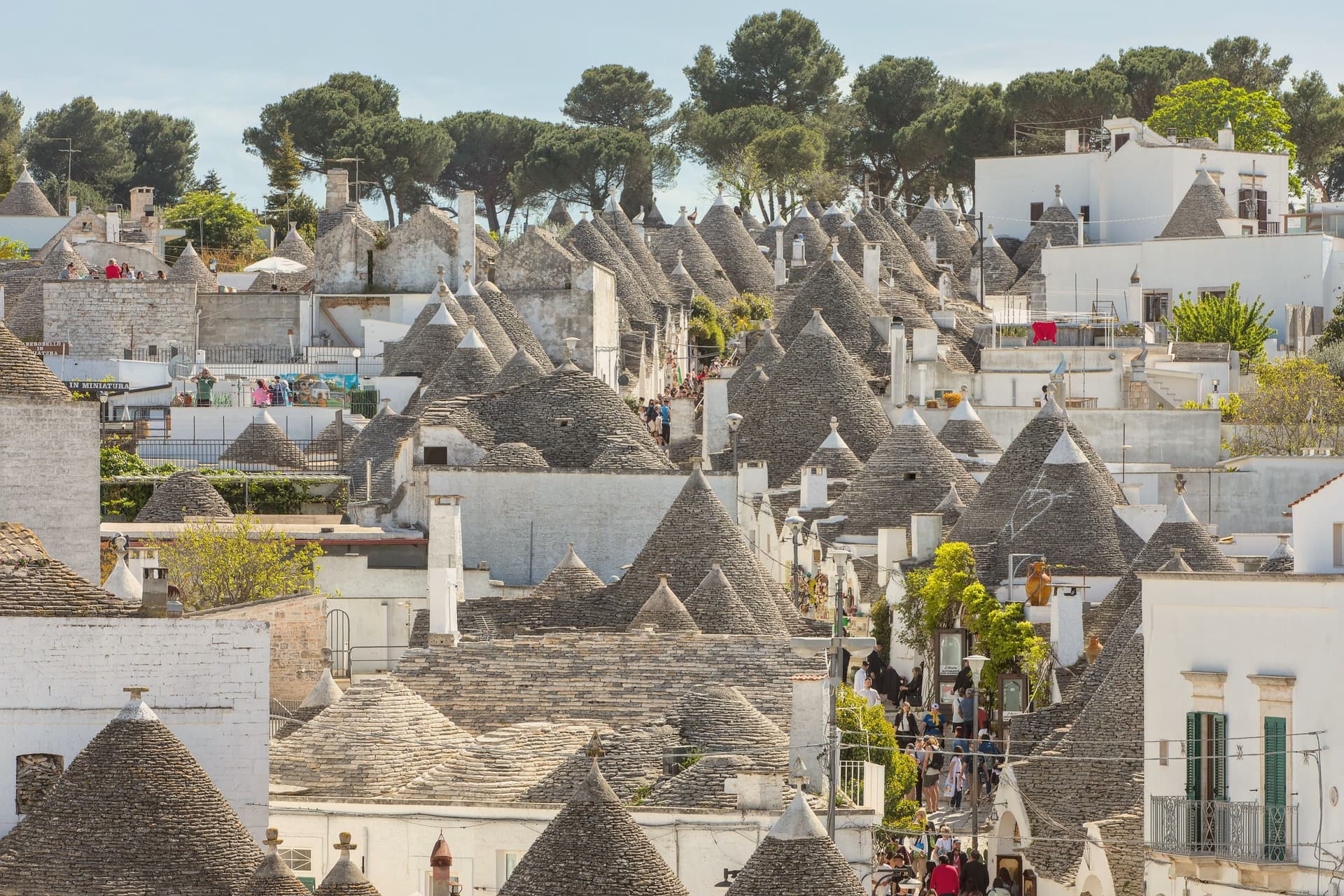
Alberobello sits at 402 meters in the Valle d'Itria, forty-five kilometers southeast of Bari. Two quarters of the town, Rione Monti and Aja Piccola, hold more than 1,500 trulli: limestone cones built from corbelled drystone, with conical or pyramidal roofs piled course by course without mortar.
The technique is prehistoric and still in use across the Murge, but nowhere else is the density and preservation what it is here. The Counts of Conversano enforced drystone construction on their tenant farmers to dodge a Spanish viceroy's tax on permanent settlements: a building that could be dismantled in an afternoon did not count as a town.
UNESCO listed the trulli in 1996. Some are houses, some are shops, some are inhabited by the same families that built them.
The Trullo Sovrano, the only two-storey trullo, was built around 1750 and now functions as a small museum.
Evo Ristorante have been named by a guide.
What to see in Alberobello
- Rione Monti. The larger of the two trulli quarters, a thousand cones running down the hillside, mostly converted to shops and accommodation.
- Aja Piccola. The smaller residential quarter, about four hundred trulli, still occupied as primary housing and quieter than Rione Monti.
- Trullo Sovrano. The only two-storey trullo in town, built around 1750 by the Perta family, now a small museum of trullo construction and daily life.
How to get to Alberobello
There is a railway station in the town, so you can arrive without a car and never need one while you are here. Taranto is roughly 56 minutes away by road.
Our tip
April through June and September through October are the months the Itria valley is green and the trulli are walkable without sweat. July and August push past thirty-three degrees and the Rione Monti fills with day-trippers from the coast; by ten in the morning the main streets are shoulder to shoulder. Late afternoon and after dusk are the times to walk, when the cones cast long shadows and the crowds thin.
Locorotondo
Why visit Locorotondo
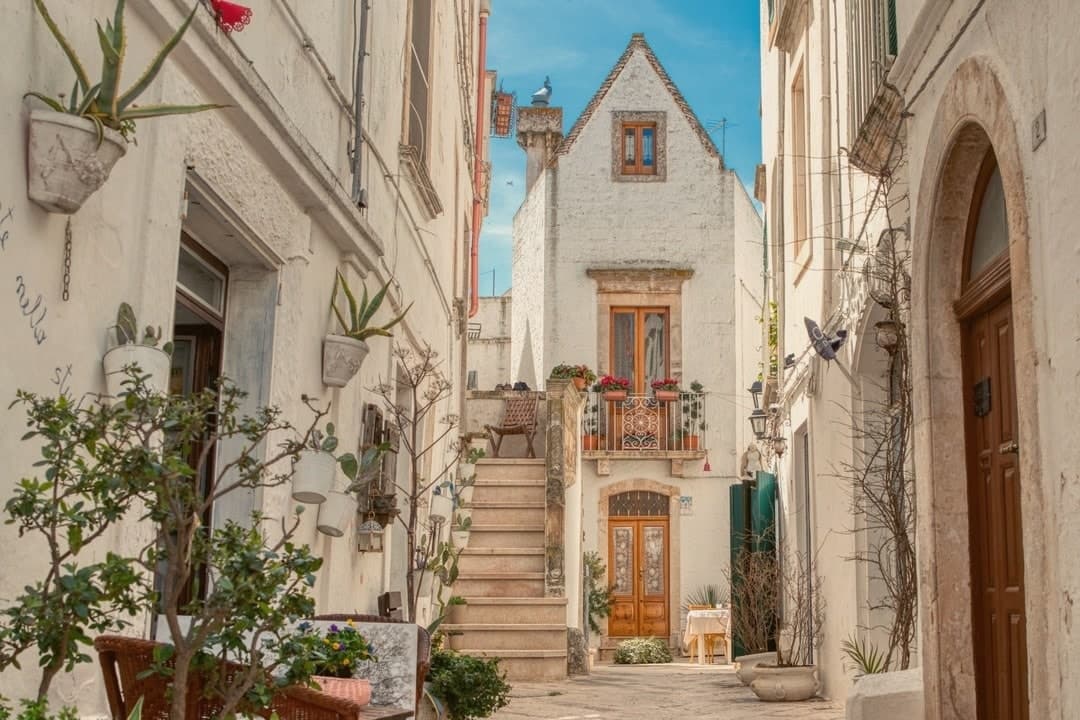
Locorotondo sits on a natural terrace at 410 meters, the high edge of the Valle d'Itria looking south over the trulli countryside between Alberobello, Cisternino and Martina Franca. The name means round place: the centro storico is a perfect circle of whitewashed houses, and the architecture is unique to this town.
The cummerse are stone houses with steep pitched roofs covered in two thin layers of limestone slabs, a profile that exists nowhere else in Puglia. The streets between them run in concentric arcs and are narrow enough to lose the sun by mid-afternoon.
Both the Borghi più belli d'Italia and the Touring Club's Bandiera Arancione recognize the place. The town also makes a white DOC wine from Verdeca and Bianco d'Alessano grapes, grown on 1,650 hectares of vineyards across the surrounding plateau, plus a Città dell'Olio membership for the oil that comes off the same hills.
What to see in Locorotondo
- Centro storico. Circular old town of whitewashed cummerse, an architectural type with double-pitch limestone-slab roofs found only here.
- Villa Garibaldi. Public garden on the ridge with the widest panoramic view over the Itria valley and its trulli countryside.
- Chiesa Madre di San Giorgio. Eighteenth-century parish church on the highest point of the historic center, with a neoclassical façade and a tall central nave.
How to get to Locorotondo
There is a railway station in the town, so you can arrive without a car and never need one while you are here. Taranto is roughly 48 minutes away by road.
Our tip
April through June and September through October are the best months on the Itria plateau. Mornings are clear, the surrounding vineyards green up, and the wind off the Murge keeps evenings cool even in summer. July and August push past thirty degrees, the centro storico fills with day-trippers from Alberobello, and the narrow streets get crowded between ten and one.
Cassano delle Murge
Why visit Cassano delle Murge
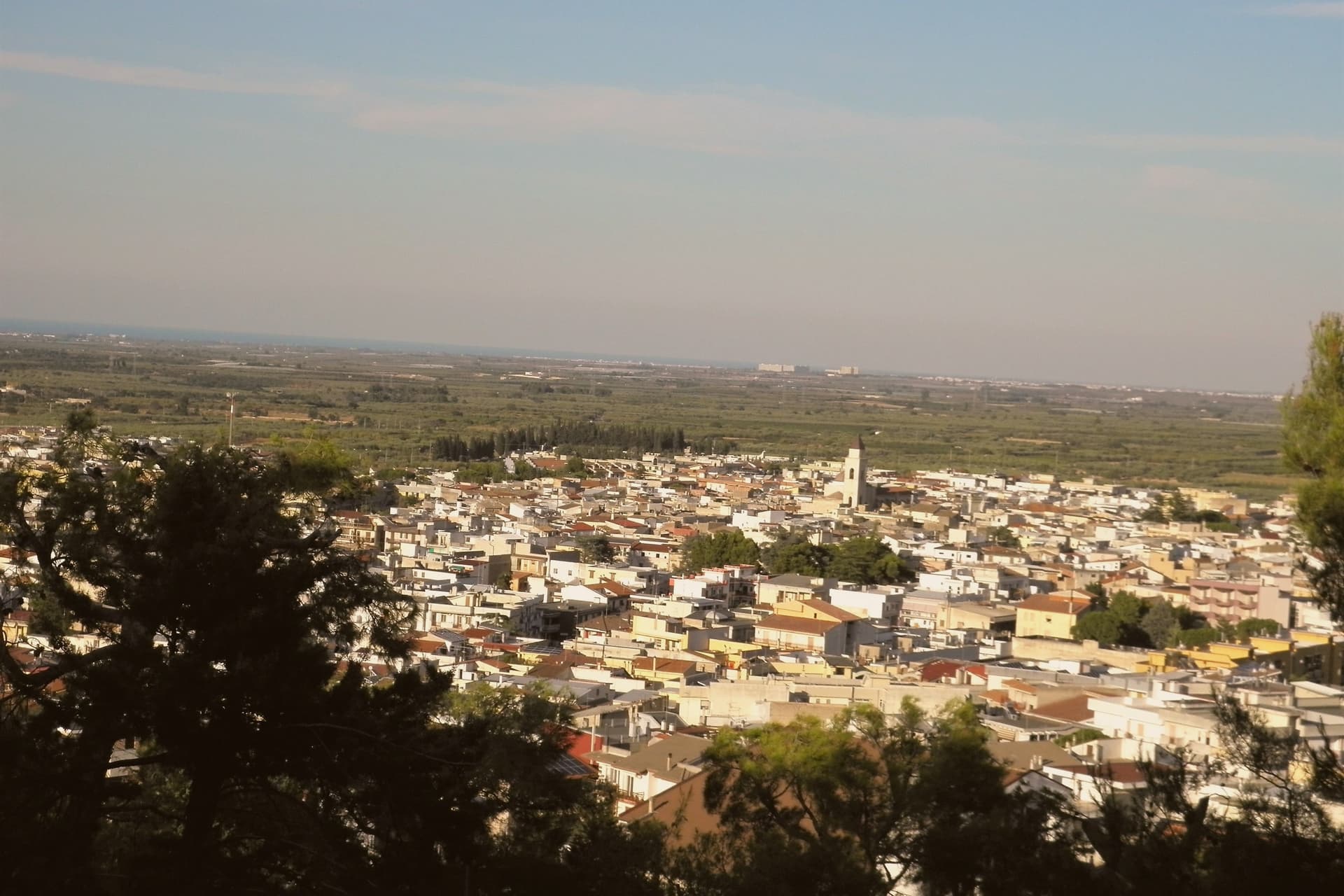
Cassano delle Murge sits at 341 meters at the foot of the highest step of the Murgia plateau, thirty kilometers south of Bari, at the eastern gate of the Alta Murgia National Park. The Foresta Mercadante, a 1,300-hectare pine and oak forest planted from 1928 onward to repair nineteenth-century deforestation that had flooded Bari several times, runs across the commune's higher ground, with 872 hectares inside Cassano and the rest in Altamura.
A menhir found in nearby caves dates settlement to 2500-2000 BC, and a fifth-century mosaic floor confirms continuous Roman-era occupation. The name first appears in a fourteenth-century document, derived from the Latin Cassius; the 'delle Murge' was added in 1863.
Roberto il Guiscardo donated the borough to the archbishopric of Bari in the eleventh century. The Santuario di Santa Maria degli Angeli, run by the Augustinian fathers, anchors the country edge of the village above a cave fresco of the Madonna.
What to see in Cassano delle Murge
- Foresta Mercadante. 1,300-hectare pine and oak forest planted from 1928 to repair nineteenth-century Murge deforestation, with 872 hectares inside Cassano, the rest in Altamura.
- Santuario di Santa Maria degli Angeli. Augustinian sanctuary on the country edge of the village, built around a cave fresco of the Madonna and tied to local apparition tradition.
- Chiesa di Santa Maria Assunta. Mother church rebuilt in 1858 on the remains of a fourteenth-century Romanesque church, preserving the original bell tower in the centro storico.
How to get to Cassano delle Murge
Bari is roughly 39 minutes away by road.
Our tip
April through June and September through October are the months the Murge foothills are mild and the Mercadante forest is at its best for walking. July and August reach the mid-thirties on the plateau, but Cassano's reputation as a stazione climatica rests on the cooling effect of the surrounding woods, six or seven degrees below the open Murgia in high summer. October is the olive and almond harvest.
Casamassima
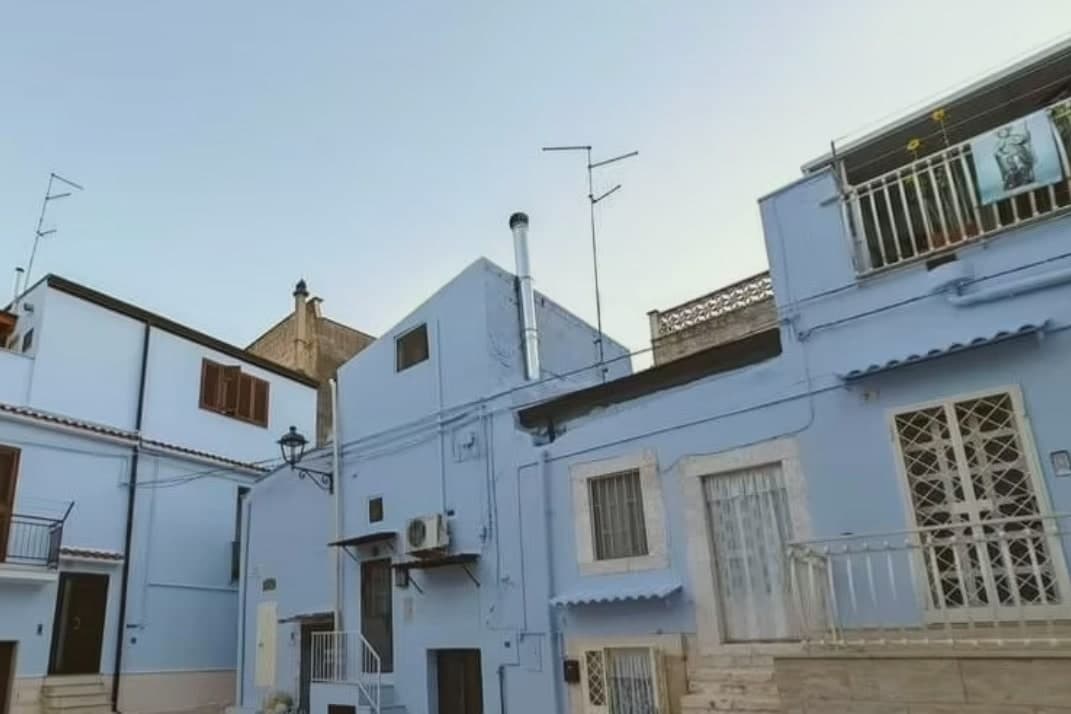
Why visit Casamassima
Casamassima sits at 230 meters on the lower Murge slopes, twenty kilometers south of Bari. The village is known nationally as the Paese Azzurro, the blue town: the houses, palazzi and churches of the centro storico are coated in successive layers of blue-tinted quicklime, probably copper sulphate, in a tradition the locals trace to Duke Odoardo Vaaz.
In 1658 a plague carried by a ship into the port of Bari killed over twenty thousand residents of the capital. Vaaz, a feudal lord of Casamassima from a Sephardic Jewish family of Portuguese origin who had bought the fief in 1609 for 76,000 ducats, vowed to the Madonna of Constantinople that he would paint his town blue if the village was spared.
It was. The small church of the Madonna di Costantinopoli still stands as the vow's fulfilment, and the blue lime has been retouched on the same buildings for nearly four centuries.
What to see in Casamassima
- Centro storico (Paese Azzurro). The blue town, an entire medieval quarter coated in successive layers of copper-blue quicklime since the 1658 plague vow, unique in Puglia.
- Palazzo Ducale Vaaz. Twelfth-century manor house turned ducal residence of the Sephardic Vaaz family from 1609, then of the D'Aponte family after the 1667 sale.
- Chiesa di Maria SS di Costantinopoli. Small church built as the fulfilment of Duke Vaaz's plague vow, the historical anchor of the blue-painting tradition.
How to get to Casamassima
There is a railway station in the town, so you can arrive without a car and never need one while you are here. Bari is roughly 22 minutes away by road.
Our tip
April through June and September through October are the months the Murge is mild and the blue centro storico photographs at its best, the lime cool against bright light. July and August reach the mid-thirties on the plateau and the painted lanes empty between two and five in the afternoon. The painter Vittorio Viviani came in the 1960s and built a body of work around the blue light; the Pro Loco still organises walks in his footsteps in spring and autumn. Sagra focaccia di patate del coniglio ripieno falls in September.
Giovinazzo
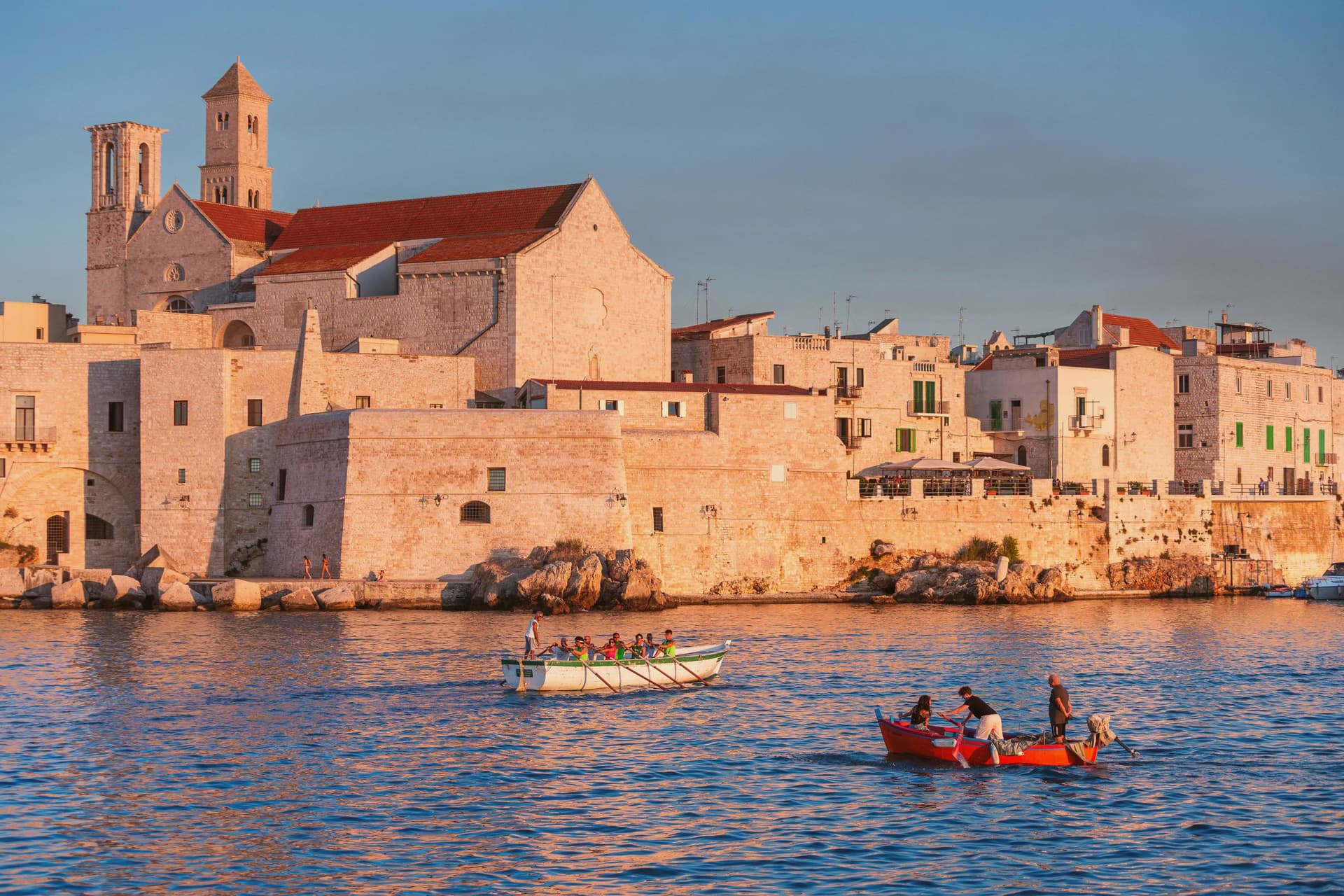
Why visit Giovinazzo
Giovinazzo sits on the Adriatic twenty kilometers northwest of Bari, between Molfetta and the Bari coastal belt, at 7 meters. The Romans called it Natolium, fortifying the site under Trajan in 102 AD on what may be the older Peucetian settlement of Netium.
The Norman cathedral of Santa Maria Assunta was built between 1125 and 1180 in the Puglian Romanesque style and consecrated in 1283; it still holds the Byzantine icon of the Madonna of Corsignano, the patron, celebrated through August. The medieval centro storico runs in narrow stone lanes around the harbor, where the small fishing fleet still ties up below the sea wall.
Five kilometers inland, the Dolmen di San Silvestro is a Bronze Age funerary chamber from around 1500 BC, set in a grove of olive and carob, the agro that makes Giovinazzo a Città dell'Olio. The town hosts one of the few elite roller hockey clubs in Italy.
Ragno d'Oro Caffè dal 1856, Toruccio Terrazza Adriatica have been named by a guide.
What to see in Giovinazzo
- Concattedrale di Santa Maria Assunta. Norman cathedral of 1125-1180 in Puglian Romanesque, consecrated in 1283, with the Byzantine icon of the Madonna of Corsignano above the main altar.
- Centro storico. Medieval old town in narrow stone lanes wrapping the small port, walled on the seaward side and rebuilt after Norman reconquest in the eleventh century.
- Dolmen di San Silvestro. Bronze Age funerary dolmen from around 1500 BC, set on a Murgia terrace among olive and carob trees five kilometers inland from town.
How to get to Giovinazzo
There is a railway station in the town, so you can arrive without a car and never need one while you are here. Bari is roughly 31 minutes away by road.
Our tip
May through June and September are the best months on this stretch of Adriatic coast, with warm sea and mild evenings. July and August touch thirty-five degrees and the small harbor fills with weekenders from Bari; the centro storico stays cooler in the lanes than out on the wall. The festa for the Madonna of Corsignano runs through August. Sagra del Panino della Nonna falls in August.
Castellana Grotte
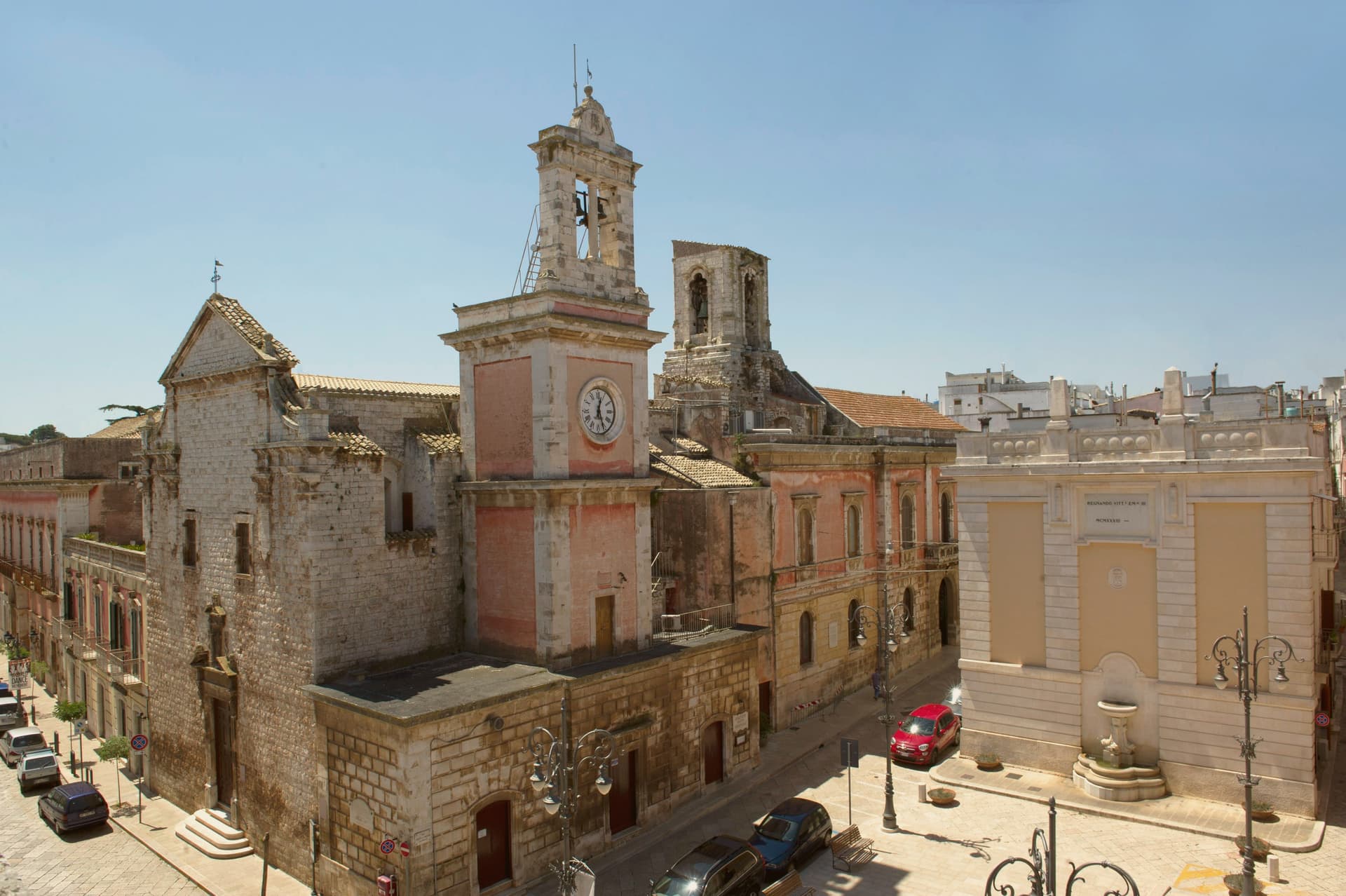
Why visit Castellana Grotte
Castellana Grotte sits on the south-eastern Murge at 290 meters, forty kilometers south of Bari and inland from Monopoli and Polignano. The town takes its name from the cave complex beneath it, reached in 1938 when a speleologist sent by the Italian Touring Club broke through a known sinkhole into the system running under the plateau.
The white alabaster chamber at the far end followed two years later. Above ground the town keeps a separate rhythm from what lies underneath it.
The walled center sits organized around the cathedral square, its mother church raised on Romanesque foundations with a Norman tower pressed into service as a bell tower. On the hilltop above, the sanctuary built after the 1690 plague draws the January procession that carries the Madonna statue down from the Capuchin convent to that same mother church, tying the two sacred points of the town together once a year.
The place works on two levels literally: a plateau town of stone alleys and church squares going about its own history, sitting on top of a cave system that has nothing to do with it except the name.
What to see in Castellana Grotte
- Grotte di Castellana. Galleries descend from a sinkhole known as La Grave into stalactite and stalagmite formations underfoot, with Franco Anelli's route ending at the alabaster chamber of the Grotta Bianca.
- Chiesa Madre di San Leone Magno. Romanesque mother church rebuilt in 1383, three naves under round arches, with a Norman defensive tower converted into the bell tower.
- Santuario di Santa Maria della Vetrana. Hilltop sanctuary built in thanks for deliverance from plague, the destination of the January procession that carries the Madonna statue from the Capuchin convent.
How to get to Castellana Grotte
There is a railway station in the town, so you can arrive without a car and never need one while you are here. Bari is roughly 47 minutes away by road.
Our tip
April through June and September through October are the workable months on the Murge: dry, clear, the caves a constant fifteen degrees regardless of the surface weather. July and August reach the mid-thirties above ground but the cave itinerary stays cold enough for a jacket. The plateau countryside empties between two and five in the afternoon.
Acquaviva delle Fonti
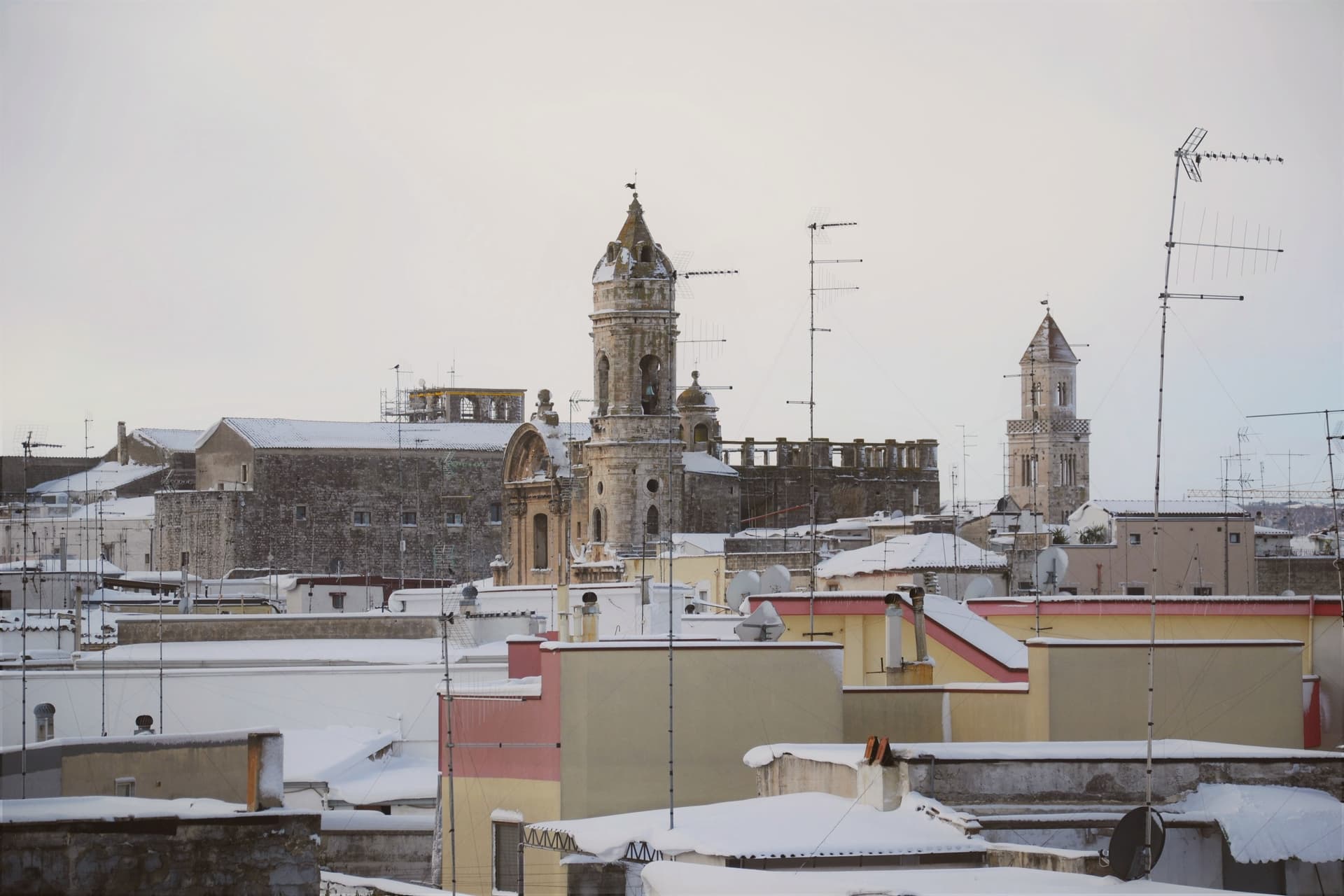
Why visit Acquaviva delle Fonti
Acquaviva delle Fonti sits on the Murge plateau at 300 meters, twenty-five kilometers south of Bari and the same distance from the Adriatic. The name records the springs that fed the town long before the Normans arrived.
The Co-Cathedral of Sant'Eustachio was built in 1158 on Messapian foundations by the Norman lord Roberto Gurguglione, then rebuilt in Renaissance style in the late sixteenth century by Count Alberto Acquaviva d'Aragona; its façade carries a sixteen-arm rose window that is the building's signature. The Palazzo de Mari, now the town hall, anchors the centro storico opposite the cathedral.
The town is best known nationally for the cipolla rossa di Acquaviva, a sweet DOP red onion grown only in local clay-rich soils and celebrated with a late-July sagra and a mid-October festival built around the calzone di cipolla. The ecclesiastical Miulli hospital, one of the largest in Puglia, sits at the edge of town.
What to see in Acquaviva delle Fonti
- Concattedrale di Sant'Eustachio. Romanesque cathedral of 1158 rebuilt in Renaissance style by the Acquaviva d'Aragona counts, with a sixteen-arm rose window over the central portal.
- Palazzo de Mari. Sixteenth-century noble residence on the cathedral square, now the town hall, built by the de Mari family after they acquired the fief.
- Centro storico. Walled old town on the Murge plateau, organized around the cathedral and the palazzo, with stone houses and the springs that gave the place its name.
How to get to Acquaviva delle Fonti
There is a railway station in the town, so you can arrive without a car and never need one while you are here. Bari is roughly 30 minutes away by road.
Our tip
April through June and September through October are the months the Murge stays mild and the countryside is in flower or harvest. July and August push toward thirty-five degrees on the plateau and the centro storico empties between two and five in the afternoon. The late-July onion sagra falls in the worst of the heat but still pulls a crowd. Sagra del Calzone falls in October.
Conversano
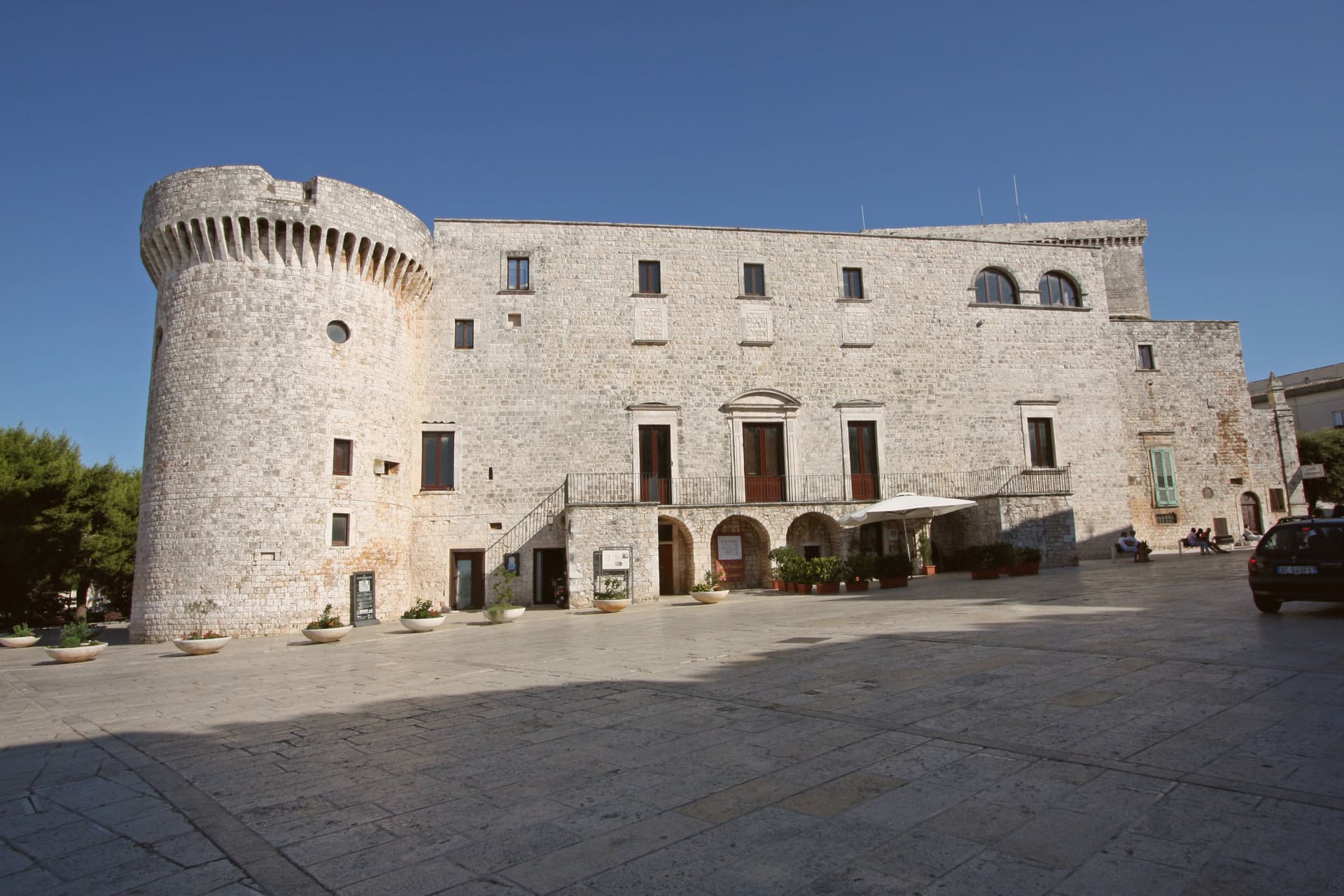
Why visit Conversano
Conversano sits on the first hills of the Murge plateau at 219 meters, twenty-five kilometers southeast of Bari and seven from the Adriatic. The Castello di Conversano was raised around 1054 by the Normans for defence and turned into a seigneurial residence by the Acquaviva d'Aragona counts, who ruled from 1455 until the early nineteenth century.
Inside the castle the Pinacoteca holds the ten-canvas cycle of episodes from Tasso's Gerusalemme Liberata painted by Paolo Domenico Finoglio in the 1640s, commissioned by Count Giangirolamo II d'Acquaviva. Opposite the castle stands the Cattedrale di Santa Maria Assunta, eleventh- and twelfth-century Apulian Romanesque with a sculpted portal, a rose window, and an interior Crucifix that anchors the patronal procession.
The former Monastero di San Benedetto, with a Romanesque cloister, was entrusted in 1266 by Pope Clement IV to Cistercian nuns exiled from Methoni in Greece, an arrangement so unusual it earned the monastery the medieval nickname Monstrum Apuliae, the Wonder of Puglia.
Vita Pugliese have been named by a guide.
What to see in Conversano
- Castello di Conversano. Norman castle of 1054 turned seigneurial residence by the Acquaviva d'Aragona counts, with the Pinacoteca holding Finoglio's ten Gerusalemme Liberata canvases.
- Cattedrale di Santa Maria Assunta. Apulian Romanesque cathedral of the eleventh and twelfth centuries, sculpted portal, rose window, wooden Crucifix venerated as the city's protector.
- Monastero di San Benedetto. Former Benedictine then Cistercian monastery with Romanesque cloister, called Monstrum Apuliae for the abbess-power of the Greek nuns entrusted to it from 1266.
How to get to Conversano
There is a railway station in the town, so you can arrive without a car and never need one while you are here. Bari is roughly 36 minutes away by road.
Our tip
April through June and September through October are the Murge months at this altitude: clear light, mild evenings, the cherry orchards in flower or fruit. Conversano is the centre of the IGP cherry zone and the late-May ciliegia harvest is the year's commercial peak. July and August hit thirty-five degrees and the centro storico empties in the afternoon.
Monopoli
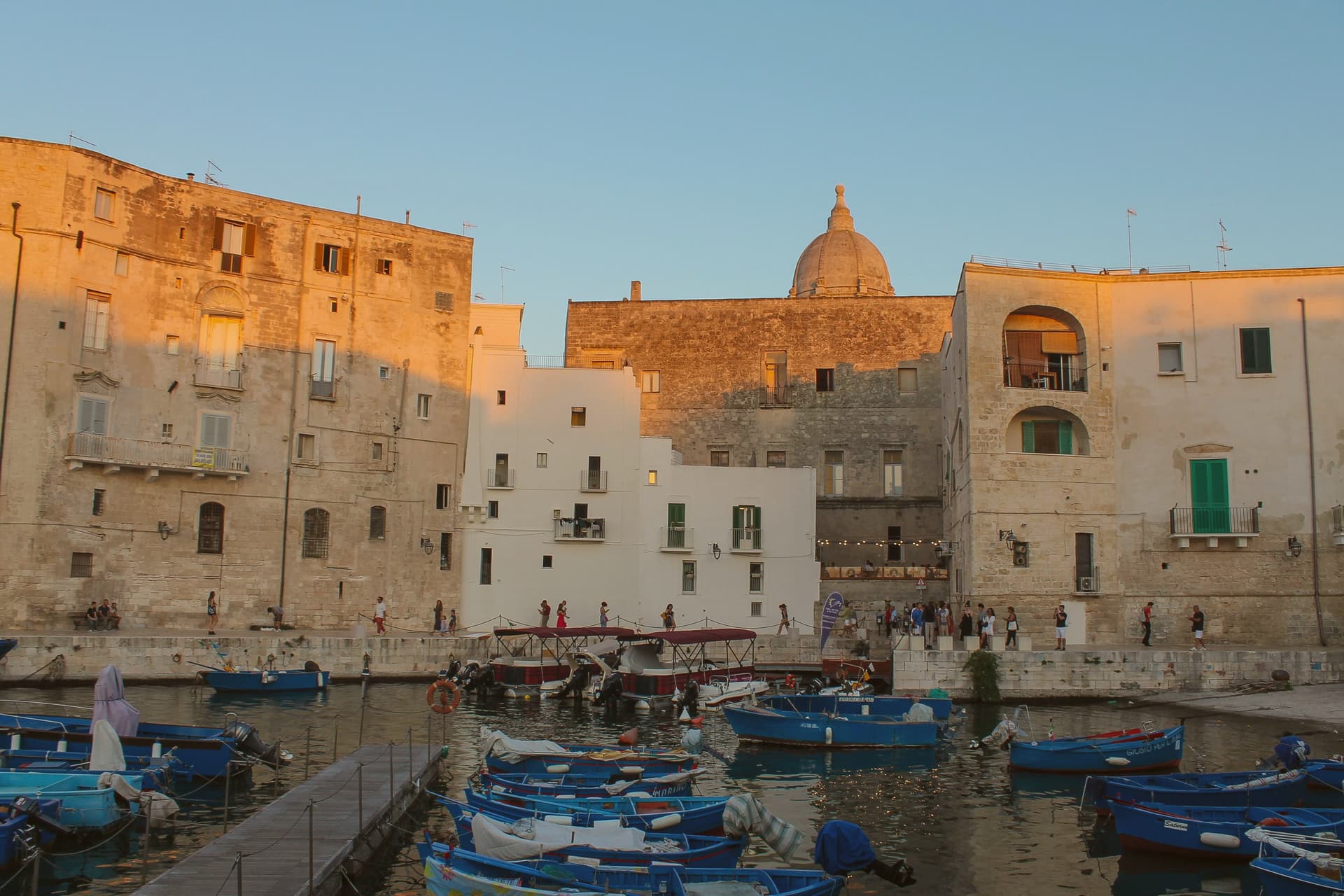
Why visit Monopoli
Monopoli sits on the Adriatic forty kilometers southeast of Bari, a walled town extending from the sea fifteen kilometers inland to the first Murge hills. The territory covers 156 square kilometers with sandy coves, cliff sections and the old port at the centro storico.
The site has been inhabited since the Epigravettian, around fifteen thousand years ago; a fortified Messapian settlement existed by 500 BC. The name comes from the Greek for 'only city,' which Monopoli inherited when refugees from nearby Gnatia arrived after the Ostrogoth king Totila destroyed it in 545.
Byzantines, Normans and Hohenstaufen followed. In 1484 Venice took the town and ran it as a trading port between Bari and Brindisi for sixty years.
The Castello Carlo V on the headland and the resistance to the imperial Armada in 1529, which forced the Spaniards to abandon a three-month siege, both belong to that century of fortification.
Radimare, Orto, My Wine il piacere del palato and 1 more have been named by a guide.
What to see in Monopoli
- Castello Carlo V. Sixteenth-century pentagonal fortress on the headland above the old port, built by the Spanish to defend against Ottoman raids and Venetian return.
- Basilica Cattedrale Maria Santissima della Madia. Eighteenth-century baroque cathedral on the old town's central square, raised over earlier medieval foundations, the city's principal monument.
- Centro storico. Walled old town on the small headland, white limestone alleys, the cathedral and the castle facing each other across narrow lanes above the port.
How to get to Monopoli
There is a railway station in the town, so you can arrive without a car and never need one while you are here. Bari is roughly 42 minutes away by road.
Our tip
May through September is the working coastal season, water warm enough for swimming and the old port quay populated until late. July and August push past thirty-three degrees and the centro storico fills with day-trippers from Bari and Polignano; weekends in August are shoulder to shoulder along the quay. June and September are the sane choices, mild evenings and the same water without the crush.
More from Anywhere Italy
- The 9 best hill towns you can reach by train in the province of Bari
- The best cheese towns within 45 minutes of Bari
- The best cheese towns within two hours of Lecce
 The best hill towns you can reach by train within 90 minutes of Bari
- The best olive oil towns that eat well within 90 minutes of Bari
- The best towns that eat well in the province of Bari