The 6 best hill towns within 90 minutes of Latina
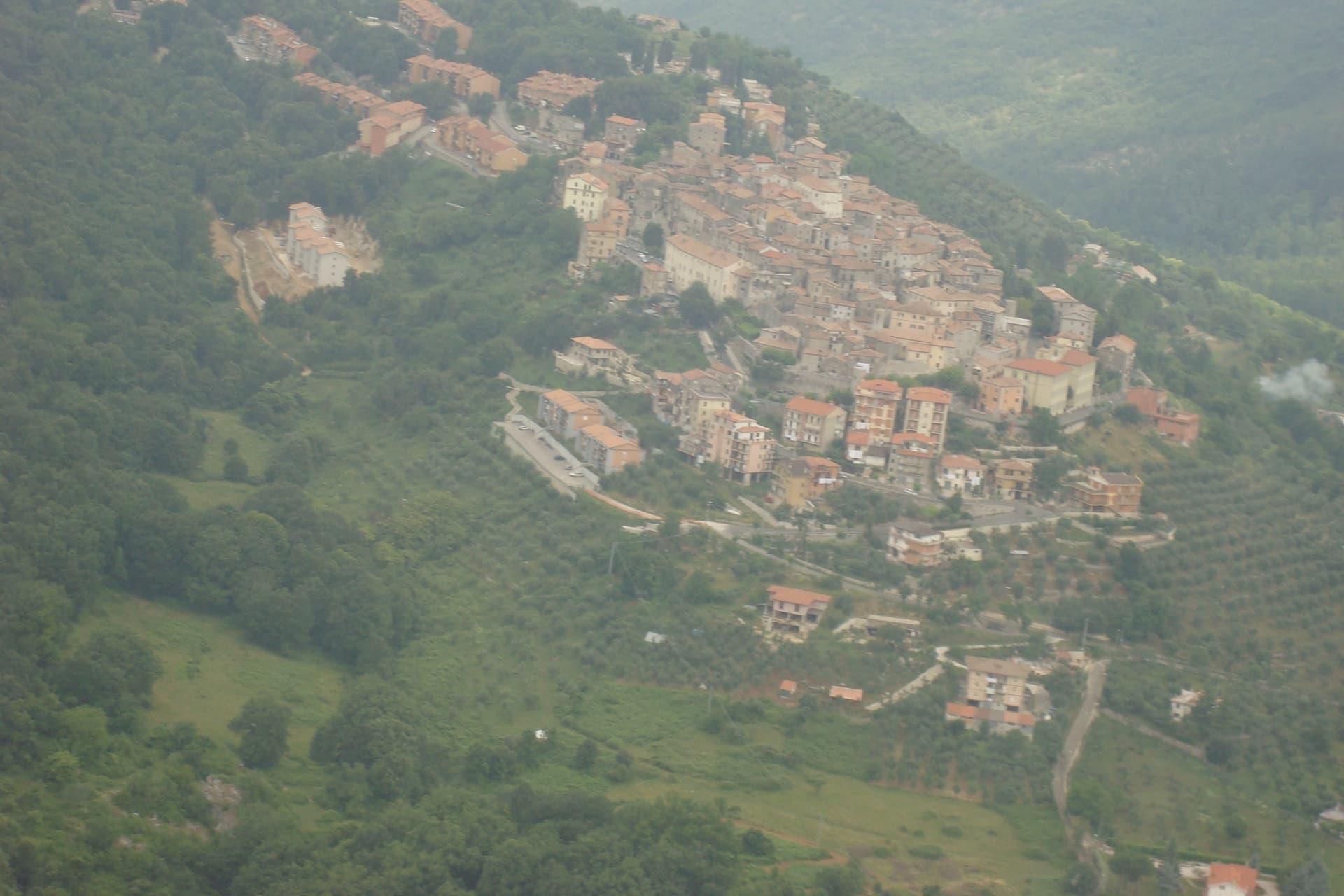
Behind Latina the ground rises fast. The Pontine plain, flat and reclaimed and given over to kiwi orchards and buffalo herds, runs into the Lepini and then the Ernici, limestone hills where the villages sit on rock ledges and the houses are built from the same grey stone as the slope beneath them. Up here the food changes: prosciutto cured slowly in cool air, olive oil pressed from terraces that face the sea, wine from the volcanic soils of the Alban side. Autumn is the good season, when the chestnut woods turn and the mist sits low over the plain below while the hill towns stay in sun.
Most people crossing this part of Lazio are heading somewhere else, usually Rome, an hour up the via Appia, or south towards Sperlonga and the Riviera di Ulisse, where the beaches fill from June and the parking on the seafront becomes its own kind of sport. The abbeys draw their own coaches, and the day trip out of the capital tends to stop at one of them and turn back. It is a well-worn corridor, and it leaves the hills either side of it largely to the people who live there.
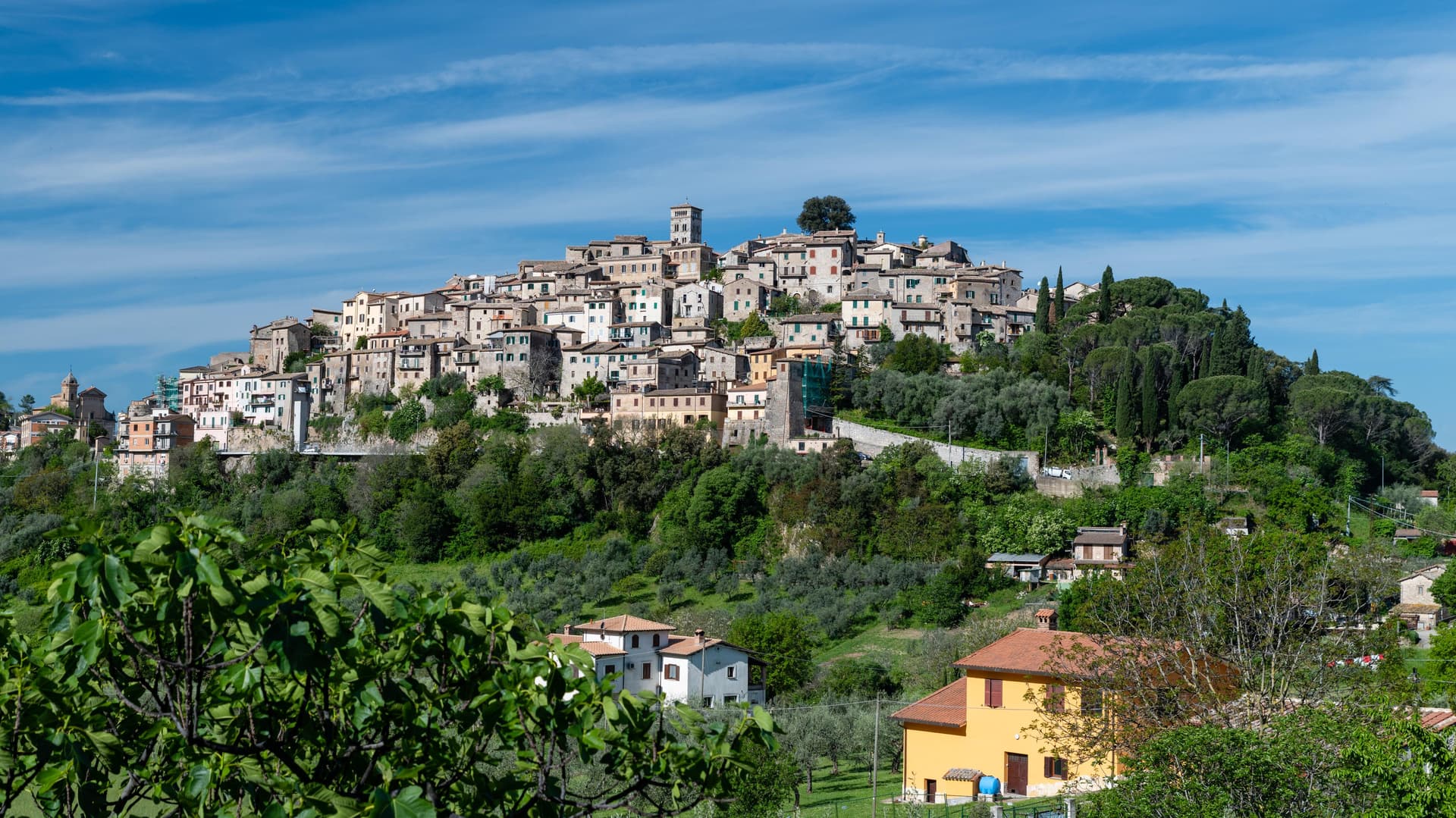
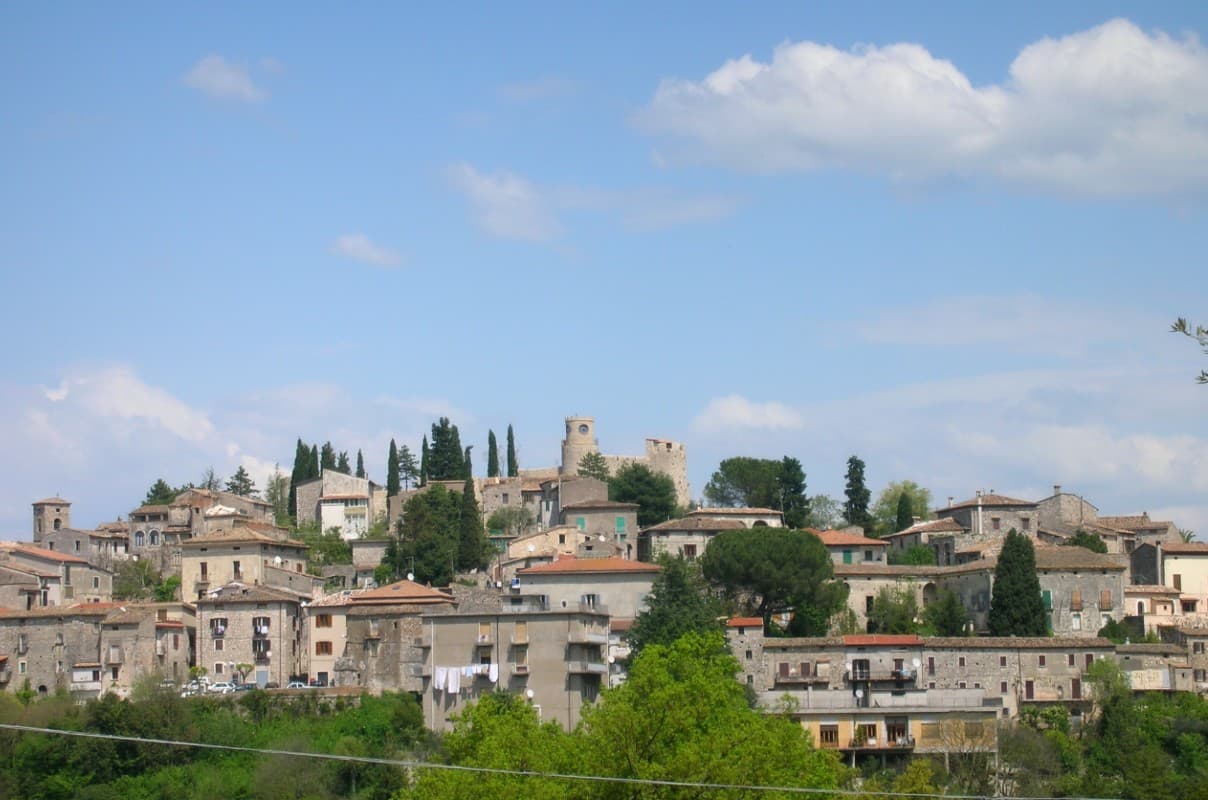
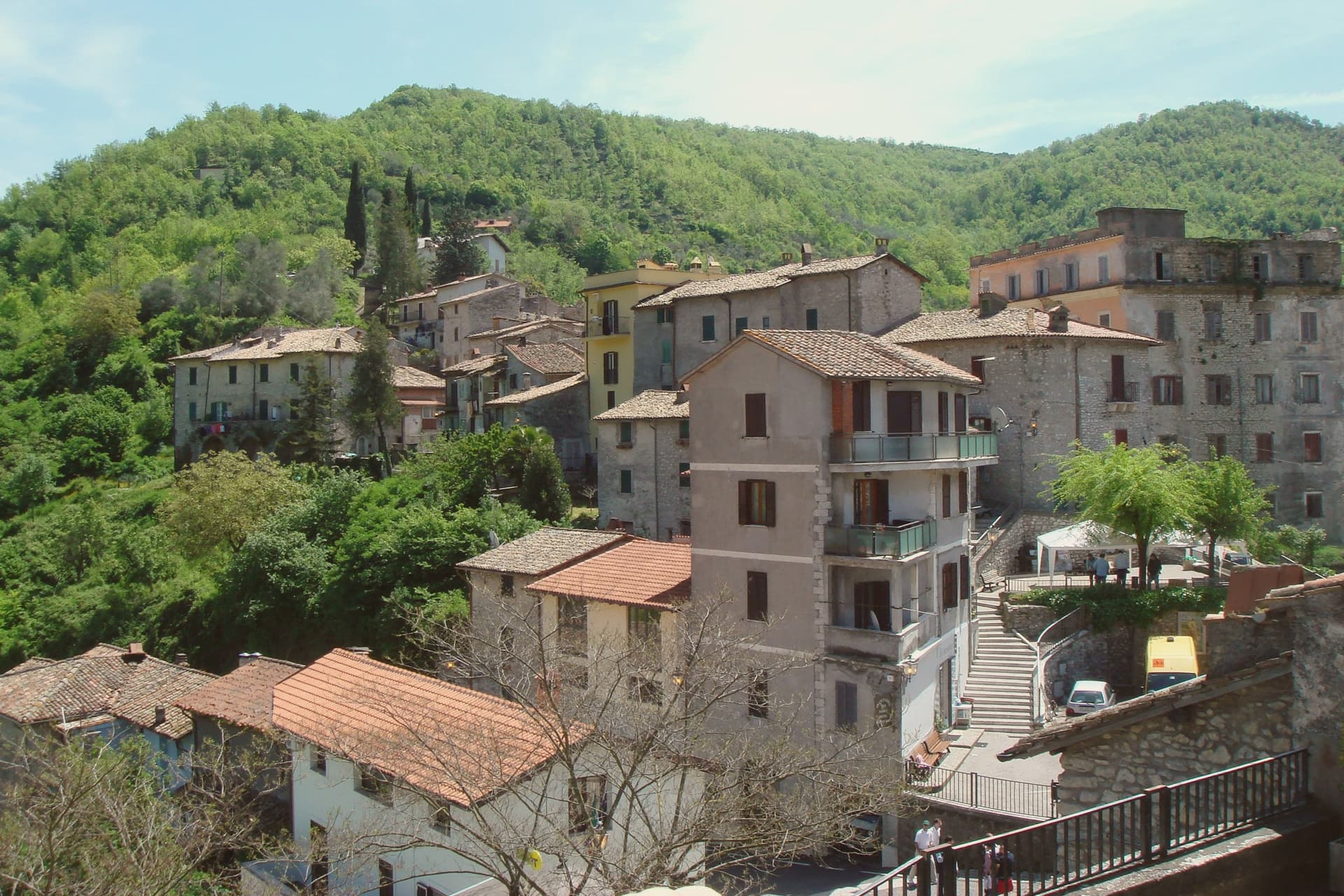
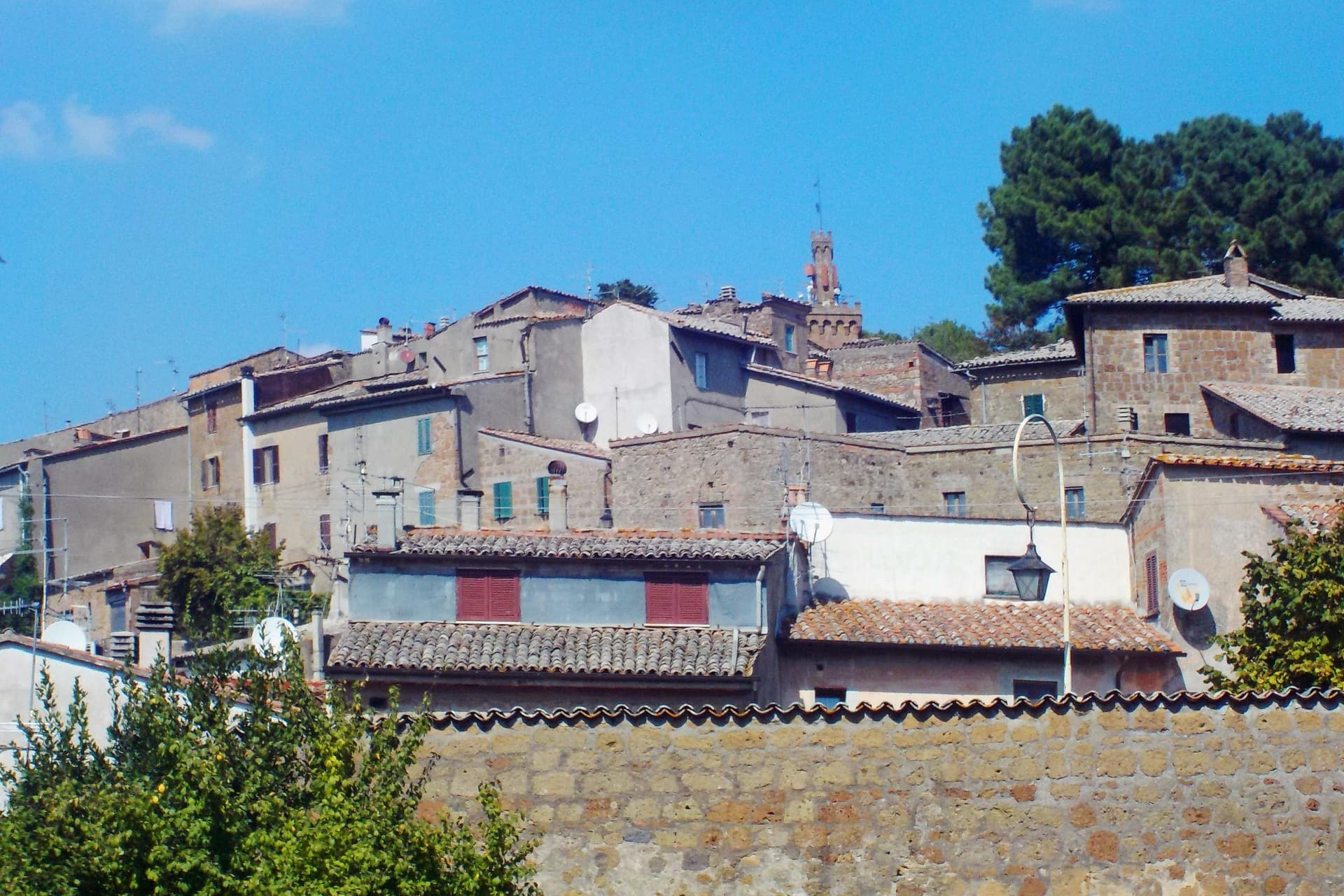
The same hills continue, though, past the exits everyone takes. Walled villages with intact medieval gates, a town split by a river that drops through its centre as a waterfall, ridge settlements looking north to the Ciociaria and south to the Tyrrhenian on clear days. These are the smaller places, all within a short drive inland of Latina, and fewer people go.
Of the 12 communes we have mapped within 90 minutes of Latina, 6 qualify as hill towns: each is an inland hill settlement. The smallest, Bassiano, has 1,440 residents.
If you are still choosing, we have also written The best olive oil towns in Lazio and The best hill towns in the province of Frosinone.
Bassiano
Why visit Bassiano
Bassiano sits at 562 meters on a ridge of the Monti Lepini, the highest commune in the province of Latina. The medieval village is built in a spiral that climbs to the summit where the Caetani fortress once stood.
Its walls, raised by the Caetani at the end of the thirteenth century, run with nine towers and three gates still intact. Aldo Manuzio was born here between 1449 and 1452.
He moved to Venice, founded the Aldine Press, gave the world italic type and the enchiridia, the small portable book in octavo, predecessor of the modern paperback. The Palazzo Caetani in the centro storico now houses the Museo delle Scritture Aldo Manuzio, opened in 2009 with La Sapienza University, dedicated to the history of the written word.
The Chiesa di Sant'Erasmo holds a Romanesque baptismal font and fourteenth-century frescoes. From the belvedere at the top of the spiral, the Pontine plain opens out toward the Tyrrhenian, and on a clear morning the Circeo promontory closes the horizon.
What to see in Bassiano
- Mura e torri dei Caetani. Late thirteenth-century walls with nine towers and three gates, raised by the Caetani family around the spiral village.
- Museo delle Scritture Aldo Manuzio. Inside the sixteenth-century Palazzo Caetani, opened 2009 with La Sapienza University, dedicated to the printer-humanist born here around 1450.
- Chiesa di Sant'Erasmo. Fourteenth-century parish church with Romanesque baptismal font, marble tabernacle, and a cycle of frescoes from the late Middle Ages.
How to get to Bassiano
Latina is roughly 27 minutes away by road.
Our tip
April through June and September through October are the months Bassiano is built for: 562 meters of elevation keeps the air cool when the Pontine plain below is at thirty-five, and the views from the belvedere reach to the sea. July and August are warm but never extreme; the centro storico holds shade in the afternoon. November through March is quiet, with mist on the Lepini ridge and few visitors in the spiral alleys.
Castro dei Volsci
Why visit Castro dei Volsci
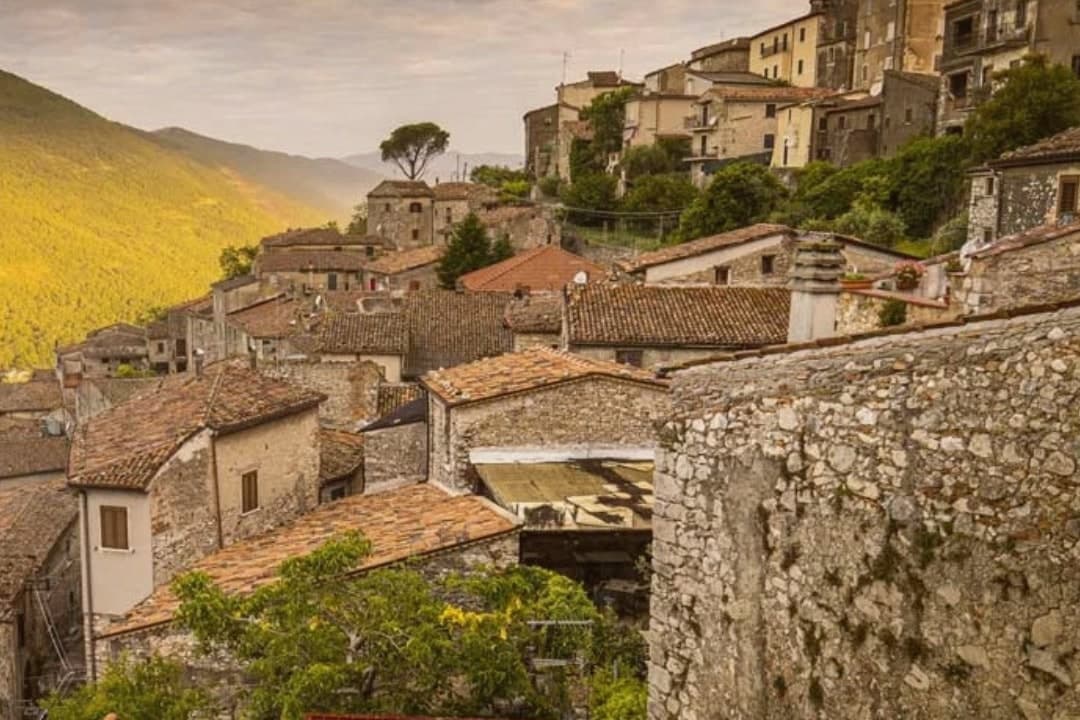
Castro dei Volsci sits at 385 meters on a ridge above the Sacco river valley, ninety kilometers southeast of Rome and fourteen from Frosinone. The Volsci, an Italic tribe Rome spent two centuries subduing, held this hill before the Latins took it; the name preserves both occupants, Castrum and Volsci, castle and people.
After the year 1000 the village fell to the Papal States and stayed inside that orbit until unification. The valley floor below the ridge holds Roman-era foundations and mosaics, remains of a settlement separate from the hill village above it.
The slopes between the two carry the olive groves that still supply the town's oil. The upper village, where the clock tower and castle ruins stand, is where Nino Manfredi was born in 1921 before the family's path led him to Rome and to postwar cinema; the town he left behind kept its stacked houses, its gates and its position over the valley, and it is that unbroken layout, hill above, groves on the slope, valley floor beneath, that the Borghi più belli d'Italia listing recognizes.
What to see in Castro dei Volsci
- Torre dell'Orologio. Medieval clock tower in the upper village. Inside, a permanent exhibition holds Nino Manfredi's films, scripts and personal effects.
- Castello. Ruins of the medieval fortress at the top of the borgo, with a panorama over the Sacco valley and the Monti Ausoni.
- Centro storico. Stacked stone houses, vaulted passages and medieval gates that earned the borgo its Borghi più belli d'Italia membership.
How to get to Castro dei Volsci
There is a railway station in the town, so you can arrive without a car and never need one while you are here. Latina is roughly 71 minutes away by road.
Our tip
April through June and September through October are the best windows. The Sacco valley is green in spring and the panoramas from the castle ruins open clean once the haze burns off. July and August push past thirty-five degrees; the centro storico empties between two and five in the afternoon, and the olive groves on the slopes go silent until evening.
Boville Ernica
Why visit Boville Ernica
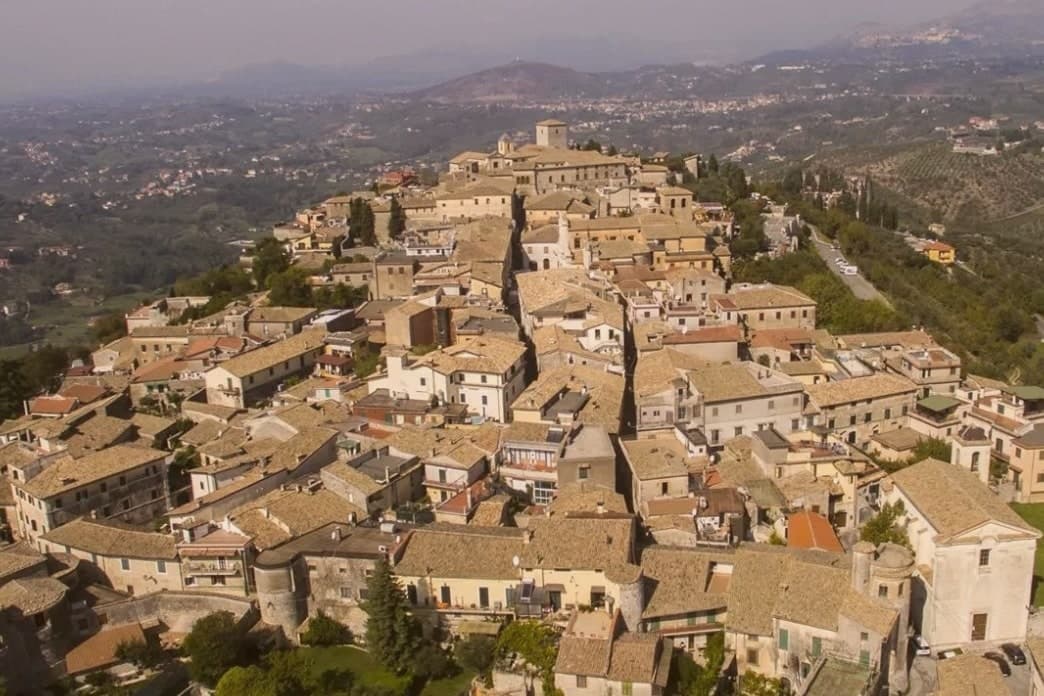
Boville Ernica sits at 450 meters above the Sacco and Liri valleys in Ciociaria, in the province of Frosinone. The Ernici, an Italic tribe contemporary with the Volsci, gave the place its second name, added in 1900 to distinguish it from another Bauco.
That name links the town's two layers: the polygonal walls at Monte Fico above the centro storico, built by the Ernici to defend a hill village and its place of worship, and the medieval circuit below, raised centuries later over the same defensive instinct after the Saracen and Hungarian raids. The borgo itself grew around that walled core.
Cardinal Ennio Filonardi, a sixteenth-century papal nuncio born in Boville, built his palace over the medieval castle and reorganized the urban plan around it, so the renaissance layer sits inside the medieval one rather than beside it. The abbey holding the Angelo del Navicella occupies the same historical register, a twelfth-century structure raised over a saint's cave, carrying inside it a mosaic fragment centuries older than the building itself.
The hills above town, signed Città dell'Olio, are the one part of the landscape still doing what it has always done. Put together, the town reads as a single hill continuously fortified and rebuilt, each century adding a layer without erasing the one beneath it.
What to see in Boville Ernica
- Abbazia di San Pietro Ispano. Twelfth-century abbey built over a grotto associated with the saint. The Angelo del Navicella is kept inside, a small mosaic fragment set against the scale of the building raised to house it.
- Mura medievali. The circuit is walkable and complete, tower after tower in the round-then-square rhythm, a rebuilding that answered the Saracen and Hungarian raids of the tenth century.
- Palazzo Filonardi. Sixteenth-century palace built by Cardinal Ennio Filonardi over the medieval castle, anchor of the renaissance reorganization of the centro storico.
How to get to Boville Ernica
Latina is roughly 74 minutes away by road.
Our tip
April through June and September through October are the months for Boville Ernica. The Sacco valley clears, the hill groves stay cool, and the eighteen-tower walls hold light in the late afternoon. July and August touch thirty-three on the valley floor but moderate on the hilltop.
Sermoneta
Why visit Sermoneta
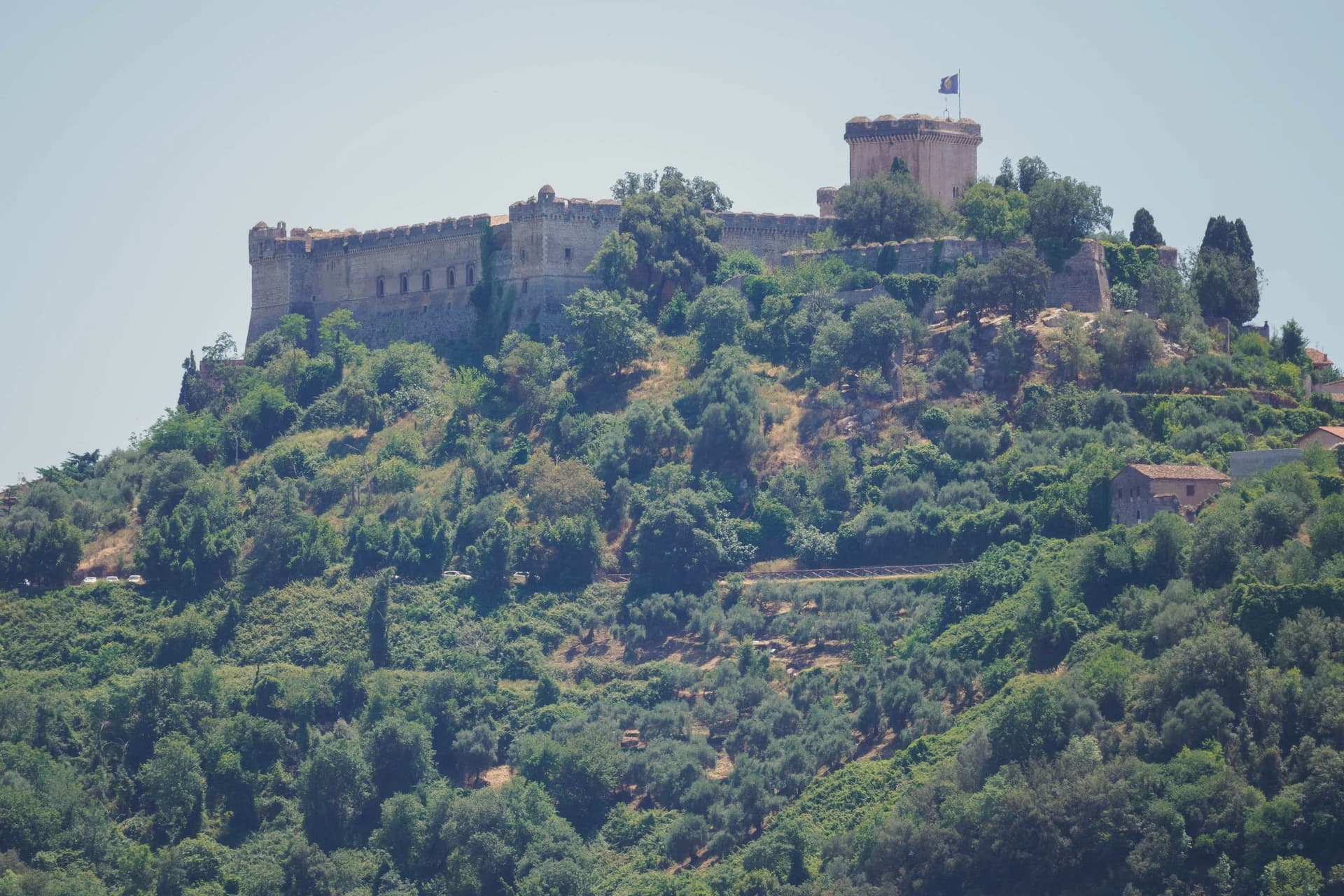
Sermoneta sits at 257 meters on a spur of the Monti Lepini, above what was once the Pontine Marshes and is now reclaimed plain. The Annibaldi held the site in the 13th century until 1297, when Pietro Caetani, nephew of Pope Boniface VIII, bought it and made it the seat of one of the great medieval Roman families.
The walled village climbs from the Porta Annibaldi up through narrow lanes to the fortress at its head, the two parts of the town, lower gate and upper stronghold, built as one continuous piece of Caetani-era stone. Below, in the valley, the family later turned an abandoned settlement into a garden, so the plain that emptied of people in the 17th century became, in the 20th, a cultivated ruin looked after by the same family that once ruled the hill above it.
The town on the spur and the garden in the plain are the same story told at two elevations: a family that built to hold ground in the medieval centuries, then returned centuries later to plant over what the land had reclaimed.
What to see in Sermoneta
- Castello Caetani. The Maschio tower stands beside the smaller Maschietto, and the Camere Pinte hold their frescoes from the 1470s. Charles V lodged here in April 1536 with 1,000 knights and 4,000 infantry.
- Giardino di Ninfa. The garden grows over stone that was once a working medieval town, abandoned in the 17th century after malaria emptied the plain; walls and a former church line survive among the planting.
- Cattedrale di Santa Maria Assunta. Romanesque collegiate church from the 13th century inside the walls, with a 14th-century panel of the Madonna by Benozzo Gozzoli.
How to get to Sermoneta
There is a railway station in the town, so you can arrive without a car and never need one while you are here. Latina is roughly 23 minutes away by road.
Our tip
April through June and September through October are when Sermoneta sits at its best. The Lepini spur catches a breeze the Pontine Plain below never gets in summer. April and May are also the months to see the Giardino di Ninfa in flower; the garden opens only on selected weekends from April to early November.
Isola del Liri
Why visit Isola del Liri
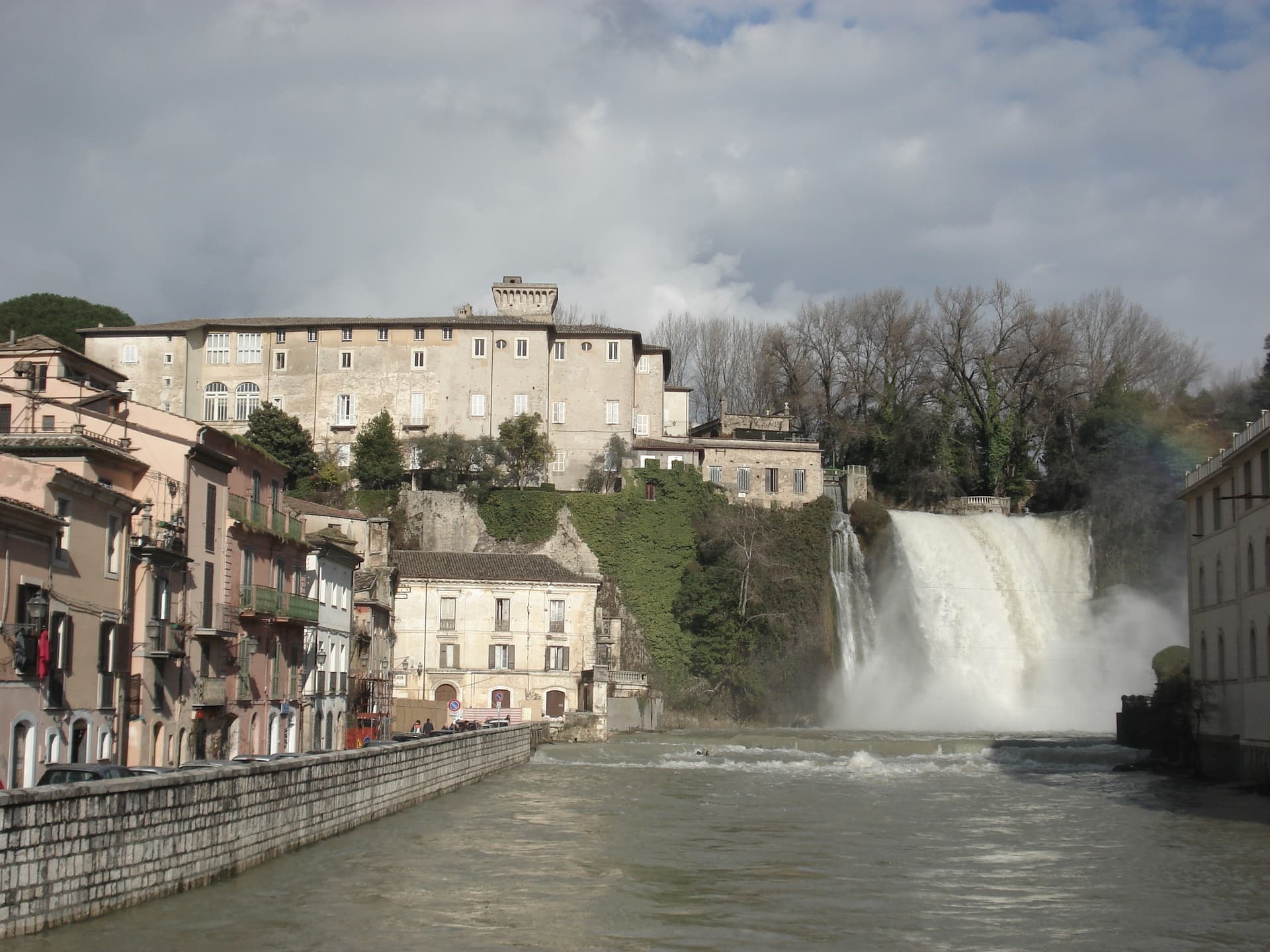
Isola del Liri is built on an actual island, where the Liri river splits into two arms and the two arms fall over a limestone shelf into the lower valley. The Cascata Grande is 27 meters high and lands inside the historic center, fifty meters from the Castello Boncompagni-Viscogliosi, the fortified palace above it.
The second fall, Cascata del Valcatoio, is partly diverted for hydropower. From the 19th century the river ran the paper mills, felt mills and wool mills that gave the town the name Manchester of Italy: the Fibreno-Lefebvre mill exported to North America.
The paper industry collapsed in the late 20th century. The town responded with the Liri Blues Festival, started in 1988 by a local businessman, Luciano Duro, to draw attention back to a place that had lost its trade; it became one of Europe's longer-running free blues festivals.
The Cammino di San Benedetto walking route passes through.
What to see in Isola del Liri
- Cascata Grande. 27-meter waterfall in the center of town, the Liri river dropping over a limestone shelf next to the castle.
- Cascata del Valcatoio. Second urban waterfall on the right arm of the Liri, partially diverted for hydroelectric production.
- Castello Boncompagni-Viscogliosi. Fortified palace from the 14th century above the Cascata Grande, residence of the Boncompagni-Ludovisi from the 16th century.
How to get to Isola del Liri
There is a railway station in the town, so you can arrive without a car and never need one while you are here. Latina is roughly 80 minutes away by road.
Our tip
April through June is when the Liri runs hardest after the spring melt and the Cascata Grande is at maximum volume. July is the festival month: the Liri Blues runs across several July evenings on stages in the centro storico and on the riverbanks. August stays hot in the Liri valley, the town thins out for the coast.
Velletri
Why visit Velletri
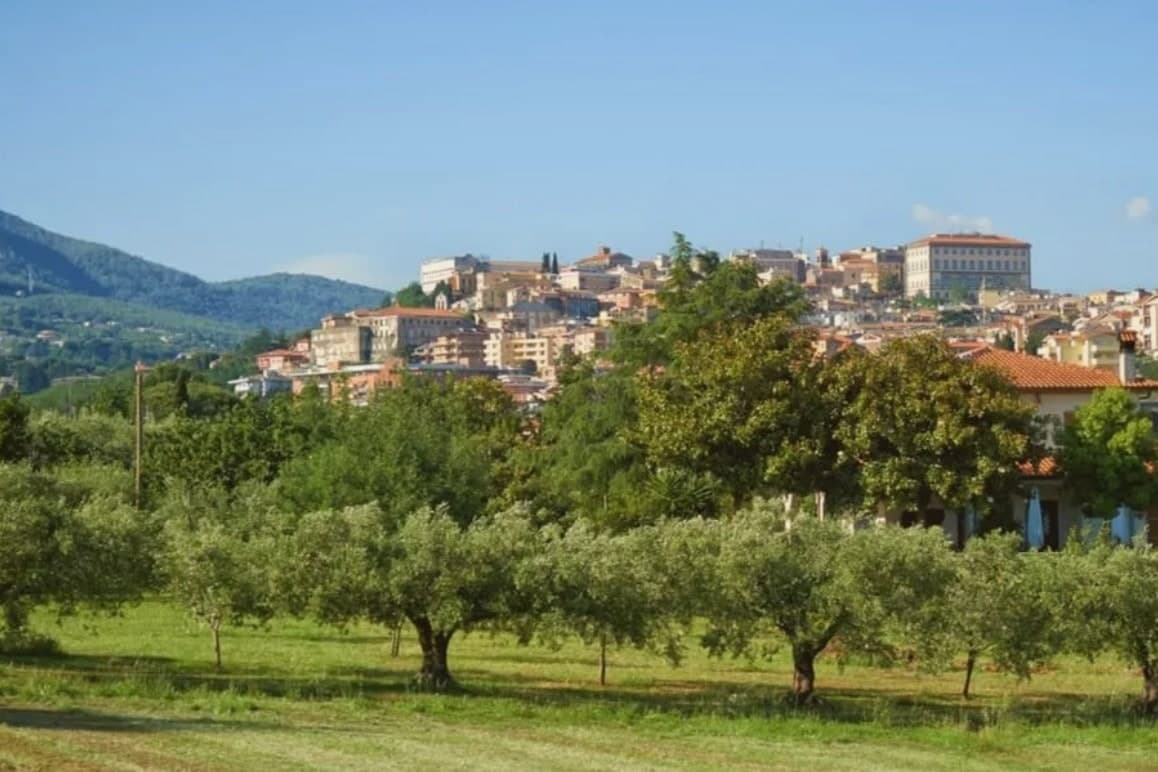
The town sits at 332 meters, thirty-five kilometers from Rome, on the southeastern rim of a volcanic ring of craters and lakes. Before it was a papal possession and a diocesan seat, it was a Volscian stronghold, and before that the home ground of the Octavii, the paternal family of the man who became Augustus: Suetonius records a street here called Octavian and an altar consecrated by an Octavius, and the future emperor passed his childhood in the town under its old name, Velitrae.
That layering, Volscian settlement, imperial family seat, papal diocese, is what the center still shows once the war is accounted for: an army broke through a German defensive line here in May 1944, and much of the town was destroyed in the process. What stands now above the old piazza and around the rebuilt town hall is largely reconstruction fitted around what survived, with a wine trade going back to the volcanic soil that predates all of it.
A town whose name changed twice, whose family produced an emperor, and whose center was rebuilt from a battle line, but whose vineyards on the same slopes never stopped being the constant.
What to see in Velletri
- Torre del Trivio. 50-meter Romanesque bell tower from the 14th century, the only structure to come through the 1944 bombing intact, still the shape by which the town is recognized from a distance.
- Palazzo Comunale. Renaissance town hall designed by Giacomo Della Porta, rebuilt after wartime damage, facing the piazza named for the emperor born to the town.
- Cattedrale di San Clemente. Cathedral seat of the suburbicarian Diocese of Velletri-Segni, a title held today by the Dean of the College of Cardinals.
How to get to Velletri
There is a railway station in the town, so you can arrive without a car and never need one while you are here. Latina is roughly 35 minutes away by road.
Our tip
April through June brings the Alban Hills at their greenest, vineyards in leaf, and mild evenings on the piazzas. September and October are the wine months: the Festa dell'Uva, one of the oldest grape festivals in Italy, runs in the first week of September. July and August are hot in the lower town and at their best after sunset, when the volcanic slopes hold the breeze. Calici sotto le stelle falls in August.