
The 6 best towns you can reach by train in the province of La Spezia
This is the last stretch of Liguria before Tuscany, where the Apennines drop into the sea in slate and sandstone and the houses are painted ochre, rust and dull pink because the colours had to be visible from a fishing boat. Terraces of vermentino and albarola vines climb behind the villages, held by dry stone walls, and the paths between them smell of rosemary and hot pine in July. The food is anchovies salted in jars, focaccia eaten standing up before ten in the morning, trofie with pesto, and the sweet late-harvest wine of the coast. Spring and October are the good months: warm water, working harbours, no queue for the ferry.
Nearly everyone arrives with Riomaggiore and Portovenere already circled, and by midsummer the harbour steps there are photographed from every angle at once, the cruise tenders come in from La Spezia, and the boat tickets sell out before lunch. It is a small place absorbing an enormous number of people, most of whom stay a few hours. The walls, the swimming and the vertical alleys are all real, which is why it happens. It is simply happening to a great many people at the same time.
The railway does not stop there. It carries on north through the tunnels to broad beaches, river mouths and market towns on the Val di Magra side, and those stations see a fraction of the traffic. The coves, the vineyards and the anchovies continue, and so do the trains, several an hour in season. Each of the towns here can be reached without a car, which is what this list is for.
Of the 13 communes we have mapped in the province of La Spezia, 6 qualify as towns you can reach by train: we have confirmed each is reachable without a car. The smallest, Framura, has 577 residents.
Two more lists worth reading alongside this one: The best hidden coastal towns in the province of La Spezia and The best small coastal towns you can reach by train in Liguria.
Framura
Why visit Framura
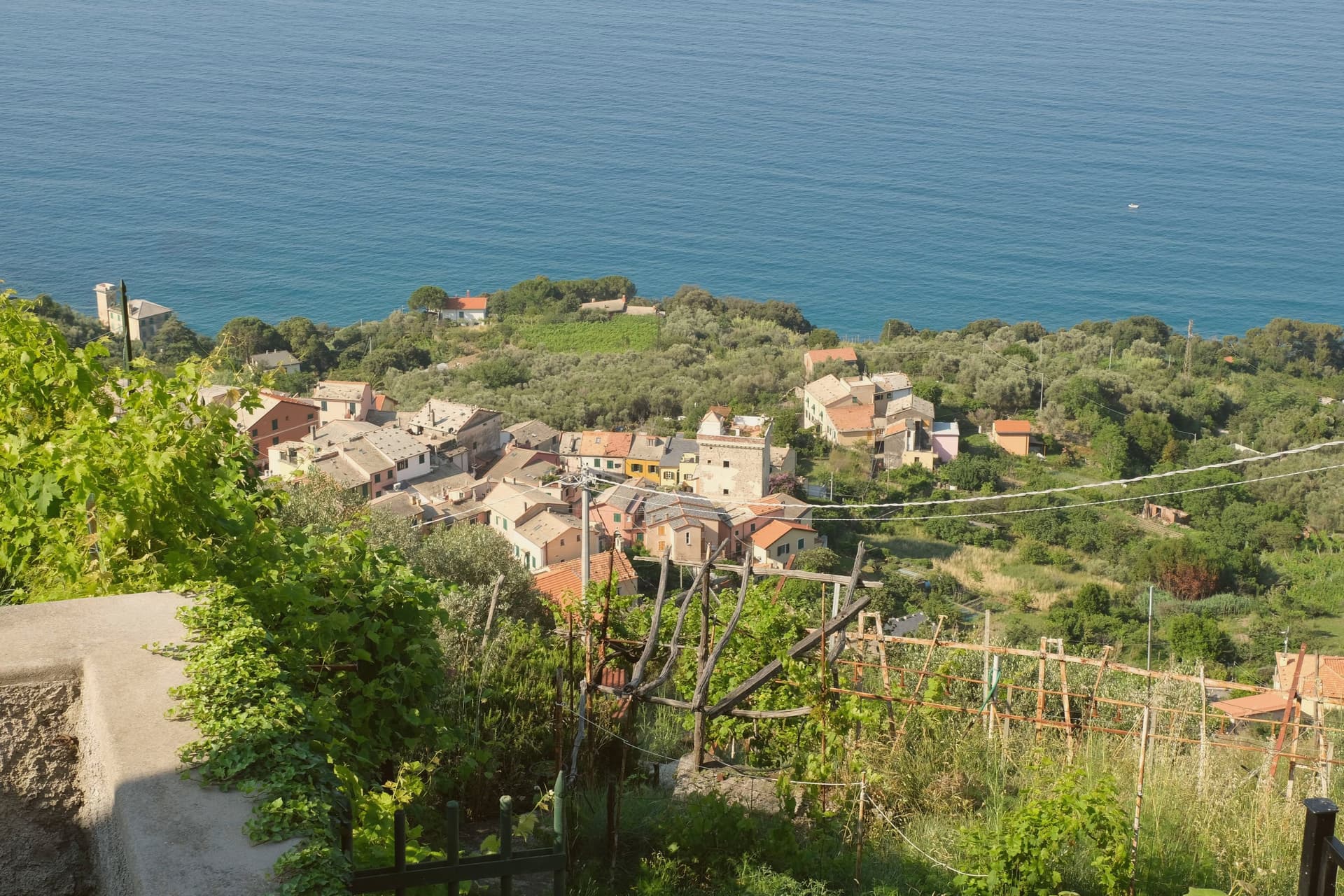
Framura is not one village but five: Anzo on the water, Setta and Ravecca on the slope, Costa above them, and Castagnola at roughly 300 meters with views back down to the coast. The commune spans from the rocky shoreline to 845 meters inland on the ridge that separates the Cinque Terre coast from the Vara valley.
Byzantine settlers built the original circular watchtowers here against Saracen raids, three of them still standing on the coast and inland. The hamlets remained agricultural until the Genova-La Spezia railway tunneled through in the late nineteenth century, opening the commune to summer visitors.
The seafront below Anzo, reached by a converted railway tunnel turned cycle path, carries the Bandiera Blu, and the same path runs north toward Bonassola and Levanto. Framura is the quiet outlier on this coast: the closest Borghi più belli village to Monterosso al Mare without being in the Cinque Terre national park.
We confirmed you can reach this one by train.
What to see in Framura
- Torri bizantine. Three surviving Byzantine watchtowers on the coast and ridge, built to defend the village from Saracen incursions.
- Castagnola. Highest of the five hamlets at around 300 meters, with views over the lower frazioni and the Riviera di Levante.
- Anzo waterfront. Coastal hamlet at sea level with the Bandiera Blu beach access, the lowest of Framura's five settlements.
How to get to Framura
There is a railway station in the town, so you can arrive without a car and never need one while you are here. Genova is roughly 59 minutes away by road.
Our tip
April through October fits Framura, with the cycle path open and the coast walkable in any direction. May, June and September are the best for combining sea and hiking; mid-summer brings the strongest beach traffic but the upper hamlets stay calm. The Bandiera Blu beachfront below Anzo is small and fills early on August weekends.
Deiva Marina
Why visit Deiva Marina
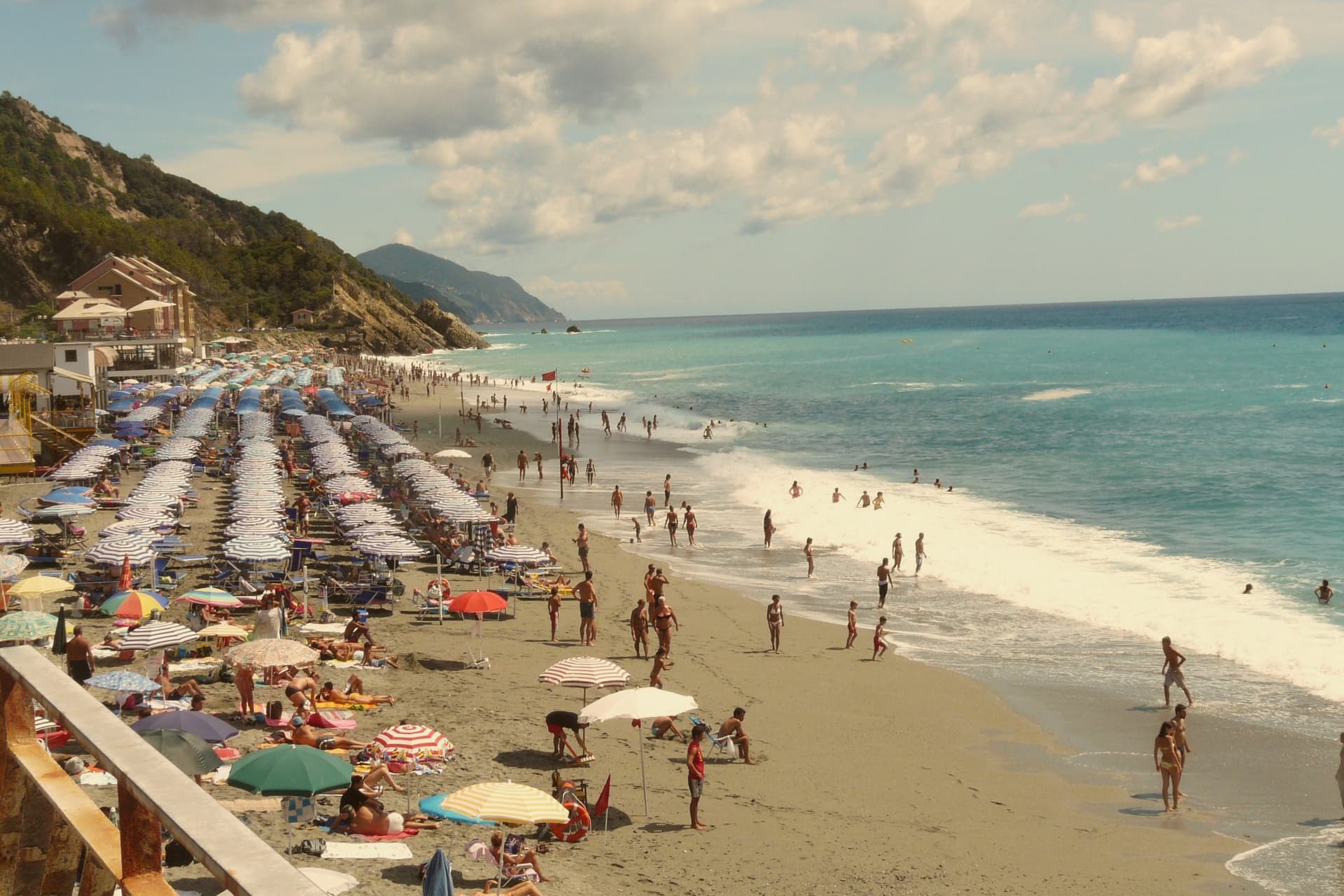
The commune sits at the bottom of a valley running from Monte San Nicolao, eight hundred meters up, down to the Ligurian Sea, fifty kilometers east of Genoa. The territory is first documented in a Carolingian imperial diploma of 774, but for most of its history the settlement stayed inland: the coastal plain flooded, and Barbary raids made the shore too exposed to live on.
The villages up the slope were the town. The seafront had no fixed population until the railway reached it, and the seafront that grew up afterward, around the station and a hotel called Albergo Savoia, is a nineteenth-century addition to a place whose real age lies up the hill.
The round watchtower near the sea was partly demolished by a flash flood in 1852, a reminder that the coast it guarded was never entirely tame even after settlement arrived. What the geography adds up to is a town in two pieces on two timelines: an old, defended, inland Deiva that predates the sea by centuries, and a young shoreline that only exists because a railway made the coast safe to build on.
We confirmed you can reach this one by train.
What to see in Deiva Marina
- Torre Saracena. The square tower stands beside the church, its stone weathered, a lookout post scaled to a coastline once undefended by anything larger.
- Chiesa di Sant'Antonio Abate. Still the parish church, standing in what was the original inland centro storico before the seafront existed, dedicated to the Egyptian hermit.
- Spiaggia di Deiva Marina. Shallow sand and shingle running below the railway station, wide enough that the crowds it draws spread rather than crush.
How to get to Deiva Marina
There is a railway station in the town, so you can arrive without a car and never need one while you are here. Genova is roughly 50 minutes away by road.
Our tip
May through September is the beach season: the bay opens around mid-May, water temperatures climb through June, and by August the seafront fills with Genovese and Milanese families. The Cinque Terre next door pulls day-trippers off the train through the summer. April and October are the shoulder months when the inland frazioni walks are pleasant and the beach is still warm enough for swimming on a calm day.
Levanto
Why visit Levanto
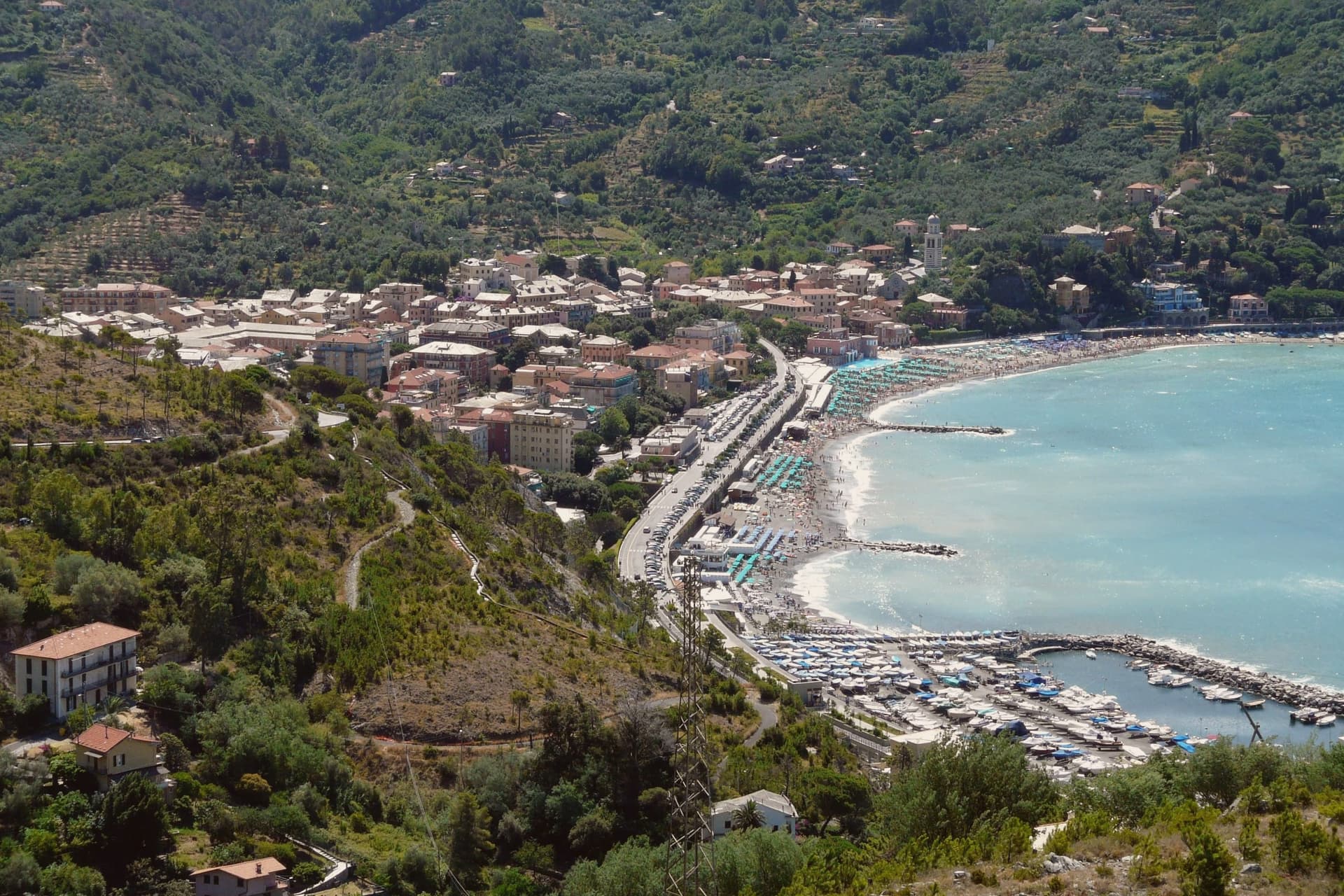
Levanto sits at sea level on the Ligurian coast, twenty kilometers northwest of La Spezia and just outside the Cinque Terre National Park. The Cinque Terre Express train stops here every half hour on its way to the five villages, but Levanto has the things they do not: a long sand-and-gravel beach with Bandiera Blu status, a flat centro storico, and a surf break that local guides classify as one of the few big-wave spots in Italy.
The Chiesa di Sant'Andrea, built in 1222, fronts the old town with horizontal bands of black and white marble and a large rose window. The thirteenth-century Loggia Comunale, on the same piazza, was awarded a UNESCO peace and culture title in 2007.
Casa Restani, on Via Grillo, is a surviving medieval merchant house with the ground floor where goods from the harbor were stored. Levanto holds Cittaslow, Bandiera Blu, Parco Nazionale, and Città dell'Olio at once.
We confirmed you can reach this one by train.
What to see in Levanto
- Chiesa di Sant'Andrea. Parish church built in 1222 in Ligurian Gothic style, with horizontal bands of black and white marble and a large rose window over the main door.
- Castello di Levanto. Thirteenth-century defensive castle on the hillside, still intact but privately owned and closed to the public.
- Loggia Comunale. Thirteenth-century arcaded loggia on the main piazza, awarded a UNESCO title in 2007 as a monument of culture and peace.
How to get to Levanto
There is a railway station in the town, so you can arrive without a car and never need one while you are here. Genova is roughly 72 minutes away by road.
Our tip
April through June and September into October are the dry months. The sea warms enough for swimming by late May. The surf builds in autumn and winter when Atlantic systems push swell into the gulf.
Vernazza
Why visit Vernazza
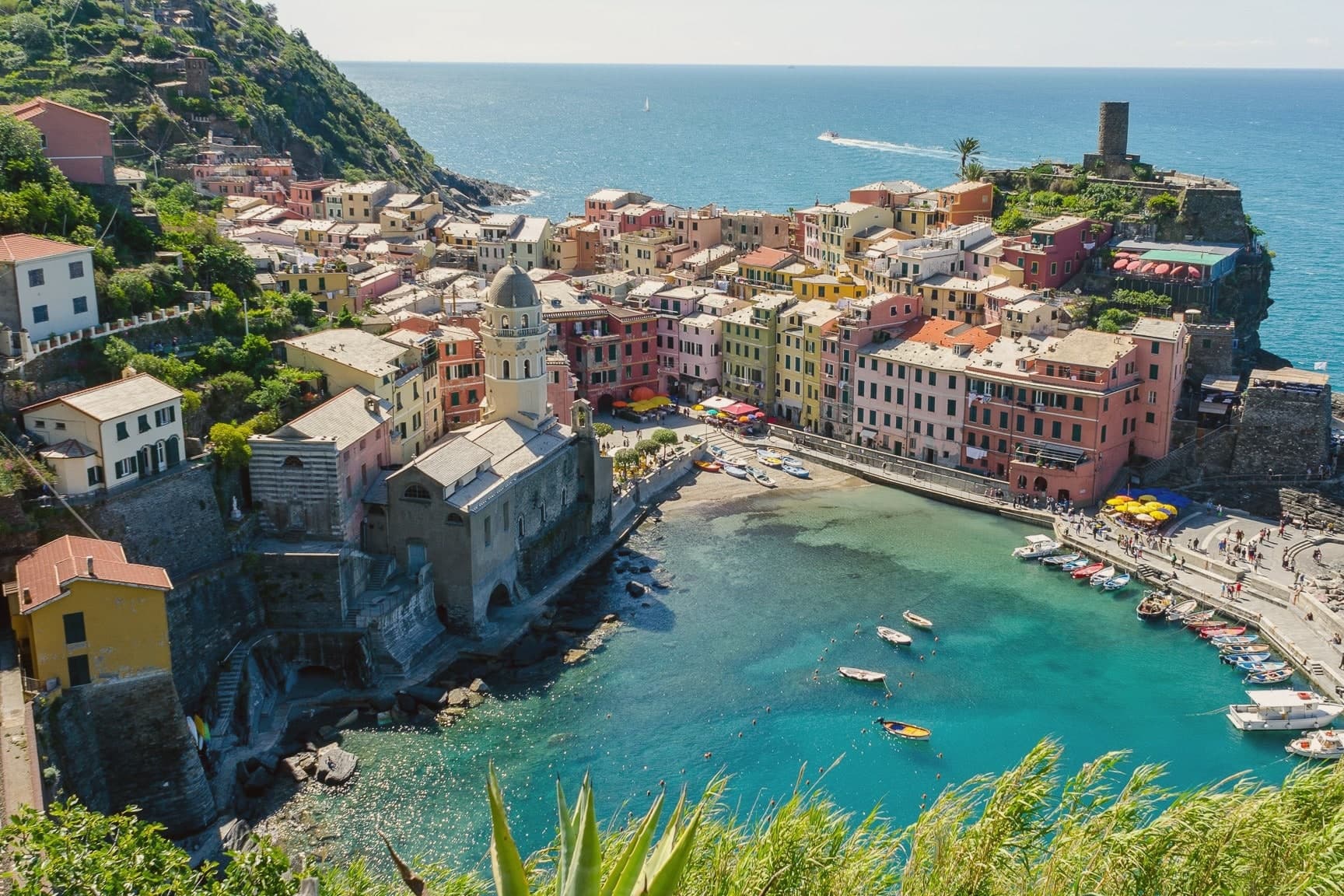
Vernazza sits at sea level, the middle of the five villages along this stretch of coast and the only one with a natural harbor. The houses stack vertically up the gorge of the Vernazzola torrent, painted in faded ochres and pinks, with the square at the harbor marking the seaward end of Via Roma and the social center of the village.
On 25 October 2011, a freak rainstorm dropped 22 inches of water in four hours. The torrent burst its culvert and buried the main street under four meters of mud and debris.
Three people died. The village was closed for months, and most of the houses on Via Roma had to be excavated to the second story before it reopened.
The harbor, the fortified height above it, and the terraced slopes behind form a single working shape: a landing place guarded from above and fed from the terraces, all of it packed into a gorge narrow enough that a few hours of rain could bury the street from end to end.
We confirmed you can reach this one by train.
What to see in Vernazza
- Castello Doria. The keep and the Belforte tower stand over the harbor, built by the Doria as a defense against Saracen raids.
- Chiesa di Santa Margherita d'Antiochia. Fourteenth-century church on a rock platform at the edge of the harbor, documented from 1318, the gothic anchor of the village.
- Porto di Vernazza. The only natural harbor in the Cinque Terre, with a small pebble beach and a ferry pier serving the four other villages and Portovenere.
How to get to Vernazza
There is a railway station in the town, so you can arrive without a car and never need one while you are here. Genova is roughly 101 minutes away by road.
✷ We have written about Vernazza
“The Cinque Terre are five towns with a national park around them and a marketing name that adds up to five. The copies without the name are a few miles away in either direction, and the experience they sell is the same experience, with the crowd divided by a hundred.”
Read our piece on Vernazza →Cinque Terre | How To Do It Right
Our tip
April through June and September into October are the right months in the Cinque Terre. The terraces green in spring, the Sciacchetrà and Vermentino harvest runs from August into early September, and the autumn light on the painted houses is what most photographers come for. July and August are full beyond capacity: ferries, trains and trails all hit limits, the harbor square loses any quiet, and the village rationed entry on the worst weekends of 2023 and 2024. Giochi Di Santa Margherita falls in July.
Monterosso al Mare
Why visit Monterosso al Mare
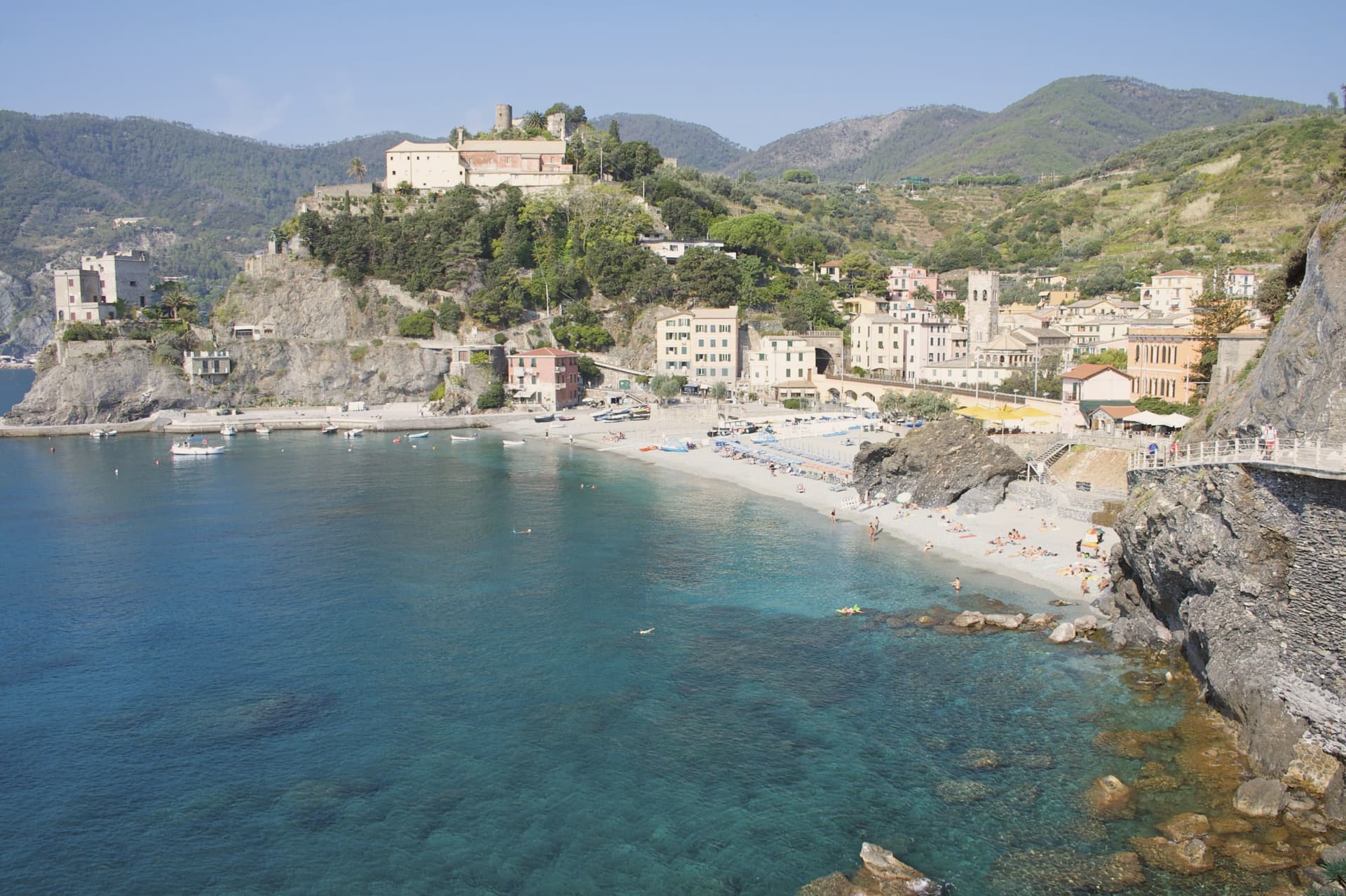
The village splits into two halves on either side of a headland: the older centro storico and, on the other side, the Fegina seafront where the railway runs behind the sand. The Capuchin convent looks out over both sides from that same headland, the hinge on which the whole layout turns.
Above the rooftops, at 464 meters, a hilltop sanctuary has stood on the same ground since 740, older than the village below it and the oldest Marian site in Liguria. The parish church down in the old town, banded in black and white marble, was built centuries later, so the two put a long stretch of the coast's religious history on display within sight of each other.
Montale's villa stood in Fegina, and the rocks and cliffs he carried into Ossi di seppia are the same ones visible from either half of the village. The geography here is the story: a headland dividing old from new, and a hillside holding the older of the two by several centuries.
We confirmed you can reach this one by train.
What to see in Monterosso al Mare
- Chiesa di San Giovanni Battista. Parish church built 1282-1307 with a black-and-white-banded marble façade and a fresco of the baptism of Christ over the main portal.
- Santuario di Nostra Signora di Soviore. Hilltop sanctuary at 464 meters above the village, occupied by a church since 740, the oldest Marian site in Liguria.
- Convento dei Cappuccini. Seventeenth-century Capuchin convent on the San Cristoforo headland, separating the centro storico from Fegina.
How to get to Monterosso al Mare
There is a railway station in the town, so you can arrive without a car and never need one while you are here. Genova is roughly 78 minutes away by road.
Our tip
April through June and September through October are the workable months. The Sentiero Azzurro is open, the sea warms from late May, and the village still moves at a manageable pace. July and August are difficult: the Cinque Terre regional system caps walking-path tickets but the centro storico still saturates, and trains arrive standing-room from La Spezia. Festa del Limone falls in May.
Sarzana
Why visit Sarzana
Sarzana sits on the Magra plain at the Liguria-Tuscany border, eighty kilometers from Parma and thirteen from the sea at Portovenere. The town inherited the episcopal seat of Luni in 1204, when Pope Innocent III moved it here away from the malarial plain, and the cathedral built for that new seat still anchors the centro storico.
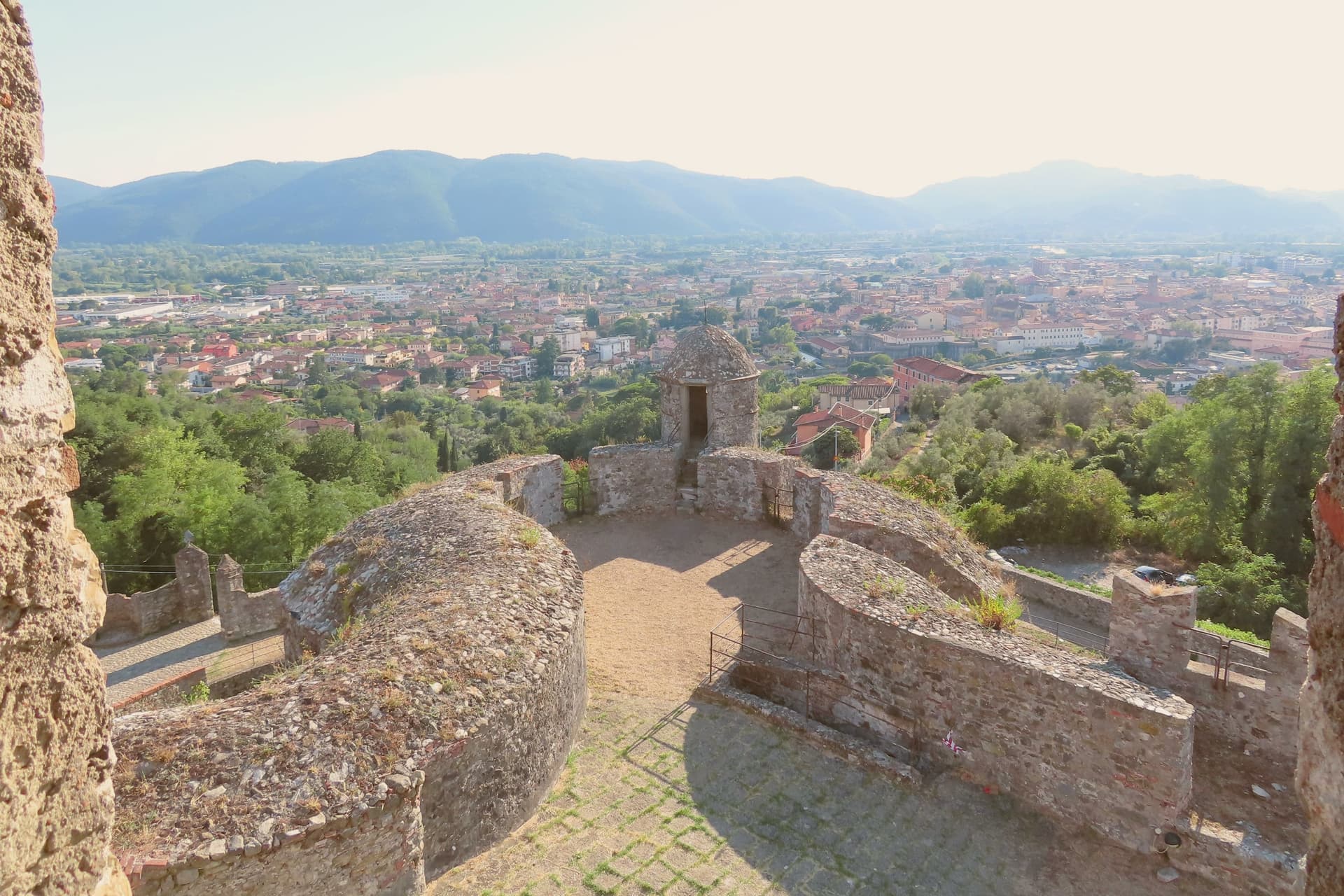
The walled center keeps its grid plan, with Via Mazzini and the cathedral square running through it and the Palazzo Roderio still doing duty as the town hall. Above the town, on a ridge, a second fortress with a triangular plan looks down on the plain and the older one below.
A future pope was born here in 1397. Between the hill fortress from the fourteenth century, the Renaissance rebuilding of the lower cittadella, and a cathedral that changed hands with a diocese, the town's layout reads as a record of who controlled the Magra plain and when.
We confirmed you can reach this one by train.
What to see in Sarzana
- Fortezza Firmafede. The fortress replaced a medieval cittadella on the same ground. Giuliano da Sangallo's plan survives largely intact, with the bulk and angles of the walls still readable from the approach into town.
- Cattedrale di Santa Maria Assunta. Late Gothic Tuscan cathedral, elevated to minor basilica in 1947. A cardinal born in the town, half-brother to a native-born pope, left his mark on the later additions.
- Croce di Mastro Guglielmo. The cross hangs inside the cathedral it has occupied since the seat moved here. Signed by its maker, it is the object the town's Romanesque reputation rests on.
How to get to Sarzana
There is a railway station in the town, so you can arrive without a car and never need one while you are here. Pisa is roughly 54 minutes away by road.
✷ We have written about Sarzana
“It has the best panorama in Liguria, full stop, and I do not think it is close. The reasons are two. The first is the obvious one. You are 266 meters up, the cliff is high enough that there is no rocky beach below to draw a crowd, the sea on one side is the Gulf of La Spezia with Portovenere across the water and the Cinque Terre fading north, and the view on the other side is the Magra running into its delta with the white Apuane behind it and Tuscany beyond.”
Read our piece on Sarzana →Magra Delta Roadtrip | A Tagine, a Lighthouse, and a Dead Roman City
Our tip
April through June and September into October are the strongest months for the centro storico, with the Festival della Mente filling the squares at the end of August. July and August are hot on the Magra plain, often 32 to 35 degrees; the Fortezza Firmafede holds courtyard concerts in the evenings. The town stays open year-round because it is a working provincial center of 21,650 residents, with daily markets and trains to La Spezia, Pisa, and Parma. Marinella Fish Festival falls in August.
More from Anywhere Italy
- The best hidden coastal towns in the province of La Spezia
- The best small coastal towns you can reach by train in Liguria
- The best towns with a serious restaurant in the province of La Spezia
- The prettiest villages in the province of La Spezia
 The 10 prettiest villages you can reach by train within 90 minutes of Genova
- The 9 best small towns you can reach by train that eat well within 90 minutes of Genova