
The 8 best small towns worth staying overnight in Lombardia
Lombardia rewards the traveller who stops moving. Lake water goes flat and metallic at dusk, the ferries stop, and the lakefront villages exhale once the last coach has gone. In the mountains behind, at the top of the Valtellina and along the limestone wall of the Presolana, the air turns cold in the evening even in August, and dinner runs to pizzoccheri, buckwheat and cabbage and mountain cheese, or lake perch with rice and butter and sage. The houses are stone and stucco painted ochre and dusty pink, with slate roofs on the high ones and arcaded porticoes down by the water.
Most people give the region a day at most. Como city takes the train crowd off the Milan line and empties them onto the boats; Sirmione takes the Garda crowd, funnelling them through a castle gate and along a peninsula that has nowhere to put them. Both are good and both are visited in the narrow window between late morning and mid afternoon, which is when they are least worth seeing. Then everyone returns to Milan for the night, and the whole lake gets handed back to itself at exactly the hour it looks best.
The same water, the same terraced hillsides and the same mountain valleys carry on well past the famous stop. Ferries keep going up the western branch of Como and across to the quieter eastern shore; the Garda road keeps climbing north under cliffs towards the Trentino border; the roads out of Bergamo and Sondrio keep rising into thermal spa towns and ski valleys. The towns here are the smaller ones along those routes, and each has a hotel a travel guide has vouched for, which is the practical point. You can sleep in them.
Of the 65 communes we have mapped in Lombardia, 12 qualify as towns worth staying overnight: each has a hotel a travel guide has vouched for, so you can stay rather than day-trip. This list is the small ones, 8 in all, ordered smallest first. The smallest, Torno, has 1,086 residents.
Elsewhere in the catalogue: The 8 best lake towns worth staying overnight in Lombardia and The best small lake towns that eat well in Lombardia.
Torno
Why visit Torno
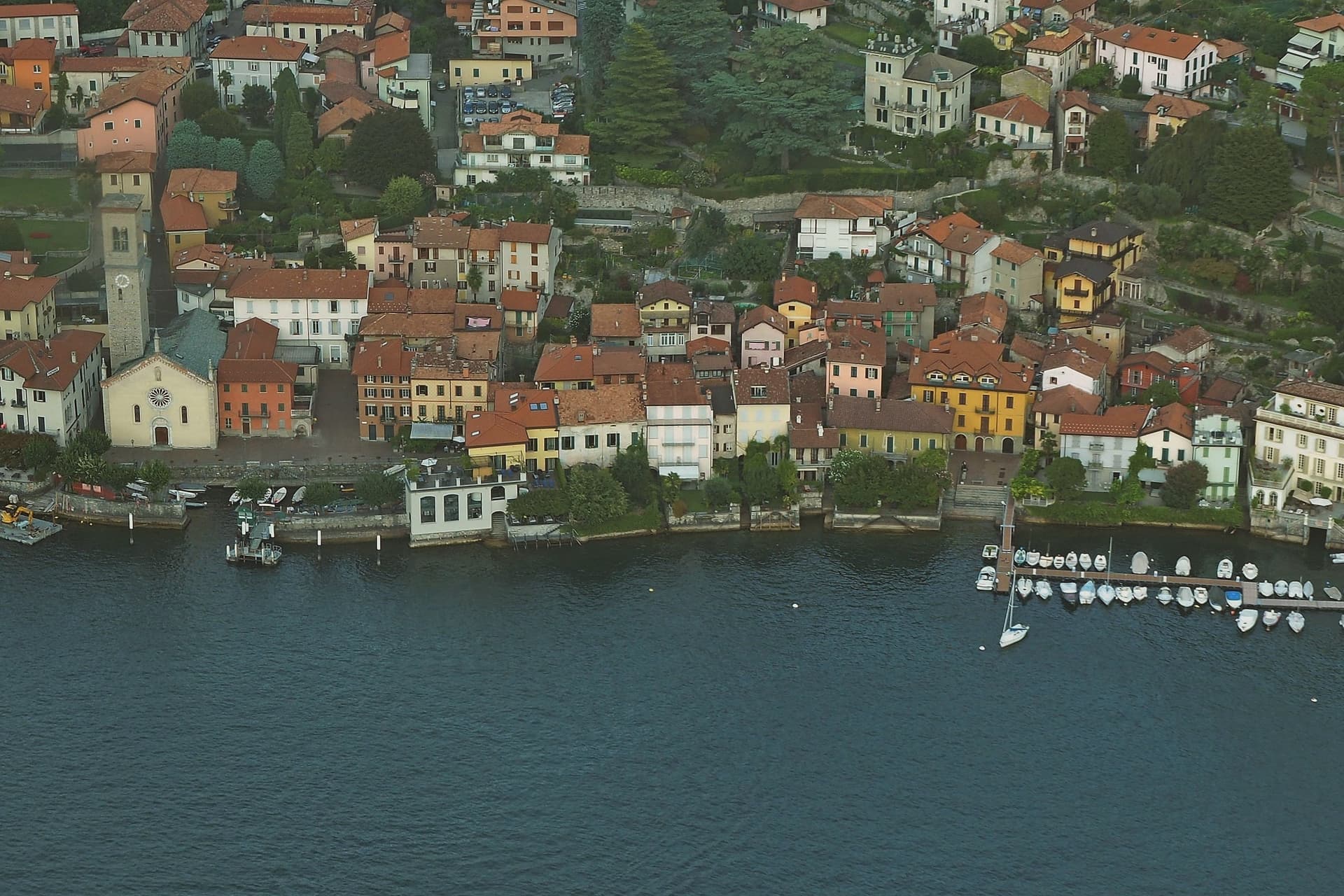
Torno sits on the eastern shore of Lake Como, five kilometres north of the city of Como and forty-five from Milan. The village climbs in narrow lanes from the small port up the steep slope behind it, a core compact enough to cover on foot in fifteen minutes.
Above the village stands a second, older church, its marble portal carved by the Maestri Comacini in the 16th century, a quieter counterpart to the more elaborate church below near the port. The church nearer the port was first mentioned in 1208, in correspondence between Pope Innocent III and the abbot of Sant'Abbondio of Como, and its Romanesque bell tower predates the rest of the structure, including the rose window, frescoes and 1480 portal added later.
Outside the built-up part of the village, at the lake edge, the villa grounds hold the spring at the centre of the town's reputation, and the villa itself has passed through a long list of owners since it was built. The village, in other words, is arranged around two poles: a compact inhabited core stacked on the hillside above its harbour, and an isolated lakeside property outside it that has drawn attention, scientific and otherwise, for far longer than the village itself has been documented.
What to see in Torno
- Chiesa di Santa Tecla. Romanesque-Gothic church first documented in 1208, with a Gothic rose window, statue niche and entrance dated 1480.
- Chiesa di San Giovanni Battista. Romanesque parish church above the village, with a marble portal carved by the Maestri Comacini in the 16th century.
- Villa Pliniana. Villa at the lake's edge built by Giovanni Anguissola, its grounds enclosing the spring that rises and falls on a rhythm Pliny the Younger recorded and that later drew Leonardo to study it.
How to get to Torno
Monza is roughly 56 minutes away by road.
Our tip
April through October is Torno's open season. Spring brings the Pliniana gardens into bloom and the rhythmic spring back to its summer pattern. May and June are the cleanest months for the lake light and the walk up to San Giovanni Battista.
Limone sul Garda
Why visit Limone sul Garda
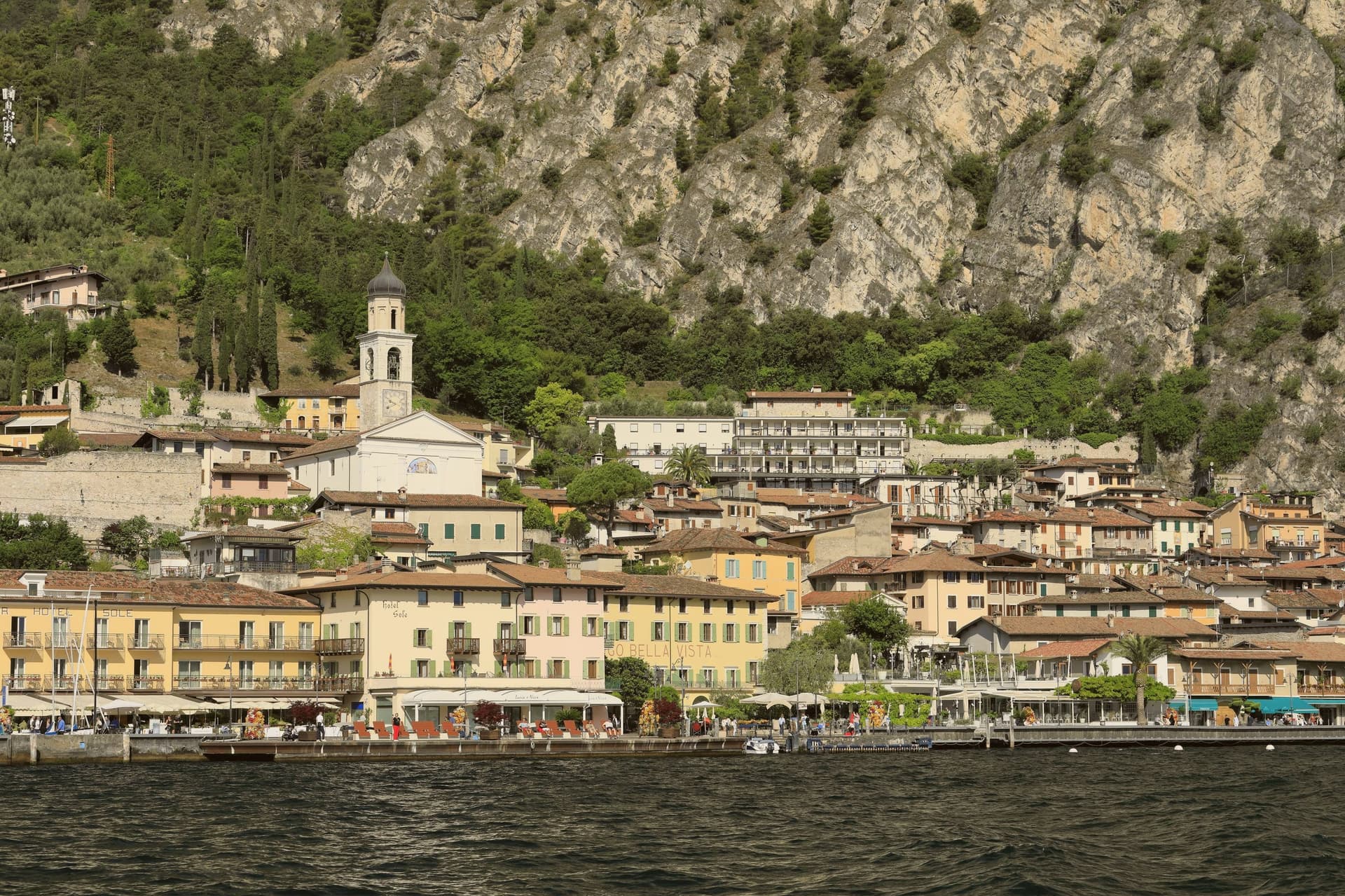
Limone sul Garda sits on the western shore of Lake Garda at the foot of vertical limestone cliffs, the northernmost commercial lemon-growing town in the world at almost 46 degrees north. The Latin limes, meaning border, gave the place its name; the Bettoni counts gave it its industry.
From the seventeenth century, limonaie, stone-pillared greenhouses heated and covered through winter, allowed lemons to be exported to Austria, Germany, Poland and Russia. The road to Riva del Garda, the Gardesana Occidentale, was carved into the cliff and finished in 1932; until then the town reached the outside world by boat or mule track.
In 1974 a Milanese pharmacologist traced a mutant apolipoprotein, ApoA-1 Milano, to a single eighteenth-century resident, Giovanni Pomarelli. Roughly forty of his descendants in town carry the variant, which suppresses cardiovascular disease and helps a handful of residents past one hundred.
What to see in Limone sul Garda
- Limonaia del Castèl. Restored seventeenth-century lemon greenhouse on stone pillars above the lake, demonstrating the heated wooden cover that protected the trees through winter.
- Chiesa di San Benedetto. Eighteenth-century parish church on the lake front, with a single nave and Baroque altars rebuilt over an older medieval foundation.
- Centro storico. Tight grid of stone alleys between the old harbour and the cliff, with narrow porticoes that survive from the pre-road fishing and citrus village.
How to get to Limone sul Garda
Trento is roughly 57 minutes away by road.
Our tip
April through June and September into October are the months that suit Limone. The lake holds spring temperatures, the lemons flower, the cliff above the town keeps morning shade until noon. July and August fill the lakefront and the cycle path, with peak crowds on weekends drawn from Verona, Milano and German-speaking Europe.
Gardone Riviera
Why visit Gardone Riviera
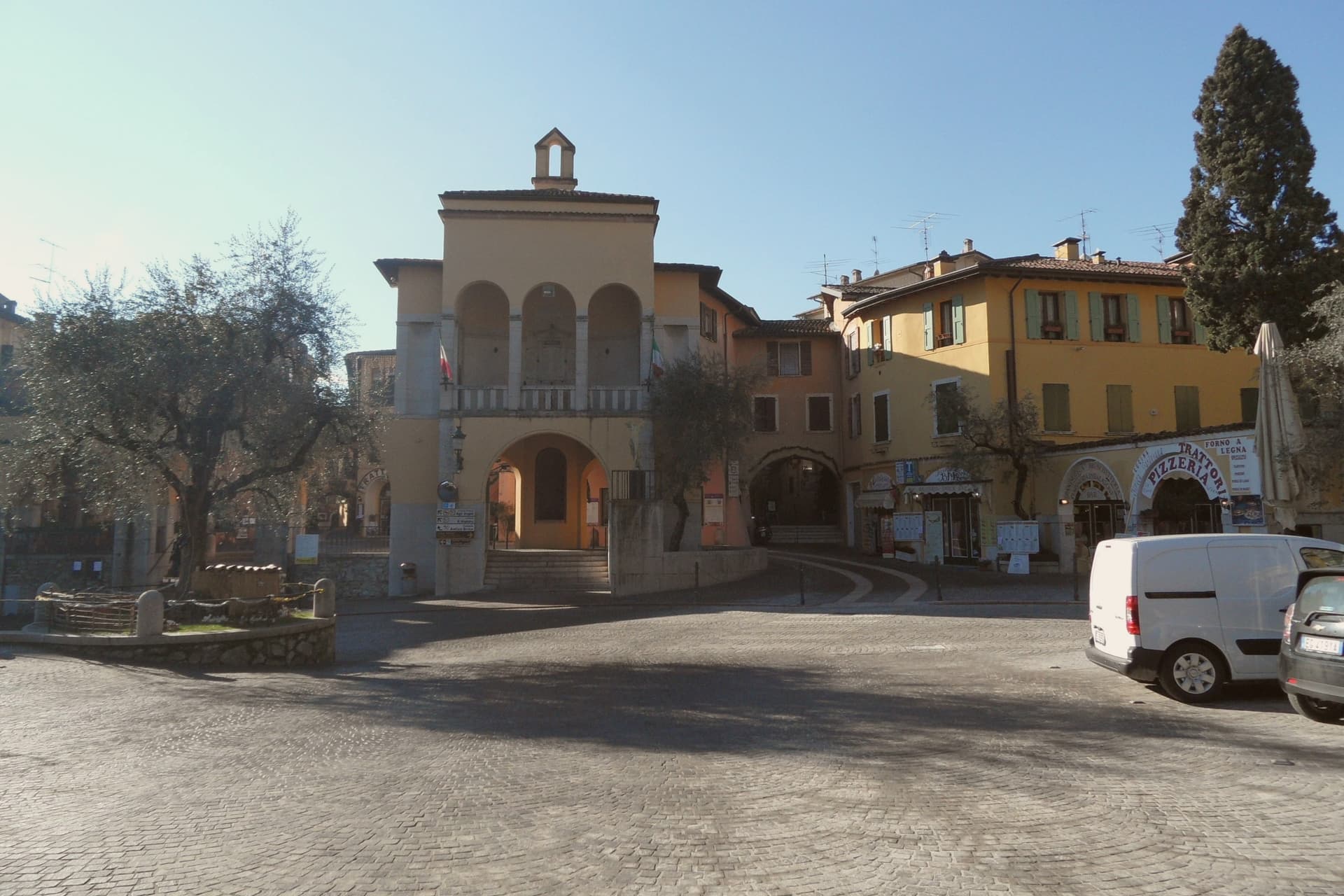
Gardone Riviera sits at 71 meters on the western shore of Lake Garda, in the province of Brescia. The lake here runs deep against the wall of Monte Pizzocolo, and the climate stays mild enough that lemons, olives and bamboo grow within walking distance of each other.
The town divides between the lakefront and the hill above it. Along the water, Gardone Sotto holds the promenade and harbour; above the centro storico, the ground rises toward the estate grounds and, further up, toward the garden that has drawn on the same mild hillside climate since the start of the twentieth century.
The boathouse on the estate holds a torpedo boat from a 1918 wartime raid, alongside the villa called the Prioria, an amphitheatre and a circular mausoleum. The garden above town spent six decades being arranged, one man working a single hillside into bamboo groves, alpine ravines, Japanese ponds and waterfalls.
The lakefront promenade carries the Bandiera Blu. What holds the town together is that division of altitude: a working lakefront below, and above it two hillside projects, one architectural and one botanical, each built slowly and by a single hand over decades on the same slope.
What to see in Gardone Riviera
- Vittoriale degli Italiani. Nine-hectare hillside estate occupied by Gabriele D'Annunzio from 1922 to 1938, with villa, amphitheatre, mausoleum and the cruiser Puglia.
- Nave Puglia. Protected cruiser of the Regia Marina set into the slope above the lake, gifted to D'Annunzio in 1923 and assembled on land at the Vittoriale.
- Giardino Botanico Hruska (Heller Garden). Botanical garden begun around 1901 by Arturo Hruska, with bamboo, Japanese ponds, alpine ravines and waterfalls on a single hillside.
How to get to Gardone Riviera
Brescia is roughly 53 minutes away by road.
Our tip
April through June and September into October are the months western Garda works best. The Vittoriale grounds are walkable, the Heller Garden is in full bloom, and the ferry between Salò and Riva del Garda runs regular service. July and August fill the lakefront with day-trippers and the Vittoriale amphitheatre hosts its summer opera season; afternoons get warm but the lake breeze holds steady.
Menaggio
Why visit Menaggio
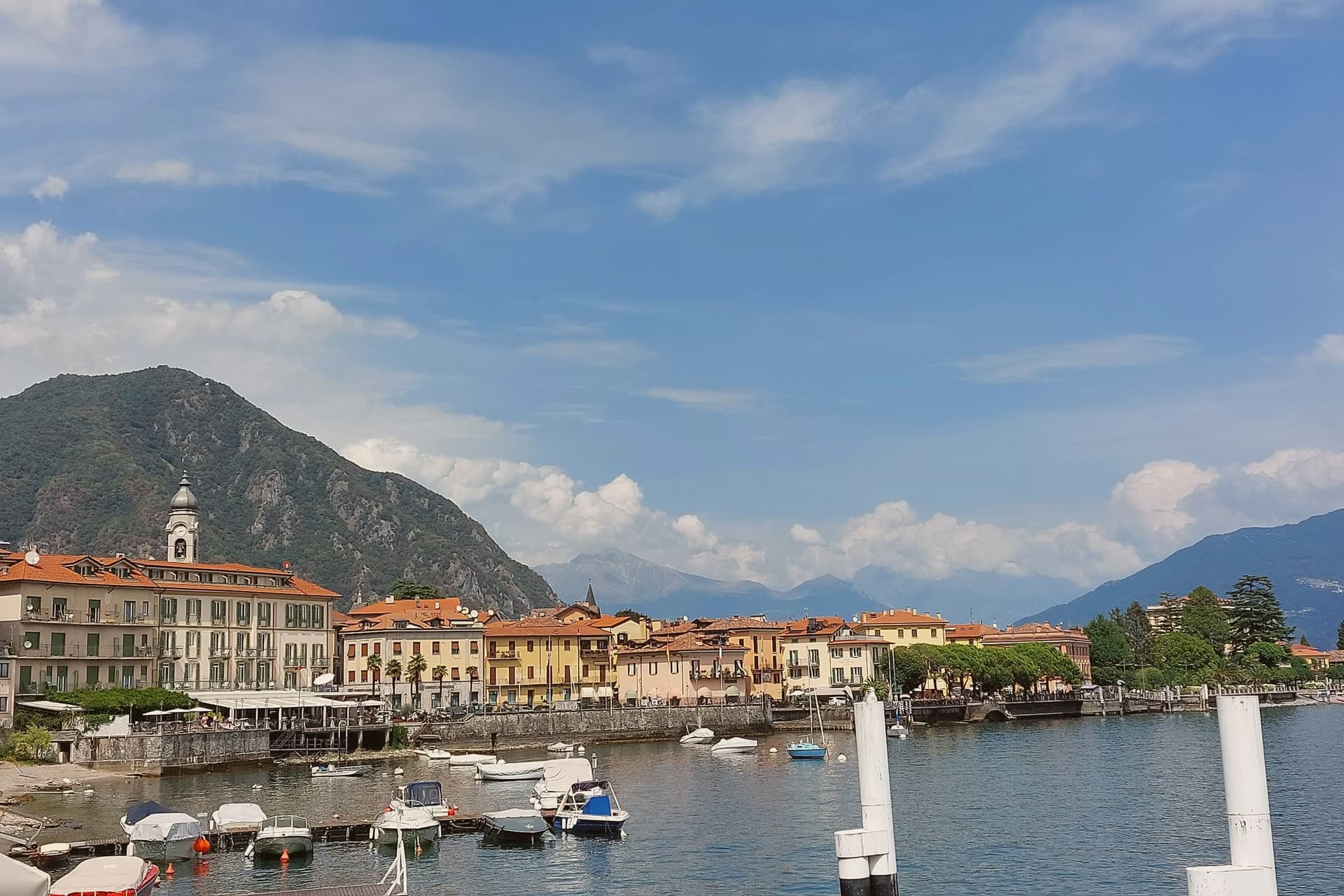
Menaggio sits on the western shore of Lake Como at the mouth of the river Senagra, the point where the lake narrows enough for ferries to fork toward Bellagio and Varenna on the opposite shore. Prehistoric finds in the territory go back to before the Gallic tribes that settled here in the fourth century BC; the Romans absorbed them and built the Via Regina, the lakeside road from Como north toward the Splügen.
The medieval castle above the Senagra torrent dates to the 10th century and was destroyed in 1523 by the Grigioni, leaving only the towers, the walls and the bridge. The Chiesa di San Carlo was built on its ruins between 1612 and 1614.
The town's later identity is the 19th-century summer resort: a mild climate, lake views across to the Grigne, and villas like Mylius-Vigoni in the Loveno hamlet, now run as a German-Italian centre for European dialogue.
What to see in Menaggio
- Piazza Garibaldi. The main lakefront square, café tables under arcades, ferry pier on one side and the medieval centre rising behind.
- Resti del Castello di Menaggio. 10th-century castle remains, destroyed in 1523, leaving the two towers, sections of wall and a bridge over the Senagra.
- Chiesa di San Carlo. Built 1612 to 1614 by Cinzio Calvi on the ruins of the destroyed castle, in the hamlet of Castello above the torrent.
How to get to Menaggio
Monza is roughly 87 minutes away by road.
Our tip
April through October is the working season on Lake Como, and Menaggio runs on it. May and June bring the gardens of Villa Mylius-Vigoni into bloom and the ferry timetables expand. July and August are crowded and warm, with day-trippers off the Bellagio crossing filling Piazza Garibaldi from late morning.
Castione della Presolana
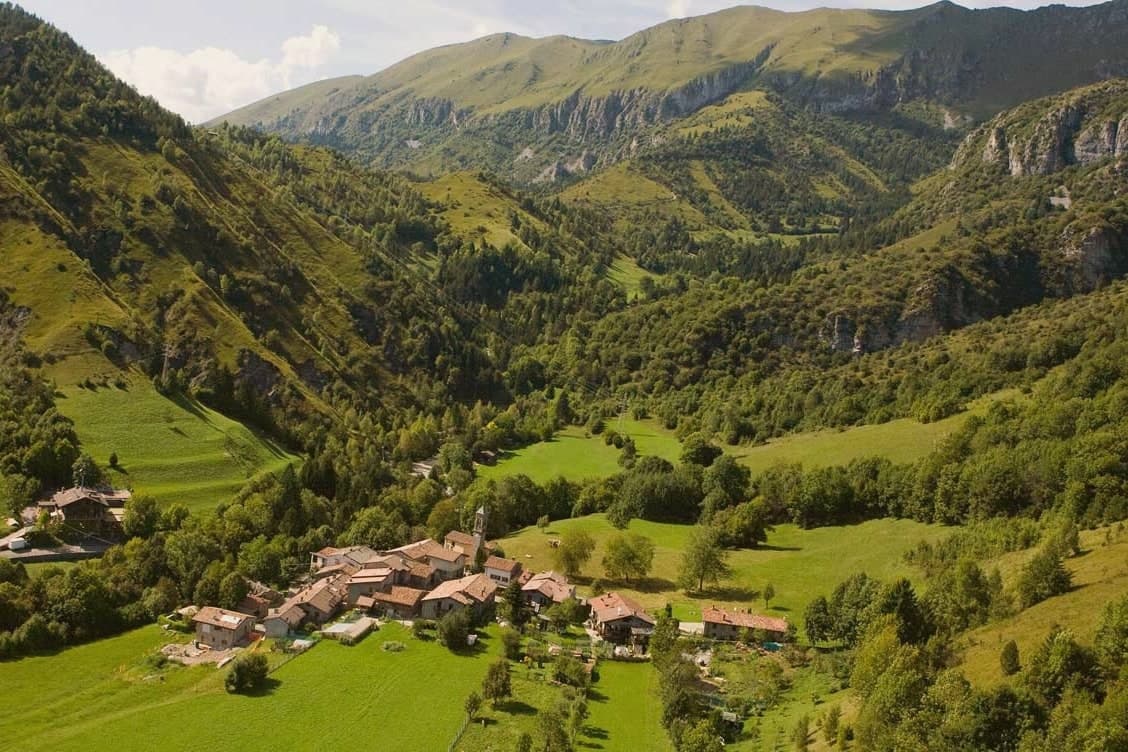
Why visit Castione della Presolana
The territory is broad, 42 square kilometres, and it climbs from the 780-metre Gera stream up through the pass at 1,297 metres to the summit ridge above. Tombs from the Neo-Eneolithic period have been recovered on the slopes, evidence of how long this ground has been worked and crossed.
Rusio still keeps its medieval agricultural layout, narrow streets and rural houses gathered around a small church with a wooden altar, a lower and older counterpart to the hamlets higher on the mountain. Bratto and Dorga, at roughly 1,000 metres, took the opposite path: built up as summer resorts at the start of the 20th century, their streets still carry the villas that Bergamasco industrialists put up for their own summer use.
The commune holds the Bandiera Arancione of the Touring Club Italiano, the inland equivalent of a Bandiera Blu, awarded for keeping both the peasant village below and the mountain environment above intact. Together the two settlements show a single territory read in two directions: one preserved because it was left alone, the other because it was deliberately built for leisure.
What to see in Castione della Presolana
- Pizzo della Presolana. Dolomite-type limestone gives the southern face its sheer walls and climbing routes, the same rock mass that stands over the whole commune.
- Chiesa di Sant'Alessandro. Parish church in the historic centre, with a marble altar carved with figurative sculptures.
- Chiesa di San Rocco. Smaller village church holding fragments of ancient frescoes.
How to get to Castione della Presolana
Bergamo is roughly 49 minutes away by road.
Our tip
May through October is the main season for Castione della Presolana. Trails open through the Orobie pre-Alps, the Passo della Presolana is clear, and the limestone walls of the Pizzo dry out for climbers. July and August bring Bergamo and Milan families up to Bratto and Dorga, where the temperatures stay ten degrees cooler than in the city.
Bellagio
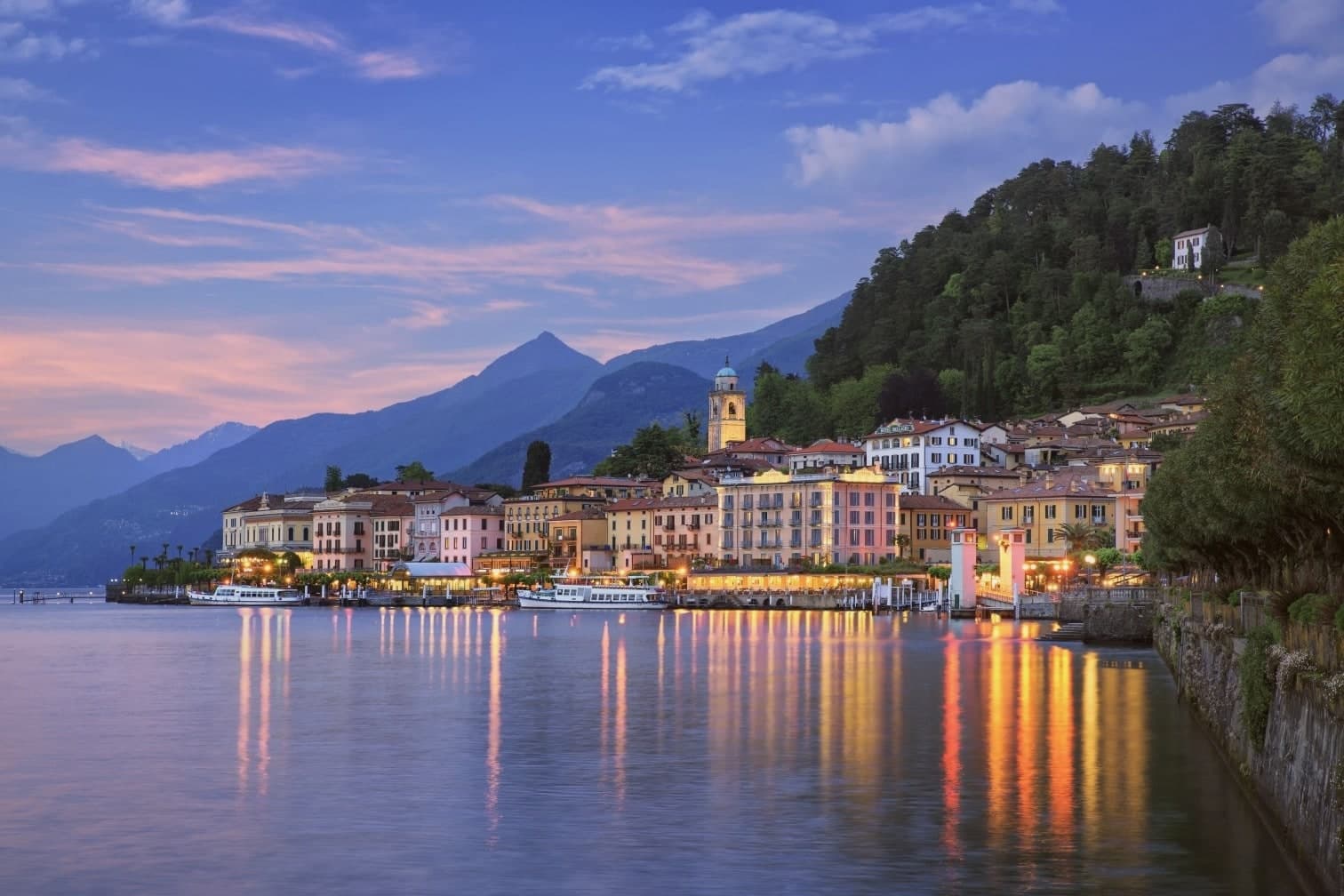
Why visit Bellagio
Bellagio sits on the promontory that divides Lake Como into its three arms, the Como branch to the west and the Lecco branch to the east, with the upper lake running north. Paleolithic settlement traces date back 30,000 years, and an Iron Age castellum stood on the high point around 600 BC.
From the late 13th century the Visconti incorporated Bellagio into the Duchy of Milan. Villa Serbelloni was built in the 15th century on the site of an old razed castle and rebuilt several times; in 1788 Alessandro Serbelloni filled it with 17th- and 18th-century art, and in 1959 the Rockefeller Foundation took ownership, turning the villa into an international conference center.
Villa Melzi, built on the western shore by Francesco Melzi d'Eril (Vice President of Napoleon's Cisalpine Republic), made the village a fashionable summer station for Milanese nobility in the early 1800s.
What to see in Bellagio
- Villa Serbelloni. Fifteenth-century villa on the high promontory, owned by the Rockefeller Foundation since 1959, with gardens open by guided tour only.
- Villa Melzi. Early 19th-century neoclassical villa built by Francesco Melzi d'Eril on the western shore at Loppia, with public botanical gardens along the lake.
- Punta Spartivento. Northern tip of the promontory where the lake splits in three, with a park, marina, and panoramic view up the Bellagio branch.
How to get to Bellagio
Monza is roughly 55 minutes away by road.
Our tip
April through October is the season. April and May bring camellias and rhododendrons at Villa Melzi, the lake is mild but not warm, and the ferries run a partial timetable. June through August fills the village with day-trippers, the Salita Serbelloni packs by ten in the morning, and the lakeside trattorie reserve weeks ahead.
Bormio
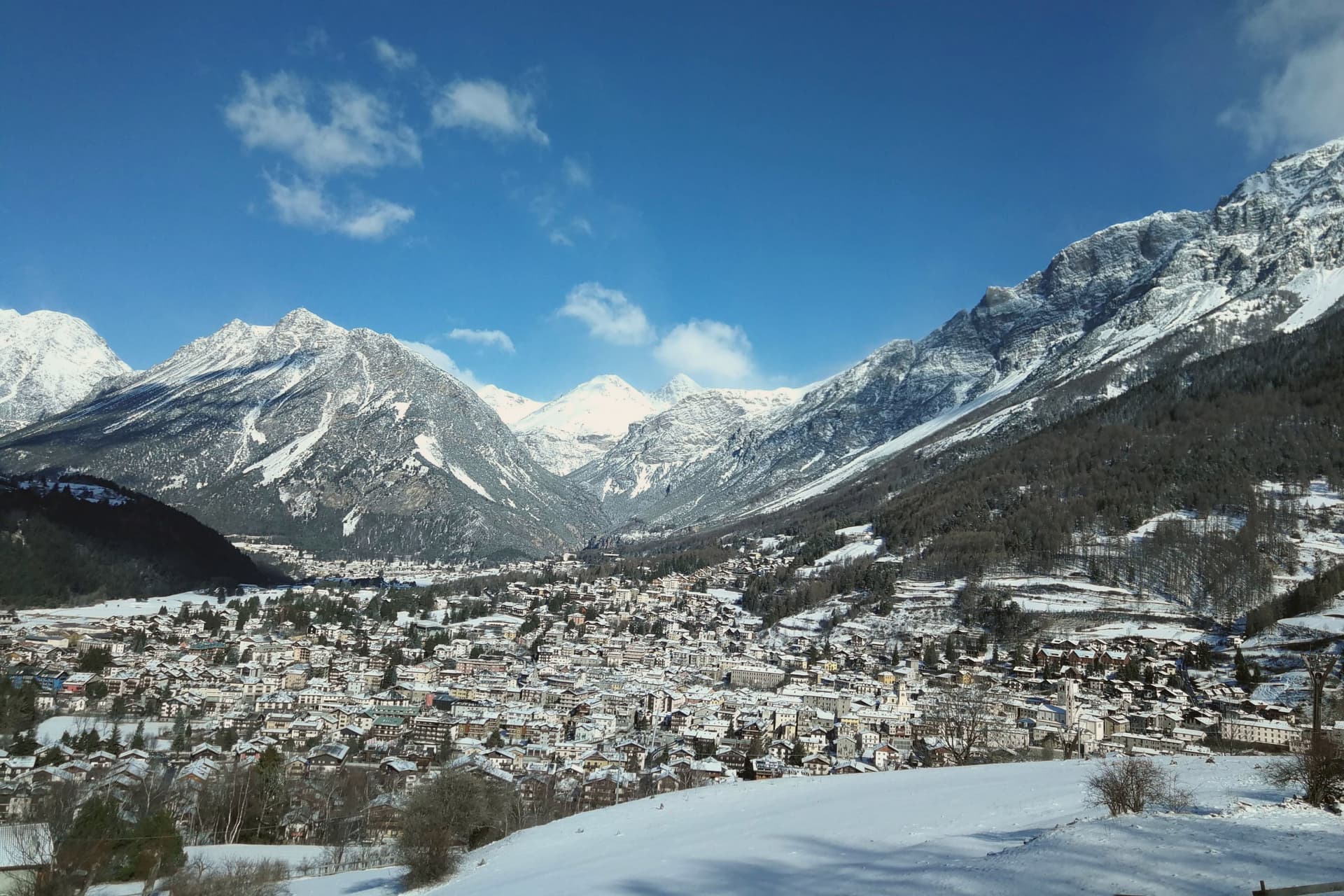
Why visit Bormio
Bormio sits at 1,225 meters in upper Valtellina, at the junction where three high passes, the Stelvio, the Gavia, and the Mortirolo, converge inside the Stelvio National Park. The park ranges from 650 to 3,905 meters, and the springs that feed the town's baths rise separately at 1,420 meters, well above the settlement itself, before being carried down to the three thermal centres: QC Terme Bagni Vecchi, QC Terme Bagni Nuovi, and Bormio Terme.
The town's layout follows this same split between high and low. The Bagni Vecchi sit above the town in caves cut into the rock, closer to the mountain than to the streets, while the medieval center, the Kuerc, with its ninth-century podestà building, holds the civic and commercial life down in the commune itself.
The pass road above, meanwhile, belongs to a separate register entirely, an engineered climb rather than a settled place. What holds Bormio together is this vertical arrangement: water, rock, and road stacked above a small alpine commune that has stayed the administrative and social center while the mountain around it accumulated separate identities, as thermal ground, as national park, as pass, as ski slope.
What to see in Bormio
- QC Terme Bagni Vecchi. Stone rooms and caves above the town, where the same water has run over Roman-era construction for two thousand years.
- QC Terme Bagni Nuovi. Belle Époque thermal complex below the Bagni Vecchi, with outdoor pools facing the Alpine peaks and the Valtellina valley.
- Kuerc e Palazzo del Podestà. Medieval civic center of Bormio, the Kuerc loggia and the ninth-century Podestà building in the heart of the centro storico.
How to get to Bormio
Bolzano is roughly 119 minutes away by road.
Our tip
December through March is the season Bormio was built for, with the Cima Bianca lifts open, the Stelvio downhill course hosting the men's World Cup, and the Bagni Vecchi running outdoor thermal pools against the snow. June through September is the second season: 1,225 meters keeps the air cool when the plain hits thirty-five, the Stelvio Pass road is open for bikes and cars, and the National Park trails are dry. April, May, October, November are the shoulder months.
Tremezzina
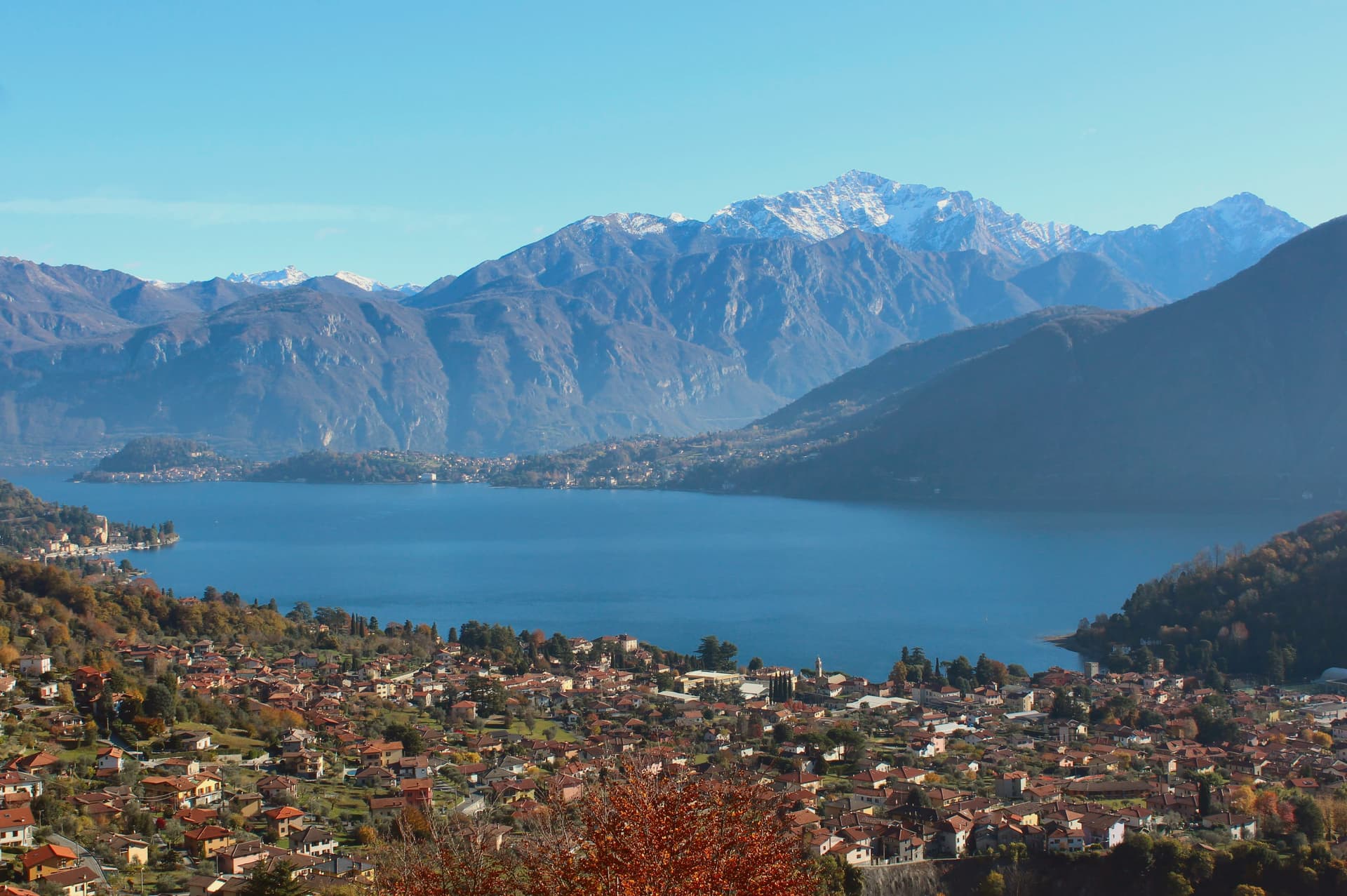
Why visit Tremezzina
Tremezzina was created on 25 May 2014 from the merger of Lenno, Mezzegra, Ossuccio and Tremezzo, four villages along the central western shore of Lake Como facing Bellagio. The new comune holds Villa Carlotta, built in the late 1600s for the Marquis Giorgio Clerici and later named for Princess Carlotta who received it in 1850, with seventeen acres of gardens and one of the great rhododendron collections in Italy.
Isola Comacina, the lake's only island, was the wealthiest place on the lake before Como's destruction of it in 1169; nothing has been built there since, and it is now an archaeological site. The Sacro Monte di Ossuccio is one of nine Lombard and Piedmontese Sacri Monti inscribed by UNESCO in 2003: fourteen Baroque chapels built between 1635 and 1710, climbing the prealpine slope two hundred meters above the lake to a sanctuary of 1532.
Mussolini was captured in Dongo north of here and shot in Giulino di Mezzegra on 28 April 1945; the black cross by the road still marks the spot.
What to see in Tremezzina
- Villa Carlotta. Late seventeenth-century villa built for the Marquis Giorgio Clerici, with seventeen acres of gardens, more than 150 rhododendron and azalea species, and a sculpture collection.
- Isola Comacina. Lake Como's only island, the wealthiest medieval settlement on the lake until its destruction by Como in 1169, now an archaeological site.
- Sacro Monte di Ossuccio. UNESCO site of fourteen Baroque chapels built 1635-1710, climbing two hundred meters above the lake to the Beata Vergine del Soccorso sanctuary of 1532.
How to get to Tremezzina
Monza is roughly 83 minutes away by road.
Our tip
April through October is the working season on the central lake. April, May and September into October are the strongest: the rhododendrons and azaleas of Villa Carlotta peak in late April, the lake holds afternoon warmth without humidity, the Greenway is open and dry. July and August are full: ferries between Bellagio and Tremezzo run at capacity, parking near Villa Carlotta is gone by ten, and the Sacro Monte climb sits in the afternoon shade.
More from Anywhere Italy
- The 8 best lake towns worth staying overnight in Lombardia
 The best small lake towns that eat well in Lombardia
 The best small towns with a serious restaurant in Lombardia
 The 6 prettiest small villages that eat well in Lombardia
 The best small towns inside a nature park in Lombardia
- The 8 best lake towns within 90 minutes of Monza