
The 8 best lake towns worth staying overnight in Lombardia
The lakes of Lombardia are a landscape of stone and water: villas of pale plaster and wrought iron, olive terraces climbing behind Garda's western shore, ferry pontoons creaking against the swell of the last boat. Kitchens here cook lake fish, missoltini dried in the sun on Como, tench and perch risotto on Iseo, all of it drunk with wine from the Valtellina or the Franciacorta hills. Spring brings the camellias and azaleas out in the villa gardens, and late September brings warm water with a thinner crowd. Houses are built of grey Moltrasio stone and lime render, painted ochre and dusty pink, stacked in narrow lanes that run straight down to the shore.
Most people arrive by day. Coaches come out from Milan, they park up in Como town, everyone walks the lakefront promenade, takes the funicular to Brunate, buys silk, and is back on the motorway before dinner. It is an efficient way to see a lake and a poor way to know one. The town works hard under that pressure, and the hours it looks best, early morning and after sunset, are precisely the hours the day visitor is elsewhere.
The shoreline does not stop at the famous stretch. The same water, the same ferries and the same mountain backdrop continue up both branches of Como and along the Garda coast, past headlands and lemon houses and gardens laid out for people who intended to stay. The towns here have rooms: grand hotels in old villas, small places above a harbour, a handful vouched for by travel guides that do not hand out entries lightly. Staying overnight is the whole point of them.
Of the 65 communes we have mapped in Lombardia, 8 qualify as lake towns worth staying overnight: each sits on a lake shore, and each has a hotel a travel guide has vouched for. The smallest, Torno, has 1,086 residents.
If you are still choosing, we have also written The 8 best small towns worth staying overnight in Lombardia and The best small lake towns that eat well in Lombardia.
Torno
Why visit Torno
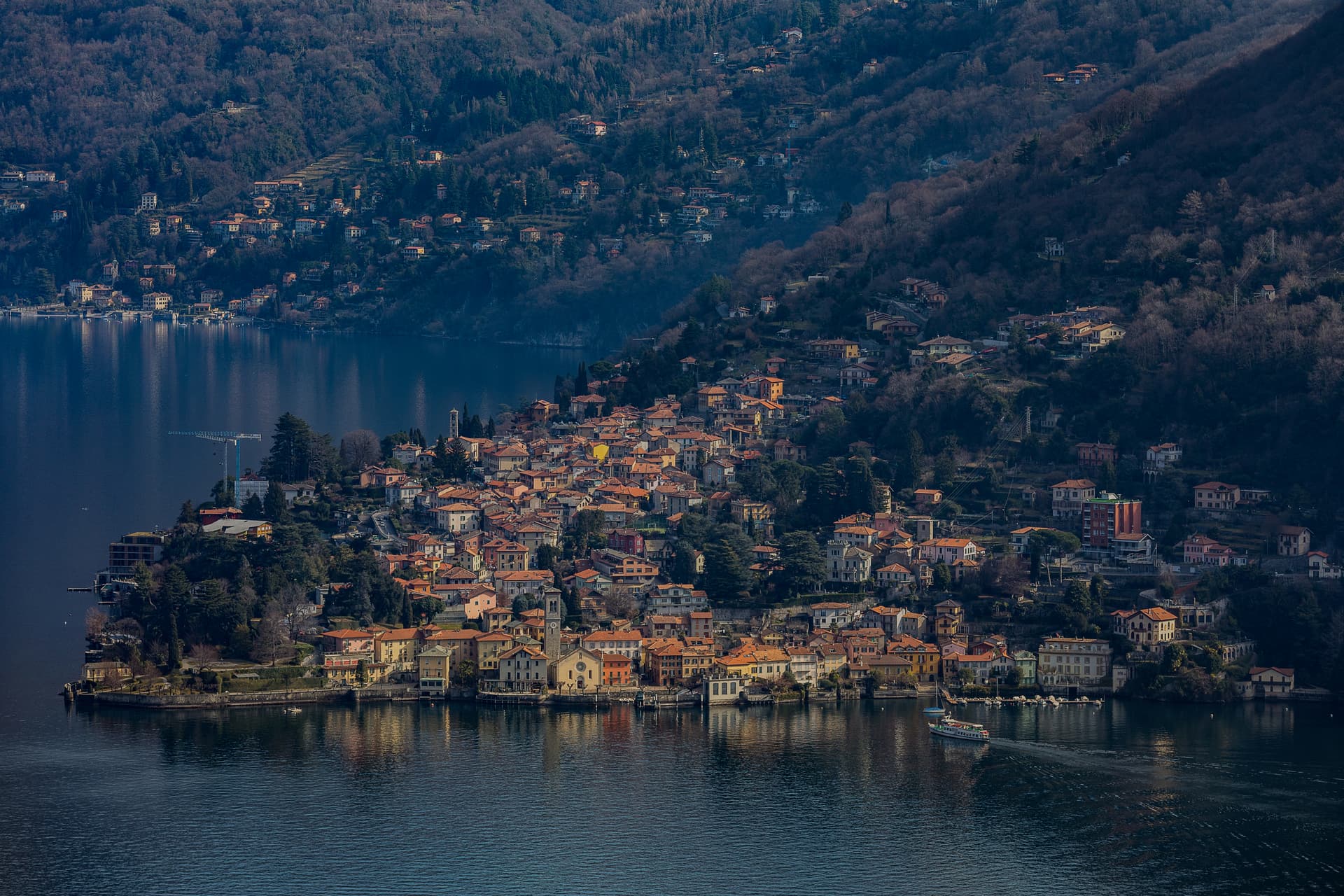
Torno sits on the eastern shore of Lake Como, five kilometres north of the city of Como and forty-five from Milan. The village climbs in narrow lanes from the small port up the steep slope behind it, a core compact enough to cover on foot in fifteen minutes.
Above the village stands a second, older church, its marble portal carved by the Maestri Comacini in the 16th century, a quieter counterpart to the more elaborate church below near the port. The church nearer the port was first mentioned in 1208, in correspondence between Pope Innocent III and the abbot of Sant'Abbondio of Como, and its Romanesque bell tower predates the rest of the structure, including the rose window, frescoes and 1480 portal added later.
Outside the built-up part of the village, at the lake edge, the villa grounds hold the spring at the centre of the town's reputation, and the villa itself has passed through a long list of owners since it was built. The village, in other words, is arranged around two poles: a compact inhabited core stacked on the hillside above its harbour, and an isolated lakeside property outside it that has drawn attention, scientific and otherwise, for far longer than the village itself has been documented.
The town sits on the water, at 225 metres.
What to see in Torno
- Chiesa di Santa Tecla. Romanesque-Gothic church first documented in 1208, with a Gothic rose window, statue niche and entrance dated 1480.
- Chiesa di San Giovanni Battista. Romanesque parish church above the village, with a marble portal carved by the Maestri Comacini in the 16th century.
- Villa Pliniana. Villa at the lake's edge built by Giovanni Anguissola, its grounds enclosing the spring that rises and falls on a rhythm Pliny the Younger recorded and that later drew Leonardo to study it.
How to get to Torno
Monza is roughly 56 minutes away by road.
Our tip
April through October is Torno's open season. Spring brings the Pliniana gardens into bloom and the rhythmic spring back to its summer pattern. May and June are the cleanest months for the lake light and the walk up to San Giovanni Battista.
Limone sul Garda
Why visit Limone sul Garda
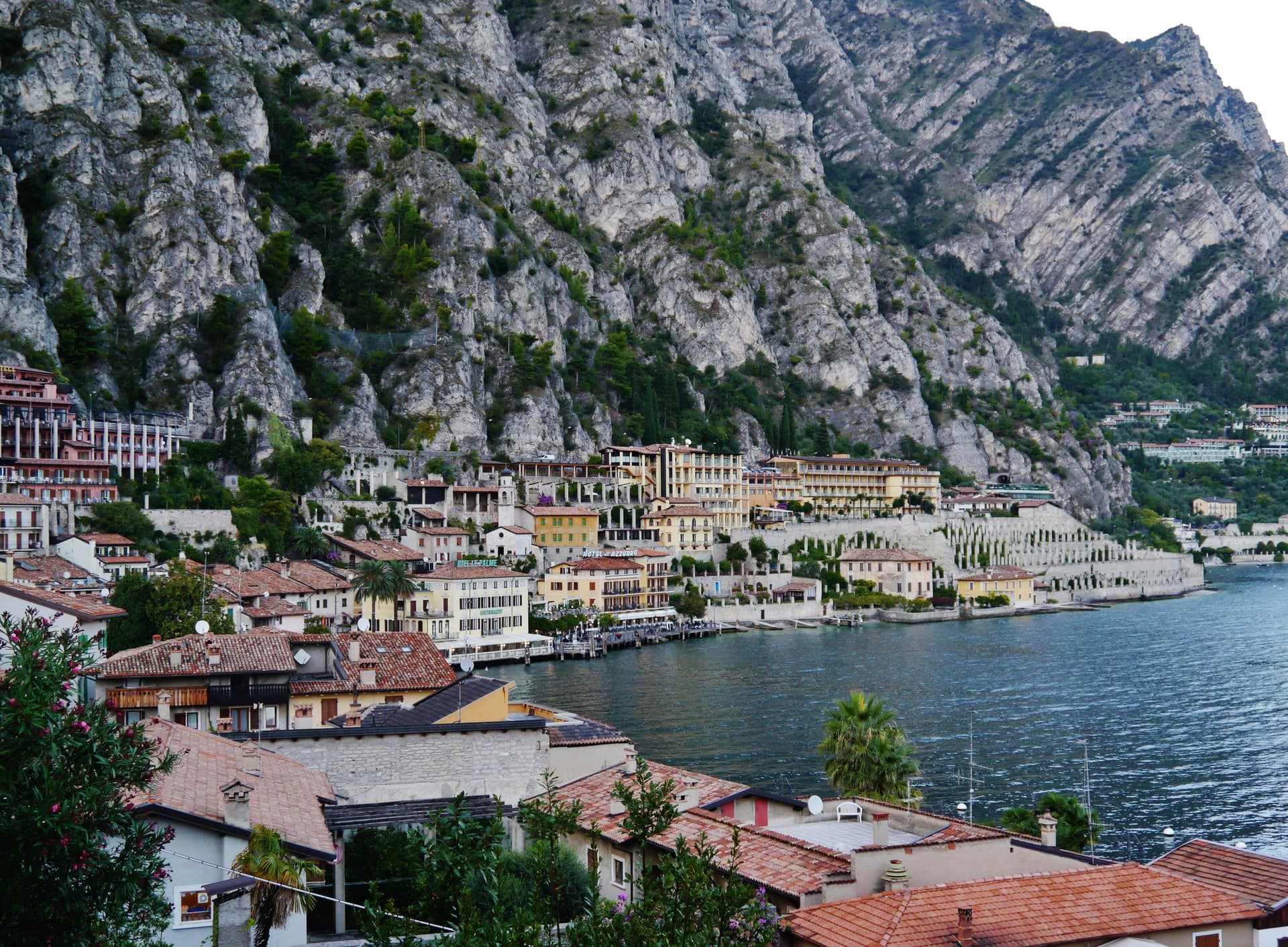
Limone sul Garda sits on the western shore of Lake Garda at the foot of vertical limestone cliffs, the northernmost commercial lemon-growing town in the world at almost 46 degrees north. The Latin limes, meaning border, gave the place its name; the Bettoni counts gave it its industry.
From the seventeenth century, limonaie, stone-pillared greenhouses heated and covered through winter, allowed lemons to be exported to Austria, Germany, Poland and Russia. The road to Riva del Garda, the Gardesana Occidentale, was carved into the cliff and finished in 1932; until then the town reached the outside world by boat or mule track.
In 1974 a Milanese pharmacologist traced a mutant apolipoprotein, ApoA-1 Milano, to a single eighteenth-century resident, Giovanni Pomarelli. Roughly forty of his descendants in town carry the variant, which suppresses cardiovascular disease and helps a handful of residents past one hundred.
The town sits on the water, at 65 metres.
What to see in Limone sul Garda
- Limonaia del Castèl. Restored seventeenth-century lemon greenhouse on stone pillars above the lake, demonstrating the heated wooden cover that protected the trees through winter.
- Chiesa di San Benedetto. Eighteenth-century parish church on the lake front, with a single nave and Baroque altars rebuilt over an older medieval foundation.
- Centro storico. Tight grid of stone alleys between the old harbour and the cliff, with narrow porticoes that survive from the pre-road fishing and citrus village.
How to get to Limone sul Garda
Trento is roughly 57 minutes away by road.
Our tip
April through June and September into October are the months that suit Limone. The lake holds spring temperatures, the lemons flower, the cliff above the town keeps morning shade until noon. July and August fill the lakefront and the cycle path, with peak crowds on weekends drawn from Verona, Milano and German-speaking Europe.
Gardone Riviera
Why visit Gardone Riviera
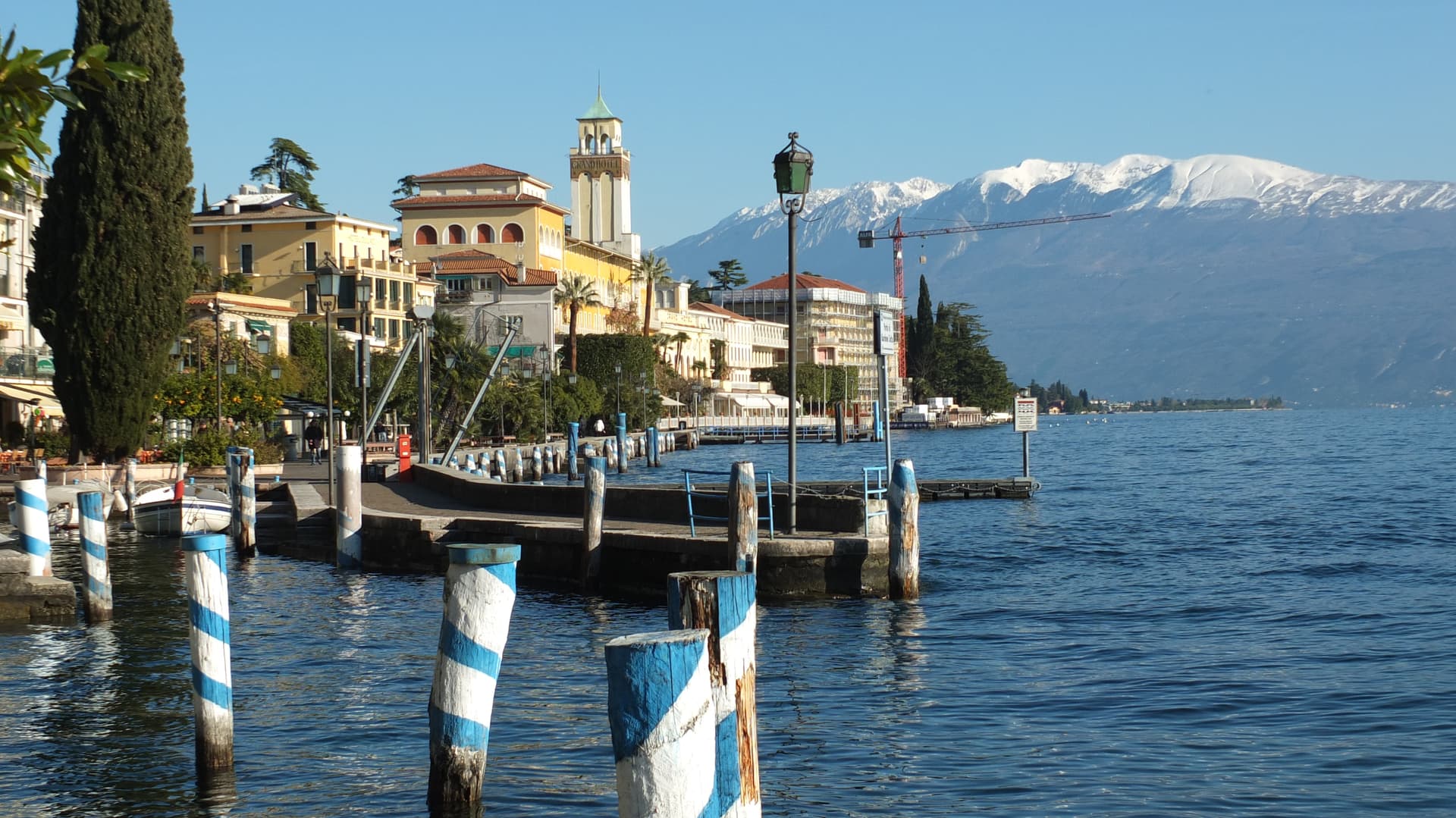
Gardone Riviera sits at 71 meters on the western shore of Lake Garda, in the province of Brescia. The lake here runs deep against the wall of Monte Pizzocolo, and the climate stays mild enough that lemons, olives and bamboo grow within walking distance of each other.
The town divides between the lakefront and the hill above it. Along the water, Gardone Sotto holds the promenade and harbour; above the centro storico, the ground rises toward the estate grounds and, further up, toward the garden that has drawn on the same mild hillside climate since the start of the twentieth century.
The boathouse on the estate holds a torpedo boat from a 1918 wartime raid, alongside the villa called the Prioria, an amphitheatre and a circular mausoleum. The garden above town spent six decades being arranged, one man working a single hillside into bamboo groves, alpine ravines, Japanese ponds and waterfalls.
The lakefront promenade carries the Bandiera Blu. What holds the town together is that division of altitude: a working lakefront below, and above it two hillside projects, one architectural and one botanical, each built slowly and by a single hand over decades on the same slope.
The town sits on the water, at 71 metres.
What to see in Gardone Riviera
- Vittoriale degli Italiani. Nine-hectare hillside estate occupied by Gabriele D'Annunzio from 1922 to 1938, with villa, amphitheatre, mausoleum and the cruiser Puglia.
- Nave Puglia. Protected cruiser of the Regia Marina set into the slope above the lake, gifted to D'Annunzio in 1923 and assembled on land at the Vittoriale.
- Giardino Botanico Hruska (Heller Garden). Botanical garden begun around 1901 by Arturo Hruska, with bamboo, Japanese ponds, alpine ravines and waterfalls on a single hillside.
How to get to Gardone Riviera
Brescia is roughly 53 minutes away by road.
Our tip
April through June and September into October are the months western Garda works best. The Vittoriale grounds are walkable, the Heller Garden is in full bloom, and the ferry between Salò and Riva del Garda runs regular service. July and August fill the lakefront with day-trippers and the Vittoriale amphitheatre hosts its summer opera season; afternoons get warm but the lake breeze holds steady.
Menaggio
Why visit Menaggio
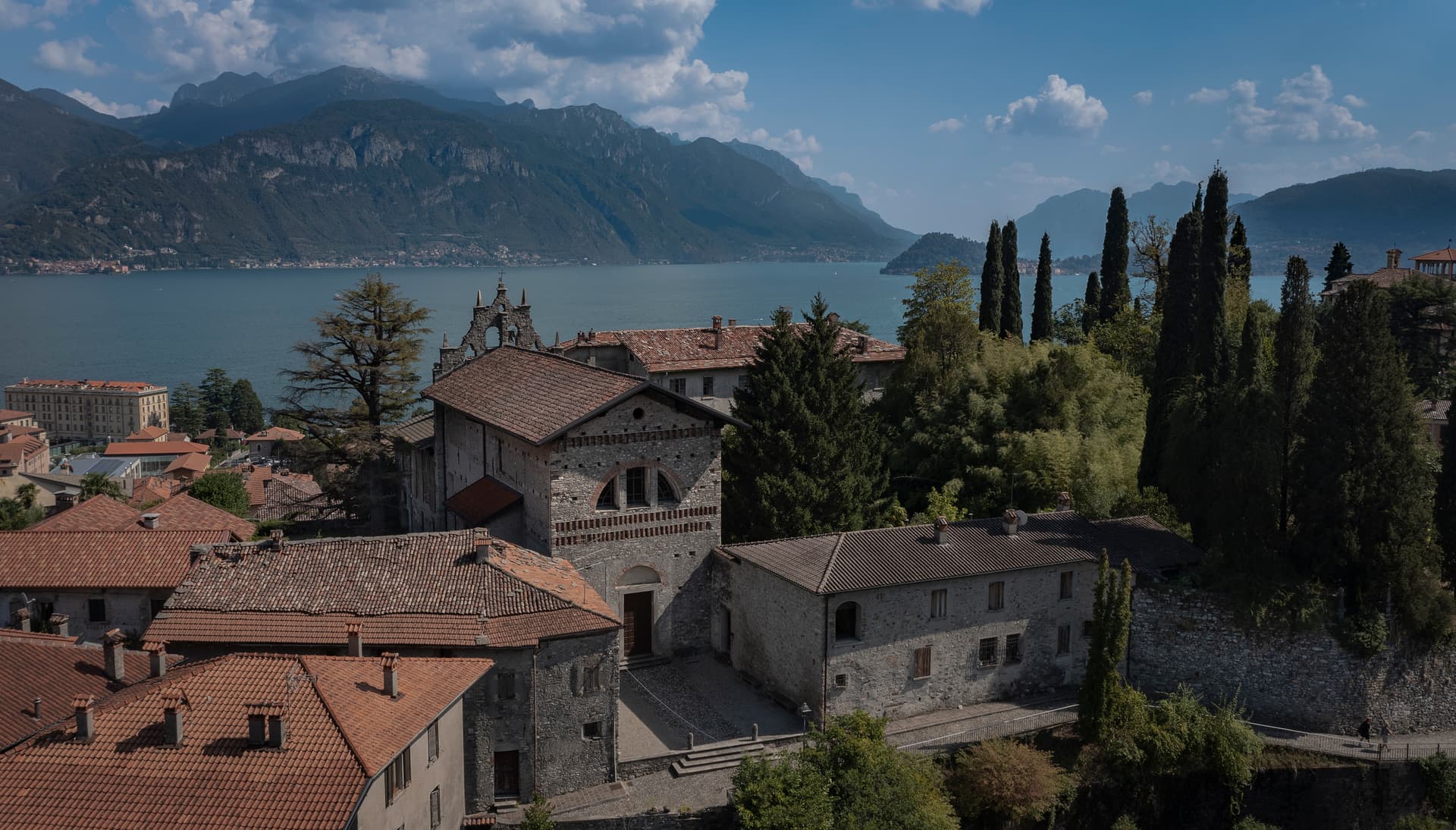
Menaggio sits on the western shore of Lake Como at the mouth of the river Senagra, the point where the lake narrows enough for ferries to fork toward Bellagio and Varenna on the opposite shore. Prehistoric finds in the territory go back to before the Gallic tribes that settled here in the fourth century BC; the Romans absorbed them and built the Via Regina, the lakeside road from Como north toward the Splügen.
The medieval castle above the Senagra torrent dates to the 10th century and was destroyed in 1523 by the Grigioni, leaving only the towers, the walls and the bridge. The Chiesa di San Carlo was built on its ruins between 1612 and 1614.
The town's later identity is the 19th-century summer resort: a mild climate, lake views across to the Grigne, and villas like Mylius-Vigoni in the Loveno hamlet, now run as a German-Italian centre for European dialogue.
The town sits on the water, at 203 metres.
What to see in Menaggio
- Piazza Garibaldi. The main lakefront square, café tables under arcades, ferry pier on one side and the medieval centre rising behind.
- Resti del Castello di Menaggio. 10th-century castle remains, destroyed in 1523, leaving the two towers, sections of wall and a bridge over the Senagra.
- Chiesa di San Carlo. Built 1612 to 1614 by Cinzio Calvi on the ruins of the destroyed castle, in the hamlet of Castello above the torrent.
How to get to Menaggio
Monza is roughly 87 minutes away by road.
Our tip
April through October is the working season on Lake Como, and Menaggio runs on it. May and June bring the gardens of Villa Mylius-Vigoni into bloom and the ferry timetables expand. July and August are crowded and warm, with day-trippers off the Bellagio crossing filling Piazza Garibaldi from late morning.
Bellagio
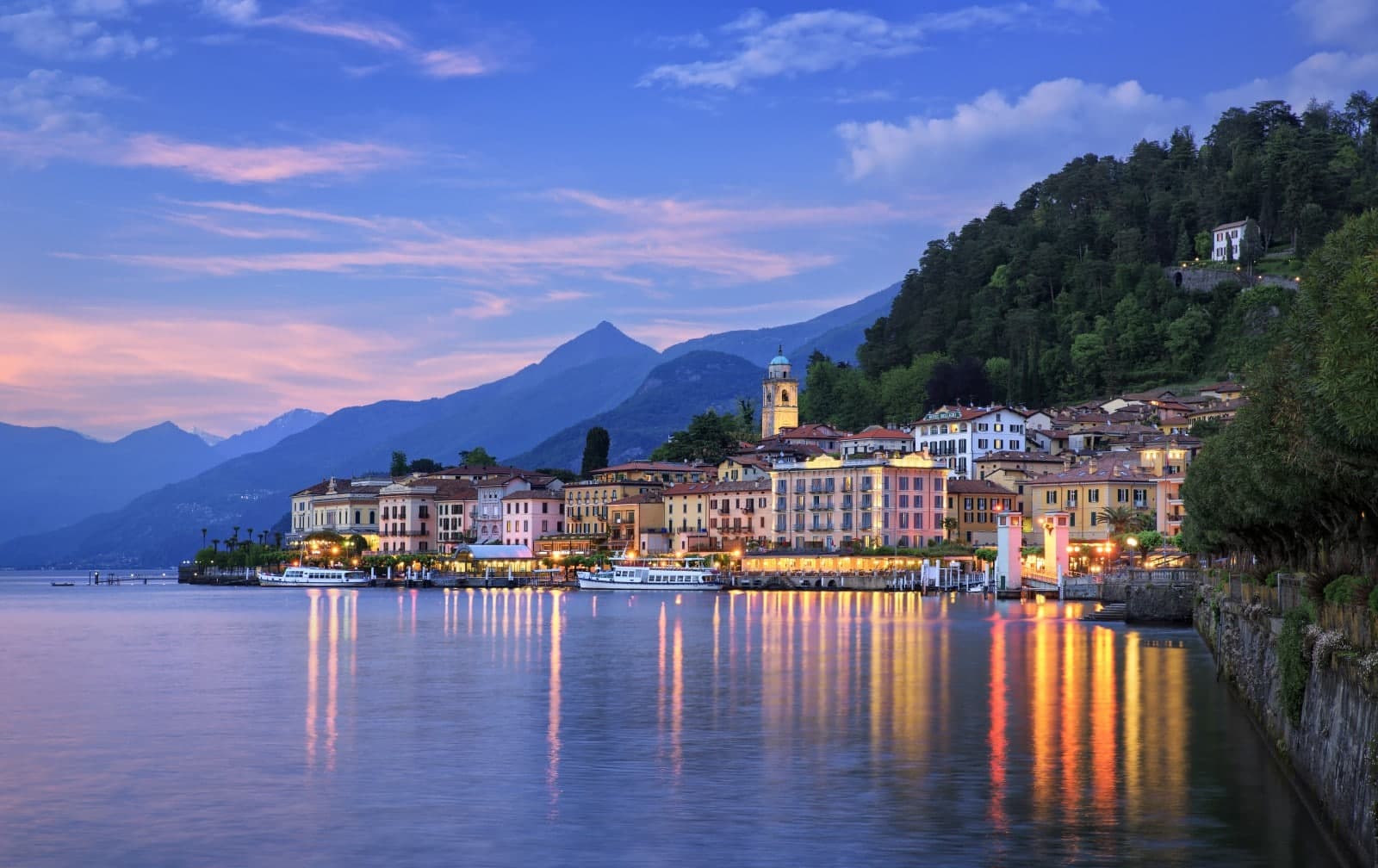
Why visit Bellagio
Bellagio sits on the promontory that divides Lake Como into its three arms, the Como branch to the west and the Lecco branch to the east, with the upper lake running north. Paleolithic settlement traces date back 30,000 years, and an Iron Age castellum stood on the high point around 600 BC.
From the late 13th century the Visconti incorporated Bellagio into the Duchy of Milan. Villa Serbelloni was built in the 15th century on the site of an old razed castle and rebuilt several times; in 1788 Alessandro Serbelloni filled it with 17th- and 18th-century art, and in 1959 the Rockefeller Foundation took ownership, turning the villa into an international conference center.
Villa Melzi, built on the western shore by Francesco Melzi d'Eril (Vice President of Napoleon's Cisalpine Republic), made the village a fashionable summer station for Milanese nobility in the early 1800s.
The town sits on the water, at 229 metres.
What to see in Bellagio
- Villa Serbelloni. Fifteenth-century villa on the high promontory, owned by the Rockefeller Foundation since 1959, with gardens open by guided tour only.
- Villa Melzi. Early 19th-century neoclassical villa built by Francesco Melzi d'Eril on the western shore at Loppia, with public botanical gardens along the lake.
- Punta Spartivento. Northern tip of the promontory where the lake splits in three, with a park, marina, and panoramic view up the Bellagio branch.
How to get to Bellagio
Monza is roughly 55 minutes away by road.
Our tip
April through October is the season. April and May bring camellias and rhododendrons at Villa Melzi, the lake is mild but not warm, and the ferries run a partial timetable. June through August fills the village with day-trippers, the Salita Serbelloni packs by ten in the morning, and the lakeside trattorie reserve weeks ahead.
Tremezzina
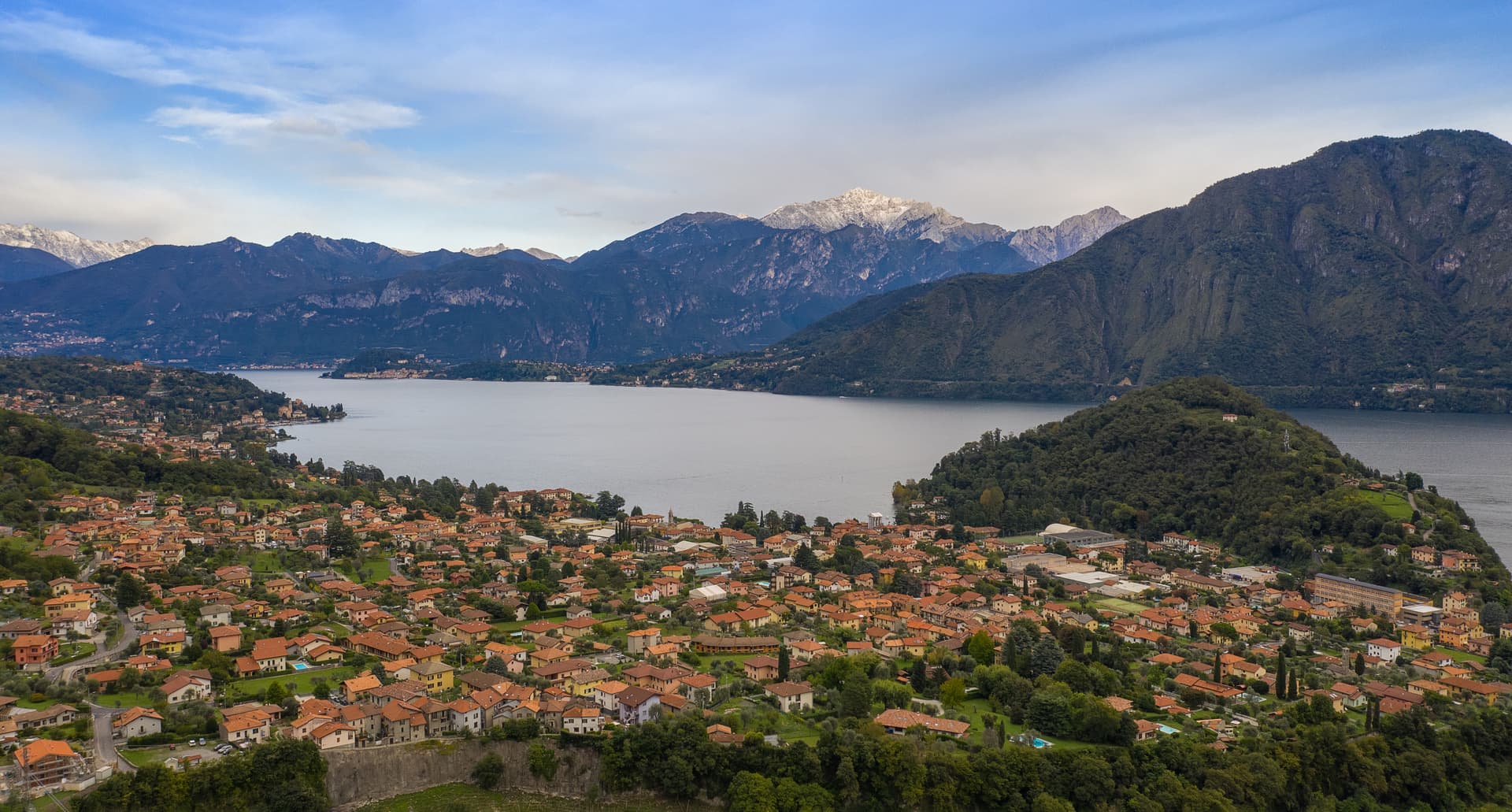
Why visit Tremezzina
Tremezzina was created on 25 May 2014 from the merger of Lenno, Mezzegra, Ossuccio and Tremezzo, four villages along the central western shore of Lake Como facing Bellagio. The new comune holds Villa Carlotta, built in the late 1600s for the Marquis Giorgio Clerici and later named for Princess Carlotta who received it in 1850, with seventeen acres of gardens and one of the great rhododendron collections in Italy.
Isola Comacina, the lake's only island, was the wealthiest place on the lake before Como's destruction of it in 1169; nothing has been built there since, and it is now an archaeological site. The Sacro Monte di Ossuccio is one of nine Lombard and Piedmontese Sacri Monti inscribed by UNESCO in 2003: fourteen Baroque chapels built between 1635 and 1710, climbing the prealpine slope two hundred meters above the lake to a sanctuary of 1532.
Mussolini was captured in Dongo north of here and shot in Giulino di Mezzegra on 28 April 1945; the black cross by the road still marks the spot.
The town sits on the water, at 209 metres.
What to see in Tremezzina
- Villa Carlotta. Late seventeenth-century villa built for the Marquis Giorgio Clerici, with seventeen acres of gardens, more than 150 rhododendron and azalea species, and a sculpture collection.
- Isola Comacina. Lake Como's only island, the wealthiest medieval settlement on the lake until its destruction by Como in 1169, now an archaeological site.
- Sacro Monte di Ossuccio. UNESCO site of fourteen Baroque chapels built 1635-1710, climbing two hundred meters above the lake to the Beata Vergine del Soccorso sanctuary of 1532.
How to get to Tremezzina
Monza is roughly 83 minutes away by road.
Our tip
April through October is the working season on the central lake. April, May and September into October are the strongest: the rhododendrons and azaleas of Villa Carlotta peak in late April, the lake holds afternoon warmth without humidity, the Greenway is open and dry. July and August are full: ferries between Bellagio and Tremezzo run at capacity, parking near Villa Carlotta is gone by ten, and the Sacro Monte climb sits in the afternoon shade.
Cernobbio
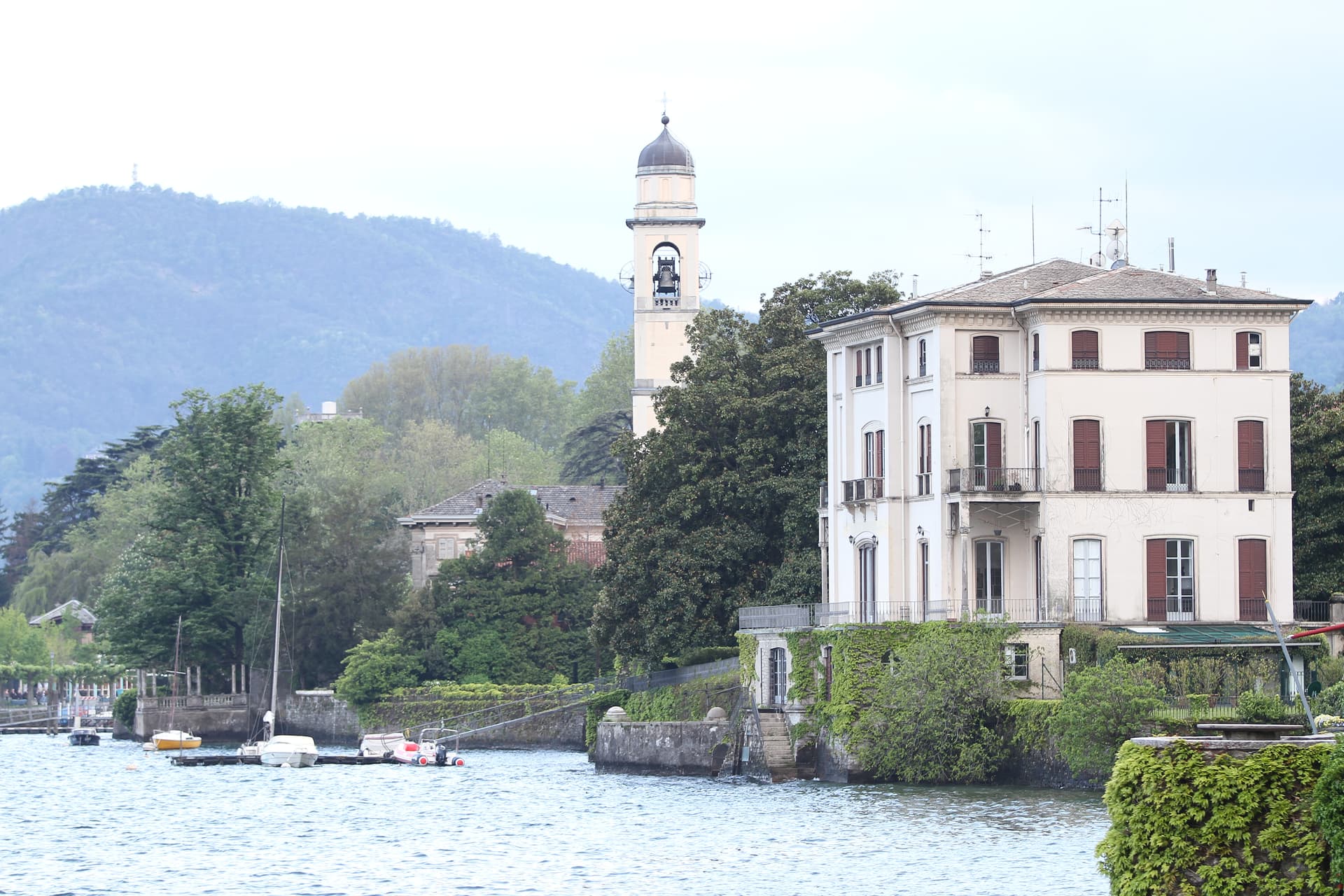
Why visit Cernobbio
Cernobbio sits at 201 meters on the western shore of the lake, two kilometers north of the city of Como, at the foot of the ridge that rises behind it. The village grew up around a 12th-century Benedictine convent called Coenobium, from which the name derives.
The 19th century brought silk mills and lakeside villas, and two of these sit close together inland from the water: Villa Erba, built in the 1890s by the Erba pharmaceutical family on the old monastery site and later inherited by Luchino Visconti's mother, and Villa Bernasconi, an Alfredo Campanini Liberty house from before 1905, now a municipal museum. The lakefront itself, with its ferry pier and promenade, marks the entry point to the western shore for anyone arriving from the city.
The town's layout, then, traces its own history: a monastic name at the center, silk-era villas set back from the water, and the shoreline still working as the gateway it has been since the village first grew.
The town sits on the water, at 201 metres.
What to see in Cernobbio
- Villa d'Este. Built for Cardinal Gallio, the villa's gardens and lakefront wings now house the hotel guests and, each September, the delegations arriving for the Ambrosetti Forum.
- Villa Erba. Nineteenth-century villa built by the Erba pharmaceutical family on the site of a Benedictine monastery, later inherited by Luchino Visconti's family.
- Villa Bernasconi. Pre-1905 Liberty villa by Alfredo Campanini, built for silk industrialist Davide Bernasconi, now a municipal museum of Art Nouveau.
How to get to Cernobbio
Monza is roughly 61 minutes away by road.
Our tip
April through October is the long Como season. The lake stays mild from late spring, the villas open their gardens, and the ferries run on full timetable. July and August bring crowds and traffic on the lakeside road, and Villa d'Este fills with the Ambrosetti pre-summit.
Sirmione
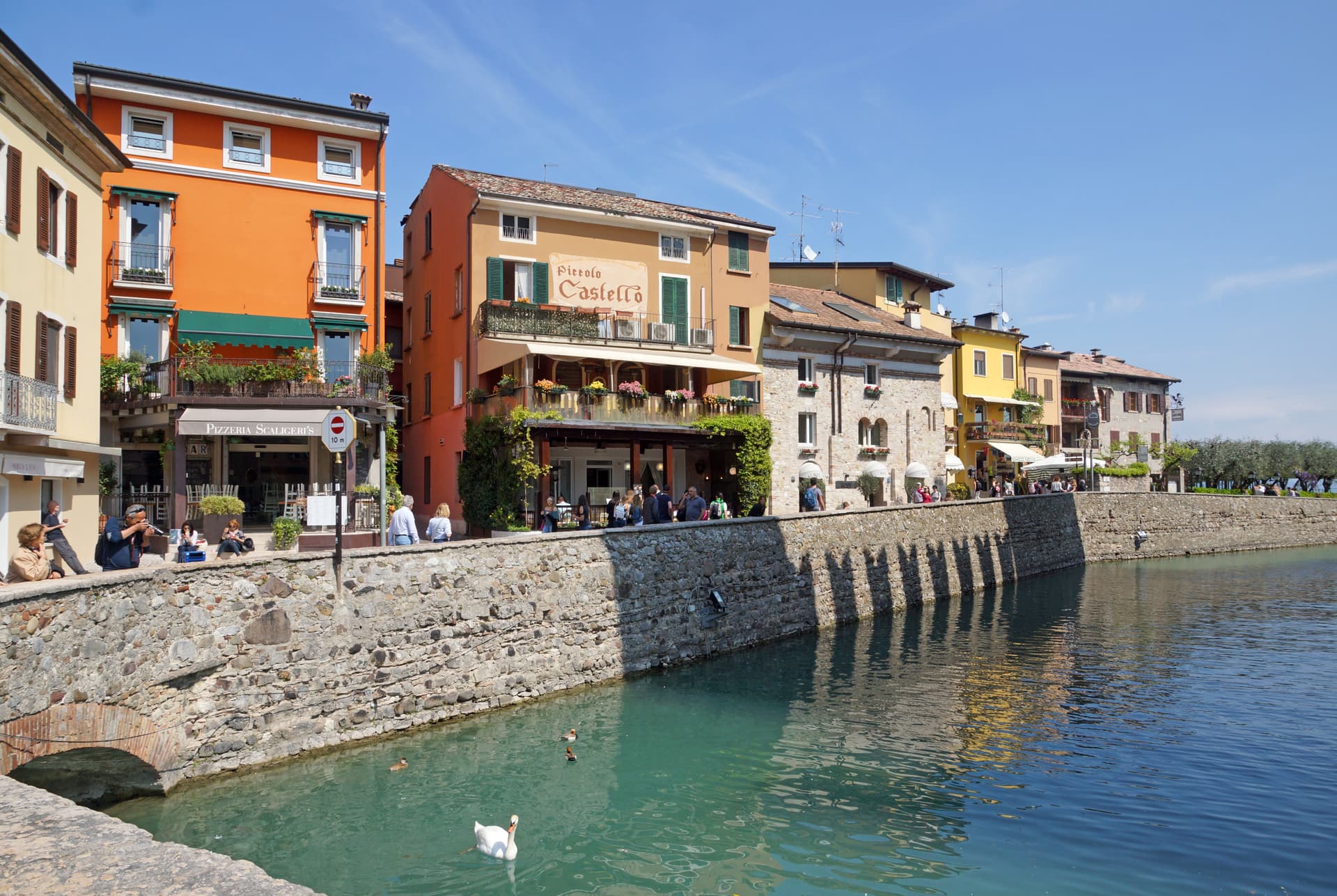
Why visit Sirmione
The peninsula runs four kilometers into the southern end of the lake, narrow enough that the old town occupies a triangle of land just over a mile long. Three low hills organize it: Cortine, San Pietro, and the rise at the tip where the Roman villa stands.
The fortress sits at the single entrance to the walled town, so the only way in by land passes through its gate, and the water it once enclosed as a fortified port is still shut in behind it. Past that gate the medieval streets are packed between the hills, and the ground rises toward the church at the highest point before falling away again toward the villa ruins at the peninsula's end.
The name attached to the villa is literary rather than archaeological: the poet's return in his thirty-first poem was to a family property on this tip of land, and nothing dug from the ground proves the two are the same place, but the name has held for a thousand years regardless. Maria Callas kept a villa here through the 1950s and 60s.
Between the enclosed water at one end and the hot spring at the other, the peninsula reads as a strip of land defined entirely by what edges it: lake on three sides, a gated approach on the fourth, and a history that settled into the name of a poem long before anyone could confirm it belonged there.
The town sits on the water, at 91 metres.
What to see in Sirmione
- Castello Scaligero. Fortress at the entrance to the old town, with a 37-meter keep and a fortified port still enclosing a piece of the lake.
- Grotte di Catullo. Villa complex built late first century BC to early first century AD, its ruins scattered across olive terraces at the tip of the peninsula.
- Terme di Catullo. Thermal spa drawing on the same mineral spring that surfaces offshore in Lake Garda.
How to get to Sirmione
Verona is roughly 36 minutes away by road.
Our tip
April through October is the lake season. The Grotte di Catullo open with the spring archaeological calendar, the Scaligero is open year-round, and the peninsula promenade fills with day-trippers from Verona and the German A22 corridor. July and August are the heaviest months, with the old town packed between ten and seven; April, May, September and October are the easier months.
More from Anywhere Italy
- The 8 best small towns worth staying overnight in Lombardia
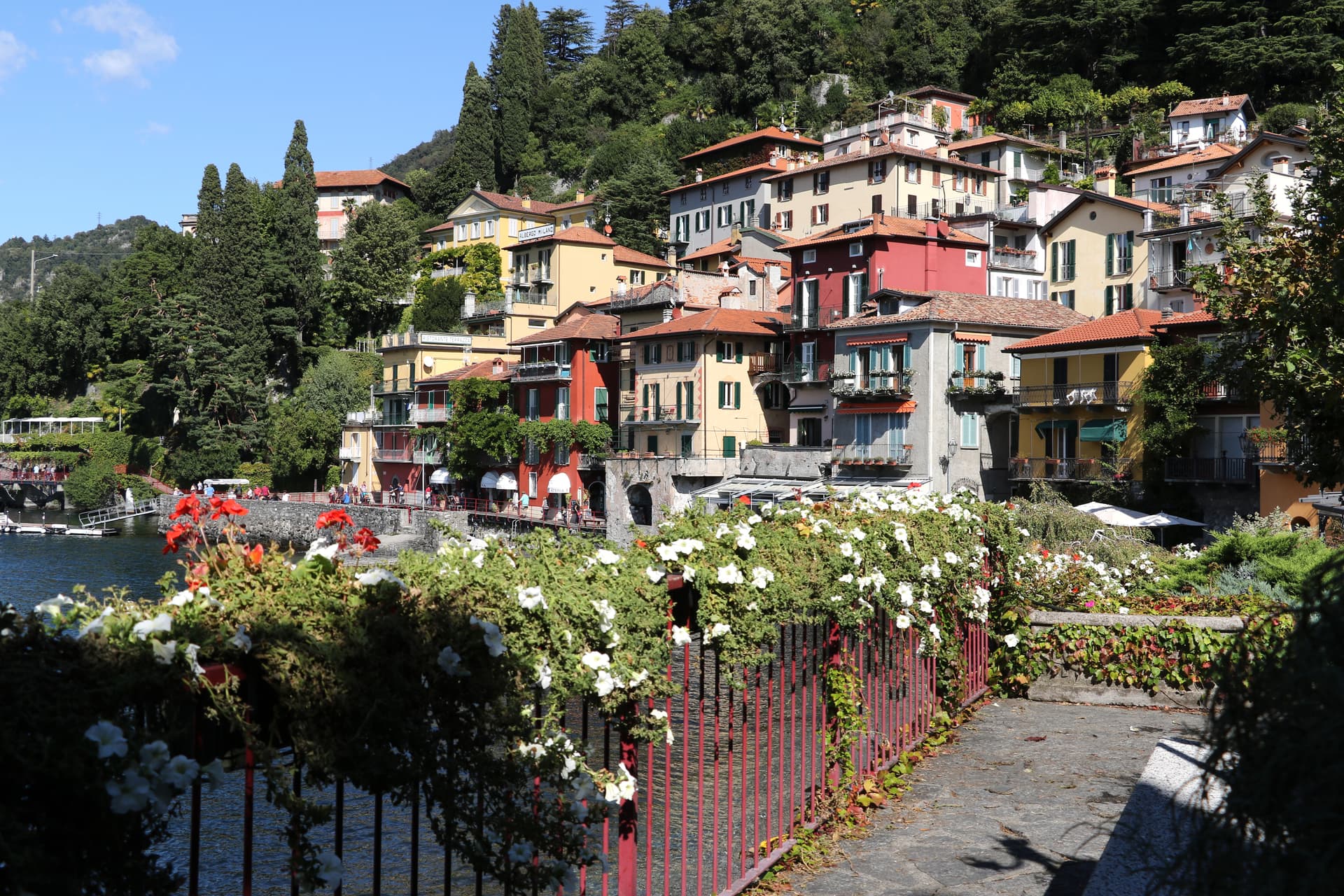 The best small lake towns that eat well in Lombardia
- The 8 best lake towns within 90 minutes of Monza
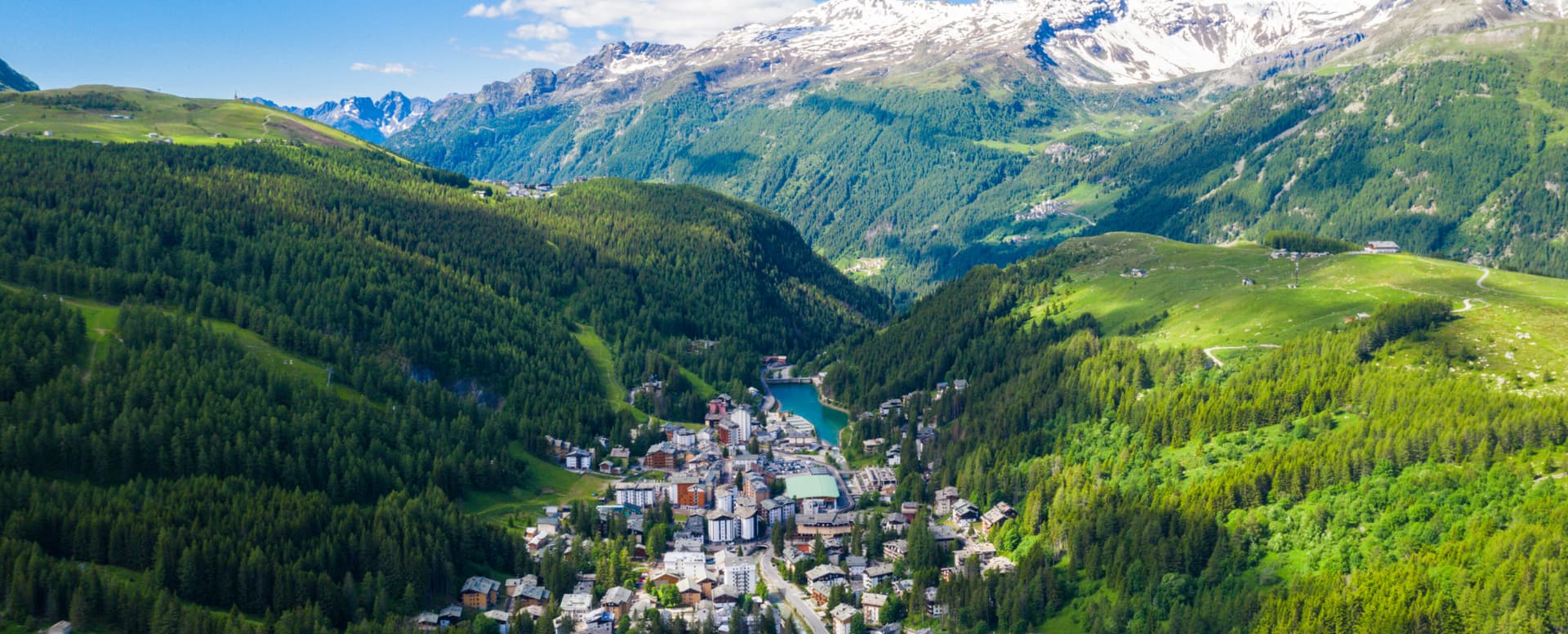 The best small towns with a serious restaurant in Lombardia
- The best lake towns in the province of Brescia
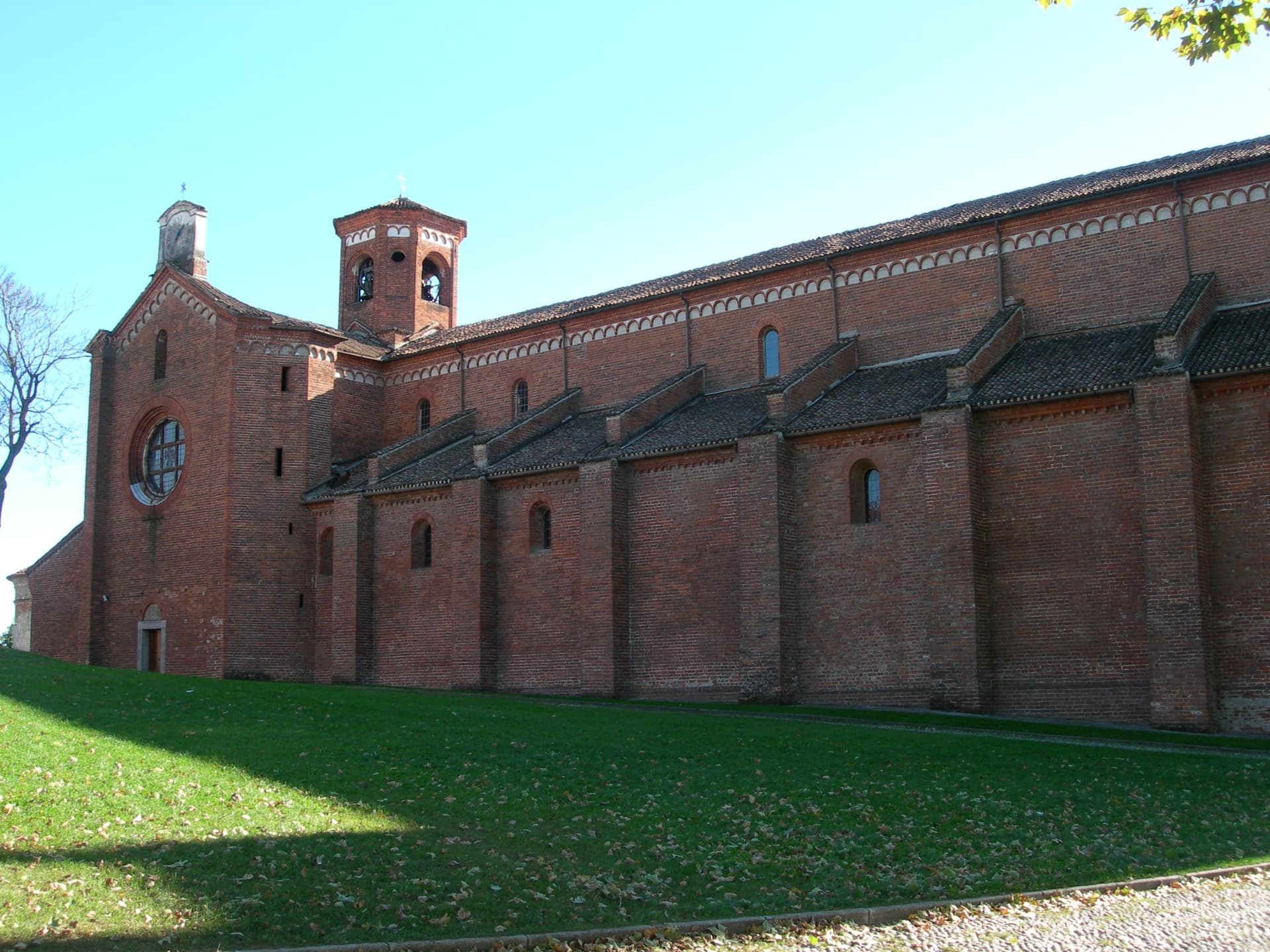 The 6 prettiest small villages that eat well in Lombardia