The 6 best small towns to live in Puglia, by our own rules
Six towns: what each is best for, what a home costs, and the catch. A square meter runs from €650 in Sammichele di Bari to €2,800 in Polignano a Mare.
From the 1,000 towns picked by Peter Benei.
92 towns written about, 908 to go. Follow along, free: Subscribe on Substack
Where would you live in Puglia, if you wanted a town rather than a postcard? In our Where to Move in Italy series we wrote down our own rules: a town of 5,000 to 20,000 people, big enough to keep a life of its own and small enough to stay one community; a real city 30 minutes to an hour away by car, near enough for the hospital and the airport, far enough that the town is not its suburb; and, where we can, a station.
Of our 59 towns in Puglia, 6 pass every rule and have at least 7 of ten everyday services, from the grocer and the pharmacy to the doctor and the bar, within 500 meters of the center.
Every number comes from the town's own page. The drive is routed, not guessed. The services are OpenStreetMap's, read in November 2026, and the map misses things, so a shop it lacks is not proof there is none. None of it measures whether you will like the place: for that, go out of season, on a weekday.
Two more lists worth reading alongside this one: The 9 best hill towns you can reach by train in the province of Bari and The best hill towns you can reach by train within 90 minutes of Bari.
1. Castellana Grotte
Best for everyday life on foot. Eight of the ten everyday services we look for are mapped within 500 meters of the center.
47 min from Bari · homes €1,000 to €1,300 a m² in the center · 19,697 people
Why visit Castellana Grotte
Castellana Grotte sits on the south-eastern Murge at 290 meters, forty kilometers south of Bari and inland from Monopoli and Polignano. The town takes its name from the cave complex less than two kilometers away, reached in 1938 when the speleologist Franco Anelli, invited by the provincial tourism board of Bari, explored the sinkhole into the system running under the plateau.
The white alabaster chamber at the far end followed two years later. Above ground the town keeps a separate rhythm from what lies underneath it.
The walled center sits organized around the cathedral square, its mother church raised on Romanesque foundations with a Norman tower pressed into service as a bell tower. On the hilltop above, the sanctuary built after the 1690 plague draws the January procession that carries the Madonna statue down from the Capuchin convent to that same mother church, tying the two sacred points of the town together once a year.
The place works on two levels literally: a plateau town of stone alleys and church squares going about its own history, sitting on top of a cave system that has nothing to do with it except the name.
19,697 people, and Bari is 47 min away by car, with a station in town. Eight of the ten everyday services we look for, from a grocer to a pharmacy, are on the map within 500 meters of the center.
What to see in Castellana Grotte
- Grotte di Castellana. Galleries descend from a sinkhole known as La Grave into stalactite and stalagmite formations underfoot, with Franco Anelli's route ending at the alabaster chamber of the Grotta Bianca.
- Chiesa Madre di San Leone Magno. Romanesque mother church rebuilt in 1383, three naves under round arches, with a Norman defensive tower converted into the bell tower.
- Santuario di Santa Maria della Vetrana. Hilltop sanctuary built in thanks for deliverance from plague, the destination of the January procession that carries the Madonna statue from the Capuchin convent.
How to get to Castellana Grotte
It has its own railway station. Bari is about 47 min away by road. The full route from Bari.
Our tip
April through June and September through October are the workable months on the Murge: dry, clear, the caves a constant fifteen degrees regardless of the surface weather. July and August reach the mid-thirties above ground but the cave itinerary stays cold enough for a jacket. The plateau countryside empties between two and five in the afternoon.
2. Cisternino
Best for a slow weekend. The Touring Club gives it its orange flag for small inland towns.
50 min from Taranto · 11,040 people
Why visit Cisternino
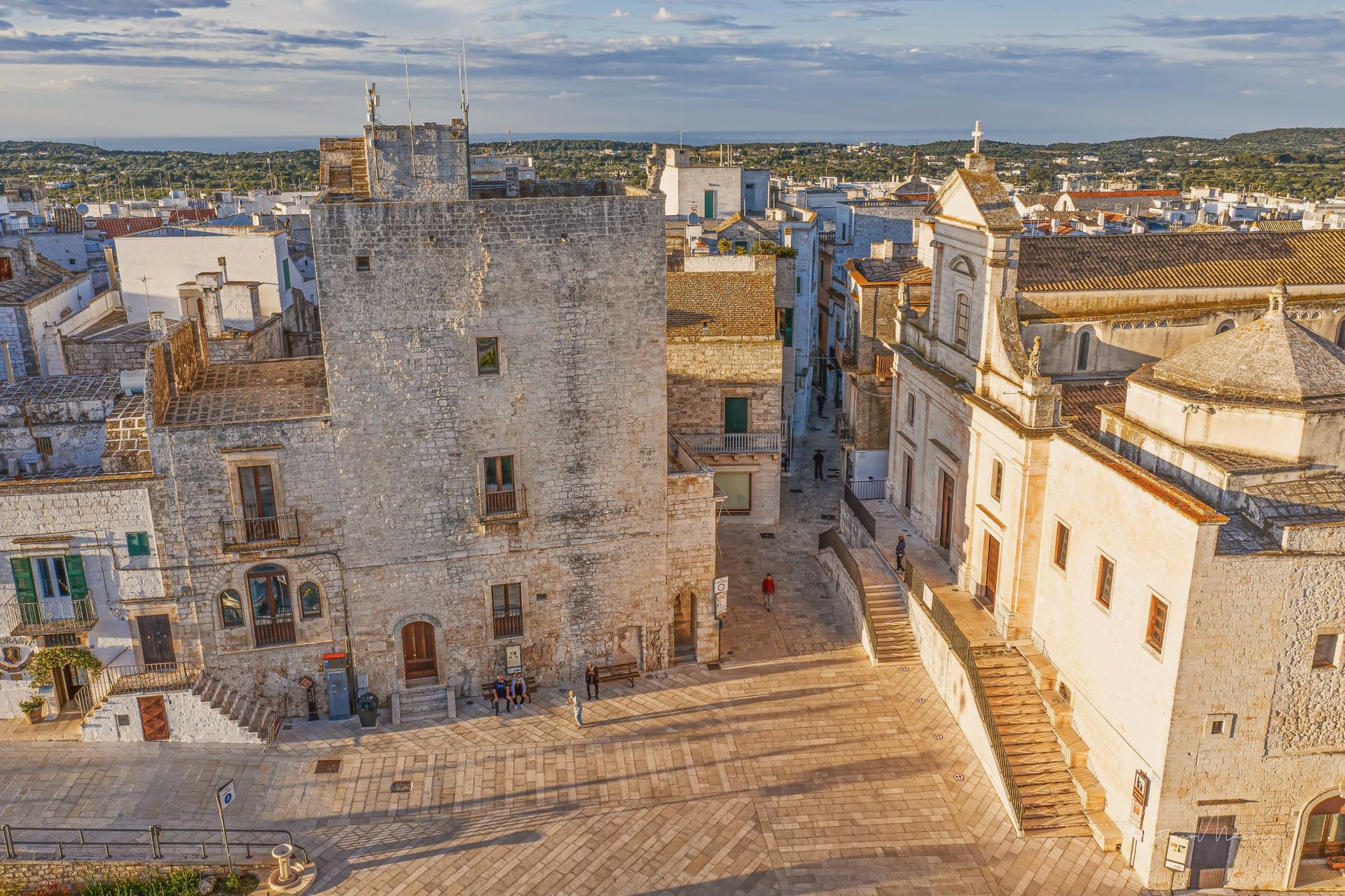
Cisternino occupies the last rise of the southern Murgia, its whitewashed houses looking down over drystone walls, vineyards and trulli in the Valle d'Itria. The town sits within the Itria Valley DOC wine zone, and the older quarter is built as a tight knot against the edge of the plateau, its stone alleys and courtyards folded close enough together that the comparison to a North African medina has stuck.
The civic tower in the main square marks where the newer town gives way to that older core, a single threshold between the two. Cisternino, a Cittaslow member since 2003, was named Cittaslow City of the Year in 2014, a designation that formalizes what the town already does at the butcher-restaurants of the old quarter: meat grilled to order and eaten at a counter or a side table, nothing rushed.
Between the drystone valley below, the huddled white quarter above, and a civic identity built on not hurrying, the town reads as a place organized around slowness at every scale, from its walls to its kitchens.
11,040 people, and Taranto is 50 min away by car. Eight of the ten everyday services we look for, from a grocer to a pharmacy, are on the map within 500 meters of the center.
What to see in Cisternino
- Chiesa Madre di San Nicola di Patara. The neoclassical facade dates from around 1848, standing over a floor where excavations between 1999 and 2000 uncovered thirteen burials, Byzantine fresco fragments and coins.
- Centro storico. Stone alleys, low arches and small courtyards on the Murgia edge, close enough in plan and whitewash to draw comparison to a North African medina.
- Torre Civica. Civic clock tower in the main square at the entrance to the centro storico, the gateway between the modern town and the white labyrinth.
How to get to Cisternino
Taranto is about 50 min away by road. The full route from Bari.
Our tip
April through June and September through October are the months the Itria valley is green and the centro storico is walkable without sweat. July and August reach the mid-thirties on the plateau and the white alleys fill with day-trippers; by ten in the morning the main passages can be shoulder to shoulder. Late afternoon and dusk are the times to walk, when the limestone catches the sun and the crowds thin.
3. Acquaviva delle Fonti
Best for olive oil. It belongs to the national association of olive oil towns.
30 min from Bari · homes €850 to €1,200 a m² in the center · 19,746 people
Why visit Acquaviva delle Fonti
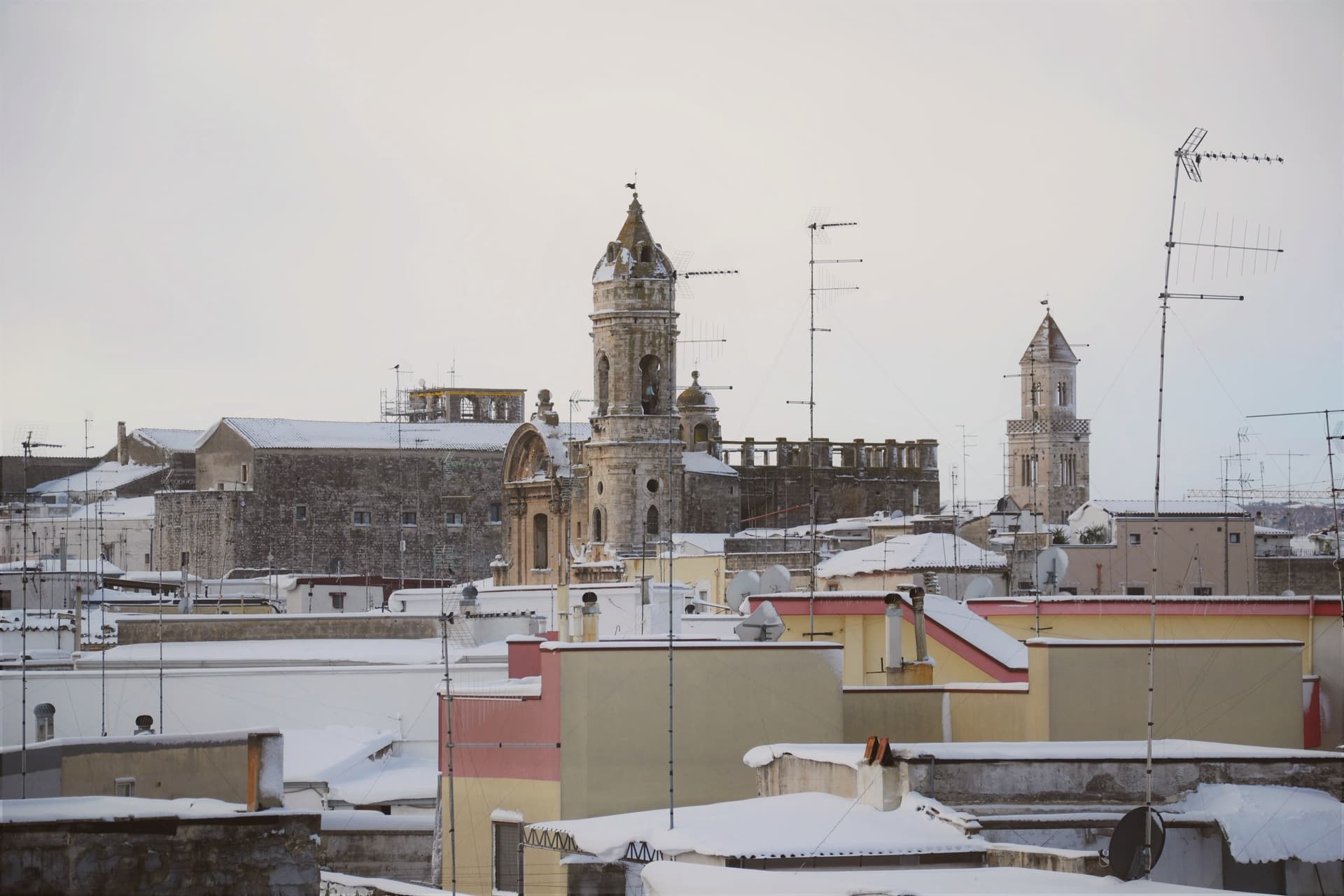
Acquaviva delle Fonti sits on the Murge plateau at 300 meters, twenty-five kilometers south of Bari and the same distance from the Adriatic. The name records the springs that fed the town long before the Normans arrived.
The Co-Cathedral of Sant'Eustachio was built in 1158 on Messapian foundations by the Norman lord Roberto Gurguglione, then rebuilt in Renaissance style in the late sixteenth century by Count Alberto Acquaviva d'Aragona; its façade carries a sixteen-arm rose window that is the building's signature. The Palazzo de Mari, now the town hall, anchors the centro storico opposite the cathedral.
The town is best known nationally for the cipolla rossa di Acquaviva, a sweet DOP red onion grown only in local clay-rich soils and celebrated with a late-July sagra and a mid-October festival built around the calzone di cipolla. The ecclesiastical Miulli hospital, one of the largest in Puglia, sits at the edge of town.
19,746 people, and Bari is 30 min away by car, with a station in town. Seven of the ten everyday services we look for, from a grocer to a pharmacy, are on the map within 500 meters of the center.
What to see in Acquaviva delle Fonti
- Concattedrale di Sant'Eustachio. Romanesque cathedral of 1158 rebuilt in Renaissance style by the Acquaviva d'Aragona counts, with a sixteen-arm rose window over the central portal.
- Palazzo de Mari. Sixteenth-century noble residence on the cathedral square, now the town hall, built by the de Mari family after they acquired the fief.
- Centro storico. Walled old town on the Murge plateau, organized around the cathedral and the palazzo, with stone houses and the springs that gave the place its name.
How to get to Acquaviva delle Fonti
It has its own railway station. Bari is about 30 min away by road. The full route from Bari.
Our tip
April through June and September through October are the months the Murge stays mild and the countryside is in flower or harvest. July and August push toward thirty-five degrees on the plateau and the centro storico empties between two and five in the afternoon. The late-July onion sagra falls in the worst of the heat but still pulls a crowd.
4. Castellaneta
Best for a swim. The comune's beach holds a Blue Flag.
49 min from Taranto · homes €800 to €1,100 a m² in the center · 15,927 people
Why visit Castellaneta
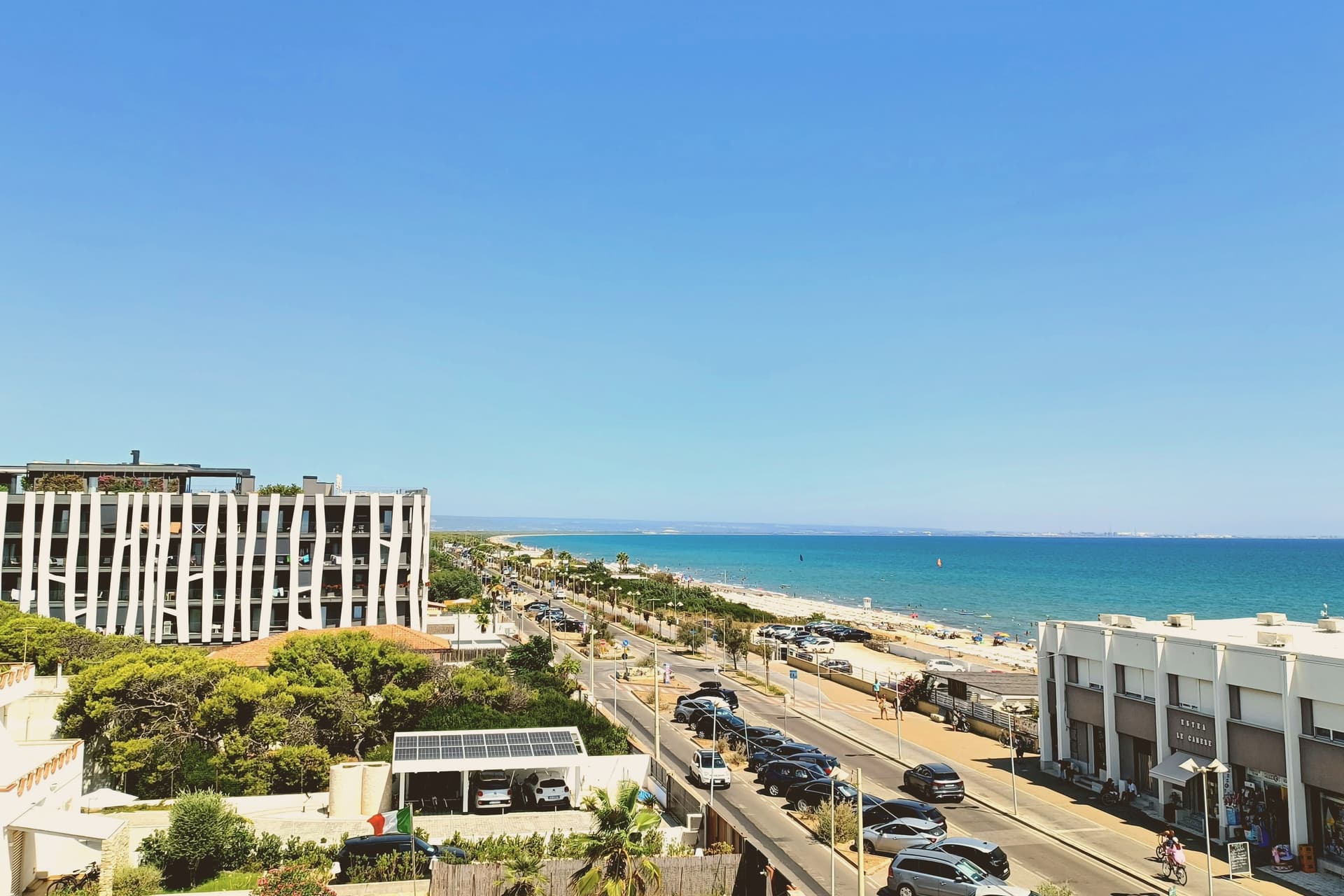
Castellaneta sits on the Murge plateau at 235 meters, on the southern rim of the Gravina Grande, a karst canyon 10 kilometers long and 145 meters deep that wraps the town in near-vertical limestone walls. The municipal territory runs from the gravina down to the Ionian coast at Castellaneta Marina, fifteen kilometers south, where the long sand beach has held Bandiera Blu for ten consecutive years.
The cathedral was founded under the Normans in the eleventh century, rebuilt in Romanesque form in the fourteenth, and given its white limestone facade in 1771. The town is best known abroad as the birthplace of Rodolfo Valentino, born here on 6 May 1895 and reborn in Hollywood as Rudolph Valentino.
A blue ceramic statue of the actor by Luigi Gheno was unveiled in the centro storico in 1961, captured in the documentary Mondo Cane, and the Museo Rodolfo Valentino opened in the former Santa Chiara monastery in 2010.
15,927 people, and Matera is 51 min away by car, with a station in town. Seven of the ten everyday services we look for, from a grocer to a pharmacy, are on the map within 500 meters of the center.
What to see in Castellaneta
- Gravina Grande. Karst canyon ten kilometers long and 145 meters deep wrapping the town on three sides, part of the Terra delle Gravine regional park.
- Cattedrale di Santa Maria Assunta. Norman cathedral of the eleventh century rebuilt as a Romanesque basilica in the fourteenth and refaced in white limestone in 1771.
- Museo Rodolfo Valentino. Civic museum opened in 2010 in the former Santa Chiara monastery, with the ceramic statue by Luigi Gheno unveiled in 1961 standing nearby in the centro storico.
How to get to Castellaneta
It has its own railway station. Taranto is about 49 min away by road. The full route from Bari.
Our tip
April through June and September through October are the months the Murge is dry, mild, and the gravina edges walkable. July and August push past thirty-five degrees on the plateau and the centro storico empties in the afternoon, though Castellaneta Marina fills with Italian families and the beach is at its peak. The feast of San Francesco di Paola on the second Sunday of May and the Carnevale procession through the centro storico are the civic anchors of the calendar.
5. Polignano a Mare
Best for a long lunch. Food guides list five tables here.
36 min from Bari · homes €2,000 to €2,800 a m² in the center · 17,353 people
Why visit Polignano a Mare
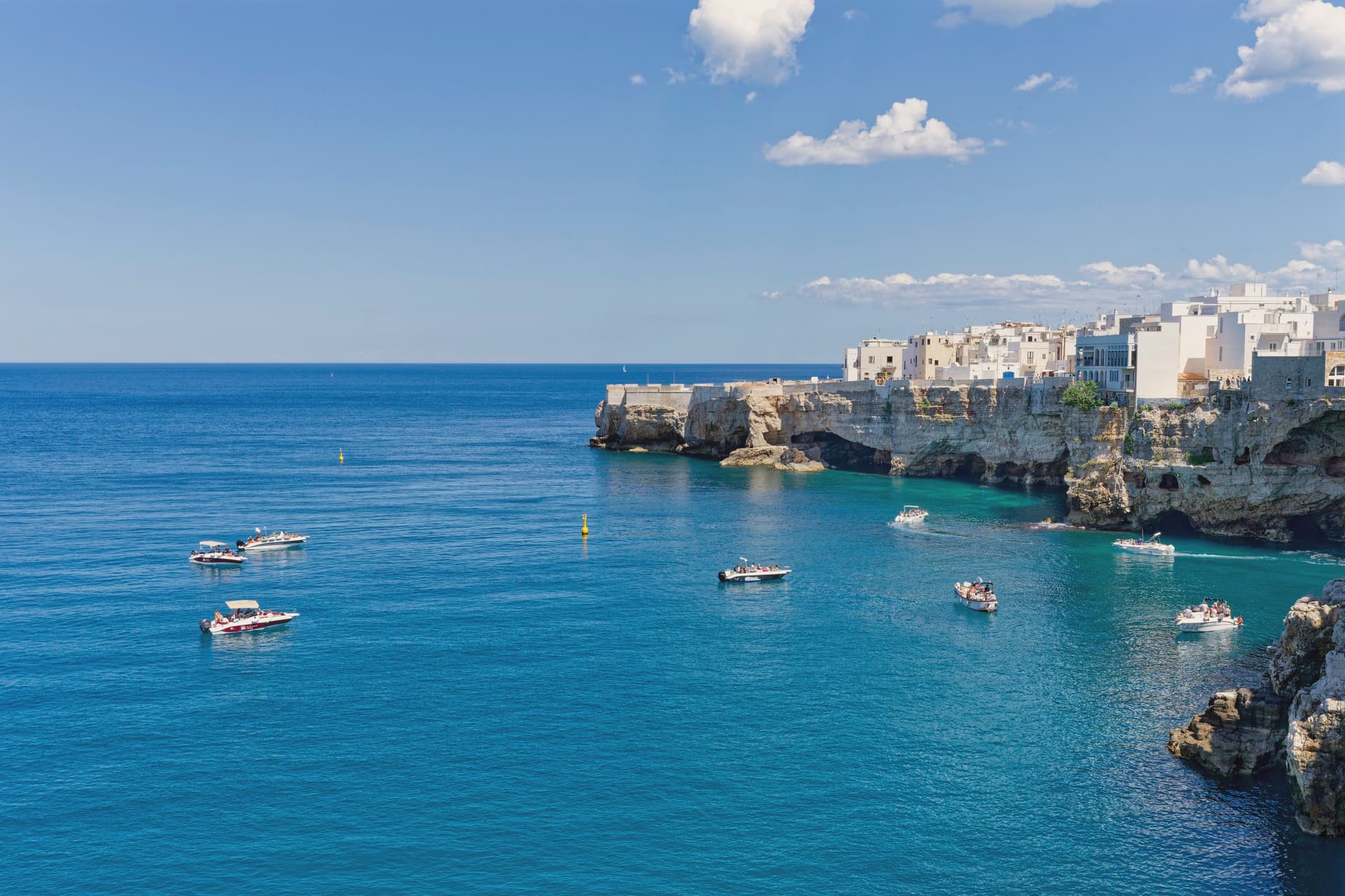
Polignano a Mare sits on a limestone cliff twenty to twenty-seven meters above the Adriatic, thirty kilometers south of Bari. The historic center is a maze of whitewashed lanes cut into the rock, dropping down to the Lama Monachile cove, the narrow beach between two rock walls and under the arches of the Roman bridge of the Via Traiana.
Archaeology in the Santa Barbara district shows continuous settlement since prehistory, and the site has been identified with the ancient Greek Neapolis of Apulia, possibly founded by Dionysius II of Syracuse in the fourth century BC. Julius Caesar features in another origin claim along the Via Traiana.
Domenico Modugno, who wrote and sang "Nel blu dipinto di blu" and won the 1958 Grammy with it, was born here in 1928; his statue stands on the lungomare that bears his name. The Grotta Palazzese, a sea cave under the old town, has held a restaurant since the eighteenth century when the Leto princes used it for banquets.
17,353 people, and Bari is 36 min away by car, with a station in town. Seven of the ten everyday services we look for, from a grocer to a pharmacy, are on the map within 500 meters of the center.
What to see in Polignano a Mare
- Lama Monachile. Narrow cove between two cliff walls in the center of town, under the arches of the Roman bridge of the Via Traiana, the town's signature postcard.
- Centro storico. Whitewashed old town on the limestone cliff, narrow lanes, balconies hanging over the sea, and three surviving medieval gates.
- Grotta Palazzese. Sea cave under the cliff used by the Leto princes for banquets in the eighteenth century, now a restaurant carved into the rock.
How to get to Polignano a Mare
It has its own railway station. Bari is about 36 min away by road. The full route from Bari.
Our tip
May through September is the season the cliffs and the cove work: warm sea, long evenings, the Lama Monachile crowded by ten in the morning in July and August and impossible to swim from after noon. June and September are the better months, the water already warm and the day-tripper buses thinner. October keeps the light and empties the centro storico.
6. Sammichele di Bari
Best for a walk through the old town. It is on the list of Italy's most beautiful villages.
30 min from Bari · homes €650 to €970 a m² in the center · 5,908 people
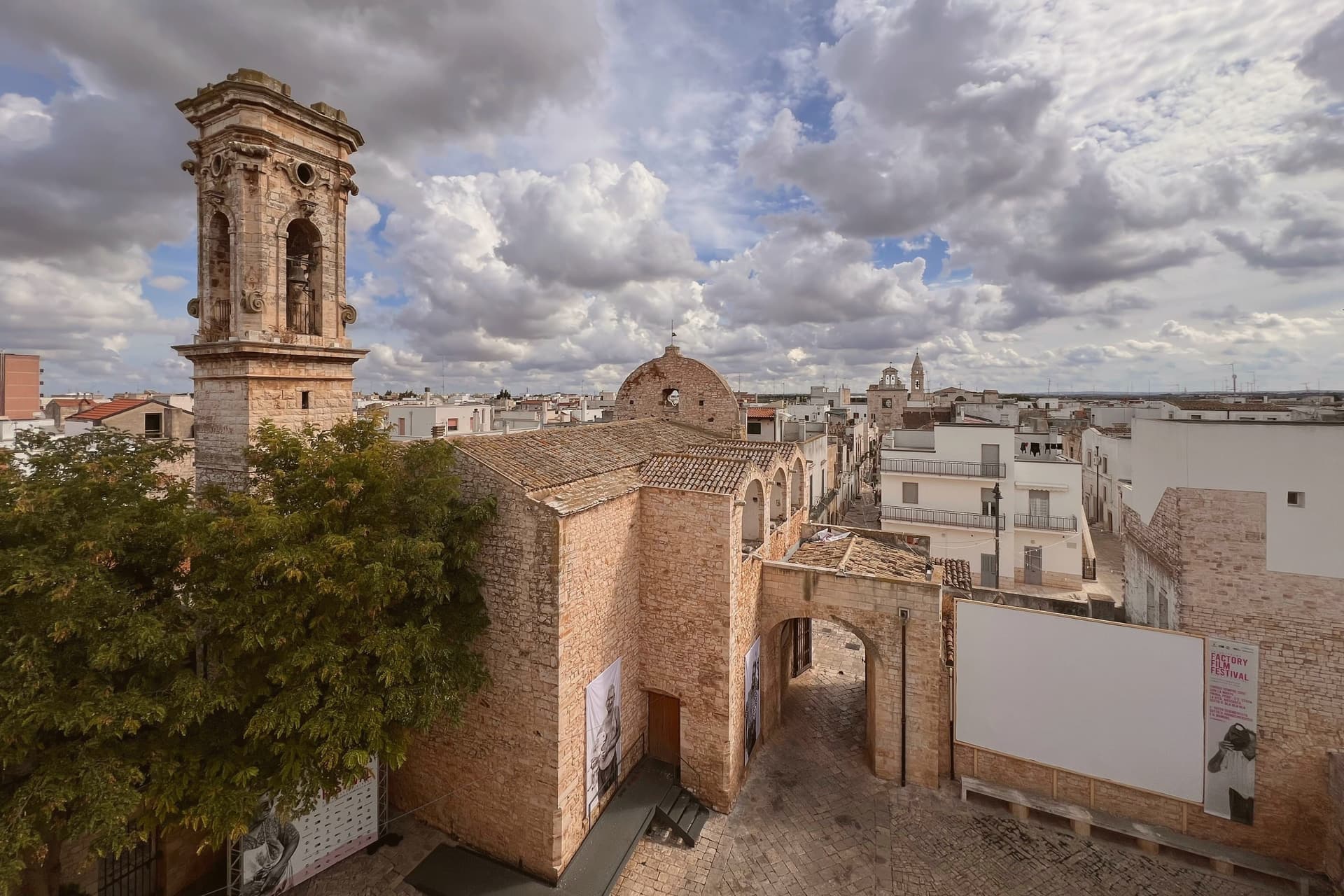
Why visit Sammichele di Bari
Sammichele di Bari sits at 280 meters on the Murge plateau, thirty kilometers south of Bari. The settlement was founded as a fief in 1609 when the wealthy Genoese banker Michele Vaaz bought the territory from the Centurione family and named the new town after his patron saint.
The Castello Caracciolo at the center of the village began as a Norman outpost, passed through Centurione and Vaaz ownership, and was bought by the Caracciolo dukes in 1797 who hired the architect Amenduni to redo the eastern façade in rusticated stone with neo-Gothic bifora windows. Since 1974 the castle has held the Museo della Civiltà Contadina Dino Bianco, one of the oldest and largest ethnographic museums in Italy, with over five thousand objects of nineteenth-century peasant life arranged over four floors.
The annual Sagra della Zampina on the last weekend of September celebrates the spiced spit-roasted pork sausage that the town claims as its own.
5,908 people, and Bari is 30 min away by car, with a station in town. Seven of the ten everyday services we look for, from a grocer to a pharmacy, are on the map within 500 meters of the center.
What to see in Sammichele di Bari
- Castello Caracciolo. Norman-origin castle bought by Michele Vaaz in 1609 and remodelled by the Caracciolo dukes in the nineteenth century with neo-Gothic windows.
- Museo della Civiltà Contadina Dino Bianco. Ethnographic museum inside the castle, founded by professor Dino Bianco in 1968, over five thousand objects of nineteenth-century rural life.
- Centro storico. Walled old town on the Murge plateau, laid out by Michele Vaaz from 1609 around the castle and the parish church of San Michele Arcangelo.
How to get to Sammichele di Bari
It has its own railway station. Bari is about 30 min away by road. The full route from Bari.
Our tip
April through June and September through October are the workable months on the Murge. July and August push past thirty-five degrees on the plateau and the centro storico empties between two and five. The late-September Sagra della Zampina falls at the edge of the heat and pulls a crowd from the metropolitan area.
If you only pick one
Which town is yours
One town for each kind of trip, and the reason in a line.
Without a car
Acquaviva delle Fonti
The train stops in the commune, so you can arrive and leave without a car.
For everyday life on foot
Castellana Grotte
Eight of the ten everyday services we look for, from a grocer to a pharmacy, are on the map within 500 meters of the center.
For a short trip
Sammichele di Bari
30 min by car from Bari, the shortest drive from a city on this list.
For a small town
Cisternino
11,040 people, the smallest town on this list.
Read a sample letter
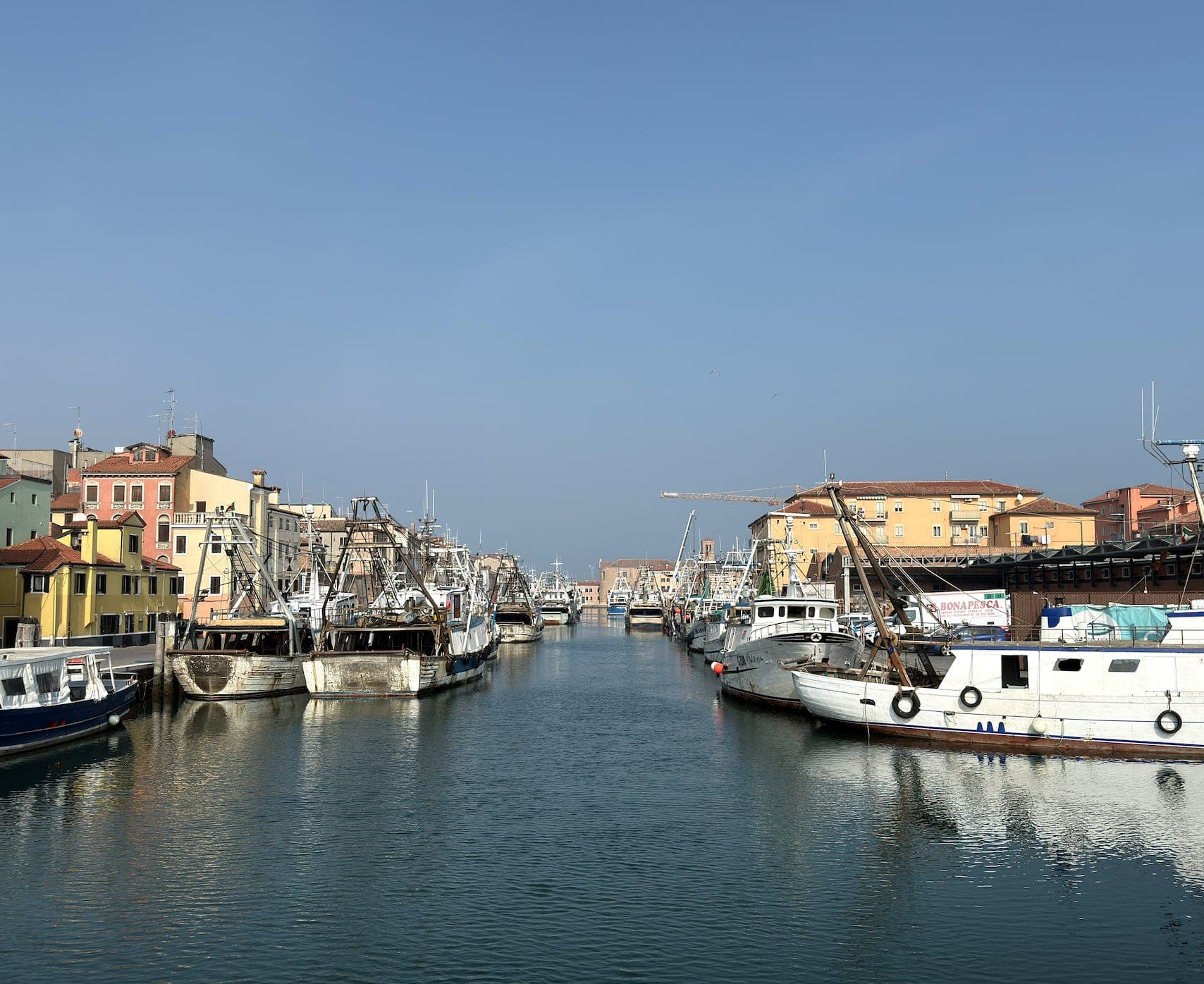
Chioggia | Everyone is wrong about this town
It’s not an alternative to Venice
Letters from the towns we visit. Free.
More from Anywhere Italy
- The 9 best hill towns you can reach by train in the province of BariBari provincehill townby train9 towns · smallest 5,908 residents
- The best hill towns you can reach by train within 90 minutes of BariNear Barihill townby trainwithin 90 min9 towns · smallest 5,908 residents · closest 22 min away
- The best olive oil towns in the province of BariBari provinceolive oil10 towns · smallest 5,908 residents