
Friuli-Venezia Giulia · Pordenone
Valvasone Arzene
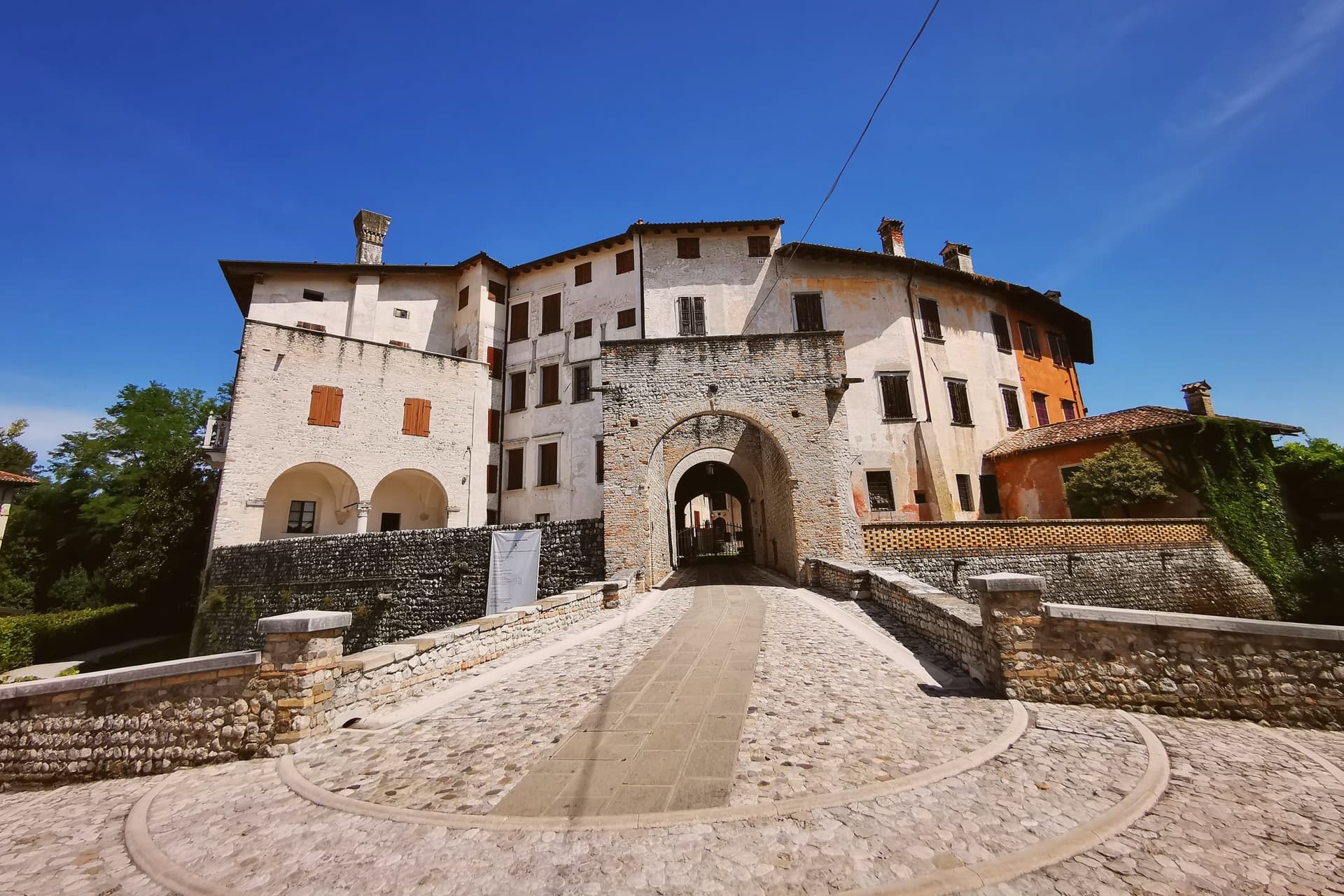
A medieval borgo on the Tagliamento's right bank, organized around a castle and a Duomo.
- Best time
- Apr–Jun, Sep–Oct
- By car
- 47 min from Udine
- Population
- 3,957
Known for
THE CASTLE
Medieval fortress with sixteenth-century frescoed interiors, the anchor of the centro storico and the reason the old town stayed intact.
COLOMBI ORGAN
1532 pipe organ in the Duomo by Vincenzo Colombi, one of the oldest Italian-built organs still in working order, with shutters by Pordenone and Amalteo.
PASOLINI
Pier Paolo Pasolini taught here 1947 to 1949, called Valvasone a city of silence, and lost his post after the 1949 scandal that ended his Friulian years.
When to visit
Best · Apr–Jun, Sep–Oct
- J8°
- F12°
- M14°
- A18°
- M22°
- J27°
- J30°
- A30°
- S25°
- O20°
- N14°
- D9°
- Best
- Hot or crowded
- Quiet
- Mostly closed
Daytime averages, 2020–2024. Weather data by Open-Meteo.com.
Why come
Valvasone Arzene is a 2015 merger of Valvasone and Arzene, on the right bank of the Tagliamento, fifteen kilometers east of Pordenone. The Friulian name is Voleson Darzin. Medieval Valvasone formed around the ford that crossed the river before bridges existed, and the settlement's layout follows from that crossing point rather than from any planned design.
The old town kept its street pattern almost intact over the centuries, which is what a visiting body of experts recognized when it named the commune to Borghi più belli d'Italia: not one monument but the whole surviving fabric, castle and church and streets together, arranged around the point where the ford once stood. Pier Paolo Pasolini taught at the Valvasone middle school from 1947 to 1949 and called the borgo a city of silence in his 1947 prose, before a scandal cost him both job and Communist Party membership. What holds the town together, in the end, is the river: it gave the original settlement its reason to exist at that spot, it still marks the commune's eastern edge, and it remains one of the last stretches of its kind in the Alps, largely unaltered while the borgo around it changed hands, mergers, and centuries.
The Sunday letter
Valvasone Arzene is on our list. Its letter is still to come.
We are writing about all 1,000 of these towns, one at a time, in a free letter every Sunday: the photo, the food, the festa. That is our mission. Sign up and you will be there when Valvasone Arzene comes up. By Peter & Sophia, from Pietrasanta.
Read on
Valvasone Arzene in our articles
How to get there
From Venice (TSF), about 1h 17m by car.
Verona (VRN) is about 2h 32m away.
By car from the centre of Udine 47 minutes or Trieste 1h 32m.
Coming by train into Venezia Santa Lucia? Valvasone Arzene is about 1h 19m away by road.
What to see
Castello di Valvasone
The frescoed rooms sit above painted cantinelle and stuccoes, with a small eighteenth-century chamber theater tucked into the same fabric, medieval walls carrying a full sixteenth-century decorative program inside.
Duomo del Santissimo Corpo di Cristo
The organ by Vincenzo Colombi still plays inside a parish church whose shutters, painted by Pordenone and Amalteo, close over the pipes when the instrument is silent.
Centro storico
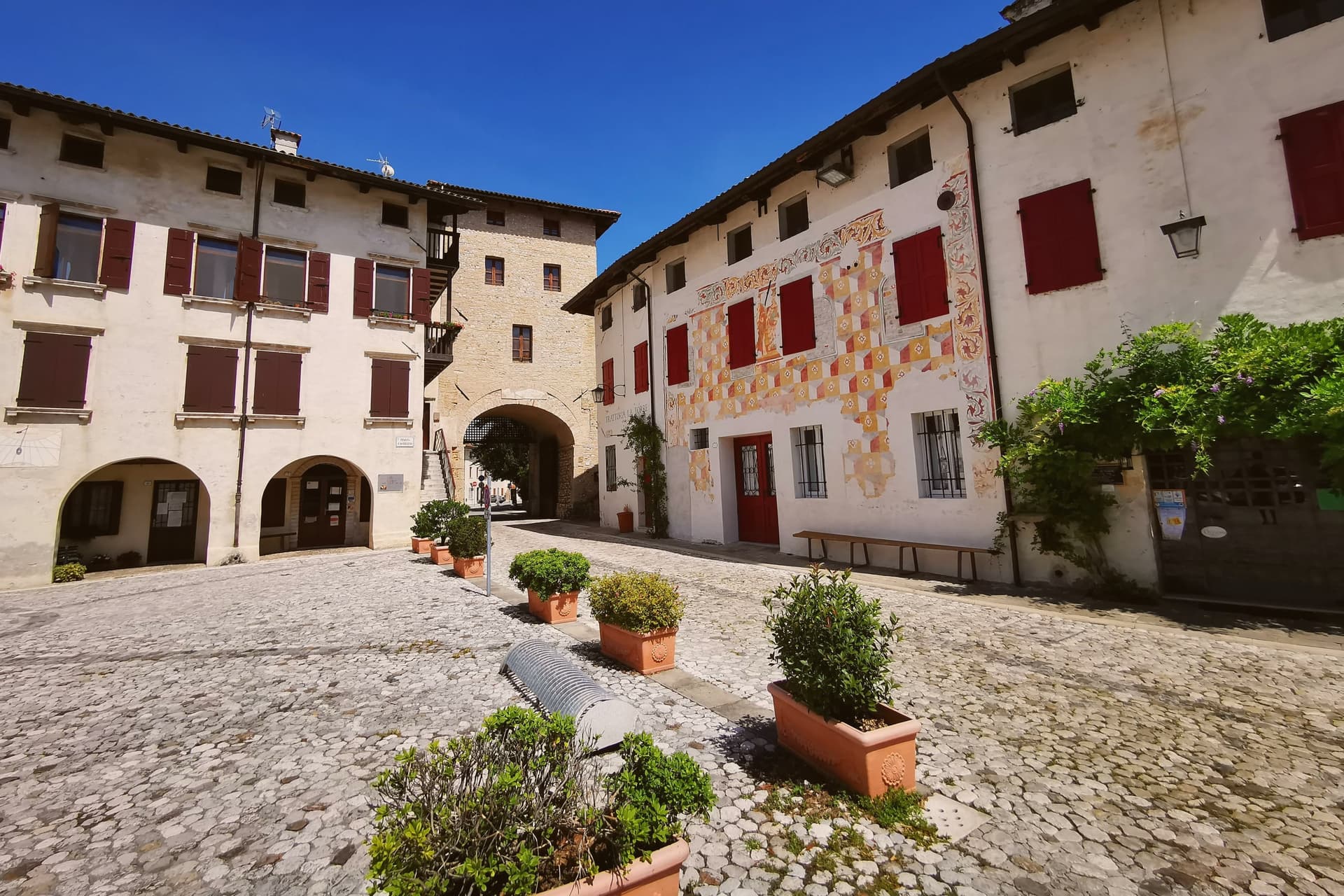
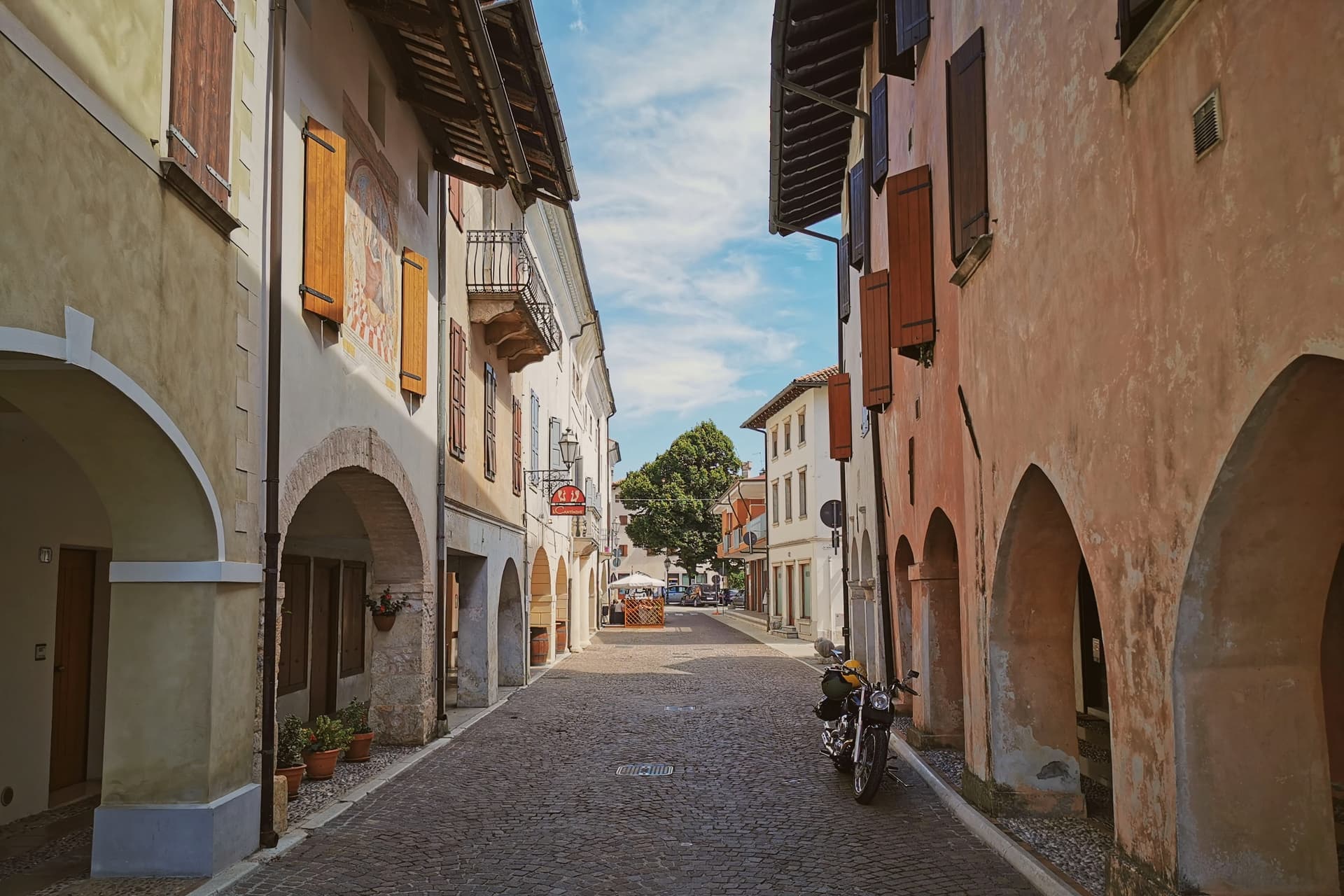
The medieval street pattern of the old ford town survives largely as laid out, the density and layout that put the commune on the Borghi più belli d'Italia list rather than any single building.
Tagliamento riverbank
The river marking the commune's eastern edge is one of the last morphologically intact braided rivers in the Alps and a candidate UNESCO site, its channel pattern still shifting rather than fixed by engineering.
The slow-trip planner
Building a trip? Find where Valvasone Arzene fits in a slow Italy circuit.
Answer five questions. We will shape a geographically coherent slow trip from the 1,000 Italian towns most travelers skip. Yours to save and share.
Living here
- Population 3,957
- Commuter belti
- Pharmacy in town
- High school within a 30-minute drive
- Nearest airport Venice, 1 h 17 min drive
- Regional capital Trieste, 1 h 32 min drive
Common questions
- What is Valvasone Arzene known for?
- Valvasone Arzene is a medieval borgo at 57 meters on the Tagliamento's right bank, organized around a castle and a Duomo.
- Where is Valvasone Arzene?
- Valvasone Arzene is a comune in the province of Pordenone, in Friuli-Venezia Giulia.
- What is the nearest airport to Valvasone Arzene?
- Venice (TSF), about 1h 17m by car.
- How long is the drive from Udine to Valvasone Arzene?
- About 47 minutes by car.
- When is the best time to visit Valvasone Arzene?
- Best in Apr–Jun, Sep–Oct. July is the warmest month, averaging 30 degrees, and May the wettest, with about 15 rain days.
- Which other towns are like Valvasone Arzene?
- Palmanova, Gradisca d'Isonzo and Sesto al Reghena.
- How many people live in Valvasone Arzene?
- 3,957 at the 2023 count.
Tags & datadesignations · numbers · sources
Recognised as
The numbers
- Elevation: 57 m
- Population: 3,957
- Surface area: 29.68 km²
These figures were compiled from public directories: ISTAT, OpenStreetMap and Wikidata, and from the official listings of the guides named on this page. Town details change; verify with official sources before you travel.
Similar
Towns like Valvasone Arzene
Palmanova
Province: Udine
both on the Friulian plain · both between 3,000 and 10,000 people
Gradisca d'Isonzo
Province: Gorizia
both on the Friulian plain · both between 3,000 and 10,000 people
Sesto al Reghena
Province: Pordenone
both on the Friulian plain · both between 3,000 and 10,000 people
Cordovado
Province: Pordenone
both on the Friulian plain · both near sea level
Battaglia Terme
Province: Padova
both between 3,000 and 10,000 people · both near sea level
Follina
Province: Treviso
both between 3,000 and 10,000 people · both near sea level
🎨 Borghi più belli d'Italia
More Borghi più belli d'Italia towns in Friuli-Venezia Giulia
Cervignano del Friuli
Province: Udine
The capital of Bassa Friulana on the Ausa river, an inland river port for Aquileia in 181 BC and a railway junction since 1860.
Cividale del Friuli
Province: Udine
The Lombard capital on the Natisone, founded as Forum Iulii by Julius Caesar, where an eighth-century chapel still holds six stucco saints.
Cordovado
Province: Pordenone
A 15-meter Friulian village in the Pordenone plain, fortified by the bishops of Concordia as their summer seat and described in Ippolito Nievo's Confessions.
Fagagna
Province: Udine
A 177-meter Friulian hill town northwest of Udine, fortified by Otto II in 983 and racing donkeys in the piazza since 1891.
Frisanco
Province: Pordenone
A 572-resident commune in the Val Colvera whose frazione Poffabro, at 525 meters, became a model of Prealpine stone-and-wood vernacular architecture.