
Themed picks · Bari · White towns
10 white towns of Puglia near Bari
10 comuni · within 90 minutes of Bari · drive times OSRM-computed
Puglia's most photographed feature is the colour of its towns. The Itria Valley, the inland upland that runs roughly between Alberobello, Locorotondo and Cisternino, holds the densest cluster of whitewashed comuni in Italy: lime-washed walls, low domes, the trulli of Alberobello and Martina Franca. The Adriatic coastline below it adds a second layer of whiteness against the sea, in towns like Polignano a Mare, Monopoli, and Trani's port quarter.
Bari is the right base because the city's rail and motorway position puts the Itria Valley and the southern Murge inside an hour, the BAT-coast comuni (Trani, Barletta, Bisceglie) inside forty minutes, and the Murgia hill country (Gravina, Altamura) inside an hour west. The city itself rewards two days of walking, particularly the old town (Bari Vecchia) at dawn when the women still make orecchiette by hand on the via dell'Arco Basso. The food crosses the same ground the towns do: the orecchiette and burrata are Bari signatures, the focaccia comes from Altamura's stone ovens, the bombette from the inland Murge.
We picked ten comuni that show the breadth, with deliberate weight toward the inland Itria Valley (Locorotondo, Cisternino, Ostuni, Fasano) and the coastal villages south of Bari (Polignano, Monopoli). Drive times below are OSRM-computed from Bari Centrale by car. Several entries (Trani, Bisceglie, Polignano) are also reachable by regional rail.
 1
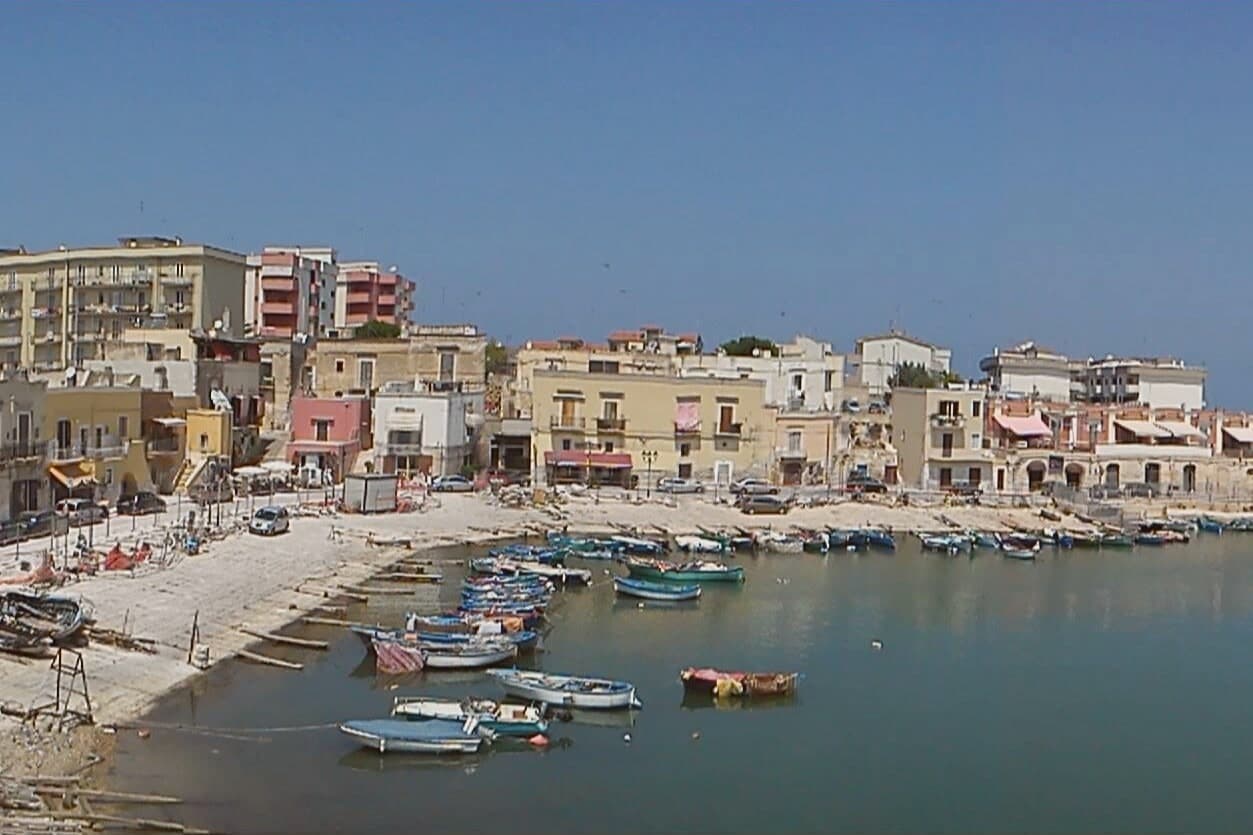
1Barletta-Andria-Trani · Apulia · 26 min from Bari
Bisceglie
An Adriatic port town between Trani and Molfetta, named for Roman watchtowers, with five dolmens around it and a Norman cathedral begun in 1073.
Five Bronze Age megalithic tombs around the commune, with the Chianca the largest and best-preserved in Italy.
Carries the Bandiera Blu for certified swimmable water.
 2
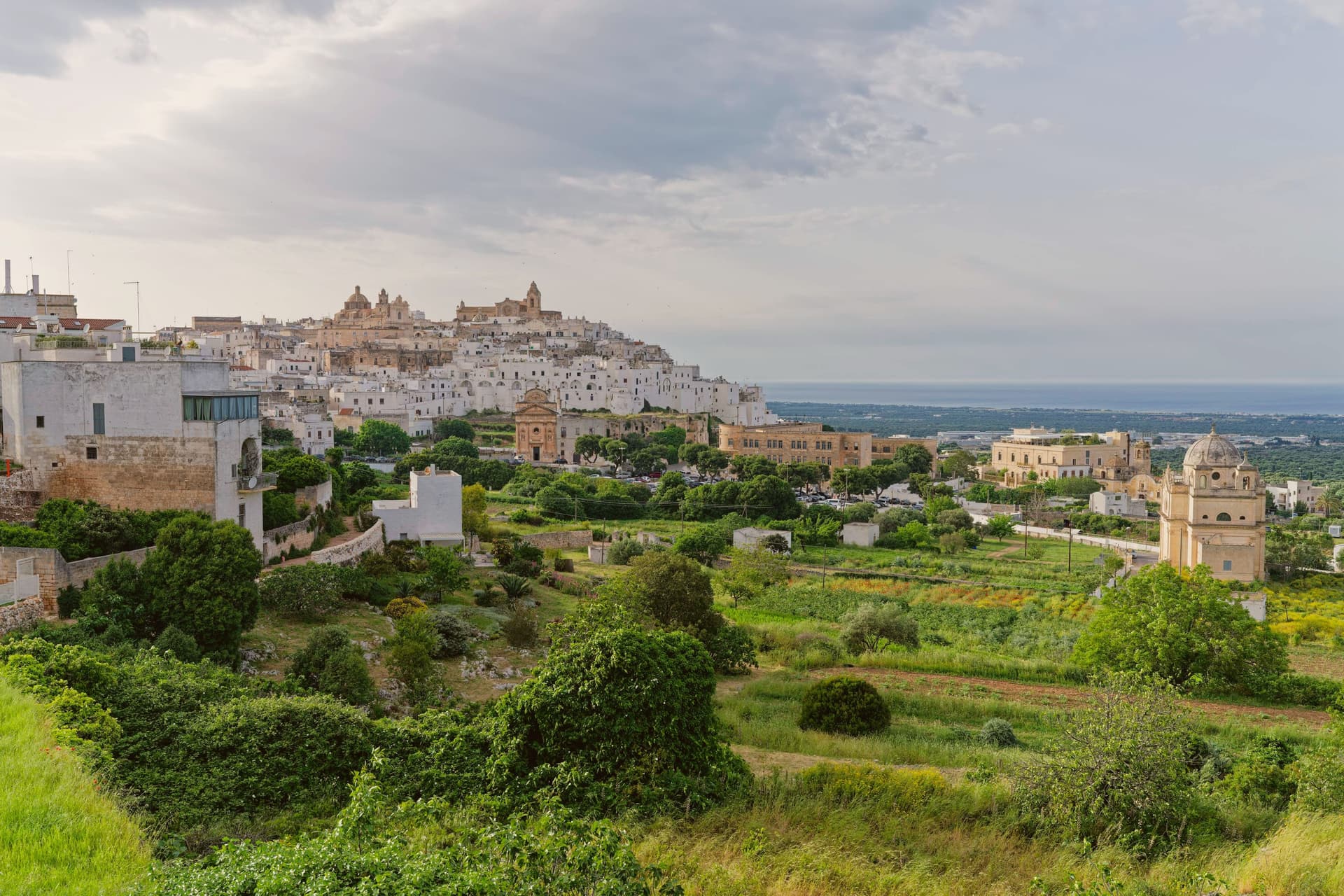
2Brindisi · Apulia · 89 min from Bari
Ostuni
The Città Bianca on three hills at 218 meters, eight kilometers inland, whitewashed against the Murge above an Adriatic plain of olive trees.
Whitewashed centro storico on three hills, lime-painted every spring since medieval plague measures, the single defining image of the town.
La Città Bianca, the most photographed of the Itria white towns.
 3
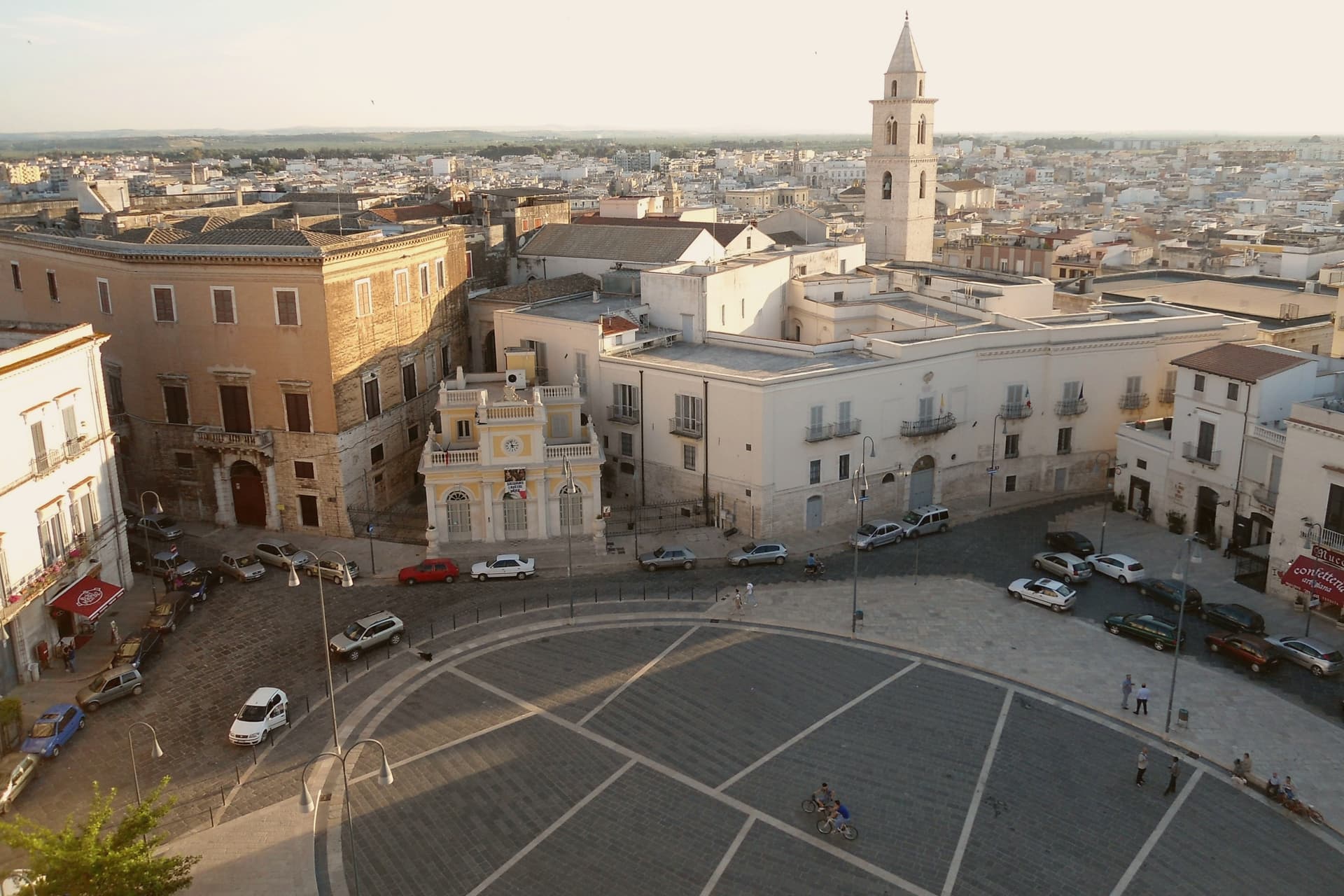
3Barletta-Andria-Trani · Apulia · 59 min from Bari
Andria
Frederick II's favourite Apulian city, the birthplace of burrata, ruling the Murge plateau eighteen kilometers north of its most famous castle.
Frederick II's octagonal Murge castle of the 1240s, UNESCO 1996, the image on the back of the Italian one-cent euro coin.
UNESCO-listed.
 4
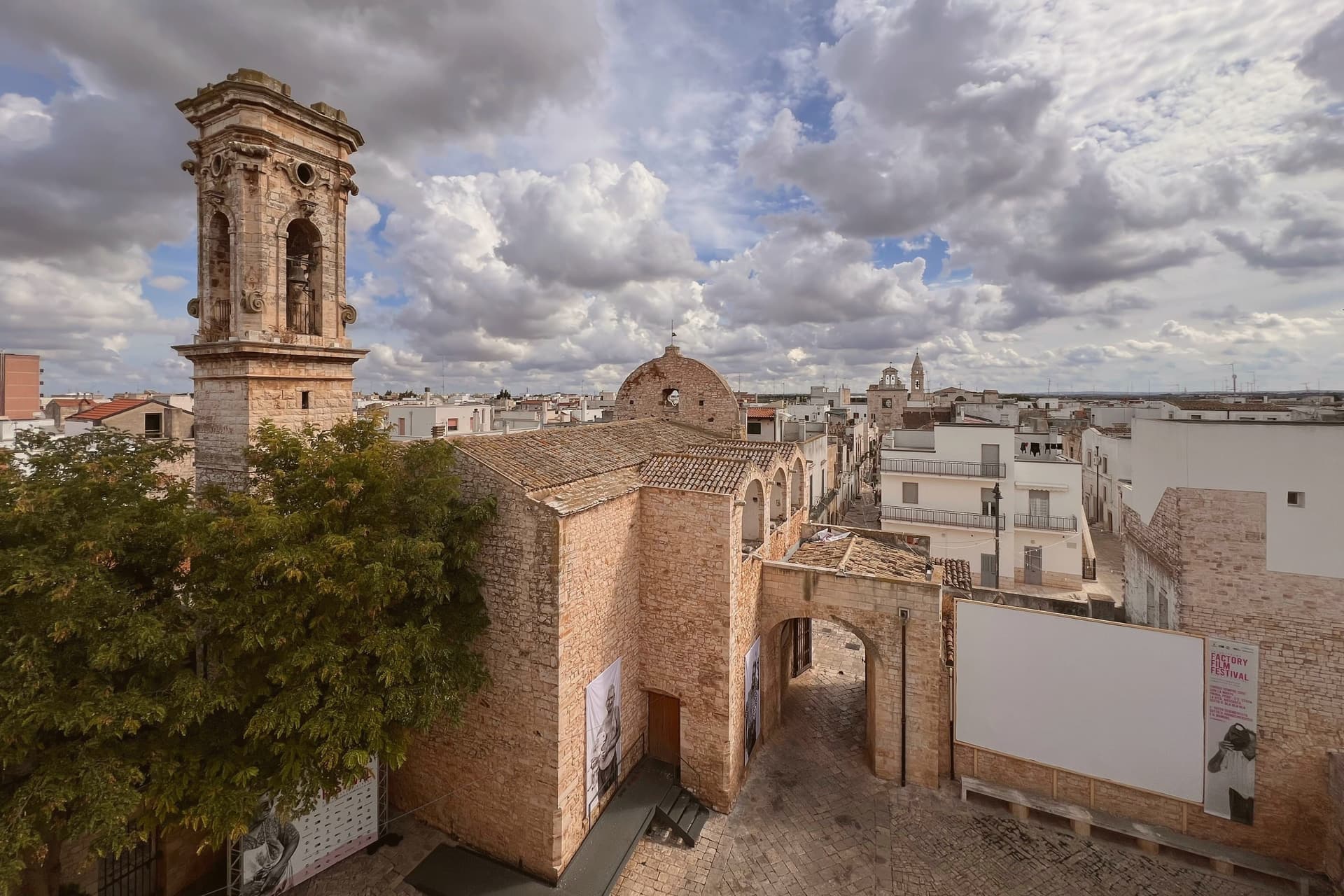
4Bari · Apulia · 41 min from Bari
Sammichele di Bari
A Murge town at 280 meters founded in 1609, anchored by the Caracciolo castle and famous for the zampina pork sausage.
Spiced spit-roasted pork sausage rolled into a spiral, the town's signature food and the basis of the late-September sagra that draws crowds from Bari.
Listed in I Borghi più belli d'Italia.
 5
5Bari · Apulia · 48 min from Bari
Polignano a Mare
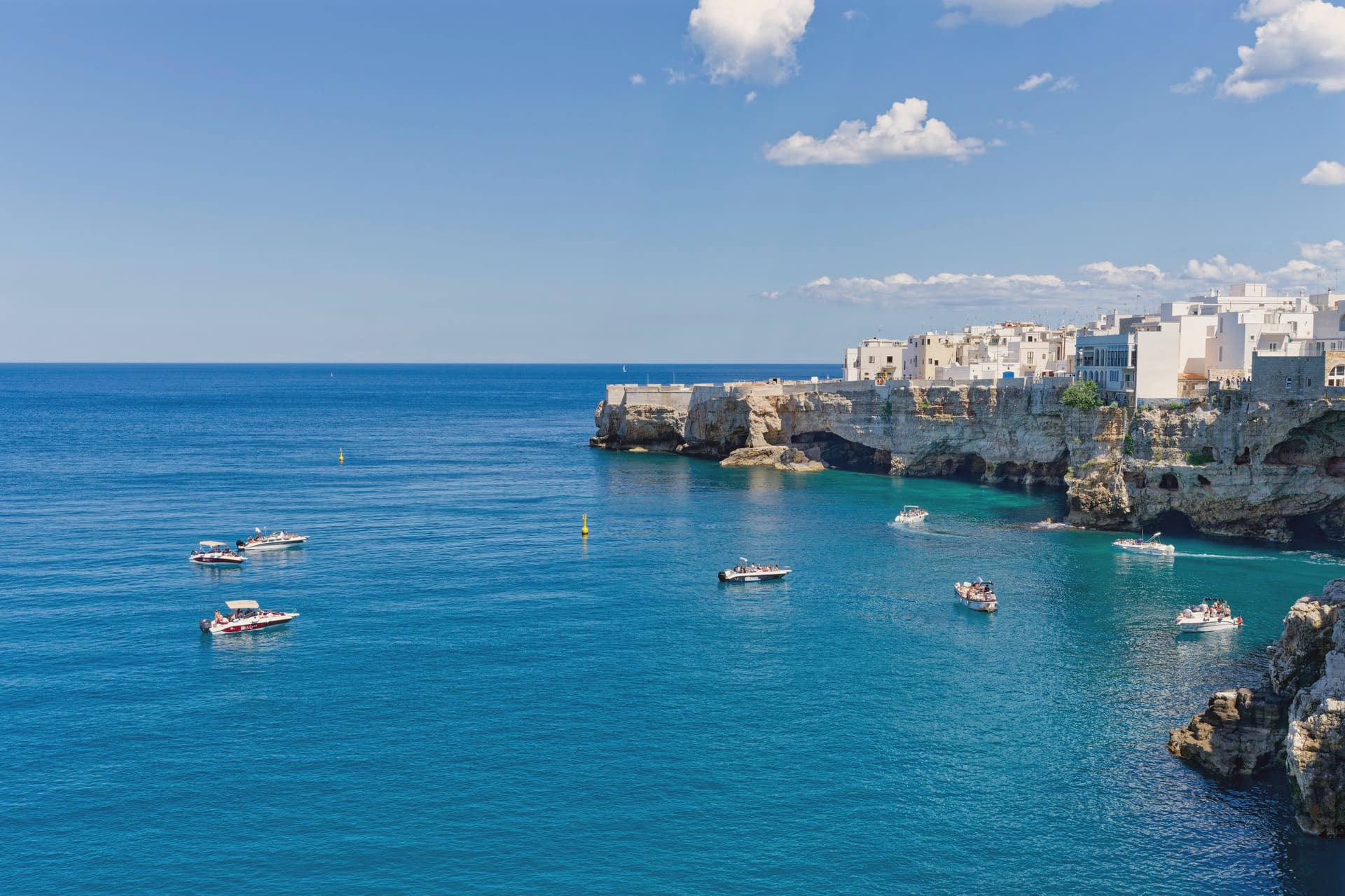
The Adriatic cliff town thirty kilometers south of Bari, built on a twenty-metre limestone bluff, birthplace of Domenico Modugno.
Cove beach under the Roman bridge between the cliff walls of the centro storico, the most-photographed view in Puglia.
The slow-trip planner
Building a trip? Find where Bari fits in a slow Italy circuit.
Answer five questions. We will shape a geographically coherent slow trip from the 1,000 Italian towns most travelers skip. Yours to save and share.
 6
6Bari · Apulia · 68 min from Bari
Locorotondo
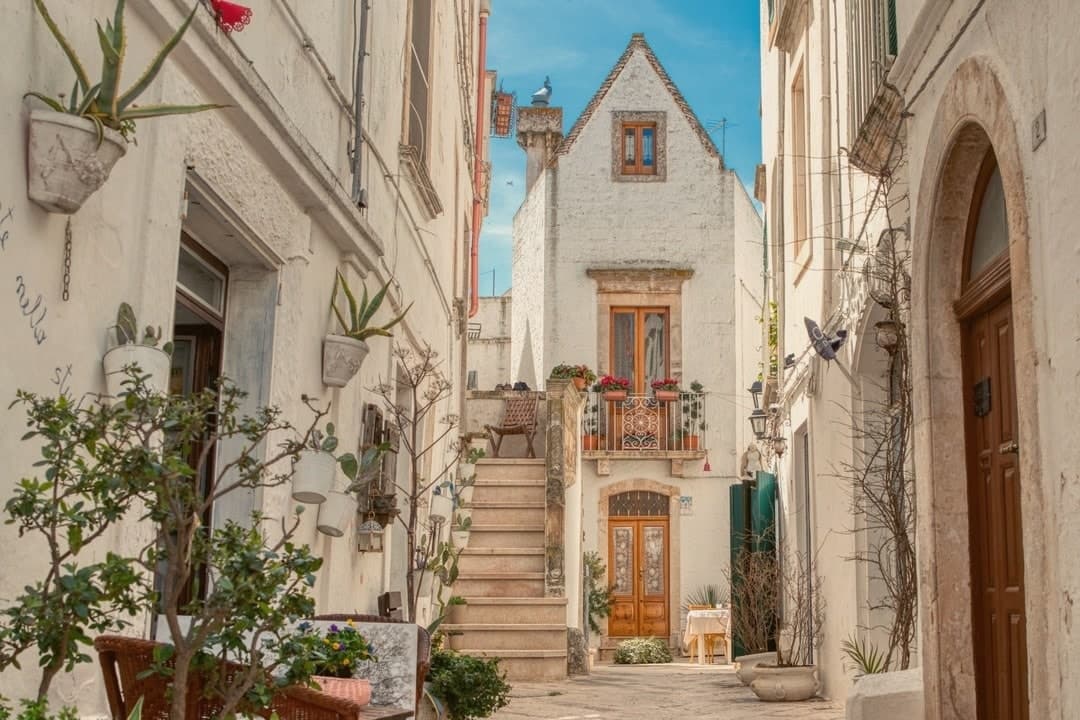
The round white town on the Itria valley ridge at 410 meters, with cummerse roofs the rest of Puglia does not have.
Whitewashed houses with double-pitch limestone-slab roofs, an architectural type unique to Locorotondo's centro storico.
 7
7Taranto · Apulia · 71 min from Bari
Castellaneta
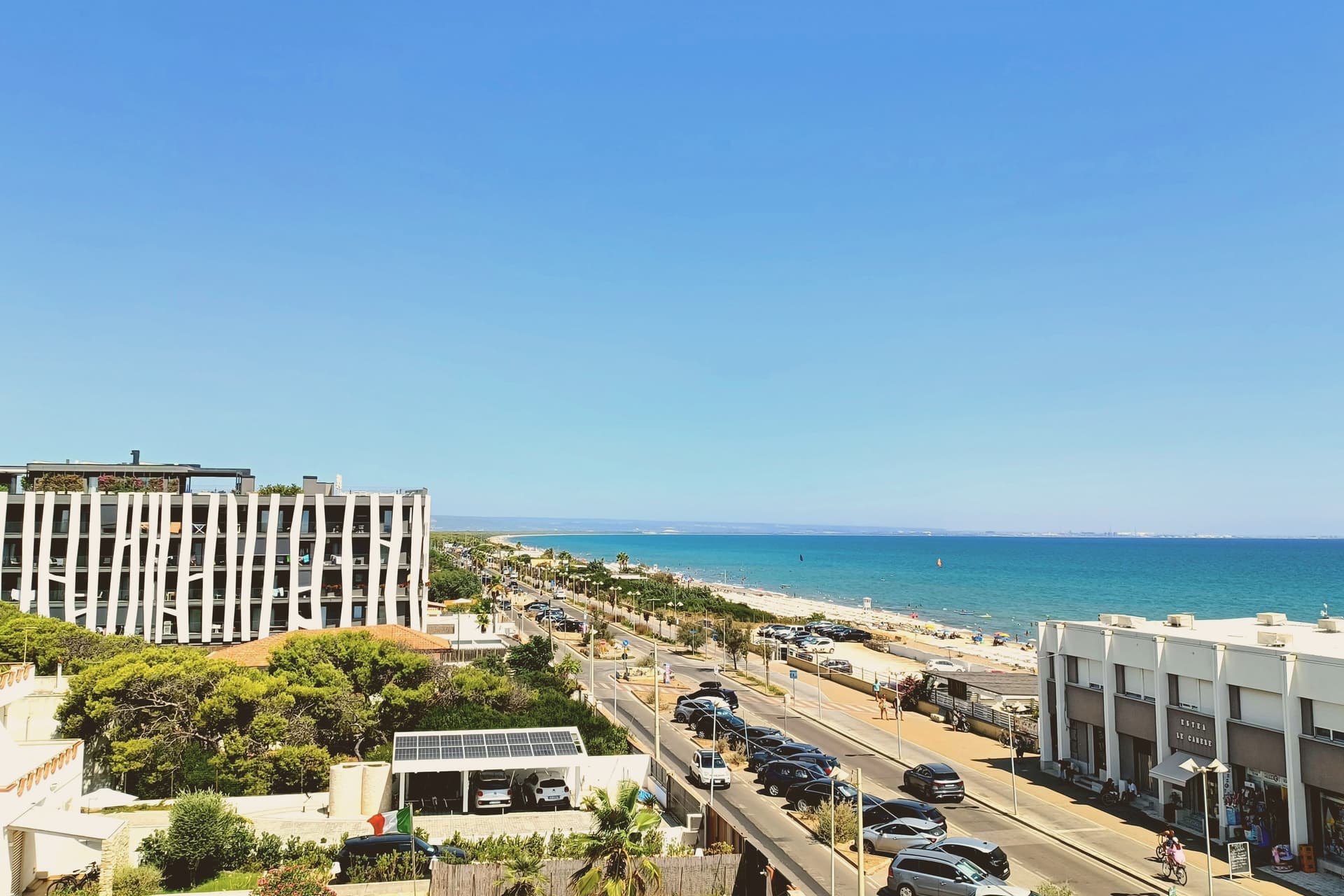
A cliff-edge Murge town at 235 meters above the Gravina Grande canyon, birthplace of Rudolph Valentino in 1895, with a Bandiera Blu Ionian marina.
Born here 6 May 1895 as Rodolfo Guglielmi, died in New York 1926, the silent-era actor whose ceramic statue stands in the centro storico.
 8
8Bari · Apulia · 54 min from Bari
Monopoli
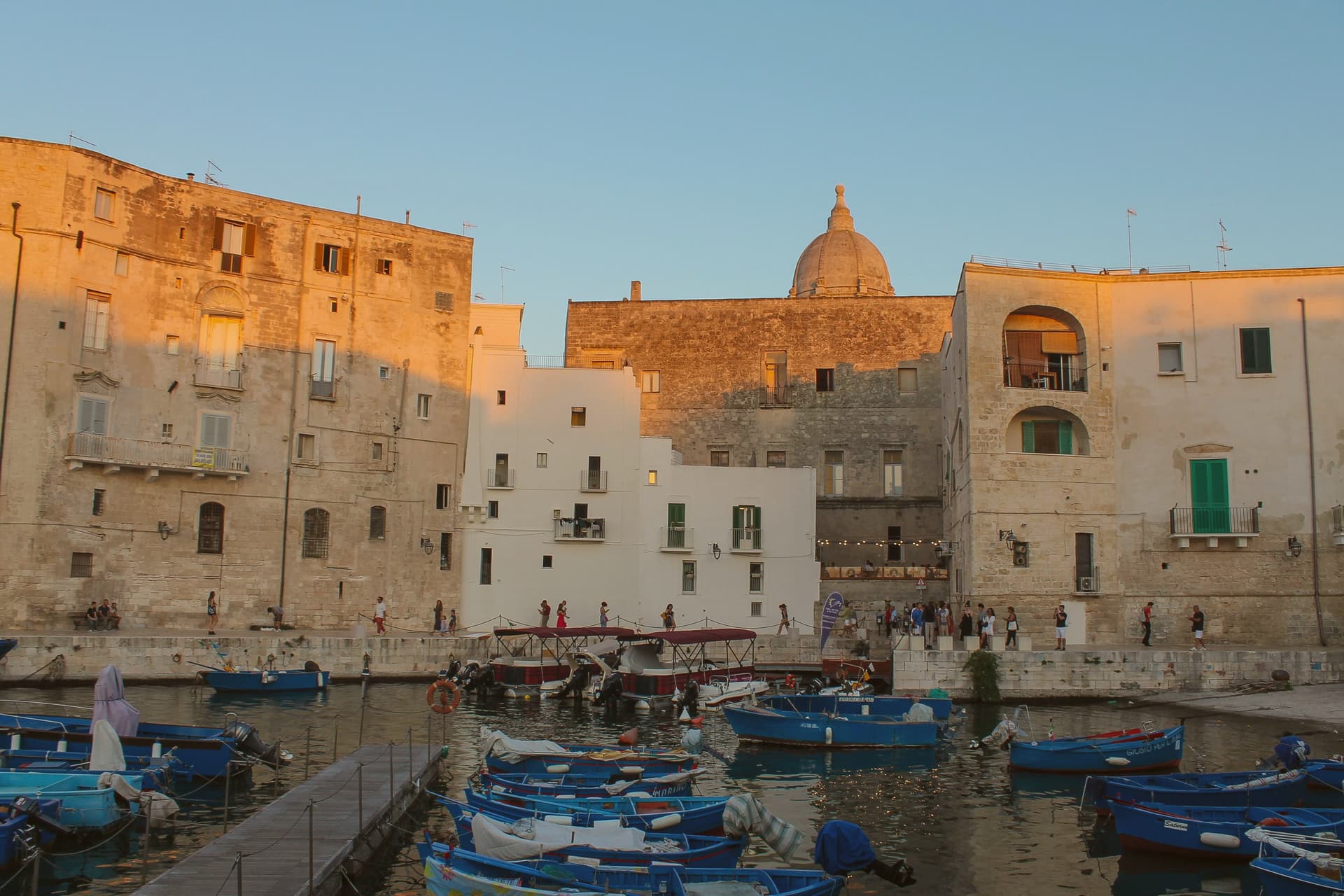
An Adriatic walled town forty kilometers south of Bari, the Charles V castle on the headland, 156 square kilometers of coastline behind it.
Pentagonal Spanish fortress of the 1550s on the headland above the old port, the centerpiece of the town's sixteenth-century defenses.
 9
9Brindisi · Apulia · 78 min from Bari
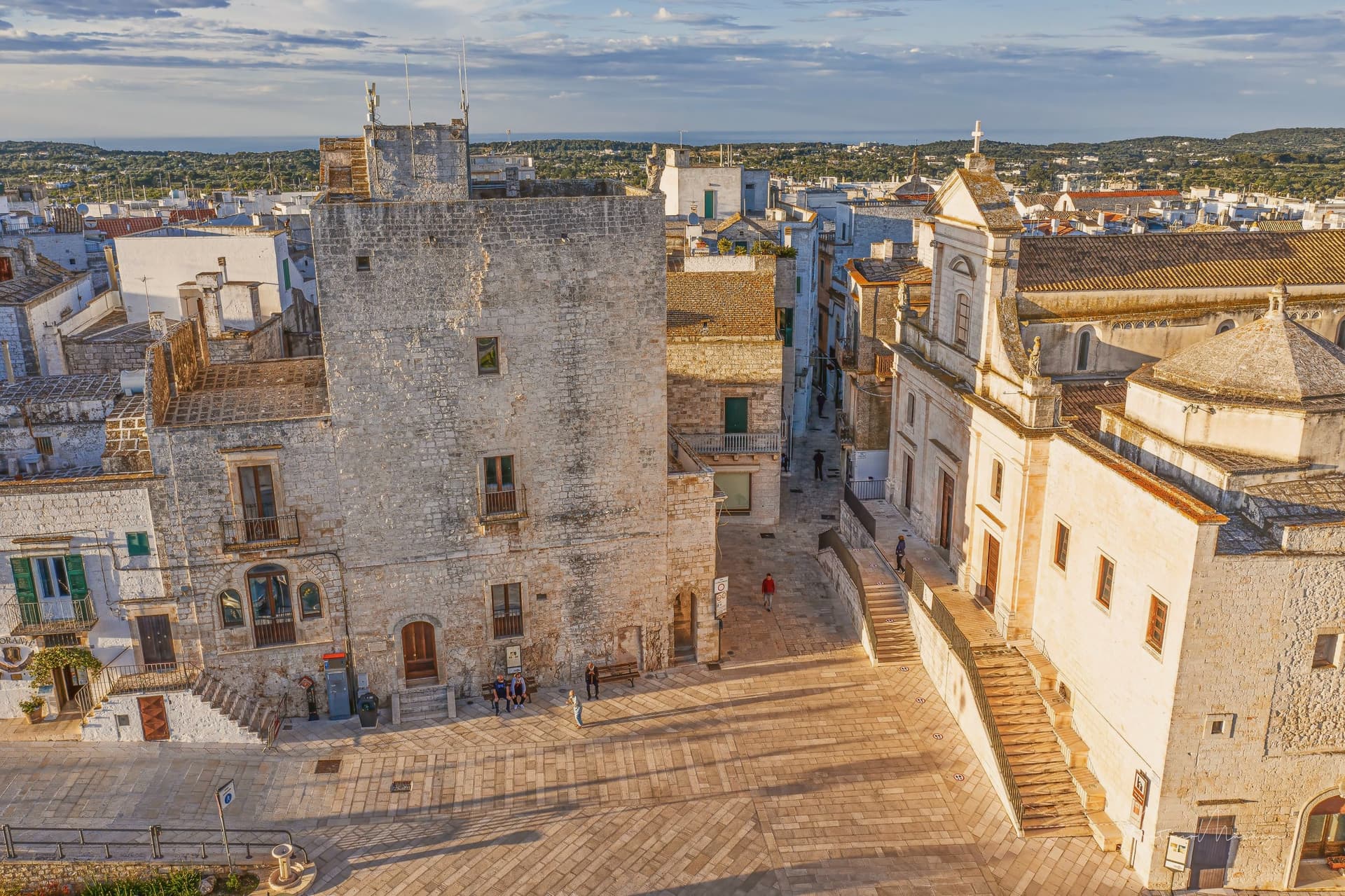
Cisternino
An Itria valley borgo on the southern Murgia at 394 meters, whitewashed and looking down over drystone walls and trulli.
Whitewashed labyrinth of stone alleys and arches, Borghi più belli and Bandiera Arancione, the postcard of the Itria valley.
 10
10Brindisi · Apulia · 64 min from Bari
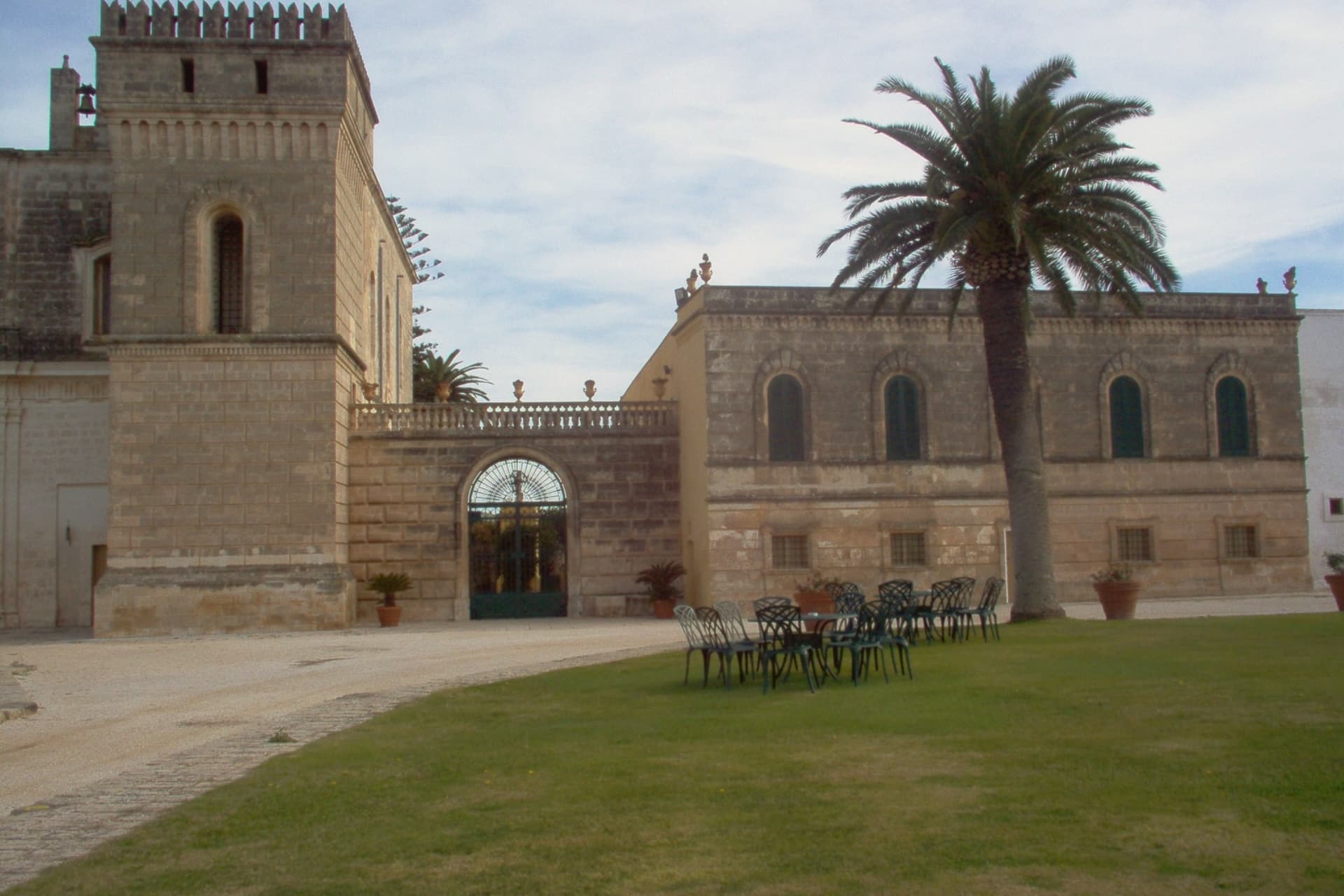
Fasano
A Brindisi-province town running from the Adriatic up to the Itria escarpment, holding a Roman coastal city, a wooded highpoint, and Europe's second-largest safari park.
Messapian and Roman city on the coast inhabited from the fifteenth century BC, eighty hectares of ruins including the Via Traiana and the civil basilica.
We write about towns like these every Sunday, one town a week, with the photo, the food, the festa. Free, from Pietrasanta.
Why Bari is the base
Bari has the only Centrale-grade station in the south Adriatic, an international airport (BRI), and motorway access (A14) that runs the spine of Puglia. The city itself stays open and busy through the year, which is what makes it a working base rather than a seasonal one: the central Mercato del Pesce, the Pugliese fish stew gnumareddhi, the orecchiette workshops in Bari Vecchia, the spread of trattorie around Piazza Mercantile.
When to go
April through June and September into mid-October are the working windows. May is the best month for the Itria Valley before the heat sets in. Late September into October brings the olive harvest and the new oil tastings in the Murge. Avoid July and August for inland day trips (the limestone Itria valley reaches 40°C), though the coast stays manageable with the breeze. Winter is a quiet alternative for the white inland comuni; the towns are less photographed but the food is at its register.
Questions people ask
- What is the most famous white town in Puglia?
- Ostuni, called La Città Bianca, sits on three hills 8 km inland from the Adriatic in the southern Itria Valley. The historic centre's lime-washed walls were established in the Middle Ages partly as a sanitary measure against plague. It is also the most visited of the Pugliese white towns, with the highest summer crowds.
- Where are the trulli?
- Alberobello holds the largest cluster of trulli (the conical-roofed stone dwellings, UNESCO-listed since 1996) but they appear across the entire Itria Valley. The town of Locorotondo has its own variant (cummerse, with steep tiled roofs). Martina Franca has neither but is the baroque-architecture jewel of the valley.
- Can I day-trip from Bari by train?
- Yes, to the coastal comuni. Trani (35 min), Bisceglie (25 min), Monopoli (45 min) and Polignano a Mare (35 min) are direct from Bari Centrale on the Trenitalia regional line. The inland Itria Valley needs the FSE private line (slower, less frequent) or a car.
- Is Bari worth visiting in itself, or only as a base?
- Both. The old town (Bari Vecchia) and the via Sparano shopping spine make a half-day on their own. The Basilica di San Nicola holds the relics of Saint Nicholas and is one of the most important Romanesque churches in southern Italy. Two full days are reasonable before you start day-tripping.
How we picked these · We filtered every Pugliese town within 90 minutes of Bari to those carrying a Borgo più bello, a Bandiera Arancione, or a Bandiera Blu (water flag), and ranked by signal density plus drive-time tightness. The Itria Valley anchors the list because the white-town tradition concentrates there; the Adriatic and Murge round it out.
From elsewhere in Italy
Five more towns to discover
Visso
Province: Macerata
The northern Sibillini gate at 607 meters where the Nera meets the Ussita, holding one of two surviving manuscripts of Leopardi's L'Infinito.
Goriano Sicoli
Province: L'Aquila
At 720 meters in the Subequana valley, a medieval village drawn by M.C. Escher in 1929 keeps a May ritual folklorists trace to Demeter.
Ugento
Province: Lecce
A Messapian-Roman town five kilometers from the Ionian, where a Baroque castle sits on the walls of the ancient city of Ozan.
Fontanellato
Province: Parma
A Parma-plain town built around the Rocca Sanvitale, the moated fortress at its center.
Pescina
Province: L'Aquila
A Marsica town at 735 meters, on the rim of the drained Fucino basin, that lost five thousand of six thousand people in a single morning in 1915.