
The best wine towns in Lombardia
Lombardia is not the first name anyone says about Italian wine, which is part of why its vineyards are still worked at a domestic scale. In Valtellina the Nebbiolo grows on dry-stone terraces cut into granite above the Adda, tended by hand because nothing wheeled can reach them, and the wine that comes out is thin-boned and mineral and made to drink with buckwheat pizzoccheri and bitto cheese. South of Lake Garda the land softens into morainic hills of gravel and clay, planted to Groppello and Trebbiano, with olive groves running between the rows and lake fog burning off by mid-morning. Autumn is the season the whole region tilts towards: harvest carts, cellars propped open, houses of pale local stone and rendered brick with the shutters folded back. Order a bottle in the town where the grapes grew and the price stops being a tourist price.
Most visitors to Lombardia stay in Milan and treat wine as a restaurant list rather than a landscape, then take the train to Lake Como for a day of ferries and lakeside terraces. Bellagio in particular absorbs enormous numbers between spring and early autumn, and the crowd is thickest exactly where the views are, along the waterfront promenades and the funicular queues. It is a beautiful place and it is also the single most photographed stretch of water in northern Italy. Nothing is wrong with going. It is simply that the wine is somewhere else.
The vine country sits east and north of all that. Follow the Adda up towards the Swiss border and the terraces begin, stacked above Sondrio and Tirano, walkable by the old paths that link one cellar to the next. Come back down to the bottom of Lake Garda and the hills carry on inland through Lonato del Garda, Monzambano and Volta Mantovana, past Sirmione's peninsula and out into the quieter Mantovan country of tortelli di zucca and lambrusco-adjacent reds. Fewer people go to these towns, and each one belongs to the national association of wine-producing communes, which in practice means the growers are local and the cellar doors are real.
Of the 65 communes we have mapped in Lombardia, 6 qualify as wine towns: each belongs to the national association of wine-producing towns. The smallest, Monzambano, has 4,816 residents.
If you are still choosing, we have also written The best towns with a food festival in Lombardia and The best towns with a serious restaurant that you can reach by train in Lombardia.
Monzambano
Why visit Monzambano
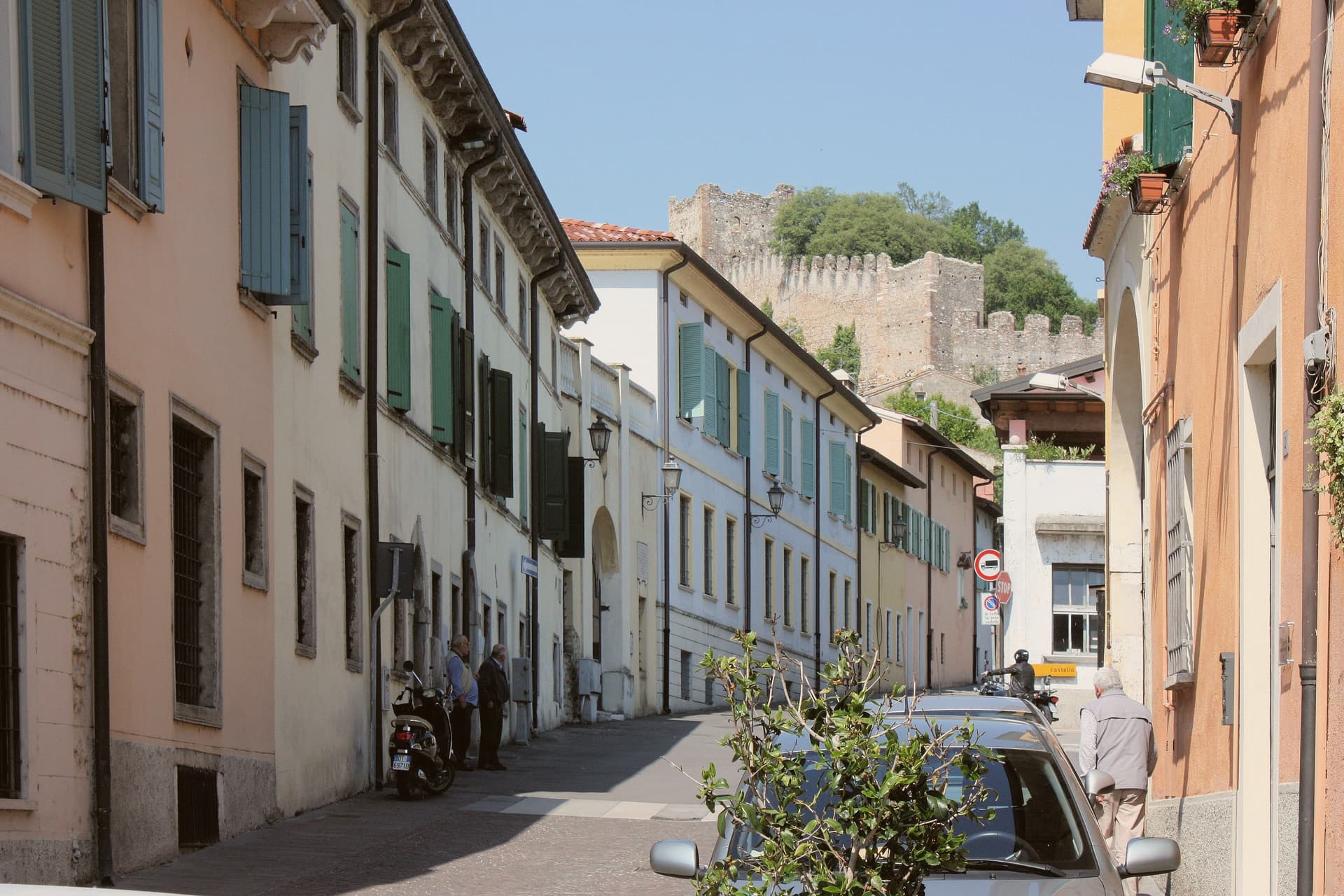
Monzambano sits at 88 meters on the right bank of the Mincio, in the moraine hills the last Alpine glacier pushed up south of Lake Garda. The commune covers 4,800 people across several frazioni, but the one travelers come for is Castellaro Lagusello, a fortified medieval village built around a small heart-shaped lake.
Pope Eugenio III's document of 1145 lists its parish among those of the Diocese of Verona. The castle and walls date to the eleventh and twelfth centuries.
The Gonzaga of Mantua tried and failed to hold it through the Quattrocento, and it passed to Venice, then to Napoleon, who in 1803 annexed it to Monzambano. Pile-dwelling settlements under the lake belong to the Prehistoric Pile Dwellings around the Alps UNESCO site.
The commune holds five institutional signals at once: Borghi più belli, Bandiera Arancione, Borgo dei Borghi finalist, Città del Vino, Città dell'Olio. The wines are Lugana and Garda Colli Mantovani; the oil is Garda DOP.
The comune belongs to the national association of wine-producing towns.
What to see in Monzambano
- Castellaro Lagusello. Fortified medieval frazione inside crenellated walls and ten towers, set above a heart-shaped lake on a moraine hill.
- Castello di Castellaro. Eleventh- to twelfth-century castle on the hill above the lake, long contested between Mantua and Venice.
- Prehistoric pile dwellings. Submerged Bronze Age stilt-house settlement in the lake, part of the UNESCO Prehistoric Pile Dwellings around the Alps.
How to get to Monzambano
Verona is roughly 39 minutes away by road.
Our tip
April through June and September into October are the months the moraine hills work best. The vines are leafing or harvested, the lake reflects the walls, and the small reserve around Castellaro is open to walkers. July and August get humid and still; Lake Garda is fifteen kilometers away and pulls the day-trippers off the back roads. Sagra di San Bartolomeo falls in August.
Volta Mantovana
Why visit Volta Mantovana
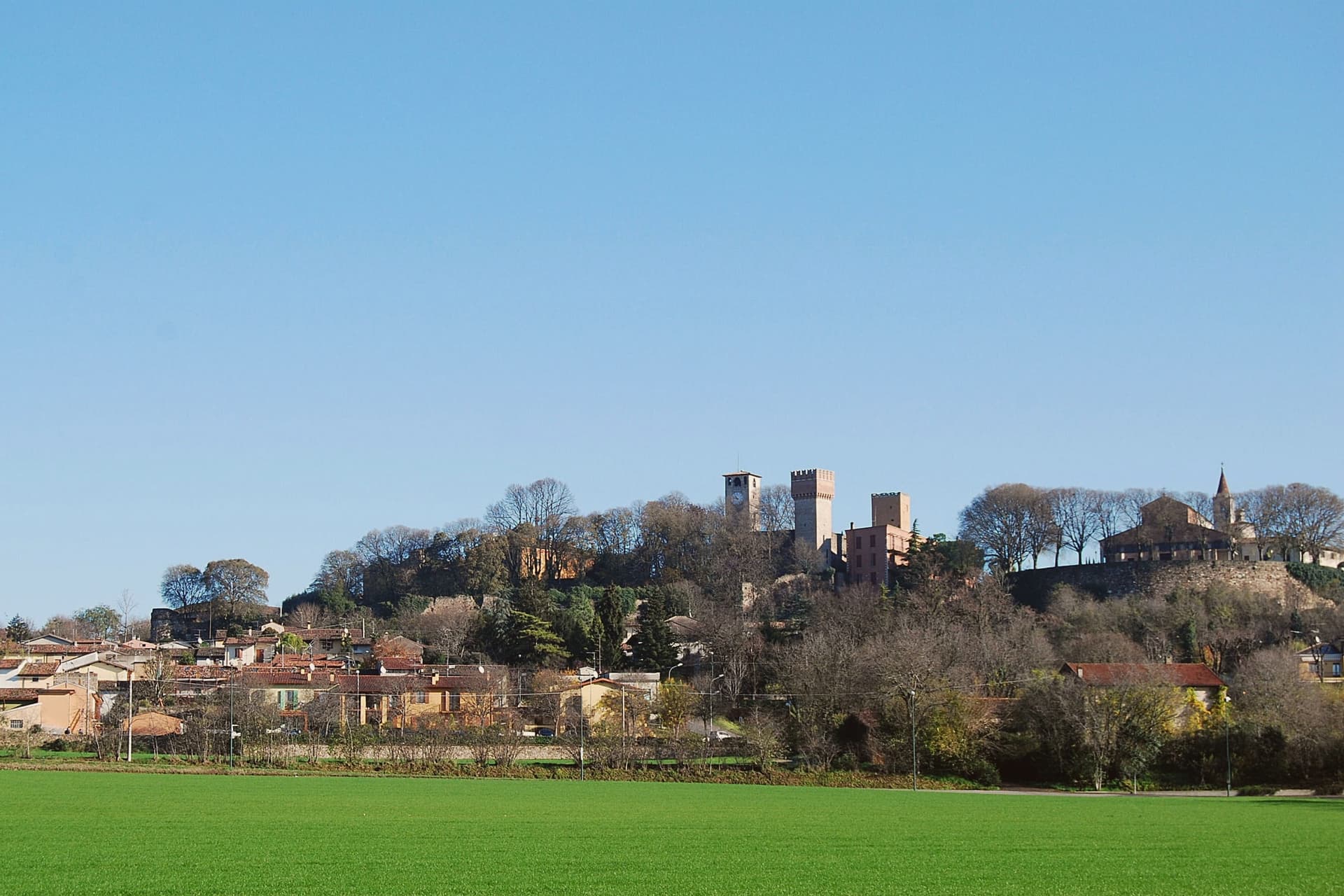
Volta Mantovana sits at 91 meters on the first ring of morainic hills between the Po plain and the southern shore of Lake Garda, twenty kilometers northwest of Mantua. The name comes from the bend in the Mincio that the town overlooks, and the site has carried a fortification since at least 1053, when Countess Beatrice of Lorraine donated her estate to the bishop of Mantua.
The old castle and the Renaissance palace are not separate buildings but one structure: the defensive ditches of the medieval fortress were later cut into terraced gardens, and the walls that once ringed a hilltop stronghold now enclose a country residence. The wine country and the river park lie beyond the walls, on the same hills and along the same water that gave the town its name, so the built center and the agricultural land around it read as a single continuous landscape rather than a town and its outskirts.
What the place adds up to is a small hilltop seat repurposed twice: first from a bishop's donated fortress into a Gonzaga country retreat, later absorbed into the wine and river-park economy of the hills it sits on.
The comune belongs to the national association of wine-producing towns.
What to see in Volta Mantovana
- Palazzo Gonzaga Guerrieri. Built 1465-1470 for Ludovico Gonzaga and Barbara of Brandenburg, later expanded by the Guerrieri family, who added to the residence after the Gonzaga period.
- Giardini di Palazzo Gonzaga. Sixteenth-century Italian terraced gardens cut into the castle's defensive ditches, with geometric hedges, fountains and statues across multiple levels.
- Castello medievale. Eleventh-century fortress remains including a tower and sections of curtain wall, standing since a countess donated the estate to the bishop of Mantua in 1053, later folded into the palace rebuild.
How to get to Volta Mantovana
Verona is roughly 50 minutes away by road.
Our tip
April through June and September through October are the months that suit Volta best. The morainic hills are green in spring and gold at harvest, and the Mincio bike path between Peschiera and Mantova rides comfortably. July and August are hot and humid on the plain, with afternoon thunderstorms rolling down from Garda.
Sirmione
Why visit Sirmione
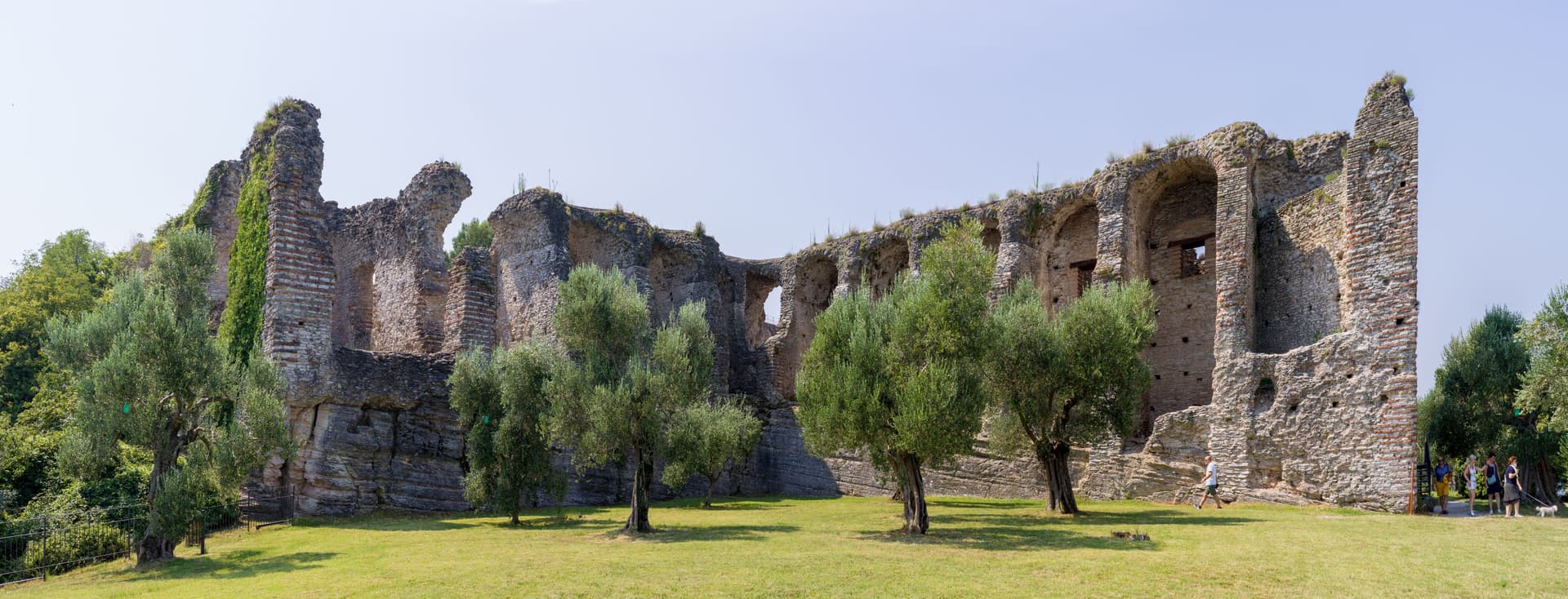
The peninsula runs four kilometers into the southern end of the lake, narrow enough that the old town occupies a triangle of land just over a mile long. Three low hills organize it: Cortine, San Pietro, and the rise at the tip where the Roman villa stands.
The fortress sits at the single entrance to the walled town, so the only way in by land passes through its gate, and the water it once enclosed as a fortified port is still shut in behind it. Past that gate the medieval streets are packed between the hills, and the ground rises toward the church at the highest point before falling away again toward the villa ruins at the peninsula's end.
The name attached to the villa is literary rather than archaeological: the poet's return in his thirty-first poem was to a family property on this tip of land, and nothing dug from the ground proves the two are the same place, but the name has held for a thousand years regardless. Maria Callas kept a villa here through the 1950s and 60s.
Between the enclosed water at one end and the hot spring at the other, the peninsula reads as a strip of land defined entirely by what edges it: lake on three sides, a gated approach on the fourth, and a history that settled into the name of a poem long before anyone could confirm it belonged there.
The comune belongs to the national association of wine-producing towns.
What to see in Sirmione
- Castello Scaligero. Fortress at the entrance to the old town, with a 37-meter keep and a fortified port still enclosing a piece of the lake.
- Grotte di Catullo. Villa complex built late first century BC to early first century AD, its ruins scattered across olive terraces at the tip of the peninsula.
- Terme di Catullo. Thermal spa drawing on the same mineral spring that surfaces offshore in Lake Garda.
How to get to Sirmione
Verona is roughly 36 minutes away by road.
Our tip
April through October is the lake season. The Grotte di Catullo open with the spring archaeological calendar, the Scaligero is open year-round, and the peninsula promenade fills with day-trippers from Verona and the German A22 corridor. July and August are the heaviest months, with the old town packed between ten and seven; April, May, September and October are the easier months.
Tirano
Why visit Tirano
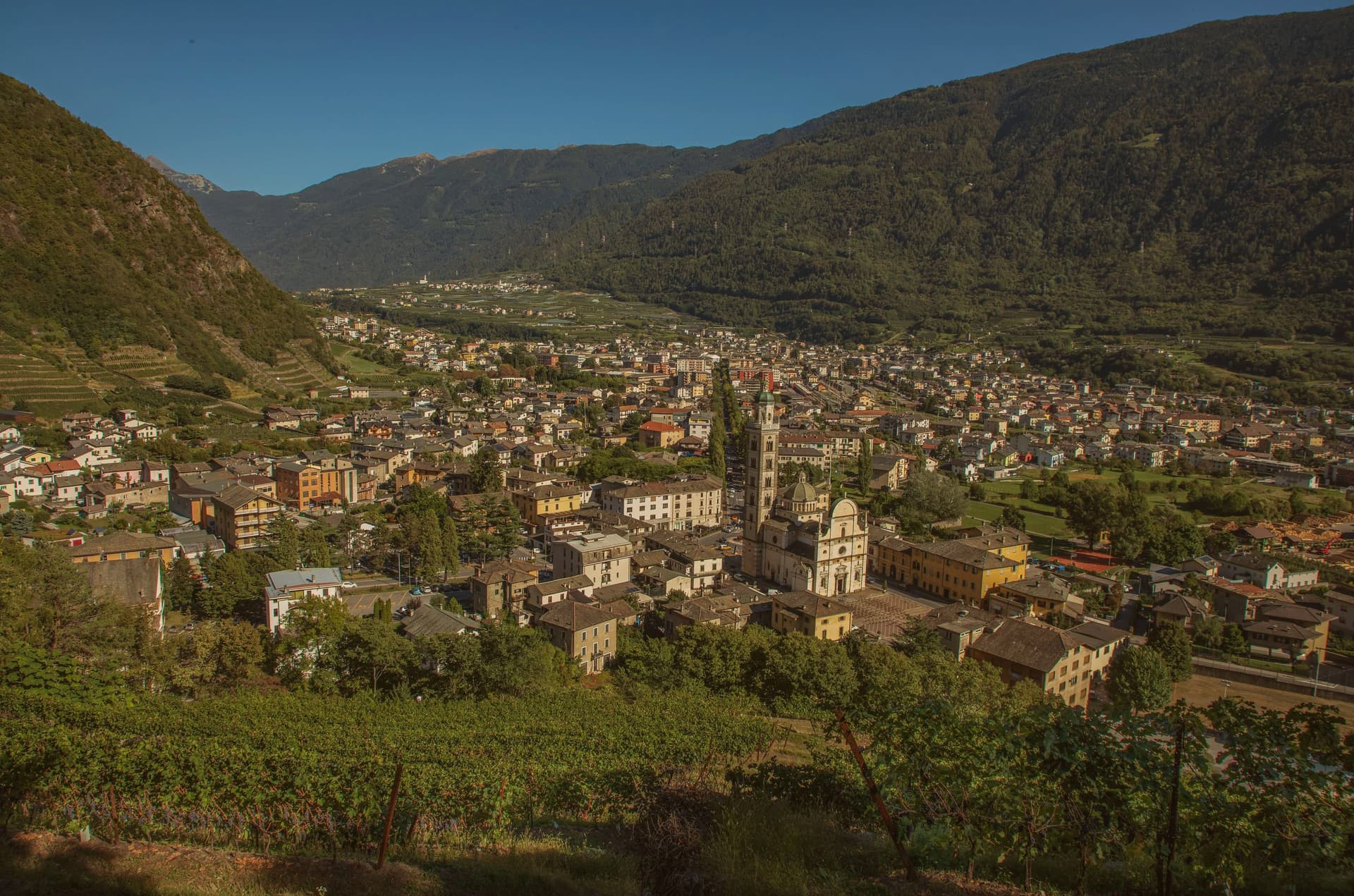
Tirano sits in the upper Valtellina, twenty-five kilometers east of Sondrio and a few kilometers south of the border at Campocologno. The Orobie chain rises behind it to the south, the Bernina massif to the north, and the Adda runs through the center, dividing the lower town from the upper town, which are linked by stone bridges.
On 29 September 1504 a local named Mario Omodei reported a Marian apparition; the plague that was killing the town stopped, and on 25 March 1505 the foundation stone was laid for the church built on the site. The railway behind the town, opened by the Rhaetian Railway and inscribed by UNESCO together with the Albula line, reaches the resort on the far side of the pass.
The town carries Cittaslow status and produces bresaola IGP alongside its wine on the surrounding terraces. Tirano's position, at the meeting point of a valley floor town, a mountain railway, and a pilgrimage site, makes it a junction as much as a destination: the place where the mountains behind it hand off to the Valtellina.
The comune belongs to the national association of wine-producing towns.
What to see in Tirano
- Santuario della Madonna di Tirano. The carved organ case from 1608, by Giuseppe Bulgarini of Brescia, fills the west end of the basilica.
- Bernina railway terminal. Italian end of the Rhaetian Railway's Bernina line, the point where the track from St Moritz meets the town at valley floor level.
- Centro storico. Medieval Tirano along the Adda, with Palazzo Salis, Palazzo Pievani-Visconti Venosta and the stone bridges between the lower and upper town.
How to get to Tirano
There is a railway station in the town, so you can arrive without a car and never need one while you are here. Brescia is roughly 135 minutes away by road.
Our tip
May through September is the open season in Tirano. The terraces are walkable, the Bernina Express runs four daily services to St Moritz, and the basilica organ is in concert programme through July and August. October brings the Nebbiolo harvest on the upper slopes and the first snow on the Bernina ridges. Sforzato Wine Festival falls in October.
Lonato del Garda
Why visit Lonato del Garda
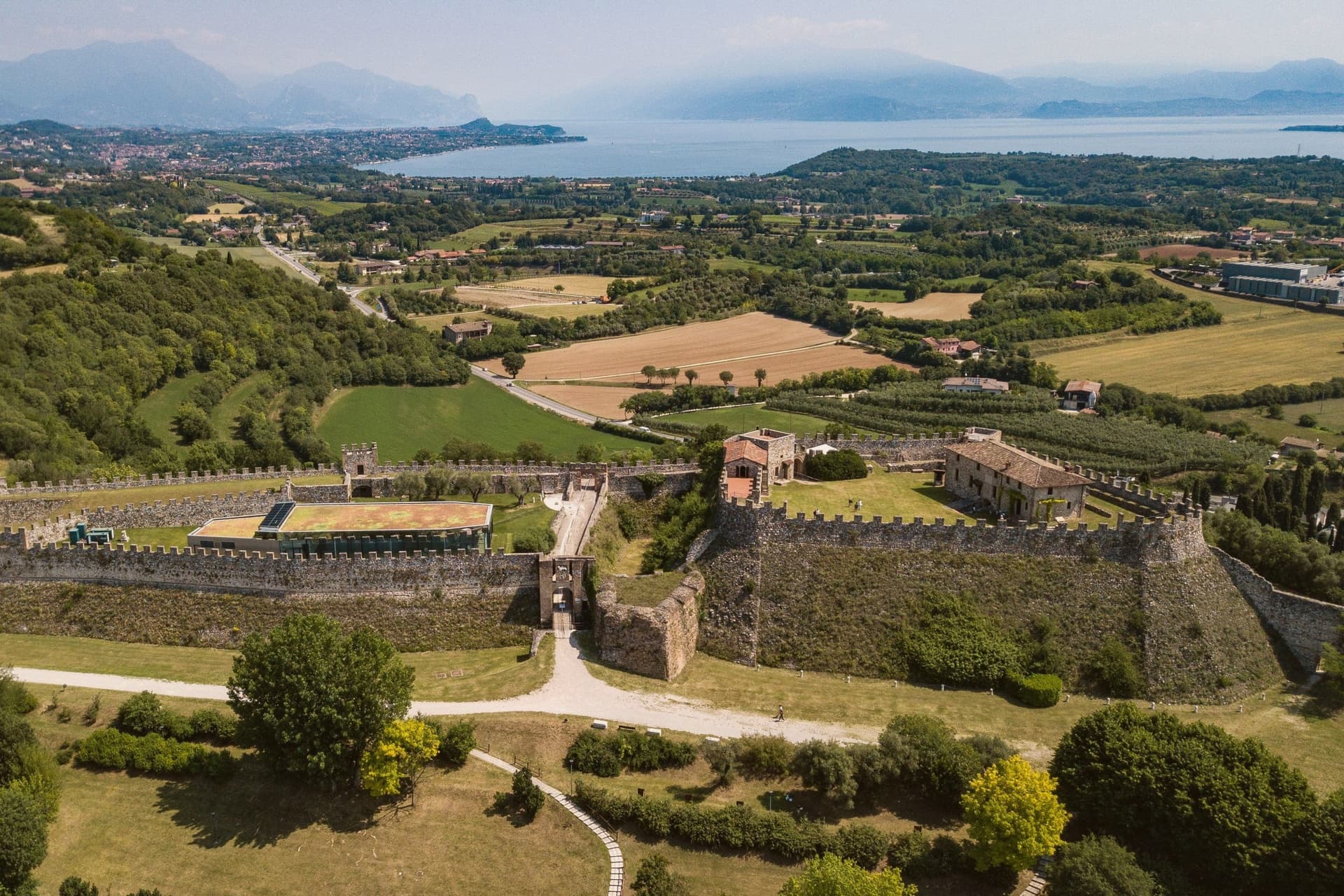
Lonato del Garda sits on a low morainic hill on the southwestern side of Lake Garda, between Brescia and the Mincio, halfway between Milan and Venice. The castle was raised on the recognition that this rise commanded the surrounding plain, a position the wife of Bernabò Visconti judged worth fortifying.
The Venetian rectors who later governed the town from their seat below the hill were themselves administering territory for a republic that reached this far inland from the lagoon, a detail the building's later life as a private museum has mostly obscured. That seat passed in 1906 to a Brescian senator and his wife, who furnished it room by room rather than converting it into something else, which is why it now reads as a residence rather than an institution.
South of the centre the ground flattens into the vineyards of the Lugana zone, the same morainic soil finishing out toward the lake's edge. The town, then, is a hill town in shape only at its summit: castle above, rectors' house and church at the level below, and the flat wine country taking over where the moraine runs out toward the water.
The comune belongs to the national association of wine-producing towns.
What to see in Lonato del Garda
- Rocca di Lonato. The upper structure stands 180 metres long, with the so-called Quartier Generale below it. The walls carry the reshaping of the 15th and 16th centuries over the original 1376 order from Regina della Scala.
- Casa del Podestà. Rooms furnished as left by their restorer, with paintings, sculpture and majolica alongside the library, including a notable collection of incunabula.
- Duomo di San Giovanni Battista. Late Baroque collegiate church in the centre, a single nave with sculpted altars and a frescoed dome.
How to get to Lonato del Garda
There is a railway station in the town, so you can arrive without a car and never need one while you are here. Brescia is roughly 32 minutes away by road.
Our tip
April through October is the working season for southern Garda, and Lonato runs on it. May and June open the Rocca and the Casa del Podestà to long visits and bring the Lugana vineyards into bloom. July and August bring lake heat and weekend crowds from Brescia and Verona, but the hill keeps temperatures three or four degrees cooler than down at the water.
Sondrio
Why visit Sondrio
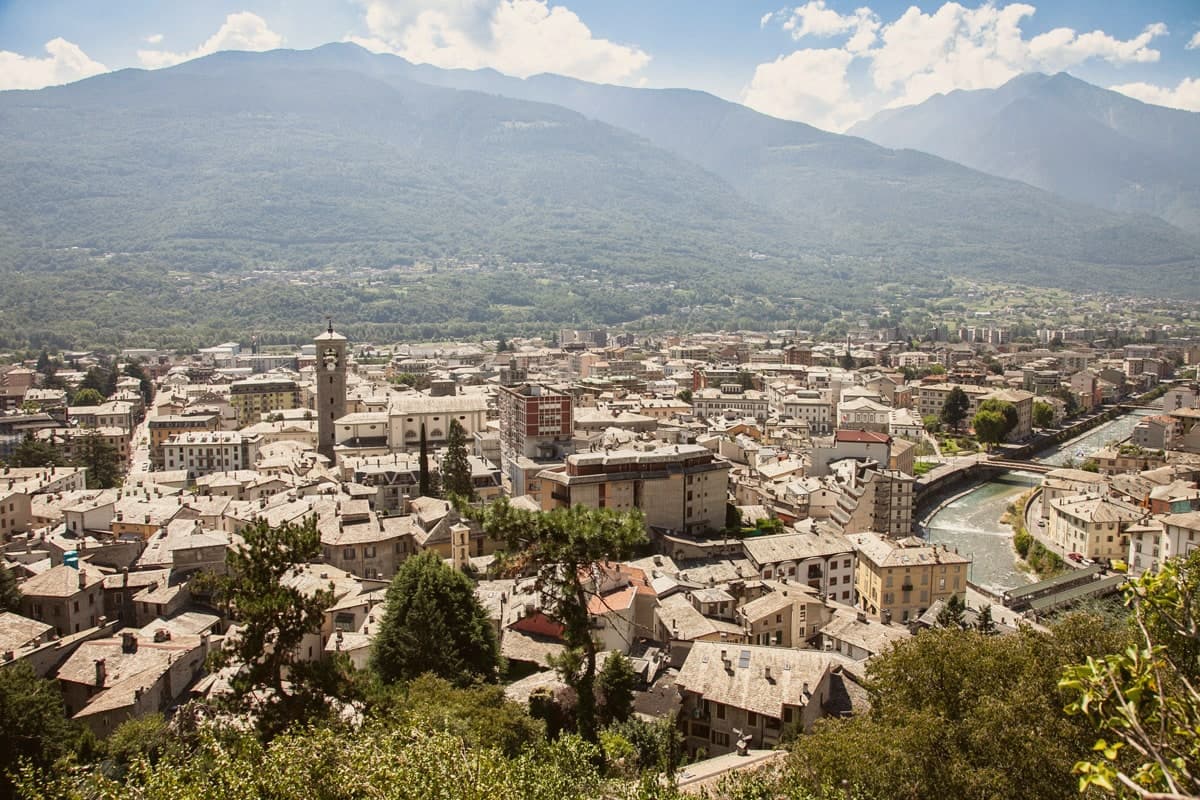
Sondrio sits at 307 meters on the floor of the upper Adda valley, the administrative heart of Valtellina and its terraced wine country. The Romans built a military camp here.
The Lombards renamed it Sundrium, meaning the exclusive property of free men. From the late 16th century until 1797 the city was the capital of Valtellina under the Three Grey Leagues of the Grisons, an Alpine canton across the Splügen Pass that ran the valley from Chur.
Castel Masegra, an 11th-century Capitanei stronghold on a rock above the centro storico, is the only urban castle that survived the demolitions of the 17th century and now houses the CAST mountain museum. The terraced vineyards above the city, between 300 and 800 meters, produce Sassella and Grumello, the two Nebbiolo subzones that define Valtellina Superiore DOCG.
Most of the work on those terraces is still done by hand.
The comune belongs to the national association of wine-producing towns.
What to see in Sondrio
- Castel Masegra. Eleventh-century hilltop castle of the Capitanei family, the only urban fortress to survive 17th-century demolitions, now home to the CAST mountain museum.
- Collegiata dei Santi Gervasio e Protasio. The town's main church, with a baroque nave and a neoclassical façade, standing at the edge of the old centro.
- Piazza Garibaldi. The principal square, surrounded by neoclassical buildings, with a central monument to Giuseppe Garibaldi and the city's main cafés and shops.
How to get to Sondrio
There is a railway station in the town, so you can arrive without a car and never need one while you are here. Monza is roughly 116 minutes away by road.
Our tip
April through June and September through October are the cleanest months in Sondrio. The vineyards above the city are green or gold, the Adda runs full from snowmelt, and the air is clear enough to see the Bernina range from Piazza Garibaldi. July and August get hot in the valley floor, and the city empties into the higher Valmalenco.
More from Anywhere Italy
 The best towns with a food festival in Lombardia
 The best towns with a serious restaurant that you can reach by train in Lombardia
 The best lake towns in the province of Brescia
 The best lake towns within 90 minutes of Padua
- The best lake towns within two hours of Bologna
 The best lake towns within two hours of Bolzano