
The best towns with a serious restaurant that eat well within 90 minutes of Livorno
Livorno eats cacciucco in deep bowls and drinks ponce at the bar, and the country behind it eats differently again: wild boar with juniper, chickpea soup thickened with new oil, pici under hare, grilled Maremma beef with a glass of Bolgheri red still cool from the cellar. The hills climb quickly from the sea, and the towns on them are built from grey sandstone and pale tufo, with cellars cut into the rock beneath the restaurant floors. Autumn is the season that rewards this most, when the olive mills run at night and the white truffle comes down off the Volterran hills. Spring brings artichokes, broad beans and the first evenings warm enough to eat outside within sight of the water.
The default is to eat in Florence, where the guide-listed kitchens sit close together and a table needs booking weeks out. It is a reasonable plan and the cooking is often very good, but the dining rooms fill with people who arrived that morning on the same trains, and prices behave accordingly. The same pressure runs down the coast to the resort strips in high summer, where the menus flatten into fritto misto for whoever is passing. Very little of that reflects how this part of Tuscany actually cooks.
The vines, the olives and the cattle carry on south and inland, past the well-known wine road and into the smaller comuni of the Val di Cecina and the Maremma Livornese. These are towns where a serious kitchen sits on a quiet piazza or behind an unmarked door in a medieval wall, cooking for the province as much as for visitors. Each of the towns here holds a restaurant listed by the most demanding of the guides, and a dining guide has named a table in each. All are within a reasonable drive of Livorno, which makes lunch, and the walk afterwards, the point of the day.
Of the 8 communes we have mapped within 90 minutes of Livorno, 6 qualify as towns with a serious restaurant that eat well: each holds a restaurant listed by the most demanding of the guides, and a dining guide has named a table in each. The smallest, Montescudaio, has 2,144 residents.
Two more lists worth reading alongside this one: The best hidden coastal towns that eat well in Toscana and The best coastal towns within two hours of Siena.
Montescudaio
Why visit Montescudaio
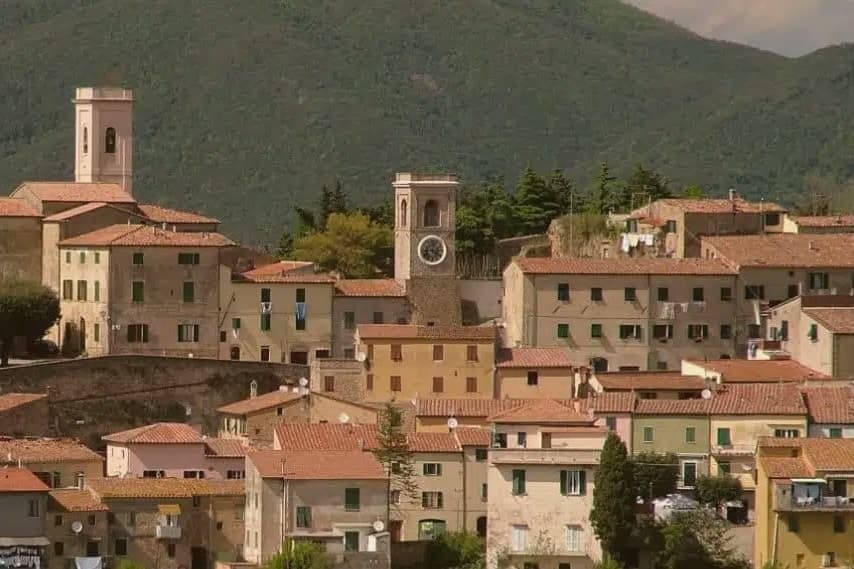
Montescudaio sits fifteen kilometers inland from the Tyrrhenian coast, on a hill above the valley the Cecina river cuts toward the sea. Fewer than 2,200 people live in the commune, and most of them are outside the centro storico, which is left as a tight knot of stone houses ringed by its old walls: a single church, the clock tower, and the terrace where the vines drop downhill toward the Val di Cecina and the water beyond.
The town carries four institutional signals at once, an unusual density for its size: a registered wine appellation, a bread-network membership rare in this part of Tuscany, a name that predates the medieval walls, and the walls themselves built around an eleventh-century abbey. Wine and bread are both grown and baked around the same hilltop that once needed fortifying.
The fortress, the loaf, and the vineyard are not three separate stories here but three uses of the same ground, worked over centuries after the shields it was named for stopped being necessary.
SaQua - Ristorante in Collina have been named by a guide.
What to see in Montescudaio
- Centro storico. Walled medieval village, a tight ring of stone houses on the hilltop, built around the abbey that gave the settlement its first walls and structure.
- Torre Civica. Clock tower at the entrance to the borgo, the tallest visible structure and former civic landmark of the fortified village.
- Chiesa di Santa Maria Assunta. Eleventh-century parish church on the site of the medieval abbey, the anchor around which the walled village took shape.
How to get to Montescudaio
Livorno is roughly 44 minutes away by road.
Our tip
May through September is the season on the Cecina hills: dry days, vine work, harvest from late August through September. The coast lies fifteen kilometers west and the sea breeze keeps evening temperatures lower than the inland Maremma. July and August bring crowds to the beaches at Cecina and Marina di Bibbona, but the borgo on the hill stays quieter. Festa del Vino di Montescudaio falls in October.
Bibbona
Why visit Bibbona
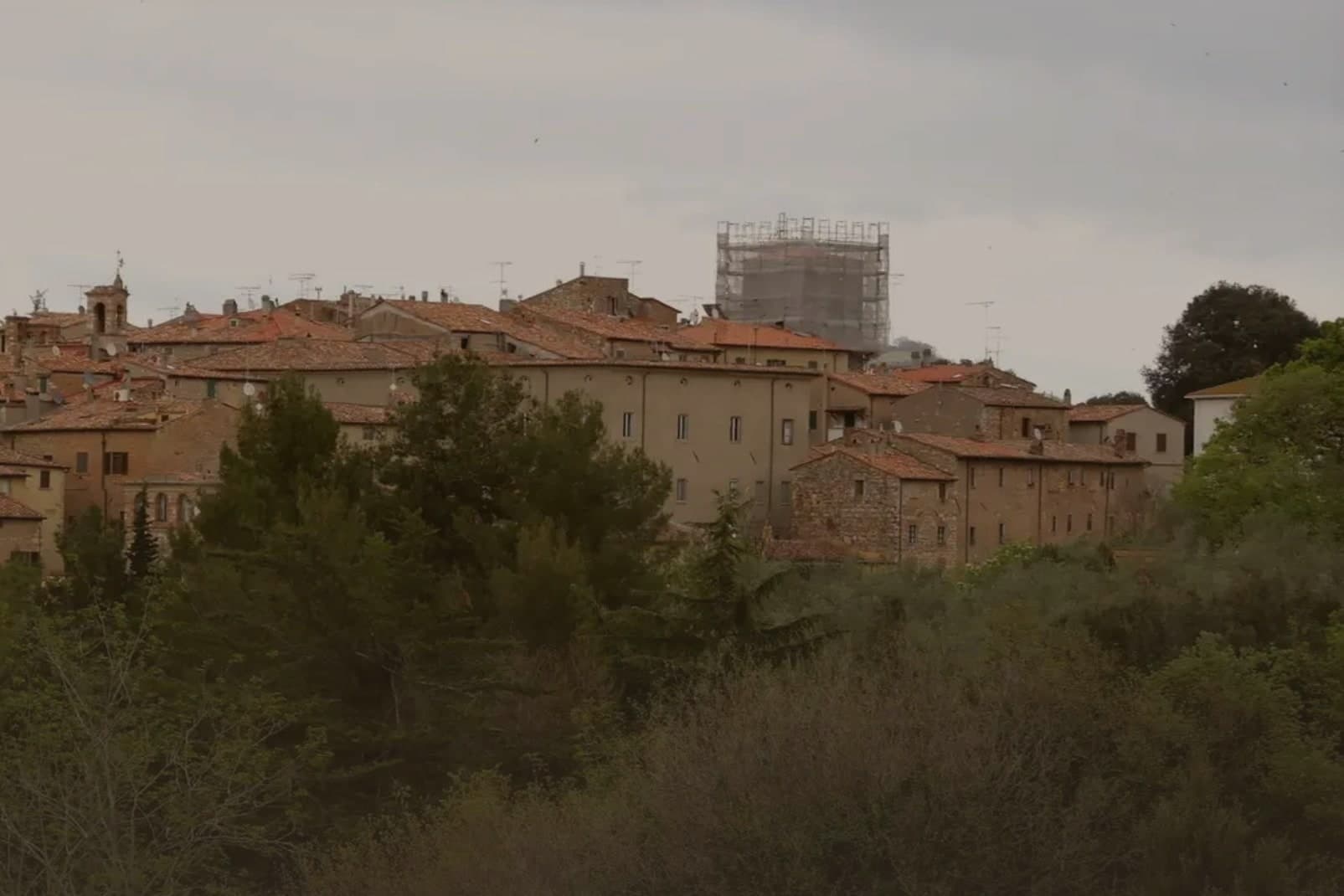
Bibbona sits at 85 meters in the Val di Cecina, in the southern province of Livorno, eight kilometers from the sea. The town has Etruscan origins, attested by a small bronze goat statuette, now in the Florence archaeological museum, that became the town symbol.
After medieval struggles between Pisa and Florence, the territory passed to the Gherardesca counts, who controlled most of the Etruscan Coast. Monk-knights, probably French and probably Templar, operated from the pieve in the medieval period, a detail that survives more clearly in local memory than in stone.
The village keeps its hill position while its coastal frazione does the work of meeting the sea: the fort once handled customs, sanitary inspection and defense, the beach now holds a national recognition, and the reserve in the inland hills once supplied the wood that moved through that same coastline. Upper town, shore and forest were never separate economies so much as three faces of one strip of land running from the Val di Cecina down to the sea.
La Pineta, Taverna La Carabaccia, Io Cucino have been named by a guide.
What to see in Bibbona
- Pieve di Sant'Ilario. The church stands on Piazza XX Settembre. The right side and facade keep their Romanesque lines, while the added left nave throws the plan out of square, a visible seam between two building campaigns three centuries apart.
- Borgo medievale. Concentric ring of stone streets and stairways around the old castle, with surviving medieval gates and the central piazza.
- Forte di Marina di Bibbona. Built for customs control, sanitary inspection and defense against corsairs, the fort held a working coastline job, not a decorative one, watching the same shore the beach now occupies.
How to get to Bibbona
There is a railway station in the town, so you can arrive without a car and never need one while you are here. Livorno is roughly 51 minutes away by road.
Our tip
May and June bring warm water and quiet beaches, before the July and August crowds reach the Costa degli Etruschi. The borgo at 85 meters stays five degrees cooler than the coast and is the place to sleep in high summer. July and August are full: Marina di Bibbona fills, the pine-shaded beach fronts get crowded, and the Forte sees long queues at sunset.
Suvereto
Why visit Suvereto
Suvereto sits at 127 meters on the inland edge of the Val di Cornia, twelve kilometers from the Tyrrhenian coast. The name comes from the Latin suberetum, a wood of cork oaks, and the surrounding forests still hold them.
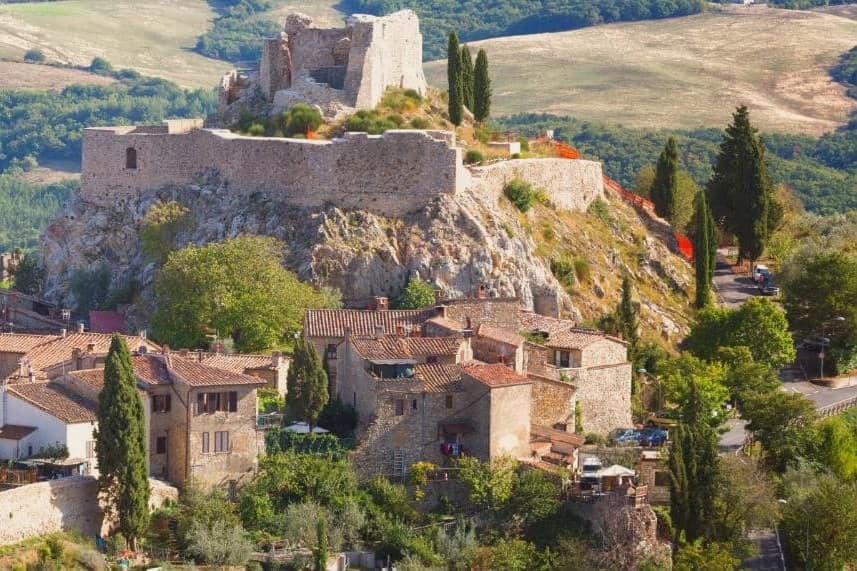
The Rocca Aldobrandesca, first documented in 973, occupies the highest point of the borgo; the Aldobrandeschi family who controlled it also ruled large sections of southern Toscana and the Maremma. The town reached its golden age in the thirteenth century, when Frederick II granted it a charter of freedoms in 1216 and the Palazzo Comunale was built.
The centro storico is a tight grid of stone vicoli that runs uphill from the Romanesque Pieve di San Giusto to the fortress. Suvereto carries five institutional signals at once, a rare combination in the province of Livorno, and the surrounding wine country falls under the Val di Cornia DOC and Suvereto DOCG appellations.
I’ Ciocio have been named by a guide.
What to see in Suvereto
- Rocca Aldobrandesca. Fortress at the highest point of the borgo, documented from 973, expanded in the twelfth century and partly restored as an open archaeological site.
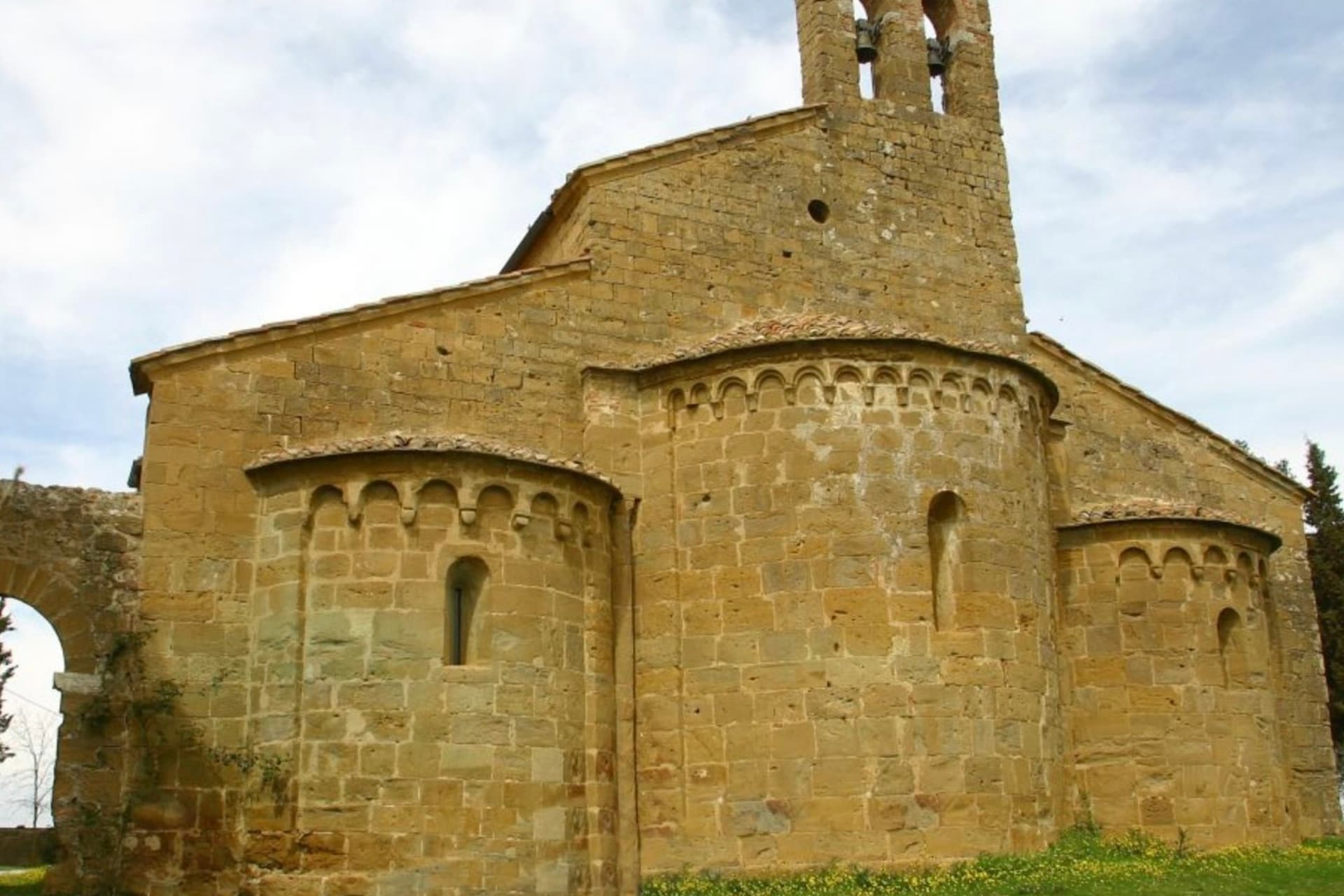
- Pieve di San Giusto. Eleventh-century Romanesque parish church at the foot of the borgo, with a sandstone façade and a single nave divided by stone columns.
- Palazzo Comunale. Thirteenth-century town hall with a double external staircase and Ghibelline merlons, one of the earliest surviving civic palaces of the Maremma.
How to get to Suvereto
Livorno is roughly 84 minutes away by road.
Our tip
April through June and September into October are the dry months in the Val di Cornia, when the cork forests behind the town hold their light and the wine harvest runs in September. The Sagra del Cinghiale, celebrating the wild boar of the surrounding hills, runs across two weekends in December and draws a different crowd. July and August are hot at 127 meters and most visitors descend to the Tyrrhenian coast in the afternoon. Palio dell'Imperatore falls in August.
Castagneto Carducci
Why visit Castagneto Carducci
Castagneto Carducci sits at 194 meters on a hill above the Costa degli Etruschi, sixty kilometers south of Livorno. The town was called Castagneto until 1907, when it was renamed for the poet Giosuè Carducci, who spent part of his childhood here and made the surrounding landscape the subject of Davanti a San Guido.
The Castello della Gherardesca, the Lombard-origin fortress of the counts who held the land for nine centuries, still anchors the centro storico. Below the hill, on a coastal plain that locals call the Maremma livornese, sits the frazione of Bolgheri.
In 1944, Mario Incisa della Rocchetta planted Cabernet Sauvignon on his estate there; the resulting wine, Sassicaia, started the category that journalists in the 1970s named Supertuscan. Bolgheri DOC was created in 1983 and Bolgheri Sassicaia DOC in 1994, a sub-zone for a single estate.
The cypress avenue from the coast road up to Bolgheri, two parallel rows planted in 1832, is the one Carducci put in the poem.
Osteria Magona, Osteria Enoteca San Guido, Osteria Ancestrale - Arduino Bolgheri and 1 more have been named by a guide.
What to see in Castagneto Carducci
- Castello della Gherardesca. Lombard-origin fortress at the top of the borgo, held by the Della Gherardesca counts for nine centuries, still in private family use.
- Viale dei Cipressi. Five-kilometer cypress avenue between the SS1 Aurelia and the frazione of Bolgheri, planted in 1832 and immortalized by Carducci.
- Bolgheri. Coastal-plain frazione at 88 meters, walled medieval village turned wine capital, home of Sassicaia, Ornellaia and the Bolgheri DOC.
How to get to Castagneto Carducci
There is a railway station in the town, so you can arrive without a car and never need one while you are here. Livorno is roughly 55 minutes away by road.
✷ We have written about Castagneto Carducci
“You reach Bolgheri up a straight avenue of cypresses, five kilometers of them standing in two close files like a colonnade with the roof taken off, and the road does the thing it was planted centuries ago to do, which is tell you before you get there that you are arriving somewhere that thinks a great deal of itself. The comune the village belongs to carries its name.”
Read our piece on Castagneto Carducci →Bolgheri | The Story of an Amaro
Our tip
May through September is the season the comune fills, the coast at Marina di Castagneto holds Bandiera Blu, and the Bolgheri cellars run their tastings on appointment. The Bolgheri DiVino wine festival runs in mid-August. July and August push afternoon temperatures past thirty and the cypress avenue stops being walkable in midday sun.
Volterra
Why visit Volterra
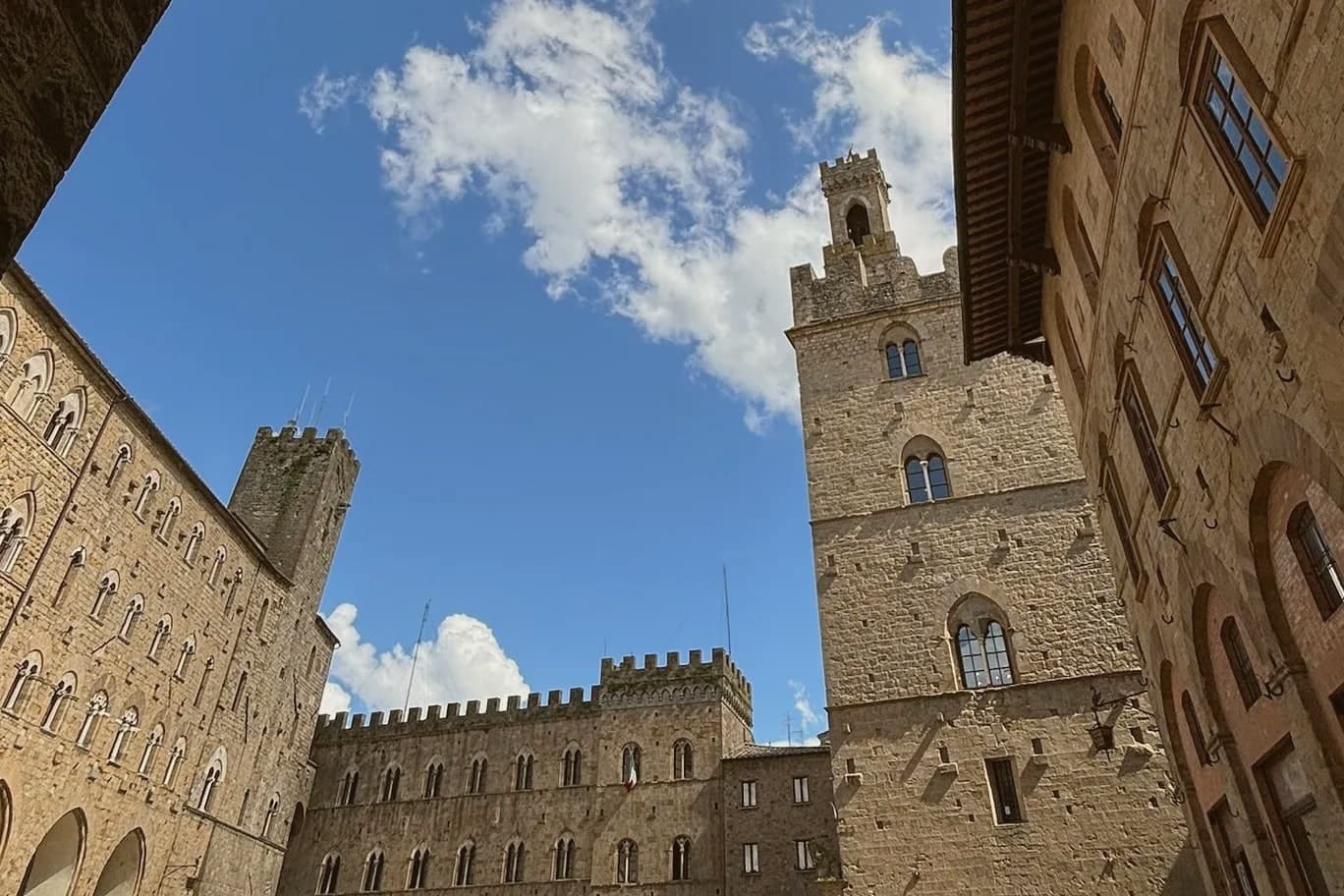
Volterra sits at 531 meters on a long ridge between the Era and Cecina valleys, one of the twelve cities of the Etruscan dodecapolis and the only one still occupied on its original ground. The Etruscans called it Velathri, the Romans Volaterrae; the Porta all'Arco, with three blackened tufa heads of unknown deities, has been the western gate of the town since the fourth century BC.
The Roman theater below the walls, excavated in the 1950s, holds two complete rows of columns and the bath complex behind the stage. Above stands the Palazzo dei Priori, begun in 1208 and the oldest town hall in Tuscany, the model for Florence's Palazzo Vecchio.
The town has been carving alabaster since the Etruscans, who used it for funerary urns; the same workshops on Via Porta all'Arco still cut and polish the soft white stone today. Le Balze, the eroded clay cliffs west of town, swallow a few meters of churchyard every century.
Villa Pignano, Enoteca Del Duca have been named by a guide.
What to see in Volterra
- Porta all'Arco. Etruscan city gate from the fourth century BC, with three eroded tufa heads of unknown deities set above the arch.
- Teatro Romano. First-century BC Roman theater excavated in the 1950s, with two complete rows of columns and the bath complex behind the stage.
- Palazzo dei Priori. Begun in 1208, the oldest town hall in Tuscany, the architectural model for Florence's Palazzo Vecchio.
How to get to Volterra
Livorno is roughly 83 minutes away by road.
✷ We have written about Volterra
“The wine is the whole economy of these hills, every village with its own, the region’s name stamped on the most famous red in Italy. Tuscan food runs to cured and roasted meat, so the wine ran red to meet it, lighter than you expect, almost fruity, easy, made to sit beside a steak and not to be lectured about. Here is the only wine knowledge you need on this road: it is all good.”
Read our piece on Volterra →Road to Siena | The Long Way Is the Better Way
Our tip
April through June brings the surrounding clay hills green and the temperatures bearable on the exposed ridge. September and October are the second window, with the white truffle harvest peaking at Volterragusto in late October. July and August are hot and bright at altitude; the town fills with Italian and foreign visitors, and the Etruscan urns at the Guarnacci feel cool by comparison. Mostra Mercato del Tartufo Marzuolo falls in April.
Piombino
Why visit Piombino
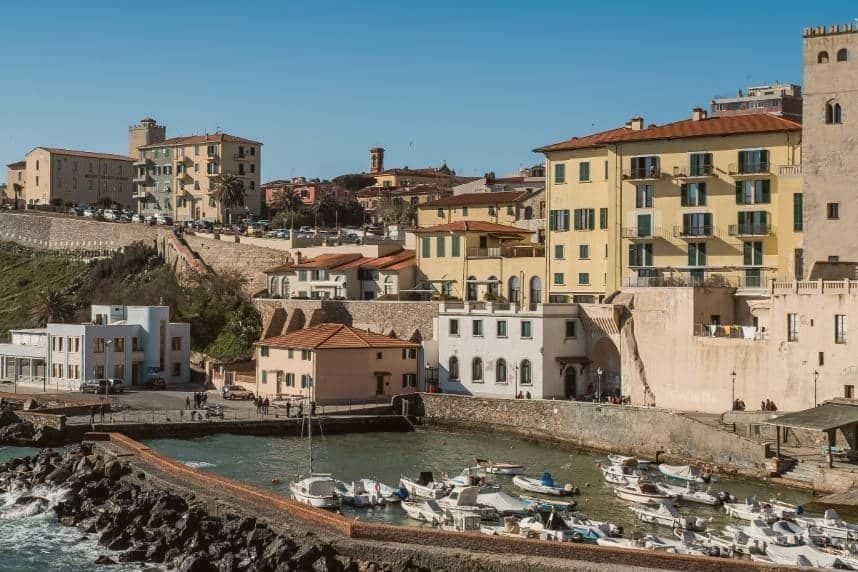
Piombino sits on a triangular promontory pointing southeast into the Tyrrhenian, at the northern edge of the Maremma. The town was founded in the ninth century by refugees from the Etruscan port after Greek pirates attacked the city; they called the new settlement Populino, small Populonia, and the name shortened over time to what it is now.
The old city, now a frazione north on the coast, became the source of the newer town's name rather than the other way round. In the medieval period Piombino became an independent signoria under the Appiani, who ruled from here over a small state that reached out to the islands across the water.
The castle at the seafront, the piazza cantilevered out over the cliff toward Elba, and the working ferry port make up the contemporary town, each looking the same direction the refugees once looked back from: toward the older settlement to the north and the channel to the islands beyond it. The Bandiera Blu coast covers the four kilometers between the port and the old acropolis, so that the walk from new town to old runs along the same shoreline that separates them by name only.
Al Baccanale, Osteria La Torre di Populonia, Taverna dei Boncompagni have been named by a guide.
What to see in Piombino
- Castello di Piombino. Principal defensive fortress of the city on a headland pointing southeast into the sea, with the Torrione, the Rivellino and the Cittadella complex, now a museum.
- Piazza Bovio. Long rocky breakwater extending into the sea as La Rocchetta, terraced as a piazza, with a balcony view across the channel to Elba.
- Parco Archeologico di Baratti e Populonia. Chamber tombs from the seventh to second centuries BC cut into the ground of the Gulf of Baratti, laid out for walking among the excavated structures rather than viewed from a distance.
How to get to Piombino
There is a railway station in the town, so you can arrive without a car and never need one while you are here. Livorno is roughly 77 minutes away by road.
✷ We have written about Piombino
“That is the thing the young man on the beach did not see, and the man who lives here cannot stop seeing. This is an industrial coast wearing a beach towel. Run it back far enough and the whole of it, the swamp and the steel and the slag and the white water, is one long story about iron, and the holiday is the costume the story put on after the work ran out.”
Read our piece on Piombino →The Iron Coast | The Wrong Sea
Our tip
May, June, September and October are the months when the Piombino promontory is at its best, sea warm enough to swim and the ferry to Elba running every hour without the August crush. July and August are full season, with the centro storico filling by late morning and the Baratti beach turning over twice a day. November through March is cold and windy on the promontory, with limited ferry crossings and many seaside trattorie closed. Sagra del Pesce - Piombino falls in July.
More from Anywhere Italy
- The best hidden coastal towns that eat well in Toscana
- The best coastal towns within two hours of Siena
 The 7 best coastal towns in the province of Livorno
 The best hidden towns with a food festival that have a serious restaurant in Toscana
 The best small olive oil towns with a serious restaurant in Toscana
- The prettiest hidden villages with a serious restaurant in Toscana